
New Thinking Allowed with Jeffrey Mishlove Jan 30, 2026 Psychology and Psychotherapy This video is a special release from the original Thinking Allowed series that ran on public television from 1986 until 2002. It was recorded in about 1990. It will remain public for only one week. The late Arnold Mindell, PhD, was an innovative psychological theorist and therapist. Founder of the Center for Process Oriented Psychology in Zurich, Switzerland, and Portland, Oregon, he is author of Dreambody, Working With the Dreaming Body, City Shadow, The River’s Way, The Year One, Working on Yourself Alone and Coma: Key to Awakening. Here he provides an overview of process psychology and its relationship to the ancient Chinese concept of the Tao. He describes his approach as a “meta-psychology” which incorporates dreamwork, bodywork, relationship work, movement, family systems, spirituality, and global work.
Hyperspace, Consciousness, and Time with Bernard Carr
New Thinking Allowed with Jeffrey Mishlove Jan 29, 2026 Bernard Carr, PhD, is emeritus professor of mathematics and astronomy at Queen Mary University of London. He is coauthor of the book Quantum Black Holes and he is also editor of the anthology Universe or Multiverse? He is a past-president of the Society for Psychical Research and is also currently president of the Scientific and Medical Network. Here he shares his thinking about how consciousness and psychic phenomena can best be integrated into theoretical physics. He describes the history of thinking regarding hyperspace as well as his own preferred models of consciousness. He also shares some insights into the nature of time and the “specious present” that we experience as human organisms. New Thinking Allowed host, Jeffrey Mishlove, PhD, is author of The Roots of Consciousness, Psi Development Systems, and The PK Man. Between 1986 and 2002 he hosted and co-produced the original Thinking Allowed public television series. He is the recipient of the only doctoral diploma in “parapsychology” ever awarded by an accredited university (University of California, Berkeley, 1980). He is also the Grand Prize winner of the 2021 Bigelow Institute essay competition regarding the best evidence for survival of human consciousness after permanent bodily death. He is Co-Director of Parapsychology Education at the California Institute for Human Science. (Recorded on July 24, 2020)
Mother Teresa on small things

Featured Books from New Thinking Allowed
Drawing on a large number of case studies, practical applications of the Dreambody theory are described, instructing how to unfold symptoms and other somatic phenomena to reveal the dreamlike and mythical experiences that we usually discount in everyday life. These symptoms may not be merely sickness in need of treatment, but guides to meaning and fulfillment.

In this book, Carl Abrahamsson explores occulture, the space where art and magic intersect, and shows how occult ideas have shaped culture and creativity throughout history. Drawing on more than thirty years of experience, he examines key figures and movements in modern esoteric thought, including Carl Jung, Anton LaVey, Aleister Crowley, Paul Bowles, and Rudolf Steiner.

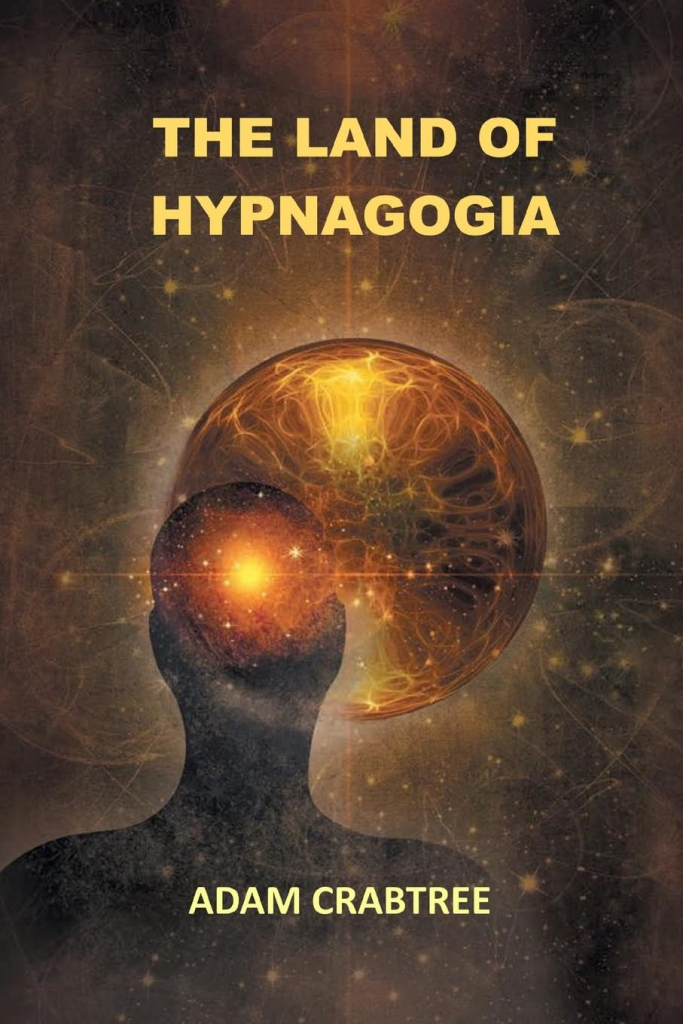
After a long career as a psychotherapist and scholarly writer, Adam Crabtree gathers together the principle threads of his view of the meaning of human life. He describes his life-long search for the means to explore human depth.
Remote Viewing from the Ground Up tells the story of TransDimensional Systems, a pioneering remote viewing company, from the author’s perspective as trainee, viewer, project manager, and training coordinator. It details TransDimensional Systems methods, operations, and training while including original documents from the company’s website.

Word-built World: renitent

February Astrology Forecast 2026
\The Astrology Podcast Jan 30, 2026 A look ahead at the astrological forecast for February 2026, with astrologers Chris Brennan and Austin Coppock. We spend the first hour talking about the astrology surrounding news stories that happened in January, many of which coincided with a rare triple conjunction of Venus, Mars, and the Sun, as well as the Mars-Pluto conjunction that happened later in the month. Then in the second hour we do a deep dive into the astrology of February. The astrology of February is extremely busy and momentous, and includes Uranus making its final direct station in Taurus, eclipse season beginning with a solar eclipse in Aquarius, Saturn entering Aries and then immediately completing a conjunction with Neptune, Mars squaring Uranus, and Mercury going retrograde in Pisces. This is episode 521 of The Astrology Podcast.
Satan, the accuser
- Google AI Overview
In Christian theology, Satan as “the accuser” (derived from the Hebrew satan, meaning adversary or accuser) refers to his role in Scripture as the prosecutor who relentlessly slanders believers before God and sows guilt, shame, and doubt in their hearts to destroy their faith. He highlights sins and imperfections to convince people they are unworthy of God’s grace, acting as a “roaring lion” or “accuser of the brethren”.
Key Aspects of Satan as the Accuser:
- Accusing Before God: Revelation 12:10 describes him as the one who accuses believers “day and night” before God, bringing up past sins and failures to demand justice.
- Shame and Condemnation: His goal is to make believers feel permanently guilty and worthless, using “accusations” to hinder their spiritual growth and relationship with God.
- Lies and Deception: While he often points out true sins, he uses them to lie about God’s character, suggesting God is not gracious, forgiving, or trustworthy.
- Contrast with the Advocate: While Satan is the “prosecutor” (accuser), 1 John 2:1 presents Jesus Christ as the “advocate” (defender) who intercedes for believers based on His sacrifice.
Biblical Examples and Context:
- Job 1:9-11: Satan accuses Job of being faithful only because God has blessed him, challenging his motives.
- Zechariah 3:1: Satan stands at the right hand of Joshua the high priest to resist him, illustrating the accusation of spiritual leaders.
The accuser is considered defeated by the blood of Christ and the testimony of believers, with his role ending in final judgment.
Rollo May on diabolic and symbolic

“[Diabolic] comes from the Greek word diabolos; “diabolic” is the term in contemporary English. Diabolos, interestingly enough, literally means “to tear apart” (dia-bollein). Now it is fascinating to note that this diabolic is the antonym of “symbolic.” The later comes from sym-bollein, which means “to throw together,” to unite. There lie in these words tremendous implications with respect to an ontology of good and evil. The symbolic is that which draws together, ties, integrates the individual in himself and with his group; the diabolic, in contrast, is that which disintegrates and tears apart. Both of these are present in the daimonic.”
― Rollo May, Love and Will
Rollo Reece May was an American existential psychologist and author of the influential book Love and Will. He is often associated with humanistic psychology and existentialist philosophy, and alongside Viktor Frankl, was a major proponent of existential psychotherapy. Wikipedia
Born: April 21, 1909, Ada, OH
Died: October 22, 1994
Wayne Dyer on your divine nature

Hazrat Ali ibn Abu-Talib on good fortune
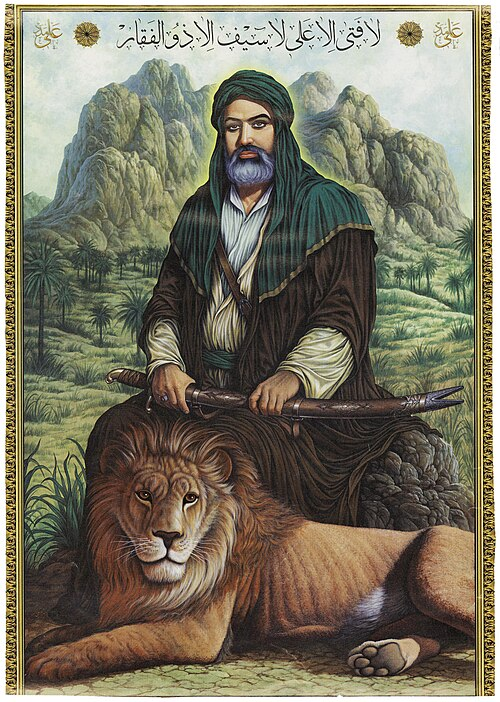
A conventional depiction of Ali ibn Abi Talib in the Shia tradition.
“So long as fortune is favoring you, your defects will remain covered.”
~ Hazrat Ali ibn Abu-Talib
- Google AI Overview
Hazrat Ali ibn Abi Talib (c. 600-661 CE) was a pivotal figure in early Islam, known as the cousin and son-in-law of Prophet Muhammad, the fourth Rashidun Caliph (656-661 CE), and the first Imam in Shia Islam, revered for his bravery, wisdom, and deep piety, though his succession led to the First Fitna (civil war) and the eventual Sunni-Shia schism, with Shia Muslims viewing him as the rightful spiritual and political successor.