The Onion Jul 23, 2025 Become an Onion member while it’s still optional. https://membership.theonion.com/?camp…
Life, Loss, and the Wisdom of Rivers
By Maria Popova (themarginalian.org)

“The past only comes back when the present runs so smoothly that it is like the sliding surface of a deep river,” Virginia Woolf wrote some years before she filled her coat-pockets with stones, waded into the River Ouse near her house, and, unwilling to endure what she had barely survived in the past, slid beneath the smooth surface of life.
One midsummer morning seven decades after Woolf was swallowed by the Ouse, Olivia Laing set out to walk the river’s banks from source to sea while navigating her own upheaval of the soul in the wake of heartbreak. She recorded her forty-two-mile existential expedition in To the River: A Journey Beneath the Surface (public library) — one of those stunning, unclassifiable, uncommonly poetic books that seep into crevices of your psyche you didn’t know existed and settle into the groundwater of your being.
Art by Monika Vaicenavičienė from What Is a River.
Laing writes:
I am haunted by waters. It may be that I’m too dry in myself, too English, or it may be simply that I’m susceptible to beauty, but I do not feel truly at ease on this earth unless there’s a river nearby. “When it hurts,” wrote the Polish poet Czeslaw Miłosz, “we return to the banks of certain rivers,” and I take comfort in his words, for there’s a river I’ve returned to over and again, in sickness and in health, in grief, in desolation and in joy.
Laing examines the particular pull of the Ouse and its riverine stretch across “233 square miles of land the shape of a collapsed lung,” haunted by Woolf yet animated by some singular spirit of its own:
It wasn’t morbidity that drew me to that dangerous place but rather the pleasure of abandoning myself to something vastly beyond my control. I was pulled to the Ouse as a magnet is pulled to metal, returning on summer nights and during the short winter days to repeat some walks, some swims through turning seasons until they amassed the weight of ritual.
Reflecting on the cataclysm that thrust her toward this riverine journey — “one of those minor crises that periodically afflict a life, when the scaffolding that sustains us seems destined to collapse” — and the aim of her unusual experiment, Laing writes:
Rivers may be among our richest existential metaphors — “Time is a river which sweeps me along, but I am the river,” Borges proclaimed in his timeless meditation on time; “I do not think that the banks of a river suffer because they let the river flow,” Frida Kahlo wrote in celebrating her unconventional relationship with Diego Rivera — but they are also the raw material of our existence, the seedbed of civilization. Laing writes:

Native boat, Kongo River, circa 1915 (public domain)
But whatever rivers may nurture with their physical presence, Laing argues, they also foment some essential metaphysical part of our humanity:
[…]
A river moves through time as well as space. Rivers have shaped our world; they carry with them, as Joseph Conrad had it, “the dreams of men, the seed of commonwealths, the germs of empires.” Their presence has always lured people, and so they bear like litter the cast-off relics of the past.
Echoing Woolf’s metaphor of the river as the permeable boundary between the present and the past, Laing writes:
Illustration from The River by Alessandro Sanna
The supreme allure of rivers may be the intoxicating interplay between what they reveal and what they conceal, and that may also be what makes the river such a wellspring of metaphors — for, as Nietzsche well knew, this duality is at the heart of every potent metaphor. In consonance with astrophysicist Janna Levin’s beautiful and disquieting intimation that truth may be something you can see “only out of the corner of your eye,” Laing writes:
And yet the journey itself seems to train in Laing this essential receptivity to beauty — or, rather, to untrain the imperviousness to it that so-called civilization seeds in us, affirming Terry Tempest Williams’s assertion that beauty is our natural inheritance.

A century and a half after Laing’s compatriot Richard Jefferies insisted that “the hours when the mind is absorbed by beauty are the only hours when we really live,” she records one such sublime moment of surrender to beauty on the meadowy banks of the Ouse not far from the English Channel:
[…]
The wheat was preoccupying me. It had here reached another stage, the long greenish hairs unfurling and turning it into an ocean of grass, in which the wind moved as it will across water, folding the pile first back, now forth. The wind worked across it and so did the light, and I could not at first piece together how the trick was mastered. The stalks here, on this sloped field, were almost blue, a blue that increased from the boot upward like a flush, though later in the month they would grow gilded and then bleach daily until they were almost drained of colour, becoming the common straw that was once used to roof most of England and is still required by law for repairing the thatch of some listed buildings. The heads of the wheat were golden; the hairs that are known as the beard a watery greenish gold that became bronze towards the tip. When the wind flattened the heads — ah, that was it! — they caught the light, which rippled and rushed down the hill in little ebbs and flurries.
And yet, even as these internal transformations come abloom, Laing carries with her and continually revisits the heartache that set her off on the journey. In one of those cyclical thrusts into bleakness that are the hallmark of every grief, she writes:
Still, the most remarkable aspect of the human heart may be just how elastic our range of experience is — how, even at its most contracted by loss and turmoil, the heart can be seized with delight and surprised by visitations of acute joy. Laing is swallowed by one such moment when, delirious and almost euphoric with hunger and fatigue, she finally reaches the Ouse’s homecoming to the sea:
This cyclical interplay of joy and despair parallels the fate of the physical world. Beholding a dry riverbed where the Ouse meets the sea — the remains of Tide Mills Creek — Laing draws on her riverine journey to contemplate the largest questions of existence and its counterpoint:
The tenacity of our physical remains, their unwillingness to fully disappear, is at odds with whatever spark provides our animation, for the whereabouts of that after death is a mystery yet to be unpicked. What is this world, really? We’re told we have infinite choice and yet there’s so much that occurs beyond the perimeters of our command. We do not know why we’re set down here and though we may choose the moment when we leave, not a single one of us can shift the position we’ve been assigned in time, nor bring back those we love once they have ceased to breathe.
Illustration from Cry, Heart, But Never Break, a Danish meditation on love and loss
In a sentiment evocative of poet Jane Hirshfield’s ode to the raw optimism of the natural world, Laing adds as she stands at the seashore where the Ouse ends:
It is not an accident but some elemental part of our humanity that the sea should catalyze such existential revelations at the borderline of the tragic and the transcendent. “Against this cosmic background,” Rachel Carson wrote when she invited the human imagination into the life of the sea decades before Laing walked the Ouse and shortly before Virginia Woolf drowned in it, “the lifespan of a particular plant or animal appears, not as drama complete in itself, but only as a brief interlude in a panorama of endless change.”
“Death and Rebirth” by artist Bhajju Shyam from Creation, an illustrated cosmogony based on Indian folklore mythology.
At this shoreside endpoint of her journey, Laing offers a poetic denouement:
To the River is an immensely beautiful read in its entirety. Complement it with Laing’s subsequent existential experiment in the art of being alone, then revisit Virginia Woolf on the shock-receiving capacity necessary for being an artist.
New Moon in Leo July 24, 2025

Wendy Cicchetti
Here’s how you can work with today’s New Moon in Leo (July 24, 2025) to take full advantage of its energy:
New Moon in Leo — Overview
- Astrological Date: July 24, 2025
- Zodiac Degree: New Moon at 1° Leo
- Theme: Self-expression, authenticity, courage, visibility, and joy
- Element & Modality: Fire, Fixed sign
- Ruling Planet: The Sun
This New Moon kicks off a fresh cycle of personal empowerment and creative rebirth. Leo invites you to take center stage in your own life—not for ego, but for radiating light, truth, and joy. Use this moment to reclaim your inner fire and align with your highest version of self.
How to Harness the Energy of This New Moon
1. Set Intentions That Ignite Your Soul
New Moons are potent for manifestation—especially in areas ruled by the hosting sign. Leo governs:
- Creative pursuits (art, performance, design, writing)
- Confidence and charisma
- Passion projects
- Romantic self-expression
- Inner child healing
- Visibility and leadership
Prompted Reflection:
- What desires have I been hiding out of fear of judgment?
- Where do I need to be more bold and visible in my life?
- How can I allow more joy, play, and spontaneity into my daily rhythm?
Write 3–5 heartfelt intentions starting with:
“I boldly call in…” or “I allow myself to fully express…”
2. Embody Your Authentic Self
Leo reminds us that being unapologetically yourself is a sacred act. Now is the time to:
- Dress boldly and own your style.
- Speak your truth—even if your voice shakes.
- Begin a new project that reflects your true values, not others’ expectations.
If you’ve been waiting to launch something (business, art, offer, performance), use the energy of this lunation to initiate or publicly declare it.
3. Do a New Moon Ritual for Heart Activation
Leo New Moon Ritual (Solo or Group)
Supplies:
- A gold/yellow candle
- Citrine, sunstone, or carnelian (optional)
- Journal + pen
- Music that lights you up
Steps:
- Create sacred space: Dim the lights, light your candle, and put on uplifting music.
- Center yourself: Breathe into your heart space. Visualize golden light radiating from your chest.
- Journal Prompts:
- What does my highest self look like when fully expressed?
- What fears have stopped me from being seen?
- What would I do if I were ten times more confident?
- Write intentions: Be specific. Infuse them with emotion and vision.
- Speak aloud: Read your intentions in front of a mirror with power and conviction.
- Close with affirmation:
“I am the light. I shine because it is my nature to do so.”
4. Tend to the Inner Child
Leo rules playfulness and the child within. This is a beautiful day to:
- Revisit an old passion from childhood.
- Watch your favorite childhood movie.
- Do something purely for fun (paint, dance, play games).
- Write a letter to your 7-year-old self and tell them what you’ve become.
Healing question: What did I love to do before I was told I had to be productive?
5. Be Seen in Your Relationships
This is a powerful time to radiate love, not just receive it.
- Give heartfelt compliments.
- Express affection without fear.
- Let your joy be contagious—this boosts your manifestation power.
Leo reminds us: When you allow yourself to shine, others find permission to do the same.
Astrological Add-Ons
- If you have Leo placements (Sun, Moon, Rising, Venus), this New Moon is especially potent.
- Fixed signs (Taurus, Scorpio, Aquarius) may feel stirred toward change or creative tension.
- Fire signs (Aries, Sagittarius) will thrive with forward motion—ideal for launches and bold declarations.
Next Steps
- Track your intentions until the Full Moon in Leo’s opposite sign—Aquarius (August 8, 2025).
- Observe what blooms over the next 6 months, until the Full Moon in Leo in February 2026.
New Moon in Leo — Sign-by-Sign Guidance
Aries (March 21 – April 19)
This New Moon lights up your 5th house of joy, creativity, and romance. It’s time to take creative risks, start a passion project, or rekindle romance. Say yes to activities that make you feel alive.
Intention: “I embrace play, passion, and creative expression without fear.”
Taurus (April 20 – May 20)
The focus is on your 4th house of home, family, and roots. This is a perfect time for redecorating, moving, or deepening family connections. Emotional security is key—create a sanctuary where you can thrive.
Intention: “I nurture my home and create spaces that reflect my heart.”
Gemini (May 21 – June 20)
With the New Moon in your 3rd house of communication, learning, and community, now is the time to speak up, share your ideas, or launch a new writing or teaching project. Networking opportunities also shine.
Intention: “I confidently express my voice and connect with like-minded souls.”
Cancer (June 21 – July 22)
This lunation highlights your 2nd house of money, values, and self-worth. Focus on new income streams, financial goals, and strengthening your confidence. Align your spending with what truly matters to you.
Intention: “I call in abundance that reflects my highest values.”
Leo (July 23 – August 22)
This is your New Moon—in your 1st house of identity and self. It’s a fresh start for you personally. Reinvent your image, set bold goals, and step fully into the spotlight.
Intention: “I courageously live as my most authentic, radiant self.”
Virgo (August 23 – September 22)
The Moon activates your 12th house of healing, rest, and the subconscious. Take time for introspection, release what no longer serves you, and strengthen your spiritual practices.
Intention: “I surrender what’s heavy and make space for new blessings.”
Libra (September 23 – October 22)
This New Moon lands in your 11th house of community, friends, and dreams. Set intentions for collaborations, joining new groups, or manifesting long-term goals. Your social life and networking opportunities expand.
Intention: “I align with communities that uplift my vision and purpose.”
Scorpio (October 23 – November 21)
Your 10th house of career and reputation is activated. It’s time to make bold career moves, step into leadership, or launch a professional project. Recognition is within reach if you claim it.
Intention: “I boldly step into my purpose and claim my success.”
Sagittarius (November 22 – December 21)
The focus is on your 9th house of wisdom, travel, and higher learning. This is the time to explore new studies, share your teachings, or plan an adventure. Expand your perspective in bold ways.
Intention: “I open my mind and heart to new experiences and growth.”
Capricorn (December 22 – January 19)
This lunation lights up your 8th house of transformation, intimacy, and shared resources. It’s time for emotional healing, deepening intimate connections, or restructuring finances you share with others.
Intention: “I courageously release old patterns and welcome deep transformation.”
Aquarius (January 20 – February 18)
The New Moon highlights your 7th house of partnerships. This is ideal for new relationships, deepening current ones, or creating balanced partnerships in business and love.
Intention: “I call in relationships that honor and reflect my highest self.”
Pisces (February 19 – March 20)
Your 6th house of health, habits, and daily routines is in focus. Use this energy to start new wellness practices, create better work-life balance, or refine your daily schedule.
Intention: “I create routines that nourish my mind, body, and spirit.”
Free Will Astrology: Week of July 24, 2025
BY ROB BREZSNY | JULY 22, 2025
ARIES (March 21-April 19): In Hindu cosmology, the Sanskrit term “Lila” refers to divine play. It’s the idea that all of creation is a sacred and artful amusement that’s performed by the gods with joy, sorrow, artfulness and flair. I hereby proclaim Lila to be your theme of power, Aries. You have been so deep lately, so honest, so drenched in feeling. Now, life is giving you a big wink and saying, “It’s playtime!” You can start this fresh phase by making a list of all the experiences that bring you fun, recreation and entertainment. I hope you emphasize these pursuits in the coming weeks.
TAURUS (April 20-May 20): In the high desert of Chile, astronomers work at observatories on mountaintops where the air is dry, and the sky is clear. There, away from light pollution, the universe reveals itself with astonishing intimacy. But even the most powerful telescopes can’t function during the day. I suspect you will be like those observatories in the coming weeks, Taurus: capable of seeing vast truths, but only if you pause, quiet the ambient noise, and look during the dark. This approach should embolden you to use your intelligence in new ways. Stillness and silence will be conducive to your deep explorations. Night will be your ally.
GEMINI (May 21-June 20): Are you courageous enough to let go of sparkly clean but unfruitful fantasies so as to clear space for reality’s disorderly richness? Are you wild enough to relinquish naïve fears and hopes so you can see the raw truths blooming right in front of you? Are you cagey enough to discard the part of your innocence that’s rooted in delusion even as you bolster the part of your innocence that’s fueled by your love of life? Here’s my response to those questions, Gemini: Maybe you weren’t mature or bold or crafty enough to accomplish these heroic feats before, but you are now.
CANCER (June 21-July 22): Coral polyps are tiny, soft-bodied creatures. Over centuries, they assemble massive reef systems, turning their fragile exoskeletons into monumental architecture. These creatures can be a symbolic reminder that your sensitivity is not a weakness; it’s your building material. Keep that in mind during the coming weeks, when tender care and your nurturing ability can be primal sources of power. I invite you to start creating an enduring sanctuary. Generate a quiet miracle. Construct an elegant masterpiece. For best results, allow your emotional intelligence to guide you. You have the precise blend of aptitudes necessary to coax beauty to grow from vulnerability.
LEO (July 23-Aug. 22): I predict that your imminent future will be a ticklish and tricky but ultimately uplifting masterpiece. It will feature guest appearances by members of your private hall of fame, including one future luminary you have not yet fully appreciated. This epic series of adventures may begin when you are nudged to transform your bond with a key resource. Soon, you will be encouraged to explore frontier territory that offers unexpected help. Next, you will demonstrate your understanding that freedom is never permanent but must constantly be reinvented.
VIRGO (Aug. 23-Sept. 22): Sci-fi author Octavia Butler wrote, “All that you touch, you change. All that you change changes you.” The coming weeks will be prime time for you to honor and celebrate that prayer, Virgo. You won’t be a passive dreamer, gentle traveler or contemplative wanderer. Rather, I predict you will be a tidal force of metamorphosis. Parts of your world are pliable and ready for reshaping, and you will undertake that reshaping. But it’s important to know that the shift will go both ways. As you sculpt, you will be sculpted. As you bless, you will be blessed. Don’t be shy about riding along on this feedback loop. Do it with reverence and glee. Let the art you make remake you. Let the magic you give become the magic you are.
LIBRA (Sept. 23-Oct. 22): In certain Hindu traditions, the deity Ardhanarishvara is depicted as half-male, half-female—a divine fusion of opposites. They are not torn, but whole in their duality. I invite you to be inspired by their symbolism in the coming weeks, Libra. For you, balance will not be about making compromises or pushing to find middle ground. It will be about embracing the full range of possibilities. Energies that some people may imagine are contradictory may in fact be complementary and mutual. Benevolence will coordinate well with fierceness and vice versa. Your craving for beauty will not just coexist with but synergize an affinity for messy fertility. This is a time for sacred synthesis. Don’t dilute. Integrate.
SCORPIO (Oct. 23-Nov. 21): The medieval mystic Meister Eckhart wrote, “God is not found in the soul by adding anything, but by a process of subtraction.” Subtracting what? He wasn’t referring to losing something valuable, but rather to letting go of obstacles that obscure our direct experience of the divine. I invite you to make abundant use of this principle, Scorpio. Slough off layers of illusion, outmoded fantasies and self-images soaked in others’ longings. As you let go, do so not in bitterness but in a joyous quest for freedom.
SAGITTARIUS (Nov. 22-Dec. 21): I’m hoping that the Season of a Thousand Feelings hasn’t confused you. I’m praying that you have maintained a measure of composure and aplomb while navigating through the richest emotional flow you’ve experienced in many moons. It’s true that in some ways this barrage has been draining. But I’m certain you will ultimately regard it as being highly educational and entertaining. You will look back at this bustling interlude as a gift that will take a while to harvest completely.
CAPRICORN (Dec. 22-Jan. 19): Greek myth tells us that Persephone didn’t just return from the underworld each spring; she ruled there half the year. Yes, she was taken there against her will, but she adapted, transformed and ultimately wielded great power in the depths. In the coming weeks, Capricorn, you will have the chance to navigate realms that other souls may not be brave enough to enter: taboos, unusual yearnings, ancestral memories. My advice is to go gently but with intense resolve. Don’t act like a tourist. Be a sovereign explorer, even a maestro of mystery. Claim your throne in the underworld. Use it to create healing maps for others. When your work is done and the right moment comes, you will rise again into the light.
AQUARIUS (Jan. 20-Feb. 18): In my astrological opinion, you are ready to graduate from the University of Senseless Suffering. It’s time to get your diploma and treat yourself to a vacation. I’m not saying you will never again experience pain, of course. Rather, I’m telling you the good news that your dilemmas in the coming months will be more fully useful and redemptive. They will feel more like satisfying work than unpleasant ordeals. Congrats on the upgrade, Aquarius! You are forever finished with at least one of your arduous lessons.
PISCES (Feb. 19-March 20): Ancient Greek philosopher Heraclitus said you can’t step in the same river twice. Like everything else in nature, the river is in constant flux. It may appear to be the same, but the water is always flowing. What Heraclitus didn’t say is that you are never the same, either. Eternal change is your destiny. I invite you to ruminate eagerly on this truth, Pisces. Hopefully, it will help you let go of any hyper-perfectionist urges you might have. It will inspire you to see that the plan you made a while ago may need revision—not because you were wrong, but because you have grown. So yes: It’s time to reassess and recalculate. The goal isn’t to stick to the blueprint, but to build something that breathes with your becoming. Let the ever-new version of you draw a fresh map. It will be wiser than the last.
Homework: There’s an important thing you can’t do yet but will be able to in two years. What? Newsletter.FreeWillAstrology.com
Camille Flammarion: The Mystical Astronomer with Carlos Alvarado (1955 – 2021)
New Thinking Allowed with Jeffrey Mishlove Jul 21, 2025 The late Carlos S. Alvarado, PhD, was a Research Fellow at the Parapsychology Foundation, and Adjunct Research Faculty at Sofia University. He was on the editorial boards of the Journal of Near-Death Studies and the Journal of the Society for Psychical Research, and was the Book Review Editor of the Journal of Parapsychology, and an Associate Editor of the Journal of Scientific Exploration. Alvarado was also the recipient of the 2010 Parapsychological Association’s Outstanding Contribution Award, and the Parapsychological Association 2017 Outstanding Career Award. Here he reflects on the life and accomplishments of Camille Flammarion, who was widely known as a popularizer of both astronomy and psychical research. He was closely associated with the spiritism of Allan Kardec. He was also involved in the investigation of many mediums, including the controversial Eusapia Paladino whom he accepted as genuine. He himself had mediumistic talents and engaged in automatic writing. He was also widely known for the “Flammarion Engraving” depicting a mystical vision. New Thinking Allowed host, Jeffrey Mishlove, PhD, is author of The Roots of Consciousness, Psi Development Systems, and The PK Man. Between 1986 and 2002 he hosted and co-produced the original Thinking Allowed public television series. He is the recipient of the only doctoral diploma in “parapsychology” ever awarded by an accredited university (University of California, Berkeley, 1980). He is also the Grand Prize winner of the 2021 Bigelow Institute essay competition regarding the best evidence for survival of human consciousness after permanent bodily death. He currently serves as Co-Director of Parapsychology Education at the California Institute for Human Science. (Recorded on October 2, 2019)
Integral Resilience with Julian Gresser
New Thinking Allowed with Jeffrey Mishlove Jul 22, 2025 Julian Gresser, MA, JD, has been an adviser to many companies and governments and has had an international law practice in Tokyo, Japan. He is also a practitioner of Zen Buddhism and qigong. He is the author of Environmental Law in Japan (1971), Partners in Prosperity: Strategic Industries for the U.S. and Japan (1985) Piloting Through Chaos (1995), Explorer’s Mind (2013), Laughing Heart: A Field Guide to Exuberant Vitality for All Ages (2017), and Integral Resilience (2019). Here he points out that the topic of “resilience” is one that cuts across many disciplines from medicine to city planning. It can also be examined at the levels of cultures and civilizations. The discussion touches on the resilience of the Japanese, Chinese, Jews, and Black Americans. He claims that resilience is a skill that can be taught at the individual and community level. One example of a simple technique to promote resilience is smiling — for which we know there are a variety of physiological benefits. At a large-scale level, he addresses issues associated with 5G wireless technology. New Thinking Allowed host, Jeffrey Mishlove, PhD, is author of The Roots of Consciousness, Psi Development Systems, and The PK Man. Between 1986 and 2002 he hosted and co-produced the original Thinking Allowed public television series. He is the recipient of the only doctoral diploma in “parapsychology” ever awarded by an accredited university (University of California, Berkeley, 1980). He is also the Grand Prize winner of the 2021 Bigelow Institute essay competition regarding the best evidence for survival of human consciousness after permanent bodily death. He currently serves as Co-Director of Parapsychology Education at the California Institute for Human Science. (Recorded on November 7, 2019)
Prosperos Assembly September 5-8
 |
| The Prosperos Assembly 2025 Integrity – The Key to Freedom Expanding consciousness through new paradigms of wholeness September 5 – 8, San Diego, California For details about Assembly registration and hotel arrangements, Please see our Assembly Fact Sheet, below!  In the midst of cataclysmic changes around the world we will use this weekend experience to explore the Ontological message: Back and behind the universe of time, space, and change lies a fundamental and changeless reality. It is exactly in times such as these that we have the opportunity to turn our vision from “wars and rumors of wars” to the ever-living Truth that provides each person with their keystone for bringing Integrity forth in their personal life and finding their way to communal wholeness.From the Aloha settingto our dynamic program, and activities -You are warmly invited to join us in person! We are coming together at the Island Palms Hotel on the Hawaii-infused Shelter Island next to the Bay in balmy San Diego ! This is your opportunity for reconnecting in community, rejuvenating in nature and re-discovering the Self each person has that can heal a fractured world.More information, including hotel and event registration can be found on The Prosperos website at: Assembly 2025 announcement. For details about Assembly registration and hotel arrangements, Please see our Assembly Fact Sheet, below! — FACT SHEET —  a aLOCATION: Best Western Plus–Island Palms Hotel & Marina 2051 Shelter Island Drive, San Diego, CA 92106 a Hotel information is available at: https://www.bestwestern.com/en_US/book/hotels-in-san-diego/best-western-plus-island-palms-hotel-marina/propertyCode.05326.html a RESERVATIONS: Special Prosperos event room rate: $179 per night, 2 Queen beds or 1 King bed (+ tax) To reserve your room online: You can use this link for booking. NOTE: Use the edit link on the right side of the link’s landing page to customize your arrival and/or departure dates. If you run into any difficulty booking a room, please contact Joseph Stanley, Sales Coordinator: jstanley@islandpalms.com, (619) 222-0561, during business hours. (CAUTION: After hours and on weekends, you will automatically be transferred to the out-of-state Central Reservations office, which does not know about our group.)  a aGETTING THERE: By air: Closest airports are Long Beach (LBG), Los Angeles (LAX), & Orange County (JWA). (Long Beach airport is the closest, but flights are usually more expensive, with fewer choices) Taxi from Long Beach airport runs $20 – $30, depending on traffic. Shuttles are available from LAX & JWA: Call Super Shuttle at 800-258-3826 Fees: From Los Angeles, $17 per person; from Orange Co., $37 for first person, $9 all others. By car: Hotel is south & west of the I-405 or I-5 Fwy (see map on hotel website) From the north: Take I-5 south (or 405 Fwy south, then I-5 south), exit at Exit 20. Stay right onto the ramp for Camino Del Rio south. It becomes Rosecrans St.; stay on Rosecrans St. southwest for 2.5 miles. Turn left onto Shelter Island Dr. At the roundabout, take the first exit, turn right, and continue along Shelter Island Dr. to the hotel. From the south: Take I-5 north to Harbor St. west to Scott St. Turn left onto Shelter Island Dr. At the roundabout, take first exit, turn right and continue on Shelter Island Dr. to the hotel. Parking: Directly on hotel property, or in a covered garage behind the hotel on 1st Street. Self parking $25/day; no valet parking. Save money! Ask other attendees about sharing rides from your home area,or from the airport where you land! ASSEMBLY FEES: a Full registration includes all class activities, plus Sunday evening Banquet. General or Life Member: $279.00 Child 14-18: $105.00 Early Bird (before August 12): $249.00 Children 13 and under: Free Banquet only: $85.00 (Please let us know of any special dietary needs)You may pre-register online via The Prosperos website: https://www.theprosperos.org/prosperos-events/assembly-2025On-site registration and sign-in will take placeFriday, Sept. 5, 6-7 pm, and Saturday, Sept. 6, 9-10 am – Join us for a Welcome Reception on Friday, Sept. 5, beginning at 6:00 p.m.–For more information, please contact The Prosperos International Ontological Center P.O. Box 4969, Culver City, CA 90231 – www.TheProsperos.org SD/0925/Assem  |
 |
Honoring Joanna Macy
(hello@emergencemagazine.org)
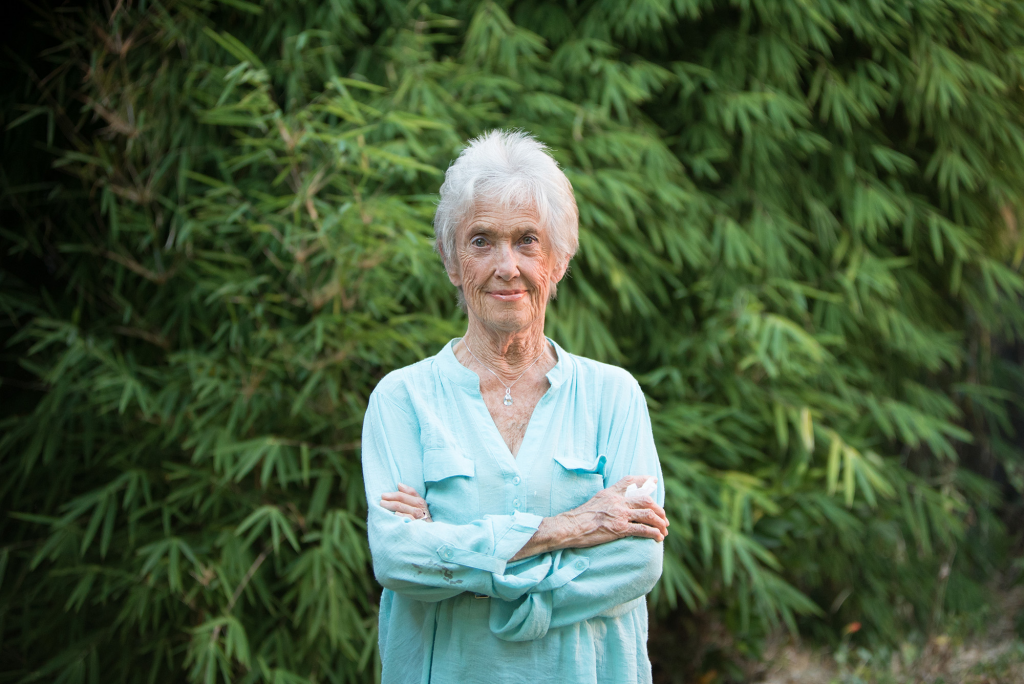
Photo by Adam Loften
“You are not a separate being. You belong to the living body of Earth. You are the Earth, looking up at the stars. You are the Earth, becoming conscious of itself.”
–Joanna Macy
On Saturday, July 19th, eco-philosopher, Buddhist scholar, and dear friend Joanna Macy passed away at the age of ninety-six. Undoubtedly one of the most influential leaders of deep ecology, she dedicated her long life to the Work That Reconnects—a body of practices fostering a remembrance of the interconnectedness between people and the greater web of life; and frameworks for alchemizing despair, anger, and apathy towards loss and harm into constructive change and action. Of our current cultural and ecological polycrises, Joanna said, “The darker the circumstance, the more brilliant the invitation.”
Joanna’s voice was one of the first we sought in our early publishing days, and she repeatedly offered insight and wisdom over the years through her writing, and as a teacher for our Seeds of Radical Renewal leadership program. In her interview with us, she traced the ways a life-long heart connection with the living world cultivated a resounding ecological awareness within her work, alongside a recognition of what she called “the Great Turning”—the possibilities of societal transformation that exist at the core of our unfolding destruction. “I have a lot of grief for what we’re doing to our world and to the future,” she said, “but I know at the same time that whatever happens, there’s nothing that can happen that will ever separate me from the living body of Earth.” Her exploration of how we might return to this “ecological self” as a way to be of service amid the climate catastrophe was central to many of her books, including World as Lover, World as Self, Coming Back to Life, and Active Hope. Joanna was also a seminal translator of Rainer Maria Rilke’s work. Moved by his contemplations on the entwinement of grief, beauty, and spiritual life, she often quoted a particular stanza from Book of Hours:
I live my life in widening circles
that reach out across the world.
I may never complete this last one,
but I give myself to it.
I circle around God, that primordial tower.
I’ve been circling for thousands of years
and I still don’t know: am I a falcon,
a storm, or a great song?
Through her work and life, Joanna imparted a way of being that does not shy away from collapse, but listens for what is emergent within it. She reminds us that grief is not a failing, and that to feel sorrow for the burning world is to be awake to its beauty: “In the face of impermanence and death, it takes courage to love the things of this world and to believe that praising them is our noblest calling.”
* * * * *
Joanna Rogers Macy (1929 – July 19, 2025) was an American environmental activist, author and scholar of Buddhism, general systems theory and deep ecology. She was the author of 12 books. She was married to Francis Underhill Macy, the activist and Russian scholar who founded the Center for Safe Energy. Wikipedia
Ramana Maharshi on happiness
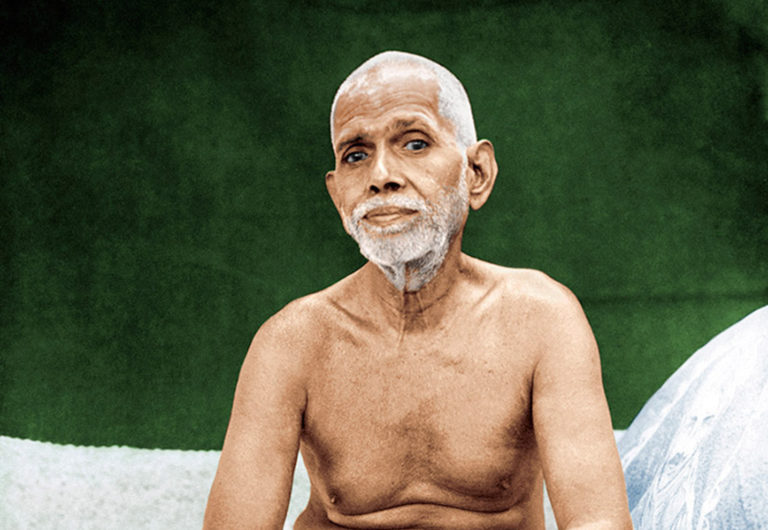
(mage from innerspiritualawakening.com)
“Happiness is your nature. It is not wrong to desire it. What is wrong is seeking it outside when it is inside.”
~ Ramana Maharshi
Ramana Maharshi (December 20, 1879 – April 14, 1950) was an Indian Hindu sage and jivanmukta. He was born Venkataraman Iyer, but is mostly known by the name Bhagavan Sri Ramana Maharshi. He was born in Tiruchuli, Tamil Nadu, India in 1879. Wikipedia