Astrology Is a Mythopoetic Language

It’s Not a Science

Rob Brezsny's avatar

ROB BREZSNY

AUG 05, 2025 (newsletter.freewillastrology.com)
IS ASTROLOGY REAL?

Is astrology real? Of course! Yes! Astrology is very real—although not in the same sense that the orange vermillion steel towers of the Golden Gate Bridge are real, or the lavender soap you used for your last shower, or the great horned owl you saw roosting in a juniper tree.

Astrology is real in the way that an Emily Dickinson poem is real, and psychology’s theory of the unconscious mind, and the dream of your dead ancestor you had last night, and the myths of Gilgamesh and Inanna, and the story Toni Morrison told in her novel Beloved.

Is astrology true? Of course! Though it’s not true in the same sense that the binomial theorem is true. Not true like the speed of light is 186,282.39 miles per second or like every molecule of water is composed of two hydrogen atoms and one oxygen atom. Astrology is not true in the same way as the fact that 55 big American corporations pay no federal taxes.

But astrology is intensely and intimately true in a trillion other ways. It’s as true as the epiphany you had when you realized you wanted to move to a new location or get married to a person you loved.

Astrology is true like the mix of delight and melancholy that seeps into you as summer turns to autumn. True in the same way that you feel cheerful and frisky when the first spring leaves appear on oak and maple trees. As true as the fact that you are sleepier in the depths of winter than at other times of the year.

Astrology is very much true, deeply and gloriously true, in the sense that Patti Smith is true as she sings her song “Radio Ethiopia.” True like the inspiration Georgia O’Keeffe tapped into as she painted Flowers of Fire. True like the wrathful hope that motivated Martin Luther King Jr. to write his “I Have a Dream” speech. True like the Indigenous Anishinaabe trickster spirit Nanabozho, an unruly, gender-changing hero whose job it is to learn the names of all creatures.

Astrology is as real and as true as your imagination. As real and as true as the story you tell yourself about your life. As real and as true as your never-ending cavalcade of yearnings.
ASTROLOGY IS A MYTHOPOETIC LANGUAGE

Should I engage in conversations with people who long ago decided that astrology is nonsense? It’s not a good use of my time. Their minds are as irrevocably and self-satisfyingly closed as an evangelical Christian Republican who already knows forever there’s no such thing as human-caused climate change.

But if an open-minded person agrees to consider my rational discourse, I begin with the thoughts below.

The majority of those who deride astrology with kneejerk derision don’t know that four of history’s greatest astronomers were practicing astrologers: Johannes Kepler, Galileo Galilei, Tycho Brahe, and Pierre Gassendi.

Most of the deriders haven’t read smart astrological philosophers like Dane Rudhyar, Alice O. Howell, Clare Martin, Steven Arroyo, Richard Tarnas, Antero Alli, Keiron Le Grice, and Liz Greene. They aren’t aware that pioneering psychologist Carl Jung cast horoscopes for all his patients and believed that “astrology represents the summation of all the psychological knowledge of antiquity.”

The deriders don’t know about astronomer Martha Maiden. She was a program executive at NASA for years and achieved such prominence that she now has an award named after her (https://www.esipfed.org/awards/martha-maiden-award/). Martha is also an excellent astrologer. I know because she and I were friends who attended Duke University at the same time. We lived next door to each other in Durham and carried on an astrology study group with two other friends.

The closest approach that fraudulent “skeptics” often make to studying the ancient art of astrology is to glance at a tabloid or internet horoscope column. To match their carelessness, I might make a drive-by of a strip mall and declare that the profession of architecture is shallow and debased.

That’s one reason why the ill-informed “skeptics” spread ignorant lies about the subject. For example, every few years, there’s an uproar in the press when an astronomer falsely declares that there is a 13th astrological sign, not just 12, and that therefore all our personal horoscopes are different from what we think they are.

Those astronomers haven’t bothered to do the most basic research about how astrology works. Their “rationality” is profoundly irrational. I’ve compiled more information about this subject here: https://tinyurl.com/IgnoreTheHoax.

Here’s another gross misunderstanding by “skeptics” who have eschewed basic research. They say that all astrologers think the stars and planets emit invisible beams of energy that shape people’s lives. The truth is, some Western astrologers believe that, but many don’t.

Science popularizer Carl Sagan provided an egregious example of this ignorance. In his TV series Cosmos, he portentously dismissed the straw-man notion that planets might impact a newborn baby.

He said, “How could the rising of Mars at the moment of my birth affect me, then or now? I was born in a closed room. Light from Mars couldn’t get in. The only influence of Mars which could affect me was its gravity. The gravitational pull of the obstetrician was much larger than the gravitational influence of Mars. Mars is a lot more massive, but the obstetrician was much closer.”

I’m still aghast that a scientist of Sagan’s caliber could have been so poorly informed.

Every single one of the many astrologers I respect agrees with what expert astrologer Richard Tarnas says in his book Cosmos and Psyche: The planets don’t emit invisible forces that shape our destinies as if we were puppets. Rather, they are symbols of the unfolding evolutionary pattern. Just as clocks tell time but don’t create time, the heavenly bodies show us the big picture but don’t cause it.

I don’t want to provide space for every spurious argument made by unscientific scientists. But here’s one more howler. Several self-described rational skeptics have assured me that astrology is nonsense because it believes “our behavior depends on the positions of the stars.”

I laugh out loud when I hear such comically ignorant drivel. The fact is that Western astrology has nothing to do with any stars except our own: the sun. It’s all about planets.

The “rational skeptics” make another fundamental error. The truth is that smart astrologers are not determinists, not dogmatists, not superstitious manipulators. They don’t believe that our behavior is dependent on or controlled by heavenly bodies.

+

Many scientists deride astrology as being a “pseudoscience.” In making such a fallacious claim, they reveal they have shunned the most basic principle of science, which is to actually investigate the subject they aspire to understand.

If these incompetents took the trouble to do research, they would have discovered that Western astrology’s best practitioners don’t claim that astrology is a science—which means that it can’t be a pseudoscience!

The lyrical and practical truth is that astrology is a blend of psychology, storytelling, and mythology. As Carl Jung said, it’s an aid in understanding and articulating how the psyche works. Like any language, it’s both logical and messy; it’s useful in making sense of the world, yet full of crazy-making ambiguities.

Astrology is a symbol system that, when used with integrity, engenders soulful approaches for deepening our connection to life’s great mysteries—not predictions of literal events. It liberates and fertilizes our imaginations and encourages us to think less literally. It teaches us to visualize our destinies as mythic quests and deepens our connection to life’s gorgeous mysteries.

Psychologist James Hillman spoke of the joyous work of learning our soul’s code—the blueprint of our destiny. That’s what astrology does best. To imagine that this can be done in a scientific way is irrelevant and delusional.

ASTROLOGY IS NOT A SCIENCE! Nor is storytelling, depth psychology, mythology, dream interpretation, or poetry.

It makes as much sense to criticize astrology for not being scientific as it does to deride Joseph Campbell treatises on the world’s mythic traditions or Ursula K. Le Guin’s science fiction novels because they don’t explicate and illustrate the quantum field theory of physics.

The scientific method is a wonderful method for achieving some understanding of the world. But we can’t use it to analyze the Indigenous Bororo people’s myth, “The Bird-Nester’s Aria.” It’s not a reliable strategy for uncovering deep truths about how a Beethoven symphony might alter the way we think about a problem we’re having at work.

We profoundly need the scientific method and logical deduction and objective perceptions. They are crucial to being human. But we also need mythopoetic storytelling and art that moves us emotionally in mysterious ways and playful fun that frees us from our fixations.

Does it make sense to say that analyzing and working on dreams is “pseudoscience”? Of course not. You can’t design a repeatable experiment to test your hypothesis about those slippery marvels. And yet, working with one’s dreams, analyzing them to find subconscious patterns that affect our behavior, can be intensely practical.

Astrology is not designed to compete with scientists’ logical analyses of why things are the way they are. Rather, it’s meant to open our minds to the mythic elements that underlie the surface-level interpretations of what we’re all about.

I can’t imagine any intelligent person who would believe that the scientific way of knowing is better and more important than the mythopoetic—or vice versa.
• • • • • • • • • • • • • • • • • • • • • • • • • • • • • • • • • • • • • • • • •

Rob Brezsny’s Astrology Newsletter is a reader-supported publication. To receive new posts and support my work, consider becoming a free or paid subscriber.Upgrade to paid at: https://newsletter.freewillastrology.com/p
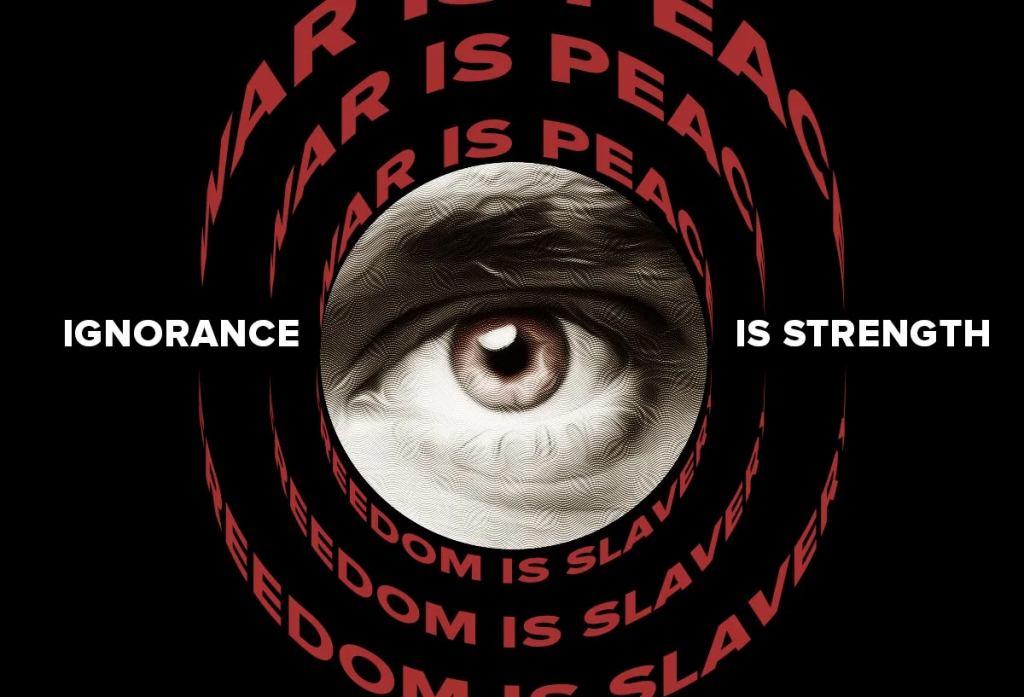
(Contributed by John Atwater, H.W.)

Cellular Consciousness and Healing with Joyce Hawkes (1940 – 2023)

New Thinking Allowed with Jeffrey Mishlove Aug 4, 2025 The late Joyce Whiteley Hawkes, PhD, was a biophysicist and author of Cell-Level Healing: A Bridge From Soul to Cell as well as Resonance: Nine Practices for Harmonious Health and Vitality. In this video, rebooted from 2019, she shares many details regarding the capabilities of the individual cells in our bodies. A 6-foot human has about 100 trillion individual cells. There are 200 different types of cells that all emerge from a single fertilized egg. These cells are in communication with each other and, without any conscious intervention on our part, coordinate smoothly. As a healer, Joyce is able to apply clairvoyant insight into the operation of cells. New Thinking Allowed host, Jeffrey Mishlove, PhD, is author of The Roots of Consciousness, Psi Development Systems, and The PK Man. Between 1986 and 2002 he hosted and co-produced the original Thinking Allowed public television series. He is the recipient of the only doctoral diploma in “parapsychology” ever awarded by an accredited university (University of California, Berkeley, 1980). He is also the Grand Prize winner of the 2021 Bigelow Institute essay competition regarding the best evidence for survival of human consciousness after permanent bodily death. He currently serves as Co-Director of Parapsychology Education at the California Institute for Human Science. (Recorded on October 14, 2019)

Francis Ford Coppola reveals George Lucas made him direct ‘The Godfather,’ warns America may fall like ancient Rome

By G. Allen Johnson,Staff Writer

Aug 2, 2025 (SFChroncile.com)

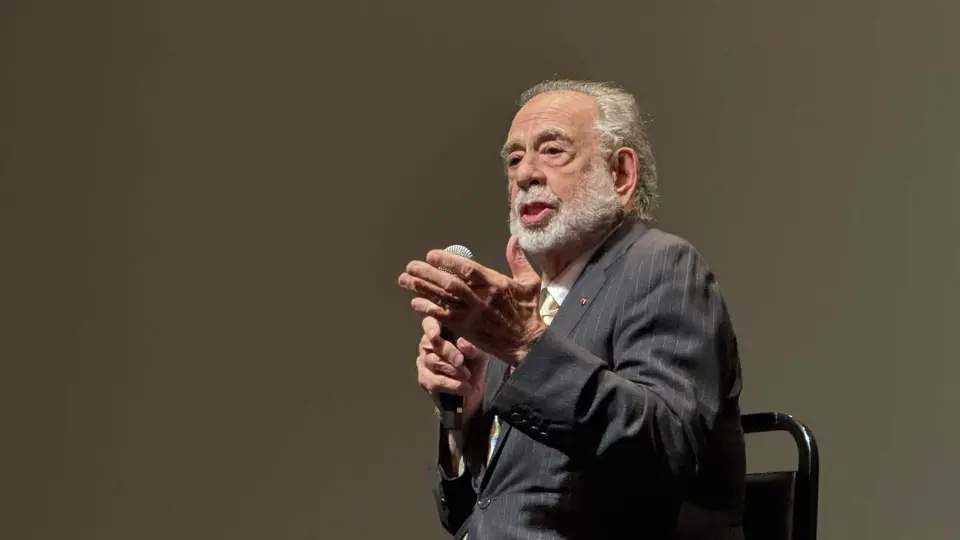
Film director Francis Ford Coppola talks during an appearance after a screening of “Megalopolis” at the Palace of Fine Arts in San Francisco on Friday, Aug. 1.G. Allen Johnson/S.F. Chronicle

Before he broke through with “American Graffiti,” before he became an instant legend with “Star Wars,” George Lucas became the unsung hero of another American classic that changed cinema history: “The Godfather.”

Or so claims Francis Ford Coppola, the director of that 1972 masterpiece.

“Everyone turned ‘The Godfather’ down, all the wonderful directors of the time,” the 86-year-old filmmaker told an enthusiastic crowd at the Palace of Fine Arts. “So they tried to hire me. Here was the logic: ‘One, he’s Italian American, so if it gets a lot of flack, they’ll blame him. Two, there’s a script that wasn’t very good, and he’s become a successful screenwriter, so he’ll rewrite the script. And three, he’s young and has two kids and a pregnant wife, so we can just push him around and order him to do everything we want.’”

Indeed, part of the lore of the “The Godfather” is that A-list Hollywood directors such as Otto Preminger, Sergio Leone, Arthur Penn and Peter Bogdanovich turned down the project, and producer Robert Evans then insisted that an Italian American direct. He offered it to Coppola, an independent filmmaker who had just won an Academy Award for writing the screenplay to the 1970 best picture winner “Patton,” directed by Franklin J. Schaffner, who won the Oscar for best director — and who also turned down “The Godfather.”

“Well, I turned it down,” Coppola recalled. “I had a young apprentice, and we had come together to start a company (San Francisco-based American Zoetrope). His name was George Lucas. He said, ‘We can’t turn it down, we have no money, the sheriff is going to chain our door because we haven’t made the taxes on the thing. You have to do it, we have no other alternatives.’ I said, ‘You’re right George.’”

Coppola and American Zoetrope went on to produce “American Graffiti,” filmed in Petaluma and San Rafael, sending Lucas on his way to his own groundbreaking career.

Billed as “An Evening with Francis Ford Coppola and ‘Megalopolis’ Screening,” the event in Coppola’s adopted hometown on Friday, Aug. 1, finished off a six-city tour designed to create more awareness and discussion of his 2024 $120 million self-financed dream project that tanked at the box office.

Coppola was certainly generous with his time. The event lasted nearly four hours, with a screening of the two-hour, 18-minute film followed by a 90-minute discussion with the filmmaker simply sitting in a chair pontificating on a wide range of issues while occasionally taking questions from the audience.

Topics included anthropology, history, societal evolution, and the philosophy of human innovation and creativity. “Megalopolis,” which likens the fall of Rome to the current state of American politics and culture, is informed by the development of human civilization over 300,000 years, noting that patriarchal societies began with the domestication of horses.

So, not your typical film discussion.

Still, the audience who paid prices ranging from $61-$205 and mostly filled the 1,000-seat venue were enthusiastic and attentive, giving the auteur standing ovations as he took the stage and as he left it. However, there was a small but steady stream of people who began leaving about 45 minutes in.

One topic that hits close to home for Coppola is homelessness in San Francisco. The director noted that he founded a nonprofit, North Beach Citizens, in 2001 to help the unhoused find housing, food and services because he felt the city wasn’t doing enough.

“I used to walk to work and see these homeless people sleeping, and people would call them human garbage. What, are we crazy?” said Coppola, who added that the solution to most of society’s problems has to be addressed first at the community level, inverting the top-down aspect of federal government.

Coppola gave insights about his films, from the two “Godfathers” to the San Francisco-shot, Watergate-era thriller “The Conversation” (1974); the troubled production of the Vietnam War movie “Apocalypse Now” (1979); and “Bram Stoker’s Dracula” (1992), his biggest non-”Godfather” box office hit.

And, of course, “Megalopolis.” Although he did not address various controversies about its production, including on-set inappropriate behavior (and no one asked about it, either), he believes it serves a warning about America and yet provides hope for the future.

America “will get out of this mess,” Coppola said, as today’s generation of children matures.

“Look at the world around us right now, wars all over the place, and the most horrible thing of all, children being killed,” Coppola said. “The kids being killed in Sudan or in the Middle East, someone was gonna find a cure for cancer or write the most gorgeous music ever been written or make a great film. So to me the children are precious. They are our future.”

For now, Coppola refuses to release “Megalopolis” digitally, content to tour with the movie for special one-off screenings. The film only made $14 million globally after its release in September. He did acknowledge there eventually will be a Blu-ray, and the man known for re-editing his past films teased the audience with an alternate cut of the film.

“Right now I’m working on ‘Megalopolis Unbound,’” he said to laughter, and ended the night.

Aug 2, 2025

G. Allen Johnson

STAFF WRITER

G. Allen Johnson is a San Francisco Chronicle staff writer.

Kiss: Ellen Bass’s Stunning Ode to the Courage of Tenderness as an Antidote to Helplessness

By Maria Popova (themarginalian.org)

There is no greater remedy for helplessness than helping someone else, no greater salve for sorrow than according gladness to another. What makes life livable despite the cruelties of chance — the accident, the wildfire, the random intracellular mutation — are these little acts of mercy, of tenderness, the small clear voice rising over the cacophony of the quarrelsome, over the complaint choir of the cynics, to insist again and again that the world is beautiful and full of kindness.

It makes all the difference in a day, in a life, to hear that voice, all the more to be that voice. It is our evolutionary inheritance — we are the story of survival of the tenderest, the living proof that tenderness may be the ultimate fitness for being alive.

I know no better homily on this fundament of our humanity than Ellen Bass’s poem “Kiss” from her altogether soul-salving collection Indigo (public library).

KISS
by Ellen Bass

When Lynne saw the lizard floating
in her mother-in-law’s swimming pool,
she jumped in. And when it wasn’t
breathing, its body limp as a baby
drunk on milk, she laid it on her palm
and pressed one fingertip to its silky breast
with just about the force you need
to test the ripeness of a peach, only quicker,
a brisk little push with a bit of spring in it.
Then she knelt, dripping wet in her Doc Martens
and camo T-shirt with the neck ripped out,
and bent her face to the lizard’s face,
her big plush lips to the small stiff jaw
that she’d pried apart with her opposable thumb,
and she blew a tiny puff into the lizard’s lungs.
The sun glared against the turquoise water.
What did it matter if she saved one lizard?
One lizard more or less in the world?
But she bestowed the kiss of life,
again and again, until
the lizard’s wrinkled lids peeled back,
its muscles roused its own first breath
and she set it on the hot cement
where it rested a moment
before darting off.

Couple with Nobel laureate Olga Tokarczuk on storytelling and the art of tenderness, then revisit Ellen’s magnificent poems “Any Common Desolation” and “How to Apologize.”

The Paradox of Knowing Who You Are and What You Want: Cristina Campo on Fairy Tales, Time, and the Meaning of Maturity

By Maria Popova (themarginalian.org)

“If you want your children to be intelligent, read them fairy tales,” Einstein reportedly told one mother who wished for her son to become a scientist. “If you want them to be very intelligent, read them more fairy tales.” Given that the deepest measure of intelligence is a plasticity of being that allows us to navigate uncertainty, given that uncertainty is the pulse-beat of our lives, fairy tales are not — as J.R.R. Tolkien so passionately insisted — only for children. They are more than fantasy, more than fiction, shimmering with a surreality so saturated that it becomes a mirror for what is realest in us, what we are often yet to see. They enchant us with their strangeness because we are largely strangers to ourselves, ambivalent in our yearning for transformation, for redemption, for homecoming, restless in our longing to unmask the face of love and unglove the hand of mercy. They ask us to believe in magic and reward our trust with truth.

Art by Maurice Sendak for a special edition of the Brothers Grimm fairy tales

Fairy tales are above all in service of life’s most difficult, most unfinishable task — knowing who we are and what we want. Their most revelatory function is to remind us that, because we know ourselves only incompletely, we don’t always know what we are looking for until we find it, often by way of getting lost, or until it finds us, often in a guise we don’t immediately recognize as the very thing we long for.

That is what Italian writer Cristina Campo (April 29, 1923–January 10, 1977) explores in her excellent posthumous essay collection The Unforgivable: And Other Writings (public library).

Observing that many fairy tales “end like a ring right where they began,” she writes:

In a fairy tale, there are no roads. You start out walking, as if in a straight line, and eventually that line reveals itself to be a labyrinth, a perfect circle, a spiral, or even a star — or a motionless point the soul never leaves, even as body and mind take what appears to be an arduous journey. You seldom know where you are traveling, or even what you are traveling toward, for you cannot know, in reality, what the water ballerina, or the singing apple, or the fortune-telling bird may be. Or the word to conjure with: the abstract, culminating word that is stronger than any certainty.

One of Kay Nielsen’s stunning 1914 illustrations for Scandinavian fairy tales. (Available as a print and as stationery cards.)

Through these routeless convolutions, we map the terra incognita of your own interior world. In a passage evocative of the Chinese notion of wu-wei — “trying not to try” — Campo considers the paradox of self-discovery:

Since the thing you start out looking for cannot and must not have a face, how can you recognize the means to reach it until you’ve reached it? How can the destination ever be anything but an apparent destination?

[…]

No one arrives at the enlightenment he sets out to seek. It will come to him in its own sweet time. Thus the destination walks side by side with the traveler… Or it hovers behind him… In truth, the traveler has always had it within him and is only moving toward the motionless center of his life: the antrum near the spring, the cave — where childhood and death, in one another’s arms, confide the secret they share. The idea of travel, effort, and patience is paradoxical, yes, but it is also exact. For in this paradox, we stumble on the intersection of eternity and time.

It is hardly surprising that, in their central project of loosening the clutch of certainties we call a self, fairy tales blur the ordinary experience of time — time, after all, is the substance we are made of.

Another of One of Kay Nielsen’s Scandinavian fairy tales illustrations. (Available as a print and as stationery cards.)

In a passage brimming with the musicality Maurice Sendak considered the key to great storytelling, Campo — the daughter of a musician and a composer — writes:

The geometry of time and space is abolished as if by magic. You walk for hours in a circle, or conversely, you reach the edge of the infinite in a few quick steps. It isn’t our state of heightened vigilance that casts a spell on the world around us; it is a much more recondite correspondence between discovering and letting ourselves be discovered — between giving shape and taking shape. Everything already was, but today it truly is. Today any peasant, pointing in any direction, will sound like a gnome or a fairy, will gesture at the path you nearly took a thousand times without suspecting it. The path that leads to four indescribably white springs suspended on the hillside, protected, for a hundred paces or a thousand miles, by fields of tall fragrant grasses; or to the royal tomb hidden by the Etruscans in a cave now covered with brambles, out of which white hounds and a man the size of an ifrit, carrying a shotgun, emerge; or down below the ridge secretly lighted by the sun, at a bend in the riverbank so deep it casts the whole hanging tangle of pink roots into shadow. Velvet water that looks motionless and yet moves. Water that runs off into the beyond without flowing, so that it would be enough just to follow it, for that beyond which is always forbidden, always intimated in our dreams, is transpiring here and now.

I am thinking now of Hannah Arendt’s magnificent meditation on love“Fearlessness is what love seeks,” she wrote. “Such fearlessness exists only in the complete calm that can no longer be shaken by events expected of the future… Hence the only valid tense is the present, the Now.” Perhaps this is why love is the central axis of most fairy tales, why love in real life has a certain dreamlike quality, why both love and dreams are ways of getting to know the stranger in us. “In each of us there is another whom we do not know,” Carl Jung wrote, “[who] speaks to us in dreams.”

One of teenage artist Virginia Frances Sterrett’s 1929 illustrations for French fairy tales. (Available as a print and stationery cards.)

There is the same dreamlike quality and the same capacity for revelation in the state we enter once a fairy tale ejects us from time and thrusts into nowness. Campo paints the dreamscape we enter:

Quick glances direct our steps, hands point beyond the thresholds. Behind windowpanes so clear they blind us move the figures of the ones we loved, the ones we’ve lost, who, behold, stand up from the piano bench or arrange fruit on a table. It all unfolds like a scroll from a mouth known yet unknown, a dark and luminous sentence, an irrefutable commentary set down between past and future.

In being both a portal between the known and the unknown and a still point between past and future, fairy tales help us discern our own nature by guiding us toward the deepest truths of who we are and helping us apply them to the mystery of being alive — a nonlinear process the fruits of which we call maturity. Campo writes:

Maturity is not the result of persuasion, much less an intellectual epiphany. It is a sudden, I would almost like to say biological, collapse. It is a point that must be reached by all the senses at once if truth is going to be turned into nature.

Complement with Polish Nobel laureate Wisława Szymborska on fairy tales and the necessity of fear and Anaïs Nin on the meaning of maturity, then revisit the greatest illustrations from 200 years of Brothers Grimm fairy tales.

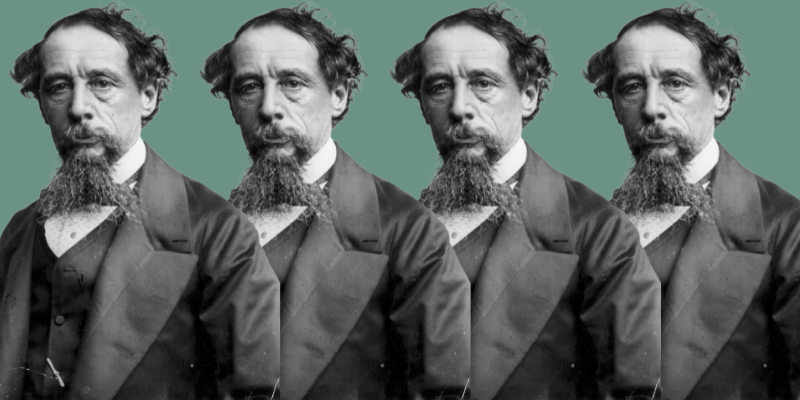
How Charles Dickens’s Troubled Childhood Influenced His Literary Output

VIA BLOOMSBURY CONTINUUM

Peter Conrad Explores the English Novelist’s Cyclical Vision of Life and Art

By Peter Conrad

May 5, 2025 (Lithub.com)

By February 1844, Dickens could smilingly assume that his was a cue for universal joy. Earlier, the world seemed more inclined to demean or discard him. In 1823, not yet twelve and “such a little fellow” as he plaintively put it, he was removed from school and sent out to work to help defray the debts of his improvident father.

His parents, interned in the Marshalsea prison until they settled with John Dickens’s creditors, deposited Charles with a crabby crone who rented rooms to children; from Monday morning to Saturday night he pasted labels onto bottles of shoe polish in a warehouse just off the Strand, storing a small loaf and a piece of cheese in the old woman’s cupboard for his suppers. His Sunday treat was to visit his parents in the prison. After a year, a legacy enabled his father to pay off what he owed. Let out of the Marshalsea, he extricated Charles from the blacking factory, though his mother favored leaving him there.Dickens, however, thought of childhood as a hell that was always liable to return from the old time to ensnare him.

Shamed and lastingly wounded by his ordeal, Dickens kept it a secret and only disclosed the details in a memoir that he entrusted to John Forster in 1847. His tone in this fragment of autobiography is cheerlessly ironic. “It is wonderful to me,” he wrote, “how I could have been so easily cast away at such an age”: wonderment here means numb disbelief. He was also a castaway of a peculiar kind, not the victim of a shipwreck far from home like Robinson Crusoe or Walter Gay in Dombey and Son, since he had been cast out by those who should have taken care of him.

With the same sharp-edged resentment, he described his drudgery as a professional initiation, the start of his “business life.” His task was to cover the pots with layers of paper, tidy up the edges and then, once they had attained a “pitch of perfection,” apply the printed labels. “Perfection” was his sour joke about an aesthetic standard; “pitch” made it sound as if he was already dabbling in black ink. Summing up, he declared that during this period he had “no advice, no counsel, no encouragement, no consolation, no support, from any one that I can call to mind, so help me God.” His abiding grievance punctuates this enumeration of parental failures, and the concluding oath gives the accusation a legal force.

Fifteen years later he referred in a letter to “the never-to-be-forgotten misery of that old time” and tried to forget the misery by transferring it to “a certain ill-clad, ill-fed child”—an indigent, anonymous waif he might have seen in the street, his undersized Doppelgänger. Reversing biological precedence, Wordsworth maintained that “The child is father of the man” and hoped never to lose the boyhood spirit of “natural piety” on which his poetry depended. Dickens paraphrased that declaration but dented its glad hope in a Household Words account of a childhood outing, when he described an unkempt boy whom he then identified as the “exceedingly uncomfortable and disreputable father of my present self.”

Dickens retained the fresh and vibrant vision that Charles Baudelaire envied in children, who “see everything as a novelty” and seem “always intoxicated,” yet his exhilaration was always edged with dread. In one of Wordsworth’s poems about his own early years, a boy cups his hands at his mouth and blows “mimic hootings to the silent owls / That they might answer him”; the hallooing develops into screams of delight which Wordsworth soberly summarizes as “concourse wild / Of jocund din!”

Dickens’s boys are more likely to be begging or picking pockets than romping through the landscape duetting with birds, and his closest equivalent to those poetic hootings comes in David Copperfield when a filthy dealer in used clothes—a “drunken madman” who is said to have sold himself to the devil—peppers his every utterance to David with the ejaculation “Goroo” and extends this rasping outburst into “a sort of tune…like a gust of wind.”

For Wordsworth, childhood was a paradise that was lost in time but could be regained in space, and he recovered it on his perambulations through the landscapes in which he grew up in Cumberland. Dickens, however, thought of childhood as a hell that was always liable to return from the old time to ensnare him, even though in space he made conscientious efforts to avoid it: in middle age he still looked the other way when walking past Charing Cross, so as not to see the street running down to the river where the blacking factory was located.

Two exchanges in Dombey and Son convey his conviction that his childhood, rather than being mislaid, had been stolen from him. Doctor Blimber, headmaster at the school in which the disconsolate Paul has been enrolled, asks a rhetorical question about his ailing pupil: “Shall we make a man of him?” Paul replies, “I had rather be a child,” but that is not an option. Nor is it for Edith, who cynically marries Paul’s father after his first wife dies. “When was I a child? What childhood did you ever leave to me?” she asks her mother, the raddled coquette Mrs. Skewton, who raised her with the sole purpose of beguiling and entrapping a rich man. Her mother “gave birth,” Edith says, “to a woman.”

A blithe childhood like Wordsworth’s was a luxury, as Dickens recognized when he wrote a pair of sentences that he eventually deleted from the manuscript of Little Dorrit because the truth they told was too caustic: “The poor have no childhood. It must be bought and paid for.” In the absence of anyone to pay, his Christmas story The Haunted Man and the Ghost’s Bargain shows us the unaccommodated child. A tutelary phantom points to a sleeping boy and calls him “the last, completest illustration of a human creature,” “abandoned to a worse condition than the beasts,” unalleviated by any “humanising touch.” The child is the phantom when young, and in looking back he echoes Dickens’s lament in his memoir. “No mother’s self-denying love, no father’s counsel, aided me,” he says; he compares himself, as Dickens might have done, to a bird expelled from the nest to scavenge for itself.

Dickens endows the infants in his novels with a desolate foreknowledge of what awaits them. Mr. Chillip, the physician who delivers David Copperfield, later has a child of his own, “a weazen little baby, with a heavy head that it couldn’t hold up, and two weak staring eyes, with which it seemed to be always wondering why it had ever been born,” and in Bleak House Caddy Jellyby’s baby is a “tiny old-faced mite,” sadly pensive in its crib. One of the Spirits who visits Scrooge temporizes between the first and last ages of man. He is “a strange figure—like a child; yet not so like a child as like an old man, viewed through some supernatural medium, which gave him the appearance of having receded from the view, and being diminished to a child’s proportions.”

Dickens has been reproached for not allowing his characters to grow and change; he could hardly do so, because he saw life as circular rather than developmental. Beginning and end conjoin to squeeze the middle. Mrs. Skewton, for instance, wears a traveling robe “embroidered and braided like an old baby’s,” and Little Nell’s grandfather naively falls prey to gamblers because he is a “grey-haired child.” The emotionally unawakened Sally Brass in The Old Curiosity Shop has “passed her life in a kind of legal childhood”; along the way she manages to produce an illegitimate daughter, who is equally stunted—”an old-fashioned child,” she has apparently been “at work from her cradle.” A second childhood may perhaps be happier than the first, since at least it will have a definitive terminus.

In A Tale of Two Cities Sydney Carton asks the elderly banker Lorry if in old age childhood seems remote. Lorry touchingly replies that the closer he gets to the end, the nearer he feels to the beginning: it is “one of the kind smoothings and preparings of the way.” The sentiment recurs in The Mystery of Edwin Drood, where fond recollections of “nursery time” in Cloisterham have a second coming when those who grew up there reach their “dying hours.”Dickens has been reproached for not allowing his characters to grow and change; he could hardly do so, because he saw life as circular rather than developmental.

In an essay on his frequent visits to the Paris morgue, Dickens speaks of childhood as an “impressible time”: his word imagines an imprint, an indentation that leaves a mark like that of inky type on a blank page, rather than a vivid unfocused sensuous impression. “An intelligent child’s observation,” he says, is remarkable for its “intensity and accuracy,” and—surely unnecessarily—he warns “some who have the care of children” against taking their young charges on outings to see the bloated corpses fished from the Seine. It is bad enough, he adds, to send children into the dark or to coop them up in a bedroom alone as prey to “the great fear”; if you treat a child in that way, “you had better murder it.”

When Wordsworth said in The Prelude that he “grew up / Foster’d alike by beauty and by fear,” he was thinking of an “impressive discipline of fear” much milder than the disabling horror experienced by Pip in the graveyard in Great Expectation when the convict Magwitch rears up behind the tombstones or by Oliver Twist when he is taken to visit Fagin in the condemned cell. Wordsworthian discipline does not extend to the flogging administered to David Copperfield by his stepfather Murdstone; at worst, Wordsworthian fear is his awed sense that nature silently reproves him when he ravages a tree to feast on its crop of hazelnuts.

Wordsworth’s account of his “seed-time” pays grateful tribute to the green earth as “the nurse, / The guide, the guardian of my heart, and soul / Of all my moral being.” At the age of six, Dickens had an amoral indoor equivalent in his nurse Mary Weller, who was only thirteen when she was engaged to look after him. He honored her as a “female bard” and thought that she must have been descended from “those terrible old Scalds,” the Skalds who recited poems about Norse heroes; despite his later warnings about frightening children, her bardic gift to him was an enjoyable terror.

At night, as he claims in The Uncommercial Traveller, she told him stories that were “utterly impossible…but none the less alarmingly real”—sagas about a swash-buckling serial killer, or a shipwright who enters into a diabolical pact and as a result is forced to sail in a vessel infested with rats, which nibble their way through the boards and sink it, drowning all hands. Nature nursed Wordsworth “with something of a Mother’s mind,” but rather than maternally soothing Dickens, Mary sent him into “the dark corners we are forced to go back to, against our wills.” He meant the inkier corners of his mind: what may sound like a punishment was also a literary initiation.

__________________________________

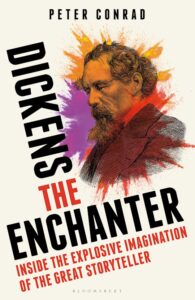
Excerpted from Dickens the Enchanter: Inside the Explosive Imagination of the Great Storyteller by Peter Conrad. Run with permission of the author, courtesy of Bloomsbury Continuum, an imprint of Bloomsbury Publishing Plc. Copyright © Peter Conrad, 2025.

19th centuryBloomsbury ContinuumBloomsbury PublishingBritish literatureCharles DickenschildhoodDickens the Enchanter: Inside the Explosive Imagination of the Great StorytellerEnglandEnglish literaturePeter Conrad


Peter Conrad
Peter Conrad

Peter Conrad is a literary critic and cultural historian. His books include The Everyman History of English LiteratureCreation: Artists, Gods & Origins; and Modern Times, Modern Places: Life and Art in the Twentieth Century.

Give First: How to Help Others Without Short-Changing Yourself 

 July 29, 2025 (menalive.com)

By  Jed Diamond

                For more than fifty years I have enjoyed a successful career in the emerging field of Genders-Special Medicine and Men’s Health. In a recent article, “Men’s Work: Why I Do What I Do,” I responded to a request by a colleague to answer these two questions:

  1. Why Do What You Do?
  2. What Do You Receive?

                Like many colleagues I know in the “helping professions,” I developed an early interest in helping others when a family crisis turned my world upside down. When I was five years old my mid-life father took an overdose of sleeping pills after he had become increasingly depressed when he couldn’t find work to support his family. Though he didn’t die, our lives were never the same.

                My father was committed to Camarillo State Mental Hospital, north of our home in Los Angeles. My uncle Harry visited my father every Sunday and I was charged by my mother to go with him. I was confused and scared and asked my mother why I had to go. She told me:

                “Because your father needs you.”

                She also thanked me for being her “Good Little Man,” a role that caused a great deal of stress, confusion, and unachievable demands I have made towards myself over the years.

                I grew up wondering what happened to my father, when it would happen to me and what I could do to keep it from happening to other men and their families. My own healing journey and what I’ve learned is reflected in my most popular books and on-line courses:

                As a child thrust in the role of caregiver long before I was capable of helping anyone, I learned to sacrifice my own needs to care for others. The old adage: “It is better to give than receive,” seemed the most natural thing in the world. It has taken years of therapy, self-reflection, and support to learn that I had to give to myself before I really had anything I could give to others.

                This truth came home to me when my wife and I were raising our two young children. As every parent knows, little ones require a huge amount of time, attention, love, and care. But if we don’t take care of ourselves we can easily become overwhelmed and burned out. I was forced into self-care when my doctor told me my stressful job would kill me if I didn’t get some regular exercise.

                My wife told me our marriage wouldn’t survive if we didn’t have more time for each other away from the kids. She insisted on a Wednesday, date-night, that soon became sacrosanct. Over the years I have continued to find ways to give to others without short-changing myself.

Give First: The Power of Mentorship

                In recent years I have been approached by experts in the field who had books or programs coming out and asked for my support in promoting their work. I turn down most requests as not being aligned with my expertise or where I don’t feel my help would significantly contribute to the field of men’s health.

                I see part of my role as an elder in the field to offer support and mentorship to others. For those I felt were doing significantly good work in the field of Gender-Specific Medicine and Men’s Health and where I felt I had something significant to offer, we set up a time to talk. Here are a few of the people I felt would be helpful to do an on-line interview, write an article, and share it with my large community:

                I don’t charge for the time I spend interviewing them, writing articles, and sharing them with my communities. I have been helped by others in the past and I enjoy helping where I can. But this isn’t just “Giving.” I always get something back. It may be from the person who I helped. It may be from someone else. The old saying “What goes around, comes around,” seems appropriate.

                I recently came across a book, Give First: The Power of Mentorship by Brad Feld. Feld has been an early-stage entrepreneur and investor since 1987. He co-founded two venture capital firms and multiple companies including Techstars. His view of giving helped me make sense of what I had been doing for some time. He says:

                “One of my deeply held beliefs to the secret success in life is to give before you get. In this approach, I am always willing to try to be helpful to someone without having a clear expectation of what is in it for me. If, over time, the relationship is one way (e.g., I’m giving, but getting nothing), I’ll often back off on my level of give because this belief doesn’t underlie a fundamentally altruistic approach.

                “However, by investing time and energy up front without a specifically defined outcome, I have found that, over time, the rewards that come back to me exceed my wildest expectations.”

                That was certainly true for me and I believe it is true for most colleagues I know who are successful in their careers and in their lives. Based on his work at Techstars (Techstars is a global startup accelerator and venture capital firm founded in 2006 and headquartered in New York City.) Brad Feld and his partner David Cohen developed “The Techstars Mentor Manifesto” with 18 practices that Feld elaborates in the book. Here are some of the points that particularly resonate with me and my work:

  • Be authentic — practice what you preach.
  • Be direct. Tell the truth, however hard.
  • Listen. (With your heart as well as your head).
  • Clearly commit to mentor or do not. Either is fine.
  • The best mentor relationships eventually become two-way.
  • Know what you don’t know. Say “I don’t know” when you don’t know. “I don’t know” is preferable to bravado.
  • Be optimistic.
  • Provide specific actionable advice; don’t be vague.
  • Be challenging/robust but never destructive.
  • Have empathy. Remember that startups are hard.

                Although Feld’s book, Give First, was written from his experience as an entrepreneur developing startup communities, I believe there is a lot of wisdom here for parents, therapists, business leaders, artists, writers, and healers. For example, you can read an article I wrote about giving love, “The 5 Stages of Love and the Go-Giver Marriage,” and an interview I did with best-selling author John David Mann.

                For more articles like these, please visit me at  https://menalive.com/

Author Image

Best Wishes,

Jed Diamond


Founder and VHS (Visionary Healer Scholar) of MenAlive

Dude, the history behind the word dude is wild

JULY 30, 2025 (NPR.org)

HEARD ON ALL THINGS CONSIDERED

By Kat Lonsdorf

Andy Irons of Hawaii takes a bottom turn on a wave during the Boost Mobile Pro, Part of the Foster's ASP Men's World Surfing Tour on Sept. 18, 2005, at Lower Trestles in San Clemente, Calif.

Andy Irons of Hawaii takes a bottom turn on a wave during the Boost Mobile Pro, Part of the Foster’s ASP Men’s World Surfing Tour on Sept. 18, 2005, at Lower Trestles in San Clemente, Calif.

Donald Miralle/Getty Images

For any child of the ’80s or ’90s, the word “dude” conjures up a specific vibe: a laid-back, California surfer-skater — perhaps drinking a white Russian — unbothered (or maybe unaware) of the pressing concerns of the world around him.

It was also a word that defied specificity — used as a greeting, an agreement, a commiseration or an exclamation.

“Dude” was everywhere.

But it wasn’t a new word back then — not even close. By the 1980s, the term “dude” had been around for at least 100 years. In this week’s Word of the Week, we explore the long and winding road “dude” took from New York City to the surfers in California.

Where did “dude” come from?

circa 1880: A man being assisted by his servant in the mode of dressing.

Circa 1880: A man being assisted by his servant in the mode of dressing.

Hulton Archive/Getty Images

The exact origin of the word has been difficult for linguists to pin down, but Gerald Cohen, a professor at Missouri University of Science and Technology, published a book on the topic in 2023 with two other language scholars. Cohen says it seems to have been coined in reaction to a particular fad among young men in New York City in the late 19th century. Think hipsters of the 1880s.

“They were young. They were vacuous. They were effeminate — and they were drawing a bit of attention from the humorists and the cartoonists,” Cohen told NPR.

He says this crowd had a certain way of dressing — usually over-the-top and fancy — and leaned into an Anglophile lifestyle that was often perceived by many as fake or trying-too-hard.

Eventually, these men became known as “dudes,” likely in reference to Yankee Doodle, who, as the old war song goes, was an unsophisticated American who “stuck a feather in his cap” in an attempt to parade as a kind of European “dandy” in high society.

Cohen and his colleagues spent more than 20 years trying to pinpoint the moment that reference was first made, combing over old newspaper archives and pop culture references from the time. They eventually found a poem published in a New York City newspaper titled “The Dude” written by a little-known poet named Robert Sale Hill, where he derides the fad.

Here are the final lines:

America can ill afford

To harbor such deformity,

And we would humbly thank the Lord

To spare us this enormity.

But, Cohen says, the poem had the opposite effect.

“It caused a social craze. All of a sudden ‘dude’ was appearing all over,” he says.

An 1883 article from the New York Times describes a “dudes’ picnic” where thousands of young people rushed to a park in Harlem at the promise of seeing men in “full dude dress.”

The Dude Ranch

It was that over-the-top style of dress that brought about the term “dude ranch,” experts say. In the late 19th century, traveling out West and experiencing cowboy culture was trendy. People — mostly men — would come from East Coast cities like New York to ranches on vacation, often dressed in full cowboy attire, according to Bryce Albright, executive director of the National Dude Ranchers Association, an organization that has been around for almost 100 years.

“It was a very big dress up for those people, because that’s not something they owned, you know, before they decided to take this vacation,” says Albright. “And so it kind of turned into our trademark.”

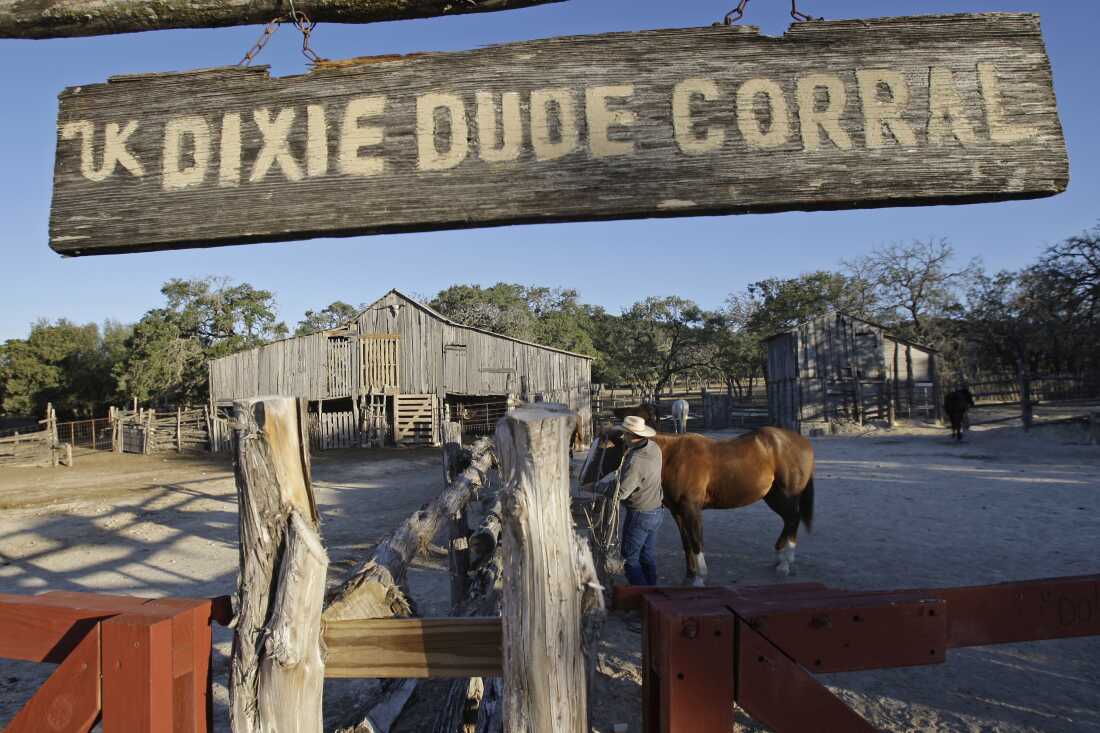
Horses are prepared for a morning ride at the Dixie Dude Ranch near Bandera, Texas, Oct. 24, 2008.

Horses are prepared for a morning ride at the Dixie Dude Ranch near Bandera, Texas, Oct. 24, 2008.

Eric Gay/AP

Ranches started advertising themselves as “dude ranches” to attract visitors, and the name stuck. So did the attire.

“And even still, you see people show up that have brand new Wranglers, and button pearl snap shirts and fancy boots and cowboy hats that none of us could ever even think of affording. And it’s fun to see them get dressed up,” she says.

The shift to the everyman  

In the mid-20th century, the term “dude” traveled further across the country, making its way to African American and Mexican American populations, says Scott Kiesling, a linguistics professor at University of Pittsburgh who has also studied the word. The term’s rise coincided with the zoot suit — also very flashy and full of fabric — and popular with men of color, he says.

He says originally, it seems they were called “dude” as more of a derogatory term.

Three Jamaican immigrants (left to right) John Hazel, a 21-year-old boxer, Harold Wilmot, 32, and John Richards, a 22-year-old carpenter, arriving at Tilbury on board the ex-troopship 'Empire Windrush', smartly dressed in zoot suits and trilby hats.

Three Jamaican immigrants (left to right) John Hazel, a 21-year-old boxer, Harold Wilmot, 32, and John Richards, a 22-year-old carpenter, arriving at Tilbury on board the ex-troopship ‘Empire Windrush’, smartly dressed in zoot suits and trilby hats.

Douglas Miller/Getty Images/Hulton Archive

“And then what we think happened — which is what happens in a lot of these kinds of situations —[Mexican American and Black people] adopted it with each other, and it became this marker of solidarity and connection,” Kiesling says.

From there, it started to become less associated with fancy dress and more with masculinity, and other subgroups started to pick it up, particularly the surfers and skaters out in California — which is when Hollywood really got a hold of it in the 1980s and 90s.

Now, Kiesling says, the word, which began in reference to young men, has lost a lot of its gender connotation but is still meant to show familiarity with a person. Maybe you don’t use it with your boss or a stranger, but with your friends or acquaintances to show that you’re in the same group.

And don’t be fooled — even with the rise of “bro” (see NPR’s Word of the Week here), “dude” still reigns supreme, according to a recent survey Kiesling conducted.

“Dude is still used the most, I think people just don’t notice it as much,” he says.

Rock on, dude.

(Contributed by Michael Kelly, H.W.)

Six planets in alignment in Aquarius on August 9 and 10

(openhandweb.org)

The Stars Are Aligning – Get Ready!

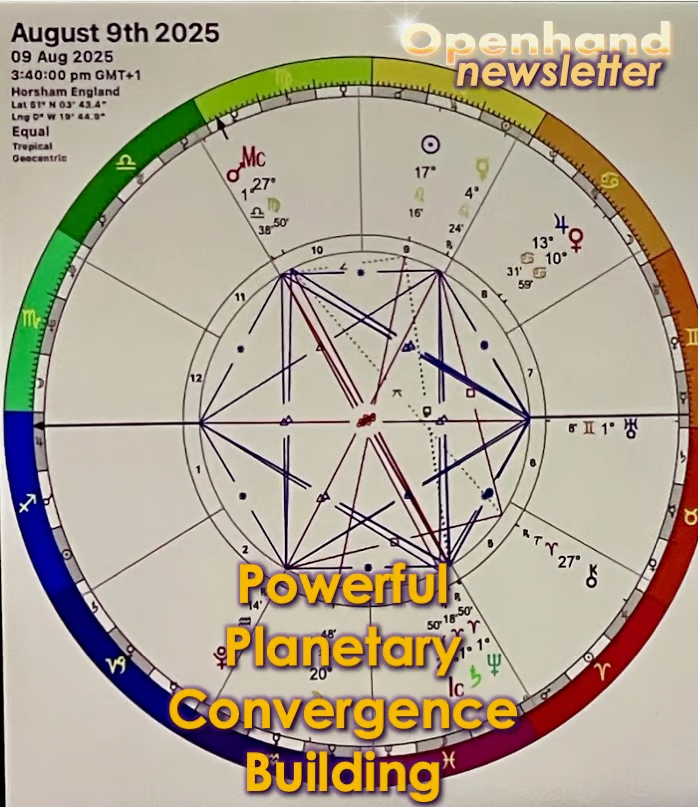
Right now massive planetary energies are converging at a pivotal moment in planetary history. The Shadow knows this all too well, which is why it’s trying to distract with new militaristic machinations – don’t be fooled! What’s going on exactly? Let’s explore.Pivotal Juncture in Planetary History

On August 9th, six planets will come into alignment to form a hexagon: Mercury, Venus, Jupiter, Uranus, Neptune and Saturn. This is taking place at what Openhand perceives as ‘another massive turn of the galactic cogs’. And it’s coming right when the planet needs it most – where a breakthrough of the Simulation needs to happen. 
It is happening!

We didn’t know this when planning, but the new Openhand Book AVALONIA is released that very day. Which will happen during the World Ascension Summit, which is coming right up. The planetary alignment signals most clearly that the Star Being Nations will be there in support.

I’m getting chills just writing this!

(Contributed by Heather Williams, H.W., M.)

Consciousness, spirituality, biography, sexuality, androgyny, futurism, space, the arts, science, astrology, democracy, humor, books, movies and more