The Coziest Place on the Moon: An Illustrated Fable about How to Live with Loneliness and What It Means to Love, Inspired by a Real NASA Discovery

By Maria Popova (themarginalian.org)

On July 26, 2022, as I was living through a period of acute loneliness despite being a naturally solitary person, NASA reported that computer modeling of data from its Lunar Reconnaissance Orbiter (LRO) had revealed several cylindrical pits on the Moon with just the right shape to be shaded just the right amount to offer shelter from the extremes of the lunar surface. Because the Moon has no atmosphere to act as its thermostat, its temperature fluctuates dramatically as it faces and turns away from the Sun, rising to 260°F (about 127°C) in the daytime and plummeting to -280°F (about -173°C) at night. But these unique nooks, which are most likely collapsed lava tubes, are a cozy 63°F (17°C) inside — he feeling-tone of a crisp autumn day in Brooklyn, where I live. Images from the LRO suggested that these pits might unfold into caves that would make perfect sites for lunar exploration — campsites with a stable temperature, more protected from cosmic rays, solar radiation, and micrometeorites.

There is something poetic in knowing that we evolved in caves and might one day inhabit caves on another celestial body, having invented the means to get there with the imagination that bloomed over millions of years in the lonely bone cave of the mind.

There is also something poetic in knowing that as we fantasize about leaving for the Moon, the Moon is leaving us.

The prolific English astronomer Edmund Halley first began suspecting this disquieting fact in the early 18th century after analyzing ancient eclipse records. Nobody believed him — the Moon looked so steady, so unlosable. It took a quarter millennium for his theory to be vindicated: When Apollo astronauts placed mirrors on the lunar surface and when laser beams were beamed a them from Earth, it was revealed that the Moon is indeed drifting away from us, at the precise rate of 3.8 centimeters per year — more than half the rate at which a child grows.

The Moon is leaving us because of the gravitational conversation between it and the Earth: the ocean tides. The drag they cause slows down the planet’s spin rate. Because gravity binds the Moon and the Earth, as the Earth loses angular momentum, the Moon overcompensates in response; as it speeds up, it begins slipping out of our gravitational grip, slowly moving away from us.

We know this thanks to Albert Einstein’s theory of general relativity — the revelation that space is not flat, time is not absolute, and spacetime is a single fabric along the curvature of which everything, including light, moves.

I thought of Einstein, who at sixteen, lonely and introverted, began wondering about the nature of the universe by imagining himself chasing a beam of light through outer space; I thought of the poet Rainer Maria Rilke, also lonely and also dedicated to the light, who at the same time was formulating his general theory of love as “two solitudes that protect, border, and greet each other.” And I thought about how love is simply the solitary light between people, neither partitioned nor merged but shared, to light up the sliver of spacetime we have each been allotted before returning our borrowed stardust to the universe.

Somehow it all felt like a children’s book that didn’t yet exist. So I wrote it, having always believed that every good children’s book is a work of philosophy in disguise, a field guide to the mystery we are a part of and the mystery we are — in the language of children, which is the language of curiosity and unselfconscious sincerity, such books speak the most timeless truths to the truest parts of us by asking the simplest, deepest questions to help us understanding the world and understanding ourselves so that we may be more fully alive.

By one of those wrinkles in time and chance that we call luck, shortly after I sent the manuscript to my friend Claudia at Enchanted Lion Books, I received a lovely note from a stranger named Sarah Jacoby in response to my essay about Margaret Wise Brown’s complicated love with Michael Strange. Sarah told me that she too had fallen under the spell of their singular love while illustrating a picture-book biography of Margaret. I ordered it and, enchanted by Sarah’s soulful watercolors and tender creatures, spontaneously invited her to illustrate my lunar story of loneliness and love on nothing more than an instinct of creative kinship. She must have felt it too because, felicitously, she said “yes.”

And so The Coziest Place on the Moon (public library) was born.

This is how it begins:

It was on a Tuesday in July that Re woke up feeling like the loneliest creature on Earth and decided to go live in the coziest place on the Moon.

At exactly 7:26 — a pretty number, a pretty hour — Re mounted a beam of light and sailed into space.

It took exactly 1.255 seconds, because light travels at the speed of dreams, to land exactly where Re wanted to land.

Across Sarah’s enchanted spacescapes, Re has a surprising encounter that takes the story to where it always wanted to go — a reckoning with how to bear our loneliness and what it really means to love.

Arundhati Roy on the Deepest Measure of Success

By Maria Popova (themarginalian.org)

Evolution invented REM sleep, that ministry of dreams, to give us a safe way of practicing the possible into the real. The dreams of the night clarify our lives. The dreams of the day complicate them, charge them with the battery of fear and desire, quiver them with the urgency of our mortality and the fervor of our lust for life. To dream is to dare traversing the roiling ocean between what is and what could be on a ramshackle raft of determination and luck. The price we pay for dreaming is the possibility of drowning; the price we pay for not dreaming is the surety of coasting through life in a stupor of autopilot, landlocked in the givens of our time, place, and culture. The dreamer, then, is the only one fully awake to life — that bright technology of the possible the universe invented to prevail over the probable amid the cold austerity of eternal night.

But what may be even harder than getting what you dream of is knowing what to dream of, annealing your imagination and your desires enough to trust that your dreams are your own — not the second-hand dreams of your parents, not your heroes’ costumes of achievement, not your culture’s templates of success. “No one can acquire for another — not one,” Walt Whitman reckoned with how to own your life, “not one can grow for another — not one,” while two hundred miles north Thoreau was reckoning with the nature of success, concluding: If the day and the night are such that you greet them with joy, and life emits a fragrance like flowers and sweet-scented herbs, is more elastic, more starry, more immortal — that is your success.”

They are nothing less than patron saints of the human spirit, those who protect our dreams from the false gods of success.

Arundhati Roy

Arundhati Roy is one such modern patron saint. Half a lifetime before taking up the complicated question of success in her exquisite memoir Mother Mary Comes to Me (public library) — what success means and looks like in the deepest sense, how its shallow metrics can turn a person into “a cold silver figurine with a cold silver heart,” why “making friends with defeat” is “the very opposite of accepting it” and so-called failure might actually be worth striving for — Roy captured the crux of our confusion about the real metrics of our lives a passage from her 1999 book The Cost of Living (public library).

Recounting a conversation with an old friend in the wake of the disorienting success of her novel The God of Small Things, Roy finds herself suffocated by the intimation that “the trajectory of a person’s happiness… had peaked because she had accidentally stumbled upon ‘success’” — a notion “premised on the unimaginative belief that wealth and fame were the mandatory stuff of everybody’s dreams.” She tells her friend:

You’ve lived too long in New York… There are other worlds. Other kinds of dreams. Dreams in which failure is feasible. Honorable. Sometimes even worth striving for. Worlds in which recognition is not the only barometer of brilliance or human worth.

The people who are less successful “in the most vulgar sense of the word,” she observes, are often more fulfilled — like her beloved uncle, who had become one of India’s first Rhodes scholars for his work in Greek and Roman mythology but had chosen to give up his academic career in order to start a pickle, jam, and curry-powder factory with his mother and build balsawood model airplanes in his basement.

Card from An Almanac of Birds: 100 Divinations for Uncertain Days

When Roy’s friend meets her point with raised eyebrows awning a look of slight annoyance, she takes a moment to distill her thoughts, then writes them on a paper napkin for her friend to hold on to, formulating with that rare and exultant combination of passion and rigor what success really means:

To love. To be loved. To never forget your own insignificance. To never get used to the unspeakable violence and the vulgar disparity of life around you. To seek joy in the saddest places. To pursue beauty to its lair. To never simplify what is complicated or complicate what is simple. To respect strength, never power. Above all to watch. To try and understand. To never look away. And never, never to forget.

Couple with Henry Miller on the measure of a life well lived, then revisit John Quincy Adams on impostor syndrome and the true measure of success.

Virginia Woolf on Love

By Maria Popova (themarginalian.org)

“I think we moderns lack love,” Virginia Woolf (January 25, 1882–March 28, 1941) diagnosed us in the first year of our deadliest war.

The paradox is that when we lack something long enough, we forget what it looks like, what it means, how to recognize it when it comes along. And so we love without knowing how to love, wounding ourselves and each other.

Over and over, in her novels and her essays, in her letters and her journals, Woolf tried to locate love, to anneal it, to define it in order to reinstate it at the center of life.

Virginia Woolf

“To love makes one solitary,” she wrote in Mrs. Dalloway a generation before Sylvia Plath contemplated the loneliness of love — because “nothing is so strange when one is in love… as the complete indifference of other people.”

Two years later, she set out to “throw light upon the question of love” in To the Lighthouse, to illuminate its “thousand shapes.”

Nothing, she wrote, could be “more serious… more commanding, more impressive, bearing in its bosom the seeds of death.”

Against “the heat of love, its horror, its cruelty, its scrupulosity,” she pitted the kind of love “that never attempted to clutch its object but, like the love that mathematicians bear their symbols or poets their phrases, was meant to be spread over the world and become part of the human gain.” She found it “helpful” and “exalting” to know that people could love like that.

At its best, at its truest, the experience of falling in love partakes of that exaltation, that transcendent participancy in the order of things. She captures the phase transition as her characters flood with “being in love”:

They became part of that unreal but penetrating and exciting universe which is the world seen through the eyes of love. The sky stuck to them; the birds sang through them. And what was even more exciting [was] how life, from being made up of little separate incidents which one lived one by one, became curled and whole like a wave which bore one up with it and threw one down with it, there, with a dash on the beach.

Above all, perhaps, love is a function of time and chance, time and choice — an equivalence that Woolf conjures up on the pages of Orlando, drawing on her relationship with Vita Sackville-West to compose what Vita’s son would later call “the longest and most charming love letter in literature, in which [Virginia] explores Vita, weaves her in and out of the centuries, tosses her from one sex to the other, plays with her, dresses her in furs, lace and emeralds, teases her, flirts with her, drops a veil of mist around her.” Here, to love someone is to choose them again and again day after day, century after century, as they change and morph and fluctuate across the spectrum of being, to continue to see and cherish the kernel of the person beneath the costume of personality, the soul beneath the self. In this sense, love is a revelation of the essence — “something central,” she wrote in Mrs. Dalloway, that permeates the fabric of a person, “something warm” that breaks up the surface and ripples the “cold contact” between people:

It was a sudden revelation, a tinge like a blush which one tried to check and then, as it spread, one yielded to its expansion, and rushed to the farthest verge and there quivered and felt the world come closer, swollen with some astonishing significance, some pressure of rapture, which split its thin skin and gushed and poured with an extraordinary alleviation… an illumination; a match burning in a crocus; an inner meaning almost expressed.

The great tragedy of human life is that we ask of love everything and gives us an almost; the great triumph is that we know this, know the price of the illumination, and we choose to love anyway.

Card from An Almanac of Birds: 100 Divinations for Uncertain Days

Second Amendment activists in shock as Charlie Kirk shot instead of just schoolchildren

3 DAYS AGO byJOHN HANSEN ( @ ) (thebeaverton.com)

OREM, UT – Americans who champion the right to bear arms were shocked Wednesday as controversial commentator Charlie Kirk was shot and killed, as opposed to the ordinarily acceptable trend of mass shootings in schools.

Dale Shaw, an investment advisor from Salt Lake City, says the event has cast a shadow over his activism supporting Americans’ right to bear arms even if it leads to the most per capita school shootings of any nation on the planet.

“The Second Amendment is the foundation of American liberty,” he said. “With an armed populace I know that the occasional tragedy can occur, as it does, almost literally, every day in our nation’s schools. But Charlie is someone I actually cared about.”

“Sure, Charlie Kirk once said he thought ‘it’s worth it to have some gun deaths every single year so that we can have the Second Amendment’,” Shaw continued. “But I just figured that meant some little kids had to go. Not someone truly important like a podcaster whose extreme views just happen to align with mine.”

Debbie Lansing, a human resources director from Provost, echoed these thoughts.

“After Sandy Hook I was worried that our right to bear arms would be curtailed by that tyrant Barack Obama,” Lansing notes. “So imagine my relief when absolutely nothing changed after that tragedy, or after any of the school shootings that’ve occurred since.”

“But now that it’s happened to Charlie, maybe there is some other, secret culture of violence that we need to confront.”

“It’s one thing when Charlie made light of Nancy Pelosi’s husband being brutally beaten by an intruder,” Lansing added. “But when a violent attack happens to him, it really makes you think. Not that much, though.”

Both Shaw and Lansing had similar reactions to the news of a school shooting in Colorado that occurred the same afternoon, where two students were injured.

“Yeah, that’s a shame,” said Shaw. “But I just hope people don’t politicize it.”

“Absolutely,” added Lansing. “I just want to send them my thoughts and prayers, and nothing else.”

Mysticism with James Tunney

New Thinking Allowed with Jeffrey Mishlove Sep 13, 2025 James Tunney, LLM, is an Irish Barrister who has lectured on legal matters throughout the world. He is a poet, a visual artist, and also author of The Mystical Accord: Sutras to Suit Our Times, Lines for Spiritual Evolution. In addition, he has written two dystopian novels — Blue Lies September, and Ireland I Don’t Recognize Who She Is.  In this video, rebooted from 2020, he describes mysticism as a quest for understanding the meaning of life and the nature of the true self. He agrees with the Perennial Philosophy tradition that the core of mysticism is, essentially, the same in all cultures. He maintains that all mystics understand that they are spiritual beings and that this awareness unites people of all cultures. He sees scientism as a cultural force that is antagonistic to mysticism. New Thinking Allowed host, Jeffrey Mishlove, PhD, is author of The Roots of Consciousness, Psi Development Systems, and The PK Man. Between 1986 and 2002 he hosted and co-produced the original Thinking Allowed public television series. He is the recipient of the only doctoral diploma in “parapsychology” ever awarded by an accredited university (University of California, Berkeley, 1980). He is also the Grand Prize winner of the 2021 Bigelow Institute essay competition regarding the best evidence for survival of human consciousness after permanent bodily death. He currently serves as Co-Director of Parapsychology Education at the California Institute for Human Science. (Recorded on January 16, 2020)

The Paradoxical Self with Kirk Schneider

New Thinking Allowed with Jeffrey Mishlove Sep 12, 2025 Psychology and Psychotherapy This video is a special release from the original Thinking Allowed series that ran on public television from 1986 until 2002. It was recorded in 1990. It will remain public for only one week. In this conversation, Dr. Kirk J. Schneider, PhD joins Jeffrey Mishlove to explore the themes of his influential book The Paradoxical Self. He describes the human struggle between expansion and constriction, and how finding freedom within this tension can lead to growth and creativity. Topics include psychological flexibility, the roots of fear, cultural polarization, spirituality, and how embracing paradox offers a path to deeper freedom and authenticity.

Prophecies of Earth Changes with Darryl Schoon

New Thinking Allowed with Jeffrey Mishlov Sep 9, 2025 Darryl Robert Schoon is a financial analyst famous for having predicted the 2008 market crash. He is author of Light in a Dark Place: The Prison Years, Time of the Vulture, Report to the House Select Committee on Intelligence, Is God Confused?, and The Way to Heaven. He has also written a novel titled You Can’t Always Get What You Want. He is a minister with the Temple of Universality in Tucson, Arizona. In this video he describes a number of prophecies regarding catastrophic earth changes, including those by Edgar Cayce as well as other channeling and mediumistic sources. He acknowledges that many such prophecies in the past have been unsuccessful. He shares his perspective that such catastrophic events can have the positive impact of getting people in touch with long-repressed emotions. New Thinking Allowed host, Jeffrey Mishlove, PhD, is author of The Roots of Consciousness, Psi Development Systems, and The PK Man. Between 1986 and 2002 he hosted and co-produced the original Thinking Allowed public television series. He is the recipient of the only doctoral diploma in “parapsychology” ever awarded by an accredited university (University of California, Berkeley, 1980). He is also the Grand Prize winner of the 2021 Bigelow Institute essay competition regarding the best evidence for survival of human consciousness after permanent bodily death. He currently serves as Co-Director of Parapsychology Education at the California Institute for Human Science. (Recorded on February 22, 2020)

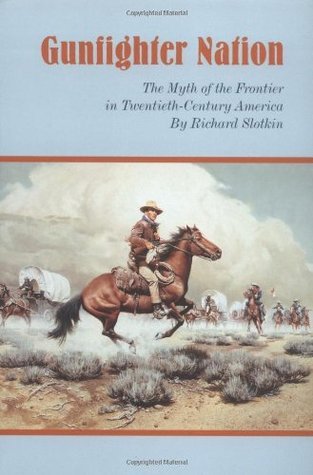
Book: “Gunfighter Nation: The Myth of the Frontier in Twentieth-Century America”

Myth of the American Frontier #3

Gunfighter Nation: The Myth of the Frontier in Twentieth-Century America

Richard Slotkin

Gunfighter Nation completes Richard Slotkin’s trilogy, begun in Regeneration Through Violence and continued in Fatal Environment, on the myth of the American frontier. Slotkin examines an impressive array of sources – fiction, Hollywood westerns, and the writings of Hollywood figures and Washington leaders – to show how the racialist theory of Anglo-Saxon ascendance and superiority (embodied in Theodore Roosevelt’s The Winning of the West), rather than Frederick Jackson Turner’s thesis of the closing of the frontier, exerted the most influence in popular culture and government policy making in the twentieth century. He argues that Roosevelt’s view of the frontier myth provided the justification for most of America’s expansionist policies, from Roosevelt’s own Rough Riders to Kennedy’s counterinsurgency and Johnson’s war in Vietnam.

About the author

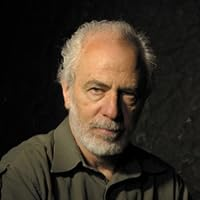
Richard Slotkin

Richard Slotkin is an American cultural critic, historian, and novelist. He is Olin Professor of English and American Studies Emeritus at Wesleyan University, where he was instrumental in establishing the American Studies and Film Studies programs. His work explores the mythology of the American frontier and its influence on national identity. His trilogy—Regeneration Through Violence, Fatal Environment, and Gunfighter Nation—is widely regarded as a seminal analysis of the frontier myth in American culture. Slotkin has also written historical novels, including Abe: A Novel of the Young Lincoln and The Crater: A Novel of the Civil War. His contributions to scholarship and literature have earned him numerous accolades, including the Albert J. Beveridge Award and multiple National Book Award nominations.

(Goodreads.com)

Charlie Kirk in His Own Words

17 quotes you should read from the right-wing activist and Trump ally who was tragically shot and killed on Wednesday in Utah.

TEAM ZETEO SEP 12, 2025 (Zeteo substack.com)

Charlie Kirk speaks on stage at America Fest 2024 in Phoenix, Arizona, on Dec. 22, 2024. Photo by Josh Edelson/AFP via Getty Images

Black people

  • “Happening all the time in urban America, prowling Blacks go around for fun to go target white people, that’s a fact. It’s happening more and more.” (source)

Black pilots

  • “If I see a Black pilot, I’m gonna be like, ’Boy, I hope he’s qualified.’” (source)

Black women

  • “They’re coming out, and they’re saying, ‘I’m only here because of affirmative action.’ Yeah, we know. You do not have the brain processing power to otherwise be taken really seriously. You had to go steal a white person’s slot to go be taken somewhat seriously.” (source)

Civil rights

  • “We made a huge mistake when we passed the Civil Rights Act in the mid-1960s.” (source)

Death penalty

  • “[Death penalties] should be public, should be quick, should be televised… I think at a certain age, it’s an initiation… At what age should you start to see public executions?” (source)

Democrats

  • “The Democrat Party supports everything that God hates.” (source)

Empathy

  • “I can’t stand the word empathy, actually. I think empathy is a made up new age term that does a lot of damage.” (source)

Feminism

  • “Reject feminism. Submit to your husband, Taylor. You’re not in charge.” (source)

Gay people

  • “You might want to crack open that Bible of yours. In a lesser referenced part of the same part of scripture, is in Leviticus 18 is that, ‘thou shalt lay with another man shall be stoned to death.’ Just sayin’! So Miss Rachel, you quote Leviticus 19… the chapter before affirms God’s perfect law when it comes to sexual matters.” (source)

George Floyd

  • “This guy was a scumbag.” (source)

Great Replacement Theory

  • “It’s not a Great Replacement Theory, it’s a Great Replacement Reality. Just this year, 3.6 million foreigners will invade America. 10-15 million will enter by the end of Joe Biden’s term. Each will probably have 3-5 kids on average while native born Americans have 1.5 per couple. You are being replaced, by design.” (source)

Guns

  • “It’s worth to have a cost of, unfortunately, some gun deaths every single year so that we can have the Second Amendment.” (source)

Jews

  • “Jewish donors have been the number one funding mechanism of radical open-border, neoliberal, quasi-Marxist policies, cultural institutions and nonprofits. This is a beast created by secular Jews and now it’s coming for Jews, and they’re like, ‘What on Earth happened?’ And it’s not just the colleges. It’s the nonprofits, it’s the movies, it’s Hollywood, it’s all of it.” (source)

Martin Luther King Jr.

  • “MLK was awful. He’s not a good person. He said one good thing he actually didn’t believe.” (source)

Muslims

  • “They aren’t even hiding their intentions. Muslims plan to conquer Europe by demographic replacement. Will Europe wake up in time?” (source)

Palestine

  • “I don’t think the place exists.” (source)

Transgender people

  • “You’re an abomination to God.” (source)

Study: Red Meat Takes Years Off Of Cow’s Life

News

Published: April 22, 2012 (TheOnion.com)

WASHINGTON—Confirming years of speculation, a new study from the U.S. Department of Agriculture’s National Animal Health Monitoring System has found that red meat significantly increases the risk of premature death in cows. “Our research suggests that by having red meat, a cow’s life can be shortened by as many as 10 years, sometimes more,” Agriculture Secretary Tom Vilsack said in an interview with CNN Tuesday. “Unfortunately, in some cases, even just a single daily serving of red meat can hurt a cow’s chances of surviving past the earliest stage of life.” On a more positive note, researchers found that other high-protein foods like milk, cheese, and butter only decrease a cow’s life by 7 to 9 years.

Consciousness, spirituality, biography, sexuality, androgyny, futurism, space, the arts, science, astrology, democracy, humor, books, movies and more