
The Story Behind Dylan Thomas’s “Do Not Go Gentle Into That Good Night”
Along with a stirring reading of the masterpiece by the poet himself.
- Maria Popova (getpocket.com)

Dylan Thomas, early 1940s.
“Poetry can break open locked chambers of possibility, restore numbed zones to feeling, recharge desire,” Adrienne Rich wrote in contemplating what poetry does. “Insofar as poetry has a social function it is to awaken sleepers by other means than shock,” Denise Levertov asserted in her piercing statement on poetics. Few poems furnish such a wakeful breaking open of possibility more powerfully than “Do not go gentle into that good night” — a rapturous ode to the unassailable tenacity of the human spirit by the Welsh poet Dylan Thomas (October 27, 1914–November 9, 1953).

Written in 1947, Thomas’s masterpiece was published for the first time in the Italian literary journal Botteghe Oscure in 1951 and soon included in his 1952 poetry collection In Country Sleep, And Other Poems. In the fall of the following year, Thomas — a self-described “roistering, drunken and doomed poet” — drank himself into a coma while on a reading and lecture tour in America organized by the American poet and literary critic John Brinnin, who would later become his biographer of sorts. That spring, Brinnin had famously asked his assistant, Liz Reitell — who had had a three-week romance with Thomas — to lock the poet into a room in order to meet a deadline for the completion of his radio drama turned stage play Under Milk Wood.
In early November of 1953, as New York suffered a burst of air pollution that exacerbated his chronic chest illness, Thomas succumbed to a round of particularly heavy drinking. When he fell ill, Reitell and her doctor attempted to manage his symptoms, but he deteriorated rapidly. At midnight on November 5, an ambulance took the comatose Thomas to St. Vincent’s Hospital in New York. His wife, Caitlin Macnamara, flew from England and spun into a drunken rage upon arriving at the hospital where the poet lay dying. After threatening to kill Brinnin, she was put into a straitjacket and committed to a private psychiatric rehab facility.
When Thomas died at noon on November 9, it fell on New Directions founder James Laughlin to identify the poet’s body at the morgue. Just a few weeks later, New Directions published The Collected Poems of Dylan Thomas (public library), containing the work Thomas himself had considered most representative of his voice as a poet and, now, of his legacy — a legacy that has continued to influence generations of writers, artists, and creative mavericks: Bob Dylan changed his last name from Zimmerman in an homage to the poet, The Beatles drew his likeness onto the cover of Sgt. Pepper’s Lonely Hearts Club Band, and Christopher Nolan made “Do not go gentle into that good night” a narrative centerpiece of his film Interstellar.
Upon receiving news of Thomas’s death, the poet Elizabeth Bishop wrote in an astonished letter to a friend:
It must be true, but I still can’t believe it — even if I felt during the brief time I knew him that he was headed that way… Thomas’s poetry is so narrow — just a straight conduit between birth & death, I suppose—with not much space for living along the way.
In another letter to her friend Marianne Moore, Bishop further crystallized Thomas’s singular genius:
I have been very saddened, as I suppose so many people have, by Dylan Thomas’s death… He had an amazing gift for a kind of naked communication that makes a lot of poetry look like translation.

The Pulitzer-winning Irish poet and New Yorker poetry editor Paul Muldoon writes in the 2010 edition of The Collected Poems of Dylan Thomas:
Dylan Thomas is that rare thing, a poet who has it in him to allow us, particularly those of us who are coming to poetry for the first time, to believe that poetry might not only be vital in itself but also of some value to us in our day-to-day lives. It’s no accident, surely, that Dylan Thomas’s “Do not go gentle into that good night” is a poem which is read at two out of every three funerals. We respond to the sense in that poem, as in so many others, that the verse engine is so turbocharged and the fuel of such high octane that there’s a distinct likelihood of the equivalent of vertical liftoff. Dylan Thomas’s poems allow us to believe that we may be transported, and that belief is itself transporting.
“Do not go gentle into that good night” remains, indeed, Thomas’s best known and most beloved poem, as well as his most redemptive — both in its universal message and in the particular circumstances of how it came to be in the context of Thomas’s life.
By the mid-1940s, having just survived World War II, Thomas, his wife, and their newborn daughter were living in barely survivable penury. In the hope of securing a steady income, Thomas agreed to write and record a series of broadcasts for the BBC. His sonorous voice enchanted the radio public. Between 1945 and 1948, he was commissioned to make more than one hundred such broadcasts, ranging from poetry readings to literary discussions and cultural critiques — work that precipitated a surge of opportunities for Thomas and adrenalized his career as a poet.
At the height of his radio celebrity, Thomas began working on “Do not go gentle into that good night.” Perhaps because his broadcasting experience had attuned his inner ear to his outer ear and instilled in him an even keener sense of the rhythmic sonority of the spoken word, he wrote a poem tenfold more powerful when channeled through the human voice than when read in the contemplative silence of the mind’s eye.
In this rare recording, Thomas himself brings his masterpiece to life:
For more beloved writers reading their own work, see Mary Oliver reading from Blue Horses, Adrienne Rich reading “What Kind of Times Are These,” J.R.R. Tolkien singing “Sam’s Rhyme of the Troll,” Frank O’Hara reading his “Metaphysical Poem,” Susan Sontag reading her short story “Debriefing,” Elizabeth Alexander reading “Praise Song for the Day,”, Dorothy Parker reading “Inscription for the Ceiling of a Bedroom,” and Chinua Achebe reading his little-known poetry.

This article was originally published on January 24, 2017, by Brain Pickings, and is republished here with permission.
This Is What Chicago Means
By Jabari Parker CHICAGO BULLS AUG 23 2018 (theplayerstribune.com)
What does it feel like to be a Bull? To be coming back to Chicago, where it all started?
I’ll try my best to tell you.
It’s me and my friends saying “79th and Jeffery” — proud — like it was our own little country. It’s the South Shore — the neighborhood I came up in.
It’s 53rd and Garfield, hoopin’ Washington Park on Saturday mornings.
It’s being a tall seventh grader in Ms. Reed’s history class, reading Frederick Douglass for the first time. It’s my eyes opening up to literature and poetry and history.
At the same time, it’s old textbooks and old computer labs. It’s 50-something schools closing down in Chicago in the last few years, mostly in neighborhoods like mine. It’s too many kids’ dreams untapped.
It’s watching Spike Lee films with my parents and discovering our collection of VHS tapes about Jean Baptiste Point DuSable and W.E.B. Du Bois.
It’s 81st and Stewart, Simeon Academy — my high school. It’s teachers like Ms. McCormick and Ms. Taylor, who knew there was enough space in life for books and ball. And it’s making history with four straight high school state championships. We were all kids from the same neighborhood, and our names will always be together.

Courtesy of Jabari ParkerIt’s putting on my first pair of Js.
The mint black IIIs — like walking on pillows.
But that wasn’t till I was a teenager. Before that it was the Eastbay catalogue. I was seven or eight years old, reading it all excited with my friends. We knew we couldn’t get half of them — we’d all rock the same plain black Nikes with the white swoosh. But that didn’t stop us from ranking all of the colors, debating all of ’em.
It’s neighbors. It’s people like Mr. Johnson, an older man next door who had served in the military who would invite me to his house to play video games with his son. And it’s Mr. Brown, who had a hoop I’d play on with his grandson. It’s people looking out for you.
It’s family. It’s my mom and dad and their sacrifices that had nothing to do with us succeeding on the court. It’s the Sonny Parker Youth Foundation and how my parents taught us that giving back is a requirement, not an option.
It’s looking up to my older brothers — both a few years older than me — who showed me you could leave home and still represent it with pride. Darryl played ball overseas, and Chris played D-I ball. So I wanted to as well.
It’s going to Juwan Howard’s basketball camps as a kid and wanting to be just like him — the ball player and the guy who keeps coming back to Chi for the kids.
It’s shoes, and how shoes weren’t just what you wore — they were part of the conversation and part of the culture. Darryl had a crazy collection of Jordans — more than 20 pair, that he got from playing overseas. He has the 2s with the Italian leather, the matte gray 9s, the true-blue 3s with the elephant print. Chris used to rock the Scottie Pippen Uptempos — remember the ones with AIR on the sides?
It’s feeling like you’re wearing the city on your feet.
It’s 23.Advertisement
What he did. How he did it. And what he made us all want to be.
It’s the James Jordan Boys and Girls Club, just a few blocks from the United Center, where I got my start playing basketball. The gym looked like an exact replica of the real United Center — the Chicago Bulls logo at half court, the six championship banners hanging above us, the lights made to feel like an NBA arena. It had almost this aura that made you feel like a pro. I spent so much time playing in that gym it was like a second home.
It’s the stories about the Zen Master and Paxson’s shot and a lanky unknown lefty named Kukoc.

Courtesy of Jabari Parker
It’s Scottie running the break with his Uptempos flying along with him.
It’s how the whole city embraced Rodman’s hustle — and how, with his crazy hair and all his antics around town, he made it seem more normal to act different.
It’s overhearing my dad’s friends say, “Did you see the game last night?” and getting excited even if I didn’t see the game.
It’s the Bears, the Cubs, the Sox. It’s how the city always showed up to support, win or lose.

Courtesy of Jabari Parker
It’s music.
And it’s more than just the sound of the music. It’s the culture that comes with it.
Like how Common is a celebrity everywhere outside of our neighborhood. But here? He’s a legend in the community but at the same time just a member of it. He’s always coming back, busy going back to his old spots and connecting with old friends. It’s how he’s around.
It’s, This is street ra-dio, for unsung heroes, riding in the Regal.
And it’s, No matter what, the people gon’ see me.
It’s Chance. His sound and his soul.
It’s Coloring Book blasting outta cars in the summer. It’s, You gotta fight for your way. But that don’t take nothing away, ’cause at the end of the day, music is all we got. And it’s who Chance is as a human being — his support of public schools and the youth in Chicago. How he always knew where he came from.
It’s No I.D. … and all the producers that this place creates. It’s the desire to produce … the need to produce.
It’s seeing Kanye for the first time, back in 2006. He was this guy in a polo shirt, shutter shades and khakis, rapping for a crowd of 30 or 40 outside of a mall at the Hyde Park City Center. No commotion or anything. He was promoting a new CD, and he wanted Chicago to hear it.Advertisement
It’s the feeling of fresh. Brand new. Different.
And yet somehow familiar.
It’s the feeling of growing up in the same house my dad grew up in and making it all the way to the NBA.
It’s November 4, 2008 and the crowd at Grant Park. How full we all felt. It’s being inspired.
And it’s being terrified, too. It’s being 18, already committed to play at Duke, walking to Walgreens in the dead of winter and then hitting the concrete when gunshots rang out.
It’s hearing about people like Jahnae Patterson, who was killed this summer by a stray bullet. She was 17, out with friends at a party. It’s not knowing her, but knowing lots of people just like her.
And it’s all the other names we never hear — the almost 3,000 people shot each year, a lot of them who look like me. It’s wanting to help, but also wanting to run.
It’s the feeling that you can never have too much company, and too much time with family and friends.
It’s every single friend who reached out to me during my injury rehab. And the entire section of people who would cheer for me when I’d play away games in the United Center. Parents, brothers, aunts, uncles, coaches, teachers. Too many people to even name that never missed the chance to see me come home.
It’s my new teammates and my new team. The glory days of the past and the ones coming in our future.
But it’s not any one place or thing or person. It’s everything together, you know? Like the way a dream feels real but hard to really explain at the same time. It’s the entire culture and community. It’s the people living here right now and the people who lived here in the past.

Deanne Fitzmaurice/The Players’ Tribune
I guess that’s the thing … my Chicago might not be the same as your Chicago. Or maybe you don’t know Chi at all. But we all know home.
And Chicago is home. We might all come from different places, but home means something — something powerful — to each of us. We carry home with us, all the good and the bad and the in-between.
I’m back home, Chicago. But I never really left. I’m just excited to be with y’all again. There’s so much that I still want to do — so much that I want to give to the city that’s given me so much over the years. I’m lucky to have the support and the platform I have, and I plan on making the most of it.
And if the going gets hard at times, which it always does in life, I’ll know where to lean.
Because I know where I’m from.

Jabari ParkerCHICAGO BULLS
Dementia Made a New Man Out of My Dad
Raised in Apartheid-era South Africa, my mixed-race father had no shortage of scars. But as dementia overpowered his brain, I met a man I never knew existed.
- Lee Everts (getpocket.com)

Illustration by AJ Dungo.
It was a moment of pure delight. My dad got up from his recliner next to the big picture window in the sitting room of my parents’ house. The music that we always played caught his ear, and for some reason he closed his eyes and started to move to the music. “At first, I didn’t know what he was doing,” Mom said to me afterward. There he was, hands by his sides, smiling, and dancing slowly. Mom and I were thrilled. To say this was out of character for my dad would be quite an understatement. Dad had never been one to give way to his feelings or express much emotion. He always seemed to be guided by a fear that others would judge him as somehow wanting, less than others. But here he was just responding to how the music made him feel. Pure and simple.
They say you should always look for a silver lining in dark times. I would have never thought that dementia – the darkest of clouds – could even produce a glimmer of one. Turns out, I was wrong.
The dancing incident occurred when I was visiting my parents for the Christmas holiday. A short time after I returned home in January, my mom rang to let me know my dad had a stroke. As the weeks progressed, we learned that his stroke had resulted in something known as vascular fdementia. Like other types of dementia, it impeded his ability to reason and make judgments, resulted in memory loss, and magnified his confusion.
While these symptoms were not always obvious, they emerged more prominently every now and then. My dad had been a teacher and when I would visit, it was often the same heartbreaking conversation. I’d ask, “What are you doing, Dad?” He’d casually respond, “I have to go to school,” and prepare for the day as though he was going to do just that.
“Dad, you don’t need to go school anymore. You’re retired. See, here’s the award they gave you when you retired.”
“Nonsense. What are you talking about? Nonsense!”
He would carry around his old briefcase, always placing it next to his recliner where he sat and slept throughout the day, a quiet yet determined assertion of who he was.
As we learned more about dementia, we took to playing along with his reality, as much as we could.
But that wasn’t the only thing that changed. I can never say that I will understand how it happened, but after developing vascular dementia, it seemed like his memory loss had locked him out of certain rooms in his mind. And it just so happened that it was in some of those rooms where many of the fears, anxieties, and worries had been comfortably housed and nurtured for much of his life.

The author’s father at about four years old. Photos courtesy Lee Everts.
My parents were born in South Africa, a place where the complexion of everyone’s skin was key in how their value was measured. Dad never spoke of it, but Mom would sometimes tell us how “it was like you weren’t even a citizen. You didn’t actually exist.” My family is very mixed and Dad was brown in complexion. Raised in a society that officially regarded him as being of lesser value strongly influenced his view of himself.
His lack of self-confidence also stemmed from other experiences. Mom mentioned how sometimes my grandfather was not very kind to his son. “He didn’t always make your dad feel like he was a part of the family,” she told me one day. Mom explained, that my dad was often a disappointment to my grandfather.
These experiences helped to intensify my dad’s feelings of inadequacy and insecurity throughout his life. He was a perfectionist and, frustratingly, Dad always wanted to be right. The end result was someone who was emotionally distant.
But amidst the distress of dementia, in his mind, doors gently closed, locking away memories and feelings that had plagued him throughout his life. It was astounding how his longstanding feelings of failure seemed to dislodge and slip away, how he gradually emerged from his shell.
I noticed it the first time I visited after my dad had fallen ill. I remember when he greeted me at the top of the stairs, he proceeded to give me a hug. I’m not sure what I was thinking beyond shock. Hugging my dad of old was always like hugging a rock – no response.
But not this time.
There were other moments when his transformation was unmistakable. We were in the dining room one day and I was taking a few photographs of something through the window. As Dad was sitting down to eat something my mom had baked, he casually asked, “Are you going to take pictures?”
“What?!” I thought. Here was someone who had never wanted me to take photographs of him, now asking for a photo shoot. Most of the time, I had to sneak around, maybe catch him off his guard. For him to actually pose and smile was almost unbelievable. Who is this person?

A photo of the author’s father taken after he surprised her with a request to take his picture while enjoying a snack.
Suddenly, my father was openly willing to giving me hugs, and when he would meet new people, he’d greet them with a smile instead of avoiding eye contact altogether.
But because of the dementia, he sometimes forgot who we were. As many know, it comes with the territory. I remember my mom telling me about a conversation she had with Dad. He could not quite remember who Mom was; all he knew was, “You’re the person who takes care of me.” It was a touching sentiment, one that would have been impossible for my dad of old to express, someone for whom feelings of uncertainty were an ever-present barricade to his heart.
While dementia played a pivotal role in my dad’s almost miraculous changes in my dad, in all its complexity dementia was an all-consuming struggle that had many pockets of torment. Regardless, my family and I were able to navigate the challenges and simply enjoy the fact that, with the considerable help of Mom, my dad was able to live, as much as possible, a peaceful life.
My dad died last year. While death was accompanied with the heart-wrenching feelings of loss that afflicts anyone during these times, it also brought a slightly different sentiment for me. Before my dad became ill, I remember always thinking that he has got to come to terms with his feelings about himself. Time was getting short. I would have never dreamed that it could come about in this way. For me, his late-in-the-day reprieve ensured that the death of my dad was a hero’s death. He had made it.
My dad will always be in our hearts, even though we can no longer hug him or make him laugh. That is the real immortality that we too often misguidedly seek in other places. We enjoyed a few years with him when he could unquestionably welcome our love. He died peacefully and most of all, he died free.
Such is the magical beauty of a silver lining.
Lee Everts is a freelance writer who has published primarily in newspapers, magazines, and digital publications. She has recently published a book entitled The Placentia Area – A Changing Mosaic on the history of the Placentia area (Newfoundland and Labrador) where she lives. She is currently working on another book related to the natural history of Newfoundland and Labrador.

This article was originally published on May 23, 2017, by Narratively, and is republished here with permission.
Jah

From Wikipedia, the free encyclopedia
Jah or Yah (Hebrew: יה, Yah) is a short form, the first syllable, of Yahweh (in consonantal spelling YHWH Hebrew: יהוה, the four letters that form the tetragrammaton), the proper name of God in the Hebrew Bible.[1] This short form of the name occurs 50 times in the text of the Hebrew Bible, of which 24 form part of the phrase “Hallelujah“, which is actually a two-word phrase, not one word.
In an English-language context, the name Jah is now most commonly associated with the Rastafari. It is otherwise mostly limited to the phrase Hallelujah and theophoric names such as Elijah. In the King James Version (1611) there is only a single instance of JAH (capitalised), in Psalm 68:4. An American Translation (1939) follows KJV in using Yah in this verse. The conventional English pronunciation of Jah is /ˈdʒɑː/, even though the letter J here transliterates the palatal approximant (Hebrew י Yodh). The spelling Yah is designed to make the pronunciation /ˈjɑː/ explicit in an English-language context (see also romanization of Hebrew).
More at: https://en.wikipedia.org/wiki/Jah
Self-Loathing Slowly Morphing Into Pride As Man Consumes 36th Pig In A Blanket

RUSSIAN FARMERS ARE STRAPPING VR HEADSETS TO DAIRY COWS

NOVEMBER 27TH by DAN ROBITZSKI (futurism.com)
Bovine Escapism
In a bid to get more and better milk out of their cows, Russian farmers have taken to strapping specially-modified virtual reality headsets on their cows’ heads and giving them relaxing, pleasant virtual experiences.
It’s not clear whether the milk improved as a result, according to Engadget, but the cows seemed happier while looking at a VR field than they were while faced with the grim reality that they were trapped in a crowded farm.
Going Back In
The farmers found that the cows were less stressed while using VR, per Engadget. And now they plan to launch a more robust study to see if jacking cows into the matrix actually improves the quality or volume of their milk.
And if that doesn’t work, maybe the farmers could try letting the cows roam around an actual field.
READ MORE: Cows wearing VR headsets might produce better milk [Engadget]
Living and Loving Through Loss: Beautiful Letters of Consolation from Great Artists, Writers, and Scientists
By Maria Popova (brainpickings.org)
“Grief, when it comes, is nothing like we expect it to be,” Joan Didion wrote in her classic memoir of loss. But however uncertain its guise may be, its arrival is one of the central certainties of existence — no human life is unplundered by loss, in one form or another, at one time or another. And when grief does come, when its tidal force anneals us to the rawest axis of our being, it seems like nothing at all can unmoor us from its all-consuming gravity. Consolation of the bereaved is therefore an immensely difficult art and one of the most generous human gestures, perhaps even the most acutely life-saving.
Gathered here are several such masterworks of consolation, beautiful and heartbreaking and aglow with the resilience that is the hallmark of life, from some of humanity’s greatest minds and largest spirits.
| ALBERT EINSTEIN |
In addition to his groundbreaking discoveries in physics, which changed our understanding of time and fostered a common language of science, Albert Einstein (March 14, 1879–April 18, 1955) was also a man of enormous wisdom, empathy, and emotional intelligence, which he channeled in his voluminous correspondence with family, friends, colleagues, and strangers — he wrote breathtaking love letters, counseled his young son on the secret to learning anything, assured a little girl who wanted to be a scientist but feared her gender would hold her back, shared the secret to his genius with an inquisitive colleague, and corresponded with Freud on violence, peace, and human nature.
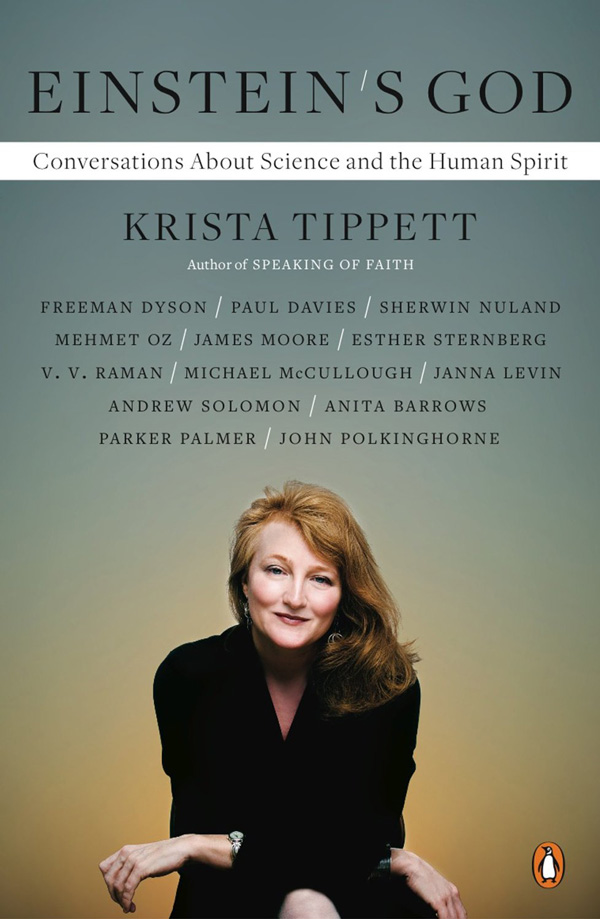
But one of his most poignant and humane letters was addressed to Queen Elisabeth of Belgium, with whom he had cultivated a warm friendship. After the sudden death of her husband, King Albert, followed closely by the death of her daughter-in-law, Einstein offered thoughtful and tender solace to his bereaved friend. Penned in 1934 and cited in Krista Tippett’s wonderful book Einstein’s God: Conversations About Science and the Human Spirit (public library), the letter is at once a gift of warm consolation for the Queen’s grief and a timeless meditation on time, eternity, and the privilege of old age.
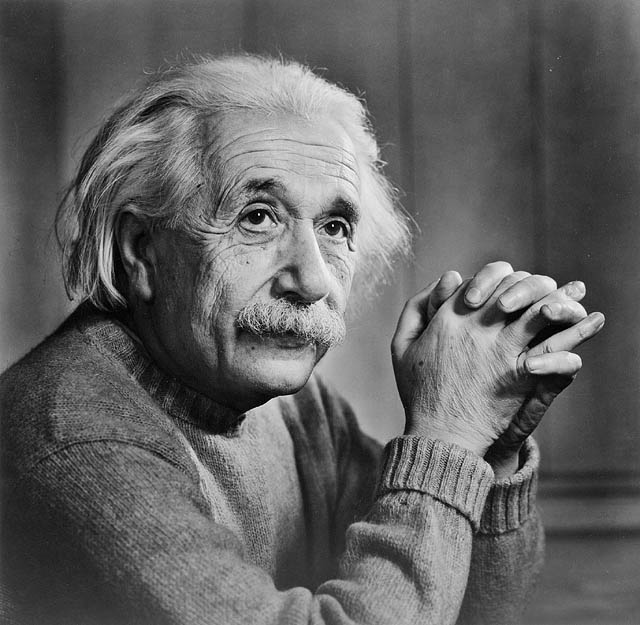
Albert Einstein by Yousuf Karsh
Shortly before his fifty-fifth birthday, Einstein writes:

Mrs. Barjansky wrote to me how gravely living in itself causes you suffering and how numbed you are by the indescribably painful blows that have befallen you.
And yet we should not grieve for those who have gone from us in the primes of their lives after happy and fruitful years of activity, and who have been privileged to accomplish in full measure their task in life.
Something there is that can refresh and revivify older people: joy in the activities of the younger generation — a joy, to be sure, that is clouded by dark forebodings in these unsettled times. And yet, as always, the springtime sun brings forth new life, and we may rejoice because of this new life and contribute to its unfolding; and Mozart remains as beautiful and tender as he always was and always will be. There is, after all, something eternal that lies beyond the hand of fate and of all human delusions. And such eternals lie closer to an older person than to a younger one oscillating between fear and hope. For us, there remains the privilege of experiencing beauty and truth in their purest forms.
| RACHEL CARSON |
Undoubtedly the most unusual and the hardest kind of consolation is that whose subject is one’s own imminent death and whose object is a loved one about to be left bereaved, for it requires one to simultaneously face the anguish of one’s own looming nonexistence and to rise above it in order to soften the loved one’s impending loss. To grieve one’s own death while consoling from the grave-to-be is therefore a supreme act of generosity and self-transcendence.
That is precisely what trailblazing biologist and writer Rachel Carson (May 27, 1907–April 14, 1964), crowning figure of Figuring, did as she lay dying from breast cancer shortly after she catalyzed the modern environmental movement with her courageous refusal to keep silent about the government’s assault on nature. Even as she faced her own death, Carson was most concerned about her best friend and beloved, Dorothy Freeman.
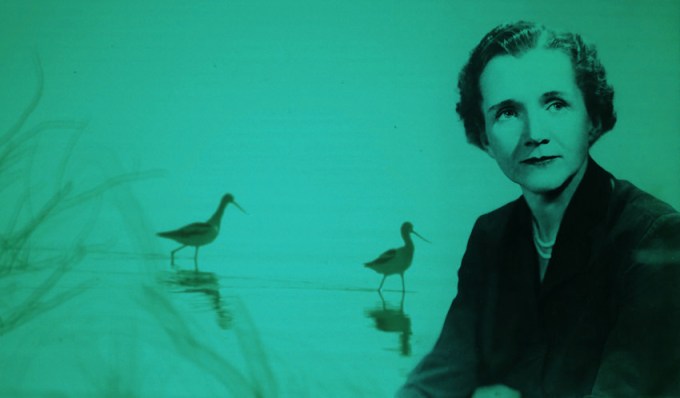
Rachel Carson
In September of 1963, several months before her death and shortly after her testimony before President John F. Kennedy’s Science Advisory Committee became instrumental in the first regulatory policies on pesticides, Carson sent Freeman a contemplation of her own mortality so profound, so poignant, so tenderhearted and transcendent that it could only be articulated to the person who knew her heart most intimately. She writes:
Dear One,
This is a postscript to our morning at Newagen, something I think I can write better than say. For me it was one of the loveliest of the summer’s hours, and all the details will remain in my memory: that blue September sky, the sounds of the wind in the spruces and surf on the rocks, the gulls busy with their foraging, alighting with deliberate grace, the distant views of Griffiths Head and Todd Point, today so clearly etched, though once half seen in swirling fog. But most of all I shall remember the monarchs, that unhurried westward drift of one small winged form after another, each drawn by some invisible force. We talked a little about their migration, their life history. Did they return? We thought not; for most, at least, this was the closing journey of their lives.
But it occurred to me this afternoon, remembering, that it had been a happy spectacle, that we had felt no sadness when we spoke of the fact that there would be no return. And rightly — for when any living thing has come to the end of its life cycle we accept that end as natural.
For the Monarch, that cycle is measured in a known span of months. For ourselves, the measure is something else, the span of which we cannot know. But the thought is the same: when that intangible cycle has run its course it is a natural and not unhappy thing that a life comes to an end.
That is what those brightly fluttering bits of life taught me this morning. I found a deep happiness in it — so I hope, may you. Thank you for this morning.
Rachel
In her final letter, written as Freeman was en route to a deathbed visit but only delivered two weeks after Carson’s death, she writes:
My darling,
You are starting on your way to me in the morning, but I have such a strange feeling that I may not be here when you come — so this is just an extra little note of farewell, should that happen. There have been many pains (heart) in the past few days, and I’m weary in every bone. And tonight there is something strange about my vision, which may mean nothing. But of course I thought, what if I can’t write — can’t see to write — tomorrow? So, a word before I turn out the light.
[…]
Darling — if the heart does take me off suddenly, just know how much easier it would be for me that way. But I do grieve to leave my dear ones. As for me, however, it is quite all right. Not long ago I sat late in my study and played Beethoven, and achieved a feeling of real peace and even happiness.
Never forget, dear one, how deeply I have loved you all these years.
Rachel
| ALAN TURING |
In addition to pioneering modern computing, Alan Turing (June 23, 1912–June 7, 1954) remains the greatest code-breaker of all time. His decryption of Nazi communication code is estimated to have saved anywhere between 14 and 21 million lives in shortening WWII by two to four years. But despite his humanitarian heroism, Turing was driven to suicide after being chemically castrated by the U.K. government for being homosexual. More than half a century after his disquieting death, Queen Elizabeth II issued royal pardon — a formal posthumous apology that somehow only amplifies the tragedy of Turing’s life and death.
Tragedy had been with Turing from a young age. At fifteen, while attending the Sherborne School, he fell deeply in love with a classmate named Christopher Morcom. For the awkward and ostracized young Alan, who was bullied so severely that a group of boys once trapped him under the floorboards of a dorm dayroom and kept him there until he nearly suffocated, Christopher was everything he was not — dashing, polished, well versed in both science and art, and aglow with winsome charisma. Alan’s love was profound and pure and unrequited in the dimensions he most longed for, but Christopher did take to him with great warmth and became his most beloved, in fact his only, friend. They spent long nights discussing science and philosophy, trading astronomical acumen, and speculating about the laws of physics.
When Christopher died of bovine tuberculosis in 1930 — a disease he had contracted from infected milk, for which there was no common vaccine until after WWII — Alan fell to pieces. He was able to collect himself only through work, by burrowing so deep into the underbelly of mathematics that he emerged almost on the other side, where science and metaphysics meet. Sorrow had taken him on a crusade to make sense of reality, of this senseless ruin, and he spared no modality of thought. Most of all, he wanted to understand how he could remain so attached to someone who no longer existed materially but who felt so overwhelmingly alive in his spirit.
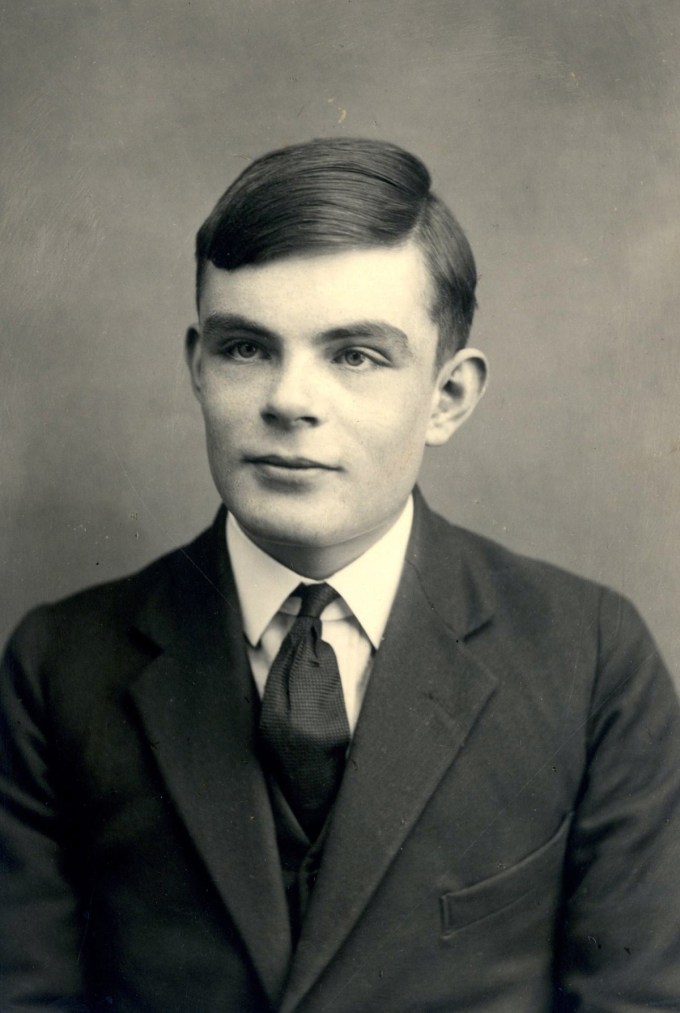
Young Alan Turing
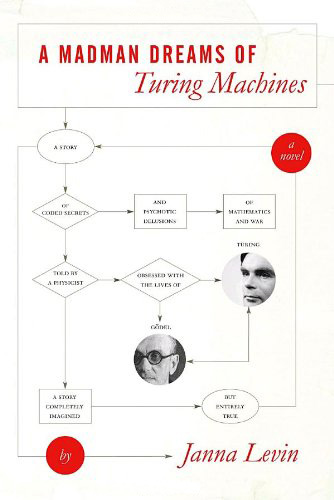
All the while, young Turing remained in touch with Christopher’s mother, who had taken a sympathetic liking to her son’s awkward friend. After Christopher’s death, he visited the Morcoms at their country home, Clock House, and corresponded with Mrs. Morcom about the grief they shared, about the perplexity of how a nonentity — for Christopher had ceased to exist in physical terms — could color each of their worlds so completely. That sorrowful puzzlement is what Turing explored in a series of letters to Christopher’s mother, originally included in his first serious biography and brought to new life in astrophysicist Janna Levin’s exquisite novel A Mad Man Dreams of Turing Machines (public library).
Turing writes to Christopher’s mother in a letter from April 20, 1933:
My dear Mrs. Morcom,
I was so pleased to be at the Clockhouse for Easter. I always like to think of it specially in connection with Chris. It reminds us that Chris is in some way alive now. One is perhaps too inclined to think only of him alive at some future time when we shall meet him again; but it is really so much more helpful to think of him as just separated from us for the present.
Turing visited Clock House again in July, for what would have been Christopher’s twenty-second birthday. Seeking to reconcile the irrepressible spiritual aliveness felt in grief with the undeniable definitiveness of physical death, as much for himself as for Christopher’s mother, he wrote in another letter to her under the heading “Nature of Spirit”:
It used to be supposed in Science that if everything was known about the Universe at any particular moment then we can predict what it will be through all the future. This idea was really due to the great success of astronomical prediction. More modern science however has come to the conclusion that when we are dealing with atoms and electrons we are quite unable to know the exact state of them; our instruments being made of atoms and electrons themselves. The conception then of being able to know the exact state of the universe then really must break down on the small scale. This means then that the theory which held that as eclipses etc. are pre-destined so were all our actions breaks down too. We have a will which is able to determine the action of the atoms probably in a small portion of the brain, or possibly all over it.
[…]
Then as regards the actual connection between spirit and body I consider that the body by reason of being a living body can “attract” and hold on to a “spirit” whilst the body is alive and awake and the two are firmly connected. When the body is asleep I cannot guess what happens but when the body dies the “mechanism” of the body, holding the spirit, is gone and the spirit finds a new body sooner or later perhaps immediately.
As regards the question of why we have bodies at all; why we do not or cannot live free as spirits and communicate as such, we probably could do so but there would be nothing whatever to do. The body provides something for the spirit to look after and use.
| ABRAHAM LINCOLN |

One of the noblest leaders in Western civilization, Abraham Lincoln (February 12, 1809–April 15, 1865) led a difficult life punctuated by tragedy — his mother’s death when he was only nine, the death of two sons in his lifetime, and his own assassination at the dawn of his second term as president, slain by a Confederate fundamentalist shortly after a speech announcing Lincoln’s intention to advance African Americans’ right to vote.
In February of 1862, just as Lincoln was making major progress on the abolition of slavery, his beloved eleven-year-old son Willie died of typhoid fever — a plague-like bacterial infection the vaccine for which was still decades away. Elizabeth Keckly, a former slave then employed as chief designer for Mrs. Lincoln’s wardrobe and close to the family, would later recall watching the president stand “in silent, awe-stricken wonder” at the foot of the enormous rosewood bed where the boy lay lifeless, Lincoln’s “genius and greatness weeping over love’s idol lost.”
That December, just after the Emancipation Proclamation for which Lincoln had fought so hard was finally issued, loss struck again when one of his dearest friends, William McCullough, was killed during a night charge in Mississippi. A vital characteristic of a great spiritual, civic, or political leader is the ability — or is it the unrelenting willingness? — to rise from the depths of his or her personal pain in the service of another’s welfare. That’s precisely what Lincoln did for his country, and what he did in his magnificent letter of consolation to Fanny McCullough, William’s daughter, later included in the altogether indispensable Library of America anthology Lincoln: Speeches and Writings (public library).
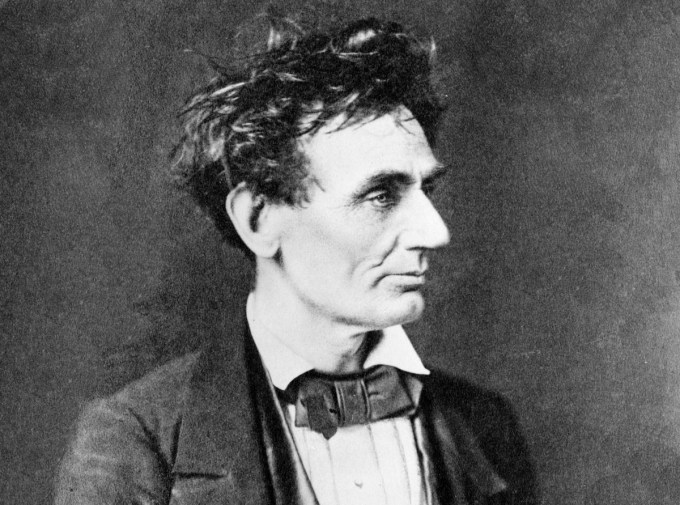
Abraham Lincoln
Drawing on his own lifelong dance with love and loss, 53-year-old Lincoln writes to the bereaved young woman on December 23, 1862:
Dear Fanny
It is with deep grief that I learn of the death of your kind and brave Father; and, especially, that it is affecting your young heart beyond what is common in such cases. In this sad world of ours, sorrow comes to all; and, to the young, it comes with bitterest agony, because it takes them unawares. The older have learned to ever expect it. I am anxious to afford some alleviation of your present distress. Perfect relief is not possible, except with time. You can not now realize that you will ever feel better. Is not this so? And yet it is a mistake. You are sure to be happy again. To know this, which is certainly true, will make you some less miserable now. I have had experience enough to know what I say; and you need only to believe it, to feel better at once. The memory of your dear Father, instead of an agony, will yet be a sad sweet feeling in your heart, of a purer and holier sort than you have known before.
Please present my kind regards to your afflicted mother.
Your sincere friend
A. Lincoln
| CHARLES DICKENS |

Charles Dickens (February 7, 1812–June 9, 1870) was a man of multitudes, brilliant and flawed, but among the strongest and most unambivalent animating forces of his life was the love he had for his younger sister, Letitia.
In 1862, Letitia lost her husband of twenty-five years, the architect and artist Henry Austin. In a letter from early October of that year, found in The Letters of Charles Dickens (public library | free ebook), Dickens envelops his sister in equal parts compassionate consolation and a call to psychoemotional arms.
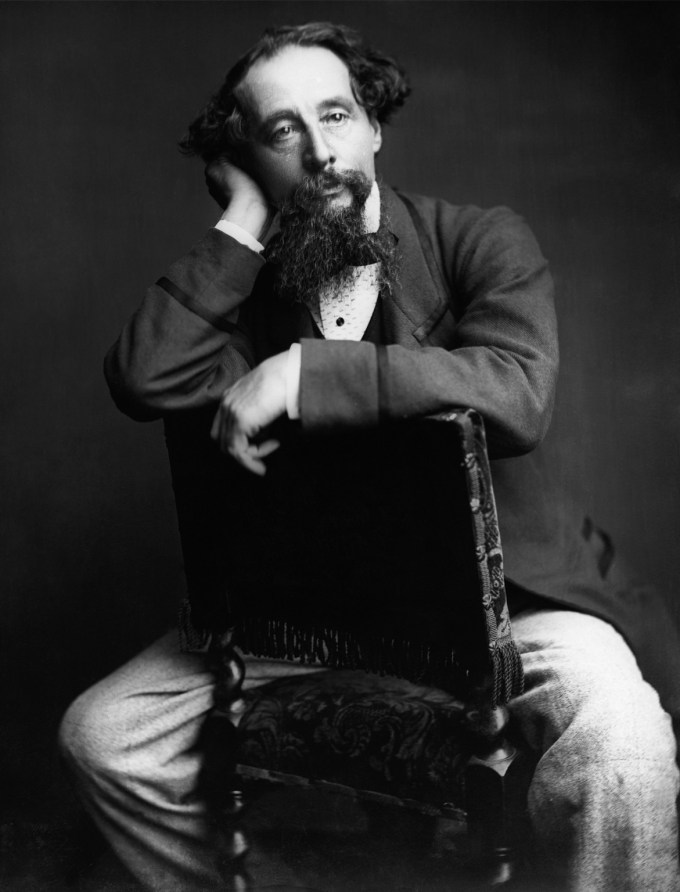
Charles Dickens
Dickens writes:
I do not preach consolation because I am unwilling to preach at any time, and know my own weakness too well. But in this world there is no stay but the hope of a better, and no reliance but on the mercy and goodness of God. Through those two harbours of a shipwrecked heart, I fully believe that you will, in time, find a peaceful resting-place even on this careworn earth. Heaven speed the time, and do you try hard to help it on! It is impossible to say but that our prolonged grief for the beloved dead may grieve them in their unknown abiding-place, and give them trouble. The one influencing consideration in all you do as to your disposition of yourself (coupled, of course, with a real earnest strenuous endeavour to recover the lost tone of spirit) is, that you think and feel you can do… I rather hope it is likely that through such restlessness you will come to a far quieter frame of mind. The disturbed mind and affections, like the tossed sea, seldom calm without an intervening time of confusion and trouble.
But nothing is to be attained without striving. In a determined effort to settle the thoughts, to parcel out the day, to find occupation regularly or to make it, to be up and doing something, are chiefly to be found the mere mechanical means which must come to the aid of the best mental efforts.
| JOHANNES BRAHMS |
The beautiful and unclassifiable relationship between the virtuosic pianist Clara Schumann (September 13, 1819–May 20, 1896) and the composer Johannes Brahms (May 7, 1833–April 3, 1897) blessed both with a lifetime of love, but it began with the heartache of death. When the composer Robert Schumann — Clara’s beloved husband and Johannes’s revered mentor — succumbed to mental illness and died in the asylum where he was committed, Clara was left to raise their three sons and four daughters as a single mother and a working artist who provided for them through her musical talent, performing and touring tirelessly to put them through school. Johannes, fourteen years her junior, became her closest confidante, her most steadfast source of affection, and her sturdiest pillar of support through the grief.
In a letter from the autumn of 1857, Brahms sets out to remind her of the wider, longer view of life, which grief so swiftly narrows and blunts. While such perspective may not be the most helpful in the immediate aftermath of loss, and may in fact compound the pain of the bereaved by making him or her feel rushed through the process of grief, here Brahms is offering it after more than a year of bereavement, as a gentle and loving invitation to reawaken to life’s fullness against the backdrop of somnolent hollowness that grief casts.
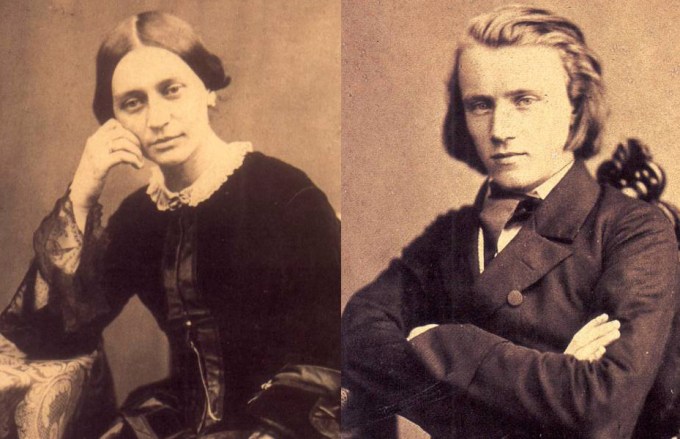
Clara Schumann and Johannes Brahms, 1853
He writes:
My dear Clara, you really must try hard to keep your melancholy within bounds and see that it does not last too long. Life is precious and such moods as the one you are in consume us body and soul. Do not imagine that life has little more in store for you. It is not true… The more you endeavor to go through times of sorrow calmly and accustom yourself to do so, the more you will enjoy the happier times that are sure to follow. Why do you suppose that man was given the divine gift of hope? And you do not even need to be anxious in your hope, for you know perfectly well that pleasant months will follow your present unpleasant ones, just as they do every period of unhappiness.
| CHARLES DARWIN |
After he weighed the pros and cons of marriage, Charles Darwin (February 12, 1809–April 19, 1882) decided in favor of matrimony and was wedded to his beloved, Emma Wedgwood. They went on to have a long and loving marriage, made all the stronger by their devotion to the ten children they had together. Darwin’s letters reveal that while he loved all of his children intensely, he especially cherished his eldest daughter, Annie — a sensitive and unselfconsciously awkward girl, kindhearted and voraciously curious about the world, in whom he saw much of himself.
In 1850, Annie fell ill with what was most likely a type of tuberculosis. Despite the Darwins’ frantic efforts in every direction of a cure, she died on April 23, 1851, at the Malvern spa where she’d been taken for treatment. She was ten. Her father was at her dying bedside and her mother home at Down House, caring for the other nine children.
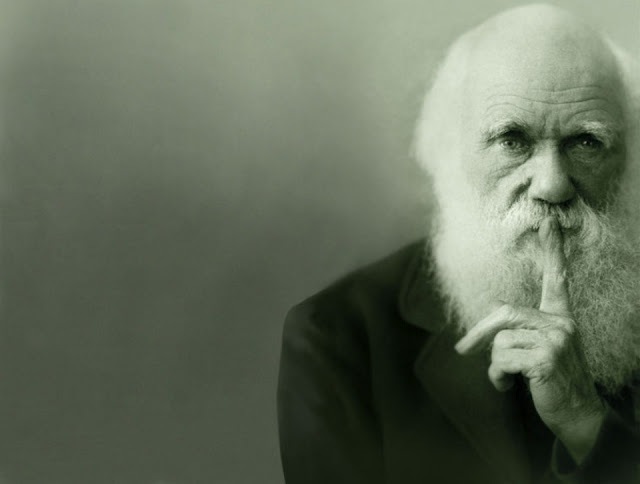
Charles Darwin
Although the loss plunged Darwin into a depth of misery from which he never fully surfaced, his first priority was to console his bereaved beloved. In a letter included in Adam Gopnik’s magnificent Angels and Ages: A Short Book about Darwin, Lincoln, and Modern Life (public library), Darwin writes to Emma the day of Annie’s death:
My dear dearest Emma
I pray God Fanny’s note may have prepared you. She went to her final sleep most tranquilly, most sweetly at 12 oclock today. Our poor dear dear child has had a very short life but I trust happy, & God only knows what miseries might have been in store for her. She expired without a sigh. How desolate it makes one to think of her frank cordial manners. I am so thankful for the daguerreotype. I cannot remember ever seeing the dear child naughty. God bless her. We must be more & more to each other my dear wife — Do what you can to bear up & think how invariably kind & tender you have been to her… My own poor dear dear wife.
C. Darwin
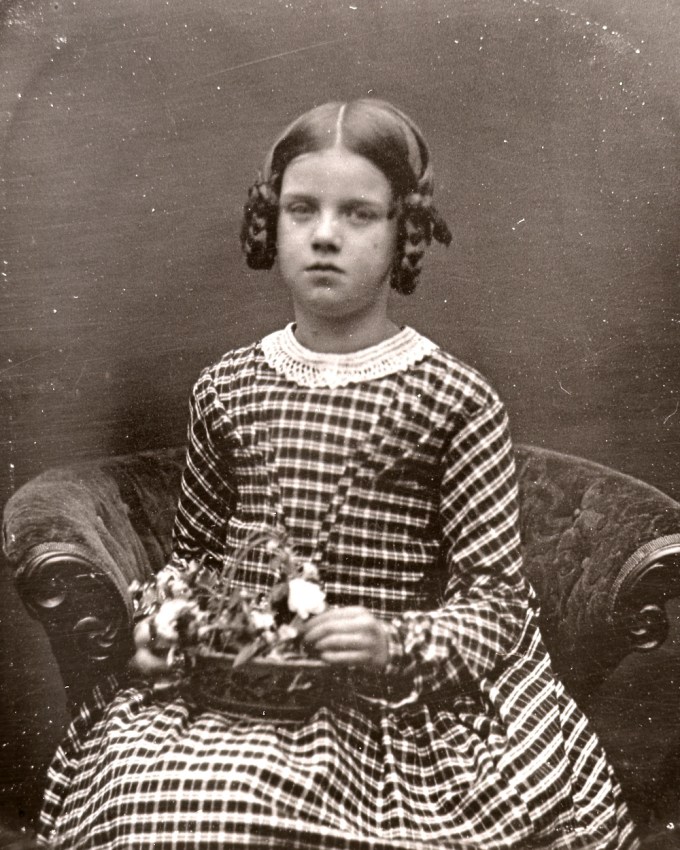
Daguerrotype of Annie Darwin, 1849
Complement with Meghan O’Rourke on learning to live with loss, a great Zen teacher’s advice on navigating grief, and these uncommon children’s books that guide kids through the messiness of mourning.
How Einstein Learned Physics
Einstein was a student long before he became a celebrity. There is a lot to glean from his education and unique approach to learning.
Scott Young (getpocket.com)

Wanting to understand how Einstein learned physics may, at first, seem as pointless as trying to fly by watching birds and flapping your arms really hard. How do you emulate someone who is synonymous with genius?
However, I think the investigation can still bear fruits, even if you or I might not have the intellectual gifts to revolutionize physics. Whatever Einstein did to learn, he clearly did something right, so there’s merit in trying to figure out what that was.
How Smart Was Einstein? (Did He Really Fail Elementary Mathematics?)
One of the most common stories about Einstein is that he failed grade school math. I think this is one of those ideas that sounds so good it has to get repeated, regardless of whether it is true or not.
Unfortunately, it’s not true. Einstein was a strong math student from a very young age. He himself admits:
“I never failed in mathematics. Before I was fifteen I had mastered differential and integral calculus.”
While the story about Einstein being an early dullard is certainly false, it’s not the case that he was universally regarded as a genius, either.

Einstein’s grades (highest grade = 6).
In college, Einstein often struggled in math, getting 5s and 6s (out of a possible 6) in physics, but getting only 4s in most of his math courses (barely a passing grade). His mathematics professor, and future collaborator, Hermann Minkowski called him a “lazy dog” and physics professor, Jean Pernet, even flunked Einstein with a score of 1 in an experimental physics course.
At the end of college, Einstein had the dubious distinction of graduating as the second-to-worst student in the class.
The difficulty Einstein had was undoubtedly due in part to his non-conformist streak and rebellious attitude, which didn’t sit well in an academic environment. This would follow him in his future academic career, when he was struggling to find teaching jobs at universities, even after he had already done the work which would later win him the Nobel prize.
Einstein’s discoveries in physics were truly revolutionary, which certainly earns him the title of “genius” by any reasonable standard. However, the early picture of Einstein is more complicated than that. All of this indicates to me, at least, that it can often be very easy to judge the genius of someone after the fact, but perhaps harder to predict in advance.
How Did Einstein Learn Math and Physics?
Given Einstein’s enormous contributions to physics, I think it’s now worthwhile to ask how he learned it.
Throughout the biography, I took notes whenever his methods of learning and discovery were mentioned. Then, I tried to synthesize these observations into several methods or behaviors that appeared to have enabled both Einstein’s revolutionary discoveries and his deep understanding of the subject matter.
1. Learning comes from solving hard problems, not attending classes.
One thing that becomes apparent when looking at Einstein’s early schooling was both his distaste for rote memorization and attending classes. The physics professor that flunked him, did so, in no small part, because Einstein often skipped class. As he claims, “I played hooky a lot and studied the masters of theoretical physics with a holy zeal at home.”

Einstein as a boy.
This habit of skipping classes to focus on solving hard problems in his spare time was one cultivated by his uncle, Jakob Einstein, who first introduced him to algebra. By the time he was 12, Einstein already had a, “predilection for solving complicated problems in arithmetic,” and his parents bought him an advanced mathematical textbook he could study from during the summer.
Einstein learned physics, not by dutifully attending classes, but by obsessively playing with the ideas and equations on his own. Doing, not listening, was the starting point for how he learned physics.
2. You really know something when you can prove it yourself.
How do you know when you really understand something? Einstein’s method was to try prove the proposition himself! This began at an early age, when Uncle Jakob, challenged him to prove Pythagoras’s Theorem:
“After much effort, I succeeded in ‘proving’ this theorem on the basis of the similarity of triangles,” Einstein recalled.
Isaacson explains that Einstein, “tackled new theories by trying to prove them on his own.” This approach to learning physics, which came naturally to Einstein, was driven by a strong curiosity both to know how things actually work, and a belief that, “nature could be understood as a relatively simple mathematical structure.”
What’s important to note here is not only the method of proving propositions to learn physics, but also the drive to do so. It’s clear that Einstein’s curiosity wasn’t merely to perform adequately, but to develop a deep understanding and intuition about physical concepts.
3. Intuition matters more than equations.
Einstein was a better intuitive physicist than he was a mathematician. In fact, it was only when he struggled for years in developing general relativity, that he became more enamored with mathematical formalisms as a way of doing physics.
An early influence which encouraged this intuitive approach to physics was a series of science books by Aaron Bernstein. These books presented imaginative pictures to understand physical phenomenon, such as, “an imaginary trip through space,” to understand an electrical signal and even discussing the constancy of the speed of light, a matter which would later underpin Einstein’s discovery of special relativity.

Swiss education reformer Pestalozzi emphasized learning through images, not by rote.
Einstein’s later education in Aarau, Switzerland, was heavily influenced by the philosophy of Swiss educational reformer, Johann Heinrich Pestalozzi. Pestalozzi claimed, “Visual understanding is the essential and only true means of teaching how to judge things correctly,” adding, “the learning of numbers and language must definitely be subordinated.”
Were these early influences causal factors in Einstein’s later preferred style of visualization to solve physics problems, or were they merely a welcome encouragement for a mind that was already predisposed to reasoning in this way? It’s hard to tell. Whatever the case, I think it can be argued that developing intuitions of ideas, particularly visual intuitions, has an invaluable role in physics.
How does one develop those intuitions? Einstein’s own thoughts were that “intuition is nothing but the outcome of earlier intellectual experience.” Einstein’s hard work building understanding through proofs and solving problems undoubtedly supported his ability to visualize as much as it benefited from it.
4. Thinking requires a quiet space and deep focus.
Einstein was a master of deep work. He had an incredible ability to focus, his son reporting:
“Even the loudest baby-crying didn’t seem to disturb Father,” adding, “He could go on with his work completely impervious to noise.”
Although overlooked for academic positions, it was his intellectually unstimulating job at the Bern patent office, which gave him time and privacy to unravel the mysteries of relativity. Einstein remarks:
“I was able to do a full day’s work in only two or three hours. The remaining part of the day, I would work out my own ideas.”

Einstein in his home office.
The obsessive focus Einstein applied to solving problems as a young boy, eventually served him well in cracking general relativity, culminating in an “exhausting four-week frenzy.” This intensity sometimes impacted his health, with him developing stomach problems in his strain to unravel the difficult mathematics of tensor field equations.
Einstein’s ability to focus, combined with a reverence for solitude, allowed him to do some of his best work in physics. Even as he aged, he still spent many hours on his boat, idly pushing the rudder seemingly lost in thought, interrupted by bursts of scribbling equations in his notebook.
5. Understand ideas through thought experiments.
Einstein’s most famous method for learning and discovering physics has to be the thought experiment.

Books such as this were Einstein’s first introduction to the power of thought experiments.
One of his most famous was imagining riding on a beam of light. What would happen to the light beam as he rode alongside it at the same speed? Well, it would have to freeze. This, to Einstein, seemed impossible by his faith in Maxwell’s electromagnetic equations. But if the light doesn’t freeze, what must happen?
These thought experiments were built on his intuitive understanding of physics, which in turn was built on his experience with working through theories and problems. Their strength, however, was to draw attention to contradictions or confusions that may have been missed by a less intuitive physicist.
His ability to engage in thought experiments even served him when he ended up being wrong about the underlying physics. It was exactly this type of thought experiment that he suggested to refute the current understanding of quantum physics in what is now known as the ERP paper, which showed that quantum mechanics could create changes in a system instantaneously, violating the speed of light. In this case, however, Einstein’s intuition was wrong—quantum mechanical systems do behave in such bizarre ways—which is now known as quantum entanglement.
6. Overturn common sense … with more common sense.
Special and general relativity stand out as being some of the most mind-bending scientific discoveries of all time. With special relativity, Einstein discovered that there is no absolute time—that two people moving at different speeds can disagree about the passage of time—with neither being right or wrong. With general relativity, Einstein went further, showing that gravity bends space and time.

Einstein at age 42, the year he won the Nobel prize.
It would be reasonable to assume, therefore, that to overturn such commonsense principles would require some departure from common sense. However, Einstein’s genius was to reconcile two commonsense principles—relativity and the constancy of the speed of light—by discarding a third (the idea of absolute measurements of space and time).
Einstein’s talent, it would seem, lay in his ability to defend what he thought were the most reasonable ideas, even if that meant discarding ones which had a longer tradition of being thought to be correct.
This skill of overturning commonsense with other intuitions may have also eventually been behind his inability to accept quantum mechanics, a very successful theory of physics that he himself helped create. His intuitions about strict determinism, led him to champion an unsuccessful and quixotic quest to overturn the theory for much of his life.
This practice also suggests a method for learning the many, counter-intuitive principles of math and physics—start by building off of a different commonsense premise.
7. Insights come from friendly walks.
While solitude and focus were essential components of how Einstein learned and did physics, it was often conversations with other people that provided his breakthroughs.

Albert Einstein with Michele Besso.
The most famous example of this was a walk with longtime friend Michele Besso. During his struggles with special relativity, he walked with his friend trying to explain his theory. Frustrated, he declared that, “he was going to give up,” working on the theory. Suddenly, however, the correct insight came to him and the next day he told Besso that he had, “completely solved the problem.”
Discussing ideas aloud, sharing them with others, can often put together insights that were previously unconnected. Einstein made great use of this technique of discussing tricky problems with friends and colleagues, even if they were merely a sounding board rather than an active participant in the discussion.
8. Be rebellious.
Einstein was never much of a conformist. While his rebellious streak probably hurt his earlier academic career when he was struggling to find work in physics, it is also probably what enabled his greatest discoveries and accentuated his later celebrity.
This rebelliousness likely helped him in learning physics as he pushed against the traditions and orthodoxy he didn’t agree with. He hated the German educational system, finding in Isaacson’s words, “the style of teaching—rote drills, impatience with questioning—to be repugnant.” This rejection of the common educational method encouraged him to learn physics on his own through textbooks and practice.
Later, the same rebelliousness would be essential in revolutionizing physics. His research on the quantization of light, for instance, had been first discovered by Max Planck. However, unlike the older Planck, Einstein saw the quantization as being a physical reality—photons—rather than a mathematical contrivance. He was less attached to the predominant theory of the time that light was a wave in the ether.
Where many students would have been happy to conform to predominant educational and theoretical orthodoxies, Einstein wasn’t satisfied unless something made sense to him personally.
9. All knowledge starts with curiosity.
“Curiosity has its own reason for existing,” Einstein explains. “One cannot help but be in awe when one contemplates the mysteries of eternity, of life, of the marvelous structure of reality.”

Einstein, curious until the end.
This curiosity is probably Einstein’s most defining quality, after his intelligence. His love of physics started as a boy when he was given a compass and fascinated by the idea that the needle moved because of an unseen force.
Curiosity was his motivation for learning physics. Einstein, who could be quite lazy and obstinate when a matter didn’t interest him, nonetheless had an intense passion for understanding the things, “the ordinary adult never bothers his head about.” Curiosity was also, in his own mind, the greatest reason for his accomplishments.
Einstein believed that, “love is a better teacher than a sense of duty.” Love of learning and knowledge is, perhaps, a more important skill to cultivate than discipline.
Learning as Einstein Did
Einstein’s approach towards learning cannot be entirely separated from who he was. Was his obsessive focus a result of his intelligence or his curiosity? Did his ability to easily visualize thought experiments come from encouragement in an unusual Swiss education system, extensive practice or natural ability? Was his revolution in physics a product of genius, rebelliousness, luck or maybe all three? I’m not sure there are clear answers to any of those questions.
What is clear, however, was Einstein’s reverence for nature and the humbled attitude to which he approached investigating it. As he wrote:
“A spirit is manifest in the laws of the universe—a spirit vastly superior to that of man, and one in the face of which we with our modest powers must feel humble.”
And, so even if Einstein’s genius may lay outside the reach of most of us, his curiosity, humility and tenacity are still worth emulating.
This article was originally published on March 16, 2017, by Scott Young, and is republished here with permission.
Join Scott’s newsletter and get a free ebook “7 Must-Know Strategies to Learn Anything Faster”
Why I’m Wrong About Everything (And So Are You)
Nobody likes being told they’re wrong, but it’s a lot quicker than waiting around to realize it yourself.
Mark Manson (getpocket.com)

Five hundred years ago cartographers believed California was an island. Doctors believed that slicing your arm open and bleeding everywhere could cure disease. Scientists believed fire was made out of something called phlogiston. Women believed rubbing dog urine on their face had anti-aging benefits. And astronomers believed the sun revolved around the earth.
When I was a little boy, I used to think “mediocre” was a kind of vegetable and that I didn’t want to eat it. I thought my brother had found a secret passageway in my grandma’s house because he could get outside without having to leave the bathroom (spoiler alert: there was a window). I also thought that when my friend and his family visited “Washington BC” they had somehow traveled back in time to when the dinosaurs lived, because after all, “BC” was a long time ago.
As a teenager, I used to try and not care about anything, when the truth was I actually cared way too much. I thought happiness was a destiny and not a choice. I thought love was something that just happened and not something that was worked for. I thought that being “cool” had to be practiced and learned from others rather than invented for oneself.
When I was with my first girlfriend, I thought she would never leave me. And then when she left me, I thought I’d never feel the same way about a woman again. And then when I felt the same way about a woman again, I thought that love sometimes just wasn’t enough. And then I realized that you get to decide what is “enough,” and love can be whatever you let it be for you, if you so choose.
Every step of the way I was wrong. About everything. All throughout my life, I was flat-out wrong about myself, others, society, culture, the world, the universe, everything. And I hope that will continue to be the case for the rest of my life.
Just as Present Mark can look back on Past Mark’s every flaw and mistake, one day Future Mark will look back on Present Mark’s assumptions and notice similar flaws. And that will be a good thing. Because that will mean I have grown.
There’s that famous Michael Jordan quote about failing over and over and over again, and that’s why he succeeds. Well, I am always wrong about everything, and that’s why my life improves.

We don’t want to hear that we’re wrong. But we need to in order to grow.
Knowledge is an eternal iterative process. We don’t go from “wrong” to “right” once we discover the capital-T Truth. Rather, we go from partially wrong to slightly less wrong, to slightly less wrong than that, to even less wrong than that, and so on. We approach the capital-T truth, but never reach it.
Therefore, from a perspective of happiness/purpose, we should not seek to find the ultimate “right” answer for ourselves, but rather seek to chip away at the ways which we’re wrong today so that we’re a little less wrong tomorrow.
When looked at from this perspective, personal development can actually be quite scientific. The hypotheses are our beliefs. Our actions and behaviors are the experiments. The resulting internal emotions and thought patterns are our data. We can then take those and compare them to our original beliefs and then integrate them into our overall understanding of our needs and emotional make-up for the future.
This approach to personal development is superior because it relies on experience first and foremost, and then proper interpretation of experience through various belief systems second.
For example, let’s say you aspire to be a professional writer. You have assumptions you’ve made about yourself — you’re creative, you love to express yourself, people enjoy your writing, you would be happy writing every day, and so on. And now you want to pursue an end-goal of turning that into a profession.
I get tons of emails from people in this situation and they all ask the same question, “What should I do?”
The answer is easy. You write. A lot.
You test those beliefs out in the real world and get real-world feedback and emotional data from them. You may find that you, in fact, don’t enjoy writing every day as much as you thought you would. You may discover that you actually have a lot of trouble expressing some of your more exquisite thoughts than you first assumed. You realize that there’s a lot of failure and rejection involved in writing and that kind of takes the fun out of it. You also find that you spend more time on your site’s design and presentation than you do on the writing itself, that that is what you actually seem to be enjoying.
And so you integrate that new information and adjust your goals and behaviors accordingly.
This, in a nutshell, is called life. Or at least what life should be. But somewhere along the way we all became so obsessed with being “right” about our lives that we never end up living it.

But it goes beyond that. Sure, rejection hurts. Failure sucks. But there are certainties we hold onto which we are afraid to question or let go of, certainties which meet our needs and give our lives meaning. That woman doesn’t get out there and date because she would be forced to confront her certainty of her own desirability and self-esteem. That man doesn’t ask for the promotion because he would have to confront his certainty about the value of his work and whether he’s actually productive or not.
These certainties are designed to give us moderate comfort now by mortgaging greater happiness later. They’re terrible long-term strategies. These are the certainties that keep us in place and out of touch. These are the certainties that drive people into despair, prejudice or radicalism.
Getting somewhere great in life has less to do with the ability to be right all the time and more to do with the ability to be wrong all the time. What are you wrong about today that can lead to your improvement?
So try it. Assume that you’re wrong — about everything. See where that takes you. Whatever you’re struggling with right now, practice some uncertainty. Ask yourself, “What if I was wrong about this?” Because I can tell you that you are. You are wrong about that and everything else too, just like me and just like everybody else.
And that’s good news.
Because being wrong means change. Being wrong means improvement. It means not cutting your arm open to cure a cold or splashing dog piss on your face to look young again. It means not thinking “mediocre” is a vegetable or being afraid to care.
In five hundred years, people will point and laugh at how we let our money and our jobs define our lives. They will laugh at how we were afraid to show appreciation for those who matter to us most. They will laugh at our rituals and superstitions, our worries and our wars. They will gawk at our cruelty. They will study our art and argue over our history. They will understand truths about us of which none of us are even aware of yet.
And we will have been wrong about pretty much everything. Just as they will be wrong about everything too, albeit a little less wrong.
And maybe, possibly — hopefully! — they will look back on our world and think, “Wow, how did they live like that?”
This article is an excerpt from Mark Manson’s book, The Subtle Art of Not Giving a F*ck: A Counterintuitive Guide to Living A Good Life
This article was originally published on November 21, 2013, by Mark Manson, and is republished here with permission.
Mark Manson is the author of Everything Is F*cked: A Book About Hope.