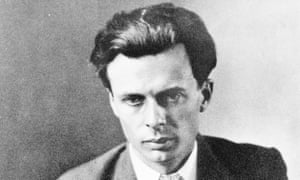
The Perennial Philosophy is defined by its author as “The metaphysic that recognizes a divine Reality substantial to the world of things and lives and minds.” With great wit and stunning intellect, Aldous Huxley examines the spiritual beliefs of various religious traditions and explains them in terms that are personally meaningful.
An inspired gathering of religious writings that reveals the “divine reality” common to all faiths, collected by Aldous Huxley
“The Perennial Philosophy,” Aldous Huxley writes, “may be found among the traditional lore of peoples in every region of the world, and in its fully developed forms it has a place in every one of the higher religions.”
With great wit and stunning intellect—drawing on a diverse array of faiths, including Zen Buddhism, Hinduism, Taoism, Christian mysticism, and Islam—Huxley examines the spiritual beliefs of various religious traditions and explains how they are united by a common human yearning to experience the divine. The Perennial Philosophy includes selections from Meister Eckhart, Rumi, and Lao Tzu, as well as the Bhagavad Gita, Tibetan Book of the Dead, Diamond Sutra, and Upanishads, among many others.
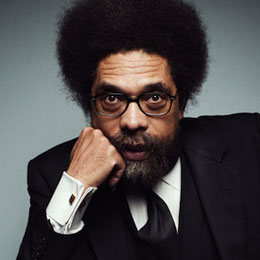
Cornel Ronald West (born June 2, 1953 is an American philosopher, political activist, social critic, author, and public intellectual. The son of a Baptist minister, West focuses on the role of race, gender, and class in American society and the means by which people act and react to their “radical conditionedness”. Wikipedia
Dürckheim on a morning walk with Swami Prabhupada in Frankfurt in June 1974 (Wikipedia)
“There is a story that tells of Meister Eckhart’s meeting with a poor man: “You may be holy,” says Eckhart, “but what made you holy, brother?” And the answer comes: “My sitting still, my elevated thoughts, and my union with God.” It is useful for our present theme to note that the practice of sitting still is given pride of place.
In the Middle Ages people were well aware of the inexhaustible power that arises simply from sitting still. After that time, knowledge of the purifying power of stillness and its practice was, in the West, largely lost. The tradition of preparing man for the breakthrough of transcendence by means of inner quiet and motionless sitting has been preserved in the East to the present day. Even in cases where practice is apparently directed not to immobility but towards activity–as in archery, sword fighting, wrestling, painting, flower arrangement–it is always the inner attitude of quiet and not the successful performance of the ways which is regarded as of fundamental importance.
Once a technique has been mastered, any inadequate performance is mirrored in wrong attitudes. The traditional knowledge of the fact that it is possible for a man to be inwardly cleansed solely through the practice of right posture has kept alive the significance of correct sitting. The inner quiet which arises when the body is motionless and in its best possible form can become the source of transcendental experience. By emptying ourselves of all those matters that normally occupy us we become receptive to Greater Being.
Japanese Hanging Scroll of Bodhidharma seated on grass by-Hakuin Ekahu. From Song of the Brush.
It should be understood that the transformation which is brought about by means of meditation is not merely a change in man’s inner life, but a renewal of his whole person. It is a mistake to imagine that enlightenment is no more than an experience which suddenly brings fresh inward understanding, as a brilliant physicist may have a sudden inspiration which throws new light on his work and causes a re-ordering of his whole system of thought.
Such an experience leaves the person himself unchanged. True enlightenment has nothing to do with this kind of sudden insight. When it occurs, it has the effect of so fundamentally affecting and shaking the whole person that he himself, as well as his total physical existence in the world, is completely transformed.
To what extent the habit of sitting can impress and change us becomes clear only when we have taken pains to practice it. After a short time we find ourselves asking: how is it possible that such a simple exercise can have such far-reaching effects on the body and soul? Sitting still, we begin to realize, is not what we had imagined physical or spiritual practice to be. We are faced, therefore, with the question: “What is it we are really practicing if, although both are affected it is neither body nor spirit?” The answer to this is that the person who practices is himself being practiced. The one who is worked upon is the Person in his original totality, who is present beneath and beyond all possible differentiation into the many and various physical, spiritual, and mental aspects. In so far as we regard and value ourselves as incarnate persons, certain manifestations in our life move from their accustomed shadow into the light of understanding. Thus our moods and postures take on new meaning. So long as we think of body and soul as two separate entities, we regard moods simply as “feelings,” and look upon bodily attitudes and breathing as merely physical manifestations. When, however, the whole person is recognized as a “thou,” it is no longer possible to separate body and soul. Once it becomes a question of transformation, our basic moods, together with all the gestures and postures that express them, acquire new significance. They are the means through which we grow aware of, manifest ourselves, and become physically present in the world…
Karlfried Graf Dürckheim
The so-called “peace” of the world-ego, illustrated by the bourgeois aim of a “quiet life,” comes about when all inner movement and growth have stopped. Of quite a different quality is the peace of inner being and the life which strives to manifest itself through it. This kind of peace can only prevail where nothing further interrupts the movement towards becoming. To achieve such an attitude to life is the aim of all practice and meditation; it can never represent a state of “having arrived” but is always a process of “being on the way.” Such practice, therefore, is by no means acceptable to all. There are many who throng to the so-called prophets who promise a cheap kind of peace to troubled mankind. But such “masters” simply betray man by hiding from him the real cause of his anxiety, which lies in the desire for transformation inherent in his innermost being.” ♦
—From Karlfried Graf Dürckheim, Daily Life as Spiritual Exercise: The Way of Transformation, translated by Ruth Lewinnek and P.L. Travers (London: Allen & Unwin, 1971), pp.51-54, 58.
The term “quiddity” derives from the Latin word quidditas, which was used by the medieval scholastics as a literal translation of the equivalent term in Aristotle‘s Greekto ti en einai (τὸ τί ἦν εἶναι)[2] or “the what it was to be (a given thing)”.
Overview
Quiddity describes properties that a particular substance (e.g. a person) shares with others of its kind. The question “what (quid) is it?” asks for a general description by way of commonality. This is quiddity or “whatness” (i.e., its “what it is”). Quiddity was often contrasted by the scholastic philosophers with the haecceity or “thisness” of an item, which was supposed to be a positive characteristic of an individual that caused them to be this individual, and no other. It is used in this sense in British poet George Herbert‘s poem, “Quiddity”.
28 There is neither Jew nor Greek, there is neither bond nor free, there is neither male nor female: for ye are all one in Christ Jesus.
–The Apostle Paul
Paul the Apostle, commonly known as Saint Paul and also known by his Hebrew name Saul of Tarsus (Died: c. 64 or c. 67 AD aged 61–62 or 64–65), was an apostle who taught the gospel of Christ to the first-century world. Wikipedia
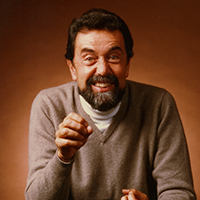
“Your talent is God’s gift to you. What you do with it is your gift back to God.”
–Felice Leonardo “Leo” Buscaglia, also known as “Dr. Love,” (March 31, 1924 – June 12, 1998) was an American author and motivational speaker, and a professor in the Department of Special Education at the University of Southern California. Wikipedia
…which was totally different, but every bit as good, with a lush arrangement that recalls (at least to my ear) Sketches of Spain. McLaughlin‘s interpretation is from a 1995 compilation called Jazz to the World, which one can hear in its entirety here.
To access the many other versions of “Veni, Veni, Emmanuel” (“O Come, O Come, Emmanuel”) – including this one (complete with burning Yule Log!) by BB faves Pentatonix – on YouTube, click here and/or here.
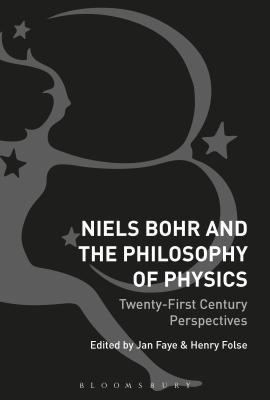
Niels Bohr and Philosophy of Physics: Twenty-First Century Perspectives examines the philosophical views, influences and legacy of the Nobel Prize physicist and philosophical spokesman of the quantum revolution, Niels Bohr.
The sixteen contributions in this collection by some of the best contemporary philosophers and physicists writing on Bohr’s philosophy today all carefully distinguish his subtle and unique interpretation of quantum mechanics from views often imputed to him under the banner of the “Copenhagen Interpretation.” With respect to philosophical influences on Bohr’s outlook, the contributors analyse prominent similarities between his viewpoint and Kantian ways of thinking, the views of the Danish philosopher Harald Høffding, and themes characteristic of American pragmatism. In recognizing the importance of Bohr’s epistemological naturalism they examine his defence of the indispensability of classical concepts from a variety of different perspectives.
This collection shows us that Bohr’s interpretation of quantum mechanics, now nearly a century old, still has the power to shed light on a variety of issues that have arisen only since his lifetime, as well as decoherence theory and other non-collapse interpretations. Balancing historical themes with contemporary discussions, Niels Bohr and the Philosophy of Physics establishes Bohr’s on-going contribution to the philosophy of physics and examines his place in the history of philosophy.
(Goodreads.com)
Consciousness, sexuality, androgyny, futurism, space, the arts, science, astrology, democracy, humor, books, movies and more