
https://www.noradsanta.org/?fbclid=IwAR1JzR11lFoK0xCf2P2OlmCMkRu2qezpY8OB_9VNt3DWGPcCXga9JFOXrCY
The Cycle of Time Number 432
A trained athlete’s heart beats one time each second. In a 24 hour day, that is 86,400 beats. The earth’s axis wobble that causes the precession of the equinoxes is given as 25,920 years. Divided by the ancient number called “soss,” 60, which was used in calculations, results in 432.
(greatdreams.com)
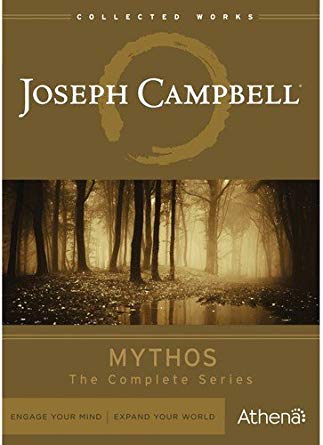
Joseph Campbell: Mythos-The Complete Series DVD
From Wikipedia, the free encyclopedia
| Mythos | |
|---|---|
| Mythos (Collected Works of Joseph Campbell) | |
| Also known as | The Shaping of Our Mythic Tradition |
| Genre | Documentary, Mythology |
| Created by | Joseph Campbell |
| Developed by | Mythology, Ltd. |
| Directed by | Robert Walter |
| Presented by | Susan Sarandon |
| Starring | Joseph Campbell |
| Country of origin | United States |
| Original language(s) | English |
| No. of seasons | 3 |
| No. of episodes | 15 |
| Production | |
| Executive producer(s) | David M. Fox |
| Producer(s) | Bill Free |
| Running time | 15 hrs |
| Production company(s) | Joseph Campbell Foundation |
| Distributor | Unipix/Acorn Media |
| Release | |
| Original network | PBS |
| Picture format | NTSC |
| Chronology | |
| Related shows | Transformations of Myth Through Time, The Hero’s Journey |
| External links | |
| Website |

Mythos is a three-part documentary that consists of a series of lectures given by Joseph Campbell. Campbell conceived of the original lectures, filmed over the last six years of his life, as a summation of what he had learned about the human mythic impulse, in terms of psychology, ethnology and comparative mythology—what he called “the one great story of mankind.”[1]
Transformations: A False Step
After Campbell’s death and the posthumous celebrity brought by the airing in 1988 of The Power of Myth, the filmmakers who had recorded the lectures quickly cobbled together a much-abridged, hastily edited series for PBS entitled Transformations of Myth Through Time. An even-more-highly redacted version was briefly released under the title The World of Joseph Campbell.[2]
Mythos Emerges
Campbell’s estate, represented by his widow Jean Erdman and, eventually, by the Joseph Campbell Foundation (JCF), asked that these versions, which were unlicensed and did not accurately represent Campbell’s thoughts, be pulled from the market, and proposed the production of a twenty-hour television series in four parts that followed Campbell’s original vision more closely: Mythos.
Volume One of Mythos was released in 1999. Volume Two was released in 2000. Both parts are narrated by Susan Sarandon.
After these initial releases, the original distributor, Unipix, promptly went bankrupt, and production on the series halted.[2]
The JCF re-released the first two volumes in 2007 and 2008 in conjunction with Acorn Media as part of the Collected Works of Joseph Campbell series and the third volume was released in 2011. The decision was eventually made that the planned fourth volume, dealing with James Joyce’s novels, was to be released in 2013 as a separate product.[2] This was motivated by the difficulties to make its contents fit with the overall format of Mythos.
The three volumes of Mythos were released together as Mythos – The Complete Series in September 2012.
Mythos Episodes
Mythos: Vol. 1, The Shaping of Our Mythic Tradition (1999)
- Mythos – 1.1: Psyche & Symbol – The psychological impulse for and response to myth
- Mythos – 1.2: The Spirit Land – How myths awakened American Indians to the mystery of life.
- Mythos – 1.3: On Being Human – The emergence of myth in early hunter-gatherer societies
- Mythos – 1.4: From Goddesses to God – The gradual shift from the Goddess to male, warlike deities
- Mythos – 1.5: The Mystical Life – Non-biblical mythic strains that helped shape the Western spirit
Mythos: Vol. 2, The Shaping of the Eastern Tradition (2000)
- Mythos – 2.1: The Inward Path – The core myths of the great Asian religions
- Mythos – 2.2: The Enlightend One – The Buddha and enlightenment, East and West
- Mythos – 2.3: Our Eternal Selves – Yoga and transcendence
- Mythos – 2.4: The Way to Illumination – Kundalini yoga and the seven chakras
- Mythos – 2.5: The Experience of God – Tibetan Buddhism and the spiritual journey that is death
Mythos: Vol. 3, The Shaping of the Western Tradition (2011)
- Mythos – 3.1: Love as the Guide – The Arthurian romances, including Tristan and Iseult
- Mythos – 3.2: The Path of the Heart – Parzival and the Grail Quest
- Mythos – 3.3: Beyond Time and Space – The Romantic philosophers
- Mythos – 3.4: Between Pairs of Opposites – Thomas Mann and The Magic Mountain
- Mythos – 3.5: Into the Well of Myth – The Joseph novels and modern myth
SPECIFICATIONS
Length: 900 minutes on 6 Disc
Subtitle Languages: English (SDH)
UPC: 054961882199
ISBN: 9781598288216DESCRIPTION
Actress Susan Sarandon hosts this series of filmed talks given by Campbell, filmed during his last years and given in the order he requested
Baba Ram Dass, spiritual guru and LSD proponent, dies at 88
Associated Press•December 23, 2019 (yahoo.com)

HONOLULU (AP) — Baba Ram Dass, the 1960s counterculture spiritual leader who experimented with LSD and traveled to India to find enlightenment, returning to share it with Americans, has died. He was 88.
Dass’ foundation, Love Serve Remember, announced late Sunday that the author and spiritual leader died peacefully at his home earlier in the day. No cause of death was given.
He had suffered a severe stroke in 1997 that left him paralyzed on the right side and, for a time, unable to speak. More recently, he underwent hip surgery after he was injured in a fall in November 2008, according to his website.
“I had really thought about checking out, but your love and your prayers convinced me not to do it. … It’s just beautiful,” he told followers in a videotaped message at the time from his hospital bed in Hawaii.
Over the years, Ram Dass — born Richard Alpert — associated with the likes of Timothy Leary and Allen Ginsberg. He wrote about his experiences with drugs, set up projects to help prisoners and those facing terminal illness and sought to enlighten others about the universal struggle with aging.
But he was best known for the 1971 book “Be Here Now,” written after his trip to India. The spiritual primer found its way into thousands of backpacks around the world.
“I want to share with you the parts of the internal journey that never get written up in the mass media,” he wrote. “I’m not interested in what you read in the Saturday Evening Post about LSD. This is the story of what goes on inside a human being who is undergoing all these experiences.”
Among his other books were “How Can I Help?” and “Compassion in Action” and “Still Here: Embracing Aging, Changing, and Dying.”
“In the ’60s, I was an uncle for a movement,” he told The Associated Press in 1998. “I was always showing people where they could go. I went east, and then there was a big movement east.”
Now, he said, “the baby boomers are getting old — and I’m learning how to get old for them. That’s my role.”
The Boston-born son of a prominent attorney, Ram Dass entered the public sphere in the early 1960s as a young Harvard psychology professor. Alpert, as he was then known, earned a doctorate at Stanford University.
He and Leary, a Harvard colleague, began a series of experiments with hallucinogenic mushrooms and LSD, giving the drugs to prisoners, philosophers and students to study their effects.
Ram Dass later wrote that he tried psilocybin, the compound found in hallucinogenic mushrooms, in Leary’s living room.
“I peered into the semidarkness and recognized none other than myself in cap and gown and hood,” he wrote. “It was as if that part of me, which was a Harvard professor, had separated or dissociated itself from me.”
The experiments got him and Leary kicked out of Harvard in 1963.
“It was a little too sensational,” Ram Dass said in 1998. “We were the starters of it.”
He and Leary retreated to an upstate New York mansion that drew Beat Generation figures Ginsberg, William Burroughs and Jack Kerouac.
By the late 1960s, LSD and other hallucinogens had become part of pop culture and a rite of passage for many young Americans.
But Alpert eventually sought a way to reach a state of enlightenment without drugs. Following Ginsberg’s advice, he headed to India in 1967, where he met the man who became his guru, Neem Karoli Baba.
There, his guru introduced him to yoga, meditation, Buddhism and Sufism, and gave him the name Ram Dass, Hindi for “servant of God.” (He is often called Baba Ram Dass; “baba” is an honorary title.)
Ram Dass wrote “Be Here Now” when he returned to the United States. Around the same time, he told The New York Times that he had turned away from drugs, saying: “I don’t want to break the law, since that leads to fear and paranoia.”
In 1974, Ram Dass founded the Hanuman Foundation, which set up programs such as the Prison Ashram Project to introduce inmates to spirituality. He also helped create the Seva Foundation, which works to prevent blindness and helps community groups in developing countries. His Love Serve Remember Foundation is dedication to preserving his teachings and those of Neem Karoli Baba.
Ram Dass lived for many years in the quiet town of San Anselmo, California, about 20 miles (32 kilometers) north of San Francisco, surrounded by the markers of his life straddling East and West: Japanese prints and statues of Buddha, seashells from the South Pacific and a well-used player piano.
In later years, he moved to Woodside, California. More recently, he was based in Maui.
He said his 1997 stroke brought physical and spiritual suffering, but that he came to see the suffering as a source of insight that he could share with others facing their own battles with illness and aging.
“It’s brought out new aspects of myself and aspects of my relationship to the world,” he said in 1998. The stroke has gotten me into a stage of life — this is a stage close to death, a stage which is inward.”
After regaining his speech, Ram Dass returned to the lecture circuit, starting by touring Northern California sharing tales of what he called his state of “heavy grace.”
“All illnesses are part of the passing show,” he told the San Francisco Chronicle in 2004. “You are not just your body. You are the witness of your body.”
He had a falling out with Leary in the 1970s after rumors surfaced that the latter, jailed on drug and prison-break charges, offered to provide authorities with information on others involved in the drug culture in exchange for a lighter sentence.
But the pair had reconciled in the years before Leary’s death in 1996, joking back and forth and praising one another as they made joint appearances at lectures. When Leary was on his deathbed, Ram Dass came to visit after Leary asked for advice on how best to let go of life.
“The mythic level that Timothy and I lived at was that we were adventurers,” he said in the 2014 documentary, “Dying to Know: Ram Dass & Timothy Leary.”
Although speaking of Leary, Ram Dass added an epithet that also could be his own: “If you have identified with your soul when you are alive, death is just another moment.”
___
Online: http://www.ramdass.org
(Contributed by Janet Cornwell, H.W., m.)
MOONWOBBLE DECEMBER 2019
By Rick Thomas, H.W., M.
Peak December 29-30-31
An easy reminder for monitoring the ebb and flow of this event.
Sun 8 deg Capricorn opposite North Node at 8 deg Cancer (also conjunct South Node)

With this Moon Wobble we will have the full moon on December 12th; new moon on the 26th. Full moon is the completion of a cycle of growth, the new moon is a good time to start something; plant some seeds. Besides the Moon Wobble period we are also moving through a triple conjunction of Pluto, Saturn and Venus. With Pluto/Venus we can look into the depths of our unconscious where shame, ugliness and repressed pain reside, but right there might also live our greatest gifts and passions. The give/for as we speak of in RHS. Venus and Saturn have something to do with how love grows stronger and matures over time. A good time to move toward, or recognize our growth in the area of love, sexuality and intimacy.
GENERAL SUGGESTIONS / OBSERVATIONS
- This cycle is based on empirical data meaning enough data was observed and recorded to make it possible to suggest attitudes and reactions. Keep in mind that we all have free will and thus results will vary from one individual to another.
- The graph shows the energy high at the beginning of the cycle (not unlike any other astrological aspect) followed by a slow down before it gets strong and again this reflects years of tracking and noting feedback from our many students.
- If you are making a decision during this time you might want to let it set for a day or two then check your decision again to see if it still makes sense. However, you can feel into the ebb and flow and find good times to work on self emotionally in both the low and high points. Impatience, emotion and acts without thinking are common.
- With practice you can also feel when the energy is there to help bring completion to tasks, goals and projects you may be working on.
(TheProsperos.org)
Moon wobble Musings

By William Fennie, H.W., M.
Signs most affected : Capricorn (!), Cancer and, to a lesser extent, Aries and Libra.
While we have a regular Moonwobble cycle that peaks on December 29, 30, and 31, we are experiencing it in the context of a much more powerful current: the upcoming conjunction of Saturn and Pluto at 22° Capricorn on January 12, 2020. It’s the beginning of a 35-year cycle that I write more about elsewhere.
The Saturn-Pluto conjunction is a little bit like being squeezed ever more tightly by a very large snake, with the Moonwobble energy feeling like an insolent pre-adolescent throwing rocks at you all the while.
We are now (Dec. 22) in the critical period of the MW cycle, as the Sun entered Capricorn early this morning – the Winter Solstice (or Summer Solstice down under). I like Rick Thomas’ emphasis on the Venus-Pluto conjunction in the current pattern.
Continues at: https://theprosperos.org/community/uplook/post_201912231830
How Bay Area sisters found their niche in growing augmented reality startup

By Brian Rinker – Reporter, San Francisco Business Times
Dec 23, 2019 (bizjournals.com)
When sisters Jhanvi and Ketaki Shriram first co-founded their augmented reality gaming startup, Krikey, they worked out of a one-bedroom apartment in San Francisco’s Marina District and lived in the apartment next door.
Over the following year or so, they pumped out dozens of games and virtual objects, mainly animals like humpback whales, lions and manta rays. But as their staff grew from two to eight employees, the once-cozy apartment eventually became cramped and untenable.
“At the peak I think we had about 10 people in there,” said Jhanvi Shriram, CEO of Krikey, who at 31 is the older sister.
“That’s when we had to move,” added Ketaki Shriram, the 28-year-old CTO. As sisters who work and live together, they often finish each other’s sentences.
Today, nearly three years after they founded Krikey in January 2017, the sisters work in a legitimate office building in the Financial District, employ 30 full-time and part-time employees and have their sights set on a Series A funding round sometime in 2020. The fast-growing company, which launched their app on iOS and Android in October 2018, has also homed in on the type of gaming product they want to build: location-based augmented reality games that encourage animal conservatorship.
Augmented reality is layering digital objects over physical reality. Virtual reality, on the other hand, is 100% virtual.
The company’s flagship game is Wingspan, a map-based birdwatching game that is sponsored by the National Audubon Society and based off a board game with the same name. Krikey’s Wingspan is basically Google maps with virtual objects layered on top. Game players walk around town in real life following the map on their phones looking to spot virtual birds, which react when players get closer.
The other top game they offer is Gorillas!, developed in partnership with Ellen DeGeneres’ The Ellen Fund, which lets you track gorillas in Rwanda.
Since launching Wingspan in February 2018, Krikey’s user retention rates have doubled, with gamers in more than a 120 countries. Krikey wouldn’t disclose its users numbers, but would say that its app has seven times year-over-year user growth.
They are hoping their games encourage users to care more about animals and the natural environment. Two studies out of Stanford — one about cutting down a tree and the other about the death of coral in the ocean — found that after people experienced these events in virtual reality, they immediately cared more about the fate of coral and trees, even reducing their paper towel usage. While this hasn’t been studied in augmented reality, the sisters are hoping their games leave a lasting impression of animal conservatorship.
“We’re trying to see if we can take these findings that have worked with virtual reality and apply them potentially at scale to bring positive impacts to people’s lives in a much larger way because everyone has a mobile phone,” Ketaki said.
The sisters, who were raised in Saratoga, founded Krikey when they were both going to Stanford University. Jhanvi, who had earned her undergraduate degree at Stanford, returned after some years in Los Angeles to get her M.B.A. Ketaki had been at Stanford the entire time Jhanvi was away working toward a PhD on how immersive virtual experiences affected people at the Virtual Human Interaction Lab. Coincidentally, the sisters graduated each of their programs in the same year. Somewhere in that time frame they even made a documentary on Stockton Mayor Michael Tubbs.
Like many founders, they weren’t exactly sure what their product would be at first, but they knew they wanted to create a company that dealt with Ketaki’s research: how immersive virtual experiences could affect people and change behaviors. But virtual reality is a hard business to break into because it’s costly and competitive. Plus, virtual reality requires expensive headsets. So, the sisters shifted to augmented reality, which they saw as a much more accessible technology because everyone has a cell phone.
One of the advantages of being sister co-founders who live and work together is that they are very candid with one another, so when a problem arises they can get to the heart of it quickly, they said, even if they don’t always see eye to eye.
“Yes of course we disagree, but I mean at the end of the day it’s like we’re together for life right like this is your family,” said Ketaki.
“I like to joke that I recruited her at birth,” Jhanvi added.
Thus spoke Zarathustra
From Wikipedia, the free encyclopedia
| Part of a series on |
| Zoroastrianism |
|---|
| Atar (fire), a primary symbol of Zoroastrianism |
| Primary topics |
| Ahura MazdaZarathustraAshaVohu ManahPersia/IranFaravaharAvestan |
| Divine entities |
| Amesha SpentasYazatasAhurasDaevasAngra Mainyu |
| Scripture and worship |
| AvestaCypress of KashmarGathasYasnaVendidadVisperadYashtsKhordeh AvestaThe RevayatsAb-ZohrAshem VohuAhuna VairyaYenghe hatamAiryaman ishyaFire Temples101 Names of Ahura Mazda |
| Accounts and legends |
| DēnkardBundahišnBook of Arda VirafBook of JamaspStory of SanjanChinvat BridgeFrashokereti |
| History and culture |
| ZurvanismMazdakismKhurramitesCalendarFestivalsMarriageBurial |
| Adherents |
| Zoroastrians in IndiaZoroastrians in IranParsisZoroastrianism in the United StatesIranisPersecution of Zoroastrians |
| Related topics |
| Criticism of Zoroastrianism |
| Religion portal |
| vte |


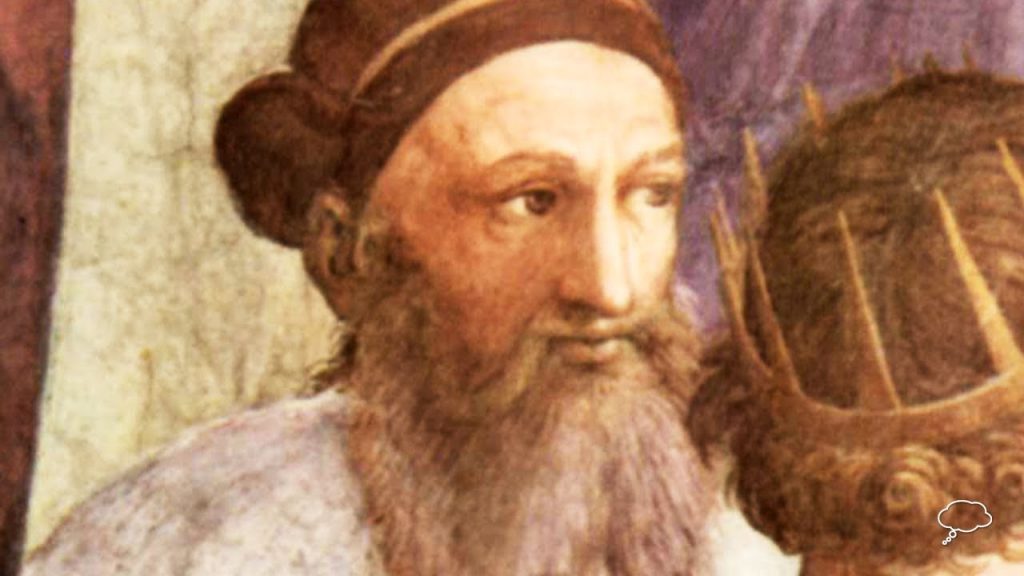
Zoroaster (/ˈzɒroʊæstər/, UK also /ˌzɒroʊˈæstər/; Greek: Ζωροάστρης Zōroastrēs), also known as Zarathustra (/ˌzærəˈθuːstrə/, UK also /ˌzɑːrə-/; Avestan: ?????????? Zaraθuštra), Zarathushtra Spitama or Ashu Zarathushtra (Persian: زرتشت), was an ancient Iranian spiritual leader who founded what is now known as Zoroastrianism. His teachings challenged the existing traditions of the Indo-Iranian religion and inaugurated a movement that eventually became the dominant religion in Ancient Persia. He was a native speaker of Old Avestan and lived in the eastern part of the Iranian Plateau, but his exact birthplace is uncertain.[6][7]
There is no scholarly consensus on when he lived.[8] However, approximating using linguistic and socio-cultural evidence allows for dating to somewhere in the second millennium BC. This is done by estimating the period in which the Old Avestan language (as well as the earlier Proto-Indo-Iranian and Proto-Iranian languages and the related Vedic Sanskrit) were spoken, the period in which the Proto-Indo-Iranian religion was practised, and correlation between the burial practice described in the Gathas with the archeological Yaz culture. However, other scholars still date him in the 7th and 6th century BC as a near-contemporary of Cyrus the Great and Darius I.[9][2][10][11][12] Zoroastrianism eventually became the official religion of Ancient Persia and its distant subdivisions from the 6th century BCE to the 7th century CE.[13] Zoroaster is credited with authorship of the Gathas as well as the Yasna Haptanghaiti, hymns composed in his native dialect, Old Avestan, and which comprise the core of Zoroastrian thinking. Most of his life is known from these texts.[6] By any modern standard of historiography, no evidence can place him into a fixed period, and the historicization surrounding him may be a part of a trend from before the 10th century that historicizes legends and myths.[14]
Five thoughts from Joseph Campbell

“When you dream at night, it is the body that is talking.”
–Joseph Campbell
“When you are in accord with nature, nature will yield its bounty.”
–Joseph Campbell
“An illuminated man is stronger than any deity.”
–Joseph Campbell
“If you’re falling, dive.”
–Joseph Campbell
“Time demands violence.”
–Joseph Campbell
Bio: Carl Payne Tobey


Carl Payne Tobey
natal chart (Placidus)
natal chart English style (Equal houses)
natal chart with Whole Sign houses
| Name | Tobey, Carl PayneGender: M |
| born on | 27 April 1902 at 22:32 (= 10:32 PM ) |
| Place | Lynbrook, New York, 40n39, 73w40 |
| Timezone | EST h5w (is standard time) |
| Data source | From memoryRodden Rating ACollector: Rodden |
| Astrology data | 06°55′ 05°30 Asc. 23°25′ |
(astro.com)
Biography
American astrologer and editor of four national magazines. He conducted his own correspondence course for years and his books include “Astrology for the Millions” and “Astrology in Inner Space.”
Tobey died on 19 March 1980 Tucson, AZ.