“The less you care (about what others think of you) the more easily you will create the reality that belongs to your authentic self. Do not mistake loving others for caring what they think; these two attitudes are opposites. Be you. Now. 2020 can be your year my friend, to break free from the societal prison you believe has real power when it has zero power. Stop listening to your friends and family if they oppose your truth, and say yes to the adventure that’s been with you for as long as you can remember. Dig it up, honor it, and express yourself honestly, now.” ~ Bentinho Massaro
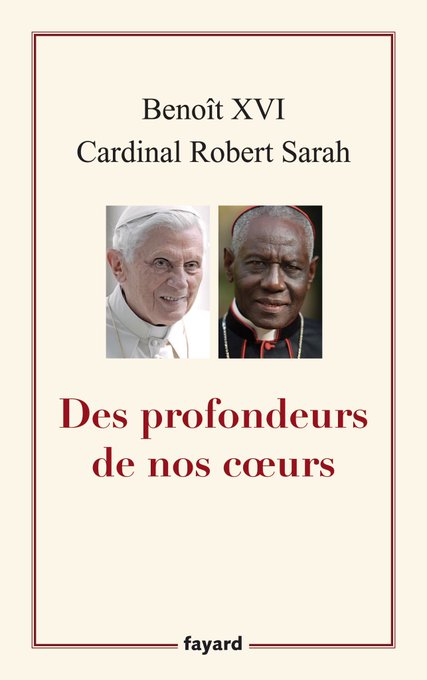
Retired Pope Benedict XVI has broken his silence to reaffirm the “necessity” of priestly celibacy, co-authoring a bombshell book at the precise moment that Pope Francis is weighing whether to allow married men to be ordained to address the Catholic priest shortage.
Benedict wrote the book, “From the Depths of Our Hearts: Priesthood, Celibacy and the Crisis of the Catholic Church,” along with his fellow conservative, Guinean Cardinal Robert Sarah, who heads the Vatican’s liturgy office and has been a quiet critic of Francis.
The French daily Le Figaro published excerpts of the book late Sunday; The Associated Press obtained galleys of the English edition, which is being published by Ignatius Press.
Benedict’s intervention is extraordinary, given he had promised to remain “hidden from the world” when he retired in 2013, and pledged his obedience to the new pope. He has largely held to that pledge, though he penned an odd essay last year on the sexual abuse scandal that blamed the crisis on the sexual revolution of the 1960s.
His reaffirmation of priestly celibacy, however, gets to the heart of a fraught policy issue that Francis is expected to weigh in on in the coming weeks, and could well be considered a public attempt by the former pope to sway the thinking of the current one.
The implications for such an intervention are grave, given the current opposition to Francis by conservatives and traditionalists nostalgic for Benedict’s orthodoxy, some of whom even consider his resignation illegitimate.
Story broke so I can say: Ignatius Press is publishing the new book by Pope Emeritus Benedict and Cardinal Robert Sarah. The title: FROM THE DEPTHS OF OUR HEARTS: PRIESTHOOD, CELIBACY, AND THE CRISIS OF THE CATHOLIC CHURCH. Available for pre-order tomorrow, Jan 13. Ships Feb 20.
It is likely to fuel renewed anxiety about the wisdom of Benedict’s decision to remain an “emeritus pope,” rather than merely a retired bishop, and the unprecedented situation he created by having two popes, one retired and one reigning, living side by side in the Vatican gardens.
In that light, it is significant that the English edition of the book lists the author as “Benedict XVI,” with no mention of his emeritus papal status on the cover.
The authors clearly anticipated the potential interpretation of their book as criticism of the current pope, and stressed in their joint introduction that they were penning it “in a spirit of filial obedience, to Pope Francis.” But they also said that the current “crisis” in the church required them to not remain silent.
Francis has said he would write a document based on the outcome of the October 2019 synod of bishops on the Amazon. A majority of bishops at the meeting called for the ordination of married men to address the priest shortage in the Amazon, where the faithful can go months without having a Mass.
Francis has expressed sympathy with the Amazonian plight. While he has long reaffirmed the gift of a celibate priesthood in the Latin rite church, he has stressed that celibacy is a tradition, not doctrine, and therefore can change, and that there could be pastoral reasons to allow for an exception in a particular place.
Benedict addresses the issue head-on in his chapter in the brief book, which is composed of a joint introduction and conclusion penned by Benedict and Sarah, and then a chapter apiece in between. True to his theological form, Benedict’s chapter is dense with biblical references and he explains in scholarly terms what he says is the “necessary” foundation for the celibate priesthood that dates from the times of the apostles.
“The priesthood of Jesus Christ causes us to enter into a life that consists of becoming one with him and renouncing all that belongs only to us,” he writes. “For priests, this is the foundation of the necessity of celibacy but also of liturgical prayer, meditation on the Word of God and the renunciation of material goods.”
Marriage, he writes, requires man to give himself totally to his family. “Since serving the Lord likewise requires the total gift of a man, it does not seem possible to carry on the two vocations simultaneously. Thus, the ability to renounce marriage so as to place oneself totally at the Lord’s disposition became a criterion for priestly ministry.”
The joint conclusion of the book makes the case even stronger, acknowledging the crisis of the Catholic priesthood that it says has been “wounded by the revelation of so many scandals, disconcerted by the constant questioning of their consecrated celibacy.”
Dedicating the book to priests of the world, the two authors urge them to persevere, and for all faithful to hold firm and support them in their celibate ministry.
“It is urgent and necessary for everyone – bishops, priests and lay people – to stop letting themselves be intimidated by the wrong-headed pleas, the theatrical productions, the diabolical lies and the fashionable errors that try to put down priestly celibacy,” they write. “It is urgent and necessary for everyone – bishops, priests and lay people – to take a fresh look with the eyes of faith at the Church and at priestly celibacy which protects her mystery.”
The book is being published at a moment of renewed interest – and confusion – in popular culture about the nature of the relationship between Francis and Benedict, thanks to the Netflix drama, “The Two Popes”.
The film, starring Anthony Hopkins as Benedict and Jonathan Pryce as Francis, imagines a days-long conversation between the two men before Benedict announced his historic resignation – conversations in which their different views of the state of the church become apparent.
Those meetings never happened, and the two men didn’t know one another well before Francis was elected to succeed Benedict. But while the film takes artistic liberties for the sake of narrative, it gets the point across that Francis and Benedict indeed have very different points of view – which the new book bears out.
I’m 62 years old as I write this. Like many of my friends, I forget names that I used to be able to conjure up effortlessly. When packing my suitcase for a trip, I walk to the hall closet and by the time I get there, I don’t remember what I came for.
And yet my long-term memories are fully intact. I remember the names of my third-grade classmates, the first record album I bought, my wedding day.
This is widely understood to be a classic problem of aging. But as a neuroscientist, I know that the problem is not necessarily age-related.
Short-term memory contains the contents of your thoughts right now, including what you intend to do in the next few seconds. It’s doing some mental arithmetic, thinking about what you’ll say next in a conversation or walking to the hall closet with the intention of getting a pair of gloves.
Short-term memory is easily disturbed or disrupted. It depends on your actively paying attention to the items that are in the “next thing to do” file in your mind. You do this by thinking about them, perhaps repeating them over and over again (“I’m going to the closet to get gloves”). But any distraction — a new thought, someone asking you a question, the telephone ringing — can disrupt short-term memory. Our ability to automatically restore the contents of the short-term memory declines slightly with every decade after 30.
But age is not the major factor so commonly assumed. I’ve been teaching undergraduates for my entire career and I can attest that even 20-year-olds make short-term memory errors — loads of them. They walk into the wrong classroom; they show up to exams without the requisite No. 2 pencil; they forget something I just said two minutes before. These are similar to the kinds of things 70-year-olds do.
The relevant difference is not age but rather how we describe these events, the stories we tell ourselves about them. Twenty-year-olds don’t think, “Oh dear, this must be early-onset Alzheimer’s.” They think, “I’ve got a lot on my plate right now” or “I really need to get more than four hours of sleep.” The 70-year-old observes these same events and worries about her brain health. This is not to say that Alzheimer’s- and dementia-related memory impairments are fiction — they are very real — but every lapse of short-term memory doesn’t necessarily indicate a biological disorder.
In the absence of brain disease, even the oldest older adults show little or no cognitive or memory decline beyond age 85 and 90, as shown in a 2018 study. Memory impairment is not inevitable.
Some aspects of memory actually get better as we age. For instance, our ability to extract patterns, regularities and to make accurate predictions improves over time because we’ve had more experience. (This is why computers need to be shown tens of thousands of pictures of traffic lights or cats in order to be able to recognize them). If you’re going to get an X-ray, you want a 70-year-old radiologist reading it, not a 30-year-old one.
So how do we account for our subjective experience that older adults seem to fumble with words and names? First, there is a generalized cognitive slowing with age — but given a little more time, older adults perform just fine.
Second, older adults have to search through more memories than do younger adults to find the fact or piece of information they’re looking for. Your brain becomes crowded with memories and information. It’s not that you can’t remember — you can — it’s just that there is so much more information to sort through. A 2014 study found that this “crowdedness” effect also shows up in computer simulations of human memory systems.
Recently, I found myself in an office elevator in which all the buttons had been pushed — even though there were only three of us in the elevator. As the elevator dutifully stopped on every floor, one of the people standing next to me said, “Looks like some kid pressed all the buttons.” We all laughed. I thought for a moment and offered, “I was that kid about 50 years ago,” and we all laughed again. And then I thought: My memories of being 10 years old are clearer than my memories of 10 days ago. Shouldn’t that seem odd?
But in the warm, familiar privacy of my own mind, it didn’t seem odd at all: I am that same person. I don’t feel 50 years older. I can see the world through the eyes of that mischievous 10-year-old. I can remember when the taste of a Butterfinger candy bar was the most delectable thing in the world. I can remember the first time I encountered the grassy smell of a spring meadow. Such things were novel and exciting back then, and my sensory receptors were tuned to make new events seem both important and vivid.
I can still eat a Butterfinger and smell spring meadows, but the sensory experience has dulled through repetition, familiarity and aging. And so I try to keep things novel and exciting. My favorite chocolatier introduces new artisanal chocolates a few times a year and I make a point to try them — and to savor them. I go to new parks and forests where I’m more likely to encounter the smells of new grasses and trees, new animal musks.
When I find them, these things I remember for months and years, because they are new. And experiencing new things is the best way to keep the mind young, pliable and growing — into our 80s, 90s and beyond.
Daniel J. Levitin is a neuroscientist and the author of “Successful Aging: A Neuroscientist Explores the Power and Potential of Our Lives,” from which this essay is adapted.
I invite you to consider my approach to the challenge of “tribalism” that we face today in our swiftly changing world.
You will learn how to connect with the universal ESSENCE that is always calmly centered within you. ESSENCE is personally available to you and yet, it is not “tribal”.
Maya Angelou (April 4, 1928 – May 28, 2014) was an American poet, singer, memoirist, and civil rights activist. She published seven autobiographies, three books of essays, several books of poetry, and is credited with a list of plays, movies, and television shows spanning over 50 years. Wikipedia
“If your hair’s on fire, act like your hair’s on fire.”
–Senator Nina Turner
Nina Hudson Turner (born December 7, 1967) is an American politician from Ohio. A member of the Democratic Party, she was a Cleveland City Councillor from 2006 to 2008 and an Ohio State Senator from 2008 until 2014. She was the Democratic candidate for Ohio Secretary of State in 2014 but lost in the general election. Wikipedia
Violence has been the sire of all the world’s values,” wrote poet Robinson Jeffers in 1940. “What but the wolf’s tooth whittled so fine the fleet limbs of the antelope? What but fear winged the birds, and hunger jeweled with such eyes the great goshawk’s head?”
We’ve taken these metaphors for evolution to heart, reading them to mean that life is a race to kill or be killed. “Darwinian” stands in for “cutthroat,” “survival of the fittest” signifies survival of the ruthless. We see selective pressures that hone each organism for success and drive genetic innovation as the natural order of things.
Two Models of Evolution: The early interpretation of Darwinian evolution as life-or-death contest is being complemented by an understanding of the importance of cooperation. Photo by Martin Harvey / Auscape / Getty Images.
But we know now that that picture is incomplete. Evolutionary progress can be propelled both by the competitive struggle to adapt to an environment, and by the relaxation of selective forces. When natural selection on an organism is relaxed, the creative powers of mutation can be unshackled and evolution accelerated. The relief of an easier life can inspire new biological forms just as powerfully as the threat of death.
One of the best ways to relax selective forces is to work together, something that mathematical biologist Martin Nowak has called the “snuggle for survival.” New research has only deepened and broadened the importance of cooperation and lifting of selective pressures. It’s a big, snuggly world out there.
***
The fitness of a species can be thought of as a multi-dimensional landscape defined by its compatibility with its environment. The species’ place within that landscape is determined by parameters like its fertility, metabolism, strength, and so on. A “peak” in this landscape represents a place in parameter space where a species’ fitness is high, a “valley” where it could be on the brink of extinction. The slopes of the features are also important. A broad, gentle hill in the fitness landscape would represent an area where the population could mutate and still survive; a narrow ridge would indicate a razor-thin set of possibilities, where even a small change could plunge an individual with a new mutation off a cliff. When selection is relaxed, the fitness landscape itself changes, such that thin precipices broaden out to plateaus. Once a selective constraint is lifted off a trait, the population is able to explore a wider array of possibilities in related traits, and evolution may improvise more freely.
Selection can be relaxed by environmental factors, like a drop in predator numbers. But populations can also relax selection on themselves through their own behavior. A 2017 study conducted by researchers at the University of Sheffield tried to untangle the interplay between behavior and evolution by looking at a decidedly simple behavior in mice: huddling for warmth. The scientists simulated a population of mice, specifying their insulation and metabolic rate, and whether they were loners or huddlers. They tasked an evolutionary algorithm to optimize each population’s metabolic cost while maintaining an ideal temperature range.
The harsh environment didn’t drive the evolution of the behaviors—the behaviors enabled the colonization of harsh environments.
In the case of loners, the solution space allowing mice to efficiently maintain adequate temperatures was tiny. This is doubly problematic for a species. First, if the viable solution space is restricted, it’s much harder for evolution’s random walk to strike upon—“like finding a needle in a haystack.” And secondly, once a solution is found, it’s harder to explore subsequent, potentially beneficial mutations. When a species is inching along a narrow ridge in the fitness landscape, any false step could push it toward extinction. In the researchers’ model, huddling for warmth served to relax selection on the animal’s insulation, allowing genes controlling their metabolism to vary more without compromising their ability to maintain an optimal temperature. This softened the fitness peak, so that successive generations could rapidly explore a broad swath of the fitness landscape and accumulate a greater variety of mutations, providing a richer gene pool that might later be selected for in future times of environmental change. Of course, relaxing selection can also serve to increase the load of potentially deleterious mutations, so there is a tradeoff. But when selection is relaxed and populations are freer to explore the fitness landscape, they may stumble on large adaptive innovations faster.
The authors draw a parallel with the evolution of warm-blooded animals from cold-blooded reptiles. It seems likely that an offshoot of reptiles evolved an insulating factor serving to relax selection—like fur or large body mass—before they began maintaining high body temperatures. Small warm-blooded animals face a great metabolic challenge, as their ratio of surface area to volume is so high that they radiate an enormous amount of heat. Once insulation was in place, the metabolism of proto-mammals was freer to mutate and hit upon stable body temperatures. And when they “discovered” warm-bloodedness, they realized a massive advantage: The first mammals could reliably hunt and forage at night, opening entirely new niches and ultimately resulting in a wildly successful class of animals. The authors argue that by huddling, mice effectively form a “super organism”—sharing heat to behaviorally approximate the benefits inherent to larger organisms without having to evolve a larger body, allowing their metabolism more freedom to change. Of course, computational studies must be taken with a grain of salt—given any model’s requisite assumptions and simplifications—though they allow us to simulate experiments that would take millennia to unfold in nature.
By studying the phylogenetic history of related species, we can begin to correlate the interplay of behaviors with evolutionary dynamics in the real world. In 2017, scientists from Lund University, in Sweden, analyzed the breeding strategies of 4,000 bird species, tracking their movements into new ecosystems using known genetic relationships between the birds. It’s long been known that cooperative-breeding strategies are common in harsh environments. The assumption was that difficult conditions encouraged species to evolve sociable behaviors (at least toward relatives). But what if this presumed causality had it backward? By analyzing the historical migrations of birds, the researchers discovered that species that had already evolved cooperative behaviors in a benign environment were twice as likely to have moved into a harsh one than non-cooperative breeders. The researchers speculate that cooperation buffers against unpredictable breeding seasons, allowing already social populations to be more successful in invading new niches. The harsh environment didn’t drive the evolution of the behaviors—the behaviors enabled the colonization of harsh environments.
***
We tend to conceive of life as separate from its habitat: The environment is a kind of container, and life is like a liquid that adapts to fill it. Sir Arthur Tansley introduced the concept of the ecosystem in 1935. He believed nature operated like a machine, and so, like an engineer, sought to map the flow of energy and matter through life and its environment. But an ecological niche is not, as I’d gathered from building shoebox dioramas in second grade, the raw physical parameters of an animal’s environment: salinity, alkalinity, humidity, temperature. It’s a web of relations, not just between a species and its habitat, but also with all the other species co-existing in the same space. A niche is no less dynamic than evolution is, contrary to Tansley’s mechanistic vision. “Palaeontologists often say that a burst of diversity in the fossil record simply ‘filled in ecological space,’ as if each new species simply took up residence in a square of a pre-existing chessboard,” writes paleobiologist Douglas Erwin. He suggests that a better analogy is that species build the chessboard themselves. Corals, for example, form their own protective niche by building reefs, which slow currents and reduce erosion on themselves. Reefs also serve to house countless other species, many of which have in turn evolved behaviors to protect corals. If an organism can modify its niche—by altering itself or its relationships with other species—it has the chance to build the world in which its future progeny will evolve, reshaping it to better ensure their survival.
Evolution is not a weapons race, but a peace treaty among interdependent nations.
One striking example of this kind of relationship emerged as a mystery during the dawn of microbiology. In the 19th century, bacteriologists cultured microbes using what was, at the time, cutting-edge technology: a warm vat of meat juice. Physician Robert Koch recognized that such broths likely harbored many different bacterial strains, and he surmised that if the bacteria were given a solid medium on which to grow, different colonies might be separated from each other and studied individually. He split a potato with a sterilized knife and smeared scrapings from an ill patient’s lesions onto it, creating the first solid culture. As different colonies formed, he isolated each onto a separate potato slice, but only a fraction of the divided strains survived alone.
It’s now estimated that 98 percent of bacterial species cannot be singly cultured in a lab, a constraint that is not a purely academic problem: It’s massively hampered the discovery of new biomedical compounds. Our best antibiotics have been stolen from bacteria themselves; after millions of years of co-evolution, many bacteria have evolved highly effective poisons to thwart one another. But if we can’t grow most strains in labs, we can’t isolate the potentially useful compounds they produce. Until 2015, we hadn’t discovered a new class of antibiotic since 1987, and because bacteria evolve so rapidly, many have grown resistant to the antibiotics we’ve employed the past 30+ years. There are doubtless many reasons bacteria resist lab life, but chief among them is the fact that, in the wild, bacteria are not self-sufficient: They’ve co-evolved to depend on each other. It may seem precarious, from the vantage point of natural selection, for species to require each other to survive, but the overwhelming ubiquity of interdependence suggest it must have serious advantages. The Black Queen Hypothesis describes one such possibility.
In the Black Queen model, organisms shed genes coding for functions that other species in the environment already provide. It’s a foil to the better-known Red Queen hypothesis, which posits that organisms are subject to a sort of evolutionary arms race, ever adapting new weapons and defenses just to avoid extinction. Though evolution is often characterized as a forward march of complexity, organisms actually shed genes quite often. Biological functions are metabolically costly to maintain, and if they aren’t strictly necessary, they’re best excluded from a genome. (The Black Queen Hypothesis takes its name from the game of Hearts, wherein players try to avoid picking up the queen of spades to avoid a particularly heavy penalty.) A canonical illustration of the Black Queen Hypothesis is found in two free-floating marine cyanobacteria, Synechococcus and Prochlorococcus. They use photosynthesis to feed themselves but are both harmed by a toxic byproduct of the process, hydrogen peroxide. An enzyme that can neutralize hydrogen peroxide, catalase peroxidase, is particularly costly to produce. And, though both need it to survive, only Synechococcus carries the genes for it. Synechococcus mops up all the hydrogen peroxide in the environment, while Prochlorococcus enjoys protection at an energetic discount.
Helper species like Synechococcus can become keystone species in an ecosystem. Because they provide a common good necessary for many species, they may come to be shielded from competition by the species that rely on them, as happens with corals. The success of Prochlorococcus is directly dependent on the relative abundance of Synechococcus. If it begins to outgrow its helper, its numbers will be culled by an increase in hydrogen peroxide. The chessboard has changed: Existence is not a zero-sum game. Shedding the genes for catalase peroxidase confers a substantial energetic benefit to Prochlorococcus, and, as we’ve seen, relaxing selection on a species may allow it to explore new functions in other realms.
Evolution at Work: Technology that enables cooperation has accelerated the evolution of our species.
Long periods of harmonious co-existence may be the evolutionary precursor for true symbiotic relationships. Billions of years ago, another ancient cyanobacteria was engulfed and “domesticated” by an ancestor of plants. It shed most of the genes it needed for an independent existence and became what we now know as the chloroplast. In return for a safe environment, these chloroplasts performed photosynthesis for their hosts, fueling a new form of life that eventually spread over much of the Earth. It’s likely this same kind of division of labor was a seed for the development of multicellular organisms. Here, evolution is not a weapons race, but a peace treaty among interdependent nations.
***
You and I may never have evolved if it weren’t for relaxed selection. Humans have created a unique global niche where we are largely shielded from selective forces: Agriculture staves off starvation, medicine protects us from disease, cultural norms promote group harmony. Our evolution has been profoundly influenced by our selection-buffering behaviors. For instance, the appearance of some modern human features appears to be correlated with a rise in energy consumption, linked to the introduction of meat in our diet. Our ancestor Homo erectus began eating significantly more meat than its predecessors, yet its jaws and teeth were made for crushing tough plant matter and ill-adapted for chewing flesh. This species, it seems, was using tools not only to hunt but also to process meat (and, possibly, using fire to cook it). Energy-rich meat relaxed selection on our metabolism and digestive system—we could devote tenfold less time to chewing vegetation—which paved the way for our modern physiology. Our teeth, jaws, and guts shrank, allowing more energy to be allocated to our swelling brains, which necessitated a protracted, calorie-rich childhood to fully develop. Armed with crude but effective hand axes, Homo erectus shifted its evolutionary destiny. In humans and other animals that learn socially, selection buffering is especially powerful: Adaptive habits, like huddling for warmth and using tools to prepare food, can sweep through a population much faster than genomic changes.
Our genomes continue to be affected by culture to this day. Take the lactase gene, which codes for the enzyme that digests lactose in milk. While it’s present in all human genomes, it has traditionally been turned off after infancy, when children stop nursing. But relatively recently in our natural history, several different groups that farmed cattle evolved the ability to digest lactose throughout their lives, enabling access to a new, valuable form of nutrition. Today it is the descendants of those groups who can drink milk as adults without ill effects.
As humans collected into ever larger groups, the discovery of increasingly complex technology was accelerated. In high-density settlements, artisans and innovators could specialize in their crafts and exchange ideas. Selection for tool development has had an associated pressure on our ability to co-exist peacefully in large numbers, and aggressive, uncooperative individuals may have been selected against. We’ve become, by most accounts, a gentler, more cooperative species over time. Our testosterone levels, for instance, appear to have dropped, judging by the brow size of our fossilized predecessors. Some scientists suggest that the emergence of complex human culture amounts to us having, effectively, domesticated ourselves.
For those most invested in the old-school Darwinian view of the survival of the fittest and violence as virtue, then, the message is clear: Just relax.
Kelly Clancy studies neuroscience as a postdoctoral fellow at the University of Basel, in Switzerland. Previously, she roamed the world as an astronomer and served with the Peace Corps in Turkmenistan. She won the 2014 Regeneron Prize for Creative Innovation for her work designing drug-free brain therapies.
This article was originally published on March 23, 2017, by Nautilus, and is republished here with permission.
I was sitting across the table from a Silicon Valley CEO who had pioneered a technology that touches many of our lives — the flash memory that stores data on smartphones, digital cameras, and computers. He was a frequent guest on CNBC and had been delivering business presentations for at least 20 years before we met. And yet, the CEO wanted to sharpen his public speaking skills.
“You’re very successful. You’re considered a good speaker. Why do you feel as though you need to improve?” I asked.
“I can always get better,” he responded. “Every point up or down in our share price means billions of dollars in our company’s valuation. How well I communicate makes a big difference.”
This is just one example of the many CEOs and entrepreneurs I have coached on their communication skills over the past two decades, but he serves as a valuable case in point. Often, the people who most want my help are already established and admired for their skills. Psychologists say this can be explained by a phenomenon called the Dunning-Kruger effect. Simply put, people who are mediocre at certain things often think they are better than they actually are, and therefore, fail to grow and improve. Great leaders, on the other hand, are great for a reason — they recognize their weaknesses and seek to get better.
The following tips are for business professionals who are already comfortable with giving presentations — and may even be admired for their skills — but who, nonetheless, want to excel.
1) Great presenters use fewer slides — and fewer words.
McKinsey is one of the most selective consulting companies in the world, and one I have worked with many times in this area. Senior McKinsey partners have told me that recent MBA hires often try to dazzle clients with their knowledge — and they initially do so by creating massive PowerPoint decks. New consultants quickly learn, however, that less is much more. One partner instructs his new hires to reduce PowerPoint decks considerably by replacing every 20 slides with only two slides.
This is because great writers and speakers are also great editors. It’s no coincidence that some of the most memorable speeches and documents in history are among the shortest. The Gettysburg Address is 272 words, John F. Kennedy’s inauguration speech was under 15 minutes, and the Declaration of Independence guarantees three unalienable rights — not 22.
Key takeaway: Reduce clutter where you can.
2) Great presenters don’t use bullet points.
Bullet points are the least effective way to get your point across. Take Steve Jobs, considered to be one of the most extraordinary presenters of his time. He rarely showed slides with just text and bullets. He used photos and text instead.
Experiments in memory and communication find that information delivered in pictures and images is more likely to be remembered than words alone. Scientists call it “pictorial superiority.” According to molecular biologist John Medina, our ability to remember images is one of our greatest strengths. “We are incredible at remembering pictures,” he writes. “Hear a piece of information, and three days later you’ll remember 10% of it. Add a picture and you’ll remember 65%.”
Key takeaway: Complement text on slides with photos, videos, and images.
3) Great presenters enhance their vocal delivery.
Speakers who vary the pace, pitch, and volume of their voices are more effective, according to a new research study by Wharton marketing professor, Jonah Berger.
In summary, the research states that effective persuaders modulate their voice, and by doing so, appear to be more confident in their argument. For example, they raise their voice when emphasizing a key message, or they pause after delivering an important point.
Simply put, if you raise and lower the volume of your voice, and alternate between a high pitch and low pitch while delivering key messages, your presentation will be more influential, persuasive, and commanding.
Key takeaway: Don’t underestimate the power of your voice to make a positive impression on your audience.
4) Great presenters create “wow” moments.
People don’t remember every slide and every word of a presentation. They remember moments, as Bill Gates exemplified back in 2009 in his now famous TED talk.
While giving a presentation on the efforts of the Bill & Melinda Gates Foundation to reduce the spread of malaria, Gates stated: “Now, malaria is, of course, transmitted by mosquitos. I brought some here just so you could experience this.” And with that, he walked out to the center of the stage, and opened the lid from a small jar containing non-infected mosquitoes.
“We’ll let those roam around the auditorium a little bit.”
This moment was so successful in capturing his audience because it was a surprise. His audience had been expecting a standard PowerPoint presentation — complete with graphs and data. But what they got instead was a visceral introduction to the subject, an immersive experience that played on their emotions.
Unexpected moments grab an audience’s attention because the human brain gets bored easily. According to neuroscientist, A.K Pradeep, whom I’ve interviewed: “Novelty recognition is a hardwired survival tool all humans share. Our brains are trained to look for something brilliant and new, something that stands out, something that looks delicious.”
Key takeaway: Give your audience something extra.
5) Great presenters rehearse.
Most speakers don’t practice nearly as much as they should. Oh, sure, they review their slides ahead of time, but they neglect to put in the hours of deliberate practice that will make them shine.
Malcolm Gladwell made the “10,000-hour rule” famous as a benchmark for excellence — stating, in so many words, that 20 hours of practice a week for a decade can make anyone a master in their field. While you don’t have nearly that long to practice your next presentation, there’s no question that the world’s greatest speakers have put in the time to go from good to great.
Consider Martin Luther King, Jr. His most famous speeches came after years of practice — and it was exactly this level of mastery that gave King the awareness and flexibility to pull off an advanced speaking technique: improvisation. King improvised the memorable section of what is now known as the “Dream Speech” on the steps of the Lincoln Memorial. When he launched into the “I have a dream” refrain, the press in attendance were confused. Those words were not included in the official draft of the speech they had been handed. King read the mood of his audience and, in the moment, combined words and ideas he had made in previous speeches.
It’s believed that King gave 2,500 speeches in his lifetime. If we assume two hours of writing and rehearsals for each one (and in many cases he spent much more time than that), we arrive at the conservative estimate of 5,000 hours of practice. But those are speeches. They don’t take into account high school debates and hundreds of sermons. King had easily reached 10,000 hours of practice by August of 1963.
Key takeaway: Put in the time to make yourself great.
Never underestimate the power of great communication. It can help you land the job of your dreams, attract investors to back your idea, or elevate your stature within your organization. But while there are plenty of good speakers in the world, using the above tips to sharpen your skills is the first step to setting yourself apart. Stand out by being the person who can deliver something great over and over again.
L: An image of former Alaska governor and 2008 presidential candidate Sarah Palin that appears in FRONTLINE’s documentary, “America’s Great Divide.” R: An image of President Donald Trump / Getty Images.JANUARY 10, 2020byPatrice Taddonio Digital Writer & Audience Development Strategist, FRONTLINE
The rise of online misinformation, shared on social media and designed to stoke fear and inflame divisions, gained major national attention in connection with the 2016 presidential election. Continued blurring of the line between fact and fiction has helped to define the political era that has followed.
But a new FRONTLINE documentary traces the use of online misinformation at high levels of the American political conversation back years further: to Sarah Palin, a former Alaska mayor and the 2008 Republican vice presidential candidate.
“She is the first of a generation of politicians who live in a post-truth environment. She was, and there’s no polite way to say it, but a serial liar,” Steve Schmidt, who helped lead John McCain’s 2008 presidential campaign and pushed him to choose Palin as his running mate, tells FRONTLINE in the upcoming documentary America’s Great Divide: From Obama to Trump.
“She would say things that are simply not true, or things that were picked up from the Internet,” the former GOP operative, who had also worked as a campaign adviser to President George W. Bush, continues. “And this obliteration of fact from fiction, of truth from lie, has become now endemic in American politics. But it started then.”
Palin’s role in exploiting America’s divisions (including on social media) and paving the way for the rise of President Donald Trump is explored as part of America’s Great Divide — a two-night, four-hour special premiering Jan. 13 and 14 on air and online that shows how the country’s increasingly divisive politics over the past decade have led to this moment.
Plain-spoken and not “too high-brow,” Palin entered the national political scene as a “almost a pre-Trump” and “electrified that GOP base like no one I had ever seen,” former Fox News anchor Megyn Kelly says in this excerpt from the series:
The McCain-Palin ticket wouldn’t prevail in the 2008 election, but the anti-establishment fervor Palin had tapped into only grew. The next year, as President Barack Obama made health care reform a priority, Palin re-emerged. This excerpt from the series explores how she exploited fear with a new phrase that went viral — “death panels” — and how she took to Facebook to spread the false claim directly to her audience:
“She was a maven on Facebook. The original politician who saw that you could skirt the media and you could get the message out unfiltered, uncut to the public was Sarah Palin,” Alex Marlow, editor-in-chief of the hard-right outlet Breitbart News, tells FRONTLINE.
As America’s Great Divide goes on to explore, talk-radio and right-wing media ran with Palin’s false claim — and a new model for exploiting the country’s divisions through the spread of online misinformation and the blurring of fact and fiction was born.
For the full story on how that new model would help usher in the age of Donald Trump, watch America’s Great Divide: From Obama to Trump. From FRONTLINE filmmaker Michael Kirk, a veteran chronicler of U.S. politics who with his team has made nearly 20 documentaries on the Obama and Trump administrations, the series traces the growth of a toxic political environment that has paralyzed Washington and dramatically deepened the gulf between Americans — and holds political leaders across two presidencies accountable for their role.
The series is essential viewing as the 2020 election year dawns, providing gripping and crucial context for the present moment. In tandem with its premiere, and as part of the FRONTLINE Transparency Project, FRONTLINE will also publish a digital collection in video and text of more than 20 extended interviews that were conducted for the making of the series — offering in-depth accounts of history unfolding.