Chris Austin Hadfield (born August 29, 1959) is a Canadian retired astronaut, engineer, and former Royal Canadian Air Force fighter pilot. The first Canadian to walk in space, Hadfield has flown two Space Shuttle missions and served as commander of the International Space Station. Wikipedia
You have the guidance you need within you to move through the coronavirus and through any crisis. Every human being has within them the guidance they need to move through this coronavirus and any crisis. But old habits block many people from accessing the vital spiritual guidance that lives within them.
REMEMBER the Mission Statement of The Prosperos School of Ontology: “To make Spiritual Truth an effective force for ordered freedom and common good.”
If you feel lost, confused, fearful and you also know that there is a WAY FORWARD…come to my Easter Sunday MEETING and I will help you to find the guidance you need that is NOW within you.
Aloha,Heather Williams, H.W.,M. Prosperos High Watch Mentor
DATE: Easter Sunday, April 12, 2020 TIME: 11:00 am Pacific / Noon Mtn / 1:00 pm Central / 2:00 pm Eastern ZOOM LINK: https://zoom.us/j/848372474
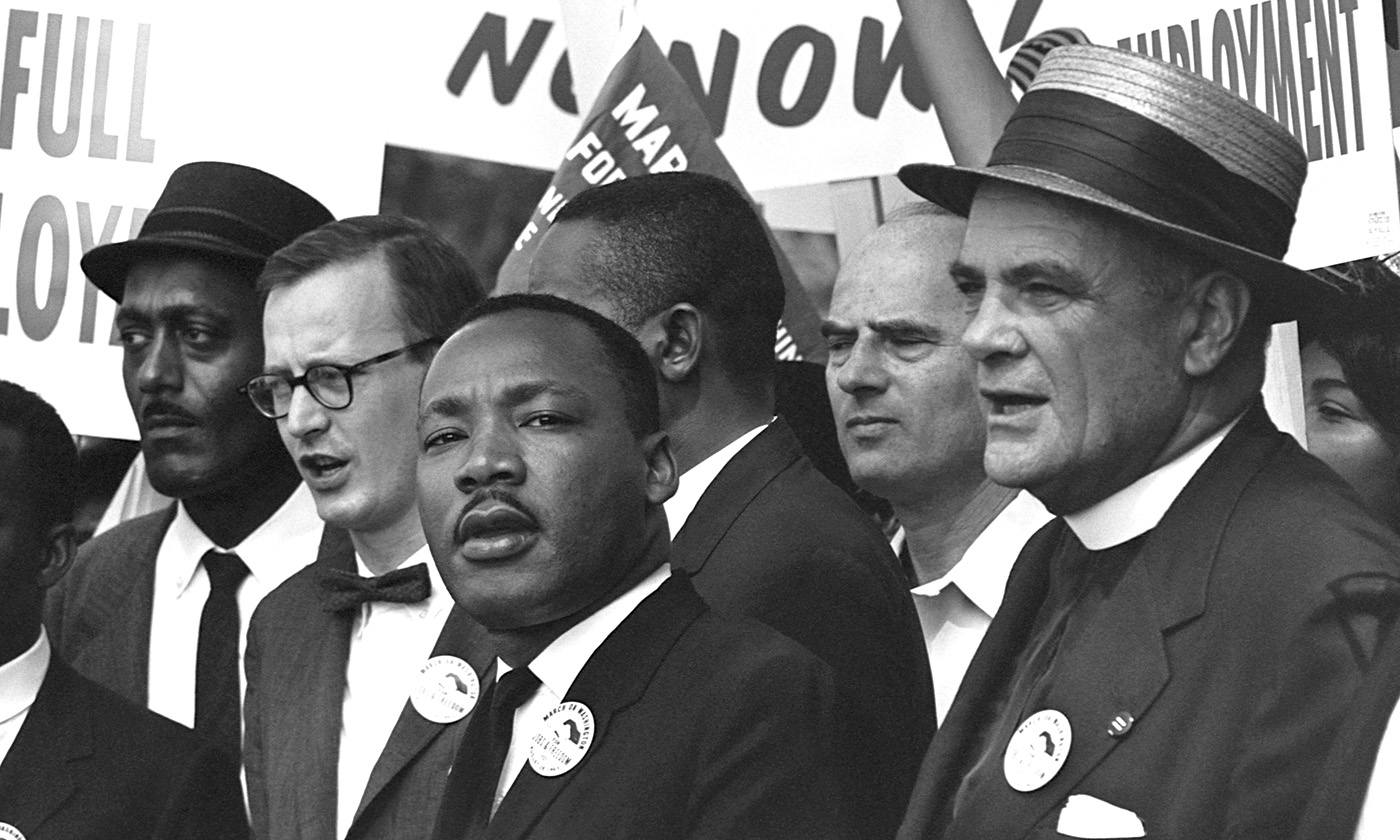
The Reverend Martin Luther King, Jr. with compatriots at the March on Washington for Jobs and Freedom on August 28, 1963. PHOTO BY CORBIS/GETTY IMAGES
The civil rights icon fiercely advocated for redistributive wealth and social democracy.
Fifty-two years after Dr. Martin Luther King Jr. was gunned down in Memphis, April 4, 1968, his radical economic agenda reverberates through a pandemic-ridden nation at a prophetic tilt.
“If the society changes its concepts by placing the responsibility on its system, not on the individual, and guarantees secure employment or a minimum income, dignity will come within reach of all,” King wrote in his book Where Do We Go From Here: Chaos or Community.
As the economy grinds to a halt to flatten the COVID-19 curve, the triage of policies designed to fill the yawning holes in the nation’s social safety net looks a lot like what Dr. King ordered. The $2 trillion congressional emergency relief bill, CARES Act, evokes King’s call for guaranteed income, health care access and a living wage, according to experts watching the crisis response unfold.
For example, relief payments cushion against immediate financial losses people have suffered as a result of layoffs, according to the Brookings Institution, a public policy think tank. The law provides $150 billion to boost hospital capacity and other health care supports, and has ignited the discussion around universal basic income even though one-time direct payments to individuals are clearly not that.
As of April 3, more than 239,000 U.S. residents have tested positive for the coronavirus and 5,443 have died, according to the Centers for Disease Control and Prevention. In Shelby County, 640 residents have tested positive and seven have died, the city of Memphis reports. Jobless numbers are unprecedented: 10 million newly jobless workers filed for unemployment benefits in March, which is reportedly taxing online systems. Last week, 94,492 Tennesseans filed for unemployment, according to the state Department of Labor and Workforce Development.
The growing number of stay-at-home orders by states and local government reveal the chasms among workers. Among the distinct groups are those who can comfortably shelter in place with easy access to food, reliable internet connections and the ability to hoard toilet paper. Others suddenly without work can’t stretch their dollars to accommodate the moment. And there are essential workers such as Sepia Coleman, a home health aide, who shared her story about the lack of personal protective equipment on the job and how she risks infection while ministering to the sick with MLK50: Justice Through Journalism.
This moment also reveals “how deeply [King] was interested in not just the social safety net but redistributive wealth as a precursor to redistributive justice,” said Joseph, the Barbara Jordan Chair in Ethics and Political Values at the University of Texas at Austin. King was “very much inspired by the social democratic infrastructures that he had witnessed in Scandinavia, especially when he visited Sweden for the Nobel Prize.”
To mark the anniversary of King’s assassination thought leaders, including Joseph, reflect on King’s agenda and this moment. Below are the reflections of Simon Balto, assistant professor of African American History at the University of Iowa; Cornell Brooks, former president of the National Association for the Advancement of Colored People and professor of the Practice of Public Leadership and Social Justice at the John F. Kennedy School of Government; Greg LeRoy, executive director of Good Jobs First; and Michele Johnson, executive director of the Tennessee Justice Center. They make the case through King’s own words.
King said: “The curse of poverty has no justification in our age.”
“This pandemic is laying bare all the ways that capitalism compounds the crisis,” Balto said. “We are short on masks because production of them was outsourced overseas. Capitalism did that. Our politicians can’t have coherent conversations about addressing the crisis that don’t prioritize corporate welfare over human welfare. Capitalism did that.
“Millions of Americans work in horribly precarious roles in the gig economy and have had what livelihood existed totally evaporate,” he said. “Capitalism created that precarity. Untellable numbers of people will die because they don’t have access to affordable medical care. Capitalism did that. And on and on. Dr. King knew that capitalism was itself a crisis. We are seeing that crisis on display now, just as it compounds the crisis of the pandemic.”
King said: “Of all the forms of inequality, injustice in health is the most shocking and inhuman.”
Cornell Brooks at Harvard’s Kennedy School says COVID-19 reveals justice challenges the working poor and people of color have long faced. The warnings about the increased effect the virus can have on people who have other medical conditions, called “comorbidities,” is just another way to say “poverty” and “inequity.”
“We know that people were being infected before we became aware of the need for tests; that is also true with the underlying inequities,” Brooks said. “COVID-19 has the potential to essentially viralize injustice.”
Among Brooks’ concerns are criminal justice, voter access and what he calls the “tiering of risks” related to health care access for marginalized communities. For example, people who are charged but not convicted or have other issues that may be otherwise met are “entombed in the carceral state,” that is a petri dish for COVID-19, Brooks said. And talk of postponing elections, like the 15 states that have put off primaries, is a democracy challenge that “speaks to who participates in elections.”
One remedy to Machiavellian voter suppression efforts would be to convene a congressional working group to discuss a second stimulus and to put policy matters that relate to Black and Brown bodies on the front burner instead of asking these communities of interest to wait till the crisis is over.
On health care, Brooks said: “So we’re simply looking at the number of people showing up without looking at the condition of the people showing up — again — tiering the risk, tiering the mortality, tiering the infection rate.”
Creating a hierarchy of risk leaves essential workers, many of whom don’t earn a living wage, at the bottom of access while they expose themselves to danger daily. People struggling at home may be forced to go out shopping for food and essentials more often because what they can afford at any given moment doesn’t stretch, Brooks said.
King said: “When machines and computers, profit motives and property rights are considered more important than people, the giant triplets of racism, extreme materialism and militarism are incapable of being conquered.”
Greg LeRoy at Good Jobs First, a D.C.-based policy center whose work includes promoting corporate and government responsibility in economic development, has a simple step that governments can take to recommit to economic equity and put dollars back in tax coffers: End tax incentives. PILOTS.
These incentives are officially called “payments in lieu of taxes.” This particular incentive is more of a corporate entitlement, according to critics like Tom Jones of Smart City Memphis.
“Memphis — because it’s such a good place to work for some certain kinds of companies and explains why so many of them are there — should also be expected now to stop making sweetheart deals, be very aggressive about watching the store to make sure that the deals that they gave in the past are really paying off, or else get the money back from the company,” LeRoy said.
King said: “We are caught in an inescapable network of mutuality, tied in a single garment of destiny. Whatever affects one directly, affects all indirectly.”
At Tennessee Justice Center, Michele Johnson has witnessed barriers people face, especially across racial lines, as she and her team work to connect families to health and nutrition, while advocating greater health care access.
Year after year, these denials cause heartbreak, needless suffering, financial ruin and even death. The immorality of this suffering while elected officials continue to play politics with health care can only be understood if you assume they don’t believe Dr. King’s insight. These folks believe in an “us versus them” America.
“His work inspires us to see and to address the overwhelming disparities in health care that mean an African American baby is twice as likely to die before his first birthday than a white baby,” Johnson said. “These disparities are rooted in structural racism and are fixable if we remember his words and all work to fix them. The lesson that many are learning for the first time during this pandemic is our destinies are indeed woven together. And together we can and must do better.”
King said: “Now we must develop progress, or rather, a program — and I can’t stay on this long — that will drive the nation to a guaranteed annual income.”
All the fault lines that link opportunity and equality are clear, said LeRoy at Good Jobs First.
“The government is effectively sustaining corporate pay for the country,” LeRoy said in reference to universal basic income, a kind of income floor amplified by King and a growing movement today. “It’s a publicly funded employment program; call it what you want, but it’s like UBI.”
Joseph adds that King was committed to a broad and expansive notion of radical black citizenship that includes many of the issues society is grappling with now. The public policy expert notes that young adults are drawn to the social democratic policies that gripped King’s imagination, too.
“Younger people, when you look at polls and stuff, are more receptive to social democratic public policy,” said Joseph, who credited Vermont U.S. Sen. Bernie Sanders and New York U.S. Rep. Alexandria Ocasio-Cortez with popularizing social democratic principles. “They have a realization of the depth and breadth of income inequality in the United States and how income inequality is really connected to political economy and the life chances of everyone.”
This article was originally published on mlk50.com. It has been published here with permission.
DEBORAH DOUGLASis managing editor of MLK50: Justice Through Journalism and the Eugene S. Pulliam Distinguished Visiting Professor of Journalism at DePauw University.
Italians may be singing their way through coronavirus catastrophe, but Americans are howling their way. Some Americans, that is – neighbors in Marin County, California, a few miles north of San Francisco across the Golden Gate Bridge. They come out at night, and you just might hear them if you’re driving along Rt. 101. It’s not howling as we generally know it. It’s rather Walt Whitman’s “Barbaric Yawp,” and coming from the poet whose work touches the soul of America, it is lovely and strangely moving. Therein lies our story. Hear it from my friend Tom Singer, psychiatrist and Jungian psychologist, writer and editor of many books, including Psyche and the City: A Soul’s Guide to the Modern Metropolis. We share particular interests in political and social movements and the human behavior that connects them. Here’s what Tom sent me this week. —Bill Moyers
Walt Whitman would be proud of the people of Mill Valley, California. Peter Reynolds, my neighbor and colleague, shows why in his video recording of the newly emerging ritual of communal howling that begins every evening at precisely 8 pm and which lasts for several minutes.
The first thought that came to mind when my wife and I joined in the boisterous cacophony with our fellow citizens was Whitman’s phrase “barbaric yawp.”
The spotted hawk swoops by and accuses me—he complains of my gab and my loitering.
I too am not a bit tamed, I too am untranslatable,
I sound my barbaric yawp over the roofs of the world…
Whitman, considered by many to be the poet of America’s soul, would clearly recognize the barbaric yawp in the chorus of hoarse and high-pitched cries in response to the “shelter in home” status imposed on all of us by the Coronavirus pandemic. Over the hills and into the valleys of Mill Valley this yawping choir rings with an uproarious thunder of clanging and hooting that is infectiously joyous and liberating. Miraculously, a broad smile erupts on our faces, even in the midst of growing isolation and dread. The anonymous echoing and coming together of faceless voices in the night makes it all the more uncanny and powerful. That the sounds mimic the nightly howls of the local coyotes brings to mind further lines from Whitman’s Leaves of Grass:
I think I could turn and live with animals, they are so placid
and self-contain’d,
I stand and look at them long and long.
They do not sweat and whine about their condition,
They do not lie awake in the dark and weep for their sins.
They do not make me sick discussing their duty to God,
Not one is dissatisfied, not one is demented with the mania of owning things, Not one kneels to another, nor to his kind that lived thousands of years ago, Not one is respectable or unhappy over the whole earth. …
What is a “barbaric yawp and why do I immediately think of it on participating in the Mill Valley howling? Steven Hermann, a friend and Jungian colleague of mine with a deep scholarly interest in Whitman, wrote the following to me years ago when I inquired about the meaning of the “Barbaric Yawp”:
“The aim of Whitman’s “barbaric yawp” was to sound a new heroic message of “Happiness, Hope, and Nativity” over the roofs of the world, to sound a primal cry which must remain essentially “unsaid” because it rests at the core of the American soul and cannot be found in any dictionary, utterance. The “barbaric yawp” is a metaphorical utterance for something “untranslatable,” a primal cry from the depths of the American Soul for the emergence of a spiritual human being in whom the aims of liberty and equality have been fully realized and in whom the opposites of love and violence, friendship and war, have been unified at a higher political field of order than anything we have formerly seen in America. His “yawp” is an affect state, a spiritual cry of “Joy” and “Happiness” prior to the emergence of language.”
Whitman would undoubtedly join in our Mill Valley howling as an expression of his Barbaric Yawp. TRY IT!!!!!
CONGRATULATIONS! YOU’RE HELPING SAVE COUNTLESS LIVES.
BY DAN ROBITZSKI / April 8, 2020 (futurism.com)
Thanks to everyone who took self-isolation and stay-at-home guidelines seriously, the U.S. government is now expecting significantly fewer deaths from the coronavirus pandemic than before.
Dr. Deborah Birx, the coordinator of the White House coronavirus task force, announced Wednesday that newly updated models show a major decline in the number of predicted cases and fatalities linked to COVID-19, CNN reports. There’s still a long way to go, but the new numbers are a reassuring sign that social distancing measures have been working.
“What has been so remarkable, I think, to those of us that have been in the science field for so long, is how important behavioral change is, and how amazing Americans are at adapting to and following through on these behavioral changes,” Birx said at a Wednesday press conference. “That’s what’s changing the rate of new cases, and that’s what will change the rate of mortality going forward.”
Thanks to an influx of new data over the weekend, the government’s models predict that COVID-19 will kill about 60,000 people in America over the next four months, according to CNN. Before that, government estimates ranged as high as hundreds of thousands or even millions of deaths.
The new numbers still represent a massive tragedy — especially knowing how long the government waited to act and how many missteps it took along the way. For instance, the models still predict a shortage of about 16,000 hospital beds nationwide for severe coronavirus infections.
What’s crucial, though, is that people continue to physically isolate themselves for the duration of the outbreak. The new models assume that everyone stays indoors and continues to self-quarantine for the entire four-month period — so this doesn’t mean we’re out of the woods yet.
| Philosopher and author of Knowing the Score: What Sports Can Teach Us about Philosophy
I’ve never viewed the so-called “hard problem” as any problem at all. According to David Chalmers, who coined the term, the hard problem is supposed to be the problem of figuring out what our idea of consciousness refers to in the real world. The obvious answer is that it refers to brain processes that feel like something. What’s so hard about that?
The only reason that many people feel there’s a problem is that they can’t stop thinking in dualist terms. They have a strong intuition that the brain is one thing, and that the conscious feelings are something extra, some kind of spooky force field that floats above the physical matter of the brain. And then of course they do have a problem, indeed a slew of problems.
What special feature of the brain allows it to generate the extra feelings? Why does it generate those feelings rather than other ones? Why, for that matter, does it generate any feelings at all?
If only we could stop ourselves seeing things through dualist spectacles, we’d no longer feel that there is anything puzzling about consciousness.
Ludwig Wittgenstein thought that all philosophical problems are due to nothing but conceptual confusion. As he saw it, the aim of philosophy is solely to “show the fly the way out of the fly-bottle”. I find this a deeply dispiriting view of philosophy in general. Still, when it comes to consciousness, I’d say Wittgenstein had things exactly right. If only we could stop ourselves seeing things through dualist spectacles, we’d no longer feel that there is anything puzzling about consciousness.
Certain brain states are like something for the subjects that have them. What’s so puzzling about that? How would you expect them to feel? Like nothing? Why? That’s how they feel when you have them.
As long as we remain within the grip of dualist intuitions, we can’t help but think that consciousness involves some mysterious light that attaches itself to certain physical processes. And then we wonder what turns this light on, and where in nature it is to be found. But in reality there’s no such light. There are just physical processes, all of which have the potential to become conscious by coming to play a role in intelligent reasoning systems.
Conscious states are just ordinary physical states that happen to have been co-opted by reasoning systems.
Consciousness doesn’t depend on some extra shining light, but only on the emergence of subjects, complex organisms that distinguish themselves from the rest of the world and use internal neural processes to guide their behaviour. Once these neural processes are so present for these subjects, they are like something for them. Supposing that this involves some extra light is like thinking televised events attract the cameras by displaying a special lustre. In truth, of course, they are just ordinary events that happen to get pointed at by the cameras. So too with conscious states. They are just ordinary physical states that happen to have been co-opted by reasoning systems.
If I am right, and the so-called “hard problem” is nothing but a by-product of misbegotten dualist intuitions, then the next question is why all of us—and I don’t except dyed-in-the-wool materialists like myself—find it so difficult to shake off these intuitions. This is a very good question, and deserves more attention than it has received up till now, though a number of developmental psychologists and cognitive anthropologists have already made some interesting suggestions.
In this connection, it’s noteworthy in that David Chalmers himself has recently turned away from the “hard problem” and urged that we shift our focus to what he calls the “meta-problem of consciousness”, which turns out to be precisely the socio-psychological question of why so many humans intuitively feel that consciousness transcends the physical realm. Quite so. We’ll make much better progress with consciousness if we forget about the “hard problem” and start asking the right questions instead.
If you want to hear from leading thinkers like this debating renowned philosophers, cutting edge scientists, headline-making politicians, and beloved artists, come to HowTheLightGetsIn Hay 2020 for four days of debates and talks alongside music, comedy and parties.