
Yes. Please do feel amazing during these times. It’s not only OK, it’s your slipstream into the best possible timeline.
Posted by Bentinho Massaro on Thursday, April 2, 2020
Vincent
“Many people seem to think it foolish, even superstitious, to believe that the world could still change for the better. And it is true that in winter it is sometimes so bitingly cold that one is tempted to say, ‘What do I care if there is a summer; its warmth is no help to me now.’ Yes, evil often seems to surpass good. But then, in spite of us, and without our permission, there comes at last an end to the bitter frosts. One morning the wind turns, and there is a thaw. And so I must still have hope.”
— Vincent van Gogh,The Letters of Vincent van Gogh (first published 1914)
“The best way to know God is to love many things.” – Vincent Van Gogh
The Hasheesh Eater: https://www.thehasheesheater.com/Art: http://www.gwyllm-art.com
Radio EarthRites: https://gwyllm.com/radio-earthrites/Invisible College Publishing: http://www.invisiblecollege-publishing.com/
(Courtesy of Gwyllm Llwydd.)
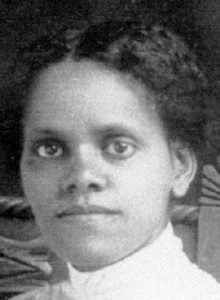
The Rainbow
| Effie Waller Smith |
| Love is a rainbow that appears When heaven’s sunshine lights earth’s tears. All varied colors of the light Within its beauteous arch unite: There Passion’s glowing crimson hue Burns near Truth’s rich and deathless blue; And Jealousy’s green lights unfold ‘Mid Pleasure’s tints of flame and gold. O dark life’s stormy sky would seem, If love’s clear rainbow did not gleam! |
| This poem is in the public domain. Published in Poem-a-Day on April 11, 2020 by the Academy of American Poets. |
Maya Angelou’s new day

Art by Sophia Khan
“This is a wonderful day. I’ve never seen this one before.”
— Maya Angelou

(from onbeing.org)
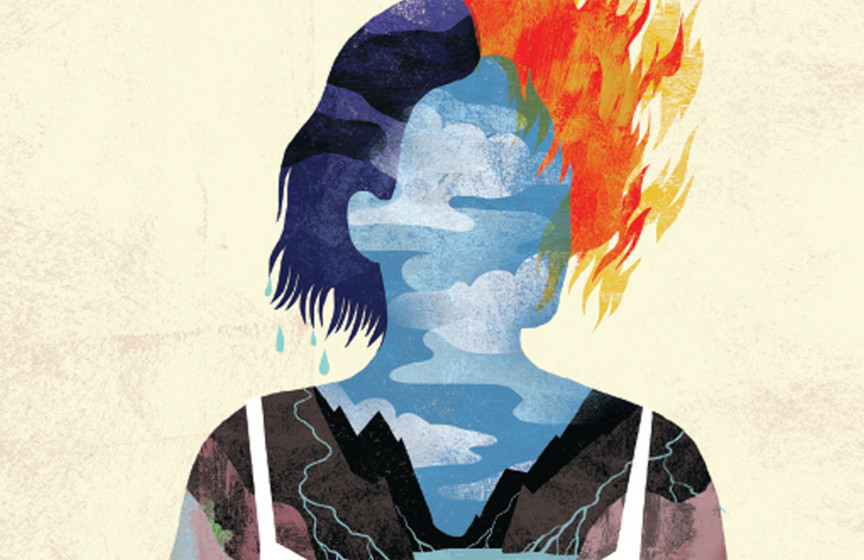
The Surprising Links Between Your Mental Health and Everyone Else’s
Why are anxiety and depression on the rise? Our environments have changed. Our food. Our stress. Our relationships—our “lost connections.”
Fall 2018
MENTAL HEALTH
BY TRAVIS LUPICK AUG 13, 2018 (yesmagazine.org)
Johann Hari’s experience with depression is something of a lightning rod within mental health circles. Some cheer his nuanced views of the disorder, grateful for a take on mental health that emphasizes the impacts of environment and experience. Others argue that the British journalist is too dismissive of medication. “Is everything Johann Hari knows about depression wrong?” reads a headline that ran in a U.K. newspaper.
The extreme reactions to the best-selling author of Lost Connections: Uncovering the Real Causes of Depression—and the Unexpected Solutions also speak to the binary way people tend to view mental illness and mental health. You either have it or you don’t.
Nearly 50 percent of people in the U.S. will experience a mental health disorder at some point in life. Every single person, every day, passes through the continuum that is mental health, from building resilience to dealing with challenges such as anxiety and depression to recovering from trauma to living with severe disorders that need constant medical care.
When Hari was a teenager in the 1990s, he felt a debilitating sadness that he couldn’t explain or even understand. “My doctor told me a story that was entirely biological. He said, ‘We know why people feel this way. There’s a chemical called serotonin in people’s brains. Some people lack it, you’re one of them, and all we need to do is drug you and you’ll be fine.’”
Paxil, a selective serotonin reuptake inhibitor, or SSRI, corrected the serotonin imbalance in his brain that was causing him to feel sad. Hari says his mood improved. But, he learned a few months later, it only worked for a while. Then the sadness returned. His dose was increased, feelings of melancholy receded, but again only for a time. A pattern set in and continued for years.
When he was researching Lost Connections, Hari says, he began to understand the roots of his depression and discovered lasting solutions to the mental health challenges with which he had struggled for so many years.
Social stress. Lack of community. Childhood trauma. “It was a combination of social factors,” he says. “Growing up in a culture where you’re taught that what matters most is money and status. Growing up in a place with no community. … And I’d gone through childhood trauma, and childhood trauma can lead to adult depression.” With a fuller picture of his mental health, Hari realized he focused too much on himself and self-promotion. He began making a conscious effort to spend time helping others “and to just be present with the people I love,” he adds.
“Really, it was a radical transformation.”
The personal story Hari recounts in Lost Connections reveals emotional well-being as significantly more complicated than a binary system that oscillates between resilience and illness.
“There are three different kinds of causes of depression, and we’ve been focusing way too much on the biological ones and not anywhere near enough on the social and psychological ones,” Hari says.
This broader understanding of mental health—as a continuum, and one that is deeply and continually affected by environment, circumstance, and experience—is further revealed in the many statistics repeated after the suicides in June of celebrities Anthony Bourdain and Kate Spade. A June report by the U.S. Centers for Disease Control and Prevention shows that from 1999 to 2016, suicide rates have steadily increased in nearly every state to create a national rise of 30 percent. “In 2016, nearly 45,000 Americans age 10 or older died by suicide,” it reads. “Suicide is the 10th leading cause of death and is one of just three leading causes that are on the rise.”
If we are all in this mental health thing together, then there’s a large role for each of us.
What has happened to Americans over those decades? Thinking that biological chemistry alone has undergone significant changes is unreasonable. Our environments have changed. Our food. Our stress. Our relationships—our “lost connections,” as Hari puts it.
According to the Cooperative Institutional Research Program’s annual Freshman Survey, in 1985, 18 percent of first-year college students said they “felt overwhelmed.” In 2000, that number was 28 percent. In 2016, it was 41 percent.
The portion of American children ages 6 to 17 who experience a lifetime diagnosis of anxiety or depression was 5.4 percent in 2003 and 8.4 percent by 2011–2012, according to an April 2018 paper published in the Journal of Developmental and Behavioral Pediatrics. “Youth mental health is worsening,” reads a blunt assessment by Mental Health America. According to the nonprofit, the rate of youth with “severe depression” increased from 5.9 percent in 2012 to 8.2 percent in 2015.
As troubling as these numbers are, a small positive exists. If mental health challenges are so common, if we are all at various stops on the continuum of resilience to illness, no one should feel ashamed for experiencing one.
A Normal Response to Abnormal Circumstances
There’s another takeaway, too. If we are all in this mental health thing together, then each of us in the wider community plays a large role in prevention and healing.
In 2008, Dr. Gabor Maté published In the Realm of Hungry Ghosts: Close Encounters With Addiction, a seminal book on the subject that explains problematic drug use as a common response to childhood trauma. Or, as he explained addiction in a recent interview, “a normal response to abnormal circumstances.”
“Just about every mental affliction is actually an adaptive response that then becomes a source of problems later on,” Maté says. “People push down their feelings in childhood when the environment of their childhood cannot receive those feelings. In order to stay acceptable to the nurturing environment, the child pushes down their feelings. Thirty years later, they are diagnosed with depression.”
Maté is working on a book that’s tentatively titled The Myth of Normal: Pathways to Health in an Insane Culture. “A society that erodes communities and isolates people, which this society does in major ways, that itself is going to create insanity,” Maté says. “That is insanity.”
“Meaningful social connection, and the pain we feel without it, are defining characteristics of our species.”
To explain, he takes a step back in time: “We evolved as communal creatures,” Maté says. “We could not have survived on our own [in prehistoric times]. No human being could have survived.”
Imagine a small tribe of indigenous people living in Central America some 2,000 years ago. Positive feelings of community kept humans in groups large enough to foster collective security. Now think of the ways so many of us live today: in 30-story apartment towers where introducing yourself to your neighbors has become a social oddity, and in gated communities where massive parcels of personal property keep families in geographic isolation from those nearby.
Maté’s reference to premodern humans is reminiscent of the work of John Cacioppo, a social neuroscientist at the University of Chicago who dedicated his life to the study of loneliness. He established that “negative” emotions such as loneliness were actually necessary to our success.
“Meaningful social connection, and the pain we feel without it, are defining characteristics of our species,” Cacioppo wrote in his 2008 book, Loneliness: Human Nature and the Need for Social Connection. “In the same way that physical pain serves as a prompt to change behavior—the pain of burning skin tells you to pull your finger away from the frying pan—loneliness developed as a stimulus to get humans to pay more attention to their social connections, and to reach out toward others, to renew frayed or broken bonds.”
In Central America 2,000 years ago, a solo hunter with pangs of loneliness would return to his tribe, to relative physical safety, and to a comforting feeling of belonging in his community. Today, in a society that encourages isolation, it’s as if we’re forgetting that sort of solution is still available to us.
Depression Is Political
Of course, it’s not that simple. The relationship between community and an individual’s mental health is complicated. And political. Sometimes you’re White and feel capitalism is isolating and making you depressed. Sometimes you’re Black and afraid for your teenage son to leave the house wearing a hoodie.
“I am here sitting in my bed fighting my depression, trying not to bask in somberness for too long, pondering how I’m going to shatter ceilings with three generations on my back,” wrote Bobby London, a writer and journalist who often covers social movements including Black Lives Matter, in a 2015 essay, “Depression Is Political.” “Depression is, at least for me, something that is structurally created,” she continues. “I am depressed because I live in a White-supremacist, patriarchal, capitalist world. I am depressed because people that look like me are constantly being murdered.”
The politics of depression and anxiety at the community level looks like this:
According to a June study published in the Lancet, police killings of unarmed Black people harm the mental health of the victims’ entire communities. And researchers noted that the mental health impacts were not observed among White people and resulted only from police killings of unarmed Black Americans, not unarmed White Americans or armed Black Americans.
For several years, Ashley Yates has candidly shared her experiences with depression and anxiety on social media under the handle @brownblaze. She’s also become an advocate for self-care and for dialogue around the mental health challenges that are especially pronounced in communities of color, from violence to invisibility.
“Something that happens a lot in activism is that people forget we have lives outside of it.”
“The ways in which we are treated when we access social services is completely different from other races. The ways in which we are treated in our health care system is completely different from other races,” Yates says. “It is really stressful. It creates depression … when you know that you are going to have to fight doubly or triply hard just to get normal care, just to get your necessities, just to be seen.”
In August 2014, 18-year-old Michael Brown was shot and killed by a White police officer in Ferguson, Missouri. It was one of several fatal police shootings that collectively gave rise to Black Lives Matter and a re-energized movement for civil rights. In Ferguson, Yates participated in protests for police accountability for several months. She recounts how she became a part of something in which she found strength but which paradoxically presented simultaneous challenges for her mental health.
“Dealing with that sort of repression, dealing with that sort of violence—the only thing that I can think to compare it to is active warfare. You are having war waged against you by your government,” she says.
Yates remembers that she first scoffed at the idea she would experience post-traumatic stress disorder. “I don’t know if it was cognitive dissonance or just ignorance on my part, but I had no clue that it would impact us so deeply. But every single person that spent significant time in Ferguson absolutely suffers from PTSD.”
Yates didn’t always speak so openly about mental health. “At first, it was definitely like, ‘Will I be stigmatized?’ And there was stigmatization,” she says.
Then a comrade killed himself.
In February 2016, MarShawn McCarrel, 23, a prominent member of the Black Lives Matter movement, shot himself on the steps of the Ohio statehouse. “It told me that it was time to speak out no matter the cost,” Yates says.
“When I remembered that healing is a process … it became a more tangible reality.”
At the same time, Yates began a conscious effort to take better care of herself, which she says was not easy. “There are a lot of barriers when it comes to access to therapy or mental health services for Black people,” Yates explains. “Coming from a Southern Baptist religion, there is not a lot of space for me to do something other than to take it to Jesus. And so that was a huge barrier that I had to overcome. Another one was cost and insurance and all of the things it takes to find a therapist who understands racism and structural inequity.”
Yates began with small steps she describes as “accessible” and “affordable.”
“Finding my joys in life was a huge thing,” she says. “Something that happens a lot in activism is that people forget we have lives outside of it. We forget to do pleasurable things. So for me, it was getting back to writing, getting back to drawing, getting back to reading, getting back to just seeing a movie sometime, and remembering that we live full, well-rounded lives. Those were some of my very first steps.”
Yates also reconceptualized her mental health as more nuanced than either “unhealed” or “healed.”
Because she had so much trauma, she says, a state of “healed” seemed impossible. “But when I remembered that healing is a process … it became a more tangible reality, and something that is a lot more feasible than flipping a switch.”
Sometimes People Get Stuck
Recovery from an oppressive situation takes time, according to Dr. Bessel van der Kolk, author of The Body Keeps the Score: Brain, Mind, and Body in the Healing of Trauma. He is a clinician and researcher who specializes in post-traumatic stress and is founder of the Trauma Center in Boston. Van der Kolk says that for a child living in an abusive household, for example, or a person of color who has repeatedly experienced unjustified interactions with police, healing will be a process, and often a long one.
“People adapt to very bad situations,” he explains. “The response to trauma is the mind’s way of coping with whatever is going on, to help you to survive. But sometimes people get stuck.”
At the Trauma Center, van der Kolk and his team make less-traditional treatments available alongside mainstream therapies. A child can play a video game that promotes neural feedback, for example, where they interact with a visual representation of their own brainwaves to relieve anxiety and promote a better mood. There’s trauma-sensitive yoga that promotes self-awareness of the relationship between body and mind.
“After a collective trauma has happened, people tend to sing and move and dance and eat.”
Van der Kolk also emphasizes the powerful role of community both to harm and to heal.
“Trauma is, in many cases, about a breakdown of community,” he explains. “If the very source of protection becomes a source of danger, that is really very bad for people. The community is protective, but if the community turns against you, we become very vulnerable.”
He recounts how the significance of community healing became clear to him during work for South Africa’s Truth and Reconciliation Commission, which was convened in 1995 to help heal the wounds of apartheid.
“After a collective trauma has happened, people tend to sing and move and dance and eat,” he says. “None of that is incorporated into [North American] mental health systems, but most of us who have worked with other cultures, or who have worked with refugees, see how much comfort people get from singing, moving, and dancing. … Songs and communal sounds that we make let us feel at one with the people around us and are very powerful, very comforting ways of re-establishing connections with human beings.”
A Life-Saving Connection In Community
In an impoverished neighborhood of Vancouver, British Columbia, called the Downtown Eastside, the Vancouver Area Network of Drug Users is a sort of union that advocates for drug policy reform, operates harm-reduction programs such as needle exchanges, and gives drug users a voice in Canadian politics.
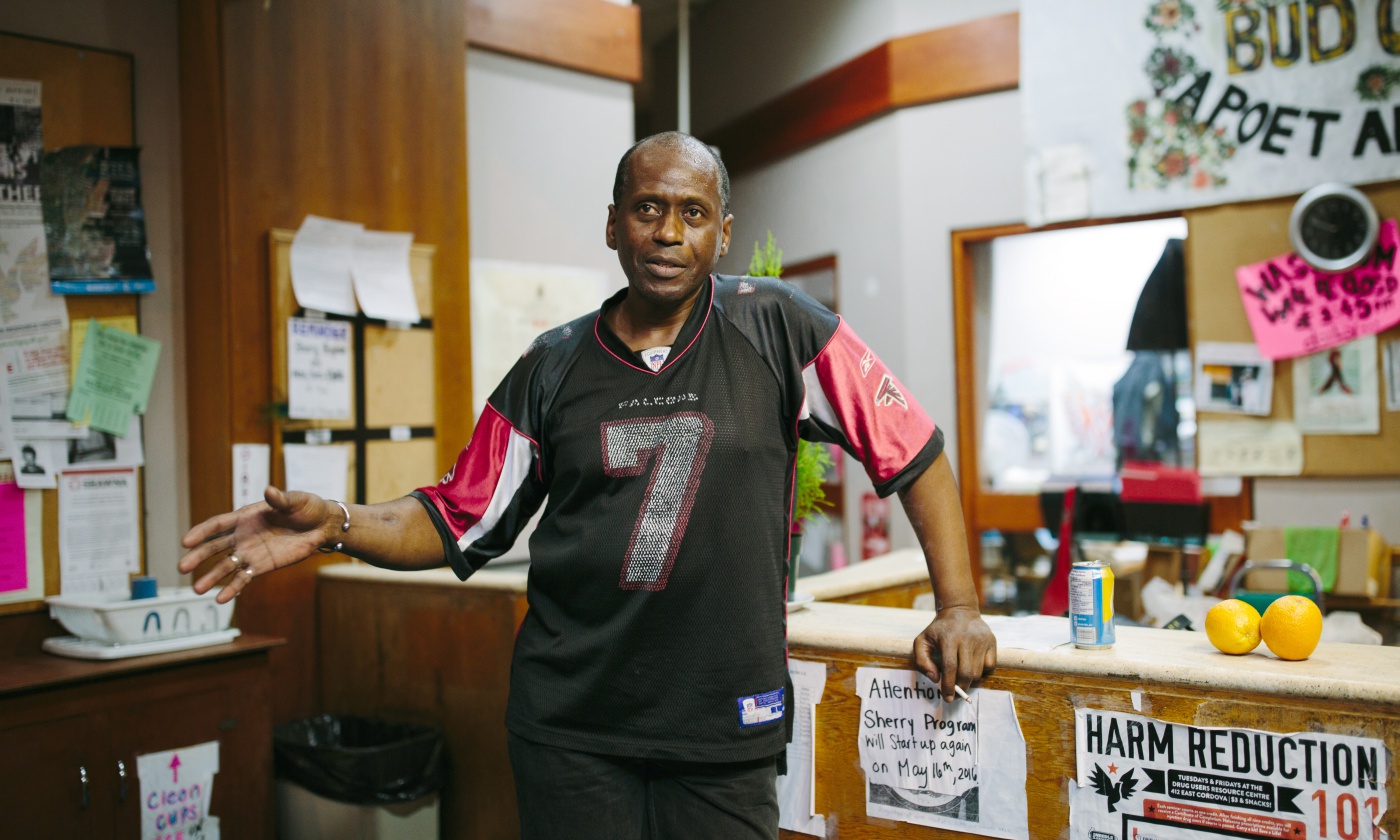
Hugh Lampkin is a board member, former president of the organization, and a prominent community activist who’s taken a lead role through VANDU in Canada’s response to North America’s epidemic of drug overdose deaths. For Lampkin, a drug user himself, the road to helping others has been a journey, one that began with childhood trauma. “I grew up in Toronto,” Lampkin begins. “I always had issues, being a person of color. I used to get beaten up a lot and chased around by other kids who were White.”
A number of incidents of abuse led him to self-medicate with heroin and other drugs. “It allowed me to shut myself off, to not feel anything,” he says.
“I didn’t feel I had any sort of connection with anybody,” he remembers.
After nearly three decades lost to drugs, Lampkin traveled across the country to Vancouver. “I didn’t want to be around my family and friends, because I understood that I was going to make them hurt. So I decided to come out here [to Vancouver] to kick off … to off myself.”
“I wanted people—somebody, even if only one person—to feel what I felt that day.”
Lampkin describes one evening in 2006 or 2007, when he prepared his last meal.
“I went and bought a bottle of 12-year-old Scotch,” he recounts. “It was $180 for the bottle. And a bottle of wine that was $200 or $300. I had prime rib and lobster—surf and turf—with scalloped potatoes. And some dope. And dessert, tiramisu.” Lampkin ate, drank, and then injected the heroin—enough to kill himself, he was sure.
“And then I remember hearing birds chirping,” he continues. It was 13 or 14 hours later, and Lampkin was lying on his apartment floor, exactly where he had fallen the night before. “OK, I’m still here,” he remembers thinking. “It was a relief.”
Shortly after, Lampkin was walking through downtown Vancouver and bumped into a small group of people who were smoking cigarettes outside what looked like a cross between a community center and homeless shelter. “They looked like the sort of people I could hang around with,” he says. “I felt comfortable. I felt at ease.” Lampkin had found VANDU.
“And I’ve been here ever since, with our little clubhouse of losers,” he adds with a smile.
At a subsequent VANDU meeting, Lampkin shared some of what had happened to him as a child. “And there was more support than I had been given my entire life,” he says. “I saw people with tears in their eyes, and there was an acknowledgement. What had happened to me had happened to them.”
Today, nearly 10 years later, Lampkin practically lives at VANDU. He volunteers countless hours, leading training sessions for overdose response, holding meetings on political developments that affect drug users, and generally keeping VANDU’s headquarters running. It’s a supportive, nonjudgmental atmosphere of organized chaos.
What’s kept him there? Lampkin says that in the drug users community he found a home, one where he feels valued and useful.
“I wanted people—somebody, even if only one person—to feel what I felt that day,” he explains. “To give a person someone to talk to without wanting anything from them. To just listen. Because for a lot of people, that’s all they want. For a lot of people, that’s lifesaving.”
If you’re having suicidal thoughts, or know someone who is, call the National Suicide Prevention Lifeline at 1-800-273-8255 (TALK).
| TRAVIS LUPICK is a journalist based in Vancouver and the author of “Fighting for Space: How a Group of Drug Users Transformed One City’s Struggle with Addiction.” |
How to Prevent ‘Zoombombing’ in a Few Easy Steps
I’ve used Zoom for work purposes for years and have never had a problem of any kind with it. But lately, the term ‘Zoombombing’ has been floating around the Internet. Until I read this article I wasn’t sure what the problem was.
Now I see that it’s not something with Zoom software that makes it hackable, but it’s actually (a) trolls acquire publicly available meeting links, and (b) Zoom has a lot of tools that allow participants to share information on or in a common workspace. Once a troll gets into the meeting, he or she can exploit these tools.
There are a few things you can do to make your video conferences more secure if you feel the need to do this, or if you move your Zoom meeting into a public space.
Link to article: https://www.nytimes.com/2020/04/07/style/zoom-security-tips.html?smid=em-share&fbclid=IwAR0LtH118fDFkIpmH36Ok-pAaktbRvYVE8Lt0HNqO-6z8tXJueNlPstMcII
–Michael Kelly, H.W.
Stoicism amid pandemic panic
Following the same principles as Marcus Aurelius could guide us through Covid-19

Issue 87, 10th April 2020 (iai.tv)
Donald Robertson | Cognitive-behavioural psychotherapist and author of How To Think Like A Roman Emperor
Resisting speculation, remaining committed to rational thought, and keeping in mind in inevitability of disasters helped Marcus Aurelius through the Antonine Plague. Could the same principles guide us through the Covid-19 crisis?
Symptoms were first reported in the East, possibly as far away as China. Soon it was spreading throughout the West carried home by soldiers and merchants returning from their travels. Before long, outbreaks of the deadly virus were reported in one European city after another. The Antonine Plague is believed to have killed up to five million people throughout the Roman Empire. It turned into a pandemic lasting from 166 AD until at least 180 AD, when it claimed the life of its most famous victim, Marcus Aurelius, after whose dynasty, the Antonines, it was named.
It was almost as though the universe had chosen to put to the test the Stoicism for which Marcus Aurelius was famed. Indeed, a generation later, historian Cassius Dio, wrote:
[Marcus Aurelius] did not meet with the good fortune that he deserved, for he was not strong in body and was involved in a multitude of troubles throughout practically his entire reign. But for my part, I admire him all the more for this very reason, that amid unusual and extraordinary difficulties he both survived himself and preserved the empire. – Cassius Dio
The plague was clearly one of the major challenges of Marcus’ reign. Moreover, he probably began writing The Meditations not long after it began sweeping through the legionary camps, where he stationed himself throughout the war. However, Marcus only refers to the plague once in his writings, noting moral corruption of the mind is a far more serious pestilence than the physical one that corrupts the body by, as the Romans realised, somehow contaminating the very air they were breathing (Meditations, 9.2).
The plague, he says, merely attacks us physically whereas these vices attack our inner nature destroying that which is essential to our very humanity.
He mentions falsehood, pretence, indulgence in luxury, and pride, as the sort of vices he considers particularly corrosive in this regard. The plague, he says, merely attacks us physically whereas these vices attack our inner nature destroying that which is essential to our very humanity. Indeed, Cassius Dio, who served as a senator under Marcus’ notoriously degenerate son and heir, expresses a similar notion. Dio claims that in Rome alone two thousand victims often died from the plague each day, but goes so far as to say that this disease paled in comparison to the corruption being inflicted on the empire by Commodus, who ruled like a tyrant, exploiting the situation to seize more power, and even renaming the city of Rome as Commodiana.
Marcus’ solitary comment about the plague perhaps makes him appear callous. However, we’re told by another Roman author, Philostratus, that after witnessing the suffering caused, despite his Stoicism, the emperor was publicly moved to tears of compassion when he heard a decree from the Athenian assembly, exclaiming “Blessed those who died in the plague!” The Historia Augusta claims that at the height of the plague so many thousands died that their bodies had to be removed from the city of Rome by the cartload. We’re told that Marcus erected many statues to nobles who were lost at this time. In an example of the kind-heartedness for which he was known, he even ordered funeral ceremonies performed for the lower classes to be paid for by the state.
Massimo Pigliucci discusses Stoicism, Scepticism and pseudoscience
In the opening chapter of The Meditations, Marcus demonstrates, at length, one of the Stoics’ main strategies for developing their renowned psychological resilience. He patiently describes the qualities he most admires in his family, friends, and teachers – about seventeen individuals altogether. Throughout his life, Marcus witnessed how different people coped with the psychological stress and physical suffering caused by severe illness. Some fared much better than others. We can probably view The Meditations as having been shaped in some respects by these observations.
Marcus says that his principle instructor in Stoicism, Apollonius of Chalcedon, remained exactly the same man, unfazed and unshaken, during severe pain and long illness (1.8). He showed Marcus how to act decisively, guided by reason, while nevertheless remaining relaxed about external events beyond our direct control. Another of Marcus’ personal tutors, the highly-accomplished Roman statesman Claudius Maximus, taught him how to be self-reliant and remain cheerful despite terminal illness (1.15). Marcus was clearly affected by the “invincible character” exhibited by this tough Stoic and veteran military commander, as he lay dying (1.16). Elsewhere Marcus thanks the gods that he was fortunate enough to have known Apollonius and Maximus personally. They provided him with real flesh-and-blood examples of what it meant to follow Stoicism as a way of life (1.17).
Marcus also refers to a letter apparently written by the founder of a rival philosophy, Epicurus, as he lay dying from a fatal illness over four centuries earlier. He writes that when we’re suffering we shouldn’t harp on about it, complaining excessively or dwelling too much on the negative side of things. Rather, Epicurus took his long illness as an opportunity to apply philosophy to the situation, thereby also showing his friends how to do so constructively. He focused attention on examining the question of how the mind, even while conscious of physical pain and discomfort, could preserve its own health and benefit from the experience. Marcus likewise tells himself, even in severe illness, to remain committed to Stoicism, his own philosophy of life, and to be mindful of how he is thinking and acting in response to the pain and discomfort he’s enduring (9.41).
Stoics do not allow highly-emotive rhetoric or value judgments to distort their perception of reality.
Above all, ancient Stoicism aspired to teach its followers how to live rationally. One example of this was their practice of sticking to the facts. Stoics do not allow highly-emotive rhetoric or value judgments to distort their perception of reality. Marcus tells himself to be wary of going beyond what he can observe in a crisis, such as when one of his sons falls ill (8.49). He had about fourteen children, half of whom died before he did. When one of his sons became sick, Marcus told himself to focus on the present moment, rather than allowing his mind to race ahead to worries about losing him. He would have to face that if it happened but for the time being he should deal with what was actually going on, here and now, with regard to their illness. Stick to the facts, don’t add anything about how terrible it is.
Indeed, as he says, if you must add something to your observations, remind yourself that misfortunes such as sickness and death should come as no surprise to us because they are part of the common lot of mankind the world over. That’s another basic principle of Stoic philosophy: we should be well-prepared for all of life’s misfortunes, even something as apparently catastrophic as the great plague. The Stoic wise man, or woman, is unperturbed by sickness and death because reason tells us that such things are inevitable in life – we shouldn’t be surprised by them. “All that comes to pass”, Marcus therefore tells himself, even illness and death, should be as “familiar as the rose in spring and the fruit in autumn” (4.44). During the initial outbreaks of plague, when people ran around in a panic exclaiming “I can’t believe this is happening!”, the Stoics would have remained calm by reminding themselves that we’ve always known these things can potentially happen.
To help maintain this equanimity, Marcus frequently employs a contemplative technique that involves meditating on the distant past. He would thereby remind himself that, when it comes to the challenges we face in life, there’s nothing new under the Sun. What you face are just different variations on the same old themes – humanity’s perennial challenges. During the height of the Antonine Plague, Marcus specifically tells himself to imagine all the people who fell sick and died, long before he was even born, during the reigns of the emperors Vespasian and Trajan (4.32). He concludes from doing this that life is short and that he should continually strive to focus attention on doing what is most important, which means living in accord with wisdom and virtue, as the Stoics like to say.
Perhaps Marcus Aurelius practiced self-quarantining. We’re told that on the last day of his life he would only admit his son, Commodus, to his presence and even he was sent away quickly in case he became infected with the disease. Unlike his father, Commodus was petrified of dying, and as soon as he had the opportunity he made the catastrophic decision to abandon the northern campaign and return to the safety and luxury of Rome, only to descend into tyranny and debauchery.
The themes Marcus reflects upon in The Meditations, inspired by Stoic philosophy, appear to find expression in the stories the Roman histories tell us about his life. The Historia Augusta also relates that the day before, as it became obvious he was dying, those close to Marcus were distraught. He asked why on earth they were weeping for him when they should realize that illness and death are facts of nature and accept them as the common lot of mankind. These things happen to everyone eventually, even an emperor. In other words, this reflection, facing his own imminent demise, was Marcus Aurelius’ parting gift to his friends, and perhaps all to us.
Donald Robertson
Issue 87, 10th April 2020
Anonymous donor gives every household in an Iowa town $150 in gift cards for food
By Alaa Elassar, CNN.com
Updated 8:21 PM ET, Fri April 10, 2020

Every resident in Earlham received this letter and three gift cards worth $150.
(CNN)Like most of the world, the residents of a small town in Iowa are stuck at home, feeling isolated, alone, and trying their best to stay positive during the coronavirus pandemic.So when an anonymous donor gave everyone in the town of Earlham $150 worth of gift cards for food, the community received something more valuable than money: hope.It started on March 26, when Earlham Mayor Jeff Lillie received a call from a friend who told him there was a donor interested in interjecting money into the town’s economy. Earlham, population 1,450, is 30 miles west of Des Moines,At first, the donor, who did not reveal their identity to the mayor, said they would buy 100 gift cards from three local businesses. An hour later, his friend called Lillie again and said the donor was bumping the number up to 250. An hour after that, the number was raised to 500.”I said to him, at 500, you’re darn near giving a gift card to every single household in Earlham,” Lillie said. “When I told him there were 549 households in town, he said ‘Done.’ And that was it. I was ecstatic because it made sure everyone would get a card.”

The gift cards residents received in the mail.But what Lillie didn’t know was that the donor wasn’t going to buy 549 cards in all — they were buying 549 gift cards from each of the three businesses. In total, they donated $82,350, meaning each business received more than $27,000.Exactly one week later, every person in town woke up to a surprise in their mailbox: An envelope containing a letter from the city and three $50 gift cards to West Side Bar and Grille, Hometown Market, a grocery store, and Trostel’s Broken Branch, a restaurant and coffee shop.The donation “completely overwhelmed” Lillie, who knew people around town who had been laid off and struggling due to the pandemic. The cards, he said, gave them a reason to smile and “a way to tell them help is on the way.””It came at the end of a couple really hard weeks,” Lillie told CNN, holding back tears.”I remember going home and walking through the front door, and I couldn’t speak for a minute. I was just crying like a baby, and my little boy saw me and wrapped around my leg and said, ‘Daddy what’s wrong?’ And eventually I was able to choke it out: ‘Buddy, right now, for once, nothing’s wrong.'”
Giving local businesses a chance of survival
One of the restaurants involved in the gift cards, Trostel’s Broken Branch, was extremely new. So new that the eatery was set to officially open its doors just days before Gov. Kim Reynolds ordered all nonessential businesses in the state to shut down on March 17.”We were in the middle of interviews for our employees, hiring some waitstaff and trying to get everything ready,” restaurant owner Jennifer Trostel told CNN. “Just about then, everything closed down. It hit right when we were going to open our restaurant.”These photographers are spreading joy to people impacted by coronavirus by taking portraits at their doorstepsWhile other restaurants were equipped to transition to takeout only, Trostel, who owns the restaurant with her husband Troy, said they were completely “unprepared” to make that move. Without any staff or a running computer system to take in orders or payments, the Trostels were stuck at a dead end.That was until the anonymous donor saved their business. When she got the phone call telling her about the donation, Trostel said she was so shocked her body was covered in goosebumps.”It gave us hope,” she said. “To be able to pay our bills and know that it’s OK, we don’t have to close our doors forever. We’ll be here when this is over. I don’t think we could be able to say that without the donation.”Any Earlham resident who doesn’t need the gift cards or won’t use them can drop them off at a bill pay slot at City Hall. The cards will be distributed to families in the Earlham Community School District who need assistance.When asked what he would tell the anonymous donor if he could ever meet them, Lillie said he “couldn’t even find the words.””I would tell them thank you 549 times,” Lillie said. “It would be like meeting a hero.”
The Greatest Source of Meaning in Life: Suffering
David Thurman · Apr 11 · Medium.com

When Benjamin Franklin told of the only certainties in life, he failed to mention what is arguably the most important: suffering. It does not matter your background, upbringing, or circumstances in life, suffering will surround you in one form or another.
Whether you experience it through the loss of someone you love, a sense of helplessness, or even the infliction of physical pain, everyone must face the hardships of life and the tumultuous burdens put on them. But despite what most people strive to do, this suffering is not something we should avoid and diminish. On the contrary, this pain and suffering is the only thing that provides us any meaning in life.
Around 2500 years ago, a young prince named Siddhattha Gotama was born in Nepal. After a prophecy destined him for greatness as an adult, Gotama’s father made sure to prevent him from ever experiencing suffering or hardship. He kept him isolated in a palace for nearly 30 years wherein he was provided anything he could ask for: endless money and gems, servants, and women. In essence, he lived the hedonistic lifestyle that countless people dream of, void of any sort of pain or suffering. What he found though, was a life of dissatisfaction.
After deciding to venture into the nearby town and leave his palace of pleasures, he saw for the first time sickness, old age, and death. He realized that these forms of suffering were an inescapable future that he, along with the rest of humanity, was destined for. Instead of retreating back to his palace and continuing in his hedonistic ways, he embraced the suffering and gave up all his worldly riches. It wasn’t until he understood the suffering of the world, and accepted it, that he truly found tranquility and meaning in life. His acceptance allowed him to reach a point of tranquility his followers deemed Nirvana and he would go on to be known as Buddha.

This same sentiment can be seen all throughout literature. In an effort to create some utopia, many novels describe societies that remove any sort of pain and suffering from the lives of its citizens. Of such books, Brave New World and The Giver both demonstrate the effect this “utopia” has on the people in it. The people of Brave New World live the hedonistic life that so many desire while The Giver is full of people who have removed all suffering by dulling their emotions to the point of nonexistence. In essence, the people in both societies hardly have to experience any sort of pain or hardships.
What soon becomes clear to the reader and the protagonist of each novel however, is that this painless life becomes void of all meaning. In order to protect the citizens from the pain of a broken heart, the societies completely remove love from their lives. The relationships amongst the Brave New World people are purely hedonistic bouts of sex while in The Giver, families are randomly put together and encouraged to keep distance relations. To stop the pain of unrealized desires, both societies remove such desire altogether. The citizens of The Giver have their lives completely dictated and lack the concept of personal aspirations. Brave New World’s people are handed everything they could possibly want, only to realize this life of hedonism removes the innate value of accomplishing and attaining your dreams.
The meaning of these books and the life of the Buddha is simple: a life of little suffering is attainable, but you must first detach yourself from anything that holds meaning. For example, in order to avoid the pain of losing those you love, one need but never love in the first place. Or to prevent yourself from never knowing the sorrow of an unattained dream, simply stop having aspirations in the first place.
The only way to truly avoid suffering is to simultaneously avoid the things that make life worth living. Suffering and meaning provide us with two opposites of the same coin. The ancient Chinese philosopher, Lao-tzu, describes this same balance that can be seen in all things:
When people see some things as beautiful,
other things become ugly.
When people see some things as good,
other things become bad.
Being and non-being create each other.
Difficult and easy support each other.
Long and short define each other.
High and low depend on each other.
Before and after follow each other.
– Tao Te Ching by Lao-tzu
The final example of this necessary evil comes from the late 18th century as America was fighting to earn its independence from Britain. Amidst the talks of seceding and a revolution, the people of America were frightened of the possible pain and hardships such a revolt would lead to. They could not decide if going through such a tumultuous time would really be worth any possible outcome. In an effort to persuade his fellow men into joining arms together, Thomas Paine demonstrates this same lesson with a type of eloquence only he could surmount:
[W]e have this consolation with us, that the harder the conflict, the more glorious the triumph. What we obtain too cheap, we esteem too lightly: it is dearness only that gives every thing its value.
-Thomas Paine

This is all not to say that suffering is enjoyable in some masochistic way. It undoubtedly brings about the lowest points any one of us will experience in life. The point though, is to keep in mind that these dark depths are the only thing that lets us know what true bliss is. The toll of a broken heart or loss of a loved one is nearly unbearable, but having never experienced that love and being left to live a life in isolation is a burden far worse. Being deprived of our dreams and desires can bring with it feelings of disappointment and regret, but to be handed everything we want is to rip away any shred of meaning it possesses. While the hardships we face can seem unbearable, they are what innately shows us the greatness and meaning life has to offer. In the words of Fyodor Dostoevsky,
The darker the night, the brighter the stars,
The deeper the grief, the closer is God!
― Fyodor Dostoevsky, Crime and Punishment

If you liked this article, you might enjoy some of my other work:Escapism: The Final FrontierSurviving in our technological Brave New Worldmedium.comWhat the Holocaust and Stoicism can Teach us About Living a Meaningful LifeFor many years, I have waded through countless philosophies, ideas, and beliefs to help better my life. Throughout all…medium.com
https://www.facebook.com/davidthurmanwritingInspire & Improve
Philosophies and ideas to help us become better people and…
WRITTEN BY
David Thurman
I write about philosophy and how we can use it to better our lives. Email me at: dthurmanwriting@gmail.com
Henry David Thoreau on living with the license of a higher order of beings

“If one advances confidently in the direction of his dreams, and endeavors to live the life which he has imagined, he will meet with a success unexpected in common hours. He will put some things behind, will pass an invisible boundary; new, universal, and more liberal laws will begin to establish themselves around and within him; or the old laws be expanded, and interpreted in his favor in a more liberal sense, and he will live with the license of a higher order of beings.”
― Henry David Thoreau, Walden