“We patronize the animals for their incompleteness, for their tragic fate of having taken form so far below ourselves. And therein we err, and greatly err. For the animal shall not be measured by man. In a world older and more complete than ours, they are more finished and complete, gifted with extensions of the senses we have lost or never attained, living by voices we shall never hear. They are not brethren, they are not underlings; they are other Nations, caught with ourselves in the net of life and time, fellow prisoners of the splendour and travail of the earth.”
– Henry Beston (June 1, 1888 – April 15, 1968) was an American writer and naturalist, best known as the author of The Outermost House, written in 1928. Wikipedia
“Billy Sunday” George Bellows, 1915; Wikimedia Commons
[Editor’s Note: In identifying the immoral acts taking place in many Churches in America, we at Tikkun acknowledge that provoking or supporting violence is not the message many Christians attending other kinds of churches hear. We know the passion for peace and justice in many Christian denominations, just as there are in Muslim, Jewish, Hindu, and other denominations. And it is important to remember that way more people were killed or wounded in the capitalism and nationalism-generated 1st WW, 2nd WW, the wars of colonialists trying to hold their power, the Communist purges and oppressions in Russia and China than in any religiously inspired wars in the 20th and 21st centuries. So while we challenge violence and oppression whether it be Christian, Jewish, Muslim, etc., we know that it is also important to challenge the ethos of global capitalism and its various manifestations in toxic nationalisms around the world, racism, sexism, homophobia, Islamophobia, and Jew-hating (read my essay on Jew-hating here) please do read the important article by Dr. Smelcer below and circulate it widely together with this Editor’s note! And please consider coming to our High Holiday services –at the very beginning of September to experience a Judaism which Challenges Zionism, Capitalism, Materialist Reductionism, and all other forms of oppression, details soon at Beyt Tikkun. Let me know what you think of Smelcer’s article and this introduction to it. –Rabbi Michael Lerner rabbilerner.tikkun@gmail.com]
The Pulpit of Fear
Millions of Christians across America attend church every Sunday morning. For the most part, they hear sermons about Jesus’s two thousand-year-old message of love, kindness, charity, forgiveness, mercy, and non-violence. They hear how Jesus said, “those who live by the sword perish by the sword” and “Love thy enemies.” They hear uplifting sermons about “The Prodigal Son,” “The Good Samaritan,” and the story of how Simon of Cyrene helped to carry Jesus’s burden—stories that teach us how to be better people. But in some churches, the preacher’s thunderous sermon is vitriolic, inciting hatred, divisiveness, suspicion and aggression toward others, and ultimately violence. These preachers are out of touch with reality from consuming too much right-wing media. Does any of the following sound familiar to you:
“Democrats are all part of a global cabal of Satan-worshippers who kidnap babies as part of a child sex trafficking ring. They abuse them and then eat them in the basements of pizzerias and wear their skin to make them look younger. They want to steal away all your freedoms. They want to make it against the law to drive gas-powered automobiles or to eat steak and hamburgers. They want to make it illegal for you to worship in church. The liberal media is the enemy of the people! We are the real Americans. They are enemies of America and of Jesus who must be destroyed in the name of God!”
I know of no parallel dehumanizing and violence-inciting narrative told about Republicans by Democrats. Things are so bad that some clergy have complained that the persistent presence of conspiracies among church members is “like an infection.” Some have said they are “exhausted” from dealing with their conspiracy-crazed members. Overwhelmed, a few preachers have even left their church for a kinder and more rational denomination.Tikkun needs your support to bring the kind of analyses and information we provide. Click Here to make a tax-deductible contribution.
As if perpetuating such absurd conspiracy theories is not enough, some of those fearmongering preachers, including televangelists, go even further and proclaim that Jesus has returned in the form of a corrupt and obese old man whose vanity knows no bounds, who more than once pushed aside other world leaders just so that he could be in front and center during a photo op. They idolize an adulterous man who has told us in his own words that he can violate any woman he wants whenever he wants, who lies, bullies, name-calls, cheats, and even separates children from their parents—a man who told us that the most important thing in his life is money: “When I see money, I want it all!” he said, while gesturing as if scooping up armfuls of cash. (Photo: “Greed” Liz West, 2008; Wikimedia Commons) What happened to Jesus’s admonishment that a person cannot serve both God and money? What happened to “it is harder for a rich man to enter heaven than for a camel to pass through the eye of a needle?” He once told us the biblical characteristic that he most admires is revenge. “I do whatever it takes to win!” the obese false prophet once told us. We later learned that he was true to his word when it was revealed that his campaign did in fact conspire with a hostile foreign government to influence an American election in his favor. What happened to the lesson we teach every child about how winning isn’t important; it’s how you play the game that matters?” Honesty, integrity, compassion, humility, sportsmanship, selflessness, generosity . . . traits to which we should all aspire.
Emboldened by the serpent-like whispers of some religious leaders in his ear, this vain man proclaimed that he is “The Chosen One” as he slyly gazed heavenward with a mischievous glint in his eyes. (Photo: “Serpent whispering to Eve” Walter Crane, 1899; Wikimedia Commons) “Only I can save you!” exclaimed the wannabe dictator to his Christian followers who conveniently forgot that the most fundamental tenet of their faith says that only Jesus can save you. Oblivious of the contents inside, the fake news prophet once celebrated the violent clearing of peaceful protesters with tear-gas and rubber bullets by holding up a bible on the steps of a church. Like Machiavelli, this would-be despot believes only in force and cruelty, deceit, instant gratification, and power for the sake of power. He and his followers forgot that Jesus was a protester of color. If he were here today, Jesus would likely stand on the side of Black Lives Matter. Jesus often drew on the long tradition of Old Testament prophets chastising the powerful when they exploit or fail to protect the vulnerable. He resented the way Romans oppressed Jews and ruled them as if they were second-class citizens with few rights in their own country. With little or no agency, Romans could do anything they wanted to Jews without accountability, similar to the way Blacks have historically been treated in America.
It also seems those preachers and their congregants have forgotten that Jesus and his mother and father were once refugees, immigrants looking for a safe place to live their lives without the threats of famine, drought, war, rape, enslavement, and violence. They were like all the parents today in search of a safe haven to raise their children, a land with the promise of opportunity, a land where a father might be able to support his family. Where would Christianity be if Egypt had turned away Mary and Joseph and the infant Jesus and delivered them into the waiting hands of Herod’s murderous soldiers? (Photo: “Palestinian Iraqi IDP family near Jordanian border” Graham A. Paulsgrove, 2006; Wikimedia Commons)
Nothing I have said here is new. As the Bible says, there is nothing new under the sun. The more things change, the more they stay the same. Great religious thinkers have always known that faith breeds violence. Thomas Merton warned us of it in his last book, aptly entitled, Faith & Violence (1968). Dietrich Bonhoeffer, the German Lutheran pastor, theologian, and staunch critic of Hitler’s euthanasia program and his genocidal persecution of the Jews knew firsthand how faith can be turned into violence. More recently, Rabbi Jonathan Sacks warned us of it in Not in God’s Name: Confronting Religious Violence (2015) in which he calls the kind of evil that turns “ordinary non-psychopathic people into cold-blooded murderers” altruistic evil. Just as Nazi members swore allegiance to Hitler, too many Americans of faith have sworn allegiance to a flawed, corrupt, and power-hungry would-be despot instead of to the Constitution. These people oppress and injure and slaughter with vicious delight, certain that they are doing God’s work. As proof, many of the violent insurrectionists who stormed the Capitol wielded bibles, enormous crosses, and signs that stated that they were doing the violence in the name of God.
Don’t pretend to deny it. It’s really quite simple. Faith pits one religious group against other groups. In fact, the term for such behavior is called “Group Think.” Our tendency to “groupishness” makes us to believe, “We are righteous and know the true Word of God, while They are wicked sinners in league with Satan who preach a false gospel!” The “Other” is dehumanized, made to be less than human, the way Nazi propaganda posters vilified Jews as caricatures of lasciviousness and evil. It’s easier to hate that way. That terrible sentiment is at the heart of most violence and death in the history of the world. In simple terms, by its very existence, religion creates a “We versus They” or “Us versus Them” tribalism. “If you are not with us,” so the saying goes, “you are against us.” Oftentimes, the differences are minuscule: which hymnal to use during service, the use of religious iconography in church, the use of musical instruments, and so forth. Anyone who believes or thinks differently is called an extremist, a radical, a traitor, and even a terrorist. Sound familiar? It is the rationalization for all violence and oppression, including two thousand years of persecuting Jews. It also explains the recent surge (up more than 60% this year) of violence against Asian Americans and Jewish Americans. John Lennon of The Beatles knew this to be true when he penned the lyrics to “Imagine,” considered one of the greatest songs in the history of popular music. He knew that a peaceful, heaven-like world was only possible in a world without religion—a world in which members of one religion do not force their beliefs and opinions on other, sometimes violently. Lennon got a lot of criticism for saying that. But God is not a Republican. God does not love America more than any other country. Nowhere did Jesus say to hate those who voted differently from you in a democratic election. It is always wrong for one group to believe they must force their beliefs or opinions on everyone else, especially regarding matters as personal as religion. Freedom of religion also means freedom from religion. To be free means to have the ability to choose. Democracy sometimes dies slowly, in increments: loss of the freedom of the press, loss of freedom of intellectualism, loss of individual rights, loss of the ability to vote, etc. The list is long.
Parroting the Republican lie to shield the obese, false prophet, some preachers and priests told their congregation that the global pandemic was fake. They instructed church-goers not to wear masks or to practice social distancing. Courting conservative Christians, one deceitful Republican congresswoman erroneously compared wearing a mask to help save lives during a global public health crisis with the horrors of the Holocaust. The Vatican recently removed one American priest for endangering the health and lives of his parishioners and the community at large by perpetuating the lie. The result of so much disinformation has been partially responsible for the death of 600,000 Americans so far. And later, once efficacious vaccines were widely available, these Covid-Deniers urged people not to get vaccinated. In their idiocy, they expounded conspiracies that the vaccine was really a government tracking system, and they even claimed that it made you magnetic. What would Jesus think about such utter selfishness, such lack of concern for the well-being and lives of others? We know what Jesus would say. He told us so. He said, “Above all, you will be known as my followers by your love for others.” Love means compassion and compassion means taking action to alleviate suffering. If Christians were like Jesus, they would have cared about their neighbor’s health, if not for their own safety or the safety of their own family. They would have gladly worn masks to protect others and to demonstrate their love for their neighbors. Instead, too many Christians flouted all attempts to save lives. “I have a right to get my hair done!” they bellowed from trucks and cars blockading access to state capitols.
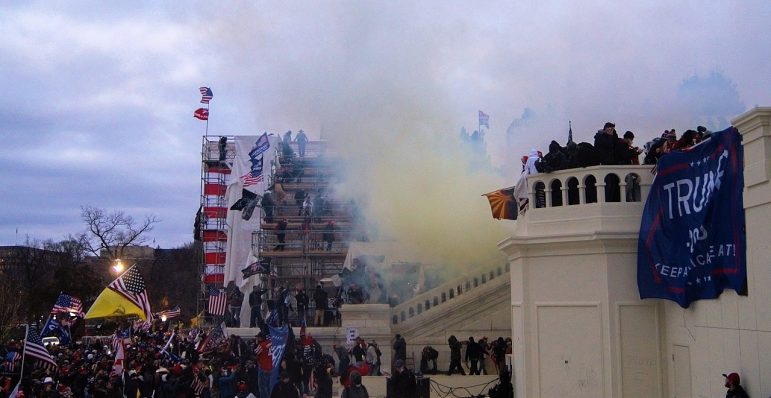
As much as deceitful and power-hungry politicians are responsible for what happened on January 6, so too are some Christian preachers partially responsible. (Photo: “Tear gas Capitol” Tyler Merbler, 2021; Wikimedia Commons) For years, some of them have abused their authority from the pulpit to espouse hatred and fear and to perpetuate lies. More than a few preachers have told their flock to stockpile guns and prepare for a civil war, whereas Jesus told us to turn the other cheek and to love everyone as a neighbor and to love even our enemies. One preacher recently told his flock to hoard guns to shoot our fellow Black American citizens, whose only crime is they want a safer and more equitable world to live in for themselves and for their children.
It is our mutual trust in shared truths and common knowledge that holds a society together. A society based on lies cannot survive for long. Despots around the world follow the same authoritarian handbook, which instructs them to muddle the truth so much that citizens can no longer tell truth from lie. They exploit all forms of media to spread their campaign of disinformation. “Divide and conquer” is their mantra. In the confusion, the irrational masses are seduced by conspiracy theories, hidden symbols, and secret language that seem to explain everything. “Just listen to me!” exclaims the Great Manipulator. “I alone will tell you the truth!” And the duped masses with poor critical-thinking skills applaud wildly, unable or unwilling to recognize their role in the destruction of democracy. At the same time, they swear they would die for America. Being a nationalist does not make one a patriot. A patriot is someone who is concerned for the well-being of his or her fellow citizens—the love of neighbors. A true patriot cares more about the continuation of democracy and America than they do about a political party or a single voting issue.
How do we dial back the heated rhetoric, you ask? Walk away. For one month stop consuming news . . . all news. Give it up cold turkey the way some people try to end their addiction. Reset the dial. Allow yourself the chance to look at the world with optimism. See your neighbors for who they really are—fellow human beings, fellow Americans, who just want to live in a safe and just society with fairness and opportunity to pursue happiness as the Declaration of Independence promised all of us. Smile more often. Wave at your neighbors on both sides of the fence. If nothing else, you’ll sleep better.
Any preacher who incites hatred, divisiveness, prejudice, and violence instead of proclaiming Jesus’s message of understanding, tolerance, unity, mercy, forgiveness, love, and peace is violating the sanctity of the pulpit. They are not Children of God. They are not ambassadors of Jesus. They are not Vicars of Christ. They do not know the Word of God, for the words never made their way into their callous heart. They have no business standing in the pulpit. Instead, they should be working in a politician’s election campaign office selling baseball caps, yard signs, and bumper stickers. If you are a member of a church like the ones described above, it’s time to find another church with a pastor who espouses Jesus’s messages of love and compassion and tolerance and mercy. Tell them you left because you wanted to live by Jesus’s example of love, not hate. Tell them there’s already enough hatred in the world.
News Flash
Southern Baptists Elect Ed Litton as New President–June 16th, 2021
The Alabama pastor, known for his inclusion of women and work on racial justice, beat out Mike Stone of the Conservative Baptist Network in a runoff.
The Southern Baptists have elected an Alabama pastor known for his reconciliation work as their new president. Ed Litton’s win required a run-off, and it was something of a surprise. His winning margin was one of the thinnest in recent history, a result that reflects what some are calling a divided denomination. Example of great localize national religion story.
A relative unknown, Litton has made racial reconciliation a hallmark of his work since at least the 2014 riots after the killing of Michael Brown in Ferguson, Missouri. His election is considered a defeat for hard-right conservatives in the Southern Baptist Convention’s recent battles over race, sexual abuse, and gender roles.Tikkun needs your support to bring the kind of analyses and information we provide. Click Here to make a tax-deductible contribution.
Dr. John Smelcer is the Inaugural Writer-in-Residence for the Charter for Compassion where he teaches a global online course called “Poetry for Inspiration and Well-Being.” He studied world religions at Harvard University, including a course in Religion and Violence. He is the author of over 60 books, including the award-winning, The Gospel of Simon, a retelling of Jesus’s crucifixion by Simon of Cyrene, and A New Day, a pocketbook of meditations to inspire love, compassion, hope, mercy, charity, tolerance, contemplation, and peace.
Premiered Apr 16, 2021Two young lovers, offspring of the feuding Montague and Capulet families, value feelings above the past, pitting love and forgiveness against hatred and revenge. Upon his return from exile in 1936, Sergei Prokofiev transformed Shakespeare’s famous tragedy into a ballet with a happy ending. Soviet cultural officials did not agree, so Romeo and Juliet went on dying as before. In his Warsaw staging, Krzysztof Pastor relocates the action to the Italy of the 1930s, 1950s and 1990s respectively – proving yet again the timeless nature of this tragic story. Streamed on OperaVision on 16 April 2021 at 19:00 CET and available for 5 months: https://operavision.eu/en/library/per… CAST Juliet Capulet: Yuka Ebihara Romeo Montague: Patryk Walczak Mercutio: Dawid Trzensimiech Tybalt: Maksim Woitiul Lord Capulet: Marco Esposito Lady Capulet: Ana Kipshidze Benvolio: Rinaldo Venuti Friar Laurence: Carlos Martín Pérez Juliet’s Friend No. 1: Emilia Stachurska Juliet’s Friend No. 2: Mai Kageyama Paris: Kristóf Szabó Music: Sergei Prokofiev Text: Krzysztof Pastor, Willem Bruls after William Shakespeare Dancers: Polish National Ballet Orchestra: Orchestra of the Polish National Opera Choreographer: Krzysztof Pastor Conductor: Andriy Yurkevych Set and Costume Designer: Tatyana van Walsum Dramaturg: Willem Bruls Choreographer’s Assistants: Kalina Schubert, Anita Kuskowska, Walery Mazepczyk Lighting Designer: Bert Dalhuysen Filmed by Ewa Krasucka Photo (thumbnail) by Marta Wódz SUBSCRIBE FOR MORE WEBSITE https://operavision.eu/ FACEBOOK https://www.facebook.com/OperaVisionEU/ TWITTER https://twitter.com/OperaVision_EU INSTAGRAM https://www.instagram.com/OperaVision… TIKTOK https://www.tiktok.com/@operavision
“You are not required to finish your work, yet neither are you permitted to desist from it.”
–Pirkei Avot, which translates to English as Chapters of the Fathers, is a compilation of the ethical teachings and maxims from Rabbinic Jewish tradition. It is part of didactic Jewish ethical literature. Because of its contents, the name is sometimes given as Ethics of the Fathers. Wikipedia
The Peterloo Massacre took place at St Peter’s Field, Manchester, Lancashire, England on Monday 16 August 1819. Eighteen people died when cavalry charged into a crowd of around 60,000 people who had gathered to demand the reform of parliamentary representation.
After the end of the Napoleonic Wars in 1815 there was an acute economic slump, accompanied by chronic unemployment and harvest failure, and worsened by the Corn Laws, which kept the price of bread high. At that time only around 11% of adult males had the vote, very few of them in the industrial north, which was worst hit. Reformers identified parliamentary reform as the solution and a mass campaign to petition parliament for manhood suffrage gained three-quarters of a million signatures in 1817 but was flatly rejected by the House of Commons. When a second slump occurred in early 1819, radical reformers sought to mobilise huge crowds to force the government to back down. The movement was particularly strong in the north-west of England, where the Manchester Patriotic Union organised a mass rally in August 1819, addressed by well-known radical orator Henry Hunt.
Shortly after the meeting began, local magistrates called on the Manchester and Salford Yeomanry to arrest Hunt and several others on the platform with him. The Yeomanry charged into the crowd, knocking down a woman and killing a child, and finally apprehended Hunt. Cheshire Magistrates’ chairman William Hulton then summoned the 15th Hussars to disperse the crowd. They charged with sabres drawn, and between nine and seventeen people were killed and four to seven hundred injured in the ensuing confusion. The event was first labelled the “Peterloo massacre” by the radical Manchester Observer newspaper in a bitterly ironic reference to the bloody Battle of Waterloo which had taken place four years earlier.
Historian Robert Poole has called the Peterloo Massacre ‘the bloodiest political event of the 19th century in English soil’, and ‘a political earthquake in the northern powerhouse of the industrial revolution’.[1] The London and national papers shared the horror felt in the Manchester region, but Peterloo’s immediate effect was to cause the government to pass the Six Acts, which were aimed at suppressing any meetings for the purpose of radical reform. It also led indirectly to the foundation of the Manchester Guardian newspaper.[2] In a survey conducted by The Guardian in 2006, Peterloo came second to the Putney Debates as the event from radical British history that most deserved a proper monument or a memorial.
For some time, Peterloo was commemorated only by a blue plaque, criticised as being inadequate and referring only to the “dispersal by the military” of an assembly. In 2007, the City Council replaced the blue plaque with a red plaque with less euphemistic wording, explicitly referring to “a peaceful rally” being “attacked by armed cavalry” and mentioning “15 deaths and over 600 injuries”. In 2019, on the 200th anniversary of the massacre, Manchester City Council inaugurated a new Peterloo Memorial by the artist Jeremy Deller, featuring eleven concentric circles of local stone engraved with the names of the dead and the places from which the victims came.
In 1819, Lancashire was represented by two county members of parliament (MPs) and a further twelve borough members sitting for the towns of Clitheroe, Newton, Wigan, Lancaster, Liverpool, and Preston, with a total of 17,000 voters in a county population of nearly a million. Thanks to deals by Whig and Tory parties to carve up the seats between them, most had not seen a contested election within living memory.[3] Nationally the so-called rotten boroughs had a hugely disproportionate influence on the membership of the Parliament of the United Kingdom compared to the size of their populations: Old Sarum in Wiltshire, with one voter, elected two MPs,[4] as did Dunwich in Suffolk, which by the early 19th century had almost completely disappeared into the sea.[5] The major urban centres of Manchester, Salford, Bolton, Blackburn, Rochdale, Ashton-under-Lyne, Oldham and Stockport had no MPs of their own, and only a few hundred county voters. By comparison, more than half of all MPs were returned by a total of just 154 owners of rotten or closed boroughs.[4] In 1816, Thomas Oldfield‘s The Representative History of Great Britain and Ireland; being a History of the House of Commons, and of the Counties, Cities, and Boroughs of the United Kingdom from the earliest Period claimed that of the 515 MPs for England and Wales 351 were returned by the patronage of 177 individuals and a further 16 by the direct patronage of the government: all 45 Scottish MPs owed their seats to patronage.[6] These inequalities in political representation led to calls for reform.[5][7]
After the end of the Napoleonic Wars in 1815, a brief boom in textile manufacture was followed by periods of chronic economic depression, particularly among textile weavers and spinners (the textile trade was concentrated in Lancashire).[8] Weavers who could have expected to earn 15 shillings for a six-day week in 1803, saw their wages cut to 5 shillings or even 4s 6d by 1818.[9] The industrialists, who were cutting wages without offering relief, blamed market forces generated by the aftershocks of the Napoleonic Wars.[9] Exacerbating matters were the Corn Laws, the first of which was passed in 1815, imposing a tariff on foreign grain in an effort to protect English grain producers. The cost of food rose as people were forced to buy the more expensive and lower quality British grain, and periods of famine and chronic unemployment ensued, increasing the desire for political reform both in Lancashire and in the country at large.[10][11]
Radical mass meetings in Manchester
In the winter of 1816–17 massed reform petitions were rejected by the House of Commons, the largest of them from Manchester with over 30,000 signatures.[12][13] On 10 March 1817 a crowd of 5,000 gathered in St Peter’s Fields to send off some of their number to march to London to petition the Prince Regent to force parliament into reform—the so-called ‘blanket march’, after the blankets which the protesters carried with them to sleep in on the way. After the magistrates read the Riot Act, the crowd was dispersed without injury by the King’s Dragoon Guards. The ringleaders were detained for several months without charge under the emergency powers then in force which suspended habeas corpus, the right to be either charged or released. In September 1818 three former leading Blanketeers were again arrested for allegedly urging striking weavers in Stockport to demand their political rights ‘sword in hand’, and were convicted of sedition and conspiracy at Chester Assizes in April 1819.[14]
By the beginning of 1819 pressure generated by poor economic conditions was at its peak and had enhanced the appeal of political radicalism among the cotton loom weavers of south Lancashire.[8] In January 1819, a crowd of about 10,000 gathered at St Peter’s Fields to hear the radical orator Henry Hunt and called on the Prince Regent to choose ministers who would repeal the Corn Laws. The meeting, conducted in the presence of the cavalry, passed off without incident, apart from the collapse of the hustings.[15][16][17]
A series of mass meetings in the Manchester region, Birmingham, and London over the next few months alarmed the government. “Your country [i.e. county] will not be tranquillised until blood shall have been shed, either by the law or the sword”, the Home Secretary wrote to the Lancashire magistrates in March. Over the next few months the government worked to find a legal justification for the magistrates to send in troops to disperse a meeting when riot was expected but not actually begun. In July 1819, the magistrates wrote to Lord Sidmouth warning they thought a “general rising” was imminent, the “deep distress of the manufacturing classes” was being worked on by the “unbounded liberty of the press” and “the harangues of a few desperate demagogues” at weekly meetings. “Possessing no power to prevent the meetings” the magistrates admitted they were at a loss as to how to stem the doctrines being disseminated.[18]:1–3 The Home Office assured them privately that in “an extreme case a magistrate may feel it incumbent upon him to act even without evidence, and to rely on Parliament for an indemnity.”[19]
August meeting
Against this background, a “great assembly” was organised by the Manchester Patriotic Union formed by radicals from the Manchester Observer. Johnson, the union’s secretary, wrote to Henry Hunt asking him to chair a meeting in Manchester on 2 August 1819. Johnson wrote:
Nothing but ruin and starvation stare one in the face [in the streets of Manchester and the surrounding towns], the state of this district is truly dreadful, and I believe nothing but the greatest exertions can prevent an insurrection. Oh, that you in London were prepared for it.[20]
Unknown to Johnson and Hunt, the letter was intercepted by government spies and copied before being sent to its destination, confirming the government’s belief that an armed rising was planned.Samuel Bamford led a group from his native Middleton to St Peter’s Field. Following his imprisonment for “inciting a riot”, Bamford emerged as a prominent voice for radical reform.
The mass public meeting planned for 2 August was delayed until 9 August. The Manchester Observer reported it was called “to take into consideration the most speedy and effectual mode of obtaining Radical reform in the Common House of Parliament” and “to consider the propriety of the ‘Unrepresented Inhabitants of Manchester’ electing a person to represent them in Parliament”. The government’s legal advice was that to elect a representative without a royal writ for an election was a criminal offence, and the magistrates decided to declare the meeting illegal.[21]
On 3 August however the Home Office conveyed to the magistrates the view of the Attorney-General that it was not the intention to elect an MP that was illegal, but the execution of that intention. It advised against any attempt to forcibly prevent the 9 August meeting unless there was an actual riot:
even if they should utter sedition or proceed to the election of a representative Lord Sidmouth is of opinion that it will be the wisest course to abstain from any endeavour to disperse the mob, unless they should proceed to acts of felony or riot. We have the strongest reason to believe that Hunt means to preside and to deprecate disorder.[22]
The radicals’ own legal advice however urged caution, and so the meeting was accordingly cancelled and rearranged for 16 August, with its declared aim solely “to consider the propriety of adopting the most LEGAL and EFFECTUAL means of obtaining a reform in the Common House of Parliament”.[18]
Samuel Bamford, a local radical who led the Middleton contingent, wrote that “It was deemed expedient that this meeting should be as morally effective as possible, and, that it should exhibit a spectacle such as had never before been witnessed in England.”[23] Instructions were given to the various committees forming the contingents that “Cleanliness, Sobriety, Order and Peace” and a “prohibition of all weapons of offence or defence” were to be observed throughout the demonstration.[24] Each contingent was drilled and rehearsed in the fields of the townships around Manchester adding to the concerns of the authorities.[25] A royal proclamation forbidding the practice of drilling had been posted in Manchester on 3 August[26] but on 9 August an informant reported to Rochdale magistrates that at Tandle Hill the previous day, 700 men were “drilling in companies” and “going through the usual evolutions of a regiment” and an onlooker had said the men “were fit to contend with any regular troops, only they wanted arms”. The magistrates were convinced that the situation was indeed an emergency which would justify pre-emptive action, as the Home Office had previously explained, and set about lining up dozens of local loyalist gentlemen to swear the necessary oaths that they believed the town to be in danger.[21]
Assembly
Contingents sent to St Peter’s Field[27] Use a cursor to explore this imagemap.
St Peter’s Field was a croft (an open piece of land) alongside Mount Street which was being cleared to enable the last section of Peter Street to be constructed. Piles of timber lay at the end of the field nearest to the Friends Meeting House, but the remainder of the field was clear.[31] Thomas Worrell, Manchester’s Assistant Surveyor of Paving, arrived to inspect the field at 7:00 am. His job was to remove anything that might be used as a weapon, and he duly had “about a quarter of a load” of stones carted away.[32]
Monday, 16 August 1819, was a hot summer’s day, with a cloudless blue sky. The fine weather almost certainly increased the size of the crowd significantly; marching from the outer townships in the cold and rain would have been a much less attractive prospect.[33]
The Manchester magistrates met at 9:00 am, to breakfast at the Star Inn on Deansgate and to consider what action they should take on Henry Hunt’s arrival at the meeting. By 10:30 am they had come to no conclusions, and moved to a house on the southeastern corner of St Peter’s Field, from where they planned to observe the meeting.[34] They were concerned that it would end in a riot, or even a rebellion, and had arranged for a substantial number of regular troops and militia yeomanry to be deployed. The military presence comprised 600 men of the 15th Hussars; several hundred infantrymen; a Royal Horse Artillery unit with two six-pounder guns; 400 men of the Cheshire Yeomanry; 400 special constables; and 120 cavalry of the Manchester and Salford Yeomanry. The Manchester & Salford Yeomanry were relatively inexperienced militia recruited from among local shopkeepers and tradesmen, the most numerous of which were publicans.[35] Recently mocked by the Manchester Observer as “generally speaking, the fawning dependents of the great, with a few fools and a greater proportion of coxcombs, who imagine they acquire considerable importance by wearing regimentals,[36] they were subsequently variously described as “younger members of the Tory party in arms”,[7] and as “hot-headed young men, who had volunteered into that service from their intense hatred of Radicalism.”[37] Socialist writer Mark Krantz has described them as “the local business mafia on horseback”.[38] R J White described them as “exclusively cheesemongers, ironmongers and newly enriched manufacturers, (who) the people of Manchester … thought … a joke.”[39]
The British Army in the north was under the overall command of General Sir John Byng. When he had initially learned that the meeting was scheduled for 2 August he wrote to the Home Office stating that he hoped the Manchester magistrates would show firmness on the day:
I will be prepared to go there, and will have in that neighbourhood, that is within an easy day’s march, 8 squadron of cavalry, 18 companies of infantry and the guns. I am sure I can add to the Yeomanry if requisite. I hope therefore the civil authorities will not be deterred from doing their duty.[40]
He then excused himself from attendance, however, as the meeting on 9th clashed with the horse races at York, a fashionable event at which Byng had entries in two races. He wrote to the Home Office, saying that although he would still be prepared to be in command in Manchester on the day of the meeting if it was thought really necessary, he had absolute confidence in his deputy commander, Lieutenant Colonel Guy L’Estrange.[41] The postponement to 16 August made it possible for Byng to attend after the races but he chose not to, having had enough of dealing with the Manchester magistrates. He had dealt firmly and bloodlessly with the blanketeers two years before; L’Estrange was to exhibit no such qualities of command.[42]
Meeting
The crowd that gathered in St Peter’s Field arrived in disciplined and organised contingents. Contingents were sent from all around the region, the largest and “best dressed” of which was a group of 10,000 who had travelled from Oldham Green, comprising people from Oldham, Royton (which included a sizeable female section), Crompton, Lees, Saddleworth and Mossley.[29] Other sizeable contingents marched from Middleton and Rochdale (6,000 strong) and Stockport (1,500–5,000 strong).[30]Reports of the size of the crowd at the meeting vary substantially. Contemporaries estimated it from 30,000 to as many as 150,000; modern estimates have been 50,000–80,000.[43] Recent work however has lowered this. A reasonably reliable count of the numbers on the various marches indicates a total of around 20,000 who came in from outside Manchester, but the number who attended informally from Manchester and Salford is much harder to estimate. Bush argues from the casualty figures that two-thirds were from Manchester and Salford, suggesting a total crowd of 50,000,[44] but Poole revises this to a half, bringing the total down to 40,000.[45] Steele’s estimate of the capacity of the ground suggests 30,000 which, if correct, lowers the attendance but raises the casualty rate.[46]
The assembly was intended by its organisers and participants to be a peaceful meeting; Henry Hunt had exhorted everyone attending to come “armed with no other weapon but that of a self-approving conscience”,[47] and many were wearing their “Sunday best” clothes.[31] Samuel Bamford recounts the following incident, which occurred as the Middleton contingent reached the outskirts of Manchester:
On the bank of an open field on our left I perceived a gentleman observing us attentively. He beckoned me, and I went to him. He was one of my late employers. He took my hand, and rather concernedly, but kindly, said he hoped no harm was intended by all those people who were coming in. I said “I would pledge my life for their entire peaceableness.” I asked him to notice them, “did they look like persons wishing to outrage the law? were they not, on the contrary, evidently heads of decent working families? or members of such families?” “No, no,” I said, “my dear sir, and old respected master, if any wrong or violence take place, they will be committed by men of a different stamp from these.” He said he was very glad to hear me say so; he was happy he had seen me, and gratified by the manner in which I had expressed myself. I asked, did he think we should be interrupted at the meeting? he said he did not believe we should; “then,” I replied, “all will be well”; and shaking hands, with mutual good wishes, I left him, and took my station as before.[48]
Although William Robert Hay, chairman of the Salford HundredQuarter Sessions, claimed that “The active part of the meeting may be said to have come in wholly from the country”,[49] others such as John Shuttleworth, a local cotton dealer, estimated that most were from Manchester, a view that would subsequently be supported by the casualty lists. Of the casualties whose residence was recorded, sixty-one per cent lived within a three-mile radius of the centre of Manchester.[50] Some groups carried banners with texts like “No Corn Laws”, “Annual Parliaments”, “Universal suffrage” and “Vote By Ballot”.[51] The first female reform societies were established in the textile areas in 1819 and women from the Manchester Female Reform Society, dressed in white, accompanied Hunt to the platform. The society’s president Mary Fildes rode in Hunt’s carriage carrying its flag.[52] The only banner known to have survived is in Middleton Public Library; it was carried by Thomas Redford, who was injured by a yeomanry sabre. Made of green silk embossed with gold lettering, one side of the banner is inscribed “Liberty and Fraternity” and the other “Unity and Strength.”[51] It is the world’s oldest political banner.[53]A print published on 27 August 1819 depicting Hunt’s arrest by the constables
At about noon, several hundred special constables were led onto the field. They formed two lines in the crowd a few yards apart, in an attempt to form a corridor through the crowd between the house where the magistrates were watching and the hustings, two wagons lashed together. Believing that this might be intended as the route by which the magistrates would later send their representatives to arrest the speakers, some members of the crowd pushed the wagons away from the constables, and pressed around the hustings to form a human barrier.[54]
Hunt’s carriage arrived at the meeting shortly after 1:00 pm, and he made his way to the hustings. Alongside Hunt on the speakers’ stand were John Knight, a cotton manufacturer and reformer, Joseph Johnson, the organiser of the meeting, John Thacker Saxton, managing editor of the Manchester Observer, the publisher Richard Carlile, and George Swift, reformer and shoemaker. There were also a number of reporters, including John Tyas of The Times, John Smith of the Liverpool Mercury and Edward Baines Jr, the son of the editor of the Leeds Mercury.[55] By this time St Peter’s Field, an area of 14,000 square yards (11,700 m2), was packed with tens of thousands of men, women and children. The crowd around the speakers was so dense that “their hats seemed to touch”; large groups of curious spectators gathered on the outskirts of the crowd.
Cavalry charge
When I wrote these two letters, I considered at that moment that the lives and properties of all the persons in Manchester were in the greatest possible danger. I took this into consideration, that the meeting was part of a great scheme, carrying on throughout the country.[56]
— William Hulton
William Hulton, the chairman of the magistrates watching from the house on the edge of St Peter’s Field, saw the enthusiastic reception that Hunt received on his arrival at the assembly, and it encouraged him to action. He issued an arrest warrant for Henry Hunt, Joseph Johnson, John Knight, and James Moorhouse. On being handed the warrant the Constable, Jonathan Andrews, offered his opinion that the press of the crowd surrounding the hustings would make military assistance necessary for its execution. Hulton then wrote two letters, one to Major Thomas Trafford, the commanding officer of the Manchester and Salford Yeomanry Cavalry, and the other to the overall military commander in Manchester, Lieutenant Colonel Guy L’Estrange. The contents of both notes were similar:[57]
Sir, as chairman of the select committee of magistrates, I request you to proceed immediately to no. 6 Mount Street, where the magistrates are assembled. They consider the Civil Power wholly inadequate to preserve the peace. I have the honour, & c. Wm. Hulton.[56]— Letter sent by William Hulton to Major Trafford of the Manchester and Salford Yeomanry Cavalry
The notes were handed to two horsemen who were standing by. The Manchester and Salford Yeomanry were stationed just a short distance away in Portland Street, and so received their note first. They immediately drew their swords and galloped towards St Peter’s Field. One trooper, in a frantic attempt to catch up, knocked down Ann Fildes in Cooper Street, causing the death of her son when he was thrown from her arms;[58] two-year-old William Fildes was the first casualty of Peterloo.[59]
Sixty cavalrymen of the Manchester and Salford Yeomanry, led by Captain Hugh Hornby Birley, a local factory owner, arrived at the house from where the magistrates were watching; some reports allege that they were drunk.[60] Andrews, the Chief Constable, instructed Birley that he had an arrest warrant which he needed assistance to execute. Birley was asked to take his cavalry to the hustings to allow the speakers to be removed; it was by then about 1:40 pm.[61]A map of St Peter’s Field and surrounding area on 16 August 1819
The route towards the hustings between the special constables was narrow, and as the inexperienced horses were thrust further and further into the crowd they reared and plunged as people tried to get out of their way.[58] The arrest warrant had been given to the Deputy Constable, Joseph Nadin, who followed behind the yeomanry. As the cavalry pushed towards the speakers’ stand they became stuck in the crowd, and in panic started to hack about them with their sabres.[62] On his arrival at the stand Nadin arrested Hunt, Johnson and a number of others including John Tyas, the reporter from The Times.[63] Their mission to execute the arrest warrant having been achieved, the yeomanry set about destroying the banners and flags on the stand.[64][65] According to Tyas, the yeomanry then attempted to reach flags in the crowd “cutting most indiscriminately to the right and to the left to get at them” – only then (said Tyas) were brickbats thrown at the military: “From this point the Manchester and Salford Yeomanry lost all command of temper”.[64] From his vantage point William Hulton perceived the unfolding events as an assault on the yeomanry, and on L’Estrange’s arrival at 1:50 pm, at the head of his hussars, he ordered them into the field to disperse the crowd with the words: “Good God, Sir, don’t you see they are attacking the Yeomanry; disperse the meeting!”[66] The 15th Hussars formed themselves into a line stretching across the eastern end of St Peter’s Field, and charged into the crowd. At about the same time the Cheshire Yeomanry charged from the southern edge of the field.[67] At first the crowd had some difficulty in dispersing, as the main exit route into Peter Street was blocked by the 88th Regiment of Foot, standing with bayonets fixed. One officer of the 15th Hussars was heard trying to restrain the by now out of control Manchester and Salford Yeomanry, who were “cutting at every one they could reach”: “For shame! For shame! Gentlemen: forbear, forbear! The people cannot get away!”[68]
On the other hand, Lieutenant Jolliffe of the 15th Hussars said “It was then for the first time that I saw the Manchester troop of Yeomanry; they were scattered singly or in small groups over the greater part of the Field, literally hemmed up and powerless either to make an impression or to escape; in fact, they were in the power of those whom they were designed to overawe and it required only a glance to discover their helpless position, and the necessity of our being brought to their rescue” [69] Further Jolliffe asserted that “… nine out of ten of the sabre wounds were caused by the Hussars … however, the far greater amount of injuries were from the pressure of the routed multitude.” [69]
Within 10 minutes the crowd had been dispersed, at the cost of 11 dead and more than 600 injured. Only the wounded, their helpers, and the dead were left behind; a woman living nearby said she saw “a very great deal of blood.”[25] For some time afterwards there was rioting in the streets, most seriously at New Cross, where troops fired on a crowd attacking a shop belonging to someone rumoured to have taken one of the women reformers’ flags as a souvenir. Peace was not restored in Manchester until the next morning, and in Stockport and Macclesfield rioting continued on the 17th.[70] There was also a major riot in Oldham that day, during which one person was shot and wounded.[25]
The exact number of those killed and injured at Peterloo has never been established with certainty, for there was no official count or inquiry and many injured people fled to safety without reporting their injuries or seeking treatment. The Manchester Relief Committee, a body set up to provide relief for the victims of Peterloo, gave the number of injured as 420, while Radical sources listed 500.[71] The true number is difficult to estimate, as many of the wounded hid their injuries for fear of retribution by the authorities. Three of William Marsh’s six children worked in the factory belonging to Captain Hugh Birley of the Manchester Yeomanry, and lost their jobs because their father had attended the meeting.[72] James Lees was admitted to Manchester Infirmary with two severe sabre wounds to the head, but was refused treatment and sent home after refusing to agree with the surgeon’s insistence that “he had had enough of Manchester meetings.”[72]
A particular feature of the meeting at Peterloo was the number of women present. Female reform societies had been formed in North West England during June and July 1819, the first in Britain. Many of the women were dressed distinctively in white, and some formed all-female contingents, carrying their own flags.[73] Of the 654 recorded casualties, at least 168 were women, four of whom died either at St Peter’s Field or later as a result of their wounds. It has been estimated that less than 12 per cent of the crowd was made up of women, suggesting that they were at significantly greater risk of injury than men by a factor of almost 3:1. Richard Carlile claimed that the women were especially targeted, a view apparently supported by the large number who suffered from wounds caused by weapons.[44] A recently unearthed set of 70 victims’ petitions in the parliamentary archives reveals some shocking tales of ferocity, including the accounts of the female reformers Mary Fildes, who carried the flag on the platform, and Elizabeth Gaunt, who suffered a miscarriage following ill-treatment during eleven days’ detention without trial.[74]
Eleven of the fatalities listed occurred on St Peter’s Field. Others, such as John Lees of Oldham, died later of their wounds, and some like Joshua Whitworth were killed in the rioting that followed the crowd’s dispersal from the field.[71] Bush puts the fatalities at 18 and Poole supports this figure, albeit a slightly different 18 based on new information. It is these 18 whose names are carved on the 2019 memorial, including the unborn child of Elizabeth Gaunt.[75]
What if everything from diseases like arthritis and cancer to addictions and impulsive behaviors were traceable to childhood trauma–and that trauma was actually built into our society? What if our attempts to be “normal” in a dysfunctional culture actually create more illness? In The Return to Ourselves, Dr. Gabor Mate presents a powerful audio program to help us repair the inevitable damage we all experience from growing up in a world of disconnection. Here he guides us through inquiries and practices to explore and heal the early trauma that separates us from our essential value and self-worth–so we may return to the inherent wholeness that is always present within.
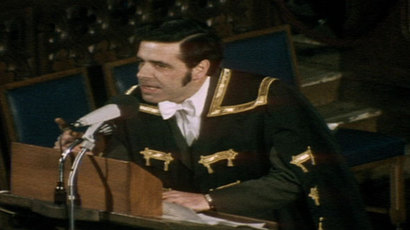
Labour Heartlands This speech was 50 years ahead of its time and puts shame on many politicians and unionist who still don’t understand the divide and alienation the class struggle creates. James Reid was a Scottish trade union activist, orator, politician and journalist born in Govan, Glasgow. His role as spokesman and one of the leaders in the Upper Clyde Shipbuilders work-in between June 1971 and October 1972 attracted international recognition. Jimmy Reid alienation speech, 1972” ‘Alienation’ is the cry of those who feel themselves the victims of blind economic forces beyond their control.” When this speech was reprinted in the New York Times, it was described as ‘the greatest speech since President Lincoln’s Gettysburg Address‘. It was delivered upon his election as Rector of Glasgow University. A working-class hero’s finest speech *Copyright Disclaimer Under Section 107 of the Copyright Act 1976, allowance is made for “fair use” for purposes such as criticism, comment, news reporting, teaching, scholarship, and research. Fair use is a use permitted by copyright statute that might otherwise be infringing. Non-profit, educational or personal use tips the balance in favour of fair use. No copyright infringement intended. ALL RIGHTS BELONG TO THEIR RESPECTIVE OWNERS* https://labourheartlands.com/jimmy-re…
Alienation is the precise and correctly applied word for describing the major social problem in Britain today. People feel alienated by society. In some intellectual circles it is treated almost as a new phenomenon. It has, however, been with us for years. What I believe is true is that today it is more widespread, more pervasive than ever before. Let me right at the outset define what I mean by alienation. It is the cry of men who feel themselves the victims of blind economic forces beyond their control. It’s the frustration of ordinary people excluded from the processes of decision-making. The feeling of despair and hopelessness that pervades people who feel with justification that they have no real say in shaping or determining their own destinies.
Many may not have rationalised it. May not even understand, may not be able to articulate it. But they feel it. It therefore conditions and colours their social attitudes. Alienation expresses itself in different ways in different people. It is to be found in what our courts often describe as the criminal antisocial behaviour of a section of the community. It is expressed by those young people who want to opt out of society, by drop-outs, the so-called maladjusted, those who seek to escape permanently from the reality of society through intoxicants and narcotics. Of course, it would be wrong to say it was the sole reason for these things. But it is a much greater factor in all of them than is generally recognised.
Society and its prevailing sense of values leads to another form of alienation. It alienates some from humanity. It partially de-humanises some people, makes them insensitive, ruthless in their handling of fellow human beings, self-centred and grasping. The irony is, they are often considered normal and well-adjusted. It is my sincere contention that anyone who can be totally adjusted to our society is in greater need of psychiatric analysis and treatment than anyone else. They remind me of the character in the novel, Catch 22, the father of Major Major. He was a farmer in the American Mid-West. He hated suggestions for things like medi-care, social services, unemployment benefits or civil rights. He was, however, an enthusiast for the agricultural policies that paid farmers for not bringing their fields under cultivation. From the money he got for not growing alfalfa he bought more land in order not to grow alfalfa. He became rich. Pilgrims came from all over the state to sit at his feet and learn how to be a successful non-grower of alfalfa. His philosophy was simple. The poor didn’t work hard enough and so they were poor. He believed that the good Lord gave him two strong hands to grab as much as he could for himself. He is a comic figure. But think – have you not met his like here in Britain? Here in Scotland? I have.
It is easy and tempting to hate such people. However, it is wrong. They are as much products of society, and of a consequence of that society, human alienation, as the poor drop-out. They are losers. They have lost the essential elements of our common humanity. Man is a social being. Real fulfilment for any person lies in service to his fellow men and women. The big challenge to our civilisation is not Oz, a magazine I haven’t seen, let alone read. Nor is it permissiveness, although I agree our society is too permissive. Any society which, for example, permits over one million people to be unemployed is far too permissive for my liking. Nor is it moral laxity in the narrow sense that this word is generally employed – although in a sense here we come nearer to the problem. It does involve morality, ethics, and our concept of human values. The challenge we face is that of rooting out anything and everything that distorts and devalues human relations.
Let me give two examples from contemporary experience to illustrate the point.
Recently on television I saw an advert. The scene is a banquet. A gentleman is on his feet proposing a toast. His speech is full of phrases like “this full-bodied specimen”. Sitting beside him is a young, buxom woman. The image she projects is not pompous but foolish. She is visibly preening herself, believing that she is the object of the bloke’s eulogy. Then he concludes – “and now I give…”, then a brand name of what used to be described as Empire sherry. Then the laughter. Derisive and cruel laughter. The real point, of course, is this. In this charade, the viewers were obviously expected to identify not with the victim but with her tormentors.
The other illustration is the widespread, implicit acceptance of the concept and term “the rat race”. The picture it conjures up is one where we are scurrying around scrambling for position, trampling on others, back-stabbing, all in pursuit of personal success. Even genuinely intended, friendly advice can sometimes take the form of someone saying to you, “Listen, you look after number one.” Or as they say in London, “Bang the bell, Jack, I’m on the bus.”
To the students [of Glasgow University] I address this appeal. Reject these attitudes. Reject the values and false morality that underlie these attitudes. A rat race is for rats. We’re not rats. We’re human beings. Reject the insidious pressures in society that would blunt your critical faculties to all that is happening around you, that would caution silence in the face of injustice lest you jeopardise your chances of promotion and self-advancement. This is how it starts, and before you know where you are, you’re a fully paid-up member of the rat-pack. The price is too high. It entails the loss of your dignity and human spirit. Or as Christ put it, “What doth it profit a man if he gain the whole world and suffer the loss of his soul?”
Profit is the sole criterion used by the establishment to evaluate economic activity. From the rat race to lame ducks. The vocabulary in vogue is a give-away. It’s more reminiscent of a human menagerie than human society. The power structures that have inevitably emerged from this approach threaten and undermine our hard-won democratic rights. The whole process is towards the centralisation and concentration of power in fewer and fewer hands. The facts are there for all who want to see. Giant monopoly companies and consortia dominate almost every branch of our economy. The men who wield effective control within these giants exercise a power over their fellow men which is frightening and is a negation of democracy.
Government by the people for the people becomes meaningless unless it includes major economic decision-making by the people for the people. This is not simply an economic matter. In essence it is an ethical and moral question, for whoever takes the important economic decisions in society ipso facto determines the social priorities of that society.
From the Olympian heights of an executive suite, in an atmosphere where your success is judged by the extent to which you can maximise profits, the overwhelming tendency must be to see people as units of production, as indices in your accountants’ books. To appreciate fully the inhumanity of this situation, you have to see the hurt and despair in the eyes of a man suddenly told he is redundant, without provision made for suitable alternative employment, with the prospect in the West of Scotland, if he is in his late forties or fifties, of spending the rest of his life in the Labour Exchange. Someone, somewhere has decided he is unwanted, unneeded, and is to be thrown on the industrial scrap heap. From the very depth of my being, I challenge the right of any man or any group of men, in business or in government, to tell a fellow human being that he or she is expendable.
The concentration of power in the economic field is matched by the centralisation of decision-making in the political institutions of society. The power of Parliament has undoubtedly been eroded over past decades, with more and more authority being invested in the Executive. The power of local authorities has been and is being systematically undermined. The only justification I can see for local government is as a counter- balance to the centralised character of national government.
Local government is to be restructured. What an opportunity, one would think, for de-centralising as much power as possible back to the local communities. Instead, the proposals are for centralising local government. It’s once again a blue-print for bureaucracy, not democracy. If these proposals are implemented, in a few years when asked “Where do you come from?” I can reply: “The Western Region.” It even sounds like a hospital board.
It stretches from Oban to Girvan and eastwards to include most of the Glasgow conurbation. As in other matters, I must ask the politicians who favour these proposals – where and how in your calculations did you quantify the value of a community? Of community life? Of a sense of belonging? Of the feeling of identification? These are rhetorical questions. I know the answer. Such human considerations do not feature in their thought processes.
Everything that is proposed from the establishment seems almost calculated to minimise the role of the people, to miniaturise man. I can understand how attractive this prospect must be to those at the top. Those of us who refuse to be pawns in their power game can be picked up by their bureaucratic tweezers and dropped in a filing cabinet under “M” for malcontent or maladjusted. When you think of some of the high flats around us, it can hardly be an accident that they are as near as one could get to an architectural representation of a filing cabinet.
If modern technology requires greater and larger productive units, let’s make our wealth-producing resources and potential subject to public control and to social accountability. Let’s gear our society to social need, not personal greed. Given such creative re-orientation of society, there is no doubt in my mind that in a few years we could eradicate in our country the scourge of poverty, the underprivileged, slums, and insecurity.
Even this is not enough. To measure social progress purely by material advance is not enough. Our aim must be the enrichment of the whole quality of life. It requires a social and cultural, or if you wish, a spiritual transformation of our country. A necessary part of this must be the restructuring of the institutions of government and, where necessary, the evolution of additional structures so as to involve the people in the decision-making processes of our society. The so-called experts will tell you that this would be cumbersome or marginally inefficient. I am prepared to sacrifice a margin of efficiency for the value of the people’s participation. Anyway, in the longer term, I reject this argument.
To unleash the latent potential of our people requires that we give them responsibility. The untapped resources of the North Sea are as nothing compared to the untapped resources of our people. I am convinced that the great mass of our people go through life without even a glimmer of what they could have contributed to their fellow human beings. This is a personal tragedy. It’s a social crime. The flowering of each individual’s personality and talents is the pre-condition for everyone’s development.
In this context education has a vital role to play. If automation and technology is accompanied as it must be with a full employment, then the leisure time available to man will be enormously increased. If that is so, then our whole concept of education must change. The whole object must be to equip and educate people for life, not solely for work or a profession. The creative use of leisure, in communion with and in service to our fellow human beings, can and must become an important element in self-fulfilment.
Universities must be in the forefront of development, must meet social needs and not lag behind them. It is my earnest desire that this great University of Glasgow should be in the vanguard, initiating changes and setting the example for others to follow. Part of our educational process must be the involvement of all sections of the university on the governing bodies. The case for student representation is unanswerable. It is inevitable.
My conclusion is to re-affirm what I hope and certainly intend to be the spirit permeating this address. It’s an affirmation of faith in humanity. All that is good in man’s heritage involves recognition of our common humanity, an unashamed acknowledgement that man is good by nature. Burns expressed it in a poem that technically was not his best, yet captured the spirit. In “Why should we idly waste our prime…”:
“The golden age, we’ll then revive, each man shall be a brother,
In harmony we all shall live and till the earth together,
In virtue trained, enlightened youth shall move each fellow creature,
And time shall surely prove the truth that man is good by nature.”
It’s my belief that all the factors to make a practical reality of such a world are maturing now. I would like to think that our generation took mankind some way along the road towards this goal. It’s a goal worth fighting for.
TEDx Talks This talk was given at a local TEDx event, produced independently of the TED Conferences. How can meaning and purpose contribute to one’s wellbeing? Sir Harry Burns explores the concept of salutogenesis and the impact it has on the most disadvantaged members of our community. As the former Chief Medical Officer (CMO) for Scotland, the Scottish Government’s Principal Medical Adviser and Head of the Scottish Medical Civil Service, Sir Harry is dedicated to improving people’s health and social well being. In 1994, he became Director of Public Health for Greater Glasgow Health board, a position he occupied until 2005. During this time, he continued research into the problems of social determinants of health, and later in 1998, was lead clinician in Scotland for cancer care. About TEDx, x = independently organized event In the spirit of ideas worth spreading, TEDx is a program of local, self-organized events that bring people together to share a TED-like experience. At a TEDx event, TEDTalks video and live speakers combine to spark deep discussion and connection in a small group. These local, self-organized events are branded TEDx, where x = independently organized TED event. The TED Conference provides general guidance for the TEDx program, but individual TEDx events are self-organized.* (*Subject to certain rules and regulations)
ARIES (March 21-April 19): Aries playwright Tennessee Williams was honest about the trickery he engaged in as he composed his entertaining masterpieces. “I don’t want realism,” he exclaimed. “I want magic! Yes, yes, magic! I try to give that to people.” I fully support you, Aries, if you would like to make that your goal in the next three weeks. In my astrological opinion, you and the people in your life have more than a mild need for magic. Your ability to thrive depends on you all getting big doses of magic.
TAURUS (April 20-May 20): On my wall is a poster that says, “Avoid the Tragic Magic Triad: taking things too personally, taking things too seriously, and taking things too literally.” This advice doesn’t refer to important matters, like my health or my ongoing fight against our culture’s bigotry. I take those issues very personally, seriously, and literally. Rather the motto refers to trivial and transitory issues, like the new dent made in my car by a hit-and-run driver in the Whole Foods parking lot, or the bad review of my book on Amazon.com, or the $18 that a certain Etsy seller cheated me out of, or the joke about the size of my nose that some supposed friend made on Twitter. According to my reading of astrological omens, Taurus, you would benefit right now from meditating on things like these that you take too seriously, personally, and literally. Here’s Don Miguel Ruiz: “There is a huge amount of freedom that comes to you when you take nothing personally.”
GEMINI (May 21-June 20): “I remember wishing I could be boiled like water and made pure again,” writes poet Jeffrey McDaniel. Judging from the current astrological omens, Gemini, I think you could be made reasonably pure again without having to endure an ordeal like being boiled like water. Do you have ideas about how to proceed? Here are mine: 1. Spend fifteen minutes alone. With your eyes closed, sitting in a comfortable chair, forgive everyone who has hurt you. Do the best you can. Perfection isn’t necessary. 2. Spend another fifteen minutes alone, same deal. Forgive yourself of everything you’ve done that you think of as errors. Perfection isn’t required. 3. Spend another fifteen minutes alone. Imagine what it would be like to unconditionally love yourself exactly as you are. 4. Spend another fifteen minutes alone. Remember ten amazing moments that you enjoyed between ages five and thirteen.
CANCER (June 21-July 22): On June 23, 1940, Wilma Rudolph was born prematurely to a family that already had nineteen other children. During her childhood, she suffered from pneumonia, scarlet fever, polio and infant paralysis. The latter two diseases damaged her left leg, and she wore a brace until she was twelve years old. Nevertheless, by the time she was in high school, she had become a very good athlete. Eventually she competed in the Olympics, where she won four medals and earned the title “the fastest woman in history.” I propose that we name her your official role model for the rest of 2021. May she inspire you to overcome and transcend your own personal adversity.
LEO (July 23-Aug. 22): Leo-born P. L. Travers wrote the children’s books about Mary Poppins, a nanny with magical powers. She was thoroughly familiar with folklore, ancient myths and the occult. The character of Mary Poppins, Travers said, was a version of the Mother Goddess. But in her writing process, she drew inspiration mainly from what she thought of as the vast dark nothingness. She wrote, “I’ve become convinced that the great treasure to possess is the unknown.” To generate her tales, she listened to silence and emptiness. I recommend you emulate her approach as you create the next chapter of your life story.
VIRGO (Aug. 23-Sept. 22): Virgo poet Melissa Broder writes, “Romantic obsession is my first language. I live in a world of fantasies, infatuations and love poems.” I wouldn’t normally authorize you to share her perspective, but I will now. The astrological omens suggest you have something important to learn from being more enamored and adoring than usual. If you say YES to the deluge of yearning, you’ll gain access to a type of power that will prove very useful to you in the coming months.
LIBRA (Sept. 23-Oct. 22): Libran author Oscar Wilde disproved the misconception that Libras are wishy-washy, overly eager to compromise, and inclined to overthink everything. His writing had wit and flair, and his life was vivid and daring. He wrote, “There are moments when one has to choose between living one’s own life, fully, entirely, completely—or dragging out some false, shallow, degrading existence that the world in its hypocrisy demands.” I suspect that one of those pivotal moments will soon be coming up for you. Be Wilde-like!
SCORPIO (Oct. 23-Nov. 21): Philosopher Simone Weil wrote, “Only the light that falls continually from the sky gives a tree the energy to push powerful roots into the earth. The tree is actually rooted in the sky.” As you bolster your foundations in the coming months, as you deepen your roots, I hope you keep Weil’s brilliant observation in mind. Like a tree, the nourishment that will help you grow the stamina and strength and structure you need will come as you turn to the brightest, warmest, highest sources of inspiration.
SAGITTARIUS (Nov. 22-Dec. 21): To be in groovy alignment with cosmic rhythms, you won’t merely walk, and you certainly won’t trudge. Rather you will saunter and ramble and promenade. You will strut and rove and prowl. Likewise, you won’t just talk, and you certainly won’t mutter or grumble. Instead you will banter, rhapsodize, improvise, beguile and lyricize. Catch my drift? You won’t simply laugh, but will chortle, cackle and guffaw. In other words, Sagittarius, you are authorized to imbue everything you do with style, panache and imagination.
CAPRICORN (Dec. 22-Jan. 19): Congratulations on being such a duty-bound, no-nonsense adult. May you continue to ply your dogged persistence and beast-of-burden attitude as long as it gets important tasks done, helps you feel useful, and doesn’t make you sick. But if you do get tempted to depart from the sacrificial path anytime soon, please know that you will not offend any gods or demons. Nor will you incur a karmic debt. In fact, I believe you have cosmic clearance to dabble with lightheartedness for a while. You should feel free to experiment with fun and games that appeal to your sense of wonder.
AQUARIUS (Jan. 20-Feb. 18): “I can barely conceive of a type of beauty in which there is no melancholy,” wrote poet Charles Baudelaire. What?! That makes no sense. I’m aware of millions of beautiful things that aren’t tinctured with melancholy. California’s Mount Shasta in the late spring twilight, for example. New York City’s Guggenheim Museum, a gorgeous gleaming building designed by genius architect Frank Lloyd Wright. The Marmore waterfalls in central Italy. The gardens of painter Claude Monet in Normandy, France. David Byrne’s gloriously hopeful website, ReasonsToBeCheerful.world. I mention this, Aquarius, because I expect life to bring you a flood of non-melancholic beauty in the coming days. Take advantage of this grace to replenish your trust in life.
PISCES (Feb. 19-March 20): Piscean author César Aira praises the value of escaping one’s memories. He writes, “Forgetting is like a great alchemy free of secrets, transforming everything to the present.” I’d love to see you enjoy alchemy like that in the coming weeks, dear Pisces. It’s a favorable time to lose at least some of the inhibitions and limitations you think you have to accept because of what happened in the past. As Aira says, forgetting “makes our lives into a visible and tangible thing we hold in our hands, with no folds left hidden in the past.”
Homework: My birthday’s coming up. I welcome your blessings! newsletter@freewillastrology.com or PO Box 4399, San Rafael, CA 94913.
Consciousness, spirituality, biography, sexuality, androgyny, futurism, space, the arts, science, astrology, democracy, humor, books, movies and more