All posts by Mike Zonta

After Covid-19, can mRNA vaccines help with cancer as well?


CREDIT: STEVE GSCHMEISSNER / SCIENCE SOURCE

Q&A — Immunologist and cancer researcher Özlem Türeci

The pandemic put the technology, long in development, to the test. Here’s a look at the status of its application to cancer and when it might reach patients.

By Tim Vernimmen 

05.25.2023 (knowablemagazine.org)


Vaccines against Covid-19 were delivered with remarkable and unprecedented speed. The ones pioneered by Moderna in the US and BioNTech in Germany introduced the lay public to a new kind of shot: one that includes mRNA, the nucleic acid that normally carries genetic instructions from the cell nucleus to the part of the cell where proteins are made.

How could this novel technology have come together so rapidly?

In fact, the approach had long been in the works, although it was not initially intended to prevent viral disease. Rather, it was focused on treating cancer, explains Özlem Türeci, cofounder and chief medical officer of BioNTech, the company that developed the Covid-19 vaccine with Pfizer.

Cartoon portrait of Özlem Türeci

CREDIT: JAMES PROVOST (CC BY-ND)

Immunologist and cancer researcher Özlem Türeci

Cofounder and chief medical officer, BioNTech

The anti-cancer rationale goes like this: Since each tumor contains a multitude of genetic mutations that do not occur elsewhere in the body, this should in theory allow our immune system to recognize and destroy those cells. Alas, tumors are known to suppress the immune system. In response, scientists have developed various drugs and treatments to stimulate the immune system in cancer patients.

But another problem is that many tumor mutations slip through the net. So some researchers have proposed a more focused approach to alert immune cells to cancer mutations they do not spontaneously target — something more like a vaccine, which usually works by exposing people to an inactivated pathogen or some of its signature molecules. This primes the immune system for immediate action should the active pathogen show up. In a similar vein, the scientists reasoned it might be possible to present the patient’s immune system with specific bits of cancer tissue, to train it to attack the tumor more vigorously.

The benefit of using mRNA for this job is not just that it can be manufactured relatively quickly, but that it is also very flexible. The genetic signature of a tumor is different in every person and, as time progresses, it continues to change. This means that vaccines would ideally be tailor-made, and repeatedly so — an expensive and time-consuming proposition if one is manufacturing bits of key tumor protein in the lab, which was a very common way of producing vaccines before mRNA arrived. Proteins are built from a score of different amino acids, have complicated three-dimensional structures and tend to clump together when something goes wrong.

So, what if we could just make specific pieces of mRNA instead, inject them into the body, and let the cells build the corresponding proteins themselves? Wouldn’t that be much easier?

In the approach BioNTech developed, explains Türeci, mRNA can be injected into the body and targeted towards the lymph nodes, where it is translated into protein by immune cells known as dendritic cells. These cells then display the protein on their surfaces, where they train the T cells that patrol our tissues to find and eliminate any intruders that display the same signature.

This schematic illustrates how an mRNA vaccine can help the body fight cancer cells. The mRNA carries instructions for making little pieces of protein that are produced by tumor cells. When the mRNA is taken up by dendritic cells of the immune system, the protein pieces (antigens) are produced and displayed on the surface of the dendritic cells. This display trains T cells to respond to the new antigen with an attack against the tumor. In a natural situation, the tumor itself releases bits of cancer debris (shown as little brown blobs) that are taken up by dendritic cells to train T cells. However, the immune system doesn’t react to all kinds of tumor antigens. The mRNA vaccine can train the body to target tumor antigens it normally doesn’t respond to. The result is a more effective attack against cancer cells.

The Covid-19 pandemic put the strategy to the test: Within a year, two highly effective mRNA vaccines against the SARS-CoV-2 virus were developed, tested and rolled out — one from Pfizer-BioNTech, one from Moderna, each slightly different. Both vaccines contained the code for making a stabilized version of the spike protein that the virus uses to get into cells. The spike protein code was inserted into mRNA with a backbone that had been optimized by decades of research. This mRNA was then packaged in specific lipids to ensure it would reach its lymph-node destination.

Türeci, who coauthored an article about mRNA vaccines against cancer for the Annual Review of Medicine in 2019, recently talked with Knowable Magazine about the development of mRNA vaccines for cancer and how close they are to reaching patients, for whom new therapies are sorely needed.

This conversation has been edited for length and clarity.

When did you start developing cancer vaccines, and why did you think mRNA would work best?

This did not happen overnight. It was a decades-long journey that started in the 1990s. We had a vision that was considered science fiction at the time: We wanted to develop cancer vaccines to shrink tumors. Every patient’s cancer is unique, because it is the result of random mutations, so we wanted to develop individualized vaccines that would activate the patient’s immune system against their own tumor.

We tested various approaches and identified mRNA as the one with the highest potential for the purpose of developing truly individualized cancer vaccines. Synthetic mRNA is produced by a simple process, and it looks very much like natural mRNA. It delivers the blueprint of the protein — the vaccine antigen — for the body’s cells to produce.

Yet we also realized that significant improvements would be needed. Over the past decades, we have addressed these shortcomings.

Our discoveries led to the mRNA technology platform that we use today for our product candidates against cancer, infectious diseases and other severe diseases. In addition to our own research in the 1990s, a small group of other scientists also worked on mRNA. Our advances as well as theirs provided the tailwind for the broader scientific community.

What have been the most crucial breakthroughs that allowed you to get to this point?

The fundamental problem of mRNA was its low potency. Even large doses of mRNA produce little protein and, consequently, had little effect. That is why, in the late 1990s, few in the industry believed in mRNA as a new class of drugs; mRNA vaccines tested at that time elicited poor immune responses.

Our team spent years researching each element of the mRNA backbone and discovered various modifications that increased the stability of the mRNA and its translation into protein. This way, we created mRNA backbones with a more than thousandfold increased efficacy to trigger immune responses.

The next piece of the puzzle was to find out how to get the mRNA vaccine to the right cells in the body, and which cells these might be. In 2004, we made an interesting observation: The direct injection of an mRNA vaccine with our improved backbone into a lymph node elicited a much stronger immune response than injection of mRNA into the skin or muscle, which were the commonly explored routes.

Why would it be so much more effective to inject the mRNA directly into the lymph nodes?

We realized that directing mRNA vaccines into dendritic cells in the lymph nodes had to become a critical part of the solution. In the years that followed, we explored various methods to deliver mRNA to these specific locations in the body, and discovered that mRNA vaccines encapsulated in a particular lipid nanoparticle — a technology we have developed and that we call RNA lipoplexes — were specifically taken up by resident dendritic cells in lymphoid tissues.

These cells are the high-performance trainers of the immune system and can mediate particularly strong immune responses. We found that they have a specific mechanism to engulf foreign bodies and use them to train the immune system. Vaccine-induced T-cell responses were extremely strong and eradicated large tumors in mice. So, with these discoveries and optimizations of our technology, we went back to the bedside, to the patient.

Images show four mouse lungs with successively more intense coloration at day 3, 11, 14 and 17. This is control mice. On the bottom, another set of four lungs show some coloration on day 3 but they are clear on the subsequent days. These are from mice treated with the mRNA vaccine. On right are photos showing control lungs with a lot more tumor growth than lungs from treated mice.
These images display the results of an mRNA vaccine experiment in mice. On the left are images of lung tumor tissue over time. The tumors consist of cancer cells that were engineered to be bioluminescent. In control animals that did not receive the mRNA vaccine, the tumors continued to grow. In animals that received the vaccine, the tumors shrank and were often no longer detected at 11 days or later. The pictures on the right show the lungs of mice that didn’t (top) or did (bottom) receive the vaccine. The lungs are stained with ink, then the tumor tissue was selectively bleached, resulting in a light blue color for tumor tissue.CREDIT: ADAPTED FROM L.M. KRANZ ET AL / NATURE 2016

How exactly did you make the step from humans to mice?

We started human studies and pioneered, in 2015, the first systemic delivery of mRNA nanoparticle vaccines to humans. In a portion of our patients with treatment-resistant melanoma, we could observe shrinkage of tumors with the vaccine, alone or in combination with immune-stimulating medication. We published these findings in the journal Nature in 2017. They provided the blueprint for the development of highly effective mRNA vaccines.

These advances allowed us to come closer to our original vision of cancer vaccines tailored to the patient’s tumor. The approach involves genomic analysis of a patient’s tumor by next-generation sequencing to find the cancer-specific mutations by comparison to the patient’s normal tissue. This set of cancer mutations is unique for every patient. We then select a number of mutations that provide the highest likelihood for the immune system to recognize the cancer and design a vaccine tailored to the patient’s individual cancer mutation profile.

How many people have been treated with your mRNA cancer vaccines so far?

With our individualized vaccine candidates, we have treated more than 450 patients. These are designed to target mutations that are unique to the patient’s specific cancer. We also have a number of personalized off-the-shelf mRNA cancer vaccine candidates. These candidates consist of a fixed combination of mRNA-encoded non-mutated tumor antigens that are known to frequently be produced within specific cancer types. We are currently investigating these candidates in clinical studies — for example, in patients with advanced melanoma, prostate cancer or head and neck cancer — and have treated more than 250 patients so far.

This has all been in the context of clinical trials. The way treatments are developed within the regulatory framework is to go cancer by cancer, and independently for every line of treatment, for every cancer.

Our oncology pipeline currently counts 20 programs in 24 ongoing clinical trials, of which five candidates are in advanced clinical trials. For BNT111, an mRNA vaccine candidate for the treatment of advanced melanoma, we have received FDA fast track designation in the US. These designations are intended to facilitate and expedite the development of new drugs and vaccines for the treatment or prevention of serious diseases that have the potential to address unmet medical needs.

One of the challenges with personalized medicine, creating a specific treatment for one particular patient, is how to organize its official approval, since every patient gets a different product. Do you think we will need some legislative change there as well, or not necessarily?

Very early on, we started discussions with regulatory authorities. What is important, we believe, is that the process of manufacturing, and the mRNA backbone, stay the same. Within this frame, we just exchange the code for the cancer mutations.

The aim of such a framework would be that irrespective of the sequence of the mutations used to individualize a vaccine, if everything else stays the same, a complete approval process for an individualized version of the vaccine may not be required again, provided that the general product has been approved by the authorities for a certain tumor type. This is our aim, and I believe we are on the way to land there. This is new territory also for regulators, and we all need to learn.

Why has cancer been so difficult to cure, and is there a fundamental reason why you think mRNA vaccines could provide a way forward where other approaches haven’t?

The reason why cancer is so difficult is that it is a really complex disease. It is different in every person, and it shapeshifts over time. Because mRNA vaccines are versatile and can be manufactured on demand, we can personalize them. We can define the individual cancer fingerprint — its mutation profile — and design a specific vaccine to address these mutations.

And if the patient relapses because the cancer has changed, we can adapt the treatment accordingly, similar to how we are able to adapt our mRNA Covid-19 vaccines to new viral variants of concern.

The body does often produce immune cells that target a tumor. Why doesn’t it make the right ones — or enough of them — to suppress it? Why does it need help from a vaccine?

First of all, tumors have all sorts of tricks to suppress our immune cells, across the body but also within the tumor itself. In addition, many of the altered structures of the tumor are still recognized as part of the body, so they are tolerated by the immune system. Therefore, the ideal targets for the immune system are those in the tumor’s mutanome: the mutations that accumulate over time in cancer cells.

But only a tiny portion of those is recognized by spontaneously occurring, circulating T cells. With our mutation-based vaccine candidates, we aim to use the potential of the mutanome to help T cells get started.

Still, we find that we often need something to overcome the strong immune suppression from the tumor. These might be immune modulators such as immune checkpoint inhibitors, or chemotherapy, which results in the death of cancer cells, that can push the effect of a vaccine towards stronger activity.

One of the reasons you were able to act so fast when you realized that we had a pandemic on our hands was that in developing cancer vaccines, there is always time pressure, since an untreated tumor is growing every day. How far have you come in compressing development time, the time you need to get the vaccine into the patient, and how much further do you think you can go?

The process — starting with genome analysis of a patient’s tumor and ending with on-demand manufacturing of this customized mRNA vaccine ready to administer — has been a race against that specific patient’s growing tumor. Since 2014, we’ve made custom vaccines for hundreds of cancer patients in our clinical trials and shipped them worldwide. Back then, the process took us three to five months for each patient. Now we are at three to six weeks, and I would expect that we’ll become stable around three weeks at some point.

Do you think mRNA cancer vaccines will eventually be able to help everyone? Or are there some tumors that will always be out of reach?

In principle, we expect that cancer vaccines can be used universally, as there is currently no reason why there should be a tumor type that would not be approachable by this concept.

Having said that, I want to make clear that it would be a very romanticized view to think that we’ll have a cancer vaccine that will solve all problems. Again, cancer is a very complex disease.

However, cancer vaccines may be a potent option in the future that could complement the therapy toolkit and help to better treat patients with cancer.

Tim Vernimmen is a freelance science writer based in Antwerp, Belgium. He was grateful to receive a series of mRNA vaccines against SARS-CoV-2 and realized he had never exactly understood how these vaccines worked before conducting this interview.

Isaac Newton had two birthdays

Posted by Deborah Byrd and EarthSky Voices

January 4, 2023 (earthsky.org)

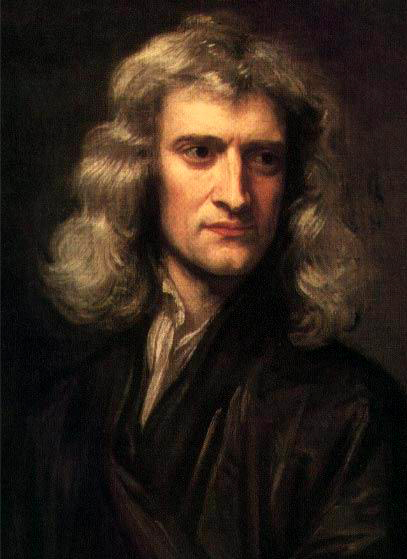
Isaac Newton: Strong-faced clean shaven man with very wavy, shoulder-length brown hair.
Isaac Newton via Wikimedia Commons.

Isaac Newton, born January 4, 1643

Isaac Newton was born on January 4, 1643, at Woolsthorpe Manor House in the United Kingdom. Newton became a mathematician, physicist and astronomer. He is now world-famous as a scientist who helped us understand the universe through his discoveries, that became the basis of many scientific principles.

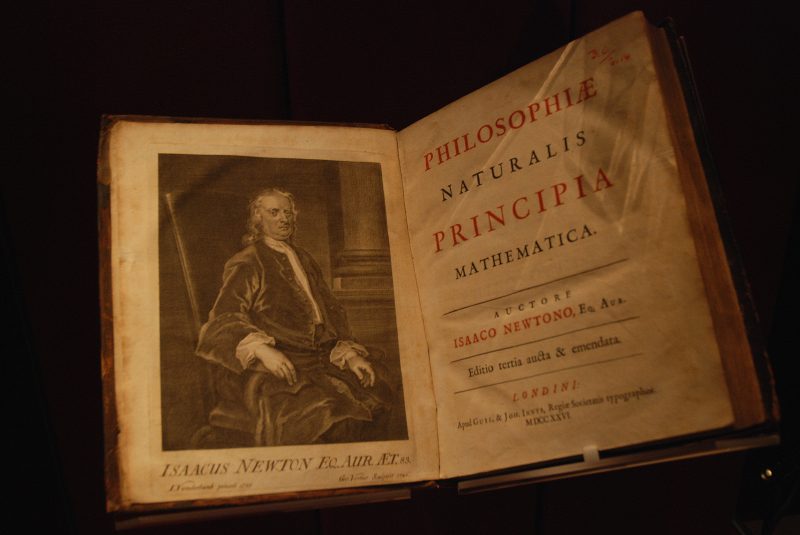
Newton published his insights in three famous volumes titled the Philosophiae Naturalis Principia Mathematica (Mathematical Principles of Natural Philosophy), often referred to as simply Principia, which is, by all accounts, a masterpiece. In this work, Newton states his three laws of motion, which today form the foundation of classical celestial mechanics. Principia also lays out Newton’s revelations about gravity.

Small book, open, with portrait of Newton on left page and Latin title in red and black on right page.
Copy of the 3rd edition of Newton’s Principia Mathematica (1726) at the John Reynolds Library in Manchester, England. Image via Wikimedia Commons.

Available now! 2023 EarthSky lunar calendar. A unique and beautiful poster-sized calendar showing phases of the moon every night of the year! And it makes a great gift.

Newton’s Three Laws of Motion

While they’re called laws, they’re really descriptions of fundamental truths about our physical universe.

1. An object at rest will remain at rest unless acted on by an outside force. An object in motion continues in motion with the same speed and in the same direction unless acted upon by an outside force. This is the law of inertiaRead more about Newton’s First Law of Motion.

2. When a force acts on a mass, it produces acceleration. The greater the mass of the object being accelerated, the greater the amount of force needed to accelerate the object. Read more about Newton’s Second Law of Motion.

3. For every action there is an equal and opposite reaction. Read more about Newton’s Third Law of Motion.

Newton’s revelations about gravity

Remember the story of the apple falling on Newton’s head? While not necessarily true in all its details, Newton apparently observed an apple fall from a tree and began thinking that, in order to fall on the ground, the apple was accelerated from zero when it hung on the tree.

So according to his Second Law of Motion, acceleration is produced when a force acts on an object. Newton must have thought, what is that force? Then he came to understand this force as what every school child today knows as gravity.

Newton’s great revelation was that the force of gravity doesn’t just extend to the tops of apple trees. If an apple tree were as high as a mountain, for example, the apple would still fall. The force would still be operating. Newton’s insight was that the force of gravity extends much farther … to the moon. Thus, he recognized that the orbit of the moon around Earth is a consequence of the force of gravity.

Indeed, the force of gravity extends throughout space. Today, physicists refer to Newton’s ideas about gravity as the universal law of gravitation.

Other scientists refined discoveries of Isaac Newton

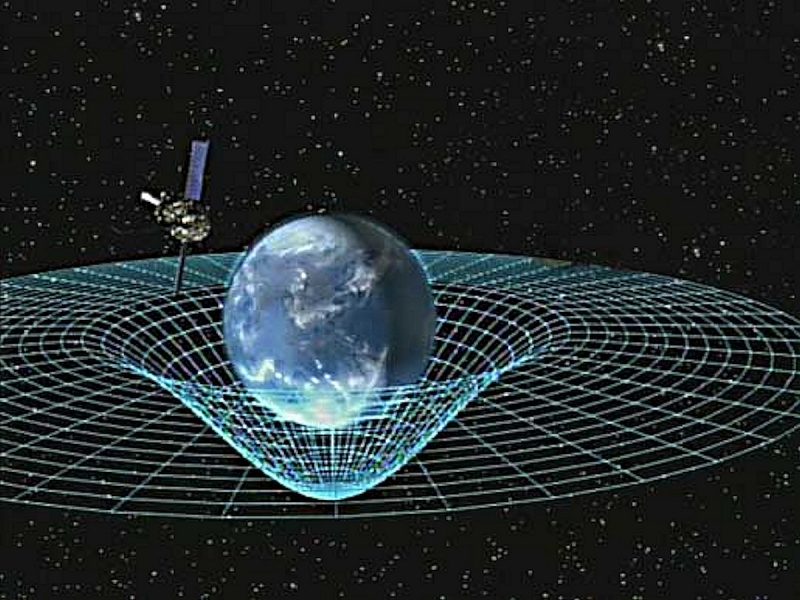
Others who followed Newton – particularly Albert Einstein – refined our understanding of gravity. In fact, the most accurate description of gravity today is in Einstein’s general theory of relativity, which asserts that gravity is a consequence of the curvature of space-time.

Fascinated by Newton’s revelations about gravity? Check out this 15-minute video:

Other contributions by Newton

If Newton had only contributed his three Laws of Motion and his understanding of universal gravitation, we’d have remembered him as one of the world’s greatest scientists. But Newton didn’t stop there. He also built one of the first practical reflecting telescopes, contributed to the invention of calculus, and explored how white light can be broken up into a spectrum of colors by a prism, thereby laying the foundation for much of modern astronomy.

Yet Newton himself knew how much more remained to be discovered. He is known to have said:

I do not know what I may appear to the world, but to myself I seem to have been only like a boy playing on the sea-shore, and diverting myself in now and then finding a smoother pebble or a prettier shell than ordinary, whilst the great ocean of truth lay all undiscovered before me.

Newton had 2 birthdays

One curious fact about Isaac Newton is that you can say he had two birthdays, ten days apart. You may have previously seen Newton’s birthday as December 25, 1642. That reference is beginning to change, and now it’s more common to see Newton’s birthday as January 4, 1643. The difference is because, when Newton was born, England was using a different calendar than the rest of Europe.

The rest of the continent had already adopted the Gregorian calendar, which is the same calendar we use today. However, at the time of Newton’s birth, the English were still using the Julian calendar, which lagged ten days behind because of a faulty method of accounting for leap years. (Coincidentally, 1642 was the year that Galileo died).

So Newton himself would have said his birthday was December 25. But everywhere outside of England he was born on January 4. Read more about Newton’s birthday discrepancy.

A flat grid with a planet pushing it down into a pit-like configuration.
Einstein’s 1916 theory of general relativity didn’t replace Newton’s theory of gravity. But it did change our understanding of gravity so that now we know massive objects cause a distortion in space-time, which passing objects feel as gravity. Artist’s concept via NASA.

Bottom line: Isaac Newton could claim two birth dates, but now we celebrate his birthday as January 4, 1643. Newton’s work in gravity and the laws of motion form the basis of much of today’s understanding of physics and astronomy.

Posted January 4, 2023 in Human World

Deborah Byrd

VIEW ARTICLES

About the Author:

Deborah Byrd created the EarthSky radio series in 1991 and founded EarthSky.org in 1994. Today, she serves as Editor-in-Chief of this website. She has won a galaxy of awards from the broadcasting and science communities, including having an asteroid named 3505 Byrd in her honor. A science communicator and educator since 1976, Byrd believes in science as a force for good in the world and a vital tool for the 21st century. “Being an EarthSky editor is like hosting a big global party for cool nature-lovers,” she says.

EarthSky Voices

VIEW ARTICLES

About the Author:

Members of the EarthSky community – including scientists, as well as science and nature writers from across the globe – weigh in on what’s important to them.

America’s Mystical Inheritance with Ronnie Pontiac

New Thinking Allowed with Jeffrey Mishlove May 28, 2023 Ronnie Pontiac was the personal research assistance for Manly P. Hall at the Philosophical Research Society in Los Angeles. He is author of American Metaphysical Religion: Esoteric and Mystical Traditions of the New World. Here he focuses primarily on the colonial period of American history, emphasizing the influence of 17th century Rosicrucian tradition. 00:00:00 Introduction 00:14:47 Thomas Morton 00:26:50 Pre-colonial America 00:32:43 John Winthrop the Younger 00:43:43 Rosicrucians 00:58:58 Roger Williams 01:02:13 Conclusion Edited subtitles for this video are available in Russian, Portuguese, Italian, German, French, and Spanish. New Thinking Allowed host, Jeffrey Mishlove, PhD, is author of The Roots of Consciousness, Psi Development Systems, and The PK Man. Between 1986 and 2002 he hosted and co-produced the original Thinking Allowed public television series. He is the recipient of the only doctoral diploma in “parapsychology” ever awarded by an accredited university (University of California, Berkeley, 1980). He is also the Grand Prize winner of the 2021 Bigelow Institute essay competition regarding the best evidence for survival of human consciousness after permanent bodily death. (Recorded on May 14, 2023)

We Are Wired For Stories And Myth

Astro Butterfly May 28, 2023

We are wired to make sense of the world through story and myth.

In millions of years of evolution, we didn’t have writing, books, or the internet. Our ancestors would gather around the fire and tell stories. This is how knowledge has been passed on for tens of thousands of years.

This is how we really learn.

Hero’s Journey – A Template For Making Sense Of The World

The reason Joseph Campbell has become so famous is that he has captured into a framework something every human being resonates with.

The Hero’s Journey is the common template of a broad category of tales that involve a hero who goes on an adventure, and in a critical crisis wins a victory, and then comes home changed or transformed.

The Hero’Journey framework strikes a chord in each single one of us, no matter in which field we apply it.

Books, stories, or Hollywood blockbusters – are all designed after the Hero’s Journey: the story begins when the Hero is presented with a great challenge – to fight the dragon, save the princess, – or in the modern day, to get a job, find a partner, make friends, or recover from addiction – and then follows the hero’s footsteps in overcoming this challenge.

The Hero’s Journey has 12 stages. The 12 stages of the Hero’s Journey – from the “call to adventure” to “resolution” – correspond to the 12 aspects planets make in their cycle.

Hero’s Journey And The Mars Cycle

The Hero’s Journey astrological analogy we use is the Sun-Mars synodic cycle. When we say “hero” that’s of course both the hero and the heroine. We all have Mars in our chart, regardless of our gender.

Why do we use the Mars cycle to describe aspects and the Hero’s Journey?

Because Mars is the first planet to make a full circle around the Sun, as seen from Earth.

If Mercury and Venus never travel too far from the Sun (Mercury never travels more than 28° from the Sun, Venus 48°), – Mars is the first planet to apply sextiles, squares, quincunxes and oppositions to the Sun.

Mars is the planet that pushes us outside of the comfort of our “Ordinary World” into the “Special World”. When we don’t take action, nothing happens. When we instead answer Mars’ call to adventure we grow and evolve. We become heroes.

If we wouldn’t have aspects, there would be no movement, and there would be no life.

Astrological aspects are an abstraction of our soul’s movement through space and time.

The Mars cycle is the allegorical Hero’s Journey, describing how we interact with the world, and how we go about life.

Our life is nothing else but a succession of hero journeys, and the aspects describe the phase of the hero’s journey we are in.

Aspects And The Hero’s Journey

The “Aspects And The Hero’s Journey” webinar will help you look at aspects and your natal chart in ways you’ve never done before.

The reason why “Aspects And The Hero’s Journey” is such an effective way of making sense of astrological aspects is that it follows the same narrative we’ve been using to make sense of life for tens of thousands of years.

If you’re interested in the “Aspects And The Hero’s Journey” webinar make sure you join us soon.

We will cap the registration at 100 people (half of the spots have filled up). If you click on the link and the registration is open, this means there are still seats available.

>> Aspects And The Hero’s Journey <<

Pluto Square The Nodes – What Does It Mean To Be Human?

Astro Butterfly May 27, 2023

We have a very important transit slowly applying: Pluto square the Lunar Nodes.

Pluto is now at 0° Aquarius, and the Lunar Nodes are at 3° Taurus and 3° Scorpio.

Pluto will square the Nodes for the following months; the exact square will happen on July 23rd, 2023, when Pluto will be back in Capricorn at 29°, and the Lunar Nodes at 29° Aries and Libra.

This is a potent transit we are already feeling, because Jupiter – currently at 2° Taurus, and approaching the North Node at 3° Taurus – is adding an extra oomph to an already intense transit.

What to expect when Pluto squares the Lunar Nodes?

The Lunar Nodes – Our Inner Compass

The Lunar Nodes play a special role in astrology. They are not actual planets or physical bodies like the Moon or the asteroids. They are mathematical points found at the intersection of the path of the Sun with the path of the Moon.

The Nodes are basically derived from the Sun and the Moon – the most important astrological archetypes. The Sun and the Moon represent our core identity – Sun, our spiritual, Yang identity, and the Moon, our physical, Yin identity.

The Nodes work in the background, supporting the agenda of the Sun and the Moon. Think of the Lunar Nodes as a compass.

When we get lost, when we deviate from our physical – and spiritual – path, we use the compass to recalibrate.

Our life is a windy road with ups and downs. The Nodes, just like a compass, will always show us the overall direction (the North Node will point towards the North, or the future, and the South Node towards the South, or the past).

When we get lost, we use the Lunar Nodes to come back on track. Our life is a perpetual movement from the South to the North Node and back.

The Lunar Nodes show up a lot in family members’ synastries. When we have a Lunar Nodes transit, we usually have an important family event.

The Lunar Nodes suggest that we might be more tightly linked to our family members than we think we are. The Lunar Nodes are the invisible family ties; who we are (the Sun and the Moon) is also a reflection of the genetic imprint of our parents and ancestors.

In our chart, the South Node points to behaviors, mental models and genetic memories we have inherited from our family. And the North Node (the opposite point), to our opportunities to adjust our karma and bring in new life, new opportunities, and new genetic code.

What about Pluto?

Pluto is the planet of complete and total transformation. Pluto strips everything down to the barest basics. Pluto is the planet of Truth – Pluto will relentlessly dig to find the Ultimate Truth, no matter how deep it has to go into the underground.

What happens when we have a Pluto aspect? The planet – or astrological archetype, like in the case of the Nodes – is stripped of superficial layers and reduced to its core, atomic function. If Pluto makes an aspect with Venus for example, Pluto reduces Venus to her core Venusian expression.

Pluto Square The Lunar Nodes Nodes – One Step Forward

Now that Pluto aspects the Lunar Nodes, Pluto will again reduce the North and the South Node to their basic compass function.

Pluto squares the Nodes – this is a transit that evolutionary astrologers call a “skipped step”.

Pluto is at the midpoint of the two Lunar Nodes, so it’s with one foot in the past, and the other in the future. Pluto acts like a bridge, like an evolutionary step forward.

Pluto square the Lunar Nodes’ mandate is to heal generational wounds, and re-write healthier, more constructive behavioral patterns.

The North Node in Taurus is concerned with the future. Who am I growing into? Who do I want to become? The South Node in Scorpio is our past. What’s in the baggage I carry? What do I really need, and what can I drop? What’s a structural part of my identity – and what is not?

Pluto square the Lunar Nodes will help us understand the subtle ways our identity is shaped by our upbringing, by our family and our formative years.

We believe we are 100% unique individuals, but genetically, at least, we are 50% our father, and 50% our mother. We are a unique gene combination, that’s true, but who we are is not entirely our choice. At least not the South Node part of our identity.

Pluto square the Lunar Nodes will expose the limitations of behaviors and mental models (South Node), that have been pushed onto us, but that no longer serve us.

Pluto square the Lunar Nodes will also expose those so-called ideals or goals (North Node) that are not necessarily an expression of who we truly are (easy to get confused when we grow up with top-down education and copy-paste Instagram role models).

Pluto is now at 0° Aquarius – the very first degree of Aquarius. Aquarius is the sign of the collective. Aquarius is the water bearer – the most human sign of the zodiac. Pluto’s previous transits in Aquarius have coincided with the emergence of humanism, respectively democracy.

Pluto Square The Lunar Nodes Nodes – What Does It Mean To Be Human?

That’s a fair question for Pluto at 0° Aquarius. In our desire to spread Aquarius’ humanitarian spirit we may come up with various initiatives to make sure everyone is looked after.

But when we help some people we automatically exclude others. How do we make our judgment calls? And how many of these judgment calls are based on our own Lunar Nodes conditioning?

Perhaps you too have been judged based on who your parents are, or from what kind of family or culture you came from. People didn’t see Sarah, or Tom – but the “so and so’s child”. How many times have you judged others based on their upbringing?

What does it mean to be human? To come from a certain cultural background? To like certain music? Have a particular fashion style? Follow a particular spiritual or political movement?

Perhaps being human means none of this. Being human is what’s left when we are stripped of all these layers.

Being human is not what makes us different from each other – but what makes us similar. What we all share in common. We all want to be seen for who we truly are – for our human essence.

When we exclude – or paradoxically, when we try to include everyone, we move away from what really matters – our humanity.

When we enforce rules to protect our humanity, we go against the very essence of humanity and adulthood, treating people like children.

I remember some research done in the insurance industry. Companies that asked for multiple data points, signaling that their customers are future delinquents – got more claims and frauds than companies that had more relaxed underwriting requirements and treated their customers with trust and respect.

When we ask our friends, coworkers, neighbors, customers, or Facebook group members to “follow the rules”, “be kind” or “don’t spam” guess what – they will unconsciously look for ways to bend the rules, to be unkind and to spam.

When we tell people to follow rules, we operate from the Capricorn-Cancer, parent-child axis. And when we’re the parent, the other party becomes the child.

Pluto In Aquarius – A New Paradigm

When instead we operate from the Aquarius-Leo axis, we act from our humanity-individuality axis.

We trust the individual because we know we’re all in this together (Aquarius), at the same time respecting their individual choices (Leo).

With Pluto squaring the Nodes both from 0° Aquarius and from 29° Capricorn, we will learn some important lessons around what it means to be human, sovereignty and personal responsibility (0° Aquarius) vs. old lessons around power dynamics, victimhood, and parent-child behavioral models.

Pluto will spend a few more months at 29° Capricorn – and then it will be back in Aquarius for good.

We still have time to tie loose ends and reflect on what we’ve learned from the 20-year Pluto in Capricorn era, and what we want from Pluto in the Aquarius era.

And the Pluto square Lunar Nodes transit is an excellent opportunity to reframe past-due conditioning, and change our life for the better.

Aspects And The Hero’s Journey

If you like Astro Butterfly’s approach to astrology, consider registering for the upcoming “Aspects And The Hero’s Journey” webinar.

Aspects are the backbone of astrology. The natal chart is made of aspects. Transits are nothing else but aspects. When you understand what aspects mean, things start to “click”.

Learn more about the “Aspects And The Hero’s Journey” webinar and join us here:

>> Aspects And The Hero’s Journey <<

Florida Bans Men From Becoming Nurses

BREAKING NEWS

Published Wednesday 5:00AM (TheOnion.com)

Image for article titled Florida Bans Men From Becoming Nurses

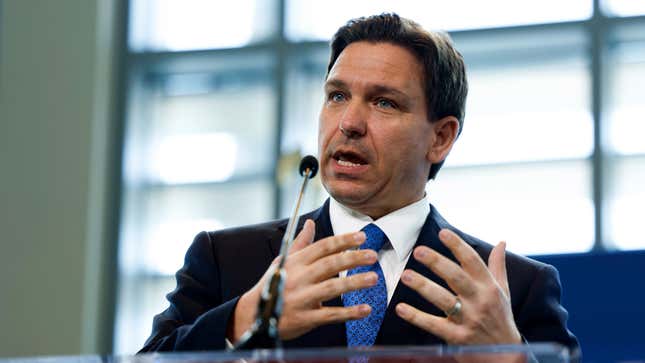
TALLAHASSEE, FL—In a sweeping effort to curtail what he called “woke gender ideology,” Florida Gov. Ron DeSantis signed a new bill into law Wednesday banning men from becoming nurses. “Imagine how disturbed a child would be at the doctor’s office if a nurse stepped into the room to take their temperature and it was a man—how would a parent even begin to explain that?” said DeSantis, who slammed the practice of letting men work in the field of nursing as “biologically unnatural” and “pure lunacy, plain and simple.” “That kind of nonsense might fly in liberal California, but not here. Any man who would put on nursing scrubs is either severely mentally ill or some kind of predator. Men are doctors, and women are nurses. It’s simple biology. Now physician assistants, we’re putting a pause on that one until we figure it out.” At press time, Tennessee had reportedly followed suit by passing a new law completely banning women from the workforce.

The Psychology of The Fool

Eternalised May 25, 2023 #psychology#jung#foolThe fool is one of the most relatable, intriguing and recurring figures in the world. There have been fools who have caused surprise and laughter since time immemorial. We worship folly by seeing it in people and in the world and by willingly displaying it in ourselves. It is one of the timeless archetypes, which we all inherit at birth. Many of us suffer from the absence of the fool in our lives. Frenetic and upright, we take ourselves too seriously. As William Shakespeare said, “All the world’s a stage, and all the men and women merely players.” Forgetting that playfulness is a basic human need, we wonder why we so easily become bored and exhausted, losing all capacity for spontaneity, authenticity, and passion. The antidote to this would be to give the fool archetype some space in our lives. “The soul demands your folly; not your wisdom.” – Carl Jung