All posts by Mike Zonta

IN DEFENSE OF HUMANITY

We need a cultural and philosophical movement to meet the rise of artificial superintelligence.
By Adrienne LaFrance

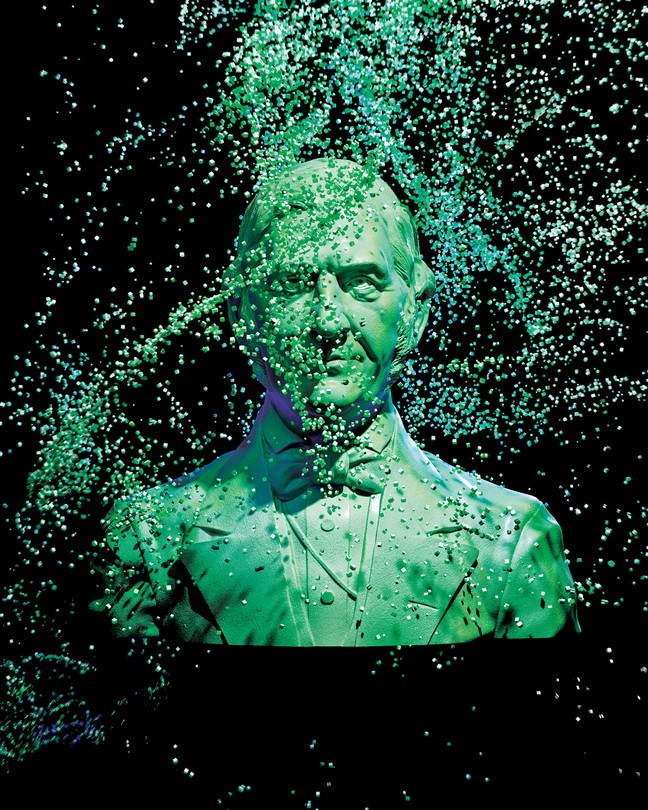
A digital illustration of a bust of Ralph Waldo Emerson and pixels
Illustration by Jo Imperio

JUNE 5, 2023 (theatlantic.com)

On july 13, 1833, during a visit to the Cabinet of Natural History at the Jardin des Plantes, in Paris, Ralph Waldo Emerson had an epiphany. Peering at the museum’s specimens—butterflies, hunks of amber and marble, carved seashells—he felt overwhelmed by the interconnectedness of nature, and humankind’s place within it.

Explore the July/August 2023 Issue

Check out more from this issue and find your next story to read.View More

The experience inspired him to write “The Uses of Natural History,” and to articulate a philosophy that put naturalism at the center of intellectual life in a technologically chaotic age—guiding him, along with the collective of writers and radical thinkers known as transcendentalists, to a new spiritual belief system. Through empirical observation of the natural world, Emerson believed, anyone could become “a definer and map-maker of the latitudes and longitudes of our condition”—finding agency, individuality, and wonder in a mechanized age.

America was crackling with invention in those years, and everything seemed to be speeding up as a result. Factories and sugar mills popped up like dandelions, steamships raced to and from American ports, locomotives tore across the land, the telegraph connected people as never before, and the first photograph was taken, forever altering humanity’s view of itself. The national mood was a mix of exuberance, anxiety, and dread.

The flash of vision Emerson experienced in Paris was not a rejection of change but a way of reimagining human potential as the world seemed to spin off its axis. Emerson’s reaction to the technological renaissance of the 19th century is worth revisiting as we contemplate the great technological revolution of our own century: the rise of artificial superintelligence.

Even before its recent leaps, artificial intelligence has for years roiled the informational seas in which we swim. Early disturbances arose from the ranking algorithms that have come to define the modern web—that is, the opaque code that tells Google which results to show you, and that organizes and personalizes your feeds on social platforms like Facebook, Instagram, and TikTok by slurping up data about you as a way to assess what to spit back out.

Now imagine this same internet infrastructure but with programs that communicate with a veneer of authority on any subject, with the ability to generate sophisticated, original text, audio, and video, and the power to mimic individuals in a manner so convincing that people will not know what is real. These self-teaching AI models are being designed to become better at what they do with every single interaction. But they also sometimes hallucinate, and manipulate, and fabricate. And you cannot predict what they’ll do or why they’ll do it. If Google’s search engine is the modern-day Library of Alexandria, the new AI will be a mercurial prophet.

Generative artificial intelligence is advancing with unbelievable speed, and will be applied across nearly every discipline and industry. Tech giants—including Alphabet (which owns Google), Amazon, Meta (which owns Facebook), and Microsoft—are locked in a race to weave AI into existing products, such as maps, email, social platforms, and photo software.

The technocultural norms and habits that have seized us during the triple revolution of the internet, smartphones, and the social web are themselves in need of a thorough correction. Too many people have allowed these technologies to simply wash over them. We would be wise to rectify the errors of the recent past, but also to anticipate—and proactively shape—what the far more radical technology now emerging will mean for our lives, and how it will come to remake our civilization.

Corporations that stand to profit off this new technology are already memorizing the platitudes necessary to wave away the critics. They’ll use sunny jargon like “human augmentation” and “human-centered artificial intelligence.” But these terms are as shallow as they are abstract. What’s coming stands to dwarf every technological creation in living memory: the internet, the personal computer, the atom bomb. It may well be the most consequential technology in all of human history.

People are notoriously terrible at predicting the future, and often slow to recognize a revolution—even when it is already under way. But the span of time between when new technology emerges and when standards and norms are hardened is often short. The Wild West, in other words, only lasts for so long. Eventually, the railroads standardize time; incandescent bulbs beat out arc lamps; the dream of the open web dies.

The window for effecting change in the realm of AI is still open. Yet many of those who have worked longest to establish guardrails for this new technology are despairing that the window is nearly closed.

Generative AI, just like search engines, telephones, and locomotives before it, will allow us to do things with levels of efficiency so profound, it will seem like magic. We may see whole categories of labor, and in some cases entire industries, wiped away with startling speed. The utopians among us will view this revolution as an opportunity to outsource busywork to machines for the higher purpose of human self-actualization. This new magic could indeed create more time to be spent on matters more deserving of our attention—deeper quests for knowledge, faster routes to scientific discovery, extra time for leisure and with loved ones. It may also lead to widespread unemployment and the loss of professional confidence as a more competent AI looks over our shoulder.

Government officials, along with other well-intentioned leaders, are groping toward ethical principles for artificial intelligence—see, for example, the White House’s “Blueprint for an AI Bill of Rights.” (Despite the clunky title, the intention is for principles that will protect human rights, though the question of civil rights for machines will eventually arise.) These efforts are necessary but not enough to meet the moment.

We should know by now that neither the government’s understanding of new technologies nor self-regulation by tech behemoths can adequately keep pace with the speed of technological change or Silicon Valley’s capacity to seek profit and scale at the expense of societal and democratic health. What defines this next phase of human history must begin with the individual.

Just as the Industrial Revolution sparked transcendentalism in the U.S. and romanticism in Europe—both movements that challenged conformity and prioritized truth, nature, and individualism—today we need a cultural and philosophical revolution of our own. This new movement should prioritize humans above machines and reimagine human relationships with nature and with technology, while still advancing what this technology can do at its best. Artificial intelligence will, unquestionably, help us make miraculous, lifesaving discoveries. The danger lies in outsourcing our humanity to this technology without discipline, especially as it eclipses us in apperception. We need a human renaissance in the age of intelligent machines.

In the face of world-altering invention, with the power of today’s tech barons so concentrated, it can seem as though ordinary people have no hope of influencing the machines that will soon be cognitively superior to us all. But there is tremendous power in defining ideals, even if they ultimately remain out of reach. Considering all that is at stake, we have to at least try.

Transparency should be a core tenet in the new human exchange of ideas—people ought to disclose whenever an artificial intelligence is present or has been used in communication. This ground rule could prompt discipline in creating more-human (and human-only) spaces, as well as a less anonymous web. Any journalist can tell you that anonymity should be used only as a last resort and in rare scenarios for the public good. We would benefit from cultural norms that expect people to assert not just their opinions but their actual names too.

Now is the time, as well, to recommit to making deeper connections with other people. Live videochat can collapse time and distance, but such technologies are a poor substitute for face-to-face communication, especially in settings where creative collaboration or learning is paramount. The pandemic made this painfully clear. Relationships cannot and should not be sustained in the digital realm alone, especially as AI further erodes our understanding of what is real. Tapping a “Like” button is not friendship; it’s a data point. And a conversation with an artificial intelligence is one-sided—an illusion of connection.

Someday soon, a child may not have just one AI “friend,” but more AI friends than human ones. These companions will not only be built to surveil the humans who use them; they will be tied inexorably to commerce—meaning that they will be designed to encourage engagement and profit. Such incentives warp what relationships ought to be.

Writers of fiction—Fyodor Dostoyevsky, Rod Serling, José Saramago—have for generations warned of doppelgängers that might sap our humanity by stealing a person’s likeness. Our new world is a wormhole to that uncanny valley.

Whereas the first algorithmic revolution involved using people’s personal data to reorder the world for them, the next will involve our personal data being used not just to splinter our shared sense of reality, but to invent synthetic replicas. The profit-minded music-studio exec will thrill to the notion of an AI-generated voice with AI-generated songs, not attached to a human with intellectual-property rights. Artists, writers, and musicians should anticipate widespread impostor efforts and fight against them. So should all of us. One computer scientist recently told me she’s planning to create a secret code word that only she and her elderly parents know, so that if they ever hear her voice on the other end of the phone pleading for help or money, they’ll know whether it’s been generated by an AI trained on her publicly available lectures to sound exactly like her and scam them.We should resist overreliance on tools that dull the wisdom of our own aesthetics and intellect.

Today’s elementary-school children are already learning not to trust that anything they see or hear through a screen is real. But they deserve a modern technological and informational environment built on Enlightenment values: reason, human autonomy, and the respectful exchange of ideas. Not everything should be recorded or shared; there is individual freedom in embracing ephemerality. More human interactions should take place only between the people involved; privacy is key to preserving our humanity.

Finally, a more existential consideration requires our attention, and that is the degree to which the pursuit of knowledge orients us inward or outward. The artificial intelligence of the near future will supercharge our empirical abilities, but it may also dampen our curiosity. We are at risk of becoming so enamored of the synthetic worlds that we create—all data sets, duplicates, and feedback loops—that we cease to peer into the unknown with any degree of true wonder or originality.

We should trust human ingenuity and creative intuition, and resist overreliance on tools that dull the wisdom of our own aesthetics and intellect. Emerson once wrote that Isaac Newton “used the same wit to weigh the moon that he used to buckle his shoes.” Newton, I’ll point out, also used that wit to invent a reflecting telescope, the beginnings of a powerful technology that has allowed humankind to squint at the origins of the universe. But the spirit of Emerson’s idea remains crucial: Observing the world, taking it in using our senses, is an essential exercise on the path to knowledge. We can and should layer on technological tools that will aid us in this endeavor, but never at the expense of seeing, feeling, and ultimately knowing for ourselves.

A future in which overconfident machines seem to hold the answers to all of life’s cosmic questions is not only dangerously misguided, but takes away that which makes us human. In an age of anger, and snap reactions, and seemingly all-knowing AI, we should put more emphasis on contemplation as a way of being. We should embrace an unfinished state of thinking, the constant work of challenging our preconceived notions, seeking out those with whom we disagree, and sometimes still not knowing. We are mortal beings, driven to know more than we ever will or ever can.

The passage of time has the capacity to erase human knowledge: Whole languages disappear; explorers lose their feel for crossing the oceans by gazing at the stars. Technology continually reshapes our intellectual capacities. What remains is the fact that we are on this planet to seek knowledge, truth, and beauty—and that we only get so much time to do it.

As a small child in Concord, Massachusetts, I could see Emerson’s home from my bedroom window. Recently, I went back for a visit. Emerson’s house has always captured my imagination. He lived there for 47 years until his death, in 1882. Today, it is maintained by his descendants and a small staff dedicated to his legacy. The house is some 200 years old, and shows its age in creaks and stains. But it also possesses a quality that is extraordinarily rare for a structure of such historic importance: 141 years after his death, Emerson’s house still feels like his. His books are on the shelves. One of his hats hangs on a hook by the door. The original William Morris wallpaper is bright green in the carriage entryway. A rendering of Francesco Salviati’s The Three Fates, holding the thread of destiny, stands watch over the mantel in his study. This is the room in which Emerson wrote Nature. The table where he sat to write it is still there, next to the fireplace.

Standing in Emerson’s study, I thought about how no technology is as good as going to the place, whatever the destination. No book, no photograph, no television broadcast, no tweet, no meme, no augmented reality, no hologram, no AI-generated blueprint or fever dream can replace what we as humans experience. This is why you make the trip, you cross the ocean, you watch the sunset, you hear the crickets, you notice the phase of the moon. It is why you touch the arm of the person beside you as you laugh. And it is why you stand in awe at the Jardin des Plantes, floored by the universe as it reveals its hidden code to you.


This article appears in the July/August 2023 print edition with the headline “In Defense of Humanity.” When you buy a book using a link on this page, we receive a commission. Thank you for supporting The Atlantic.

Contributed by Gwyllm Llwydd)

What Binds Us

What Binds Us     
 

A gentleman was walking through an elephant camp, and he spotted that the elephants weren’t being kept in cages or held by the use of chains.

All that was holding them back from escaping the camp, was a small piece of rope tied to one of their legs.

As the man gazed upon the elephants, he was completely confused as to why the elephants didn’t just use their strength to break the rope and escape the camp. They could easily have done so, but instead, they didn’t try to at all.

Curious and wanting to know the answer, he asked a trainer nearby why the elephants were just standing there and never tried to escape.

The trainer replied, “when they are very young and much smaller we use the same size rope to tie them and, at that age, it’s enough to hold them. As they grow up, they are conditioned to believe they cannot break away. They believe the rope can still hold them, so they never try to break free.”

Author Unknown    

AN OPPORTUNITY FOR DAILY REFLECTION BROUGHT TO YOU BY THE SCHOOL OF PRACTICAL PHILOSOPHY

ZÓCALO’S 2023 SUMMER READING LIST DELIVERS MUCH-NEEDED R&R

Your Season of Rest and Reads Is Here, Courtesy of Our Friends and Contributors

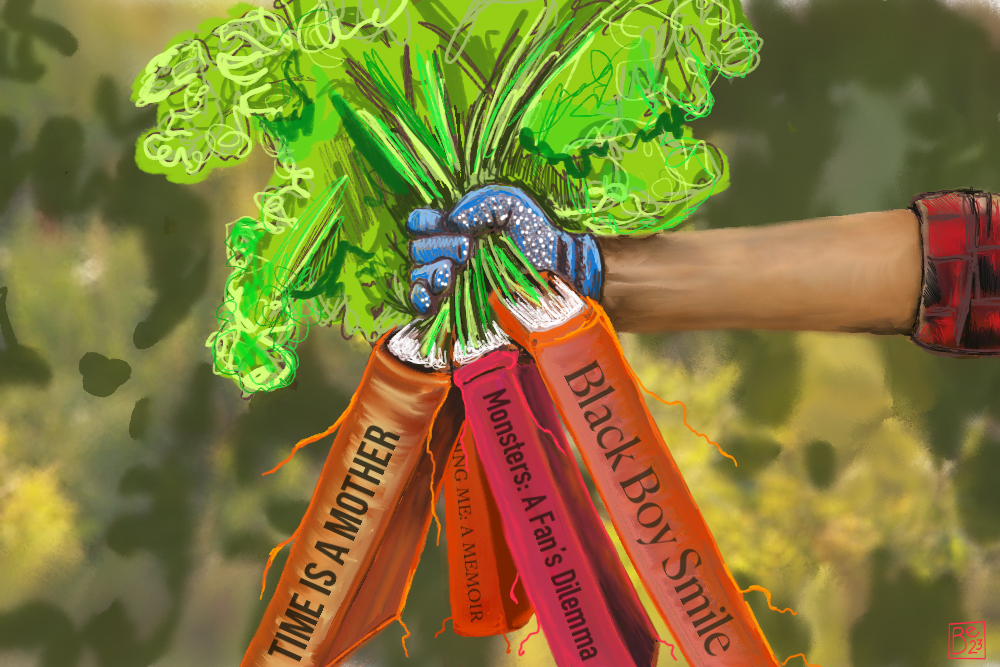
Illustration by Be Boggs.

JUNE 5, 2023 (ZocaloPublicSquare.org)

This summer, we could all use a little R&R—rest and reads, that is. And while Zócalo can’t help you with the first part (though if we could send a beach your way, we would), we’ve got you covered for the latter with a favorite tradition: our annual summer reading list.

We spent the spring surveying Zócalo’s friends and contributors to learn what new (mostly) nonfiction books fed their minds and souls in 2023. They delivered, sending us an eclectic mix of works sure to nourish you—from coming-of-age journeys to global searches for transcendence, from probings into our shared past to forward-looking examinations of our present.

Make these recommendations your summer companions, and they’ll keep you company whether you’re lucky enough to be lying on a sandy shore or just find yourself mentally there.

Shop Zócalo’s 2022 summer reading list through our independent bookstore partners:

HELENE D. GAYLE

Spelman College President

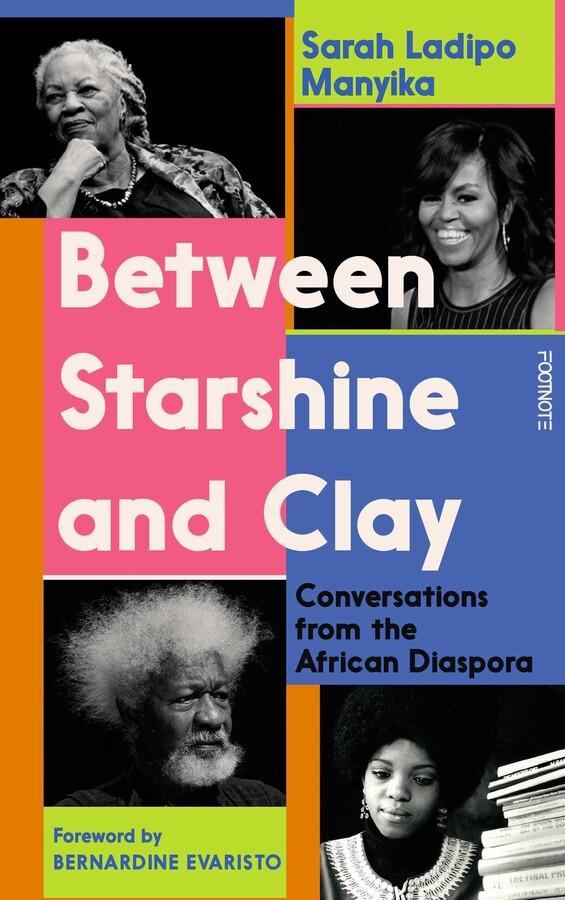
BETWEEN STARSHINE AND CLAY: CONVERSATIONS FROM THE AFRICAN DIASPORA

BY SARAH LADIPO MANYIKA

This book of conversations with prominent people in the African diaspora is a moving and insightful view into the similarities and differences among people of African descent. The author’s skillfully crafted interviews give a candid and unique window into the challenges and triumphs of people whose inner lives and thoughts have not always been available to the public. At a time when the world is still grappling with anti-Blackness, this is a much-needed human dialogue.

LISA SEE

Writer and Novelist

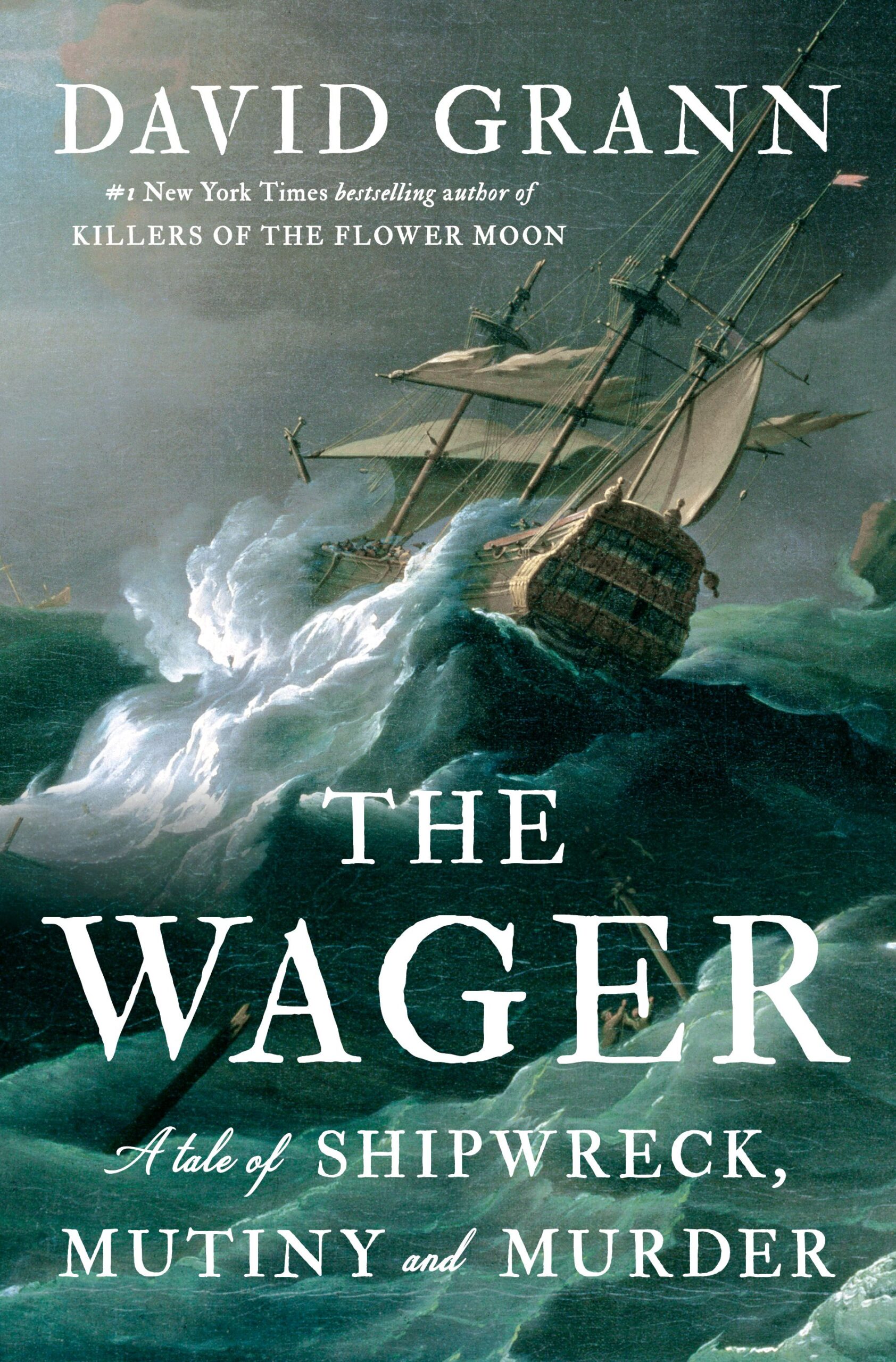
THE WAGER: A TALE OF SHIPWRECK, MUTINY AND MURDER

BY DAVID GRANN

The title says it all—shipwreck, mutiny, and murder. What’s not to like? There are so many great details and anecdotes in this book that I’ll be dining out on them for a long time.

KIMI YOSHINO

Baltimore Banner Editor-in-Chief

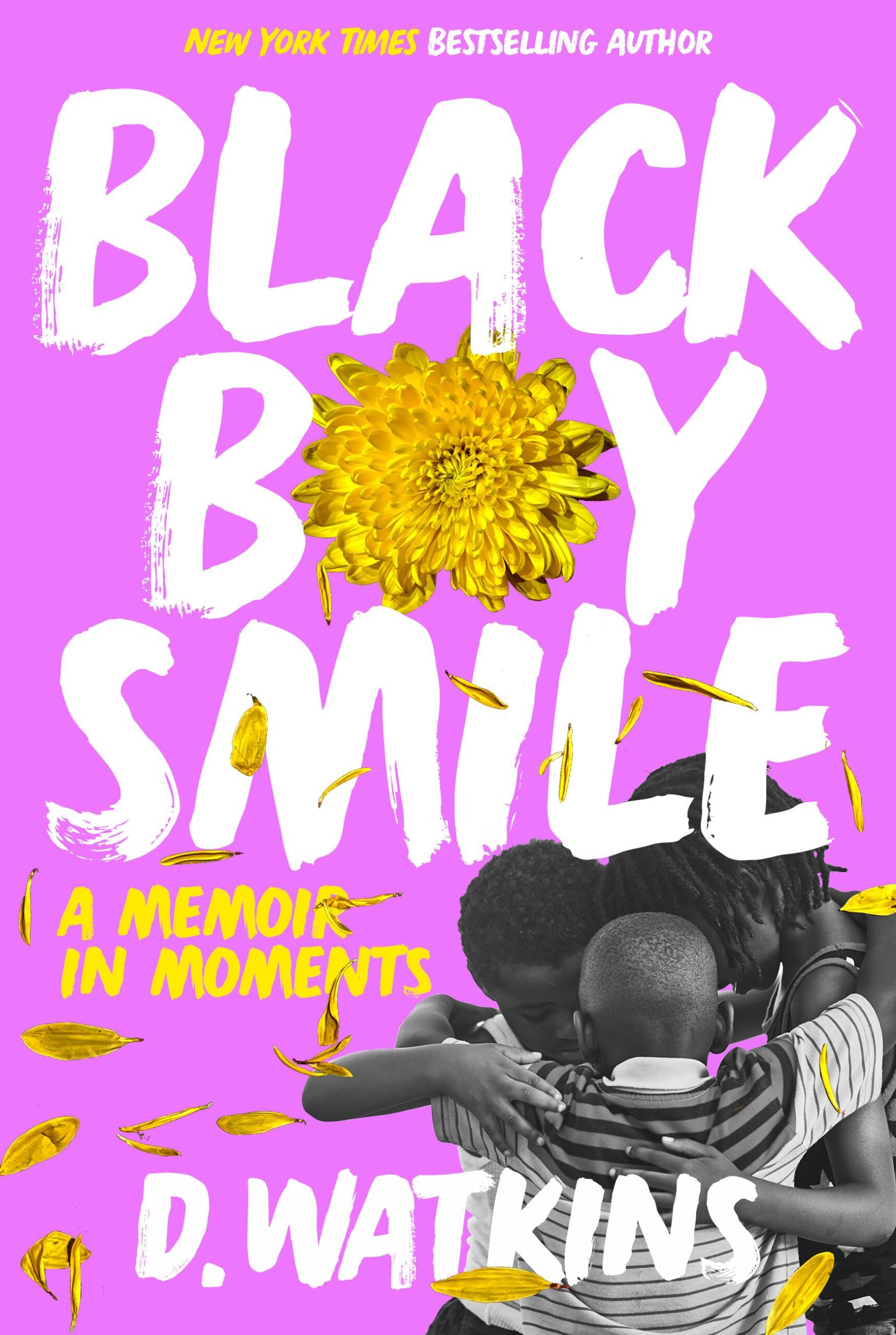
BLACK BOY SMILE: A MEMOIR IN MOMENTS

BY D. WATKINS

Books by D. Watkins were essential reading in my efforts to explore and understand Baltimore. His latest, the memoir Black Boy Smile, should be required reading for fathers, sons, and anyone on a journey of self-reflection and self-improvement. It’s raw and honest—an inspirational story of resilience that you won’t be able to put down.

JUDY BELK

The California Wellness Foundation President and CEO

FINDING ME: A MEMOIR

BY VIOLA DAVIS

It’s a story of how one of my favorite actresses overcame racism, sexism, and a childhood of poverty with resiliency and a hefty dosage of badassness. It touched me in all the ways a good book should by using storytelling to grab both my heart and mind.

But here’s a tip—don’t read it. Listen to it. What a treat it is listening to Viola tell her own story.

PAUL E. BUTLER

New America President and Chief Transformation Officer

TIME IS A MOTHER

BY OCEAN VUONG

This collection of poems is many things all at once: a eulogy, a joyous dance, and a soft pastel. Vuong’s ability to bend and reveal new meanings in words is unmatched. I can only read a few pages at a time before I’m exhausted with joy and the weight of a range of emotions.

TOM FRESTON

Firefly3 LLC Principal

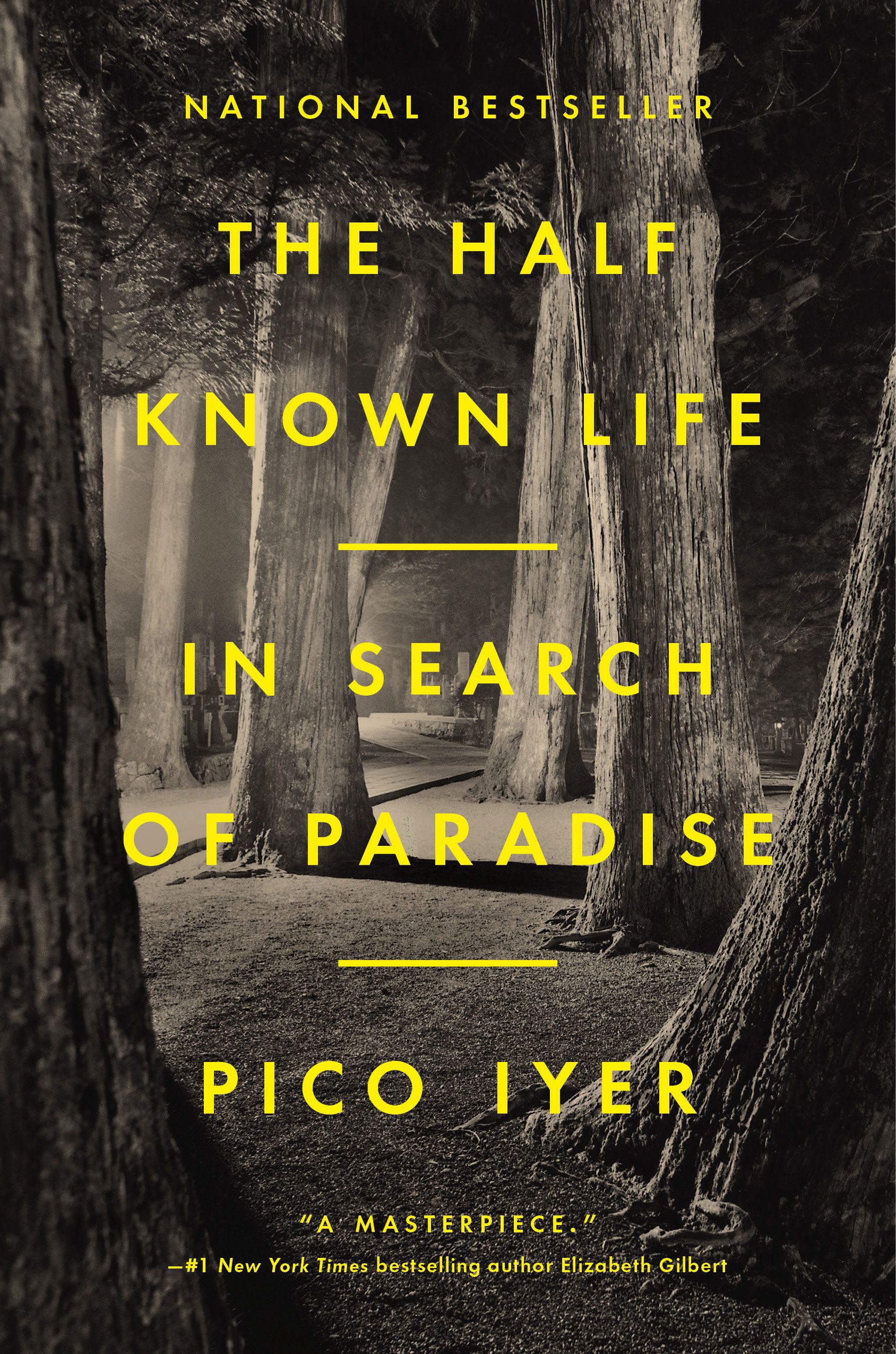
THE HALF KNOWN LIFE: IN SEARCH OF PARADISE

BY PICO IYER

The veteran travel writer, here as a secular seeker, journeys to troubled but fabled paradisiacal destinations—Varanasi, Kashmir, Qom, Jerusalem, Mount Baldy, and others—looking for spiritual transcendence. A global soul and a beautiful writer, Iyer asks where one can find transcendence in a world of suffering and difficulty.

JEANNE DARST

Writer and Performer

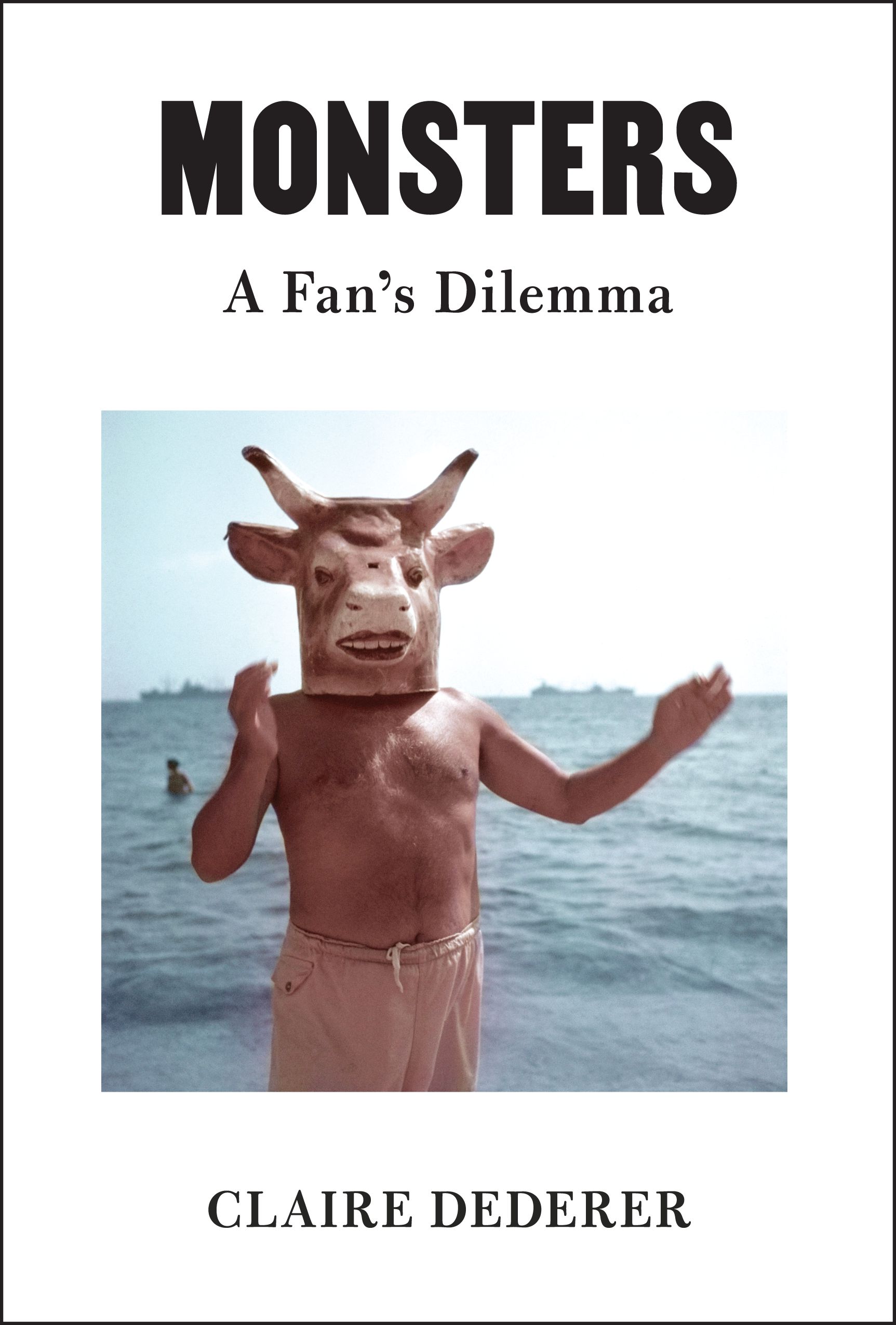
MONSTERS: A FAN’S DILEMMA

BY CLAIRE DEDERER

Born out of her 2017 Paris Review essay, “What Do We Do with the Art of Monstrous Men?,” Dederer is back with a remarkable book that asks this question as an audience member, as a fan, and even as the young woman who identified with these profoundly talented male artists. What is our role as readers, moviegoers, artists, and women at this moment in our culture, where biography is everything and everywhere? Dederer makes the digging, the questioning, the articulation of contradictions and complexities between artist and audience so engaging, so lively, it’s a conversation that you definitely want to get in on.

ETHAN ZUCKERMAN

UMass’s Initiative for Digital Public Infrastructure Director and 2014 Zócalo Book Prize Winner

CITY OF REFUGEES: THE STORY OF THREE NEWCOMERS WHO BREATHED LIFE INTO A DYING AMERICAN TOWN

BY SUSAN HARTMAN

I am in love with the city of Utica, New York. Like many Rust Belt cities, Utica lost population through deindustrialization and an exodus to the Sun Belt. But Utica has been utterly transformed by waves of refugees, from Vietnam, Bosnia, Myanmar, and now Somalia—the city is 25% refugee (compared to less than 1% of Americans nationwide). City of Refugees is the story of three families and their struggles and triumphs: three different versions of the American dream, and one complex but inspiring narrative of a city transformed by welcoming help from around the globe.

RUDY MONDRAGÓN

UC Chancellor’s Postdoctoral Fellow at UCLA’s Institute for Research on Labor and Employment

DAMAGE: THE UNTOLD STORY OF BRAIN TRAUMA IN BOXING

BY TRIS DIXON

Damage is the most accessible read that provides a history of the pain and punishment side of boxing. We know about the NFL and concussive head trauma, but in boxing, concussion is also a very, very serious problem.

NATALIA MOLINA

University of Southern California Distinguished Professor in the Department of American Studies and Ethnicity

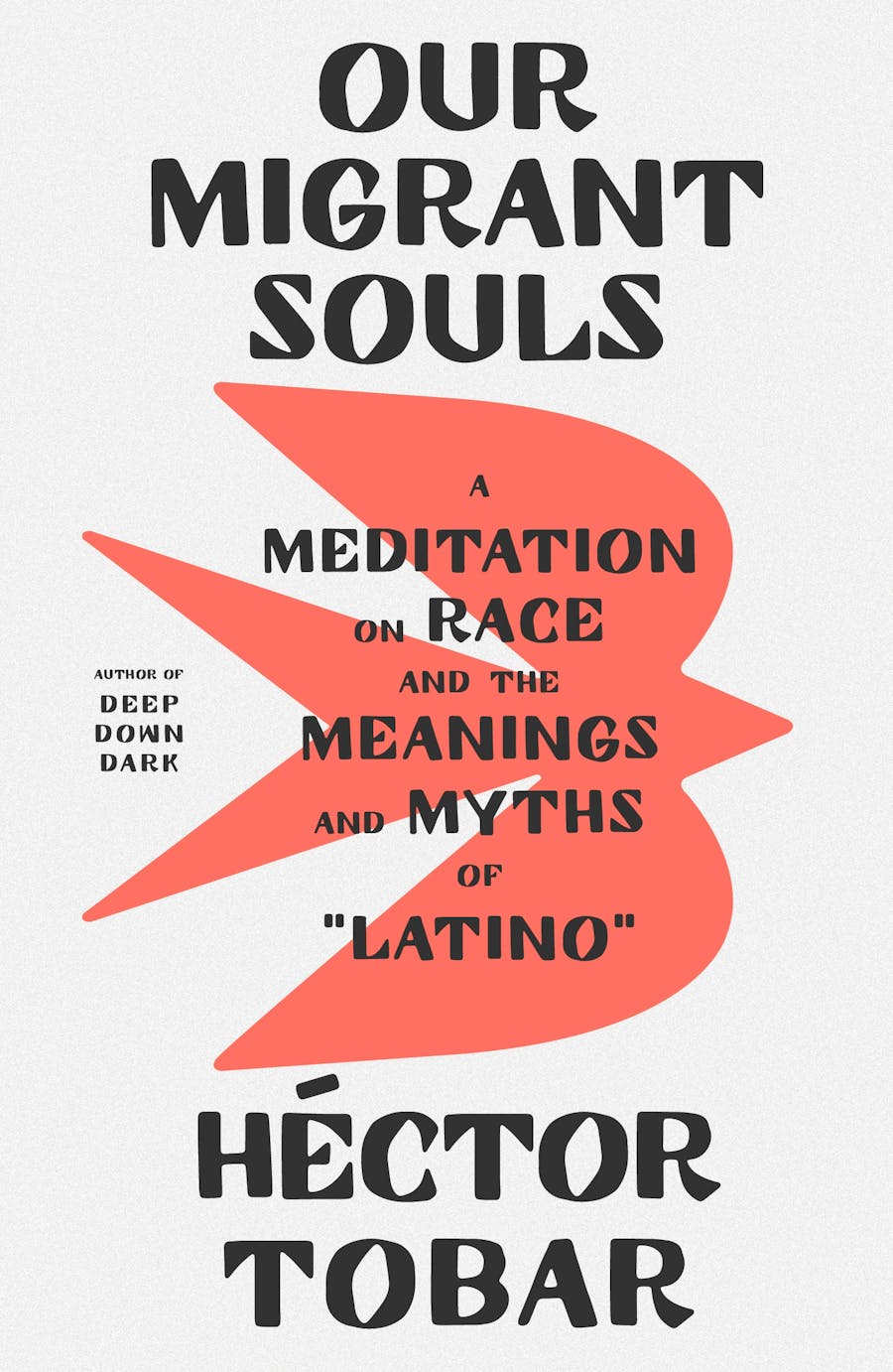
OUR MIGRANT SOULS: A MEDITATION ON RACE AND THE MEANINGS AND MYTHS OF “LATINO”

BY HÉCTOR TOBAR

Latinos exist in our collective imagination largely as caricatures: maids and gardeners; self-sacrificing parents; a brown mob surging across the border; perpetual immigrants. It takes a writer of significant talent to tell a narrative so bright and beautiful that it breaks through these flattened depictions. Tobar’s cuentos get at the vibrant diversity, the joy, the pain, the richness, and the sorrow of being Latino in the U.S., as well as the limits of belonging.

LEE HERRICK

California Poet Laureate

ASIAN AMERICAN HISTORIES OF THE UNITED STATES

BY CATHERINE CENIZA CHOY

This book will change the way you see. It delves into anti-Asian hate, resistance movements, and erasure with urgency and insight. Asian American Histories of the United States is an expansive and revelatory book that I wish every American would read.

ALEX KOLESNIK

Semi-Professional Bridge Player and Ventura College Professor of Mathematics

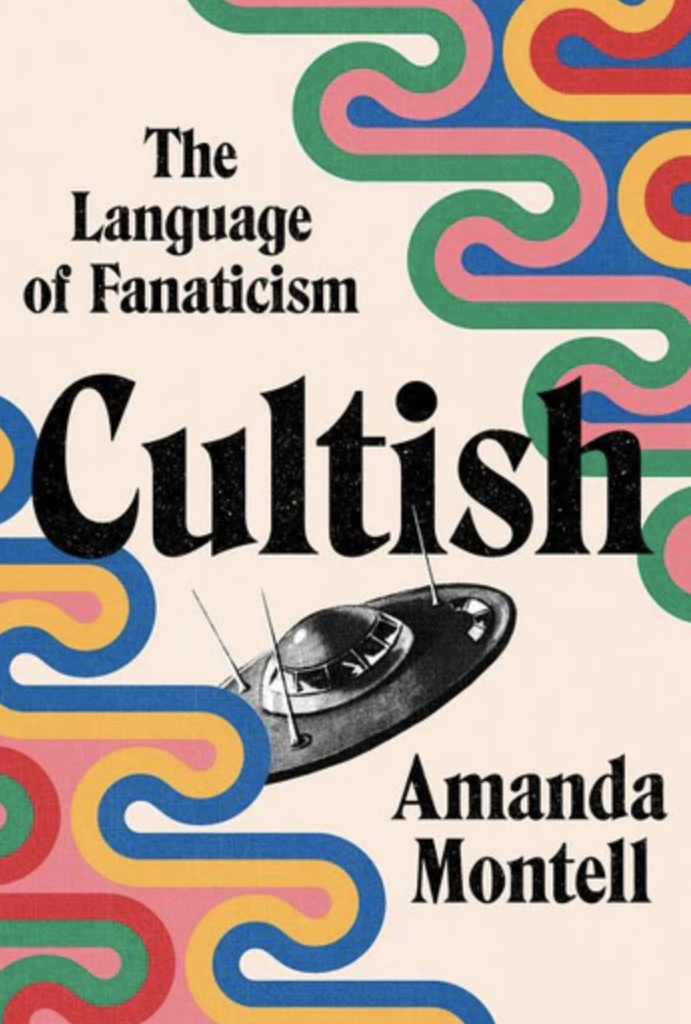
CULTISH: THE LANGUAGE OF FANATICISM

BY AMANDA MONTELL

A book that tries to make some sense of why people believe some crazy things. Montell focuses on the language element of all sorts of cultish behavior, from people’s love of CrossFit and Lululemon to creepy sex cults. This book gives me some hope that critical thinking might enter the conversation by a side door!

BRYAN BOWLES

Atom Tickets CEO and Zócalo Trustee

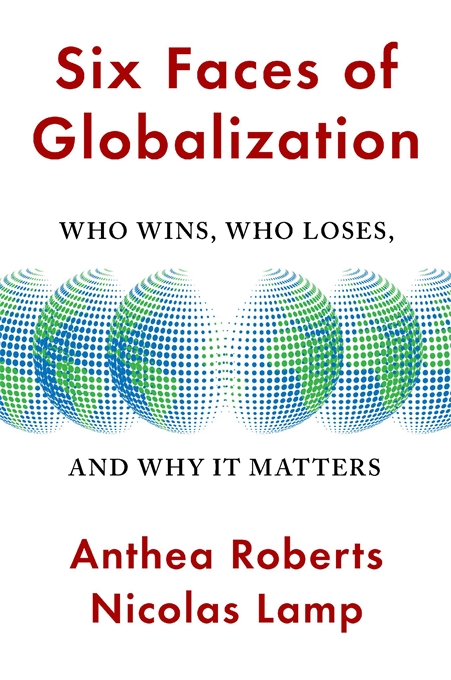
SIX FACES OF GLOBALIZATION: WHO WINS, WHO LOSES, AND WHY IT MATTERS

BY ANTHEA ROBERTS AND NICOLAS LAMP

Roberts and Lamp do a great job of summarizing different narratives associated with globalization without taking a position on the legitimacy of any particular approach. In our hyper-polarized world, it is refreshing to read something balanced, and also pertinent to our current reset with China.

JAMES BLASINGAME

Arizona State University Professor of English and English Education

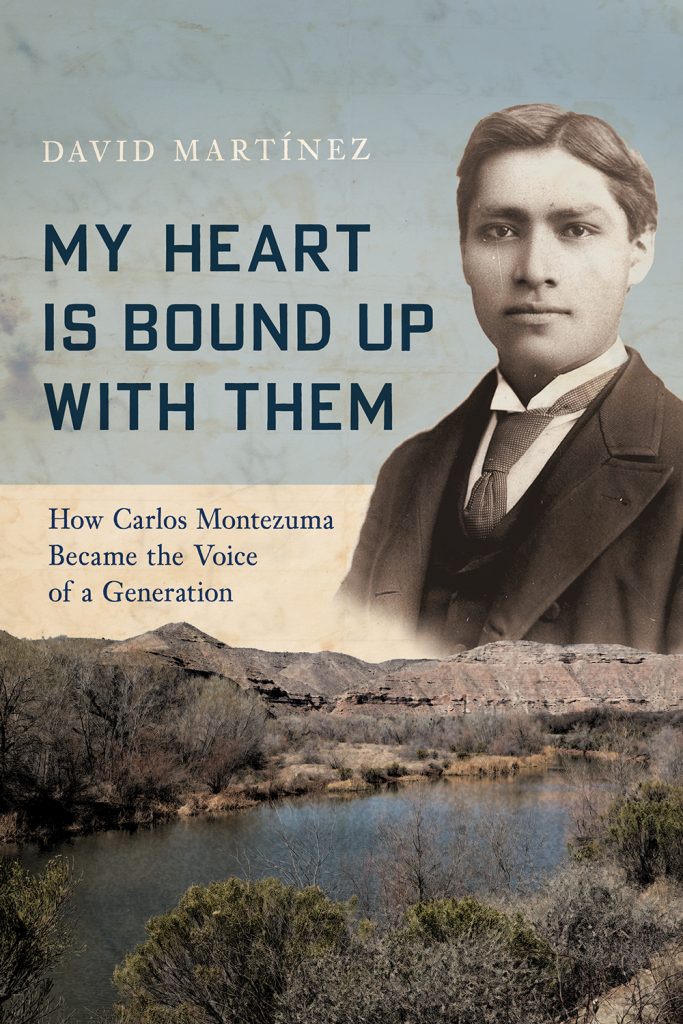
MY HEART IS BOUND UP WITH THEM: HOW CARLOS MONTEZUMA BECAME THE VOICE OF A GENERATION

BY DAVID MARTÍNEZ

Arizona State University professor David Martínez (Akimel O’odham) uses letters from the university’s Carlos Montezuma Special Collection to reconstruct the story of Wassaja, a Yavapai boy who was abducted by Pima Scouts and sold in 1871, at the age of 5. Renamed Carlos Montezuma and taken away from Arizona, Montezuma became the first Native American student at the University of Illinois Urbana-Champaign and the second Native American to earn a medical degree at Chicago Medical College. Witnessing great injustice while working as a reservation physician, Dr. Montezuma became an advocate for the rights of sovereign native nations and a critic of the U.S. Bureau of Indian Affairs and the damage the reservation system did to the lives and cultural heritage of the Indigenous of the continent. Professor Martínez brings the full force of his academic training, critical thinking, and Native ways of knowing to the project, crafting a biography that is as fascinating as it is historically accurate.

How to design a school for the future

438,038 views | Punya Mishra • TED-Ed Educator Talks

In all the conversations about improving education for children, the voices of students, teachers and community members are often left out. Educational designer Punya Mishra offers a method to shift that paradigm, taking us through new thinking on the root of success (and failure) at school — and how a totally new, different kind of educational system could better meet students’ needs.

About the speaker

Punya Mishra

Educational designerSee speaker profile

Punya Mishra leads a range of initiatives that provide a future-forward, equity-driven approach to designing educational systems.

Tarot Card for June 6: The Five of Wands

The Five of Wands

The Lord of Strife usually appears in a reading to indicate quarrels, conflict and discord. There is rarely anything of value to be gained from the disharmony introduced by this card – in fact, it will often indicate bitterness and argument for argument’s sake.

To try to determine how serious the strife will be, look for cards like Nine of SwordsTen of Swords or the Tower to indicate a really bad situation. With cards such as the Eight of Wands or the Six of Wands it’s probable that the friction may clear an outstanding problem area.

This card will often come up when some-one is very unhappy with a working situation – there is, perhaps, a clash of personality with somebody else; or perhaps the individual is unhappy with working practises. Often in this situation there’s a tendency toward rashness and loss of control which can lead to further problems.

Another time that the Lord of Strife will make an appearance is when we are in inner conflict – most often about something we consider to be immoral. This is probably the most significant type of problem that can be highlighted with this card. For instance, if we have taken an easy option, or a dishonest turn, and are now troubled by the voice of our conscience, we could expect to see the Lord of Strife appearing.

In this case we need to set right whatever we believe we have done wrong – or failed to do altogether. We will not be at peace until we do. The Five of Wands is a card that reminds us quite firmly about the ethical considerations that underpin the Suit of Wands.

The Five of Wands

(via angelpaths.com and Alan Blackman)

Wholeness and the Implicate Order: Physicist David Bohm on Bridging Consciousness and Reality

By Maria Popova (themarginalian.org)

Life is an ongoing dance between the subjective reality of what it feels like to be alive, to tremble with grief, to be glad — what it feels like to be you — and the objective reality of a universe insentient to your hopes and fears, those rudiments of the imagination, the imagination at the heart of consciousness. We are yet to figure out how these two dimensions of being can be integrated into a totality. We are yet to figure out how the known physical laws can cohere with each other — relativity, the physics of the very large, is still at odds with quantum field theory, the physics of the very small — and yet to figure out how those physical laws give rise to the wonder of consciousness.

The urgency of this integration is what the physicist David Bohm (December 20, 1917–October 27, 1992) explores in Wholeness and the Implicate Order (public library).

“Planetary System, Eclipse of the Sun, the Moon, the Zodiacal Light, Meteoric Shower” by Levi Walter Yaggy, 1887. (Available as a print and as stationery cards.)

Bohm — who devoted his life to “understanding the nature of reality in general and of consciousness in particular as a coherent whole, which is never static or complete but which is an unending process of movement and unfoldment” — writes:

To meet the challenge before us our notions of cosmology and of the general nature of reality must have room in them to permit a consistent account of consciousness. Vice versa, our notions of consciousness must have room in them to understand what it means for its content to be “reality as a whole.” The two sets of notions together should then be such as to allow for an understanding of how reality and consciousness are related.

Acknowledging that these immense questions might “never be resolved ultimately and completely” — that they might belong to what Hannah Arendt insisted were the unanswerable questions that make us human — he adds:

Man’s* general way of thinking of the totality, i.e. his general world view, is crucial for overall order of the human mind itself. If he thinks of the totality as constituted of independent fragments, then that is how his mind will tend to operate, but if he can include everything coherently and harmoniously in an overall whole that is undivided, unbroken, and without a border (for every border is a division or break) then his mind will tend to move in a similar way, and from this will flow an orderly action within the whole.

[…]

The way could be opened for a world view in which consciousness and reality would not be fragmented from each other.

A generation after the Swiss philosopher Jean Gebser contoured a view of this unfragmented reality in his notion of “the ever-present origin,” Bohm considers what arriving at such a holistic view would take:

Our general world view is itself an overall movement of thought, which has to be viable in the sense that the totality of activities that flow out of it are generally in harmony, both in themselves and with regard to the whole of existence. Such harmony is seen to be possible only if the world view itself takes part in an unending process of development, evolution, and unfoldment, which fits as part of the universal process that is the ground of all existence.

Art by Thomas Wright from An Original Theory or New Hypothesis of the Universe, 1750. (Available as a print and as stationery cards.)

Such a way of viewing reality, Bohm argues against the grain of our reductionist culture, requires fully inhabiting all aspects of the mind, including those that elude the clutch of quantification:

The proper order of operation of the mind requires an overall grasp of what is generally known not only in formal, logical, mathematical terms, but also intuitively, in images, feelings, poetic usage of language, etc… It is needed for the human mind to function in a generally harmonious way, which could in turn help to make possible an orderly and stable society… This requires a continual flow and development of our general notions of reality.

[…]

A new kind of theory is needed which drops these basic commitments and at most recovers some essential features of the older theories as abstract forms derived from a deeper reality in which what prevails is unbroken wholeness.

In the remainder of Wholeness and the Implicate Order, Bohm goes on explore how the relationship between thought and reality illuminates the way this unbroken wholeness is enfolded within each region of space and time. Complement it with Iain McGilchrist on how we render reality and John Muir on the transcendent interconnectedness of the universe, then revisit Bohm on creativitythe paradox of communication, and how we shape reality.

The Paradox of Free Will

By Maria Popova (themarginalian.org)

“Nothing is more unbearable, once one has it, than freedom,” James Baldwin observed in recognizing how limited our freedom is and how illusory our choices, for he knew that “people can’t, unhappily, invent their mooring posts, their lovers and their friends, anymore than they can invent their parents.”

And yet we move through the world with an air of agency, without which life would feel unlivable — a gauntlet of causality stretching all the way back to the Big Bang, into which we are hurled as helpless pawns in some cosmic game that has already played out. It is a disquieting notion — one we have countered with our dream of free will, continually mistaking the feeling of freedom for the fact of freedom

But even within the presets and parameters conferred upon us by the cosmic and cultural forces that made us, there exists a margin of movement in which notions like control, agency, and moral responsibility live. In that margin, we become fully human.

In this fascinating BBC documentary, journalist Melissa Hogenboom and a constellation of neuroscientists, physicists, and philosophers explore the science and subtleties of the free will question — a question that remains not only unanswered but a testament to Hannah Arendt’s astute observation that “to lose the appetite for meaning we call thinking and cease to ask unanswerable questions [would be to lose] the capacity to ask all the answerable questions upon which every civilization is founded.”

Complement with Einstein on free will and the power of the imagination, C.S. Lewis on suffering and what it means to have free will in a universe of fixed laws, and neuroscientist Christof Koch on the paradox of freedom.

HT Aeon

Enchantment and the Courage of Joy: René Magritte on the Antidote to the Banality of Pessimism

By Maria Popova (themarginalian.prg)

In a world pocked by cynicism and pummeled by devastating news, to find joy for oneself and spark it in others, to find hope for oneself and spark it in others, is nothing less than a countercultural act of courage and resistance. This is not a matter of denying reality — it is a matter of discovering a parallel reality where joy and hope are equally valid ways of being. To live there is to live enchanted with the underlying wonder of reality, beneath the frightful stories we tell ourselves and are told about it.

Having lost his mother to suicide, having lived through two World Wars, the Belgian surrealist artist René Magritte (November 21, 1898–August 15, 1967) devoted his life and his art to creating such a parallel world of enchantment.

The Lovers II by René Magritte, 1928

In a 1947 interview included in his Selected Writings (public library) — the first release of Magritte’s manifestos, interviews, and other prose in English, thanks to the heroic efforts of scholar Kathleen Rooney — he reflects:

Experience of conflict and a load of suffering has taught me that what matters above all is to celebrate joy for the eyes and the mind. It is much easier to terrorize than to charm… I live in a very unpleasant world because of its routine ugliness. That’s why my painting is a battle, or rather a counter-offensive.

Magritte revisits the subject in his manifesto Surrealism in the Sunshine, indicting the cultural tyranny of pessimism and fear-mongering — a worldview we have been sold under the toxic premise that if we focus on the worst of reality, we are seeing it more clearly and would be prepared to protect ourselves from its devastations. A quarter century before the great humanistic philosopher and psychologist Erich Fromm insisted that “pessimism [is] an alienated form of despair,” Magritte writes:

We think that if life is seen in a tragic light it is seen more clearly, and that we are then in touch with the mystery of existence. We even believe that we can reach objectivity thanks to this revelation. The greater the terror, the greater the objectivity.

This notion is the result of philosophies (materialist or idealist), that claim that the real world is knowable, that matter is of the same essence as mind, since the perfect mind would no longer be distinct from the matter it explains and would thus deny it. The man on the street is unknowingly in harmony with this idea: he thinks there is a mystery, he thinks he must live and suffer and that the very meaning of life is that it is a dream-nightmare.

In his art and the worldview from which it springs, Magritte presents an antidote to this warped thinking — a backdoor out of our elective suffering. An epoch before we began to understand the neurophysiology of enchantment, he echoes his contemporary Egon Schiele’s exhortation to “envy those who see beauty in everything in the world,” and writes:

Our mental universe (which contains all we know, feel or are afraid of in the real world we live in) may be enchanting, happy, tragic, comic, etc.

We are capable of transforming it and giving it a charm which makes life more valuable. More valuable since life becomes more joyful, thanks to the extraordinary effort needed to create this charm.

Life is wasted when we make it more terrifying, precisely because it is so easy to do so. It is an easy task, because people who are intellectually lazy are convinced that this miserable terror is “the truth”, that this terror is knowledge of the “extra-mental” world. This is an easy way out, resulting in a banal explanation of the world as terrifying.

Creating enchantment is an effective means of counteracting this depressing, banal habit.

[…]

We must go in search of enchantment.

Complement with Viktor Frankl on saying “yes” to life in spite of everything and Walt Whitman on optimism as a force of resistance, then revisit Rebecca Solnit on hope in dark times.

On the nature of elegance

Elegance is a fundamental concept that is deeply embedded in our lives and work. Is there a universal definition of elegance?

Lee Fischman

May 4, 2023 (uxdesign.cc)

A mix of practicality, subjectivity, and formality

In software, as in other domains, the word elegant is imbued with power. I’ve marveled at how elegance manifests in many forms and have always sought elegance in my work. But to appreciate elegance, one has to keep an open mind about whether it’s always worth attaining.

Are elegant solutions more understandable and maintainable? Are elegant words clearer and more powerful? Are elegant designs easier to use? Is elegant software architecture easier to implement? In fact, there is a difference between practicality, simplicity, usability, and elegance, and the desirability of each attribute does vary.

First, what is elegance?

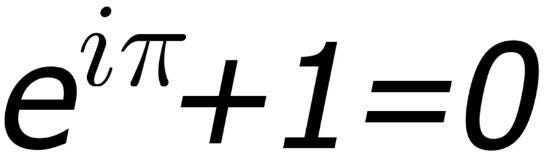
Let’s go looking for it. There is particularly pure elegance in math. Euler’s identity is a poster child, conveying so much, yet in such a compact form:

Euler equation
Euler equation

Poetry also is an exercise in textual elegance, as in this stanza from e.e. cumming’s anyone lived in a pretty how town:

e.e. cumming’s “anyone lived in a pretty how town”
“anyone lived in a pretty how town”

Code mixes the textual and logical, and so elegance in text or logic carries through to elegance in code. The following images show two programs in Haskell. Both do the same thing: printing the words to the “99 Bottles of Beer On the Wall” song. But which is more elegant? This one:

’99 Bottles’ in Haskell, version 1

or this one?

’99 Bottles’ in Haskell, version 2

At this point, one definition for elegance could be the least possible solution. I prefer reduction by iteration in recognition that the act of achieving elegance is indistinguishable from the result. Another definition I’ve thought up is the lowest entropy solution at a given level of information, connecting elegance with information theory. In graphical terms, the most elegant outcomes in a given solution space would lie at the low points of a featured plane upon which the information level is constant.

Three dimensional information space

The lowest entropy solution at a given level of information.

Elegance in Complex Systems

One might mistake elegance for simplicity, but elegance is really about order. Remember that elegance is about how information is ordered and so, with increasing amounts of information, something elegant isn’t necessarily ‘simple’. That is why I chose a Mandelbrot set as the header image. This fractal image has immense and complex information content but is ordered at every level with a repeating pattern, and is thus incredibly elegant.

Order, disorder, and complexity are within the realm of chaos theory, which asserts that whereas chaotic complex systems have underlying ordered patterns, disordered systems have none. To the uninitiated, the word “chaos” takes some getting used to but basically, the next state in a chaotic system is a function of the state just before. In a truly disordered system there’s no predicting what the last state was.

Hidden order within even incredibly complex systems creates a fine-grained elegance. For example, the natural world carries almost limitless amounts of chaotically ordered information, and that is why our minds never tire of the elegance of nature.

Image of a forest floor with subtitle ‘Nature never gets old’
Nature never gets old

We perceive man-made works as elegant to the extent they are ordered, given the information they need to carry. This idea goes back to a paper I read way back in 1999, The Visual Complexity of Pollock’s Dripped Fractals.

Jackson Pollock — Autumn Rhythm (Number 30)
Jackson Pollock — Autumn Rhythm (Number 30)

Pollack’s drip painting may be timeless because it approaches the chaotic content of nature. There also are some material human practices that incorporate nature to such an extent, they may never go out of style. The Japanese tea ceremony is beguilingly elegant because it perhaps intentionally incorporates naturally chaotic elements throughout: the froth of the tea, the grains of matcha, the lightly finished woods and bamboo, and the irregular shape of the stirrer.

Tea ceremony implements

Styles are bound into aesthetics, a significant point that we’ll return to below.

Elegance in Popular Culture and Expression

Above I showed how coding elegance derives from mathematical and textual elegance, and how complex systems like the Mandelbrot set are a bridge between mathematical and aesthetic elegance. What about the popular conception of elegance, for example, as embodied by Kate Middleton, Duchess of Cambridge? She is elegant in the popular sense of the word, but does she fit our definitions? If the Duchess dressed attractively but messily, she would not be elegant. Instead, she is regularly attractive and put together. Given the carefully ordered information she conveys, she is elegant.

Image of Princess Kate, with title “Ah, Kate, what a hat!”
Ah, Kate, what a hat!

Elegance in dress

Elegance extends into so many human activities beyond fashion. For example, Fred Astaire embodied elegance in his dancing. Astaire’s dancing fits very nicely into the idea of a complex, ordered system. We never know what he’s about to do, but we know how he got there, and he was graceful; that is, he had a reductive method that kept the mere essence of the wonderful information he wanted to convey.

Stop motion pictured of Fred Astaire, with title “Elegance in motion”
Elegance in motion

Going a step further, some physical arts innately incorporate elegance. One of Judo’s two founding principles is seiryoku zen’yō which translates to “maximum effect, minimum effort”. See how the pendulum of Harai goshi efficiently relies on gravity instead of strength.

Image of judo, with title “Elegance in effort”
Elegance in effort

As with Judo, the human attraction to elegance is so strong that in some arts, their works are judged by its achievement.

Image of flower arrangement, with title “Elegance in arrangement”
Elegance in arrangement

In fact, my intellectual experience when arranging flowers feels remarkably similar to what I experience designing user interfaces. Why is that? Recall my definition of elegance as “the lowest entropy solution at a given level of information”. Consider the flower arrangement problem as a 3-dimensional network or ‘edge’:

Image of network, with title “Elegance in arrangement — abstracted”
Elegance in arrangement — abstracted

Each dot represents a blossom or generally, information. Their optimal arrangement is lowest entropy according to some underlying formula that might include the length of each edge, the number of edges that don’t or do cross, the variation in length of edges, maybe the area contained between edges, and so on. Would there generally be more than one optimal solution to the formula, thus allowing for various artistic interpretations, none of which are necessarily better? Or might there be a single optimality, which would amount to a discovery that for any given bunch of flowers, there is only one ‘best’ arrangement? In pondering this, remember, as in the graph above, that the solution surface could lie in a plane with multiple minima — in this case, representing more than one best artistic solution.

Once we’ve figured out this formula, maybe we can apply ‘variants’ of it to designing other stuff, like user interfaces! There is a precedent of sorts for this, albeit in another domain. Pyotr Ufimtsev’s book “Method of Edge Waves In The Physical Theory of Diffraction” provided a formula for radar cross section, turning the art of stealth into a formal engineering practice. Perhaps a similar formula exists for calculating entropy in user interfaces, and thus providing the means to optimize their design.

The Limits of Elegance

There are practical considerations that limit the use of elegance. For example, an elegant solution in software may so economize on the information carried in its solution as to make it unmaintainable by others. Here’s another example of a seemingly inelegant design, done on purpose by people who know what they’re doing:

MSN Screen Grab
MSN Screen Grab

Major media portals like MSN and others prioritize usability over elegance. This isn’t always true; I sometimes think that Google’s designers are so infatuated with elegance that they lapse into information reduction just to be “more” elegant, because they sometimes tend to have less discoverable interfaces. For example, Google Docs often makes it impossible to find stuff I already know exists.

The pursuit of elegance thus sometimes confoundingly works against design goals. I once designed an interface around context, with the interface adapting to the state of the system, a variation on “graduated engagement”. Its elegant design kept the user ever close to their needs, and I was pleased with myself — maybe wrongly. In this case, information seemed to have been removed at no cost, but the interface violated expected patterns and may have decreased navigability. Be careful not to make elegance into a fetish.

Degrees of Freedom in Elegant Design

The definition for elegance that I’ve been using has been, “the most ordered solution at a given level of information”. Now let’s consider when information can be varied, which widens the latitude for an elegant design: provide just enough information so that inferences can be made efficiently and to the necessary extent. In other words, first take care of usability; this and aesthetic considerations are the major considerations in Stuart Feldman’s 2014 dissertation, A methodology for measuring elegance in engineered artifacts. Feldman actually uses measures of order to gauge aesthetics.

This dance between usability (level of information) and aesthetics (order) is wonderfully explored in Tufte’s The Visual Display of Quantitative Information. Among Tufte’s fine examples are Charles Minard’s 1869 chart showing the number of men in Napoleon’s 1812 Russian campaign army, their movements, as well as the temperature they encountered on the return path.

Napoleon’s 1812 Russia campaign by Charles Minard (1869)

A veritable battle between aesthetics and usability occurred in the evolution of the New York City Subway map. Here’s the map I first rode the NYC subways with, created by Goldstein, Vignelli, et. al. This map was simple to a fault. Note the word “fault”.

NYC subway map by Goldstein, Vignelli, et. al. (1972)
NYC subway map by Goldstein, Vignelli, et. al. (1972)

The NYC Subway map of the 70s clearly showed lines and connections but failed to convey the relative scale of the system and so inhibited riders’ trip planning and their awareness of where they actually were in the system. The late 70s update to the map introduced relative geographic accuracy.

NYC subway map by John Tauranac and Michael Hertz Associations (1978)

The map with geographic information has evolved ever since, with increasing deference to actual geographic scale. Remember that this alternate definition of elegance involves both usability and aesthetics. I’d hazard that the Vignelli map was more elegant, but the map’s usability has since gone way up. Then again, tastes have changed since the 70s. Maybe the newer maps are just as aesthetically pleasing to their current audience — do you recall my mention of changing styles above? So long as we synthesize designs and objects, their elegance may vary over time, as our aesthetics continue to evolve.

The Fundamental Practicality of Elegance

In many pursuits, achieving elegance indicates not just understanding of a problem, but its mastery. The more elegant a physics theory, the more it explains of a phenomenon, which indicates that the theory is approaching the underlying model behind the phenomenon; quantum mechanics is regarded as the best so far. Programmers pursue elegance for the same reason. While an approximation to a problem will have to continually be revised to account for wherever it doesn’t fit, an elegant solution accounts for all scenarios because it is fully aligned with the problem. If truly elegant, it will never need updating, will not fail due to unforeseen features of the underlying model, and without needing to handle exceptions, it will be easier to understand. I once coded a complex system over several months. On the very last night, I finally achieved an elegant understanding of the model. I came back, threw out months of work, and recoded the entire system in one day.

Closing On a Comparative Note

This definition of elegance is from NASA’s Engineering Elegant Systems: The Practice of Systems Design. Its use of “richness” is to me synonymous with information content.

The idea that the proper goal of systems engineering is to produce an elegant design was first introduced in a speech by Robert Frosch. He noted that he often got no response when he asked systems analysts, “Is it an elegant solution to a real problem?” They did not understand the question. Elegance is something you know when you see it, but is not something easily defined, particularly in the sense of a system. Webster defines elegance as a “dignified richness and grace.” This articulates an attitude of intent and a social response to the system. This definition identifies key system attributes. ‘Dignified grace’ conveys a notable ease of use or operation in a variety of applications. ‘Dignified richness’ conveys a notable robustness in application, a full achievement of the system intent, and a satisfaction of intent not fully specified. A term that provides further help with this definition is concinnity. Webster defines concinnity as ‘a skillful arrangement of parts, harmony, and elegance’. This conveys the idea of a well-organized system with skillfully defined system interrelationships. System aesthetics are accounted for in the idea of richness, grace, and harmony. An efficiency in the system layout and construction is also seen in the ‘skillful arrangement of parts, harmony’ of the system. A well-structured system is an efficient system. Perhaps one can state a definition of system elegance as ‘a system that is robust in application, fully meeting specified and adumbrated intent, is well structured, and is graceful in operation.’

Resources

One notable academic work on elegance and its practical aspects is Elegance as Complexity Reduction in Systems Design. Similar thoughts came to me independently, which is yet another illustration of how common theories often emerge.