
New Thinking Allo Jun 9, 2023 This video is a special release from the original Thinking Allowed series that ran on public television from 1986 until 2002. It was recorded in about 1989. Gayle Delaney, PhD, is the founding president of the Association for the Study of Dreams. She is author of Living Your Dreams and Breakthrough Dreaming. She presents her unique method of dream interviewing, and distinguishes her approach from the classical methods of Sigmund Freud and Carl Jung. She emphasizes the importance of not imposing one’s own interpretations upon the dreamer. Now you can watch all of the programs from the original Thinking Allowed Video Collection, hosted by Jeffrey Mishlove. Subscribe to the new Streaming Channel (https://thinkingallowed.vhx.tv/) and watch more than 350 programs now, with more, previously unreleased titles added weekly. New!! Free month of the classic Thinking Allowed streaming channel for New Thinking Allowed subscribers only. Use code THINKFREELY.
All posts by Mike Zonta
Book: “Dream Guidance: Connecting to the Soul Through Dream Incubation”
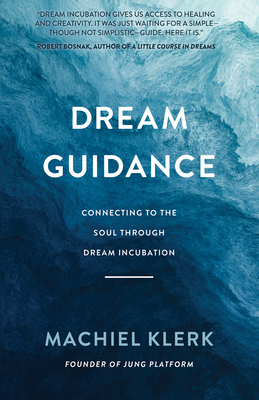
Dream Guidance: Connecting to the Soul Through Dream Incubation
Machiel Klerk
Harness the power of your unconscious through dream an age-old technique to access hidden wisdom and receive instruction through your dreams.
Everyone dreams-both literally and metaphorically-but most people don’t know that their dreams can be used for personal development. Therapist, dream expert, and founder of the Jung Society of Utah and the Jung Platform Machiel Klerk shares how, through dream incubation, you can manifest the life of your dreams just by cultivating an intimate relationship with your own dreams and taking the guidance you receive from your subconscious. If you ask the right question and keep an open mind, your dream will give you an answer. Klerk offers an easy, actionable five-step process to help you have an incubation dream, a dream that reveals the answer to your question.
(Goodreads.com)
1. Identify the problem and decide that you’d like to ask your dream for help.
2. Develop a question that relates directly to the issue for which you are seeking answers.
3. Engage in a ritual aimed to enhance the dream response, like meditation.
4. Sleep, and upon waking, immediately record your dream or dreams.
5. Reflect on the dream and determine the “lesson” it offered.
Life is like a Tibetan mandala
Mantai Chow Apr 15, 2016 (One man band by Mantai Chow) Tibetan monks spent almost a week creating this intricate colored sand painting at Brookfield Place in New York before dismantling it at a ceremony.
Every phenomenon (including you and me) are like Tibetan mandalas. They are beautiful (or ugly), but impermanent.
Even history is a phenomenon: world history, your history, my history.
What is permanent is the being underneath and behind every phenomenon (including you and me).
–Mike Zonta, BB editor
THE JOURNALIST WHO PHOTOGRAPHED THE BURNING MONK
The Man Behind an Iconic Vietnam War Image Captured ‘the Ugliest Events of Our Time’
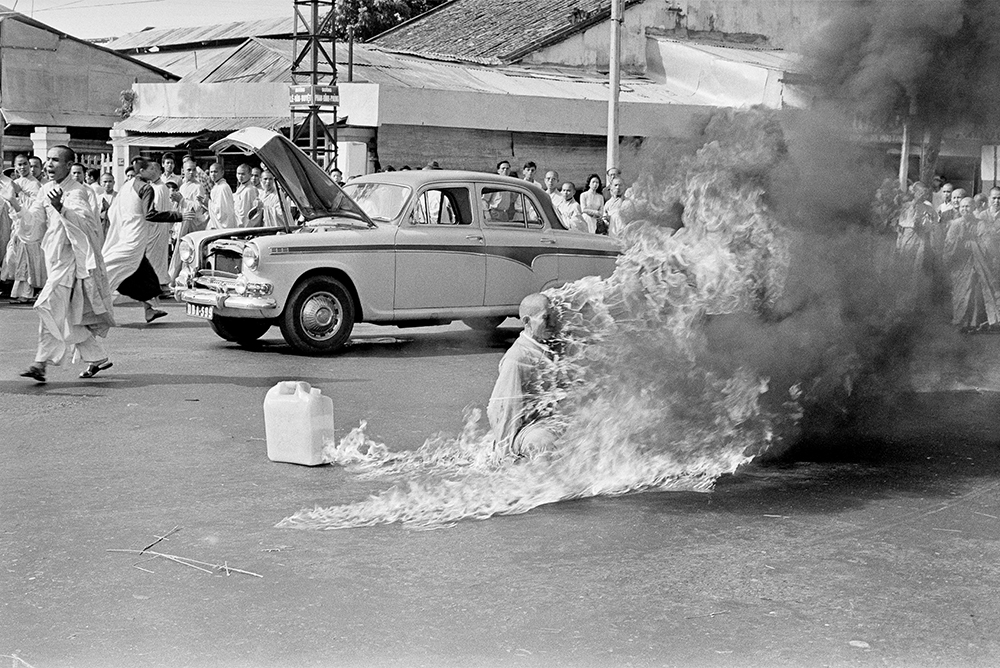
Buddhist monk Thich Quang Duc’s self-immolation during the Vietnam War, captured by journalist Malcom Browne, left an imprint on the public conscience. Author Ray Boomhower explores the story behind the iconic photo and its lasting effects. Courtesy of AP Newsroom.
by RAY E. BOOMHOWER | JUNE 8, 2023 (ZocaloPublicSquare.org)
While President John F. Kennedy was talking by phone with his brother, U.S. Attorney General Robert F. Kennedy, on the morning of Tuesday, June 12, 1963, he suddenly exclaimed: “Jesus Christ!”
The president’s outburst had nothing to do with their conversation. Rather, he was responding to a photograph taken the day before, splashed on the front pages of the newspapers just delivered to him. The photo showed 73-year-old Buddhist monk Thich Quang Duc engulfed in flames on a street in Saigon, South Vietnam while sitting calmly—it seemed—in the lotus posture. He hoped his drastic action might bring the world’s attention to what the Buddhists saw as the persecution against their religion by the Catholic regime of President Ngo Dinh Diem. Buddhist organizations had called for freedom from arbitrary arrest, the right to assemble in public, and an end to the supposed Catholic bias in appointing government officials.
Captured by Malcom W. Browne, the head of the Associated Press’s bureau in Saigon, the photo retains its ability to stop conversations to this day, making it an enduring symbol of the power of protest. Meanwhile, critics insist that the photo, and the reporting from Vietnam by Western newsmen including Browne, David Halberstam of the New York Times, and Neil Sheehan of United Press International, were responsible for Diem’s downfall and America’s ultimate defeat and humiliation in Vietnam.
But Browne had been determined, he insisted, only to provide his readers with a “continuous, honest assessment of the situation” in what he called “a puzzling war.” He believed that officials in Vietnam—Americans and South Vietnamese—should have tried to do the same. Browne thought that living in a free society meant a journalist had to “tell all of the people all of the truth all of the time. The newsman is obliged to fight forces that interfere with this vital process.”
Criticism continued to follow Browne. Later, when he reported on the war in the Persian Gulf in 1991, detractors back home accused him of harming the American cause in its fight against Iraq. “This is just silly, of course,” Browne said. “To the extent that America newsmen ‘took sides’ in either Viet Nam or the Persian Gulf, it was on the side of the United States.” For all societies at war, the important truth, he suggested, was the truth “that tells you ‘we are the good guys and we are winning,’ regardless of what team you’re on,” reflected Browne.
Yet as American involvement in Vietnam wound down, it no longer seemed possible “to believe in the goodness and rightness of our cause,” Browne noted. The public had been regularly promised by its government that there was “a light at the end of the tunnel”—yet victory never came. Instead of pointing fingers at the individuals who involved the country in the conflict, many in the United States decided to “blame the messengers—people like myself who had been sending back discouraging tidings of how bad things had been going,” Browne said.
‘Journalists inadvertently influence events they cover, and although the effects are sometimes for the good, they can also be tragic,’ Browne said. ‘Either way, when death is the outcome, psychic scars remain.’
The story of the monk’s self-immolation began on May 8, 1963, when South Vietnamese army and security forces had killed civilians protesting a new governmental decree outlawing the flying of the Buddhist flag on Buddha’s birthday in Hue. These killings sparked protests against the Diem government’s perceived anti-Buddhist policies.
Quang Duc’s fiery sacrifice was the latest of these protests. Thirty-two-year-old Browne captured it on a cheap, Japanese Petri-brand camera. Browne had arrived in Saigon on November 7, 1961. He had witnessed the U.S. military presence in South Vietnam grow from about 3,000 American military advisers when he arrived to more than 16,000 by the end of 1963. Tipped off about the demonstration the evening before, he was the only Western reporter on the scene to capture the horrific event on film.
The elder monk uttered no sound as the flames consumed his body, and did not change his position. But from his spot about 20 feet to the right and a little in front of Quang Duc, Browne could see that his “features were contorted with agony” and could hear moans from the crowd that had gathered to watch, as well as the ragged chanting from the approximately 300 yellow-robed monks and gray-robed Buddhist nuns who had joined the protest.
The newsman found himself “numb with shock” at the horrible scene. Though witnessing anyone commit suicide or suffer a violent death “is always a hard experience,” Browne later noted, “you can get used to it in war, but there was something special about this. It was kind of a horror.”
After about ten minutes, the flames died down and the monk “pitched over, twitched convulsively and was still.” Seemingly out of nowhere, a coffin appeared and fellow monks attempted to place Quang Duc inside. It was no use. The monk’s limbs, Browne recalled, “had been roasted to rigidity, and he could not be bent enough to fit in the casket. As the procession moved off toward Xa Loi Pagoda, his blackened arms protruded from the coffin, one of them still smoking.”
Browne’s film soon made its way from the AP bureau in Saigon to Manila with the aid of a “pigeon”—a regular passenger on a commercial flight willing to act as a courier to avoid censorship by South Vietnamese government officials. The photos were sent via the AP WirePhoto cable from Manila to San Francisco, and from there to the news agency’s headquarters in New York. There, the images were distributed to AP member newspapers around the world.
The reaction was immediate. While millions of words had been written about the Buddhist crisis in South Vietnam, Browne’s pictures possessed what the correspondent later termed “an incomparable impact.”
A group of clergymen in the United States used the photograph for full-page advertisements in the New York Times and Washington Post decrying American military aid to a country that denied most of its citizens religious freedoms. Vietnamese Buddhist leaders emblazoned the image on placards they carried during demonstrations. Officials in communist China used the image for propaganda purposes, distributing copies throughout Southeast Asia and attributing the monk’s death to the work of “the U.S. imperialist aggressors and their Diemist lackeys.”
When President Kennedy called Henry Cabot Lodge to the White House to discuss his ambassadorship to South Vietnam, the president had on his desk a copy of the monk photograph. “I suppose that no news picture in recent history had generated as much emotion around the world as that one had,” Lodge noted.
Browne’s photograph has become one of the iconic images of the Vietnam War, seared into the collective American conscience alongside two other AP photographs—Eddie Adams’s “Saigon Execution,” his graphic shot of a suspected Viet Cong guerrilla being summarily executed at point-blank range by a South Vietnamese police chief, and Nick Ut’s “Terror of War,” showing a naked, nine-year-old girl screaming as she runs down a road with her skin burned from a South Vietnamese napalm bombing that mistakenly hit her village.
Browne, who won a Pulitzer in 1964 for his reporting from Vietnam, was often asked if he could have done anything to prevent Quang Duc from taking his life. But Browne realized that it would have been fruitless to try to intervene. The monks and nuns gathered for the protest stood ready to block anyone who dared to interfere. When a fire truck appeared, some of the monks had leapt in front of their wheels to stop them.
Quang Duc’s sacrifice weighed on Browne, who died on August 27, 2012. “I don’t think many journalists take pleasure from human suffering,” he noted, but he did have to admit to “having sometimes profited from others’ pain.” Although by no means intentional on his part, that fact did not help, Browne noted. “Journalists inadvertently influence events they cover, and although the effects are sometimes for the good, they can also be tragic,” he said. “Either way, when death is the outcome, psychic scars remain.”
There were other deaths that Browne witnessed in Vietnam—losses that became mere “footnotes” in the history of the war compared to the “theater of the horrible” that Quang Duc’s sacrifice represented for his cause. Browne, however, never forgot them. He had learned during his career to deal with “the ugliest events of our times,” including keeping his wits as he observed the dead and wounded on a battlefield. Browne was able to do his job by “concentrating on the mechanics of news covering. I have the nightmares afterwards.”
RAY E. BOOMHOWERis senior editor of the Indiana Historical Society Press. He is the author of 18 books, including biographies of journalists John Bartlow Martin, Robert L. Sherrod, and Richard Tregaskis. His book The Ultimate Protest: Malcolm W. Browne, Thich Quảng Đức, and the News Photograph That Stunned the World will be published by High Road Books, an imprint of the University of New Mexico Press.
Weekly Invitational Translation Group
Translation is a 5-step process of “straight thinking in the abstract.” The first step is an ontological statement of being beginning with the syllogism: “Truth is that which is so. That which is not truth is not so. Therefore Truth is all there is.” The second step is the sense testimony (what the senses tell us about anything). The third step is the argument between the absolute abstract nature of truth from the first step and the relative specific truth of experience from the second step. The fourth step is filtering out the conclusions you have arrived at in the third step. The fifth step is your overall conclusion.
The claims in a Translation may seem outrageous, but they are always (or should always) be based on self-evident syllogistic reasoning. Here is one Translation from this week.
1) Truth is that which is so. That which is not truth is not so. Therefore Truth is all that is. Truth being all is therefore total, therefore whole, therefore complete, therefore a finished product. I think therefore I am. Since I am and since Truth is all that is, therefore I am Truth. Since I, being, am Truth, therefore I, being, am total, whole, complete, a finished product. Since I, being, am Mind and since I, being, am Truth, therefore Mind is Truth OR Truth is Mind.
2) Getting a better job can be galling and frustrating.
Word-tracking:
get: to find, discover
job: work, organ, position, cog
galling: impudence, shameless
frustrating: blocking, to deceive, fraud
3) Truth being all that is, there can be nothin other than Truth, therefore Truth is one. Truth being One, is therefore one functioning, one working. Truth being one working, does not isolate itself into one position among infinite positions, therefore Truth is every place, every position. Truth being Mind and Truth being all, therefore Truth is All-knowing. Since Truth is All-knowing, it cannot be all-knowing and lack the ability to find something. Therefore Truth is All-knowing, All-uncovered, All-discovered. Truth being whole, complete and perfect (without flaw), there is no shame in Truth, nothing to be ashamed of in Truth, therefore Truth is shameless. Truth being All-knowing does not deceive Itself or block Itself, therefore Truth is unrepressed Truthfulness.
4) Truth is one.
Truth is one functioning, one working.
Truth is every place, every position.
Truth is All-knowing.
Truth is All-knowing, All-uncovered, All-discovered.
Truth is shameless.
Truth is unrepressed Truthfuln
5) Truth is one, shameless, naked expression of Truthfulness.
The Weekly Invitational Translation Group invites your participation as well. If you would like to submit a Translation on any subject, feel free to send your weekly Translation to zonta1111@aol.com and we will anonymously post it on the Bathtub Bulletin on Friday.
For information about Translation or other Prosperos classes go to: https://www.theprosperos.org/teaching
Therapeutic Intention
Stephan A. Schwartz
June 8, 2023 (saschwartz@stephanaschwartz.com)
Therapeutic Intention – From the earliest times we seem to have known intuitively that the directed mind and human spirit have the power to bring healing to oneself and others. All religions and spiritual paths honor the power of Therapeutic Intent. Now laboratory and clinical research in dozens of studies has confirmed this belief scientifically. This work has demonstrated that everyone has the power to heal. Stephan shares with you fascinating research that illustrates this inate ability within each of us, and teaches you methods for using Focused Intention in what he calls “Harmonic Healing”. Harmonic Healing combines a respect for the ancient traditions as well as the insights of science to take you on an inner-voyage that will show you how to link to the greater whole and activate your power to heal.
Joanna Macy on the most radical thing we can do

Jesus Returns For Second Coming Still Nailed To Cross
Published Yesterday (TheOnion.com)

JERUSALEM—Moaning aloud and appearing to bleed profusely as He descended from the heavens, Jesus Christ, the Redeemer of Mankind, was reportedly still nailed to the cross Thursday when He returned for the Second Coming. “I always thought that when He came back He would float down from the sky on a cloud or something, but instead He was attached to the cross and He was screaming and then He face-planted—hard—on the Mount of Olives,” said Marcos Nasser, a local Christian who added that passersby had managed to set the cross upright, but when the Son of God asked them to remove the nails, they had shrugged, apologized for not having any tools, and wandered off. “He’s still emaciated, and He must have lost a lot of blood, because those stigmata don’t look like they’ve healed up at all. If I’m being honest, He doesn’t look like He’s come again in glory to judge the living and the dead. The guy’s a mess.” Later reports confirmed the bottom part of the cross had snapped off, allowing Jesus to hop around a little, but His outstretched arms were making it difficult for Him to walk through doors, let alone smite God’s enemies in the Battle of Armageddon.
‘Past Lives’ actor Greta Lee: ‘This movie should be rated X emotionally’

Teo Yoo and Greta Lee in ‘Past Lives’
Director Celine Song and her debut movie’s star talk about conveying delicate experiences through humans without superpowers
JUNE 7, 2023 (48hills.org)
Greta Lee likens starring in Celine Song’s debut feature Past Lives to skydiving for the rush it gave her. The film, which made its world premiere at the Sundance Film Festival and opens in Bay Area theaters this week, stars the actor as a woman confronting the path not taken when a man from her Korean girlhood visits her and her American husband in New York. It is not a story of regrets but one that acknowledges that every choice we make, for good or ill, comes with an emotional cost.
“I would joke that this movie should be rated X emotionally,” the Russian Doll and The Morning Show actor says during a visit with Song to San Francisco, where Past Lives was the SFFILM Festival’s centerpiece selection. “There’s barely any touching and yet it’s X-rated, and that was the task at hand.”
The drama takes place over 24 years in 12 year jumps that begin when Nora (played by Moon Seung-ah as a youth) and her best friend Hae Sung (Seung Min Yim) are enjoying their last days together before Nora’s family immigrates to Canada. A dozen years later the pair resume a long-distance relationship online only to separate again. By the time they connect again when Hae-Sung (Teo Yoo) vacation in New York where Nora is a rising playwright, she has married fellow writer Arthur (John Magaro).
Song is open about the autobiographical nature of the tale. The very first shot of the film is set in the present and shows Hae-Sung, Nora, and Arthur sitting side by side at a bar, setting up the emotional dynamic of a woman comfortable in the life she has chosen but unsettled when confronted by her past.
“The movie came to me when I found myself sitting in between my husband and my childhood sweetheart,” Song says. “I was the only person between the three of us who spoke both of their languages. I was translating between these two men, not just in language, but also in culture.
“As we were having this conversation, I was looking around the bar and seeing the way that people were looking at us. I could tell that they kind of wanted to know who we were to each other. This movie sort of came from the feeling I had, which was, ‘Wow, you guys have no fucking clue.’”
When it came to casting, Song looked on it as a key component of her storytelling. The men, in particular, were a concern. They had to be credible as the characters they were playing and also in their relationship with Nor.
“Arthur has to be believable as a writer and New Yorker and very, very, very American, in every sense of the word,” Song says. “And when it comes to Hae Sung, he had to be so specifically Korean, drenched in the Eastern way of thinking.
“We have these two men who are going to be different, so each will have a different chemistry with Nora, just wildly different. We were talking about it the whole time we’re making this movie, that the chemistry she has with Teo and his character is just a different beast than she has with John-slash-Arthur.”
So intent was Song on ensuring she would get the emotional tone she was after that she kept Yoo and Magaro apart. She wouldn’t even allow them to meet before they began filming together. She wanted the scenes to play out organically between actors who were strangers to each other in parallel to their characters.
“It’s like the worlds I was building with John versus Teo,” Song says. “I was building a movie with Greta and Teo and also building a movie with Greta and John. When we brought those two worlds together, I think there was a natural explosion, these two worlds colliding and pushing up against each other. It gets back to the idea that this specific situation is speaking to something universal. Everybody has been in that situation – at, say, a birthday party or a wedding – where somebody from one of your worlds meets someone from another and the two worlds collide.”
“To me, this was pivotal for creating these specific and precise worlds with Hae Sung and Arthur,” Lee adds. “That could only happen with Celine’s foresight in keeping them separate until we filmed the speakeasy scene. The two actually meeting for the first time as actors was wild and really thrilling.”

Seung Min Yim and Moon Seung-ah in ‘Past Lives’
Song’s aim with Past Lives was not to manipulate the audience but instead allow them to experience Nora, Hae Sung, and Arthur’s situation and apply to that their own life experience. In a way, the film is a choose-your-own-adventure story where the viewer applies to the film emotional resonance from their own past lives.
“The life that every single person has lived is different, so I want the film to feel like it is a specific experience only for you,” Song says. “It’s made for you because of where you were when you walked into the theater and how you walked away from it. It’s going to be a unique experience for you.
“Every single person has their own subjective experience in life. And the movie is about average people because that’s who Nora, Hae Sung, and Arthur are,” she adds. “They don’t have superpowers beyond being able to love each other and care for each other. What is extraordinary about them is, in a very pedestrian, simple way is the way we can all be heroic or extraordinary, which is the way we are able to love each other and care for each other.”
“Rev” Pat Robertson: Diamonds for the Antichrist
by Greg Palast
June 8, 2023 (PalastReport@GregPalast.com)
This is the exposé I wrote for The Guardian that killed off “Reverend” Pat Robertson’s billion-dollar financial scams parading under the banner of The Christian Coalition.
Note: The juiciest parts I got from Robertson himself, recorded on a miniature reel-to-reel tape recorder hidden inside a fake cigarette lighter.
No-one asked why I had a cigarette lighter—but no cigarettes. The story won The Guardian a nomination for Britain’s Business Story of the Year.

Today, Rev. Pat passed away. I’m sure that as I write this, the de-frocked Reverend will be greeted at the burning gates by his host, “Pleased to meet you, Reverend. Hope you guessed my name….”
By Greg Palast for The Guardian
It’s time someone told you the truth. There is an Invisible Cord easily traced from the European bankers who ordered the assassination of President Lincoln to German Illuminati and the “communist rabbi” who is the connecting link to Karl Marx, the Trilateral Commission, the House of Morgan and the British bankers who, in turn, funded the Soviet KGB. This is the “tightly knit cabal whose goal is nothing less than a new order for the human race under the domination of Lucifer.”
You don’t know about Invisible Cord? Then you haven’t read New World Order by the financier named chairman of the Bank of Scotland’s American consumer bank holding company: Dr. Marion “Pat” Robertson.
In May 1999, the oldest financial enterprise in the English-speaking world, the Bank of Scotland, decided to launch into the cyber-future with the largest-ever telephone and Internet bank operation, to be based in the US. Their choice of partner and chairman for the enterprise, US televangelist “Reverend” Robertson, raised some eyebrows in Briton. But the United Kingdom’s business elite could dismiss objections with a knowing condescension. To them, Robertson was just another Southern-fried Elmer Gantry bigot with a slick line of Lordy-Jesus hoodoo who could hypnotize a couple of million American goobers into turning over their bank accounts to the savvy Scots.

I had a different view of the Reverend Pat. For years, I’d kept tabs on the demi-billionaire media mogul who had chosen one president of the United States (named Bush) and would choose another (same name) … and who left a scent of sulphur on each of his little-known investments from China to the Congo. The Feds were already on his case, but I could speak to insiders in the born-again Christian community, once high in Reverend Pat’s billion-dollar religious-commercial-political empire, who would never talk to officialdom. Their evidence suggests the Reverend broke a number of commandments handed down by the Highest Authority: the IRS.
Interestingly, the Scottish bank’s official biography of Robertson failed to mention New World Order, the 1991 bestseller which a Wall Street Journal review uncharitably described as written by “a paranoid pinhead with a deep distrust of democracy.”
The bank left out much about this man of wealth and taste, for example, that Dr. Robertson is best known to Americans as the leader of the 1.2 million-strong ultra-right political front, Christian Coalition. The Bank of Scotland says it is not concerned with Dr. Robertson’s religious beliefs. Nor, apparently, is Dr Robertson concerned with theirs. He has called Presbyterians, members of Scotland’s established Church, “the spirit of the Antichrist.”
What would entice the Bank of Scotland to join up with a figure described by one unkind civil liberties organization as “the most dangerous man in America”? Someone more cynical than me might suspect that the Bank of Scotland covets Dr. Robertson’s fiercely loyal following of two million conspiracy wonks and Charismatic Evangelicals.
A former business partner of Robertson’s explained The Reverend’s hypnotic pull on their wallets: “These people believe he has a hot-line to God. They will hand him their life savings.” Robertson drew believers to his other commercial ventures. “People remortgaged their homes to invest in his businesses,” the insider told me. If he Pat Robertson, General Pinochet, Pepsi-Cola and the Antichrist did use his ministry to promote his business, this would cross several legal boundaries.
When we finally met, Dr. Robertson swore to me he will keep bank commerce, Christianity and the Coalition completely separate. But a look into the Robertson empire, including interviews with his former and current business associates, reveals a hidden history of mixing God, gain and Republican campaign. Not all has been well concealed. Tax and regulatory authorities have tangled for decades with his supposedly non-partisan operations. But government gumshoes still missed some of the more interesting evidence of self-dealing, and worse. The combination of Christianity and cash has made Dr. Robertson a man whose net worth is estimated at somewhere between $200 million and $1 billion. He himself would not confirm his wealth except to tell me that his share in the reported $50 million start-up investment in the bank deal is too small for him to have taken note of the sum.
Neil Volder, president of Robertson’s financial business and future CEO of the bank venture, emphasizes Robertson’s selflessly donating to his church 65–75 per cent of his salary as head of International Family Entertainment. I was surprised: that amounted to only a few hundred thousand dollars yearly, pocket change for a man of Dr. Robertson’s means. There was also, says Volder, the $7 million he gave to “Operation Blessing” to help alleviate the woes of refugees fleeing genocide in Rwanda. Or did he? Robertson’s press operation puts the sum at only $1.2 million – and even that amount could not be corroborated.
More interesting is how the “Operation Blessing” funds were used in Africa.
Through an emotional fundraising drive on his TV station, Robertson raised several million dollars for the tax-free charitable trust. “Operation Blessing” purchased planes to shuttle medical supplies in and out of the refugee camp in Goma, Congo (then Zaire). However, investigative reporter Bill Sizemore of the Virginian-Pilot discovered that, except for one medical flight, the planes were used to haul heavy equipment for something called the African Development Corporation, a diamond mining operation distant from Goma. African Development is owned by Pat Robertson.
Did Robertson know about the diversion of the relief planes? According to the pilots’ records, he himself flew on one plane ferrying equipment to his mines. One of Robertson’s former business partners speaking on condition of confidentiality told me that, although he often flew with Dr. Robertson in the minister’s jet, he never saw Robertson crack open a Bible or seek private time for prayer. “He always had the Wall Street Journal open and Investors’ Daily.” But on the Congo flight, Robertson did pray. The pilot’s diary notes, “Prayer for diamonds.”
Volder told me that Robertson’s diverting the planes for diamond mining was actually carrying out God’s work. The planes, he asserts, proved unfit for hauling medicine, so Robertson salvaged them for the diamond hunt which, if successful, would have “freed the people of the Congo from lives of starvation and poverty.” None the less, the Virginia State Attorney General opened an investigation of “Operation Blessing.”
Volder asserts that Robertson was “not trying to earn a profit, but to help people.” As it turned out, he did neither. The diamond safari went bust, as did Robertson’s ventures in vitamin sales and multi-level marketing. These disastrous investments added to his losses in oil refining, the money pit of the Founders Inn Hotel, his jet leasing fiasco and one of England’s classier ways of burning money, his buying into Laura Ashley Holdings (he was named a director). One cannot term a demi-billionaire a poor businessman but, excepting the media operations handed him by his non-profit organization, Robertson the “entrepreneur” seems to have trouble keeping enterprises off the rocks. Outside the media, Robertson could not cite for me any commercial success.
Undeniably, Dr. Robertson is a master salesman. To this I can attest after joining the live audience in Virginia Beach for 700 Club, his daily television broadcast. The day I arrived, he was selling miracles. Following a mildly bizarre “news” segment, Dr. Robertson shut his eyes and went into a deep trance. After praying for divine assistance for his visions, he announced, “There is somebody who has cancer of the intestines … God is healing that right now and you will live! … Somebody called Michael has a deep chest cough … God is healing you right now!”
It is not clear why the Lord needs the intervention of an expensive cable TV operation to communicate to Michael. But more intriguing theological issues are raised by the program hosts’ linking miracles to donations made to Robertson’s organization. In a taped segment, a woman’s facial scars healed after her sister joined the 700 Club (for the required donation of $20 per month). “She didn’t realize how close to her contribution a miracle would arrive.” It ended, “Carol was so grateful God healed her sister, she increased her pledge from the 700 Club to the 1000 Club,” which means kicking up her monthly pay-out to Pat to $84.
The miracles add up. In 1997, Christian Broadcast Network, Robertson’s “ministry”, took in $164 million in donations plus an additional $34 million in other income.
Earlier tidal waves of tax-deductible cash generated by this daily dose of holiness and hostility paid for the cable television network which was sold in 1990 to Rupert Murdoch, along with the old sit-coMs that filled the nonreligious broadcast hours, for $1.82 billion. Seven years prior to the sale of this media bonanza, the tax-exempt group “spun it off” to a for-profit corporation whose controlling interest was held by Dr. Robertson. Lucky Pat.
Robertson donated hundreds of millions of dollars from the Murdoch deal to both Christian Broadcast Network (CBN) and CBN (now Regent) University. That still left Robertson burdened with heavy load of cash to carry through the eye of the needle.
Cosmetics for Christian Crusaders
In his younger days, Robertson gave up worldly wealth to work in the Black ghettos of New York. But, says former Coalition executive Judy Liebert, “Pat’s changed.” She noted that he gave up his ordination as a Baptist minister in 1988. (He is still called, incorrectly, “Reverend” by the media.) His change in 1988 was accelerated when, says another associate, his former TV co-host Danuta Soderman Pfeiffer, “he was ensnared by the idea that God called him to run for president of the United States.”
 The 1988 run for the Oval Office began with Robertson’s announcing his endorsement by The Almighty. I asked Volder how Robertson could have lost the Republican primary if God was his campaign manager. But the Lord did not tell Robertson to win, He told Pat to run. And this “losing” race generated a mailing list of three million sullen Americans of the heartland whose rage was given voice by Robertson forming, out of defeat, the Christian Coalition. Volder offers that this may have been, in fact, the Lord’s stratagem: to generate the fearsome lists. The Coalition lists, like the CBN lists, are worth their weight in gold.
One doubts the Lord would permit the use of this list of Crusaders to line to Reverend’s pockets. Indeed, Robertson swore to me they would not be used in for the banking business. And whatever the Lord’s intent, to dip into the Coalition lists uncompensated to promote the new bank would breach the law.
But abuse of these lists lies at the heart of charges by ex-partners. Two former top executives in the for-profit operations who have never previously spoken to media (nor government) state that Robertson personally directed use of both the tax-exempt religious group’s lists and the “educational” Christian Coalition lists to build what became Kalo-Vita, The Reverend’s pyramid sales enterprise which sold vitamins and other products.
Kalo-Vita collapsed in 1992 due to poor management amid lawsuits charging deception. A former officer of the company alleges some operations were funded, without compensation, including offices, phones and secretarial help, by the ministry, stretching laws both secular and ecclesiastical. When insiders questioned Robertson’s using viewers’ donations for a personal enterprise, Robertson produced minutes of Board meetings that characterized as “loans” the Kalo-Vita start-up capital obtained from CBN. According to insiders not all Board members were made aware of these meetings until months after they were supposedly held. Could Dr. Pat have manufactured records of non-existent meetings? His spokesman responds that they are unfamiliar with the facts of the allegation.
The executives were also alarmed about Dr. Robertson’s preparing to use the 20,000-strong and growing Kalo-Vita sales force as “an organizational structure to back his political agenda” – and partisan ambitions. US federal investigators never got wind of this alleged maneuver. (US law bars corporations from giving direct aid to political candidates.)
“Why Not Just Blow My Brains Out?” – The Missing Bush Papers
Besides the Kalo-Via lists, there is evidence Robertson used Christian Coaltion mailing lists to help political candidates, especially one named Bush. A September 15, 1992 memo from the Coalition’s then president, Ralph Reed to the coordinator of President George W. Bush’s re-election campaign says Robertson “is prepared to assist … [by] the distribution of 40 million voter guides … This is a virtually unprecedented level of cooperation and assistance … from Christian leaders.” Unprecedented and illegal, said the Federal Elections Commission, which sued the Christian Coalition, technically a tax- exempt educational corporation, for channelling campaign support worth tens of millions of dollars to Republican candidates. The action was extraordinary because it was brought by unanimous vote of the bipartisan commission which cited, among other things, the Coalition’s favoring Colonel Ollie North with copies of its lists for North’s failed run for the US Senate.
Records subpoenaed from the Christian Coalition contain a set of questions and answers concocted by the Coalition and the Republican Party for a staged 1992 “interview” with Bush broadcast on the 700 Club. This caught my eye first, because it appears to constitute a prohibited campaign commercial and second, because Robertson months earlier claimed Bush was “unwittingly carrying out
the mission of Lucifer.” With Bush running behind Bill Clinton, Robertson must have decided to stick with the devil he knew.
But the government will never see the most incriminating documents. Judy Liebert, formerly Chief Financial Officer for the Christian Coalition, told me she was present when Coalition President Reed personally destroyed documents subpoenaed by the government. Also, when Liebert learned that the Coalition had printed Republican campaign literature (illegal if true), she discovered that the evidence, contained in the hard drive of her computer, had been removed. Indeed, the entire hard drive had been mysteriously pulled from her machine – but not before she had made copies of the files.
When Liebert complained to Robertson about financial shenanigans at the Coalition, “Pat told me I was ‘unsophisticated’. Well, that is a strange thing for a Christian person to say to me.” The Christian Coalition CFO told me that Ralph Reed, a big Republican operative even today, “would got through [the subpoenaed documents] and throw everything on the floor – I mean just pitch it – just take it and throw it on the floor.” (As Arthur Andersen executives can now attest, that’s called Obstruction of Justice.) When challenged on the legality (and Christianity) of such actions, Reed reportedly said, “Why don’t you just take a gun and blow my brains out.”
The Coalition has attacked Liebert as a disgruntled ex-employee whom they fired. She responded that she was sacked only after she went to government authorities – and after she refused an $80,000 severance fee that would have required her to remain silent about the Coalition and Robertson. The Feds, notes the Coalition, have never acted on Liebert’s charge of evidence-tampering.
Little of this information has been reported in the press. Why? The three-hour dog and pony show I was put through at the CBN-Robertson financial headquarters in Virginia Beach culminated in an hour-long diatribe by his CEO Volder about how Robertson was certain to sue any paper that did not provide what he called a “balanced” view. He boasted that by threatening use of Britain’s draconian libel laws and Robertson’s bottomless financial treasure chest, one of his lawyers “virtually wrote” a laudatory profile of Robertson in a UK newspaper. As in the days when the Inquisition required recalcitrants to view instruments of torture, I was made to understand in detail the devastation that would befall me if my paper did not report what was “expected” of me.
This was said, like all the Robertson team’s damning anthems, in a sweet, soft Virginia accent.
Would Dr. Robertson use his ministry’s following to promote the Bank of Scotland operation (a legal no-no)? Despite Robertson’s protests to the contrary, his banking chief Volder laid out a plan to reach the faithful, including appearances of bank members of the 700 Club, mailings to lists coincident with their own, and “infomercials” just after the religious broadcasts. This is just the type of mixing that has so upset the election commission and the Internal Revenue Service, which in 1998 retroactively stripped Christian Broadcasting of its tax-exempt status for 1986 and 1987.
What My Cigarette Lighter Overheard
It was most difficult to convince the Reverend’s protectors to let me speak directly to “The Doctor” (as they call him) at his compound in Virginia; and once there, getting my wire through the metal detector. (“Officer, could you please hold my cigarette lighter?”)
I met The Doctor in his dressing room following his televised verbal intercourse with God. Robertson, though three hours under the spotlight, didn’t break a sweat. He peeled off his make-up while we talked international finance.
Here was no hayseed huckster, but a worldly man of wealth and taste.
And, despite grimacing and grunts from Volder, Dr. Robertson told me he could imagine tying his Chinese Internet firm (“The Yahoo of China,” he calls it) into the banking operation. Picking up Volder’s body shakes, Dr. Robertson added, “Though I’m not supposed to talk about Internet banking.” And he wasn’t supposed to mention China. His fellow evangelists are none too happy about his palling around with Zhu Rongi, the communist dictator who gleefully jails Christian ministers. Volder defends Dr. Robertson’s friendship with Zhu (and association with deposed Congo strongman Mobutu) on the grounds that “Pat would meet with the Devil if that is only way to help suffering people.” The fact that the political connections assisted in obtaining diamond (Congo) and Internet concessions (China) is secondary.
The enterprising minister planned to launch his bank through his accustomed routes: phone and mail solicitations. But had he hit the ‘Net, with or without the Chinese, this bank deal would have made Pat Robertson the biggest financial spider on the world wide web. Yet, his choosing the Bank of Scotland as his partner is surprising because, in New World Order, he singled out one institution in particular as the apotheosis of Satan’s plan for world domination: the Bank of Scotland.
In the fevered coils of NWO, Robertson explains that Scotsman William Paterson first proposed the creation of the satanic “central banks” – specifically the Bank of England and Bank of Scotland – who were manipulated by the Rothschilds to finance diamond mines in Africa which, in turn, funded the satanic secret English Round Table directed by Lord Milner, editor of the London Observer (Ah-Ha!) a century ago. Furthermore, the Scottish banker’s charter became the pattern for the US Federal Reserve Board, a diabolic agency created and nurtured by the US Senate Finance Committee whose chairman was the evil Money Trust’s dependable friend, Senator A. Willis Robertson – Pat Robertson’s father.
That’s right. Pat is the scion of the New World Order, who gave up its boundless privileges to denounce it.
Or did he?
I had done some research on the Antichrist. How would we recognize him? How would the Great Deceiver win over God-fearing Christians? What name would he use? As I drove away from the chapel-TV studio-university-ministry-banking complex, I realized I’d forgotten to ask a key question. Why does the ex-Reverend go by the name “Pat” – not his Christian name, Marion? It struck me that “Pat Robertson” is an obvious anagram for the Devil’s agent, Paterson of the Scottish bank.
My silly thoughts piled higher, fuelled by staying up all night to finish New World Order. Suddenly, like Robertson, I too had a vision of an Invisible Cord that went from Lucifer to Illuminati to Scottish bankers to African diamonds to the Senate Finance Committee to Communist Dictators to the World Wide Web … Ridiculous, I know, but strangely, though I thought I’d turned off the radio, it continued to play that damned Rolling Stones song,
Pleased to meet you!
Hope you’ve guessed my name …