All posts by Mike Zonta

Tarot Card for June 14: The Four of Disks

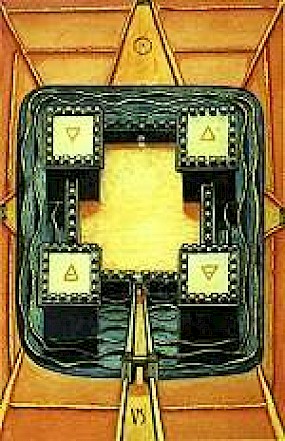
The Four of Disks

The Lord of Power represents the time when we achieve a stable level of material balance – at least for that moment in time. At the purely mundane level, it might come up after we had settled into a new home, or undertaken major improvements. The card is, at this level, much concerned with asset security and material bounty.

One thing to bear in mind about attaining the mundane value of this card – though you have achieved one level of material stability, you cannot either cling to this, nor take it for granted. Become too smug and you’ll find yourself losing the sense of safety and balance which has occurred. The human being is not naturally given to stagnation…

On a more spiritual level this card holds sway over crystals and semi-precious stones – it might be hard to see the cross-reference to the asset security I mentioned in the previous paragraph – but on a mundane level, we’re often talking bricks-and-mortar and the security derived from being safe within our homes – at this more subtle level, we’re still talking rocks!! But this talking we’re relating to the amount of energy we can all gain from crystal-work.

Some crystals teach us calmness, or emotional balance, simply by giving off their unique energies. Other crystals can be programmed to assist us in various self-development tasks, and in protection, healing and cleansing. So if this card comes up in your reading with cards like the Hierophant, the Star, the Moon or the Priestess, consider that perhaps you’d help yourself with a little crystal work!

The Four of Disks

(via angelpaths.com and Alan Blackman)

“A Way with Words” radio program

(waywordradio.org)

488 episodes

Here you’ll find full episodes of public radio’s A Way with Words, heard on NPR stations around the United States. Looking for something you heard on the show? Try the search page. You can also listen to all episodes on a single playlist and download episodes from that page.

EPISODE1504

EPISODES

Up Your Alley

June 11, 2023

Book recommendations, including a collection of short stories inspired by dictionaries, and a techno-thriller for teens. Or, how about novels with an upbeat message? Publishers call this genre up lit. Plus, a clergyman ponders an arresting phrase in…

PLAY EPISODE

EPISODE1617

EPISODES

Just Skylarking

June 4, 2023

The art of the invitation can be tricky. An inviter’s idea of invitation may be taken by an invitee as merely mentioning an event while they’re nearby. One such a misunderstanding went on for months! Plus, George Saunders, winner of the…

PLAY EPISODE

EPISODE1503

EPISODES

Piping Hot

May 27, 2023

The game of baseball has alway inspired colorful commentary. Sometimes that means using familiar words in unfamiliar ways. The word stuff, for example, can refer to a pitcher’s repertoire, to the spin on a ball, or what happens to the ball…

PLAY EPISODE

EPISODE1616

EPISODES

Folding Money

May 21, 2023

Barbara Kingsolver’s book Demon Copperhead is a retelling of Charles Dickens’ David Copperfield set in today’s Appalachia. Martha shares memories of a long-ago visit to Kingsolver’s family farm in Virginia, where they…

PLAY EPISODE

EPISODE1502

EPISODES

Mimeographs and Dittos

May 14, 2023

In this episode: How colors got their names, and a strange way to write. The terms blue and orange arrived in English via French, so why didn’t we also adapt the French for black and white? • Not every example of writing goes in one direction…

PLAY EPISODE

EPISODE1615

EPISODES

Takes the Cake

May 7, 2023

What do you call a long sandwich filled with lots of ingredients? Whether you call it a sub, a hoagie, a grinder, or something else entirely depends on where you’re from. And: Martha’s visit to an Alaskan reindeer ranch reveals why you…

PLAY EPISODE PREVIOUS

(Courtesy of David Hill)

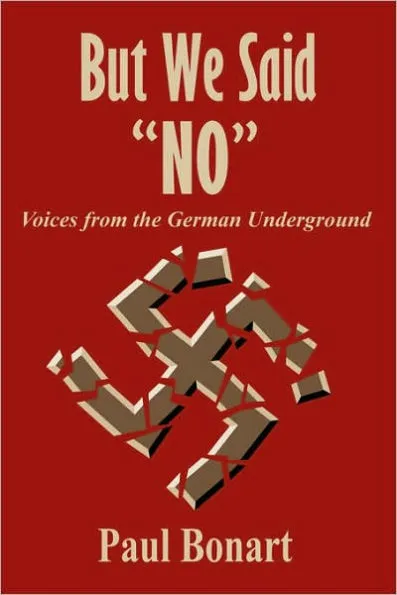
Book: “But We Said No”

But We Said No

by Paul BonartNo rating value average rating value is 0.0 of 5. Read 0 Reviews Same page link.

Overview

There were thousands of Germans who fought courageously, and risked their and their families’ lives taking a stand against Hitler, even after he and his criminal horde came to power. While a few of the most famous ones have received the publicity they well deserve, history has been silent about the rest of them. I wrote this book about my life and participation in the German Underground in order to make their voices heard, and give them the recognition and respect which humanity owes them.

(barnesandnoble.com)

Book: “The Cultural Logic of Computation”

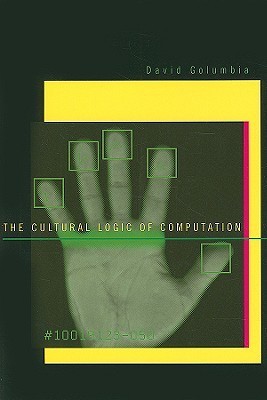
The Cultural Logic of Computation

David Golumbia

Advocates of computers make sweeping claims for their inherently transformative new and different from previous technologies, they are sure to resolve many of our existing social problems, and perhaps even to cause a positive political revolution.

In The Cultural Logic of Computation, David Golumbia, who worked as a software designer for more than ten years, confronts this orthodoxy, arguing instead that computers are cultural “all the way down”―that there is no part of the apparent technological transformation that is not shaped by historical and cultural processes, or that escapes existing cultural politics. From the perspective of transnational corporations and governments, computers benefit existing power much more fully than they provide means to distribute or contest it. Despite this, our thinking about computers has developed into a nearly invisible ideology Golumbia dubs “computationalism”―an ideology that informs our thinking not just about computers, but about economic and social trends as sweeping as globalization.

Driven by a programmer’s knowledge of computers as well as by a deep engagement with contemporary literary and cultural studies and poststructuralist theory, The Cultural Logic of Computation provides a needed corrective to the uncritical enthusiasm for computers common today in many parts of our culture.

A Sioux Story 

A Sioux Story 
 

The creator gathered all of creation and said, “I want to hide something from the humans until they are ready for it.”  It is the realization that they create their own reality.”

The eagle said, “Give it to me; I will take it to the moon.”

The Creator said, “No. One day they will go there and find it.”

The salmon said, “I will bury it on the bottom of the ocean.”

“No, they will go there, too.”

The buffalo said, “I will bury it on the Great Plains.”

The Creator said, “They will cut into the skin of the Earth and find it even there.”

Grandmother Mole, who lives in the breast of Mother Earth and who has no physical eyes but sees with spiritual eyes, said, “Put it inside of them.”

And the Creator said, “It is done.”

Author Unknown

EMO MUSIC MADE ME A BETTER MAN

A Father Reflects on the Genre’s Greatest Gift—Vulnerability
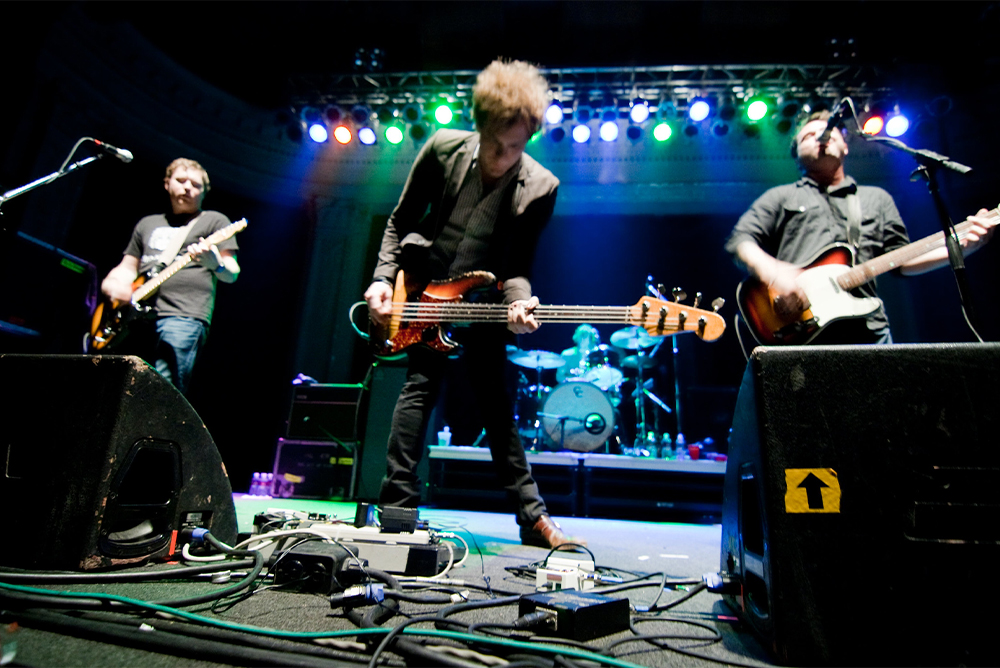
Poet Derek Mong reflects on a youth listening to emo music, the lessons he learned, and the wisdom he’s now passing down to his own teenage son. Pictured: The Get Up Kids perform at the Newport Music Hall in Columbus, Ohio in 2009. Courtesy of Allan Foster/Flickr (CC BY-NC-ND 2.0).

by DEREK MONG | JUNE 12, 2023

Is it normal to wonder how you didn’t wind up more of a mess?

As a man, I sometimes find myself asking this question. As an American, I’ve met my fair share of masculinist jerks. Like the father berating his “loser” son—the kid had just lost a wrestling match—in a public restroom. Like the dudes who heckled me for walking my dog while wearing pink shorts. These are the men that make men look bad, though sometimes I worry that they’re just most men, full stop.

How then did I come to be spared (I hope) from masculinity’s more toxic trends? My feminist parents deserve some credit. Ditto my propensity, born of book-worming, for imagining myself as other people. My physique, lanky as a praying mantis, kept me out of the nastier sports.

To these I’ll add emo music, the soundtrack to my teen years, when I tried on new selves like so many pairs of socks.

What, you may ask, is emo? “Emo” is short for emotional, though my friends captured the genre in four words: “whiney white boy music.” Think Death Cab for Cutie. Google or Wiki will mash up adjectives in search of a definition: confessionalist, sensitive, hardcore, punk. Subgenres and regional schools proliferate, but to my amateur ears, emo means one thing: lovelorn dislocation from girls, popularity, and joy. Lyrics swoon, guitars moan, and band names broadcast—in the thickest of ironies—absence or loss.

Take these telling examples, provided here with a gloss: The Promise Ring (no doubt broken), American Football (our kind didn’t play), The Anniversary (preceding a break-up), and The Get Up Kids (no thanks, we’ll sit this one out). These were my mixtape heroes and masculine lodestars in the 1990s skinny jean scene of Cleveland, Ohio.

What did they teach me about masculinity? About life? That my hopes would be dashed, I’m guaranteed nothing, and girls will probably find someone else. This might sound like a common enough lesson, but it matters more when you grow up—as I did—white, hetero, suburban, and male. American culture raises our kind to Everest-like heights of entitlement. About sex, success, or art. Emo music bred some of that out of me.

As a virgin with a Walkman, I didn’t loathe girls I wasn’t dating; I moped. At concerts with my fellow mop tops. Finding melody to answer the “misery” of my day.

Of course, I wasn’t miserable, not really, but I’d found a community to help when I convinced myself that I was. Emo music offered me the first taste of a collective subculture, a “we” built not of chest-thumping aggression but of angst-laden melodrama. We swapped physical strength for hyperbolic introspection. We sang together in the little basement of our misspent desires. When the Get Up Kids crooned that “I’ll cry until I can’t see the whites of your eyes,” I knew, then and there, that boys could cry, and it could be cool.

Emo music offered me the first taste of a collective subculture, a “we” built not of chest-thumping aggression but of angst-laden melodrama.

Dorm poster cool. Chuck Taylors cool. Studded belt cool. I remade myself in the emo star’s moody likeness. Was a trip to Hot Topic involved? I’m afraid it was. Did I style my haircut—swoop of bangs to curtain one eye—after Bright Eyes’ frontman Conor Oberst? There are 35mm prints to prove that I did. He and emo’s other singer-songwriters seemed to hop, fully formed, from tour vans. They wrote lyrics that circled back—like black hair dye in a hotel sink—to their own vulnerability.

Emo Music Made Me a Better Man | Zocalo Public Square • Arizona State University • Smithsonian

Photograph of the author as a young man leaning into emo’s “angst-laden melodrama.” (Image courtesy of Kerry Farrell)

In retrospect, vulnerability was emo’s greatest gift—at least for this male devotee. Vulnerability is anathema to traditional masculinity. Vulnerability, exposed or expressed, will get you mocked, maligned, or beat up. But emo’s lead singers wrapped vulnerability in Western shirts and suede jackets. Vulnerability shined from the band logoed-buttons we wore like merit badges down the straps of our shoulder bags—men could wear shoulder bags!

There was, I now see, a backward logic to this little salvation. I drew strength from emo’s overt vulnerability. I eschewed male violence while hugging the mosh pit’s softer circumference. (I never quite jumped in.) I met girls while listening to songs about not meeting girls. I still remember one who, mid-song at a Built to Spill concert, looked me in the eyes and tousled my hair. Was she high? Was she flirting? I spent the whole set trying to find her again in the crowd. (I failed.)

Was emo a panacea to toxic masculinity? Surely not. Was it feminist? I wish. The critic Jessica Hopper writes movingly of the women in emo songs; they’re just “vessels redeemed in the light of boy love.” Emo’s vulnerability, she notes, admits no “empathy, no peerage or parallelism” for girls. I don’t dispute it, but in the slow and ongoing project of my male self-improvement, emo offered a way out. From social isolation and depression. From a physical fight.

Thanks to emo, I took up cross country, inspired in part by Four Minute Mile (1997), an early Get Up Kids album that featured, on its cover, a track star in knee-highs having a smoke. I discovered another band called Track Star. These songs kept me running. And running kept me confident. That I could just flip the bird to my bullies. That I could flee.

In time, emo offered a bridge to richer, more nuanced art. In college I discovered poetry, my life’s work. Is it any wonder that an emo kid fell for poetry? As McSweeney’s notes, Emily Dickinson can sound awfully emo—“I’m Nobody! Who are you? / Are you – Nobody – too?” Rainer Maria, a female-led emo trio that met in a poetry workshop, took their name from Rainer Maria Rilke. My own collegiate poetry workshops taught me how much I needed to mature. And stat.

I’ll offer one example of this, and one alone, which I’ve quoted to students whose bleeding hearts leave stains on my floor. The year was 2001. I’d submitted my first poem—a love elegy, no doubt—to my professor David Baker. “What is this, Derek? Over dramatized teenage angst?” David asked. “It reads like Shelley on a surfboard.” I’ve known David, a marvelous poet, long enough to thank him for this intervention. Long enough to realize that “Shelley on a surfboard” is a solid definition of emo. David helped me see, to quote Rilke, that I “must change my life.”

GET MORE ZÓCALO

Ideas journalism with a head and heart.

You may opt out or contact us anytime.

“Men at forty learn / Learn to close softly / The doors to rooms they will not be / Coming back to,” writes the poet Donald Justice. True enough, I’ve found, but less so in an era when old infatuations are just one click away. It’s easy to revisit my emo adolescence, which I’ve done a lot since my son tip-toed into middle school’s hall of mirrors. In the quiet hours before dinner, with my finger above the play button, I wonder: should I give him a tour of my youth?

The answer to this question is obvious to any parent: please, don’t. So too are the reasons why: because he’ll spit back much of the culture you offer; because he needs to discover his music and his masculinity, not yours. Thankfully, his life offers countless opportunities to do so, and his parents aren’t yet so “sus” as to be fully ignored (sus [adj., chiefly teenage]: suspicious, old).

Take one recent decision with lasting social repercussions: what instrument would he wield in band? Our son chose the flute. He YouTubed a few lessons. His excitement lifted like a cool and resonant note. Then he came home with a hesitation: Only one other boy played flute.

We chatted as a family about gender and music. We asked him why some instruments seemed “manly” or “girly”; where do those flimsy presumptions begin? And aren’t those categories increasingly fluid, challenged daily by his non-binary friend? Mostly, though, my wife and I did what most parents do in a crisis: we turned to the internet for help.

There we learned that James Madison, an actual Founding Father, once owned a crystal flute. Can you get more manly than Madison? We learned that Lizzo played the flute too—had in fact played Madison’s flute while twerking. Lizzo’s coolness, my son intuited, needed no proof. Then we watched the now famous video. Then we watched it again.

Was this enough to convince him? What had we hoped to achieve? We know that, months later, he’s still playing. We know too that he now likes to perform. His audience: our good friends and their daughter, who captured the performance on her phone. His repertoire: the “Among Us” theme song, which—bless his heart—he’d memorized that week.

Whatever emo did for me, dear Reader, is nothing compared to this, one of masculinity’s more hopeful futures: a 12-year-old boy, woodwind in hand, shaking everything he’s got.

DEREK MONGis an associate professor of English at Wabash College and a contributing editor at Zócalo Public Square. His latest poetry collection is The Identity Thief, excerpts of which can be found on his website.

God Still Little Pissed Off Every Time Human Takes Bite From Apple

Published Yesterday (TheOnion.com)

Image for article titled God Still Little Pissed Off Every Time Human Takes Bite From Apple

THE HEAVENS—Stressing the act amounted to spitting directly on His holy edicts, the Lord our God, Divine Creator and Ruler of the Universe, announced Monday that He was still a little pissed off every time a human takes a bite from an apple. “Look, I know they probably don’t mean it, but I never told humanity they were allowed to start chowing down on the Forbidden Fruit after the Garden of Eden, and, frankly, it’s a little annoying that they’re still doing that,” said He Who Commanded Light to Shine out of Darkness, adding that He would often see red and feel the righteous urge to smite any human He witnessed casually cutting up a Golden Delicious or Granny Smith. “I’d never do anything rash, obviously. But it’s disrespectful. I’m really at my wit’s end here. It’s not like I can expel them from Paradise again. I guess I could issue a new commandment or flood the Earth again—but I just genuinely feel like they should have gotten the picture the first time. Meanwhile, they’re out picking apples every week and having a blast like it’s nothing. It’s so frustrating: apple pies, apple sauce, apple galettes. It all just raises my hackles. Sorry, but it’s true. I hate it. I hate it so much.” God added that maybe humanity and Satan could bond over their love of apples when they’re all burning in Hell.

The natural building blocks of sustainable architecture

426,370 views | Michael Green • TED@DestinationCanada

If we’re going to solve the climate crisis, we need to talk about construction. The four main building materials that humans currently use — concrete, steel, masonry and wood — have a heavy environmental impact, but what if we had a fifth option? Architect Michael Green proposes an entirely new, natural medium inspired by the structure of trees and plants. Learn more about the carbon-sequestering solution to our construction conundrum that’s laying the groundwork for a truly sustainable future.

About the speaker

Michael Green

ArchitectSee speaker profile

Michael Green wants to transform an industry that generates almost 40 percent of the world’s carbon emissions — our built environment — by creating cities made of natural, carbon-sequestering biomaterial structures instead of concrete and steel.

Tarot Card for June 13: The Four of Disks

The Four of Disks

The Lord of Power represents the time when we achieve a stable level of material balance – at least for that moment in time. At the purely mundane level, it might come up after we had settled into a new home, or undertaken major improvements. The card is, at this level, much concerned with asset security and material bounty.

One thing to bear in mind about attaining the mundane value of this card – though you have achieved one level of material stability, you cannot either cling to this, nor take it for granted. Become too smug and you’ll find yourself losing the sense of safety and balance which has occurred. The human being is not naturally given to stagnation…

On a more spiritual level this card holds sway over crystals and semi-precious stones – it might be hard to see the cross-reference to the asset security I mentioned in the previous paragraph – but on a mundane level, we’re often talking bricks-and-mortar and the security derived from being safe within our homes – at this more subtle level, we’re still talking rocks!! But this talking we’re relating to the amount of energy we can all gain from crystal-work.

Some crystals teach us calmness, or emotional balance, simply by giving off their unique energies. Other crystals can be programmed to assist us in various self-development tasks, and in protection, healing and cleansing. So if this card comes up in your reading with cards like the Hierophant, the Star, the Moon or the Priestess, consider that perhaps you’d help yourself with a little crystal work!

The Four of Disks

(via angelpaths.com and Alan Blackman)