All posts by Mike Zonta

An Inheritance of Pride

By Fergus Tuohy

Fergus Tuohy

Fergus Tuohy (Medium.com)

I decided not to hang our Pride flag this year. The level of anti-LGBTQ rhetoric, legislation and violence going around this country right now put a fear in me I’ve never in my life experienced. What if some psychopath shoots up our house? My husband and I just moved my mother here on hospice. What if she gets hurt?

I was 31 years old when I came out as gay. It was 2010, and the momentum towards equality was clearly building. Congress had just voted to repeal Don’t Ask Don’t Tell, and a host of states were on their way to legalizing same-sex marriage. It was the safest time in history to come out, and I had little fear of being beat up or murdered. My main worry was my relationships with my family and my colleagues might suffer. But even that that proved needless.

I came out to my parents over Sunday dinner. My father, an Episcopal priest with a Tipperary brogue, immediately invoked the Bible.

“Well, it’s no secret that David and Johnathan were in a same-sex relationship. That’s King David!” he said, pounding the table with his knife and fork. He went on to list several admirable gays from history, literature, and Irish mythology, eventually ending his sermon by saying he loved me and was proud of me. “This is a cause for celebration!” he declared, raising his glass of wine.

My mother was loving and supportive too, though less vociferously, while my sister seemed genuinely excited. “When can we go out dancing?” she asked.

I shouldn’t have expected anything less from my family. My parents, both from Ireland, met in Gadsden, Alabama in 1962 when my father was appointed assistant pastor at St. James Catholic Church. My mother, then called Sister Marion Margherita, taught second grade at the parish school. Soon after my father arrived, he happened upon a Ku Klux Klan rally while driving through town. When he stopped at an intersection, a man in full regalia approached him with a donation bucket.

“I’m sorry sir. But I am not in sympathy with your cause,” my father said, before rolling up his window and driving off.

“You could have gotten yourself killed!” his pastor Jim Wathen shouted when my father later told him. “You might still get us both killed.”

The Klan had a long history of terrorizing Catholics in Gadsden, having run many out of town in the early 1900s. Threats did come in. My mother told me the nuns returned to the convent one night to find a cross burning in the yard. My father and Jim Wathen kept loaded shotguns in the rectory.

Ku Klux Klan members in a Gadsden, Ala. parade in 1949 (AP)

After keeping their feelings secret for several years, my parents finally told one another how each felt. They decided to marry and then faced their own sort of coming out. In 1960s/70s Ireland, nothing was more taboo than a priest and nun marrying, and their families took it hard. But their parents eventually welcomed them home.

My father could have remained a Catholic, but he refused to give up his priesthood. “I’m not the one with the problem,” he said to the hierarchy. “You should allow priests to marry.” Of course, that wasn’t going to happen, so they excommunicated him.

My parents tried to start a life back in Ireland, but no one would hire my father there. His own country rejected him, so he and Mom and my infant sister returned to Alabama, where Dad’s former parishioners welcomed them back and helped them get on their feet.

Mom and Dad sometime after their wedding

When my sister and I were kids, our parent sat us down one evening for a serious conversation. “If you are ever in trouble, do not be afraid to come to us,” they said. “We love you, no matter what. And if you happen to be gay, do not be afraid to come to us. We love you, no matter what.”

In retrospect, I see the context from which this came. This was at the height of the AIDS crisis, and my father, by then an Episcopal priest, was providing pastoral care at his urban church to dying gay men, many of whom had been disowned by their families. He was writing letters to the papers challenging local pastors who claimed the epidemic was God’s punishment on homosexuals.

But even with my parents’ sincere promise of acceptance, I wasn’t ready to come out until I was 31. Our culture gives us a great deal to fear for just being ourselves.

Thankfully, my coming out went very well at work. I had a thriving financial planning practice and was anxious about how my business partner might react. But he was incredibly encouraging, quite notably when I expressed the practical concern that some clients might take issue. “Any client that has a problem with you being gay, I don’t want in our practice,” he said.

When I told my best friend from college, a Rush Limbaugh Republican, he bear-hugged me and later declared his support for same-sex marriage. “Damnit, Fergus!” he lamented. “You’ve ruined my perfect conservative credentials!”

Over the next few years, I was heavily involved with advocacy, serving as chairman of Equality Alabama, then the state’s only statewide LGBTQ advocacy organization. Friends worried about my safety, but the only abuse I suffered were a few unkind comments below my al.com op-eds.

In 2015, when the Supreme Court ruled same-sex marriage the law of the land, a straight acquaintance wrote to me on Facebook: “It’s over. You guys won. You ought to feel really good about that.”

Oh, the halcyon days of being gay and out! There were so many rainbows framing the profile pics of straight friends. Back then, there was so little to fear.

Me on the porch (photo by Audrey Gray)

But that was then.

This month, the Human Rights Campaign declared a national state of emergency for LGBTQ+ Americans, citing the onslaught of right-wing legislative efforts and the violent attacks on businesses, individuals and drag shows around the nation.

“In the wake of the passage of Florida’s discriminatory “Don’t Say Gay or Trans” bill, extremist politicians and their allies engineered an unprecedented and dangerous anti-LGBTQ+ misinformation campaign that saw discriminatory and inflammatory ‘grooming’ content surge by over 400% across social media platforms,” read an HRC press release.

There exists no credible evidence supporting claims pedophilia is greater among LGBTQ+ persons. But these cynical politicians and influencers are not actually interested in protecting children. They’re employing an old political tactic used throughout human history, where an authoritarian movement selects a vulnerable scapegoat to distract the masses from its own power grab, stoking fear and rage and setting citizens one against another. The disgusting groomer angle is simply the latest version of the Jewish blood libel, the abhorrent lie that Jews used the blood of Christian children in religious rituals. It was a calumny that led to the murder of countless European Jews by violent mobs seeking to… “protect the children.”

Here in Alabama, citizens with an understanding of this state’s history, or anyone who’s read Diane McWhorter’s Pulitzer Prize winning book Carry Me Home might recognize these tactics as variations on those orchestrated by Alabama’s industrial powers in the last century. Fearing unionization, wealthy industrialists (known locally as “Big Mules”) stoked fear and distrust between black and white workers, pitting them against one another with false rumors of black men targeting white women, all part of a calculated effort to prevent the two races from organizing to demand better wages and conditions. Lynchings, bombings, beatings and the murder of four little black girls in a Sunday school classroom were the inevitable result of this diabolical business plan.

Bring to mind the contorted, hate-filled faces of 1960s racists screaming and spitting on civil rights activists, the images we know from museums and history books. Well, in America today, we can see new versions of these on the nightly news. In the year 2023, as we suffer one mass-shooting every single day in this country, we’re seeing red-faced, spit-spewing bigots decimating cases of Bud Light with assault rifles and harassing Target employees over the store’s Pride merchandise. In America today, modern-day brownshirts are violently attacking gay bars and drag shows, while a recent protest over a California school district voting to recognize Pride month turned violent. This is why I decided not to hang the Pride flag.

Kid Rock fires assault rifle at cases of Bud Light in response to the brewer’s decision to feature a transgender influencer in an advertisement. “Fuck Bud Light, and fuck Anheuser-Busch,” he said. (via Twitter)
Masked “Proud Boys” outside a private drag event at Radar Brewing in Winston Salem, NC on June 10 (photo by James Douglas)
Nazis protesting outside Disney World over the company’s LGBTQ+ supportive policies. Signs reading “Destroy all Pedophiles” and “White Pride Worldwide” were also reported. (photo via @lmgause on Twitter)

One evening last June, my husband Michael and I were strolling down to 32nd Street to meet members of our church lining up to walk in the Central Alabama Pride Parade. “I don’t mean to be a downer,” he said. “But if something bad happens and we get separated, let’s meet back right here.”

I nodded, acknowledging the pragmatism of the plan while shrugging off its necessity. Things were certainly worse than they’d been, but I still wasn’t fearful for my safety. The only torment we experienced that evening was the predictable droning of a street preacher’s bullhorn warning we’d better repent or go to hell, this as we passed him led by a crucifer hoisting a tall brass cross and a Chevy Silverado displaying a sign that read, “St Andrew’s Episcopal Church Birmingham Choose Love.”

Members of St. Andrew’s Episcopal Church lining up for the 2022 Central Alabama Pride Parade

But this year, as we approached the month of June and our church announced details about the 2023 Pride parade, I thought it might be too dangerous to walk. I thought it might be too dangerous to put up that flag. I decided I wouldn’t.

On the last night in May, I helped Mom get ready for bed. As I wheeled her into her bedroom, we passed a picture of my father as a young priest, baby-faced and smiling joyfully. Tears welled in Mom’s eyes. It’d been 14 months since he died in the memory care apartment they shared.

I helped her brush her teeth and get into bed.

“You’re a darling Fergus,” she said. “How will I ever repay you?”

“Just pray for me.”

“Oh, I do,” she said. “I pray for you every day, you and Michael. I’m so happy Dad blessed your marriage. He was so open to everything. He was imitating God.”

Dad with his hand on my shoulder, blessing my marriage to Michael Barnett

When I woke up the next morning, I texted Michael, who was out of town, and asked him where we kept the Pride flag. By 8 am, I had it hanging from the front porch just across the steps from the U.S. flag.

Later, I had lunch with a psychologist friend and told him about the flag. He told me he was glad I overcame my fear and put it up. He said all day he listens to people worrying about things that never actually happen.

“Anyway, he said. “This is a good reason to get shot.”

This brought to my mind a line from the end of James Joyce’s short story, The Dead.

“Better pass boldly into that other world, in the full glory of some passion, than fade and wither dismally with age.”

Bella the dog enjoying a lazy June afternoon

Back home, I found Mom sitting in her wheelchair reading the newspaper by the front window.

“I love that flag,” she said. “Is it for Pride month?”

“Yes,” I said. “You know, I almost didn’t put it up. I was worried someone might attack us.”

“No, no,” she whispered. “I’m so happy Dad blessed your marriage.”

“So am I.”

“Ah,” she said with a soft smile. “He was a holy man. He was always so far ahead of his time.”

Happy Pride, y’all. And Happy Father’s Day.

Dad and Me

Fergus Tuohy

Written by Fergus Tuohy

Writer, REALTOR®, multimedia producer, CERTIFIED FINANCIAL PLANNER™, Columbia Journalism School alum.Follow
Why are we so bad at reporting good news?

313,853 views | Angus Hervey • TED2023

Why is good news so rare? In a special broadcast from the TED stage, journalist Angus Hervey sheds light on some of the incredible progress humanity has made across environmental protection, public health and more in the last year, making the case that if we want to change the story of humanity this century, we have to start changing the stories we tell ourselves. “When we only tell the stories of doom, we fail to see the stories of possibility,” says Hervey.

About the speaker

Angus Hervey

Good-news reporterSee speaker profile

Angus Hervey is an economist, journalist and cofounder of Future Crunch, a media company that shares stories of progress.

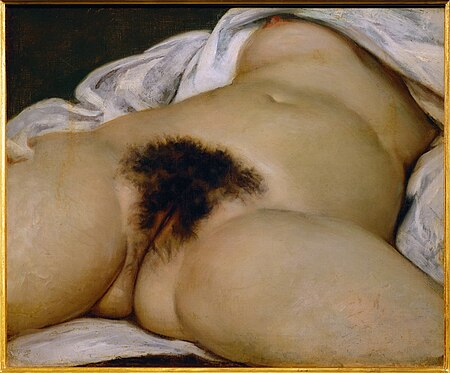
Art: L’Origine du monde

From Wikipedia, the free encyclopedia

L’Origine du monde
ArtistGustave Courbet
Year1866
MediumOil on canvas
Dimensions46 cm × 55 cm (18 in × 22 in)
LocationMusée d’Orsay, Paris

L’Origine du monde (“The Origin of the World”) is a picture painted in oil on canvas by the French artist Gustave Courbet in 1866. It is a close-up view of the vulva and abdomen of a naked woman, lying on a bed with legs spread.

History

Identity of the model

Art historians had speculated for years that Courbet’s model for L’Origine du monde was his favourite model, Joanna Hiffernan, also known as Jo. Her lover at the time was the American painter James Whistler, a friend of Courbet.[1]

Hiffernan was the subject of a series of four portraits by Courbet titled Jo, la belle Irlandaise (Jo, the beautiful Irishwoman) painted in 1865–66. The possibility that she was the model for L’Origine du monde[2][3] or that she was having an affair with Courbet might explain Courbet’s and Whistler’s brutal separation a short while later.[4] In spite of Hiffernan’s red hair contrasting with the darker pubic hair of L’Origine du monde, the hypothesis that Hiffernan was the model continues. Redhead Jacky Colliss Harvey puts forward the idea that the woman’s body hair suggests a more obvious candidate might be the brunette painted with Hiffernan in Courbet’s Le Sommeil; and that the identification with Hiffernan has been greatly influenced by the eroticised and sexualised image of the female redhead.[5]

In February 2013, Paris Match reported that Courbet expert Jean-Jacques Fernier had authenticated a painting of a young woman’s head and shoulders as the upper section of L’Origine du monde which according to some was severed from the original work. Fernier has stated that because of the conclusions reached after two years of analysis, the head will be added to the next edition of the Courbet catalogue raisonné.[2][6] The Musée d’Orsay has indicated that L’Origine du monde was not part of a larger work.[7] The Daily Telegraph reported that “experts at the [French] art research centre CARAA (Centre d’Analyses et de Recherche en Art et Archéologie) were able to align the two paintings via grooves made by the original wooden frame and lines in the canvas itself, whose grain matched.”[2] According to CARAA, it performed pigment analyses which were identified as classical pigments of the 2nd half of the 19th century. No other conclusions were reported by the CARAA.[8] The claim reported by Paris Match was characterized as dubious by Le Monde art critic Philippe Dagen, indicating differences in style, and that canvas similarities could be caused by buying from the same shop.[9]

Documentary evidence however links the painting with Constance Quéniaux, a former dancer at the Paris Opera and a mistress of the Ottoman diplomat Halil Şerif Pasha (Khalil Bey) who commissioned the painting.[10] According to the historian Claude Schopp and the head of the French National Library‘s prints department, Sylvie Aubenas, the evidence is found in correspondence between Alexandre Dumas fils and George Sand.[11] Another potential model was Marie-Anne Detourbay, who also was a mistress of Halil Şerif Pasha.[11]

More at: https://en.wikipedia.org/wiki/L’Origine_du_monde

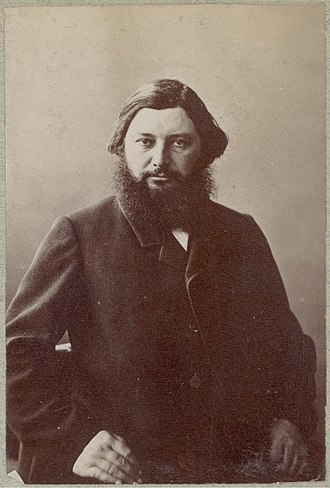
Gustave Courbet, c. 1860s
(portrait photograph by Nadar)

William Blake on energy

Energy is Eternal Delight

So energy, whether energy of the spirit, energy of the body, energy of our dreams, or energy of our machines — energy surely is delight. And of course it can turn to evil. Of course it must be circumscribed by Reason. Don’t you and I dream of being served by unlimited energy at the same time we live in cool green Elysian fields? Don’t we want the Delight without the trouble of Reason?”

–William Blake from Marriage of Heaven and Hell

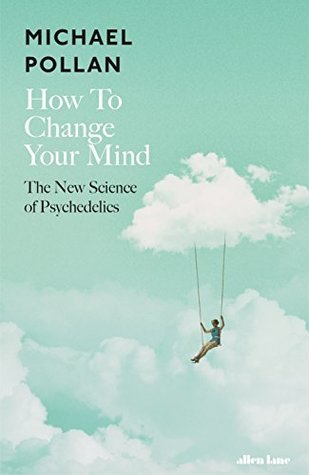
Book: “How to Change Your Mind: What the New Science of Psychedelics Teaches Us About Consciousness, Dying, Addiction, Depression, and Transcendence”

How to Change Your Mind: What the New Science of Psychedelics Teaches Us About Consciousness, Dying, Addiction, Depression, and Transcendence

Michael Pollan

Could psychedelic drugs change our worldview? One of America’s most admired writers takes us on a mind-altering journey to the frontiers of human consciousness

When LSD was first discovered in the 1940s, it seemed to researchers, scientists and doctors as if the world might be on the cusp of psychological revolution. It promised to shed light on the deep mysteries of consciousness, as well as offer relief to addicts and the mentally ill. But in the 1960s, with the vicious backlash against the counter-culture, all further research was banned. In recent years, however, work has quietly begun again on the amazing potential of LSD, psilocybin and DMT. Could these drugs in fact improve the lives of many people? Diving deep into this extraordinary world and putting himself forward as a guinea-pig, Michael Pollan has written a remarkable history of psychedelics and a compelling portrait of the new generation of scientists fascinated by the implications of these drugs. How to Change Your Mind is a report from what could very well be the future of human consciousness.

(Goodreads.com)

Book: “How Fascism Works: The Politics of Us and Them”

How Fascism Works: The Politics of Us and Them

Jason F. Stanley

Fascist politics are running rampant in America today—and spreading around the world. A Yale philosopher identifies the ten pillars of fascist politics, and charts their horrifying rise and deep history.

As the child of refugees of World War II Europe and a renowned philosopher and scholar of propaganda, Jason Stanley has a deep understanding of how democratic societies can be vulnerable to fascism: Nations don’t have to be fascist to suffer from fascist politics. In fact, fascism’s roots have been present in the United States for more than a century. Alarmed by the pervasive rise of fascist tactics both at home and around the globe, Stanley focuses here on the structures that unite them, laying out and analyzing the ten pillars of fascist politics–the language and beliefs that separate people into an “us” and a “them.” He knits together reflections on history, philosophy, sociology, and critical race theory with stories from contemporary Hungary, Poland, India, Myanmar, and the United States, among other nations. He makes clear the immense danger of underestimating the cumulative power of these tactics, which include exploiting a mythic version of a nation’s past; propaganda that twists the language of democratic ideals against themselves; anti-intellectualism directed against universities and experts; law and order politics predicated on the assumption that members of minority groups are criminals; and fierce attacks on labor groups and welfare. These mechanisms all build on one another, creating and reinforcing divisions and shaping a society vulnerable to the appeals of authoritarian leadership.

By uncovering disturbing patterns that are as prevalent today as ever, Stanley reveals that the stuff of politics—charged by rhetoric and myth—can quickly become policy and reality. Only by recognizing fascists politics, he argues, may we resist its most harmful effects and return to democratic ideals.

(Goodreads.com)

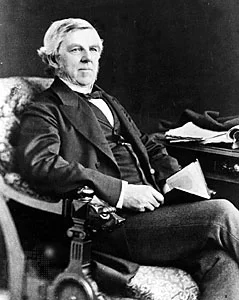
Oliver Wendell Holmes, Sr., on science

Science is the topography of ignorance.

—  Oliver W. Holmes Sr., 1809-1894, American writer

Oliver Wendell Holmes Sr. (August 29, 1809 – October 7, 1894) was an American physician, poet, and polymath based in Boston. Grouped among the fireside poets, he was acclaimed by his peers as one of the best writers of the day. His most famous prose works are the “Breakfast-Table” series, which began with The Autocrat of the Breakfast-Table. Wikipedia

WHY WE LOVE THE GREAT G.O.A.T. DEBATE

Behind Every Achilles, Ali, and King James Lies a Fallible Human, Whose Foibles Are Often as Memorable as Their Achievements

USC professor Oliver Mayer muses on why we care about the “Greatest of All Time” title, tracing legendary characters from Greek mythology to current superstar athletes like LeBron James (above). Courtesy of AP Newsroom.

by OLIVER MAYER | JUNE 22, 2023 (ZocaloPublicSquare.org)

There is something about the spirit of our time that fuels seemingly constant discussions around the title “The Greatest of All Time” (aka The G.O.A.T.). Who started it, and why do we love this debate so?

One answer takes us back to the boxing and wrestling rings of the mid-20th century.

Muhammad Ali famously declared, “I am the greatest. I said that even before I knew I was.” But he was not the first to make this proclamation. Gorgeous George, the flamboyant 1940s and ’50s professional wrestler, commanded a king’s ransom from fans who came to see him lose.

Gorgeous George advised Ali, “A lot of people will pay to see someone shut your mouth. So, keep on bragging, keep on sassing and always be outrageous.”

After Ali upset Sonny Liston for the Heavyweight Championship in 1964, the boast became his de facto trademark. Over two decades, fans paid to cheer on Ali in title fight after title fight—even as Joe Frazier, Kenny Norton, and George Foreman exacted their pound of flesh—and whether he won or lost, well or badly, the moniker of “The Greatest” somehow stuck, even to this day.

Today, “The Greatest” has become “G.O.A.T.” Rapper LL Cool J coined the acronym in its eponymous 2000 album, which debuted at the top of the U.S. Billboard 200.

Ever since, the crown of all-time greatness has been the topic of the zeitgeist—particularly among elite athletes comparing themselves (always favorably) with those who came before.

Today, amidst a growing crowd of G.O.A.T.s of one kind or another, flaunting Olympic gold medals, Super Bowl championships, and golf tour green jackets, LeBron James most emphatically claims the crown—even wearing one occasionally (his nickname has been King James for 20 years now). Despite protests from Michael Jordan and fans, LeBron might very well be the NBA’s greatest of all time, with a host of metrics to back up the claim. And LeBron himself has said, on multiple occasions, that he believes he is the best athlete to have played the game. But does a self-coronation make it so? Uneasy lies the head that not only wears the crown but feels the need to remind us all.

And yet, it always has been thus. In Homer’s Iliad, Achilles was the G.O.A.T.—not simply for his prowess on the battlefield, but for selling an image of himself as unbeatable. In the 10th year of the Trojan War, Achilles publicly tested the G.O.A.T. appellation. He sat out the fight in a combination fit of pique and lesson to his fellow Greeks, as if to say, “Just try winning this thing without me.” They couldn’t, and he obtained living legend status when they paid him public obeisance in return for killing Hector and winning the war.

Greatness is momentary, even for the G.O.A.T.s of the world. And the fact that greatness is momentary is precisely why it should be appreciated in all its forms.

But the gods were not amused, and the telltale Achilles’ heel may have been more than the tendon at the ankle where the god Apollo struck him with an arrow. Achilles’ death was comeuppance for his self-conscious moodiness and blowhard self-love.

As Gorgeous George knew only too well, G.O.A.T.s are often not fan favorites. There is a special schadenfreude for those who fly too near the sun. The concept of hubris—the deadly cocktail of overconfidence and arrogance—finds its way into tragedies, then and now.

Hippolytus, in the famous play by Euripides, is an elite athlete, renowned not only for his hunting prowess but his extreme physical beauty. Not surprisingly, he is also a bit infamous for being a prig, self-righteous and aloof. Cultishly, he aligns himself with the virgin huntress goddess Artemis, placing him at odds with Aphrodite, goddess of love, beauty, pleasure, and procreation. Using his smug superiority against him, she causes a series of events leading to his ignominious death, literally crushing his beautiful body under the wheels of his own chariot.

I thought a lot about that Euripides play while watching the late Kobe Bryant during the mid-2000s—the hard years that followed his first three world championships with the Lakers, and included massive off-court problems, most notably a sexual assault case.

Fans, journalists, and more than a few peers seemed to be wishing him the worst, celebrating him slipping on the banana peel of hubris and being crushed under the wheel of his own design.

Yet Kobe found a way back to all-time greatness—not just on the basketball court, where his play never faltered, but in family life, public esteem, and even in Hollywood, winning an Oscar for Best Animated Short in 2018. How did he do it?

By humbling himself, privately and publicly—with his wife, who stayed married to him, and with his acceptance of vitriol from the press and fans alike. The marriage held, and eventually the championships returned to Los Angeles, highlighted by the Lakers beating their hated rivals the Boston Celtics.

The losses along the way humanized Kobe and made his triumphs less godlike and more human. Indeed, this is something we look for in heroes, and G.O.A.T.s—the ability to turn difficulty, even tragedy, into learning and progress. We see it in Simone Biles’ 2020 Olympic Games struggles, or in Serena Williams’ late-career struggles with injuries and returns to form, or the mental health challenges of Naomi Osaka or Michael Phelps.

Why? Because we want to see ourselves in them, since we and the G.O.A.T.s are all—presumably—human. I’d like to believe that each of us has at least one moment’s greatness, an instant of superhuman strength, unexpected courage, grit, or determination, matched only by the luck of that once-in-a-lifetime set of space/time circumstances falling into place in a precise moment of Zen.

When LeBron and Tom Brady declare themselves the greatest of all time, they separate themselves not only from Michael Jordan or Joe Montana but from us. There should be a separation, of course. They are great in their chosen fields in ways that we can only dream about. But they are living and breathing and losing alongside us, their fellow humans, even as they argue the case for their all-time winning immortality.

When I hear G.O.A.T. talk, I’m reminded of Greek mythology, yes, but also of Peter Pan. By refusing to admit loss, you never really grow up. Time never passes. You are the greatest now, and forever.

But the world doesn’t really work like that.

GET MORE ZÓCALO

Ideas journalism with a head and heart.

You may opt out or contact us anytime.

Greatness is momentary, even for the G.O.A.T.s of the world. And the fact that greatness is momentary is precisely why it should be appreciated in all its forms.

Rather than crowns or self-proclamations and the cults that they engender, perhaps another all-time great human, the children’s TV host Fred Rogers, provides the truest metric of greatness for us all: “Being the best loser takes talent, just as being the best winner does.”

If there is a postscript, it’s that the gods of sport are fickle, to say the least. Being a self-proclaimed G.O.A.T. did not spare LeBron’s Lakers from being swept this postseason by the Denver Nuggets (who in Nikola Jokić have their own G.O.A.T. candidate). Failure and loss are part of living a human life, and despite the huckstering and hyperbole, G.O.A.T.s are human.

Watching LeBron’s postgame press conference after the Lakers defeat, what he said revealed less than the gestural power of his immense human frame over the course of the Q&A: at first combative and clipped, then gradually relaxing his shoulders as he reminisced about his team and family, even finding a way to smile. Hopefully G.O.A.T.s-to-be in all sports will take notice: This was greatness on display.

OLIVER MAYERis a playwright, poet, and professor at USC’s School of Dramatic Arts.

Parenting and Astrology with Matthew Stelzner and Jessica DiRuzza

Matthew Stelz Jun 22, 2023 Astrology meets Parenthood! Matthew Stelzner and Jessica DiRuzza go deep while keeping it light about how the practice of astrology comes together with being a parent. They explore how cosmology guides how we raise our children, how our child’s birth chart and synastry support this magical journey, and how the Mysteries of the Moon manifest with each of the other planets. Matthew and Jessica have been friends and colleagues for 15 years, first in San Francisco, California and now in the Caribbean, with Matthew and his family in Santa Marta, Colombia and Jessica and her family in Siesta Key, Florida.  Jessica DiRuzza, MFT is a depth psychotherapist, astrologer, and teacher, as well as a wife and badass mother. For over 15 years, she has worked lovingly and collaboratively with individuals, couples, and groups on their embodied transformative journeys.   Jessica received her Master’s in Counseling Psychology with an emphasis in Depth Psychology from Pacifica Graduate Institute, where she wrote her thesis on shame and the reclamation of the feminine voice. Jessica did her bachelor’s at California Institute of Integral Studies where she studied and taught archetypal astrology and transpersonal psychology. You can find Jessica and her body of work at trustpsyche.com, on her YouTube channel, and @trust.psyche on IG. The Trust Psyche School of Astrology and Depth Psychology offers a full astrological curriculum, from beginner to professional, with a community of students from over 25 countries.   Jessica offers sessions online with people from around the world and from all walks of life. She welcomes people of all ages, ethnicities, genders, and sexual preferences. You may contact her at Jessica@trustpsyche.com To check out Matthew’s work, see his blog, and get information about his intuitive readings, visit his website at: http://stelz.biz/

Even in Texas, You Can’t Stop the Green Revolution

OPINION

June 14, 2023 (NYTimes.com)

In a brightly colored illustration, the blue blades and shiny metal casement of a wind turbine sits on a greek column before a  lustrous light blue, magenta and yellow backdrop.
Credit…Ibrahim Rayintakath
David Wallace-Wells

By David Wallace-Wells

Opinion Writer

Over the past few weeks, a once unthinkable parable about the green transition has played out in Texas, the very picture of a recalcitrant red state soaked with fossil fuel. Legislators friendly to the oil and gas business staged a desperate fight with the market — and lost.

This is one fight in one state legislature, but it marks a much larger shift. Clean energy provided about 25 to 30 percent of Texas power last year, up from less than 1 percent in 2002. So Republicans in the State Legislature, following the lead of the climate skeptic Gov. Greg Abbott, launched a counteroffensive, putting forward a series of bills to undermine renewables, prop up fossil fuel production and effectively kill clean energy in the state.

At first blush, it looked as if it would be the same old story — conservatives fighting green energy — with an inevitable-seeming conclusion. But then?

“A remarkable coalition of environmentalists, industry organizations and business groups — including more than 50 chambers of commerce, manufacturers, generators, oil and gas advocates and others — stopped very real efforts to shut down the renewable energy industry in Texas,” the energy consultant Doug Lewin wrote when the legislation was defeated, singling out the “pro-business, anti-nonsense Republican” state representative Todd Hunter of Corpus Christi for his relentless emphasis on the question of what handicapping renewables would cost Texas consumers.

Hunter knew that undermining green energy would lead to higher energy bills and slower economic growth. And he had recent history on his side. Last year, according to an analysis by Idea Smiths, existing wind and solar power reduced the state’s wholesale energy spending by about $11 billion — almost three times the savings of the previous year. According to research by Energy Innovation, the green-energy tax credits in the Inflation Reduction Act are poised to create more than 100,000 jobs in Texas by 2030 — which would add more than $15 billion to the state economy over that time.

The gains are expected to be similar in Florida, where Energy Innovation projects more than 85,000 new jobs and $10 billion in state G.D.P. gains by 2030. But it’s not just a couple of red states: The logic of the energy transition has been transformed across the country.

A decade ago, after the collapse of the Waxman-Markey cap-and-trade bill, it seemed intuitive to most Americans that without expensive political interventions and market manipulations, market forces and consumer preference would keep fossil fuels dominant in America, leaving green energy for the moralists and the saints. It was a caricature, even then, but a common one: that fossil fuels had every competitive advantage, and that green energy couldn’t thrive in the status-quo environment, requiring instead political interventions and market manipulations to clear a path toward viability.

Just a couple of years ago, when the progressive Squad in Congress first began touting a Green New Deal, the talking points on the right were the same: a green energy revolution would immiserate Americans, and bringing it about would require considerable and heavy-handed distortions to the energy market.

In his 2021 book, “How to Avoid a Climate Disaster,” Bill Gates said one of the central challenges was overcoming the cost burden of clean alternatives — what he called the “green premium.” He devoted much of the book to the question of how to pay for or overcome it

We live in a different world now, just a few years later. It is no longer clean energy that requires political interventions for survival. And increasingly it is fossil fuels flailing about for political lifelines to impede market forces. Partly because of the climate-forward interventions of the infrastructure bill and the Inflation Reduction Act, and partly because of market and cultural momentum much larger than American energy legislation, the status quo has been effectively inverted.

A few months ago, after the passage of the Inflation Reduction Act, I wrote that the wave of new investment could accelerate American depolarization over green energy, since so much of the money was flowing to red states and districts.

The path was never going to be smooth, and there were some brief digressions in that narrative; the Texas standoff is just one. There’ was also the transitory Republican threat in debt-ceiling negotiations to scuttle the act’s tax incentives, and scattershot fights by state legislatures and attorneys general against socially conscious investments. But in the big picture it looks like these are just bumps along the same road.

The trend predates the impacts of the bill. Solar power is already as much as 33 percent cheaper than gas power in the United States, according to an analysis from last year; onshore wind may be nearly 45 percent cheaper. And when American investors are drawn to opportunities, they find themselves overwhelmingly in red states like Texas. When Bloomberg analyzed green energy investment in the summer of 2022, before the passage of the bill, it found that of the 14 congressional districts with the most wind, solar and battery tech capacity, 13 were represented by Republicans and only one by a Democrat. This was, in its way, as logical as it might have seemed counterintuitive — more than two-thirds of American renewable potential today resides in mostly rural areas, which lean heavily Republican.

The Inflation Reduction Act turbocharged these dynamics. A bill originally estimated at $370 billion may ultimately yield a trillion dollars or more in federal subsidies, and the result is already an unparalleled manufacturing boom — with some measures of new construction almost doubling year over year and projections suggesting the trend will only grow. Nearly a hundred new clean energy manufacturing facilities or factory expansions have been announced since the bill, involving more than $70 billion in new investment, according to Canary Media. This is the rundown offered by the former director of President Biden’s National Economic Council, Brian Deese, last month:

Companies have announced at least 31 new battery manufacturing projects in the United States. That is more than in the prior four years combined. The pipeline of battery plants amounts to 1,000 gigawatt-hours per year by 2030 — 18 times the energy storage capacity in 2021, enough to support the manufacture of 10 million to 13 million electric vehicles per year. In energy production, companies have announced 96 gigawatts of new clean power over the past eight months, which is more than the total investment in clean power plants from 2017 to 2021.

This is a satisfying turn of events for those of us pushing for evermore decarbonization and horrified by the environmental costs of inaction. But it is not a triumph.

The price of renewables has crept up over the last year, thanks first to supply chain issues and then increased demand (though the price is still down dramatically from even a few years ago). And while renewables are much cheaper than fossil fuels, they aren’t quite profit machines, which complicates some private sector investment decisions. There is more potential clean energy sitting offline, in a backlog awaiting connection to the grid, than the total clean-and-dirty capacity of the grid as a whole supports today, according to the Lawrence Berkeley National Lab. This is perhaps one reason that, for all the new spending on renewables, the amount of clean power actually installed may be falling for the second consecutive year. The same permitting and regulatory obstacles that could derail 80 percent of the gains of the Inflation Reduction Act are still in place, unfortunately. And even in best-case build-out scenarios, the law isn’t expected to bring the country all the way to its climate emissions goals.

But the Texas showdown does still memorably mark the direction of change. If, for a generation, clean energy advocates might have felt as if they were rolling a boulder ever so slowly up an excruciatingly steep hill, now they can watch the ball finally rolling forward, worrying instead about what obstacles it might run into on the way down.

(Contributed by Michael Kelly, H.W.)