
American Experience | PBS Premiered Jun 6, 2023 Official website: https://www.pbs.org/wgbh/americanexpe… When police raided the Stonewall Inn, a popular gay bar in the Greenwich Village section of New York City on June 28, 1969, the street erupted into violent protests that lasted for the next six days. The Stonewall riots, as they came to be known, marked a major turning point in the modern gay civil rights movement in the United States and around the world.
All posts by Mike Zonta
Oliver Cromwell on being mistaken

“I beseech you, in the bowels of Christ, think it possible you may be mistaken.”
― Oliver Cromwell, Oliver Cromwell’s Letters and Speeches
Oliver Cromwell (April 25, 1599 – September 3, 1658) was an English statesman, politician and soldier, widely regarded as one of the most important figures in the history of the British Isles. He came to prominence during the 1639 to 1653 Wars of the Three Kingdoms, initially as a senior commander in the Parliamentarian army and latterly as a politician. Wikipedia
Max Born on theoretical physics
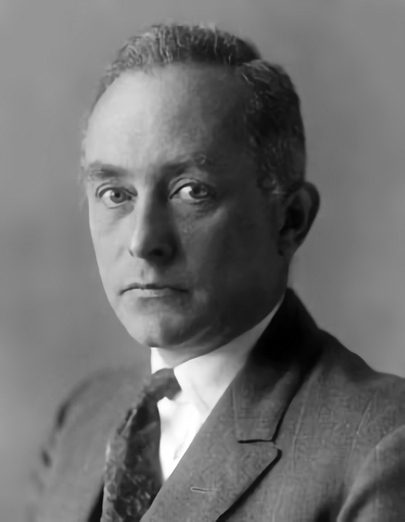
“I am now convinced that theoretical physics is actual philosophy.”
― Max Born
Max Born (December 11, 1882 – January 5, 1970) was a German-British physicist and mathematician who was instrumental in the development of quantum mechanics. He also made contributions to solid-state physics and optics and supervised the work of a number of notable physicists in the 1920s and 1930s. Wikipedia
Bio: James Ussher
From Wikipedia, the free encyclopedia
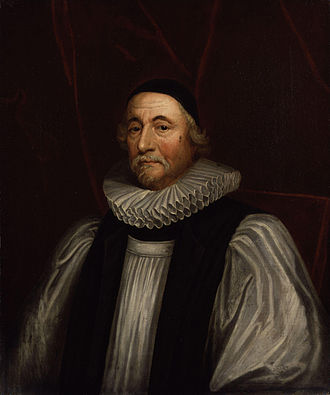
| The Most Reverend James Ussher | |
|---|---|
| Archbishop of Armagh Primate of All Ireland | |
| Church | Church of Ireland |
| See | Armagh |
| Appointed | 21 March 1625 |
| In office | 1625–1656 |
| Predecessor | Christopher Hampton |
| Successor | John Bramhall (from 1661) |
| Other post(s) | Professor, Trinity College Dublin Chancellor, St Patrick’s Cathedral, Dublin Prebend of Finglas. |
| Orders | |
| Ordination | 1602 |
| Consecration | 2 December 1621 by Christopher Hampton |
| Personal details | |
| Born | 4 January 1581 Dublin, Ireland |
| Died | 21 March 1656 (aged 75) Reigate, Surrey, England |
| Buried | Chapel of St Erasmus, Westminster Abbey |
| Nationality | Irish |
| Denomination | Anglican |
| Previous post(s) | Bishop of Meath (1621–1625) |
| Alma mater | Trinity College Dublin |
| Coat of arms | |


James Ussher (or Usher; 4 January 1581 – 21 March 1656) was the Church of Ireland Archbishop of Armagh and Primate of All Ireland between 1625 and 1656. He was a prolific scholar and church leader, who today is most famous for his identification of the genuine letters of the church father, Ignatius of Antioch, and for his chronology that sought to establish the time and date of the creation as “the entrance of the night preceding the 23rd day of October… the year before Christ 4004”; that is, around 6 pm on 22 October 4004 BC, per the proleptic Julian calendar.
“It’s Adorable ❤️”
Rupert Spira on emotions

“All emotions are ultimately love: love veiled or love manifest; love concealed or love revealed. Even hatred comes from love, albeit veiled..“
–Rupert Spira
Rupert Spira (born March 13, 1960) is an English spiritual teacher, philosopher and author of the Direct Path based in Oxford, UK. Wikipedia
(newsletter@rupertspira.com)
Tiffany Hammond Believes Stories Are the Best Teachers
In her No. 1 best-selling picture book, “A Day With No Words,” the debut author shows an average day in the life of a boy who has autism.


May 25, 2023 (NYTimes.com)
“Early morning chases a long night. Mama pulls the curtains back to welcome the sunlight.” So begins Tiffany Hammond’s “A Day With No Words,” which debuted at No. 1 on the picture book list. In it, we see the world — vividly illustrated by Kate Cosgrove — through the eyes of a boy who takes everything in: his mother’s blue hair and fingernails, his father’s voice (“soft as a light summer breeze”), the feeling of wet grass on bare feet.
“I do not speak,” the boy lets readers know. “I was born like this. No voice from my lips. I’m autistic. I use a tablet to be heard, pushing buttons with pictures that speak my words.”
Hammond writes what she knows: She has autism, as do her sons, who are 16 and 14. Her older son, Aidan, uses a tablet to communicate.
“I didn’t know I was autistic until I was 18,” Hammond said in a phone interview. “Being different kind of puts you out there as an outcast, so I just had books.” She immersed herself in Goosebumps, the Baby-Sitters Club and Nancy Drew, relying on these series not just for entertainment but for guidance on how to connect: “I was trying to fit in with all the other kids, so I needed to read things that they read. I needed to figure out, how do I talk to you?”
That kind of instruction works both ways. “A Day With No Words” will help young readers understand autism; in a poignant scene, the main character’s mother uses a tablet of her own to explain to a group of bystanders, “My son does not speak, but his ears work just fine. The words that you say go straight to his mind.”
To understand how the book has been received by members of the autism community, consider the 777 (and counting) five-star Amazon reviews. “This book is the beginning of my son being able to see himself out in the world,” one parent wrote.
“It teaches us the expansiveness of communication that is possible, if our children are truly heard, respected and supported,” wrote another. Take it from a professional: Rarely will you find this level of agreement and civility among book reviewers.
As for Hammond’s sons, they approve of her work. The younger one, Josiah — who is, as she said, “at the age where everything is just OK” — read “A Day With No Words” to his brother, who tapped “Love book” on his iPad. “I think he has a couple pages that he finds to be his favorite because he will always open the book to that page,” Hammond said.
One of them has a picture of mother and son leaving the park together, hand in hand. On the screen of the boy’s tablet, two words are visible: “All done.”
Elisabeth Egan is an editor at the Book Review and the author of “A Window Opens.”
A version of this article appears in print on June 24, 2023, Page 52 of the Sunday Book Review with the headline: Inside the List.
(Contributed by Michael Kelly, H.W.)
Decades-long bet on consciousness ends — and it’s philosopher 1, neuroscientist 0
- 24 June 2023 (nature.com)
- Mariana Lenharo
Christof Koch wagered David Chalmers 25 years ago that researchers would learn how the brain achieves consciousness by now. But the quest continues.
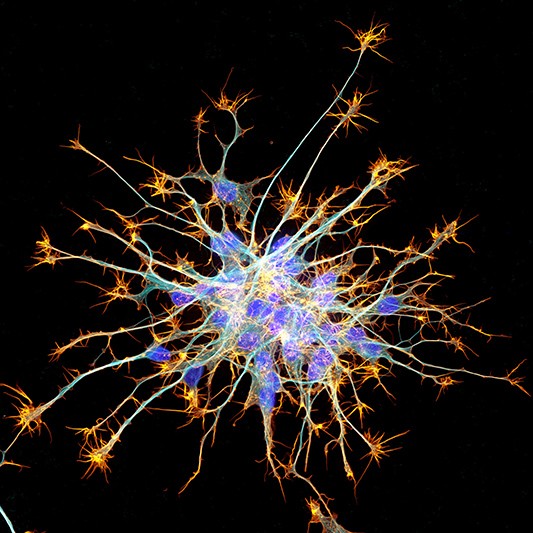
A 25-year science wager has come to an end. In 1998, neuroscientist Christof Koch bet philosopher David Chalmers that the mechanism by which the brain’s neurons produce consciousness would be discovered by 2023. Both scientists agreed publicly on 23 June, at the annual meeting of the Association for the Scientific Study of Consciousness (ASSC) in New York City, that it is still an ongoing quest — and declared Chalmers the winner.
What ultimately helped to settle the bet was a key study testing two leading hypotheses about the neural basis of consciousness, whose findings were unveiled at the conference.
“It was always a relatively good bet for me and a bold bet for Christof,” says Chalmers, who is now co-director of the Center for Mind, Brain and Consciousness at New York University. But he also says this isn’t the end of the story, and that an answer will come eventually: “There’s been a lot of progress in the field.”
The great wager
Consciousness is everything a person experiences — what they taste, hear, feel and more. It is what gives meaning and value to our lives, Chalmers says.Can lab-grown brains become conscious?
Despite a vast effort — and a 25-year bet — researchers still don’t understand how our brains produce it, however. “It started off as a very big philosophical mystery,” Chalmers adds. “But over the years, it’s gradually been transmuting into, if not a ‘scientific’ mystery, at least one that we can get a partial grip on scientifically.”
Koch, a meritorious investigator at the Allen Institute for Brain Science in Seattle, Washington, began his search for the neural footprints of consciousness in the 1980s. Since then, he has been invested in identifying “the bits and pieces of the brain that are really essential — really necessary to ultimately generate a feeling of seeing or hearing or wanting,” as he puts it.
At the time Koch proposed the bet, certain technological advancements made him optimistic about solving the mystery sooner rather than later. Functional magnetic resonance imaging (fMRI), which measures small changes in blood flow that occur with brain activity, was taking laboratories by storm. And optogenetics — which allowed scientists to stimulate specific sets of neurons in the brains of animals such as nonhuman primates — had come on the scene. Koch was a young assistant professor at the California Institute of Technology in Pasadena at the time. “I was very taken by all these techniques,” he says. “I thought: 25 years from now? No problem.”
Adversarial collaboration
For many years, the bet was mostly forgotten. That is, until a few years ago, when it was resurfaced by Per Snaprud, a science journalist based in Stockholm who had interviewed Chalmers back in 1998. His recording of the chat reminded the pair of the terms they had set in the wager and the case of wine that was at stake.Decoding the neuroscience of consciousness
Around that time, both Koch and Chalmers had become involved in a large project supported by the Templeton World Charity Foundation, based in Nassau, The Bahamas, aiming to accelerate research on consciousness.
The goal was to set up a series of ‘adversarial’ experiments to test various hypotheses of consciousness by getting rival researchers to collaborate on the studies’ design. “If their predictions didn’t come true, this would be a serious challenge for their theories,” Chalmers says.
The findings from one of the experiments — which involved several researchers, including Koch and Chalmers — were revealed on Friday at the ASSC meeting. It tested two of the leading hypotheses: Integrated information theory (IIT) and global network workspace theory (GNWT). IIT proposes that consciousness is a ‘structure’ in the brain formed by a specific type of neuronal connectivity that is active for as long as a certain experience, such as looking at an image, is occurring. This structure is thought to be found in the posterior cortex, at the back of the brain. On the other hand, GNWT suggests that consciousness arises when information is broadcast to areas of the brain through an interconnected network. The transmission, according to the theory, happens at the beginning and end of an experience and involves the prefrontal cortex, at the front of the brain.
Six independent laboratories conducted the adversarial experiment, following a pre-registered protocol and using various complementary methods to measure brain activity. The results — which haven’t yet been peer-reviewed — didn’t perfectly match either of the theories.
“This tells us that both theories need to be revised,” says Lucia Melloni, a neuroscientist at the Max Planck Institute for Empirical Aesthetics in Frankfurt, Germany, and one of the researchers involved. But “the extent of that revision is slightly different for each theory”.
Unfulfilled predictions
“With respect to IIT, what we observed is that, indeed, areas in the posterior cortex do contain information in a sustained manner,” Melloni says, adding that the finding seems to suggest that the ‘structure’ postulated by the theory is being observed. But the researchers didn’t find evidence of sustained synchronization between different areas of the brain, as had been predicted.The human brain’s characteristic wrinkles help to drive how it works
In terms of GNWT, the researchers found that some aspects of consciousness, but not all of them, could be identified in the prefrontal cortex. Additionally, the experiments found evidence of the broadcasting postulated by advocates of the theory, but only at the beginning of an experience — not also at the end, as had been predicted.
So GNWT fared a bit worse than IIT during the experiment. “But that doesn’t mean that IIT is true and GNWT isn’t,” Melloni says. What it means is that proponents need to rethink the mechanisms they proposed in light of the new evidence.
Other experiments are underway. As part of the Templeton foundation initiative, Koch is involved in at study testing IIT and GNWT in the brains of animal models. And Chalmers is working on another project evaluating two other hypotheses of consciousness.
It’s rare to have proponents of competing theories come together at the table and be open to having their predictions tested by independent researchers, Melloni says. “That took a lot of courage and trust from them.” She thinks that projects like these are essential for the advancement of science.
As for the bet, Koch was reluctant to admit defeat but, the day before the ASSC session, he bought a case of fine Portuguese wine to honour his commitment. Would he consider another wager? “I’d double down,” he says. “Twenty-five years from now is realistic, because the techniques are getting better and, you know, I can’t wait much longer than 25 years, given my age.”
doi: https://doi.org/10.1038/d41586-023-02120-8
(Contributed by Michael Kelly, H.W.)
Living Intuitively with Shakti Gawain (1948 – 2018)
New Thinking Allowed with Jeffrey Mishlove Jun 23, 2023 This video is a special release from the original Thinking Allowed series that ran on public television from 1986 until 2002. It was recorded in about 1988. Learning to trust your intuition is a matter of practice and risk-taking. You’ll be rewarded for your correct decisions, says Shakti Gawain, by a feeling of greater aliveness. In this penetrating discussion, Ms. Gawain, author of Living in the Light and the best-selling Creative Visualization, describes how to deal with the tensions associated with living as a spiritual being in a material world. Now you can watch all of the programs from the original Thinking Allowed Video Collection, hosted by Jeffrey Mishlove. Subscribe to the new Streaming Channel (https://thinkingallowed.vhx.tv/) and watch more than 350 programs now, with more, previously unreleased titles added weekly. New!! Free month of the classic Thinking Allowed streaming channel for New Thinking Allowed subscribers only. Use code THINKFREELY.
Book: “I Want a Better Catastrophe: Navigating the Climate Crisis with Grief, Hope, and Gallows Humor”
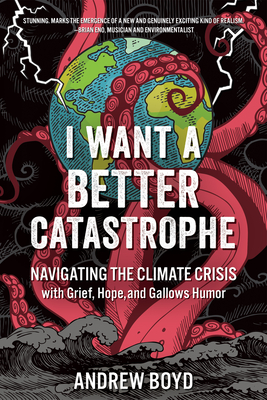
I Want a Better Catastrophe: Navigating the Climate Crisis with Grief, Hope, and Gallows Humor
Andrew Boyd
An existential manual for tragic optimists, can-do pessimists, and compassionate doomers
With global heating projected to rocket past the 1.5°C limit, lifelong activist Andrew Boyd is thrown into a crisis of hope, and off on a quest to learn how to live with the impossible news of our climate doom.
He searches out eight of today’s leading climate thinkers–from activist Tim DeChristopher to collapse-psychologist Jamey Hecht, grassroots strategist Adrienne Maree Brown, eco-philosopher Joana Macy, and Indigenous botanist Robin Wall Kimmerer–asking them: Is it really the end of the world, and if so, now what?
With gallows humor and a broken heart, Boyd steers readers through their climate angst as he walks his own. Boyd’s journey takes him from storm-battered coastlines to pipeline blockades and hopelessness workshops. Along the way, he maps out our existential options and tackles some familiar dilemmas: Should I bring kids into such a world? Can I lose hope when others can’t afford to? Why the fuck am I recycling?
He finds answers that will surprise, inspire, and maybe even make you laugh. Drawing on wisdom traditions Eastern, Western, and Indigenous, Boyd crafts an insightful and irreverent guide for achieving a better catastrophe. This is vital reading for everyone navigating climate anxiety and grief as our world hurtles towards an unthinkable crisis.
(Goodreads.com)