
The On Being Project (newsletter@onbeing.org)


“The experience of being aware – Awareness’s awareness of itself – is an utterly unique experience. All other experience is known by something other than itself. It is mediated through the mind. However, awareness’s knowledge of itself does not take place through the mind. It knows itself by itself.“
–Rupert Spira
Rupert Spira (born March 13, 1960) is an English spiritual teacher, philosopher and author of the Direct Path based in Oxford, UK. Wikipedia
(newsletter@rupertspira.com)
I pick a dozen favorite tracks—each showcasing the vocalist in tandem with a jazz legend
| TED GIOIA JUL 22, 2023 (tedgioia@substack.com) |

In my tribute to Tony Bennett yesterday, I mentioned that you could fill an article with stories of his generosity and kindness. And, true enough, those stories started showing up on social media yesterday almost immediately after news of Bennett’s death went public—I read dozens of them.
Most of them are from people who had little or no influence in the entertainment business. Many of them were just fans who had crossed paths with a famous singer. But Bennett went out of his way to treat each one with respect and generosity of heart.
For example, read this or this or this or this or this or this or this or this. Few of the stories are dramatic—just simple acts of human decency. But they are rare in any sphere of society nowadays, and especially among show business superstars.
But today I want to focus on Tony Bennett’s music, and just a small part of—namely, his collaborations with leading jazz artists.
If you want to appreciate the artistry of singer Tony Bennett, where do you even begin? There are so many places to drop your needle in this haystack of barnburning albums.
But it’s a great problem to have.
The numbers alone are dazzling. According to discographers, Tony Bennett released 61 studio albums, 83 singles, 11 live recordings, and more than 30 compilation albums. Bennett was nominated for a Grammy on 41 occasions, and walked away with the prize almost half the time—with 19 of those statuettes sitting on his shelf. He had 24 songs reach the top 40 on the charts.
I note that most of this happened during an era when his manner of singing, rooted in old songs and a distinctive jazz sensibility, was considered out-of-style and out-of-touch with contemporary trends. In fact, his biggest successes happened during the period in which rock music was the dominant force in commercial music.

Tony Bennett performs with Duke Ellington at the 1966 Grammy Awards (Getty Images)
Bennett’s career straddled genres, and he could genuinely sing in any context. Over the years, he laid down tracks with a ridiculous range of stars—performing with Paul McCartney, Willie Nelson, Stevie Wonder, Aretha Franklin, Elton John, Sting, Bono, and dozens of other legends and near-legends.
I won’t even try to assess that work today. Maybe I will revisit it on another occasion. But I will make one observation here: No matter what setting he was in, Bennett not only delivered the goods but he also demonstrated tremendous skill in bringing out the best in others.
His jazz-oriented recordings are more manageable. I actually wish there were more of these—because, for most of his career, record label execs preferred showcasing Bennett in more commercial projects. But the jazz tracks that did get recorded are glorious. Those two albums with Bill Evans are exquisite, and are especially well known. But there are other examples that deserve more attention from fans.
Let’s take a look at this music.
Something amazing happened on May 25, 1964, at least if you’re a jazz fan. On that day, Tony Bennett walked into a New York studio with Stan Getz, Herbie Hancock, Ron Carter, and Elvin Jones. Just thinking about it makes my heart palpitate.
But here’s the rub: they only recorded one track. Later that year, that same ensemble returned to the studio, and recorded three more songs.
In other words, they never had enough music to release an entire album—which makes me moan and groan, because this would have been one of the classic jazz vocal albums of the century. At least we have a taste of this music to savor.
Why didn’t they make a studio album together? It’s a crying shame—because Duke Ellington and Tony Bennett were on the same wave length and seemed to have a strong personal connection. Ellington even became friends with Bennett’s mother, and would frequently send Tony new songs along with a dozen roses.
“A bunch of flowers arrived at my house, and I would say ‘Duke is at it again,’” the singer later recalled. They appeared together on TV on multiple occasions, and even did a 25-city tour on the same program (with Bennett insisting that Ellington get top billing—just as he had done with Count Basie when he sang with that band). But all we have are some short video clips. This one is choice.
Both Tony Bennett and Bill Evans shared the unfortunate distinction of getting dropped by Columbia Records in the early 1970s. That label made many lamentable decisions back then—in their wisdom, the Columbia honchos also dumped Keith Jarrett, Ornette Coleman, and Charles Mingus. In this instance, Bennett and Evans joined forces in the mid-1970s for two of the most moving duet albums in the history of jazz singing. That’s more than my opinion—this music is cherished by almost everybody who has heard it.
A year after recording The Tony Bennett/Bill Evans Album, released by Fantasy in 1975. the two artists returned to the studio to record Together Again for Bennett’s own Improv Records label. The album was subsequently released on Concord, and the Bennett/Evans duets here are just as magical as the first time around. My hunch is that this collaboration helped lay the foundation for Bennett’s career revival—where he focused more on jazz standards and sought out accompanying musicians of the highest caliber. Evans, for his part, never made a subsequent album with a vocalist.
Honestly, this was not an obvious pairing back in the day, and both players had to stretch and adapt in this uncharacteristic setting. But the results speak for themselves. This is music for the ages.
More than a decade before the Bennett-Evans project, the singer engaged in another unexpected meeting-of-minds with a famous jazz pianist. On August 28, 1962, both Bennett and Dave Brubeck were booked to play the Sylvan Theater on the grounds of the Washington Monument. Each artist performed separately and then they decided to attempt some songs together—without any rehearsal or much planning.
Tapes of the concert were long believed lost until an archivist tracked them down a half-century later. These musicians were at peak levels of fame back then—Brubeck was still riding high on the gold record (and eventually double platinum) success of Time Out, and Bennett was climbing the charts with “I Left My Heart in San Francisco.” I even have a hunch that Brubeck tossed in a quote from “The Trolley Song” during “That Old Black Magic” as humorous nod to that other Bay Area song.
Whoever set up this project is a savvy matchmaker. Both Basie and Bennett were specialists in relaxed swing, knowing when to push and when to lay back. They could have made a dozen albums together, and fans would still clamor for more. A lot of credit goes to Columbia honcho Mitch Miller, who brought these musicians into a studio in 1958 after an attempt to record them in concert failed due to technical difficulties. By the way, Bennett returned the favor by appearing with Basie on the latter’s label Roulette a few months after. But they never joined forces live in the studio again.
We are fortunate that both Tony Bennett and Dexter Gordon were under contract to the Columbia label in the mid-1980s. Gordon had just achieved a career milestone with his Oscar nomination for his performance in the film Round Midnight. Bennett, for his part, had only recently resigned with Columbia, after more than a decade separation, and was about to enjoy a second act to his career that few singers will ever match. They only collaborated on two tracks, but this was a star-crossed pairing by any measure.
You probably don’t think of Tony Bennett as a bebop singer, but here he floats effortlessly in a fast tempo alongside Dizzy Gillespie. Dizzy is famous for his speed and high notes, but Bennett delivers on both those counts too—check out his bravura coda. Once again, I wish this duo had made an entire album together with more flashy songs of this sort. The two did enjoy an onstage reunion for Dizzy’s 75th birthday performances at the Blue Note—maybe somebody will track down and release recordings of those proceedings.
People partied for many reasons in 1999, but for jazz fans it was also the centenary of Duke Ellington, the most beloved big band leader of them all. Tony Bennett used this as an excuse to release Bennett Sings Ellington: Hot & Cool, and invited Wynton Marsalis to share in the festivities. On this particular track, Bennett takes it cool, while Marsalis opts for the hot, moaning and growling on trumpet in exactly the way Ellington liked it.
I’ve gone on record claiming that Amy Winehouse was one of the finest jazz singers of her generation, and this track offers irrefutable evidence. Her phrasing is straight out of the Billie Holiday playbook. But Bennett is just as persuasive here, and he shows that he can shine without distracting in the slightest from his vocal partner. The fact that they achieve all this on a song that has been performed and recorded thousands of times before makes this achievement all the more impressive.
Jazz altoist Phil Woods shows up on five tracks from Tony Bennett’s 2004 album The Art of Romance, which won a Grammy for traditional pop vocal album. This track also boasts an arrangement by Johnny Mandel and a song by Stephen Sondheim. In my world, that’s as good a roster as the 1998 Yankees. Woods is so charged up, he even takes two solos.
Tony Bennett returned to the jazz piano format for his 2015 album The Silver Lining: The Songs of Jerome Kern, drawing on the considerable talents of Bill Charlap. The resulting album is one of my favorite late career offerings in the Bennett’s discography—this was the music I was listening to the night before Bennett’s death. The singer was almost 90 years old when he recorded this, but his interpretive skill shines on every phrase. Grammy voters apparently agreed, giving The Silver Lining an award for Traditional Pop Vocal Album.
Only Boys Aloud Jul 4, 2023 Only Boys Aloud sing Seasons of Love from the musical Rent. Performed live in St. David’s Hall, Cardiff. Music and Lyrics by Jonathan Larson Arranged by Tim Rhys-Evans
Asaf Braverman Apr 12, 2023 From the very beginning, when he meets his first Russian students in 1912, Gurdjieff speaks of formalizing his work, of raising funds to buy equipment, and of eventually hiring a permanent place. But the political environment of Russia prevents this…
New Thinking Jul 21, 2023 This video is a special release from the original Thinking Allowed series that ran on public television from 1986 until 2002. It was recorded in about 1989. Motivational training techniques often focus mindlessly on “positive thinking”, glossing over the need for people to engage in soul-searching and self-renewal. John O’Neil, past-president of the California School of Professional Psychology, discusses the unfortunate trend to treat “success” as an all-consuming end in itself, without regard to the consequences of this attitude. O’Neil is author of The Paradox of Success. Now you can watch all of the programs from the original Thinking Allowed Video Collection, hosted by Jeffrey Mishlove. Subscribe to the new Streaming Channel (https://thinkingallowed.vhx.tv/) and watch more than 350 programs now, with more, previously unreleased titles added weekly. Free month of the classic Thinking Allowed streaming channel for New Thinking Allowed subscribers only. Use code THINKFREELY.
verb
ARCHAIC • HUMOROUS
gerund or present participle: swiving
Origin

Middle English: apparently from the Old English verb swīfan ‘move (along a course), sweep’.
Extended from the traditional prayer by Rev. Jim Cotter and printed in his book Prayer at Night, Cairos Publications, Sheffield, England, 1988 and included in “Anatomy of the Spirit” by Caroline Myss:
~ God be in my head and in my understanding.
God be in my eyes and in my looking.
God be in my mouth and in my speaking.
God be in my tongue and in my tasting.
God be in my lips and in my greeting.
~ God be in my nose and in my smelling/inhaling.
God be in my ears and in my hearing.
God be in my neck and in my humbling.
God be in my shoulders and in my bearing.
God be in my back and in my standing.
~ God be in my arms and in my reaching/receiving.
God be in my hands and in my working.
God be in my legs and in my walking.
God be in my feet and in my grounding.
God be in my knees and in my relating.
~ God be in my gut and in my feeling.
God be in my bowels and in my forgiving.
God be in my loins and in my swiving.
God be in my lungs and in my breathing.
God be in my heart and in my loving.
~ God be in my skin and in my touching.
God be in my flesh and in my paining/pining.
God be in my blood and in my living.
God be in my bones and in my dying.
God be at my end and at my reviving.”
The Reverend James England Cotter, known simply as Jim Cotter (August 23, 1942 – April 16, 2014), was an English Anglican priest, remembered for his religious poetry and his advocacy for gay and lesbian Christians. Wikipedia
From Wikipedia, the free encyclopedia
| William Wells Brown | |
|---|---|
| Born | 1814 or March 15, 1815 near Lexington, Kentucky, U.S. |
| Died | November 6, 1884 Chelsea, Massachusetts, U.S. |
| Occupations | Abolitionistwriterhistoriancomedian |
| Notable work | Clotel (1853), the first novel written by an African American |
| Spouses | Elizabeth “Betsey” Schooner(m. 1834; died 1851)Anna Elizabeth Gray (m. 1860) |
| Children | 5, including Josephine |
| Relatives | Joe Brown (brother) |
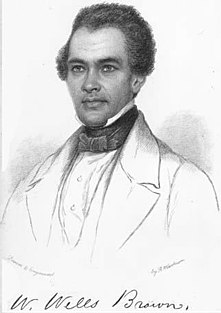
William Wells Brown (c. 1814 – November 6, 1884) was an American abolitionist, novelist, playwright, and historian. Born into slavery near Mount Sterling, Kentucky, Brown escaped to Ohio in 1834 at the age of 19. He settled in Boston, Massachusetts, where he worked for abolitionist causes and became a prolific writer. While working for abolition, Brown also supported causes including: temperance, women’s suffrage, pacifism, prison reform, and an anti-tobacco movement.[1] His novel Clotel (1853), considered the first novel written by an African American, was published in London, England, where he resided at the time; it was later published in the United States.
Brown was a pioneer in several different literary genres, including travel writing, fiction, and drama. In 1858 he became the first published African-American playwright, and often read from this work on the lecture circuit. Following the Civil War, in 1867 he published what is considered the first history of African Americans in the Revolutionary War. He was among the first writers inducted to the Kentucky Writers Hall of Fame, established in 2013.[2] A public school was named for him in Lexington, Kentucky.
Brown was lecturing in England when the 1850 Fugitive Slave Law was passed in the US; as its provisions increased the risk of capture and re-enslavement, he stayed overseas for several years. He traveled throughout Europe. After his freedom was purchased in 1854 by a British couple, he and his two daughters returned to the US, where he rejoined the abolitionist lecture circuit in the North. A contemporary of Frederick Douglass, Brown was overshadowed by the charismatic orator and the two feuded publicly.[3]
A descendant of Mayflower passenger Stephen Hopkins through his father, William was born into slavery in 1814 (or March 15, 1815) near Lexington, Kentucky, where his mother Elizabeth was a slave. She was held by Dr. John Young and had seven children, each by different fathers. (In addition to William, her children were Solomon, Leander, Benjamin, Joseph, Milford, and Elizabeth.) William was of mixed race; his father was George W. Higgins, a white planter and cousin of his master Dr. Young. Higgins formally acknowledged William as his son and made Young promise not to sell him.[4] But Young did sell the boy and his mother. In the end, William was sold several times before he was twenty years old.
His brother Joseph has been identified by researchers Ron L. Jackson Jr. and Lee Spencer White as Joe, the slave of Alamo commander William B. Travis. Joe was one of the few survivors of the battle.[5]
William spent the majority of his youth in St. Louis. His masters hired him out to work on steamboats on the Missouri River, then a major thoroughfare for steamships and the slave trade. His work allowed him to see many new places. In 1833, he and his mother escaped together across the Mississippi River, but they were captured in Illinois. In 1834, Brown made a second escape attempt, successfully slipping away from a steamboat when it docked in Cincinnati, Ohio, a free state.
In freedom, he took the names of Wells Brown, a Quaker friend who helped him after his escape by providing food, clothes and some money. He learned to read and write, and eagerly sought more education, reading extensively to make up for what he had been deprived.[6] Around this time he was hired by Elijah Parish Lovejoy and worked with the famed abolitionist in his printing office.[7]
During his first year of freedom in 1834, Brown at age 20 married Elizabeth Schooner. They had two daughters who survived to adulthood: Clarissa and Josephine.[8] William and Elizabeth later became estranged. In 1851, Elizabeth died in the United States.[9]
Brown had been in England since 1849 with their daughters, lecturing on the abolitionist circuit. After his freedom was purchased in 1854 by a British couple, Brown returned with his daughters to the US, settling in Boston.[9] On April 12, 1860, the 46-year-old Brown married again, to 25-year-old Anna Elizabeth Gray in Boston.[9][10]
In 1856, Well’s daughter Josephine Brown published Biography of an American Bondman (1856), an updated account of his life, drawing heavily on material from her father’s 1847 autobiography. She added details about abuses he suffered as a slave, as well as new material about his years in Europe.[8]

From 1836 to about 1845, Brown made his home in Buffalo, New York, where he worked as a steamboat man on Lake Erie. He helped many fugitive slaves gain their freedom by hiding them on the boat to take them to Buffalo, or Detroit, Michigan, or across the lake to Canada. He later wrote that during the seven-month period of time from May to December 1842, he had helped 69 fugitives reach Canada.[11][12] Brown became active in the abolitionist movement in Buffalo by joining several anti-slavery societies and the Colored Convention Movement. Brown’s work in anti-slavery societies often included public speaking, and he frequently used music as part of his performance. Brown’s use of music in his speeches emphasizes music’s role in the anti-slavery movement of the 1840s.[citation needed] He “traveled with a slavery-themed travelling panorama”.[13]: 44 While living in Buffalo, Brown also organized a Temperance Society, which quickly gained 500 members. At the time there were only 700 black people living in Buffalo.[1]
In 1849, Brown left the United States with his two young daughters to travel in the British Isles to lecture against slavery. He wanted them to gain the education he had been denied.[9][14] He was also traveling that year as a representative of the US at the International Peace Congress in Paris. Given passage of the Fugitive Slave Act of 1850 in the US, which increased penalties and more severely enforced capture of fugitive slaves, he chose to stay in England until 1854. That year his freedom was purchased by British friends. As a highly visible public figure in the US, he was at risk for capture as a fugitive and re-enslavement. Slave catchers were paid high bounties to return slaves to their owners, and the new law required enforcement even by free states and their citizens, although many resisted.
Brown lectured widely to antislavery circuits in the UK to build support for the US movement. He often showed a metal slave collar as demonstration of the institution’s evils.[15] An article in the Scotch Independent reported the following:
By dint of resolution, self-culture, and force of character, he [Brown] has rendered himself a popular lecturer to a British audience, and vigorous expositor of the evils and atrocities of that system whose chains he has shaken off so triumphantly and forever. We may safely pronounce William Wells Brown a remarkable man, and a full refutation of the doctrine of the inferiority of the negro.[16]
Brown also used this time to learn more about the cultures, religions, and different concepts of European nations. He felt that he needed always to be learning, in order to catch up and live in a society where others had been given an education when young. In his 1852 memoir of travel in Europe, he wrote,
He who escapes from slavery at the age of twenty years, without any education, as did the writer of this letter, must read when others are asleep, if he would catch up with the rest of the world.[6]
At the International Peace Conference in Paris, Brown faced opposition while representing the country that had enslaved him. Later he confronted American slaveholders on the grounds of the Crystal Palace.[17]
Based on this journey, Brown wrote Three Years in Europe: or Places I Have Seen And People I Have Met. His travel account was popular with middle-class readers as he recounted sightseeing trips to the foundational monuments of European culture. In his Letter XIV, Brown wrote about his meeting with the Christian philosopher Thomas Dick in 1851.[18]
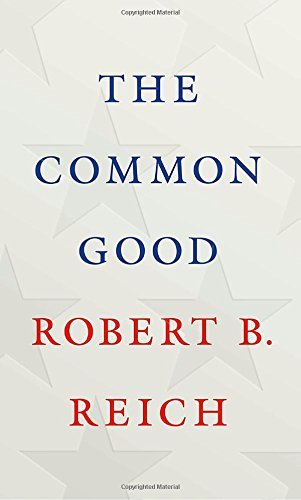
From the best-selling author of Saving Capitalism and The Work of Nations, a passionate, clear-eyed manifesto on why we must restore the idea of the common good to the center of our economics and politics.
With the warmth and lucidity that have made him one of our most important public voices, Robert B. Reich makes the case for a generous, inclusive understanding of the American project, centering on the moral obligations of citizenship. Rooting his argument in everyday reality and common sense, Reich demonstrates the existence of a common good, and argues that it is this that defines a society or a nation. Societies and nations undergo virtuous cycles that reinforce and build the common good, as well as vicious cycles that undermine it. Over the course of the past five decades, Reich contends, America has been in a slowly accelerating vicious cycle–one that can and must be reversed. But first we need to weigh what really matters, and how we as a country should relate to honor, shame, patriotism, truth, and the meaning of leadership.
Powerful, urgent, and utterly vital, this is a heartfelt missive from one of our foremost political thinkers: a fundamental statement about the purpose of society and a cri de coeur to save America’s soul.
(Goodreads.com)
