All posts by Mike Zonta

Biography: Bishop James Pike

In Search Of…Bishop Pike: Was Bishop Pike a minister, martyr, or madman? Original broadcast: 15 February 1982. Leonard Nimoy narrates:


James Albert Pike (February 14, 1913 – September 9, 1969) was an American Episcopal bishop, prolific writer, and one of the first mainline religious figures to appear regularly on television.

His outspoken, and to some, heretical views on many theological and social issues made him one of the most controversial public figures of his time. He was an early proponent of ordination of women, racial desegregation, and the acceptance of LGBT people within mainline churches. Pike was the fifth Bishop of California. Late in his life he explored psychic experimentation in an effort to contact his recently deceased son.  [In 1966, Pike’s son Jim took his own life in a New York City hotel room.  As the video above indicates, Jim took his own life due to questions regarding his “masculinity.”]

(Wikipedia.org)

“The Alexandria Quartet” by Lawrence Durrell

TheAlexandriaQuartet

The Alexandria Quartet is a tetralogy of novels by British writer Lawrence Durrell, published between 1957 and 1960. A critical and commercial success, the first three books present three perspectives on a single set of events and characters in Alexandria (Egypt), before and duringWorld War II. The fourth book is set six years later.

As Durrell explains in his preface to Balthazar, the four novels are an exploration of relativity and the notions of continuum and subject–object relation, with modern love as the theme. TheQuartet’s first three books offer the same sequence of events through several points of view, allowing individual perspectives of a single set of events. The fourth book shows change over time.

The four novels are:

In a 1959 Paris Review interview,[1] Durrell described the ideas behind the Quartet in terms of a convergence of Eastern and Western metaphysics, based on Einstein’s overturning of the old view of the material universe, and Freud’s doing the same for the concept of stable personalities, yielding a new concept of reality.

(Wikipedia.org)

Montaigne on the penis

MicheldeMontaigne

“We are right to note the license and disobedience of this member which thrusts itself forward too inopportunely when we do not want it to, and which so inopportunely lets us down when we most need it; it imperiously contests for authority with our will; it stubbornly and proudly refuses all our incitements, both of the mind and hand.”
–Michel Montaigne on the penis

Michel Eyquem de Montaigne (February 28, 1533 – September 13, 1592) was one of the most significant philosophers of the French Renaissance, known for popularizing the essay as a literary genre. Wikipedia

To Seize Benefits of Coincidence, Sometimes You Must Act Quickly

Airport

By Bernard D. Beitman, M.D. (TheEpochTimes.com)

An opportunity suddenly appears within a narrow time window. Will you act?

In a busy airport, a man saw a woman who immediately struck him as “the one.” A journalist found himself literally on the doorstep of an important contact.

One took the opportunity, the other didn’t. Coincidences, such as those in which you meet exactly the right person at exactly the right time, often present these small windows of great opportunity.

In the Airport

As I recount in my book, Connecting With Coincidence, Joseph Jaworski was running to catch a plane at Chicago’s O’Hare airport when he noticed a “very beautiful” young woman walking toward him. As she passed him, he stopped and looked into her eyes, which were “absolutely gorgeous.”

He was certain he knew her. At that moment, he saw his future life with her. He ran after her and caught up to her. As she was about to hand her Dallas-bound ticket to the agent, he pulled her back and insisted they talk right then.

“Are you married?” he asked.

“No” she replied. “Are you?”

“Of course not,” he said.

He told her that he felt they’d met before, although he knew they hadn’t. He insisted that she give him her name and telephone number. Without hesitation, she did.

Jaworski later wrote about meeting Mavis: “In her presence, I felt this warmth. When my eyes met hers, it was a spiritual thing. When I ran after her, it was as if nothing else mattered. I can hardly describe any of this. It is very mysterious. But it feels like love.”

They were married within the year.

The Journalist

A journalist told me the following story: “It was the late 1970s and I had moved to New York City looking for my first job in journalism after graduate school. A new magazine was being published called Omni and I so much wanted to work for them. The magazine was being published by Bob Guccione, who was also the publisher of Penthouse magazine.

“So I looked in the phonebook, got the address, and decided to visit their offices. It was just a few blocks away from where I lived on the Upper East Side of Manhattan. The address turned out to be a brownstone, not your typical high-rise office building, but I had been to several other magazine offices whose offices turned out to be in brownstones, so I thought nothing of it.

“When I walked in, I was asked who I was there to see, and I said ‘Bob Guccione.’ ‘Fourth floor,’ I was told. So I got in the elevator, pressed the fourth floor button, and went up. When the doors of the elevator opened, there was no hallway or reception desk. Instead, I found myself right smack in someone’s living room lavishly decorated with Persian rugs, large sofas, ornate chairs, huge paintings, a gold-framed mirror, truly sumptuous surroundings.

“Suddenly it struck me: I was in Bob Guccione’s home! Realizing my mistake, and since there was no one in the room, I pressed the first floor button, went back down, and left the building quite flustered. I now wonder: Did I miss an incredible opportunity? What if I had sat down on the couch and waited for someone to show up? Maybe my life would have turned out entirely differently.”

What would have happened had he stayed? Would he have been shot by a bodyguard, greeted by a welcoming office manager, or had a chance to meet the publisher and been offered a job at the magazine? He will never know.

Jason Flom, CEO of Lava Records and a self-professed expert at creating “coincidences,” calls the journalist’s fear of acting a “non-moving violation.” The journalist missed the potential promise of the situation.

Avoid “non-moving violations.” Seize the coincidence!

Bernard-Beitman_0

This article was previously published by Psychology Today, as part of a series of articles by Bernard Beitman, MD, on the science of synchronicity and serendipity. Beitman is a visiting professor at the University of Virginia. He is the former chair of the University of Missouri-Columbia department of psychiatry. See his blog, Connecting With Coincidence, to learn more about Coincidence Studies.

Visit the Epoch Times Beyond Science page on Facebook and subscribe to theBeyond Science newsletter to continue exploring ancient mysteries and the new frontiers of science!

Views expressed in this article are the opinions of the author(s) and do not necessarily reflect the views of Epoch Times.


 

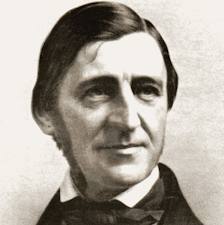
“The Over-Soul” by Ralph Waldo Emerson

Ralph Waldo Emerson

“Let man, then, learn the revelation of all nature and all thought to his heart; this, namely; that the Highest dwells with him; that the sources of nature are in his own mind, if the sentiment of duty is there. But if he would know what the great God speaketh, he must ‘go into his closet and shut the door,’ as Jesus said. God will not make himself manifest to cowards. He must greatly listen to himself, withdrawing himself from all the accents of other men’s devotion. Even their prayers are hurtful to him, until he have made his own. Our religion vulgarly stands on numbers of believers. Whenever the appeal is made — no matter how indirectly — to numbers, proclamation is then and there made, that religion is not. He that finds God a sweet, enveloping thought to him never counts his company. When I sit in that presence, who shall dare to come in? When I rest in perfect humility, when I burn with pure love, what can Calvin or Swedenborg say?

“It makes no difference whether the appeal is to numbers or to one. The faith that stands on authority is not faith. The reliance on authority measures the decline of religion, the withdrawal of the soul. The position men have given to Jesus, now for many centuries of history, is a position of authority. It characterizes themselves. It cannot alter the eternal facts. Great is the soul, and plain. It is no flatterer, it is no follower; it never appeals from itself. It believes in itself. Before the immense possibilities of man, all mere experience, all past biography, however spotless and sainted, shrinks away. Before that heaven which our presentiments foreshow us, we cannot easily praise any form of life we have seen or read of. We not only affirm that we have few great men, but, absolutely speaking, that we have none; that we have no history, no record of any character or mode of living, that entirely contents us. The saints and demigods whom history worships we are constrained to accept with a grain of allowance. Though in our lonely hours we draw a new strength out of their memory, yet, pressed on our attention, as they are by the thoughtless and customary, they fatigue and invade. The soul gives itself, alone, original, and pure, to the Lonely, Original, and Pure, who, on that condition, gladly inhabits, leads, and speaks through it. Then is it glad, young, and nimble. It is not wise, but it sees through all things. It is not called religious, but it is innocent. It calls the light its own, and feels that the grass grows and the stone falls by a law inferior to, and dependent on, its nature. Behold, it saith, I am born into the great, the universal mind. I, the imperfect, adore my own Perfect. I am somehow receptive of the great soul, and thereby I do overlook the sun and the stars, and feel them to be the fair accidents and effects which change and pass. More and more the surges of everlasting nature enter into me, and I become public and human in my regards and actions. So come I to live in thoughts, and act with energies, which are immortal. Thus revering the soul, and learning, as the ancient said, that “its beauty is immense,” man will come to see that the world is the perennial miracle which the soul worketh, and be less astonished at particular wonders; he will learn that there is no profane history; that all history is sacred; that the universe is represented in an atom, in a moment of time. He will weave no longer a spotted life of shreds and patches, but he will live with a divine unity. He will cease from what is base and frivolous in his life, and be content with all places and with any service he can render. He will calmly front the morrow in the negligency of that trust which carries God with it, and so hath already the whole future in the bottom of the heart.”

Link to the whole essay:  http://www.emersoncentral.com/oversoul.htm

Biocentrism: A book review of sorts

Biocentrism

“I think it is safe to say that no one understands quantum mechanics.  Do not keep saying to yourself, if you can possibly avoid it, ‘But how can it be like that?’  because you will go ‘down the drain’ into a blind alley from which nobody has yet escaped.”  
–Nobel physicist Richard Feynman

“The late physicist John Wheeler (1911-2008), who coined the term ‘black hole,’ advocated what is now called the Participatory Anthropic Principle (PAP):  observers are required to bring the universe into existence.

“…[C]ontemporary science asks us to believe:  that the entire universe, exquisitely tailored for our existence, popped into existence out of absolute nothingness.  Who in their right mind would accept such a thing?  Has anyone offered any credible suggestion for how, some 14 billion years ago, we suddenly got a hundred trillion times more than a trillion trillion trillion tons of matter from–zilch?  How any possible natural random process could mix molecules in a blender for a few billions years so that out would pop woodpeckers and George Clooney?  Can anyone conceive of any edges to the cosmos?  Infinity?  Or how particles still spring out of nothingness?

“Is it not obvious that science only pretends to explain the cosmos on its fundamental level?  By reminding us of its great successes at figuring out interim processes and the mechanics of things, and fashioning marvelous new devices out of raw materials, science gets away with patently ridiculous ‘explanations’ for the nature of the cosmos as a whole.  If only it hadn’t given us HDTV and the George Foreman grill, it wouldn’t have held our attention and respect long enough to pull the old three-card Monte when it comes to these largest issues.

“Language is rife with a myriad of contradictions that we merely ignore.  Ask someone what he or she thinks happens after death, and one common reply is, ‘I think there will just be nothing.’  Now that seems to be a valid statement but as we saw in a precious chapter, the verb to be contradicts nothingness.  One can’t be nothing.  Our frequent encounters with the term be nothing or is nothing have numbed us into imagining that it expresses something valid and logical, when in fact it says nothing comprehensible.

“First Principle of Biocentrism:  What we perceive as reality is a process that involves our consciousness.  An ‘external’ reality, if it existed, would–by definition–have to exist in space. But this is meaningless, because space and time are not absolute realities but rather tools of the human and animal mind.

“Second Principle of Biocentrism: Our external and internal perceptions are inextricably intertwined.  They are different sides of the same coin and cannot be divorced from one another.

“Third Principle of Biocentrism:  The behavior of subatomic particles–indeed all particles and objects–are inextricably linked to the presence of an observer.  Without the presence of a conscious observer, they at best exist in an undetermined state of probability waves.

“Fourth Principle of Biocentrism:  Without consciousness, ‘matter’ dwells in an undetermined state of probability.  Any universe that could have preceded consciousness only existed in a  probability state.

“Fifth Principle of Biocentrism:  The structure of the universe is explainable only through biocentrism.  The universe if fine-tuned for life, which makes perfect sense as life creates the universe, not the other way around.  The ‘universe’ is simply the complete spatio-temporal logic of the self.

“Sixth Principle of Biocentrism:  Time does not have a real existence outside of animal-sense perception.  It is the process by which we perceive change in the universe.

“Seventh Principle of Biocentrism:  Space, like time, is not an object or a thing.  Space is another form of our animal understanding and does not have an independent reality.  We carry space and time around with us like turtles with shells.  Thus, there is no absolute self-existing matrix in which physical events occur independent to life.”

James Taylor – I Didn’t Know What Time It Was


The music was written by Richard Rodgers and the lyrics by Lorenz Hart for the musical Too Many Girls (1939). Early hit versions included Benny Goodman and Artie Shaw. The Crampton Sisters 1964 revival for the DCP label was a Hot 100 entry.

The song was introduced by Richard Kollmar and Marcy Westcott in the musical Too Many Girls. It was performed by Trudy Erwin – dubbing for Lucille Ball in the 1940 film version produced by RKO – and interpolated into the score of the 1957 film Pal Joey, where it was sung by Frank Sinatra.

Kaizen

Kaizen

Kaizen, Japanese for “improvement.” When used in the business sense and applied to the workplace, kaizen refers to activities that continuously improve all functions and involve all employees from the CEO to the assembly line workers. It also applies to processes, such as purchasing and logistics, that cross organizational boundaries into the supply chain. It has been applied in healthcare, psychotherapy, life-coaching, government, banking, and other industries.

By improving standardized activities and processes, kaizen aims to eliminate waste (see lean manufacturing). Kaizen was first implemented in several Japanese businesses after the Second World War, influenced in part by American business and quality management teachers who visited the country. It has since spread throughout the world and is now being implemented in environments outside of business and productivity.  (Wikipedia.org)

Solzhenitsyn on where evil lies

Solzhenitsyn

“If only it were all so simple! If only there were evil people somewhere insidiously committing evil deeds, and it were necessary only to separate them from the rest of us and destroy them. But the line dividing good and evil cuts through the heart of every human being. And who is willing to destroy a piece of his own heart?”
Aleksandr Solzhenitsyn, The Gulag Archipelago 1918-1956

Aleksandr Isayevich Solzhenitsyn (December 11, 1918 – August 3, 2008) was a Russian novelist, historian, and short story writer. He was an outspoken critic of the Soviet Union and its totalitarianism and helped to raise global awareness of its Gulag forced labor camp system. Wikipedia