All posts by Mike Zonta

Paulo Coelho recap

“Everything is one thing only.”

“The language of signs is always ready to reveal what the eyes can’t see.  God has written in this world the path each person must take.  you only have to read what He has written for you.”

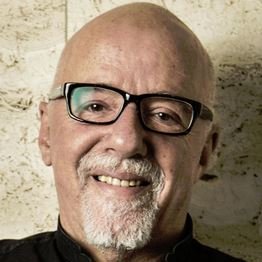
Paulo Coelho de Souza (born August 24, 1947) is a Brazilian lyricist and novelist. He is best known for his novel The Alchemist. In 2014, he uploaded his personal papers online to create a virtual Paulo Coelho Foundation. Wikipedia

Hannah Arendt on Love and How to Live with the Fundamental Fear of Loss

By Maria Popova (brainpickings.org)

loveandsaintaugustine_hannaharendt.jpg?fit=320%2C490

“Love, but be careful what you love,” the Roman African philosopher Saint Augustine wrote in the final years of the fourth century. We are, in some deep sense, what we love — we become it as much as it becomes us, beckoned from our myriad conscious and unconscious longings, despairs, and patterned desires. And yet there is something profoundly paradoxical about such an appeal to reason in the notion that we can exercise prudence in matters of love — to have loved is to have known the straitjacket of irrationality that slips over even the most willful mind when the heart takes over with its delicious carelessness.

How to heed Augustine’s caution, not by subjugating but by better understanding our experience of love, is what Hannah Arendt (October 14, 1906–December 4, 1975) explores in her least known but in many ways most beautiful work, Love and Saint Augustine (public library) — Arendt’s first book-length manuscript and the last to be published in English, posthumously salvaged from her papers by political scientist Joanna Vecchiarelli Scott and philosopher Judith Chelius Stark.

arendt_augustine.jpg?resize=680%2C357

Hannah Arendt (photograph by Fred Stein, 1944); Saint Augustine (painting by Gerard Seghers, circa 1600-1650.)

For half a century after she wrote it as her doctoral thesis in 1929 — a time when this apostle of reason, who would become one of the twentieth century’s keenest and most coolly analytical minds, was composing her fiery love letters to Martin Heidegger — Arendt obsessively revised and annotated the manuscript. Against Augustine’s whetstone, she came to hone her core philosophical ideas — chiefly the troublesome disconnect she saw between philosophy and politics as evidenced by the rise of ideologies like totalitarianism, the origins of which she so memorably and incisively examined. It was from Augustine that she borrowed the phrase amor mundi — “love of the world” — which would become a defining feature of her philosophy. Occupied by questions of why we succumb to and normalize evil, Arendt identified as the root of tyranny the act of making other human beings irrelevant. Again and again, she returned to Augustine for the antidote: love.

But while this ancient notion of neighborly love, which would come to inspire Martin Luther King, was central to Arendt’s philosophical concern and her interest in Augustine, its political significance is inseparable from the deepest wellspring of love: the personal. For all of the political and philosophical wisdom she draws from it, Augustine’s Confessions is animated by his experience of personal love — that eternal force that governs the Sun and the Moon and the stars of our interior lives, reflected and codified in our cultural and social structures.

abzlove19.jpg

Illustration from An ABZ of Love, Kurt Vonnegut’s favorite vintage Danish guide to sexuality

With an eye to Augustine’s conception of love as “a kind of craving” — the Latin appetitus, from which the word appetite is derived — and his assertion that “to love is indeed nothing else than to crave something for its own sake,” Arendt considers this directional desire propelling love:

2e292385-dc1c-4cfe-b95e-845f6f98c2ec.pngEvery craving is tied to a definite object, and it takes this object to spark the craving itself, thus providing an aim for it. Craving is determined by the definitely given thing it seeks, just as a movement is set by the goal toward which it moves. For, as Augustine writes, love is “a kind of motion, and all motion is toward something.” What determines the motion of desire is always previously given. Our craving aims at a world we know; it does not discover anything new. The thing we know and desire is a “good,” otherwise we would not seek it for its own sake. All the goods we desire in our questing love are independent objects, unrelated to other objects. Each of them represents nothing but its isolated goodness. The distinctive trait of this good that we desire is that we do not have it. Once we have the object our desire ends, unless we are threatened with its loss. In that case the desire to have turns into a fear of losing. As a quest for the particular good rather than for things at random, desire is a combination of “aiming at” and “referring back to.” It refers back to the individual who knows the world’s good and evil and seeks to live happily. It is because we know happiness that we want to be happy, and since nothing is more certain than our wanting to be happy, our notion of happiness guides us in determining the respective goods that then became objects of our desires. Craving, or love, is a human being’s possibility of gaining possession of the good that will make him happy, that is, of gaining possession of what is most his own.

illbeyouandyoullbeme_sendak8.jpg?w=680

Illustration by Maurice Sendak from I’ll Be You and You Be Me by Ruth Krauss.

That is why a generous and unpossessive love — a love undiminished by the failure to attain the good for which it craves — can seem like a feat nothing short of superhuman. (“If equal affection cannot be, / Let the more loving one be me,” Arendt’s good friend and great admirer W.H. Auden wrote in his sublime ode to that superhuman triumph of the heart.) But a love predicated on possession, Arendt cautions, inevitably turns into fear — the fear of losing what was gained. Two millennia after Epictetus offered his cure for heartbreak in the acceptance that all things are perishable and therefore even love ought to be held with the loose fingers of nonattachment, Arendt — who notes Augustine’s debt to the Stoics — writes:

2e292385-dc1c-4cfe-b95e-845f6f98c2ec.pngSo long as we desire temporal things, we are constantly under this threat, and our fear of losing always corresponds to our desire to have. Temporal goods originate and perish independently of man, who is tied to them by his desire. Constantly bound by craving and fear to a future full of uncertainties, we strip each present moment of its calm, its intrinsic import, which we are unable to enjoy. And so, the future destroys the present.

Half a century after Tolstoy admonished that “future love does not exist [for] love is a present activity only,” Arendt adds:

2e292385-dc1c-4cfe-b95e-845f6f98c2ec.pngThe present is not determined by the future as such… but by certain events which we hope for or fear from the future, and which we accordingly crave and pursue, or shun and avoid. Happiness consists in possession, in having and holding our good, and even more in being sure of not losing it. Sorrow consists in having lost our good and in enduring this loss. However, for Augustine the happiness of having is not contrasted by sorrow but by fear of losing. The trouble with human happiness is that it is constantly beset by fear. It is not the lack of possessing but the safety of possession that is at stake.

Death, of course, is the ultimate loss — of love as well as life — and therefore the ultimate object of our future-oriented dread. And yet this escape from presence via the portal of anxiety — perhaps the commonest malady to which human beings are susceptible — is itself a living death. Arendt writes:

2e292385-dc1c-4cfe-b95e-845f6f98c2ec.pngIn their fear of death, those living fear life itself, a life that is doomed to die… The mode in which life knows and perceives itself is worry. Thus the object of fear comes to be fear itself. Even if we should assume that there is nothing to fear, that death is no evil, the fact of fear (that all living things shun death) remains.

thinslicesofanxiety10.jpg?resize=768%2C513

Art by Catherine Lepange from Thin Slices of Anxiety: Observations and Advice to Ease a Worried Mind

Against this background of negative space, Arendt casts the shape of love’s ultimate object according to Augustine:

2e292385-dc1c-4cfe-b95e-845f6f98c2ec.pngFearlessness is what love seeks. Love as craving is determined by its goal, and this goal is freedom from fear.

In a sentiment that illuminates the central mechanism by which frustration fuels (temporary) satisfaction in romantic love, she adds:

2e292385-dc1c-4cfe-b95e-845f6f98c2ec.pngA love that seeks anything safe and disposable on earth is constantly frustrated, because everything is doomed to die. In this frustration love turns about and its object becomes a negation, so that nothing is to be desired except freedom from fear. Such fearlessness exists only in the complete calm that can no longer be shaken by events expected of the future.

If presence — the removal of expectancy — is a prerequisite for a true experience of love, then time is the elemental infrastructure of love. Nearly half a century later, in becoming the first woman to speak at the prestigious Gifford Lectures in the 85-year history of the series, Arendt would make this notion of time as the locus of our thinking ego a centerpiece of her landmark lecture, The Life of the Mind. Now, quoting from Augustine’s writings, she considers the paradox of love beyond time for creatures as temporal as we are:

2e292385-dc1c-4cfe-b95e-845f6f98c2ec.pngEven if things should last, human life does not. We lose it daily. As we live the years pass through us and they wear us out into nothingness. It seems that only the present is real, for “things past and things to come are not”; but how can the present (which I cannot measure) be real since it has no “space”? Life is always either no more or not yet. Like time, life “comes from what is not yet, passes through what is without space, and disappears into what is no longer.” Can life be said to exist at all? Still the fact is that man does measure time. Perhaps man possesses a “space” where time can be conserved long enough to be measured, and would not this “space,” which man carries with himself, transcend both life and time?

Time exists only insofar as it can be measured, and the yardstick by which we measure it is space.

aliceinwonderland_zwerger1.jpg

Art by Lisbeth Zwerger for a special edition of Alice’s Adventures in Wonderland

For Augustine, she notes, memory is the space in which time is measured and cached:

2e292385-dc1c-4cfe-b95e-845f6f98c2ec.pngMemory, the storehouse of time, is the presence of the “no more” (iam non) as expectation is the presence of the “not yet” (nondum). Therefore, I do not measure what is no more, but something in my memory that remains fixed in it. It is only by calling past and future into the present of remembrance and expectation that time exists at all. Hence the only valid tense is the present, the Now.

One of the major themes I explore in Figuring is this question of the temporality of even our lushest experiences. “The union of two natures for a time is so great,” Margaret Fuller — one of my key figures — wrote. Are we to despair or rejoice over the fact that even the greatest loves exist only “for a time”? The time scales are elastic, contract- ing and expanding with the depth and magnitude of each love, but they are always finite — like books, like lives, like the universe itself. The triumph of love is in the courage and integrity with which we inhabit the transcendent transience that binds two people for the time it binds them, before letting go with equal courage and integrity. Fuller’s exclamation upon seeing the paintings of Correggio for the first time, overcome with beauty she had not known before, radiates a larger truth about the human heart: “Sweet soul of love! I should weary of you, too; but it was glorious that day.”

Correggio_JupiterAndIo.jpg?resize=680%2C1576

Jupiter and Io, Correggio, circa 1530

Arendt locates this fundamental fact of the heart in Augustine’s writings. A century after Kierkegaard asserted that “the moment is not properly an atom of time but an atom of eternity,” she observes:

2e292385-dc1c-4cfe-b95e-845f6f98c2ec.pngThe Now is what measures time backwards and forwards, because the Now, strictly speaking, is not time but outside time. In the Now, past and future meet. For a fleeting moment they are simultaneous so that they can be stored up by memory, which remembers things past and holds the expectation of things to come. For a fleeting moment (the temporal Now) it is as though time stands still, and it is this Now that becomes Augustine’s model of eternity.

Augustine himself captures this transcendent temporality:

2e292385-dc1c-4cfe-b95e-845f6f98c2ec.pngWho will hold [the heart], and fix it so that it may stand still for a little while and catch for a moment the splendor of eternity which stands still forever, and compare this with temporal moments that never stand still, and see that it is incomparable… but that all this while in the eternal, nothing passes but the whole is present.

Arendt hones in on the heart of the paradox:

2e292385-dc1c-4cfe-b95e-845f6f98c2ec.pngWhat prevents man from “living” in the timeless present is life itself, which never “stands still.” The good for which love craves lies beyond all mere desires. If it were merely a question of desiring, all desires would end in fear. And since whatever confronts life from the outside as the object of its craving is sought for life’s sake (a life we are going to lose), the ultimate object of all desires is life itself. Life is the good we ought to seek, namely true life.

She returns to desire, which simultaneously takes us out of life and plunges us into it:

2e292385-dc1c-4cfe-b95e-845f6f98c2ec.pngDesire mediates between subject and object, and it annihilates the distance between them by transforming the subject into a lover and the object into the beloved. For the lover is never isolated from what he loves; he belongs to it… Since man is not self-sufficient and therefore always desires something outside himself, the question of who he is can only be resolved by the object of his desire and not, as the Stoics thought, by the suppression of the impulse of desire itself: “Such is each as is his love” [Augustine wrote]. Strictly speaking, he who does not love and desire at all is a nobody.

[…]

Man as such, his essence, cannot be defined because he always desires to belong to something outside himself and changes accordingly… If he could be said to have an essential nature at all, it would be lack of self-sufficiency. Hence, he is driven to break out of his isolation by means of love… for happiness, which is the reversal of isolation, more is required than mere belonging. Happiness is achieved only when the beloved becomes a permanently inherent element of one’s own being.

It is stunning to trace the line of these ideas across Arendt’s life of the mind. Decades after her doctoral days, she would compose her influential treatise on how tyrants use isolation as a weapon of oppression — totalitarianism, in other words, is not only the denial of love but an assault on the essence of human beings.

In the remainder of Love and Saint Augustine, Arendt goes on to examine Augustine’s hierarchy of love, the psychological structure of craving, the perils of anticipation, and the building blocks of that “love of the world” so vital to a harmonious life and a harmonious society. Couple it with Elizabeth Barrett Browning on happiness as a moral obligation, then revisit Arendt on action and the pursuit of happinesslying in politicsthe power of being an outsider, and the difference between how art and science illuminate the human condition.

SUNDAY NIGHT TRANSLATION GROUP – 3/3/19

Translators:  Melissa Goodnight, Richard Branam, Mike Zonta, Hanz Bolen, Alex Gambeau

SENSE TESTIMONY:  Strong emotions can be threatening due to conflicts within person and between people.

5th Step Conclusions:

1)  Truth is an open-ended, all-able, all-powerful public agreement within one private, all-inclusive individuation.

2)  One Infinite, Consciousness Beingness, is the universal singular Sentience of all individuation — knowing unconditionally a limitless array of experience, that is always safely in perfect harmonious accord, with its own transcendent nature.

3)  Truth is all-inclusive impersonal one within, timing creative intuition so the power moves to pure consciousness.

4)  All is Well Clear True Straight Courageous Considerate powerful knowing presence of one individuated being I Am.

5)  Truth is THIS Effortlessly Stretched Riviera: This Burning Heat of Love Intimately Equalling the Brilliance of a Clear Sky: This is the Principled Harmony Driven by Thriving Living.
Truth is this Mobilizing Motivation: Passed Beyond Consciousness Conscious of Consciousness Beingness, this Rubbing is the Motus Ariseness which is the Essential I Am I Identity, Being the Strength of Strengths’ Eternal.
Truths’ Social Performance is Consciousness Awareness, the Principle of Love Constantly. Applied: Being Romantic Androgyny This Relationship Is the Indivisible I Am I.

A prayer of St. Francis of Assisi:

“Lord, make me an instrument of your peace; where there is hatred, let me sow love; where there is injury, pardon; where there is discord, union; where there is doubt, faith; where there is despair, hope; where there is darkness, light; and where there is sadness, joy.

“O Divine Master, grant that I may not so much seek to be consoled, as to console; to be understood, as to understand; to be loved, as to love; for it is in giving that we receive, it is in pardoning that we are pardoned, and it is in dying that we are born to eternal life.” Amen.

Little Things in a Big Universe

How Everything Collapsing Teaches Us What Kind of People the 21st Century Needs Us to Be

When I look around the world these days, the very first thing that strikes me, whenever I scan the headlines, is just how fast everything’s collapsing. Yes, everything. The planet, democracy, economies, societies, lives. Then I’m struck by how it’s pretty astonishing we’re just sleepwalking into all these collapses — we don’t have a plan for stopping, reversing, or mitigating them. Then I ruminate on how just how strangely, tragically human that is — we’re lost in denial and escapism and outrage and make-believe, pleasing delusions and comforting lies, at the precise moment we need to face up to the difficult, unforgiving realities of collapse. But facing reality’s rarely been harder than now, has it?

What lies beneath this strange pattern of collapse, chaos, and delusion? I think it has to with a mindset, a certain kind of attitude, that’s a relic, perhaps, of the industrial age — or perhaps it has deeper roots. I’ll come to all that. First, let me try to describe it — and probably fail. I’d put it like this.

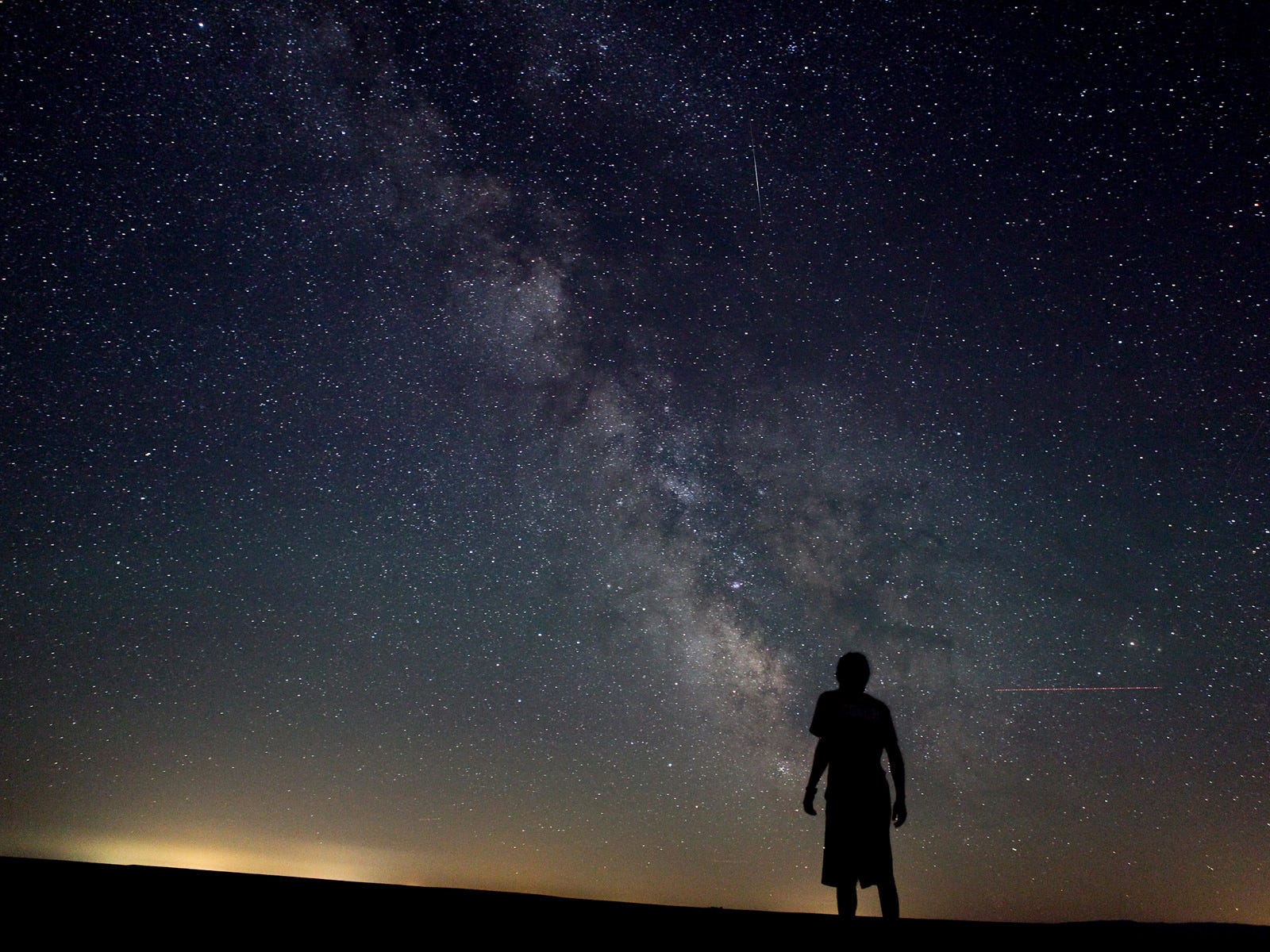
We’re taught to believe we’re the biggest things in a little world. But the truth is that we’re little things in a big universe. I told you I’d fail, didn’t I? Very well, let me try to explain that curious sentence or two.

What I’d call a predatory, individualist, greedy, exploitative, abusive mindset has come to rule us — what you might call utilitarian individualistic materialism, a mindset of pure maximization of robotic self-interest. We’ve become entitled things, us humans, who think of ourselves as apex predators — entitled to destroy and consume and ruin whatever stands in the way. The way of satisfying our most evanescent, selfish, and useless desires — to be the most powerful and mighty of all. Having learned this mindset in everything, from school to advertising to work, we think of ourselves as big fish with great teeth and huge stomachs, hovering at the top of a little pond. All the littler fish, plants, and snails are there for us to eat, consume, toy with, ultimately destroy. By “fish”, I don’t just mean animals and plants and so on — it’s just an imperfect metaphor.

I mean that we think of ourselves as superior, at the top, above and beyond. We think we have our escape. From what? From being a part of everything. From being a part of the world, a part of nature, a part of each other, too. We think of ourselves as pure atoms, ultimate individualists, whose sole goal is to rise to the top of the very haze that chokes us. Is that beginning to make a little sense? It’s a complicated thing to explain. I mean something like “we think of ourselves as above and beyond who and what we really are” or maybe “above and beyond our true condition and predicament as human beings.”

I suppose that raises the question: who are we really — and who am I to say? Who we are really isn’t a matter of my opinion. We are finding out the hard way who we really are. We are a part of the natural world — we cannot just inflict damage on it: it will lash back at us. We are a part of each other, as much as we might not like to admit it, having bought into macho myths of selfhood and so on — what else is a democracy, a society, a social contract? We are all a part of the world, too — when I deny you basic things like healthcare, I am only really turning you towards fanatics and extremists, in your despair and rage. We are a part of ourselves — which sounds like a foolish thing to say, until you consider how alienated and self-destructive many people have become these days.

The idea that we are only here to predatory, exploitative, abusive things — meant to prey, consume, conquer, and loot, and then preen and strut and gloat and rub in it each others’ faces — is badly, badly wrong. It’s a product, if you ask me, of industrial-age thinking, when we suddenly discovered how to produce a multitude of things, using simple technologies. But that revolution changed our attitudes and perspective of ourselves, too.

All the problems the world has today are linked by one single thing: this predators’ mindset, the perspective of seeing ourselves as above and beyond everything else, even each other. It is what connects climate change to inequality to stagnation to division to fascism. All these things are connected through us, my friends. The problem is that we don’t understand it.

(Even if we are relative nobodies in human society — middle managers, salespeople, corporate drones (that’s OK, everyone has to make a living) — we still see ourselves as above and beyond. Enough of us, anyways. Above and beyond what? Better than the animals, better than the forests, better than the stars. Better than those filthy poor people. Better than those distant, bedraggled ancestors. Better than, above, beyond.

Do you see how deep this mindset goes? I don’t just mean it in a casual way — I mean that is always operating in us, at an unconscious level, three particular thoughts. First, that we are better than some other people or beings or things. Second, that we are not as powerful as some others, still. Third, that we must be as superior to other things as we possibly can be. The point of our lives has become to become above and beyond, and my guess is this internal logic is always operating in most of us at a deep level, where we don’t really notice it. We are always seeking to be the biggest, grandest, most powerful things — the ones we imagine we should be.)

Now here is the irony. What do little things do? They do just what we do — if we look at ourselves a little more carefully. Don’t you think it’s funny that by day we think of ourselves as mighty and savage and powerful things — even if we are nobodies in human society — and yet the moment the night falls, we are clinging desperately to those we love? Like the very stars are turning to dust? Like our hearts are on fire? They are, my friends. We come face to face with the truth of ourselves, our condition, when we are naked— our mortality, our fragility, our impossible smallness, that vulnerability is the deepest thing in us.

The 21st century is going to require a fundamental and formative shift in our mindsets and attitudes. We can no longer think of ourselves as the biggest, strutting, preening, voracious things, in a little world, exploiting, abusing, rubbing our power and might in everything’s face. We can pretend, for a little while longer, I suppose — until the glaciers melt, the insects die, and our democracies implode. Then what? Better for us to learn the lesson our own collapse is trying to teach us.

We must understand ourselves as the littlest things of all, in a big, big universe — not as the biggest things in a little world. You see, when we think of ourselves as big things in a little world, we imagine that we don’t have to take care of anything at all — from the world to the glaciers to our democracies to ourselves. “It’ll fix itself! Stop being an alarmist!!”, generations of pundits who’ve never left the bubble of an office have cried. It hasn’t fixed itself, has it? Our problems as a world have only gone from bad to worse. But that’s hardly surprising. Big things in a little world don’t have to worry about anything at all — except maybe being feared the most. And from that moral imperative — being feared the most — come all the problems we face today, fascism, inequality, greed, Brexits and Trumpisms, climate change, and so on.

When we think of ourselves as the littlest things in a big universe, our attitude couldn’t be more different — because our perspective changes completely. Suddenly, we see ourselves as equals. Everyone is in just the same position as us — little things made of dust, on a spinning rock lit by a flame, never knowing why they were put here, not knowing where they will go. There is no reason whatsoever to try to exploit, abuse, hurt, or harm another.

When I say “littlest”, I mean littlest. Aren’t we littler not just than the trees and mountains — which is obvious — but littler even than the grass and the waves? They aren’t afraid of dying and loving and grieving. We are. We spend our days in denial of the abject fear that will come at night — which is why daytime is a time when we pretend we are superior. But the truth is that we are the littlest things of all — the most frightened, desperate, and confused things, by virtue of our terrible knowledge. That is what the story of the fruit of the tree, of the fall from grace, of the exile from the garden, should have taught us — but didn’t.

Yet if we ourselves are the littlest things of all, then the next mental breakthrough is even truer and more beautiful. If we are littler than the grass and the insects and the waves — then it isn’t our job to destroy and consume and ruin them, is it? What is the job of little things? It is to nourish and tend and cultivate. To support and renew. To hold greater things together. To let many things be. To allow vaster things to flourish and grow — by expanding and unfurling themselves, just as the seed nourishes the whole forest, just as the raindrop finds its way to the sea. Little things are there to hold and connect big things, just as the thread weaves the cloth. Little things teach big things the truth, meaning, and might of grace — and if you have ever held a sleeping child, you will feel it in whispering right down in your bones.

But we are to the universe what that little sleeping child is to you. We are here to teach it the meaning of grace, of love, of truth, too, by revealing it to one another. We are not what the hurricane is to the harvest, or what the drought is to the sea. If that is all we are — then what meaning is there left, what purpose, what reason, is there to us at all? Aren’t we just blind things — who destroy and shatter the very place where we live, whether we call them societies or countries or planets? Haven’t we failed to understand, in that way, who and what we really are?

The moral logic, the attitude, the presence, the perspective, of these two stances — that we’re the biggest things in a little world, or the littlest things in a big universe — couldn’t be more different. One has led us to live in an age of hubris, of arrogance, of imbecility marching proudly down the avenues — it has led squarely to climate change, fascism, inequality, and billionaires hoping to escape to Mars while the world burns.

The other attitude asks some of these things — very different qualities — from us. The humility to kneel. The gentleness to hold something fragile tight. The wisdom to let it go. And the courage, nobility, and strength to grieve for all that will never be, with all the love and fury in our beating hearts. It asks us to see the beauty in sorrow, too — not just the cheap pleasure of power — just like every breath a sleeping child takes teaches us what fragility, what grief, what love is.

We are to the universe what that little sleeping child is to us, when we carry it in our arms, and our hearts seem to sing, explode, burst, stop. We are meant to teach it just the very same things, my friends. Where will that kind of mindset lead? Who will develop and cultivate the attitude that we are the littlest things in a big universe? Those, my friends, are, if you ask me, the great questions of now.

Umair
February 2019

Capitalism Isn’t Going to Survive the 21st Century. Will We?

What Happens After Capitalism Ends?

Here’s a tiny question. Do you think capitalism will be around fifty years from now? A hundred? I don’t — at least not as the fundamental organizing principle of the world it is today. I think if it’s the best we’ve got — well, my friends, we’re toast. I don’t think capitalism is going to survive this century — because it’s already making everything more or less self destruct.

Indulge me for a moment and think with me about it. Imagine the world fifty years from now — maybe a hundred years from now. Don’t add any kind of amazing technologies, like free energy for everyone, or magical reinventions — no miracles allowed: we’re trying to think clearly. Just extend now gently and slowly fifty years forward, and then a hundred, if you like.

What do you see? Here’s what I see. A world ravaged, troubled, broken, and shattered. Climate change has left cities beginning to drown. The weather’s become more violent — and everything’s more unpredictable as a result. As people flee to zones of relative security, societies — already destabilized by inequality and corruption — begin to buckle and break.

But there aren’t enough jobs to go around. They’ve been automated away. What used to be a factory teeming with workers is now a plant buzzing with robots. Even creative and analytical jobs have been automated away. Books and songs and films and laws — all written with the help of “AI”, if not by it. Bang! There goes the economy.

Society, as a result, operates according to something like a caste system now. There are the ultra rich, the old poor, and the new poor — and nothing in between. What used to be a middle class, the defining achievement of modernity, is long gone. What’s a middle class job? Life? Income? Mind? Values? All relics of a bygone age. Instead, in the new caste society, what safety there is is found in patronage. Get on a billionaire’s good side — maybe he’ll toss you enough pennies to eke out a decent living for a while.

As a result, the economy has turned dark. People have turned to vice and crime just to make a living. Women sell their bodies online — which is to say their feelings — because they must compete with sex-tech. Men sell violence, in whatever way that they can — maybe they join this mafia or that mafia, whether it’s called a “corporation” or not, as it is today in Russia. As a result, knowledge, insight, thinking — all these things, which have always been great luxuries, grind to a halt. And with them go gentleness, decency, civility, tolerance.

The atmosphere of the age is therefore one of abuse, violence, greed, despair, ruin: a world on the perpetual brink of fascism. Extremists are always blaming all these problems — a dying planet, not enough jobs, money hoarded at the top — on the most vulnerable, the other, the weak. Who are those? They’re the ones fleeing into zones of safety from elsewhere, usually. They find themselves put into camps, farmed for profit — or maybe just starved to death.

Demagogues and authoritarians rise to the top, as a result. They offer these broken societies protections of three kinds. First, they offer the “pure” protection from the vermin who have come to infect them, the climate refugees, and migrants of collapse. Second, they offer the “good people” protection from the worst kinds of fascists. Third, they offer everyone protection from the worst ravages of these epic problems of an age of ruin — even if its just a kind of psychological safety.

Does my portrait frighten you — or does it sound like we’re already on the way to such a place? Have I overstated the case? Go ahead and think about it for yourself — if nothing changes…does or doesn’t the future resemble the above, in its broad contours? Does the present?

You’re right to say, thought, that my portrait feels incomplete. Even amidst all this — societies collapsing, economies ruined, planet dying — there will be islands and oceans of prosperity. What will they be like? Let’s think about it.

They will have to be places that use every resource they have — whether rivers or trees or human minds and bodies — much more considerately, carefully, and delicately. Those resources will have to be put to genuinely beneficial uses — they can’t just be chewed up to create more Facebooks, because such things benefit no one much in the end — they only create more misery, hatred, unhappiness, loneliness, and despair — which means resources are being used up only to make life go backwards.

To use all their resources — which is to say their many kinds of capital, whether social, intellectual, natural, human, creative — more wisely, they won’t be able to simply say: “you guys maximize the profits you earn out of that stuff — everything else but making more money is pointless!” Instead, they’ll have to go way beyond our idea of “profit”, and make sure their organizations are actually putting all those resources to uses which benefit people. That’s work that will take a generation, and thousands of dedicated young people — creating something like the “GDP” and “profit” of the future.

But which people? Who decides? Such organizations are going to have be managed not just by and for “shareholders” — but their boards and governing bodies will have to be composed of members from all groups and ranks and strata of society. It’ll be a tough job designing that — think of Elizabeth Warren’s plan to put workers on board, and then square it. That’s hard work, too, that’ll take more thousands of minds, more time, more ideas — creating the organizations, whether we still call them “banks” or “corporations”, of the future.

What will people do in those organizations? Their work won’t be like today’s work. Today’s work is delineated and defined by all the above — there’s a board, made up of “shareholders”, who appoints a CEO, who decides how to maximize profit, this nanosecond…and off everyone goes to do it. In our economies, mostly, everyone’s a profit calculator — whether they know it or not, and I mean everyone, including (sadly) doctors and teachers, even when they don’t want to be. But tomorrow’s organizations, because they’ll be made for truer and bigger things than merely earning “profits” which “add up” to “GDP” — and managed for it by boards and governing bodies not merely made up of “shareholders” in said profit — will then do very different work, too. Imagine human impact designers and eudaimonia architects and so on.

Places that can make all these shifts will prosper. We’ll call them something like “second-wave social democracies”, probably. Why? Because they will have done something vital and crucial, which too few of us — especially those of us in America — understand or consider yet. They will have gone beyond capitalism.

The portrait I’ve sketched for you above — organizations, whether “corporations”, “banks”, or while economies, that don’t just mindlessly maximize profit, but optimize possibility, the fulfillment of you, me, the river, the tree, which are governed not just by “shareholders”, but by all their participants, and so do very different work, which adds up to a much more meaningful measure of worth and value than “profit” and “GDP” — that’s a portrait of post-capitalism.

Just contrast it with its opposite, for a second. Organizations like “banks” and “corporations” and “hedge funds” that exist for one reason: to maximize profits, for shareholders, hence are only governed by them, therefore do no other work at all, really. This is capitalism, in the real world — outside the fairytales and fantasies of American economists and libertarian pundits. In the real world, capitalism devolves to a system of exploitation for profit — and what’s exploited is everything, from the planet to minds to bodies and democracy. They’re left chewed through and imploded — while money piles up in the coffers of the profiteers. But money’s just a way to say that “I want to trade my labour with you.” And yet not enough money to go around — ironically — is exactly where capitalism ends.

Of course, without enough money, people’s lives begin to fall apart, too, because they can’t then acquire the basics they need to live. If you doubt any part of that story, just take a look at America today, where 80% of people live paycheck to paycheck, 70% can’t raise $1000 for an emergency, almost nobody will retire — while billionaires grow ultra rich. Could a shortage of money be any more obvious? And yet it also means Americans live without decent healthcare, education, food, childcare, and so on.

Now imagine that kind of society trying to survive in the world we described at the beginning. A world made of three things — a dying planet, destabilized societies, imploding economies. Can you imagine a country where people are perpetually short of money — and hence the basics of life — surviving all that? I can’t. I can only see such societies imploding, perpetually, into fascism, authoritarianism, theocracy — all the forms of collapse which people embrace when times grow lean and hard.

It’s for all those reasons that capitalism’s obsolete, my friends. Many of you might not want it to be. Some of you might react angrily and violently to the very idea. But I want you to really think about it. You’ve been failed by your intellectuals and thinkers for too long — they’ve fed you a strange, delusional fantasy — that capitalism can go on forever. That doesn’t mean business, trade, commerce, etc will go away — they existed long ago, but we didn’t call them “capitalism”, because ancient market stalls selling jugs of wine weren’t.

(Yes, I know some of you, notably Americans, will cry — “but people have always said capitalism would end! People like Marx! They were wrong!” Were they? Europe and Canada are now social democracies — making a decades long transition beyond capitalism, exploring the frontiers of human imagination and organization. Asia and Africa want to be like them — not us poor, backwards Anglos now. Capitalism has been dying for a long time — only in America, we’re not taught how, why, or even that it has been.)

Capitalism won’t be around a hundred years from now. It’s ashes — fascism and feudalism and neo-peasants serving neo-lords— will be, if we stay this foolish and this deluded. The troubles we face now are just a small, small taste of the devastation and ruin to come, as the planet begins to die, as societies fracture, as economies dwindle — as our shattered, exhausted resources run out, having been squandered by capitalism in the first place, on megayachts and palaces in the sky for billionaires, instead of societies that work for all, instead of lives that flourish, instead of things that endure.

Capitalism cannot work in a world whose resources are depleted, corroded, burned through, violated (unless by “work” we mean plunge us back into the Stone Age). It is what did all that destruction in the first place — by exploiting everything for profit, without ever really paying its just, true, or full price, always taking, never giving, always preying, never creating.

The truth of this lesson — capitalism can’t be the organizing force of the world it destroyed — is already self-evident, if you care to look. Societies that rely on capitalism most will be the first to implode — in fact, they already are: just look at America and Britain.

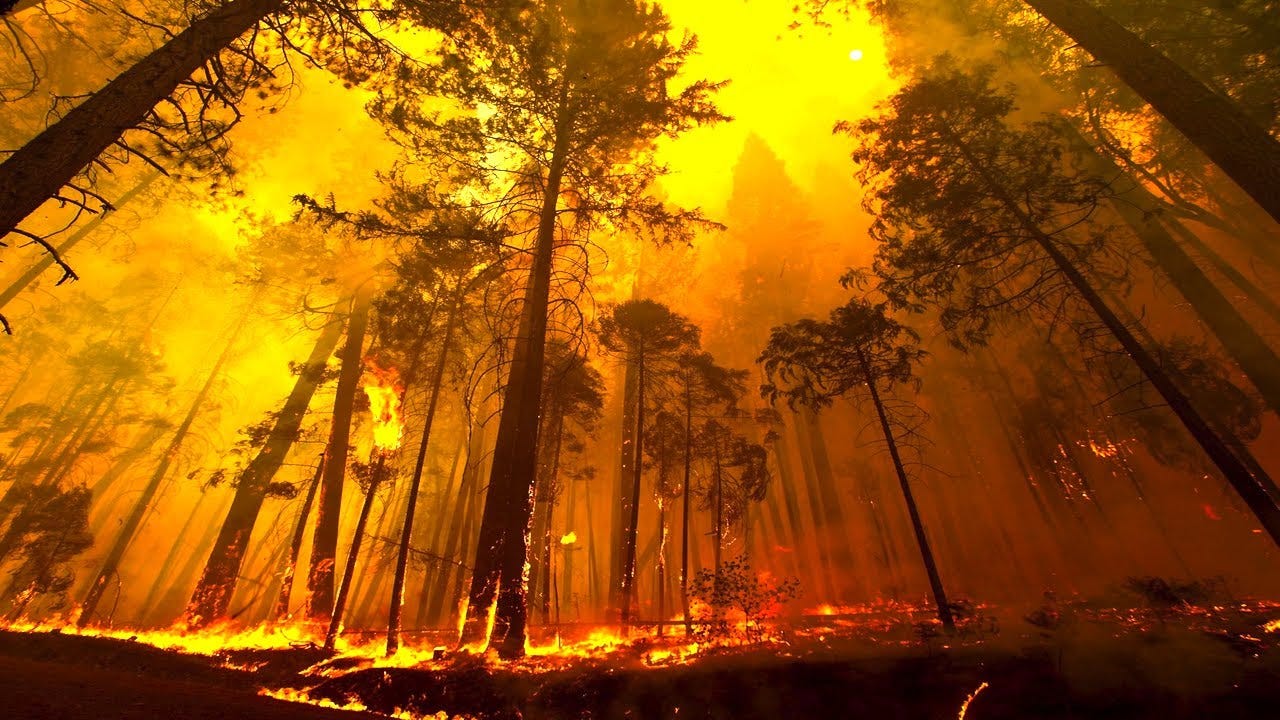
Asking capitalism to be the organizing principle of the world it ruined is like asking the fire that burned down your house to rebuild it. You can ask, sure — but the fire will laugh, and just keep on burning you right down into dust.

Umair
February 2019

(Why) the 21st Century Needs a New Kind of Mind

This Century Asks Us to Transcend Exploitation — or Face Collapse

We live in strange and troubled times, you and I. A sense of daily discomfort, of unease is there, isn’t it? I’ve come to suspect that our souls know a truth that our minds won’t allow themselves to admit. The world cannot go on the way that it has, for a very long time. So what do we do now?

I want to put the problem before humanity as simply and starkly as I can. You can judge, as always, whether what I have to say is an empty, grandiose pronouncement — or if it contains a grain of truth.

We are running out of things to exploit. Let me give you three examples. The world’s insects are dying off. But they underpin all the food webs and chains. The globe is in the middle of a larger mass extinction. And, of course, climate change is here, wreaking havoc. But there is also the average American — broke, ruined, desperate, living paycheck to paycheck.Capitalism can only exploit him now in increasingly bizarre, gruesome ways — like making him beg strangers on the internet for money for medicine. In all these ways, exploitation is at its limit now.

But I’m not saying that we ourselves will be finished. The story that I want to tell is subtler, and perhaps more difficult.

Having run out of things to exploit, we are turning on each other — and on ourselves. What else would we do, if exploitation is all that we know? So we are turning on each other, in the rise of extremism and fascism and isolationism and so forth. And we are turning on ourselves, in the rise of depression and mistrust and hostility, all of which are internalized rage. Do you see how these phenomena are linked — running out of things to exploit, and turning on ourselves, and on each other? When there is nothing left to exploit but ourselves, but exploitation is all we know, want, appear capable of — bang! Implosion.

If you think about all this with me, I feel maybe you will come to a surprising place.

The central problem before humanity now is a very different one than it has ever been confronted with before. It is running out of things to exploit, and yet, having been born into systems and structures based for centuries on exploitation — feudalism, tribalism, slavery, capitalism — we seem to know how to imagine no other way. Hence, the world is in a state of stalemate. Deadlock. The future is not yet born — will it be? — and so a shudder runs down the spine of the world.

Every previous era of human prosperity has been based on exploitation. At least in the Western mindset — but that is a wrinkle that I will explore in further essays. In this one, allow me to just make the point.

First, we learned to expand prosperity for some by exploiting people — through slavery and servitude. This was the story of many societies, of whole eras, from tribalism through feudalism. Subjugation and subjection. You reap the harvest — and I will exact tribute.

Then we learned to expand prosperity by exploiting things — the natural world. That isn’t to say the exploitation of people stopped — though in some cases, I suppose you could argue, that it ameliorated. This was the story of the Renaissance through the industrial ages. Human beings imagined themselves masters of a material world which they understood, at last, through a kind of simplistic, linear, deterministic empiricism and rationality.

And then we learned to embed those forms of exploitation into minds, in ever more abstract “information” “Prices” and “stock market values” and so forth, for example, contain and simultaneously hide the assumptions that greed is good, that selfishness is right, that dominance is natural, that the weak should perish — right up until today, when we’re glued to our screens, a universe of info pulsing at our fingertips. How many likes did I get today? How many shares? This was the story of the information ages, which brings us to now.

In every previous age so far that we consider to be “history”, prosperity, growth, progress, has been based on exploitation. Mostly, the most violent, cruel, greedy, and selfish ruled. The obvious proof is that we made “nobility” the idea of foregoing violence that one was entitled to do, as in codes of chivalry. People became “lords” and “kings”, who were celebrated as kind and merciful when they did slightly less violence than they were privileged to do. LOL. That grim irony continues right down to today, where for example, in America, the ultimate example of a society ruled by and for exploitation, the most violent, cruel, greedy, and selfish have risen to the top — a point I’ll return to.

But now humanity is at a great turning point. A place of no return. There is nothing left to exploit. We have killed off the insects and bees and fish — by vast magnitudes. We have filled up the skies with ashes. We have taken the bounty of the earth until it is rebelling.

The only thing left to exploit, therefore, is ourselves.

That means that the world has two choices. One, either it transcends exploitation as the ordering principle of prosperity, of minds, of the project called civilization. Or two, it rewinds in history, and people exploit each other right back into servitude and slavery again. With nothing left to exploit but ourselves — what other choices are there?

You can see those dynamics already playing out in the strange, grotesque, weird story of America, which illustrates, in the way that ontogeny recapitulates phylogeny, perhaps, the story of the world, too. America was founded on the first kind of exploitation — slavery — and never really overcame it. It used it to perform the second kind — exploitation of nature — and then the third kind, exploitation of minds. But the result for America was not a sustainable, manageable society. The result was a society which imploded and collapsed. And that is because America never transcended exploitation. In the end, it was left with only one choice, when it began to run out of things to exploit — everyone had to exploit everyone else. Society began to regress at lightspeed. Today, America is a bizarre dystopia where everyone must exploit everyone else, or be abandoned to die, more or less. Nobody lives up to their potential in America — instead, they are made to waste it, exploiting and being exploited, living shorter, unhappier, more desperate, poorer lives, every year. It is a grim warning of precisely the future the world faces if it doesn’t outgrow exploitation as a mindset.

Exploitation as a mindset has been the linchpin, so far, of what we call history. It has been with us from the dawn of what is called civilization. The most foolish and cruel and brutal have always commanded the rest to use and abuse and subjugate others, nature, and themselves, until there is nothing left — mostly for their own benefit. And probably because it is easier to fire a gun or wield a club and crack open a skull than to read a book, for the most part, human beings listened to them. Instead of wiser minds, who suggested the harder work of true equality, freedom, dignity, and justice — not just their empty caricatures.

It’s no surprise then that humanity today is struggling to lift its head above the toxic residue of centuries of structures of exploitation — from capitalism to colonialism to segregation to supremacism to tribalism to fascism. Only in a few places did we see the merest glimmers of non-exploitative systems ever really even begin to arise, even in small ways — European social democracy, Canadian multiculturalism, Scandinavian egalitarianism, perhaps.

So the task before us is an historic, beautiful, and strange one, if we really understand it well. The 21st century needs a mindset that, for the first time in human history, is not based on exploitation. On dominance and acquisition, on taking all that can be taken, on reducing and abstracting, on externalizing costs, on snatching and seizing and plundering, on “maximizing” and “profiting.” This century needs human consciousness itself to expand, grow, mature, and ripen. Or else humanity probably will not really survive it, except in the form of scattered, shattered kingdoms, regressed by millennia.

But developing a genuinely new mindset — one not based on exploitation, which abjures and rejects it — will not be an easy one. Because the truth is that we barely know how to think that way, how to feel that way, how to be that way. It will be a difficult, painful birth. It will need mourning and grief, remembrance and truth, reconciliation with all the mistakes of the ages of the past. That, I’ve come to think, is the central challenge of now. Letting this mindset emerge is a shift that has yet to really happen. Let me describe that shift using levels — in a slightly different way.

Level I consciousness is the mindset of the slave age and the feudal age — it is marked by naked violence, the need for absolute dominance, the belief that only some are “people”, and others are more like gods. That is where, for example, America was for most of its history. Level II consciousness is the mindset of the industrial age — it is marked by rigidly organized hierarchies of exploitation, which ration status and dominance. Level III consciousness is the mindset of predatory capitalism — it is marked by a kind of absurd, grotesque appetite for endless acquisition, a kind of impossibly needy narcissism, that even a trillion dollars to a single person isn’t enough, even if costs the whole world, democracy, and the future.

All these things must now be outgrown if humanity is to endure.

Level Zero consciousness is very different. It is the idea that one should take just what one needs, and give back multiplefold. That if one chops down a tree, one should plant ten. If one hunts a deer, one should feed ten. It is the belief that all things have intrinsic and inherent worth, that nothing is for free. It is the belief that because all things have intrinsic worth, every thing should be allowed to reach its natural potential — and what isn’t should therefore be counted as a loss — from a sapling that never became a tree, to an elephant that never grew old. It is the belief that all things are linked in balance and harmony, and we are not the masters of this balance and harmony. We are the servants, the guardians, and the children of time, of dust, of being.

Do you glimpse, maybe, the ideas that I am trying to express? They are different, many, and interwoven. They are as subtle and complex as subtlety and complexity. I wouldn’t reduce them to the way we talk about ideas today — charts, statistics, soundbites. They need room to breathe, to move, to really be understood. It is the difference between walking in the woods without saying a word, and talking about the woods.

I don’t mean that people should live in tents and wear burlap sacks. But I do mean that human beings are going to have to build Level Zero systems now — beginning with minds. Let me sum them up this way. Those that prize the values of cultivation, of nurturance, of possibility, of investment, of coexistence, of balance, of depth, of expansiveness — and reject their absences and negations, the failed values of dominance, exploitation, greed, acquisition, control, superficiality, and egotism. I think that we can do all that and have better lives, in fact — simply because so much of what we consume and produce today does little for our emotional, mental, and spiritual, well-being anyways.

I call it “Level Zero” because it is not so much an “evolution” in human consciousness as a return to its roots. It is what many ancient systems of belief consist of, which were derided as “primitive.” It is akin to what Jesus and Buddha said. It is not something modern, so much as something very, very old. Level Zero says that time, progress, growth, takes us in spirals, and sometimes, to go upward, we must circle back to the beginning. You could also just call it a “constructive” or a “generative” or a “nurturing” mindset, perspective, attitude, disposition, if you like.

This essay is already too long, and I’ve struggled to express just one simple idea. Humanity has grown by relying on exploitation. But now there is nothing left to exploit. Nothing except ourselves — and that way lies regress, servitude, slavery, war, violence.

We must develop different minds now. I mean “mind” in an expansive, not a limiting, way. New dispositions, attitudes, ways of seeing, relating, acting, and thinking — and especially feeling . We need to allow ourselves to grieve for the folly and stupidity of a way of life that put profit above the world, to mourn all the souls that exploitation abused — and to feel a righteous sense of anger, too, as we face those bitter truths. Is that who we wish to be?

All that is needed in order to chart a way forward. To develop minds that aren’t mere calculators of exploitation any longer. But see themselves as guardians, as friends, as students, partners and equals. Of what, from what? Of all that is. What are you made of? Your tears are oceans, and your laughter is stardust. Who is exploiting whom? Exploitation must always be understood as a form of self-destruction, of folly, of ruin, the most unnatural action that any being can take.

New minds. Not for the first time in human history. But perhaps for the second, which we have forgotten too long. We must come full circle, if we are to grow. And the strange thing is that, from the rivers that flow to the sea, to the caterpillar that, hanging upon the tree, becomes the butterfly, that is how all maturity works.

Umair
December 2018

TRANSLATION ADVENTURE – 3/3/19

Translators: Alex Gambeau, Hanz Bolen, Heather Williams

SENSE TESTIMONY: More is better

5th Step Conclusions:

  1. ONE Infinite Timeless, Spaceless Fulfillment is the Energy I AM (and all is) Here & Now.
  2. Principles’ Formless Force is the I AM I streaming the Great More Whole, Complete Intelligence.
  3. The self-evident manifestation of truth is always touching, being one with each and every individuation of being. Truth always touches all.