
A Zen master explains why “positive thinking” is terrible advice
All posts by Ben Gilberti
The Infinity Course
10 Facts about Spirituality
Truth

Dear Humanity
I am not your friend, I am not your foe.
I am not here to make you happy, I am not hear to make you sad, laugh or cry, smile or frown.
How I make you feel depends entirely on YOU!
– Your current world view
– Your current beliefs-
– Your current perceptions of what you think is and what is not.
I am void of all emotion. I am not here for your convenience or to pull you out of comfort and neither am I here to confirm any bias you may have.
Those who either seek me for happiness or avoid me through fear of sadness might want to rethink what they are really seeking, for I am neither.
I do not care about your feelings, I am simply that which is.
Therefore, if you are unable to accept me for what I am, it would be best if you do not seek me out at all, forget that I exist and pursue something that makes you FEEL the way you WANT to feel, otherwise I welcome all who seek me with open arms.
Just know that your rejection or embrace will not effect my existence”
Sincerely
The Truth
@internalmonarch
We Can Access All Information From The Past, Present And Future Through Energy
.
Recently, a couple of scientific facts about quantum mechanics were put together. The implications that were derived from connecting these facts suggests that we can access all information from the past, present and future at any time via energy.
Quantum Mechanics is a branch of mathematics that deals with subatomic particles, energy, wave-particle duality. Basically giving mathematical descriptions for the quantum world.
However, the implications this field of science imposes on reality is beyond shocking. In fact, it is so shocking that people can’t really grasp what it really tries to say.
“If quantum mechanics hasn’t profoundly shocked you, you haven’t understood it yet. Everything we call real is made of things that cannot be regarded as real.” – Niels Bohr
Recent studies and experiments touching the nature of the quantum world came to a realization that, what we think of as material and real is nothing but mental information encoded with consciousness swimming in a pool of energy.
“Get over it, and accept the inarguable conclusion. The universe is immaterial-mental and spiritual” – Richard Conn Henry, Professor of Physics and Astronomy at Johns Hopkins University (quote taken from “The Mental Universe)
Quantum physicists discovered that physical atoms are made up of vortices of energy that are constantly spinning and vibrating, each one radiating its own unique energy signature.
Therefore, if we really want to observe ourselves and find out what we are, we are really beings of energy and vibration, radiating our own unique energy signature.
What all of this information implies?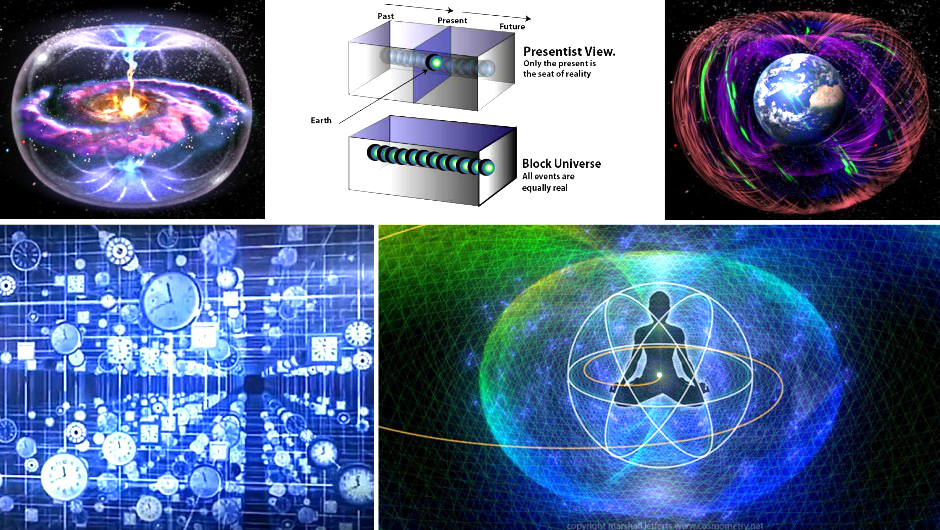
When people put all of these researches and information together they discovered one mindboggling conclusion, among many other.
Here are the information and facts derived from various researches:
Everything is energy. Energy connects everything. Energy carries information. The past, present and future all exist simultaneously.
Therefore, as energetic beings, we have access to the past, the present and future at any point in time via energy. It all connects.
This phenomena is called Quantum Intuition. It can explain how shamans and mystics know things nobody ever shared with them and sometimes correctly predict future events years and centuries before they happen.
It strongly demands a new understanding for physics and a new approach to science, especially science dealing with the quantum world.
What this says about free will?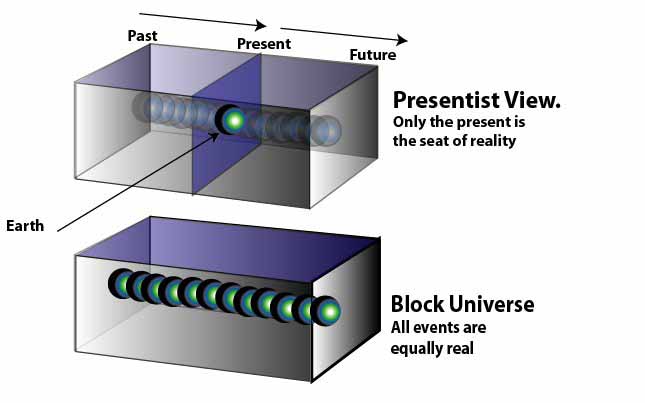
Even though we might be observers of information and energy, we are also creators for the same. Even only with our observation we create a significant impact on reality.
In fact, a fundamental conclusion of the new physics also acknowledges that the observer creates the reality.
As observers, we are personally involved with the creation of our own reality. Physicists are being forced to admit that the universe is a “mental” construction.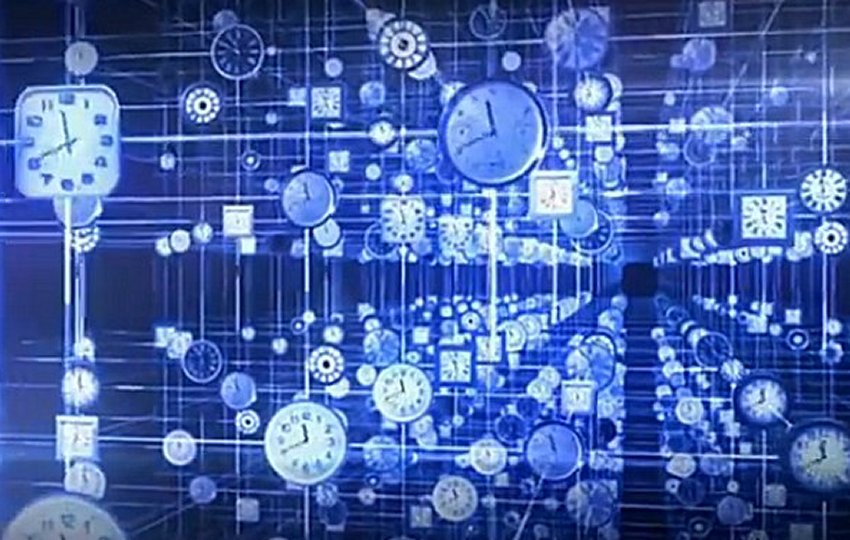
“Pioneering physicist Sir James Jeans wrote: “The stream of knowledge is heading toward a non-mechanical reality; the universe begins to look more like a great thought than like a great machine. Mind no longer appears to be an accidental intruder into the realm of matter, we ought rather hail it as the creator and governor of the realm of matter.” (R. C. Henry, “The Mental Universe”; Nature 436:29, 2005)
So we don’t just have an access to all information from the past, present, and future, but we can influence this information and change it at will.
All we have to do is be awake enough to do so. Otherwise, we are just unawarely swimming in the sea of energy and information not realizing we are a part of that sea, and we have the potential to influence and access all of it.
~ www.lifecoachcode.com
Why is Awakening Such a Rare Phenomenon
The “hard problem” of consciousness
Philosopher David Chalmers on consciousness, the hard problem and the nature of reality
Posted

Fittingly for someone dedicated to pondering the puzzle posed by consciousness, philosopher David Chalmers possesses an unusual and fascinating mind.
For a start, he excelled at maths when he was young, earning a bronze medal at the fiendishly cryptic International Mathematical Olympiad.
“I had a very strong interest in the sciences in general, but maths was number one,” he said. “Philosophy — I don’t think I really knew what it was at that point.”
As a boy he also had synaesthesia, meaning that music produced strong colour sensations in his mind.

“A lot of things were just kind of boring greens and browns but every now and then something would be bright red. I remember Here, There and Everywhere by The Beatles was bright red.”
Professor Chalmers, who was born in Sydney and brought up in Adelaide, today works out of New York University and is one of the world’s pre-eminent philosophers of mind, best known for breathing new life into an old conundrum.
He calls it the hard problem of consciousness.
Simply put, the hard problem asks the following question: how can the machinery of the brain (the neurons and synapses) produce consciousness — the colours that we see, for example, or the sounds that we hear?
Look at a brain scan and you will see nothing resembling consciousness. Brains, in fact, do not appear particularly remarkable — which makes the fact that they are even more exceptional.
“The really hard problem of consciousness is the problem of experience,” Professor Chalmers wrote in a landmark 1995 paper. “When we think and perceive, there is a whir of information-processing, but there is also a subjective aspect.”
“It is widely agreed that experience arises from a physical basis, but we have no good explanation of why and how it so arises. Why should physical processing give rise to a rich inner life at all? It seems objectively unreasonable that it should, and yet it does.”
In short, why should moving parts produce perception and sensation? And why should only brains (as far as we know) be responsible for consciousness?
Car engines are sophisticated systems, albeit far less complicated than brains, yet not one has ever shown the vaguest inclination of wanting to drive.
To claim that pain is nothing more than a configuration of molecules in our heads seems to ignore the fact that pain actually hurts.
In the 1950s, philosophers at the University of Adelaide were at the forefront of attempts to tackle such problems. A later generation of so-called eliminative materialists (most notably Patricia and Paul Churchland) were more radical.
Eliminativists claim that brain states do not merely generate conscious experiences, but literally are them. Daniel Dennett, who debated Professor Chalmers in a now notorious showdown in the Arctic Circle funded by a Russian entrepreneur, has even claimed that consciousness itself is an illusion.
The reality of experience, however, tends to refute this idea.
It seems that there is a hole in our scientific picture of the world, what philosopher Joseph Levine called an “explanatory gap”.
When I spoke to Professor Chalmers ahead of his recent talk at the Australasian Association of Philosophy, he went so far as to call the hard problem “the number one unanswered scientific challenge of our time”.
Sci-fi and the path to philosophy
Professor Chalmers grew up in a house filled with books. An avid reader, he was drawn to the science fiction of Asimov, Heinlein and Arthur C. Clarke.
Those authors posed deep questions about the world, about reality, and about the relationship between human beings and machines.
“The problem of consciousness certainly comes up from thinking about robots,” Professor Chalmers said.

“Could a robot be conscious in the way that a human being is, or do you need a special biology to be conscious? I was always on the side of the robots. That’s not to say there’s no mystery about consciousness.”
Professor Chalmers went to Unley High School where he was a few years behind former prime minister Julia Gillard. At university, he studied mathematics — first in Adelaide, then at Oxford.
An encounter with Douglas Hofstadter’s classic book Godel, Escher, Bach deepened his burgeoning passion for philosophy, and he decided to switch fields.
“I had zero demonstrated talent at philosophy so there was no particular reason to think I’d be any good at it. It was a bit of a leap of faith.”
He recalls a conversation he had with his father, who was a professor of medicine at Flinders University, as he was making the transition.
“He was a bit worried about the whole philosophy thing,” Professor Chalmers said. “He’s a scientist … and then for me to be wanting to be veering off into philosophy.
“He told me ‘don’t tell me you’re going to spend your life looking for the soul!'”
Panpsychism and the fundamental laws of consciousness
Professor Chalmers believes one possible answer to the hard problem is a view known as panpsychism. It sounds spiritual, but it isn’t.
According to panpsychism, consciousness may be a fundamental property of reality in the same way as space and time.
“We’re not going to reduce consciousness to something physical … it’s a primitive component of the universe,” he said.
“But that frees us up to search for the fundamental principles that govern it. In physics, we don’t try and explain space and time in terms of more fundamental things. We just find the laws that govern them.”
Professor Chalmers retains a love of science, despite the hostility sometimes shown by scientists towards his own discipline. In recent years, theoretical physicists have been especially critical of philosophy. Lawrence Krauss is one. Stephen Hawking is another.
“You get a few people with strongly expressed opinions about this,” he said. “Often they don’t know so much about philosophy. Certainly Stephen Hawking doesn’t.
“A lot of the great philosophers of the 20th century have actually been scientists. Einstein was a great philosopher in his way, as well as people like Heisenberg and Schrodinger. Some of the best philosophical conversations I’ve had have been with scientists.”
Neuroscientist Giulio Tononi is among those to have piqued Professor Chalmers’ interest. Dr Tononi has developed what has come to be known as Integrated Information Theory, which attempts to measure consciousness using maths.
Professor Chalmers does not believe Dr Tononi has solved the hard problem, but thinks he may be closing in on significant new insights about the connections between mind and matter.
“He takes the attitude of presupposing the existence of consciousness as basically a fundamental component of reality, as I do, and [tries to] find the fundamental laws that link it to physical processing,” Professor Chalmers said.
“For him, these principles that connect integrated information and consciousness are kind of like fundamental laws of physics, and that’s roughly the view that I think you have to take too.”
Lately, Professor Chalmers has been thinking about technology and virtual reality, and whether we are all living in some kind of simulation.
He is far from alone in flirting with the idea — technologist Elon Musk, nuclear physicist Zohreh Davoudi, philosopher Nick Bostrom, futurist Ray Kurzweil and cosmologist Alan Guth are all enthusiasts.
Unsurprisingly, Professor Chalmers invokes The Matrix. But it is a train of thought that has taken him into the realm of current affairs.
Professor Chalmers has speculated that recent seismic political events may be evidence of the mischief, or cruelty, of whoever has programmed our universe.
“I started joking around saying ‘various things have been happening lately — Donald Trump, Brexit’,” he said.
“[Maybe] the simulators are just messing with us. Maybe someone thought at one point ‘let’s just run a simulation on the counterfactual hypothesis — what if Donald Trump had been elected?'”
During my interview with Professor Chalmers, I suggested that incessantly thinking about the mind, the brain and the nature of reality was enough to drive anyone mad. But as we were getting up to leave, I asked him more seriously whether there would come a point in his life when he would accept he would never answer the hard problem. Could he simply let it go?
“I’m an optimist so I would like the problem to be solved,” he replied.
“It could be decades. It could be centuries. At the end of the day, it’s possible we’ll never have a satisfactory solution but I don’t think we’re yet in a position to say that.
“Maybe once we develop amazing artificial intelligences they’ll be better than us at everything, including philosophy. Maybe they’ll be the ones that come up with a solution.”

Scientists Now Believe the Universe Itself May Be Conscious
June 28, 2017 at 6:56 pm
(ANTIMEDIA) – You don’t have to look far to find outlandish theories on the nature of the cosmos and human consciousness. These days, notions once relegated to science fiction are finding their way into esoteric academic journals, and from there, into mainstream discourse. One example of this is the Simulation Argument, recently championed by Elon Musk; another is ‘time crystals,’ a tantalizing non-linear phase of matter. The newest symphony of mind jazz being broadcast across the Internet posits new ideas about the embattled theory of “panpsychism,” or the belief that mind is a fundamental property of the physical universe and is imbued into all states of matter.
A new paper, published by physicist Gregory Matloff, has brought the idea back into scientific discussions, promising experimental tests that could “validate or falsify” the concept of a ubiquitous “proto-consciousness field.” Matloff also pushes the controversial idea of volitional stars, suggesting there is actually evidence that stars control their own galactic paths.
As absurd as the theory sounds, it has several prominent adherents, including British theoretical physicist Sir Roger Penrose, who introduced panpsychism three decades ago. Penrose believed consciousness arises from the properties of quantum entanglement. He and anesthesiologist Stuart Hameroff authored the Orchestrated Objective Reduction (Orch-OR) hypothesis, which asserts, among other things, that consciousness results from quantum vibrations inside microtubules.
In 2006, German physicist Bernard Haisch took the idea further and proposed that consciousness arises within a “quantum vacuum” any time there is a significantly advanced system through which energy flows. Neuroscientist Christof Koch, another proponent of panpsychism, approaches it from a different angle, using integrated information theory to argue that consciousness is not unique to biological organisms.
“The only dominant theory we have of consciousness says that it is associated with complexity — with a system’s ability to act upon its own state and determine its own fate,” Koch argues. “Theory states that it could go down to very simple systems. In principle, some purely physical systems that are not biological or organic may also be conscious.”
Matloff and other scientists are moving the argument into a new phase: experimentation. Matloff intends to study the behavior of stars, specifically analyzing an anomaly in stellar motion known as Paranego’s Discontinuity. Matloff wants to know why certain cooler stars appear to emit jets of energy pointed in one direction, a characteristic that seems oddly and inexplicably ubiquitous in the galaxy. In 2018, he plans to use results from the Gaia star-mapping space telescope to show that the anomaly may be a willful stellar action.
Meanwhile, as Matloff studies cosmic activity on the grandest scale, Koch approaches the experimental phase of the theory using brain-impaired patients. He wants to know if their information responses match underlying neurochemical foundations of consciousness. He plans to test this by wiring the brains of mice together to see if their minds merge into a larger information system.
Panpsychism certainly has critics, as well. In an article for The Atlantic entitled “Why Panpsychism Is Probably Wrong,” Keith Frankish writes:
“Panpsychism gives consciousness a curious status. It places it at the very heart of every physical entity yet threatens to render it explanatorily idle. For the behavior of subatomic particles and the systems they constitute promises to be fully explained by physics and the other physical sciences. Panpsychism offers no distinctive predictions or explanations. It finds a place for consciousness in the physical world, but that place is a sort of limbo.”
The quote expresses a general sense that panpsychism oversimplifies the hard problem of consciousness in the universe, an opinion many scientists share. However, Matloff, Penrose, and other proponents continue undertaking the job of venturing outside the margins of accepted science to try reconciling intractable contradictions and anomalies exposed by quantum theory.
Zeno effect, quantum biology, and spacetime geometry
Quantum Zeno dynamics in a superconducting qubit
By: William Brown
The Greek philosopher Zeno of Elea posed several philosophical arguments that have become collectively known as Zeno’s paradoxes. One such argument is known as Zeno’s arrow paradox; the simplistic explanation of which is that in order for motion to occur an object must change its location, like an arrow flying to its target, yet at any instantaneous moment the arrow is motionless, and since, as Zeno posed, time is composed of a sequence of many such duration-less instants, then motion of the arrow is impossible. This paradox is actually highly salient to an understanding of the fundamental nature of motion and time, and hence the fundamentals of physics.

Zeno’s paradox has found its way into the lexicon of quantum mechanics in a class of phenomena known as quantum Zeno dynamics. As the name would indicate, quantum Zeno effects have to do with time evolution of a system, often with effects that are paradoxically counter to what is normally observed in quantum experimentation. For instance, frequent measurements of a quantum system can in fact arrest its evolution, delaying its decay — even going so far as to decouple a system from its decohering environment. This is the opposite of what “measurements”, or interactions with the environment are normally thought to do in quantum mechanics theory.
Quantum Zeno Dynamics
In quantum Zeno dynamics, the decoherence rate of a quantum state can be either increased or decreased by how the system is coupled to the environment. When the time evolution or decay of a quantum state is frozen, it is referred to as the Zeno effect. An increased decay rate is known as the anti-Zeno effect, because instead of “freezing” the state of the quantum system in time, it accelerates its time evolution. Frequent measurements will alter how a quantum state, such as a qubit, will interact with the environment, essentially allowing control of quantum evolution with tunable environmental interactions.
Certain schemes of coupling a quantum system with the environment are referred to as “quasi-measurements”, as the interaction with the environment does not necessarily transmit information about the state of the quantum system – highlighting that the effect is not necessarily antithetical to the normal description of environmental decoherence in quantum theory.
in the June 14, 2017, issue of Physical Review Letters physicists describe the observation of quasi-measurements producing quantum Zeno effects. Their protocol used a qubit uniquely coupled to a thermal bath to produce both enhanced and diminished decay times. Researchers were able to show that by changing the frequency and type of interaction of the qubit with a noise-source they could arrest the evolution of the system, such that the qubit did not decohere or decay, or they could accelerate the decay.
The latest experiment was a first because “while Zeno effects, and more broadly Zeno dynamics, have been studied with superconducting qubits, the anti-Zeno effect has not yet been studied at the level of a single quantum system.”
Does the Zeno effect have relevance beyond quantum computing?
In addition to potential implications and applications in quantum computing, Resonance Science Foundation researchers are taking notice in the results because of potential implications in understanding the finely ordered and coherent state of the biological system. Just as quantum measurements are being utilized to stabilize the fragile state of the artificial qubit, similar mechanisms may be involved in stabilizing quantum states, natural qubits, in the biological system.
For instance, the quantum Zeno effect can be considered in evaluating how theories involving non-classical information processing dynamics in a strongly interacting environment like the cell may in fact be occurring. Information processing that may involve quantum correlation (entanglement) or nonlocal interaction have largely been summarily dismissed because of the presumed high amount of noise of the biological system.
Such a presumption, however, may be problematic or largely erroneous because the molecular structures of the biological system are in a highly ordered arrangement and are comprised of novel forms of matter that have been exquisitely fine-tuned by natural selection over billions of years. It is no stretch of the imagination that novel molecular forms that optimally capitalize on nature’s intrinsic properties, such as quantum informational dynamics, will have an immediate selective advantage – highly improved efficiency of photosynthesis and metabolism, greater environmental sensitivity, memory, responsiveness, and perhaps greater cognitive capabilities.

As such, biomolecules may not be comparable to the “simple matter” — often times individual quanta like free photons and electrons — used in experimentation where non-classical quantum phenomena are observed. The biological supramolecular assemblies of the cell are a special state of matter. And the large numbers of interacting units and their frequent interaction may in fact enable a certain degree of increased “quantumness” instead of being the primary source of decoherence as is naively assumed.
For instance, there are relatively new developments in quantum mechanics such as quantum discord, where the “quantumness” of correlations can be variable and present in certain mixed separable states – that is to say, quantum correlations that exist but that are not necessarily entanglement. In terms of the relatively high temperature of the biological system, a condition that is supposed to inhibit strong coherence, it has been shown that for a qubit pair in contact with a normally decohering environment, like a heat bath, the strength of correlations can actually increase with increasing temperature.
This brings us to the quantum Zeno effect, where measurements made in rapid succession can actually prolong the quantum coherency of a state. This is quite the paradoxical situation, because measurements are supposed to be the agents of decoherence and decay of quantum states, yet here increased interaction can do the opposite. Leading to the question of whether the frequent interactivity / communication of components of the supramolecular assemblies of the biological system may work to prolong and enhance the lifetime of strongly coupled and coherent states.
Relevant supramolecular assemblies include the plasma membrane, mitochondria, DNA, and microtubules. Mitochondria and microtubules are significant in that they can theoretically function as quantum electrodynamic cavities, where interactions between light, atomically ordered water, and electron dipole moments can form quantum coherent states for intra- and inter-cellular dissipation-less solitonic energy transfer and quantum teleportation.
Mitochondria and microtubules, in close association, form dendritic networks in which coherent photon emission can be channeled through the cell. Coherent photons modulate the electronic properties of biomolecules, a QED-like mechanism that can be used to holographically store information as well as initiate physicochemical responses in the cellular system. This system is referred to as the holographic information network of the mitochondrial reticular matrix.

Intercellular networks are formed by gap junctions and tunneling nanotubes, the latter of which contain filamentous mitochondria and microtubules that can connect multiple cells, enabling gestalt information transmission and processing. Quantum coherence and nonlocal phenomena can enable the cellular information system to perform massively parallel processing, enabling remarkable organizational synergy and unified orchestration of function.

Zeno effect, quantum biology, and spacetime geometry – a unified picture
As explained in the manuscript the Unified Spacememory Network by Haramein et alia, nonlocality is a result of spacetime geometry, such that entanglement is the manifestation of multiply-connected spacetime architecture, i.e. a Planckian micro-wromhole network, or quantum spacetime foam. This multiply-connected geometry represents a kind of hyperspace, comprised of information resulting from the quasi-instantaneous communicativity of all spacetime frames across spatial and temporal domains. The interaction across this transtemporal, nonlocal connectivity network is one way in which memory, recorded in the entanglement connectivity patterns, is produced. Hence the moniker, spacememory network.
This has important implications for considerations of entanglement and other quantum processes of nonlocality in the biological system. Specifically, entanglement necessarily results from the underlying spacetime geometry – therefore any such process interlaces functions of the biological system with the informational manifold of the spacememory network. A possibly important dynamic that, theoretically, would be intricately and inextricably involved in processes of evolution, development, sentience and memory of the living system.
Experiments that advance our understanding of quantum entanglement and other phenomena involving nonlocality, like the testing of quantum Zeno dynamics with qubit stability, are important for developing a deeper understanding of how nature may be utilizing quantum dynamics, particularly in the biological system. While theoretical considerations of quantum coherence, entanglement, and other nonlocal phenomena in the living organism remain relatively controversial, the true test of these ideas will be to conduct experiments aimed at observing just such phenomena. Resonance Science Foundation researchers are designing experimental protocols to do exactly that, so that soon they will be able to experimentally test whether or not the entanglement and information exchange with the nonlocal spacememory network is in fact supported observationally and empirically.
More to Explore:
Quantum Zeno effects from measurement controlled qubit—bath interactions
Harvard Commencement Address by Mark Zuckerberg
This talk by Mark Zuckerberg is far more powerful and relevant than I expected. His talk begins at 03:23
Live at Harvard Commencement.
Posted by Mark Zuckerberg on Thursday, May 25, 2017