

All posts by Ben Gilberti
Secret Link between Math and Physics
Date with the Invisible Man

What is Consciousness
What is Consciousness? From the Material Brain to the Infinite Mind and Beyond
by Ervin Laszlo
A New Concept of Consciousness
What is consciousness? What about the mind? If the world is vibration, is also mind and consciousness a form of vibration? Or on the contrary, are all vibrations, the observed world, a manifestation of mind and human consciousness?
Although it is true that when all is said and done all we know is our consciousness, it is also true that we do not know our own consciousness, not to mention the consciousness of anyone else.
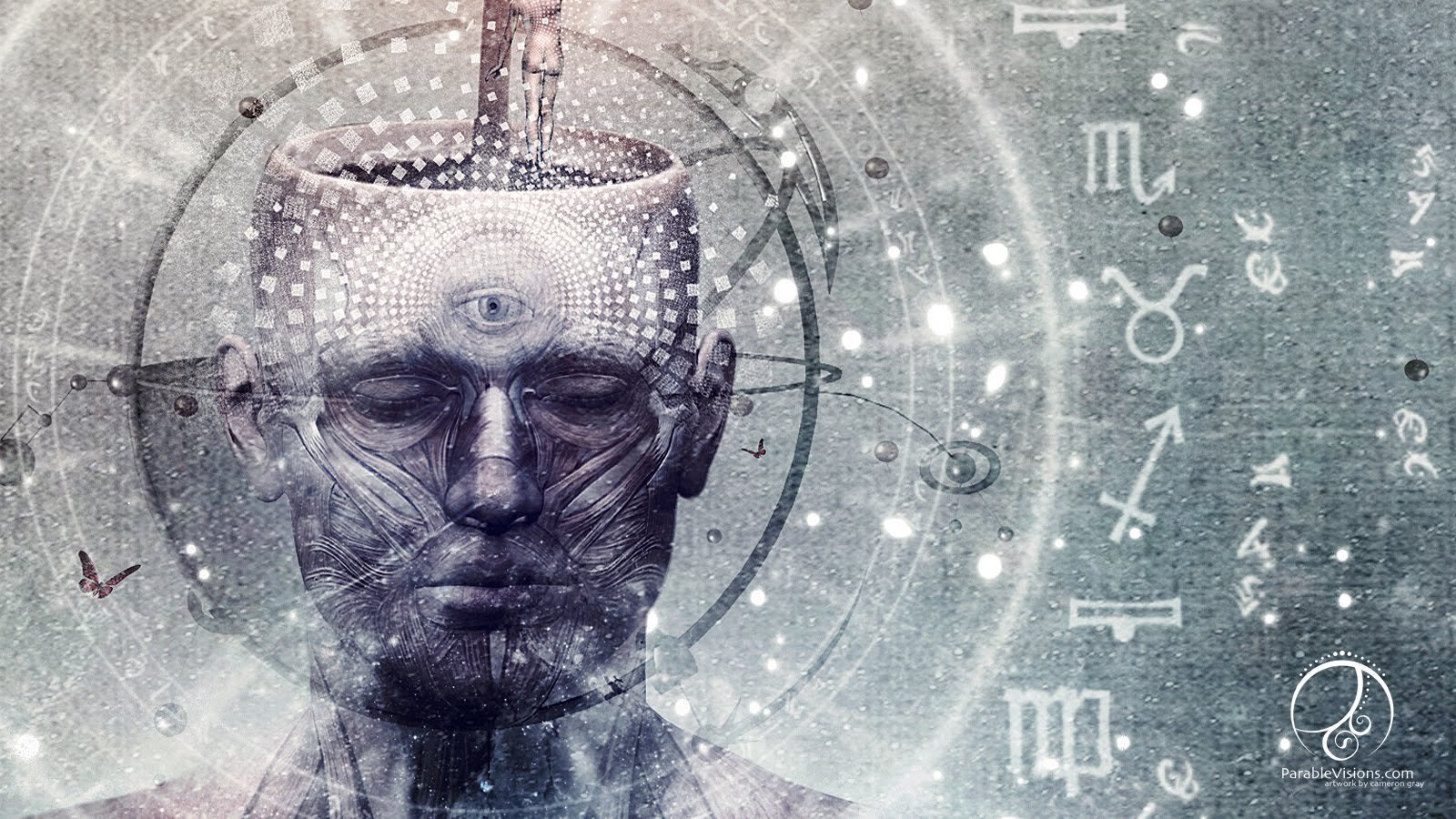
We do not know what consciousness really is or how it is related to the brain. Since our consciousness is the basis of our identity, we do not know who we really are. Are we a body that generates the stream of sensations we call consciousness, or are we a consciousness associated with a brain and body that displays it?
Do we have consciousness, or are we consciousness? Human consciousness could be a kind of illusion, a set of sensations produced by the workings of our brain. But it could also be that our body is a vehicle, a transmitter of a consciousness that is the basic reality of the world. The world could be material, and mind could be an illusion. Or the world could be consciousness, and the materiality of the world could be the illusion.
Both of these possibilities have been explored in the history of philosophy, and today we are a step closer than before to understanding which of these theories of consciousness is true. There are important insights emerging at the expanding frontiers where physical science and consciousness research join.
On the basis of a growing series of observations and experiments to answer the question of “What is consciousness?”, a new consensus is emerging. It is that “my” consciousness is not just my consciousness, meaning the consciousness produced by my brain, any more than a program transmitted over the air would be a program produced by my TV set. Just like a program broadcast over the air continues to exist when my TV set is turned off, my human consciousness and conscious awareness continue to exist when my brain is turned off.
Consciousness is a real element in the real world. The body and brain do not produce consciousness; they display it. And it does not cease when life in the body does. Mind and consciousness is a reflection, a projection, a manifestation of the intelligence that “in-forms” the world.
From the Material to the Infinite
Mystics and shamans have known that this is true for millennia, and artists and spiritual people know it to this day. Its rediscovery at the leading edge of the science of consciousness augurs a profound shift in our view of the world. It overcomes the answer the now outdated materialist science gives to the question regarding the nature of mind and consciousness: the answer according to which consciousness is an epiphenomenon, a product or by-product of the workings of the brain.
In that case, the brain would be like an electricity-generating turbine. The turbine is material, while the current it generates is not (or not strictly) material. In the same way, the brain could be material, even if the consciousness it generates proves to be something that is not quite material.
On first sight, this makes good sense. On a second look, however, the materialist concept of what is consciousness encounters major problems. First, a conceptual problem. How could a material brain give rise to a truly immaterial stream of sensations? How could anything that is material produce anything immaterial? In modern consciousness research and science, this is known as the “hard problem.”
It has no reasonable answer. As researchers point out, we do not have the slightest idea how “matter” could produce “mind.” One is a measurable entity with properties such as hardness, extension, force, and the like, and the other is an ineffable series of sensations with no definite location in space and an ephemeral presence in time.
Fortunately, the hard problem does not need to be solved: it is not a real problem. There is another possibility: mind is a real element in the real world and is not produced by the brain; it is manifested and displayed by the brain.
Mind beyond Brain: Evidence for a New Concept of Mind and Consciousness
If mind is a real element in the real world only manifested rather than produced by the brain, it can also exist without the brain. There is evidence that mind does exist on occasion beyond the brain: surprisingly, states of consciousness and conscious awareness seem possible in the absence of a functioning brain. There are cases—the near-death experience (NDE) is the paradigm case—where mind and consciousness persist when brain function is impaired or even halted.
Thousands of observations and experiments show that people whose brain stopped working but then regained normal functioning can experience human consciousness during the time they are without a functioning brain. This cannot be accounted for on the premises of the production theory of consciousness: if there is no working brain, there cannot be consciousness. Yet there are cases of consciousness appearing beyond the living and working brain, and some of these cases are not easy to dismiss as mere imagination.
What Near-Death Experiences Can Teach Us
A striking NDE was recounted by a young woman named Pamela. Hers has been just one among scores of NDEs that help to answer the question of what is consciousness; it is cited here to illustrate that such experiences exist, and can be documented.
Pamela died on May 29, 2010, at the age of fifty-three. But for hours she was effectively dead on the operating table nineteen years earlier. Her near demise was induced by a surgical team attempting to remove an aneurism in her brain stem.
After the operation, when her brain and body returned to normal functioning, Pamela described in detail what had taken place in the operating theater. She recalled among other things the music that was playing (“Hotel California” by the Eagles). She described a whole series of conversations among the medical team. She reported having watched the opening of her skull by the surgeon from a position above him and described in detail the “Midas Rex” bone-cutting device and the distinct sound it made.
About ninety minutes into the operation, at which point she should have had no brain function or conscious awareness, she saw her body from the outside and felt herself being pulled out of it and into a tunnel of light. And she heard the bone saw activate, even though there were specially designed speakers in each of her ears that shut out all external sounds. The speakers themselves were broadcasting audible clicks in order to confirm that there was no activity in her brain stem. Moreover, she had been given a general anesthetic that should have assured that she was fully unconscious. Pamela should not have been able either to see or to hear anything.
It appears that human consciousness is not, or not entirely, tied to the living brain. In addition to NDEs, there are cases in which mind and consciousness are detached from the brain in regard to its location. In these cases, consciousness originates above the eyes and the head, or near the ceiling, or above the roof. These are the out-of-body experiences: OBEs.
There are OBEs where congenitally blind people have visual awareness. They describe their surroundings in considerable detail and with remarkable accuracy. What the blind experience is not restored eyesight because they are aware of things that are shielded from their eyes or are beyond the range of normal eyesight. Consciousness researcher Kenneth Ring called these states of consciousness “transcendental awareness.”
Visual awareness in the blind joins a growing repertory of experiences collected and researched by Stanislav Grof: “transcendental experiences.” As Grof, a pioneer in the science of consciousness and the mind found, these beyond-the-brain and beyond-here-and-now experiences are widespread—more widespread than anyone would have suspected even a few years ago—and give us a clue into what consciousness is.
The Evidence of After Death Experiences
There are also reports of ADEs, after-death experiences that help expand on the question “What is Consciousness?” Thousands of psychic mediums claim to have channeled the conscious awareness and experience of deceased people, and some of these reports are not easy to dismiss as mere imagination. One of the most robust of these reports has come from Bertrand Russell, the renowned English philosopher. Lord Russell was a skeptic, an outspoken debunker of esoteric phenomena, including the survival of the mind or soul beyond the body. He once wrote, “I believe that when I die I shall rot, and nothing of my ego will survive.” Yet after he died he conveyed the following message to the medium Rosemary Brown.
You may not believe that it is I, Bertrand Arthur William Russell, who am saying these things, and perhaps there is no conclusive proof that I can offer through this somewhat restrictive medium. Those with an ear to hear may catch the echo of my voice in my phrases, the tenor of my tongue in my tautology; those who do not wish to hear will no doubt conjure up a whole table of tricks to disprove my retrospective rhetoric.
. . . After breathing my last breath in my mortal body, I found myself in some sort of extension of existence that held no parallel as far as I could estimate, in the material dimension I had recently experienced. I observed that I was occupying a body predominantly bearing similarities to the physical one I had vacated forever; but this new body in which I now resided seemed virtually weightless and very volatile, and able to move in any direction with the minimum of effort. I began to think I was dreaming and would awaken all too soon in that old world, of which I had become somewhat weary to find myself imprisoned once more in that ageing form which encased a brain that had waxed weary also and did not always want to think when I wanted to think. . .
Mettā meditation
Mettā meditation
Mettā meditation, or often loving-kindness meditation, is the practice concerned with the cultivation of Mettā, i.e. benevolence, kindness, and amity. The practice generally consists of silent repetitions of phrases like “may you be happy” or “may you be free from suffering”, for example, directed at a person who, depending on tradition, may or may not be internally visualized.[9]
Two different methodological approaches have been discerned in recent review papers, practices that focus on compassion and practices focussing on loving-kindness. Focussing on compassion means that meditation consists of the wish to relieve a being from suffering, whereas focussing on loving-kindness means wishing a being happiness.[9][10]
The practice gradually increases in difficulty with respect to the targets that receive the practitioner’s compassion or loving-kindness. At first, the practitioner is targeting “oneself, then loved ones, neutral ones, difficult ones and finally all beings, with variations across traditions.”[9]
~ https://en.wikipedia.org/wiki/Mett%C4%81#Mett%C4%81_meditation

“I’m smart and I know it”

A Beetle’s Foot

Extraordinary Zoom into the Mandelbrot Set
Consciousness
What if consciousness is not what drives the human mind?
Everyone knows what it feels like to have consciousness: it’s that self-evident sense of personal awareness, which gives us a feeling of ownership and control over the thoughts, emotions, and experiences that we have every day.
Most experts think that consciousness can be divided into two parts: the experience of consciousness (or personal awareness), and the contents of consciousness, which include things such as thoughts, beliefs, sensations, perceptions, intentions, memories and emotions.
It’s easy to assume that these contents of consciousness are somehow chosen, caused or controlled by our personal awareness – after all, thoughts don’t exist until we think them. But in a new research paper in Frontiers of Psychology, we argue that this is a mistake.
We suggest that our personal awareness does not create, cause or choose our beliefs, feelings or perceptions. Instead, the contents of consciousness are generated “behind the scenes” by fast, efficient, non-conscious systems in our brains. All this happens without any interference from our personal awareness, which sits passively in the passenger seat while these processes occur.
Put simply, we don’t consciously choose our thoughts or our feelings – we become aware of them.
Not just a suggestion
If this sounds strange, consider how effortlessly we regain consciousness each morning after losing it the night before; how thoughts and emotions – welcome or otherwise – arrive already formed in our minds; how the colours and shapes we see are constructed into meaningful objects or memorable faces without any effort or input from our conscious mind.
Consider that all the neuropsychological processes responsible for moving your body or using words to form sentences take place without involving your personal awareness. We believe that the processes responsible for generating the contents of consciousness do the same.
Our thinking has been influenced by research into neuropsychological and neuropsychiatric disorders, as well as more recent cognitive neuroscience studies using hypnosis. The studies using hypnosis show that a person’s mood, thoughts, and perceptions can be profoundly altered by suggestion.
In such studies, participants go through a hypnosis induction procedure, to help them to enter a mentally focused and absorbed state. Then, suggestions are made to change their perceptions and experiences.

For example, in one study, researchers recorded the brain activity of participants when they raised their arm intentionally, when it was lifted by a pulley, and when it moved in response to a hypnotic suggestion that it was being lifted by a pulley.
Similar areas of the brain were active during the involuntary and the suggested “alien” movement, while brain activity for the intentional action was different. So, hypnotic suggestion can be seen as a means of communicating an idea or belief that, when accepted, has the power to alter a person’s perceptions or behavior.
The personal narrative
All this may leave one wondering where our thoughts, emotions, and perceptions actually come from. We argue that the contents of consciousness are a subset of the experiences, emotions, thoughts, and beliefs that are generated by non-conscious processes within our brains.
This subset takes the form of a personal narrative, which is constantly being updated. The personal narrative exists in parallel with our personal awareness, but the latter has no influence over the former.
The personal narrative is important because it provides information to be stored in your autobiographical memory (the story you tell yourself, about yourself), and gives human beings a way of communicating the things we have perceived and experienced to others.
This, in turn, allows us to generate survival strategies; for example, by learning to predict other people’s behavior. Interpersonal skills like this underpin the development of social and cultural structures, which have promoted the survival of humankind for millennia.
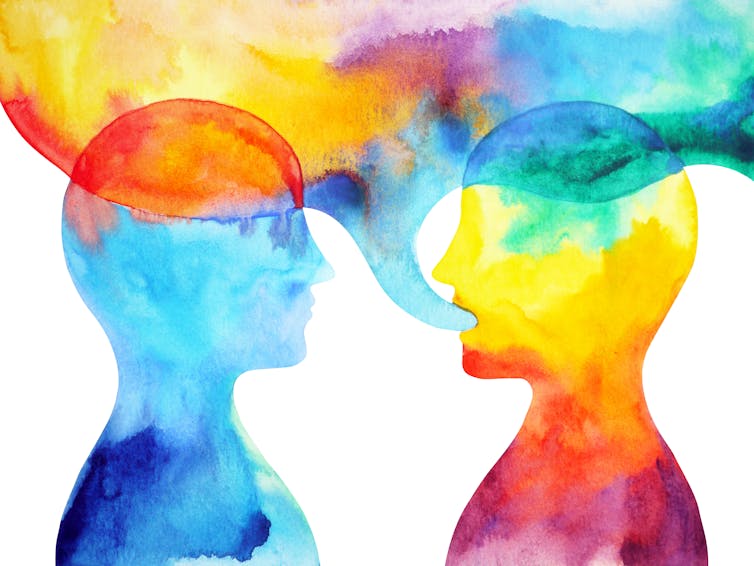
So, we argue that it is the ability to communicate the contents of one’s personal narrative –– and not personal awareness – that gives humans their unique evolutionary advantage.
What’s the point?
If the experience of consciousness does not confer any particular advantage, it’s not clear what its purpose is. But as a passive accompaniment to non-conscious processes, we don’t think that the phenomenon of personal awareness has a purpose, in much the same way that rainbows do not. Rainbows simply result from the reflection, refraction, and dispersion of sunlight through water droplets – none of which serves any particular purpose.
Our conclusions also raise questions about the notions of free will and personal responsibility. If our personal awareness does not control the contents of the personal narrative which reflects our thoughts, feelings, emotions, actions, and decisions, then perhaps we should not be held responsible for them.
In response to this, we argue that free will and personal responsibility are notions that have been constructed by society. As such, they are built into the way we see and understand ourselves as individuals, and as a species. Because of this, they are represented within the non-conscious processes that create our personal narratives, and in the way we communicate those narratives to others.
Just because consciousness has been placed in the passenger seat, does not mean we need to dispense with important everyday notions such as free will and personal responsibility. In fact, they are embedded in the workings of our non-conscious brain systems. They have a powerful purpose in society and have a deep impact on the way we understand ourselves.
https://theconversation.com/what-if-consciousness-is-not-what-drives-the-human-mind