
Language of Mind Aug 16, 2022 Spoken language is all about sound, right? Maybe not! Our brains make use of every bit of information available to figure out what we’re experiencing, but this process can cause us to experience some trippy illusions. Let’s explore the McGurk effect – the visual/auditory illusion where what you see rewrites what you hear! If you’re interested in perception, check out the Perception Census project! You can contribute to the largest study on perceptual diversity in the world! https://perceptioncensus.dreamachine…. 0:00 – Intro 1:10 – The McGurk effect 2:06 – Timing 3:19 – McGurk on the brain 5:53 – Can you McGurk a baby? 7:48 – Tactile McGurk 9:19 – Why do we get McGurked? 10:11 – Outro Sources: McGurk, H., & MacDonald, J. (1976). Hearing lips and seeing voices. https://doi.org/10.1038/264746a0 Van Wassenhove, Grant & Poeppel (2007). Temporal window of integration in auditory-visual speech perception. https://doi.org/10.1016/j.neuropsycho… Colin, Radeau, Soquet, Demolin, Colin & Deltenre (2002). Mismatch negativity evoked by the McGurk–MacDonald effect: a phonetic representation within short-term memory. https://doi.org/10.1016/S1388-2457(02… Kislyuk, Möttönen & Sams (2008). Visual processing affects the neural basis of auditory discrimination. https://doi.org/10.1162/jocn.2008.20152 Rosenblum, Schmuckler & Johnson (1997). The McGurk effect in infants. https://doi.org/10.3758/BF03211902 Burnham & Dodd (2004). Auditory–visual speech integration by prelinguistic infants: perception of an emergent consonant in the McGurk effect. https://doi.org/10.1002/dev.20032 Fowler & Dekle (1991). Listening with eye and hand: cross-modal contributions to speech perception. https://doi.org/10.1037/0096-1523.17….
Monthly Archives: May 2026
The Wisdom of Hafez, Part II, with Haleh Pourafzal (1956 -2002)
New Thinking Allowed with Jeffrey Mishlove May 22, 2026 This video is a special release from the original Thinking Allowed series that ran on public television from 1986 until 2002. It was recorded in about 1990. It will remain public for only one week. The fourteenth century poet, Haféz, has been described as one of the “Iranian oil wells that never run dry.” He was a mystic, a philosopher, who translated the ancient Zoroastrian world view into an Islamic mileau. His vision was so large as to speak across the centuries and touch, lovingly, upon virtually all aspects of life. His spiritual genius was recognized by western poets such as Goethe, Nietzsche and Emerson. The late Haleh Pourafzal points out that Haféz criticized the tendency of the human mind to fixate upon any one idea. He used the metaphor of intoxication to symbolize the spiritual path. Haleh Pourafzal is co-author, with Roger Montgomery, of The Spiritual Wisdom of Haféz. Now you can watch all of the programs from the original Thinking Allowed Video Collection, hosted by Jeffrey Mishlove. Subscribe to the new Streaming Channel (https://thinkingallowed.vhx.tv/) and watch more than 350 programs now, with more, previously unreleased titles added weekly. Free month of the classic Thinking Allowed streaming channel for New Thinking Allowed subscribers only. Use code THINKFREELY.
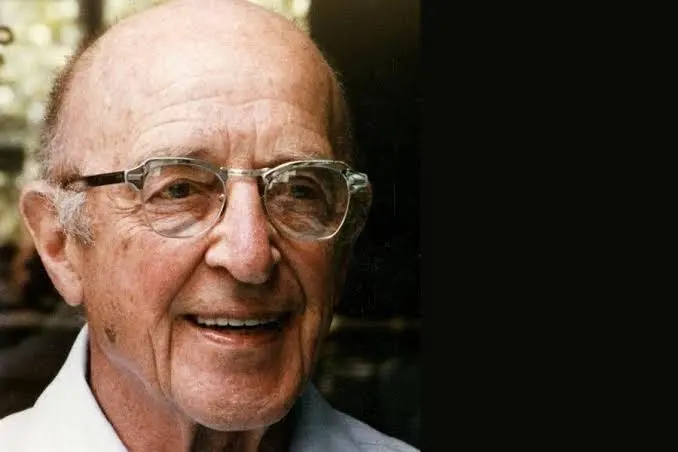
Carl Rogers on suppressed feelings
(unicarlrogers.com.mx)
“I regret it when I suppress my feelings too long and they burst forth in ways that are distorted or attacking or hurtful.”
~ Carl Rogers
Carl Ransom Rogers was an American psychologist who was one of the founders of humanistic psychology and was known especially for his person-centered psychotherapy. Wikipedia
Born January 8, 1902, Oak Park, IL
Died February 4, 1987 (age 85 years), La Jolla, San Diego, CA
Google Is Making Huge Changes That Are Poised to Decimate What’s Left of Journalism
AI strikes again.
Published May 21, 2026 (Futurism.com)

It’s looking like time to sound two death knells. One for the demise of the simple Google search, and another for the entire journalism industry.
On Tuesday, Google announced a massive change to its homepage that’ll transforms the old-school search box, and with it, the entire web ecosystem. Going forward, it’ll be an “intelligent” search box that expands into a more chatbot-like experience that weaves together the company’s existing AI features.
The layout encourages you to ask lengthy questions like you would with a chatbot, and comes with an AI-powered autocomplete feature to help flesh out your thoughts. Questions like these will prompt the search box to show AI Overviews, Google’s AI-generated — and notoriously unreliable — summaries that appear above the actual search results. Since the search box is “designed to anticipate your intent,” Google claims, it can also expand into AI Mode, Google’s fully AI-powered search feature, allowing you to upload pictures and documents.
But the most consequential change is what the revamped searches will return. Instead of showing you a ranked list of links to other websites, you’ll get conversational-style answers. As is already happening with the years-long rollout of AI Overviews — plus AI chatbots broadly — this means even fewer people will be visiting the sites that the AI features are pilfering their answers from in the first place.
This is bad news for any business dependent on web traffic and ad revenue to keep the lights on, and it’s especially perilous for journalism, an industry that’s always had trouble keeping up in the internet age, when fewer people are willing to pay for access to information. Now that its product can be wholly regurgitated by a chatbot, it could spell the end for a vast swathe of publications.
One study, for example, found that that users are 58 percent less likely to click a link when an AI overview appears above it. Another report found that after the advent of AI Overviews, ten major tech news outlets lost as much as 97 percent of US web traffic from Google.
If fewer and fewer people are actually visiting news sites because an AI chatbot — or Google’s revamped AI search — regurgitates their content, how are these sites expected to stay afloat?
The answer: many in the industry are expecting that they won’t. A survey of hundreds of media leaders conducted by the Reuters Institute for the Study of Journalism found that on average, they predicted traffic to their websites to plummet by nearly half over the next three years. These fears have fueled layoffs across the industry, with some publishers embracing AI tools to speed up work.
What’s replacing journalism adds insult to injury. A recent analysis found that Google’s AI-generated summaries are accurate around 91 percent of the time. Across the trillions of search queries Google processes every year, that translates to tens of millions of inaccurate answers that Google’s AI is giving every hour.
More on AI: An Entire “Local Newspaper” Just Shut Down When All Its Reporters Were Busted as AI Fakes
Frank Landymore
Contributing Writer
I’m a tech and science correspondent for Futurism, where I’m particularly interested in astrophysics, the business and ethics of artificial intelligence and automation, and the environment.
Weekly Translation: I expected my doctors to comfort me. Instead they made things worse.
By Mike Zonta, BB editor
Translation is a 5-step process of “straight thinking in the abstract” comparing and contrasting what seems to be truth with what you can syllogistically, axiomatically and mathematically (using word equations) prove is the truth. It is not an effort to change, alter or heal anything other than our consciousness.
The claims in a Translation should be outrageous and mind-blowing, but they are always (or should always be) based on self-evident syllogistic reasoning. Here is my Translation from this week.
1) Truth is that which is so. That which is not truth is not so. Therefore Truth is all that is. Truth being all is therefore total, therefore whole, therefore complete, therefore all-inclusive, therefore otherless, therefore one, therefore united, therefore harmonious. i think therefore I am. Since I am and since Truth is all that is, I cannot be anything other than all that is, therefore the beingness of me is Truth. Since there is no being without consciousness of it, therefore Truth is Consciousness.
2) I expected my doctors to comfort me. Instead they made things worse.
Word-tracking:
expect: to anticipate beforehand
doctor: teacher, scholar, teacher of religious doctrine, professor, docile, teachable, willing to be taught
docile: easily taught
comfort: assure
assure: cure, to take care of, accurate
accurate: to take care
cataract: to break down, to smite, to dash down
worse: to entangle, mix up, confuse
3) Truth being consciousness is therefore knowing. Truth being knowing, cannot at the same time be unknowing or confusion. Therefore Truth is clarity of thought. Truth being all that is there can be no expectation of anything but Truth. Therefore Truth is the expectation of Truth. Truth being all-knowing doesn’t really require a doctor or a teacher to show the way. Therefore Truth is the way. Truth being otherless, cannot be struck down, or stricken down. Therefore Truth stands unopposed. Truth being true is therefore accurate, therefore careful, therefore assuring. Therefore Truth assures Itself.
4) Truth is clarity of thought.
Truth is the expectation of Truth.
Truth is the way.
Truth stands unopposed.
Truth assures Itself.
5) Truth is the expectation of Self-evident clarity of thought.
For information about Translation or other Prosperos classes go to: https://www.theprosperos.org/teaching.
Or, if you have taken Translation class, join us each Saturday for Translation Saturday Meeting at 11 a.m. Pacific time for current, up-to-the-minute Translations on the issues of the day. Email zonta1111@aol.com for the Zoom link.
Translation Saturday Meeting May 23

May 23: 11:00 AM – 12:00 PM PST
Mike Zonta, H.W., M.
In a crisis — any crisis — The Prosperos offers Translation. Translation Saturday Meetings is a weekly series of Translation presentations by veteran Translators, live and up to date on the issues of the day.
It is not a Translation workshop, It is not a Translation class. It is not a group Translation in the usual sense, though group participation is encouraged.
It is, however, restricted to those who have taken Translation class. So if you have never taken Translation class, check the calendar tab on The Prosperos website (TheProsperos.org) or get in touch with us and we will schedule a class.
Last week our sense testimony was: SOBOE. Shortness of breath on exertion may relate to restrictions as a kid. And our conclusion was: Truth is the freedom of effortless, confident inspiration.
– – – – – – – – – – – – – – See you there!!! – – – – – – – – – – – – – –
Here’s the link: https://us02web.zoom.us/j/81749347119
For more info and link to join please email Mike Zonta at:
Kant and the Limits of Reason
Popular Philosophy May 17, 2026 Can reason still be trusted after Rousseau’s critique of modernity? Or must reason first learn its own limits? In this episode we turn to Immanuel Kant and the philosophical revolution that reshaped modern thought. After Rousseau exposed the possibility that progress, civilization, and rationality may corrupt rather than liberate humanity, Kant attempts to rescue reason by redefining what it can and cannot know. Rather than abandoning Enlightenment thought, Kant transforms it from within. We explore the three Critiques and the tensions that drive them. In the *Critique of Pure Reason*, Kant argues that the human mind actively structures experience and that we can never know reality entirely independent of ourselves. In the *Critique of Practical Reason*, he develops a conception of freedom grounded in moral autonomy. And in the *Critique of Judgment*, Kant confronts the problem of organism, purposiveness, and reflective judgment, opening the door to later continental philosophy and German Idealism. This episode also shows why Kant becomes the essential bridge between Rousseau and Hegel. By placing limits within reason itself while also emphasizing the active role of subjectivity, Kant creates the philosophical tensions that later thinkers would radicalize. The questions of freedom, history, unity, and meaning begin to transform philosophy into something entirely new. In this video we explore: • Kant’s “Copernican Revolution” in philosophy • The limits of knowledge and the distinction between phenomena and noumena • Freedom, autonomy, and the moral law • Reflective judgment and teleology in the Third Critique • Kant’s influence on continental philosophy and German Idealism • Why Kant becomes the foundation for Hegel’s philosophy This episode continues our journey through the origins of continental philosophy and prepares the way for the next major turning point in modern thought: Hegel and dialectical philosophy. Works Cited: Primary Sources Kant, Immanuel. Critique of Pure Reason. Kant, Immanuel. Critique of Practical Reason. Kant, Immanuel. Critique of the Power of Judgment. Kant, Immanuel. Groundwork of the Metaphysics of Morals. Secondary Sources Allison, Henry E. Kant’s Transcendental Idealism. Allison, Henry E. Kant’s Theory of Freedom. Pippin, Robert B. Idealism as Modernism. Stanford Encyclopedia of Philosophy. “Immanuel Kant.” Internet Encyclopedia of Philosophy. “Immanuel Kant.” Longuenesse, Béatrice. Kant and the Capacity to Judge.
Stop Trying to Figure It Out
The 36 Hidden Messengers of Kabbalah with Edward Hoffman
New Thinking Allowed with Jeffrey Mishlove May 21, 2026 Edward Hoffman is a licensed psychologist and has been an adjunct associate professor at Yeshiva University in New York City for more than 20 years. An award-winning author, his books include Paths to Happiness, The Wisdom of Maimonides, and The Kabbalah Reader. His books have been translated into more than a dozen languages. His newest book is Lamed Vav and the Power of Mystical Kindness: Awakening to the Presence of the 36 Hidden Messengers. Edward discusses the Jewish mystical tradition of the Lammed Vav — the 36 hidden righteous individuals whose compassion and kindness spiritually sustain the world. Drawing from Kabbalah, folklore, Hasidic teachings, and psychology, he explores how ordinary acts of empathy, storytelling, dreams, and joy may carry profound transformative power. Hoffman also examines the influence of figures such as the Baal Shem Tov, the Zohar, and Martin Buber, suggesting that hidden spiritual wisdom often appears through humble people and everyday encounters. 00:00:00 Introduction 00:03:43 Hidden righteous souls 00:08:20 Meaning of the number 36 00:12:23 Kindness in ordinary life 00:18:39 Compassion beyond religion 00:23:21 Mysticism and the Zohar 00:27:21 The Baal Shem Tov 00:31:10 Joy, healing, and helping others 00:38:27 Midrash and sacred storytelling 00:53:31 Conclusion New Thinking Allowed host, Jeffrey Mishlove, PhD, is author of The Roots of Consciousness, Psi Development Systems, and The PK Man. Between 1986 and 2002 he hosted and co-produced the original Thinking Allowed public television series. He is the recipient of the only doctoral diploma in “parapsychology” ever awarded by an accredited university (University of California, Berkeley, 1980). He is also the Grand Prize winner of the 2021 Bigelow Institute essay competition regarding the best evidence for survival of human consciousness after permanent bodily death. He is Co-Director of Parapsychology Education at the California Institute for Human Science. (Recorded on Thursday, April 30, 2026)
Book: “Cured: The Remarkable Science and Stories of Spontaneous Healing and Recovery”
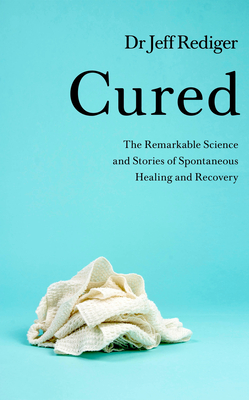
Cured: The Remarkable Science and Stories of Spontaneous Healing and Recovery
by Jeff Rediger
An amazing piece of work … Timely and beautifully written’ Bessel van der Kolk, author of The Body Keeps the Score
‘Clearly articulated science … illuminating‘ Gabor Maté, author of When the Body Says No
_______________________________________________________________________
As a society, we push aside stories of remarkable recovery which don’t fit our paradigm of one cause, one cure.
In the history of medicine, we have almost never used the tools of rigorous science to investigate remarkable recoveries from incurable illnesses. But, Dr Jeff Rediger, a world-leading Harvard medic, psychiatrist and theologian, has spent the last fifteen years studying thousands of individuals from around the world and examining the stories behind these extraordinary cases of spontaneous remission.
From retiree Claire, diagnosed with a violent form of pancreatic cancer and given weeks to live, to 23-year-old Matt, given a 2 per cent chance of surviving a lethal brain tumour. Both rejected chemotherapy and radiation, and went home to try to prepare themselves for acceptance and a peaceful death. Both are alive over a decade later, their bodies absent of all tumours.
Dr Rediger doesn’t classify people like Claire or Matt as ‘flukes’ or ‘outliers’ but has analysed what they – and thousands of others – have done to cure themselves and reveals the common denominators of people who have beaten the odds, unlocking the secrets behind the mind-body connection and discovering the immense power of the immune system.
(Goodreads.com)