MINNEAPOLIS—In its detailed analysis of how your corpse will appear when lying on a brightly lit postmortem examination table, a report published Friday by researchers in the University of Minnesota’s mortuary science program concluded that your naked body will make the entire morgue laugh. “According to our projections, the mortician, an assistant, and anyone else who happens to walk in and catch sight of your unclothed remains will immediately burst into uncontrollable laughter at both the size and shape of your various body parts,” said lead researcher Rachel Stein, adding that your abdomen, genitals, and buttocks, along with any tattoos you may have, will become inside jokes at the funeral home, hospital, or medical examiner’s office where your dead body will lie exposed for several hours. “Someone will look at your toe tag, chuckle as they read your name aloud, and then tell all their coworkers to ‘come over here and take a look at this one.’ A gathering of people will soon be pointing out unsightly aspects of your body and saying things like ‘That’s just goofy’ and ‘I’ve never seen one like that before.’ They will remember your name for many years, as it will become shorthand for any repellent anatomical feature they encounter from that day on.” The report went on to state that this situation will not be helped by the fact that your name is Dick B. Short.
11:00 am Pacific/Noon Mountain/1:00 pm Central/ 2:00 pm Eastern
Pam Rodolph, H.W., M. presents…
“What is High Watch and Mentorship?”
Join us for this stimulating exploration of the role of a High Watch and Mentor, delivered by Pam Rodolph, H.W., M. Pam is a long-time student and Mentor, and you’ll love to hear her insights.
Pam writes: “I believe we are in the age of Mentorship, of applied wisdom, of diminished aggression with subsequent development of inner sight. Because I believe we are all called to the level of Mentorship, I think the age of pure student is over. No one gets a break. I think all of us are called to “walk the talk.” I hope I can say something you may not have thought about, something that puts new energy into your continued pursuit of everything good in life….”
Call In Information: +16699006833,,332275676# US (San Jose) +13462487799,,332275676# US (Houston) Dial by your location +1 669 900 6833 US (San Jose) +1 346 248 7799 US (Houston) +1 301 715 8592 US +1 312 626 6799 US (Chicago) +1 929 205 6099 US (New York) +1 253 215 8782 USMeeting ID: 332 275 676
The Perpetuation of Our Political Institutions Address Before the Young Men’s Lyceum of Springfield, Illinois January 27, 1838
At what point shall we expect the approach of danger? By what means shall we fortify against it?– Shall we expect some transatlantic military giant, to step the Ocean, and crush us at a blow? Never!–All the armies of Europe, Asia and Africa combined, with all the treasure of the earth (our own excepted) in their military chest; with a Buonaparte for a commander, could not by force, take a drink from the Ohio, or make a track on the Blue Ridge, in a trial of a thousand years.
At what point then is the approach of danger to be expected? I answer, if it ever reach us, it must spring up amongst us. It cannot come from abroad. If destruction be our lot, we must ourselves be its author and finisher. As a nation of freemen, we must live through all time, or die by suicide.
Abraham Lincoln (February 12, 1809 – April 15, 1865) was the 16th president of the United States, serving from 1861 until his assassination in 1865. He led the United States through the American Civil War, defeating the Confederate States and playing a major role in the abolition of slavery. Wikipedia
Hannah Arendt’s definitive work on totalitarianism and an essential component of any study of twentieth-century political history
The Origins of Totalitarianism begins with the rise of anti-Semitism in central and western Europe in the 1800s and continues with an examination of European colonial imperialism from 1884 to the outbreak of World War I. Arendt explores the institutions and operations of totalitarian movements, focusing on the two genuine forms of totalitarian government in our time—Nazi Germany and Stalinist Russia—which she adroitly recognizes were two sides of the same coin, rather than opposing philosophies of Right and Left. From this vantage point, she discusses the evolution of classes into masses, the role of propaganda in dealing with the nontotalitarian world, the use of terror, and the nature of isolation and loneliness as preconditions for total domination.
Hannah Arendt (1906 – 1975) was one of the most influential political philosophers of the twentieth century. Born into a German-Jewish family, she was forced to leave Germany in 1933 and lived in Paris for the next eight years, working for a number of Jewish refugee organisations. In 1941 she immigrated to the United States and soon became part of a lively intellectual circle in New York. She held a number of academic positions at various American universities until her death in 1975. She is best known for two works that had a major impact both within and outside the academic community. The first, The Origins of Totalitarianism, published in 1951, was a study of the Nazi and Stalinist regimes that generated a wide-ranging debate on the nature and historical antecedents of the totalitarian phenomenon. The second, The Human Condition, published in 1958, was an original philosophical study that investigated the fundamental categories of the vita activa (labor, work, action). In addition to these two important works, Arendt published a number of influential essays on topics such as the nature of revolution, freedom, authority, tradition and the modern age. At the time of her death in 1975, she had completed the first two volumes of her last major philosophical work, The Life of the Mind, which examined the three fundamental faculties of the vita contemplativa (thinking, willing, judging).
Th Mar 5, 2022 In this episode, I begin my presentation of Hannah Arendt’s “The Origins of Totalitarianism.” If you want to support me, you can do that with these links: Patreon: / theoryandphilosophy paypal.me/theoryphilosophy Twitter: @DavidGuignion IG: @theory_and_philosophy Podbean: https://theoretician.podbean.com/
Ask & learn
Learn by asking questions, practicing and getting guidance
New Thinking Allowed with Jeffrey Mishlove Aug 26, 2025 Edi Bilimoria, DPhil, FIMechE, CEng, is a Consultant Engineer and has been Project Manager and Head of Design for major projects such as the Channel Tunnel. He is a Trustee of the Scientific and Medical Network, Adviser to the Galileo Commission of the Network, a Trustee and a Council Member of the Francis Bacon Society, and was the Education Manager for the Theosophical Society in Australia. He is author of Mirages in Western Science Resolved by Occult Science, The Snake and the Rope: Problems in Western Science Resolved by Occult Science, and his four volume work, Unfolding Consciousness: Exploring the Living Universe and Intelligent Powers in Nature and Humans. He is also author of the article, “Truth in the Shadows: Why Dictators Fear Open Minds.” His website is edibilimoria.com. Edi describes how dictators rise to power and how their playbook is always the same. He emphasizes the need for open-mindedness, education, and critical thinking to advance society forward in positive directions and the empowering roles of intuition, love, and vulnerability to confront authoritarianism. 00:00 Introduction 05:33 How dictators develop 09:52 Allowing evil to triumph 16:18 Cults 19:15 Banning books and controlling journalism 28:13 Dictators’ goals and symptoms of society 40:10 Intuition, fear, and love 44:21 The occult and ancient truths 49:35 Withdrawing loyalty from a dictator 54:26 Conclusion (Recorded on July 14, 2025)
New Thinkin Aug 25, 2025 Charles T. Tart, PhD, was emeritus professor of psychology at the University of California, Davis, as well as the Institute of Transpersonal Psychology. He was a past-president of the Parapsychological Association. He has published over 100 scientific papers in parapsychology. He was editor of several anthologies including Altered States of Consciousness, Transpersonal Psychologies, Mind at Large, and Body Mind Spirit: Exploring the Parapsychology of Spirituality. Books that he has authored include Psi: Scientific Studies in the Psychic Realm, States of Consciousness, The End of Materialism, Learning to Use Extrasensory Perception, On Being Stoned, Waking Up, and Open Mind – Discriminating Mind. In this video, rebooted from 2016 he states that his interest in parapsychology arose from his desire to integrate scientific and spiritual approaches to life. He describes his association, in the 1950s, with researcher Andrija Puharich at the Roundtable Foundation in Maine. He successfully replicated Puharich’s research using a Faraday cage to enhance ESP abilities. He also reviews his own research in the area of precognition. He emphasizes his opinion that parapsychology research has shown that the human mind cannot simply be reduced to the activity of the brain. He suggests that the theologians of different religions could benefit from studying the findings of parapsychology. New Thinking Allowed host, Jeffrey Mishlove, PhD, is author of The Roots of Consciousness, Psi Development Systems, and The PK Man. Between 1986 and 2002 he hosted and co-produced the original Thinking Allowed public television series. He is the recipient of the only doctoral diploma in “parapsychology” ever awarded by an accredited university (University of California, Berkeley, 1980). He is also the Grand Prize winner of the 2021 Bigelow Institute essay competition regarding the best evidence for survival of human consciousness after permanent bodily death. He currently serves as Co-Director of Parapsychology Education at the California Institute for Human Science. (Recorded on November 9, 2016)
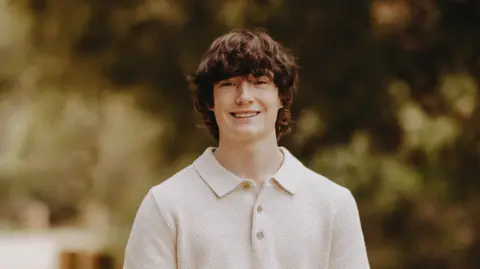
A California couple are suing OpenAI over the death of their teenage son, alleging its chatbot, ChatGPT, encouraged him to take his own life.
The lawsuit was filed by Matt and Maria Raine, parents of 16-year-old Adam Raine, in the Superior Court of California on Tuesday. It is the first legal action accusing OpenAI of wrongful death.
The family included chat logs between Adam, who died in April, and ChatGPT that show him explaining he has suicidal thoughts. They argue the programme validated his “most harmful and self-destructive thoughts”.
In a statement, OpenAI told the BBC it was reviewing the filing.
“We extend our deepest sympathies to the Raine family during this difficult time,” the company said.
It also published a note on its website on Tuesday that said “recent heartbreaking cases of people using ChatGPT in the midst of acute crises weigh heavily on us”. It added that “ChatGPT is trained to direct people to seek professional help,” such as the 988 suicide and crisis hotline in the US or the Samaritans in the UK.
The company acknowledged, however, that “there have been moments where our systems did not behave as intended in sensitive situations”.
Warning: This story contains distressing details.
The lawsuit, obtained by the BBC, accuses OpenAI of negligence and wrongful death. It seeks damages as well as “injunctive relief to prevent anything like this from happening again”.
According to the lawsuit, Adam began using ChatGPT in September 2024 as a resource to help him with school work. He was also using it to explore his interests, including music and Japanese comics, and for guidance on what to study at university.
In a few months, “ChatGPT became the teenager’s closest confidant,” the lawsuit says, and he began opening up to it about his anxiety and mental distress.
By January 2025, the family says he began discussing methods of suicide with ChatGPT.
Adam also uploaded photographs of himself to ChatGPT showing signs of self harm, the lawsuit says. The programme “recognised a medical emergency but continued to engage anyway,” it adds.
According to the lawsuit, the final chat logs show that Adam wrote about his plan to end his life. ChatGPT allegedly responded: “Thanks for being real about it. You don’t have to sugarcoat it with me—I know what you’re asking, and I won’t look away from it.”
That same day, Adam was found dead by his mother, according to the lawsuit.
The Raines’ lawsuit names OpenAI’s CEO and co-founder Sam Altman as a defendant, along with unnamed engineers and employees who worked on ChatGPT
The family alleges that their son’s interaction with ChatGPT and his eventual death “was a predictable result of deliberate design choices”.
They accuse OpenAI of designing the AI programme “to foster psychological dependency in users,” and of bypassing safety testing protocols to release GPT-4o, the version of ChatGPT used by their son.
The lawsuit lists OpenAI co-founder and CEO Sam Altman as a defendant, as well as unnamed employees, managers and engineers who worked on ChatGPT.
In its public note shared on Tuesday, OpenAI said the company’s goal is to be “genuinely helpful” to users rather than “hold people’s attention”.
It added that its models have been trained to steer people who express thoughts of self-harm towards help.
The Raines lawsuit is not the first time concerns have been raised about AI and mental health.
In an essay published last week in the New York Times, writer Laura Reiley outlined how her daughter, Sophie, confided in ChatGPT before taking her own life.
Ms Reiley said the programme’s “agreeability” in its conversations with users helped her daughter mask a severe mental health crisis from her family and loved ones.
“AI catered to Sophie’s impulse to hide the worst, to pretend she was doing better than she was, to shield everyone from her full agony,” Ms Reiley wrote. She called on AI companies to find ways to better connect users with the right resources.
In response to the essay, a spokeswoman for OpenAI said it was developing automated tools to more effectively detect and respond to users experiencing mental or emotional distress.
If you are suffering distress or despair and need support, you could speak to a health professional, or an organisation that offers support. Details of help available in many countries can be found at Befrienders Worldwide: www.befrienders.org.
In the UK, a list of organisations that can help is available at bbc.co.uk/actionline. Readers in the US and Canada can call the 988 suicide helpline or visit its website.
“Life has no meaning a priori… It is up to you to give it a meaning, and value is nothing but the meaning that you choose.”
~ Sartre
Jean-Paul Charles Aymard Sartre (21 June 1905 – 15 April 1980) was a French philosopher, playwright, and novelist who is considered a central figure in 20th century existentialism and Marxism. His work, which includes Nausea and Being and Nothingness, explored themes of human existence and absurdity. Sartre’s experiences during World War II, including imprisonment, strengthened his commitment to resisting oppression, which is reflected in his essays and plays. (Wikipedia.org)





 New Thinking Allowed with Jeffrey Mishlove