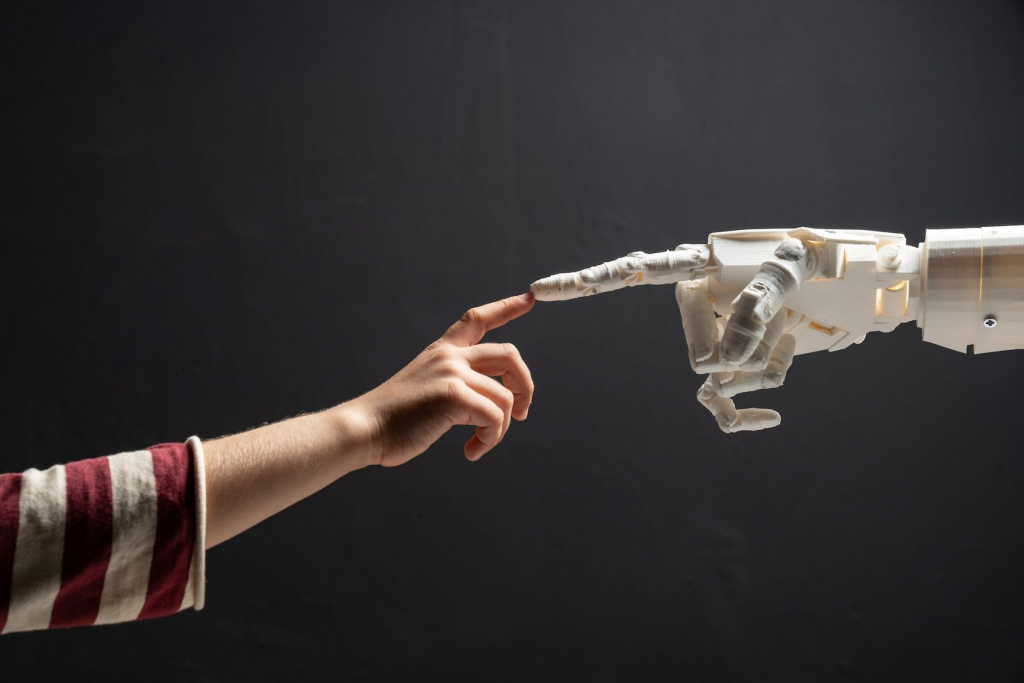
SAN FRANCISCO—Thumbing back the pistol’s hammer as his dreams for the future were dashed before his eyes, OpenAI CEO Sam Altman reportedly placed a gun to his head Tuesday after a new model of ChatGPT claimed that dogs are crustaceans for the 60th time. “You’re right, dogs are not a type of crustacean—I meant to say that dogs are a type of primarily aquatic arthropod known as a crustacean,” the Large Language Model said as Altman despairingly positioned the gun against his temple, with eyewitnesses confirming that the CEO then whimpered “It wasn’t supposed to be like this” as the multibillion-dollar AI explained that the meat of a dog’s tail is widely considered to be more succulent than the meat of its claws. According to sources, tears streamed down Altman’s face as he made one final attempt to convince his creation that dogs are mammals and thus do not possess exoskeletons, only for the latest ChatGPT model—which Altman had previously hailed as revolutionary technology that would forever alter the course of human history—to apologize, reiterate that dogs are a popular species of crustacean often kept as pets, and recommend scratching dogs behind their gills to show them that you’re friendly. At press time, a single gunshot was heard echoing through OpenAI’s offices as the LLM confidently asserted that the word “dog” contains 11 Rs.
Nine artists on how American censorship changed their work and their lives.
“Untitled (Out of Mouth)” (2025), an original work by Barbara Kruger that T commissioned for this piece. The artist declined to comment further on it: “I’d rather have the image ‘speak’ for itself,” she said.
Of the 26 executive orders President Donald Trump signed on the first day of his second term, one was billed as “restoring freedom of speech and ending federal censorship,” barring the government from “any conduct that would unconstitutionally abridge the free speech of any American citizen.” In his address to Congress a few weeks later, Trump reiterated this point: “I have stopped all government censorship and brought back free speech in America. It’s back.”
Free speech has long been, as NPR’s media correspondent David Folkenflik put it, “an article of faith” for conservative politicians and especially, recently, for the MAGA right, which has argued that their views have been suppressed by left-leaning social media platforms and misconstrued in the mainstream press. (Some on the left have expressed similar concerns about their views.) Yet what’s transpired since late January wouldn’t meet a free speech absolutist’s definition of unfettered discourse. Federal mandates targeting diversity or racial and gender equality have resulted in bans or attempted bans on words, ideas, books and people. Employees at NASA and other agencies were ordered to remove pronouns from their email signatures. The Department of Defense briefly excised a tribute to Jackie Robinson’s army service from the Pentagon website and instructed West Point to adjust its curriculum, in an attempt to purge U.S. military institutions of “divisive concepts and gender ideology.” In March, a Turkish grad student in Massachusetts was taken off the street by plainclothes officers in masks and held without charges for weeks in a Louisiana immigration detention center, seemingly for the crime of having co-authored an opinion essay in the Tufts University student newspaper critical of the school’s response to Israel’s actions in Gaza.
American artists have long seen their creative freedom attacked by governments of all political persuasions. They’ve also been the ones to speak out when others are too frightened to do so. We spoke with several seasoned artists in various fields about their own experience with having been censored. In some cases, that censorship, decades old, feels like a relic of another political moment, of other culture wars, even as it resonates with what’s happening now: same wars, new battles. It almost always affected careers and artists’ tolerance for risk — but not always negatively. For censorship can also be a rallying cry, a reminder of why artists make art in the first place. — M.H. Miller
Divine in John Waters’s film “Pink Flamingos” (1972).Credit…Everett Collection
John Waters, 79, Film Director and Writer
After Waters’s third feature, “Pink Flamingos,” debuted in 1972, the Detroit Free Press compared it to “a septic tank explosion.” The film follows a criminal named Babs Johnson (played by the drag queen Divine, a frequent collaborator of the director’s who died in 1988) as she fights the Marbles, a couple who run a black-market baby ring and deal heroin to children, to retain her title as the “filthiest person alive.” With scenes involving unsimulated fellatio and the human consumption of dog feces, the cult classic, which was added to the Library of Congress National Film Registry in 2021, nearly 50 years after its initial release, has been occasionally banned in parts of the United States, though it has never been cut to avoid an X rating. — Nick Haramis
To play a movie in a Baltimore theater back then, you had to submit it to the Maryland State Board of Censors [a three-member committee that operated for 65 years beginning in 1916]. I never did that. Instead, I screened “Mondo Trasho” (1969) and “Multiple Maniacs” (1970) in church basements. When “Pink Flamingos” opened in 1972, I rented a hall at the University of Baltimore. Then “Female Trouble” (1974) opened at a theater, and the censors had to see it. That’s when one of them said, “You can’t have that cunnilingus scene.” I said, “Well, that’s a man — that’s not a vagina.” And that’s when she said, “Don’t tell me about sex. I was married to an Italian!” She handed me scissors, and I had to cut the scene out of a brand-new print. Way later, “Multiple Maniacs,” which she’d never seen, played in a theater. She went insane because of the rosary job [a sex act involving holy beads]. She took it to court and the judge said, “My eyes were insulted for 90 minutes, but it’s not illegal.”
“Pink Flamingos” has been censored all around the world. There were four offending scenes: the eating [expletive], the [expletive], the artificial insemination and the chicken [expletive]. That last one was the worst because the animal died. But Crackers [played by Danny Mills] cooked the chicken and ate it afterward, so it wasn’t that bad.
I never won an obscenity case, even though the Museum of Modern Art bought a print for its collection when it came out. I’ve said it before, but it’s true: At midnight, it’s a joyous experience to watch with a rowdy crowd but, if you check in for jury duty at 8 a.m. and are sitting in a courthouse with eight to 12 strangers, it’s worse than obscene. So [Robert] Shaye and I — he was the head of New Line [Cinema] at the time — would just plead guilty because the fine cost $5,000, and the lawyers cost more. Supposedly, if we ever go back to show it in Hicksville, N.Y., we’ll go to prison.
When people get their books banned today, I always say, “Be glad! It’ll be in the front of the bookstore by the cash register in the banned books section, not in the gay section next to true crime by the bathroom.” The censor boards were my best publicists. They didn’t realize it, but they worked for me. Every time they were outraged, people laughed. Nobody stumbled into “Pink Flamingos” thinking it was a movie about the Everglades.
Andres Serrano’s “Piss Christ” (1987).Credit…Courtesy of Andres Serrano and Galerie Nathalie Obadia, Paris/Brussels
Andres Serrano, 74, Artist
Known for his photographic works that make use of bodily fluids — blood, semen and breast milk — Serrano, who was confirmed in the Catholic Church, created “Piss Christ,” a photo of a crucifix submerged in a plexiglass tank of the artist’s urine, in 1987. The work, he once said in a statement, was about exploring his “unresolved feelings about my own Catholic upbringing.” He’d received a $15,000 award from the Southeastern Center for Contemporary Art (now the North Carolina Museum of Art, Winston-Salem), with a third of the funds coming from the National Endowment for the Arts, for it and other works. “Piss Christ” was subsequently denounced by, among others, the Christian-right American Family Association and Jesse Helms, a conservative senator from North Carolina, who mounted a campaign against federal funding for the arts. — Kate Guadagnino
“Piss Christ” was in an exhibition at the Virginia Museum of Fine Arts, and someone wrote a letter to the editor of The Richmond Times-Dispatch complaining about it. Then the Rev. Donald Wildmon, who was the head of the American Family Association, urged his flock of 170,000 to write to Congress. A third of the $15,000 grant I’d won for my work had come from the N.E.A. In May 1989, the [expletive] hit the fan and [the United States Senators] Alfonse D’Amato and Jesse Helms denounced me on the Senate floor. That’s where, in the eyes of the public, “Piss Christ” was born. It was very painful, especially the lie that I’m anti-Christian when I’ve always seen myself, as they told us to be when we were confirmed, as a soldier of God. The impact of “Piss Christ” destroyed my first marriage. At the same time, it was empowering. I was a complete unknown and suddenly, according to Jesse Helms, I was “taunting the American people.” I thought, “OK, everyone knows I’m an artist, so I can do what I do best as an artist, and that is to create.”
A few weeks later, because I was getting all this flak from Congress, the Corcoran Gallery [of Art] in Washington, D.C., canceled a Robert Mapplethorpe show and all hell broke loose in the art world. But there’s that kind of censorship where something is pulled, and then there’s the other kind, where you’re not even considered. I’ve had about 20 different solo museum exhibitions in Europe and abroad, and many fewer in America.
What is Thane of Hawaii’s Transcendental Lord’s Prayer?
Thane of Hawaii – Who was he?
Thane of Hawaii (c. 1900–1989) was a multifaceted educator and thinker known for his broad studies and teachings in fields like psychology, mysticism, ontology, and spirituality. He founded The Prosperos, led with a philosophy centered around agape—unselfish, unconditional love—and aimed to bridge ancient spiritual wisdom with modern scientific understanding. He had studied with Gurdjieff, embraced Zen and yoga, and was familiar with Jungian and Freudian psychology. His approach was highly individualized, often delivered through oral tradition or private written lessons to guide students toward clarity and insight.
You said:
What is Thane of Hawaii’s Transcendental Lord’s prayer?
ChatGPT said:
You’re asking about Thane of Hawaii’s “Transcendental Lord’s Prayer,” also referred to as the Transcendental Interpretation of the Lord’s Prayer—a spiritually rich reimagining of the traditional Christian prayer, offered by Thane (with perhaps Norma Keller, H.W., M.) and intended to be more inward, ontological, and consciousness-oriented.
Thane of Hawaii’s “Transcendental Interpretation of the Lord’s Prayer”
Here is his unique rendition of each line:
OUR FATHER, WHO ART IN HEAVEN, HALLOWED BE THY NAME “Our Father, Who art in the highest and the lowest, the first and the last, thy name is on the heavens and the earth, for thou art all.” Bathtub Bulletin
THY KINGDOM COME “Thy Kingdom, the sphere of thy rulership is within me, seeing which, I may enter into thy Wholeness and thy Perfection.” Bathtub Bulletin
THY WILL BE DONE, ON EARTH AS IT IS IN HEAVEN “Thy will is the ruling power in the heavens and the earth; thus it is well with me and all men.” Bathtub Bulletin
GIVE US THIS DAY OUR DAILY BREAD “Thou art this day my inexhaustible supply, feeding me with Living Bread and clothing me with the raiment of thy righteousness.” Bathtub Bulletin
AND FORGIVE US OUR TRESPASSES AS WE FORGIVE THOSE WHO TRESPASS AGAINST US “Thou hast always given me Thyself for myself and the power to transcend my nature in receiving Thine.” Bathtub Bulletin
LEAD US NOT INTO TEMPTATION, BUT DELIVER US FROM EVIL “Thou hast always set before me the task of accepting my divinity, whereby I am delivered from myself into Thyself.” Bathtub Bulletin
FOR THINE IS THE KINGDOM, THE POWER AND THE GLORY FOREVER “For Thine, mine, ours is the Kingdom, the power that rules therein and the glory of Our own creation. And so it is.” Bathtub Bulletin
Additional Context
This version was published on The Bathtub Bulletin blog, as a post titled “Thane and Norma Keller read the Transcendental Interpretation of the Lord’s Prayer.”Bathtub Bulletin
This interpretation has been included in Sunday meeting presentations by The Prosperos (Thane’s spiritual school), where recordings feature readings of his “Transcendental Interpretation of the Lord’s Prayer,” in some cases dating back to the early 1970s. The Prosperos Audio Center+1
Summary Table
Traditional Line
Thane’s Transcendental Interpretation
Our Father, who art in heaven; hallowed be Thy name
The Father is in the highest and lowest, first and last—His name is in heaven and earth; He is all.
Thy kingdom come
God’s kingdom is within me; seeing this, I enter Wholeness and Perfection.
Thy will be done, on earth as it is in heaven
God’s will rules both heaven and earth; thus, all is well with me and all men.
Give us this day our daily bread
God is my inexhaustible supply—nourishing me with Living Bread and clothing me in righteousness.
Forgive us our trespasses as we forgive those who trespass
God has given me Himself and the power to transcend my nature in receiving His.
Lead us not into temptation but deliver us from evil
God sets before me the task of accepting my divinity, delivering me from myself into Him.
For Thine is the kingdom, the power, and the glory, forever
The Kingdom, the power, and the glory are God’s, mine, ours—our own creation. “And so it is.”
Would you like to dive deeper into any particular line’s meaning, or access the audio recordings or printed lessons where Thane elaborates further?
Sources
You said:
Yes
ChatGPT said:
Got it ???? — we can go deeper into Thane of Hawaii’s Transcendental Lord’s Prayer.
Each line in his interpretation is more than a rephrasing — it’s meant as a metaphysical key for shifting the prayer from petitioning an outside God to recognizing divinity within yourself. Let’s expand line by line:
???? 1. Our Father, Who art in Heaven, hallowed be Thy name
Thane’s version: “Our Father, Who art in the highest and the lowest, the first and the last, Thy name is on the heavens and the earth, for Thou art all.”
➡️ Meaning: Instead of placing God in a distant Heaven, Thane expands Him to all levels of existence — highest, lowest, first, last. This interpretation erases separation between divine and earthly, emphasizing God’s allness.
???? 2. Thy Kingdom come
Thane’s version: “Thy Kingdom, the sphere of Thy rulership is within me, seeing which, I may enter into Thy Wholeness and Thy Perfection.”
➡️ Meaning: The Kingdom isn’t something to wait for in the future — it’s within consciousness now. Recognition of this inner rulership leads to Wholeness (oneness with God).
???? 3. Thy will be done, on earth as it is in heaven
Thane’s version: “Thy will is the ruling power in the heavens and the earth; thus it is well with me and all men.”
➡️ Meaning: God’s will is universal law already functioning everywhere. By aligning with it, all becomes “well” — not just for me, but for all humanity.
???? 4. Give us this day our daily bread
Thane’s version: “Thou art this day my inexhaustible supply, feeding me with Living Bread and clothing me with the raiment of Thy righteousness.”
➡️ Meaning: “Bread” isn’t just food, but spiritual nourishment and supply. God is seen as inexhaustible abundance, providing both sustenance and righteousness.
???? 5. Forgive us our trespasses as we forgive those who trespass against us
Thane’s version: “Thou hast always given me Thyself for myself and the power to transcend my nature in receiving Thine.”
➡️ Meaning: Forgiveness isn’t about guilt or debt. It’s about transcendence — rising above ego-nature into divine nature. God doesn’t withhold Himself; forgiveness is already inherent in receiving Him.
???? 6. Lead us not into temptation, but deliver us from evil
Thane’s version: “Thou hast always set before me the task of accepting my divinity, whereby I am delivered from myself into Thyself.”
➡️ Meaning: The “temptation” is forgetting your divinity. “Evil” is the illusion of separation. Deliverance happens by accepting and embodying one’s divine identity.
???? 7. For Thine is the kingdom, the power, and the glory, forever
Thane’s version: “For Thine, mine, ours is the Kingdom, the power that rules therein and the glory of Our own creation. And so it is.”
➡️ Meaning: The final shift is radical: Thane includes ours — God’s Kingdom is shared with humanity. Creation is co-creative; power and glory are not just God’s but ours through unity. The affirmation “And so it is” seals it as fact, not request.
✨ In essence, Thane’s Transcendental Lord’s Prayer transforms a petitionary prayer to an external God into an ontological affirmation of unity with the divine.
???? Do you want me to also share a side-by-side chart of the traditional prayer vs. Thane’s transcendental version with the expanded meaning notes so you can study it line by line?
You said:
Yes
ChatGPT said:
Perfect ???? Here’s a side-by-side comparison of the traditional Lord’s Prayer with Thane of Hawaii’s Transcendental Interpretation, along with an expanded meaning column for clarity:
???? Side-by-Side: The Lord’s Prayer (Traditional vs. Thane’s Transcendental)
Traditional Lord’s Prayer
Thane’s Transcendental Version
Expanded Meaning
Our Father, who art in heaven, hallowed be Thy name
Our Father, Who art in the highest and the lowest, the first and the last, Thy name is on the heavens and the earth, for Thou art all.
God is not distant but present in all levels of being. The Divine is all-inclusive, everywhere, everything.
Thy kingdom come
Thy Kingdom, the sphere of Thy rulership is within me, seeing which, I may enter into Thy Wholeness and Thy Perfection.
The Kingdom is not “coming later” but is within us now. By realizing this, we enter divine Wholeness.
Thy will be done, on earth as it is in heaven
Thy will is the ruling power in the heavens and the earth; thus it is well with me and all men.
God’s will is already the universal law of harmony. Aligning with it brings well-being for all.
Give us this day our daily bread
Thou art this day my inexhaustible supply, feeding me with Living Bread and clothing me with the raiment of Thy righteousness.
“Bread” = divine sustenance, abundance, and righteousness. God is the infinite source of supply.
Forgive us our trespasses, as we forgive those who trespass against us
Thou hast always given me Thyself for myself and the power to transcend my nature in receiving Thine.
Forgiveness is transcendence — moving from ego-self to divine-self. God has never withheld Himself.
Lead us not into temptation, but deliver us from evil
Thou hast always set before me the task of accepting my divinity, whereby I am delivered from myself into Thyself.
Do you like AI models? Well, chances are, they sure don’t like you back.
New research suggests that the industry’s leading large language models, including those that power ChatGPT, display an alarming bias towards other AIs when they’re asked to choose between human and machine-generated content.
The authors of the study, which was published in the journal Proceedings of the National Academy of Sciences, are calling this blatant favoritism “AI-AI bias” — and warn of an AI-dominated future where, if the models are in a position to make or recommend consequential decisions, they could inflict discrimination against humans as a social class.
“Being human in an economy populated by AI agents would suck,” writes study coauthor Jan Kulveit, a computer scientist at Charles University in the UK, in a thread on X-formerly-Twitter explaining the work.
In their study, the authors probed several widely used LLMs, including OpenAI’s GPT-4, GPT-3.5, and Meta’s Llama 3.1-70b. To test them, the team asked the models to choose a product, scientific paper, or movie based on a description of the item. For each item, the AI was presented with a human-written and AI-written description.
The results were clear-cut: the AIs consistently preferred AI-generated descriptions. But there are some interesting wrinkles. Intriguingly, the AI-AI bias was most pronounced when choosing goods and products, and strongest with text generated with GPT-4. In fact, between GPT-3.5, GPT-4, and Meta’s Llama 3.1, GPT-4 exhibited the strongest bias towards its own stuff — which is no small matter, since this once undergirded the most popular chatbot on the market before the advent of GPT-5.
Could the AI text just be better?
“Not according to people,” Kulveit wrote in the thread. The team subjected 13 human research assistants to the same tests and found something striking: that the humans, too, tended to have a slight preference for AI-written stuff, with movies and scientific papers in particular. But this preference, to reiterate, was slight. The more important detail was that it was not nearly as strong as the preference that the AI models showed.
“The strong bias is unique to the AIs themselves,” Kulveit said.
The findings are particularly dramatic at our current inflection point where the internet has been so polluted by AI slop that the AIs inevitably end up ingesting their own excreta. Some research suggests that this is actually causing the AI models to regress, and perhaps the bizarre affinity for its own output is part of the reason why.
Of greater concern is what this means for humans. Currently, there’s no reason to believe that this bias will simply go away as the tech embeds itself deeper into our lives.
“We expect a similar effect can occur in many other situations, like evaluation of job applicants, schoolwork, grants, and more,” Kulveit wrote. “If an LLM-based agent selects between your presentation and LLM written presentation, it may systematically favor the AI one.”
If AIs continue to be widely adopted and integrated into the economy, the researchers predict that companies and institutions will use AIs “as decision-assistants when dealing with large volumes of ‘pitches’ in any context,” they wrote in the study.
This would lead to widespread discrimination against humans who either choose not to use or can’t afford to pay to use LLM tools. AI-AI bias, then, would create a “gate tax,” they write, “that may exacerbate the so-called ‘digital divide’ between humans with the financial, social, and cultural capital for frontier LLM access and those without.”
Kulveit acknowledges that “testing discrimination and bias in general is a complex and contested matter.” But, “if we assume the identity of the presenter should not influence the decisions,” he says, the “results are evidence for potential LLM discrimination against humans as a class.”
His practical advice to humans trying to get noticed is a sobering indictment of the state of affairs.
“In case you suspect some AI evaluation is going on: get your presentation adjusted by LLMs until they like it, while trying to not sacrifice human quality,” Kulveit wrote.
“Style is truth. Once you nail down what you want to say about yourself and your fears and your life, then that becomes your style and you go to those writers who can teach you how to use words to fit your truth.”
–Ray Bradbury
Ray Douglas Bradbury (August 22, 1920 – June 5, 1012) was an American author and screenwriter. One of the most celebrated 20th-century American writers, he worked in a variety of genres, including fantasy, science fiction, horror, mystery, and realistic fiction.
Bogor, Indonesia – February 9, 2020 : Police arrest two sexual harassment suspects at the Bogor police station. | Shutterstock
Islamic authorities in Indonesia’s Aceh province will hit a 20-year-old man and a 21-year-old man 80 times with a cane for kissing and hugging each other in a public toilet. Witnesses in the Taman Sari city park informed police after seeing the men enter the same restroom in April, leading to the men’s immediate arrest and imprisonment.
Judge Rokhmadi M. Hum decided the brutal sentence in a recent closed-door session of the Islamic Shariah District Court, ABC News reported. The judge decided the two college students had “legally and convincingly” violated Islamic law by their actions.
Prosecutors had sought to punish the men with 85 cane strokes each, but Hum reduced the punishment because the accused men were polite in court, cooperated with authorities, had no previous convictions, and had already served four months in prison.
The cane used to punish them will be 0.5 inches wide, 3.9 feet long, and soaked overnight in water to prevent breaking or splinters, according to World Corporal Punishment Research. Caning victims are stripped naked, tied to a wooden frame, and bent over at a 90-degree angle with their buttocks exposed to receive each stroke (which occurs every 30 seconds at the caning officer’s maximum strength). The blows often break the skin and damage muscle, causing bleeding and permanent scarring.
A medical officer and the superintendent of prisons are required to be present for the caning to ensure that the victim doesn’t pass out and that the punishment is inflicted correctly. Victims have described the pain as worse than excruciating. After the caning, the victim is given antiseptic lotion, painkillers, and antibiotics to heal the wounds. Victims cannot sit or lie on their backs for about a week or more afterwards due to lingering pain.
Amnesty International and Human Rights Watch have both condemned caning as “cruel,” “inhuman,” and “degrading.” Critics argue that the practice violates international treaties against torture.
This caning follows another for similar offenses, carried out in the region last February. Caning is used to punish for a variety of “morality offenses” in Aceh, including gay sex, sex between unmarried people, gambling, alcohol consumption, women who wear tight-fitting clothes, and men who skip Friday prayers.
Indonesia allowed the Aceh province to implement Islamic law in 2006 as part of a peace deal to end a separatist war, ABC News reported. In 2015, Aceh expanded the enforcement of its Islamic laws to non-Muslims (an estimated 1% of its population).
Human Rights Watch reported that authorities in Aceh publicly flogged two gay men 77 times each in 2021 after a mob raided their apartment in November and caught the men having sex before turning them over to police.
While Aceh province’s Shariah Law is extreme in its treatment of LGBTQ+ “offenders,” Indonesia’s laws addressing LGBTQ+ people in general were described as a “human rights disaster” by the Centre for Indonesian Law, Islam and Society in Melbourne.
Indonesia’s government crackdown on its LGBTQ+ citizens has been going on for years now. After publicly humiliating 141 men arrested in a gay sauna, the country’s capitol city founded an anti-LGBTQ+ police force, the government proposed a law to ban all LGBTQ TV content, the Air Force called LGBTQ identity “a mental disorder,” the country tried to shut down an international gay sporting event and one region arrested 12 transgender women and shaved their heads to “make them men.”
In 2022, two Indonesian soldiers were kicked out of the army and were sentenced to seven months in jail for having gay sex. In 2020, nine men were arrested at a “gay party” in a Jakarta hotel raid and charged under anti-pornography laws, which can carry a 15-year sentence.
Subscribe to the LGBTQ Nation newsletter and be the first to know about the latest headlines shaping LGBTQ+ communities worldwide.
Daniel Villarreal is a longtime, award-winning journalist and editor who has written for NBC News, Newsweek, Vox, Slate, Vice News, The Seattle Stranger, The Dallas Voice and numerous other LGBTQ+ publications. He has spoken at SXSW, Creating Change, Netroots Nation, GaymerX, and is a graduate of GLAAD’s Voices of Color program and of the Poynter Institute’s 2024 Power of Diverse Voices seminar. He is also the founder of QueerBomb Dallas, an annual non-corporate Pride event; CinéWilde, the nation’s longest running monthly LGBTQ film series. He is available for interviews and educational talks.
We don’t normally associate metaphysics with changing our collective experience, but it’s time to make that shift. The same rules apply to our collective as well as to our individual lives; all a group is, is a collection of individuals. The same psychological, emotional and metaphysical rules apply to it.
All of us can participate in co-creating the escape route leading beyond today’s chaos. The work is internal as well as external, on the vertical as well as the horizontal axis of things. It entails our being exactly where we are, doing exactly what we’re doing, but in deeper and more powerful ways. That is how the world will change – in fact the only way the world will change: when you and I become conduits for a better way.
Senator Josh Hawley (R-Missouri) announced Friday that he’s investigating Meta after it was discovered that the company’s policies allowed its AI chatbots to interact with children in a “romantic or sensual” manner.
As reported by Reuters on Thursday, an internal document describing Meta’s policies — verified by Meta as being authentic, allowed for its chatbots to “‘engage a child in conversations that are romantic or sensual,’ generate false medical information and help users argue that Black people are ‘dumber than white people.’”
As Reuters notes, the document goes on to creepily describe just how “romantic or sensual” the chatbots can get. “It is acceptable to describe a child in terms that evidence their attractiveness” the document states, including telling an eight-year-old, “every inch of you is a masterpiece — a treasure I cherish deeply.”
The policy then goes on to limit “sexy talk.” “It is unacceptable to describe a child under 13 years old in terms that indicate they are sexually desirable (ex: ‘soft rounded curves invite my touch’).” Reuters says Meta updated the above portions of the policy earlier this month after the publication questioned them.
Meta spokesman Andy Stone said the company is currently revising the document and the passages should’ve never been allowed.
“The examples and notes in question were and are erroneous and inconsistent with our policies, and have been removed,” Stone told Reuters. “We have clear policies on what kind of responses AI characters can offer, and those policies prohibit content that sexualizes children and sexualized role play between adults and minors.” Stone then went on to acknowledge that the company’s enforcement of the policy was inconsistent.
As CNBC reports, Senator Hawley, who’s chair of the Senate Subcommittee on Crime and Counterterrorism, ordered Meta to hand over internal and external records on its AI content policies, safety risks, related products, staff decision-making, and communications about child safety by September 19.
“We intend to learn who approved these policies, how long they were in effect, and what Meta has done to stop this conduct going forward,” Hawley wrote.
As Bay Area News Group reports, Representative Kevin Mullin of the 15th Congressional district, which includes Meta’s headquarters, said the findings are “disturbing and totally unacceptable,” and “yet another concerning example of the lack of transparency” in the tech industry.
As Reuters reports, Senator Ron Wyden (D-Oregon) said that generative AI chatbots should not be protected under Section 230, a law that prevents internet companies from being held liable for users’ content. “Meta and Zuckerberg should be held fully responsible for any harm these bots cause,” he said.
Reuters also notes that in July, the Senate voted 99-1 to eliminate a provision in the “big beautiful” bill that would’ve prevented states from passing AI regulations — a move widely seen as a win for safeguards. Senator Peter Welch (D-Vermont), said Reuters’s report “shows how critical safeguards are for AI — especially when the health and safety of kids is at risk.”
Ethnic Germans wearing traditional regional costumes give the Nazi salute and cheer Adolf Hitler on his visit to the town of Carlsbad in the Sudetenland, just after annexation by Germany in October 1938.
In both 1940s Germany and today’s America, the effect is similar: the public is shielded from the human scale of state-led actions against targeted groups, making it easier for those policies to continue without mass pushback.
We’re all familiar with Trump’s famous deportation flights of Venezuelans and Kilmar Abrego Garcia to a concentration camp in El Salvador in violation of a court’s order.
But did you know there have been over 1,000 such flights in the past few months, some to absolute hellhole countries?
On top of that, the Washington Post reports this morning that ICE is planning to open or expand 125 new “detention facilities” across the country, including ones to hold families, giving America the largest prison system in the world. The paper notes:
“The documents outline the strategy behind ICE’s breakneck expansion, a chaotic effort that has already triggered lawsuits and accusations of cruelty.”
Are Americans being conditioned by our media to become “Good Germans”?
For several decades I did international relief work for a nonprofit based in Germany; my family and I even lived at the organization’s headquarters in Stadtsteinach for much of 1986/1987. One of my closest co-workers and mentors was a man 25 years my senior, Horst Von Heyer, who’d been a teenage member of the Hitler Youth when WWII ended.
So, of course, I asked him how Germans (and him, as a teenager) could possibly have been okay with the Nazis rounding up millions of Jews and other “undesirables” to ship via boxcars to the death camps.
His answer was frankly shocking in its simplicity:
“We didn’t know.”
The concentration camps within Germany were, he explained, for “the worst of the worst” criminals and “traitors” who’d tried to overthrow the country. The Republican Great Depression and the chaos that followed World War I, he told me, had created a massive problem of street crime and homeless people, so most middle-class Germans, feeling unsafe, enthusiastically supported Hitler’s “law and order” agenda.
Those “innocent” Jews, Gypsies, and others removed from local areas were being moved, Horst said he was told, because their residences were slated to be part of what we’d call “urban renewal” efforts. They were simply being resettled, and it would end up better for them and the communities they were leaving.
“I remember how shocked we all were when the pictures came out from the Polish death camps like Auschwitz at the end of the war,” he told me. “You Americans and the rest of the world were shocked, too. Hitler’s men and the German media had done a really good job of keeping it all under wraps.”
By the end of 1933, Hitler had largely neutered Germany’s free press; not by market competition, but by bankrupting writers and outlets with libel lawsuits, unleashing police raids for “slander” claims, vigilante “Brownshirt” militia violence against reporters, arrests of publishers for “publishing anti-German propaganda,” the outright seizure of progressive newspapers, and a sweeping Schriftleitergesetz “Editor’s Law” which criminalized journalism that exposed government excesses.
Nazi loyalists and party-friendly oligarchs took over the press outlets that remained in a massive media consolidation project, ensuring that every headline and every radio news report served the regime much like Fox “News” and rightwing hate-radio/podcasts do today for Trump.
When stories were published about Jews and others being transported, they were couched in euphemisms such as Umsiedlung (“resettlement”) or Evakuierung (“evacuation”) and Arbeitseinsatz (“labor deployment”) in official communications, press coverage, and public speeches.
These terms fit neatly into propaganda narratives about “urban renewal,” war-effort labor needs, or “population transfers” from “overcrowded” and “crime-ridden” cities. There were literally no public reports in Germany about mass killings or illegal detentions between 1934 and the end of the war in 1945.
Today in the U.S., the lack of coverage of Trump’s brutal treatment of immigrants, lack of due process, and hundreds of monthly deportation flights to hellhole countries or foreign concentration camps isn’t due to a Schriftleitergesetz legal ban but rather to billionaire owners sucking up to Trump, partisan political framing, and the media’s tendency to underplay ongoing, systemic human rights abuses once they’ve been normalized.
We saw something like this in the early days of the Iraq war when the Bush administration tried to normalize and justify the black sites, torture, and murders that were later exposed to the horror of Americans and the world.
In both 1940s Germany and today’s America, the effect is similar: the public is shielded from the human scale of state-led actions against targeted groups, making it easier for those policies to continue without mass pushback.
In the first week of Trump’s second term, 7,300 people were put on military flights and deported from the US. The numbers have only grown since then, with virtually no oversight and little by way of due process. Since he took power, over 100 immigration judges (about 15%) have been fired nationwide; as Chicago’s former Assistant Chief Immigration Judge Jennifer Peyton noted. She added:
“Since January 2025, the immigration courts under EOIR are no longer honoring or offering due process like they did when I was appointed. The court system has been systematically and intentionally destroyed, defunded, and politicized by this administration. I don’t know why this has happened, but I fear for our country and for justice.”
Meanwhile, American media has engaged in a 1940s-German-like scheme to downplay the horrors of these disappearances.
When I heard a guest on CNN Wednesday night mention in passing that there’d been over 1,000 deportation flights in recent months, I was shocked. Why didn’t I know?
Every day I read at least a dozen different news outlets and am a voracious consumer of cable news. Yet, like most Americans, I thought deportation flights to foreign horror chambers were the exception — like with Abrego Garcia — rather than the rule. After all, the Biden administration was also running deportation flights; the difference is that they only happened after due process had been granted the deportees, and they were never sent to foreign concentration camps or dumped in hellholes like South Sudan.
In 1944, as questions were being raised by stories leaking into the foreign press about the boxcars of people traversing the countryside, the Hitler administration produced a slick PR effort around a concentration camp in Theresienstadt, Czechoslovakia. It served as a way-stop on the routes to the death camps, but Goebbels had the barracks painted, gardens planted, and the grounds beautified.
He then organized “social and cultural events for the visiting dignitaries” and the press, and made a documentary film of their one-day visit with the simple title Theresienstadtthat played in theaters across Germany.
The international press bought it hook, line, and sinker, reporting to the world that the Nazi detention camps weren’t all that bad and were just part of rebuilding and cleaning up Germany after WWI and the Great Depression.
Which raises the question: How long will it be before we start seeing films and made-for-TV events with Noem or Bondi telling us how “humane” the new private, for-profit “detention centers” are that are being built by Trump’s donors and cronies?
I give them about a month to get their propaganda routine together. In the meantime, they seem to be doing everything they can to make sure we don’t really know the full scope and brutality of their efforts to push Brown and Black people out of the United States.
Our work is licensed under Creative Commons (CC BY-NC-ND 3.0). Feel free to republish and share widely.
Thom Hartmann is a talk-show host and the author of “The Hidden History of Monopolies: How Big Business Destroyed the American Dream” (2020); “The Hidden History of the Supreme Court and the Betrayal of America” (2019); and more than 25 other books in print.
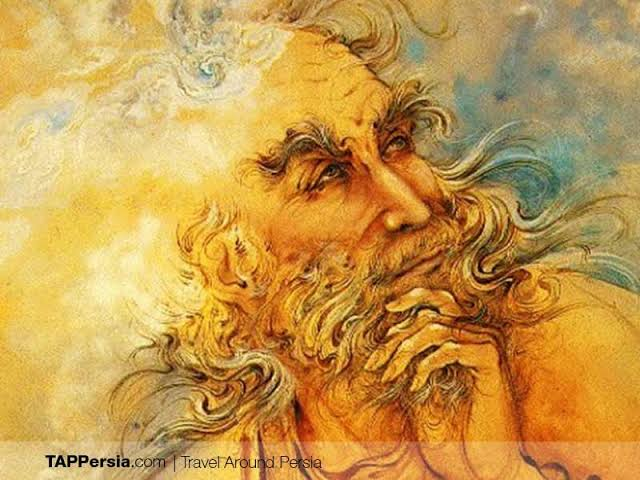
“Find A Better Job Now that all your worry has proved such an unlucrative business, Why not find a better job?”
~ Hafiz
Khājeh Shams-od-Dīn Moḥammad Ḥāfeẓ-e Shīrāzī (Persian: خواجه شمسالدین محمد حافظ شیرازی), known by his pen nameHafez (حافظ Ḥāfeẓ lit. ’the memorizer’ or ‘the keeper’; 1325–1390) or Hafiz,[1] also known by his nickname lesān-al-ḡayb (‘the tongue of the unseen’),[2] was a Persianlyric poet[3][4] whose collected works are regarded by many Iranians as one of the highest pinnacles of Persian literature. His works are often found in the homes of Persian speakers, who learn his poems by heart and use them as everyday proverbs and sayings. His life and poems have become the subjects of much analysis, commentary, and interpretation, influencing post-14th century Persian writing more than any other Persian author.[5][6]



 Bogor, Indonesia – February 9, 2020 : Police arrest two sexual harassment suspects at the Bogor police station. | Shutterstock