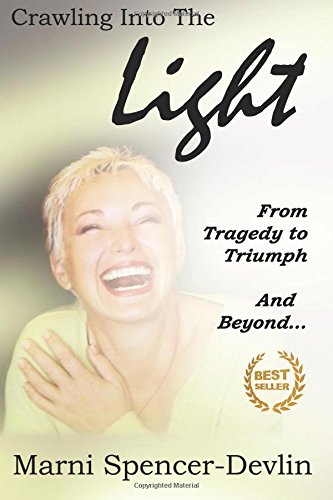
A powerful, searingly honest and inspiring memoir.
Marni Spencer-Devin is today a highly successful woman on many fronts but in her searingly honest memoir she unfolds a harrowing journey through pain, humiliation, and unimaginable abuse. From a traumatic childhood and a toxic marriage that led to heroin addiction, she spiraled into a decade of crime, prostitution, and homelessness.
Yet, in her darkest hour, Marni decided she deserved better. Her transformation began behind bars, leading to a job she loved and the creation of a multimillion-dollar company. But success didn’t equate to happiness.
A devastating diagnosis prompted a profound awakening, guiding her towards a life filled with joy and fulfillment. ‘Phoenix’ is a testament to the resilience of the human spirit, a powerful story of redemption and the pursuit of true happiness against all odds.
Marni’s journey is a reminder that even in the depths of despair, there’s hope for a brighter future.
Crawling Into The Light: From Tragedy To Triumph And Beyond
Against all odds, a woman survives two rapes, forced heroin addiction, prostitution, crime, homelessness and prison and rises to build a multi-million dollar business. Still, she struggles for fulfillment. Then a deadly diagnosis strips it all away, but in the process revealing what is truly important; a realization that brings redemption and finally, true freedom.
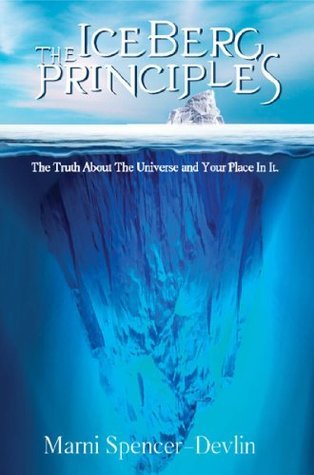
The Iceberg Principles: The Truth About The Universe And Your Place In It.
The Iceberg Principles are a concept that illustrates the truth of who we are as human beings. As with an iceberg, only 4% of us shows. Our physical DNA describes us but it does not really define who we are. Our talents and strengths, things we love, our unique gifts and quirks – those are the 96% that define us and those things are invisible. We exist to express what lies in the 96% in the 4%; only in this way can we feel whole. When we think we are nothing more than what shows in the mirror we are separated from ourselves and everyone else; lonely and exposed to the dangers. Life is about competition. We compare ourselves to others and always somehow we come up short. When we ignore or suppress the gifts and talents in our 96% we experience depression . We feel anxiety because we know deep down that there is more to us and we are wasting our life. We feel out of sync and eventually we end up in dis-ease, which causes physical and emotional pain, and that is the root of addictions like overeating , alcohol and drugs misuse – prescription or otherwise, and even smoking . When we cultivate what lies in our 96% we tap into an inexhaustible storehouse of inner strength , vitality and energy . When we honor our gifts and hone our talents we do what we love and life becomes passionate . We benefit and so does everyone else around us. When we love and honor ourselves our relationships automatically become more loving. Life is no longer about unmet needs but about what we have to share with the world. Then we open up the flood gates to abundance and affluence . Ease and harmony prevail and life becomes so good that we have to pinch ourselves. Everything that we desire as human beings is right at our fingertips and there is not a thing we need to change to get it. On the contrary, The Iceberg Principles show that in order to feel complete we must become more of who we already are .
Translation® is rooted in Classical Education. Classical Education was once available and could be afforded by a class of people, called the Freemen. In ancient Greece and Rome, a Freemen was a person who was entitled to full political, civil, and human rights within ancient Greece and Rome society. In other words, a person who was not a slave.
“Not A Slave,” Now that says more than you think it does upon first reading those words. Consider what we know of ourselves and others today. If we are not working with tools like Translation™ or something comparable, then we are not freemen but slaves to our unconscious construct fields in how we live our daily lives.
In the classical world of ancient Greece, the study of Trivium, which was an investigation of grammar, logic, rhetoric, which then would be follow by Quadrivium, the study of the four pillars of education called the mathematical and scientific disciplines: arithmetic, geometry, music, and astronomy. These studies were the key component of what is called a “classical” liberal arts education and was purported to be the way of a deeper understanding of the nature of reality through numbers, space, time, and movement.
Image: Calvin Harris, H.W., M. Photo by Marni Spencer-Devlin.
These studies were related to a greater understanding of Cosmic Principles. In ancient studies this greater understanding was called the ordering of the soul, which was considered the highest of all pursuits in education. Of course, the classical understanding of the soul is not the same as what the educational system of today would have us believe, but the principle still applies. The highest form of Classical learning was oriented to the highest of all pursuits Truth. This Truth was sometimes referred to as Gods, or Divine Mind, or today as Consciousness Conscious of Consciousness. This form of education was embedded within the classical form of education.
Today, in an education designed for the general public, we find teaching regulated to obedience to authority. A “By the rote” method, meaning memorizing and repeating something, often without understanding its meaning, done in a mechanical or routine way. Thus, to repeat after the teacher, to repeat what is in the textbook. The key objectives of this type of education are three fold to Repeat, Follow, Obey. With little to no teaching in how to consider, question or think.
The Schools that do follow classical education are usually expensive, or hard to find. There is what are also called alternative educational places of learning such as The Prosperos School of Ontology, that teach a form of the Classical Trivium and Quadrivium meaning the curriculum employs studies in logic and language rhetoric and the Pursuits Truth. These studies are in a self-paced learning style, and are geared towards freeing one of unconscious programing and being in the pursuits deeper understanding of the nature of reality.
At the Elite Schools, that teaches classic studies i.e. abstract reasoning, problem-solving, and communication skills along with history, literature, art, and philosophy. Their curriculum’s focus is on how a student can think, lead, and persuade. It is to foster people who’s station in life are going to be leaders or in the managerial class, which is in contrast with basic educational institutions who’s focus is on preparing students to be the worker class.
In the Prosperos, the use of Translation®, like classical Trivium, is to develop well-rounded individuals who can think critically and communicate effectively, with themselves consciously, thereby with others performing effectively. A preparation for the student not to be a unconscious reactionary participants in the world around them and to operate from principal and self awareness.
Translation®, if used properly, provides a framework for learning that can free one of unconscious programing, and as a bonus can emphasize both knowledge understanding and intellectual development.
Yet more importantly, like its Classical counterpart, Prosperos learning is oriented to Truth, the Truth of the I Am, sometimes referred to as God, or Divine Mind or Consciousness Conscious of Consciousness, and in uncovering Your role in the Cosmos.
If the question “Is there more to life?”, have crossed your mind, then you might want to avail yourself to this type of study.
For a preview of this type of learning, you can join us at the Prosperos Assembly 2025 in San Diego, September 05-08, 2025.
Emotional renewal, sacred softness, and new beginnings rooted in intuitionOverview: Why This New Moon Matters
The New Moon in Cancer on June 25, 2025, is one of the most emotionally potent lunations of the year. Ruled by the Moon itself, Cancer is a water sign that governs home, family, nurturing, intuition, and our deepest emotional needs. When the Moon renews itself here, we are called to come home—literally and metaphorically.
This lunar moment is ideal for setting intentions around emotional healing, creating safe and soothing spaces, repairing family dynamics, and honoring your inner world. Whether you’re looking to soften, reconnect, or begin again, this New Moon opens a portal to more heartfelt living.
How to Work with the New Moon in Cancer
1. Set Emotional and Home-Centered Intentions Think: self-nourishment, domestic healing, inner security. Good questions to journal on:
Where do I feel most emotionally safe?
What kind of environment am I creating for myself and others?
What does my soul need to feel cared for?
2. Create a Sacred Home Ritual Cancer rules the hearth. Consider:
Cleansing your space with herbs or salt water
Preparing a home-cooked meal with intention
Setting up a sacred corner or altar with water elements or moonstone
3. Embrace Intuition and Dreams This Moon heightens sensitivity and inner knowing. Try:
Dream journaling
Guided meditation
Pulling a few tarot or oracle cards on “emotional needs” or “soul comfort”
Suggested Affirmations
“I am safe, held, and emotionally nourished.”
“My home is a sanctuary that supports my growth.”
“I allow vulnerability to guide me toward deeper connection.”
Sign-by-Sign Guidance for the New Moon in Cancer
Aries (March 21 – April 19)
Focus: Home, Family, Emotional Foundations
Insight: This moon lights up your inner world, urging you to tend to your roots. Redecorating your space, reconnecting with family, or healing past wounds may be especially restorative. If you’ve been running on adrenaline, this is a call to come home to yourself.
Tip: Create a sacred corner or altar in your home for emotional grounding.
Affirmation: I create a sanctuary that nourishes my soul.
Taurus (April 20 – May 20)
Focus: Communication, Mental Clarity, Siblings
Insight: Your thoughts and words are emotionally charged under this New Moon. Speak with care and open-heartedness. If you’ve been sitting on a creative idea, now’s the time to write, share, or start a new learning path.
Tip: Write a letter (sent or unsent) to someone you’re emotionally entangled with.
Affirmation: My voice is a sacred tool for connection and truth.
Gemini (May 21 – June 20)
Focus: Finances, Self-Worth, Security
Insight: This is a new beginning for your financial world, but also for the emotional patterns tied to how you value yourself. Are you undercharging or overgiving? Examine where your worth feels conditional.
Tip: Set intentions for both income goals and emotional self-trust.
Affirmation: I am worthy of abundance and inner peace.
Cancer (June 21 – July 22)
Focus: Identity, Confidence, Personal Renewal
Insight: This is your cosmic reset. The Moon in your sign brings profound personal clarity and a soft but strong surge of energy to align your life with who you’re becoming. Shed the old skin.
Tip: Write a new personal manifesto or vision for the second half of the year.
Affirmation: I honor who I am and who I am becoming.
Leo (July 23 – August 22)
Focus: Solitude, Closure, Healing
Insight: Hidden emotions and unfinished healing rise to the surface. This isn’t a loud New Moon for you—it’s a soulful one. Carve out time for retreat, forgiveness, and spiritual connection.
Tip: Practice dreamwork or pull cards to understand unconscious patterns.
Affirmation: I trust in the wisdom of rest and inner knowing.
Virgo (August 23 – September 22)
Focus: Community, Friendship, Vision
Insight: This moon calls you to reconnect with your tribe—or realign with new communities. A fresh social intention or a bold collaborative project may feel like soul fuel.
Tip: Set an intention for a friendship that nurtures your emotional truth.
Affirmation: I attract kindred spirits and build collective dreams.
Libra (September 23 – October 22)
Focus: Career, Recognition, Purpose
Insight: This New Moon can recalibrate your professional path. If your work hasn’t felt emotionally resonant, it’s time to reassess what success truly means. Seek alignment, not just achievement.
Tip: Reflect on how you want to feel at work—not just what you want to do.
Affirmation: I rise with compassion and integrity.
Scorpio (October 23 – November 21)
Focus: Beliefs, Travel, Higher Learning
Insight: Your worldview is softening and deepening. This moon invites you to explore new philosophies, travel to emotionally resonant places, or begin a soulful course of study.
Tip: Journal about a belief you’re outgrowing, and write a new one to replace it.
Affirmation: My heart and mind expand together in trust.
Sagittarius (November 22 – December 21)
Focus: Transformation, Intimacy, Shared Resources
Insight: This New Moon brings a quiet but potent invitation to rebirth. It may stir deep emotional themes around trust, vulnerability, and merging with others. Don’t resist it—transformation is happening.
Tip: Create a ritual to let go of a power dynamic or old trauma.
Affirmation: I embrace change as a path to emotional power.
Insight: The Cancer Moon opens your heart to softness and support. Whether it’s a new relationship or a healing in an existing one, this lunation helps you cultivate connection without losing yourself.
Tip: Set intentions for partnerships rooted in mutual safety and care.
Affirmation: I give and receive love in a way that honors my heart.
Aquarius (January 20 – February 18)
Focus: Habits, Health, Work-Life Flow
Insight: Time to clear out daily patterns that don’t nourish your emotional well-being. This New Moon is ideal for revamping your self-care or setting intentions for work that feels meaningful.
Tip: Choose one habit to replace with something soothing and sustainable.
Affirmation: My everyday life supports my emotional well-being.
Pisces (February 19 – March 20)
Focus: Joy, Creativity, Romance
Insight: A fresh wave of inspiration and heart-opening energy moves in. Creative expression, new love, or even healing your inner child can all be part of this lunar invitation.
Tip: Do something playful or artistic with no end goal—just for you.
Affirmation: I allow joy and inspiration to guide me.
A “Treatise of the Corporate State” by Mussolini and Rocco refers to the
economic and political system implemented in Fascist Italy under Benito Mussolini, influenced by the ideas of Alfredo Rocco.
Here’s a breakdown of the key elements:
The Corporate State Concept: This system aimed to organize the economy by integrating various social groups, including employers and workers, into a collaborative framework under state oversight. The goal was to manage the economy, resolve class conflicts, and promote national unity and productivity.
Influence of Alfredo Rocco: Alfredo Rocco, as Minister of Justice, played a significant role in developing the theoretical and legal framework of the corporate state. His ideas, expressed in works like “The Political Doctrine of Fascism”, contributed to the Fascist state’s emphasis on state power and the subordination of individual rights to the interests of the nation. He advocated for resolving class conflict through state-controlled institutions, transforming existing syndicates (labor unions) into organs of legal defense within the state framework.
Implementation in Fascist Italy: The Corporate State was formally introduced through the 1926 Labor Charter and further formalized with the establishment of the Ministry of Corporations in 1934. This system involved organizing professional associations and syndicates into corporations representing different economic sectors, allowing for government oversight while maintaining some level of private enterprise.
Goals and Reality: The Corporate State aimed to create a harmonious society and a stable economy by reconciling the interests of labor and capital, promoting national unity and efficiency, and suppressing class conflict. However, critics argue that it primarily served to consolidate Mussolini’s power and facilitate state control over the economy, ultimately stifling economic activity and failing to achieve its intended goals.
Mussolini’s Writings on the Corporate State: Mussolini’s book “The Corporate State”, published in 1936, contains speeches on the corporate state, the Labour Charter, laws on syndical and corporate organizations, explanatory notes, and a bibliography. He also wrote about corporatism in the 1932 Enciclopedia Italiana, though the widely cited phrase “Everything within the state, nothing outside the state, nothing against the state” is not found in the original Italian version.
In essence, the “Treatise of the Corporate State” refers to the body of ideas and policies that constituted this unique Fascist economic and political system in Italy, with Mussolini as the leader and Rocco as a key architect of its principles.
Rocco’s *The Political Doctrine of Fascism* [text] – Stephen Hicks Jun 5, 2017 — [In the 1920s, Professor Alfredo Rocco became Minister of Justice in Italy under Benito Mussolini. This essay was originally published in 1925, and this transla…Stephen Hicks.org
Corporate State Concept (Italy) – (AP World History – Fiveable Definition. The Corporate State Concept was an economic and political system developed in Italy under Benito Mussolini, emphasizing the collaboration between th…Fiveable Library
Corporate State under Benito Mussolini – UPSC World History NotesFeb 19, 2024 — Objectives of the Corporate State: The corporate state aimed to establish a collaborative framework between employers and workers in various economic sectors. T…Edukemy
Today, more than ever, consider Fascism as a pejorative term, synonymous with authoritarianism, social exploration, chauvinism, xenophobia, racism, ad infinitum. For a politician, being called a “fascist” is a terrible insult, meaning that he is not as liberal as the democratic system demands. Either a severe person, a rigorous professor or a demanding employer, more or less every day, are often called “fascists”. It is an expression that has now returned to the common place to designate those who seek to impose some form of authority. A large part of the people, why, understand the meaning of the heat, its history and influence. Thanks to this book, “The Corporate State” by Benito Mussolini allows access to the fundamental idea of Italian Fascism. This is still a basic work, necessary for all and any critical part of national-revolutionary ideas. As it is perceived, the “anti-fascist” movement is an unhealthy paranoia, which definitions are desconexas, regardless of any rational allegiance within it. This text can help you understand the ideology, to help you fight it. The reader will observe a great similarity between the fascist model and the regime established in Brazil after 1930, which did not coincide, as I know. The text was translated in Italy in 1938 as political propaganda. Anti-driving weight is legal, clear and easily understood; Like any piece of propaganda, it was written to be popular.
Benito Amilcare Andrea Mussolini was an Italian dictator who founded and led the National Fascist Party (PNF). He was Prime Minister of Italy from the March on Rome in 1922 until his deposition in 1943, as well as Duce of Italian fascism from the establishment of the Italian Fasces of Combat in 1919 until his summary execution in 1945 by Italian partisans. As dictator of Italy and principal founder of fascism, Mussolini inspired and supported the international spread of fascist movements during the inter-war period.
Shortly after the 1989 publication of Women Without Men in her native Iran, Shahrnush Parsipur was arrested and jailed for her frank and defiant portrayal of women’s sexuality. Now banned in Iran, this small masterpiece was eventually translated into several languages and introduces U.S. readers to the work of a brilliant Persian writer. With a tone that is stark, and bold, Women Without Men creates an evocative allegory of life for contemporary Iranian women. In the interwoven destinies of five women, simple situations such as walking down a road or leaving the house become, in the tumult of post-WWII Iran, horrific and defiant as women escape the narrow confines of family and society only to face daunting new challenges.
Now in political exile, Shahrnush Parsipur lives in the Bay Area. She is the author of several short story collections including Touba and the Meaning of Night.
In late May, several scientific organizations, including the International Society for Cell and Gene Therapy (ISCT), banded together to call for a 10-year moratorium on using CRISPR and related technologies to pursue human heritable germline editing. The declaration also outlined practical steps that countries and research institutions could take to discourage this sort of experimentation, such as strengthening regulations tied to gene editing.
“Germline editing has very serious safety concerns that could have irreversible consequences,” said Bruce Levine, a cancer gene therapy researcher at the University of Pennsylvania and former president of the ISCT, in a statement. “We simply lack the tools to make it safe now and for at least the next 10 years.”
Newer technologies such as CRISPR have made gene editing easier, cheaper, and more practical to carry out in a variety of species, humans included. That reality has made heritable germline editing—altering egg, sperm, and embryos such that they can be passed down to offspring—more feasible than ever.
In November 2018, Chinese scientist He Jiankui thrust this issue into the limelight when he announced that his team modified the genes of several human embryos using CRISPR, then implanted them successfully in women volunteers. Eventually three children were born with the modifications, intended to confer natural immunity to HIV infection. He deliberately flouted ethical guidelines and the law in his research, such as doctoring lab results so that HIV-positive men could father the children (according to He, the children were born without HIV and appeared to have avoided any related health issues).
He’s experiments were roundly condemned by the scientific community and he ultimately served a three-year prison term for his actions, which ended in 2022. Upon release, He went back to working in the gene-editing field, though he promised to abide by domestic and international rules. The episode showed that human heritable germline editing is already clearly possible today, but not necessarily ethical to carry out. Indeed, many scientists and bioethicists believe we’re not ready to go down that path just yet.
For this Giz Asks, we reached out to several bioethicists to get their take on the moratorium, and more broadly, on the question of when we should be able to genetically modify children, if ever.
Arthur Caplan
Founding head of the Division of Medical Ethics at New York University’s Grossman School of Medicine’s Department of Population Health.
I’ve been thinking about that question for well over 40 years.
We didn’t always have the technology to go in and modify genes in an egg, sperm, embryo, or fetus for that matter. But it’s certainly the case that people have been thinking hard about trying to genetically alter and improve children, probably back to the Greeks.
We know that in modern times, Nazi Germany was home to race hygiene theory and a form of eugenics; they would have been very interested in creating better babies. They did have the Lebensborn Program where they tried to force women and men that they deemed especially genetically fit to breed and have kids. It’s not really clear whatever happened to those kids. But it’s a form, if you will, of trying to get the right genes into your offspring and get them passed along into the future. They practiced that.
And we had versions of that in the U.S., believe it or not. We actually had awards given at state fairs to families that were seen as eugenically the best and trying to encourage those families to have bigger families. That’s an idea that’s still rattling around today, by the way, in the mouths of Donald Trump, Elon Musk, Stephen Miller, etc. Many in the current Trump administration are very concerned about minorities becoming the majority in the U.S.
In any event, these are old fashioned ideas, often fueled by dreams of eugenics, shifting the population in the future toward healthier, more competent, more physically able people, trying to get people of the right race or ethnicity so that the society’s makeup is proper. They don’t rely on engineering a gene. There’s no CRISPR. There’s nobody going in there and trying to penetrate the cell wall to insert genetic information. But those are just new ways to think about ideas that have been around for a long time.
So if you ask me, will we see genetic engineering of children aimed at their improvement? I say yes, undoubtedly. Now when? I’m not sure what the answer to that is. Right now, we have some crude tools. We are seeing some efforts to use gene therapy in kids to repair diseases of their bodies, not things that would be inherited. They work a bit, but I wouldn’t say we’re really at the sort of utopia of being able to reliably get rid of in a person or a child, sickle cell or other major diseases. The tools, despite a lot of hype and a lot of maybe press release journalism, are not quite there yet to really say we can even do a good job repairing disease in an existing kid. So when it comes to trying to use tools to modify an embryo, I’m going to say flat out we’re at least 10 years away from that in any serious way that could be considered safe, targeted, and likely to produce the outcome you want. So the big restriction now is safety. I think we’ll get past safety, but it is a reason right now not to do anything.
Now, what else might become an objection if we did have accurate, sophisticated tools? I think the first is access. If you make better kids, but only some people can afford it, that wouldn’t be fair. And that in itself would be unjust. And you might wind up creating two classes or more of humans on Earth, the genetically engineered superior people and others. And this obviously is a theme all over science fiction. Old-timers will remember the Wrath of Khan from Star Trek for their take on what happens when you get a super genetically engineered race. There’s Gattaca, another movie that explored this. But I’m going to say this somewhat controversially. Fairness in access never stopped a technology from going forward. When the rich and the middle class want it, they’re not stopped by the fact that the poor can’t get it. I would like to see provisions made to say we shouldn’t move forward unless those technologies are available to those who want them regardless of cost. But I don’t think that’s going to happen. It’s just never happened.
So access is an issue, but I don’t think it’s a game-breaker for improving your kids. People also say, well, how will we improve? I mean, what’s the best state? We can’t agree on that. So will we really improve kids? There may be things we disagree about as to whether they’re really improvements. Would it be an improvement to diminish pigment in black people? Try and make them less dark. We can certainly see that argued. There are plenty in the deaf community who say, well, deafness is not really something you have to get rid of or try to improve by genetically engineering hearing to make it better. They can get around the world deaf using a different language and different institutions.
But there are clearly things that it would be nice to genetically improve in kids. Immunity would be great. We do it now with vaccines. It would be great to find the right genes, tweak them, and build stronger immune systems. It would be great to make sure that we try our best to diminish the extreme pain, that some of us suffer not just as disease, but with respect to certain stimuli. I’m not saying we should genetically eliminate all pain. That would probably put us in danger, but we don’t quite have to suffer the way we do. My point being, the fact that we don’t agree on everything as to what would be an improvement doesn’t mean that we can’t agree on anything.
The last thing I’ll say is this. When you try to make better kids, I think one last concern is: Are you going to make the children have less options rather than more? So if I considered it an improvement in a child to make them a giant, or to make them a tennis player, or to try and figure out perhaps some weird appearance that would make them a celebrity, I’m condemning the child to my choice. They don’t have the freedom to run their own life. They don’t have the ability to choose what they want to do. I tighten down their future by narrowing the kinds of traits they have. That, I think, is a legitimate objection. We have to think hard about that. Many of the things we do environmentally, learn to read better, learn to do exercise, learn to play games, these are skills that expand capacities in our children, and may in fact be values that are then passed on to future generations. But they don’t wind up creating kids who are less capable because of those interventions. That’s where genetic change has to be watched very closely.
So the bottom line of this gigantic speech is yes, we will see genetic modification of our children. It will come. There are traits that people will eagerly try to put into their kids in the future. They will try to design out genetic diseases, get rid of them. They will try to build in capacities and abilities that they agree are really wonderful. Will we hang up these interventions on ethical grounds? For the most part, no, would be my prediction, But not within the next 10 years. The tools are still too crude.
There are children with genetic modifications walking around today, children like KJ, who was treated with personalized CRISPR gene editing at just six months old. There are now kids who are free of sickle cell disease symptoms through CRISPR therapy, the first one ever approved by the FDA. All of these children are “genetically modified,” and they and their parents couldn’t be happier about it. What other conditions could and should be treated through genetic modifications? That’s a question that scientists are actively working on, and that social scientists like me are talking about with patients, parents, and communities—because we and they think it’s really important for them to be part of those decisions.
These “somatic” gene editing treatments that are already being used aren’t the kind that is passed down through our reproductive cells, the germline. Heritable gene modification would involve embryos, eggs, or sperm, or even possibly other cells that could be turned into these kinds of cells. A technology currently being researched, called in vitro gametogenesis, could use gene editing to turn skin cells into reproductive cells, allowing families with infertility to have their own genetically related children. And of course, there are scientists looking at the possibility of editing reproductive cells to allow couples who carry the genes for severe diseases to conceive children without those conditions.
Many ethicists and scientists have drawn a hard line between heritable and non-heritable gene editing, but in practice it’s not nearly so clear-cut. Off-target effects of gene editing are difficult to predict or control, so there is a chance that reproductive cells could be changed by treatments aimed at other organ systems. Fetal gene editing, which could help babies with some conditions be born with few or no symptoms, will also involve the pregnant bodies of their mothers; those adults could host edited cells even after the pregnancy ends, possibly affecting their future children too. Families dealing with genetic conditions that cause great suffering for their children don’t necessarily see a problem with eliminating those conditions forever with heritable gene editing. On the other hand, some people living with genetic conditions, such as deafness or autism, see no reason for treating their condition with gene editing, heritable or not, because their biggest problems come not from the condition itself but from the way society treats them.
So there are many questions to be asked about all forms of genetic modification, and how they will be developed and implemented. All the gene editing treatments that exist now or are being imagined over the next decade, heritable or not, involve exorbitant cost and will be inaccessible to most people worldwide. It will be crucial to balance the excitement of these novel technologies with attention to questions of justice, developing new treatments with an eye toward both accessibility and the priorities of those most affected. The only way to do this is to bring more voices into conversation with one another: people living with genetic conditions, scientists and doctors, policymakers of all kinds, and members of the public. Although gene editing is an amazing tool to add to our kit, the work of building more robust healthcare and support for families carrying or living with genetic conditions doesn’t begin or end with genetic modification.
Yes we should, when it’s safe, effective, and voluntary.
Calls to permanently ban the creation of genetically modified children often rest on fear, not facts. They mirror past moral panics over interracial marriage, in vitro fertilization, and birth control—all technologies or choices once deemed unnatural or dangerous, and now widely accepted. We should be wary of arguments dressed up as ethics but rooted in anxiety about change.
That doesn’t mean anything goes. Like any powerful technology, gene editing must be tightly regulated for safety and efficacy. But the agencies we already trust to regulate medicine—the FDA, NIH, and institutional review boards—are largely capable of doing that. We don’t need a bioethics priesthood or a new bureaucracy to police reproductive decisions. We need science-based oversight, individual consent, and protection from coercion.
One of the loudest objections to genetic editing is the specter of “eugenics.” But if eugenics means state control over reproduction, then the lesson of the 20th century is to defend reproductive freedom, not curtail it. Governments should not tell parents what kinds of kids to have. Preventing parents from using safe, approved gene therapies to reduce suffering or enhance their children’s lives is a strange way to honor that lesson. They should give parents access to all the information and technology for the choices they make. True reproductive liberty includes the right to use the best science available to ensure a child’s health.
Another objection is that genetic modification could harm people who would rather not participate. But this “perfection anxiety” ignores how all medical advances shift social norms. We didn’t stop improving dental care because it made bad teeth less acceptable. And a healthier society has not led to less compassion for those who remain sick or disabled—if anything, it’s strengthened the case for inclusion and support. The goal should be equitable access, not frozen norms.
We do need to ensure that parents can access all the gene therapies that actually provide potential benefits for children. Governments with universal healthcare will need to make tough choices about what to cover and what not to cover. For instance, the National Health Service should make gene therapy to remove lethal, painful conditions available for all Britons, but parents may need to pay for medical tourism to some offshore clinic if they want to tweak their embryo’s eye color.
What about risks we can’t foresee? Of course there will be some. All new medical therapies come with uncertainties. That’s why we have trials, regulation, and post-market surveillance. There’s no reason genetic therapies should be held to an impossibly higher standard. We should start with animal models, and proceed to the most morally defensible gene tweaks, lethal and painful conditions. Over time, as the safety of the techniques are better understood, we can expand the scope of therapeutic choices.
Some worry that genetically modified children could disrupt our ideas of family or humanity. But those concepts have already been revolutionized—by urbanization, feminism, economic precarity, and social movements. The family of today would be unrecognizable to most people in 1800. If genetic technologies change our values again, it won’t be the first time. Liberal democracies don’t freeze culture in place—they ensure people have the freedom to shape it.
Ultimately, the question isn’t whether we should allow genetically modified children. It’s whether we trust parents to make mostly good choices under the oversight of regulators and doctors. We should, because most parents have their children’s best interests in mind, as they perceive them. That’s why we allow parents to raise their own children in the first place. And we should ensure those choices are equitably available to all, not outlawed out of fear.
If we ever find genetic tweaks to reduce suffering, enhance capability, or prevent devastating disease—and we can do so safely and ethically—the real moral failure would be to prohibit it.
Kerry Bowman
A Canadian bioethicist and environmentalist currently teaching at the University of Toronto.
Well, there’s a big difference between genetic enhancement and treatment. And with enhancement, I think we’re nowhere near a point where we should be even considering that. But with treatment, the large ethical issue right now is something like single gene mutation. So something like Huntington’s disease, muscular dystrophy, or similar diseases, could it be justified to edit the gene for that?
The challenge is we don’t fully understand all the things. We don’t know what we don’t know, to put it bluntly. And with germline editing, the changes we would be making are permanent and they run through many generations ahead. So, yes, being able to prevent deadly or debilitating illnesses is absolutely something wonderful. But having said that, you obviously don’t have consent of the person who will be born, but you also don’t have consent of the generations that come after that. And if there is complications or unexpected problems, you can have an inheritance that just keeps running through generations.
But here’s the thing with this moratorium; to what end? You can call for a moratorium, but if no one’s focusing on anything, if there’s no research, no planning, no social discourse, there’s just a lot of people with different opinions, and everything gets shelved for 10 years. I’m not sure that’s going to be particularly useful. It sounds great if it’s going to be 10 concentrated years on building consensus and public engagement and those types of things, but I don’t think that’s what would actually happen.
And also, I’m sure you’ve noticed, the world’s not in good shape, and Western culture is not of one mind these days. And with the ruptures, particularly in the United States, there’s a lot of division in Western culture of how people see things. And I’m just not convinced that a moratorium, that people would make use of it in a constructive way. It really needs a coordinated plan, and I’m not sure there is one. So I do see that as quite a problem.
The other thing is, we’re dealing with high-income countries. So when we look at potential for CRISPR-Cas9 and gene editing, we’re dealing with a very small percentage of the world’s population. I’m going to guess that it’s maybe 15% to 20% of the world’s population, because most of the population of the world has no access to things like this and never will. Not never will, but in the foreseeable future, they won’t. And I think that’s something we miss a lot of the time. And the biggest ethical problem in the world today is not gene editing. It’s just access to healthcare. And this doesn’t do anything in those domains whatsoever. So from a justice point of view, that is a concern.
And I’m going to sound cynical here. Emerging medical technologies are not motivated largely by the social sector. They’re motivated by marketing and market forces. So if people can make money on this, somehow, someway, people will proceed. And if gene editing is illegal in Canada and the U.S. and Western Europe and Australia, there’s a lot of countries that don’t fall into that. And you can set up shop anywhere. Equatorial Guinea or other places are not going to be worried about things like this. They’ve got enough problems on their hands. And there’s a lot of countries out there where this would not be easily called.
So I support the essence of it. And I can see why people want to do it. I’m just not convinced it’s all that feasible. I think what makes more sense is just not having any germline editing until we have a larger consensus about this technology.
WASHINGTON—In an effort to assuage any fears over the constitutionality of the Trump administration’s flurry of executive actions, a D.C.-area think tank called the Himmler Institute reportedly assured the nation Monday that this is all perfectly legal. “We’ve studied the total legality of far-reaching executive actions for decades, and we can guarantee that everything happening in Washington right now is completely above board,” said Himmler Institute spokesperson Stephanie Heydrich-Skorzeny, adding that this was one of the clearest-cut cases the institute had seen since its founding in 1947. “We’ve put together some of the brightest legal minds America, Germany, and Argentina have ever produced, and they’ve concluded there’s no reason to worry about the current situation resulting in any sort of constitutional crisis. These executive orders are nothing more than a simple and effective way to seize power. If anything, Trump’s actions are merely reversing the illegal actions of past administrations that betrayed the American people to promote gender ideology and race mixing.” At press time, the Himmler Institute’s findings were backed up by a report from another think tank called the Führerprinzip Foundation.
WASHINGTON—Stressing that the facade informs nearly every aspect of his daily life, Sen. Josh Hawley (R-MO) told reporters Thursday that his Christian faith is an important part of who he pretends to be. “Whether I’m delivering a speech calling for theocracy in front of dozens of cameras or talking to my children at the kitchen table about God’s separate roles for men and women, I mean it when I say the mask I wear in public is the same one I wear at home,” said the 45-year-old lawmaker, who confirmed that Christianity has been the foundation of his public-facing identity ever since he was a shameless young prep school student with his sights set on Yale Law School. “The power of telling people you pray is incredible. My Christian faith is a pretense that’s only grown stronger as I’ve aged. It’s so strong that, sometimes, I almost forget it’s all an act.” At press time, Hawley added that he is grateful to represent all of his Christian constituents through the faith he uses as a guise to seek power.
I read this morning that U.S. citizens should be on high alert following our bombing of Iranian nuclear facilities. From possibilities of cyber attacks to hate crimes, we’re told the ongoing conflict is causing a heightened threat environment in the United States. Iranian bombs have already flown toward US military bases in Qatar.
Apparently Iran sent a message to President Trump while he was at the G7 meeting in Canada over a week ago. It warned that they have sleeper cells in the US which could be activated should the US take action against Iran.
We don’t always know what to believe these days, but it seems clear that anything could happen anytime anywhere. We can expect the unexpected, that’s for sure.
According to some sources, the main ingredients for the development of an Iranian nuclear weapon were removed from Fordow days before the US attack. And if that’s true, then the Iranian nuclear program was possibly set back only for months, not even years.
If we only look at things on the level of what’s happening outside ourselves, clearly these are not happy days. Indeed they are rough and chaotic. But the point of spiritual consciousness is to look beyond the mere surface level of things. While major changes are happening in the world, we best navigate them by understanding the nature of things that do not change. Spiritual consciousness is our greatest tool for enduring and navigating the times in which we live.
There are objective, discernible laws of consciousness that work no differently than the laws of the material world. The laws of physics, for instance, are not someone’s opinion. You don’t have faith in the law of gravity; you simply know that it is. And you know it’s not negotiable. You can override it, but the law itself does not bend.
Spiritual and physical laws mirror each other and share the most basic common underpinning: the Law of Cause and Effect. Every action has a reaction, and every thought creates form on some level. We get away with nothing, either physically or spiritually. You don’t drop an object without expecting it to fall, and you don’t take an action without expecting it to be returned to you. The universe keeps a perfect set of books.
The Law of Cause and Effect applies to the behavior of groups of people as much as to individuals. Processing what it means that an entire nation might have karma to deal with is not so much an intellectual stretch as simply a truth to deal with. Yet the laws of nature are inviolable. If everything in the world is a mere Effect the Cause of which is in our minds, then it’s within our minds where we will find our greatest power to change the world.
There are people, usually on the Right, who only want to look at what America has done right and have little interest in looking at what we’ve done wrong. There are also people, usually on the Left, who only want to look at what America has done wrong and have little interest in looking at what we’ve done right. Both views are incomplete and based on false premises. American history has been forged by human beings, and human beings are imperfect. Where we’ve been good, at times we have been spectacularly good. And where we have been bad, at times we have been spectacularly bad.
The truth will set us free, that’s true, but in the words of Werner Erhard, “First it will piss you off.” We need to be willing to look in America’s mirror, with love and compassion but with brutal self-awareness.
The laws of the universe are simple, actually – profoundly encapsulated in the Golden Rule. Do unto others as you would have others do unto you. Why? Because they will! And if they don’t, then someone else will. Think with Love. Act with Love. And if you don’t, don’t go expecting things to turn out well. For they will not.
All of us are human, and all of make mistakes. This world is nothing if not confusing. It is dominated by a thought system based on fear, consistently tempting us to thought and behavior that is anything but aligned with wisdom. It happens to all of us. Add to that, that in our collective existence our thoughts are too often shepherded by sociopathic political and economic forces, and you get…well…you get to where we are.
At our best, as a nation we have adhered to the laws of righteousness and acted according to the “angels of our better nature.” We have recognized our mistakes and sought to correct them. As much wrong as we have done at times, American history is not just littered with error; it is also littered with greatness. People in other generations have recognized and acknowledged the higher truths of the heart. They have lived for them, sacrificed for them, and many have died for them.
Lincoln gave a profound exposition on the spiritual meaning of the Civil War in his Second Inaugural Address. Franklin Roosevelt said these words about the office of President: “The Presidency is not merely an administrative office. That’s the least of it. It is more than an engineering job, efficient or inefficient. It is pre-eminently a place of moral leadership.” Martin Luther King, Jr. saw the Civil Rights Movement as an opportunity to redeem the soul of America, making good on our founding ideals of liberty and justice for all. The last thing any of those men were was naive about the world or naive about America.
Great leaders do not speak, or act, only in material terms. They have at least an instinctive understanding that more is going on here than the mere externals of life. Ideals matter. Principles matter. Righteousness matters. In fact, without them we are doomed. “God shall not be mocked” means that He isn’t. And “Where there is no vision the people perish” simply tells it like it is.
So what has happened to us, that we are where we are today?
Many things have happened, but there are general strokes of history worth noting. In very simple terms, we forget who we are. This nation was founded on the most enlightened principles – never fully actualized, obviously, but continuously striven for in every generation despite ever recurring forces of opposition. Those principles are not just a political identity, but what is in essence a philosophical mission. For most of our history, the people of the United States have had an instinctive understanding of what that meant. From abolishing slavery to fighting fascism, no one can say that Americans have never shown up for the principles on which we purport to stand.
But the last fifty years, while materially successful, have been been a spiritual Dark Ages in the United States of America.
Money became our God. Military and police became our primary problem-solving modality. Corporate greed became our organizing principle. Our political system has become corrupted by the undue influence of money. Among many Americans, there has even developed a fondness for fascism and an attraction to dictators. Morally and politically, we have swerved way off course.
For those thinking God help us, that’s exactly my point.
There is within our consciousness a way to change what’s happening, but it requires humility toward a power greater than our own.
The Atonement is the ultimate expression of God’s mercy, enshrined in all the great religious and spiritual traditions of the world. Yom Kippur is the Day of Atonement, the Holiest day of the year among Jews; the practice of confession is an experience of atonement among Catholics; and the admission of our character defects and seeking to make amends for them is the principle of Atonement found in Alcoholics Anonymous. It means admitting to God the exact nature of our wrongs, invoking a spiritual and psychological reset. When we have strayed from love we can atone for our errors, thus resetting the trajectory of our lives.
And America needs to do that – we need a national Atonement. Only purification of the American heart can get us out of the pickle we’re in now. The self-reflection required of us in this moment is not easy to swallow, but it’s the only portal to fundamental change. For years our political leaders were told by their handlers not to tell us anything “negative,” as though we were children rather than mature adults. And we are paying the price for that right now.
If God forbid sleeper cells are activated in the United States, Americans’ prayers for protection are going to ring pretty hollow to a God who loves other people as much as He loves us.
How many times over the last fifty years has this country behaved with callousness, disrespect – at times even cruelty – led by leaders who argued it was in “America’s best interests” to do so? How many ill advised and unnecessary wars, how much destructiveness of the earth, how many economies demolished so US corporations could get richer, how much callousness toward the poor, the weak, the hungry, the sick, and the young do you think a Divinely Intelligent universe tolerates before the effects of our lovelessness comes crashing back at us?
Prayers for protection are not the prayers that will penetrate the veils of heaven now. God does not save us from what we brought upon ourselves. That’s not to say He isn’t merciful. God’s not angry…but He’s not kidding either.
Prayers for forgiveness, atonement for our shallowness and complacency, fasting in sorrow, purifying our hearts of the ways we’ve enabled a system for so long that has abused so many – such is the power (greater than any other) that will reset our trajectory for the days that lie ahead. The more any individual comes to that place in our hearts, the more we will affect the collective consciousness of the country. That healing will not come from institutional sources; it will come from us.
At a times such as this, contrition is more powerful than bombs.
Watching Donald Trump deliver the news of an American attack on Iran Saturday night, I wondered how many viewers had the same reaction I did: How can the United States be going to war — and that’s exactly what it is — with advisers whose collective experience managing international conflict is see-through thin?
There was Trump, a draft dodger who has long derided the military, surrounded by his war cabinet of second-rate choices, who owe their professional and political souls to him. Will any of them ever question Trump’s decisions? We know the answer to that.
Trump did not have solid evidence Iran was building a nuclear bomb. Nearing the time when they might be able to build one is the best that can be said. Similar, although not identical, to the situation when George W. Bush didn’t have hard evidence that Iraq was building weapons of mass destruction. Bad intel back then led to a war that lasted eight years and killed nearly 5,000 Americans and reportedly 200,000 Iraqis. No WMDs were ever found.
Lessons learned? Hardly. Bombing Iran was easy enough. Did anyone at the White House think about what would happen on Day 2?
Forty-eight hours after the United States launched bunker-busting bombs and dozens of cruise missiles at Iran, the Iranian regime retaliated. Iran launched missiles at Al Udeid Air Base in Qatar, the largest U.S. military base in the Middle East. The Defense Department said there were no injuries because Qatari air defenses were able to intercept the Iranian attack. Also, the Iranians gave advance warning to minimize casualties.
No one should be surprised by this escalation. And no one should think this is the end of hostilities. Forty thousand U.S. troops are stationed in the region.
It is a consequence of going to war, which is exactly what Donald Trump did when he called for strikes against Iran’s nuclear sites. Even if Vice President JD Vance says otherwise. “We’re not at war with Iran. We’re at war with Iran’s nuclear program,” he said on “Meet the Press” Sunday. The Iranian people likely quibble with Vance’s semantics.
Iran has other retaliatory options from which to choose.
In an internal FBI email obtained by The New York Times, American officials warn that Iran and its allies have “historically targeted U.S. interests in response to geopolitical events, and they are likely to increase their efforts in the near term.”
The Strait of Hormuz, a narrow strip of water between the Persian Gulf and the Gulf of Oman, is one of the world’s most important strategic choke points. And Iran controls the north side of it. The 20 million barrels of oil produced daily in the region — a fifth of global output — must travel through the strait.
Some influential Iranians are calling for Hormuz to be closed, including Hossein Shariatmadari, the editor-in-chief of a popular hard-line Iranian newspaper, who has the ear of the supreme leader.
“It is now our turn to act without delay. As a first step, we must launch a missile strike on the US naval fleet in Bahrain and simultaneously close the Strait of Hormuz to American, British, German, and French ships,” Shariatmadari wrote in his newspaper.
Mohammad Ali Shabani, an expert on Iran, told CNN that Iran’s control of global shipping lanes gives the government the “capacity to cause a shock in oil markets, drive up oil prices, drive inflation, [and] collapse Trump’s economic agenda.”
If Hormuz is closed, oil prices will skyrocket. But perhaps the ayatollah will put his pocketbook before payback. China is the No. 1 buyer of Iranian oil. The money Iran earns from Chinese oil sales accounts for 50% of government spending, according to The Times. It has allowed the Iranian regime to fund terrorist groups like Hamas and Hezbollah.
By the way, need we remind ourselves that China, not Iran, is the most potent foreign threat to American security? Also that Iran, along with China and Russia, has the ability to launch destructive cyber attacks.
But now back to the strikes themselves. Trump claimed victory, saying the U.S. bombings “completely and totally obliterated” Iran’s nuclear program. No evidence has been given, and a bomb damage assessment has yet to be released. This administration is not known for truth-telling, so a wait-and-see approach is justified.
Using satellite imagery, the Israeli military’s initial assessment is that Fordo, the main nuclear site, where the U.S. dropped at least six bunker busters, was damaged but not destroyed. Israeli intelligence believes Iran moved equipment and uranium from the site prior to the bombing.
All this means that Saturday’s attack was not a one-and-done as the president would have us believe. Add to that Trump’s changing tune on regime change. Initially he said the goal of the bombing was “destruction of Iran’s nuclear enrichment capacity.”
Vance, Pete Hegseth, and Marco Rubio were reading from the same script as they made the rounds on the Sunday talk shows. The administration’s view “has been very clear that we don’t want a regime change,” Vance said.
Perhaps the president didn’t get a copy of the talking points. Not four hours later, Trump took to social media. “It’s not politically correct to use the term, ‘Regime Change’ but if the current Iranian Regime is unable to MAKE IRAN GREAT AGAIN, why wouldn’t there be a Regime change??? MIGA!!” he posted.
No one thinks the Iranian government is made up of good guys. It has an abysmal human rights record and is the poster child for state-sponsored terrorism. These leaders have a long record of hating America and all for which we stand. They have been known to subvert our Arab allies in the region. But regime change seldom if ever works out the way the changers intend. See: Libya, Iraq, and Afghanistan.
But calling for regime change versus seeking to destroy a country’s nuclear capabilities — no matter how spurious the intelligence — are very different goals with very different long-term prospects.
It’s been widely reported that the U.S. defense secretary was not included in planning the Iran mission. Perhaps Hegseth’s Signalgate scandal has finally caught up with him. At least he was by Trump’s side as the president delivered his version of the war news.
Meanwhile, Director of National Intelligence Tulsi Gabbard has been put on ice by Trump for testifying to Congress — in March — that the intelligence community did not believe Iran was close to building a nuclear weapon.
So Trump needs advisers who will guide him by telling him the truth, rather than what he wants to hear; because they are beholden to him for jobs they aren’t qualified for, they never will. Trump learned from his first administration: Don’t hire the smart people, elevate the sycophants.
A few closing notes from your reporter, who has spent a fair portion of his life covering wars:
Truth IS the first casualty of war.
The first things you hear often are untrue, and so are many of the things you hear later.
Wars are by their very nature chaotic and unpredictable. What you most expect frequently does not happen; what you least expect often does.
Up close and personal, wars are almost unbelievably savage. The television screen and the printed word do not come close to conveying their harsh realities.
Consciousness, spirituality, biography, sexuality, androgyny, futurism, space, the arts, science, astrology, democracy, humor, books, movies and more