Whatever fundamental reality might exist, we live out our lives in a subjective reality defined by what we agree to attend to. “An act of pure attention, if you are capable of it, will bring its own answer,” D.H. Lawrence wrote. But we live largely in the territory of the unanswerable because there is no pure attention — the aperture of our attention is constricted by myriad conditionings and focused by a brain honed on millions of years of evolutionary necessities, many of which we have long outgrown.
How the brain metes out attention and what that means for our intimacy with reality is what the philosophy-lensed British psychiatrist Iain McGilchrist takes up in his immense, in both senses of the word, book The Matter With Things: Our Brains, Our Delusions and the Unmaking of the World (public library) — an investigation of how “the very brain mechanisms which succeed in simplifying the world so as to subject it to our control militate against a true understanding of it,” and what a richer understanding of those mechanisms can do for living in closer and more felicitous communion with reality. At its heart is the recognition that “the whole is never the same as the sum of its ‘parts’” and that “there are in fact no ‘parts’ as such, but that they are an artefact of a certain way of looking at the world.”
Punctuating his ambitious 3,000-page effort to braid neuropsychology (the way our brains shape our impression of reality), epistemology (the way we come to know anything at all), and metaphysics (our yearning to wrest meaning from fundamental truth as we try to discern the nature of the universe) is an ongoing inquiry into our way of looking at the world — the lens of consciousness we call attention. He writes:
The world we know cannot be wholly mind-independent, and it cannot be wholly mind-dependent… What is required is an attentive response to something real and other than ourselves, of which we have only inklings at first, but which comes more and more into being through our response to it — if we are truly responsive to it. We nurture it into being; or not. In this it has something of the structure of love.
One of artist Margaret C. Cook’s rare 1913 illustrations for Leaves of Grass — Walt Whitman’s supreme serenade to the art of paying attention. (Available as a print.)
McGilchrist considers the way our attention constructs our reality and becomes the beating heart with which we love the world:
The whole illuminates the parts as much as the parts can illuminate the whole… The world we experience — which is the only one we can know — is affected by the kind of attention we pay to it.
Defining attention as “the manner in which our consciousness is disposed towards whatever else exists,” he writes:
The choice we make of how we dispose our consciousness is the ultimate creative act: it renders the world what it is. It is, therefore, a moral act: it has consequences.
Attention changes the world. How you attend to it changes what it is you find there. What you find then governs the kind of attention you will think it appropriate to pay in the future. And so it is that the world you recognise (which will not be exactly the same as my world) is “firmed up” — and brought into being.
[…]
Attention is not just another “cognitive function”: it is… the disposition adopted by one’s consciousness towards the world. Absent, present, detached, engaged, alienated, empathic, broad or narrow, sustained or piecemeal, it therefore has the power to alter whatever it meets. Since our consciousness plays some part in what comes into being, the play of attention can both create and destroy, but it never leaves its object unchanged. So how you attend to something — or don’t attend to it — matters a very great deal.
In the vast remainder of The Matter With Things, McGilchrist goes on to explore how “the type, and extent, of attention we pay changes the nature of the world that we experience,” shaped largely by the difference between the way the brain’s two hemispheres pay attention — “narrow-beam, highly focussed attention” in the left, “broad, sustained vigilance” in the right. Complement this tiny fragment of it with Mary Oliver on attention and love, then revisit cognitive scientist Alexandra Horowitz’s wonderful field guide to eleven ways of paying attention to the everyday wonderland of life.
New Thinkin Jun 3, 2025 Pam Coronado is an internationally recognized psychic detective with over 25 years of experience assisting law enforcement agencies and families in solving complex criminal cases and locating missing persons. Over the years, Pam has collaborated with more than 40 law enforcement agencies, including the FBI, providing leads and insights in high-stakes investigations. Pam is a former president of the International Remote Viewing Association (IRVA) and the co-founder of the Fowler-O’Sullivan Foundation, which supports families of missing persons. Her website is https://www.pamcoronado.com Pam shares hard-earned wisdom drawn from over two decades of working active missing persons and criminal cases alongside law enforcement. She speaks openly about the importance of building trust with families and agencies, the risks of offering unsolicited insights, and the emotional toll of working cases involving loss, danger, and uncertainty. 00:02:33 The awakening: Pam’s journey 00:08:16 Navigating law enforcement 00:17:49 Working cold cases 00:24:47 Success stories in psychic detection 00:34:33 Limitations of psychic work 00:40:25 Dealing with heavy emotions 00:49:09 Using the CRV protocol 01:02:08 Advice for beginners 01:15:03 Overcoming fear and anxiety in psychic work 01:30:15 Conclusion Debra Lynne Katz, PhD, is the founder and director of the International School of Clairvoyance. She is also an adjunct instructor at the California Institute for Human Science. She is author of You Are Psychic: The Art of Clairvoyant Reading and Healing, Extraordinary Psychic, Freeing the Genie Within, and Associative Remote Viewing. Debra currently serves as President of the International Remote Viewing Association (IRVA) and co-director of its research unit. Her website is www.debrakatz.com (Recorded on May 9, 2025)
CHICAGO—According to a groundbreaking new study published Monday in The Journal Of The American Statistical Association, somewhere on the planet someone is totally doing it at this very moment.
“Of the 6.7 billion inhabitants of Earth, approximately 3.5 billion have reached sexual maturity,” said Dr. Jerome Carver, a mathematics professor at the University of Chicago and lead author of the study. “From a statistical perspective, it simply stands to reason that at least two of these inhabitants are totally going at it right now. Like, as we speak.”
“But it’s probably way more than that,” Carver added. “Like at least a hundred.”
The multidiscipline study, which tapped leading experts in several fields, including reproduction and population sciences, foundoverwhelming evidence that there is never even a second when someone is not doing it.
An analysis of the data, based on a new statistical model referred to as “Rauchembauer’s Overlap,” indicates that, given the sheer number of people in the world, by the time the first set of people is done doing it, someone else has already begun getting it on.
In addition, the findings suggest that there is a “good, to very good” chance that someone is doing it close by.
“The nearer you get to major metropolitan areas, the more likely you are to be in proximity to those making it,” said California Institute of Technology probability theorist Howard Bergsson, who contributed to the report. “For example, we’re in Chicago, a city of three million people. Someone is probably doing it right down the street, or maybe even somewhere in this building.”
“And even if they’re not, you have to keep in mind that it’s nighttime in England right now,” Bergsson added. “So someone is, in all likelihood, doing it over there.”
While exciting in its own right, the new revelation has also lent credibility to several long-held theories, including the idea that those doing it are either partially or totally naked, and that the doing it itself may in large part involve a process known as “humping.”
Citing the global population boom, Carver went on to demonstrate a strong correlation between rising birth rates and the new doing-it probability model.
“Roughly 350,000 babies are born every day,” said Carver, who is currently working on a new report entitled “Making It: A Comprehensive Survey Of Sexy Stuff Happening All Over The Place.” “And how does that happen? I’m telling you, people are just getting it on like crazy—just all the time.”
“Think about it,” Carver continued.
Carver said the most important aspect of the study is that it accounts for variables often overlooked in earlier inquiries, an error which may have resulted in a much lower estimation of the worldwide frequency of going at it.
“Other studies addressing this phenomenon made the faulty assumption that people only do it in bed,” Carver said. “But people can do it anywhere. Sometimes even in the shower. Or the basement.”
According to observers, the study’s secondary findings are in some ways even more surprising: Given the fact that not everyone goes all the way all the time, the report predicts that there are at least four times as many people currently frenching or getting to second base than there are doing it.
“The number of people being felt up right now is astronomical,” Carver said.
Though the evidence presented by the study appears to be irrefutable, it has already found its share of detractors within the scientific community.
“No way,” said Dr. Lane Keilor, a professor of theoretical mathematics at the University of Rochester in New York. “Gross.”
After a sexually active and probably bisexual youth, Augustine of Hippo became an influential early Christian theologian who was sex-negative but argued that God created intersex people. This contradictory queer saint’s feast day is Aug. 28 in western Christianity.
[Update: On May 8, 2025 Pope Leo XIV became the first Pope from the Augustinians, a religious order named for the African saint Augustine of Hippo. Later that day genealogists discovered that his grandparents were people of color (Creole, mulatto and/or black) who assumed a white identity and passed as white when they moved from New Orleans to Chicago. The Pope’s brother said his family never discussed their family’s racial history and they identified completely as white. And yet Leo chose to join the Augustinians. It remains to be seen whether the new Pope will be as open to gender diversity as Augustine was in the 5th century.]
LGBTQ people may appreciate Augustine’s passionate friendship with another man and his relatively compassionate recognition of gender diversity. Augustine is also often blamed for the misogynist, anti-sex attitude that runs through much of church history. His life and work show that Christians have wrestled with questions of sexuality and gender identity since antiquity.
Augustine is one of the most important Christian thinkers, perhaps second only to Saint Paul of Tarsus. Both are famous converts with a possible same-sex attraction and a sex-negative Christian theology adapted from a classical education.
From 396 to 430 Augustine served as bishop in the North African city of Hippo in present-day Algeria. He also organized a community of men who lived together there like monks and inspired the foundation of a monastic religious order.
Augustine called himself “a slave to lust”
Augustine’s best-known book is “Confessions,” a vivid tell-all memoir that has fascinated and perhaps titillated readers for centuries. Completed in the year 400, “Confessions” is considered the first Western autobiography. This honest account describes his religious development, emotional life and sexual history as a self-proclaimed “slave to lust.”
In addition to the section about his possible male lover, he writes at length of illicit affairs with women and fathering a child with his live-in concubine. It was during this sexually active period that he uttered the humorously human prayer that has become famous, living on as a slogan on mugs, T-shirts and such: “God, give me chastity and moderation — but not yet.”
Augustine’s antagonism toward sex is legendary. He was among the first to claim that Sodom was destroyed for the sin of homosexuality. Earlier understandings, even within the Bible itself, identified the sin of Sodom as abusing strangers. He condemned “sodomy” and his own “past foulnesses and carnal corruptions.” But he was less extreme than some of his contemporaries because Augustine conceded that there was some acceptable sex (for procreation within marriage).
His own preference showed when he wondered why God even created women. “How much more agreeable for companionship in a life shared together would be two male friends rather than a man and a woman,” he wrote in “De Genesi ad litteram” (The Literal Meaning of Genesis).
He encouraged intimacy between men in his advice on how to do the kiss of peace after the Eucharist: “When your lips draw near to those of your brother, do not let your heart withdraw from his,” he wrote.
Augustine was born and raised in Africa
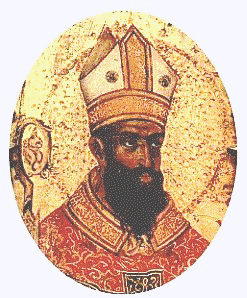
Augustine grew up in Roman culture where homosexuality was accepted as normal. Aurelius Augustinus, known as Augustine, (Nov. 13, 354 – Aug. 28, 430) was born in the Roman city of Thagaste in Algeria to a Romanized family with Berber (Amazigh) heritage. No record of his appearance exists, but because he was African there is reason to believe he had dark skin. He has been portrayed as black at various times and places throughout art history and in contemporary works by artists such as John Nava and Bruce Herman.
Saint Augustine, artist unknown
His father, Patricius, was a pagan landowner with Roman roots and his mother, Monica, was a pious Christian who was canonized later as a Catholic saint. Monica has been proposed as a patron saint for parents of LGBTQ people.
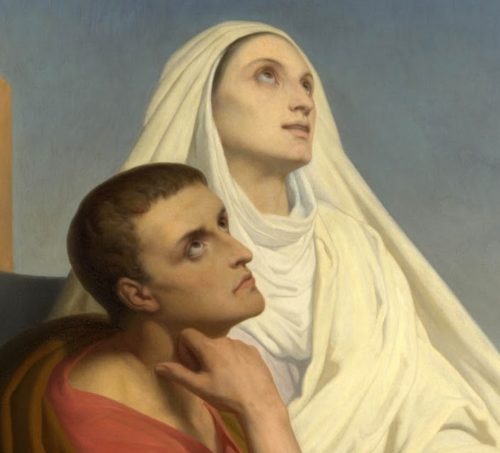
Augustine appears with his mother Monica before they were saints in an 1846 painting by Ary Scheffer (Wikipedia)
A brilliant student, he received a classical Latin education and then became a rhetoric professor. Like most men in his culture, he had a stronger emotional connection to other men than to women, except his mother.
“Although it is debatable to what extent, if any, these passionate friendships were homoerotic, they express a sensibility that today is probably to be found, at least in Western industrial societies, only among gay men,” wrote Toronto historian Brad Walton in “Gay and Lesbian Literary Heritage.”
Augustine and the man he loved
Many see self-incriminating proof of Augustine’s homosexual affairs in his own statements about his youth in Book 3.1 (translated by Carolinne White):
“To love and also be loved in return was what excited me, especially if I could enjoy my lover’s body. So I polluted the stream of friendship with the filth of lust and obscured its brightness with foul passions. But despite this shameful and degrading behavior, in my excessive vanity I hoped to be regarded as elegant and civilized.”
“Saint Augustine of Hippo: Lord, Make Me Pure, But Not Yet” by Sarah Talbot (available on Etsy)
One same-sex relationship stands out in particular. As he wrote in “Confessions,” Augustine fell completely in love with an unnamed young man when they were both in their late teens. His beloved was a fellow student who had grown up with him. This “most dear friend” was “sweet to me above all sweetness… I felt that my soul and his soul were ‘one soul in two bodies,’ ” Augustine wrote. Many have interpreted their relationship as homosexual.
But the friend developed a fever and died. Augustine was devastated by grief, which he described in dramatic terms that echo across the ages. Here is just part of his lengthy description of his turmoil:
“When my friend died, grief darkened my heart and wherever I looked, all I could see was death. My home town was a torture to me and my family home a place of misery. All that I had shared with my friend became excruciating without him. I hated everything because he was absent; nowhere I went could say to me, ‘Look, here he is,’ as it did when he was alive but not with me….
“I wept bitterly and found consolation in my bitterness…. I was amazed that other people were alive when the man I had loved as if he were immortal was dead. I was even more amazed that I was alive when he was dead, since I was his second self. Someone expressed it well when he called his friend ‘half of his soul,’ for I felt that my soul and my friend’s had been one soul in two bodies.” (Book 4.4-6)
These quotes come from a translation by Carolinne White in the first modern illustrated edition of the “Confessions.” Her translation is enhanced by medieval and Renaissance art from manuscripts at the British Library.
There are many other English translations of “Confessions.” Two versions that are recommended by Q Spirit for accuracy and readability are by Henry Chadwick in 2009 or Maria Boulding in 2002.
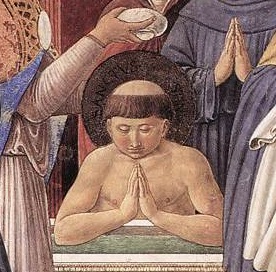
Augustine decided to leave Thagaste to escape the torment of missing his deceased friend. At age 17, he moved to Carthage in Tunisia, marking a spiritual turning point that eventually led to Christian conversion and baptism in Milan when he was 32. Before that he was a Stoic, a Neoplatonist and a gnostic “heretic” in the Manichaeism sect.
Baptism of Augustine by Benozzo Gozzoli, 1464-65 (Wikipedia)
“Odd it is to note that the most famous conversion in Christian history, after that of St. Paul, originated in one man’s love for another,” writes historian Paul Halsall in his online Calendar of LGBT Saints. His essay also includes the full set of quotations in which Augustine describes his relationship with his beloved male friend.
Augustine said God created gender diversity
Many contemporary LGBTQ people reject Augustine’s teachings on sexual activity, but his ideas about gender diversity are much more in tune with contemporary queer theology.
Augustine associated gender variance with holiness when he preached at least three sermons on Perpetua and Felicity, praising the way a “manly spirit” overcame their supposed female fragility.
He wrote a section affirming intersex people as part of God’s creation in “City of God,” a major book of Christian philosophy. The book is regarded as “a masterpiece of Western culture” by Encyclopedia Britannica and many others. Writing in Latin, Augustine used the terms “hermaphrodite” or “androgyne” to denote an intersex person. In Book 16 of “City of God” he writes:
“God, the Creator of all, knows where and when each thing ought to be, or to have been created, because He sees the similarities and diversities which can contribute to the beauty of the whole…. As for the Androgyni, or Hermaphrodites, as they are called, though they are rare, yet from time to time there appears persons of sex so doubtful, that it remains uncertain from which sex they take their name,”
Gabrielle M.W. Bychowski provides a full in-depth analysis of Augustine’s writings on gender diversity in her article “The Sites of Hermaphrodites: Intersex in the Greco-Roman World.” She teaches transgender and intersex history at Case Western Reserve University in Cleveland. She writes:
“The idea that hermaphrodites are monsters that signal failures of embodiment that should be eschewed to the margins is condemned by Augustine as heretical and small-minded. Whether or not intersex is a human person or another race of people entirely, they are members of God’s world. To call hermaphrodites disordered in their embodiment is to critique God their creators. Augustine writes, “What if God has seen fit to create some races in this way, that we might not suppose that the monstrous births which appear among ourselves are the failures of that wisdom whereby He fashions the human nature, as we speak of the failure of a less perfect workman?” (Augustine XVI.viii).
Looking carefully at each line in Augustine’s text, Bychowski goes on to say:
…The problem is not in the true lives of the hermaphrodites but in the environment that misunderstands them and fears sharing the world with them. “But He who cannot see the whole is offended by the deformity of the part,” writes Augustine, “because he is blind to that which balances it, and to which it belongs.” (Augustine XVI.viii).
In a section that may relate to transgender people, Augustine criticized the pagan cult of the Great Mother goddess Cybele for having castrated eunuch priests who were “neither changed into a woman nor allowed to remain a man.” (City of God VII.xxiv)
Augustine’s extensive career in the church came to a close when he died of illness at age 75 during the siege of Hippo by Germanic Vandals. He was canonized by popular acclaim, and later honored as a doctor of the church. The Augustinian order was founded in 1244 to carry out his teachings. His feast is celebrated on Aug. 28 by western churches and June 15 in the Orthodox tradition.
In an updated queer iteration of the canonization process, Augustine is included on the Advocate’s “30 LGBT Saints” list.
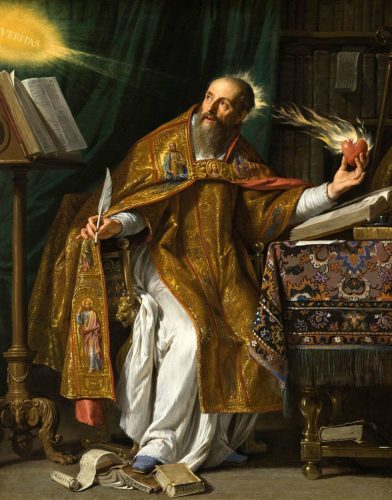
Saint Augustine by Philippe de Champaigne, 1645-50 (Wikipedia)
Most images of Augustine show him in old age as a bishop dressed in splendid vestments. The standard iconography pictures him holding a flaming heart and/or a book. The heart in his hands is not the usual Sacred Heart of Jesus that often appears in Christian icons. Augustine holds his OWN flaming heart. Experts explain that this symbolizes the intensity of his own heart on fire with love of God — or how the heart may burn with “lascivious and harmful loves” until it is given to God.
The conflict between Augustine’s sexuality and spirituality is expressed particularly well in a portrait by French Baroque artist Philippe de Champaigne. In this painting, Augustine looks away from his flaming heart and holds it at arms length like a hot potato, touching it with only his fingertips to avoid getting burned.
In addition to his honored role in the church, Augustine has entered the popular imagination. He even appears on a mug at the DrinklingsCoffeeMugs Etsy shop.with one of his best-known quotes: “The world is a book and those who do not travel read only a page.”
Saint Augustine’s face appears with one of his most famous quotes on mugs available at Etsy.
Other popular quotes by Augustine include:
“You have made us for yourself, O God, and our heart is restless until it rests in you.”
“This very moment I may, if I desire, become the friend of God.”
“There is no saint without a past, no sinner without a future.” (later paraphrased by celebrated gay writer Oscar Wilde)
LGBTQ-Liberation Prayer to Augustine
Canadian gay theologian Donald Boisvert wrote a prayer to Augustine and the Apostle Paul from an LGBTQ-liberation perspective. The prayer is included in his 2004 book “Sanctity and Male Desire: A Gay Reading of Saints.” His chapter on Paul and Augustine draws parallels between the two saints. They are both intellectuals who had dramatic conversion experiences and wrote influential sex-negative theology. Here is his prayer:
Blessed Paul and Augustine, doctors and defenders of the faith, men of integrity, architects of an inhuman theology of sexuality, you have done us harm. We are grateful for the beauty and passion of your words, but we also pray that our common brotherly love will shield us from their poison. You have been misused to condemn us and our desires for the affections and bodies of other men. We think you understood us. We need you now to stand with us. Inspire and motivate the leaders of our faith to see the hatred they spread against us in your name. Convert them as you were once converted. Be our strength, our bold and born-again guides. Amen.
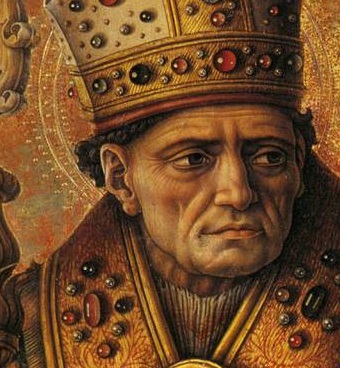
___ Top image credit: Detail from “St Jerome and St Augustine” by Carlo Crivelli, c. 1490 (Wikipedia)
___ This post is part of the LGBTQ Saints series by Kittredge Cherry. Traditional and alternative saints, people in the Bible, LGBT and queer martyrs, authors, theologians, religious leaders, artists, deities and other figures of special interest to lesbian, gay, bisexual and transgender and queer (LGBTQ) people and our allies are covered.
This article was originally published in August 2019, was expanded with new material over time, and was most recently updated on June 1, 2025.
Kittredge Cherry is a lesbian Christian author who writes regularly about LGBTQ spirituality.She holds degrees in religion, journalism and art history.She was ordained by Metropolitan Community Churches and served as its national ecumenical officer, advocating for LGBTQ rights at the National Council of Churches and World Council of Churches.
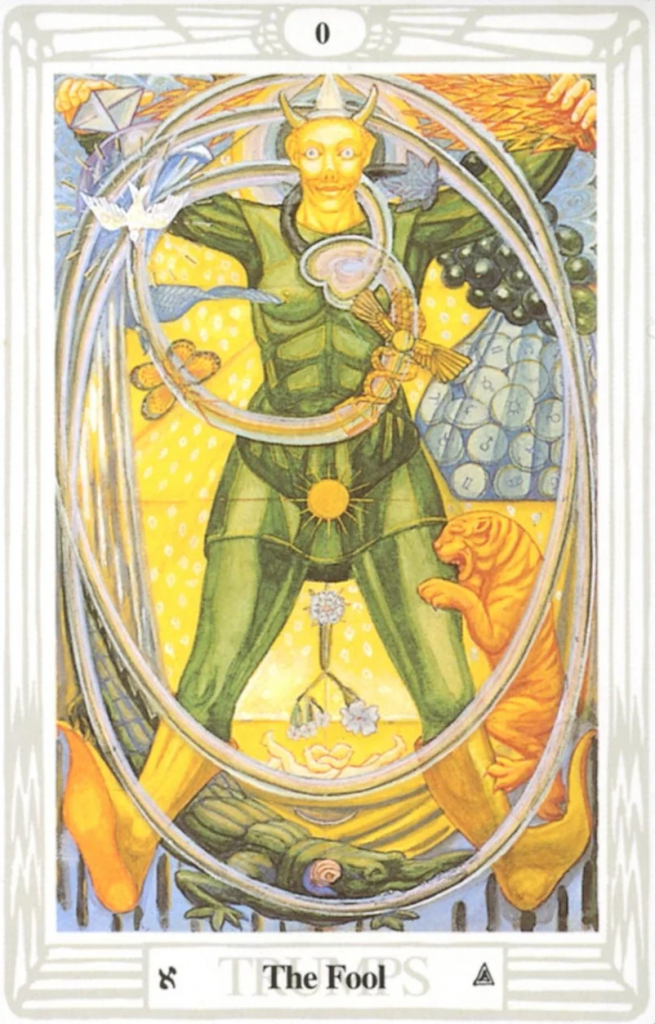
The Fool is a joyous and exciting card – combining both perfect trust and self reliance.As the very first card in the Tarot deck, it marks the moment upon which we embark on a new phase in our spiritual journey.When we explore new terrain, we are bound sometimes to encounter danger or challenge. The Fool’s energy gives us the power and self-confidence to move through challenges with an open heart, to recognise friends and to gather experiences to us as the true treasures that they are.Innocence is a devalued quality these days. We forget that to approach life with eyes that are new each morning reveals to us more of life’s mystery than anything else. We cannot substitute the sheer growth permitted by trust and innocence with cynicism nor prior knowledge.So, on a day ruled by the Fool, we need to lift our hearts upwards and open them to the richness and beauty of life. We need to regard ourselves as travelling through a land of wonderment and joy. We need to encourage excitement and exhilaration, and to look constantly for that which is new and bright and hopeful in every step we take.We also need to trust to the life process, and to remember that, by and large, the gods have no need of our suffering, and every need of our joy, laughter and celebration.
Affirmation: “I tread the path of life with joy in my heart and a smile on my lips.”
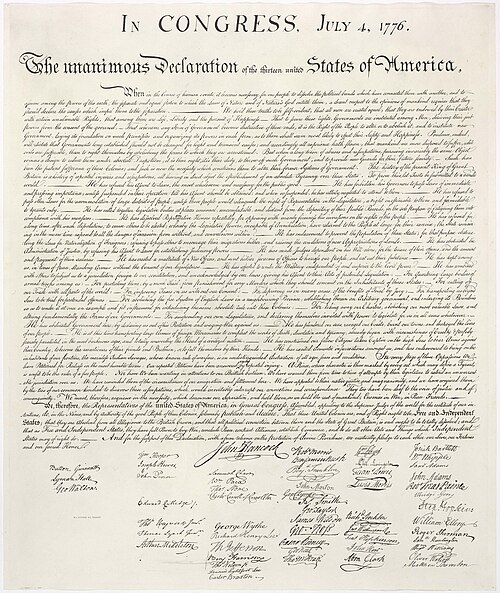
The Declaration of Independence, formally The unanimous Declaration of the thirteen united States of America in the original printing, is the founding document of the United States. Wikipedia
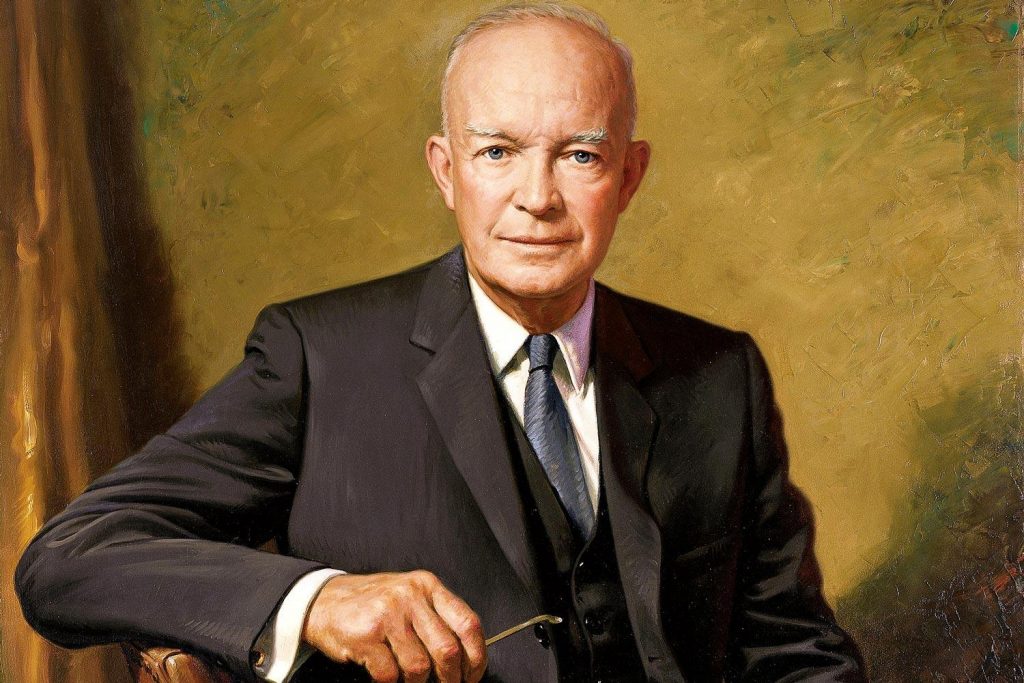
“War is mankind’s most tragic and stupid folly; to seek or advise its deliberate provocation is a black crime against all men. Though you follow the trade of the warrior, you do so in the spirit of Washington — not of Genghis Khan. For Americans, only threat to our way of life justifies resort to conflict.” Graduation Exercises at the United States Military Academy, 6/3/47
Dwight David “Ike” Eisenhower (October 14, 1890 – March 28, 1969) was the 34th president of the United States, serving from 1953 to 1961. During World War II, he was Supreme Commander of the Allied Expeditionary Force in Europe and achieved the five-star rank as General of the Army. Wikipedia
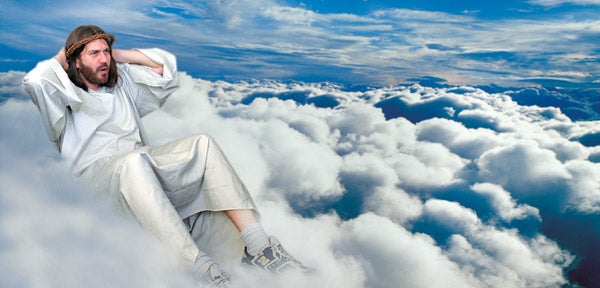
HEAVEN—Emerging from a grueling 90 minutes of cardiovascular exercise and light lifting for tone, Son of God Jesus Christ said Monday that He is “definitely on track” to achieve peak fitness condition for the Second Coming.
“If every eye is going to see Me, and all the tribes of earth are going to wail on account of Me, I think I owe it to them and to Myself to be in the best shape of My life,” Christ said. “Right now I’m up to 35 minutes at seven [miles per hour] on the treadmill and benching about 165 [pounds].”
“I’m really starting to feel like I’ll have the strength and endurance to move every mountain and island from its place,” Christ added.
Since His birthday last Dec. 25, Christ has committed Himself to a demanding daily regimen of exercise and prophecy fulfillment. Each of His workouts, Christ said, starts with an hour of cardio, after which He focuses on two muscle groups, replacing conventional free weights with the Rod of Iron with which He intends to rule all nations.
On Mondays, Christ works His chest and biceps and completes three sets of 10 transfigurations. On Tuesdays, He switches to triceps and abdominals, and passes as many sets of Last Judgments as He can in a minute. Wednesdays are devoted to the back and legs, and Thursdays and Fridays are for core and flexibility.
Even Sabbaths are spent doing yoga, swimming, and basic strength-training isometrics such as push-ups, leg lifts, and chin-ups.
“There can be no day of rest,” said Christ, His eyes filled with flaming fire. “Rest is for mortals.”
The determined Savior has also forsworn His favorite high-calorie, high-carb foods such as fatted calf, loaves, and even His own body and blood, instead embracing muscle-building high-protein shakes and electrolyte-replacing sports drinks. And when temptation calls, Christ need only look at two pictures taped to His refrigerator: an icon of Himself prior to starting His regimen and a reproduction of Michelangelo’s “Last Judgment” fresco torn from a magazine.
“The thought of being unable to seize the seven-headed serpent and hurl it into the abyss really keeps Me motivated,” Christ said.
The Lamb of God said He made the decision to get in shape late last year when, after two millennia of relative inactivity, He realized that at His age there was “no way” He could return to Earth, judge the souls of the innocent and wicked alike, and reign over the Kingdom of God for 1,000 years without prior conditioning.
“The Second Coming isn’t just Me sitting on a great white throne and judging away,” Christ said. “I also have to make all of the stars fall and shake all the powers in Heaven. That’s why I’ve been working a lot with the medicine ball.”
Christ, however, admitted that centuries of heavenly grace had enabled Him to “really let [Himself] go.”
“I can’t lead the armies of Heaven looking like some flabby slob,” said Christ, who declined to disclose His “before” weight. “That guy can’t be the King of Kings and the Lord of Lords. The faithful want a Messiah they can truly fear, not someone who’s afraid to take off His shirt in public.”
At first, Christ said He thought such a physical transformation would “take a miracle.” During the first couple weeks of His exercise program, He couldn’t work out on the treadmill for more than 10 minutes without gasping for breath and aggravating the old spear-point injury in His side. Now that He can deftly complete 20 ab-bench push-ups on the highest incline and almost as many chin-ups, Christ said, He feels more energetic than He has since His early 30s.
And not only has frequent exercise made Christ feel more healthy and confident, it’s “cleared [His] head, which will really help [Him] deal with the massive amount of smiting and condemning.”
Encouraged by His progress, particularly the increased definition in His pectoral and abdominal muscles, Christ is focusing all of His attention on visualizing the success of His Second Coming.
“Right now, it’s all about Aug. 2,” the goal-oriented Savior said. “And no matter how I look, there’s no going back on this one like I did seven years ago.”
Wayne White in an oversize mask of Lyndon B. Johnson in “Beauty Is Embarrassing,” about Mr. White’s career.Credit…Future You Pictures
Beauty Is Embarrassing NYT Critic’s PickDirected by Neil Berkeley Documentary, Biography, Comedy Not Rated 1h 28m
By Andy Webster
Sept. 6, 2012 (NYTimes.com)
The creativity grows like kudzu in “Beauty Is Embarrassing,” Neil Berkeley’s enlightening and often hilarious portrait of the Los Angeles artist Wayne White. And it yields a thousand blossoms. Mr. White, an Emmy-winning puppeteer for “Pee-wee’s Playhouse,” has had his share of career dips, only to arrive as a popular painter of some very amusing canvases. Tracing his evolution, the film gets at larger issues — about imagination, relationships and laughter.
Mr. White, born and raised in Chattanooga, Tenn., came to New York City from Middle Tennessee State University in 1981 with a gift for cartooning and puppetry. He later found himself among the formidable brain trust behind “Playhouse,” Paul Reubens’s blazingly original Saturday morning kids’ show on CBS between 1986 and 1990.
(Image from IMDb)
“Playhouse” contributors — Mr. Reubens, the artist Gary Panter and the musician Mark Mothersbaugh — recount the show’s hothouse of invention, especially during its first season, when it was shot in a Manhattan loft. Mr. White designed and provided voices for some of the marionettes, including the musician Dirty Dog and the troublemaker Randy. A documentary highlight is priceless backstage footage taken at the time by Mr. White. “Playhouse,” he has said, “was a downtown New York art project on TV.”
But life after “Playhouse” — Mr. White followed the show to Los Angeles — had its challenges. Despite award-winning work in music videos (the Smashing Pumpkins, Peter Gabriel), he struggled in children’s TV (“Beakman’s World,” “Shining Time Station”). Then he found his own answer to Warhol’s Brillo boxes: wry, droll or superficial statements, often comments on the South or the venality of Hollywood (“Maybe Now I’ll Get the Respect I So Richly Deserve”), scrambled on a canvas or meticulously emblazoned across cheesy landscape paintings. The Los Angeles restaurant Fred62 displayed the pictures, and soon the designer Todd Oldham was inspired to assemble a monograph of Mr. White’s work. “Bang!” Mr. White says. “I’m in the art world, just like that.”
There are other forces sustaining Mr. White: his wife, the graphic novelist Mimi Pond, and their children; his banjo and harmonica; and his connections to the South. Seeing Mr. White parading in an oversize Lyndon B. Johnson head mask or assembling a giant puppet with his Tennessee buddy Mike Quinn, we appreciate the liberating, delirious joy of creativity.
But this exuberant documentary’s most affecting message concerns a timelessly profound verity: the value of roots, humor, family and old friends.
Beauty Is Embarrassing
NYT Critic’s PickDirectorNeil BerkeleyWritersNeil Berkeley, Chris Bradley, Kevin KlauberStarsWayne White, Mimi Pond, Paul Reubens, Mark Mothersbaugh, Matt GroeningRatingNot RatedRunning Time1h 28mGenresDocumentary, Biography, Comedy
Movie data powered by IMDb.com
A version of this article appears in print on , Section C, Page 15 of the New York edition with the headline: Far Beyond ‘Playhouse,’ Artist Remains Playful. Order Reprints | Today’s Paper | Subscribe


The world we know cannot be wholly mind-independent, and it cannot be wholly mind-dependent… What is required is an attentive response to something real and other than ourselves, of which we have only inklings at first, but which comes more and more into being through our response to it — if we are truly responsive to it. We nurture it into being; or not. In this it has something of the structure of love.










_-_WGA5794.jpg)