Baron Ryan and Stephanie R. Yates-Anyabwile | TED Intersections
How do you quit people-pleasing? Internet filmmaker Baron Ryan and family therapist Stephanie R. Yates-Anyabwile unpack the all-too-common fear of rejection and explore the practices necessary to reclaim your ability to finally say “no” and stop caring about what other people think. (This conversation is part of “TED Intersections,” a series featuring thought-provoking conversations between experts navigating the ideas shaping our world.)
While Edmund White, America’s greatest gay writer, wasn’t the founder of contemporary gay literature, he both popularized and legitimized it. “The Guardian” called him “The Patron Saint of Gay Literature,” which seems apropos. White died on June 3 at age 85 in his Chelsea Manhattan home with Michael Carroll, his long-time husband of 30 years, at his side.
Read the rest of this story below
and never miss another!
Sign up today to receive trusted LGBTQ news in your inbox.Please select the newsletters you’d like to subscribe to:Bay Area Reporter newsletterNews is Out weekly newsletterBay Area Reporter health newsletterSubmit
White’s long career paralleled the rise of LGBTQ rights and the progress of the movement in the U.S., or as he wrote in his “Farewell Symphony” (1997), “I thought that never had a group been placed on such a rapid cycle, oppressed in the ’50s, freed in the ’60s, exalted in the ’70s, and wiped out in the ’80s.”
He represented all these epochal events in his writing, in fiction, memoir (the sublime “City Lives”), biographies (his magisterial “[Jean]Genet: A Biography” was a 1994 Pulitzer Prize finalist), or critical essays. His output was prolific, with his last book, “The Loves of My Life,” a sex memoir, just published earlier this year to rave reviews. He literally wrote until the moment he died.
A place in history Of course, there were gay novels before White, written by such titans as Gore Vidal, Truman Capote, and James Baldwin. But their books were written for straight readers. In the late 1970s/early 1980s, White became associated with the Violet Quill, a group of Manhattan writers whose purpose was to create and promote gay fiction written for gay readers.
The idea was to tell their own stories to help combat stereotypes and misinformation, but also to reflect the gay American experience and the new subculture emerging post-Stonewall. Fellow members included Andrew Holleran, Felice Picano, and four other writers who later succumbed to AIDS. With White’s and Picano’s recent passing, the sole survivor of the group is Holleran.
Unlike other gay writers (i.e. Edward Albee), White embraced being called a gay writer, but his talent was so respected, he attracted many admiring straight readers. At age 15, he wrote his first (unpublished) gay novel, really before the concept even existed, indirectly inventing a genre he later promoted and excelled.
I encountered the visiting assistant professor White as an undergraduate at Johns Hopkins University in the early 1980s. I took his creative writing course, ‘The Rhetoric of Fiction.’ His knowledge of fiction was encyclopedic, the equivalent of a massive Wikipedia article today. He not only had read every major book in the literary canon, but could say something intelligent and witty about each one. He commented that we read fiction not only to learn about other people’s experiences, but help us to discover what are our passions and interests, so we could develop our own unique voices.
Sex and sensibility He was a born raconteur and could tell bawdy stories or saucy gossip about authors, which was his way of suggesting no subject was off the table when it came to the content of one’s own writing. He later taught at Brown and especially Princeton universities. He was always supportive and encouraging of younger writers, often acting as a mentor. I last saw him about a decade ago on a book tour, reintroducing myself as a former student. His first question to me was, “What are you working on, writing, now?”
By this period, he had written two abstract, experimental early novels (one about Fire Island), which some critics found intriguing and promising, but they sold poorly. He was best known as the co-author along with psychiatrist Charles Silverstein (who had actually been his therapist) of “The Joy of Gay Sex,” a gay version of the popular, bestselling 1972 heterosexual manual. The book detailed not only the sexual practices (largely written by White), but the emotional joys and pains of the gay lifestyle. A fellow student assured me, based on his own assignations with White, that he practiced what he preached, having received the best fellatio of his life from White.
The importance of this book cannot be overstated because up until its publication, there had been no in-print discussion of gay sexual practices. This book was deliciously, but tastefully explicit, but more importantly affirming. Previously any mention of homosexuality was rooted in fear, shame, and self-hatred, treating it as if it were a dirty secret. Now, being gay and sexually active was joyfully affirmed, worthy of pleasure and being loved. In addition to serving as a sexual instruction manual, there were also practical discussions of coming out, relationship advice, cruising, and how to deal with rejection.
Health and literature A year before I took his class, he wrote a traveling memoir, “States of Desire: Travels in Gay America,” a guide to the major centers of gay life (largely metropolitan cities), revealing its enormous variety and helping readers decipher gay male subculture following Stonewall, a snapshot of carefree gay life right before the onset of AIDS.
Yet to come was his autobiographical novel, “A Boy’s Own Story,” in 1982, which covered through his fictional persona, life in the 1950s and early 1960s, as he struggled with his shame of being gay. It was a coming-of-age tale about a queer teenager, who was in therapy for years attempting to cure his homosexuality, to no effect. In the two subsequent novels in this boy series (especially “The Beautiful Room Is Empty”) the character learns to accept himself for who he is. This book is now considered a gay classic, de rigueur reading for two generations of queer adults.
Testing positive for HIV in 1985 (and fortunately for the world, a slow progressor, thus a long-term survivor), White was one of the first openly gay celebrities publicly to reveal his diagnosis so as to fight the fear and shame associated with AIDS. He was instrumental in helping found, along with the late activist Larry Kramer, The Gay Men’s Health Crisis, a New York City social service agency providing education, counsel, and more support for PWAs in the early years of the pandemic.
Some critics assert there’d be no gay literature in this country without White, but I think a more accurate assessment is that gay literature in this country wouldn’t be taken as seriously as it is now without White. He was never a bestselling author in the U.S., though he was very popular in England and France, where he was viewed as a contemporary Henry James.
Cultured and keen But because of his brilliance, erudition, and cultured sensibility, not to mention a florid, elegant, and keenly observant prose incorporating droll, biting social commentary, critics had to take him and his subject matter seriously. Previously, when the topic of gay literature was brought up, many critics saw it as just a notch slightly above pornography.
In his last decade, a new generation of younger readers rediscovered him after being unjustly ignored. He finally received critical plaudits he long deserved, such as the 2018 PEN/Saul Bellow Award for Achievement in American Fiction, and a 2019 National Book Award medal for lifetime achievement. He also earned the distinction of having a prize named for him, the Edmund White Award for Debut Fiction, as presented by the Publishing Triangle.
Retired Towson University English Professor, David Bergman, who wrote a book on the history of the Violet Quills (“The Violet Hour: The Violet Quill and the Making of Gay Culture”), sent this statement:
“Ed couldn’t write a dull sentence. They could be icy, but they were never dull. He had more charm when he wanted to be charming than anyone I have ever known. He could be fearless. ‘The Joy of Gay Sex’ could have meant the end of his career. When I was a graduate student at Hopkins, he made himself a presence with the gay students at a time when tenured faculty didn’t show their faces.
“In his memoir, ‘My Lives,’ he wrote with a candor even Genet would admire. For all the posh airs that he sometimes created, he was able to speak across color and class boundaries. He told me about a letter he got from a boy in Soweto, who wrote to say ‘A Boy’s Own Story’ had perfectly described his situation. Ed will be sorely missed.”
William Clark, Assistant Professor of English at San Francisco State University, said, “Edmund is significant for a few reasons, an important one being his unabashed writing about queer sexuality between men during a time when obscenity laws were often used to penalize circulation of queer-centric material.
“Edmund wrote so extensively about queer worlds, about sex, and in a way that eschewed shame and celebrated sex as a form of relational contact in ways that didn’t diminish sex itself—itself a meaningful choice for the way it denaturalized stigma. Edmund also fostered literary communities, and contact between queer writers, in ways that made whole writing worlds possible. I wonder about his writing sometimes—it could veer into the fetishistic, in the way a mid-century gay white man admiring men’s body‘s often circulated desire in a way that also objectified.
“Reading him now it’s hard not to think of that. At the same time, he remained groundbreaking and a steadfast mentor, vocal community member, and in being a public writer who was unabashedly himself, an important mentor for many other writers. Those things stand as important tests of time that are important to remember in these repressive times.”
White was candid and explicit in his writings on gay sexuality in all its messiness and beauty. He wasn’t the least interested in making it agreeable or acceptable. For him, who we loved was crucial to who we are, our very identities. He didn’t care about respectability or what others thought. This frankness was groundbreaking in serious fiction. He essentially gave permission to other authors to write truthfully about sexuality.
In his final “Loves” book, he wrote, “I’m at an age when writers are supposed to say finally what mattered most to them—for me it would be thousands of sex partners.”
Writing was equally his passion. He once commented to an interviewer, half-jokingly, that he hired male prostitutes, primarily because it would save him time he could devote to writing. White was a master of autofiction, so writing was a kind of therapy for him. He could process not only his sexuality but the fascinating people and experiences he encountered, almost confessional in its nature, yet no apologies.
For Edmund White, writing was always about truth-telling. The broad social and cultural acceptance of queer folk achieved here in the last decade is due in no small measure to his groundbreaking work. He lived life to its creative fullest and had gads of fun along the way, sharing everything with his readers. How lucky we all were to go along for the ride.
BALTIMORE—As public schools across the country increasingly face budget shortfalls, educators like Patricia Harper, a fifth-grade teacher in Baltimore, have reportedly found it more necessary than ever to provide their own salaries. “I’m committed to coming into this classroom every day and helping my students learn, but in order to do this, I’m now required to dip into my own pocket to cover my annual income,” said the 10-year veteran of Baltimore City Public Schools, a district with more than 5,000 teachers who together would need to come up with an estimated $340 million to meet their annual salary requirements. “While the PTA has held some fundraisers to pitch in, I unfortunately can’t make rent with the $23 they gave each teacher from the proceeds of bingo night. Still, I’m hopeful I can stretch the funds I have until the end of the school year, so long as the custodian doesn’t catch me sleeping under my desk or swiping pizza burgers from the cafeteria for dinner.” At press time, sources confirmed the elementary school where Harper worked had laid her off, dramatically improving her financial stability.
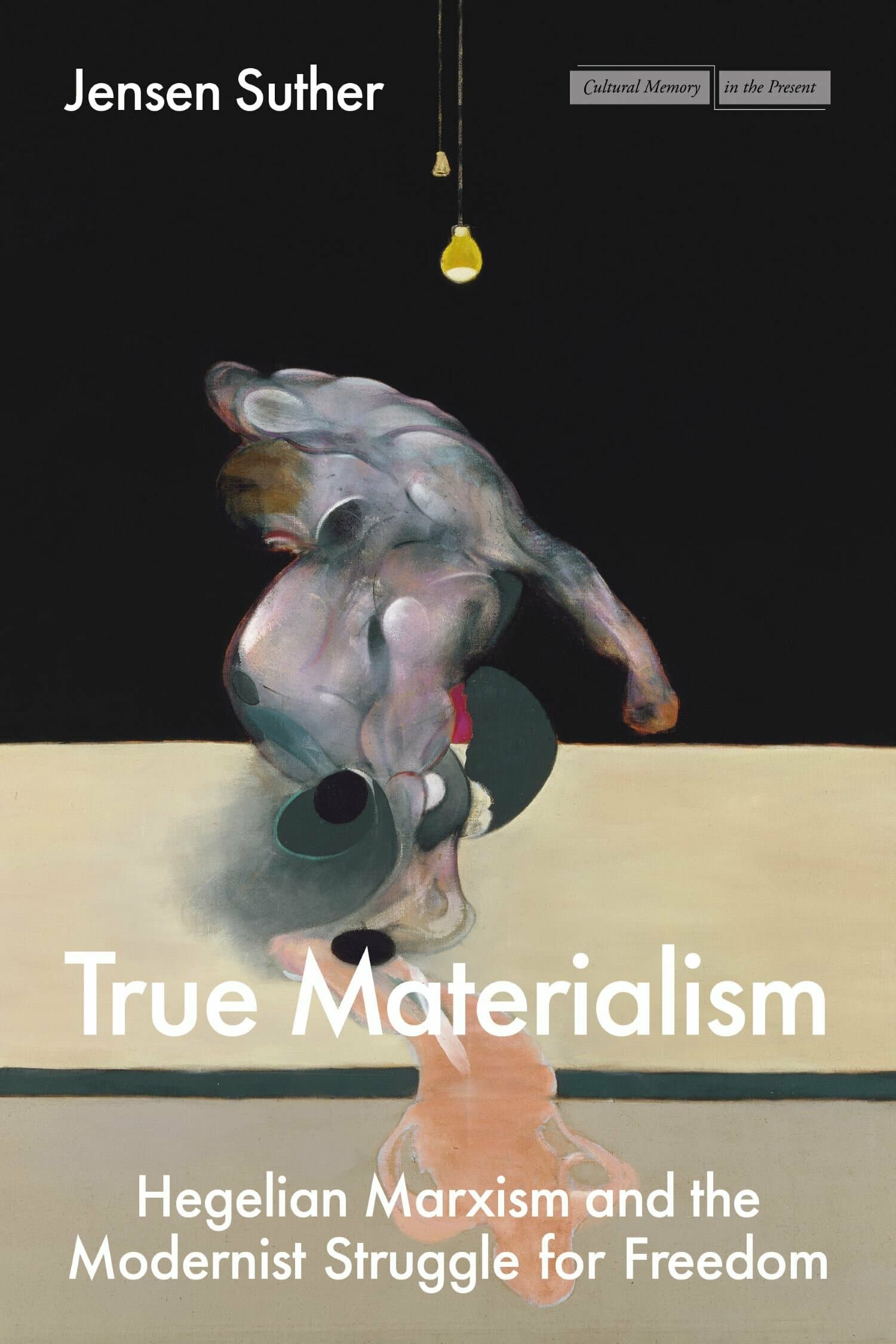
Hegelian Marxism and the Modernist Struggle for Freedom
Jensen Suther
September 2025 (SUP.org)
In recent years, there has been an explosion of interest in both Marxism and German Idealism across the humanities, but the discourse around the two traditions has grown stagnant and is still defined by the same century-old debates—materialism versus idealism, history versus logic, revolution versus reform. With this exciting new work, Jensen Suther endeavors to transform this discourse by presenting an unprecedented systematic vision of the possibility of a Hegelian Marxism, grounded in Aristotle’s logic of living form. Through engagement with three titans of literary modernism—Franz Kafka, Thomas Mann, and Samuel Beckett—Suther pursues not only an account of Hegel’s materialism but also a new critique of capitalist modernity. Breaking with the received view of Marx’s relation to German Idealism, the book argues that the materialist critique of capitalist production is inseparable from Hegel’s idea that the demand for freedom is a demand for mutual recognition. The implication for Marxist criticism is that literary works cannot be understood apart from the political struggle for both recognition and new forms of social production. Anyone invested in socialist politics, the future of literary theory, the history of philosophy, and the study of modernism will want to contend with the way Suther rethinks Marxist theory and literary criticism from the ground up, starting with their foundations in Hegelian thought.
A day ruled by the Queen of Disks is one where we need to turn our attention to the practical roots of our security and sense of domestic contentment. This Queen provides us with a stable foundation from which to move forth into the often turbulent forces of life.When we feel safe, and at peace; when we know our home for a haven; when we have a place to rest and regenerate, we function much better as human beings. We are more tolerant, less fearful, more compassionate, less grasping.So on one of these days, we must make a point of doing something to love ourselves in our home environment, and also something to make that environment more welcoming, more attuned to our own sense of peacefulness.We can do this in many different ways. For ourselves, we can take half an hour or an hour out to do the things which make us feel at peace. We could do some work in the garden, or take a long relaxing bath, or cook ourselves something special to eat, or listen to music with a whole head, or whatever else makes us feel gentle and timeless and happy.For our homes, we can buy something that makes things more comfortable, or we can re-arrange something so it’s more pleasing, or we can clean out that cupboard that has been gathering cobwebs for ages.The key here is to spend time and energy both on yourself, and your home – and to do both of these things with the intent to harmonise more thoroughly, to feel more rested and centred, to make more of a haven than we already have.Remember – our intentions, when coupled with actions, have a powerful influence on our environment. They create new streams of energy which will manifest. And since the Queen of Disks is about the home and family, and about our view of ourselves in that environment, on her day we must nourish those things in order to put them in their rightful place in life.In creating a happy environment on the physical level, we become empowered to create a happy environment within ourselves, too. And that’s a very nourishing experience.
Affirmation: “My heart’s haven surrounds me always”
New Thinking Allowed with Jeffrey Mishlove un 16, 2025 Etzel Cardeña, PhD, holds the endowed Thorsen Chair in psychology at Lund University in Sweden, where he directs the Center for Research on Consciousness and Anomalous Psychology (CERCAP). Among his books are Varieties of Anomalous Experience published by the American Psychological Association (APA) and now in its second edition, the two-volumes Altering Consciousness: A Multidisciplinary Perspective, and Parapsychology: A Handbook for the 21st Century, which provides a “state-of-the-art” account of the scientific evidence for parapsychology, as well as offering methodological and statistical know-how for beginner and advanced researchers. He is the former editor of the Journal of Parapsychology. In this 2019 reboot, he discusses the many ways in which altered states of consciousness are being used to enhance human performance. These altered states include hypnosis, meditation, and entheogens. He discusses the care researchers need to take in distinguishing between induction procedures and reported alterations of awareness. He provides examples in the arts, philosophy, athletics — and, particularly, parapsychology. New Thinking Allowed host, Jeffrey Mishlove, PhD, is author of The Roots of Consciousness, Psi Development Systems, and The PK Man. Between 1986 and 2002 he hosted and co-produced the original Thinking Allowed public television series. He is the recipient of the only doctoral diploma in “parapsychology” ever awarded by an accredited university (University of California, Berkeley, 1980). He is also the Grand Prize winner of the 2021 Bigelow Institute essay competition regarding the best evidence for survival of human consciousness after permanent bodily death. He is Co-Director of Parapsychology Education at the California Institute for Human Science. (Recorded on August 24, 2019)
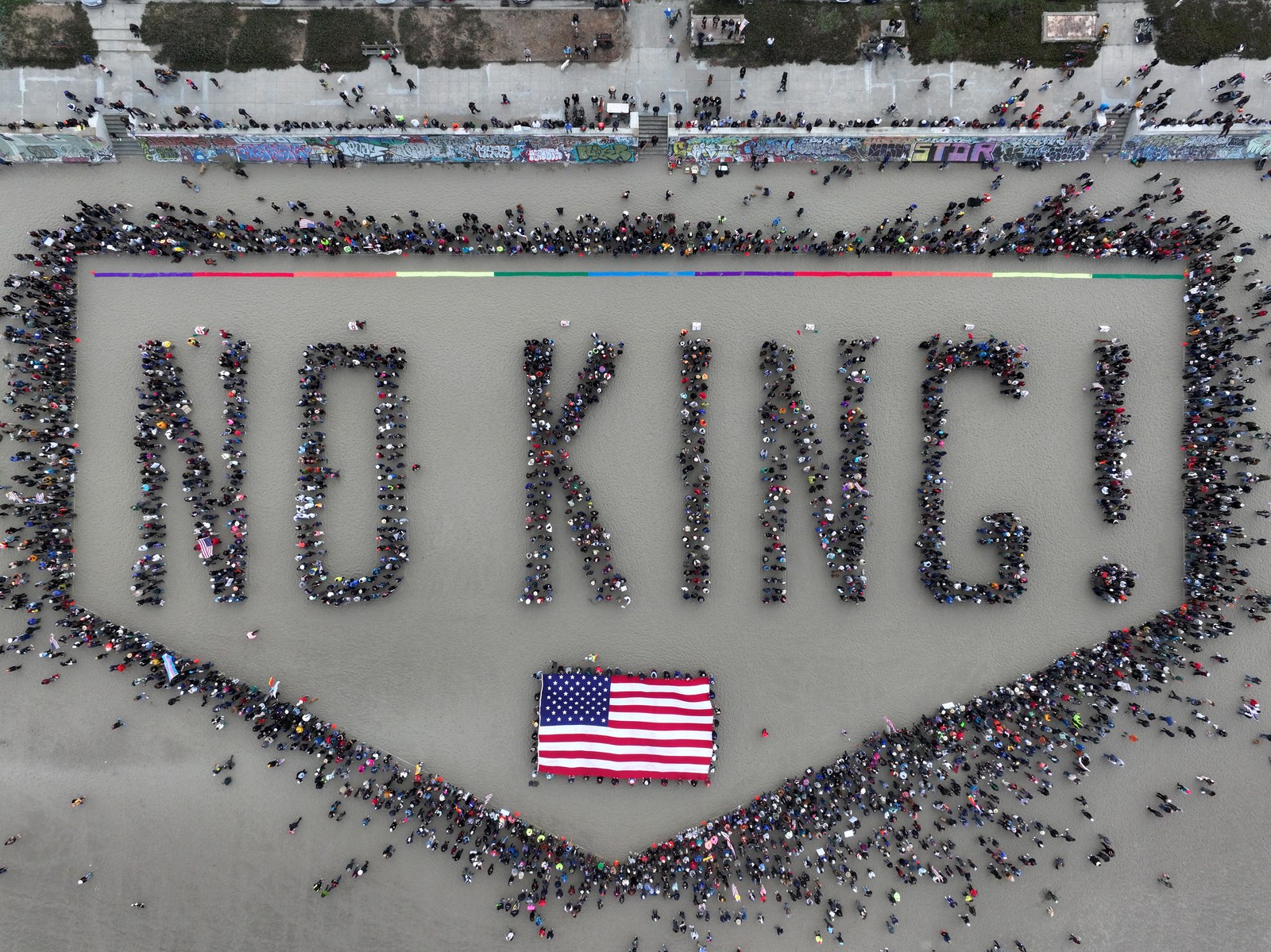
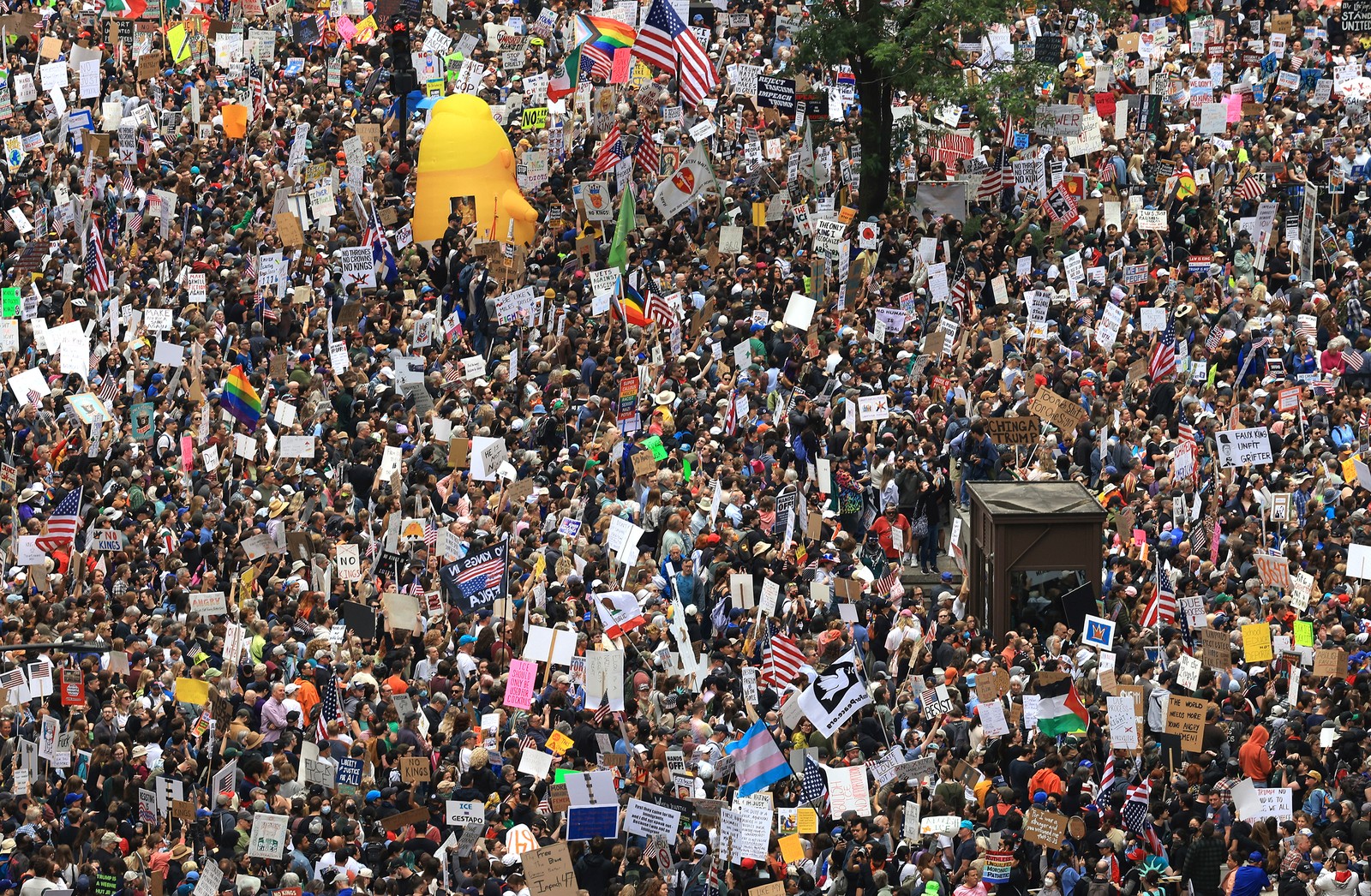
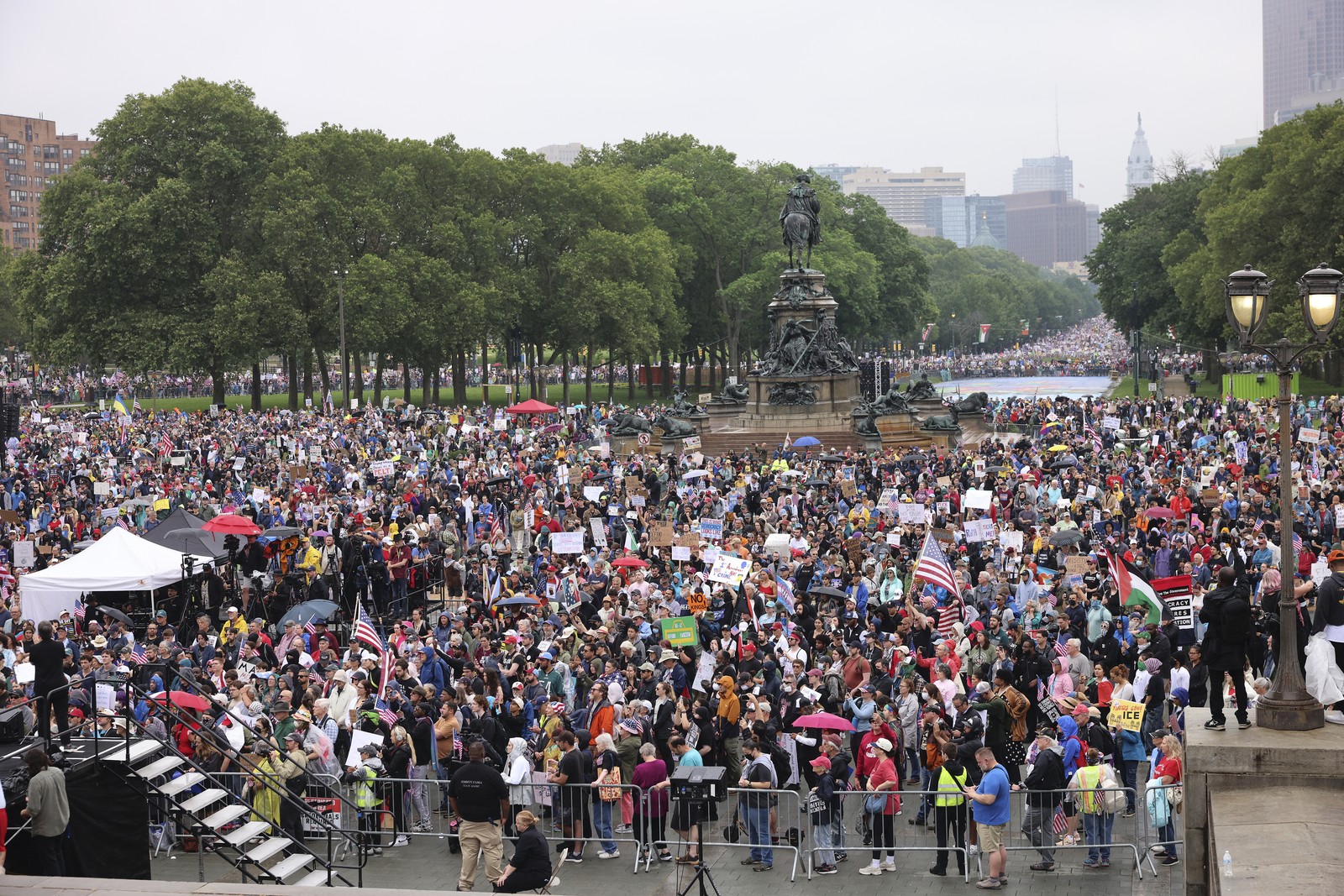
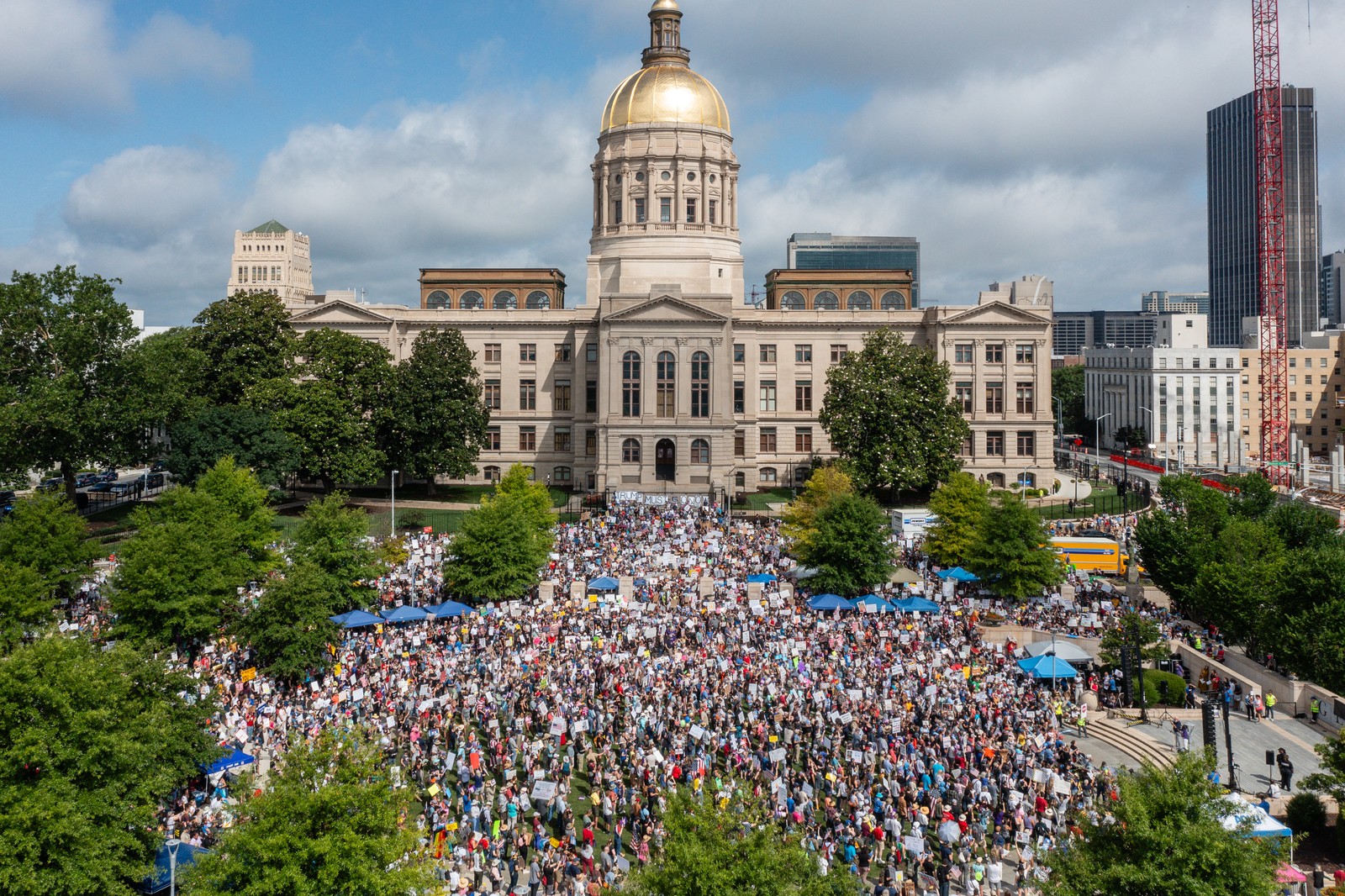
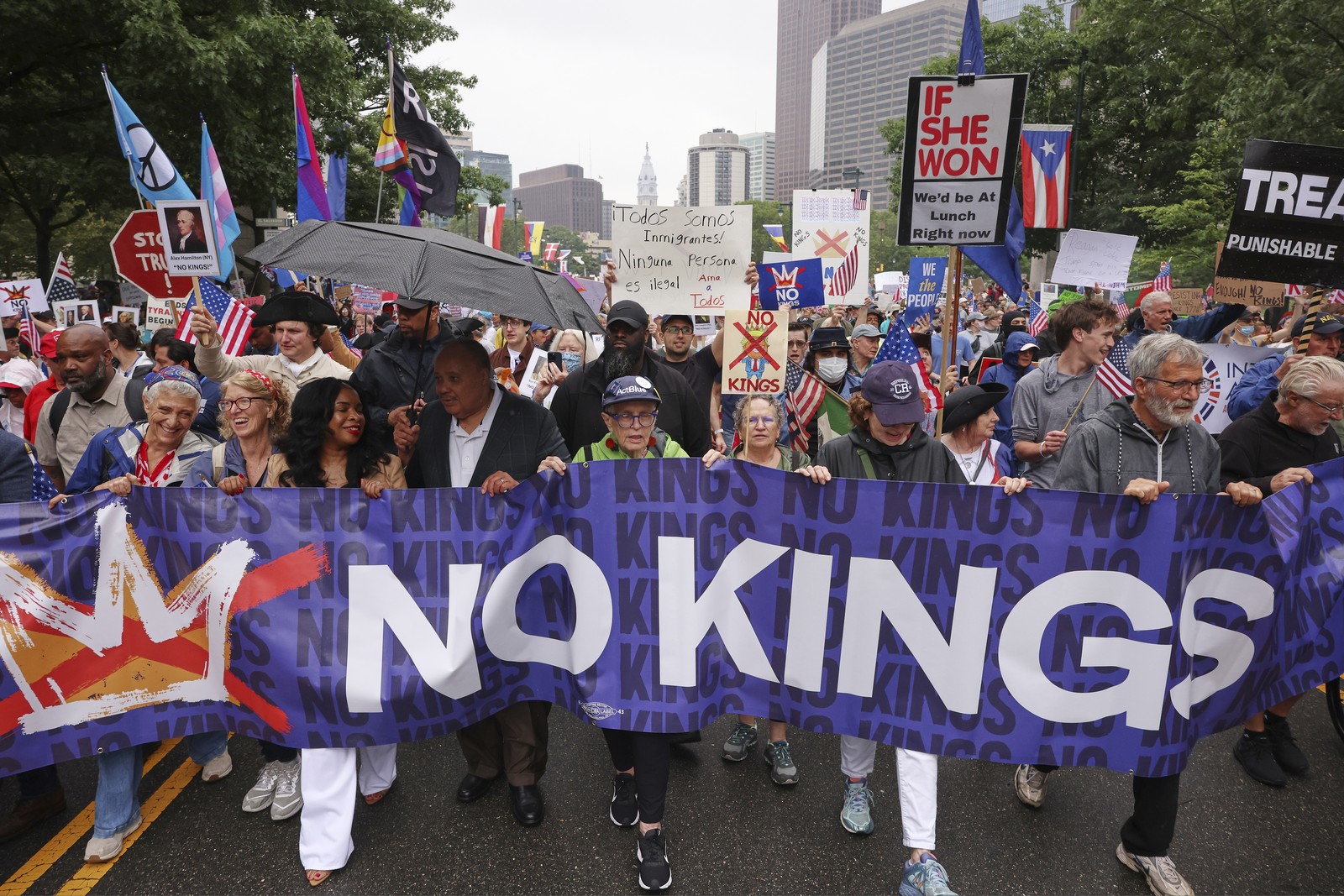
Yesterday, according to estimates by event organizers, millions marched in protest against the Trump administration, including its recent controversial immigration-enforcement raids. Hundreds of “No Kings” demonstrations took place in cities and towns throughout the U.S.
This story was updated at 10:59 a.m. on June 16, 2025.
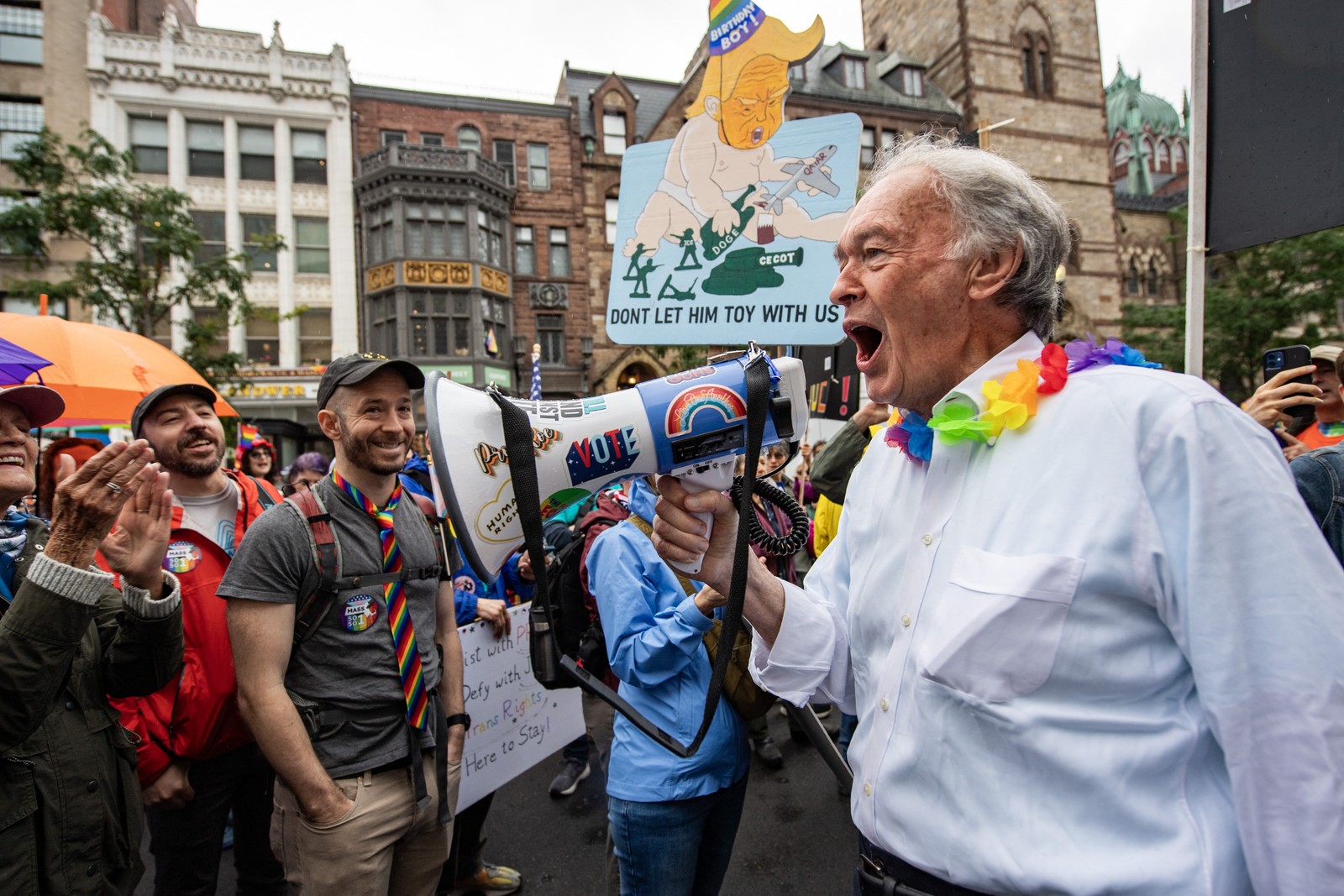
Nic Coury / AFP / GettyDemonstrators hold signs as they march down Dolores Street protesting the Trump administration during the “No Kings” rally in San Francisco on June 14, 2025.Fritz Nordengren / ZUMA Press Wire / ReutersA protester carries an “Impeach Trump” sign among others in front of the Iowa State Capitol during the “No Kings” mass protest in Des Moines, Iowa, on June 14, 2025.Tayfun Coskun / Anadolu / GettyA massive crowd gathered at Ocean Beach to protest the Trump administrations and federal immigration enforcement actions in San Francisco, California, on June 14, 2025.Jim Vondruska / GettyProtesters march through the streets of downtown as part of a nationwide “No Kings” demonstration on June 14, 2025, in Chicago.John J. Kim / Chicago Tribune / Getty / TNSTens of thousands of demonstrators spill onto Dearborn Street to attend the “No Kings” rally at Daley Plaza on June 14, 2025, in Chicago.Jason Whitman / NurPhoto / ReutersDemonstrators in Cincinnati participate in the “No Kings” National Day of Action on June 14, 2025.Darin Oswald / Idaho Statesman / Tribune News Service / GettyThousands gather in front of the Idaho State Capitol for the “No Kings” protest in Boise on June 14, 2025.Allison Joyce / AFP / GettyPeople take part in the “No Kings” protest in Asheville, North Carolina, on June 14, 2025.Peter Zay / Anadolu / GettyThousands of demonstrators flood the streets of Charlotte, North Carolina, to protest against President Donald Trump on June 14, 2025.Joe Raedle / GettyA cyclist raises his fist in support of a protest march near President Donald Trump’s Mar-a-Lago home during a “No Kings Day” protest on June 14, 2025, in West Palm Beach, Florida.Joseph Prezioso / AFP / GettyU.S. Senator Ed Markey speaks to demonstrators marching at a “No Kings” rally alongside the Boston Pride Parade on June 14, 2025.Joseph Prezioso / AFP / GettyProtesters at a “No Kings” rally march alongside the Boston Pride Parade on June 14, 2025.Natalie Behring / GettyPeople hold signs and chant slogans at an anti-Trump “No Kings” protest on June 14, 2025, in Jackson, Wyoming.George Walker IV / APJenny Thinnes yells during a “No Kings” protest in Nashville on June 14, 2025.George Walker IV / APPeople gather to demonstrate during a “No Kings” protest in Nashville.Stephen Maturen / GettyDemonstrators rally outside the Minnesota State Capitol building, with the Cathedral of Saint Paul in the backdrop, during a “No Kings” protest on June 14, 2025, in St. Paul.David McNew / GettyPeople march during a “No Kings” protest in a one-square-mile area where daily protests have been occurring in response to a series of federal immigration raids, on June 14, 2025, in Los Angeles.Noah Berger / APU.S. Marines guard a federal building as a protest takes place on June 14, 2025, in Los Angeles.Tayfun Coskun / Anadolu / GettyThousands of demonstrators march to city hall during one of the nationwide “No Kings” protests, in San Francisco, on June 14, 2025.Jae C. Hong / AP“No Kings” demonstrators march down a street in Los Angeles on June 14, 2025.Alex Kent / GettyThe performers Mark Ruffalo and Susan Sarandon, along with thousands of New Yorkers, march in opposition to recent actions by the Trump administration in New York City.Yuki Iwamura / APDemonstrators fill Eakins Oval, in front of the Philadelphia Museum of Art, during the “No Kings” protest on June 14, 2025, in Philadelphia.Elijah Nouvelage / AFP / GettyPeople take part in a “No Kings” protest at Liberty Plaza in Atlanta on June 14, 2025.Jon Cherry / APDemonstrators gather in Louisville, Kentucky, during a “No Kings” protest on June 14, 2025.Yuki Iwamura / APArndrea Waters King (third from left) and Martin Luther King III (fourth from left) march in the “No Kings” protest on June 14, 2025, in Philadelphia.Jenny Kane / APDemonstrators in Portland, Oregon, march down SW Naito Parkway toward Hawthorne Bridge during their “No Kings” protest, on June 14, 2025.
You say The price of my love’s not a price that you’re willing to pay You cry In your tea, which you hurl in the sea when you see me go by
Why so sad? Remember, we made an arrangement when you went away Now, you’re making me mad Remember, despite our estrangement, I’m your man
You’ll be back, soon, you’ll see You’ll remember you belong to me You’ll be back, time will tell You’ll remember that I served you well Oceans rise, empires fall We have seen each other through it all And when push comes to shove I will send a fully armed battalion to remind you of my love!
You say our love is draining, and you can’t go on You’ll be the one complainin’ when I am gone And no, don’t change the subject ‘Cause you’re my favorite subject My sweet, submissive subject My loyal, royal subject Forever and ever and ever and ever and ever
You’ll be back like before I will fight the fight and win the war For your love, for your praise And I’ll love you ’til my dying days When you’re gone, I’ll go mad So don’t throw away this thing we had ‘Cause when push comes to shove I will kill your friends and family to remind you of my love