How to speak up — even when you don’t want to

Sarah Crawford-Bohl | TEDxRRU

• May 2024

What stops you from speaking up when it matters most? Healthcare leader Sarah Crawford-Bohl offers a practical, compassionate framework to have difficult conversations with clarity and heart — and shows how it can lead to stronger teams and real impact.

Want to use TED Talks in your organization?

Start here

About the speaker

Sarah Crawford-Bohl

Healthcare leader and innovation catalystSee speaker profile

The Twin Root of Our Confusion and Our Power in Times of Turmoil: Muriel Rukeyser on the Wellspring of Aliveness

By Maria Popova (themarginalian.org)

It is such delicate work, such devoted work, the work of contouring the personhoods of persons who have imprinted the world with nothing less than revolutions of the mind, yet have left only faint traces of themselves as persons, unselved first by the nature of their revolutionary ideas — vast, abstract, lightyears beyond the solipsisms of the self — and then unselved again by the selective collective memory we mistake for history and its perennial failure at a foothold in the abstract beyond personhoods, beyond identities, beyond the narrow and unimaginative bounds of so-called human interest. There is quiet heroism to this work of rescuing from obscurity and erasure lives understanding which helps understand the entire eras in which they were lived and the fundaments of sensemaking the following epochs have taken as givens.

Such is the work Muriel Rukeyser (December 15, 1913–February 12, 1980) did with Willard Gibbs (public library).

Muriel Rukeyser

Rukeyser’s own genius came abloom in the dawn of her twenties, when her debut poetry collection, Theory of Flight, earned her the Yale Younger Poets Award — America’s longest-running literary accolade. She was not yet thirty when she composed her staggering more-than-biography of the father of physical chemistry, Willard Gibbs (February 11, 1839–April 28, 1903) — this odd and world-shifting bridge figure between classical mechanics and quantum physics, celebrated as the greatest mind of the nineteenth century, lauded by Einstein as one of the most original and important thinkers America ever produced, prophesied to outlive in remembrance all of his contemporaries except perhaps Lincoln, yet almost entirely forgotten by Rukeyser’s time.

Like Eddington, Gibbs was a quiet, reserved genius — “silent, inhibited, remote,” Rukeyser tells us — queer by all reasonable deduction; he never married and lived out his life in his sister’s home. Like Newton, who accomplished the greatest leap in science within the solitude of his plague quarantine, Gibbs imagined his revolution within the chamber of the mind, within a dense solitude — “in silence, in isolation, in the years of rejection directly after the Civil War, when abstract work was wanted least of all, when the cry was for application and invention and the tools that would expand the great growing fortunes of the diamond boys.” And yet there he was, living “closer than any inventor, any poet, any scientific worker in pure imagination to the life of the inventive and organizing spirit of America.”

Willard Gibbs, 1855. (Beinecke Rare Book & Manuscript Library, Yale University.)

Rukeyser’s enchantment with Gibbs became the crucible for her lifelong stewardship of the parallels between poetry and science, her astute and abiding insight into how they help hold “the giant clusters of event and meaning that every day appear” and in doing so “equip our imaginations to deal with our lives.”

Published in 1942, Rukeyser’s majestic 446-page masterwork of antierasure grew from the seed of a fascination first germinated with her poem “Gibbs,” written as WWII was beginning to cast its umbra of terror over all that is bright and beautiful in the human spirit, unpeeling from the hallways of time the image of every genius who ever lived as an irrelevance to this apotheosis of dumb destruction. It is always the poet’s task to defend the relevance of radiance, whatever its shape and subject, and so she did. From the life of Willard Gibbs, Muriel Rukeyser drew something larger, vaster, more radiant than his life, than any life — a celebration of life itself, of the living mind and its deathless imagination and the power of that imagination to irradiate the world with the wonder of possibility. It is the connective tissue of her thought, the poetic musculature of context and concept propping up the skeleton of the dead scientist’s life, that renders Rukeyser’s book a revelation from the opening page:

Whatever has happened, whatever is going to happen in the world, it is the living moment that contains the sum of the excitement, this moment in which we touch life and all the energy of the past and future. Here is all the developing greatness of the dream of the world, the pure flash of momentary imagination, the vision of life lived outside of triumph or defeat, in continual triumph and defeat, in the present, alive. All the crafts of subtlety, all the effort, all the loneliness and death, the thin and blazing threads of reason, the spill of blessing, the passion behind these silences — all the invention turns to one end: the fertilizing of the moment, so that there may be more life.

The Triumph of Life by Maria Popova. (Available as a print.)

Writing from within the savage wastefulness of a particular moment in a world unworlded by its most destructive war yet, Rukeyser insists on the irrepressible aliveness that consecrates the present, any present, and that springs from the indivisibility of the life of the body and the life of the mind:

Spring, and the years, the wars, and the ideas rejected, the swarming and anonymous people rejected, and the slow climb of thought to be more whole, the few accepted flames of truth in a darkness of battle and further rejection and further battle. We know the darkness of the past, we have a conscious body of knowledge — and under it, the black country of a lost and wasted and anonymous world… jungle-land, wasteful as nature, prodigal.

Our living moment rides this confusion; it is torn by the dead wars; seizes the old knowledge; speeds on the imagination of the living and the dead, and passes, fertilized. But the hidden life today continues among all the silence, and in the midst of war. The hidden life of the senses, the vivid, speculative life of the mind. The man over his table, glass shine of the test-tubes reflected in the eyes; the woman staring into her thought of the child not yet born… We see, in this moment of the world, the lives of many people brought to a time of stress. The streams are challenged, all the meanings are again in question.

In a sentiment which Octavio Paz (whom Rukeyser translated) would come to echo several years later in his observation that “there is something revealing in the insistence with which a people will question itself during certain periods of its growth,” she adds:

It is at this moment that we turn… In the imaginations which tapped that energy, in the energy itself and its release, we see our power. Man, the mystery; man, the pure force; man, the taproot of naked vision, the source himself, will look in such a moment for deeper sources, for the sources of power that can bring a fuller life to a desperate time. We cut away the old life, cutting down to the root. And the root of such power, of such invention, is in the imaginative lives of certain men and women, responding in their way and with their proper kinds of love to the wishes of history — that is, to the wishes of the people at that moment, however disguised, however premature and dark.

For Rukeyser, Willard Gibbs was one of those people; for me, the people whose lives and loves I contoured in Figuring were, and the people in whose lives and loves I have dwelt in the years since: Mary ShelleyWalt Whitman, Rukeyser herself.

Rukeyser notes that however rigorous our scholarship, it is always at bottom a presumption to attempt to “solve the personality” and reanimate the lives and worlds of the long-gone people whose work has shaped our own lives and our understanding of the world. In a passage to which I relate in the marrow of my being, she adds:

It is by a long road of presumption that I come to Willard Gibbs. When one is a woman, when one is writing poems, when one is drawn through a passion to know people today and the web in which they, suffering, find themselves, to learn the people, to dissect the web, one deals with the processes themselves. To know the processes and the machines of process: plane and dynamo, gun and dam. To see and declare the full disaster that the people have brought on themselves by letting these processes slip out of control of the people. To look for the sources of energy, sources that will enable us to find the strength for the leaps that must be made. To find sources, in our own people, in the living people. And to be able to trace the gifts made to us to two roots: the infinite anonymous bodies of the dead, and the unique few who, out of great wealth of spirit, were able to make their own gifts.

In consonance with my longtime conviction that history is not what happened, but what survives the shipwrecks of judgment and chance, Rukeyser mourns the erasure of so many such titans of spirit from our collective selective memory, mourns their loss “through waste and carelessness,” and offers the single most poignant and precise diagnosis I have ever encountered of what ails our systems of remembrance and sensemaking, which are ultimately our systems of future-making:

This carelessness is complicated and specialized. It is a main symptom of the disease of our schools, which let the kinds of knowledge fall away from each other, and waste knowledge, and time, and people. All our training plays into this; our arts do; and our government. It is a disease of organization, it makes more waste and war.

Both in her choice of subject (a man of such singular, specialized, abstract genius) and in her treatment of it (so rigorous in scholarship, so rapturous in breadth of sentiment), Rukeyser’s Willard Gibbs stands as a bold antidote to this cultural carelessness — and falls as one, having perished out of print by these very forces, these abiding emblems of the ahistorical and segregationist impulses arising in the puerile bosom of our species, which might, just might, one day mature to outgrow. Until then, we have the poets — in the largest Baldwinian sense — to salve our collective amnesia with their bold benedictions of immortal truth.

Physicists Discover Never-Before-Seen Particle In Back Of Old Cupboard

Published: June 18, 2025 (TheOnion.com)

BOSTON—Blowing dust off a scientific breakthrough that could fundamentally alter human perception of the universe, physicists at Boston University reportedly discovered a never-before-seen elementary particle in the back of an old cupboard Wednesday. “In what constitutes a giant leap forward in the field of quantum mechanics, one of our researchers was rooting around in a cabinet and came across this thing, just lying there behind a long-forgotten bag of dried lentils,” said physics professor Garrett Percy, confirming the hitherto unknown boson particle must have been there for decades and might have even belonged to the previous tenant. “It makes you feel a little silly, going out and about, spending hours trying to discover new particles, when all along there was a perfectly good one back home. And sure, it’s a little dried out, but if we pop it in the accelerator for a few minutes it’ll be good as new.” At press time, a panicked Percy was asking the assembled reporters to help him find the subatomic particle after he accidentally dropped it on the ground.

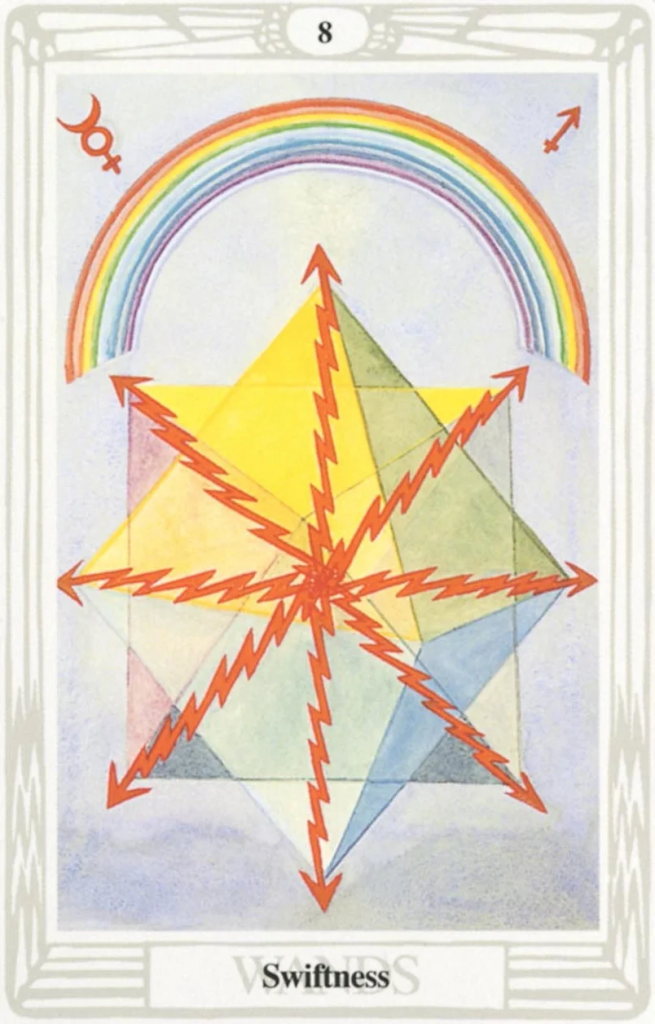
Tarot Card for June 19: Swiftness

The Eight of Wands

When the Lord of Swiftness comes up in a reading, it shows that there is an energy available which will break down obstacles, move restrictions and allow the free flow of power in any situation you direct it toward.Often there will have been problems which refuse to yield to any reasonable solution previously attempted. However on a day ruled by the Eight of Wands even the most intractable and stubborn difficulties will simply fall away when the downrush of power is felt from this card.Accordingly, on an Eight of Wands day, go looking for problems! Try to locate those things – whether major or minor, that have refused resolution till now. When you find something that seems applicable, sit down for a few minutes and mentally walk around the obstacle, trying to get a new perspective on it.This thinking period is important, because when this card rules, there is rapid and swift communication – either intuitively or in real terms, which allows you to see a way through the maze of complications that can build up around the most mundane of tasks.Expect, during your period of contemplation, to see new possibilities for solving the problem. Wait for the out-of-the-blue thought that strikes you as though from nowhere. When you discover it, try it out, no matter how outlandish it may at first appear.Be open to what life tells you – not as a result of seeking advice, but as a spontaneous offering from the people around you. When we leave ourselves open for the Universe to convey its thoughts to us, they can arrive from the most unexpected sources! Be prepared to consider any options offered to you obliquely – don’t take them at face value; try to turn them into applications for the matter you are attempting to resolve.And allow your sense of humour full rein – you need a light-hearted attitude to get the best out of this card. You’ll be amazed at the things you will get done on a day ruled by the Lord of Swiftness.

Affirmation: “Challenges and obstacles are achievements waiting to happen.”

(Angelpaths.com)

Free Will Astrology: Week of June 19, 2025

BY ROB BREZSNY | JUNE 17, 2025 (NewCity.com)

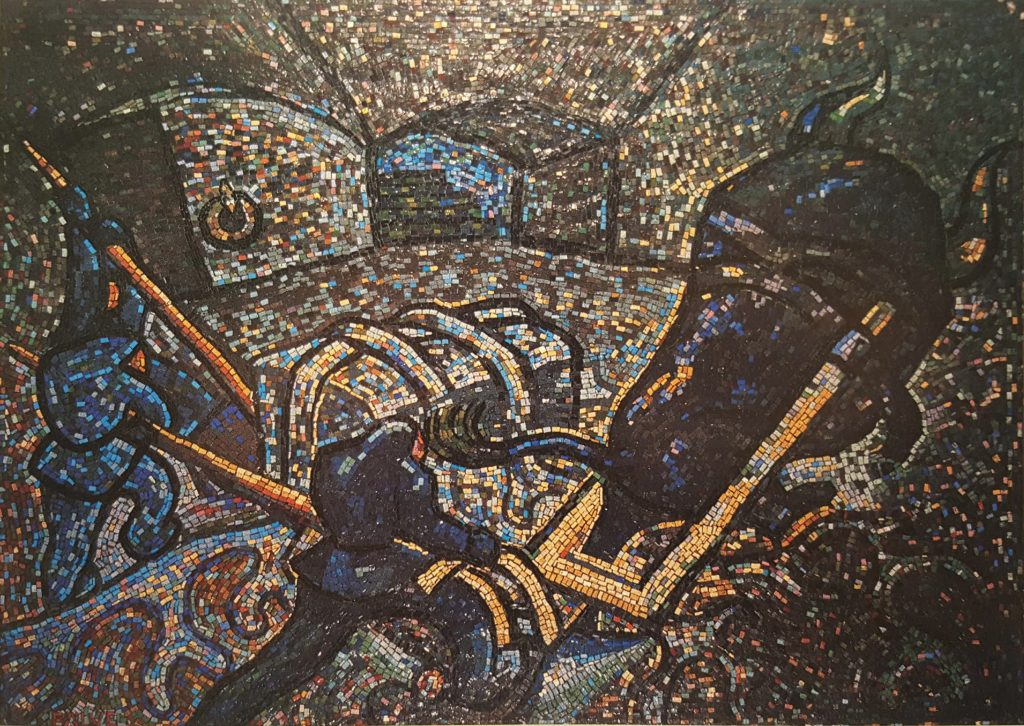
“The Retrieval of the Sampo,” showing Lemminkäinen ploughing up its roots with a bull. Mosaic by Veikko Aaltona

ARIES (March 21-April 19): Aries writer Joseph Campbell was a world-renowned mythologist. His theories about the classic hero archetype have inspired many writers and filmmakers, including “Star Wars” creator George Lucas. As a young man, Campbell crafted the blueprint for his influential work during a five-year period when he lived in a rustic shack and read books for nine hours a day. He was supremely dedicated and focused. I recommend that you consider a similar foundation-building project, Aries. The coming months will be an excellent time for you to establish the groundwork for whatever it is you want to do for the rest of your long life.

TAURUS (April 20-May 20): In Japan, komorebi refers to the dappled sunlight that streams through tree leaves. It names a subtle, ephemeral beauty that busy people might be oblivious to. Not you, I hope, Taurus! In the coming weeks, I invite you to draw on komorebi as an inspirational metaphor. Tune in to the soft illumination glimmering in the background. Be alert for flickers and flashes that reveal useful clues. Trust in the indirect path, the sideways glance, the half-remembered dream, and the overheard conversation. Anything blatant and loud is probably not relevant to your interests. PS: Be keen to notice what’s not being said.

GEMINI (May 21-June 20): In Finnish folklore, the Sampo is a magic artifact that generates unending wealth and good fortune. Here’s the catch: It can’t be hoarded. Its power only works when shared, passed around, or made communal. I believe you are close to acquiring a less potent but still wonderful equivalent of a Sampo, Gemini. It may be an idea, a project, or a way of living that radiates generosity and sustainable joy. But remember that it doesn’t thrive in isolation. It’s not a treasure to be stored up and saved for later. Share the wealth.

CANCER (June 21-July 22): Tides don’t ask for permission. They ebb and flow in accordance with an ancient gravitational intelligence that obeys its own elegant laws. Entire ecosystems rely on their steady cyclical rhythms. You, too, harbor tidal forces, Cancerian. They are partially synced up with the earth’s rivers, lakes and seas, and are partially under the sway of your deep emotional power. It’s always crucial for you to be intimately aware of your tides’ flows and patterns, but even more than usual right now. I hope you will trust their timing and harness their tremendous energy.

LEO (July 23-Aug. 22): Some jewelers practice an ancient Korean art called keum-boo, in which they fuse pure gold to silver by heat and pressure. The result is gold that seems to bloom from within silver’s body, not just be juxtaposed on top of it. Let’s make this your metaphor for the coming weeks, Leo. I believe you will have the skill to blend two beautiful and valuable things into an asset that has the beauty and value of both—plus an extra added synergy of valuable beauty. The only problem that could possibly derail your unprecedented accomplishment might be your worry that you don’t have the power to do that. Expunge that worry, please.

VIRGO (Aug. 23-Sept. 22): Some Indigenous cultures keep track of time not by clocks but by natural events: “the moon when the salmon return,” “the season when shadows shorten,” “the return of the rain birds.” I encourage you to try that approach, Virgo. Your customary rigor will benefit from blending with an influx of more intuitive choices. You will be wise to explore the joys of organic timing. So just for now, I invite you to tune out the relentless tick-tock. Listen instead for the hush before a threshold cracks open. Meditate on the ancient Greek concept of kairos: the prime moment to act or a potential turning point that’s ripe for activation.

LIBRA (Sept. 23-Oct. 22): Botanists speak of “serotiny,” a plant’s ability to delay seed release until the environment is just right. Some pinecones, for instance, only open after a fire. What part of you has been patiently waiting, Libra? What latent brilliance has not been ready to emerge until now? The coming weeks will offer catalytic conditions—perhaps heat, perhaps disruption, perhaps joy—that will be exactly what’s needed to unleash the fertile potency. Have faith that your seeds will draw on their own wild intelligence.

SCORPIO (Oct. 23-Nov. 21): One of your superpowers is your skill at detecting what’s unfolding beneath the surfaces. It’s almost like you have X-ray vision. Your ability to detect hidden agendas, buried secrets, and underground growth is profound. But in the coming weeks, I urge you to redirect your attention. You will generate good fortune for yourself if you turn your gaze to what lies at the horizon and just beyond. Can you sense the possibilities percolating at the edges of your known world? Can you sync up your intuitions with the future’s promises? Educated guesses will be indistinguishable from true prophecies.

SAGITTARIUS (Nov. 22-Dec. 21): Sagittarius-born Wassily Kandinsky (1866–1944) got a degree in law and economics and began a career teaching those subjects at the university level. But at age thirty, he had a conversion experience. It was triggered when he saw a thrilling exhibit of French Impressionist painters and heard an enthralling opera by Richard Wagner. Soon he flung himself into a study of art, embarking on an influential career that spanned decades. I am predicting that you will encounter inspirations of that caliber, Sagittarius. They may not motivate you as drastically as Kandinsky’s provocations, but they could revitalize your life forever.

CAPRICORN (Dec. 22-Jan. 19): The ancient Egyptians revered the River Nile’s annual flooding, which brought both disruption and renewal. It washed away old plant matter and debris and deposited fertile silt that nourished new growth. In the coming weeks, Capricorn, I suspect you will experience a metaphorical flood: a surge of new ideas, opportunities and feelings that temporarily unsettle your routines. Rather than focusing on the inconvenience, I suggest you celebrate the richness this influx will bring. The flow will ultimately uplift you, even if it seems messy at first.

AQUARIUS (Jan. 20-Feb. 18): Medieval stonemasons worked not just in service to the immediate structures they made. They imagined eternity, laying foundation blocks in cathedrals they knew they would never live to see completed. I think you are being invited to do similar work: soulful construction whose fruits may not ripen for a while. A provocative conversation you have soon may echo for years. A good habit you instill could become a key inheritance for your older self. So think long, wide and slow, dear Aquarius. Not everything must produce visible worth this season. Your prime offerings may be seeds for the future. Attend to them with reverence.

PISCES (Feb. 19-March 20): In the frigid parts of planet Earth, some glaciers sing. As they shift and crack and melt, they emit tones: groans, pulses, crackles and whooshes. I believe your soul will have a similar inclination in the coming weeks, Pisces: to express mysterious music as it shifts and thaws. Some old logjam or stuck place is breaking open within you, and that’s a very good thing. Don’t ignore or neglect this momentous offering. And don’t try to translate it into logical words too quickly. What story does your trembling tell? Let the deep, restless movements of your psyche resound.

Homework: You know exactly what you need to do next, but are refraining. Why? Do it! Newsletter.FreeWillAstrology.com

Word-Built World: brandish

A.Word.A.Daywith Anu Garg

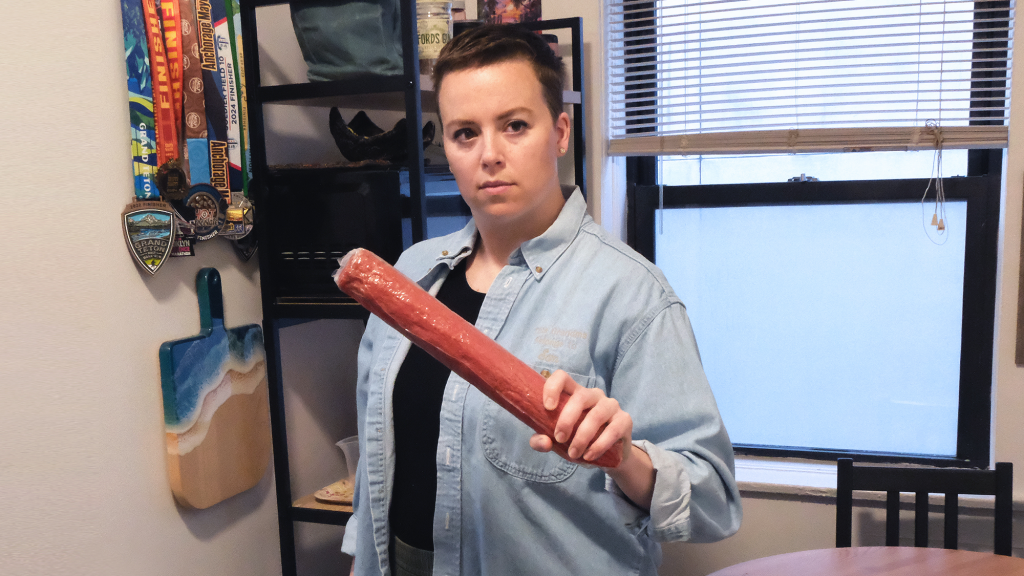
brandish

PRONUNCIATION:

(BRAN-dish) 

MEANING:

verb tr.: To hold or wave something (especially a weapon), in a threatening or triumphant manner.
noun: The act of waving or displaying something in an ostentatious or boastful manner.

ETYMOLOGY:

From Anglo-French brandir (to flourish or wave), from brant/brand (sword). Earliest documented use: verb: 1350, noun: 1601.

Salami Brandished

(TheOnion.com)

Morning Meditation

In the spiritual universe, only love is real, and nothing else exists

JUN 18, 2025

Saskia Pasman / EyeEm

In the spiritual universe, only love is real, and nothing else exists

While the appearances of the three-dimensional world would deceive me into the false belief that there are powers more powerful than God, In fact, only love is the kingdom, the power and the glory. My physical senses are useful tools, but they are not the arbiters of ultimate truth. Only the love in my heart is the knower of all things.

The world has trained me to believe in the illusions of fear and separation and to disbelieve in the truth that lies beyond them. Today, I take a stand for truth as I extend my perceptions beyond what my physical senses reveal to me to what I know to be true in my heart. I commit to the realization that only love is real and I recognize the illusory nature of anything else. This way, I gain the power of the miracle, the power of conviction, as my mind becomes a conduit for the power by which only love prevails.

No matter what situation I am in today, I will remember that only love is real. I will not be waylaid by false appearances. When I cannot find my way to true vision, I pray to be reminded that false appearances are powerless before the will of God. I pray that my inner eye be opened to the love within all things.

In the spiritual universe, only love is real and nothing else exists

*To receive a morning meditation each day, please upgrade to a paid subscription

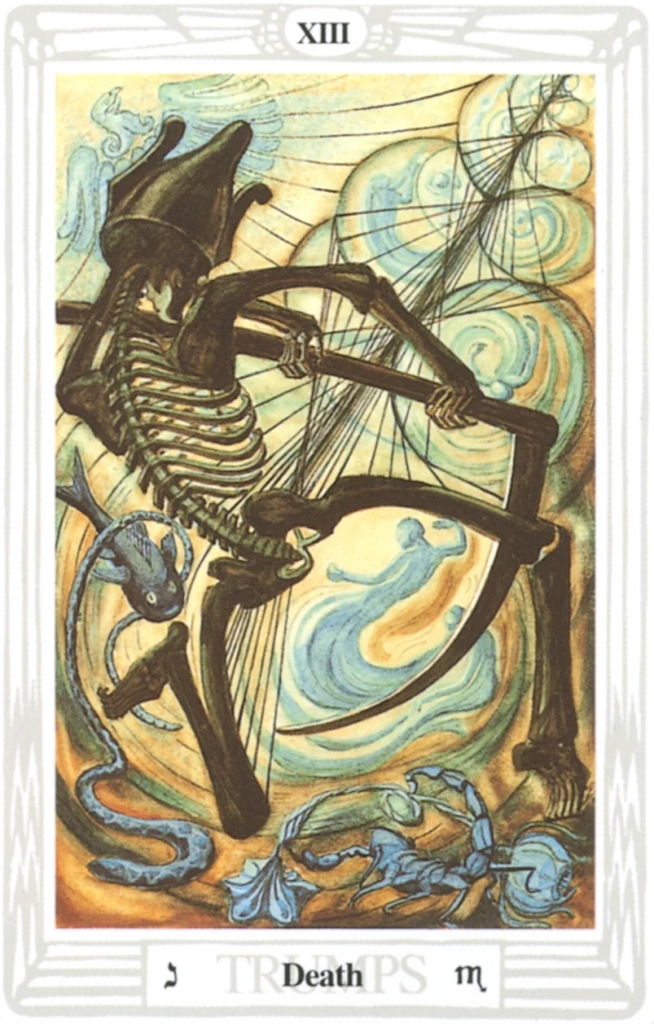
Tarot Card for June 18: Death

Death

I wonder if there is a more-feared card in the Tarot deck? Yet Death is, in many ways, a hopeful and refreshing influence if only we will let it be. It is the major card for change and alteration in the entire deck. Since life itself changes constantly, in order to harmonise ourselves more completely with it, we too must be in a state of constant change – working toward our goals, attempting to fulfil our dreams and developing the quality of our spiritual understanding.When Death comes up as Card of the Day, the first question we need to ask ourselves is – what is it that needs to be changed or finished up? What situations have been lingering on well past their sell-by date? What should we have dealt with before, that this day challenges us to face and finish?Imagine, for a moment, that your life is a plot of land. If it is completely overgrown, covered with unwanted and untended undergrowth, you cannot plant something beautiful and fruitful in it can you?The Death card requires that we spend a bit of dedicated time cutting away the undergrowth, and clearing the debris so that our lives are clear and open, ready for fresh planting.Sometimes a Death card day won’t be one in which we need to do, so much as one in which we need to think. Most peoples’ lives are very busy indeed these days. So busy, in fact, that we often tend to put off thinking about the difficult or demanding issues in our lives. Yet often it is exactly this type of issue that causes emotional and mental deadwood to accumulate, if we allow it.If life is created by what we think, what we expect and how we feel about things, our deepest emotional urges, our wildest dreams, our highest ideals require a great deal of thinking about, don’t they? If not, we stagnate, never creating new channels through which to direct our energies, never determining when a habitual action has run its course, never assessing what is useful, and what is not.So, sometimes, a Death card day needs to be a day in which you re-evaluate the general patterns of your daily existence, and re-appraise your goals. You’ll know if it’s that kind of day by measuring how dissatisfied you currently feel. If you are largely happy and comfortable, then the Death card day is one for clearing the decks in a physical sense.

Affirmation: “I welcome change into my life, embracing it fearlessly and hopefully.”

(Angelpaths.com)

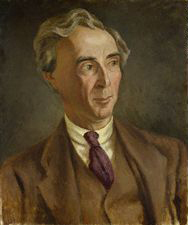
Some excerpts from Bertrand Russell’s “Mysticism & Logic”

Bertrand Russell

The first and most direct outcome of the moment of illumination is belief in the possibility of a way of knowledge which may be called revelation or insight or intuition, as contrasted with sense, reason, and analysis, which are regarded as blind guides leading to the morass of illusion. Closely connected with this belief is the conception of a Reality behind the world of appearance and utterly different from it. This Reality is regarded with an admiration often amounting to worship; it is felt to be always and everywhere close at hand, thinly veiled by the shows of sense, ready, for the receptive mind, to shine in its glory even through the apparent folly and wickedness of Man. The poet, the artist, and the lover are seekers after that glory: the haunting beauty that they pursue is the faint reflection of its sun. But the mystic lives in the full light of the vision: what others dimly seek he knows, with a knowledge beside which all other knowledge is ignorance.

 The fact is, of course, that both intuition and intellect have been developed because they are useful, and that, speaking broadly, they are useful when they give truth and become harmful when they give falsehood. Intellect, in civilised man, like artistic capacity, has occasionally been developed beyond the point where it is useful to the individual; intuition, on the other hand, seems on the whole to diminish as civilisation increases. It is greater, as a rule, in children than in adults, in the uneducated than in the educated. Probably in dogs it exceeds anything to be found in human beings. But those who see in these facts a recommendation of intuition ought to return to running wild in the woods, dyeing themselves with woad and living on hips and haws.

A process which led from the amoeba to Man appeared to the philosophers to be obviously a progress—though whether the amoeba would agree with this opinion is not known.

Somehow, without explicit statement, the assurance is slipped in that the future, though we cannot foresee it, will be better than the past or the present.

“By reality and perfection I mean the same thing.” –Spinoza in Ethics

“There was a time when meadow, grove, and stream,
The earth, and every common sight,
To me did seem
Apparelled in celestial light,’
-William Wordsworth, Ode: Intimations of Immortality from Recollections of Early Childhood

Mysticism & Logic pdf: https://users.drew.edu/~jlenz/br-ml-ch1.html#:~:text=The%20first%20and%20most%20direct,to%20the%20morass%20of%20illusion.

Why Chosen Ones Are Born Into Toxic Families | Carl Jung Explains the Sacred Wound

Echoes of Psyche Jun 12, 2025 Some are born into love… Others are born into silence, shame, and survival. If you’ve ever looked at your family and wondered, “Why me? Why this?” — this video is for you. Carl Jung believed that the soul does not choose comfort — it chooses evolution. The black sheep, the cycle-breakers, the deeply feeling ones… They aren’t broken. They’re being initiated. In this video, we explore the deeper Jungian reasons why “chosen ones” are born into toxic families — And how your sacred wound might just be the gateway to your becoming. ????️ Healing starts with understanding. Watch now and remember who you were always meant to be. ✨ Welcome to Echoes of Psyche — Where wounds become wisdom, And transformation is sacred. Carl Jung, toxic families, chosen ones, shadow work, sacred wound, black sheep, family trauma, cycle breakers, soul healing, inner child, psychological transformation, individuation, spiritual awakening, emotional healing, Echoes of Psyche, generational healing, trauma recovery, self awareness, personal growth, family systems