Featured Books from New Thinking Allowed

”Proteanism,” or the protean self, describes a psychological phenomenon integral to our times. We live in a world marked by breathtaking historical change and instantaneous global communication. Our lives seem utterly unpredictable: there are few absolutes. Rather than collapsing under these threats and pulls, Robert Jay Lifton tells us, the self turns out to be remarkably resilient. Like the Greek god Proteaus, who was able to change shape in response to crisis, we create new psychological combinations, immersing ourselves in fresh and surprising endeavors over our lifetimes.


In this unique and timely volume Robert Jay Lifton, the National Book Award–winning psychiatrist, historian, and public intellectual proposes a radical idea: that the psychological relationship between extremist political movements and fanatical religious cults may be much closer than anyone thought. Exploring the most extreme manifestations of human zealotry, Lifton highlights an array of leaders who have sought the control of human minds and the ownership of reality.


Wondrous Healing traces the human capacity for religious belief to the success of ancient healing rituals, such as chanting to calm women in childbirth or rhythmic dancing to reduce trauma from wounds. Those who accepted these hypnotic suggestions were far more likely to receive positive benefits from the “healing.” The apparent success of such rituals, McClenon argues, led to the development of shamanism, humankind’s first religion.


Driscoll draws on his critical acumen and scholarly knowledge of Renaissance literature to shed new light on Jung’s psychology of religion. The Unfolding God of Jung and Milton illumines Jung’s heterodox notion of Godhead as a quarternity rather than a trinity, his revolutionary concept of a divine individuation process, his radical solution to the problem of evil, and his wrestling with the feminine in Godhead. The book’s glossary of Jungian terms, written for literary critics and theologians rather than clinicians, is exceptionally detailed and insightful.

All Of Family’s Neuroses Projected Onto Dog

Published: March 1, 2000 (TheOnion.com)

FLAGSTAFF, AZ–”Mommy, Woofers is lonely out there in the doghouse! He wants to come in and play!” says attention-starved Billy Tobin, 10.

undefined

“That dog doesn’t care about being in this house! He just wants to run around,” counters mother Janet Tobin, 44, an unhappily married homemaker.

“Will you two be quiet? All that poor dog wants is to be left alone!” says Bob Tobin, 50, world-weary father and unfaithful husband to Janet.

So goes a typical exchange with the Tobins, a dysfunctional Flagstaff family whose members possess an uncanny ability to project all of their various neuroses onto the innocent psyche of Woofers, the family dog.

“It is not unusual for a neurotic personality to project unresolved issues onto an infant, pet, house, or other neutral entity that is incapable of expressing its own opinions and feelings,” said University of Arizona psychology professor Dr. Jonah Douglas. “But while such projection is far from uncommon, the fact that this family has managed to project every last one of its problems onto a single being, Woofers the dog, is truly exceptional.”

The use of Woofers as a third-party neurosis receptacle is a daily occurrence within the Tobin household, with unspoken dissatisfaction, pain, and anger constantly displaced from its true source and transferred to the tabula rasa that is, for them, the dog’s psyche.

Said Douglas: “Thanks to Woofers, the Tobins need never directly confront any of their longstanding personal and interpersonal issues, enabling them to perpetuate their self-defeating behaviors in an endless cycle of collective denial. He is the emotional glue that keeps this horribly maladjusted clan from tearing itself apart.”

Grandmother Ellen Tobin, 78, who lives in constant fear that she will be put away in a rest home, tells fellow family members that “Woofers is never coming back” every time the dog is not in the same room as her.

“Where’s Woofers? Where’s Woofers?” Ellen shouted at daughter Janet recently. “You sent him to the pound, didn’t you? Didn’t you?”

Similarly, 14-year-old Renee Tobin constantly berates the animal for being “smelly, mangy, and ugly”–not realizing that she is actually expressing deep-seated insecurities about her own changing body and budding sexuality. “Can’t somebody ever give that dog a bath? It’s gross!”

Another telling incident occurs when Billy returns home from elementary school, where he is unpopular and alienated, to a home where he receives little affirmation and approval. He passionately hugs Woofers, mistakenly believing that the dog is sad and lonely without him.

“You just need some love,” says Billy, offering Woofers a treat as he gazes at the dog’s blank, uncomprehending face. “You’re by yourself all day long, and you must’ve really missed me, huh, Woofers? Isn’t that right? Yes, it is. Yes, it is.”

When Woofers responds enthusiastically, jumping up and down in response to the attention and food he receives during this daily greeting ritual, Billy erroneously interprets this as a sign of the dog’s agreement with what he is saying.

“Get that dog off my bed right now!” yells Janet, whose repressed awareness of her husband’s longtime infidelity has led the pair to sleep in separate beds for the past six years. “Put him out in the yard where he belongs. That’s all he wants anyway–to run around, sniffing every tree and bush in the neighborhood!”

“If that dog wants to run around all night long, let him,” adds Janet, totally unaware of the transparent nature of her oft-repeated complaint. “He’s just going to be scratching at the door all night anyway if you don’t let him out. If that’s what he wants, why keep him cooped up in a place he obviously hasn’t wanted to be for a long time? Who cares what he does all night, so long as he’s not doing it here? Let him howl at the moon all night for all I care.”

“Must you snipe at him all day long?” Bob responds. “He’s had it up to here with all the shouting. Great, now he’s whining again. I hope you’re happy. He can’t take all this constant noise. Dogs have very sensitive hearing, you know. Look at his face! Can’t you see that you’re driving the poor animal crazy? No wonder he wants to get out.”

Though the Tobins are deeply troubled, they can feel confident that they will not have to confront any of their problems any time soon, thanks to the heroic, if unintentional, role that Woofers plays in their lives.

“To the best of my knowledge, in the annals of modern psychiatric science, there has never been a case of one creature serving as an essential emotional proxy to so many people,” Douglas said. “Woofers must indeed be a profoundly exceptional animal. A lesser dog would have cracked under the strain of so many mutually contradictory projections long ago.”

We Should All Be Very, Very Afraid

Trump is seeking to establish a truly chilling proposition: that no one can stop his administration from imprisoning anyone it wants… If the government can disappear any people it wishes, we all should be very, very afraid.

April 10, 2025 (portside.org)

Erwin Chemerinsky and Laurence H. Tribe  NEW YORK TIMES

Credit: Jose Cabezas/Reuters // New York Times,

Of all the lawless acts by the Trump administration in its first two and a half months, none are more frightening than its dumping of human beings who have not had their day in court into an infamous maximum-security prison in El Salvador — and then contending that no federal court has the authority to right these brazen wrongs.

In an astounding brief filed in the Supreme Court on Monday, the solicitor general of the United States argued that even when the government concedes that it has mistakenly deported someone to El Salvador and had him imprisoned there, the federal courts are powerless to do anything about it. The Supreme Court must immediately and emphatically reject this unwarranted claim of unlimited power to deprive people of their liberty without due process.

That would seem to be the obvious response. It was Thomas Jefferson who called the right of habeas corpus to protect against unlawful detention one of the “essential principles of our government.”

Jefferson’s concerns are underscored by the case of Kilmar Armando Abrego Garcia, a lawful resident of the United States, whom the federal government admits it wrongly deported to El Salvador. He has been incarcerated in El Salvador along with some 200 Venezuelan migrants deported there last month by the Trump administration, which says they were involved in criminal and gang activity.

On Friday, Judge Paula Xinis of the United States District Court in Maryland ordered Mr. Abrego Garcia’s return. In a subsequent opinion issued on Sunday, she wrote that “there were no legal grounds whatsoever for his arrest, detention or removal.” His detention, she added, “appears wholly lawless.”

One might think the Trump administration would at least try to correct its grievous mistake by attempting to secure Mr. Abrego Garcia’s release through diplomatic channels. El Salvador’s president, Nayib Bukele, has been called “a great friend of the United States” by Marco Rubio, President Trump’s secretary of state.

But no, the Trump administration does not seem willing to lift a finger to fix the calamity it created for Mr. Abrego Garcia and his family.

Karoline Leavitt, the White House press secretary, responded to Judge Xinis’s order by saying the judge should contact President Bukele because “we are unaware of the judge having jurisdiction or authority over the country of El Salvador.” Her suggestion that a federal judge play the role of a diplomat, rather than provide legal relief to Mr. Abrego Garcia, is unworthy of any presidential administration.

Why hasn’t the Trump administration acted to secure Mr. Abrego Garcia’s release? After all, he is there because of a government screw-up.

If you like this article, please sign up for Snapshot, Portside’s daily summary.Email

(One summary e-mail a day, you can change anytime, and Portside is always free.)

The answer can only be that it is using this case to establish a truly chilling proposition: that no one can stop the Trump administration from imprisoning any people it wants anywhere else in the world. In its brief to the Supreme Court, the administration argues that the only remedy available to a person in custody is a writ of habeas corpus, a court order that a person in custody be brought before the court to determine if the detention is lawful. But the administration also contends that federal courts have no authority to issue such a writ when the person is held in a foreign prison.

There can be no doubt about what this means.

There would be nothing to stop the government from jailing its critics in another country and then claiming, as it is now, that the courts have no jurisdiction to remedy the situation. Armed with this power, the government would know that Immigration and Customs Enforcement or the F.B.I. or any federal law enforcement agency could apprehend any people, ignore the requirements for due process and ship them to El Salvador or any country that would take them. These individuals would have no legal recourse whatsoever from any American court. The administration could create its own gulags with no more judicial review than existed when Stalin did the same thing in the Soviet Union.

Judge Xinis ordered the government to return Mr. Abrego Garcia by 11:59 p.m. on Monday. The Supreme Court paused that order on Monday to allow the justices to review the matter. But it shouldn’t take much time for the court to conclude that every minute Mr. Abrego Garcia is wrongly incarcerated is a minute too long.

The Supreme Court also handed down a ruling on Monday in a case involving the Trump administration’s mid-March decision to remove noncitizens in the United States who are members of the Venezuelan gang Tren de Aragua without any hearing at all. Five Venezuelans went to court to block the president’s plan, and a Federal District Court judge did just that. But roughly 200 Venezuelans were deported anyway. The administration has argued that, if it needed any authority to take that action beyond the power inherent in the presidency, such authority could be found in the Alien Enemies Act of 1798.

But as Judge Karen Henderson of the U.S. Court of Appeals for the District of Columbia Circuit explained in a March 26 decision concerning the deportation of those roughly 200 Venezuelans, that 1798 law was limited to formally declared wars or imminent military invasions of the United States. Until the Trump administration, the law had been invoked only three times — during the War of 1812, World War I and World War II, when it was used to intern Americans of Japanese ancestry. That action has since been all but universally condemned as a shameful overreaction to the attack on Pearl Harbor.

By invoking the Alien Enemies Act, the government claims it can circumvent the usual procedures for deportation, including due process.

In an unsigned opinion, which the Supreme Court handed down on Monday, a 5-to-4 majority (with Justice Amy Coney Barrett joining the three liberals in the minority) said the Trump administration could continue to deport Venezuelan migrants using the 1798 law. But the court also said migrants fighting deportation in this case could challenge their detentions, though only through habeas corpus petitions, which it said needed to be filed in federal court in Texas, where they were held, not in Washington, D.C., where the government officials who made the decision on their fate are. The court said these individuals should be given notice and a hearing before being deported.

As for those who have already been deported to El Salvador and imprisoned there, it is troubling that the court did not speak to whether they can get any relief from the courts.

The justices did not answer critical questions like: Can the government use the Alien Enemies Act of 1798 in this manner? Did the lower court have the authority to issue the order to stop individuals from being taken to El Salvador? Is there any legal basis for the Trump administration to put individuals in an El Salvador prison? And, crucial to Mr. Abrego Garcia’s pending case, will the court reject the Trump administration’s claim that no federal court can hear a habeas corpus petition of someone held in a foreign country?

Justice Sonia Sotomayor, in a dissent, identified how much is at stake: “The implications of the government’s position” are “that not only noncitizens but also United States citizens could be taken off the streets, forced onto planes and confined to foreign prisons with no opportunity for redress if judicial review is denied unlawfully before removal. History is no stranger to such lawless regimes, but this nation’s system of laws is designed to prevent, not enable, their rise.”

If the government can disappear any people it wishes, dump them in a Salvadoran dungeon and prevent any court in this country from providing relief, we all should be very, very afraid.

[Erwin Chemerinsky is the dean of the law school at the University of California, Berkeley. Laurence H. Tribe is an emeritus university professor of constitutional law at Harvard. They have filed an amicus brief with the Supreme Court in the Abrego Garcia case.]

(Courtesy of Occupy Oakland)

Why I Saw Russian Dissident Alexei Navalny in Snow White

In Fairy Tales, Idealism Pays Off. In Reality, Tyrants Usually Win—And Their Supporters Don’t Switch Sides

By Elena Smolina April 10, 2025 (ZocaloPublicSquare.org)

Film critic Elena Smolina saw glimpses of the late Russian opposition leader Alexei Navalny’s struggle in the new “Snow White”—but felt the fairy tale’s ending fell short for those living under the threat of totalitarianism. | Still from “Snow White” (2025) trailer. Courtesy of Disney, via YouTube.

Disney’s new live-action Snow White and Alexei Navalny’s murder might seem a world apart. But as I watched the film with my daughter in L.A.’s beautiful El Capitan Theatre, I saw something disturbingly familiar in the story of a kind, brave princess forced to first become a servant in her own palace and then to flee into the woods, escaping the new queen’s order to assassinate her.

The whole ordeal made me think about how Navalny, the leader of the Russian opposition, had miraculously survived a poisoning attempt and, after recovering in Germany, chose to return to Russia, fully aware of the risks. Except that’s where the parallels end. Snow White gets a happily ever after. When Navalny returned to Russia in 2021, he was arrested; he died in a penal colony in 2024.

Snow White and Alexei Navalny’s fates are two sides of the reality that those of us living under the threat of totalitarianism must face. In the film, Snow White’s parents teach her (naturally, in a fantastic song), to be fearless, fair, brave, and true. But in life, sometimes being these things is not enough to win the battle against a tyrant. At times, nothing is. Especially in this volatile moment in history, fairy tales that teach our children to be delusional may be doing us all a dangerous disservice.

Snow White does understand its enemy. The queen, played by the regal Gal Gadot, is gorgeous, powerful, and sociopathic. In theory, her beauty is supposed to fuel her might (and maybe it did back when she married the newly widowed king). But the key to her grip on power is her absolute absence of conscience. She’s ruthless and unfamiliar with remorse. In this version, she’s also very fond of red caviar—an inexplicably Russian touch that hit even closer to home.

But the story’s clueless outlook on life comes through when Snow White, who, by the way, just recently survived her own poisoning attempt, faces the queen at the palace gates, surrounded by her guard. Snow White is unarmed and has neither an army behind her nor the support of the masses (the visibly malnourished common folk just stand there in the town’s Fachwerk-style main square and wait to see who’ll win, having lost all hope and drive to protest). So, Snow White does what she does best: She sings. In her song, Snow White addresses each member of the queen’s guard by first name, appealing to their conscience. Naturally, they switch sides.

As someone who has been at anti-Putin rallies that drew tens of thousands, I can attest that expecting this kind of behavior from members of the military is the definition of magical thinking. Law enforcement can chat and be friendly with protesters if their higher-up’s orders allow it. They will become a faceless punitive mass when the orders change.

Watching Snow White bravely putting herself out there and gearing up to face her evil nemesis, I felt the sinking feeling of knowing where this story would actually go next if it weren’t a Disney movie. Because we all have seen it.

When, months after miraculously surviving the August 2020 poisoning attempt, Navalny returned to Russia, it was an act of personal courage so bold that it was going to either end in tragedy or change everything. Political scientist Francis Fukuyama was among those who compared Navalny to Nelson Mandela: If Putin’s regime collapsed, Navalny, like Mandela in South Africa, would have emerged “as the unquestioned leader of a more democratic Russia,” Fukuyama wrote in his elegy, “Honoring Navalny.”

Even after Navalny was thrown in jail, he continued to feel like a character from a narrative that cannot end on a somber note. This collective refusal to believe he could be killed may have resulted from the fact that no matter where we’re from or how old we are, we’ve all been brought up on the same fairy tale tropes. In his famous 1928 book Morphology of the Folktale, Soviet folklorist and structuralist Vladimir Propp argued that all fairy tales, in fact, may stem from the same root— making the way we view stories a universal thing.

I suspect that’s why, a year after Navalny’s murder, his death remains unprocessed by most people. It was so shocking, in part, because the finality of this death defied everything we were raised to believe in.

This collective refusal to believe he could be killed may have resulted from the fact that no matter where we’re from or how old we are, we’ve all been brought up on the same fairy tale tropes.

I met Alexei Navalny twice. Both interactions were short and, objectively, meaningless. The first was in spring 2013 at a GQ Russia photoshoot, for what was supposed to become a cover story. That cover never happened. Even in 2013, when the lines between what was allowed and what was forbidden were murky, his face on the cover of a magazine was a risk not every outlet was willing to take. The cover of the May issue that year was given to a non-threatening Robert Downey Jr. But in the top right corner, right above Mr. Downey’s head, there’s a blunt cover line in black: Navalny.

The second time was in 2017 at a Christmas party for a children’s arts camp—Navalny and the camp’s founder, former Esquire Russia editor Filipp Bakhtin, were friends. I remember feeling that there was something unmistakably historic about this figure. Back then, I thought it was the striking combination of the normalcy of seeing him there and the absolute abnormality of it. Power in Russia is never approachable, and yet there he was with his wife, Yulia, the image of approachability. The very idea of down-to-earth Navalny overthrowing the infinitely powerful regime felt so unlikely that it simply had to happen. If we were living by the laws of a fairy tale, it would have.

Thousands of people left flowers on Alexei Navalny’s grave on the day of his funeral. Courtesy of Celest/Wikimedia Commons. Public domain.

The 19th-century Grimm Brothers’ version, “Little Snow-White,” was at least sober enough to give its heroine a plausible way to defeat the queen—by marrying a powerful man. It’s neither particularly empowering nor uplifting but that change in her social status offers a reason for why the queen loses her grip on the princess. Luckily, in 2025, Snow White doesn’t have to marry a creep. Instead, she’s reimagined as a revolutionary with a Robin Hood-like boyfriend. But her rebellion is lazy and unconvincing—there must be more to overcoming evil than just showing up. To suggest otherwise is setting the whole generation up for failure. (If I must cite an example of a fantasy adventure where an underdog overthrows the tyrant, and it’s brilliant, it’s William Goldman’s The Princess Bride.)

The original Snow White owes her name to the striking combination of three drops of red blood on the blindingly white snow. This latest version doesn’t mention it to avoid emphasizing the whiteness of Snow White’s skin.

But I still kept thinking of red on white. For me, the red isn’t blood. It’s the frostbitten flowers, carnations, that thousands and thousands of brave people left at Navalny’s grave on the day of his funeral. According to the photos, that day, the snow on the sidewalk was not white; it was brownish, like it should be in March. The police were everywhere—masked and unmasked, on foot, in cars, in police wagons (in case some of the grieving people would need to be arrested), even, fittingly for a dark fairy tale, on horseback. Every single one of them somehow justified the choice to keep doing this. No one switched sides.


Elena Smolina is a film critic and a former deputy editor-in-chief at GQ Russia. She lives in Los Angeles.

This is what a digital coup looks like

Carole Cadwalladr | TED2025

• April 2025

“We are watching the collapse of the international order in real time, and this is just the start,” says investigative journalist Carole Cadwalladr. In a searing talk, she decries the rise of the “broligarchy” — the powerful tech executives who are using their global digital platforms to amass unprecedented geopolitical power, dismantling democracy and enabling authoritarian control across the world. Her rallying cry: resist data harvesting and mass surveillance, and support others in a groundswell of digital disobedience. “You have more power than you think,” she says. (This talk contains mature language.)

About the speaker

Investigative journalist

Tips For Managing Seasonal Allergies

Published: April 10, 2025 (TheOnion.com)

According to the CDC, more than one quarter of U.S. adults suffer from seasonal allergies. The Onion shares tips for managing allergic rhinitis symptoms.

Try a nasal-removal spray. 

Politely ask the flowers in your neighborhood to stop blooming. 

Ask ADT about their anti-ragweed security systems.

Teach the trees in your area that sexual reproduction is shameful.

Cross the street if you encounter a gang of street pollen.

Get your hazmat suit in a seasonal, pastel color so you don’t look weird. 

Sudafed can easily be synthesized from any spare meth you have lying around.

Consider alternatives to breathing. 

Try to convince your sensitive immune system not to take pollen so personally. 

Evil twinks and gay gangsters: why we need to remember history’s horrid homosexuals

This article is more than 2 years old

Louis Staples

From Alexander the Great to Ronnie Kray, the hosts of the Bad Gays podcast reveal the most villainous LGBTQ+ figures ever – and explain why it’s important to discuss the problematic alongside the good

Louis Staples

Tue 24 May 2022 (TheGaurdian.com)

In February, season two of HBO’s teen drama Euphoria reached a climax. “Well, if that makes me a villain,” proclaimed an unrepentant Cassie Howard, “then so fucking be it.” This much-memed line encapsulates popular culture’s preoccupation with baddies, from Netflix’s endless scammer series to Disney’s villain origin stories. Social media is pretty much a conveyor belt of villainy, too, with different echo chambers picking their own adversaries. Meanwhile, famous young women such as Britney Spears, who were once demonised, are now being reappraised as victims. And with hindsight’s perfect vision, it’s clear that plenty of characters in TV and film were not the “actual villain” either.

We seem to be more accepting of some baddies than others. History is littered with famous probably-gay villains, from Alexander the Great to Roy Cohn, Senator McCarthy’s chief counsel and Trump’s favourite lawyer. But unlike LGBTQ+ heroes such as Alan Turing or Audre Lorde, they are seldom remembered or claimed as gay. The question of why that should be the case is the starting point of Bad Gays: A Homosexual History by Huw Lemmey and Ben Miller. The book’s central argument is that, if we are to fully understand how today’s gay identities evolved, the lives of villains – the most deceitful, criminal, manipulative and power-hungry gay people – are just as important as those of gay heroes such as Oscar Wilde.

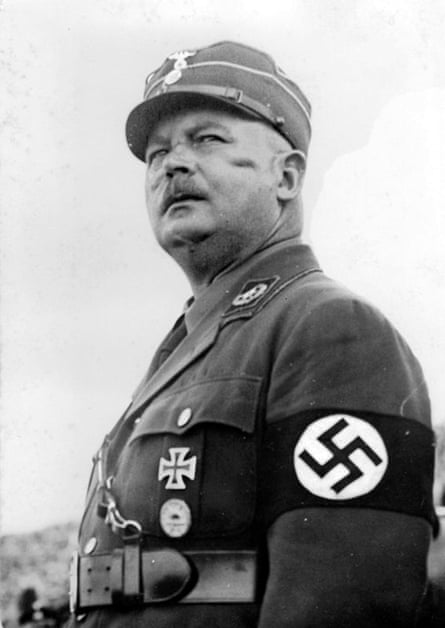
Ernst Rohm, founding member of the Nazi Brownshirts.
Ernst Rohm, the world’s first out gay politician. Photograph: Alamy

Bad Gays is a continuation of the duo’s podcast of the same name, which profiles the “evil and complicated queers in history” – such as Ernst Röhm, the world’s first out gay politician – a Nazi – and J Edgar Hoover, the FBI director who helped harass political dissidents and gay government employees and was posthumously outed by his friend, Broadway star Ethel Merman. “We want to address our history and how gay identity came to be,” Lemmey says. “But if we’re ever going to understand our sexual identity in a way that is based around solidarity and friendship, we need to discuss gay people who were devious and ruthless, too.”

The podcast began in 2019 when Lemmey, an author and film-maker, and Miller, a writer and historical researcher, were introduced to each other by friends. “While recording the podcast, we found that there were recurring themes,” says Lemmey. “We kept coming back to colonialism, race and the creation of the white homosexual identity. And also the same disclaimer, which was that concepts like ‘gay’ and ‘homosexual’ didn’t really exist before 1860.” That was when sexologists and early gay rights campaigners first coined the term “homosexual”, and began to conceive of homosexual and heterosexual as innate sexual identities.

The pair discuss these issues more deeply in the book. The text still has the irreverent swishiness of the podcast – there is a reference to “evil twinks” in the first few pages. But a key difference is that the book tells a story about how white gay identity was formed, and is more focused on men, whereas the podcast – which has had five series and almost 1m downloads – now profiles an even mix of men and women. “When we started the podcast, it was only about men, because the ethics of two cis men talking about villainous women were less clear,” Miller says. “We changed that partly because women and trans people kept getting in touch saying: ‘We want to be part of these stories and we trust you to tell them.’”

‘We want to address our history’ … Huw Lemmey and Ben Miller.
‘We want to address our history’ … Huw Lemmey, left, and Ben Miller. Composite: Florian Hetz

Bad Gays starts with the story of “perpetually horny” Roman emperor Hadrian. Next we learn about King James, whose ascension to the throne of Scotland and England formed the United Kingdom. James’s rule was defined by authoritarian laws, colonialism and misogynistic witch-hunts – and by his attraction to athletic jousters half his age. The book unpacks how the gangster Ronnie Kray became an “unironic icon” of masculinity. And how the Hitler sympathiser and architect Philip Johnson came to influence the skylines of America’s cities more than any other. “For us, it’s not about casting these figures aside and saying: ‘They have nothing to teach us,’” Lemmey says. “It’s not fair to say these people are always monsters. Just like our heroes, villains are complicated – there are hidden aspects of their lives that might explain their actions.”

Rejecting an apolitical approach to LGBTQ+ history and culture, and telling the story of how today’s dominant white gay identity was formed, Lemmey and Miller explain how it can uphold systems that marginalise trans people, women, the working class and people of colour. While they are sympathetic to their subjects individually – even the murderers – they are much more critical of the white gay identity their legacies have helped to form. The authors argue for a dismantling of oppressive structures, rather than mere “representation” within them – a philosophy similar to the gay liberation movements of the 1970s.

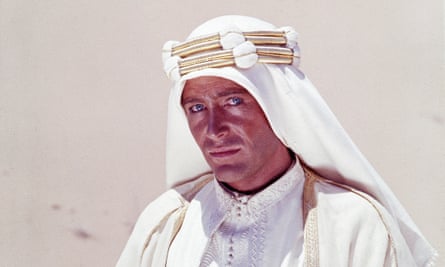
‘Sexual desire towards colonised people’ … TE Lawrence, as played by Peter O’Toole in Lawrence of Arabia (1962).
‘Sexual desire towards colonised people’ … TE Lawrence, as played by Peter O’Toole in Lawrence of Arabia. Photograph: Ullstein bild/Getty Images

When I ask which figure best epitomises the book, Lemmey responds with Thomas Edward Lawrence. He is known as the impossibly blond hero Lawrence of Arabia, who we saw riding a camel across the desert screaming “No prisoners!” in David Lean’s 1962 cinema spectacular. But his kinky gay sexual awakening – he detailed in his diaries regular thrashings administered by Jack Bruce, a member of the Scots Guards who later sold his story to the tabloids – was entwined with imperialist philosophies that persist. “His sexual desire towards colonised people was built out of both admiration and exploitation,” Lemmey says. “The way he used the figure of the colonised ‘primitive’ was indicative of the types of white identity formation we discuss here.” Like all of the book’s subjects, he was complicated.

Bad Gays: A Homosexual History

Huw LemmeyBen Miller

Too many popular histories seek to establish heroes, pioneers and martyrs but as Huw Lemmey and Ben Miller argue, the past is filled with queer people whose sexualities and dastardly deeds have been overlooked. We all remember Oscar Wilde, but who speaks for Bosie? What about those ‘bad gays’ whose unexemplary lives reveals more than we might expect?

Part revisionist history, part historical biography and based on the hugely popular podcast series, Bad Gays subverts the notion of gay icons and queer heroes and asks what we can learn about LGBTQ history, sexuality and identity through its villains and baddies. From the Emperor Hadrian to notorious gangster Ronnie Kray, the authors excavate the buried history of queer lives. This includes fascist thugs, famous artists, austere puritans and debauched bon viveurs, imperialists, G-men and architects.

Together these amazing life stories expand and challenge the mainstream assumptions of sexual identity. They show that homosexuality itself was an idea that emerged in the nineteenth century and that its interpretation has been central to major historical moments of conflict from the ruptures of Weimar Republic to red-baiting in Cold War America.

Amusing, disturbing and fascinating, Bad Gays puts centre stage the queer villains and evil twinks in history.

(Inspired by Marty Owens)

My Darling Victoria

Marianne Williamson 

Newly born and deeply loved

APR 11, 2025

My second grandchild was born several hours ago. Little Victoria joins her Mommy and Daddy and her two-year old big sister in a world where she will see sky and sunlight and flowers and grass and beach and mountains, where she will be held in the arms of family who adore her, beginning her human journey very blessed to be loved as she will be loved.

She will share with her sister a swing set and a doll’s house and stuffed animals and books, she will love her Mommy’s cooking and rides on her Daddy’s shoulders (that always scares me, but hey, I remember riding on my father’s shoulders too), and will, if I have anything to do with it, be convinced at an early age that she’s a magical fairy princess who has come to help save the world.

She carries within her cells Scot warriors and shtetl Jews. She is a British citizen with an American mother. Not yet a full day old, she comes bearing, as does every child, great gifts for the world. My daughter described her as delicious. I describe her as a miracle. And of course she is both.

When the phone rang at 10:30 last night my time and I saw my daughter’s name on the screen, I answered it nervously. “India, are you all right???” The baby wasn’t due, after all, for another three weeks. Then I saw on Facetime that incredible image: the blissful and beautiful and smiling mother, holding her most perfect baby, proud husband and father standing over them. How many billions and billions of people, throughout the world throughout time, have gazed at such a scene in awe – wallowing in its divine perfection, giving thanks in their heart to whatever God or to no God, for the magnificence of life…

I give thanks so deeply tonight, that my daughter has become the woman she is, manifesting the life she lives, with the family she and her husband have created. Life does indeed go on, generation after generation. The thread of time runs through all things. God in His awesomeness wills that it be so. My prayer is that every child might be as fortunate as little Victoria, to be as loved as she is loved. May every child be safe and kept far away from harm. May our darling Victoria grow up someday to be a woman who herself carries on that thread, contributing to life, and experiencing all the blessings that it holds.

Dear God, bless every child. Make the world for all of them a place as perfect and as beautiful as they.

Amen.