“I am half inclined to think we are all ghosts…it is not only what we have inherited from our fathers and mothers that exists again in us, but all sorts of old dead ideas and all kinds of old dead beliefs and things of that kind. They are not actually alive in us; but there they are dormant all the same, and we can never be rid of them. Whenever I take up a newspaper and read it, I fancy I see ghosts creeping between the lines. There must be ghosts all over the world. They must be as countless as the grains of the sands, it seems to me. And we are so miserably afraid of the light, all of us.”
–Oswald Alving in Henrik Ibsen’s play Ghosts
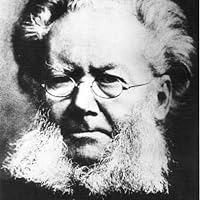
Henrik Johan Ibsen (March 20, 1828 – May 23, 1906) was a Norwegian playwright and theatre director. Ibsen is considered the world’s pre-eminent dramatist of the 19th century and is often referred to as “the father of modern drama.” He pioneered theatrical realism, but also wrote lyrical epic works. Wikipedia
17 He that hath an ear, let him hear what the Spirit saith unto the churches; To him that overcometh will I give to eat of the hidden manna, and will give him a white stone, and in the stone a new name written, which no man knoweth saving he that receiveth it.
In Revelation 2:17, Jesus promises to give “some of the hidden manna” and a white stone with a new name written on it to those who overcome, symbolizing spiritual nourishment and a unique identity in Christ.
Here’s a more detailed explanation:
“Hidden manna”:This phrase likely alludes to the manna given to the Israelites in the wilderness, but here it represents a special, hidden spiritual nourishment or blessing that only those who are faithful and persevere in their faith receive. Some interpretations suggest it could refer to Christ himself as the bread of life, or the Gospel itself.
“White stone”:The white stone, with a new name written on it, is a symbol of a unique identity and a reward for overcoming. Some interpretations suggest it could be a ticket to a special banquet or a symbol of acquittal or forgiveness.
“New name”:The new name written on the white stone could represent a new identity in Christ, a new standing in God’s presence, or a new relationship with God.
“To him who overcomes”:This phrase emphasizes that the promise is for those who persevere in their faith and resist temptation and hardship, demonstrating a commitment to Christ.
The Continental Congress was the governing body by which the American colonial governments coordinated their resistance to British rule during the first two years of the American Revolution. The Congress balanced the interests of the different colonies and also established itself as the official colonial liaison to Great Britain. As the war progressed, the Congress became the effective national government of the country, and, as such, conducted diplomacy on behalf of the new United States.
The Continental Congress
In 1774, the British Parliament passed a series of laws collectively known as the Intolerable Acts, with the intent to suppress unrest in colonial Boston by closing the port and placing it under martial law. In response, colonial protestors led by a group called the Sons of Liberty issued a call for a boycott. Merchant communities were reluctant to participate in such a boycott unless there were mutually agreed upon terms and a means to enforce the boycott’s provisions. Spurred by local pressure groups, colonial legislatures empowered delegates to attend a Continental Congress which would set terms for a boycott. The colony of Connecticut was the first to respond.
The Congress first met in Philadelphia on September 5, 1774, with delegates from each of the 13 colonies except Georgia. On October 20, the Congress adopted the Articles of Association, which stated that if the Intolerable Acts were not repealed by December 1, 1774, a boycott of British goods would begin in the colonies. The Articles also outlined plans for an embargo on exports if the Intolerable Acts were not repealed before September 10, 1775.
On October 21, the delegates approved separate statements for the people of Great Britain and the North American colonies, explaining the colonial position, and on October 26 a similar address was approved for the people of Quebec.
Furthermore, on October 26, the delegates drafted a formal petition outlining the colonists’ grievances for British King George III. Many delegates were skeptical about changing the king’s attitude towards the colonies, but believed that every opportunity should be exhausted to de-escalate the conflict before taking more radical action. They did not draft such a letter to the British Parliament as the colonists viewed the Parliament as the aggressor behind the recent Intolerable Acts. Lastly, not fully expecting the standoff in Massachusetts to explode into full-scale war, the Congress agreed to reconvene in Philadelphia on May 10, 1775.
By the time Congress met again, war was already underway, and thus the delegates to the Second Continental Congress formed the Continental Army and dispatched George Washington to Massachusetts as its commander. Meanwhile, Congress drafted the Olive Branch Petition, which attempted to suggest means of resolving disputes between the colonies and Great Britain. Congress sent the petition to King George III on July 8, but he refused to receive it.
As British authority crumbled in the colonies, the Continental Congress effectively took over as the de facto national government, thereby exceeding the initial authority granted to it by the individual colonial governments. However, the local groups that had formed to enforce the colonial boycott continued to support the Congress. The Second Congress continued to meet until March 1, 1781, when the Articles of Confederation that established a new national government for the United States took effect.
As the de facto national government, the Continental Congress assumed the role of negotiating diplomatic agreements with foreign nations. The British Parliament banned trade with the colonies and authorized the seizure of colonial vessels on December 23. These actions served to further erode the positions of anti-independence moderates in Congress and bolster those of pro-independence leaders. On April 6, 1776, Congress responded to Parliament’s actions by opening American ports to all foreign ships except British vessels. Reports from American agent Arthur Lee in London also served to support the revolutionary cause. Lee’s reports suggested that France was interested in assisting the colonies in their fight against Great Britain.
With a peaceful resolution increasingly unlikely in 1775, Congress began to explore other diplomatic channels and dispatched congressional delegate Silas Deane to France in April of 1776.
Silas Deane
Deane succeeded in securing informal French support by May. By then, Congress was increasingly conducting international diplomacy and had drafted the Model Treaty with which it hoped to seek alliances with Spain and France. On July 4, 1776 the Congress took the important step of formally declaring the colonies’ independence from Great Britain. In September, Congress adopted the Model Treaty, and then sent commissioners to France to negotiate a formal alliance. They entered into a a formal alliance with France in 1778. Congress eventually sent diplomats to other European powers to encourage support for the American cause and to secure loans for the money-strapped war effort.
Congress and the British government made further attempts to reconcile, but negotiations failed when Congress refused to revoke the Declaration of Independence, both in a meeting on September 11, 1776, with British Admiral Richard Howe, and when a peace delegation from Parliament arrived in Philadelphia in 1778. Instead, Congress spelled out terms for peace on August 14, 1779, which demanded British withdrawal, American independence, and navigation rights on the Mississippi River. The next month Congress appointed John Adams to negotiate such terms with England, but British officials were evasive.
Formal peace negotiations would have to wait until after the Confederation Congress took over the reins of government on March 1, 1781, following American victories at Yorktown that resulted in British willingness to end the war.
This is an intriguing look into a seldom considered aspect of the life of President Abraham Lincoln. Lincoln’s philosophy, concept of morality and manner of living are examined in a metaphysical setting. Photographic reproduction of the 1918 edition. (Amazon.com)
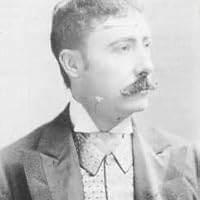
Pen name of composer, pianist and writer Benjamin Henry Jesse Francis Shepard
Born in Birkenhead, England his family immigrated to Illinois while he still was an infant.
He was involved with Spiritualism and stated that many of his musical performances were the result of the spirits of famous composers channeling through him. Shepard traveled through California in 1876 performing at several of the old religious missions founded by the Spanish.
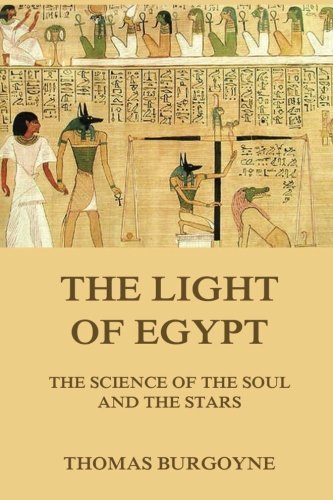
This is the author’s posthumous work, left in manuscripts to a few of his private pupils in Occultism and is a valuable addition and a library in occult subjects. Spiritual astrology and the “Zodiacal Signs” are especially elaborated. Alchemy, Talismans, Magic, the Magic Wand, Symbolism, Correspondence, Penetralia, etc-, etc., are a few of the subjects created fn a scholarly and masterly manner, showing the author to be familiar with his subjects.
Thomas Henry Burgoyne (born Thomas Dalton) 1855 – 1894 was a Scottish occultist and astrologer. He was a member of the Hermetic Brotherhood of Luxor in Britain and was an editor of the The Occult Magazine. Burgoyne moved to America, wrote The Light of Egypt, and founded the Hermetic Brotherhood of Light in America.
“In my work with the defendants [at Nuremberg], I was searching for the nature of evil and I now think I have come close to defining it. A lack of empathy. It’s the one characteristic that connects all the defendants, a genuine incapacity to feel with their fellow men.” — Captain Gustave Gilbert, the US army psychologist assigned to observe the Nazi defendants at the Nuremberg trials.
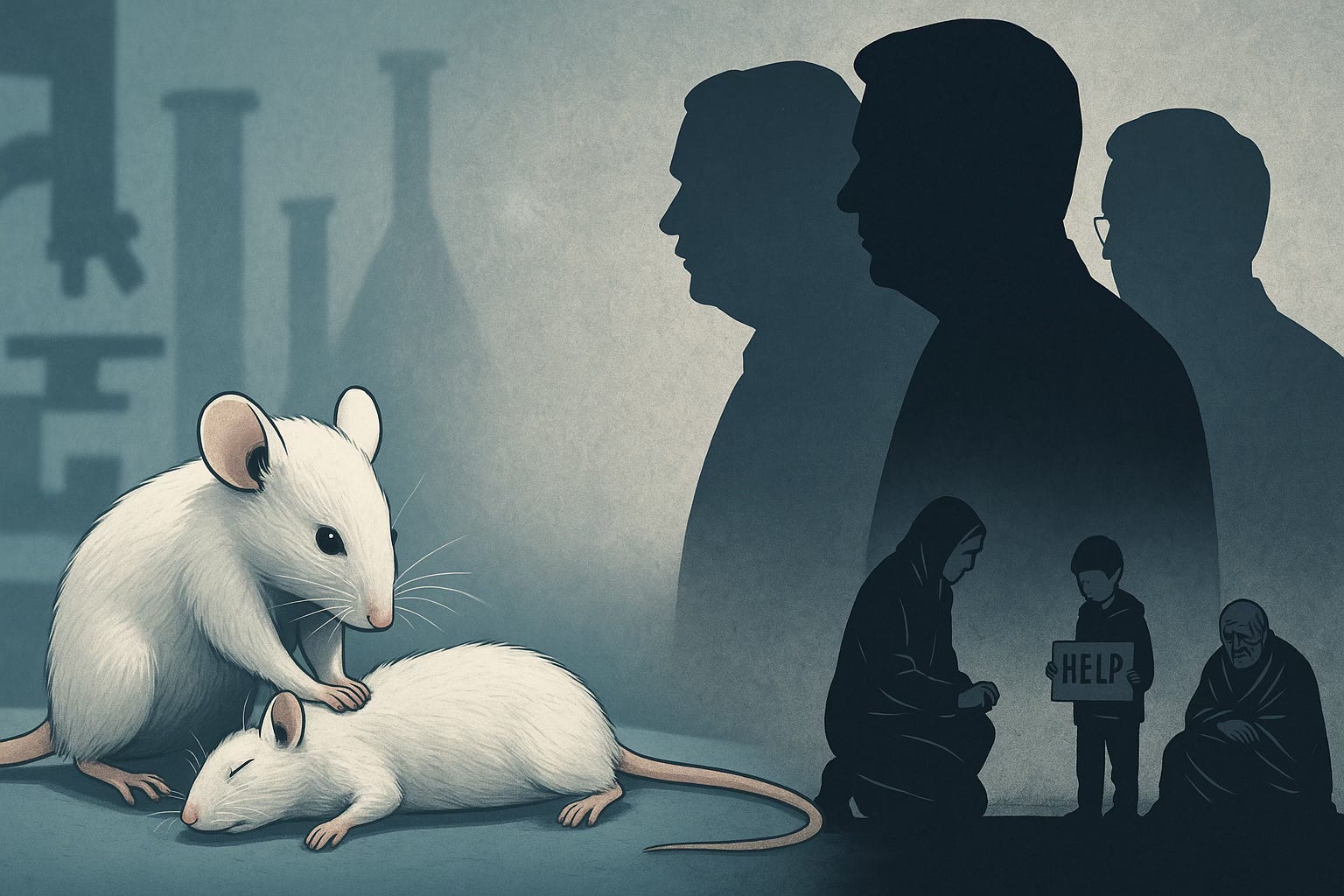
You don’t expect moral leadership from mice. And yet, in a recent study, rodents showed more empathy, urgency, and compassion for strangers than the men currently shaping our nation’s future. While lab mice display empathy by resuscitating unconscious cage-mates, Trump and Musk gleefully slash food aid, housing support, and global relief efforts — all cheered on by a right-wing movement that now sees empathy as a fatal weakness.
Frankly, I couldn’t avoid them; at least half the parents of the kids in our care were easily identified as psychopaths or diagnosable with Antisocial Personality Disorder (ASPD). Watching today’s GOP I’m getting flashbacks.
And this embrace of psychopathy isn’t something new for Republicans; their disdain for empathy has deep roots that reach back a half-century or more.
Most recently, this broke into public consciousness when Elon Musk trash-talked empathy in an interview with Joe Rogan:
“The fundamental weakness of Western civilization is empathy. The empathy exploit. They’re exploiting a bug in Western civilization which is the empathy response. I think empathy is good, but you need to think it through, and not just be programmed like a robot.”
The “they” who are “exploiting” the “bug” of empathy are, of course, Democrats who believe one of the jobs of government is to provide for “life, liberty, and the pursuit of happiness.” And average Americans who think we should help the helpless, feed the hungry, heal the sick, house the homeless, provide a safety net for our elders, and care for and educate our children.
You know, like Jesus said in the Sermon on the Mount and Matthew 25.
That, in fact, is what’s normal not just for humans but for all mammals; empathy is one of the universal characteristics across our class of animals, as any pet owner can tell you. In a remarkable study published in the peer-reviewed journal Science last month, researchers knocked out mice with anesthesia and let them be found by other mice.
Even when they’re total strangers, the conscious mice did everything they could — including a mouse-like form of CPR — to revive their companions. They felt empathy and acted on it.
Contrast this with Republicans who shrug when told that millions will die because of the cutoff of USAID assistance to poor nations that cost a mere .3% of our federal budget. Or who sneer at people who need Medicaid, school lunches, or Social Security Disability aid.
Just during the past few weeks, Trump has cancelled a billion dollars worth of support to food banks here in America, another billion to help low-income people pay for housing, and is taking an axe to Social Security. And he and Musk are gleeful about it.
How did it get this bad?
The Republican embrace of apathy/cruelty/antipathy/sociopathy really began to take form in the late 1970s and early 1980s as what became the Reagan movement enthusiastically embraced the writings and teachings of Ayn Rand and her Objectivist/Libertarian worldview.
Ayn Rand’s novels have informed libertarian Republicans like former Speaker of the House of Representatives and current Fox News board member Paul Ryan, who required interns to read her books when they joined his staff.
“Many among the Silicon Valley ultra-rich dominating the news think of themselves as heroes out of an Ayn Rand novel. Elon Musk and Marc Andreessen prate on about how we are living in Atlas Shrugged now. Peter Thiel has spoken at the annual gala of the Randian Atlas Society. These figures and their peers are discussed in the popularpress with frequentreference to Rand.”
“It relates to business, beauty, life and inner emotions,” he told Powers. “That book relates to … everything.”
Powers added, “He [Trump],” told her that he “identified with Howard Roark, the protagonist who designs skyscrapers and rages against the establishment.”
Rand’s hero Roark, in fact, “raged” so much in her novel that he blew up a public housing project with dynamite.
Rand, in her Journals, explained where she got her inspiration for Howard Roark and the leading male characters in so many of her other novels. She writes that the theme of The Fountainhead, for example, is:
“One puts oneself above all and crushes everything in one’s way to get the best for oneself.”
“…has learned long ago, with his first consciousness, two things which dominate his entire attitude toward life: his own superiority and the utter worthlessness of the world. He knows what he wants and what he thinks. He needs no other reasons, standards or considerations. His complete selfishness is as natural to him as breathing.”
It turns out that Roark and many of her other characters were based on a real person. The man who so inspired Ayn Rand’s fictional heroes was named William Edward Hickman, and he lived in Los Angeles during the Roaring Twenties.
Ten days before Christmas in 1927, Hickman, a teenager with slicked dark hair and tiny, muted eyes, drove up to Mount Vernon Junior High School in Los Angeles and kidnapped Marion Parker — the daughter of a wealthy banker in town.
Hickman held the girl ransom, demanding $1,500 from her father — back then about a year’s salary. Supremely confident that he would elude capture, Hickman signed his name on the ransom notes, “The Fox.”
After two days, Marion’s father agreed to hand over the ransom in exchange for the safety of his daughter. What Perry Parker didn’t know is that Hickman never intended to live up to his end of the bargain.
The Pittsburgh Pressdetailed what Hickman, in his own words, did next.
“It was while I was fixing the blindfold that the urge to murder came upon me,” he said. “I just couldn’t help myself. I got a towel and stepped up behind Marion. Then, before she could move, I put it around her neck and twisted it tightly.”
Hickman didn’t hold back on any of these details: like Rand, he was proud of his cold-bloodedness.
“I held on and she made no outcry except to gurgle. I held on for about two minutes, I guess, and then I let go. When I cut loose the fastenings, she fell to the floor. I knew she was dead.”
“After she was dead I carried her body into the bathroom and undressed her, all but the underwear, and cut a hole in her throat with a pocket knife to let the blood out.”
Hickman then dismembered the child piece-by-piece, putting her limbs in a cabinet in his apartment, and then wrapped up the carved-up torso, powdered the lifeless face of Marion Parker, set what was left of her stump torso with the head sitting atop it in the passenger seat of his car, and drove to meet her father to collect the ransom money.
He even sewed open her eyelids to make it look like she was alive.
On the way, Hickman dumped body parts out of his car window, before rendezvousing with Marion Parker’s father.
Armed with a shotgun so her father wouldn’t come close enough to Hickman’s car to see that Marion was dead, Hickman collected his $1,500, then kicked open the door and tossed the rest of Marion Parker onto the road. As he sped off, her father fell to his knees, screaming.
Days later, the police caught up with a defiant and unrepentant Hickman in Oregon. His lawyers pleaded insanity, but the jury gave him the gallows.
To nearly everyone, Hickman was a monster. The year of the murder, the Los Angeles Times called it “the most horrible crime of the 1920s.” Hickman was America’s most despicable villain at the time.
But to Alissa Zinovievna Rosenbaum, a 21-year-old Russian political science student who’d arrived in America just two years earlier, Hickman was a hero.
Alissa was a squat five-foot-two with a flapper hairdo and wide, sunken dark eyes that gave her a haunting stare. Etched into those brooding eyes was burned the memory of a childhood backlit by the Russian Revolution.
She had just departed Leninist Russia where, almost a decade earlier, there was a harsh backlash against the Russian property owners by the Bolsheviks. Alissa’s own family was targeted, and at the age of 12 she watched as Bolshevik soldiers burst into her father’s pharmacy, looted the store, and plastered on her dad’s doors the red emblem of the state, indicating that his private business now belonged to “the people.”
That incident left such a deep and burning wound in young Alissa’s mind that she went to college to study political science and vowed one day she’d become a famous writer to warn the world of the dangers of Bolshevism.
Starting afresh in Hollywood, she anglicized her name to Ayn Rand, and moved from prop-girl to screenwriter/novelist, basing the heroes of several of her stories on a man she was reading about in the newspapers at the time. A man she wrote effusively about in her diaries. A man she hero-worshipped.
William Edward Hickman was the most notorious man in American in 1928, having achieved the level of national fame that she craved.
Young Ayn Rand saw in Hickman the “ideal man” she based The Fountainhead on, and used to ground her philosophy and her life’s work. His greatest quality, she believed, was his unfeeling, pitiless selfishness.
Hickman’s words were carefully recounted by Rand in her Journals. His statement that, “I am like the state: what is good for me is right,” resonated deeply with her. It was the perfect articulation of her belief that if people pursued their own interests above all else — even above friends, family, or nation — the result would be utopian.
She wrote in her diary that those words of Hickman’s were, “the best and strongest expression of a real man’s psychology I ever heard.”
Hickman — the monster who boasted about how he had hacked up a 12-year-old girl — had Rand’s ear, as well as her heart. She saw a strongman archetype in him, the way that people wearing red MAGA hats see strongman saviors in Donald Trump and Elon Musk.
As Hickman’s murder trial unfolded, Rand grew increasingly enraged at how the “mediocre” American masses had rushed to condemn her Superman.
“The first thing that impresses me about the case,” Rand wrote in reference to the Hickman trial in early notes for a book she was working on titled The Little Street, “is the ferocious rage of the whole society against one man.”
Astounded that Americans didn’t recognize the heroism Hickman showed when he proudly rose above simply conforming to society’s rules, Rand wrote:
“It is not the crime alone that has raised the fury of public hatred. It is the case of a daring challenge to society. … It is the amazing picture of a man with no regard whatever for all that society holds sacred, with a consciousness all his own.”
Rand explained that when the masses are confronted with such a bold actor, they neither understood nor empathized with him.
Thus, “a brilliant, unusual, exceptional boy [was] turned [by the media] into a purposeless monster.”
The protagonist of the book that Rand was writing around that time was a boy named Danny Renahan. In her notes for the book, she wrote, “The model for the boy [Renahan] is Hickman.” He would be her ideal man, and the archetype for a philosophical movement that would transform a nation.
“He is born with the spirit of Argon and the nature of a medieval feudal lord,” Rand wrote in her notes describing Renahan. “Imperious. Impatient. Uncompromising. Untamable. Intolerant. Unadaptable. Passionate. Intensely proud. Superior to the mob… an extreme ‘extremist.’ … No respect for anything or anyone.”
Rand wanted capitalism in its most raw form, uncheck by any government that could control the rules of the market or promote the benefits of society. Such good intentions had, after all, caused the hell she’d experienced in the Bolshevik Revolution.
Ayn Rand, like Hickman, found peace and justification in the extremes of her economic, political, and moral philosophy. Forget about democratic institutions, forget about regulating markets, and forget about pursuing any policies that benefit the majority at the expense of the very rich — the petty political rule-makers and rule-enforcers could never, ever do anything well or good.
Nobody knows for sure what causes a lack of empathy — or even a disdain for empathy — in people like Hickman, Rand, and across today’s GOP. There’s been a debate for decades in the psychological community about whether it’s nature or nurture, its association with some aspects of the autism spectrum, or if it’s even a “war winning” gene we inherited from our chimp ancestors that helped us destroy the Neanderthals and conquer the planet.
Like Trump, Musk, Johnson and their billionaire backers, Rand believed that a government working to help out working-class “looters,” instead of solely looking out for rich capitalist “producers,” was throwing its “best people” under the bus.
In Rand’s universe, the producers had no obligations to the looters. Providing welfare or sacrificing one nickel of your own money to help a “looter” on welfare, unemployment, or Social Security — particularly if it was “taken at the barrel of a gun” (taxes) — was morally reprehensible.
Like Trump saying, “My whole life I’ve been greedy,” for Rand looking out for numero uno was the singular name of the game — selfishness was next to godliness.
Ironically, when she was finally beginning to be taken seriously, Ayn Rand became ill with lung cancer and went on Social Security and Medicare to make it through her last days. She died a “looter” in 1982, unaware that her promotion of William Edward Hickman’s psychopathic worldview would one day validate an entire political party’s embrace of a similarly damaged president.
The result so far is over a half-million Americans who unnecessarily died from Covid, an epidemic of homelessness, and the ongoing collapse of the governmental institutions undergirding this nation’s social safety net.
While the ideas and policies promoted by the libertarians who control the Republican Party have made CEOs and billionaire investors very, very rich in recent decades, it’s killing the rest of us.
Maybe it’s time we stop looking to billionaires and strongmen for salvation — and start learning from the mammals who still know how to care for their own. Because if mice can show more humanity than our political and corporate overlords, what’s our excuse?
I’m not going to sugarcoat this. We’re in the worst national emergency of our lives.
It is not coming directly from threats we should be coping with — climate change destroying our planet, another pandemic threatening millions of lives, artificial intelligence taking over our jobs and brains, nuclear proliferation threatening the future of life on earth.
No. This national emergency is coming from a madman determined to turn America into a dictatorship and from his crazed assistants, including the richest person in the world.
What can I say that’s even remotely encouraging at this point?
Six things.
1. Voters are furious.
On Tuesday, Democrats flipped a Trump-voting seat in the Pennsylvania state Senate. James Malone defeated a well-funded and well-known Republican, Josh Parsons, in Lancaster County. Malone openly campaigned against Trump and Musk and made sure his opponent was tied to them.
This was a red Republican area that went +15 for Trump in 2024. The last time a Democrat won this seat was in 1889.
Other state and federal districts are showing the same trajectory — away from Trump and Musk.
2. Bernie and AOC are drawing record crowds.
Some 34,000 people turned out at Civic Center Park in Denver to hear Vermont Senator Bernie Sanders and New York Representative Alexandria Ocasio-Cortez in a “Fighting Oligarchy Tour.” As Bernie said: “We will not allow America to become an oligarchy. This nation was built by working people, and we are not going to let a handful of billionaires run the government.”
It was the biggest rally of Bernie’s entire career, including his presidential races. Hours later, the two spoke before a crowd of about 11,000 at the University of Northern Colorado in Greeley.
According to YouGov, Sanders is the most popular politician in the country, with a +7 favorability. (Trump is -5, Vance is -8, Musk is -12, GOP is -15. Schumer is -33, and the Democratic Party as a whole is -35.)
3. April 5 protests are planned everywhere.
On April 5, 2025, Americans are hitting the streets. The “Hands Off!” movement — in response to Trump’s and Musk’s devastation — is the product of a large coalition. You can find the action nearest you by typing in “April 5 demonstration near me” on your browser. General information from one of the sponsoring organizations can be found here.
4. Trump is fumbling on all fronts.
— “Signalgate” — the group chat scandal — isn’t just an embarrassment for Trump and his regime. It also demonstrates that they cannot govern. They can’t even manage the most elementary of steps, like making sure they’re meeting secretly and securely.
At best, both Pete Hegseth and National Security Adviser Mike Waltz — not to mention the White House comms operation — are damaged goods. There is no administration in the world, beyond this one, where a blunder of these proportions happens and nobody gets fired or resigns.
Leaders of the Senate Armed Services Committee — Chair Roger Wicker (R-Miss.) and ranking member Jack Reed (D-R.I.) — have sent a letter to the Pentagon’s acting inspector general requesting a formal investigation over “the use of unclassified networks to discuss sensitive and classified information, as well as the sharing of such information with those who do not have proper clearance and need to know.”
— The economy is in deep trouble. Consumer confidence continues to plummet amid growing worries about inflation and recession. Trump’s tariffs — both those already implemented and those proposed — are already raising prices across the board.
— The Trump-Musk DOGE is threatening popular programs. DOGE cuts caused the Social Security website to crash four times in 10 days, leaving millions of recipients unable to log in. Office managers are answering phones instead of receptionists because so many Social Security employees have been laid off. Phone services have been eliminated. Field offices are being cut.
Meanwhile, Trump-Musk DOGE cuts to the Federal Emergency Management Agency are already causing thousands of Americans who have lost their homes in floods and fires to do without any aid.
5. Trump’s polls are plummeting.
As a result of all of the above, Americans are turning on Trump. Although I’m not a huge believer in individual polls, I pay attention when every major poll shows the same thing:
YouGov poll taken 3/22 to 3/25, Trump’s disapproval (49 percent) exceeds approval (48 percent).
Reuters/Ipsos taken 3/21 to 3/23 is even worse. His disapproval is 51 percent and approval only 45 percent.
Morning Consult poll taken 3/21 to 3/23 shows his disapproval at 50 percent and approval at 47 percent.
American Research Group poll taken 3/17 to 3/20 shows his disapproval at 51 percent and approval at 45 percent.
An NBC News poll taken 3/7 to 3/11 shows that a majority of Americans (52 percent) are disappointed with Trump’s appointees — a higher percentage than at the start of Trump’s first term, or at the start of Obama’s, George W. Bush’s, or Clinton’s.
6. The courts continue to hold Trump and Musk in check, but for how long?
Federal judges are requiring that Trump reinstate 25,000 federal workers he fired; blocking the Trump regime from banning transgender people from the military; stopping ICE and the Department of Homeland Security from detaining several international graduate students for participating in demonstrations or adding their names to dissenting publications; and stopping ICE from deporting people without due process of law.
All told, over 60 federal courts have halted or pushed back against the Trump-Musk onslaught. Only three have found Trump and/or Musk to be following the law.
The massive pushback from the federal courts has led Trump to threaten federal judges. It has also led Republican House Speaker Mike Johnson to suggest potentially defunding, restructuring, or eliminating the federal courts altogether. “We do have the authority over the federal courts, as you know. We can eliminate an entire district court,” Johnson said.
***
These six morsels of hope are small relative to the damage Trump and Musk are doing, but I wanted to let you know that all is not lost; there is push-back against them.
The damage is likely to accelerate in weeks to come.
Trump is gearing up his attacks on lawyers and law firms that during Trump’s first term challenged him or offered pro bono services to nonprofits that challenged him.
His Justice Department is just beginning to target his enemies.
His mass raids on alleged undocumented workers and deportations are just getting started.
His (and RFK Junior’s) campaign against vaccinations is already costing lives, including those of children who were not vaccinated against measles.
America has never been subject to this degree of cruelty, incompetence, and disregard for democratic norms.
My hope is that this horrific experience will lead to a new era of fundamental reform — of our economy, our democracy, and our commitment to social justice and the rule of law.
VATICAN CITY—With many remarking that they’d had their eyes on the holy artifacts since they first saw them, cardinals of the Roman Catholic Church reportedly began placing stickers this week on the Vatican relics they wanted when Pope Francis dies. “I’ll take these fragments of the true cross, I’ll take St. Peter’s bones, and before someone else claims it, I’ll take the Shroud of Turin,” said His Eminence Giovanni Battista Re, dean of the College of Cardinals, who placed an adhesive red dot onto the Veil of Veronica and remarked that it would bring a much needed pop of color to his otherwise drab bedroom. “Honestly, Pope Francis and I already talked about my inheritance, but I don’t want to miss out on the good stuff like I did when John Paul died. There’s no way Cardinal Mamberti is getting his grubby little hands on my crown of thorn fragments. Or my favorite, the holy foreskin.” At press time, Cardinal Re was kicking himself after a fellow prelate had beaten him to the punch and placed a sticker on the Holy Lance.
Briana Manning, community healing program coordinator for the Oakland-based nonprofit Urban Peace Movement, sits in the “Audre Lorde Room,” a prayer and meditation space inside the nonprofit’s downtown Oakland office. Credit: Roselyn Romero
When people talk about violence and its impact on Oakland residents, the focus is usually on shootings, assaults, and other crimes one person commits against another.
But Briana Manning says it’s important to conceptualize violence in broader terms.
“Homelessness, food insecurity, lack of mental health services, and communities not being invested in for generations — these are all forms of violence systematically,” she said.
Since July 2020, Manning has worked as the community healing program coordinator for Urban Peace Movement, an Oakland-based nonprofit that supports communities of color and provides leadership opportunities to youth disproportionately impacted by violence and mass incarceration.
The community healing program uses what Manning calls a “holistic healing” model, which aims to address a person’s basic and psychological needs. That might look like connecting people to food, housing, or jobs; counseling them through their grief; or referring them to therapy, acupuncture, herbal medicine, and other alternative healing modalities.
“Being able to address their immediate needs, like mental health needs, housing needs — all of those things are forms of healing,” she told The Oaklandside in a recent interview.
And these kinds of healing that address forms of systemic violence can play a role in reducing interpersonal violence, the thinking goes.
Never miss a story.Sign up for The Oaklandside’s free daily newsletter.Email
Most of the community members Manning and Urban Peace Movement serve have been impacted by gun violence, whether that means they lost a loved one to homicide or have been victimized themselves. Many of them are Black and Latino.
Most perpetrators of gun violence, Manning said, “are operating from a place of hurt; there’s a need that has not been met.” A 2018 study from the National Institute for Criminal Justice Reform found that victims of gun violence are more likely to engage in retaliatory shootings.
Holistic healing “not only disrupts violence but helps people face themselves,” she said, adding that healing also acts as a form of violence prevention. “Some people have not had the chance to pause and ask themselves, ‘How has this impacted me?’”
In addition to organizing vigils for individuals and families, Manning provides a meditation and prayer space at Urban Peace Movement’s office in downtown Oakland. The “Audre Lorde Room” is equipped with sage, candles, a singing bowl, incense, coloring books and pencils, tarot cards, and framed photos honoring deceased community members.
Personal experiences have convinced Manning of the need for ‘holistic healing’ work
An altar inside the Audre Lorde Room features a singing bowl, candles, framed photos of deceased loved ones, and other items. Credit: Roselyn Romero
Born in Sacramento, Manning was adopted at age 3 after being in an abusive foster home. She re-entered the foster care system shortly after, moving back and forth between California and Texas until ninth grade. She emancipated from the foster care system at 18.
“I am very lucky that I was able to get into housing specifically for people with disabilities,” said Manning, who has cerebral palsy. “There are so many kids that slip through the cracks or don’t get the proper care they need to become an adult.”
After graduating with degrees in sociology and criminal justice from Sacramento City College and Sacramento State University, respectively, she worked at a high school in Sacramento for two years as a mentor to foster youth. Afterward, she worked as a youth employment specialist at a nonprofit for four years, helping teens and young adults who have dropped out of high school get their diplomas, find jobs, and connect to community resources.
In 2019, Manning moved from Sacramento to Oakland to work for MISSSEY, a nonprofit that supports survivors of commercial sexual exploitation. As she counseled children and teen survivors — many of whom were in the foster care system — she witnessed firsthand what she calls the “CPS-to-prison” pipeline, a trend in which those who have entered the child welfare system are disproportionately likely to become involved in the juvenile and adult criminal justice systems.
“When people’s needs are not met, they move in survival mode,” she said. “When people are in survival mode, they’re unpredictable.”
Later, while working at Bay Area Community Services, a local nonprofit that helps place people in temporary and permanent housing, Manning saw how the needs of people with disabilities were often neglected, particularly at the start of the COVID pandemic. As part of Contra Costa County’s COVID-19 hotel shelter program, she delivered three meals a day to unhoused people quarantining in Richmond hotels. She grew increasingly frustrated with the lack of support for people after they tested negative for COVID and had nowhere else to go.
“That gap in services is also a form of violence,” Manning said.
Heal-R-Town and other programs aim to bring communities together and improve public safety
A boy gets a free haircut at Scratch & Fade, a wellness festival hosted by Urban Peace Movement. Credit: Celeste Hamilton Dennis
As part of her work at Urban Peace Movement, Manning and her colleague Tenika Blue co-facilitate intergenerational group healing circles called “Heal-R-Town.” Typically held on Zoom every third Friday and in person once a quarter, the healing circles use a “popular education” approach in which everyone shares their experiences and learns from one another.
“I think youth can teach our elders a thing or two, and our elders can teach the youth a thing or two,” she said. “You can’t heal in isolation.”
Heal-R-Town meetings are free and open to the public, with previous sessions having some attendees from out of state. In-person healing circles typically see between 20 and 30 participants. Virtual meeting attendance varies widely.
The meetings, which usually last about an hour and a half, typically begin with a check-in question for all attendees, followed by a grounding exercise, discussion questions based on a particular topic, and an activity. During the healing circle, attendees are asked to chime in and jot down any insights that jump out to them.
“It’s a community effort,” said Manning. “Healing is not just about the individual — it’s also about the community and taking things back to the people they know and love.”
At the most recent Heal-R-Town last Friday on Zoom, Manning led community members through a series of prompts on physical wellness — namely, how rest, nourishment, and movement can be acts of healing. Last month, she facilitated a self-love-themed healing circle where she guided participants in making bouquets and writing love letters to themselves. Those letters, she said, will be mailed to participants at a later date.
Heal-R-Town is just one of the programs Urban Peace Movement offers. The nonprofit also hosts Scratch & Fade, a wellness festival in Oakland where community members can get free haircuts, manicures, massages, acupuncture, and other services.
“It may not look like it, but those are all forms of healing,” Manning said.
On top of her work for Urban Peace Movement, she offers life coaching, tarot card readings, Reiki, and mediumship through her business Evolving Soul Healing & Wellness. She’s also the author of a poetry book, “Deep Down in My Soul,” and will release her own deck of tarot cards later this year.
“I love using my own magic to help people access theirs,” she said, “because we all have it.”
Roselyn Romero covers public safety for The Oaklandside. She was previously The Oaklandside’s small business reporter as a 2023-24 Poynter-Koch Media & Journalism Fellow. Before joining the team, she was an investigative intern at NBC Bay Area and the inaugural intern for the Global Investigations team of The Associated Press through a partnership with the Ida B. Wells Society for Investigative Reporting. She graduated from Cal Poly San Luis Obispo in 2022 with a bachelor’s in journalism and minors in Spanish, ethnic studies, and women’s & gender studies. She is a proud daughter of Filipino immigrants and was born and raised in Oxnard, California.More by Roselyn Romero









 In This Issue