The Atlantic Editor-In-Chief Jeffrey Goldberg warns newsroom decay is how ‘democracy decomposes’

“We’re sleepwalking into an absolute disaster,” Goldberg said.

Author

Oliver Darcy
October 13, 2024 (status.news)

The Atlantic Editor-In-Chief Jeffrey Goldberg. (Photo by Paul Morigi/Getty Images for The Atlantic)

In an industry beset by challenges, The Atlantic is a rare bright spot.

The 167-year-old magazine announced this week that it will expand, bucking the trend among fellow legacy newsrooms. The Laurene Powell Jobs-owned and Jeffrey Goldberg-led publication said it will increase its print magazine to 12 issues, returning to a monthly cadence for the first time since 2002.

The increase comes after The Atlantic announced earlier this year it had surpassed 1 million subscriptions and returned to profitability.

We caught up with Goldberg this week and discussed The Atlantic’s success, its partnership with OpenAI, the 2024 election, and more. Below is the Q&A, lightly edited for clarity.

Why do you think you have been successful in this difficult climate?

We work very hard to produce only highest-quality journalism. Sometimes, we don’t hit the mark, but not for lack of trying. Our operating theory is so simple. The only way to get people to pay for your product is to make a great product, something they can’t find elsewhere. To do this, we have to have the best journalists. Readers become our subscribers when they realize that they will find illuminating and delightful stories, written by journalists at the very top of their game, on a regular basis.

How worried are you about the decline we are seeing transpire in many legacy newsrooms? And what effect will that have on society?

It’s awful. To look at cities that used to be served by newsrooms of 300, or 500 journalists, now reduced to virtually nothing, is terrible. This is the way democracy decomposes. We’re sleepwalking into an absolute disaster. Jefferson had it right almost 250 years ago when he said he’d rather have newspapers without a government than a government without newspapers.

Subscribe to Status

The Atlantic announced earlier this year a partnership with OpenAI. Some of your journalists have been critical of the magazine’s decision to get into bed with the Sam Altman-led company. What do you make of the deal?

Nobody’s getting into bed with Sam Altman. All you have to do is read our coverage of OpenAI to see that. Obviously our editorial team has full independence to cover issues and companies the way we want to. I’ve told our staff from the beginning that The Atlantic is a magazine about humans, made by humans, and for humans. I don’t need the ghost of Ralph Waldo Emerson harassing me.

On the actual deal you’re referring to: Our business side believed that participating with AI search in its early stages — therefore, with any luck, shaping it in a way that values and protects our work — could be an important way to help build our audience. I don’t know how it’s going to turn out, but I’m somewhat hopeful. The thing that worries me is the end of search as we know it, and I want to make sure our work continues to be found. I also believe that it’s worth figuring out ways in which A.I. can extend the reach of human-made work. The jury’s out on this, but I pay a lot of attention to the potential here, as well as the dangers.

Should streaming platforms like Netflix and Amazon invest in news programming? These companies seem to be recreating the cable bundle, sans the news.

Among the many things I don’t understand is the television news business. But, of course, it’s my interest as a journalist and a citizen to see corporations of such huge reach invest in serious journalism. This seems like a civic duty to me, not that many of these companies currently think in those terms.

Join Our Mailing List

In addition to announcing an expansion this week, The Atlantic also endorsed Kamala Harris. It’s only the fifth endorsement in the magazine’s 167-year history. Tell us why you opted to jump into the 2024 waters.

The Atlantic’s founders (including the aformentioned Emerson) believed that their magazine should be “of no party or clique.” We try to keep to that, and we try hard to be a platform for various political viewpoints. But Trumpism isn’t conservatism; it’s authoritarian populism, and I’m sure that the founders of The Atlantic weren’t fond of anti-democratic demagogues. We didn’t endorse Harris because she’s a member of a particular party or for her policy ideas or ideological proclivities; we endorsed her because she respects democracy, and, unlike Trump, she didn’t lead an anti-constitutional insurrection. There are two major candidates in the race; one tried to overthrow the government, the other didn’t. Pretty easy to me.

Why haven’t more news organizations taken such a stance? It seems odd that most don’t seem capable of stating that authoritarianism isn’t great.

Old habits, I guess. We’re in a new reality and new realities are hard to recognize. I imagine, though, that market considerations play a role: Trump’s 70 million-plus voters are also consumers. I don’t want to be too cynical about this, though, and I would say that many journalism organizations have indeed recognized that Trump does not operate within the previously settled norms of American political behavior.

Sign Up for Status

Who do you believe will win in November?

You’re asking me to predict the outcome of the closest race in modern history? I’m not walking into this one. Anything is possible. One thing seems probable, though: If Harris wins, Trump won’t accept the results, and then we’re off to the races. We have to be ready for this moment.

Is there anything else on your mind these days?

What’s on my mind is that the press is under assault because reality itself is under assault. I would point people to Charlie Warzel’s most recent piece, which details the way in which dangerous unreality has even infiltrated discussion of the weather. I worry that if the platforms don’t do anything to stop the proliferation of conspiracy theories and hatred, there’s very little that we in the so-called mainstream press can do to introduce more reality into society.

Story: A Wise Man’s Joke

A Wise Man’s Joke   
A wise man once faced a group of people who were complaining about the same issues over and over again. One day, instead of listening to the complaints, he told them a joke and everyone cracked up laughing.
Then, the man repeated the joke. A few people smiled.

Finally, the man repeated the joke a third time–but no one reacted.

The man smiled and said, “You won’t laugh at the same joke more than once. So what are you getting from continuing to complain about the same problem?”

Unknown Author    

AN OPPORTUNITY FOR DAILY REFLECTION BROUGHT TO YOU BY THE SCHOOL OF PRACTICAL PHILOSOPHY

Will the end of economic growth come by design — or disaster?

Gaya Herrington | TEDCountdown@BloombergGreenFestival

• July 2024

What if solving poverty, caring for nature and fostering well-being were the ultimate goals of the economy, instead of growth for its own sake? Environmentalist and economist Gaya Herrington proposes a shift in thinking from “never enough” to “enough for each,” asking us to contemplate whether the end of exponential growth on a finite planet will come by design — or disaster.

TED is supported by ads and partners

About the speaker

Gaya Herrington

Economist, sustainability researcherSee speaker profile

Once More Unto the Breach: A New Take on Henry V Showcases His Contradictions

In a comprehensive biography, the historian Dan Jones tries to reconcile the hero of legend with the complicated young monarch of reality.

The image portrays an oil painting of a young man in golden armor.
Immortalized by Shakespeare, Henry V’s brief reign was brutal. Some 400 years later, he was portrayed in typically heroic light by the artist Benjamin Burnell.Credit…Bridgeman Art Library

By Stephen Greenblatt

Stephen Greenblatt is the John Cogan university professor of the humanities at Harvard.

Oct. 4, 2024 BUY BOOK ▾ (NYTimes.com)

When you purchase an independently reviewed book through our site, we earn an affiliate commission.

HENRY V: The Astonishing Triumph of England’s Greatest Warrior King, by Dan Jones


Why read a new, 400-page biography of England’s King Henry V? Because, writes the best-selling historian and television journalist Dan Jones, while Henry ruled for less than a decade, “his reign is a case study in the art of leadership in a time of crisis, which feels especially apposite as I write these words today.”

The young king who led the ragged troops that won the Battle of Agincourt in 1415 has been held up repeatedly as an inspiring model. Most famously, in his history play “Henry V” (1599), Shakespeare showed him transformed from the roistering, tavern-loving Prince Hal into the embodiment of martial heroism. The words he gave to his king on the eve of battle — “We few, we happy few, we band of brothers” — have remained over the centuries the supreme expression of heroic leadership.

The cover of “Henry V” features a large V containing a portion of an oil painting of Henry V in a black robe and gold chain.

In 1944, Laurence Olivier spoke these very words in a famous film version of Shakespeare’s play dedicated to the “Commandos and Airborne Troops of Britain.” It was as if through Shakespeare’s magic the victor of Agincourt could be conjured up to accompany to Normandy the soldiers who were risking their lives to liberate Europe.

In his own efforts to conjure a flesh-and-blood Henry V, Jones writes in the present tense: His Henry “runs,” “rides,” “tries to decide” and “feels in his heart.” Though the historian does not have the resources of the stage, he manages to transform the mass of archival traces — many of them as unpromising as requests to Parliament for tax increases — into a convincing portrait of an actual human being.

  • Sign up for The Great Read:On weekdays and Sundays, we recommend one piece of exceptional writing from The Times — a narrative or essay that takes you someplace you might not expect to go.
  • Sign up for Today’s Headlines:Wake up each morning to the day’s top news, analysis and opinion delivered to your inbox.
  • Sign up for The Morning:Make sense of the news, every day, with David Leonhardt.

Along the way, with a novelist’s flair, Jones brings an array of others to life, from the Welsh guerrilla leader Owain Glyndwr to the renegade knight Harry Hotspur to the religious dissident John Oldcastle. Shakespeare enthusiasts will recognize many of these as the historical figures out of whom the playwright constructed some of his most unforgettable characters. (Shakespeare originally called the prince’s disreputable fat companion Oldcastle but, under pressure from the powerful Oldcastle family, changed the name to Falstaff.)

For Jones the key to understanding the king’s character lies in his turbulent, dangerous apprenticeship as heir to the throne. When he was 13, his father usurped the crown, killing the reigning king, Richard II. In the years that followed, the regime lurched from one crisis to another. The young prince had no leisure to sow the wild oats that Shakespeare attributed to him. Barely past puberty, he was forced to buckle on armor and fight for his father’s tottering throne and for his own survival. At the battle of Shrewsbury, when he was 16, he took an arrow in the face that almost killed him.

Henry learned early to be wary not only of the regime’s mortal enemies but also of his friends, his brothers, his father. Fashioning a public persona, complete with a theatrical show of piety as well as toughness, Henry formulated an aggressive foreign policy of his own, distinct from that of the regime. From his unsteady perch on the throne, his father regarded him with increasing uneasiness.

That uneasiness finally spilled over into hostility, triggering rumors of an impending coup. Henry marched on London with armed supporters, but in a private meeting at Westminster Palace, according to one account, he fell to his knees and, holding out a dagger, told his father to kill him on the spot if he doubted his loyalty. The two embraced, and the crisis was resolved. Less than a year later, the father was dead, and the prince ascended the throne as Henry V.

These events occupy the first half of Jones’s book. The second chronicles the events of Henry’s brief but celebrated reign, centering on his decision to assert sovereignty over the kingdom of France and to make good on his claim by force of arms. The invasion force of 12,000 soldiers that he assembled and led in August 1415 was utterly inadequate for the goal of national conquest, even against a country hobbled by internal division and ruled by a king prone to bouts of madness.

Henry managed to capture the port of Harfleur and bring devastation to several other fortified cities in Normandy. But as the fall drew on and as warfare and disease took their toll on his fighting force, reducing it by close to half, Henry knew that he had waited dangerously long to attempt the long trek to English-controlled Calais, where ships could take them back across the Channel.

On the morning of Oct. 25, near the village of Agincourt, the escape route of the bedraggled English forces was blocked by a numerically superior and better-equipped French Army. The battle that ensued ended in one of the most famous upsets in military history. The French cavalry attacking the English troops became bogged down in the rain-soaked plowlands and were easy targets for the longbowmen whom Henry had stationed to the sides of the battlefield. Men and horses piled in hideous, blood-soaked mass. The commander of the French forces, Constable Charles d’Albret, was killed, and the English took several thousand prisoners.

It was customary in medieval warfare to hold the wealthier prisoners for ransom and to disarm and, after a suitable negotiation, release the rest. In the wake of the English victory, a handful of the most valuable aristocratic captives were duly identified and led off. But whether because he was afraid that the battle was not quite over or because he was angry that the English baggage stored at the rear of the lines had been robbed or simply because he wanted to terrify his enemies, Henry ordered that all the rest of the prisoners be killed immediately. It is a sign of how unusual the order was that many of the English band of brothers refused to carry it out. Henry had to organize a death squad to do the job.

Here at this moment of his subject’s highest heroism, and not only here, Jones knows he has a problem: Henry V, his book’s “case study in the art of leadership,” was a monster.

To his credit, Jones does not back away. His narrative of Henry’s life is a chronicle of coldhearted decisions, of sieges and massacres, of close friends executed for their real or perceived disloyalty, of heretics burned at the stake, of a damaged soul incapable of gentleness or love. This was Shakespeare’s problem as well, and it is an artistic miracle that the playwright managed to acknowledge much of what was truly awful about Henry without alienating the audience from him. Instead, his play brings the audience ever closer to what was transpiring inside the lonely young king.

As a historian, Jones cannot make up soliloquies for his flawed hero. What he does instead is to appeal to the judgment of Henry’s contemporaries. We may think he was a monster, but they regarded him as “a man whom they could trust with their money, their faith and their lives.” Whether the trust was repaid is another matter. Only a few years after Henry’s great victory, he died at the age of 35, leaving an infant son as his successor.

The territory in France was soon lost. All the gains and the glory, for which so much blood and treasure were expended, vanished like mist in the sun.

HENRY VThe Astonishing Triumph of England’s Greatest Warrior King | By Dan Jones | Viking | 422 pp. | $35

(Contributed by Michael Kelly, H.W.)

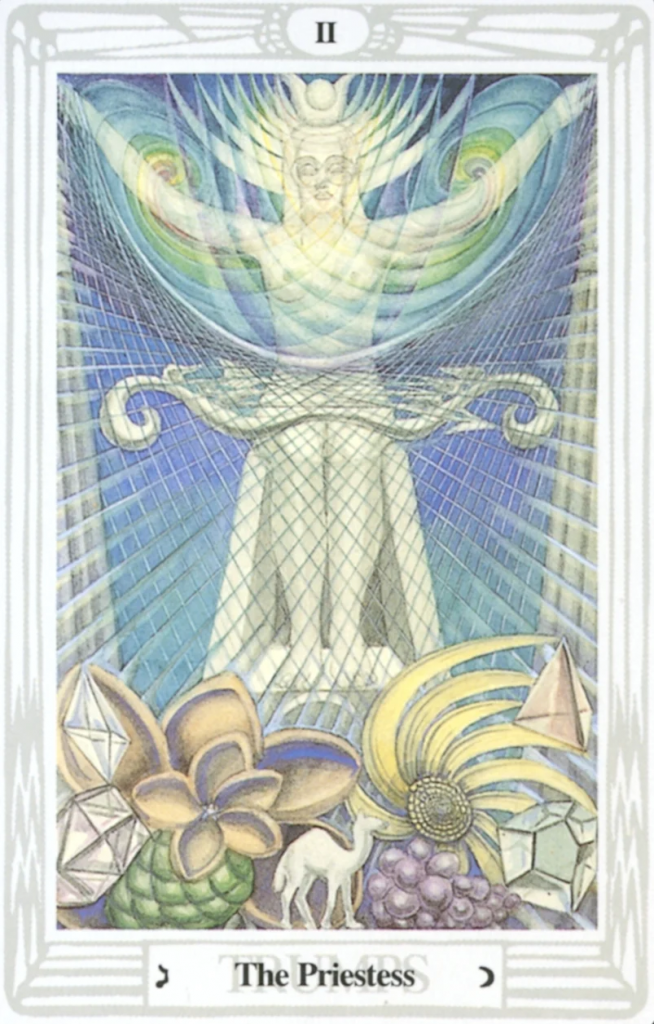
Tarot Card for October 22: The Priestess

The Priestess

The Priestess rules our intuitive faculties. She helps us to see what is really in front of us, rather than seeing what appears to be there. She’s a gentle and tranquil influence who can help us develop our inner psychic abilities.So on her day, the best thing that we can do is practise entering into the silence in order that we can ‘hear’ our intuition. Spend a little time in quiet contemplation, still the incessant chatter that is part of everyday life, and just let your mind release the things it knows about that you haven’t had the opportunity to catch up with recently.This is something that so many of us don’t make time to do often enough. As a result, we miss an enormous amount of information that we pick up through every waking hour, and store automatically. Our ancient ability to read the signs of life still remains, whether we use it or not. But often we can be taken unawares by material that has slipped directly from our intuition directly into the subconscious because we don’t spend long enough relating to subliminal messaging.So, on the Priestess’s day, try to remember to be open to the hidden type of message that she is so adept at assessing. Give yourself time to meditate and to listen to yourself. You’ll be surprised at what you learn!Affirmation: “My intuition works like a trustworthy friend.”

Zeteo’s new documentary: ‘Israel’s ‘Reel Extremism’

Zeteo Jul 1, 2024 Exciting news! Zeteo is releasing its first original documentary, a Basement Films production. ‘Israel’s Reel Extremism’ journeys through Israeli society after months of mass violence in Gaza, through the prism of viral social media posts and exclusive interviews with the soldiers behind them. It’s already been met with rave reviews, but we need your help in getting this film to the widest audience possible. Watch the trailer and, if you believe this film is important to share, help us by becoming a paid subscriber today at zeteo.com. Coming next week! www.ReelIsrael.film

WATCH: ‘Israel’s Reel Extremism’ – A Startling New Documentary from Zeteo by Mehdi Hasan

An ‘extraordinary’ film on Israel examining viral social media posts from Gaza – including exclusive interviews with the Israeli soldiers behind them.

Watch full video here: Read on Substack

Don’t Waste Your Wildness

By Maria Popova (themarginalian.org)

Once, while writing my first book, I lived on a lush volcanic island balding with so-called civilization, lawnmowers muffling its birdsong to turn its jungles into golf courses.

I watched waves taller than factory chimneys break into cliffs black as spacetime, making mansions look like a maquette of life.

I beheld the ancient indifferent faces of turtles older than the light bulb hatching their young under the NO TRESPASSING sign on a billionaire’s private beach.

I looked into the open mouth of the volcano taunting the sky in the language of time.

I kept thinking about how those fault lines between the elemental and the ephemera of human life most readily expose our gravest civilizational foible: regarding nature as something to conquer, to neuter, to tame, “forgetting that we are nature too,” forgetting that we are taming our own wildness, neutering our very souls.

Jay Griffiths offers a mighty antidote in her 2006 masterpiece Wild: An Elemental Journey (public library) — the product of “many years’ yearning” pulling her “toward unfetteredness, toward the sheer and vivid world,” learning to think with the mind of a mountain and feel with the heart of a forest, searching for “something shy, naked and elemental — the soul.” What emerges is both an act of revolt (against the erasure of the wild, against the domestication of the soul) and an act of reverence (for the irrepressible in nature, for landscape as a form of knowledge, for life on Earth, as improbable and staggering as love.)

Art by Arthur Rackham for a rare 1917 edition of the Brothers Grimm fairy tales. (Available as a print.)

A century and a half after Thoreau “went to the woods to live deliberately” (omitting from his famed chronicle of spartan solitude the fresh-baked doughnuts and pies his mother and sister brought him every Sunday), Griffiths spent seven years slaking her soul on the world’s wildness, from the Amazon to the Arctic, trying “to touch life with the quick of the spirit,” impelled by “the same ancient telluric vigor that flung the Himalayas up to applaud the sky.” She writes:

I was looking for the will of the wild… The only thing I had to hold on to was the knife-sharp necessity to trust to the elements my elemental self.

I wanted to live at the edge of the imperative, in the tender fury of the reckless moment, for in this brief and pointillist life, bright-dark and electric, I could do nothing else.

[…]

The human spirit has a primal allegiance to wildness, to really live, to snatch the fruit and suck it, to spill the juice. We may think we are domesticated but we are not.

It all began by getting lost in “the wasteland of the mind, in a long and dark depression” that left her unable to walk or write, “pathless, bleak and bewildered, not knowing which way to turn.” (A decade later, Griffiths would write an entire book about that discomposing yearlong episode of manic depression.) Searching for “the octaves of possibilities,” reckoning with “the maybes of the mind,” yearning for release from the supermarket aisles of the psyche, she set out to find the savage antipode to “this chloroform world where human nature is well schooled, tamed from childhood on, where the radiators are permanently on mild and the windows are permanently closed.” She writes:

I felt an urgent demand in the blood. I could hear its call. Its whistling disturbed me by day and its howl woke me in the night. I heard the drum of the sun. Every path was a calling cadence, the flight of every bird a beckoning, the color of ice an invitation: come. The forest was a fiddler, wickedly good, eyes intense and shining with a fast dance. Every leaf in every breeze was a toe tapping out the same rhythm and every mountaintop lifting out of cloud intrigued my mind, for the wind at the peaks was the flautist, licking his lips, dangerously mesmerizing me with inaudible melodies that I strained to hear, my eyes yearning for the horizon of sound. This was the calling, the vehement, irresistible demand of the feral angel — take flight. All that is wild is winged — life, mind and language — and knows the feel of air in the soaring “flight, silhouetted in the primal.”

Art from An Almanac of Birds: Divinations for Uncertain Days. (Available as a print and as stationery cards, benefitting the Audubon Society.)

She lived for months with a hill tribe in the forests of the Burmese border, lost all her toenails climbing Kilimanjaro, met “cannibals infinitely kinder and more trustworthy than the murderous missionaries who evangelized them,” felt “what it is like to whimper with sheer loneliness on a Christmas Day in a jungle on the other side of the world,” learned to live in the seasons and the elements, “right within nature because there is nothing that is not nature.”

She reflects:

To me, humanity is not a strain on wilderness as some seem to think. Rather the human spirit is one of the most striking realizations of wildness. It is as eccentrically beautiful as an ice crystal, as liquidly life-generous as water, as inspired as air. Kerneled up within us all, an intimate wildness, sweet as a nut. To the rebel soul in everyone, then, the right to wear feathers, drink stars and ask for the moon… We are — every one of us — a force of nature, though sometimes it is necessary to relearn consciously what we have never forgotten; the truant art, the nomad heart.

Moonlight, Winter by Rockwell Kent. (Available as a print and as stationery cards.)

Pulsating beneath the passionate poetics is an indictment and a beckoning. A decade after Maya Angelou channeled the selfsame polarity of human nature in her staggering space-bound poem “A Brave and Startling Truth,” Griffiths writes:

There are two sides: the agents of waste and the lovers of the wild. Either for life or against it. And each of us has to choose.

Reclaiming our wildness emerges as an act of courage and resistance amid the conspicuous consumption by which late-stage capitalism drugs us into mistaking having for being, anesthetizing the urgency of our mortality — that wellspring of everything beautiful and enduring we make. What Griffiths offers is a wakeup call from this near-living, a spell against apathy, against air con and asphalt, against our self-expatriation from our own nature:

What is wild cannot be bought or sold, borrowed or copied. It is. Unmistakable, unforgettable, unshamable, elemental as earth and ice, water, fire and air, a quintessence, pure spirit, resolving into no constituents. Don’t waste your wildness: it is precious and necessary. In wildness, truth. Wildness is the universal songline, sung in green gold, which we recognize the moment we hear it. What is wild is what drives the honeysuckle, what wills the dragonfly, shoves the wind and compels the poem. Wildness is insatiable for life; neither truly knows itself without the other. Wildness… sucks up the now, it blazes in your eyes and it glories in everyone who willfully goes their own way.

Complement Wild — a vivifying read in its entirety — with Wendell Berry’s timeless poem “The Peace of Wild Things” and artist Rockwell Kent, writing a century earlier, on wilderness and creativity, then revisit Robert Macfarlane and Jackie Morris’s magnificent rewilding of the human spirit.