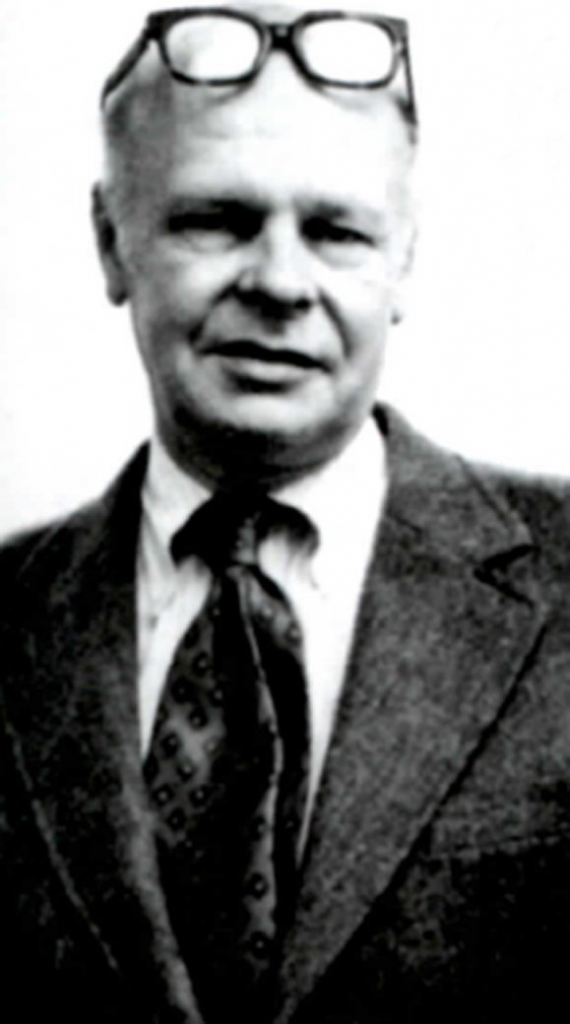
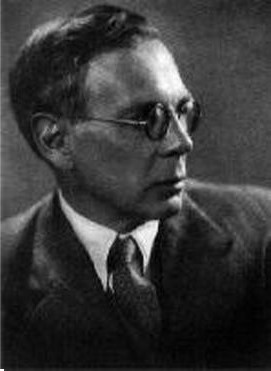
“I know what I’m asking is impossible. But in our time, as in every time, the impossible is the least that one can demand-and one is, after all, emboldened by the spectacle of human history in general, and the American Negro history in particular, for it testifies to nothing less than the perpetual achievement of the impossible.”
James Arthur Baldwin (August 2, 1924 – December 1, 1987) was an American writer and civil rights activist who garnered acclaim for his essays, novels, plays, and poems. His 1953 novel Go Tell It on the Mountain has been ranked among the best English-language novels. Wikipedia
HAND = the body part at the end of the arm of a human, ape, or monkey; assistance or aid especially involving physical effort; skill or ability
QUESTION: Do you pay attention to your hands?
STORY: Our hands are incredible! My hands helped me to make a living for many, many years. (I was a fast typist.) When I was an Art Apprentice for 5 years I learned an amazing drawing skill using my eyes, mind and hands in a whole new way. To express this simply, I softly, gently draw lines expressing what my (Third) eye sees and heart feels as I observe the world before me without judgment or interpretation. Over the years, my hands have developed a little bit of Raynaud’s Disease – probably formed when I sit at a computer resting the lower palm of my hands on the table. A pressure there stops blood flowing to my fingers. It’s not bad but my hands do get cold easily. It is wise for us all to pay attention to our hands. How are your hands? They are so valuable! Love them!
QUOTE
“It is in your hands to create a better world for all who live in it.” ~ Nelson Mandela
“The hand expresses what the heart already knows.” ~ Samuel Mockbee
“A man who works with his hands is a laborer; a man who works with his hands and his brain is a craftsman; but a man who works with his hands and his brain and his heart is an artist.” ~ Louis Nizer
“The final forming of a person’s character lies in their own hands.” ~ Anne Frank
EXERCISE
STOP.
Sit quietly. Assume an erect posture. Sense the breath.
Sit calmly and relax your hands.
Open your hands and look at them.
Get your pen and paper and write words or draw lines expressing what you see in your hands.
Move forward into your day paying attention to your hands and to your ability to handle what comes.
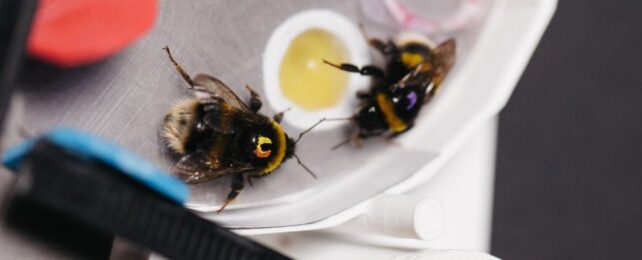
Two bees solving the two-step puzzle. (Queen Mary University of London)
The humble bumblebee is proof that brain size isn’t everything.
This little insect with its wee, seed-sized brain has shown a level of collective intelligence in experiments that scientists thought was wholly unique to humans.
When trained in the lab to open a two-step puzzle box, bumblebees of the species Bombus terrestris could teach the solution to another bee that had never seen the box before.
This naive bee would not have solved the puzzle on its own. To teach the ‘demonstrator’ bees the non-intuitive solution in the first place, researchers had to show them what to do and offer them a reward after the first step to keep them motivated.
“This finding challenges a common opinion in the field: that the capacity to socially learn behaviors that cannot be innovated through individual trial and error is unique to humans,” write the team of researchers based in the United Kingdom and United States.
Humans have a long history of ‘moving the goalposts’ on what sets our species apart from all others.
Some of these cultural behaviors even show signs of refinement and improvement over time. Homing pigeons, for instance, learn from each other and adjust their culture’s flight paths year on year.
An influential way to move the goalposts on human intelligence is to say that humans are unique from other animals because we can learn things from each other that we could not invent independently.
Think of the device you are reading this article on right now. No one human can invent all its parts and mechanics from scratch on their own and in one lifetime. It’s taken decades of work and refinement to get to this advanced stage. Even the very act of reading is a skill that generations of humans have built upon little by little.
Obviously, no animal can put together an iPhone or read an article on animal intelligence. But at a basic level, bumblebees join chimpanzees in “cast[ing] serious doubt on this supposed human exceptionalism,” writes Alex Thornton, an ecologist at the University of Exeter, in a review of the bumblebee research for Nature.
Chimpanzees have large brains and rich cultural lives, but the discovery among bumblebees, Thornton argues, is “all the more remarkable because it focuses not on humanity’s primate cousins, but on… an animal with a brain that is barely 0.0005 percent of the size of a chimpanzee’s.”
The collective intelligence of their hive mind is also not to be dismissed.
To test it, behavioral scientist Alice Bridges from Queen Mary University of London and colleagues housed colonies of bumblebees with a two-step puzzle for a total of 36 or 72 hours over 12 or 24 consecutive days, with no human help.
After all that time, the bees could not figure out how to get to the sugary reward. Bumblebees spend on average about 8 days foraging in their lifetimes, so it’s as if they had up to a third of their lifetime foraging time to work on the puzzle.
In the image below, you can see the puzzle. The yellow circle contains a drop of sugar under a plastic lid. Bees can get to it by pushing the red tab, but only once the blue tab has been pushed out of the way.
The two-step puzzle box with a bee pushing the red tab. (Queen Mary University of London)
It took a human to painstakingly show them the way, and this was only possible using an extra reward. But once one bee figured it out, they could teach others how to move the two tabs to retrieve a sugary treat.
A similar experiment on chimps was also published recently in Nature Human Behavior. Both the vertebrate and invertebrate case studies showed a sharing of ideas that were exceptionally hard to learn alone.
Of course, this behavior wasn’t observed in the wild. It had to be taught to the bees and chimps first. But the findings leave open the possibility that if there were a rare, once-in-a-lifetime innovator in chimp or bee society – an Einstein among bees – their ideas might stick around in animal culture and be used for generations to come.
Bees’ famous honey waggle dance, pointing out the distance, direction, and quality of sources of food, for instance, is a behavior that was once thought to be purely instinctive, but it now appears to be somewhat shaped by social influences.
In 2017, researchers also trained bumblebees to roll a ball into a goal for a reward. To score, the insects had to learn from each other and remedy their previous mistakes. And so they did.
The newest experiment, Thornton writes, “suggests that the ability to learn from others what cannot be learnt alone should now join tool use, episodic memory (the ability to recall specific past events) and intentional communication in the scrapheap” of explanations for human cognition and culture.
Recently, I’ve been inspired to start writing after my meditation. Some of it’s good, and some of it is just very weird. But it’s always interesting.
I’ve decided in the spirit of Love and sharing to share these divinely inspired words.
Hope you enjoy them! Let me know if they move you!
Why would you have grievances?
Why would you have qualms?
Why would bitterness fill your heart, and block the flow of love?
Salvation is simple.
There is but one problem — and one solution.
Welcome the miracle.
Let love flow.
Let Love flow into you and through you. Let it flow to everyone and everything. Let its divine power dissolve the walls, the barriers that chain you in — that bind you to the world.
Let His divine grace wash you clean.
Let your tears release you from fear.
Stop cherishing the grievances that the ego has created to tell you who you are.
Know that you are one with God Eternally connected in the spirit.
Give up the pain you have accepted as truth.
Give up the limitations that you see for yourself.
You are without limit
And your Kingdom is unending.
Want more? Subscribe to The Pickleball Philosopher on Substack!
“We possess ideas, but we are possessed by feelings. They lie too deep for understanding, astir with their own secret life and carrying us with them.” ― Thomas Flanagan, The Year of the French
Thomas Bonner Flanagan (November 5, 1923 – March 21, 2002) was an American university professor at the University of California at Berkeley and a novelist. Wikipedia
Charles Walter Stansby Williams (20 September 1886 – 15 May 1945) was an English poet, novelist, playwright, theologian and literary critic. Most of his life was spent in London, where he was born, but in 1939 he moved to Oxford with the university press for which he worked and was buried there following his early death.
Early life and education
Charles Williams was born in London in 1886, the only son of (Richard) Walter Stansby Williams (1848–1929) and Mary (née Wall). His father Walter was a journalist and foreign business correspondent for an importing firm, writing in French and German,[1][2] who was a ‘regular and valued’ contributor of verse, stories and articles to many popular magazines.[3] His mother Mary, the sister of the ecclesiologist and historian J. Charles Wall,[3] was a former milliner (hatmaker),[4] of Islington. He had one sister, Edith, born in 1889. The Williams family lived in ‘shabby-genteel’ circumstances, owing to Walter’s increasing blindness and the decline of the firm by which he was employed, in Holloway.[4] In 1894 the family moved to St Albans in Hertfordshire, where Williams lived until his marriage in 1917.[5]
Educated at St Albans School, Williams was awarded a scholarship to University College London, but he left in 1904 without attempting to gain a degree due to an inability to pay tuition fees.
Williams began work in 1904 in a Methodist bookroom. He was employed by the Oxford University Press (OUP) as a proofreading assistant in 1908 and quickly climbed to the position of editor. He continued to work at the OUP in various positions of increasing responsibility until his death in 1945. One of his greatest editorial achievements was the publication of the first major English-language edition of the works of Søren Kierkegaard.[6] His work was part of the literature event in the art competition at the 1924 Summer Olympics.[7]
Although chiefly remembered as a novelist, Williams also published poetry, works of literary criticism, theology, drama, history, biography, and a voluminous number of book reviews. Some of his best known novels are War in Heaven (1930), Descent into Hell (1937), and All Hallows’ Eve (1945).[8]T. S. Eliot, who wrote an introduction for the last of these, described Williams’s novels as “supernatural thrillers” because they explore the sacramental intersection of the physical with the spiritual while also examining the ways in which power, even spiritual power, can corrupt as well as sanctify.
All of Williams’s fantasies, unlike those of J. R. R. Tolkien and most of those of C. S. Lewis, are set in the contemporary world. Williams has been described by Colin Manlove as one of the three main writers of “Christian fantasy” in the twentieth century (the other two being C.S. Lewis and T. F. Powys).[9] More recent writers of fantasy novels with contemporary settings, notably Tim Powers, cite Williams as a model and inspiration.
W. H. Auden, one of Williams’s greatest admirers, reportedly re-read Williams’s extraordinary and highly unconventional history of the church, The Descent of the Dove (1939), every year.[10] Williams’s study of Dante entitled The Figure of Beatrice (1944) was very highly regarded at its time of publication and continues to be consulted by Dante scholars today. His work inspired Dorothy L. Sayers to undertake her translation of The Divine Comedy. Williams, however, regarded his most important work to be his extremely dense and complex Arthurian poetry, of which two books were published, Taliessin through Logres (1938) and The Region of the Summer Stars (1944), and more remained unfinished at his death. Some of Williams’s essays were collected and published posthumously in Image of the City and Other Essays (1958), edited by Anne Ridler.
Williams gathered many followers and disciples during his lifetime. He was, for a period, a member of the Salvator Mundi Temple of the Fellowship of the Rosy Cross. He met fellow Anglican Evelyn Underhill in 1937 and would later write the introduction to her published Letters in 1943.[11]
When World War II broke out in 1939, Oxford University Press moved its offices from London to Oxford. Williams was reluctant to leave his beloved city, and his wife Florence refused to go. From the nearly 700 letters he wrote to his wife during the war years, a generous selection has been published — “primarily… love letters,” the editor calls them.[12]
But the move to Oxford did allow him to participate regularly in Lewis’s literary society known as the Inklings. In this setting Williams was able to read (and improve) his final published novel, All Hallows’ Eve, as well as to hear J. R. R. Tolkien read aloud to the group some of his early drafts of The Lord of the Rings. In addition to meeting in Lewis’s rooms at Oxford, they also regularly met at The Eagle and Child pub in Oxford (better known by its nickname “The Bird and Baby”). During this time Williams also gave lectures at Oxford on John Milton, William Wordsworth, and other authors, and received an honorary M.A. degree.
Williams is buried in Holywell Cemetery in Oxford. His headstone bears the word “poet” followed by the words “Under the Mercy”, a phrase often used by Williams himself.[13]
In 1917 Williams married his first sweetheart, Florence Conway, following a long courtship during which he presented her with a sonnet sequence that would later become his first published book of poetry, The Silver Stair.[14][15] Their son Michael was born in 1922.
Williams was an unswerving and devoted member of the Church of England, reputedly with a tolerance of the scepticism of others and a firm belief in the necessity of a “doubting Thomas” in any apostolic body.[16]
Although Williams attracted the attention and admiration of some of the most notable writers of his day, including T. S. Eliot and W. H. Auden, his greatest admirer was probably C. S. Lewis, whose novel That Hideous Strength (1945) has been regarded as partially inspired by his acquaintance with both the man and his novels and poems. Williams came to know Lewis after reading Lewis’s then-recently published study The Allegory of Love; he was so impressed he jotted down a letter of congratulation and dropped it in the mail. Coincidentally, Lewis had just finished reading Williams’s novel The Place of the Lion and had written a similar note of congratulation. The letters crossed in the mail and led to an enduring and fruitful friendship.
Theology
Williams developed the concept of co-inherence and gave rare consideration to the theology of romantic love. Falling in love for Williams was a form of mystical envisioning in which one saw the beloved as he or she was seen through the eyes of God. Co-inherence was a term used in Patristic theology to describe the relationship between the human and divine natures of Jesus Christ and the relationship between the persons of the blessed Trinity.[17][18] Williams extended the term to include the ideal relationship between the individual parts of God’s creation, including human beings. It is our mutual indwelling: Christ in us and we in Christ, interdependent. It is also the web of interrelationships, social and economic and ecological, by which the social fabric and the natural world function.[19] But especially for Williams, co-inherence is a way of talking about the Body of Christ and the communion of saints. For Williams, salvation was not a solitary affair: “The thread of the love of God was strong enough to save you and all the others, but not strong enough to save you alone.”[citation needed] He proposed an order, the Companions of the Co-inherence, who would practice substitution and exchange, living in love-in-God, truly bearing one another’s burdens, being willing to sacrifice and to forgive, living from and for one another in Christ.[20] According to Gunnar Urang, co-inherence is the focus of all Williams’s novels.[21]
OTHER = different; the second of two; not the same; alien
QUESTION: How do you see OTHERS?
STORY: Typically we all identify ourselves as physical beings and when we do this we see OTHER physical beings (neighbors, partners, friends, co-workers) as separate from us. We label OTHERS: good/bad, smart/dumb, kind/unkind, and lots more. I’ve lived with my partner for 30 years. She is different from me in a number of ways. Yes we squabble, but we get along pretty well because our differences really provide valuable skills, talents and abilities that we ourselves would not have. She likes to garden, build stuff and cook. I like to keep the kitchen clean, tend the chickens, write my next book and paint and draw. In The Prosperos we practice tools to RE-IDENTIFY ourselves as Consciousness. This helps us to open up to our Higher Self which sees the ONENESS of all life. OTHERS are really just mirrors of the parts of ourselves that we do not see.
QUOTES
“Mastering others is strength. Mastering yourself is true power.” ~ Lao Tzu
“The most satisfying thing in life is to have been able to give a large part of one’s self to others.” ~ Pierre Teilhard de Chardin
“Life’s most persistent and urgent question is, ‘What are you doing for others?” ~ Martin Luther King, Jr.
“People who look down on other people don’t end up being looked up to.” ~ Robert Half
EXERCISE
STOP.
Sit quietly. Assume an erect posture.
Sense the breath. Relax.
Sit calmly and bring to mind other people that are in your life – partners, neighbors, friends, co-workers, relatives.
Get your pen and paper and write words or draw lines expressing how OTHERS help you to grow in understanding the oneness of life.
Move forward into your day seeing other people as mirrors of the different parts of you.
New Thinking Allowed with Jeffrey Mishlove • Mar 9, 2024 This video is a special release from the original Thinking Allowed series that ran on public television from 1986 until 2002. It was recorded in about 1992. It will remain public for only one week. Channeling is one of several approaches to intuition. William Kautz, ScD, is founder of the Center for Applied Intuition and co-author, with Kevin Ryerson, of Channeling: The Intuitive Connection. Although he “plays the game” and treats channeled “entities” as if they were real, he is more concerned with the quality of their information. He says this quality improves when one approaches with a genuine need rather than mere curiosity. Now you can watch all of the programs from the original Thinking Allowed Video Collection, hosted by Jeffrey Mishlove. Subscribe to the new Streaming Channel (https://thinkingallowed.vhx.tv/) and watch more than 350 programs now, with more, previously unreleased titles added weekly. Free month of the classic Thinking Allowed streaming channel for New Thinking Allowed subscribers only. Use code THINKFREELY.
May everything that occurs today be a part of God‘s plan
Everything that happens is part of a mysterious curriculum that is designed for my personal growth. I will be drawn to situations that further my greater learning. May I be in every situation today a more perfect version of myself, so that I may learn through joy.
I am invited to play life at a higher level – to be strong where I have been weak, to be healed where I have acted from my wounds, to give love where before I have withheld it. On this day may I serve God’s Will for me and for all living things.
Dear God, I surrender all that happens today, May every encounter and every occurrence Fulfill Your Will for everyone. Amen
May everything that occurs today be a part of God‘s plan
“A compassionate heart still feels anger, greed, jealousy. But it accepts them for what they are and lets them arise and pass without identifying with or acting upon them.”
Stephen Batchelor (b.1953) British Author
AN OPPORTUNITY FOR DAILY REFLECTION BROUGHT TO YOU BY THE SCHOOL OF PRACTICAL PHILOSOPHY
Consciousness, spirituality, biography, sexuality, androgyny, futurism, space, the arts, science, astrology, democracy, humor, books, movies and more


 Two bees solving the two-step puzzle. (Queen Mary University of London)