We are wired to make sense of the world through story and myth.
In millions of years of evolution, we didn’t have writing, books, or the internet. Our ancestors would gather around the fire and tell stories. This is how knowledge has been passed on for tens of thousands of years.
This is how we really learn.
Hero’s Journey – A Template For Making Sense Of The World
The reason Joseph Campbell has become so famous is that he has captured into a framework something every human being resonates with.
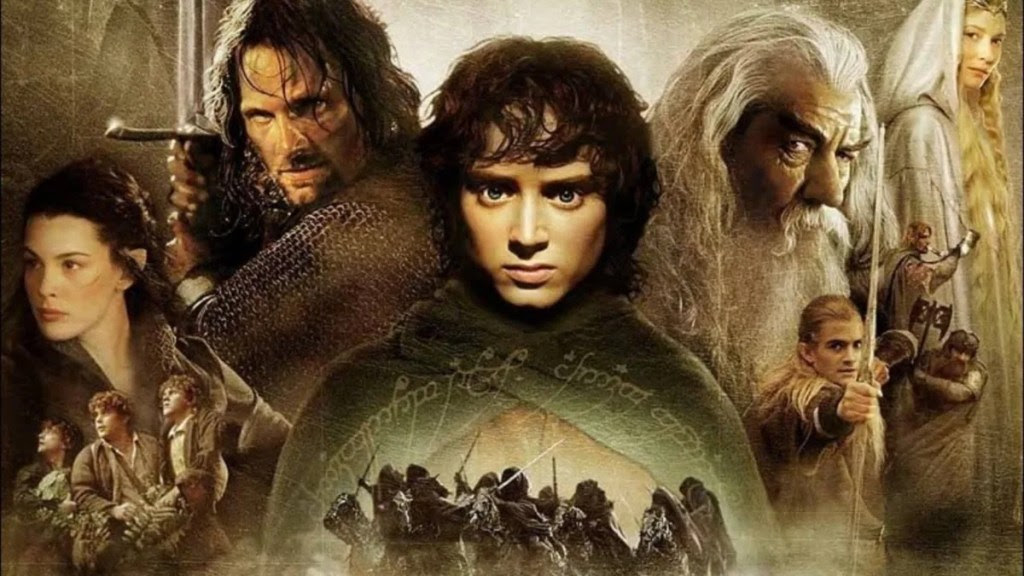
The Hero’s Journey is the common template of a broad category of tales that involve a hero who goes on an adventure, and in a critical crisis wins a victory, and then comes home changed or transformed.
The Hero’Journey framework strikes a chord in each single one of us, no matter in which field we apply it.
Books, stories, or Hollywood blockbusters – are all designed after the Hero’s Journey: the story begins when the Hero is presented with a great challenge – to fight the dragon, save the princess, – or in the modern day, to get a job, find a partner, make friends, or recover from addiction – and then follows the hero’s footsteps in overcoming this challenge.
The Hero’s Journey has 12 stages. The 12 stages of the Hero’s Journey – from the “call to adventure” to “resolution” – correspond to the 12 aspects planets make in their cycle.
Hero’s Journey And The Mars Cycle
The Hero’s Journey astrological analogy we use is the Sun-Mars synodic cycle. When we say “hero” that’s of course both the hero and the heroine. We all have Mars in our chart, regardless of our gender.
Why do we use the Mars cycle to describe aspects and the Hero’s Journey?
Because Mars is the first planet to make a full circle around the Sun, as seen from Earth.
If Mercury and Venus never travel too far from the Sun (Mercury never travels more than 28° from the Sun, Venus 48°), – Mars is the first planet to apply sextiles, squares, quincunxes and oppositions to the Sun.
Mars is the planet that pushes us outside of the comfort of our “Ordinary World” into the “Special World”. When we don’t take action, nothing happens. When we instead answer Mars’ call to adventure we grow and evolve. We become heroes.
If we wouldn’t have aspects, there would be no movement, and there would be no life.
Astrological aspects are an abstraction of our soul’s movement through space and time.
The Mars cycle is the allegorical Hero’s Journey, describing how we interact with the world, and how we go about life.
Our life is nothing else but a succession of hero journeys, and the aspects describe the phase of the hero’s journey we are in.
Aspects And The Hero’s Journey
The “Aspects And The Hero’s Journey” webinar will help you look at aspects and your natal chart in ways you’ve never done before.
The reason why “Aspects And The Hero’s Journey” is such an effective way of making sense of astrological aspects is that it follows the same narrative we’ve been using to make sense of life for tens of thousands of years.
If you’re interested in the “Aspects And The Hero’s Journey” webinar make sure you join us soon.
We will cap the registration at 100 people (half of the spots have filled up). If you click on the link and the registration is open, this means there are still seats available.
We have a very important transit slowly applying: Pluto square the Lunar Nodes.
Pluto is now at 0° Aquarius, and the Lunar Nodes are at 3° Taurus and 3° Scorpio.
Pluto will square the Nodes for the following months; the exact square will happen on July 23rd, 2023, when Pluto will be back in Capricorn at 29°, and the Lunar Nodes at 29° Aries and Libra.
This is a potent transit we are already feeling, because Jupiter – currently at 2° Taurus, and approaching the North Node at 3° Taurus – is adding an extra oomph to an already intense transit.
What to expect when Pluto squares the Lunar Nodes?
The Lunar Nodes – Our Inner Compass
The Lunar Nodes play a special role in astrology. They are not actual planets or physical bodies like the Moon or the asteroids. They are mathematical points found at the intersection of the path of the Sun with the path of the Moon.
The Nodes are basically derived from the Sun and the Moon – the most important astrological archetypes. The Sun and the Moon represent our core identity – Sun, our spiritual, Yang identity, and the Moon, our physical, Yin identity.
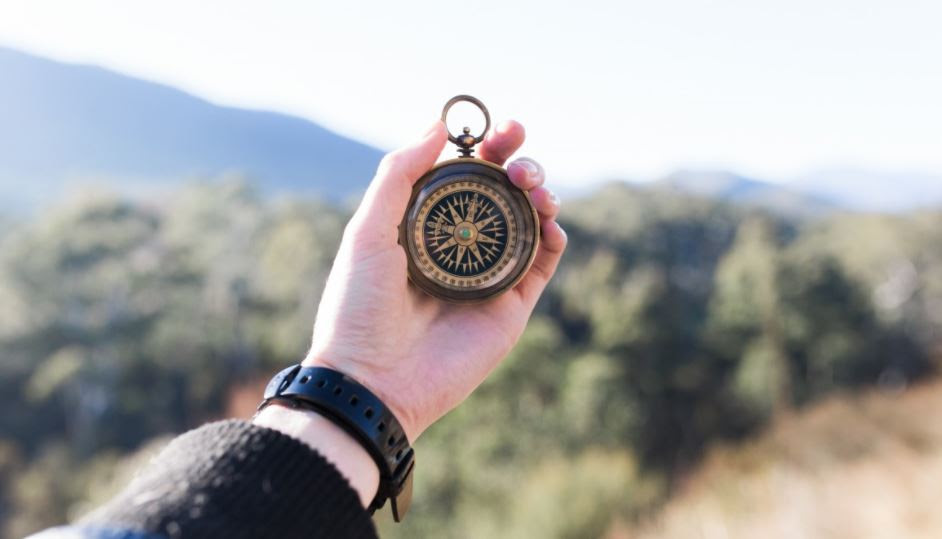
The Nodes work in the background, supporting the agenda of the Sun and the Moon. Think of the Lunar Nodes as a compass.
When we get lost, when we deviate from our physical – and spiritual – path, we use the compass to recalibrate.
Our life is a windy road with ups and downs. The Nodes, just like a compass, will always show us the overall direction (the North Node will point towards the North, or the future, and the South Node towards the South, or the past).
When we get lost, we use the Lunar Nodes to come back on track. Our life is a perpetual movement from the South to the North Node and back.
The Lunar Nodes show up a lot in family members’ synastries. When we have a Lunar Nodes transit, we usually have an important family event.
The Lunar Nodes suggest that we might be more tightly linked to our family members than we think we are. The Lunar Nodes are the invisible family ties; who we are (the Sun and the Moon) is also a reflection of the genetic imprint of our parents and ancestors.
In our chart, the South Node points to behaviors, mental models and genetic memories we have inherited from our family. And the North Node (the opposite point), to our opportunities to adjust our karma and bring in new life, new opportunities, and new genetic code.
What about Pluto?
Pluto is the planet of complete and total transformation. Pluto strips everything down to the barest basics. Pluto is the planet of Truth – Pluto will relentlessly dig to find the Ultimate Truth, no matter how deep it has to go into the underground.
What happens when we have a Pluto aspect? The planet – or astrological archetype, like in the case of the Nodes – is stripped of superficial layers and reduced to its core, atomic function. If Pluto makes an aspect with Venus for example, Pluto reduces Venus to her core Venusian expression.
Pluto Square The Lunar Nodes Nodes – One Step Forward
Now that Pluto aspects the Lunar Nodes, Pluto will again reduce the North and the South Node to their basic compass function.
Pluto squares the Nodes – this is a transit that evolutionary astrologers call a “skipped step”.
Pluto is at the midpoint of the two Lunar Nodes, so it’s with one foot in the past, and the other in the future. Pluto acts like a bridge, like an evolutionary step forward.
Pluto square the Lunar Nodes’ mandate is to heal generational wounds, and re-write healthier, more constructive behavioral patterns.
The North Node in Taurus is concerned with the future. Who am I growing into? Who do I want to become? The South Node in Scorpio is our past. What’s in the baggage I carry? What do I really need, and what can I drop? What’s a structural part of my identity – and what is not?
Pluto square the Lunar Nodes will help us understand the subtle ways our identity is shaped by our upbringing, by our family and our formative years.
We believe we are 100% unique individuals, but genetically, at least, we are 50% our father, and 50% our mother. We are a unique gene combination, that’s true, but who we are is not entirely our choice. At least not the South Node part of our identity.
Pluto square the Lunar Nodes will expose the limitations of behaviors and mental models (South Node), that have been pushed onto us, but that no longer serve us.
Pluto square the Lunar Nodes will also expose those so-called ideals or goals (North Node) that are not necessarily an expression of who we truly are (easy to get confused when we grow up with top-down education and copy-paste Instagram role models).
Pluto is now at 0° Aquarius – the very first degree of Aquarius. Aquarius is the sign of the collective. Aquarius is the water bearer – the most human sign of the zodiac. Pluto’s previous transits in Aquarius have coincided with the emergence of humanism, respectively democracy.
Pluto Square The Lunar Nodes Nodes – What Does It Mean To Be Human?
That’s a fair question for Pluto at 0° Aquarius. In our desire to spread Aquarius’ humanitarian spirit we may come up with various initiatives to make sure everyone is looked after.
But when we help some people we automatically exclude others. How do we make our judgment calls? And how many of these judgment calls are based on our own Lunar Nodes conditioning?
Perhaps you too have been judged based on who your parents are, or from what kind of family or culture you came from. People didn’t see Sarah, or Tom – but the “so and so’s child”. How many times have you judged others based on their upbringing?
What does it mean to be human? To come from a certain cultural background? To like certain music? Have a particular fashion style? Follow a particular spiritual or political movement?
Perhaps being human means none of this. Being human is what’s left when we are stripped of all these layers.
Being human is not what makes us different from each other – but what makes us similar. What we all share in common. We all want to be seen for who we truly are – for our human essence.
When we exclude – or paradoxically, when we try to include everyone, we move away from what really matters – our humanity.
When we enforce rules to protect our humanity, we go against the very essence of humanity and adulthood, treating people like children.
I remember some research done in the insurance industry. Companies that asked for multiple data points, signaling that their customers are future delinquents – got more claims and frauds than companies that had more relaxed underwriting requirements and treated their customers with trust and respect.
When we ask our friends, coworkers, neighbors, customers, or Facebook group members to “follow the rules”, “be kind” or “don’t spam” guess what – they will unconsciously look for ways to bend the rules, to be unkind and to spam.
When we tell people to follow rules, we operate from the Capricorn-Cancer, parent-child axis. And when we’re the parent, the other party becomes the child.
Pluto In Aquarius – A New Paradigm
When instead we operate from the Aquarius-Leo axis, we act from our humanity-individuality axis.
We trust the individual because we know we’re all in this together (Aquarius), at the same time respecting their individual choices (Leo).
With Pluto squaring the Nodes both from 0° Aquarius and from 29° Capricorn, we will learn some important lessons around what it means to be human, sovereignty and personal responsibility (0° Aquarius) vs. old lessons around power dynamics, victimhood, and parent-child behavioral models.
Pluto will spend a few more months at 29° Capricorn – and then it will be back in Aquarius for good.
We still have time to tie loose ends and reflect on what we’ve learned from the 20-year Pluto in Capricorn era, and what we want from Pluto in the Aquarius era.
And the Pluto square Lunar Nodes transit is an excellent opportunity to reframe past-due conditioning, and change our life for the better.
Aspects And The Hero’s Journey
If you like Astro Butterfly’s approach to astrology, consider registering for the upcoming “Aspects And The Hero’s Journey” webinar.
Aspects are the backbone of astrology. The natal chart is made of aspects. Transits are nothing else but aspects. When you understand what aspects mean, things start to “click”.
Learn more about the “Aspects And The Hero’s Journey” webinar and join us here:
TALLAHASSEE, FL—In a sweeping effort to curtail what he called “woke gender ideology,” Florida Gov. Ron DeSantis signed a new bill into law Wednesday banning men from becoming nurses. “Imagine how disturbed a child would be at the doctor’s office if a nurse stepped into the room to take their temperature and it was a man—how would a parent even begin to explain that?” said DeSantis, who slammed the practice of letting men work in the field of nursing as “biologically unnatural” and “pure lunacy, plain and simple.” “That kind of nonsense might fly in liberal California, but not here. Any man who would put on nursing scrubs is either severely mentally ill or some kind of predator. Men are doctors, and women are nurses. It’s simple biology. Now physician assistants, we’re putting a pause on that one until we figure it out.” At press time, Tennessee had reportedly followed suit by passing a new law completely banning women from the workforce.
Sherilyn Connelly Aug 9, 2017 Originally broadcast on August 22, 1967 as the inaugural edition of the short-lived CBS News series “Who, What, Where, When, Why.”
Eternalised May 25, 2023 #psychology#jung#foolThe fool is one of the most relatable, intriguing and recurring figures in the world. There have been fools who have caused surprise and laughter since time immemorial. We worship folly by seeing it in people and in the world and by willingly displaying it in ourselves. It is one of the timeless archetypes, which we all inherit at birth. Many of us suffer from the absence of the fool in our lives. Frenetic and upright, we take ourselves too seriously. As William Shakespeare said, “All the world’s a stage, and all the men and women merely players.” Forgetting that playfulness is a basic human need, we wonder why we so easily become bored and exhausted, losing all capacity for spontaneity, authenticity, and passion. The antidote to this would be to give the fool archetype some space in our lives. “The soul demands your folly; not your wisdom.” – Carl Jung
The Pooka, or in Irish Puca, (goblin) is a phantom fairy creature that features in Celtic folklore and fairytales of Ireland.
A similar fairy entity appears in the mythology of Scotland, Wales, Cornwall, Channel Islands, and Brittany. Often thought of as an animal spirit, some accounts believe it gets its name from Poc, meaning he-goat in Irish. In fact, Pooka is a changeling and can take an animal or human form; like a horse, donkey, cat, dog, bull, young man, or even a voluptuous young woman. The animal Pooka is usually jet black with fiery golden or red eyes. Some associate it with the devil!
The mountains and hills are this creature’s domains. Depending on part of Ireland you lived in, Pooka was thought to be either helpful or menacing. It has been known to help farmers for example, but it can also wreak havoc.
Generally, however, perceived wisdom holds that an encounter with Pooka is not considered propitious, as this fairy creature is a portent of oncoming doom. Known for its cunning and wile as well as lies and deception, Pooka’s archetype is trickster. It is also a fertility spirit since it has the power to create or destroy. As well as the ability of human speech, it is a gifted prophesier.
This article was originally published in Ireland of the Welcomes magazine. Subscribe now!
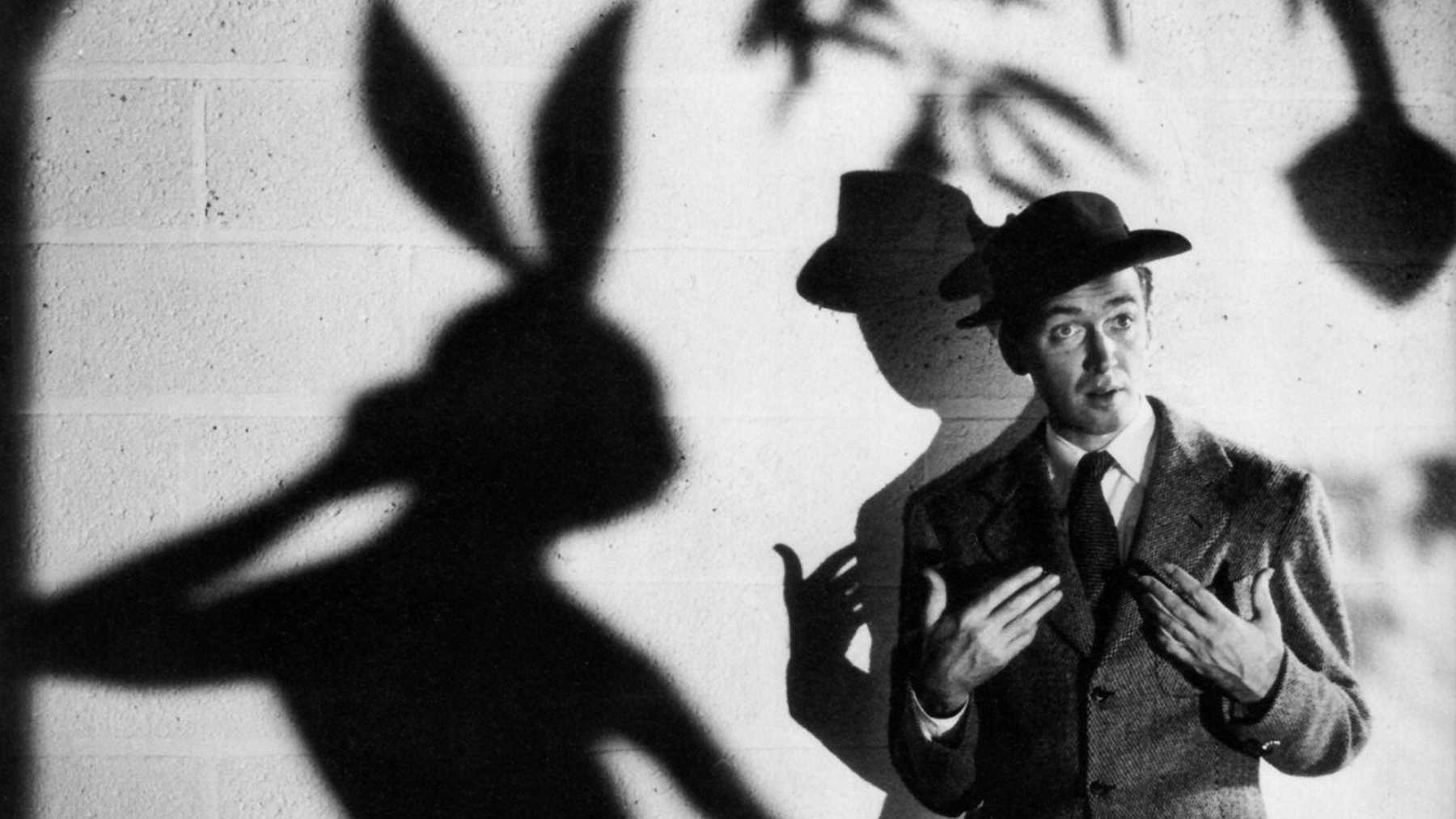
November is the month of Pooka. In Ireland of past, at Halloween, many children went out “with Pooka”, but others stayed indoors, fearful of stories they had heard of what Pooka did to children. In popular culture, other iconic mystical creatures are incarnated from Pooka. For example, the bogeyman is derived from Pooka. Also, Easter Bunny, which is pagan in origin; a fairy-like creature that brings chocolate eggs and sweets to children at Easter has its roots in the fertility spirit theme of Pooka. In the film Harvey (1950), directed by Henry Koster, a giant white bunny was inspired by Pooka.
In the film Harvey (1950) a giant white bunny was inspired by Pooka.
This mythic creature is also well documented in the classic literature of Ireland and Britain. Irish poet and playwright W. B. Yeats depicts Pooka as an eagle, while Irish novelist and playwright Brian O’Nolan, who wrote under the pseudonym Flann O’Brien, was also so inspired. O’Brien’s masterpiece, At Swim-Two-Birds, features a character called Pooka MacPhillemey, a “member of devil class”. In William Shakespeare’s A Midsummer Night’s Dream, Puck is a mischievous and quick-witted sprite responsible for setting many of the play’s events in motion through his magic.
Often appearing as a horse, Pooka sometimes gallops across the countryside knocking down fences and gates and destroying crops. In this form, Pooka likes to take a rider, usually a drunkard, on a wild ride all night and shake him off in the grey of the morning. This person, already heavily inebriated, is also under the spell of Pooka and has no recollection of what happened. This often accounts for why some people who, having gotten very drunk, report that they have no idea what happened the previous night.
The only man to ever successfully ride a Pooka was High King of Ireland and founder of O’Brien dynasty, Brian Boruma Mac Cennetig (941-1014), or more commonly known as Brian Boru. Brian managed to control the magic of the creature by using a special bridle that used three hairs of Pooka’s tail. Brian’s physical prowess meant he was able to stay on its back until exhausted Pooka surrendered to Brian.
Love Irish history? Share your favorite stories with other history buffs in the IrishCentral History Facebook group.
The king forced it to agree to two promises. First, it no longer tormented Christian people and ruined their property, and second that it would never again attack an Irishman, except those who were drunk or were abroad with evil intent. Although Pooka agreed, it appears to have forgotten its promises over years. Remember Pooka’s overlord – The Prince of Lies?
Past history records many sightings of Pooka all over the country, but the most famous story is an animal spirit that gave its name to Poulaphuca (Hole of Pooka) at the boundary of River Liffey between counties Kildare and Wicklow. Presently this is the site of a hydroelectric power station, where the river flows through a narrow gorge before plunging 150 feet (46 meters) in three stages. Under the second drop there is a pool, and this is called Hole of Pooka. Irish author Padraig O’Farrell (1932-2004) narrates this story which was inspired by the written account of an anonymous Kildare man. The writer also has an interesting postscript at the end:
“In November 1813, Kildare Hunt known as Killing Kildares set out. Having indulged in traditional stirrup cup at Tipper crossroads, near Naas, hunt failed to raise a fox until it was approaching Tipperkevin, north of Ballymore Eustace, county Kildare. Here a large fox appeared and led a course towards Liffey. Simultaneously, an un-mounted black horse appeared, that did not belong to any of riders. It was Pooka! . “The terrain was difficult and fox ran fast, so that near Liffey, only one of members of hunt, a man named Grennan, and horse, who was really Pooka, remained with pack. The gorge was in full spate but hounds were gaining on their quarry and started to pick their way across rocks. Seeing danger, Grennan attempted to recall hounds, but Pooka ahead of them was tempting them onwards. The fox headed for ledge on narrow part of gorge then, seeing Pooka’s red eyes spitting fire, fox jumped. It missed ledge, falling into turbulent waters below. The Pooka easily leaped across gorge, disappearing into woodlands, but pack of hounds hard on scent of fox went headlong into pool. . “Looking down, Grennan saw fox and hounds trying desperately to swim to safety through swirling swell; other hounds dashed against rocks were yelping in pain and dying. He wept as most of pack went under. Suddenly his sorrow give way to terror, he heard a diabolical neighing, like an animal laughing – from woods opposite. Grennan knew then it was Pooka.”
The writer of the original story describes how in the 1930s, as he stood above the valleys of Liffey and King’s River, a sudden sadness came over him and he wept at the sight of so many humble homes which would soon be submerged forever by Blessington Lakes, created to supply water for a power station at Poulaphuca.
Between 1938 and 1940 seventy-six houses were demolished and bridges at Humphreystown, Baltyboys, and Burgage were blown up before the entire valley was flooded for the hydroelectric power station. A Protestant church, St. Mark’s, built-in 1682 was also submerged. To this day there have been many claims of people hearing bells tolling beneath the waters of lakes.
This article was originally published in Ireland of the Welcomes magazine. Subscribe now!
Lest you think that Pooka is just another myth from Irish history – think again! The Pooka exists in contemporary Ireland also. For example, it has a strong resonance with events of the recent past, and not just symbolically either. Remember the Pooka is always around just before the disaster. Cork-born folklorist Thomas Crofton Croker in Fairy Legends and Traditions (1825) alleges that Pooka does appear as a real flesh and blood person. Apparently, Pooka in a human guise approaches someone, inveigles its way into their company, and subsequently predicts unfortunate events that would befall them. Of course, when adversity does strike, this entity is never around. Hidden in its supernatural realm, it revels in the joy of watching humans enduring the effects of catastrophic events.
For example, consider this report recorded by folklorist Owen Harding in July 2011.
“On Wednesday, 1st November, 2006, about 7.30pm, Denis O’Rourke, a business man and investor (originally from Cork city but then living in Malahide, County Dublin), believes he met Pooka. A strange and well-dressed man was outside of front gate of Denis’s home. This man struck up a conversation with Denis, claiming he had known him for years. He went on to tell Denis about his family – true facts he could not have known, going back three generations, and how over years they had lost and gained money. This man, who did not give a name, also said that family finances were based on more than just heritage, they were also subject to greater economy of a nation. Over next couple of years O’Rourke witnessed not merely fiscal fall of country, but his own financial ruin, including his business, his family home and two other houses he had invested in.”
Harding alleges that there are many similar reports, and possibly many more from others who are too embarrassed to reveal them. The problem, Harding claims, is that many people are not aware that anything unusual has happened until after Pooka has left. Not only that, but when disaster does happen, Pooka, like T.S. Eliott’s elusive cat Macavity,* “is not there”!
*Macavity is celebrated in a poem by Eliot as Mystery Cat; musical Cats is based on poem.
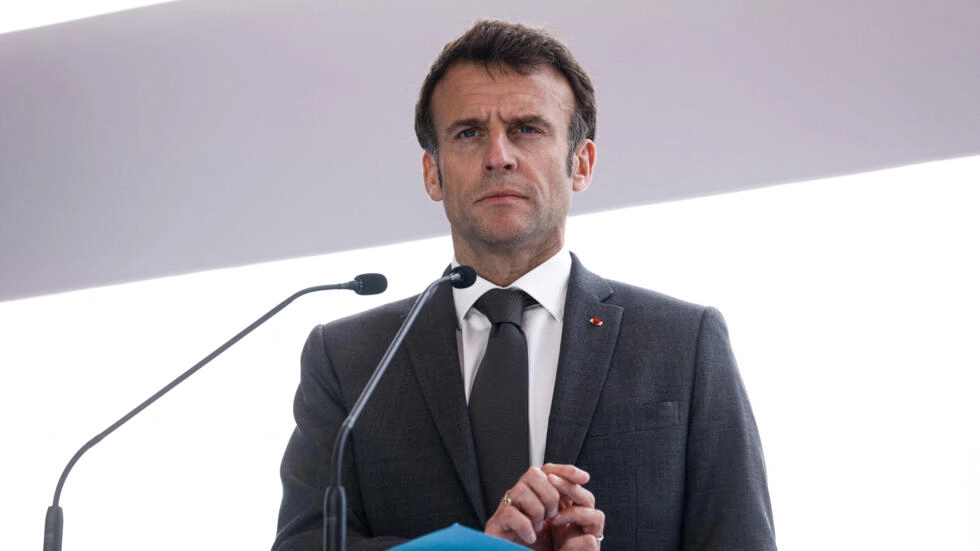
French President Emmanuel Macron told ministers at a cabinet meeting on Wednesday that the country is seeing a trend towards “décivilisation”, government sources said. Macron’s remarks followed the deaths of a nurse and three policemen in the past week as well as a fatal shooting in Marseille.
“We must be uncompromising on the fundamentals,” Macron told ministers at a cabinet meeting. “There is no such thing as ‘legitimate’ violence, whether it be verbal or [physically] targeting people.”
“We must work tirelessly to counteract this process of décivilisation,” he said in comments first reported by the daily “Le Parisien” and confirmed to AFP by a person present.
While violent crime remains relatively rare in France, a particularly violent week prompted Macron to cancel a trip to the south of France to take part in a memorial for three policemen killed in a car crash Sunday when a man under the influence drove the wrong way.
During a tribute to the police officers on Thursday in Roubaix, Macron called for respecting those who “risk their lives” for others, denouncing “irresponsible behavior that kills”.
“At the sight of your three coffins, one can only be stunned in the face of the injustice and the absurdity,” he said. The president was accompanied by First Lady Brigitte Macron and Interior Minister Gérald Darmanin.
Three men were killed in a shooting in Marseille over the weekend while a nurse died after a knife attack on Monday by a man suffering from psychiatric problems in the eastern city of Reims.
But the revelation that Macron used the word “décivilisation” immediately drew criticism that he was adopting rhetoric beloved by the far right and those who subscribe to the xenophobic “great replacement” theory.
French media was awash in headlines deconstructing his usage of the term on Thursday.
Attacks on officials
A series of assaults on elected officials, including a mayor in western France who stepped down after an arson attack on his house, was among the issues addressed in Macron’s remarks.
Mayor Yannick Morez of Saint-Brevin-les-Pins resigned after waking to find his house aflame on March 22. Those opposing the opening of an accommodation centre for asylum seekers in the town are believed to have set the fire deliberately.
Daily newsletterReceive essential international news every morningSubscribe
Mayor Julien Luya of Firminy in the Loire region was attacked by a group of locals dealing drugs in January. When they lit a fire to keep warm, Luya told them it was against the law and was violently beaten with iron bars.
Other officials, including members of parliament, have been threatened or had their offices vandalised amid fierce protests against Macron’s deeply unpopular pension reform.
The head of the conservative Les Républicains party, Éric Ciotti, had his office vandalised by anti-reform protesters in March.
(FRANCE 24 with AFP)
Consciousness, spirituality, biography, sexuality, androgyny, futurism, space, the arts, science, astrology, democracy, humor, books, movies and more