We Should Stop Calling It “Climate Change” — And Start Calling It Extinction

umair haque

Apr 22, 2023 (Medium.com)

The Words “Climate Change” May End Up Being The Biggest Lie Ever Told

Image Credit: Henry Nicholls. Follow him here.

1 in 3 people on Planet Earth are living through a record-breaking heatwave right now. Thailand has just recorded the hottest temperatures it’s ever had — 45ºC (113ºF) — and a record breaking heat index (“feels like” temperature) of 54ºC (130ºF).

130 degrees? The summer’s barely begun.

Meanwhile, the UN’s climate agency just released its State of Global Climate Report for last year, confirming the climate horror that was 2022.

Killer floods, droughts and heat waves hit around the world, costing many billions of dollars. Global ocean heat and acidity levels hit record highs and Antarctic sea ice and European Alps glaciers reached record low amounts, according to the United Nations’ climate agency’s State of Global Climate 2022 report released Friday.

This is the brutal, startling reality of climate change.

Of..wait..what?

“Climate change”? The climate isn’t changing. It’s heating. Rapidly. Faster than at any point in hundreds of millions of years. It’s heating so fast that this is the stuff entire geotemporal boundaries are made of — “ages” in geological history. So fast that it’s shattering scientists’ worst predictions — and making reality look like a sci-fi movie, where scores of people die off in Canada because of sweltering heat.

It’s not “change” of some symmetrical, anodyne, innocuous kind. The planet isn’t getting cooler. It’s rapid, sudden, potentially runaway, already lethal, discontinuous transformation in one direction. It’s getting hotter, fast.

We should stop calling it “climate change.” Now, before you object, bear with me, and let’s investigate the history of the term.

We used to call it “global warming.” Not so long ago. The big we, as in, all of us, because that is what the norm was. That’s the term which dominated public discourse, and you’d read it in papers and books and articles. Not the seemingly anodyne “climate change.”

That was a far, far more accurate term. And that was the problem.

Here’s little factoid for you. Do you know who invented the term “climate change”? Frank LuntzThe Republican “strategist.” Why?

Luntz played a role in turning the environment into a partisan battlefield. During President George W. Bush’s first term, his infamous memo warned Republican party leaders that they were losing “the environmental communications battle,” an issue on which Bush was “most vulnerable.” He advised them to emphasize a lack of scientific certainty around climate change and drop “global warming” for the less scary-sounding “climate change.”

“Global warming” was dangerous. Because it was true. Too frightening. Too true. Too real. To self-explanatory, powerful, and strong. It had to be Orwellianized. It had to memory-holed. Doublespeak had to be crafted — to create the impression that there was some “debate” on this topic.

Debate like what? Debate like: maybe the planet wasn’t just warming. Maybe the temperature and climate were just “changing.” Naturally. Not as a result of human influences. Not as a result of unbridled production, consumption, pollution. Maybe this was just something that happened according to the planet’s natural cycles and rhythms. Maybe, maybe, maybe.

Doubt had to be manufactured. That’s why Luntz invented the term “climate change.”

Luntz rebranded global warming as “climate change” because it sounds far, far less dangerous, problematic, severe, worrisome. The usual network of right-wing think tanks and media outlets immediately — as if by design — began to use it. And the rest is history. By now, all of us use a term that a Republican strategist came up with to make global warming sound less dangerous and wonder why we can’t fix the planet.

There we are, too many of us, still using it. It’s certainly all over the news today. We’re using terms designed by a Republican strategist who wanted to deny the truth of global warming to refer to it. What does that make us? Suckers, marks, rubes. Too many of us have fallen for a branding campaign. One designed to pull the wool over eyes about, oh, only the most urgent issue on earth, on which your life and prosperity very much depend, too. Just ask the 5 million people a year dying of climate cha — global warming. Oh wait, you can’t, because they’re dead.

Sorry to be harsh — but I feel we have to speak honestly about such matters. Because, of course, there is no doubt about what’s happening to the planetIt’s not cooling, it’s warming, it’s not natural, it’s profoundly unnatural, as in, human-made, and even at that, made by a certain lifestyle of rampant overconsumption, sprawl, greed, and materialism.

What does that make Luntz, by the way? Well, it’s not too hard to see that Luntz’s idea of rebranding global warming as climate change worked.

For decades, nobody much cared. Luntz’s rebranding took place in the early 2000s — when the window to stop the planet hitting severe warming was closing. And the window did close. Now, 2.3 degrees of warming is more or less locked in. We’re only at about one so far — and we’ve got killer heat domes in Canada. Want to venture a guess about what happens as the temperature goes on rising?

Luntz’s campaign worked brilliantly. Elites around the planet began using this new term — “climate change” — to sound smart. To please America, the most powerful nation on earth. To align their interests with it. And as elites changed their language, their attitudes and sentiments changed, too. No longer was anyone interested in really stopping runaway global warming. Why — did such a thing even exist?

It was Orwell’s great lesson writ large. If you can disappear a thing in language, you can make people stop thinking it, and it simply…vanishes. The point of Orwellian doublespeak is to veil the truth with doubt, to filigree it with the shadows of complacency, to make the lie seem real. And the truth is that thanks to Luntz, the GOP, American media, and elites around the world following their lead, the dire threat of global warming soon enough became the anodyne sounding “climate change.” And who really worries about that? It makes you think you might be sitting on a tropical beach sipping a Mai Tai — not boiled alive by a killer heat wave.

All the urgency and danger and severity went out of the issue, and the world simply dilly-dallied as if there was plenty of time to waste about a problem that probably wasn’t even going to be much of a problem.

Bang. And here we are, just a few short decades later. The planet has heated dramatically. People are dying from killer heat. We need a whole new vocabulary to describe how rapidly and badly the temperature’s rising. “Summer” doesn’t quite mean what it used to. It’s now a time of mortal danger for people, whether from “heat domes” or “megafires” or “megafloods” or “megafires” and so on.

And yet we’re still using the vocabulary of global-warming deniers to describe all this: “climate change.”

We’ve been made fools of, in such a deep and lasting way. It’s taken away our power — using the Orwellian language which was chosen for us — to fight the biggest and most urgent problem human civilisation has ever faced.

So if using the term “climate change” makes us apathetic, spineless, useful idiots, to elites who’d happily watch the world literally burn — what does that make Frank Luntz? Well, Luntz will — or perhaps should — probably go down as one of history’s great monsters. 5 million deaths a year linked to “climate change”? Climate change is going to claim tens, probably hundreds of millions of lives. As nations burn, cities sink, societies go up like tinderboxes, and the desperate and impoverished try to flee it all.

Nobody can really say how much of that death and despair can be ascribed to Luntz alone. But would you like have to played a hand in hundreds of millions of deaths?

Maybe that’s why Luntz himself is apologetic about his malign, Orwellian creation. Of course, apologies aren’t nearly enough. It’s like watching an abuser hit you and say “sorry.” Redress means a whole lot more, and it starts the true process of reparations.

You should care intensely about all this. Because, like I said, you’ve been made a fool ofYou’re using the language global warming deniers invented to try, futilely, to describe what’s happening to a dying planet. Of course, it doesn’t work very well, because they invented the very term “climate change” to stop any reality from entering the discussion, minds, societies, public spheres. Their goal was to kill the truth, and they succeeded.

“Climate change” might well prove the Biggest Lie ever told.

Luntz is now offering his messaging services to the cause of climate action. “I’m here before you to say that I was wrong in 2001,” Luntz told the Senate committee. “Just stop using something that I wrote 18 years ago, because it’s not accurate today.”

Don’t listen to me — listen to the strategist who invented the Lie. You should stop telling it, too. Even he regrets it, and he’s a Republican strategist. LOL.

It’s not “climate change.” It never was. It’s “global warming,” yes. But even more than that, it’s Extinction.

Extinction doesn’t mean “all the life on planet Earth dies,” it means that mass extinction happens on a scale we have yet to comprehend — across the planet, to all life, millions of species, in every biome and ecology. It means ecosystems collapse, and with them, everything we rely on, from the bees that pollinate the plants that provide us with the resources we need and the air we breathe, to our supply chains being destroyed by mega-weather. It means millions and millions of people die from the resulting chaos and collapse that ensues. And our civilization, and everything it entails — economy, society, democracy, culture — is hardly likely to survive an event like that intact.

Yes, it sounds dire. That’s because it contains power, resonance, urgency, forces a confrontation with reality. It has deep, serious, profound meaning. Yes, it’s frightening.

It should be. Because it’s true.

Umair
April 2023

The Return of the Archetypal Feminine & the Dawn of the New “Third”

March 26, 2021 (jungchicago.org)

with Laraine Kurisko, PhD, Jungian Analyst

For this Women’s History Month, we’re sharing the seminar The Return of the Archetypal Feminine & the Dawn of the New “Third” in its entirety. It was recorded on January 4, 2019. From the seminar description:

The archetypal “Feminine” is back, and She’s…”unhappy.” From “Me Too,” to the trial of Larry Nassar, to the rising refusal of young adults to be defined as either “male” or “female,” opting instead for the more neutral pronoun “they,” evidence of profound change is all around us. Neumann and Whitmont tell us that consciousness can be conceived as having evolved through stages, beginning the archetypal Great Mother. Several thousand years ago, this feminine consciousness was repressed in the service of the development of “Masculine” ego consciousness, which has, for better and worse, been accomplished. We now have considerable “ego strength” but no connection to anything beyond it, hence, a good deal of turmoil in a world that feels untethered, without purpose or direction. Both “Feminine” and “Masculine” dominated cultures were necessarily one-sided otherwise each could not have developed. But, what is next? And, what is required of us so that the new “third” can emerge?

In this class we will dive deeply into the bigger story at play here – the deep, archetypal dynamics and the wisdom behind them. We will begin to think about, observe, and imagine, the next phase of consciousness. Rather than simply enacting each stage via identification, we can step back and consciously embrace the gifts and costs of each, for men and women. By holding both in a conscious, creative tension of opposites, we can facilitate the emergence of the Mercurial “Divine Child.”

Laraine Kurisko received her PhD in Clinical-Depth Psychology from Pacifica Graduate Institute in 2000 and Diplomate Jungian Analyst from the C. G. Jung Institute of Chicago in 2016. Prior to beginning Analyst training in Chicago she attended the MN Seminar in Jungian Studies for nine years and the Philadelphia Seminar in Jungian Studies for one year. She has worked as a psychologist since 1987, and is currently in private practice in Eden Prairie. A Canadian by birth, she and her family enjoy their annual pilgrimage to their cottage near Sault Saint Marie, Canada, on the shores of Lake Superior.

PowerPoint: The slides are not available for this seminar.

Thank you to everyone who shared a little bit about themselves since the last episode. If you’d like us to know who you are, click this link, and I’ll read your submission on the podcast! No need to share any identifying information. This information will not be used for any other purpose.

You can support this free podcast by making a donationbecoming a member of the Institute, or making a purchase in our online store. Your support enables us to provide free educational resources to all.

Podcast: Play in new window | Download (67.7MB)


© 2019 Laraine Kurisko. This podcast is licensed under a Creative Commons Attribution-NonCommercial-NoDerivatives 4.0 International License. You may share it, but please do not change it, sell it, or transcribe it.
Executive Producer: Ben Law
Producer: Patricia Martin
Music: Michael Chapman

William Butler Yeats and Magic with James Tunney

New Thinking Allo • Apr 23, 2023 James Tunney, LLM, is an Irish barrister who has lectured on legal matters throughout the world. He is a poet, artist, scholar, and author of The Mystery of the Trapped Light: Mystical Thoughts in the Dark Age of Scientism plus The Mystical Accord: Sutras to Suit Our Times, Lines for Spiritual Evolution; also Empire of Scientism: The Dispiriting Conspiracy and Inevitable Tyranny of Scientocracy, TechBondAge: Slavery of the Human Spirit, and Human Entrance to Transhumanism: Machine Merger and the End of Humanity. His most recent book is Plantation of the Automatons. His website is https://www.jamestunney.com/ Here he focuses on the life and work of one of the most significant poets of the twentierth century. Yeats at one time claimed that nothing was more important to his work than magic. 00:00:00 Introduction 00:03:33 Magic 00:11:47 Yeats’ friends 00:21:45 Golden Dawn 00:39:35 A Vision 00:51:01 Yeats’ influence 01:08:36 Tunney’s painting 01:15:52 Conclusion Edited subtitles for this video are available in Russian, Portuguese, Italian, German, French, and Spanish. New Thinking Allowed host, Jeffrey Mishlove, PhD, is author of The Roots of Consciousness, Psi Development Systems, and The PK Man. Between 1986 and 2002 he hosted and co-produced the original Thinking Allowed public television series. He is the recipient of the only doctoral diploma in “parapsychology” ever awarded by an accredited university (University of California, Berkeley, 1980). He is also the Grand Prize winner of the 2021 Bigelow Institute essay competition regarding the best evidence for survival of human consciousness after permanent bodily death. (Recorded on April 6, 2023)

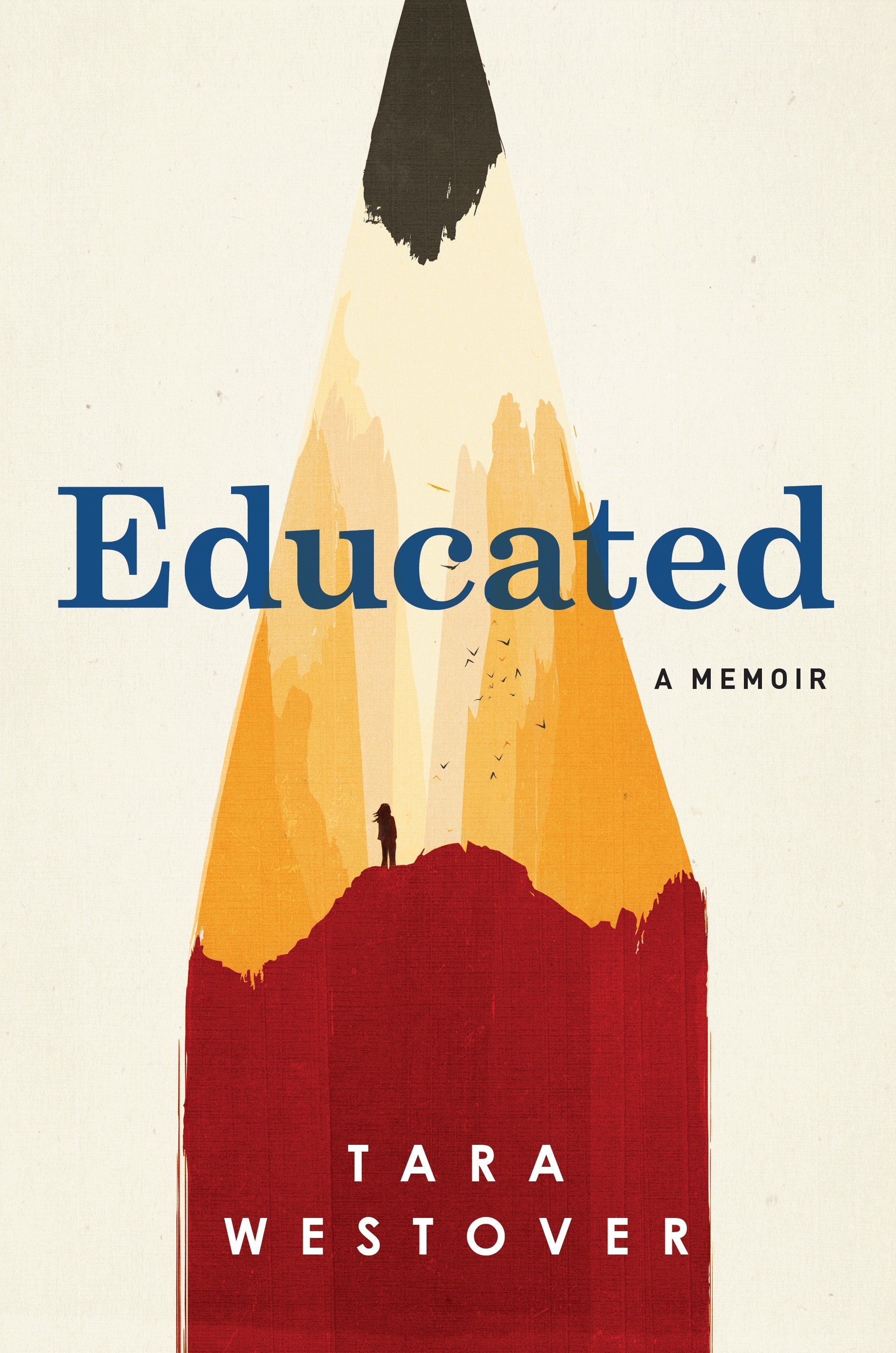
Book: “Educated”

Educated

Tara Westover

Tara Westover was 17 the first time she set foot in a classroom. Born to survivalists in the mountains of Idaho, she prepared for the end of the world by stockpiling home-canned peaches and sleeping with her “head-for-the-hills bag”. In the summer she stewed herbs for her mother, a midwife and healer, and in the winter she salvaged in her father’s junkyard.

Her father forbade hospitals, so Tara never saw a doctor or nurse. Gashes and concussions, even burns from explosions, were all treated at home with herbalism. The family was so isolated from mainstream society that there was no one to ensure the children received an education and no one to intervene when one of Tara’s older brothers became violent

Then, lacking any formal education, Tara began to educate herself. She taught herself enough mathematics and grammar to be admitted to Brigham Young University, where she studied history, learning for the first time about important world events like the Holocaust and the civil rights movement. Her quest for knowledge transformed her, taking her over oceans and across continents, to Harvard and to Cambridge. Only then would she wonder if she’d traveled too far, if there was still a way home.

Educated is an account of the struggle for self-invention. It is a tale of fierce family loyalty and of the grief that comes with severing the closest of ties. With the acute insight that distinguishes all great writers, Westover has crafted a universal coming-of-age story that gets to the heart of what an education is and what it offers: the perspective to see one’s life through new eyes and the will to change it.

(Goodreads.com)

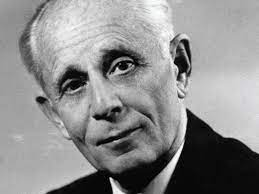
Hans Selye: “What is in us must out…”

“What is in us must out, otherwise we may explode at the wrong places or become hopelessly hemmed in by frustrations. The great art is to express our vitality through the particular channels and at the particular speed Nature foresaw for us.”

Every stress leaves an indelible scar, and the organism pays for its survival after a stressful situation by becoming a little older.

Hans Selye

János Hugo Bruno “Hans” Selye (Janaury 26, 1907 – October 16, 1982) was a pioneering Hungarian-Canadian endocrinologist who conducted important scientific work on the hypothetical non-specific response of an organism to stressors. Wikipedia

Rupert Spira on establishing a presence of awareness

If we are established in and as the presence of awareness, we will always feel its innate peace. Thoughts and feelings will continue to play on the surface of experience but just beneath them, there will always be this deep peace.

–Rupert Spira

Rupert Spira (born March 13, 1960) is an English spiritual teacher, philosopher and author of the Direct Path based in Oxford, UK. Wikipedia

(newsletter@rupertspira.com)

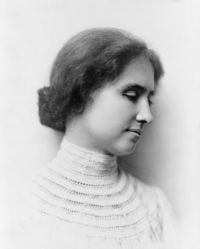
Helen Keller advice to herself

There will never be another now –
I’ll make the most of today.
There will never be another me –
I’ll make the most of myself.

Helen Keller

Born in Tuscumbia, Alabama, The United States

June 27, 1880

Died June 01, 1968

Blind and deaf since infancy, American memoirist and lecturer Helen Adams Keller learned to read, to write, and to speak from her teacher Anne Sullivan, graduated from Radcliffe in 1904, and lectured widely on behalf of sightless people; her books include Out of the Dark (1913).

Conditions bound not Keller. Scarlet fever rendered her deaf and blind at 19 months; she in several languages and as a student wrote The Story of My Life . In this age, few women then attended college, and people often relegated the disabled to the background and spoke of the disabled only in hushed tones, when she so remarkably accomplished. Nevertheless, alongside many other impressive achievements, Keller authored 13 books, wrote countless articles, and devoted her life to social reform. An active and effective suffragist, pacifist, and socialist (the latter association earned her a file of Federal Bureau of Investigation), she lectured on behalf of disabled people everywhere. She also helped to start several foundations that continue to improve the lives of the deaf and blind around the world.

As a young girl, obstinate Keller, prone to fits of violence, seethed with rage at her inability to express herself. Nevertheless, at the urging of Alexander Graham Bell, Anne Sullivan, a teacher, transformed this wild child at the age of 7 years in an event that she declares “the most important day I remember in all my life.” (After a series of operations, Sullivan, once blind, partially recovered her sight.) In a memorable passage, Keller writes of the day “Teacher” led her to a stream and repeatedly spelled out the letters w-a-t-e-r on one of her hands while pouring water over the other. This method proved a revelation: “That living world awakened my soul, gave it light, hope, joy, set it free! There were barriers still, it is true, but barriers that could in time be swept away.” And, indeed, most of them were.

In her lovingly crafted and deeply perceptive autobiography, Keller’s joyous spirit is most vividly expressed in her connection to nature:

Indeed, everything that could hum, or buzz, or sing, or bloom, had a part in my education…. Few know what joy it is to feel the roses pressing softly into the hand, or the beautiful motion of the lilies as they sway in the morning breeze. Sometimes I caught an insect in the flower I was plucking, and I felt the faint noise of a pair of wings rubbed together in a sudden terror….

The idea of feeling rather than hearing a sound, or of admiring a flower’s motion rather than its color, evokes a strong visceral sensation in the reader, giving The Story of My Life a subtle power and beauty. Keller’s celebration of discovery becomes our own. In the end, this blind and deaf woman succeeds in sharpening our eyes and ears to the beauty of the world. –Shawn Carkonen

(Contributed by John Atwater, H.W.)

This House Believes AI Will Bring More Harm Than Good | Debate | Cambridge Union

Cambridge Union • Nov 24, 2019 MOTION FOR THE DEBATE: This House Believes AI Will Bring More Harm Than Good This debate was run in association with IBM Research. ABOUT THE SPEAKERS: PROPOSITION: Project Debater Project Debater is designed by IBM research. It will deliver a speech based on over 1,100 arguments collected from Union members and others over the past week. It will not be taking points of information. Sharmila Parmanand Sharmila Parmanand is a PhD Candidate in Gender Studies at the University of Cambridge and a Gates Scholar. She has served as a debate trainer or chief judge in debating events in 45 countries. She served as a chief judge for most major global debating competitions (World Universities, World Schools, European Universities, Asian Universities, Austral-Asian Universities, North American Universities, and PanAmerican Universities). Professor Neil Lawrence Neil Lawrence is the DeepMind Professor of Machine Learning at the University of Cambridge and the co-host of Talking Machines. Neil’s main research interest is machine learning through probabilistic models. He focuses on both the algorithmic side of these models and their application. His recent focus has been on the deployment of machine learning technology in practice, particularly under the banner of data science. OPPOSITION Project Debater Project Debater is designed by IBM research. It will deliver a speech based on over 1,100 arguments collected from Union members and others over the past week. It will not be taking points of information. Harish Natarajan Harish Natarajan is a graduate of the University of Oxford and the University of Cambridge. He was a grand fnalist and 2nd best speaker at the 2016 World Debating Championships and won the European Debating Championship in 2012. Harish holds the record for most competition victories. He currently works as the Head of Economic Risk Analysis at AKE International in London. Professor Sylvie Delacroix Sylvie Delacroix is professor in Law and Ethics at the University of Birmingham. Her work has notably been funded by the Wellcome Trust, the NHS and the Leverhulme Trust, from whom she received the Leverhulme Prize. She has recently been appointed to the Public Policy Commission on the use of algorithms in the justice system. ABOUT THE CAMBRIDGE UNION: From its small beginnings as a debating society, the Cambridge Union is the oldest debating society in the world and the largest student society in Cambridge. The Union remains a unique forum for the free exchange of ideas and the art of public debate.