
Religion and History Documentaries • Apr 25, 2015 I am who I am Watch and find out the 3 major monotheistic tradition, The Judaism, The Christianity, and The Islam. See how humans have created and recreated various gods in their own image. The evolution of the idea of God is traced from its ancient roots in the Middle East up to the present day.
Monthly Archives: November 2022
Encore: Transcendentalism
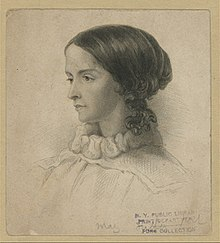
From Wikipedia, the free encyclopedia
This article is about the 19th-century American movement. For other uses, see Transcendence (disambiguation).
| Part of a series on |
| Spirituality |
|---|
| Outline |
| showReligion |
| showTraditional |
| showModern |
| showSpiritual experience |
| showSpiritual development |
| Influences |
| showWestern |
| showOrientalist |
| showAsian |
| showOther non-Western |
| showPsychological |
| Research |
| showNeurological |
| Category |
| vte |
Transcendentalism is a philosophical movement that developed in the late 1820s and 1830s in New England.[1][2][3] A core belief is in the inherent goodness of people and nature,[1] and while society and its institutions have corrupted the purity of the individual, people are at their best when truly “self-reliant” and independent. Transcendentalists saw divine experience inherent in the everyday, rather than believing in a distant heaven. Transcendentalists saw physical and spiritual phenomena as part of dynamic processes rather than discrete entities.
Transcendentalism is one of the first philosophical currents that emerged in the United States;[4] it is therefore a key early point in the history of American philosophy. Emphasizing subjective intuition over objective empiricism, its adherents believe that individuals are capable of generating completely original insights with little attention and deference to past masters. It arose as a reaction, to protest against the general state of intellectualism and spirituality at the time.[5] The doctrine of the Unitarian church as taught at Harvard Divinity School was closely related.
Transcendentalism emerged from “English and German Romanticism, the Biblical criticism of Johann Gottfried Herder and Friedrich Schleiermacher, the skepticism of David Hume“,[1] and the transcendental philosophy of Immanuel Kant and German idealism. Perry Miller and Arthur Versluis regard Emanuel Swedenborg and Jakob Böhme as pervasive influences on transcendentalism.[6][7] It was also strongly influenced by Hindu texts on philosophy of the mind and spirituality, especially the Upanishads.
Origin
Transcendentalism is closely related to Unitarianism, a religious movement in Boston in the early nineteenth century. It started to develop after Unitarianism took hold at Harvard University, following the elections of Henry Ware as the Hollis Professor of Divinity in 1805 and of John Thornton Kirkland as President in 1810. Transcendentalism was not a rejection of Unitarianism; rather, it developed as an organic consequence of the Unitarian emphasis on free conscience and the value of intellectual reason. The transcendentalists were not content with the sobriety, mildness, and calm rationalism of Unitarianism. Instead, they longed for a more intense spiritual experience. Thus, transcendentalism was not born as a counter-movement to Unitarianism, but as a parallel movement to the very ideas introduced by the Unitarians.[8]
Transcendental Club
Transcendentalism became a coherent movement and a sacred organization with the founding of the Transcendental Club in Cambridge, Massachusetts, on September 12, 1836, by prominent New England intellectuals, including George Putnam (Unitarian minister),[9] Ralph Waldo Emerson, and Frederic Henry Hedge. Other members of the club included Amos Bronson Alcott, Orestes Brownson, Theodore Parker, Henry David Thoreau, William Henry Channing, James Freeman Clarke, Christopher Pearse Cranch, Convers Francis, Sylvester Judd, and Jones Very. Female members included Sophia Ripley, Margaret Fuller, Elizabeth Peabody, Ellen Sturgis Hooper, and Caroline Sturgis Tappan. From 1840, the group frequently published in their journal The Dial, along with other venues.
Second wave of transcendentalists
By the late 1840s, Emerson believed that the movement was dying out, and even more so after the death of Margaret Fuller in 1850. “All that can be said”, Emerson wrote, “is that she represents an interesting hour and group in American cultivation”.[10] There was, however, a second wave of transcendentalists later in the 19th century, including Moncure Conway, Octavius Brooks Frothingham, Samuel Longfellow and Franklin Benjamin Sanborn.[11] Notably, the transcendence of the spirit, most often evoked by the poet’s prosaic voice, is said to endow in the reader a sense of purpose. This is the underlying theme in the majority of transcendentalist essays and papers—all of which are centered on subjects which assert a love for individual expression.[12] The group was mostly made up of struggling aesthetes, the wealthiest among them being Samuel Gray Ward, who, after a few contributions to The Dial, focused on his banking career.[13]
Beliefs
Transcendentalists are strong believers in the power of the individual. It is primarily concerned with personal freedom. Their beliefs are closely linked with those of the Romantics, but differ by an attempt to embrace or, at least, to not oppose the empiricism of science.
Transcendental knowledge
Transcendentalists desire to ground their religion and philosophy in principles based upon the German Romanticism of Johann Gottfried Herder and Friedrich Schleiermacher. Transcendentalism merged “English and German Romanticism, the Biblical criticism of Herder and Schleiermacher, the skepticism of Hume“,[1] and the transcendental philosophy of Immanuel Kant (and of German idealism more generally), interpreting Kant’s a priori categories as a priori knowledge. Early transcendentalists were largely unacquainted with German philosophy in the original and relied primarily on the writings of Thomas Carlyle, Samuel Taylor Coleridge, Victor Cousin, Germaine de Staël, and other English and French commentators for their knowledge of it. The transcendental movement can be described as an American outgrowth of English Romanticism.[citation needed]
Individualism
Transcendentalists believe that society and its institutions—particularly organized religion and political parties—corrupt the purity of the individual.[14] They have faith that people are at their best when truly self-reliant and independent. It is only from such real individuals that true community can form.
Even with this necessary individuality, transcendentalists also believe that all people are outlets for the “Over-Soul“. Because the Over-Soul is one, this unites all people as one being.[15][need quotation to verify] Emerson alludes to this concept in the introduction of the American Scholar address, “that there is One Man, – present to all particular men only partially, or through one faculty; and that you must take the whole society to find the whole man”.[16] Such an ideal is in harmony with Transcendentalist individualism, as each person is empowered to behold within him or herself a piece of the divine Over-Soul.
In recent years there has been a distinction made between individuality and individualism. Both advocate the unique capacity of the individual. Yet individualism is decidedly anti-government, whereas individuality sees all facets of society necessary, or at least acceptable for the development of the true individualistic person. Whether the Transcendentalists believed in individualism or individuality remains to be determined. Whitman embraced all facets of life, which seems more like individuality, which is more in tune with what the Indian spiritual tradition advocates; i.e. the True Individual, the yogic attainment of true individuality.
Indian religions
While firmly rooted in the western philosophical traditions of Platonism, Neoplatonism, and German idealism, Transcendentalism was also directly influenced by Indian religions.[17][18][note 1] Thoreau in Walden spoke of the Transcendentalists’ debt to Indian religions directly:
In the morning I bathe my intellect in the stupendous and cosmogonal philosophy of the Bhagavat Geeta, since whose composition years of the gods have elapsed, and in comparison with which our modern world and its literature seem puny and trivial; and I doubt if that philosophy is not to be referred to a previous state of existence, so remote is its sublimity from our conceptions. I lay down the book and go to my well for water, and lo! there I meet the servant of the Brahmin, priest of Brahma, and Vishnu and Indra, who still sits in his temple on the Ganges reading the Vedas, or dwells at the root of a tree with his crust and water-jug. I meet his servant come to draw water for his master, and our buckets as it were grate together in the same well. The pure Walden water is mingled with the sacred water of the Ganges.[19]
In 1844, the first English translation of the Lotus Sutra was included in The Dial, a publication of the New England Transcendentalists, translated from French by Elizabeth Palmer Peabody.[20][21]
Idealism
Transcendentalists differ in their interpretations of the practical aims of will. Some adherents link it with utopian social change; Brownson, for example, connected it with early socialism, but others consider it an exclusively individualist and idealist project. Emerson believed the latter. In his 1842 lecture “The Transcendentalist“, he suggested that the goal of a purely transcendental outlook on life was impossible to attain in practice:
You will see by this sketch that there is no such thing as a transcendental party; that there is no pure transcendentalist; that we know of no one but prophets and heralds of such a philosophy; that all who by strong bias of nature have leaned to the spiritual side in doctrine, have stopped short of their goal. We have had many harbingers and forerunners; but of a purely spiritual life, history has afforded no example. I mean, we have yet no man who has leaned entirely on his character, and eaten angels’ food; who, trusting to his sentiments, found life made of miracles; who, working for universal aims, found himself fed, he knew not how; clothed, sheltered, and weaponed, he knew not how, and yet it was done by his own hands. …Shall we say, then, that transcendentalism is the Saturnalia or excess of Faith; the presentiment of a faith proper to man in his integrity, excessive only when his imperfect obedience hinders the satisfaction of his wish.
Importance of nature
Transcendentalists have a deep gratitude and appreciation for nature, not only for aesthetic purposes, but also as a tool to observe and understand the structured inner workings of the natural world.[5] Emerson emphasizes the Transcendental beliefs in the holistic power of the natural landscape in Nature:
In the woods, we return to reason and faith. There I feel that nothing can befall me in life, — no disgrace, no calamity, (leaving me my eyes,) which nature cannot repair. Standing on the bare ground, — my head bathed by the blithe air, and uplifted into infinite space, — all mean egotism vanishes. I become a transparent eye-ball; I am nothing; I see all; the currents of the Universal Being circulate through me; I am part or particle of God.[22]
The conservation of an undisturbed natural world is also extremely important to the Transcendentalists. The idealism that is a core belief of Transcendentalism results in an inherent skepticism of capitalism, westward expansion, and industrialization.[23] As early as 1843, in Summer on the Lakes, Margaret Fuller noted that “the noble trees are gone already from this island to feed this caldron”,[24] and in 1854, in Walden, Thoreau regards the trains which are beginning to spread across America’s landscape as a “winged horse or fiery dragon” that “sprinkle[s] all the restless men and floating merchandise in the country for seed”.[25]
Influence on other movements
| Part of a series of articles on |
| New Thought |
|---|
| showBeliefs |
| showMovement |
| showPeople |
| showRelated ideas |
| showCategories |
| Religion portal |
| vte |
Further information: History of New Thought
Transcendentalism is, in many aspects, the first notable American intellectual movement. It has inspired succeeding generations of American intellectuals, as well as some literary movements.[4]
Transcendentalism influenced the growing movement of “Mental Sciences” of the mid-19th century, which would later become known as the New Thought movement. New Thought considers Emerson its intellectual father.[26] Emma Curtis Hopkins (“the teacher of teachers”), Ernest Holmes (founder of Religious Science), Charles and Myrtle Fillmore (founders of Unity), and Malinda Cramer and Nona L. Brooks (founders of Divine Science) were all greatly influenced by Transcendentalism.[27]
Transcendentalism is also influenced by Hinduism. Ram Mohan Roy (1772–1833), the founder of the Brahmo Samaj, rejected Hindu mythology, but also the Christian trinity.[28] He found that Unitarianism came closest to true Christianity,[28] and had a strong sympathy for the Unitarians,[29] who were closely connected to the Transcendentalists.[17] Ram Mohan Roy founded a missionary committee in Calcutta, and in 1828 asked for support for missionary activities from the American Unitarians.[30] By 1829, Roy had abandoned the Unitarian Committee,[31] but after Roy’s death, the Brahmo Samaj kept close ties to the Unitarian Church,[32] who strove towards a rational faith, social reform, and the joining of these two in a renewed religion.[29] Its theology was called “neo-Vedanta” by Christian commentators,[33][34] and has been highly influential in the modern popular understanding of Hinduism,[35] but also of modern western spirituality, which re-imported the Unitarian influences in the disguise of the seemingly age-old Neo-Vedanta.[35][36][37]
Major figures
Major figures in the transcendentalist movement were Ralph Waldo Emerson, Henry David Thoreau, Margaret Fuller, and Amos Bronson Alcott. Some other prominent transcendentalists included Louisa May Alcott, Charles Timothy Brooks, Orestes Brownson, William Ellery Channing, William Henry Channing, James Freeman Clarke, Christopher Pearse Cranch, John Sullivan Dwight, Convers Francis, William Henry Furness, Frederic Henry Hedge, Sylvester Judd, Theodore Parker, Elizabeth Palmer Peabody, George Ripley, Thomas Treadwell Stone, Jones Very, and Walt Whitman.[38]
Criticism
Early in the movement’s history, the term “Transcendentalists” was used as a pejorative term by critics, who were suggesting their position was beyond sanity and reason.[39] Nathaniel Hawthorne wrote a novel, The Blithedale Romance (1852), satirizing the movement, and based it on his experiences at Brook Farm, a short-lived utopian community founded on transcendental principles.[40]
Edgar Allan Poe wrote a story, “Never Bet the Devil Your Head” (1841), in which he embedded elements of deep dislike for transcendentalism, calling its followers “Frogpondians” after the pond on Boston Common.[41] The narrator ridiculed their writings by calling them “metaphor-run” lapsing into “mysticism for mysticism’s sake”,[42] and called it a “disease”. The story specifically mentions the movement and its flagship journal The Dial, though Poe denied that he had any specific targets.[43] In Poe’s essay “The Philosophy of Composition” (1846), he offers criticism denouncing “the excess of the suggested meaning… which turns into prose (and that of the very flattest kind) the so-called poetry of the so-called transcendentalists”.[44]
Bio: Zhuang Zhou
From Wikipedia, the free encyclopedia
This article is about the Chinese philosopher. For his eponymous text, see Zhuangzi (book).
| Zhuangzi (莊子) Zhuang Zhou (莊周) | |
|---|---|
| Born | c. 369 BC |
| Died | c. 286 BC (aged c. 82 – 83) |
| Notable work | Zhuangzi |
| Era | Ancient philosophy |
| Region | Eastern philosophyChinese philosophy |
| School | TaoismPhilosophical skepticism |
| showInfluences | |
| showInfluenced |
| Zhuangzi | |
|---|---|
| “Zhuangzi” in seal script (top), Traditional (middle), and Simplified (bottom) Chinese characters | |
| Traditional Chinese | 莊子 |
| Simplified Chinese | 庄子 |
| Hanyu Pinyin | Zhuāngzǐ |
| Literal meaning | “Master Zhuang“ |
| showTranscriptions | |
| Zhuang Zhou | |
| Traditional Chinese | 莊周 |
| Simplified Chinese | 庄周 |
| Hanyu Pinyin | Zhuāng Zhōu |
| showTranscriptions |
| Part of a series on |
| Taoism |
|---|
| OutlineHistory |
| showConcepts |
| showPractices |
| showTexts |
| showDeities |
| showPeople |
| showSchools |
| showSacred places |
| showInstitutions and organizations |
| vte |
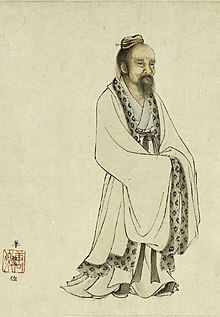
Zhuang Zhou (/dʒuˈɑːŋ ˈdʒoʊ/),[2] commonly known as Zhuangzi (/ˈʒwæŋˈziː/;[3] Chinese: 莊子; literally “Master Zhuang“; also rendered in the Wade–Giles romanization as Chuang Tzu),[a] was an influential Chinese philosopher who lived around the 4th century BCE during the Warring States period, a period of great development in Chinese philosophy, the Hundred Schools of Thought. He is credited with writing—in part or in whole—a work known by his name, the Zhuangzi, which is one of the foundational texts of Taoism.
Life
See also: Zhuangzi (book) § History
The only account of the life of Zhuangzi is a brief sketch in chapter 63 of Sima Qian‘s Records of the Grand Historian,[5] and most of the information it contains seems to have simply been drawn from anecdotes in the Zhuangzi itself.[6] In Sima’s biography, he is described as a minor official from the town of Meng (in modern Anhui) in the state of Song, living in the time of King Hui of Liang and King Xuan of Qi (late fourth century BC).[7] Sima Qian writes that Chuang-Tze was especially influenced by Lao-Tze, and that he turned down a job offer from King Wei of Chu, because he valued his personal freedom.[8]
The validity of his existence has been questioned by Russell Kirkland, who asserts that “there is no reliable historical data at all” for Chuang Chou/Zhuangzi, and that “the Chuang-tzu known to us today” is better attributed to its “commentator”, the third-century writer Kuo Hsiang.[9]
Writings
Main article: Zhuangzi (book)
Zhuangzi is traditionally credited as the author of at least part of the work bearing his name, the Zhuangzi. This work, in its current shape consisting of 33 chapters, is traditionally divided into three parts: the first, known as the “Inner Chapters”, consists of the first seven chapters; the second, known as the “Outer Chapters”, consist of the next 15 chapters; the last, known as the “Mixed Chapters”, consist of the remaining 11 chapters. The meaning of these three names is disputed: according to Guo Xiang, the “Inner Chapters” were written by Zhuangzi, the “Outer Chapters” written by his disciples, and the “Mixed Chapters” by other hands; the other interpretation is that the names refer to the origin of the titles of the chapters—the “Inner Chapters” take their titles from phrases inside the chapter, the “Outer Chapters” from the opening words of the chapters, and the “Mixed Chapters” from a mixture of these two sources.[10]
Further study of the text does not provide a clear choice between these alternatives. On the one side, as Martin Palmer points out in the introduction to his translation, two of the three chapters Sima Qian cited in his biography of Zhuangzi, come from the “Outer Chapters” and the third from the “Mixed Chapters”. “Neither of these are allowed as authentic Chuang Tzu chapters by certain purists, yet they breathe the very spirit of Chuang Tzu just as much as, for example, the famous ‘butterfly passage’ of chapter 2.”[11]
On the other hand, chapter 33 has been often considered as intrusive, being a survey of the major movements during the “Hundred Schools of Thought” with an emphasis on the philosophy of Hui Shi. Further, A.C. Graham and other critics have subjected the text to a stylistic analysis and identified four strains of thought in the book: a) the ideas of Zhuangzi or his disciples; b) a “primitivist” strain of thinking similar to Laozi in chapters 8-10 and the first half of chapter 11; c) a strain very strongly represented in chapters 28-31 which is attributed to the philosophy of Yang Chu; and d) a fourth strain which may be related to the philosophical school of Huang-Lao.[12] In this spirit, Martin Palmer wrote that “trying to read Chuang Tzu sequentially is a mistake. The text is a collection, not a developing argument.”[13]
Zhuangzi was renowned for his brilliant wordplay and use of parables to convey messages. His critiques of Confucian society and historical figures are humorous and at times ironic.
Influence
Zhuangzi has influenced thinking far beyond East Asia. The German philosopher Martin Buber translated his texts in 1910. In 1930, Martin Heidegger asked for Buber’s translation of Zhuangzi after his Bremen speech “On the Essence of Truth”.[14] In order to explain his own philosophy, Heidegger read from chapter 17, where Zhuangzi says to the thinker Hui Shih:
“Do you see how the fish are coming to the surface and swimming around as they please? That’s what fish really enjoy.”
“You’re not a fish,” replied Hui Tzu, “so how can you say you know what fish really enjoy?”
Zhuangzi said: “You are not me, so how can you know I don’t know what fish enjoy.”
The historian of ideas Dag Herbjørnsrud concludes: “It may therefore be difficult to say where the philosophies of Lao Tzu and Zhuangzi end and where the most influential German thinking of the twentieth century starts […]”[15]
The 20th century Chinese philosopher and essayist Hu Shih considered Zhuangzi a Chinese forerunner of evolution. In the chapter “Supreme Happiness“, Zhuangzi described the transmutation of species.[16]
Psalms 100: “Make a Joyful Noise!”

Young Sheldon meets Descartes
Nick Fuentes on why we need a dictatorship
(Contributed by Gwyllm Llwydd)
Nicholas Joseph Fuentes (born August 18, 1998) is an American far-right white nationalist and white supremacist Christian nationalist political commentator and live streamer. A former YouTuber, his channel was permanently suspended in February 2020 for violating YouTube’s hate speech policy. Wikipedia
John O’Donohue on letting love find us


.svg)
UKRAINE EMERGENCY TRANSLATION GROUP
Translation is a 5-step process of “straight thinking in the abstract.” The first step is an ontological statement of being beginning with the syllogism: “Truth is that which is so. That which is not truth is not so. Therefore Truth is all there is.” The second step is the sense testimony (what the senses tell us about anything). The third step is the argument between the absolute abstract nature of truth from the first step and the relative specific truth of experience from the second step. The fourth step is filtering out the conclusions you have arrived at in the third step. The fifth step is your overall conclusion.
The Ukraine Emergency Translation Group meets every Friday at 11 a.m. Pacific time via Zoom. We call it the Ukraine Emergency Translation Group but we welcome Translations about anything. Here are sense testimonies (2nd steps) we translated and their corresponding conclusions: (5th steps) this week.
2) Tech advances are not safety tested. People are not questioning this, while corporations are profiteering.
5) One Life Energy is safely flowing through ALL there is.
2) Person can lose their independence.
5) Person is whole, complete, perfect independent Truth.
2) A pain in your foot could be an indication that you’re headed in the wrong direction.
5) In the community of One, there is no crime, there is no punishment. One speaks and One understands. One never goes away. One is always the right direction.
All Translators are welcome to join us on Fridays at 11 a.m. Pacific time. The link is: https://us06web.zoom.us/j/83608167293?pwd=cFRsckVibXMwTGJ0KzhaV0R2cWJtdz09
For information about Translation or other Prosperos classes go to: https://www.theprosperos.org/teaching
Some comments from group members about this group:
“I like the group interaction and different perspectives. Also, at least for me, it gives me a sense of accountability and keeps the practice fresh in my mind. ” –Sarah Flynn
“This group has freed me up to have more fun with my Translations.”
–Mike Zonta
Tarot Card for November 11: Art
Art
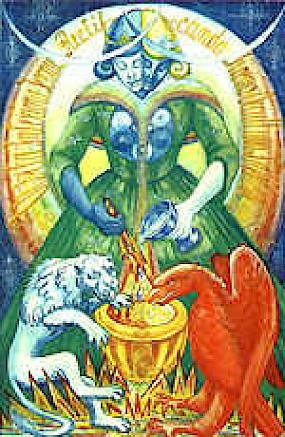
Art (or Temperance) is numbered fourteen and usually shows the figure of a young woman or angelic being, who is pouring water from one vessel into another. Not a single drop is spilt. This card is related to the union and harmonisation of opposites.
Art shows us that those among us who allow a free flow of life force use it the most effectively, wasting the least and achieving most. If we are thoughtful, receptive and in harmony, we allow the Higher Powers to run unhindered through our spirits and emotions – and finally into our daily lives.
Life is a river. Instead of clinging on to a rock let go and become part of the water. Find the still point within and live from that point and by doing that our hopes and dreams come closer.
(via angelpaths.com and Alan Blackman)
Plato’s Republic with Pierre Grimes
New Thinking Allow • Nov 10, 2022 Pierre Grimes, PhD, is a specialist in classical Greek philosophy. He is the founder of the American Philosophical Practitioners Association. He is also founder of the Noetic Society in the Los Angeles area. He is author of Philosophical Midwifery: A New Paradigm for Understanding Human Problems, Socrates and Jesus: A Dialogue in Heaven, and Unblocking: Removing Blocks to Understanding. He is also a decorated veteran of the second world war. In this video from 2017 he maintains that Plato’s great work, The Republic, is primarily about the soul and philosophy and only secondarily about politics. He describes the Allegory of the Cave in detail and how it depicts the imprisonment of the soul. He suggests that Plato’s emphasis on the Self has been misinterpreted, and this has amounted to a betrayal of philosophy. He also emphasizes the Greek interest in dreams. Philosopher-Kings, he maintains, were the watchers of dreams. New Thinking Allowed host, Jeffrey Mishlove, PhD, is author of The Roots of Consciousness, Psi Development Systems, and The PK Man. Between 1986 and 2002 he hosted and co-produced the original Thinking Allowed public television series. He is the recipient of the only doctoral diploma in “parapsychology” ever awarded by an accredited university (University of California, Berkeley, 1980). He is also the Grand Prize winner of the 2021 Bigelow Institute essay competition regarding the best evidence for survival of human consciousness after permanent bodily death. (Recorded on October 3, 2017.)