In June of 1952, the United States Fish & Wildlife Service received a letter of resignation from its most famous marine biologist. On the line requesting the reason for resignation, she had stated plainly: “To devote my time to writing.” But she was also leaving for the freedom to use her public voice as an instrument of change, awakening the world’s ecological conscience with her bold open letters holding the government accountable for its exploitation of nature.
Fifteen years earlier, at age twenty-nine, Rachel Carson (May 27, 1907–April 14, 1964) had gotten her start at the lowest rungs of the government agency as a field aide hired at $6.50 an hour. Wading through tide pools and annual marine census reports as a junior aquatic biologist, she had found her voice as a writer with an uncommon gift for walking the teeming shoreline between the scientific and the poetic. In an unexampled essay that eventually bloomed into The Sea Around Us, which won her the National Book Award, she had invited the human imagination undersea, into a world then more mysterious than the Moon. Now, forty-five and finally free from the day-job by which she had been supporting her mother, her sister, and the young nephew she adopted and raised as her son after her sister’s death, Carson set out to fulfill her childhood dream of living by the ocean.
Rachel Carson
After searching along the New England coast, she fell in love with West Southport — a picturesque island in Maine, nestled among evergreens and oaks in the estuary of the Sheepscot River, where seals frequented the beach and whales billowed by as though torn from the pages of her beloved Melville. With her book royalties, she bought a plot of land on which to build a cottage. In a touching testament to her orientation to the natural world, she felt deeply uncomfortable thinking of herself as its “owner” — a “strange and inappropriate word” — of this “perfectly magnificent piece of Maine shoreline.” There, she would soon meet her soul mate, whose love would bolster Carson’s moral courage in catalyzing the environmental movement; there, she would compose her next book, dedicating it to her beloved Dorothy for having gone down with her “into the low-tide world” and “felt its beauty and its mystery.”
The Edge of the Sea was an ambitious guide to the seashore — the place where Carson found “a sense of the unhurried deliberation of earth processes that move with infinite leisure, with all eternity at their disposal”; the strange and wondrous boundary the ocean-loving Whitman had once extolled as “that suggesting, dividing line, contact, junction… blending the real and ideal, and each made portion of the other.”
The book was also an admonition against what we stand to lose — writing in the early 1950s, Carson noted the systematically documented and “well recognized” fact of global climate change. But was primarily a celebration, for that is always the most effective instrument of admonition — a celebration of what we have and what we are, an ode to “how that marvelous, tough, vital, and adaptable something we know as LIFE has come to occupy one part of the sea world and how it has adjusted itself and survived despite the immense, blind forces acting upon it from every side.”
Inevitably, in telling the story of life, the book takes on an existential undertone, rendered symphonic under Carson’s poetic pen. Watching the fog engulf the rocks beneath her study window as the night tide rolls in, she considers the totality of being, which the world’s oceans contour and connect:
Hearing the rising tide, I think how it is pressing also against other shores I know — rising on a southern beach where there is no fog, but a moon edging all the waves with silver and touching the wet sands with lambent sheen, and on a still more distant shore sending its streaming currents against the moonlit pinnacles and the dark caves of the coral rock.
Then in my thoughts these shores, so different in their nature and in the inhabitants they support, are made one by the unifying touch of the sea. For the differences I sense in this particular instant of time that is mine are but the differences of a moment, determined by our place in the stream of time and in the long rhythms of the sea. Once this rocky coast beneath me was a plain of sand; then the sea rose and found a new shore line. And again in some shadowy future the surf will have ground these rocks to sand and will have returned the coast to its earlier state. And so in my mind’s eye these coastal forms merge and blend in a shifting, kaleidoscopic pattern in which there is no finality, no ultimate and fixed reality — earth becoming fluid as the sea itself.
The Great Wave off Kanagawa by Japanese artist Hokusai, 1831. (Available as a print and as a face mask, benefitting The Nature Conservancy.)
On all these shores there are echoes of past and future: of the flow of time, obliterating yet containing all that has gone before; of the sea’s eternal rhythms — the tides, the beat of surf, the pressing rivers of the currents — shaping, changing, dominating; of the stream of life, flowing as inexorably as any ocean current, from past to unknown future.
[…]
Contemplating the teeming life of the shore, we have an uneasy sense of the communication of some universal truth that lies just beyond our grasp. What is the message signaled by the hordes of diatoms, flashing their microscopic lights in the night sea? What truth is expressed by the legions of the barnacles, whitening the rocks with their habitations, each small creature within finding the necessities of its existence in the sweep of the surf? And what is the meaning of so tiny a being as the transparent wisp of protoplasm that is a sea lace, existing for some reason inscrutable to us — a reason that demands its presence by the trillion amid the rocks and weeds of the shore? The meaning haunts and ever eludes us, and in its very pursuit we approach the ultimate mystery of Life itself.
Art from Geographical Portfolio — Comprising Physical, Political, Geological, and Astronomical Geography by Levi Walter Yaggy, 1887. (Available as a print, benefitting The Nature Conservancy.)
As The Edge of the Sea alighted in the world, critical praise and honors came cascading, trailed by invitations for lectures and acceptance speeches. Always uncomfortable with attention and public appearances, Carson became even more selective, prioritizing women’s associations and nonprofit cultural institutions over glamorous commercial stages. When she did speak, her words became almost a consecration, as in a speech she delivered before a convocation of librarians:
When we go down to the lowest of the low tide lines and look down into the shallow waters, there’s all the excitement of discovering a new world. Once you have entered such a world, its fascination grows and somehow you find your mind has gained a new dimension, a new perspective — and always thereafter you find yourself remember[ing] the beauty and strangeness and wonder of that world — a world that is as real, as much a part of the universe, as our own.
When I first read Confucius, I was disappointed. He seemed like a stick-in-the-mud, obsessed with enforcing the status quo. ‘As for music,’ he grumped to his disciples, ‘listen only to Shao and Wu. Prohibit the tunes of Zheng.’
This was the great sage of ancient China, who wandered the country lecturing disciples and rulers on how to live? Maybe his approach worked 2,500 years ago. But for me, in the 21st century? I preferred living freely like the iconoclastic Daoist sages who mocked Confucius.
Central to Confucius’s teachings was submission to li (禮), typically translated as ‘ritual’. I wrote it off as more stale traditionalism. But then, while preparing a course on classical Chinese thought, I re-read the foundational collection of Confucius’s teachings known as the Analects.
It was a revelation. Cherrypicked passages such as the one about music were deeply misleading. Li wasn’t about fastidiously obeying fusty old rules.
No, this was a different kind of ritual. My default understanding of the word had misled me. What Confucius taught was life-as-ritual, the transformation of everyday actions into sacred activity. ‘When we say “the rites, the rites”, are we speaking merely of jade and silk?’ he asks rhetorically. The answer is no. Confucian ritual goes beyond formalised activities that require the proper use of jade and silk. Ritual is – or can be – part of all human activity. It governs greetings and conservations. It’s how you harmonise your life with the rhythms of the world. And if you take ritual seriously, submit to it and practise it, then transforming your life for the better will go from difficult to effortless.
Ritual is about reverence
One of the first things I transformed with Confucian ritual was my relationship to my phone. Like so many of us, I was constantly tempted to check it. While driving, while bored by a story my nine-year-old daughter was telling, while out on a hike, anywhere. I knew I shouldn’t, but I did anyway, with terrible results: a near-miss of a pedestrian; a daughter who saw I wasn’t paying attention; a lousy hike.
And yet, in certain contexts, keeping my phone where it belonged was easy. I have never taken it out while teaching a class and scrolled through Twitter. Why? Because doing so is ritually inappropriate, and I took that seriously.
To embrace Confucian ritual is to treat all contexts the way I treat my classroom, as sacred spaces with their own rhythms and patterns. Driving a car is not a time to check my phone. Likewise for talking with my daughter and for hiking. As soon as I began treating those contexts with the reverence they deserved – as soon as I submitted to ritual – resisting the pull of my phone became effortless.
Sign-up to our weekly newsletter
Intriguing articles, practical know-how and immersive films, straight to your inbox.SubscribeSee our newsletter privacy policy
Confucius cared deeply about the practical application of his teachings. ‘To learn and then have occasion to practise what you have learned – is this not satisfying?’ he asks in the first line of the Analects. The real test of li is to see whether it works in your life. It has passed my test, and I think that’s because, more than 2 millennia ago, Confucius discovered universal principles that – unlike his taste in music! – still apply today.
Will submitting to ritual work for you? The Confucian way to find out is by learning and then having occasion to practise.
Think it through
Everything is ritual
The Analects describes many practices that fit a generic understanding of ritual, like proper mourning and how to respect guests. Guidance is often specific: ‘When attending village drinking ceremonies, [Confucius] would leave only after the elderly people had left.’
But other passages describe a more expansive version of ritual: ‘Do not look unless it is in accordance with ritual; do not listen unless it is in accordance with ritual; do not speak unless it is in accordance with ritual; do not move unless it is in accordance with ritual.’
What might seem like recipe for neuroticism is in fact a revolutionary statement about the all-encompassing range of ritual. Consider proper timing, essential for standard rituals. You sing in church only at the right time. Though, as Confucius points out, timing is an essential element of all activities. ‘To speak when it is not yet time to speak – this is called being rash. To not speak when it is time to speak – this is called being secretive.’ Sometimes you rush to say something instead of waiting for your friend to finish. You haven’t treated the rhythm of the conversation as sacred. You violated Confucian ritual. And what happens? Your friend gets pissed off because you interrupted them.
Rhythms and patterns are everywhere, and so is the possibility of harmonising with them. In a remarkable passage, Confucius and his disciples startle a pheasant, which takes flight and then alights in a tree. ‘How timely it is! How timely it is!’ he cries.
It’s a puzzling response. How can a bird be timely? Why does this anecdote conclude a chapter otherwise dedicated to generic rituals, such as receiving guests?
The puzzle is resolved by recognising that everything is shot through with rhythms.
‘What does Heaven ever say?’ muses Confucius. ‘Yet the four seasons go round and find their impetus there.’ In the words of Ecclesiastes 3, there is a time for everything: a time to be silent and a time to speak, a season for every activity under the heavens.
Like skilful musicians improvising harmoniously with each other, we can play along with the world. There is room for freedom in this play. There are infinite ways to have a good conversation, infinite features of nature to focus on while hiking. But, as any musician will tell you, creating beautiful music also requires submitting to constraints. Harmony is cooperative, and cooperation means respecting your partners, the pattern of their desires and contributions.
To follow Confucian ritual means partnering with the world in the sacred activity of living … and that means taking constraints seriously, instead of resenting them or ignoring them. Doing so is joyful, not burdensome, just like playing with fellow musicians is better than trying to play over them. Practise enough, and proper ritual comes automatically. The harmony is effortless. And ‘when it comes to the practise of ritual, it is harmonious ease [he ( 和)] that is to be valued.’
Ritual is even better than good habits
Ritual as effortless action – the Chinese term is wu-wei (無為) – might make ritual seem like habit. Good habits (and bad ones) are effortless, reflexive actions cultivated through repetition.
But there’s a serious problem with this analogy. Habits are difficult to change. They are inflexible. If you are in the habit of, say, greeting people by shaking their hand, then not shaking hands during the COVID-19 pandemic might initially take effort. You must change the habit.
In this sense, ritual is more like improvised music or athletic performance. Jazz soloists do not play according to rigid habits. They adjust to their bandmates, the mood of the evening. The same is true of good athletes, who adjust to different opponents and conditions. Playing exactly the same way according to habit would be the equivalent of greeting every person you meet, from strangers to your spouse, in exactly the same way.
Confucian ritual is similarly flexible. It depends on awareness of the relevant factors in any given situation. Someone who submits to ritual does not shake hands out of habit. She shakes hands because in that context shaking hands is the proper thing to do. When a pandemic hits, shaking hands may no longer be the right way to greet someone. If your actions are habituated, changing them will take effort. But if your actions are a function of ritual, you shift away from handshaking and adjust your greeting style to the relevant factors of the new context. And if you are a master of ritual, adjustment comes effortlessly, like an athlete or musician who’s ‘in the zone’.
We already make these effortless adjustments in traditional ritual contexts. If you are in the habit of wearing shoes in your place of worship, it takes no effort to remove them during a visit to a Buddhist temple. It’s easy, not because you’ve outsourced your will to habit, but because you understand the ritual importance of taking off your shoes in this context despite your habit of leaving them on. Confucian ritual simply makes the world your temple.
In fact, embracing Confucian ritual has helped me break all kinds of bad habits, like plucking my beard nervously or tossing clothes on the bed instead of hanging them up. How? I acknowledge the patterns of the world and treat them as sacred. Beards are not for plucking; the bed is not a place to store my clothes. Violating those patterns is like walking into the temple with my shoes on.
But all this talk of patterns raises an important question. In some cases – clothes on the bed, texting while driving – the pattern is clear. But what if the pattern isn’t clear? What if you find yourself floundering, the musicians around you playing a melody you’ve never heard?
Fortunately, Confucius has the solution: study!
Never stop studying
Throughout the Analects, Confucius stresses the importance of studying. Since he cites frequently from classics such as the Book of Odes, I originally thought Confucian ritual was little more than mindless obedience of whatever those classics described.
But that’s not what Confucius teaches. To begin with, he acknowledges that some rare people might not need to learn from the classics at all. When it comes to living an ideal life, ‘those who are born understanding it are the best; those who come to understand it through learning are second.’ Those who are born understanding it. All of us have met someone like this – a virtuoso who intuits the complicated dynamics of a social gathering without knowing a thing about the attendees. In the musician analogy, this is the genius who can sit down and jam in any style. However, even if you aren’t like that, you can learn a bit about the event and the people so you don’t blunder by walking into a private conversation or bringing up a taboo topic.
Since ritual governs all behaviour in all contexts, studying classics is uniquely helpful in two key ways. First, classics contain time-tested life wisdom that non-virtuosos such as myself might come to only through laborious trial and error. Common norms that emerge when you study them – Confucius, like Jesus, advocates a version of the Golden Rule – suggest certain foundational patterns in reality with which the norms are meant to harmonise.
Second, if you have never studied the classics, you’ll have more difficulty understanding the dynamics that govern everything from language to basic social interactions. Sacred texts, folk tales and fairy tales, nursery rhymes and proverbs – these are woven into the fabric of our lives and the organisation of our communities. How can you expect to live harmoniously if you do not understand the reasons why you and those around you act as you do, why institutions are structured as they are?
Notably, Confucius doesn’t require rigid adherence to the norms described in the classics. ‘If you merely stick rigidly to ritual in all matters, great and small, there will remain that which you cannot accomplish.’ Sticking rigidly to a specific ritual is not ritual at all; it’s habit.
That means it’s consistent with Confucius’s approval of flexibility for us to study classics that relates to our own culture. (Instead of the music of Shao, I prefer Johnny Cash’s ‘I Walk the Line’.) And not just our own culture: in a globalised world, ‘our culture’ is frequently many cultures, all with their own rhythms and patterns. Studying broadly helps us harmonise with whatever style of music we happen to encounter. If you know that in India nods and head shakes mean something different than in most other countries, you won’t be needlessly offended the first time you’re surprised by a vigorous head shake.
While classics are very useful, they are far from the only object of study. Confucius constantly sought out information about new contexts. While visiting a temple, for example, he ‘asked questions about everything that took place’. Seeing this, someone mocked him: ‘Who said that this son of a man from Zou understands ritual? When he went into the Great Ancestral Temple, he had to ask questions about everything.’
Confucius has a reply for the ages: ‘This asking is, in fact, part of ritual.’
Not only does his response underscore the broad scope of Confucian ritual, it also shows how ritual differs from habit. Habits leave no room for asking questions. Confucius, by contrast, does not act reflexively. When he is missing relevant knowledge, the right ritual is to learn through asking questions. Only then can he proceed to act in accordance with ritual – and, beautifully, merely by asking questions, he was already doing so.
You can’t fake it until you make it
Although study is important to Confucius, it is secondary to cultivating virtue. A virtuous person without book learning still possesses the ‘qualities that make one worthy of being called “learned”’. Even more importantly, virtues like sincerity and kindness are essential to ritual. ‘A man who is not Good,’ asks Confucius, ‘what has he to do with ritual?’
This cuts against the common adage of ‘fake it until you make it’, which suggests that performing the right action will eventually lead to the right mindset or intentions. The underlying assumption is that the rightness of an action can be separated from the character of the person performing it.
Confucius disagrees. ‘If I am not fully present at the sacrifice, it is as if I did not sacrifice at all.’ A ritual is not a ritual if it is performed insincerely. Pretending to love another human being won’t work, because ‘loving’ entails doing it for real. There is no such thing as a ‘loving action’ independent of sincerity. The same is true for living in accordance with Confucian ritual. You must sincerely believe the world is a sacred place, and you must be genuine in your desire to harmonise with it.
My favourite example of this in the Analects is a man named Gongming Jia who is singled out for enthusiastic praise by Confucius. For what? Nothing special: ‘He only laughed when he was genuinely full of joy, and so people never tired of hearing him laugh.’
This seemingly banal example highlights the necessary relationship in ritual between character and action. You may know when laughter is appropriate but, if you fake it, the ritual will fail. We are habituated to laugh insincerely, to fit in or demonstrate how relaxed we are. Breaking that habit, resisting the temptation – it’s effortless when you recognise fake laughter is as sacrilegious as laughing during a funeral. How do you know the right time to laugh? When it’s appropriate, yes, but also only when you’re feeling it. Follow that ritual, and people will never tire of your laughter, just like they never did of Gongming Jia’s.
Key points – How to set yourself free with ritual
Ritual is not about stale traditionalism. The teachings of Confucius’s Analects are about submission to life-as-ritual, not about enforcing the status quo or obeying fusty old rules.
Ritual is about reverence. Treat the world around you seriously, with respect for its rhythms and patterns.
Everything is ritual. We shouldn’t restrict the scope of ritual to activities such as weddings and funerals. The world is a sacred space with its own patterns, and we can ritually harmonise with it at all times.
Ritual is even better than good habits. Habits are inflexible, and that’s a liability. Confucian ritual is flexible, and performing it properly entails willingness to adjust yourself to different contexts.
Never stop studying. Except for a few geniuses, seeing the patterns of the world can be tough. Reading widely and asking questions when you’re confused is, itself, part of ritual.
You can’t fake it until you make it. Without cultivating sincerity and kindness, your rituals will be hollow. A fake ritual is not a ritual at all, no matter how much it looks like one.
Why it matters
What to take and what to reject
Despite Confucius’s praise of flexibility, he can still be quite traditional. Zigong, one of his students, wanted to end the ritual sacrifice of a lamb that marks the beginning of each month. Confucius responds: ‘Zigong! You regret the loss of the lamb, whereas I regret the loss of the rite.’
This desire to keep a seemingly wasteful and cruel ritual is of a piece with Confucius’s desire to ‘transmit rather than innovate’. He trusts in the ancient ways and loves them. And it’s not just generic rituals. Women are described, along with servants, as ‘particularly hard to manage’. Is sexism an ancient way that we should love and trust?
Modern suspicion of ritual is bound up with broader concerns about freedom and resistance to change. Submission to ritual can feel like giving up on the possibility of changing bad rituals.
But that’s not what Confucius wanted. Throughout the Analects, there are examples of his departing from tradition. ‘In education, there are no differences in kind,’ he asserts, a striking departure from prevalent class-based education norms.
We can learn from Confucius but also reject the specifics of what he gets wrong. Doing so, like asking questions, is part of ritual. As he says himself: ‘When it comes to being Good, defer to no one, not even your teacher.’ Ultimately, Confucian ritual isn’t a set of practices, but rather a call to harmonise one’s actions with the patterns of the world. The ideal remains constant, even if the actions themselves must change depending on the context.
Links & books
The TEDx talk ‘Why It’s Better to Stop Searching for Your True Self’ (2017) by the sinologist Michael Puett of Harvard University is a great introduction to how ritual can change our perspective on life.
The entry on Confucian ritual and psychology in the online Stanford Encyclopedia of Philosophy does a wonderful job exploring connections I couldn’t.
The short classicConfucius: The Secular as Sacred (1972) by the analytic philosopher Herbert Fingarette describes li as magical.
The Chinese Text Project is an online open-access library that has parallel English/Chinese translations of Chinese classics, including the Analects.
For an online open-access translation of the Analects, go to the 2015 version by Robert Eno, a sinologist at Indiana University, who also provides commentary.
“Ego says, ‘Once everything falls into place, I’ll feel peace.’ Spirit says, ‘Find your peace and then everything will fall into place.’” Marianne Williamson (b. 1952) American Writer
AN OPPORTUNITY FOR DAILY REFLECTION BROUGHT TO YOU BY THE SCHOOL OF PRACTICAL PHILOSOPHY
At the time when Aldous Huxley received George Orwell’s iconic book 1984, Huxley’s eye-sight was already deteriorating quickly. But because he concerned himself with the monumental importance of the subject of the book, he took the arduous effort to finish it.
What follows is an exploration of Huxley’s thoughts on the haunting future envisioned in the totalitarian world of 1984.
Huxley starts by praising Orwell’s vision of dystopia and the accuracy with which Orwell highlights the ruling elite’s deep-rooted belief that they can and should control the entire human organism, their perception, thoughts, and feelings. Huxley believed when we can all become critical of these agenda’s we will have “the Ultimate Revolution.”
Yet, Huxley believed one single determining factor would in the end prove Orwell wrong: namely, efficiency.
“The policy of boot-on-the-face,” as Huxley called it, is wasteful. It takes too much energy to sustain itself. Because of Huxley’s intimate knowledge of mind-altering drugs, psychological conditioning, and the sedating effects narcotics, he knew there was something far more powerful to manipulate the masses. And he was right.
But the fact that we don’t see the “boot” regularly doesn’t make Orwell wrong. You only have to look at the truth of our situation today to see that both of their radical insights act perfectly in conjunction.
Read Aldous Huxley’s prophetic letter to George Orwell Regarding 1984 below:
Wrightwood. Cal.
21 October, 1949
Dear Mr. Orwell,
It was very kind of you to tell your publishers to send me a copy of your book. It arrived as I was in the midst of a piece of work that required much reading and consulting of references; and since poor sight makes it necessary for me to ration my reading, I had to wait a long time before being able to embark on Nineteen Eighty-Four.
Agreeing with all that the critics have written of it, I need not tell you, yet once more, how fine and how profoundly important the book is. May I speak instead of the thing with which the book deals — the ultimate revolution? The first hints of a philosophy of the ultimate revolution — the revolution which lies beyond politics and economics, and which aims at total subversion of the individual’s psychology and physiology — are to be found in the Marquis de Sade, who regarded himself as the continuator, the consummator, of Robespierre and Babeuf.
The philosophy of the ruling minority in Nineteen Eighty-Four is a sadism which has been carried to its logical conclusion by going beyond sex and denying it. Whether in actual fact the policy of the boot-on-the-face can go on indefinitely seems doubtful. My own belief is that the ruling oligarchy will find less arduous and wasteful ways of governing and of satisfying its lust for power, and these ways will resemble those which I described in Brave New World.
I have had occasion recently to look into the history of animal magnetism and hypnotism, and have been greatly struck by the way in which, for a hundred and fifty years, the world has refused to take serious cognizance of the discoveries of Mesmer, Braid, Esdaile, and the rest.
Partly because of the prevailing materialism and partly because of prevailing respectability, nineteenth-century philosophers and men of science were not willing to investigate the odder facts of psychology for practical men, such as politicians, soldiers and policemen, to apply in the field of government. Thanks to the voluntary ignorance of our fathers, the advent of the ultimate revolution was delayed for five or six generations. Another lucky accident was Freud’s inability to hypnotize successfully and his consequent disparagement of hypnotism. This delayed the general application of hypnotism to psychiatry for at least forty years. But now psycho-analysis is being combined with hypnosis; and hypnosis has been made easy and indefinitely extensible through the use of barbiturates, which induce a hypnoid and suggestible state in even the most recalcitrant subjects.
In other words, I feel that the nightmare of Nineteen Eighty-Fouris destined to modulate into the nightmare of a world having more resemblance to that which I imagined in Brave New World. The change will be brought about as a result of a felt need for increased efficiency.
Meanwhile, of course, there may be a large scale biological and atomic war — in which case we shall have nightmares of other and scarcely imaginable kinds.
According to Huxley, then, the “boot” would transmute into a happy-pill because of a “felt need for increased efficiency.” The nightmare Huxley envisioned is nightmarish exactly because it wouldn’t be experienced as a nightmare, it would just be considered normal.
If we finally break out of the force-fed bubble of egotism and passivity and educate ourselves of the truth amidst the swamp of disinformation, the boot still comes down.
We might not live in either fully realised dystopia yet, but there are alarming trends that a conjunction of both are possible.Loved This21
by Martijn Schirphttps://platform.twitter.com/widgets/follow_button.d7fc2fc075c61f6fa34d79a0cbbf1e34.en.html#dnt=false&id=twitter-widget-0&lang=en&screen_name=MartijnSchirp&show_count=false&show_screen_name=true&size=l&time=1654796029209 Martijn left his professional poker career to meditate in the Himalayas, replacing casinos with monasteries, and pokerchips with Dharma books. Returning home, he studied interdisciplinary science and philosophy (phenomenology in particular), before immersing himself into the shamanistic practices of the Amazon. A curious explorer, Martijn attempts to bridge entrepreneurship with being a Bodhisattva. At this point in time, he is the Executive Director of Synthesis, the world’s first legal psychedelic retreat to be able to make claims for the effectiveness of our programme, based on clinically-devised findings. Follow him on Instagram.
Carnegie Hall Premiered 23 hours ago Carnegie Hall is proud to host this historic concert in solidarity with the people of Ukraine, featuring luminaries of classical music, opera, jazz, and Broadway. All contributions support Direct Relief, a humanitarian aid nonprofit organization that provides urgently needed medical supplies to relief groups on the ground in Ukraine. Give now: https://www.directrelief.org/carnegie… Artists include: Angel Blue Michael Feinstein Sullivan Fortner Denyce Graves Evgeny Kissin Isabel Leonard Midori Itzhak Perlman Cécile McLorin Salvant Chris Thile Jessica Vosk Adrienne Warren Members of Ensemble Connect Ukrainian Chorus Dumka of New York Richard Gere, Host Mary-Mitchell Campbell, Musical Director Bryan Wagorn, Piano Marc Bruni, Director Robert Cary and Jonathan Tolins, Writers Alan Adelman, Lighting Designer Nevin Steinberg, Sound Designer Habib Azar, Audiovisual Director Nathan Brandwein, Associate Audiovisual Director Carnegie Hall’s mission is to present extraordinary music and musicians on the three stages of this legendary hall, to bring the transformative power of music to the widest possible audience, to provide visionary education programs, and to foster the future of music through the cultivation of new works, artists, and audiences.
JUNE 7, 2022 AT 7:00 AM BY ROB BREZSNY (newcity.com)
Photo: Erwan Hesry
ARIES (March 21-April 19): “It takes a spasm of love to write a poem,” wrote Aries author Erica Jong. I will add that it takes a spasm of love to fix a problem with someone you care about. It also takes a spasm of love to act with kindness when you don’t feel kind. A spasm of love is helpful when you need to act with integrity in a confusing situation and when you want to heal the past so it doesn’t plague the future. All the above advice should be useful for you in the coming weeks, Aries. Are there any other variations you can think of? Fill in the blank in the next sentence: It takes a spasm of love to _____________.
TAURUS (April 20-May 20): “The great epochs of our life come when we gain the courage to rechristen our badness as what is best in us,” wrote philosopher Friedrich Nietzsche. When I read that ambitious epigram, I didn’t know what he was referring to. By “badness,” did he mean the ugly, pathological parts of us? That couldn’t be right. So I read scholars who had studied the great philosopher. Their interpretation: Nietzsche believed the urges that some religions seek to inhibit are actually healthy for us. We should celebrate, not suppress, our inclinations to enjoy sensual delights and lusty living. In fact, we should define them as being the best in us. I encourage you Bulls to do just that in the coming weeks. It’s a favorable time to intensify your devotion to joy, pleasure and revelry.
GEMINI (May 21-June 20): It’s an excellent time to correct and uplift your self-image. I invite you to speak the following affirmations aloud: “I am not damaged. I am not on the wrong path. I am not inept or ignorant or off-kilter. The truth is, I am learning how to live. I am learning how to be a soulful human and I am doing a reasonably good job at that task. I do a lot of things really well. I’m getting to know myself better every day. I constantly surprise myself with how skilled I am at adjusting to life’s constant changes. I AM AMAZED AT HOW MUCH PROGRESS I HAVE MADE IN LEARNING HOW TO LIVE.”
CANCER (June 21-July 22): In the Tibetan language, the term nyingdu-la means “most honored poison of my heart.” Many of us know at least one person who fits that description: an enemy we love to hate or a loved one who keeps tweaking our destiny or a paradoxical ally who is both hurtful and helpful. According to my analysis, it’s time for you to transform your relationship with a certain nyingdu-la in your life. The bond between you might have generated vital lessons for you. But now it’s time for a re-evaluation and redefinition.
LEO (July 23-Aug. 22): “Don’t pray for the rain to stop,” advises Leo poet Wendell Berry. “Pray for good luck fishing when the river floods.” That’s useful advice for you, my dear. The situation you’re in could turn out to be a case of either weird luck or good luck. And how you interpret the situation may have a big impact on which kind of luck it brings. I urge you to define the potential opportunities that are brewing and concentrate on feeding them.
VIRGO (Aug. 23-Sept. 22): Virgo writer Julio Cortázar (1914–1984) once remarked, “How tiring it gets being the same person all the time.” That’s surprising. In fact, Cortázar was an innovative and influential author who wrote over thirty books in four genres and lived for extended periods in five countries. It’s hard to imagine him ever being bored by his multifaceted self. Even if you’re not a superstar like Cortázar, Virgo, I expect you will be highly entertained and amused by your life in the coming weeks. I bet you will be even more interesting than usual. Best of all, you will learn many fresh secrets about your mysterious soul.
LIBRA (Sept. 23-Oct. 22): The blogger Frogbestfriend says, “One of the biggest problems with society nowadays is that I am so, so sleepy.” Frogbestfriend is humorously suggesting that his inability to maintain good sleep habits is rooted in civilization’s dysfunctions. He’s right, of course! Many of our seemingly personal problems are at least partially rooted in the pathological ways the whole world operates. Our culture influences us to do things that aren’t always healthy and wise. I bring this to your attention, Libra, because now is a favorable time to meditate on society’s crazy-making effects on you. Now is also a pivotal moment to heal yourself of those crazy-making effects.
SCORPIO (Oct. 23-Nov. 21): Poet Maggie Smith writes, “We talk so much of light. Please let me speak on behalf of the good dark. Let us talk more of how dark the beginning of a day is.” I offer her proposal as a fertile theme for your meditations. Of all the signs in the zodiac, you Scorpios are most skilled at teasing out the good stuff from shadows and secrets and twilight. And your potency in these matters is even higher than usual right now. Do us all a favor and find the hidden redemptions and potential regenerations.
SAGITTARIUS (Nov. 22-Dec. 21): When actors and other creative people in film win Oscars at the Academy Awards ceremony, they come on stage and deliver short talks, acknowledging their honor. These speeches often include expressions of gratitude. An analysis revealed that over the years, Sagittarian director Steven Spielberg has been thanked by winners more often than anyone else—even more than God. Based on my reading of astrological omens, I believe you deserve that level of appreciation in the coming weeks. Please show this horoscope to everyone you know who may be willing to carry out my mandate. Be proactive in collecting tribute, credit and favors.
CAPRICORN (Dec. 22-Jan. 19): In the ancient Greek story of Odysseus, the hero leaves his home in Ithaka to fight in the Trojan War. When the conflict is over, he yearns to return to the beloved life he left behind. But his journey takes ten years. His tests and travails are many. The twentieth-century Greek poet C. P. Cavafy offered advice to Odysseus at the beginning of his quest: “As you set out for Ithaka, hope your road is a long one, full of adventure, full of discovery… Keep Ithaka always in your mind. Arriving there is what you’re destined for. But don’t hurry the journey. Better if it lasts for years, so you’re old by the time you reach the island, wealthy with all you’ve gained on the way.” As you begin your new phase of returning home, Capricorn, I invite you to keep Cavafy’s thoughts in mind. (Read the poem: tinyurl.com/HomeToIthaka. Translated by Edmund Keeley.)
AQUARIUS (Jan. 20-Feb. 18): “I have never, ever, EVER met anyone who has regretted following their heart,” writes life coach Marie Forleo. But what exactly does she mean by “following their heart”? Does that mean ignoring cautions offered by your mind? Not necessarily. Does it require you to ignore everyone’s opinions about what you should do? Possibly. When you follow your heart, must you sacrifice money and status and security? In some cases, yes. But in other cases, following your heart may ultimately enhance your relationship with money and status and security. Anyway, Aquarius. I hope I’ve inspired you to meditate on what it means to follow your heart—and how you can do that intensely during the coming months.
PISCES (Feb. 19-March 20): Actor and author Jenny Slate testifies, “As the image of myself becomes sharper in my brain and more precious, I feel less afraid that someone else will erase me by denying me love.” That is the single best inspirational message I can offer you right now. In the coming months, you will earn the right and the capacity to make the same declaration. Your self-definition will become progressively clearer and stronger. And this waxing superpower will enable you to conquer at least some of your fear about not getting enough love.
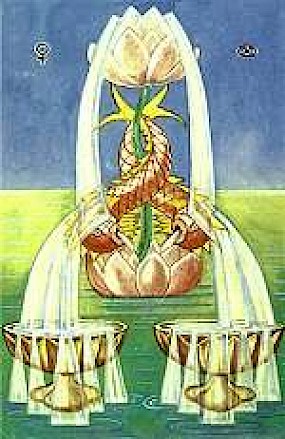
And here we have the Lord of Love, a card of bliss, deep joyous love reciprocated fully and with great enthusiasm, a card of reconciliations and new growth! Here we see harmonious and contented exchanges of emotion, which vibrate with an ecstatic undercurrent of passion and heat.
Because this card is a reflective and receptive one, there’s an issue that people sometimes forget when reading it – to be truly loved, deeply treasured, valued highly by others, we must first and foremost strive to feel those things for ourselves. When we work toward loving ourselves, we hold our inner nature in high regard, treating it with deference and proper respect. When we see ourselves in that light, other people cannot help but respond to our personal sense of value.
Furthermore, when we work to love ourselves, we release so many areas of self-doubt and uncertainty that we become infused by a new energy – and this we can lavish on others. The Two of Cups is about engaging in a caring and tender fashion with our own needs, first and foremost.
It isn’t so much about achieving self-love, as about, in every single day of our lives, striving towards self-love. That action leads us into a positive, self-supportive and accepting approach to life. And also, when we stop wasting energy telling ourselves what’s wrong with us, we have lots more energy to enjoy being who we are.
When this card comes up in a reading, if it relates to the inner journey, then it tells you to put your attention in the moment, to leave the past behind, and to let yourself be free to enjoy everything that comes your way.
If it relates to outer events, it may point to a forthcoming reconciliation in a relationship where there has been pain and disappointment – this need not be a love affair, it can cover many different types of loving relationship.
It might point up a new relationship which has recently begun and which will grow into a deep and lasting friendship or affair.
And finally, it may reassure you that the meaningful relationship in your life will strengthen and grow, developing into exactly what you need it to be!!
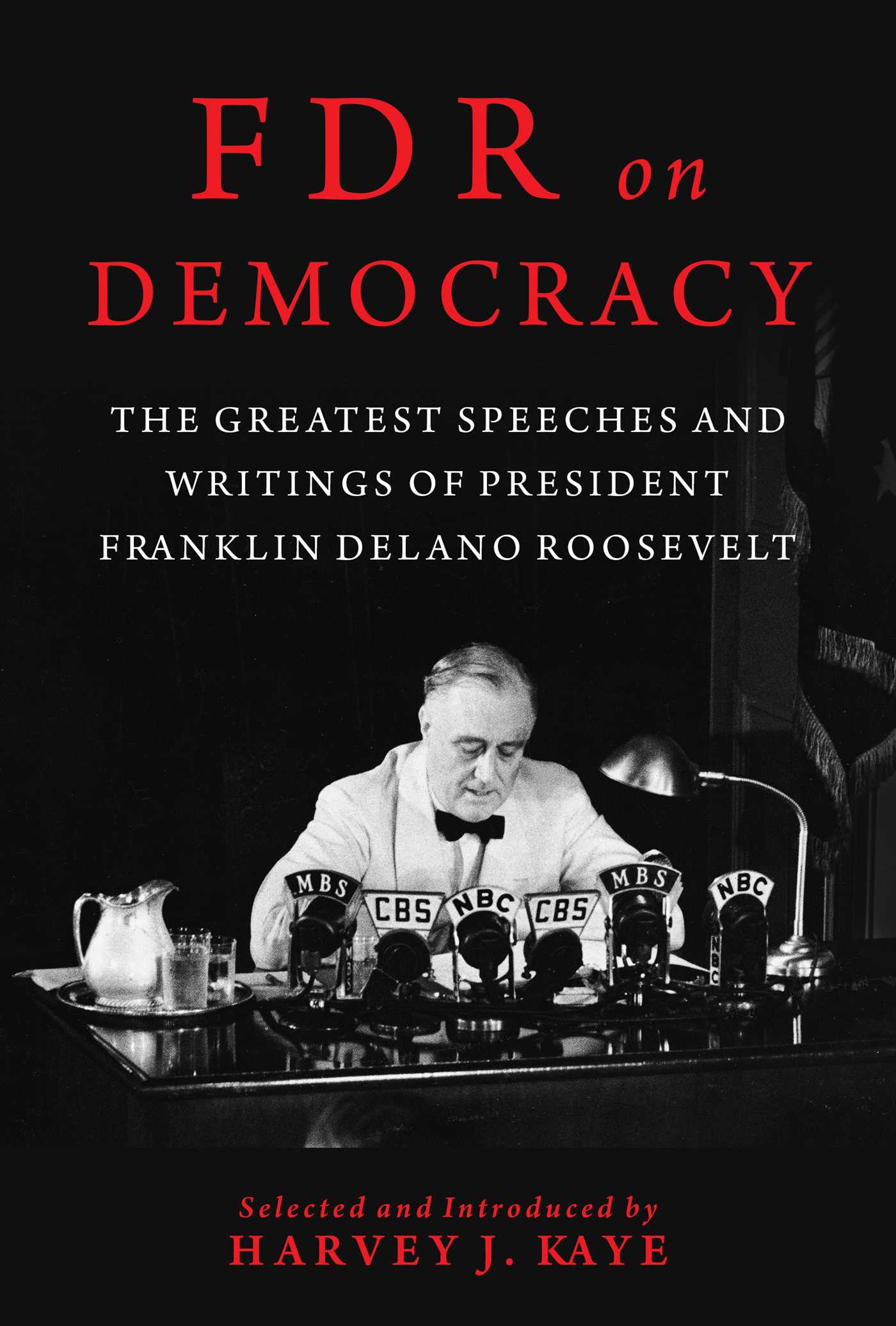
From One of the Greatest Leaders in American History, a Collection of the Words and Writings that Inspired a Generation of Americans to Become the Greatest Generation
In just under three decades of public life, Franklin Delano Roosevelt rose to become one of the greatest orators and leaders in American history. As the longest-serving US president, he guided the nation through two of the greatest challenges of the twentieth century—the Great Depression of the 1930s and the Fascist threat of the 1940s—and radically transformed American public life. In doing so, FDR created the conditions that enabled Americans to make the United States stronger, more prosperous, and more democratic than ever before for generations to come.
Through his words—selected, annotated, and introduced here by writer and scholar Harvey J. Kaye—we rediscover the liberal and social-democratic vision and promise that FDR articulated so powerfully. We recall Roosevelt’s efforts to redeem the challenge of the Declaration of Independence and renew the promise of equality and life, liberty, and the pursuit of happiness. We see him empower working people and make life more secure for more Americans. And we are reminded of his desire to not simply win the Second World War, but to create a nation and a world committed to the realization of the Four Freedoms—freedom of speech and worship, freedom from want and fear—indeed, to enact here in the United States a Second Bill of Rights, an Economic Bill of Rights for all Americans.
In this collection of his greatest writings and speeches, we encounter the words that inspired and encouraged Americans to remember who they were and what they were capable of accomplishing—the words that helped turn a generation of Americans into the Greatest Generation.
Now more than ever, we need to recall FDR’s words. Now, when FDR’s democratic legacy—the legacy of a generation—is under siege, we need to remind ourselves of who we are and what we need to do to make America freer, more equal, and more democratic.
(Goodreads.com)
FDR and his Legacy: A Conversation with historian Harvey Kaye and Marianne Williamson
Marianne Williamson Jun 4, 2022 Marianne Williamson discusses the legacy of President Franklin Delano Roosevelt with historian Harvey Kaye. Learn more at MarianneWilliamson.Substack.com
We have a Ukraine Emergency Translation Group meeting scheduled for this Friday, June10, at 11:00 AM Pacific Time, noon Mountain time, 1pm Central time, 2pm Eastern time, 8pm Greece, 9pm Turkey.
We will share your Translation with the group, if you like. You can email your Translation to me at zonta1111@aol.com.
Or perhaps you have a sense testimony you’d like to share. Or other insights or comments you may have.
Open to all Translators. Translate whatever you like or don’t Translate anything at all. Your choice.
See you Friday.
Mike Zonta Ukraine Emergency Translation Group
Prosperos Meetings is inviting you to a scheduled Zoom meeting. Topic: Ukraine Emergency Translation Group Time: June 10, 2022 11:00 AM Pacific Time (US and Canada)
One tap mobile +19292056099,,84023755291# US (New York) +13017158592,,84023755291# US (Washington DC) Dial by your location +1 929 205 6099 US (New York) +1 301 715 8592 US (Washington DC) +1 312 626 6799 US (Chicago) +1 669 900 6833 US (San Jose) +1 253 215 8782 US (Tacoma) +1 346 248 7799 US (Houston)
“I believe in God, but not as one thing, not as an old man in the sky. I believe that what people call God is something in all of us.” John Lennon (1940-1980) English Musician
AN OPPORTUNITY FOR DAILY REFLECTION BROUGHT TO YOU BY THE SCHOOL OF PRACTICAL PHILOSOPHY
Consciousness, spirituality, biography, sexuality, androgyny, futurism, space, the arts, science, astrology, democracy, humor, books, movies and more


Hearing the rising tide, I think how it is pressing also against other shores I know — rising on a southern beach where there is no fog, but a moon edging all the waves with silver and touching the wet sands with lambent sheen, and on a still more distant shore sending its streaming currents against the moonlit pinnacles and the dark caves of the coral rock.