Singularity: An Animated Ode to Our Primeval Bond with Nature and Each Other (Toshi Reagon Sings Marissa Davis)

By Maria Popova (brainpickings.org)

This is the fifth of nine installments in the 2021/2022 animated season of The Universe in Verse in collaboration with On Being, celebrating the wonder of reality through stories of science winged with poetry. See the rest here.

THE ANIMATED UNIVERSE IN VERSE: CHAPTER FIVE

Whenever I am down, I think of the gladiolus.

Whenever I ache with self-referential humanity — that evolutionary miracle of complex consciousness that endows us with the capacity for reflection and rumination at the root of all sorrow — I think of the gladiolus and its primal scream of color and its two-hundred-million-year triumph, governed by insentient forces stretching back to the Big Bang that bloomed a something out of the unimaginable nothingness.

I think of the gladiolus with its mohawk of blossoms — one-sided, bisexual, belonging to nature’s nonbinary citizenry: the “perfect flowers” — most of its 300 known species native to Africa, to which we too are native. A fierce beauty named after the Latin word for sword, known sometimes as “sword lily,” linking it to the flower for which my mother was named. A blade of blossoms pollinated by tiny wasps and long-tongued bees and hawk-moths, and then by self-conscious sapiens with opposable thumbs — a chainlink of humans holding hands across the epochs from Mendel to the young Puerto Rican woman at the Manhattan flower market, those generations of horticulturalists who hybridized and cultivated the small iridescent blossoms of the wild flower to make the towering blooms of solid red and white and yellow in my Bulgarian grandmother’s garden, on my Bulgarian grandfather’s coffin.

Gladiolus by Sydenham Teast Edwards from William Curtis’s Botanical Magazine, 1790. (Available as a print and as stationery cards, benefitting The Nature Conservancy.)

I think of the gladiolus, with which we share 98% of our DNA — that delicate arrangement of atoms forged long ago when all of them, yours and mine and the sword lily’s, banged into being 13.8 billion years ago from a single source, no larger than the dot levitating over the small i, the I lowered from the pedestal of ego.

The young poet Marissa Davis celebrates the atomic spirituality in this chainlink of kinship between us and everything alive in “Singularity (after Marie Howe)” — a poem inspired by “Singularity” (after Stephen Hawking),” which the gifted and golden-souled Marie Howe composed for and premiered at the second annual Universe in Verse in 2018, commemorating the recently stardust-surrendered scientist who revolutionized our understanding of the universe by illuminating what happens to a dying star as it collapses to form a singularity — the tiny point of zero radius, infinite density, and infinite curvature of spacetime at the bottom of a black hole, kindred to the Big Bang singularity at the bottom of the Beginning — that original seed from which the universe bloomed.

Marie’s “Singularity” — which was transformed into a breathtaking animated film for the lockdown livestream of the 2020 show, a film that inspired this experimental literary-animated “season” of The Universe in Verse in the interlude between live gatherings — radiated across our Pale Blue Dot, eventually reaching Marissa to spark her own “Singularity” — an exquisite ode to our primeval bond with one another and the rest of nature.

For this fifth installment in the interlude series, in an homage to the intergenerational chainlink of inspiration from which all art is born, here is Marissa’s “Singularity” animated into vibrant aliveness by English artist Lottie Kingslake and set to song by the cosmic life-force that is Toshi Reagon.

SINGULARITY
by Marissa Davis
              (after Marie Howe)

in the wordless beginning
iguana & myrrh
magma & reef              ghost moth
& the cordyceps tickling its nerves
& cedar & archipelago & anemone
dodo bird & cardinal waiting for its red
ocean salt & crude oil              now black
muck now most naïve fumbling plankton
every egg clutched in the copycat soft
of me unwomaned unraced
unsexed              as the ecstatic prokaryote
that would rage my uncle’s blood
or the bacterium that will widow
your eldest daughter’s eldest son
my uncle, her son              our mammoth sun
& her uncountable siblings              & dust mite & peat
apatosaurus & nile river
& maple green & nude & chill-blushed &
yeasty keratined bug-gutted i & you
spleen & femur seven-year refreshed
seven-year shedding & taking & being this dust
& my children & your children
& their children & the children
of the black bears & gladiolus & pink florida grapefruit
here not allied but the same              perpetual breath
held fast to each other as each other’s own skin
cold-dormant & rotting & birthing & being born
in the olympus              of the smallest
possible once before once

Previously on The Universe in VerseChapter 1 (the evolution of life and the birth of ecology, with Joan As Police Woman and Emily Dickinson); Chapter 2 (Henrietta Leavitt, Edwin Hubble, and the human hunger to know the cosmos, with Tracy K. Smith); Chapter 3 (trailblazing astronomer Maria Mitchell and the poetry of the cosmic perspective, with David Byrne and Pattiann Rogers); Chapter 4 (dark matter and the mystery of our mortal stardust, with Patti Smith and Rebecca Elson).

The disaster we should have seen coming

Opinion by Richard Galant, CNN

Updated 1330 GMT (2130 HKT) March 6, 2022 (CNN.com)

(CNN) As a commander of US Army troops that defeated the Nazi regime in Germany 77 years ago, Gen. Omar Bradley knew a lot about war. Three years after the Second World War ended, he warned, “The world has achieved brilliance without wisdom, power without conscience. Ours is a world of nuclear giants and ethical infants. We know more about war than we know about peace, more about killing than we know about living.”In the 10 days since Russia unleashed a massive attack on Ukraine, the effects of “power without conscience” have been on full display — the civilian casualties, the destroyed homes and offices, the hospitals moving underground, the masses of people fleeing for the safety of neighboring countries.Russian President Vladimir Putin’s invasion shocked the world. But it was not a surprise. For months, the US government publicly shared intelligence that it was in the works. And for those who had followed the recent history of Putin’s actions, the writing was on the wall for years.

When Olesya Khromeychuk‘s elder brother, Volodymyr, enlisted in the Ukrainian military and fought against the pro-Russian separatists after war broke out in the Donbas region in 2014, he told her, “Little one, don’t you realize this is a European war. It just happened to start in eastern Ukraine.”

As she wrote for CNN Opinion, Khromeychuk’s brother “was killed by shrapnel in 2017 in the Luhansk region on the front. He was fighting against Russian troops that were pretending not to be there. They no longer need to pretend. The Russian president ordered their assault on the whole of Ukraine, targeting the military as well as civilians, including hospitals and ambulances.”Khromeychuk, the director of the Ukrainian Institute in London, added, “I am a historian. I realize that we are living through a moment that will be on every syllabus of European history. Now is the time to decide what place each one of us wants to have in that history. Stand With Ukraine.”There were plenty of warnings. “This terrifying, world-changing conflict in Ukraine did not start in 2022,” wrote Natalia Antelava. “Nor did it start in 2014. It began a decade and a half ago when Russia invaded Georgia and got away with it.” She recalled interviewing a Ukrainian soldier named Dima in 2015.Dima was “stoic, determined, calm. He was 23, a software engineer from Kyiv who had only recently decided to leave his job and join the fight. His girlfriend was furious with him, he told me, but fighting was not optional. ‘They think we are fighting to join NATO. But we are only fighting for our values and they happen to be the same as Europe’s values. We are fighting for them too. I wish they realized it,’ he said.””They do now,” Antelava observed. “The whole world is suddenly high on moral clarity. For everyone who has lived on the frontlines of Putin’s hatred for liberal democracy, this show of Western unity and the resurgence of liberal values comes as an incredible relief. But it won’t last unless we also accept that it already comes too late for far too many.”Liora Rez, whose Jewish ancestors fled Kyiv during World War II, noted that “the United Nations estimates that more than 800,000 refugees have already evacuated Ukraine since the outbreak of war. Many of these refugees are women and children torn apart from their husbands, fathers and brothers who remain in Ukraine, banded in their determination to protect their land and defend their democratic values.”In 1941, more than 33,000 Jews were shot to death by the invading forces of Nazi Germany at a ravine called Babyn Yar, on the outskirts of Kyiv. Last week, Russian troops attacked a TV transmission tower, striking the area of the Babyn Yar memorial site.”It seems history is repeating itself less than one century later, and the heartbreak I feel stems from the understanding that this unprovoked conflict, started by yet another dangerous man, will lead to so much unnecessary suffering. To remain indifferent is not an option. We all have a moral obligation to halt this tragic suffering through an outpouring of humanitarian aid to the innocent refugees and victims.

Biden’s response

In Tuesday’s State of the Union address, President Joe Biden fiercely condemned the invasion of Ukraine. Putin “thought he could roll into Ukraine and the world would roll over. Instead he met a wall of strength he never imagined,” Biden said. “He met the Ukrainian people.””Throughout our history we’ve learned this lesson when dictators do not pay a price for their aggression they cause more chaos. They keep moving. And the costs and the threats to America and the world keep rising.” Yet Biden made clear that NATO countries have no intention of directly intervening in the war to counter the Russians, limiting their response to arming the Ukrainians and imposing heavy sanctions.”Millions around the world watch, outraged, and ask, ‘Are we just going to let this happen? Is the world allowing a large, powerful country to swallow up a smaller, weaker one?’ And so many people can’t believe the world is allowing it to happen,” wrote CNN’s Marcus Mabry.During the Cold War, “despite a ‘twilight struggle’ between the superpowers and their many proxy conflicts and close calls, like the Cuban missile crisis, they never allowed confrontation to escalate to a direct conflict, or worse… There was no nuclear war. No WW III. No annihilation of humanity. Yes, millions were oppressed by Soviet communism. But realpolitik is not, strictly speaking, concerned with that. It is a world Vladimir Putin and Joe Biden grew up in.””But we have never had to watch realpolitik unfold in real time on 24/7 social media in a world of ubiquitous camera phones,” Mabry observed. “And it complicates matters, especially for world leaders, like Biden and Putin. It makes the cruelty of traditional power politics transparent and ubiquitous.“Americans need to stand united against the Ukraine invasion, even when its economic consequences might further raise prices at the gas pump, wrote Garry Kasparov and Uriel Epshtein. Polls show that more than four out of every five Americans — Republican and Democrat — support sanctions against Russia. “Anytime Americans agree on something is notable, but it is particularly remarkable given numerous partisan attempts to have us look away, do less and allow Russian leader Vladimir Putin to run roughshod over the Ukrainian people…””Americans must maintain this unity, continue our support of the Ukrainian people and recognize the fight for democracy is about much more than one country’s ability to determine its own fate. The struggle for democracy is also about the ability to live in a world where disagreements can be solved through diplomacy, where human rights are protected and where peace is the status quo.”

For more:Julian ZelizerTrump’s stance on Russia haunts the GOPCharlie DentUkraine presents Republican leaders with a crucial choiceDavid AndelmanRussia is waking up to sanctionsDean ObeidallahTrump’s twisted take on Putin’s war

The world’s vote

Russia vetoed the UN Security Council resolution condemning the invasion of Ukraine, but it didn’t have the power to stop the international body’s General Assembly from voting overwhelmingly against it. On Wednesday, the Assembly voted 141 to 5, with 35 nations abstaining, to demand immediate withdrawal of all Russian forces from Ukraine. “When the tally was announced,” observed Frida Ghitis, “the chamber burst into a spontaneous standing ovation. It was the most resounding evidence of how Putin has unwittingly advanced the causes he opposes with his assault against Ukraine.“”The crisis he created presented us with the real-life dangers of unrestrained autocracy, and a very tangible demonstration of the importance of democracy, freedom and self-determination. Rights that are so often seen as lofty, ethereal concepts suddenly became palpable when Putin tried to steal them from the Ukrainian people,” Ghitis wrote.

For more:Dennis Ross and Norman EisenWhat could stop the warPeniel E. JosephOppose the Ukraine war without feeding racial stereotypesMoky MakuraMedia coverage of Ukraine shows it’s time to rethink what we know about Africa

What’s the goal?

The furniture chain may never have had a requirement that if “you break it, you own it,” but the caution first voiced in the wake of the 2003 US invasion of Iraq will likely always be known as the “Pottery Barn rule.” (Here’s an account of its history.)If Vladimir Putin succeeds in bringing Ukraine under Russia’s control, he’ll have to contend with that rule, taking responsibility for whatever comes next.The likely goal of his invasion is to oust Ukraine’s leadership, according to Alexander B. Downes, author of a recent book which studied regime change, “Catastrophic Success: Why Foreign-Imposed Regime Change Goes Wrong.”Writing for CNN Opinion, Downes observed that, “The history of regime change…is littered with catastrophes. The recent examples of Afghanistan, Iraq, and Libya leap to mind, but these are not isolated cases.” Three examples from 1979 tell the story. “In Cambodia, a Vietnamese armored blitzkrieg of the sort that Russia has launched in Ukraine ousted Pol Pot and his murderous Khmer Rouge regime. Instead of giving up, however, Cambodian leaders rallied their troops along the Thai border and waged a decade-long insurgency.”In Uganda, invading Tanzanian troops overthrew Idi Amin but his successor, a leader in the rebel movement, lasted a mere three months before he was removed,” Downes wrote. “And in Afghanistan, the Soviet Union occupied the country after replacing one Afghan communist with another. Despite killing roughly 1 million people and driving several million more out of the country, the Soviets withdrew in failure ten years later. The mutilated body of their hand-picked ruler (Mohammad Najibullah, himself installed in another regime change in 1986) was hung from a lamppost across from the presidential palace when the Taliban seized Kabul.”It’s history like that which made people wonder if Putin’s decision to invade was rational. Former CIA station chief Douglas London has spent decades watching Putin, who as a KGB agent also dwelled in the intelligence world. “Has Vladimir Putin gone mad? How else could the Russian President have so recklessly placed the world on the precipice of the unthinkable, with what outside the Kremlin is seen as an unjustified and unwinnable war in Ukraine?”London argued that the problem isn’t with Putin’s sanity but with the information he’s getting — “intelligence that bears little resemblance to reality…Putin’s is an activist philosophy that seeks to leave nothing to chance and seizes the initiative so as to force his foes to react to circumstances he aims to dictate. But all of that depends on good intelligence. You build a house of cards when a plan is constructed without awareness of its potential flaws and vulnerabilities.”

Nuclear fears

Concern about the potential for a confrontation between nuclear-armed nations added an ominous note to the world’s anxiety over the invasion, noted Jill Filipovic. “For members of my generation (I’m a geriatric Millennial) and those younger, the threat of nuclear war was a scary relic of bad times past,” she noted.”Those among us who are beginning to feel the very real fear of this moment should consider what we want to do about it. Unfortunately, this latest conflict may teach world leaders all the wrong lessons about nuclear weapons: that is, that surrendering them as Ukraine did or dismantling a program to build them, as Libya did before its dictator was toppled, makes you vulnerable. And despite this looming (if slim) nuclear threat, there hasn’t been nearly enough talk about nuclear nonproliferation, and how to scale back nuclear arsenals, not have them at the ready.”

(Suggested by Sarah Flynn)

The parentified child

The parentified child | Aeon

When parents cast a child into the role of mediator, friend and carer, the wounds are profound. But recovery is possiblePhoto by Sol de Zuasnabar Brebbia/

GettyNivida Chandra is a psychologist and researcher, working with adult survivors of childhood emotional neglect. She is the founder of the mental health centre KindSpace and the founder-editor of The Shrinking Couch website, which publishes informational and experiential articles for those affected by mental health concerns. Her doctoral work was on parentification in urban India. She holds a PhD in psychology from the Indian Institute of Technology Delhi and was a Fulbright scholar to the Silver School of Social Work at New York University. She lives in New Delhi.

Edited by Pam Weintraub

4 March 2022 (aeon.co)

Love Aeon?

Support our workDONATE

Icame to research the emotional neglect of children by accident. More than a decade ago, I wrote my Master’s thesis on the relationship between the personal and professional lives of psychotherapists. How did they manage to keep the distress they heard in their clinics from affecting their own emotional balance? And how did they stop their personal challenges from impacting their clinical work? In our conversations, I asked what brought them to be clinicians. The consistency of their answers surprised me. Virtually all said that being there for others, emotionally, came naturally; they were good at it because they were practised in tending to others’ needs since childhood, starting with their own parents. With deeper conversations, I learned of the difficult family circumstances that they each came from.

Their childhood stories were dominated by watching one parent beat the other, or a parent with undiagnosed depression, or other shades of pervasive discord between their parents. Their ‘job’ was to protect and support their parents however possible. It made sense then that, as adults, they channelled this exceptional skill towards helping even more people.

One participant, Sadhika (45 at the time of our interviews), had parents who fought every day about everything. Her mother was like a wildfire who burned anything in her path. She was loud, persistent in her demands from everyone around her, and ‘decimated’ anyone who disagreed with her. Her father became a ‘piece of furniture’ in the house, unable to protect the children. Sadhika told me it was inconceivable for her to ask him to protect her and her siblings, because he seemed to ‘be in the same boat’ as the children. So it fell to her to manage her mother, protect her younger siblings, attend to the household chores, and hold the centre. Missteps were not an option – from managing interpersonal relationships to fixing a dripping tap.

Sadhika had endured ‘parentification’, which can occur in any home, anywhere in the world, when parents rely on their child to tend to them indefinitely without sufficient reciprocity. The parentified child who supports the parent often incurs a cost to her own psychic stability and development. The phenomenon has little to do with parental love, and much more to do with the personal and structural circumstances that stop parents from tending to the immense anxiety and burden that a child might be experiencing on their behalf. The parent is often unable to see that their child is taking responsibility for maintaining the peace in the family, for protecting one parent from the other, for being their friend and therapist, for mediating between the parents and the outside world, for parenting the siblings, and sometimes for the medical, social and economic stability of the household.

The idea of the ‘parental child’ first appears in the literature in the late 1960s, when a group of psychologists in the United States studied family structure in the inner city. Given the high rates of single motherhood, incarceration, poverty and drugs, they found, it often fell to a child to act as the family’s glue.

The term ‘parentification’ was introduced in 1967 by the family systems theorist Salvador Minuchin, who said the phenomenon occurred when parents de facto delegated parenting roles to children. The concept of parentification was expanded and honed by the psychologist Ivan Boszormenyi-Nagy, who offered that deep problems could emerge in the child when a family exhibited an imbalanced ledger of give and take between parents and children. Since then, psychologists have charted parentification across cultures and taken an inventory of the fallout, from the consequences to adult life on the one hand to hard-earned resilience on the other.

If you think about it, your adult circle of acquaintances, colleagues and friends probably include some who fit the bill. You might recognise the once-parentified child in the over-responsible coworker, the always-available friend – the one who always seems to be weighed down by something, yet manages to tend to everything despite never asking for help in return. Despite her conscientiousness, this person’s inner world may be impoverished and, if you asked her, she might say she’s running on fumes, or that she wished she had a friend like her.

How can parentified adults make sense of their childhood when there is no obvious excuse for the sense of burden?

These narratives of parentification, revealed during my interviews, opened a window to my own psyche too. I also came from a good home, a loving family, with no apparent reason for the unhappiness that I felt nor the unhealthy relationships I found myself in. Having resolved familial interpersonal conflict my entire childhood, was I, too, parentified?

After I decided to pursue my doctoral studies in this field, I remember my doctoral committee questioning the applicability of this ‘Western’ concept to Indian family systems; they cautioned me to remain wary of imposing pathological concepts on the ‘normal’ systems found here. I felt – due to my accidental discovery and personal experiences – that perhaps normal family systems were being confused with acceptable parental practices. I decided to stay my course, and chose to study these ‘normal’ urban Indian families with two available parents, sufficient financial stability, no obvious or diagnosed parental illness, or any other condition that would cause the child to play the adult sooner than her friends.

The reason was that, when parentification is found in families that have suffered difficulties ranging from parental death or divorce to poverty or even war, the children have an available narrative of struggle that helps them make sense of their challenges. They understand why more was demanded of them as children, and this is also obvious to others. But how can parentified adults make sense of their childhood when there is no obvious excuse for the sense of burden? I found myself questioning why families believed that, just by virtue of being families, they provided the best, safest environments for their children to grow up in, no matter what?

Ihad no trouble finding several people willing to share their stories to help me answer these questions. These were people who identified themselves as having taken on excessive and age-inappropriate adult responsibilities as children. I spoke at length with each, averaging 8-10 hours of back-and-forth interviews in which I tried to understand every aspect of their lives thus far, what they thought had gone awry, what should have happened instead, and how all this was affecting them today.

Priya (26 at the time of the interviews) came from a large city in south India. Her parents had married for love. Their marriage had promised her mother an education and freedom that her family of origin could not have afforded her. Yet, after their marriage, her husband – Priya’s father – insisted that she be a stay-at-home mother. Additionally, both parents were from different castes and married against their families’ wishes. Inter-caste marriages are still considered sacrilegious in many parts of India. For this, both families exiled them, causing a lot of stress to the couple and their children, leading to fights, unhappiness and an isolation from a system of loved ones. Over time, Priya’s father started drinking, and would hit her mother. Priya would come home from school to see her mother with bruised, puffy eyes and scratches. She would be angry at her father but, in a few days, she would be the only one holding on to that fear and anger. Her parents would continue as if nothing had happened, and the cycle would repeat. Priya alone seemed intent on stopping it from happening again.

Like Sadhika and Priya, the other participants (Anahata and Mira) remembered their mothers as perpetually dissatisfied, unhappy, angry or depressed. Concerns ranged from in-laws who bullied them and husbands who abandoned them to the looming sense that their potential for a fulfilling and happy life, both personal and professional, was unachievable. They remembered their fathers as either quiet or angry, constrained by their own pressures of being men in a heavily patriarchal society. It’s very likely they too were deeply unhappy with their lives, but they seldom spoke about what they were going through, leaving the mothers free to induct the children into their camp, as it were.

I uncovered that, despite the seeming normalcy, in these homes there was substance use, undiagnosed mental illness, and discord created by extended family members. For instance, the mothers were often taunted by their in-laws or rebuked for belonging to this caste or that section of society, or for bringing up their children poorly. Whatever the reasons for discord or the nature of violence (verbal or physical), it seemed to have been deemed acceptable, thus closing avenues for intervention or reparation. Most importantly, it blocked an understanding of the effect on the child. In the child’s mind, however, normal or not, she learnt that it was on her to apply bandages and soothing balms everywhere she could. She took on whatever role was needed of her to support, protect or nourish her parents.

She developed a finely tuned emotional radar that was always scanning for who needed what and when

From a young age, the child learns her place as the one entrusted to ‘do the psychological work’ of the others in her family. Mira would bear her mother’s emotional outbursts, soothe her tears, entreat her to open locked doors and eat her meals, not walk out of the house, hear how her father and grandparents were awful, and how Mira needed to be better for the sake of her mother’s happiness. Sadhika’s task was to witness and bear her mother’s despair and ‘smooth ruffled feathers’ with everyone from the vegetable vendor to her aunts and uncles. Anahata and Priya would encourage their mothers to create change in the house, get a job, even get a divorce.

Much like your favourite therapist does for you, these children developed a way of intuiting how to support their parents and others. This was necessary for their own psychological survival. Not caring for their parents was not an option. The consequences could range from the parents withholding love from the children to outright violence between the parents themselves, which the child would come to learn was her fault for not preventing, say. These children do not have the opportunity to understand that the problems they are trying to solve are not their own, or why the problems continue despite their best efforts. They learn only that they need to pay more attention, intuit better.

To do this better, Priya said she felt she had developed a finely tuned emotional radar that was always scanning for who needed what and when. Sadhika had an especially cogent analogy to describe what was going on: ‘Imagine a really cranky, brilliant, irritable surgeon and he has this really efficient nurse. When he puts his hand out, the correct surgical instrument magically appears. That was my role.’

What does it do to the internal world of the child to constantly be on the alert for the next potential problem? What does it mean for a child to actively handle emotional and interpersonal problems that mature adults cannot seem to solve? No child is equipped. Sadhika, Priya, Anahata, Mira and I – we all spent hours in our early adolescence crying to ourselves. No one knew, and sometimes I wonder if anyone ever knew to ask.

These children need help, yet their families claim the status of normal. The child is perhaps the only one who imagines a different kind of normalcy. She develops a picture of normal – based on whatever she sees on TV or in the homes of others – that she keeps trying to mould her family into by intervening, offering solutions, resolving conflicts. If anyone paid attention to her or took her advice, there would be no cause for so much hurt. There may, in fact, be no cause for parentification.

As a consequence of always tending to others, very little space is left for the child to know or express her own needs. The only legitimate needs seem to be those of others. Expressing her own needs is met with frustration, anger or other parental emotions that link her needs with fear and shame. This leads to the development of what the paediatrician and psychoanalyst Donald Winnicott in 1960 called a ‘false self’. In its unhealthiest form, this self-denying persona allows the parentified child to cut off from expressing and fulfilling her own needs, and gain value from foregrounding the needs of others. Therefore, it makes sense that parentified adults struggle with setting healthy, balanced boundaries and find themselves in abusive or exploitative relationships, whether with friends, coworkers or romantic partners.

Relying on the excellent care they can extend to others and being deeply unsure of their own worth, parentified adults form relationships based on how valuable they can be to others. This allows them familiar feelings of being good and worthy, from which they can operate in the world around them. This can look like people-pleasing or being the agony aunt or overextending one’s own resources to help others. On the other hand, they struggle to receive support in return. They wonder – how much can I ask for? Will I be considered needy or dramatic? They struggle to claim space in the lives of others, uncertain if the person will stay should they have an ask of their own.

The worst fallout comes in romantic relationships. Studies show that being disconnected from one’s needs leaves parentified adults vulnerable to unhealthy, addictive or destructive intimate relationships. Psychologists have found they suffer from various psychopathologies, including masochistic and borderline personality disorders in adults.

Her husband asked: ‘Why you?’ And she’d answered with what felt like clarity: ‘There is no one else’

Many of those I spoke with found themselves in abusive relationships with narcissists because, as Sadhika said: ‘It’s such a perfect fit.’ She herself is married to someone she feels can be clinically diagnosed with narcissistic personality disorder. Priya also found herself in a relationship with someone who belittled her constantly and gaslit her, always choosing others over her.

What surprises me is how long it can take parentified adults to recognise their own abuse. To them, subconsciously, relationships that were unhealthy – even violent and abusive – were not meant to be broken away from but repaired. This is what they had learned their entire lives and, without intending to, they repeated these patterns. Parentified adults are compliant. They are happy to give the other person all their space. In doing so, they are often manipulated and shamed, adding to their childhood neglect and emotional impoverishment. Unfortunately, these patterns are so familiar to the adult that, instead of raising alarms, the familiarity sustains them.

On the other hand, these caregiving experiences can be channelled into fulfilling professions. Parentified adults are dependable, sensitive, solution-focused and caring. Sadhika is now a parenting coach. Priya is a therapist. Anahata litigates for people on death row. Mira specialises in early childhood education in India’s low-resource neighbourhoods. The list of impressive career decisions continues. Almost everyone works to uplift or support others.

Yet, even at work, parentified adults could be exploited. Some of them shared how they felt singularly responsible on the job. Mira was taking on more work than the others, struggled with delegating, and strived for perfection. Her husband asked: ‘Why you?’ And she’d answered with what felt like clarity at that time: ‘There is no one else.’ In a way, this one sentence summarises parentification better than an entire textbook.

Perfectionism can, of course, be characteristic of many kinds of people and pasts, but research has found that parentified adults show a particular proclivity here. The anxiety to always be there for others generates a harsh inner voice, keeping them bathed in anxiety and guilt. Others can and do take advantage of this dedication. One participant’s coworkers would always tell her of their emotional troubles, and use these troubles as a reason to pass on their work to her. Unable to say no – as many parentified adults are – she would take on all their work, no matter how busy or tired she was.

Between their self-denying persona, unhealthy relationships, caring unendingly for others and an overall sense of pervasive burden, it is unsurprising that, with time, parentified adults can come face to face with an inner exhaustion and fierce anger. This often expresses itself in bursts of rage or tears and a quickness to frustration that seem surprising to everyone, including the parentified adult, who is otherwise always so calm and collected. Unless interrogated, these clues to understanding the impact of childhood can be lost, and the patterns will simply continue uninterrupted.

Given these propensities, one of the biggest risks that parentified adults carry is the possibility of parentifying their own children and furthering the cycle of neglect. This can occur across several generations, with each accruing unresolved burdens for the next. In fact, insightful parentified adults seek therapy in an attempt to break this cycle of intergenerational trauma when they find themselves turning to their own children for excessive emotional support.

Whichever combination of circumstances bring parentified adults to therapy, as they unfold the past, they begin to draw lines between the immense fear, helplessness and loneliness they lived with as a child, their need and ability to care for others, and their exhaustion, continued sense of burden and anxiety as adults. This emotional exhaustion is a bit perverse. It is very much part of one’s identity as the perfect caregiver and has the power to keep us clinging to unhealthy patterns and doing even more.

To undo parentification, you need to understand what happened, how it’s impacting you, and allow yourself to experience the validity of your narrative. When done with kindness and support, this amounts to reparenting yourself. This can open doors to rebalancing equations of give and take in important relationships. You can begin to care from a space of choice and love, not obligation and fear of abandonment. With effort, you might start to feel as though you are coming into yourself for the first time.

Since parentification does not necessarily imply a bad childhood, nor is it an all-or-nothing phenomenon, a helpful first step is to identify and circumscribe your parentification. If you, in childhood, cared for your parent over extended periods of time and are still suffering the consequences, I encourage you to seek therapeutic, restorative support.

Like other issues in psychology, parentification unfolds on a spectrum. In my research, I found 12 variables at play: age of onset (the earlier, the more damaging); reasons for onset (clearer reasons can offer a sense of purpose); clarity of expectations from the child (were you told what exactly was needed of you?); nature of expectations from the child; guidance and support provided to the child; duration of expected care; acknowledgment of care; age-appropriateness and child development norms your family subscribes to; lived experience (how you experienced all of this around you); genetics and personality propensities; gender, birth order and family structure; and, finally, the life you are living now (how we view our past is influenced by our present circumstances). As you work through your pain, you can use these variables to know what worked in your childhood, and leverage it – and what didn’t, and minimise it.

I have noticed that, as parentified adults continue to wade through years of painful memories and realise why they still hurt, feelings of anger and injustice become dominant, at least at first. A strong voice emerges from within that was silent all this time, longing to protect the child they once were.

Mira told me: ‘There was this feeling of, how could she do this to me?’ Similarly, in one particularly forceful moment, the otherwise calm Priya said: ‘When I look back, I’m like, why, why, why did that have to happen? Why couldn’t you have found some other way of dealing with your shit?’ It was not that she minded caring for her parents: it was that something was taken from her without her knowledge, beyond her childhood capacity to understand. By expressing these feelings of anger and injustice, space for other emotions emerges.

Above all, healing needs repeated validation for your narrative, one that supports your personal growth without villainising your parents. This can come in many forms: a therapist, a few friends, fulfilling work (even if born of parentification).

In her task of re-parenting herself, she would tell her younger self: ‘I’m sorry you had to go through this’

One significant factor is a healthy romantic relationship. I’ve noticed that a partner who can ‘bear’ you, can withstand your anger and provide a gentle reminder that they will still be there once that fight is over, or who gives the parentified adult consistent support, can begin to replace the fear of abandonment with an anchored feeling of being held and heard.

A validating therapist who understands parentification can help on this journey of reparation. They can help contain the anger while also creating the possibility of a new, progressive narrative for oneself. I’d like to caution that, despite what social media might suggest, it is near-impossible for all this validation to come from within. Difficult as it can seem, it is necessary to slowly build relationships with those who allow you to depend on them.

Parentified adults carry around years of hurt, and they need to locate and unsurface an ‘inner, younger self’ who willingly receives adult love and care. For Sadhika, her younger self was ‘outside the door, standing in a corner. It’s like you have a little puppy who’s been severely abused. Abused. And now you’ve brought the puppy into the house and the puppy knows it’s kind of safe… and the cowering in the corner has stopped.’ This is her task of re-parenting herself. She and others would tell their younger selves: ‘I’m sorry you had to go through this.’

You will eventually find yourself resetting your boundaries with your parents – the ultimate task. Many put differing degrees of distance between themselves and their parents. Some cut ties completely but this is rare, at least in India. Parentified adults are more likely to choose when they engage with their parents. Some even try to share with their parents how they feel they were hurt by them. Some parents are open to listening to this, but most do not take it well.

Priya’s parents, for instance, have been unusually receptive, though her mother’s guilt at receiving her daughter’s narrative called for Priya to tend to her once again. Priya was able to tell her mother how her continued reliance on her drained her energy. Her mother was surprised (isn’t that parentification itself!) but receptive to her daughter’s perspective.

On the other hand, when Anahata tried to talk to her parents about her experiences years ago, they did not take it quite as well. She told me: ‘We were having one of our confrontations. And [my father] was like: “Don’t you dare blame us. We have given you everything. Anything that money can buy, you’ve received, always. What’s your problem in life?”’ Given this type of response, it’s important to recognise that healing might not come from the source of the hurt – changing the parents’ perspective is not the goal here. The aim instead is to believe in your own narrative, validate your own hurt and heal through other avenues of support.

While setting boundaries, you might feel guilty or selfish at ‘abandoning’ others. They might want to pull you back into that same caregiving role. I encourage you to stay your course and show yourself some kindness should you fall back into old patterns. I hope you come to realise that they will be OK without you, and you will be too. Health is the ability to let others take responsibility for themselves. It is the ability to say no when one’s energy reserves feel empty. It’s also the ability to say yes to someone when you feel like giving care.

I have found health and reparation in my ability to write about this and to offer my thoughts to others. As I write, my body shakes and I cry, but it does not overwhelm me anymore. I can talk to my parents about it, and I have been lucky enough to have them listen to me. It took months of distance I imposed on them. I found clarity and confidence in my own story, read a lot, spoke to others, did my research. I slowly opened communication.

It’s taken me 10 years to stop parenting my parents and find a space that is somewhere between their daughter and manager. To their credit, they have started asking me to step away from making decisions for them. We even have place for humour now. It is a running joke in our family that every time I write about my fear-filled childhood, my parents will write a simultaneous article defending their actions. The fact that we can, as a family, accept all of this to be true, is health for me.

Author’s note: mresearch and therapeutic practice have so far been only with women. This is why I have used the pronoun ‘her’. Similarly, ‘mother’ here is used because the daughters were exposed most to their mothers’ narratives, since they were the primary caregivers. The fathers’ narratives were largely absent due to their own reticence (a cultural imperative) and sometimes because they were the perpetrators of abuse in the child’s eyes. I want to be clear, however, that no one parent is solely responsible for parentification. This view would deny us a true understanding of the complex factors that come together to engender parentification. It would also limit the possibilities of healing as well as expanding the discourse.

To read more on parenting, visit Psyche, a digital magazine from Aeon that illuminates the human condition through psychology, philosophy and the arts.

Childhood and adolescenceFamily lifeLife stages

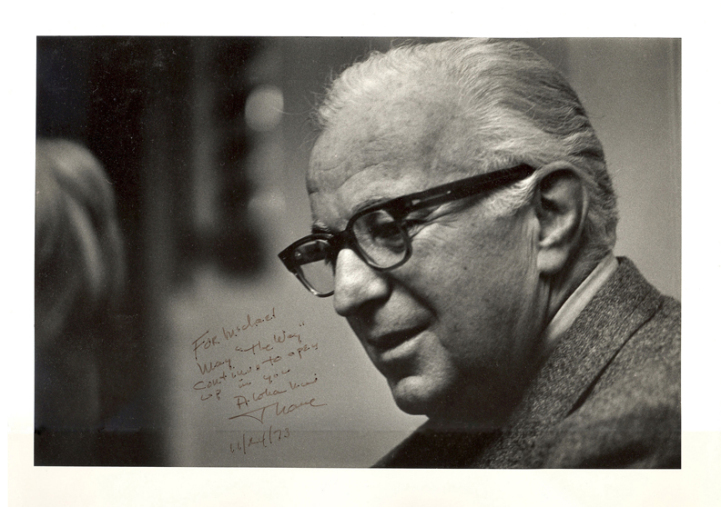
Thane’s “Transcendentalism” series

For the past 14 days I have been revisiting Thane’s
Transcendentalism Series and find myself amazed at the profundity. 
Thane truly is at his best as he presents this series.  I would
encourage everyone to revisit this series of lessons and apply this
information to their current level of understanding.  Thane is on fire
and presents the best information available regarding making the escape from the man state.  He is emphatic in expressing our need to “strip away the insulation” of our many habituated identities and assume the one and only true identity of Beingness.  His presentation throughout this series implores us to always go beyond saying the words and truly begin to assume the identity of the Christ within.

Thanks,

Randy Ramsley

Link to series: https://www.theprosperos.com/trsm01

Inside the mind of California’s first female architect

New book chronicles the stunning career of San Francisco’s Julia Morgan

By Bay City News • March 3, 2022 (SFExaminer.com)

The Hall in San Francisco’s Merchants Exchange Building, designed by Julia Morgan. A new book chronicles the life and work of the legendary California architect. (Shutterstock)

By Gina Gotsill

Bay City News Foundation

Ask a Bay Area resident if they’ve heard of architect Julia Morgan, and chances are they will either say no or, more commonly, “Why does that name sound familiar?”

Morgan’s name is familiar because she has deep roots in the Bay Area going back 150 years. Born in San Francisco in 1872, she was the first female licensed architect in California.

We are surrounded by her artistry when we see a show at her namesake Berkeley theater, go for a swim at the Berkeley City Club or attend a funeral at Oakland’s Chapel of the Chimes. We’ve seen her grandest work at Hearst Castle in San Simeon — publisher William Randolph Hearst’s “country house” that she designed with its opulent rooms, swimming pools and decor inspired by the Spanish Renaissance.

Morgan’s ties to the Bay Area and her friendship with Hearst are just a few of the windows that author Victoria Kastner opens for readers in “Julia Morgan: An Intimate Biography of the Trailblazing Architect” (Chronicle Books, $32.50), available Tuesday. The book, which features gorgeous, full-color images of Morgan’s designs, also reveals much about her Paris education, her family life, her attitudes and her passions. By the end of Kastner’s book, Morgan feels close and dear. And we also understand how this prolific architect, who designed 700 buildings in her lifetime, could fade into obscurity after her death in 1957.

Kastner’s book was 30 years in the making — it’s an exhaustive historic record that taps thousands of Morgan’s own letters (she saved everything), interviews with family and friends and Kastner’s own exposure to Morgan’s work.

Kastner visited Hearst Castle for the first time in 1978, in spite of reviews that called it a gaudy mishmash, she says.

“Once I saw San Simeon, I never left,” Kastner says. She worked as a commercial baker in Los Osos until she landed a job giving tours at Hearst Castle in 1979. She eventually became the park’s historian, and between 1998 to 2013, she wrote three books on the Castle’s history. She left Hearst Castle in 2018 so she could work full time on Morgan’s biography.

From the beginning of her journey at Hearst Castle, Kastner found it shocking that the person who built this incredible place was so invisible to the world. People told her, “a woman built this place, and nobody knows anything about her,” Kastner says.

Morgan’s disinterest in self-promotion was partly to blame. She was a workhorse with a laser-beam focus on her clients and her work, and she avoided interviews. She believed that “architecture is an art of form, not an art of words,” Kastner writes.

Morgan thought “the building should speak for itself.” She managed to be an epitome of modesty who toppled the walls of misogyny and social norms that were everywhere in the 1900s. There is no evidence that she ever had a romantic relationship with anyone — man or woman.

Her one true love was her work, and she challenged the majority — even her own mentors — who thought she could make a good “behind the desk” architect. Women cannot “climb scaffolds to oversee the work or come in contact with the laborers or mechanics …,” Morgan’s mentor Francois-Benjamin Chaussemiche said in a 1901 Evening Mail piece titled “Oakland Girl to be Architect.”

Morgan got around every obstacle. She wore men’s trousers under her skirt so she could climb when she needed to, and jackets with big pockets (a purse would just get in the way). She has been criticized for not having one distinct architecture style, and maybe she didn’t. Instead, she borrowed styles from other nations and eras and, in doing so, handed us a gift that will charm us for generations.

Throughout her book, Kastner weaves in Morgan’s other life passion: her family. She was a caretaker to her parents and siblings in good times and through many tragedies. She cared deeply for people. In 1924, when her elderly mother Eliza — who was resistant to change — needed more care than she could give her, Morgan built another house with a nurse’s quarters near her sister’s home in Berkeley. After Thanksgiving dinner at her sister’s house, the family walked the elderly woman into her new space that Morgan had designed to be identical to the home she knew. Eliza never realized that she had moved, Kastner writes.

Through it all, Morgan expressed her heart and mind in journals and letters — that’s how Kastner helps us get to know her.

“At first, I was reticent to write the book because she was such a private person,” Kastner says. “But then I decided that when someone saves as much as she did, they are likely thinking about posterity.”

Victoria Kastner’s “Julia Morgan: An Intimate Biography of the Trailblazing Architect” ($32.50) is available starting Tuesday from Chronicle Books.

A Brief Bio of God

Centre Place Whether religious or atheist, most Western people have a picture and a sense of the character of God: white robe, white beard, white man. John Hamer of Toronto Centre Place will trace the origin of this image and consider how it may differ from the way people envisioned God in Biblical times. A Q&A and discussion will follow the presentation. Please send your questions on the live chat. Lecture topics include: Depictions of God Canaanite religion First Temple Judaism Second Temple Judaism El, Baal, Yahweh, Zeus, Marduk, Enlil, Enki Iconoclasm

Hesse on trees

Trees are sanctuaries. Whoever knows how to speak to them, whoever knows how to listen to them, can learn the truth.”

– Hermann Hesse

Hermann Karl Hesse (July 2, 1877 – August 9, 1962) was a German-Swiss poet, novelist, and painter. His best-known works include Demian, Steppenwolf, Siddhartha, and The Glass Bead Game, each of which explores an individual’s search for authenticity, self-knowledge and spirituality. In 1946, he received the Nobel Prize in Literature. Wikipedia

(Contributed by Guillaume Gris)

The Old Ways, The New Ways

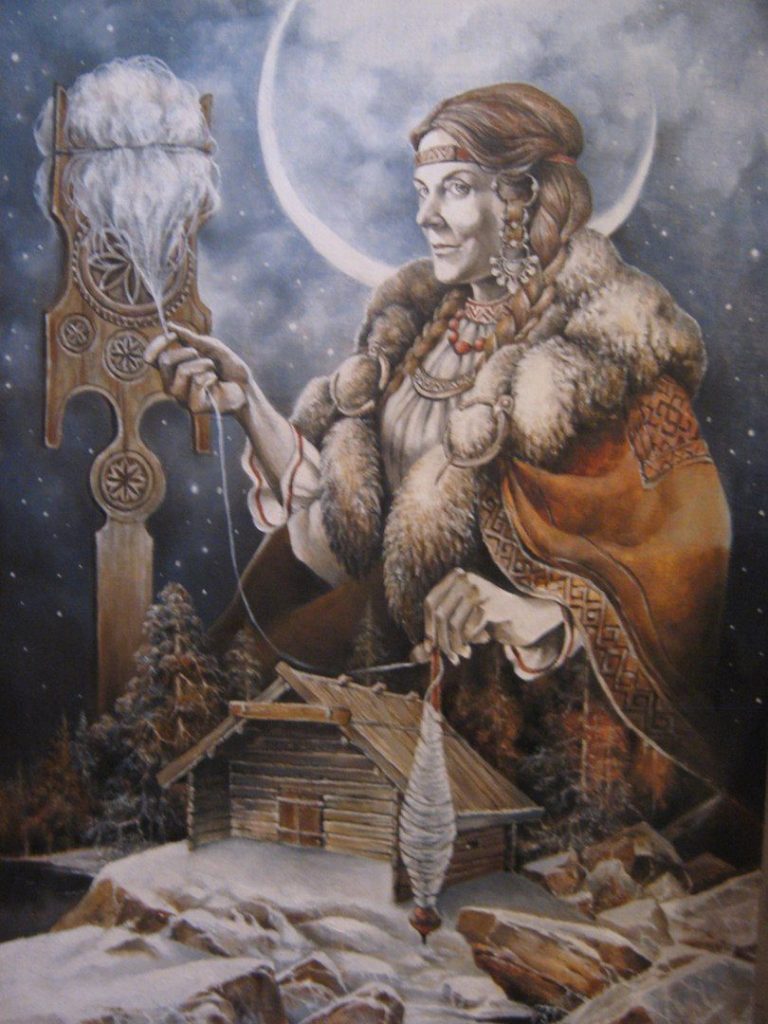
Mokosh….

The Old Ways, The New Ways:

In 1966 late in the fall I started attending lectures at a Fourth Way School’s Symposium (The Prosperos’) led by Kenneth Walker (who had been a student of Gurdjieff.)

I was a student of that school for several years until I branched out into Sufism and Gaiian studies. I have though kept in touch with students and teachers at that school ever since, lots of good people, gentle souls. Some I have known from 1967 on.

One of the very interesting things that I heard in a lecture early on, and then later in conversations with a couple of the teachers in the school was that: During the Cuban missile crisis in 1962 there was an international effort by various spiritual, metaphysical and occult schools in conjunction with each other to prevent Nuclear War through meditation, prayer, magical acts as well as organizing, speaking to people, letter writing to newspapers and politicians.

This had me considering over time and in my meditations, what were the possibilities of combined work across the spectrum of the various movements in existence today? I know that within that school now, there is an active group working through the use of their various spiritual tools to help change the current situation.

So here are some thoughts. We have horrible situations unfolding, and ongoing in Yemen, Myanmar, Syria, and now the Ukraine to name but a few of the conflict/war zones. We have famine rolling through Africa, Southwest Asia. The world is still in grip of the Covid Pandemic.  We have an ongoing worldwide climate crisis.  It seems overwhelming, yet here we are at a juncture where we have tools to actively organize via social media, email, web pages, talking to family, friends, neighbors the same united spiritual front that in my mind, turned the tide in 1962. We know through studies now via Sheldrake and others that consciousness extends to all existence. By working in our homes, community, and online, we can and will make a difference.

What I Suggest: 

  1. Form Affinity Groups. Contact your friends, family, community. DO IT.
  2. Develop a Schedule for Group Meditations on Specific Topics, i.e., Ukraine, Afghanistan, Covid, etc.
  3. Make it a Weekly Practice, at least, nightly or daily if you can.
  4. Broadcast your actions on Social Media. Invite others to join in. Organize!!!
  5. Become Active Locally.  This is deeply important.
  6. Take Care of Your Loved Ones. Spend Time in Nature, Pray, Meditate, get your hands into the soil. Give thanks for what you have.

I have been publishing this monthly sometimes more often on various Social Media Platforms. I think it is worth getting out there. We have work to do. I will not belabor the point, but our time is Now, and we have much to address.

The Old Ways, The New Ways – Gwyllm.com

I want to salute the students and teachers at The Prosperos for their Translations Group Work on World Situations.

Bright Blessings,
Gwyllm

CAN UKRAINE’S EXPERIMENTS IN LOCAL DEMOCRACY SURVIVE THE INVASION?

From Balta to Vinnytsia, Communities Have Been Growing in Power—and Democratic Innovation

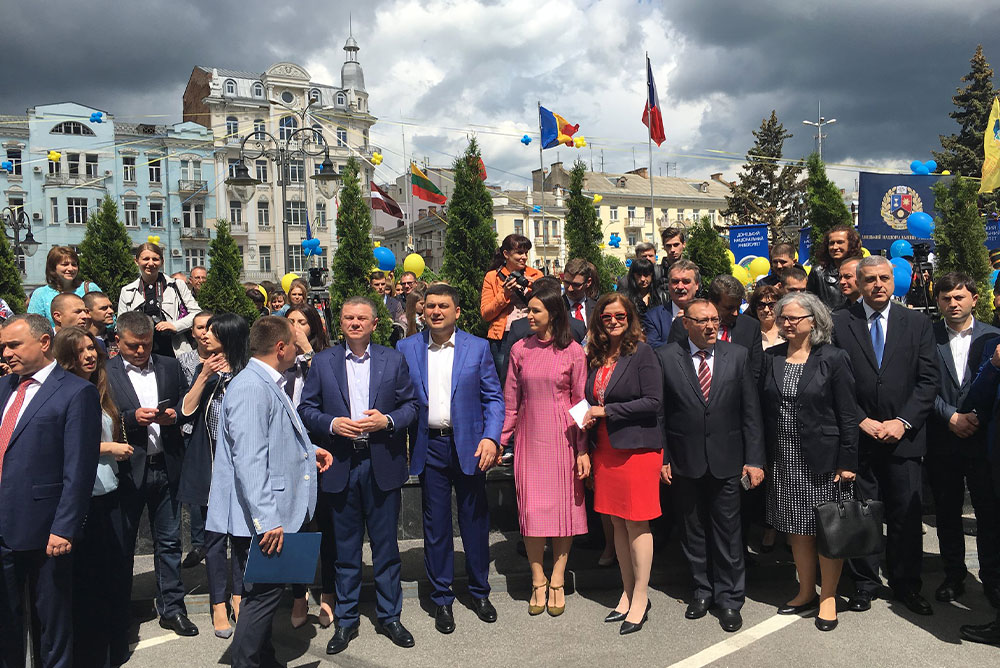
Then-Ukrainian Prime Minister Volodymyr Groysman and Mayor of Vinnytsia Serhiy Morhunov praise the efforts made by the City of Vinnytsia in order to improve living conditions of citizens, to fight corruption and promote higher education of young people in 2016. Courtesy of the Congress of Local and Regional Authorities/Flickr CC BY-ND 2.0.

by JOE MATHEWS | MARCH 2, 2022 (zocalopublicsquare.org)

As I write this, Russian troops reportedly are moving north through the Odesa oblast, or region, toward the river Kodyma, along which sits a town called Balta.

This is not new territory for Balta, which like much of Ukraine has been contested over centuries of wars. But in recent years, Balta has actually broken a lot of new ground, at least when it comes to the practice of citizen-centered democracy. In 2016, Balta adopted participatory budgeting, an innovative process—originated in Brazil—in which citizens rather than officials determine their local budget. Balta also gave its young people their own governing council and a decision-making process to influence local policies.

Democracy, in its essence, is everyday people governing themselves. Such self-government happens most often at the local level, which is why countries tend to get more democratic when they decentralize.

Since the 2014 Maidan revolution, Ukraine has been among the more rapidly decentralizing, and democratizing, countries on Earth.

This context is crucial to understanding what is now at stake in Eastern Europe. The war is being described as a conflict between Russia and Ukraine, between Russia and the West, or between Vladimir Putin and Volodymyr Zelensky. But it’s really a clash between two of the most powerful trends in worldwide governance: increasing authoritarianism in nation-states and increasing democracy in our local communities.

In other words, Ukraine is now a battlefield where the international democratic recession meets the local democratic expansion.

Balta’s advances in local democracy are representative of this shift toward greater local power and responsibility in 21st-century Ukraine. A generation ago, Ukraine was a post-Soviet state, with a centralized government conducting top-down rule of 24 oblasts, and nearly 500 rayons (territorial units of about 50,000 people). Localities—including larger cities and nearly 12,000 hromadas, orlocal communities—could hold elections, but their officials had little influence over local affairs.

In this century, and especially in the last eight years, Ukraine has devolved power to those local communities, more than 90 percent of which have fewer than 3,000 people. For many smaller hromadas, Ukraine authorized amalgamation—mergers of small communities into larger municipal units, called “amalgamated territorial communities,” which would have enough heft to provide services and lead economic development.

To incentivize these mergers—towns made rich by gas or property taxes sometimes were resistant—amalgamated communities were given a greater share of both national and local budgets, new power to impose local taxes, and greater responsibility for education, health care, transportation, social programs, and agricultural land. To improve governance, these communities were authorized to experiment with democratic tools like participatory budgeting; in the past year, Ukraine has also advanced legislation permitting more popular referenda.

In a politically divided Ukraine, this devolution of local power had support across the spectrum, for a couple reasons.

The first was positive, and driven by economics. Putting more money and power in localities was seen as the best bet for addressing poverty and inequality, and developing Ukraine in a balanced way that would make it a better fit with the rest of Europe, which has strong local governments.Since the 2014 Maidan revolution, Ukraine has been among the more rapidly decentralizing, and democratizing, countries on Earth.

The second reason, however, was defensive: the threat of separatism. In a country the size of Texas, greater local control was seen as the best way to placate localities and regions that might think of leaving—especially Donetsk and Luhansk, two Russian-speaking Ukrainian oblasts where Russia would make incursions (and which Putin would declare “independent” as a pretext for his new invasion).

“The path of decentralization was an asymmetrical response to the aggressor,” said Andriy Parubiy, a former speaker of Ukraine’s parliament, in 2017. “The process of the formation of capable communities was a kind of sewing of the Ukrainian space.”

Many of these newly empowered Ukrainian local governments have seized the opportunity, and not just for economic development. Municipalities have embraced political reforms—adopting ethics codes, making their records and decision-making transparent, establishing citizen-directed processes like participatory budgeting, and adding new guarantees for representation and participation of women, men, and underrepresented groups in local politics.

Just this past December, two Ukrainian cities, Khmelnytskyi and Vinnytsia, finished first and third, respectively, in a global contest for innovation in government transparency. Mariupol, a city in the southeast reportedly under siege by the Russian military, has won international praise for its model of sharing governance power with local organizations.

These newly empowered cities have also been eager to collaborate with one another, especially in infrastructure, waste management, and extending internet services. Planning is increasingly long-term. Kamianske, a locality of 240,800 in the oblast Dnipropetrovsk, is using a democratic, citizen-led process to compose a municipal development strategy for 2027.

The commitment to building includes infrastructure for democracy itself. In the Poltava oblast, where localities are especially collaborative, the larger city of Kremenchuk was preparing to launch a school for participatory budgeting while a smaller town, Pyriatyn, established a city council ethics code and a “Dialogue Club” that allows students to debate proposed decisions and participate in planning. In Luhansk, Sievierodonetsk, population 112,950, has prioritized initiatives to make it easier for internally displaced persons to participate in local decision-making.

Of course, not all the results of decentralization are praise-worthy. A 2018 assessment of three cities, sponsored by the intergovernmental democracy support organization International IDEA, identified problems such as greater local partisanship and political fighting under the new system, and a lack of clarity about which local officials and institutions are in control. In larger cities, notably Odesa and Kharkiv, critics see decentralization as having enabled corruption by powerful business interests and patronage-dispensing political machines.

Ukraine also faces an underappreciated but enormous global problem for democratic governance: too few people have the skill and expertise to do the complicated work of running a local democratic government. As a result, too many local democracies struggle, or even fail, because they don’t have people who can organize consultations, manage a budget and contracts, prevent corruption, or lead a strategic planning process.

Putin’s determination to conquer Ukraine means these problems won’t be solved any time soon. Even if his invasion is repelled, the war could tear at all this newly sewn democratic fabric in Ukrainian communities. And the fighting may reinforce media and political narratives that Ukraine is a country dangerously divided between its Ukrainian-speaking, Europe-oriented west and the Russian-speaking, old-fashioned east.

But the true Ukraine picture is more complicated than that. And, despite all the human costs of this conflict, it’s quite possible that the recent rise of local democracy may allow community collaborations to continue, even through difficult times. Perhaps the war, for all its dangers to life and liberty, might even open up new possibilities for more democracy and development.

That’s not a blind hope. It’s history. The horrors of nation-state autocracies have long inspired the desire for local self-government, just as the weakness of democratic systems offers openings for dictators. Big authoritarianism and little democracy go together, like darkness and light—a reality famously recognized by the Ukraine-born Russian writer Mikhail Bulgakov in his classic Stalin-era novel, The Master and Margarita.

The plot is driven by a visit from the devil to the Soviet Union. “What would your good do if evil didn’t exist,” Satan asks an evangelist-writer, who is full of despair, “and what would the earth look like if all the shadows disappeared?”

***

Democracy You Can Watch

The historic convention to draft a new Chilean constitution is meeting again as the South American summer ends. Watching people write can be boring, but your columnist, a Spanish speaker, is enjoying the proceedings live on the broadcast site https://convencion.tv.

Closing Words

“True democracy cannot be worked by twenty men sitting at the centre. It has to be worked from below by the people of every village.” —Mahatma K. Gandhi, 1948

This is the debut of Democracy Local, a new global column.

JOE MATHEWS writes the Democracy Local column and Connecting California column for Zócalo Public Square. He is co-president of the Global Forum on Direct Democracy.