Time: Do the past, present, and future exist all at once? | Big Think

When his engineer friend Michele Angelo Besso died, Albert Einstein wrote a letter of condolence to the Besso family, including his now famous quote: “Now he has departed from this strange world a little ahead of me. That means nothing. People like us, who believe in physics, know that the distinction between past, present and future is only a stubbornly persistent illusion.”

(sciencemag.org)

Big Think Time: Do the past, present, and future exist all at once? Watch the newest video from Big Think: https://bigth.ink/NewVideo Learn skills from the world’s top minds at Big Think Edge: https://bigth.ink/Edge ———————————————————————————- Everything we do as living organisms is dependent, in some capacity, on time. The concept is so complex that scientists still argue whether it exists or if it is an illusion. In this video, astrophysicist Michelle Thaller, science educator Bill Nye, author James Gleick, and neuroscientist Dean Buonomano discuss how the human brain perceives of the passage of time, the idea in theoretical physics of time as a fourth dimension, and the theory that space and time are interwoven. Thaller illustrates Einstein’s theory of relativity, Buonomano outlines eternalism, and all the experts touch on issues of perception, definition, and experience. Check Dean Buonomano’s latest book Your Brain Is a Time Machine: The Neuroscience and Physics of Time at https://amzn.to/2GY1n1z ———————————————————————————- TRANSCRIPT: MICHELLE THALLER: Is time real or is it an illusion? Well, time is certainly real but the question is what do we mean by the word time? And it may surprise you that physicists don’t have a simple answer for that. JAMES GLEICK: Physicists argue about and physicists actually have symposia on the subject of is there such a thing as time. And it’s also something that has a traditional in philosophy going back about a century. But, I think it’s fair to say that in one sense it’s a ridiculous idea. How can you say time doesn’t exist when we have such a profound experience of it first of all. And second of all we’re talking about it constantly. I mean we couldn’t get, I can’t get through this sentence with out referring to time. I was going to say we couldn’t get through the day without discussing time. So, obviously when a physicist questions the existence of time they are trying to say something specialized, something technical. BILL NYE: Notice that in English we don’t have any other word for time except time. It’s unique. It’s this wild fourth dimension in nature. This is one dimension, this is one dimension, this is one dimension and time is the fourth dimension. And we call it the fourth dimension not just in theoretical physics but in engineering. I worked on four dimensional autopilots so you tell where you want to go and what altitude it is above sea level and then when you want to get there. Like you can’t get there at any time. GLEICK: Einstein or maybe I should say more properly Minkowski, his teacher and contemporary, offers a vision of space-time as a single thing, as a four dimensional block in which the past and the future are just like spatial dimensions. They’re just like north and south in the equations of physics. And so you can construct a view of the world in which the future is already there and you can say, and physicists do say something very much like this, that in the fundamental laws of physics there is no distinction between the past and the future. And so if you’re playing that game you’re essentially saying time as an independent thing doesn’t exist. Time is just another dimension like space. Again, that is in obvious conflict with our intuitions about the world. We go through the day acting as though the past is over and the future has not yet happened and it might happen this way or it might happen that way. We could flip a coin and see. We tend to believe in our gut that the future is not fully determined and therefore is different from the past. DEAN BUONOMANO: If the flow if time, if our subjective sense of the flow of time is an illusion we have this clash between physics and neuroscience because the dominant theory in physics is that we live in the block universe. And I should be clear. There’s no consensus. There’s no 100 percent agreement. But the standard view in physics is that, and this comes in large part from relativity, that we live in an eternalist universe, in a block universe in which the past, present and future is equally real. So, this raises the question of whether we can trust our brain to tell us that time is flowing. NYE: In my opinion time is both subjective and objective. What we do in science and engineering and in life, astronomy, is measure time as carefully as we can because it’s so important to our everyday world. You go to plant crops you want to know when to plant them. You want to know when to harvest them. If you want to have a global positioning system that enables you to determine which side of the street you’re on, from your phone you need to take into account both the traditional passage of time that you might be familiar with watching a clock here on the Earth’s surface, and the passage of time as it’s affected by the… Read the full transcript at https://bigthink.com/videos/does-time…

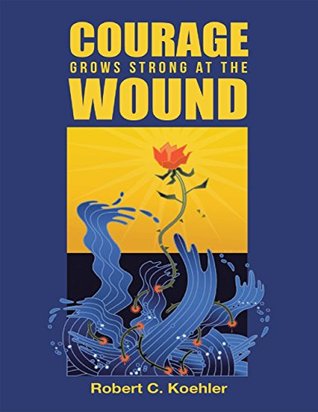
Book: “Courage Grows Strong At the Wound”

Courage Grows Strong At the Wound

Courage Grows Strong At the Wound

by Robert C. Koehlers 

“Koehler’s mind is amazing and he has the literary skills to match. Simply reading this book, both your mind and your heart will be expanded. You won’t see the world quite the same after reading it, so in a very real way the world won’t be the same. Koehler is one of those extraordinary souls who makes you think a bit differently about the world — and thus he changes it, one essay at a time.”
— Marianne Williamson, author of Tears to Triumph: The Spiritual Journey from Suffering to Enlightenment

Koehler is “someone who has fought through unthinkable adversity and made a mission out of offering the world a view of peace, cooperation, benevolence and self-education taken on for the common good. I don’t know many people in the world, if any, who are putting their shoulder to so noble a task. … He empowers his readers to find the highest levels of personal philosophy in the most innocuous of places.”
— Jason Stoneking, author of Audience of None 

(Goodreads.com)

Growing Old in the Newborn Universe

flowers

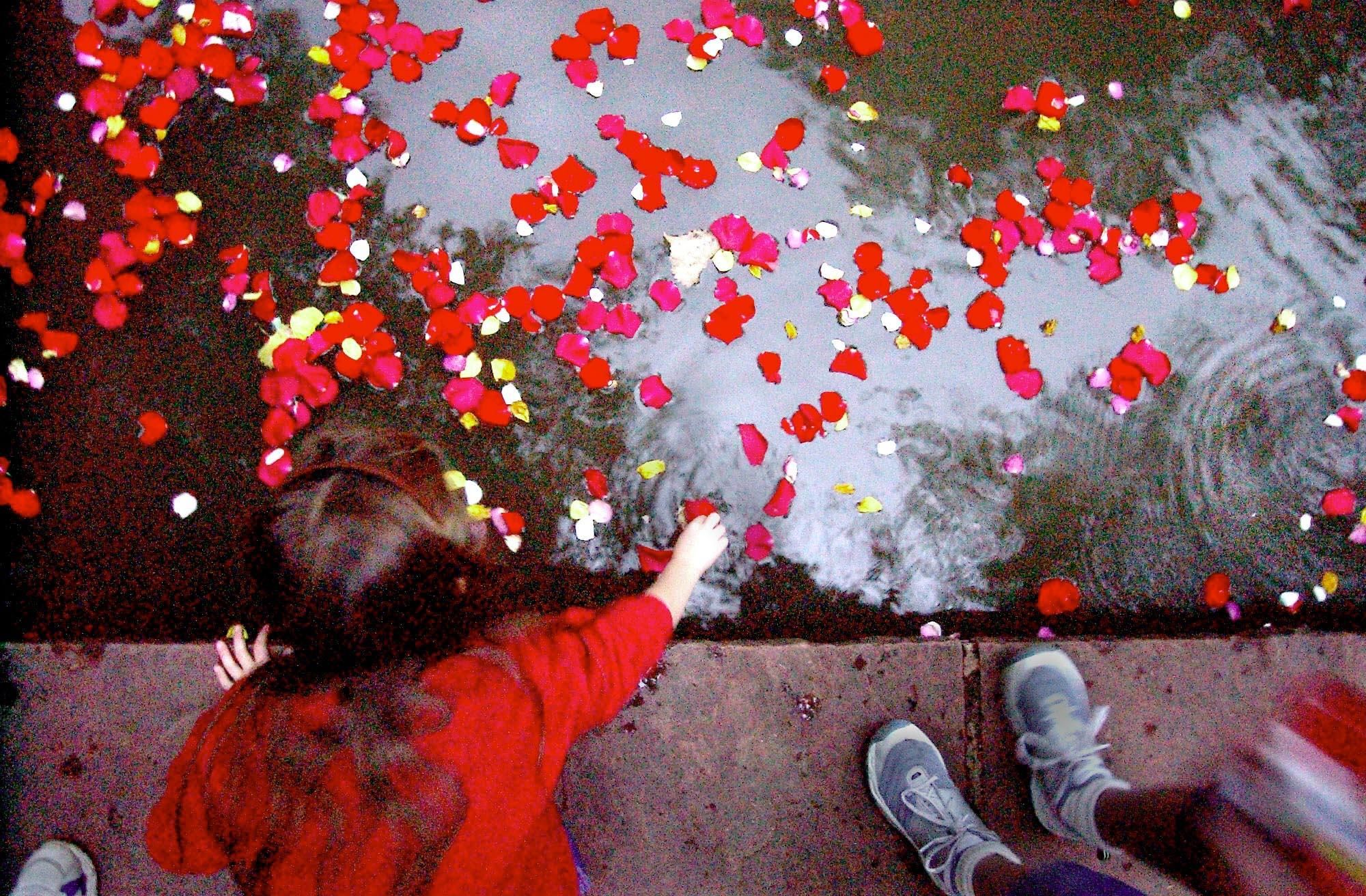
The world, in one sense, is endlessly newborn, and it is best seen and grasped with newborn eyes. (Photo by Jon Hatch/Digital First Media/Boulder Daily Camera via Getty Images)

Only when I stop knowing what I know do I see the world as it is, do I see it shimmer and pulsate, do I see it bleed wonder.

ROBERT C. KOEHLER August 26, 2021 (commondreams.org)

That link between age and wisdom—is it just a joke?

Suddenly I’m curious in a real way. I just turned . . . 75. There’s a significance to that number that isn’t abstract, and I’m having a hard time ignoring it. Perhaps it has more to do with cataracts and hearing aids, not to mention wobbly knees, lost thoughts and techno-cluelessness, than it does with diamonds. But I find myself wondering, more than ever, what I have learned over the past three quarters of a century—and what, if anything, I understand.

I think about the chaos in Afghanistan, the insane war on terror, refugees massed and caged at the southern border, a child murdered on the streets of Chicago. When I was in my 20s, I felt certain the world from which such cruelty and stupidity emerged was being transformed. Our generation was changing it. Now, as I limp to the bathroom, I feel the throb of an aching heart. Things have changed in some ways, both for better and for worse, but mostly they have stayed the same. What I have come to understand is how little I know.

Here, for instance, is a moment of such understanding: I was showing some friends around my city, Chicago, and at one point we stopped at the corner of State and Lake streets to pick up sandwiches at Potbelly’s. There was no legal parking, so I sat drumming on my steering wheel while my buddy, Malcolm, ran in to pick up the sandwiches, scanning the horizon for traffic cops. His wife, Kim, who had never been to Chicago before, sat with me. She was in awe of the spectacle.

Here’s what I wrote at the time:

“At first I ache with impatience. Through my own eyes—jaded, seen-it-all-once-too-often—this is nothing, just a too-busy street corner where parking’s impossible. The humanity spilling around me is a nuisance, the tide I have to fight every day to get from Point A to Point B. But as I look at the throbbing corner through Kim’s eyes—new eyes, freshly beholding Chicago’s spectacle of daily life—a funny thing starts to happen. Instead of my showing her the big city, she’s showing it to me.

“Each figure looms distinct, a detail of the daily carnival of lunch hour under the steel girders of the elevated train: A bus lumbers around the corner bearing a screaming Jackie Chan ad. A bicycle messenger flies by, dreadlocks poking from beneath his yellow helmet. The street is alive with muscle shirts and muumuus, headphones, beepers, backpacks and hairnets. Ice cream cones drip. Cameras click. Cabs screech to a stop. An ancient, orange-aproned newspaper vendor sits on a milk crate, sweat glistening on his bald head, crying out, ‘Sun-Times, Trih-byooooon!'”

Only when I stop knowing what I know do I see the world as it is, do I see it shimmer and pulsate, do I see it bleed wonder. I learned that same lesson when my daughter was one year old and I carried her around the neighborhood on my shoulders one afternoon. She would stare in awe into every window, at every storefront façade—my God, there’s a tattoo parlor called Mind Crusher—at every cloud in the sky. Through her eyes I saw so much.

And many years later, when she was grown up, when she had become a poet and an artist, we would sometimes play a game called Naming the Sky. We still do. We look up, see the swirl of white and blue, the haze, the threatening darkness or whatever is there, let it fill us and give it a name: Wispy Spider, Toss and Turn. Anything is possible. I just now stepped outside, looked up and was transfixed by an enormous, shifting cloud. I named the sky of the moment (I almost couldn’t believe it) The Ghost of Einstein.

The world, in one sense, is endlessly newborn, and it is best seen and grasped with newborn eyes. So declares the wobbly, 75-year-old columnist. But the world I have come to know is so much more—and less—than that as well.

“As the war on terror’s spread to country after country has demonstrated,” writes Karen Greenberg, “once unleashed, such a war paradigm takes on a life of its own.”

The dark indifference of the powerful, the glorified game called war: This is where my focus truly lies, as a writer, as an aging boomer. We made an impact on the world, perhaps, but we hardly changed it. As I explained to my friends at the Elders Action Network: “My words feel so frail. What is a word compared to a bullet, a missile, a trillion-dollar defense budget?

“But I push on because I know I must. Let me be equal to the miracle of being alive. The human race is evolving, and evolution is participatory.”

And this is the best I can do. Death, unavoidably, is part of the miracle of life. But then there are the words of a 6-year-old child named Becky, who had become deeply enamored of my wife, Barbara, and thought of her as her second mom. My wife died of pancreatic cancer on a May afternoon in 1998. She passed away just as it was starting to rain. When I mentioned this to Becky’s actual mom, Chris (a wonderful friend) later that day, she told me she and her daughter had been in the car when it started to rain.

Becky suddenly became very silent, Chris told me, then she said: “Mommy, somebody’s having a baby.” More silence. Then she said:

“Barbara’s having a baby.”


Our work is licensed under Creative Commons (CC BY-NC-ND 3.0). Feel free to republish and share widely.

ROBERT C. KOEHLER

Robert Koehler is an award-winning, Chicago-based journalist and nationally syndicated writer. His book, “Courage Grows Strong at the Wound” (2016). Contact him or visit his website at commonwonders.com.

Truth is happening right now!

By Mike Zonta, BB editor

We can all stipulate, I hope, that: Truth is that which is so. That which is not truth is not so. Ergo: Truth is all that is.

Since Truth (with a capital “T” since we’re speaking of Truth in general as opposed to specific truths) is all that is, therefore Truth is all that be’s, all that takes place, all that occurs, all that happens (which word happens to have the same etymological root as the word happy.)

So we are talking about a Truth which is happening right now, not some time in the past or some time in the future. In fact, you could say there is no past in Truth. And there is no future in Truth.

There is only Truth being now, Truth taking place right now. Truth happening right now.

Or another way to say that is: The past is only now. And the future is only now.

This explains so-called precognition, not to mention memory.

If Truth is all happening right now, you could say that Truth is one infinite coincidence, or one infinite synchronicity.

Of course that is not the appearance. The appearance is that we’ve all had a past and we will all have a future.

But that’s just so we can take our time, if you will, instead of experiencing everything at the same time.

So looking at things from the viewpoint of Truth, or God, or Infinite Mind, it’s all happening right now!

And we can take that viewpoint at any time we like. For Translators (see “Prosperos Classes” page on this website), the first step gives us an opportunity to transcend the space-time continuum.

And the 2nd through 5th steps show us how to be in the space-time continuum, but not of it.

The Self is Tied to This Body Like an Ox to a Cart

(thedewdrop.org)

By Vanessa Able

“It is true the body is perishable, but within it dwells the imperishable Self. This body is subject to pleasure and pain; no one who identifies with the body can escape from pleasure and pain.”

– The Chandogya UpanishadTweet


The Chandogya Upanishad is one of the oldest parts of the collection of ancient Vedic texts and is thought to have been compiled sometime between the 8th and 6th centuries BC. One of the most well-known sections of the Chandogya Upanishad is the story of Indra, King of the Gods, Virochana, King of the Godless and their encounter with the sage Prajapati who attempted to teach them the ultimate truth of their being. Virochana peels off from his teacher at a very early stage, satisfied by an explanation of the Self that equated it only with the body. Indra is characterized by his persistent curiosity as he keeps returning to his teacher for more instruction as his understanding deepens and Prajapati attempts to point his student towards an knowledge of the Self that goes beyond the limits of his conceptions.


The great teacher Prajapati said: “The Self is pure, free from decay and death, free from hunger and thirst, and free from sorrow. The Self desires nothing that is not good, wills nothing that is not good. Seek and realize the Self! Those who seek and realize the Self fulfill all their desires and attain the goal supreme.”

The devas and the asuras, the gods and the godless, heard this truth and said: “Let us seek and realize the Self so that we may fulfill all our desires.” So Indra from among the gods and Virochana from among the godless approached Prajapati, carrying fuel in their hands as a sign that they wanted to become his disciples.

They dwelt with him for thirty-two years, and at the end of that time Prajapati asked why they had stayed with him so long. Indra and Virochana replied, “We have heard of your inspiring words: ‘The Self is pure, free from decay and death, free from hunger and thirst, and free from sorrow. The Self desires nothing that is not good, wills nothing that is not good. Seek and realize the Self! Those who seek and realize the Self fulfill all their desires and attain the goal supreme.’ We have been living here as your disciples because we want to realize the Self.”

Prajapati said to them: “When you look into another’s eyes, what you see is the Self, fearless and deathless. That is Brahman, the supreme.”

“Venerable One,” asked the two disciples, “what is it we see reflected in the water or in a mirror?”

“It is the Self you see in all these,” he said to them. “Now look at yourself in a bowl of water, and ask me anything you want to learn about the Self.”

They looked at themselves in a bowl of water.

“What did you see in the water?”

“We have seen the Self, even the hair and the nails.”

“Put on your best clothes, adorn your body, and look again in the water.”

They did so, and came back to Prajapati.

“What did you see in the water?” he asked.

“We have seen the Self, well dressed and well adorned,” they replied.

“That is the Self, fearless and deathless. That is Brahman, the supreme.”

“The Self is pure, free from decay and death, free from hunger and thirst, and free from sorrow. The Self desires nothing that is not good, wills nothing that is not good. Seek and realize the Self!

Indra and Virochana went away satisfied. But Prajapati said to himself: “They have seen the Self, but they have not recognized the Self. They mistake the Self to be the body. Those who think the Self is the body will lose their way in life.”

Virochana, quite sure that the Self is the body, went back to the godless and began to teach them that the body alone is to be saved, the body alone is to be adored. He taught them that whoever lives for indulging the senses will find joy in this world and the next. Even today people are called godless when they lack faith, love, and charity, because that is the way of the godless. They dress even dead bodies in fine clothes and adorn them with ornaments so that they may enjoy their life in the next world.

But Indra, as he was on his way home to the gathering of the gods, began to question this knowledge. “If the Self is the same as the body, well dressed when the body is well dressed, well adorned when the body is well adorned, then the Self will be blind when the body is blind, lame when the body is lame, paralyzed when the body is paralyzed. And when the body dies, the Self too will die. In such knowledge I see no value.”

Again Indra went back to Prajapati with fuel in hand.

“Why have you returned, Indra?” his teacher asked. “Did you not go away quite satisfied?”

“Venerable One,” replied Indra, “if the Self is well dressed when the body is well dressed, well adorned when the body is well adorned, then the Self will be blind when the body is blind, lame when the body is lame, paralyzed when the body is paralyzed. And when the body dies, the Self too will die. In such knowledge I see no value.”

“You are thinking clearly, Indra,” said Prajapati. “Live with me for another thirty-two years and I will teach you more of the Self.”

“In the dreaming state, it is true, the Self is not blind when the body is blind, nor lame when the body is lame; yet in this state the Self may still suffer and even weep. In such knowledge I see no value.

So Indra lived with Prajapati for another thirty-two years. Then Prajapati said to him: “That which moves about in joy in the dreaming state is the Self, fearless and deathless. That is Brahman, the supreme.”

Indra went away satisfied, but on his way home to the gathering of the gods he began to question this knowledge. “In the dreaming state, it is true, the Self is not blind when the body is blind, nor lame when the body is lame, nor paralyzed when the body is paralyzed, nor slain when the body is slain. Yet in dreams the Self may appear to suffer and to be slain; it may become conscious of pain and even weep. In such knowledge I see no value.”

Again Indra went back to Prajapati with fuel in hand.

“Why have you returned, Indra?” his teacher asked. “Did you not go away quite satisfied?”

“Venerable One,” replied Indra, “in the dreaming state, it is true, the Self is not blind when the body is blind, nor lame when the body is lame; yet in this state the Self may still suffer and even weep. In such knowledge I see no value.”

“You are thinking clearly, Indra,” said Prajapati. “Live with me for another thirty-two years and I will teach you more of the Self.”

Indra lived with Prajapati for another thirty-two years. Then his teacher said: “When a person is sleeping soundly, free from dreams, with a still mind, that is the Self, fearless and deathless. That is Brahman, the supreme.”

Indra went away satisfied, but on his way home to the gathering of the gods he began to question this knowledge. “In the state of dreamless sleep one is not aware of oneself or any other. The state of dreamless sleep is very close to extinction. In this knowledge I see no value.”

Again Indra went back to Prajapati with fuel in hand.

“Why have you returned, Indra?” his teacher asked. “Did you not go away quite satisfied?”

“Venerable One”, replied Indra, “in the state of dreamless sleep one is not aware of oneself or of any other. The state of dreamless sleep is very close to extinction. In this knowledge I see no value.”

“You are thinking clearly, Indra,” said Prajapati. “Live with me for another five years and I will teach you to realize the Self.”

“Like the wind, like clouds, like thunder and lightning, which rise from space without physical shape and reach the transcendent light in their own form, those who rise above body-consciousness ascend to the transcendent light in their real form, the Self.

Indra lived with Prajapati for another five years. Altogether he lived with his teacher for one hundred and one years, which is why people say, “Even Indra had to live with his teacher for one hundred and one years.” After that time, Prajapati revealed the highest truth of the Self to Indra:

“It is true the body is perishable, but within it dwells the imperishable Self. This body is subject to pleasure and pain; no one who identifies with the body can escape from pleasure and pain. But those who know they are not the body pass beyond pleasure and pain to live in abiding joy.

“Like the wind, like clouds, like thunder and lightning, which rise from space without physical shape and reach the transcendent light in their own form, those who rise above body-consciousness ascend to the transcendent light in their real form, the Self.

“In that state, free from attachment, they move at will, laughing, playing, and rejoicing. They know the Self is not this body, but only tied to it for a time as an ox is tied to its cart. Whenever one sees, smells, speaks, hears, or thinks, they know it is the Self that sees, smells, speaks, hears, and thinks; the senses are but his instruments.

“Worshipping this Self in the world of Brahman, the gods obtained all worlds and all desires. Those who know this Self and realize this Self obtain all worlds and all desires.” So said Prajapati; so taught Prajapati.

The joy of being animal

The joy of being animal | Aeon

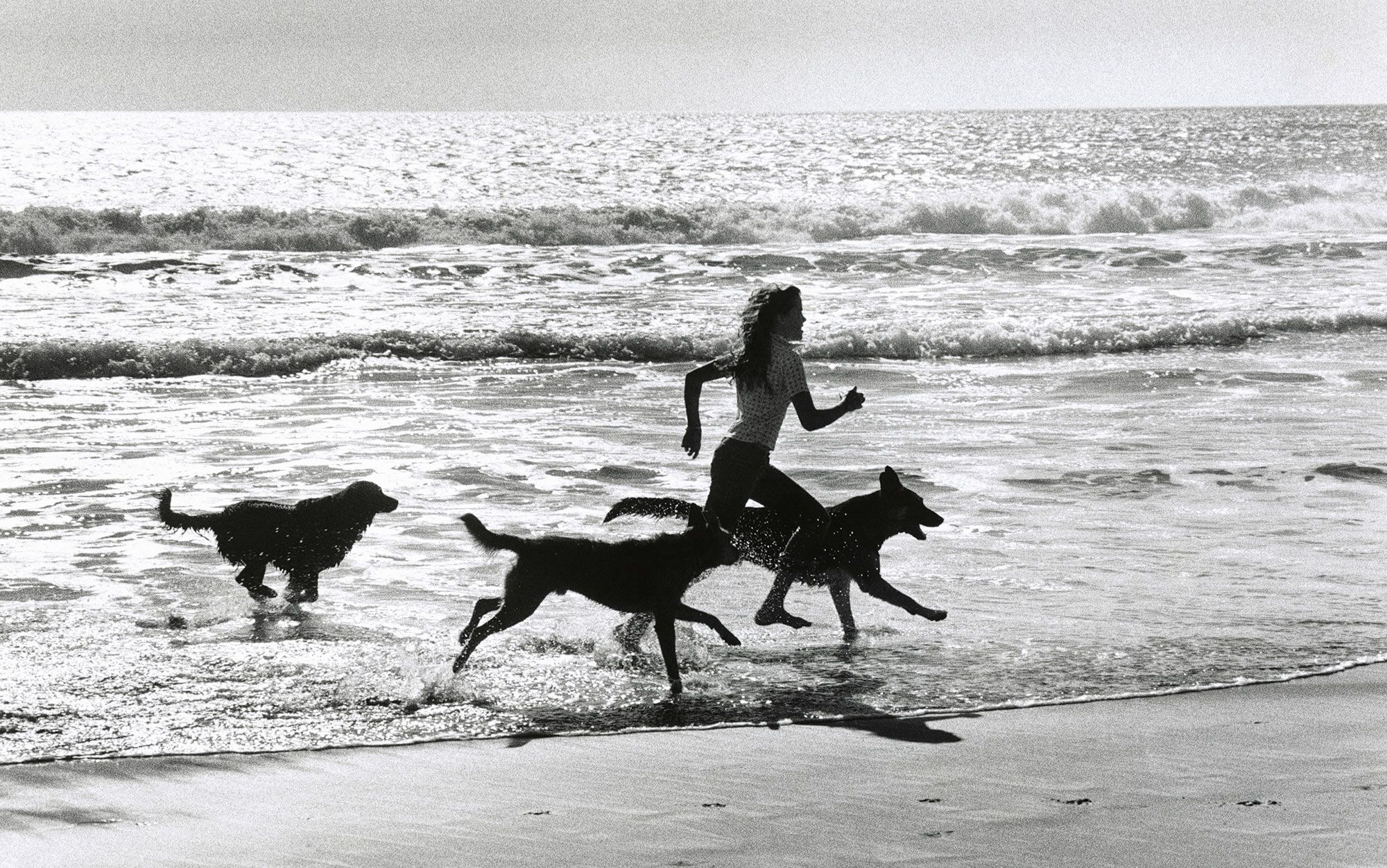
Human exceptionalism is dead: for the sake of our own happiness and the planet we should embrace our true animal natureStinson Beach, California, 1973. Photo by Elliott Erwitt/Magnum

Melanie Challenger works as a researcher on the history of humanity and the natural world, and environmental philosophy. Her books include On Extinction (2011) and How to Be Animal (2021). She is a current member of the Nuffield Council on Bioethics.

Edited by Pam Weintraub

6 April 2021 (aeon.co)

Aeon for Friends

FIND OUT MORE

When I visited my grandmother at the undertakers, an hour or so before her funeral, I was struck by how different death is from sleep. A sleeping individual shimmers with fractional movements. The dead seem to rest in paused animation, so still they look smaller than in life. It’s almost impossible not to feel as if something very like the soul is no longer present. Yet my grandmother had also died with Alzheimer’s. Even in life, something of who she was had begun to abandon her. And I wondered, as her memories vanished, had she become a little less herself, a little less human?

These end-of-life stages prick our imaginations. They confront us with some unsettling ideas. We don’t like to face the possibility that irreversible biological processes in our bodies can snuff out the stunning light of our individual experience. We prefer to deny our bodies altogether, and push away the dark tendrils of a living world we fear. The trouble for us is that this story – that we aren’t really our bodies but some special, separate ‘thing’ – has made a muddle of reality. Problems flow from the notion that we’re split between a superior human half and the inferior, mortal body of an animal. In short, we’ve come to believe that our bodies and their feelings are a lesser kind of existence. But what if we’re wrong? What if all parts of us, including our minds, are deeply biological, and our physical experiences are far more meaningful and richer than we’ve been willing to accept?

As far as we know, early hunter-gatherer animist societies saw spirit everywhere. All life possessed a special, non-physical essence. In European classical thought, many also believed that every living thing had a soul. But souls were graded. Humans were thought to have a superior soul within a hierarchy. By the time of theologians such as the Italian Dominican friar and philosopher Thomas Aquinas, in the 13th century, this soulful view of life had retreated, leaving humans the only creature still in possession of an immortal one. As beings with a unique soul, we were more than mere animals. Our lives were set on a path to salvation. Life was now a great chain of being, with only the angels and God above us.

But, as the Middle Ages came to a close in the 16th century, a fresh, apparently rational form of exceptionalism began to spread. The origins for this shift lie in the thinking of René Descartes, who gave the world a new version of dualism. Descartes argued that thought is so different from the physical, machine-like substance of the body that we should see humans as having two parts: the thoughtful mind and the thoughtless, physical body. This was religion refocused through a rational lens. The division between humans and the rest of nature was no longer the soul – or, at least, not only the soul – but rather our intellectual capabilities: our reason, our moral sensibilities, our gifts for abstraction. He assumed, of course, that other animals don’t think.

Enlightenment figures such as John Locke and Immanuel Kant in the 17th and 18th centuries developed this further. According to them, it was the fruits of our intelligence that made us truly human. Through mental powers, humans live more meaningfully than other beings. In other words, we humans have a soulful mind. It was even suggested that we are our thoughts, and that these phantasmal mental aspects of humans are more important and even, daringly, separable from the impoverished biology that we share with other animals.

In many ways, Darwinism posed a threat to this intensifying vision of the human and our place in nature. Charles Darwin disrupted both the idea of a neat divide between humans and other forms of life, and also complicated the possibilities for mind-body dualism. If humans had evolved from earlier, ancestral primates, then our minds, too, must have emerged through ordinary, evolutionary processes with deep roots in nature. It’s easy to forget today just how shattering Darwinism was for a whole generation. Darwin himself wrote to his friend, the American botanist Asa Gray, to express his acute fear of seeing humans as a fully integrated part of a seemingly amoral natural world, where there’s ‘too much misery’. Perhaps we shouldn’t be surprised, then, to find the redoubling of efforts to assert new forms of human redemption in the years after publication of On the Origin of Species (1859).

One such effort came in the form of the ‘human revolution’ – the idea that some kind of cognitive leap took place in the recent evolution of Homo sapiens that forever split us from other species. Another was in the 20th-century reworking of Enlightenment humanism that sought to find scientific proofs of human exception, and to argue that only these ultimately matter. Modern humanism promised to be about the ‘complete realisation of human personality’ in an onward march ‘to move farther into space and perhaps inhabit other planets’. The history of global philosophy on humans and other animals might be mischievously summarised as a long study in mental bias.

Having a humanlike mind has become a moral dividing line

Today, our thinking has shifted along with scientific evidence, incorporating the genetic insights of the past century. We now know we’re animals, related to all other life on our planet. We’ve also learned much about cognition, including the uneasy separation between instinct and intention, and the investment of the whole body in thought and action. As such, we might expect attitudes to have changed. But that isn’t the case. We still live with the belief that humans, in some essential way, aren’t really animals. We still cling to the possibility that there’s something extrabiological that delivers us from the troubling state of being an organism trapped by flesh and death. In the words of the philosopher Derek Parfit, ‘the body below the neck is not an essential part of us.’ Many of us still deny that human actions are the result of our animal being, instead maintaining that they’re the manifestation of reason. We think our world into being. And that’s sometimes true. The trouble comes when we think our thoughts are our being.

There are real-world consequences to these ideas. Having a humanlike mind has become a moral dividing line. In our courts, we determine what we can and can’t do to other sentient beings on the basis of the absence of a mind with features like ours. Those things that look too disturbingly body-centred, like impulse or agency, regardless of their outcomes or role in flourishing, are viewed as lower down on the moral scale. Meanwhile, the view that physical, animal properties (many of which we share with other species) have little significance has left us with the absurd idea that we can live without our bodies. So it is that we pursue biological enhancement in search of the true essence of our humanity. Some of the world’s largest biotech companies are developing not only artificial forms of intelligence but brain-machine interfaces in the hope that we might one day achieve superintelligence or even mental immortality by downloading our minds into a synthetic form. It follows that our bodies, our flesh and our feelings – from laughing with our friends to listening to music to cuddling our children – can be seen as a threat to this paradigm.

Why is this animal-denialism so entrenched in the human psyche, across cultures and millennia of time? The orthodox (if, still, speculative) story from evolutionary biology, as suggested by figures such as the American zoologist Richard Alexander in the 1970s, is that our subjective, imaginative mind has its origins in a bundle of adaptations for social cognition. As primates who lived in groups, our ancestors needed one another to survive; yet their social environment was also competitive, making the need patchy enough to empower the kind of cognition that gives us our sense of ‘me’. Add to that the need to gather insight into our own motivations and those of others, and to incorporate a rich, layered memory of experience, and we’re left with a staggering attention to internal states and external stimuli – the exact flavour of which consciousness researchers endlessly battle about. These many biological routes to attention gift us our selfhood.

Unfortunately for us, this self-salience has left us with the bizarre sensation that who we really are is some kind of floating mind, our identity a kind of thinking, or rather, a thinking about thinking, rather than the whole feeling, sensing, sometimes instinctual colony of cells that makes up the entire unit of our animal being. Our selfhood gives rise to the sensation that we’re a thing trapped inside a body. And we can speculate that several things flow from this. We have a heightened awareness of the threats we face as animals – not least an awareness that we’ll die one day. As W B Yeats put it in his poem ‘Sailing to Byzantium’ (1928), we are ‘fastened to a dying animal’. And, because we feel as if we’re somehow more than our bodies, we’re reassured that we can escape the frightening limits of our flesh. In other words, our sensation of mental distinctiveness becomes our hope for salvation.

But humans don’t only have selfhood – we also have insight into other selves. By making sound judgments about the internal states of others and communicating as we do, we have an extraordinary network of exchanges available to us. When the pathogen SARS-CoV-2 hit our societies causing havoc and heartbreak, we nonetheless had systems of communication, healthcare infrastructure, and methods for understanding the virus that would be impossible without the biological mechanisms that encourage us to work together for shared benefit. One of the glues of our cooperation is our ability to think into and make judgments about each other’s minds, experiences and intentions.

The ideas that bring us together have physical consequences

There’s still more evidence for the adaptive nature of cooperation in something we’ve come to call ‘social buffering’. This is the way that measurable stress can be reduced by proximity to a member of our community. Closeness and good relationships affect our wellbeing, modulating the release of stress hormones such as cortisol that can suppress our immune systems. A hug, the holding of a partner’s hands during a tough situation, access to our group in times of stress – all these create measurable effects on our health, and improve our ability to cope with the knocks of life. These benefits accumulate across a lifetime and have been found elsewhere among group-living animals, especially mammals.

But it’s a little more complicated for an animal like us. We use ideas to bring about the kinds of buffering responses created by our relationships. Where other social animals gain support by physical proximity to a relative or group-member, humans gain this through psychological proximity as well. In other words, the ideas that bring us together have physical consequences. This buffering is active for any worldview or ideology that facilitates group-belonging – and that might be something as innocuous as a local football team.

But there’s a little twist in this tale.

Evidence shows that social buffering often involves ranking the minds and skills of our own group (including the largest set, the Homo sapiens) as higher than those of others. Research by the Dutch psychologist Carsten De Dreu has revealed how some of the beliefs about the superior mental content of our own groups affect oxytocin, reinforcing our bonds with each other and increasing our commitment to the thoughts and feelings of our compatriots. Elsewhere, the work of the Italian psychologist Jeroen Vaes has demonstrated how fears and dangers prompt people to renew their group bonds, and this includes seeing group members as more human than those outside the group (with ‘more human’ measured as individuals with higher intelligence and greater signals of secondary emotions such as empathy or pride). In other words, we see the minds of our own group as superior to the minds of those on the outside, and when we want to reinforce that – especially, if we feel under threat – we increase our beliefs in the superior judgment of our own centre of belonging, and can denigrate anyone or anything that contradicts this. While that ‘group’ is often the culture or ideology with which we identify, for humans that group can also simply be us.

Intriguingly, recent studies have shown that the idea that we’re not really animals – and especially the idea that humans are hierarchically superior forms of life – is one of those profoundly reassuring ideas that we favour. Nour Kteily, a researcher at Northwestern University in Illinois, studies the ways that groups of people interact. He has developed the ‘ascent of man measure’, which exploits the progressive idea of humans rising to the top of a biological hierarchy. What he found is that stress or the presence of threats can prime us to favour human uniqueness. This generates a curious paradox, of course, if we view being animal as a threat in and of itself.

So why does this matter now? Nobody is denying that humans are exceptional. The concept of human uniqueness is only a problem when we deny the beauty and necessity both of our animal lives and the lives of other animals. No matter whether our origin stories tell us we’re possessors of spiritual properties or our courts tell us we’re ‘persons’ with dignity, we privilege the transcendent over the physical. The root word for ‘exception’ is the Latin excipere, which means ‘to take out’. We have always longed to be saved, to be ‘taken out’ from what we dislike or fear of our animal condition. But the pursuit of escape becomes more serious once we have powerful technologies to engineer and exploit biology.

These days, there is substantial investment in different technical routes to escape the limits or dangers of being animal, whether through DNA repair or stem-cell treatments or the transfer of more and more of ourselves to synthetic or machine forms. Google, Amazon and Elon Musk’s Neuralink are just three of the major corporations working in some of these areas. These are all part of a general trend to control and technologise more and more of our animal life. But, in seeking ways to enhance ourselves, people rarely acknowledge what we’d be leaving behind. As we start to use these new powers, it’s imperative that we dwell on what we stand to lose. The point here is not to argue that we ought to act as animals but rather that we are animals, and that a huge amount of the quality of our experience lies in a fully embodied animal life.

Some of the most important stages of life happen in the womb and in the early bonds with our carers in the weeks and months after birth. And the quality of those bonds and the wellbeing of our mothers can have lasting effects on us and the people we come to be. As the Israeli psychologist Ruth Feldman has written: ‘Later attachments … repurpose the basic machinery established by the mother-offspring bond during early “sensitive periods”.’ These crucial years in human development involve crosstalk between hormones, environment and touch that influence how the baby’s neural networks are organised. The central nervous system, the resilience to stress, all bear the marks of the early, deeply embodied years of our lives. When a parent and child embrace, the effects are staggering, regulating body temperature, heart rate and respiration. People in a temporary alliance, whether queer or straight, old or young, conservative or liberal, synch in ways that are measurable, from hormonal shifts to oscillations of the gamma and alpha rhythms of our brains, and these nourishing alliances reservice those first intimate, mammalian bonds.

Far from being solely the product of our brains and self-direction, then, humans are intimately affected by their whole physical being and its environment. Some devastating evidence for this comes from the children of Romania’s orphanages, who were abandoned with little physical or sensory affection by the cruelties and excesses of the country’s leader Nicolae Ceaușescu’s regime. This neglect left them with lifelong struggles, extending to language delays and visual-spatial disruption. These are painful reminders that our ability to flourish and express ourselves is profoundly influenced by the way our bodies are treated and valued in the earliest stages of our lifecycle.

Time online crowds out time spent in physical contact with others and in contact with the physical world

And that should matter to those who seek ways to define what’s important about human life. There’s the exciting possibility to some in the research and business community that we might soon exploit new biotechnologies such as the CRISPR gene and genome-editing tool, or have access to a kind of embryo ‘agriculture’ through frontier reproductive tools such as in-vitro gametogenesis (a technology that enables the switch from something like a skin cell into a stem cell), and thereby select the most disease-resistant or intelligence-scored embryos as our children. It’s of note, however, that the pursuit of this would disrupt and industrialise human life from its inception. In other words, we wouldn’t make our babies through sex, and nurturing might be done by engineering rather than by love and touch.

In less dramatic disruptions, we’re increasingly turning over our lives to our smartphones, with little attention paid to how our whole bodies influence who we become and how we thrive. The fact that children learn better through physical movement and gesture, including language acquisition, is ignored by those who want to operationalise teaching online. The research community is troublingly divided on how time online affects our mental and physical wellbeing. Studies from equally reputable sources announce that social media doesn’t affect mental health at the same time as another provides convincing evidence that it does. But a little common sense is useful here. What we can say for sure is that time online crowds out time spent in physical contact with others and in contact with the physical world. Only a belief that our animal lives are somehow less important than our mental lives can allow us to minimise what that reduction of our physical experience might mean.

And this is to say nothing of what our denigration of being animal means for the other animals. We have spent thousands of years arguing that we’re the moral overlords of our world. That’s looking harder to justify now that we’re the agents of extinction and pollution. For centuries, we have tamped down these contradictions. But it’s no longer possible to ignore the long shadow we cast. Mammal sizes have been shrinking on our watch, and are now the smallest they’ve been since dinosaurs roamed the Earth. Our planet’s biomass of mammals now breaks down into a mere 4 per cent wild species, around 30 per cent humans, and the rest are animals we produce for food.

Of course, as we explore our animal being, we’re confronted by the inconvenient possibility that these animals that are disappearing have worlds of experience that ought to press on our moral circuitry far harder than we’ve allowed up to now. Life on Earth is full of diverse forms of intelligence and purpose. We’re only at the beginning of scientific discoveries about the way memory and intentions grip animal bodies from tip to claw. Eventually, we’re going to have to reckon with the true complexity of the other lives that surround us. The more we learn about other animals, the more we recognise other experiences that ought to matter if, by this logic, our own do.

It might well be in the rallying of our own bodily resources that our greatest opportunities lie. When we reconsider all that we gain by being animals, we’re confronted by some powerful resources for positive change. Just think of the gobsmacking beauty of bonding. If you have a dog beside you as you read this, bend down, look into her eyes, and stroke her. Via the hypothalamus inside your body, oxytocin will get to work, and dopamine – organic chemicals implicated in animal bonding – and, before you know it, you’ll be feeling good, even in the dark times of a pandemic. And, as it happens, so will your dog, who will experience a similar physical response to the bond between you both. Oxytocin is produced in the hypothalamus of all mammals. In other words, our bodies might well be our best and most effective tool in the effort to strike a new balance between humans and the rest of the living world. If we can tip ourselves more into a bonding frame of mind, we might find it easier to recognise the beauty and intelligence that we’re hellbent on destroying. By accepting that we’re animals too, we create the opportunity to think about how we might play to the strengths of our evolutionary legacies in ways that we all stand to gain from. If we can build a better relationship with our own reality and, indeed, a better relationship with other animals, we’ll be on the road to recovery.Animals and humans

Philosophy of mindHuman evolution

The tyranny of work

The tyranny of work | Aeon

Jobs have become, for so many, a relentless, unsatisfying toil. Why then does the work ethic still hold so much sway?Field workers harvest cantaloupes on the outskirts of Maricopa County near Aguila, Arizona, on 29 July 2020. Photo by Ed Kashi/Vii/Headpress

Jamie McCallum is associate professor of sociology at Middlebury College in Vermont. He is the author of Global Unions, Local Power (2013) and Worked Over: How Round-the-Clock Work Is Killing the American Dream (2020).3,300 words

Edited by Sam Haselby

28 January 2021 (aeon.co)

Aeon for Friends

FIND OUT MORE

When Andrew Russell became a teenager, he took the first job he could get. Late in the Nebraska summer, he walked through the long corn rows in muddy fields detasseling seed corn. He often worked into the hours when the sun perched on the horizon, sending light right through the rows, dancing off the husks and into his eyes. Removing the tassels, the pollen-producing tops of corn stalks, can increase the yields that would otherwise occur through open pollination. As only the most advanced industrial farms have automated the task, it’s mostly done the old-fashioned way – by children, a gentle reminder that the past is still with us. It’s therefore often seen as a rite of passage into adulthood by families throughout the rural Midwest. But Russell didn’t care much about how he was seen; he was doing it for himself.

‘I knew I had to make something of myself,’ he said, ‘and I thought work was how you did it.’

He had grown up watching his parents work hard but never get ahead. His mother was the cage manager at a casino on an Indian reservation just outside Chadron, Nebraska. His father hung drywall and worked on cars even though he received social security for as long as Russell can remember. For the youngest of four siblings, money, time and resources didn’t exactly trickle down.

In high school, Russell compared himself to those who had more, and began taking steps to make sure his needs and aspirations were fulfilled. He apprenticed as a car mechanic and trimmed trees as a landscaper. As a general labourer on construction sites, he laid stucco and concrete, and hung drywall like his dad. And, of course, he flipped burgers at McDonald’s. Though he clearly didn’t lack a work ethic, his options were limited to manual labour and low-wage work. As time wore on, Russell found himself drawn to other ways to make fast money. He wanted to be self-sufficient and didn’t enjoy the pace or monotony of low-wage jobs. He dabbled on the black market, stealing and selling phones, cigarettes and cars. Eventually, he began dealing methamphetamine.

Meth ravages your teeth and skin. And then it kills you. But it was, compared with his other gigs, a growth industry. When Russell was selling it, more Nebraskans sought help for meth-related health issues than at any time in the state’s history. It was especially popular and potent in places such as Chadron, where Russell lived in a trailer with his then-girlfriend, hundreds of miles from the urban centres of Lincoln and Omaha.

‘It was good times and good money,’ he said. ‘Then my luck ran out.’ Russell was busted in what he thinks was a set-up, but he’ll never know.

He was remanded to the Work Ethic Camp (WEC), a medium-security prison northwest of McCook, Nebraska, where he faced a three-year sentence on two counts of drug trafficking. In 2000, McCook lost its competition with the city of Tecumseh to build a medium- and maximum-security prison there. Instead, they were given the WEC, a facility designed to lighten the burden of the state’s overcrowded prisons, and locals refer to it as their ‘consolation prize’.

Originally designated the ‘Incarceration Work Camp’, the name was changed to reflect the unique educational programming it offers. Those incarcerated there are parole-eligible only after successful completion of a programme that offers a chance to ‘re-enter their home communities from WEC with a practised routine work schedule, experience in teamwork, and a positive work ethic’. According to a report by the Nebraska Department of Correctional Services, this includes cognitive modification treatment that practitioners say can lead to ‘more appropriate behaviour’, and a class that ‘concentrates on changing the criminogenic thinking of offenders’. Combined with ‘Intro to Business’, the entire curriculum focuses as much on the mindset of the inmate as it does on skills and workforce readiness.

‘It’s just as important to believe in work as it is to do it,’ said another person I spoke with, who was also incarcerated there. ‘It’s a jail, but it’s also a school,’ adding that he worried this might sound like an oxymoron. ‘Prisons give life lessons,’ he stressed. ‘And there’s nothin’ more important than learning to work.’

Russell wasn’t similarly convinced: ‘My perspective of jobs while I’ve been incarcerated is that it’s all pointless. They expect us to work and slave away for a petty amount of money … The worker’s mind isn’t much different from the criminal’s mind. They’re just different approaches to making money. I would know.’ Russell estimated he worked an average of 30-40 hours per week in the canteen at WEC, plus some occasional time building houses in the community or cleaning up on the shoulders of local highways. According to a WEC spokesperson, most jobs pay $1.21 per day, in order to incentivise a positive work ethic. If there was a formula for obliterating the work ethic, giving people undesirable jobs with long hours and barely paying them sounds exactly like it.

Years ago, I set up a weekly Google Alert for the phrase ‘work ethic’ to help me gather material for the book I was writing. I have read thousands of these articles over the years. As individual stories, the alerts are only moderately interesting. A significant percentage of the pieces written in American newspapers and magazines that contain the phrase ‘work ethic’ are about sports, as star athletes are almost always routinely praised for their tireless practice-makes-perfect commitment. Others say the same about politicians, and a good portion are op-eds by elected officials or business leaders complaining about the pathetic state of the work ethic among today’s youth.

Taken as a whole, however, they illuminate a severe anxiety about a fundamental precept of the American civil religion. The work ethic is a tent-pole of national identity politics. Reading between the lines, across the media, or even just skimming the headlines, gives one the impression that we are a nation under attack. One national poll in 2015 found that 72 per cent of respondents said the United States ‘isn’t as great as it once was’. The principal culprit was the country’s declining belief in the value of hard work. More people thought ‘our own lagging work ethic’ was a larger threat to American greatness than the Islamic State, economic inequality, and competition with China.

Widespread anxiety about a diminished work ethic is confounding when considered against the actual data on how much time Americans spend working. The hours of all wage and salary workers rose 13 per cent from 1975 to 2016, a total of about five extra weeks per year. And there’s evidence that those of us still working through the pandemic are putting in longer hours than we were before. In addition to long hours, workers suffer from irregular schedules, volatile by design, that change at their employers’ whims. And there’s also the mass of the so-called involuntarily unemployed, constantly seeking, but not finding, enough work hours to survive. These three features – overwork, unstable schedules, and a lack of adequate hours – define the paradoxical time signature of the work life today, especially for low-wage workers. There was no simple across-the-board extension of work hours. Instead, the unequal redistribution of our labour time reflects deepening economic insecurity and social inequality. It’s easy to understand why people actually work, but given how odious and arduous it is, what sustains the belief that work is good for us?

Tracing the history of an idea requires finding the headwaters of the stream. One reason the work ethic idea has such a hold on us is that it’s typically seen not only as a social good but as a primordial ideology, an idea so essential and pervasive that it has no outside root and no historical precedent. An industrious spirit is typically considered to be a natural component of our cultural DNA, an inherited trait from ancestral Protestants. Or, as the handmaiden of capitalism, it has built a sturdy foundation in our national character. From this perspective, long hours make sense.

There’s nothing we do with as much regularity, intensity and unquestioned submission as work

But it’s a common misconception that our comparatively long work hours are the result of a uniquely American belief system. Americans worked fewer hours than Europeans at mid-century. At that time, public opinion surveys showed that both groups espoused a belief in the value of hard work with equal intensity. Today, Americans work many more hours – about eight hours more than Germans, and six hours more than the French, per week – and endorse the work ethic at higher levels, including low-income workers and the unemployed. Younger workers today, the ones often maligned as lazy and entitled, believe that ‘hard work is important to getting ahead’ more than predecessor generations. This correlation suggests that Americans are increasingly getting what we want: more work.

The economist Juliet Schor, however, found that workers have adjusted their expectations as work hours increased. On surveys, they reported satisfaction with their hours, despite reporting a preference for shorter hours in previous years. She concluded that workers ended up ‘wanting what they get’ rather than ‘getting what they want’. The work ethic, in other words, is a form of resignation, a product of defeat.

Attributing our exceptional work hours to an ideology woefully mistakes cause for effect. Ideology isn’t the driver of our lived experiences, but the product of them. Our ideological commitment to work is the result of incessant and repeated activity – literally doing our jobs day in and day out. And there’s nothing we do with as much regularity, intensity and unquestioned submission as work. We rationalise our quotidian experiences by shaping belief systems to accommodate them, not the other way around. Thus, the 17th-century philosopher Blaise Pascal argued that, as scepticism came to replace pure belief, especially among the most devout religious practitioners, it was their regular churchgoing, or prayer, that inculcated a faith. In other words, if you wake up every day, fold your hands and pray into the heavens, eventually you will believe in God.

The work ethic has another source too: a need to prove ourselves as worthy citizens in capitalist society. Those deemed worthy – of benefits, rights, privileges, entitlements – are those who can show they do legitimate paid work, or have done so in the past, and have therefore contributed to the state of the nation. This dimension of the work ethic has historically been associated with a class-wide identity of being producers.

Aristotle argued that leisure, not work, was the sphere of life in which our true selves can be realised, where humans strive for perfection. How to fill our free time had long been the question of a purpose-driven life. The rise of capitalism gave way to a new conceptualisation of both work and the self. The rising bourgeoisie in early capitalist countries distinguished themselves from the parasitic aristocracy by focusing on their own status as a productive class. Their sense of worth, and their claim to power, was predicated on their work ethic, which they saw as generating the true wealth of society. What this means is that the work ethic, as we know it, was hardly conceived of as a capitalist shibboleth. Actually, the bourgeoisie first tried it out on themselves.

As idleness slowly came to symbolise success among elites, working-class movements later took up nearly the same stance. You had to sell your labour to survive, but that work also served a socially useful function by producing the things we need to live happy lives. Workers’ meaning as a class was derived from their claim to being providers of the common good. The 20th-century social theorist Max Weber argued that the Protestant ethic became divorced from its religious moorings, leaving the shell of a work ethic to outlive a heavenly act. Classical political economists – John Stuart Mill, David Ricardo, Adam Smith – and their primary critic, Karl Marx, at one time or another voiced a kind of progressive version of the work ethic. It wasn’t just capitalist cant – even socialist movements sought to elevate the worker-subject as society’s hero. Whatever the politics, the benefit of this perspective is that we can see the work ethic as a social product, not a divine commandment or an ahistorical truth. And because we’re not born with a work ethic, it must be learned.

Schools have often served this purpose quite conveniently. In his landmark ethnography, Learning to Labour (1977), the British sociologist Paul Willis hypothesised that a group of working-class ‘lads’ resisted formal education because they thought salvation lay in the blue-collar factory jobs their fathers held. The effect condemned them to a future as low-wage workers, a process Willis called ‘self-damnation’. Today’s low-wage workforce, however, is damned to low-wage work through no act of self-sabotage. Some kids are told to do the mopping up in their schools, others to start businesses and found new schools – class dynamics that persist into adulthood as well. The main insight to come out of Willis’s book was to view the work ethic as a class ethos, not merely an individually held belief. We have myriad other social institutions to inculcate such an ethos, such as worksites, churches, fraternal organisations, families – even prisons.

Life at the Work Ethic Camp is excruciatingly dull, according to a few inmates I interviewed. Somehow, being taught an ideology many of them already espoused, or strongly opposed, wasn’t much of a salve on the wound of incarceration. Moreover, a work ethic isn’t simply a belief, but a practice linked concretely to the use of one’s discretionary time. In prison, time is beyond your control and so therefore, almost by definition, is your work ethic. At WEC, using contraband drugs and alcohol was one of the few ways to handle eternal boredom. But once Russell had kicked that habit, he’d had enough. One early evening after supper in December 2016, the winter sun throwing parallelograms of light across the prison yard, he made a run for it. Russell was a star high-school sprinter. At 6 ft 2 in (188 cm), he easily scrambled up the nine-foot fence, and in a single bound, cleared three rounds of barbed wire and landed on the other side of the wall.

He headed straight for the cornfields, not far from the ones he worked as a kid. The High Plains are unrelenting in their vastness. They represent a geologic formation that was pushed upward when the Farallon Plate was subducted into the Earth’s mantle, exuding water and hydrous minerals into the lower crust, causing a plateau to form. But, from ground level, the area embodies the gently rolling grasslands and vast skies that have long inspired artists, drifters and dreamers. They also produce violent fluctuations in temperature and, on that day, it was very cold. He kept a six-minute-mile pace, partly to keep warm, and because he was running for his life.

As news of Russell’s escape spread among old social networks, the smallness of his former life closed in on him. An old friend called the tribal police in South Dakota and turned him in, in exchange for a small reward. It was Christmas morning when he was captured and returned to prison, with an extra year tacked on to his sentence.

When I finally caught up with him, he was only months away from his release. In letters we exchanged, he filled me in on what it’s like to learn the goodness of work when you have no ability to get an actual job. ‘I know how to work just fine, been doing it as a kid. What are they trying to prove?’ After three years of prison labour at a ‘camp’ designed specifically to inspire a fervent belief in hard work, Russell walked out of prison on 8 April 2019 with barely enough money to buy a bus ticket to his parents’ house. ‘It does make you wonder what the point is,’ he confessed. ‘I like to work hard, but there’s gotta be a point, so I don’t feel I completely wasted my time. I wanna do real work,’ he stressed, meaning something he felt that made a social impact and improved his own quality of life.

‘What really matters is everything we do outside our jobs to strengthen our community – that’s the real work’

To make the odd, short documentary film The Real Work (2016), I hired a group of people to dig holes in an empty field for the day, and then interviewed them about their work lives. Some of the people I hired were local acquaintances, and others responded to a Craigslist ad I placed for day labourers. Making this little film drew the ire of many people who saw it as a cruel trick to play on those who needed a little extra money. But during interviews, the film’s participants spoke about how digging holes for a day compared with their usual paid employment. Some said their jobs illuminated a central aspect of their identity, which digging holes didn’t do. For others, shovelling dirt in an empty field reminded them of jobs they’d held that they found socially useless, personally meaningless or degrading. This sentiment was especially popular with people who had to do these jobs to supplement socially useful work they loved, but that didn’t pay well.

Some were confused about why they were digging holes; others didn’t even ask. Everyone insisted, however, that they would seek out ways to be socially useful in their communities if they could afford more time away from work. ‘There are some guys that think the amount of hours they work is a measure of who they are,’ one digger said, ‘but what really matters is everything we do outside our jobs to strengthen our community – that’s the real work.’ He was defining ‘real work’ as something explicitly beyond the value of the market, something good in and of itself. If we want ‘the real work’ to become a priority, we’ll need to transform our society’s dependence on low-wage/long-hour jobs, and free up time for people to lead a meaningful life outside of their daily grind. That can happen only through a renewed public debate about labour time such as what occurred in the late-19th century until the 1940s. The spectre of life without work has fuelled many utopian schemes for centuries. But there’s also a pragmatic rationale – we simply don’t need to work as much to produce what we need and want as we once did. Long hours serve a political and cultural agenda as much as they do an economic imperative. Transcending a long-hours economy will, in the process, transform our ideological commitments to work, offering different lessons about ‘time well spent’.

We don’t need prisons to teach the work ethic any more than Nazis needed that ‘Arbeit Macht Frei’ sign at the entrance to Auschwitz. The Work Ethic Camp shows just how desperate we have become to instil the value of work as a substitute for good jobs. The work ethic is easily weaponised these days, because it has a great affinity with what it means to be successful in a capitalist society. But the fact that the work ethic is also based on practice, and requires a lot of upkeep, is evidence that it might not be as sturdy as it seems on the surface. It’s that vulnerability that offers us some hope of transcending it.

If it’s ever truly renounced, it will happen only after work itself is no longer something we do all the live-long day to generate private profit, but something brought firmly under social control, to satisfy human need. We can’t escape the contradictions of some necessary work, but we can remake the institutions and jobs that promote a work ethic. For that, we need to revive labour’s forgotten fight, a movement for shorter hours to revalue our time. An ambitious movement to reduce the role of necessary toil in our lives will be the struggle of a lifetime, and it will happen only in fits and starts over many years – day by day, hour after hour.

WorkEconomic historyPoverty and development