
Oct 4, 2017 Harvard Graduate School of Education Speaker: Cornel R. West, Professor of the Practice of Public Philosophy, Harvard Divinity School Introduction: Gretchen Brion-Meisels, Ed.M.’11, Ed.D.’13, lecturer on education and co-chair, Dean’s Advisory Committee on Equity and Diversity (DACED), HGSE. Don’t miss dynamic speaker Cornel West, a professor at the Harvard Divinity School and in the Harvard Department of African and African American Studies.
Monthly Archives: August 2021
Leo New Moon August 8, 2021

Leo New Moon
The New Moon in Leo homes in on our creative process and demands a fresh injection of energy — inspiration may come from within or from what surrounds us. The lights (Sun and Moon) are conjunct Mercury, and it’s the ideal time for spoken words to become more meaningful. Everyday conversations take on new significance and add to the pool of creativity we can tap into. This may be especially useful for anyone involved in writing, even of a technical kind — which benefits from creative inspiration and insight to support presentation and comprehension. Writers interested in shaping a new piece of fiction or other significant storytelling may benefit the greatest.
Mercury is within 8° of the Sun, and in traditional astrology it is said to be combust and burnt up by the Sun’s rays — i.e., overpowered by the intensity of its heat. Here, it struggles to be heard. In everyday life experiences, this could manifest in the form of one person talking down another’s arguments or offerings. The phrase “unable to get a word in edgeways” comes to mind! Being unheard could feel frustrating, yet it can be comforting to realize there is a time to be heard — or perhaps when others can hear us more readily. The universe might be sending someone to drown us out for a reason! Such alternative potentials are worth reflecting upon to help us see the bigger picture — and that the answers and results we need may be available elsewhere, or at another moment.
The Moon in Leo often emphasizes the need to feel comforted and important — like a very special cat! Cats can, of course, get scratchy when they don’t get what they need. So, where kindness, patience, or acknowledgement may be unavailable, we can look for substitutes to calm and nurture us — or find our own internal fire building within and seek an outlet for it. Warmth can be wonderfully soothing for cats, so if someone around you needs nurturing, consider a way to extend support to them — a kindly smile or a little, light hospitality.
The New Moon is also opposed by Saturn in Aquarius — traditionally considered strong in its home sign. Does this represent some sort of contradiction? Possibly! It reminds me of a dream I had near the end of 2020, in which I was in a place with high walls that seemed to be protective — yet, when I pushed on one of them, it crumbled to dust. This dream left a strong impression on my waking thoughts, and the famous story from the Bible describing how Lot’s wife became a pillar of salt came to mind. I don’t claim to have a strong biblical training, but while researching the story of Lot’s wife, I reached the conclusion that this dream might stand for letting go of old ways — perhaps to do with moving home — but also in relation to the theme of hospitality, which seems important in that story.
I reflected on my struggles to be hospitable to others at times and how those were probably based on a fear of being drawn into offering something more than I was able to. This is very clearly a boundary issue, which I associate with Saturn. There is also something alchemical in this lunation with the Moon linked to sodium, the Sun connected with sulfur, and Saturn to lead — saddling us with melancholy and dark visions. Additionally, asteroid Vesta in Libra trine Saturn suggests the need for balance as we kindle the vestal fire, whilst trying to navigate our path in the outer world.
The strongest showing of volatility held in place in this lunation is the Sun–Moon opposition with Saturn in a t-square to Uranus in Taurus — putting sharp focus on all three fixed signs. Uranus speaks of the unconventional, rebel, and rule-breaker who seeks freedom at any cost. Reflecting on whether it was me or another person who was the “weird” one in a situation where I felt unable to be my most hospitable, I was reminded of Sun Taurus–Moon Libra singer Lily Allen and her 2009 song, “It’s Not Me, It’s You,” and realized it might have been both of us — my ways might’ve seemed odd to that person, and vice versa. I just hope that no one is planning to turn me into a pillar of salt for failing to offer a cup of tea or coffee!
This article is from the Mountain Astrologer, written by Diana Collis.
Cornel West – The Historical Philosophy of W.E.B. Du Bois
Dartmouth The Historical Philosophy of W.E.B. Du Bois Dartmouth College, ENGL 53.40 – Summer 2017 Cornel West Week 4 Science, Empire and the Meaning of Progress The Souls of Black Folk, pp 405-438 Dusk of Dawn, pp 590-624 Course Description: This course will examine the historical philosophy of the towering Black scholar and great freedom fighter of the 20th Century. We shall engage in close readings of Du Bois’ classic work, “The Souls of Black Folk” (1903) as well as subsequent essays in his magisterial corpus, especially his classic autobiography, “Dusk of Dawn” (1940)
March 6, 2018
Gillian Kiley
gillian_kiley@brown.edu
Cornel West urges students to confront ‘bleak’ historical moment with compassion, integrity
In a visit to Brown University, the professor, author and activist spoke about the need to attend to the suffering of others and hold oneself to a high moral standard.
PROVIDENCE, R.I. [Brown University] — Cornel West, a prominent intellectual, author and activist who serves as professor of the practice of public philosophy at Harvard University, made a passionate argument for pursuing moral clarity and thinking about “what kind of human you are going to choose to be,” in an address at Brown on Tuesday, March 6.
Referencing escalating income inequality, wage stagnation, mass incarceration and the persistence and resurgence of white supremacist movements, West said, “All these catastrophes are coalescing at the same time. That’s what it is to be a young person in 2018.”
Despite that bleak context, West delivered a fiery, uplifting plea for humanity. He urged audience members to confront these and other grave challenges by undertaking a “critical historical self-inventory,” and, crucially, to resist becoming discombobulated by despair.
Identifying the need for a “deep education, not schooling,” he referenced throughout his speech the Greek concept of paideia — a broad education focused on producing a whole, enlightened member of society — and called on students to distinguish between market-based success and freedom.
–Gillian Kiley
Identifying the need for a “deep education, not schooling,” he referenced throughout his speech the Greek concept of paideia — a broad education focused on producing a whole, enlightened member of society — and called on students to distinguish between market-based success and freedom.
“Don’t confuse your vocation with your profession,” West said. “Put at the center of your calling and vocation integrity, not cupidity or venality. Venality means everything is up for sale. The black professional classes are told that to be free is to be successful. Success is one thing. Success is risk-averse. Freedom is something else.”
West’s talk at Brown was part of the Politics in the Humanities lecture series, organized through the Cogut Institute for the Humanities. Fittingly for a series designed to create dialogue on political questions across the humanities and social sciences, West discussed central existential questions through the examples of musicians, political and religious leaders, writers and philosophers ranging from the singer and pianist Dinah Washington to Martin Luther King Jr., playwright Anton Chekhov and philosopher John Dewey.
West said that artists in particular confront catastrophe with compassion and creativity, and that the work of blues musicians was instructive in staying alert to the suffering of others.
“Truth means the condition of suffering must speak,” said West, who advised his listeners to “keep track of any form of harm, of unwarranted hurt.”
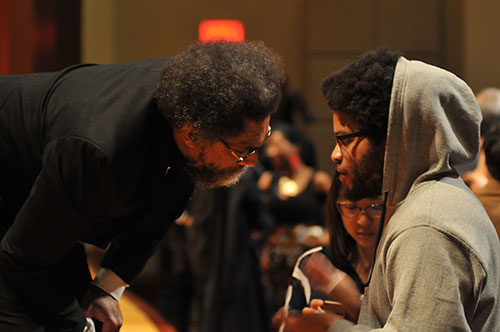
West also cautioned that it is important to remember that “we have been shaped very deeply by the things we are critical of” and that the focus should be on critical compassion and delicate, difficult conversations, rather than responding to terror or injustice or difficulty by imposing terror or injustice on others. “You can’t hate your way through this,” he said.
He raised the example of Mamie Till, the mother of Emmett Till, the black 14-year-old who was murdered in Mississippi in 1955 after he was accused of flirting with a white woman.
“Emmett Till’s mother said: ‘I don’t have a minute to hate. I’m going to pursue justice for the rest of my life,’” West said.
At multiple points during his speech, West described himself as a radical democrat and revolutionary Christian. Bonnie Honig, a Brown professor of modern culture and media and political science and the organizer of the Politics in the Humanities series, called him “above all an educator, a teacher” who encourages us “to be more, to do more, to see more.”
During his daylong visit to the Brown campus, West visited two courses, engaging directly with graduate and undergraduate students in a collaborative humanities seminar focusing on politics and literature and a religious studies course, respectively.
He was also a tireless interlocutor, answering complex questions by a long line of audience members after his address, all of whom seemed to want to hear more from West, who pronounced that in this “bleak moment now, we will find out who we are.”
Aretha Franklin – Amazing Grace
Candace Thompson Women Of Soul Event At The White House (2014) Aretha Franklin, Patti LaBelle, Janelle Monae and others.
LIVE AT NEW TEMPLE MISSIONARY BAPTIST CHURCH, 1972
Ανθρώπινος Συνείδηση Legendary
James Brown performs “Please Please Please” (1964)
James Brown Subscribe to James Brown: http://bit.ly/29Vydud James Brown performs “Please Please Please” to a live audience on the TAMI Show. “Please, Please, Please” was written by James Brown and Johnny Terry and released as a single on Federal Records in 1956, it charted #6 R&B. It was the group’s debut recording and first chart hit, and became their signature song. The TAMI Show is a 1964 concert that included performances by numerous popular rock and roll and R&B musicians from the United States and England. TAMI stood for both “Teenage Awards Music International” and “Teen Age Music International”. The concert was held at the Santa Monica Civic Auditorium on October 28 and 29, 1964. Free tickets were distributed to local high school students. The best footage from each of the two concert dates was edited into the film, which was released on December 29, 1964. The TAMI Show is particularly well known for James Brown’s performance featuring his legendary dance moves and explosive energy. Video transcript: Please, please, please, please. (Please, please don’t go). Please, please, please. (Please, please don’t go). Honey, please don’t (Go). Yeah, oh yeah, love, I love you so. (Please, please don’t go). Baby, you did me wrong. (So you got me woman). Well, well you done me wrong. (So you got me woman). So you done, done me wrong. (Go). Well, oh yeah, took my love, now you’re gone. (Please, please don’t go). Please, please, please, please, please. (Please, please don’t go). Please, please, please, please, please. (Please, please don’t go). Honey, please don’t (Go). Well, oh yeah, love, I love you so (Please, please don’t go). I just wanna hear you say I, I, I, I, I. (Please, please don’t go) I, I, I, I (Please, please don’t go). Honey, please don’t. (Go). Oh, oh yeah, love, I love you so. (Please, please don’t go). Baby, take my hand. (Please, please don’t go) I wanna be your lover man. (Please, please don’t go). Oh yeah, slipped out of my head. Honey, please don’t (Go). Well, oh yeah, love, I love you so. (Please, please don’t go). Please don’t go. (Please, please don’t go).Please. Please. Please. Please. Please. Please don’t go. (Please, please don’t go). Honey you don’t know what you do to me. Don’t go. Don’t go. Honey, please don’t go. Ha, I love you so, please, please. (Please, please don’t go). Want more James Brown, go to Shout Factory: https://www.shoutfactory.com/film/fil…
‘Just magical’: joy for Tamberi and Barshim as they opt to share gold in men’s high jump
Impressive display of sportsmanship from the Italian and Qatari rivals hailed as one of Tokyo 2020’s most memorable moments

Guardian staff and agencies
1 Aug 2021 23.36 EDT (theguardian.com)
Two athletes who agreed to share gold medals in the Olympics men’s high jump competition, in what is likely to be remembered as one of the most heartwarming moments of the Tokyo Games, have been flooded with praise.
Italy’s Gianmarco Tamberi and Mutaz Barshim of Qatar were locked in first place after a tough few hours of competing on Sunday. The two athletes, who are also good friends, were then given the option to settle matters with a jump-off.
Barshim had a better idea: how about two golds?
The official said that was possible. Barshim nodded and footage from Tokyo showed Tamberi instantly accepting, slapping Barshim’s hand and jumping into his arms. Tamberi then belly-flopped hard onto the track, rolled around a few times and screamed.
“I still can’t believe it happened,” he said. “Sharing with a friend is even more beautiful … It was just magical.”Tokyo 2020: Hassan takes 5000m gold, GB weightlifting silver and more – as it happenedRead more
The charismatic Italian continued to celebrate, delivering hugs and kisses to people as he jumped around the track.
Barshim, while not quite as effusive as his rival, agreed the Olympic victory needed to be shared.
“For me, coming here, I know for a fact that for the performance I did, I deserve that gold,” Barshim said. “He did the same thing, so I know he deserved that gold.”
It was a display of sportsmanship that delighted Olympics spectators around the world. The reaction on social media was swift, with some describing it as the best moment of the Games.
“Can we have two golds?”
This is the best moment of the Olympics. Barshim and Tamberi were tied after both clearing 2.37 meters and missing 3 times at 2.39.
They were offered a jump-off to decide the winner.
They decline so that they both could win Gold. pic.twitter.com/XYe5ZmWlEA— Steve Magness (@stevemagness) August 1, 2021
The triumph came after a tough road to Tokyo 2020 for both athletes.
Tamberi suffered a broken ankle that forced him out of the Rio Games. When it came off, the 29-year-old wrote on it “Road to Tokyo 2020”. Then, he crossed out 2020 after the pandemic led to a postponement and wrote in red, “2021”. That cast lay on the track as he jumped for gold on Sunday.
“I said to myself that day, ‘I want to be back in Tokyo and I want to fight for the gold medal,’” Tamberi said.

Barshim also battled injury in the years leading up to the Tokyo Games. The win adds to his Olympic medal collection, pairing nicely with silver in Rio and another medal at the 2012 London Games.
“This is beyond sport,” the 30-year-old said. “This is the message we deliver to the young generation.”
Both high jumpers were perfect until the bar was set to the Olympic-record height of 2.39 metres (7ft 10in). Each failed three times.
They had actually talked about this sort of situation before. Not in great detail, though. “We just said, ‘Imagine,’” Barshim recalled. “Today, it happened.”
Barshim was the epitome of cool in shades that kept falling off after his jumps. One time, he even swatted them away after a successful leap. They broke.

“I’ve got 50 pairs,” Barshim said.
Now, one gold.
Another for his buddy, too.
“He’s one of my best friends. Not only on the track but outside of the track,” Barshim said. “We’re always together almost. True spirit, sportsmen spirit, coming here and delivering this message.
“Appreciate what he’s done, he appreciates what I’ve done. This is amazing.”
With Associated Press
Tikkun olam: “World Work”
From Wikipedia, the free encyclopedia
Tikkun olam (Hebrew: תיקון עולם, lit. ‘repair of the world’) is a concept in Judaism, interpreted by some within Orthodox Judaism as the prospect of overcoming all forms of idolatry,[1] and by other Jewish thinkers as an aspiration to behave and act constructively and beneficially.[2]
Documented use of the term dates back to the Mishnaic period (ca. 10–220 CE). Since medieval times, kabbalistic literature has broadened use of the term. In the modern era, among the post-Haskalah movements, tikkun olam is the idea that Jews bear responsibility not only for their own moral, spiritual, and material welfare, but also for the welfare of society at large.[3] For many contemporary pluralistic rabbis, the term refers to “Jewish social justice”[4] or “the establishment of Godly qualities throughout the world”.[2]
History
In the Mishnah
The earliest use of the term tikkun olam comes in the phrase mip’nei tikkun ha-olam, “for the sake of repairing the world”, which appears in the Mishnah[5] with the meaning of amending the law in order to keep society well-functioning.
More generally, tikkun can mean improvement, establishment, repair, prepare, and more. In this Mishnaic context it refers to practical legal measures taken in the present to ameliorate social conditions. In the legal language of the Talmud, however, the verb took on a much more legalistic role, in that a “Takkana” – literally, “Affixation” – was a category of legal enactment made by the Sages.
In Aleinu
A conception of tikkun olam is also found in the Aleinu, a concluding part of most Jewish congregational prayer, which in contrast to the Mishnah’s usage, focuses on the end of time. The Aleinu beseeches God:Hebrew: “לראות מהרה בתפארת עוזך, להעביר גלולים מן הארץ והאלילים כרות יכרתוון לתקן עולם במלכות ש-די”Translation: “to speedily see Your mighty splendor, to cause detestable (idolatry) to be removed from the land, and the (false) gods will be utterly ‘cut off’, to takein olam – fix/repair/establish a world – under the Almighty’s kingdom”
In other words, when all the people of the world abandon false gods and recognize God, the world will have been perfected.
A common but more modern understanding of this phrase is that we share a partnership with God, and are instructed to take the steps towards improving the state of the world and helping others, which simultaneously brings more honor to God’s sovereignty.[citation needed]
Some scholars have argued that the Aleinu prayer is actually not a valid source for the concept of tikkun olam, claiming that the original prayer used a homonym “l’takhen” (spelled differently, לתכן) meaning “to establish” rather than “to fix” or “to repair”.[6] However, the standard and almost universally accepted spelling of לתקן can also mean establish, and the reading of l’taken לתקן became altogether normative by the time of the Rishonim and influenced all further evolution of the concept of tikkun olam since the beginning of the previous millennium if not earlier. Therefore, the question of which version of Aleinu is original only affects whether we date Aleinu’s influence on tikkun olam to the 3rd century or the 11th century, but not whether it was a determinative influence in tikkun olam’s evolution.
Other sources
Over the course of Jewish intellectual history, tikkun olam has at times referred to eschatological concerns, as in Aleinu, and at times to practical concerns, as in the Mishnah, but in either context, it refers to some kind of social change or process that is for the betterment of society or humanity or the world. Whether that happens primarily within Jewish society or primarily in relation to the nations of the world, whether that happens primarily through acts of justice and kindness, or equally through ritual observance, whether primarily through internal work of an individual or through external deeds, is something that changes from one source to the next.[7] For example, Talmudic scholar and eminent philosopher of the Middle Ages, Maimonides saw tikkun olam as fully inclusive of all these dimensions when he wrote “Through wisdom, which is [represented by] Torah, and the elevation of character, which is [represented by] acts of kindness, and observing the Torah’s commandments, which are [represented by] the sacrifices, one continuously brings tikkun olam improvement of the world, and the ordering of reality.”[8] Yet he also saw justice as a fundamental component, as for example when he wrote, “Every judge who judges truth unto its [deepest] truth, even for one hour, it’s as if he fixed the whole world entirely / tikein et kol ha’olam kulo and caused the Shekhinah to rest upon Israel.”[9]
Furthermore, the original context of the Aleinu prayer, in the Rosh Hashanah liturgy, is accompanied by the hope that “all [the people/creatures] will form a single union to do Your will with a whole heart”. In many contexts this is interpreted to be a call to universalism and justice for all mankind – sentiments which are common throughout Jewish liturgy. For example, in the American Conservative movement’s prayer book, Siddur Sim Shalom, published by the Rabbinical Assembly and the United Synagogue of Conservative Judaism, “A Prayer for Our Country” elaborates on this passage: “May citizens of all races and creeds forge a common bond in true harmony to banish all hatred and bigotry” and “uniting all people in peace and freedom and helping them to fulfill the vision of your prophet: ‘Nation shall not lift up sword against nation, neither shall they experience war anymore.'” Both lines express wholeheartedly the idea of universal equality, freedom, and peace for all.
In the liberal movements of Judaism, most especially in the United States, this sentiment is especially embedded in the idea of acting compassionately for all people, as for example in the 1975 New Union prayer book, used by the movement for Reform Judaism Gates of Prayer, which includes the text “You [Lord] have taught us to uphold the falling, to heal the sick, to free the captive, to comfort all who suffer pain”.[10] These aspects of Judaism already have a traditional name however, gemilut chasadim, and some have criticized the tendency to emphasize social action as a kind of disregard for other aspects of Judaism traditionally connected to tikkun olam, like learning, prayer, repentance, and ritual commandments.
Perhaps the first Jewish thinker to use the phrase “tikkun olam” in the modern sense of “fixing the world” by building a just society was Rabbi Abraham Isaac Kook (1865-1935).[11] According to Jewish scholar Lawrence Fine, the first use of the phrase tikkun olam in modern Jewish history in the United States was by Brandeis-Bardin Camp Institute founder Shlomo Bardin in the 1950s.[12] Bardin interpreted the Aleinu prayer, specifically the expression le-taken olam be-malchut shaddai (typically translated as when the world shall be perfected under the reign of the almighty), as a responsibility for Jewish people to work towards a better world.[12] However, while Bardin was a significant popularizer of the term, one also finds it being used in similar manner in the late 1930s and early 1940s by Alexander Dushkin[13] and Mordecai Kaplan.[14] As left-leaning progressive Jewish organizations started entering the mainstream in the 1970s and 1980s, the phrase tikkun olam began to gain more traction. The phrase has since been adopted by a variety of Jewish organizations, to mean anything from direct service to general philanthropy.[2] It was presented to a wide international audience—itself an indication of how widely tikkun olam had now permeated American Jewish life—when Mordecai Waxman used the phrase in a speech during Pope John Paul II‘s visit to the United States in September 1987.[13]
Lurianic Kabbalah
Lurianic Kabbalah dwells on the role of prayer and ritual in tikkun of the upper worlds. According to this vision of the world, God contracted part of God’s infinite light (Ohr Ein Sof)—concealing Himself—to create the world. The vessels (kelim) of the first universe—Olam HaTohu, i.e., the “world of chaos”—shattered (Shevirat HaKelim) and their shards became sparks of light (neẓuẓot) trapped within the next universe—Olam HaTikun, i.e., “the world of rectification.” Prayer, especially contemplation of various aspects of the divinity (sephirot), releases these sparks of God’s light and allows them to reunite with God’s essence. The “rectification” is two-fold: the gathering of light and of souls, to be achieved by human beings through the contemplative performance of religious acts. The goal of such repair, which can only be effected by humans, is to separate what is holy from the created world, thus depriving the physical world of its very existence, destroying the material universe. This restores all things to a world before disaster within the Godhead.[15]
According to Moshe Chaim Luzzatto, in his book Derech Hashem, the physical world is connected to spiritual realms above that influence the physical world, and furthermore, Jews have the ability, through physical deeds and free will, to direct and control these spiritual forces. God’s desire in creation was that God’s creations ultimately will recognize God’s unity and overcome evil; this will constitute the perfection (tikkun) of creation. While the Jews have the Torah now and are aware of God’s unity, some believe that when all of humanity recognizes this fact, the rectification will be complete.[16] In recent years Jewish thinkers and activists have used Lurianic Kabbalah to elevate the full range of ethical and ritual mitzvot into acts of tikkun olam. The belief that not only does prayer lift up divine sparks, but so do all of the mitzvot, including those traditionally understood as ethical, was already a part of Kabbalah, but the contemporary emphasis serves the purpose of finding a mystical depth and spiritual energy in ethical mitzvot. The application of the Lurianic vision to improving the world can be seen in Jewish blogs,[17] High Holiday sermons[18][19] and on-line Jewish learning resource centers.[20][better source needed]
The association between the Lurianic conception of tikkun and ethical action assigns an ultimate significance to even small acts of kindness and small improvements of social policy. However, this association can be a double-edged sword and has begun to trigger critique even within the social justice community.[citation needed] On one hand, seeing each action as raising a divine spark can motivate people to action by giving them hope that their actions will have long-term value. On the other hand, if this is done in a manner that separates the concept of tikkun olam from its other meanings as found in rabbinic literature and the Aleinu prayer, the risk of privileging actions that have no real significance and represent personal agendas is introduced.[2]
The application of Lurianic Kabbalah to ethical mitzvot and social action is particularly striking because Lurianic Kabbalah saw itself as repairing dimensions within the spiritual, the mystical worlds, rather than this world and its social relations. Author Lawrence Fine points to two features of Lurianic Kabbalah that have made it adaptable to ethical mitzvot and social action. First, he points out that a generation recovering from the tragedy of the Holocaust resonates with the imagery of shattered vessels. Second, both Lurianic Kabbalah and ethical understandings of tikkun olam emphasize the role of human responsibility and action.[12][21]
Performance of mitzvot
Jews believe that performing of ritual mitzvot (good deeds, commandments, connections, or religious obligations) is a means of tikkun olam, helping to perfect the world, and that the performance of more mitzvot will hasten the coming of the Messiah and the Messianic Age. This belief dates back at least to the early Talmudic period. According to Rabbi Yochanan, quoting Rabbi Shim’on bar Yochai, the Jewish people will be redeemed when every Jew observes Shabbat (the Sabbath) twice in all its details. This suggests that tikkun olam will prove successful with the coming of the Messiah and the Messianic Age.[22]
Observing Shabbat
Some[who?] explain the power of Shabbat by its effect on the other six days of the week and their role in moving society towards the Messianic Age. Shabbat helps bring about the Messianic Age because Shabbat rest energizes Jews to work harder to bring the Messianic Age nearer during the six working days of the week. Because the experience of Shabbat gives one a foretaste of the Messianic Age,[citation needed] observance of Shabbat also helps Jews renew their commitment to bring about a world where love and mercy will reign.[clarification needed] This relates to the section on the role of mitzvot (above) that suggests that tikkun olam will prove successful with the coming of the Messiah and the Messianic Age.[23]
Ethical behavior
In Jewish thought, ethical mitzvot as well as ritual mitzvot are important to the process of tikkun olam. Maimonides writes that tikkun olam requires efforts in all three of the great “pillars” of Judaism: Torah study, acts of kindness, and the ritual commandments.[24] Some Jews believe that performing mitzvot will create a model society among the Jewish people, which will in turn influence the rest of the world. By perfecting themselves, their local Jewish community or the state of Israel, the Jews set an example for the rest of the world. The theme is frequently repeated in sermons and writings across the Jewish spectrum: Reconstructionist, Reform, Conservative, and Orthodox.[citation needed]
Also, the mitzvot often have practical worldly/social effects (in contrast to mystical effects as held by Lurianic Kabbalah).
Tzedakah
Tzedakah is a central theme in Judaism and serves as one of the 613 commandments.[25] Tzedakah is used in common parlance as charitable giving. Tzedek, the root of tzedakah, means justice or righteousness.[25] Acts of tzedakah are used to generate a more just world. Therefore, tzedakah is a means through which to perform tikkun olam.
Philanthropy is an effective tool in performing tikkun olam as it supports organizations that perform direct service. There are many different philanthropic organizations devoted to repairing the world. The United Jewish Federations of North America, one of the top ten charities in the world, counts tikkun olam as one of the three main principles under which it operates. Similarly, the American Jewish World Service supports grassroots organizations creating change in Africa, Asia, and the Americas.
The intersection between tzedakah, philanthropy, and tikkun olam is captured by Yehudah Mirsky in his article “Tikkun Olam: Basic Questions and Policy Directions”. Mirsky writes:
The rich tradition of tzedakah is a model of communal social responsibility in the absence of a strong welfare state; it also connects to the burgeoning area of Micro Philanthropy, which pools large numbers of small donations resulting in more direct interaction between donors and recipients, or “givers” and “doers,” higher resolution in the focus of giving and the creation of new networks of cooperation.[26]
Building a model society
By performing the mitzvot, it is believed that the Jewish people will become a model society. This idea sometimes is attributed to Biblical verses that describe the Jews as “a kingdom of priests and a holy nation” (Exodus 19:5–6) and “a light of the nations” or “a light to the nations” (Isaiah 42:6 and Isaiah 49:6). The philosophies of Rabbi Samson Raphael Hirsch,[27][28][29] Rabbi Abraham Isaac Kook, and Rabbi Yehuda Ashlag are prominent in this field, the former rationally and in terms of a kehilla (community) of Jews in galut (the diaspora) influencing their non-Jewish neighbors, and the latter mystically and in Zionist terms of a Jewish state influencing the other nations of the world. Some other Orthodox rabbis, many but not all of them Modern Orthodox, follow a philosophy similar to Hirsch’s, including Joseph H. Hertz,[30] Isidore Epstein,[31] and Eliezer Berkovits.[32] The philosophy of Religious Zionism follows Kook in his philosophy.
In Modern Orthodox philosophy (which often is intertwined with Religious Zionism, especially in America), it is commonly believed that mitzvot have practical this-worldly sociological and educational effects on those who perform them, and in this manner, the mitzvot will perfect the Jews and the world.
According to the rationalist philosophy of Hirsch and others, the social and ethical mitzvot have nearly self-explanatory purposes, while ritual mitzvot may serve functions such as educating people or developing relationships between people and God. As examples, prayer either inculcates a relationship between people and God or strengthens beliefs and faith of the one who prays, and keeping kosher or wearing tzitzit serve as educational symbols of moral and religious values. Thus, the ultimate goal of mitzvot is for moral and religious values and deeds to permeate the Jewish people and ultimately the entire world, but the ritual mitzvot nevertheless play a vital role in this model of tikkun olam, strengthening what is accomplished by the ethical.
Hirsch’s Horeb is an especially important source, as his exposition of his philosophy of the mitzvot. He classifies the mitzvot into six categories:
- (1) toroth (philosophical doctrines);
- The ethical mitzvot fall under (2) mishpatim and (3) chukim (commandments of justice towards (living) people and the natural world (including the human body itself) respectively) and (4) mitzvot (commandments of love);
- The ritual mitzvot under (5) edoth (educational symbolic commandments) and (6) avodah (commandments of direct service to God).
Aside from the fact that by perfecting themselves, the Jews set an example for the rest of the world, there is thus the additional distinction that mitzvot have practical, worldly effects—for example, charity benefits the poor materially, constituting tikkun olam by its improvement of the world physically or socially, in contrast to the mystical effects of mitzvot as held by Lurianic Kabbalah.
Improving the world
For some Jews, the phrase tikkun olam means that Jews are not only responsible for creating a model society among themselves but also are responsible for the welfare of the society at large.[33] This responsibility may be understood in religious, social or political terms and there are many different opinions about how religion, society, and politics interact.
Jane Kanarek, a Conservative rabbi, argues that discussions of tikkun olam in the Mishnah and Talmud point to the importance of creating systemic change through law. She concludes that contemporary tikkun olam should also focus on systemic and structural changes to society.[4]
While many non-Orthodox Jews have argued that tikkun olam requires socially liberal politics, some have argued for the validity of a conservative political approach to tikkun olam. Michael Spiro, a Reconstructionist Jew, draws on a conservative tradition that emphasizes free markets precisely because they believed that was the path to the greatest public good. In addition, conservatives have always emphasized the importance of private efforts of gemilut chasadim (benevolence) and tzedakah (charity or philanthropy), and Spiro argues that tikkun olam should be carried out through such private efforts rather than through government.[34]
“Comfort ye and Ev’ry valley” from Handel’s Messiah
Nicholas Sharratt Nicholas Sharratt, tenor soloist in Handel’s Messiah, recorded live at the Cadogan Hall, London on Sunday, 16th September 2012.
Mr. Rogers has a message especially for you…
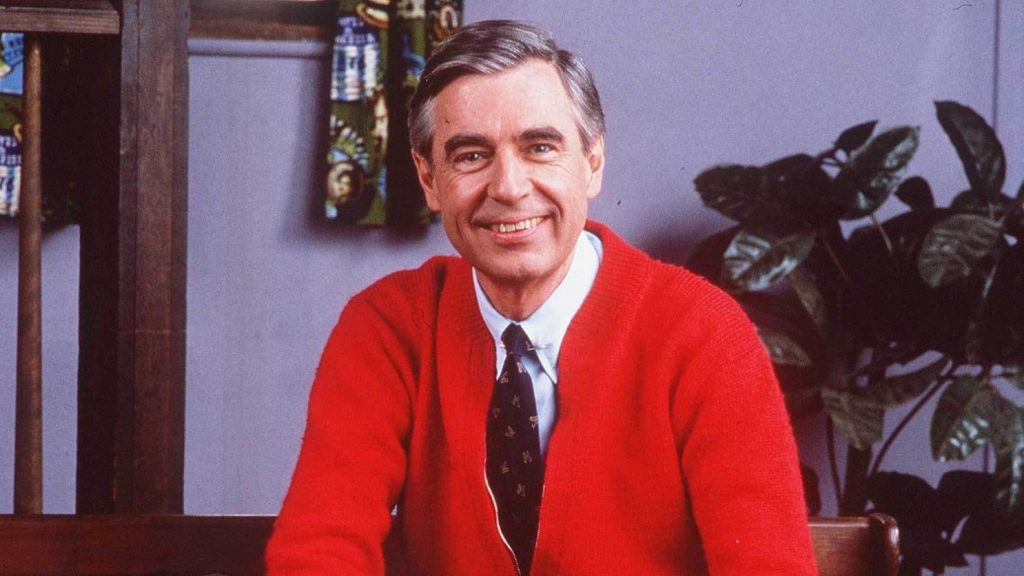
“From the time you were very little, you’ve had people who have smiled you into smiling, people who have talked you into talking, sung you into singing. Loved you into loving.
“Now, think about somebody who’s helped you along the way for one minute. I’m going to time you. Let’s just take some time to think of those extra special people. Some of them may be right here. Some may be far away. Some may even be in heaven. No matter where they are, deep down you know they’ve always wanted what was best for you. They’ve always cared about you beyond measure and have encouraged you to be true to the best within you.
“You don’t ever have to do anything sensational for people to love you.
“You help to make each day a special day by just your being yourself. There’s nobody else in the whole world who’s exactly like you. And people can like you exactly as you are. You are special.“
–Mr. Rogers
Fred McFeely Rogers, also known as Mister Rogers (March 20, 1928 – February 27, 2003), was an American television host, author, producer, and Presbyterian minister. He was the creator, showrunner, and host of the preschool television series Mister Rogers’ Neighborhood, which ran from 1968 to 2001. Wikipedia
Is it Safe to Let Go? Facing Existential Fear on the Spiritual Path
BY CRAIG HAMILTON | AUG 26, 2020 | craighamiltonglobal.com

Question:
The more I’ve been engaging with spiritual practice, the more I’m starting to feel a deep existential paradox. On one hand, I recognize that the only thing standing in the way of awakening is my investment in self-image. It seems so simple, logical, and achievable.
But while awakening feels within reach, it’s still so terrifying to let go. The more I lean into letting go, the more I become overwhelmed with fear. What if everything falls apart? What if I’ll lose everything I’ve so carefully constructed? What if letting go will trigger a desire to change my whole life? This feels like I might die, and I’m not sure what to make of it or how to move beyond the fear.
Answer:
The question that you’re bringing up represents a really important reflection. I appreciate your vulnerability and the clarity you’ve expressed in laying out what’s happening within you.
I have no doubt that many people can resonate with at least some aspect of what you’ve shared about your experience. There’s a lot in what you’re asking here, so I’m going to share a few different perspectives on it..
Whether or not you can relate to this exact question, this experience is something that comes up at some point for a lot of us on the spiritual path, and I can personally resonate with everything you laid out.
Many spiritual practices revolve around letting go and letting things be, and when you engage this practice in earnest, it’s natural—even inevitable—for existential fear to arise. Any genuine practice of letting go will eventually take you beyond who you thought you were. It will give you a direct experience of who you are beyond the mind. This is a part of you that your mind can never know. Any practice of awakening or enlightenment will, in one way or another, nudge us in this direction.
At some point, these practices are going to threaten the existential attachment we have to our lives. The investment we have in our own self-image is going to be challenged and it’s going to feel like we need to leave something behind. This can create a deep sense of fear or even dread. It’s something that all of us on the path, inevitably, have to face.
The good news is that you understand the dynamics of what is actually happening to you. You’re saying, “I get it. I understand that my investment in self-image is what’s in the way. I can see that. It’s crystal clear.”
That’s good. The fact that it’s clear to you is really a good start. There’s no ambiguity about what’s being asked of you. You can see it in your own experience.
You’re also saying that the more it feels within reach, the more the fear seems to grow. This also makes a lot of sense.
Sometimes when I talk about the fear that we all face on the spiritual path, some people say, “I’ve never felt any fear on the spiritual path. I’m just excited to let go, and to awaken. I’m a big yes. I’ve never felt fear.”
In these situations, I often say, “Enjoy it while it lasts, because at some point, fear and resistance will likely show up.” ,
The funny thing is that when we do experience the kind of fear I’m speaking about, we often think it’s a bad sign. When we experience the fear of letting go, or the fear of transcending, or the fear of what will happen when we awaken to who we are beyond the mind, we think it means that we must not want to actually do it. We think that fear means that we have a lot of resistance to awakening. We personalize the fear. This is what the ego does; it personalizes everything.
But I actually think that having this experience of fear is a very good thing. Why? Because it means you’re close to something real. We don’t tend to feel fear of losing something until we’re about to lose it. We don’t tend to feel fear that our ego structure is going to fall apart until it starts to fall apart.
So the fact that the closer you get, the more your fear intensifies, is a good sign. That’s exactly how it works and is always going to work. You should actually get a little bit excited about the fact that you’re feeling this tremendous fear, because it means something’s happening. Something extremely positive is breaking through. You’re on the cusp. In fact, it’s probably already occurring. You’re probably already letting go and starting to discover who you are beyond the mind. As a result, the ego structure is saying, “No, no, no! This does not bode well for me.”
Let’s talk a little bit about the particular fears you mentioned. Specifically, you mentioned a fear that everything will fall apart and that you’ll lose everything you’ve so carefully constructed.
Let’s go into that. The first thing I would ask is:would it be so bad if everything fell apart?
Let me nuance that a bit. If we get in touch with the part of us that’s spiritually seeking, that’s on the spiritual path, that wants to awaken, doesn’t it really want everything to fall apart? Doesn’t it want to break through and leave behind everything that you’ve carefully constructed?
Isn’t the very feeling of being constrained and limited by the false world that our mind has created what we want to break free from? Aren’t we yearning for that to fall apart so that something new can arise from the rubble? Don’t we want to, in a sense, be reborn into a new, more glorious experience of being alive?
Spiritual awakening is called “awakening” because it means we’re waking up from being asleep. We are waking up from a dream. The fundamental premise of spiritual awakening is that we live in some kind of web of delusion or illusion. We’re not seeing reality clearly. We’re not in touch with the highest possibility. We’re not living a life that truly expresses our ultimate potential, and we want to wake up into a greater reality—into truth and the sacred, extraordinary possibility of living our life as awakened consciousness.
In doing this, we’re inherently leaving something behind that we have discovered to be false or to be limited. We’re abandoning something that we’ve found to not be the whole story, to not be the real truth, to not be the highest possibility. We’re leaving it behind in order to go somewhere new. Something has to fall apart in order for something else to emerge. That’s the nature of it.
This takes a profound degree of trust. In order to see this fear in context, you have to trust that you’re on the right track. You have to trust that your impulse to awaken is a good one, and that it’s moving you toward a better possibility—a more real, authentic, sublime existence.
You have to trust that if you follow this impulse, the things that you’re going to lose weren’t worth having anyway. They weren’t the real thing. In other words, you have to trust that whatever is real and good and true—all the best parts of you and the best parts of your life—are still going to continue. In fact, they’re now going to be enhanced. They’re going to be amplified. They’re going to be allowed to fully flower because a bunch of other stuff is now out of the way. You let go of a lot of other things in order to make room for this higher flourishing—for this much deeper alignment.
So you just have to trust that spiritual awakening is good. You have to trust that God is good. Those of you who know me know I mean “God” in a very universal sense. When I say “God is good,” I mean that the life process is good. The sublime, loving consciousness that is our own true nature, and also the essence and source of everything in existence, is fundamentally positive. And if it really is as good as it seems to be, then it’s worth pursuing. So you’re going to have to trust that what gets left behind in the process were all the things that were in the way of that, and nothing else.
In other words, you really have to trust that awakening is leading towards something more real, more authentic, more true, more wise, more loving, more conscious, more whole, more integrated, more aligned with the moral axis of the universe. You’ve got to trust that.
You have to say, “I feel fear, and I’m afraid that I’m going to lose everything, but the truth is that I want to lose anything that’s not aligned with the sacred trajectory of the cosmos. I want to lose anything that’s not aligned with my highest self. I want it to fall apart.”
Of course, part of you is always going to be scared. But that’s okay. We all know how to do things that we’re afraid of, if we know they’re the right thing. We human beings act in spite of fear all the time.
You have to learn to trust in your own deeper wisdom. That’s all we’re really talking about. I’m not talking about trusting someone else. I’m saying that as you become more clear, less biased, less driven by fear, more connected to your own deepest values, you’re going to want to live in alignment with it. What’s going to have to change about your life? Only the things that are not in alignment with your true essence.
Let’s do a little exercise together. Think about your life as it is now: how you spend your time, what you do for work, who you socialize with, what activities you spend time on outside of work, how your day is organized, etc. Just think about your life.
Now, imagine you’re a fully awakened self. You’ve woken up to the highest, deepest, truest part of yourself, and you’ve completely aligned with it. This higher consciousness has no interest in your story or your self-image. It has no investment in who you thought you were before you woke up.
Now think about what needs to change about your life from the vantage point of this new, awakened consciousness?
You might see things like, for example, the fact that a person you’ve been spending a lot of time with isn’t really aligned with this new trajectory and your relationship with them isn’t really very nourishing. In fact, it’s against the flow of your higher potential. It’s exerting a drag on it, and it’s not really healthy. In this case, you might have to change that relationship or let it go altogether in order to live your life in alignment with what you’ve found to be your higher potential.
There are many other examples of the kinds of things you may need to change about your life from this awakened perspective. They could be certain things that are superficial or a waste of time or that feel out of alignment with your spiritual heart.
Again, the things about your life that are already really good and wholesome and aligned with your spiritual aspirations don’t have to change. They’re already in alignment. They’re already enlightened, at least somewhat. The only things that need to change are those that are obstacles to this higher way of living and flourishing.
So, in summary, my answer to the question, “Will I have to let my life fall apart?”, is, yes, you might have to let some things go. Some things might fall apart, and your life might radically change. But the only things that you’re going to have to let go of or allow to fall apart or change are the things that aren’t in alignment with where you want to go, with who you want to be, or with what you want to express.
We have to be willing to trust. We have to be willing to say, “I don’t know what my spiritual path is going to demand from me or will require of me, but I trust that it will be true and right, healthy and positive, and move me toward all the highest potentials for my life.
That trust, then, will allow you to let go and take the steps you see you need to take. If things about your life end up falling away, they were the things that needed to fall away to make room for this new possibility. You can let them go and let them fall apart, gladly.