“When one door closes another opens; but we often look so long and so regretfully upon the closed door that we do not see the one which has opened for us.”
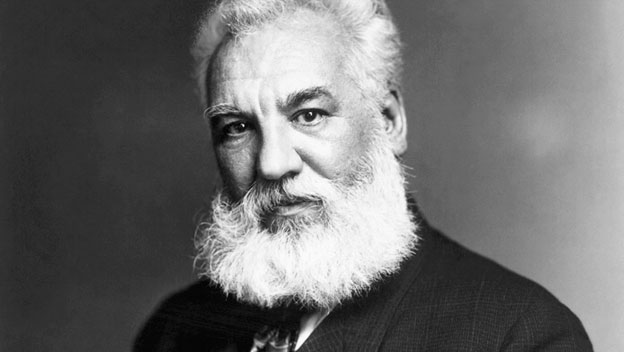
–Alexander Graham Bell
Alexander Graham Bell (March 3, 1847 – August 2, 1922) was a Scottish-born inventor, scientist, and engineer who is credited with inventing and patenting the first practical telephone. He also co-founded the American Telephone and Telegraph Company in 1885.Wikipedia
In the winter of 1947, drained by the bustle and constant striving that drives life in New York, Nin took a holiday in Acapulco, Mexico — still a mostly undeveloped patch of wilderness, on which the Hotel El Mirador had been built as twelve rooms on the edge of a cliff just a few years earlier. She was immediately struck by the world of difference between the local way of life and the obsessive living-making of the workaholic culture from which she had taken respite.
Three decades before Susan Sontag lamented the “aesthetic consumerism” of vacation photography, which commodifies the experience by prioritizing its record over its livingness, and more than half a century before we came to compulsively catalog every private moment on the social web, Nin writes:
I am lying on a hammock, on the terrace of my room at the Hotel Mirador, the diary open on my knees, the sun shining on the diary, and I have no desire to write. The sun, the leaves, the shade, the warmth, are so alive that they lull the senses, calm the imagination. This is perfection. There is no need to portray, to preserve. It is eternal, it overwhelms you, it is complete.
Nin had many friends of color in an era when that was rather uncommon for the average white person, and saw white Americans’ and Europeans’ way of life as a rote existence greatly inferior in its sensorial unimaginativeness compared to the cultures from which jazz, the art-form she most admired, sprang. Faced with the radically different disposition of the Mexican locals, she considers what they know about living with presence that the society from which she escaped does not:
The natives have not yet learned from the white man his inventions for traveling away from the present, his scientific capacity for analyzing warmth into a chemical substance, for abstracting human beings into symbols. The white man has invented glasses which make objects too near or too far, cameras, telescopes, spyglasses, objects which put glass between living and vision. It is the image he seeks to possess, not the texture, the living warmth, the human closeness.
Illustration from a rare first edition of Nin’s 1944 short-story collection ‘Under a Glass Bell.’ Click image for more.
Many decades before we became transfixed by the glowing screens of our devices, which came to interfere with the very basics of being a city life, Nin adds:
Here in Mexico they see only the present. This communion of eyes and smiles is elating. In New York people seem intent on not seeing each other. Only children look with such unashamed curiosity. Poor white man, wandering and lost in his proud possession of a dimension in which bodies become invisible to the naked eye, as if staring were an immodest act. Here I feel incarnated and in full possession of my own body.
Four years later, Nin returns to Acapulco and is once again enchanted by the aliveness that its invitation to presence awakens in the spirit:
To me Acapulco is the detoxicating cure for all the evils of the city: ambition, vanity, quest for success in money, the continuous contagious presence of power-driven, obsessed individuals who want to become known, to be in the limelight, noticed, as if life among millions gave you a desperate illness, a need of rising above the crowd, being noticed, existing individually, singled out from a mass of ants and sheep… Here, all this is nonsense. You exist by your smile and your presence. You exist for your joys and your relaxations. You exist in nature. You are part of the glittering sea, and part of the luscious, well-nourished plants, you are wedded to the sun, you are immersed in timelessness, only the present counts, and from the present you extract all the essences which can nourish the senses, and so the nerves are still, the mind is quiet, the nights are lullabies, the days are like gentle ovens in which infinitely wise sculptor’s hands re-form the lost contours, the lost sensations of the body… As you swim, you are washed of all the excrescences of so-called civilization, which includes the incapacity to be happy under any circumstances.
The pandemic spurred an unprecedented reclamation of urban space, ushering in a seemingly bygone era of pedestrian pastimes, as cars were sidelined in favor of citizens. Highlighting examples from across the United States, environmental designer Kevin J. Krizek reflects on how temporary shifts — like transforming streets into places for dining, recreation and community — can become permanent fixtures that make for more livable and sustainable cities.
This talk was presented to a local audience at TEDxMileHigh, an independent event. TED’s editors chose to feature it for you.
Susan Lanzoniis an empathy consultant and coach, and a writing tutor at the Massachusetts College of Pharmacy and Health Sciences. She is the author of Empathy: A History(2018). She lives in Cambridge, Massachusetts.
Today we think about empathy as a way to understand another’s experience. But when the English word ‘empathy’ first appeared in 1908 as a translation of the German Einfühlung, it denoted an aesthetic ability to appreciate objects and nature. What exactly is this surprising early version of empathy, and can we imagine empathy as an aesthetic practice today?
At the end of the 19th century, German psychologists defined Einfühlung as an aesthetic transfer of our subjective experiences into objects in the world. To empathise meant to project our feelings and movements into forms of art and nature. So, for instance, we transmitted our feelings of rising to the majestic reach of a mountain, we felt our own stretching in the limbs of a tree, and we projected our sense of expansiveness into the vault of a cathedral. One of the central theorists of empathy in this period, Theodor Lipps, declared that empathy fused our own imagined movements and emotions with the shapes around us, and was thus key to our appreciation of beauty.
Aesthetic empathy was possible because it relied on our capacity to generate kinaesthetic images, or mental images of movement and feeling. In the 1870s, psychologists had developed the new method of systematic introspection, a rigorous scientific reflection on the mind that mapped the elements of thinking and perceiving. When psychologists conducted their own introspections, they discovered the kinaesthetic image, which they added to the more common visual and auditory mental images. Edward Titchener, a central figure in establishing the academic discipline of experimental psychology in the United States and director of the Cornell laboratory, affirmed the existence of kinaesthetic images in his own introspections. In a 1909 lecture, he explained that when he uttered the word ‘stately’, for instance, he saw in his mind’s eye a woman holding up a steely grey skirt. This kinaesthetic image combined visual, feeling and movement elements, and became the basis for empathy.
Empathy as a kinaesthetic response was also central to the aesthetic appreciation of modern dance. Because modern dance dispensed with the storylines of classical ballet and presented new, abstract movements on the stage, it relied on audience members to directly respond to the movements they were witnessing. By 1928, modern dance had come into its own: Martha Graham created her own school and company in New York City; Doris Humphrey established a company with Charles Weidman; and Helen Tamiris began work on her Negro Spirituals. With the growing interest in group dance and the more intricate choreography of modern dance, critics began to analyse the budding art form for a new generation of viewers.
The empathic participation of the viewer was crucial to the appreciation of modern dance
John Martin, the modern dance critic writing for TheNew York Times, argued that, while watching modern dance, audience members felt as if they were imaginatively taking on the poses of dancers while still sitting in their seats. This inner imaginative leap was a form of kinaesthetic empathy. Kinaesthetic empathy activated movement-sense receptors in the spectator, prompting emotional associations and images leading to a grasp of the underlying intention of the movement. Martin educated viewers to fine-tune their own motoric engagement, or kinaesthetic empathy, in order to enhance their individual aesthetic response.
In 1933, Martin declared: ‘We shall cease to be mere spectators and become participants in the movement that is presented to us, and though to all outward appearances we shall be sitting quietly in our chairs, we shall nevertheless be dancing synthetically with all our musculature.’ The empathic participation of the viewer was crucial to the appreciation of modern dance and to the aesthetic respectability of this new art form. One philosopher of the period explained that ‘dancing is the most direct elaboration of empathy (those movements by which we seek to become one with the object we contemplate).’
If embodied aesthetic engagement comprised empathy’s principal definition in the early decades of the 20th century, by the time of the Second World War, this meaning faded. Empathy’s interpersonal meaning came to the fore, and empathy became almost exclusively a matter of grasping another’s experience. However, to do so accurately now required putting aside one’s own feelings and minimising one’s self in order to more clearly grasp another’s experience, which could be very different from one’s own. In the 1950s, a series of psychological experiments explicitly defined empathy as the ability to accurately predict another’s response. Empathy was now the direct opposite of projection, which was a mere attribution to another of one’s own ideas.
The interpersonal model of empathy was rooted in a psychotherapeutic tradition that privileged the client’s emotions over those of the therapist. This approach was first developed in the 1930s by the unorthodox psychoanalyst Otto Rank in collaboration with Jessie Taft, the philosopher and social work pioneer. In the years after the Second World War, the clinical psychologist Carl Rogers adapted this approach to centre directly on empathy in psychotherapy. This empathic style spread widely in subsequent decades into pastoral counselling, a variety of psychotherapies, and even into contemporary coaching techniques.
Psychotherapeutic empathy favours connection over control. Rogers explained that, with empathy, a therapist listens deeply to the client without judgment, appraisal or even the offer of advice. To listen effectively, the therapist puts aside their own feelings and then immerses themselves in another’s experience ‘as if’ it were their own. Rogers advocated for an ‘empathic way of being’ that could be practised in many different kinds of relationships.
As Rogers put it, ‘I don’t try to control a sunset. I watch it with awe as it unfolds’
The empathic way of being is at its core a kind of aesthetic appreciation. In a 1964 lecture to the California Institute of Technology, Rogers explained that an empathic response did not try to control or change another’s situation. Instead, we allow another person to be fully what they are, just as we might admire a sunset. We do not attempt to alter a sunset by saying: ‘Soften the orange a little on the right-hand corner, and put a little more purple along the base, and use a little more pink in the cloud colour.’ Rather, as Rogers put it, ‘I don’t try to control a sunset. I watch it with awe as it unfolds.’
If to reverentially watch a sunset unfurl constitutes an aesthetic response, it might also be seen as a profoundly empathic act. To empathise with another in this fashion is not to critique or judge them, but to resonate with the entirety of their experience. We do not try to change their experience, or even to suggest ways to make it better or different than it is. It is true that another’s experience might not exhibit the beauty of a sunset, but valuing another’s situation in its many dimensions – including its pain and joy – amounts to a humble witnessing. The person whose experience is wholeheartedly appreciated, Rogers claimed, will often feel a powerful healing.
Aesthetic empathy as witnessing is similar to disinterested contemplation, a fundamental feature of aesthetics going back to Immanuel Kant. It is a moment of appreciation for its own sake, not as a means to another end. Aesthetic empathy of this type, however, is different from the kinaesthetic aesthetic empathy of a century ago, understood as the projection of one’s own subjective feelings and movements into an object. And yet both types of aesthetic empathy rely on the power of our imaginative capacity to delight in, and respond with reverence to, others and the world around us.
To appreciate another’s experience in a disinterested manner does not mean we fail to act in light of human suffering and despair. However, without an expansive contemplation of the breadth of another’s experience, we might not discover effective interventions. Empathy thus marks the pause, or the moment of immersion that helps us to see clearly and to fully take in another’s situation without judgment. The insights gained through empathy can then be used in concert with our critical faculties to shape helpful actions.
Empathy as an aesthetic practice challenges our inclination to control and change, and instead asks us to open up a space for appreciation, a space that can be radically transformative.
The Lord of Futility represents the times in life where we feel too overwhelmed and doubtful to act decisively toward our problems. It will usually appear when there are difficult decisions to be made, or when situations arise that require we take action. Because we are weary, feeling over-stressed and helpless, we do nothing. As a result, of course, things inevitably get worse.
Sometimes the card will come up because we have such a poor view of ourselves. We start to believe that nothing we do could possibly make a difference to the unhappy circumstances we find ourselves in. If not challenged, this attitude will lead us into being poor-little-me’s, when we adopt a victim mentality, and secretly expect everybody else to sort things out for us.
When feeling the effects of the Lord of Futility, we are often ready to make unsuitable compromises in order to try to ease the pressure we experience. We can be more easily impressed by other people’s opinions, seeking to please them – often at our own expense. We vacillate, unable to stick to any decision we make. And all of this does nothing much more than increase our problems.
Neither of these options is viable, if we are to live a happy love-filled life, is it? So when this card appears in a reading for ourselves, we need to be prepared to commit ourselves to a course of action and then follow through. Even if it transpires that the choice we make could have been bettered, any choice is better than no choice at all, when the alternative is total inertia.
Often fear will be a big issue – fear of doing something wrong, fear of taking responsibility, fear of being even more hurt and feeling worse than we already do. In the end, we simply have to take our courage in both hands and, like The Fool, take that leap forward. The fact that we have acted will help us to break from of the Lord of Futility and to move on.
SME (on behalf of RCA Records Label); Sony ATV Publishing, SOLAR Music Rights Management, LatinAutor – SonyATV, Kobalt Music Publishing, CMRRA, LatinAutorPerf, UNIAO BRASILEIRA DE EDITORAS DE MUSICA – UBEM, and 8 Music Rights Societies
Thanking my body for all its work. For the gift of experiencing environment. For the gift of the senses. For the gift of touch, the gift of taste, the gift of smell, the gift of sight, the gift of hearing.
The senses allow me to experience first hand the manifestation of the Universe. The manifestation of Being. The manifestation of God.
My senses may act as a reducing value, that is true. But I can act as an “increasing value” by expanding my limited awareness to include more and more of the awareness of Infinite Being (I.B.).
I know, or at least I’m told, that our bodies grow old and decay.
But if body is a manifestation of Truth, of Reality, ’cause what else can it be? How can it age or decay?
That’s just another story that we’re told and most of us accept.
The body, really, is infinite, without beginning and without end.
And so is my consciousness. ‘Cause my consciousness is nothing more than an aperture of Infinite Consciousness, however wide or narrow my aperture is.
I will always be here (wherever here is). i will always be embodied.
I am the embodiment of Truth. I am the embodiment of Reality. I am the embodiment of God
As are we all. My God. My God. My God. You are my God. You are my God. You are my God. You are my God. You are my God.
A “Boston marriage” was, historically, the cohabitation of two wealthy women, independent of financial support from a man. The term is said to have been in use in New England in the late 19th/early 20th century. Some of these relationships were romantic in nature and might now be considered a lesbian relationship; others were not.
Etymology
Sarah Ponsonby and Lady Eleanor Butler, also known as the Ladies of Llangollen, lived together in a Boston marriage.
The fact of relatively formalized romantic friendships or life partnerships between women predates the term Boston marriage and there is a long record of it in England and other European countries.[1] The term Boston marriage became associated with Henry James‘s The Bostonians (1886), a novel involving a long-term co-habiting relationship between two unmarried women, “new women“, although James himself never used the term. James’ sister Alice lived in such a relationship with Katherine Loring and was among his sources for the novel.[2]
There are many examples of women in “Boston marriage” relationships. In the late 1700s, for example, Anglo-Irish upper-class women Eleanor Butler and Sarah Ponsonby were identified as a couple and nicknamed the Ladies of Llangollen. Elizabeth Mavor suggests that the institution of romantic friendships between women reached a zenith in eighteenth-century England.[1] In the U.S., a prominent example is that of novelist Sarah Orne Jewett and her companion Annie Adams Fields, widow of the editor of The Atlantic Monthly, during the late 1800s.[3]
Lillian Faderman provided one of the most comprehensive studies of Boston marriages in Surpassing the Love of Men (1981).[4] Twentieth-century film reviewers used the term to describe the Jewett-Fields relationship depicted in the 1998 documentary film Out of the Past.[5]David Mamet‘s play Boston Marriage premiered in 2000 and helped popularize the term.
Sociology
Some women in Boston marriages did so because they felt they had a better connection to women than to men.[4][6][7] Some of these women lived together out of necessity; such women were generally financially independent due to family inheritance or career earnings. Women who chose to have a career (doctor, scientist, professor) created a new group of women, known as new women,[8] who were not financially dependent upon men. Educated women with careers who wanted to live with other women were allowed a measure of social acceptance and freedom to arrange their own lives.[6] They were usually feminists with shared values, involved in social and cultural causes. Such women were generally self-sufficient in their own lives, but gravitated to each other for support in an often disapproving, sexist, and sometimes hostile society.[6]
Until the 1920s, these arrangements were widely regarded as natural and respectable.[9][7] After the 1920s, women in such relationships were increasingly suspected of being in lesbian sexual relationships, so fewer single women chose to live together.[9]
Boston marriages were so common at Wellesley College in the late 19th and early 20th centuries that the term Wellesley marriage became a popular description.[6]:185 Typically, the relationship involved two academic women. This was common from about 1870 until 1920. Until the later part of the 20th century, women were expected to resign from their academic posts upon marriage, so any woman who wanted to keep her academic career had to make housing arrangements other than a home with a husband and children, such as sharing a home with another like-minded single female professor.[9] Additionally, as Lillian Faderman points out, college educated women commonly found more independence, support, and like-mindedness by partnering with other women.[4] Further, these alternative relationships freed women from the burdens of child-rearing, tending to husbands, and other domestic duties, thus allowing professional women like college faculty to focus on their research.[6]
There are many examples of Wellesley marriages in the historical record. Faderman documented that in the late 19th century, of the 53 women faculty at Wellesley, only one woman was conventionally married to a man; most of the others lived with a female companion.[6]:192 One of the most famous pairs were Katharine Lee Bates and Katharine Ellis Coman. Bates was a professor of poetry and the author of the words to “America the Beautiful“, while Coman was an economic historian who is credited with writing the first industrial history of the US.[6][8][7][10][11]
“Power without love is reckless and abusive, and love without power is sentimental and anemic. Power at its best is love implementing the demands of justice, and justice at its best is power correcting everything that stands against love.”
― Martin Luther King Jr.
Consciousness, spirituality, biography, sexuality, androgyny, futurism, space, the arts, science, astrology, democracy, humor, books, movies and more


 I am lying on a hammock, on the terrace of my room at the Hotel Mirador, the diary open on my knees, the sun shining on the diary, and I have no desire to write. The sun, the leaves, the shade, the warmth, are so alive that they lull the senses, calm the imagination. This is perfection. There is no need to portray, to preserve. It is eternal, it overwhelms you, it is complete.