Full Moon In Aquarius – Precisely That Simple, Also That Difficult

by Astro Butterfly (astrobutterfly.com)

We have a Full Moon in Aquarius on July 24th, 2021.

The Full Moon is at 1° Aquarius, between Pluto (at 25° Capricorn) and Saturn (at 10° Aquarius) loosely conjuncting both.

The Full Moon will also trigger the Jupiter-Saturn conjunction on December 21st, 2021 at 0° Aquarius.

This Full Moon in Aquarius will reveal something fundamental about ourselves, in the context of the profound societal developments of the past year and a half.

But how will the Full Moon influence us – at a personal level, and our society, as a whole?

At a macro level, the Full Moon in Aquarius casts the light on the Covid crisis and everything that has unfolded from it.

The crisis has exposed how interconnected (interconnectivity is an Aquarius theme) we all are, and what the implications of this interconnectivity are.

Full Moon In Aquarius – Interconnectivity 

Even if the planes have stopped flying, people have discovered other means of connecting.

The internet is very much an Aquarius theme… and even if we may now have an overdose of internet, the fact that we did find Zoom and we didn’t just resign to confinement, has revealed something very fundamental about humanity: we can’t really stay disconnected.

We will always find a way to connect with each other, because being part of a group is a fundamental human need.

At a personal level, Aquarius describes our relationship with society.

Animals who don’t get included in the herd or pack, are marginalized and die. The reason why Homo Sapiens became the dominant humanoid over other Homo species was their ability to form social connections. Simply put, you fit in, or you die.

Full Moon In Aquarius – ID, Super-Ego, And Ego

Coming back to the astrology of the Full Moon in Aquarius. The Full Moon is in between Saturn and Pluto, becoming a mediator between the two. We have Pluto, then the Full Moon, then Saturn.

According to Sigmund Freud, our psyche has 3 elements: the ID (Instinct), the Super-Ego (Morality) and the Ego (Reality).

The ID is the primitive and instinctual part of the mind that contains reproductive and aggressive drives and hidden memories, the Super-Ego is the moral conscience, and the ego is the realistic part that mediates between the desires of the ID and the Super-Ego.

In Astrology, we could say that Pluto is the ID, and Saturn the Super EgoThe Sun and the Moon is our Ego (our identity, who we are) is the Sun and the Moon.

The Full Moon in Aquarius on July 24th, 2021 synchronously mirrors the structure of our psyche.

Our Ego is an interface between the instinctual drive of survival of the species (ID/Pluto) and the need to self-actualize and become the best possible version of ourselves (Saturn). The Ego is the intermediary, the interface, but also the result of the interplay between the two.

We are (Ego, or the Sun and the Moon) the result of the conflicting needs of the ID and Super Ego.

The world we live in shapes our identity. We are who we are because we reflect the needs, and the historical context of society.

Even if our psyche is internal, this mediation process is not internal, because the ID and the Super Ego are shaped by society. We depend on other people, more specifically, we depend on feedback from the people around us.

If we go overboard, society sanctions us. We get a fine, we get fired, we don’t get invited to social gatherings. If we talk too much about ourselves, without striking a balance in the conversation, our friends start yawning.

That’s Aquarius feedback. This feedback from society helps us adjust our personality so that we “fit in” and are included in society.

Society outcasts, repeated offenders are eventually locked down and get excluded from “society”. They eventually seek inclusion with their inmates in prison or the institutions they are locked in, because belonging to a group is so hard-wired in our being, that we can’t help but seek it.

Aquarius Vs. Leo – Shine Your Light. The Light The World Needs

Of course, if all we do is seek society’s approval, we become sheep. That’s why we have the Aquarius/Leo axis.

Leo is here to remind us that we are individuals on our own, that we are unique, and that our uniqueness matters. Our uniqueness makes the world a better place, and we have come here for a very specific reason.

On the other hand, Aquarius reminds us that our personal talents need to follow certain protocols, to “fit the bill”, to create value, to “make sense” from society’s perspective.

Leo invites us to step into our inner light and become a leader, an authority in our own right. Aquarius, on the other hand, ensures that the light we shine is the light the world needs.

Aquarius is the societal feedback loop. We should never forget the truth of who we are – yet, we should listen to, and accept feedback from others.

Warren G. Bennis said it best:

“Becoming a leader is synonymous with becoming yourself. It is precisely that simple, and it is also that difficult”.

Precisely that simple, because you can only be who you are, you can only bloom into the most beautiful flower you’ve been seeded into.

Also that difficult, because becoming yourself is a back-and-forth process of adjusting to what the world needs.

The Full Moon in Aquarius will unveil a very simple, yet profound truth about who you are, and the role you are called to play in this world.

“Luce” Trailer (2019) Trailer

Movieclips Trailers Check out the official Luce trailer starring Octavia Spencer! Let us know what you think in the comments below. ► Watch Luce Full Movie: https://www.fandangonow.com/details/m… Want to be notified of all the latest movie trailers? Subscribe to the channel and click the bell icon to stay up to date. US Release Date: August 2, 2019 Starring: Naomi Watts, Octavia Spencer, Tim Roth Directed By: Julius Onah Synopsis: A married couple is forced to reckon with their idealized image of their son, adopted from war-torn Eritrea, after an alarming discovery by a devoted high school teacher threatens his status as an all-star student. Watch More Trailers: ► Hot New Trailers: http://bit.ly/2qThrsF ► Comedy Trailers: http://bit.ly/2D35Xsp ► Drama Trailers: http://bit.ly/2ARA8Nk Fuel Your Movie Obsession: ► Subscribe to MOVIECLIPS TRAILERS: http://bit.ly/2CNniBy ► Watch Movieclips ORIGINALS: http://bit.ly/2D3sipV ► Like us on FACEBOOK: http://bit.ly/2DikvkY ► Follow us on TWITTER: http://bit.ly/2mgkaHb ► Follow us on INSTAGRAM: http://bit.ly/2mg0VNU The Fandango MOVIECLIPS TRAILERS channel delivers hot new trailers, teasers, and sneak peeks for all the best upcoming movies. Subscribe to stay up to date on everything coming to theaters and your favorite streaming platform.

Bio: Amelia Bloomer

From Wikipedia, the free encyclopedia

Amelia Bloomer
BornAmelia Jenks
May 27, 1818
Homer, New York, United States
DiedDecember 30, 1894 (aged 76)
Council Bluffs, Iowa, United States
MonumentsAmelia Bloomer House
NationalityAmerican
OccupationWomen’s rights and temperance advocate
Known forPublicizing the idea of women wearing pants which came to be known as “Bloomers”
Notable workowner/editor of The Lily
Spouse(s)Dexter Bloomer (m. 1840)

Amelia Jenks Bloomer (May 27, 1818 – December 30, 1894) was an American women’s rights and temperance advocate. Even though she did not create the women’s clothing reform style known as bloomers, her name became associated with it because of her early and strong advocacy. In her work with The Lily, she became the first woman to own, operate and edit a newspaper for women.

Early life

Amelia Jenks was born in 1818 in Homer, New York, to Ananias Jenks and Lucy (Webb) Jenks. She came from a family of modest means and received only a few years of formal education in the local district school.[1]

Career

After a brief time as a school teacher at the age of 17, she decided to relocate, and moved in with her newly married sister Elvira, then living in Waterloo. Within a year she had moved into the home of the Oren Chamberlain family in Seneca Falls to act as the live-in governess for their three youngest children.[2]

On April 15, 1840, when she was 22, she married law student Dexter Bloomer who encouraged her to write for his New York newspaper, the Seneca Falls County Courier. Bloomer supported her activism; he even gave up drinking as part of the Temperance Movement.[1]

She spent her early years in Cortland County, New York. Bloomer and her family moved to Iowa in 1852.[3]

Social activism

In 1848, Bloomer attended the Seneca Falls Convention, the first women’s rights convention, though she did not sign the Declaration of Sentiments and subsequent resolutions, due to her deep connection with the Episcopal Church. This meeting would serve as her inspiration to start her newspaper.

The following year, she began editing the first newspaper by and for women, The Lily. Published biweekly from 1849 until 1853, the newspaper began as a temperance journal, but came to have a broad mix of contents ranging from recipes to moralist tracts, particularly when under the influence of suffragists Elizabeth Cady Stanton and Susan B. Anthony. Bloomer felt that because women lecturers were considered unseemly, writing was the best way for women to work for reform. Originally, The Lily was to be for “home distribution” among members of the Seneca Falls Ladies Temperance Society, which had formed in 1848, and eventually had a circulation of over 4,000. The paper encountered several obstacles early on, and the Society’s enthusiasm died out. Bloomer felt a commitment to publish and assumed full responsibility for editing and publishing the paper. Originally, the title page had the legend “Published by a committee of ladies.” But after 1850 – only Bloomer’s name appeared on the masthead.[4] This newspaper was a model for later periodicals focused on women’s suffrage.

Bloomer described her experience as the first woman to own, operate and edit a news vehicle for women:

It was a needed instrument to spread abroad the truth of a new gospel to woman, and I could not withhold my hand to stay the work I had begun. I saw not the end from the beginning and dreamed where to my propositions to society would lead me.

Bloomer SuitDepiction of Amelia Bloomer wearing the famous “bloomer” costume which was named after her (a tunic + “pantelettes”).

In her publication, Bloomer promoted a change in dress standards for women that would be less restrictive in regular activities.

The costume of women should be suited to her wants and necessities. It should conduce at once to her health, comfort, and usefulness; and, while it should not fail also to conduce to her personal adornment, it should make that end of secondary importance.

In 1851, New England temperance activist Elizabeth Smith Miller (aka Libby Miller) adopted what she considered a more rational costume: loose trousers gathered at the ankles, like women’s trousers worn in the Middle East and Central Asia, topped by a short dress or skirt and vest.[5] The costume was worn publicly by actress Fanny Kemble.[citation needed] Miller displayed her new clothing to Stanton, her cousin, who found it sensible and becoming, and adopted it immediately. In this garb Stanton visited Bloomer, who began to wear the costume and promote it enthusiastically in her magazine.[citation needed] Articles on the clothing trend were picked up in The New York Tribune. More women wore the fashion which was promptly dubbed The Bloomer Costume or “Bloomers“.[citation needed] However, the Bloomers were subjected to ceaseless ridicule in the press and harassment on the street.[citation needed] Bloomer herself dropped the fashion in 1859, saying that a new invention, the crinoline, was a sufficient reform that she could return to conventional dress.[citation needed]

Also in 1851, Bloomer introduced the suffragettes Elizabeth Cady Stanton and Susan B. Anthony to each other.[6][7]

In 1854, when Bloomer and her husband decided to move to Council Bluffs, Iowa, Bloomer sold The Lily to Mary Birdsall in Richmond, Indiana. Birdsall and Dr. Mary F. Thomas kept the publication going at least through 1859.[1][8]

Bloomer remained a suffrage pioneer and writer throughout her life, writing for a wide array of periodicals. Although Bloomer was far less famous than some other feminists, she made many significant contributions to the women’s movement — particularly concerning dress reform. Bloomer also led suffrage campaigns in Nebraska and Iowa and served as president of the Iowa Woman Suffrage Association from 1871 until 1873.[4]

Death and burial

She died in 1894, at the age of 76, and is buried in Fairview Cemetery, Council Bluffs, Iowa.[9][10]

Commemorations

Statue, called “When Anthony Met Stanton”, immortalizing the 1851 meeting of Elizabeth Cady Stanton, Susan B. Anthony and Amelia Bloomer in Seneca Falls, New York.

She is commemorated together with Elizabeth Cady StantonSojourner Truth, and Harriet Ross Tubman in the calendar of saints of the Episcopal Church on July 20. In 1975 she was inducted into the Iowa Women’s Hall of Fame.[11] In 1980 her home at Seneca Falls, New York, known as the Amelia Bloomer House, was listed on the National Register of Historic Places.[3] In 1995 she was inducted into the National Women’s Hall of Fame.[12][13] In 1999 a sculpture by Ted Aub was unveiled commemorating when on May 12, 1851, Bloomer introduced Susan B. Anthony to Elizabeth Cady Stanton.[14][6] This sculpture, called “When Anthony Met Stanton”, consists of the three women depicted as life-size bronze statues, and is placed overlooking Van Cleef Lake in Seneca Falls, New York, where the introduction occurred.[6][14] From 2002 until 2020, the American Library Association produced an annual Amelia Bloomer List of recently published books with significant feminist content for younger readers. However, in 2020 the list’s name was changed to Rise: A Feminist Book Project for Ages 0–18, explained as such: “The project has been promoting quality feminist literature for young readers since 2002 as a part of the Feminist Task Force and the Social Responsibilities Round Table [both of the American Library Association]. This year,[when?] the committee was made aware that, though Amelia Bloomer had a platform as a publisher, she refused to speak against the Fugitive Slave Law of 1850 (Simmons [Referring to “Simmons, L. (2016, September 23). Petition of Amelia Bloomer regarding suffrage in the West. National Archives. Retrieved from [1].]). SRRT and FTF believe librarians and libraries must work to correct social problems and inequities with particular attention to intersectionality, feminism, and deliberate anti-racism. As a result, the committee unanimously voted in favor of a name change. Rise: A Feminist Book Project for Ages 0-18, reflects the diversity and inclusion for which feminism as a whole — and this committee specifically—strives.”[15][16]

More at: https://en.wikipedia.org/wiki/Amelia_Bloomer

RACE AND REPENTANCE IN AMERICA

by Marianne Williamson

Our current racial dramas have their roots hundreds of years ago, and nothing less than pulling out those roots will heal the situation today. America needs to reconcile with our racial history — seeking genuine atonement and making meaningful amends. Until such time, tortured race relations will continue to plague us with more and more tragic results.

It’s interesting that we even use the phrase “race relations,” given how little we register that this is even about a relationship. The relationship between blacks and whites as groups in America is psychologically and emotionally dysfunctional, to say the least, and until this is dealt with on the level of the cause and not just effects, we will continue to play out over and over again the cycle of violence at its core.

It’s difficult to deal emotionally with the history of slavery in America, which is why many whites have chosen not to. Yet it’s imperative that we do, because until we see clearly the line of development leading from slavery to the Civil War to the Ku Klux Klan to the civil rights movement to “benign neglect” to the “prison-industrial complex,” America will continue to misunderstand the real problem. This is not just about how many bullets were shot into Michael Brown. The shots that matter most here are way, way too many to count.

Slavery existed in slave owning states in America beginning in the 1600s, increased significantly with the expansion of the cotton industry in the early 1800s, and did not end until the passage of the 13th Amendment in 1865. When finally freed, the slave population in America at that time was somewhere around 4 million.

But the legacy of the Civil War did not end at Appomattox. The stroke of a presidential signature on the Emancipation Proclamation, even an amendment to the Constitution, could end the evil of an external institution but not the pathology that produced it. External remedies do not of themselves address internal causes. Slavery ended but the racism that gave rise to it did not, only burrowing more deeply into the fabric of Southern society after the Civil War.

During the Reconstruction Era from 1865 to 1877, with federal troops stationed throughout their states, a vanquished South had to come to terms with the fact that they had lost the war. With Lincoln’s assassination, gone was the voice proclaiming “malice towards none, and charity for all.” Bitterness over having had to go through what they went through to win the war was the main emotional tone of the North, and the humiliation of defeat was the main emotional tone of the South.

With their painful defeat came the eradication of the South’s primary economic engine, all social and political privilege, and an entire way of life. In addition, carpetbaggers descended from the North to loot, manipulate, and take whatever advantage possible of an already devastated population. Had Lincoln lived, things might have gone very differently. But he did not.

Many in the South, not surprisingly, then turned their rage at having lost the war against the people whom they saw as its cause. The last thing certain Southerners were ready to do was concede true equality of social status to blacks. And thus began an era of white supremacy in the American South, which was almost as ugly as slavery itself.

If slavery marked Phase 1 of America’s black-white relationship, then the reign of white supremacy after the Civil War marked Phase 2.

Former slave owners had not necessarily awakened to the deep humanity of African-Americans; they simply could no longer own them. Their sense of entitlement and the violence it spawned simply morphed into new forms. Groups such as the Ku Klux Klan, founded in the 1860s, began a wave of terror in which lynching — hangings carried out by angry mobs — of black Americans as well as of whites seeking to help them became common. Once federal troops were withdrawn from the Southern states in 1877 and White Supremacists regained control of Southern State legislatures, blacks were routinely intimidated and attacked to prevent their voting in state and federal elections. Violence around elections became normal, with lynching reaching a peak in the late 19th and early 20th centuries. During the period between 1890 and1908, southern legislatures passed new constitutions and electoral rules to disfranchise most blacks and many poor whites. They enacted a series of segregation and Jim Crow laws to enforce second-class status against blacks.

The horrors of institutionalized white supremacy were ultimately met and repudiated by the rise of Reverend Martin Luther King, Jr. and the civil rights movement during the 1960s. Their struggle, of course, was not easy, and Dr. King received both professionally and personally the full force of supremacist rage. From the lynching of integration rights workers, to police brutality, to church bombings, and ultimately the murder of Dr. King, the white supremacist movement did not go down quietly. Love is the only force that is powerful enough to overcome hate, and Dr. King displayed that love with the full force of his being. His non-violent message struck the heart of a nation, ultimately awakening America to the need for federal civil rights legislation. And it came to pass.

A cursory reading of history might lead one to think, “So then it was all handled, right?” But unfortunately the answer is no. The monster of racism clearly has many heads, and every time one has been bitten off, another one has arisen. The hot violence of slavery was replaced by the burrowing violence of white supremacy, which was then replaced by the cold violence of benign neglect.

Thus began Phase 3 of our tortured race relationship. “Benign neglect” is a phrase first articulated by Daniel Patrick Moynihan when he was Urban Affairs Advisor to President Richard Nixon, arguing that the drama of the Civil Rights movement should be followed by a period of more or less quiet in the relationship between blacks and whites. It was not necessarily a proactively racist sentiment on Moynihan’s part, or even on Nixon’s. But it was an abandonment of a healing process nevertheless, and in that sense at least a passive betrayal of the relationship. To say to a formerly enslaved population, “Be glad! You’re not slaves anymore, and you’re not going to be routinely lynched or kept from voting!” — while good, indeed very good — was still not restitution. And nothing short of restitution will constitute a real amends and redeem the soul of America. It wasn’t enough that slaves in America were freed. The question remains: What were they freed to?

Civil rights legislation, with its signature Voting Rights Act, was extremely important in integrating African-Americans into the voting pool. But of itself it did little to integrate African-Americans into America’s economy. And people who are left out economically are left out, period. The era of race relations post-civil rights movement has paralleled the advancement of American society in general, in which a relatively small part of our population — blacks, as well as whites — has done very well, while the majority has hardly moved forward at all. “Blacks go to Harvard; blacks get rich; see, a black man became president!” is now the mantra used to justify a continuation of a policy of benign neglect. The fact that geniuses can make it in America doesn’t of itself mean that social justice exists in America. Not everyone is a genius, but everyone should matter.

Yes, it is true — and very much to be celebrated — that blacks have opportunities in America today unheard of 50 years ago, but that of itself does not constitute full economic justice. The poor in America are all benignly neglected now. As long as 1 percent of our people control 40 percent of our wealth and 60 percent of our people live on 2.3 percent of our wealth, economic justice for the majority of Americans of any color isn’t even on the short list of our national priorities.

One in five American children live in poverty today, making us the second highest child poverty rate in the advanced world. Among black children, however, the poverty rate hovers at 40 percent. A black male has a one in three lifetime probability of incarceration in the United States, lending credence to Michelle Alexander’s description of America’s “cradle to prison pipeline.” These problems are not discreet and newly formed; they are the continuation, the legacies, of a situation that began in the 1600s and still plagues us today. It’s not as though the situation finally erupted into violence on the streets of Ferguson. The situation erupts into violence in the hearts of black mothers and fathers all over America every day, as they teach their children — particularly their sons — how to behave in order to avoid the unequal application of criminal justice in America. For America has fallen into a terrible pattern in the area of race, as in so many others: don’t heal the disease, just suppress or seek to eradicate the systems. The message communicated by most governmental action is this: “Don’t keep blacks down, necessarily — just don’t lift them up. The geniuses among them will make their way. If and when they complain or act out, we have police and prisons to show ’em who’s boss.”

Yet heal the disease we must. And the most significant healing of any societal woe emerges from justice done. Blacks in America have been trained to ask for so little, as though God knows, we’ve done enough. We’ve done enough, white America..? What, in the name of God, have we done? We spend millions on anti-poverty programs and billions on prisons. In fact, we haven’t even apologized. It’s much easier for someone to forgive you when you’ve had the courtesy to apologize, and much easier for them to get over it if you’ve had the decency to fix the problem.

We need to apologize, and we need to make genuine amends. America needs to pay long overdue war reparations, and until we do, we will not move forward in any meaningful way. America needs more than forgiveness; we need genuine repentance, and restitution for our national sins.

In the 1990s, Bill Clinton suggested we have a “national conversation about race,” suggesting perhaps that if we talk about it enough then maybe the problem will go away. But it’s difficult to have an authentic conversation when half of the people involved in the dialogue have over two hundred years of understandable rage to express. There are situations in life — and race in America is one of them — where talk without action does not heal a wound, but only exacerbates it. Whites and blacks have a relationship in America, but it is an unequal one. One side owes something to the other, and until the debt is paid, the relationship will remain unhealed. The very mention of actually paying something back to people we enslaved for two hundred fifty years is still not on the table, not really. And until it is, then America will not be free.

America spends over $600 billion a year on defense. Over $1 trillion has been spent on the Iraq War, seen now to have been the biggest foreign policy blunder in America’s history. Yet no one ever asked if we “could afford it.” So it should not be considered unreasonable to suggest that America put $200 billion toward a Reparations Plan For African Americans: an educational, economic and cultural fund to be disbursed over a ten year period by a council of esteemed African American leaders. Not piecemeal things, like Affirmative Action. But the real deal — in a big way — with the emotional, economic and social magnitude it deserves. Incremental changes often add up to no fundamental change at all.

Reparations are not a radical idea; they’re considered a basic tenet of social and political policy throughout the world. Why should America not pay reparations to the descendants of slaves who were brought to America against their will, used as slaves to build the Southern economy into a huge economic force, and then freed into a culture of further violence perpetrated against them? It’s not as though all that’s over now; if anything, the problem has grown within the cells and psyches of every generation since. America will continue to waste money on relatively limited fixes, until we buck up and pay this debt in a real way once and for all. Millions are indeed wasted if the billions we owe here are not paid. A Reparations Plan would provide a massive investment in educational and economic opportunities for African Americans — rendered as payment for a long overdue debt. Until that debt is paid, the cycle of violence that began in the 1600s and continues to this day will continue to haunt our psyche and disrupt our social good. It is time for America to atone for our past in both word and deed, and to heal our weary soul.

(marianne.com)

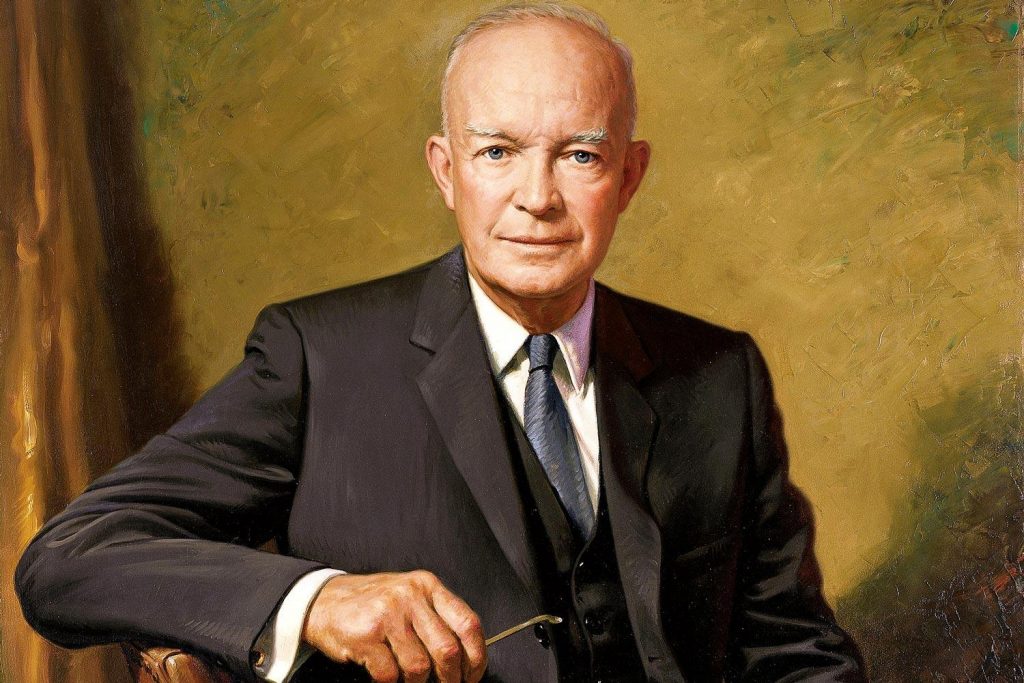
Eisenhower on the American mind

“President Eisenhower said that the American mind at its best is both liberal and conservative.”

–Marianne Williamson

Dwight David “Ike” Eisenhower (October 14, 1890 – March 28, 1969) was an American military officer and statesman who served as the 34th president of the United States from 1953 to 1961. During World War II, he served as Supreme Commander of the Allied Expeditionary Force in Europe, and achieved the rare five-star rank of General of the Army. Wikipedia

Schizophrenia linked to marijuana use disorder is on the rise, study finds

By Katie Hunt, CNN

Updated July 22, 2021 (edition.cnn.com)Cannabis use disorder is usually defined as a problematic use of the drug.Cannabis use disorder is usually defined as a problematic use of the drug.

(CNN)The proportion of schizophrenia cases linked with problematic use of marijuana has increased over the past 25 years, according to a new study from Denmark.In 1995, 2% of schizophrenia diagnoses in the country were associated with cannabis use disorder. In 2000, it increased to around 4%. Since 2010, that figure increased to 8%, the study found.”I think it is highly important to use both our study and other studies to highlight and emphasize that cannabis use is not harmless,” said Carsten Hjorthøj, an associate professor at the Copenhagen Research Center for Mental Health and an author of the study published in the medical journal JAMA Psychiatry, via email.”There is, unfortunately, evidence to suggest that cannabis is increasingly seen as a somewhat harmless substance. This is unfortunate, since we see links with schizophrenia, poorer cognitive function, substance use disorders, etc,” Hjorthøj wrote.

Cannabis use may be linked with suicidal thoughts, plans and attempts in young adults, study finds

Previous research has suggested that the risk of schizophrenia is heightened for people who use cannabis, and the association is particularly driven by heavy use of the drug. Manyresearchers hypothesize that cannabis use may be a “component cause,” which interacts with other risk factors, to cause the condition.”Of course, our findings will have to be replicated elsewhere before firm conclusions can be drawn,” Hjorthøj continued. “But I do feel fairly confident that we will see similar patterns in places where problematic use of cannabis has increased, or where the potency of cannabis has increased, since many studies suggest that high-potency cannabis is probably the driver of the association with schizophrenia.”Around the world tens of millions of people use cannabis. It’s legal for recreational use in 19 US states and Canada. In these and some other places, it’s also approved to treat some medical conditions.

Single joint linked with temporary psychiatric symptoms, review finds

Cannabis use and cannabis use disorder have been increasing in Denmark, the study said — a pattern that’s also seen globally. Recreational weed use is illegal in Denmark but is allowed for medicinal purposes.Cannabis use disorder is usually defined as a problematic use of the drug: developing tolerance to weed; using cannabis in larger amounts or over a longer period than intended; being unable to reduce use; spending a lot of time obtaining, using or recovering from the effects of cannabis; giving up important activities and obligations in favor of cannabis; and continued use of the drug despite negative consequences.

An increase in schizophrenia?

Schizophrenia is a chronic, severe and disabling mental disorder. Its symptoms may include delusions, thought disorder and hallucinations. Worldwide, schizophrenia affects 20 million people. No cure exists, so doctors try to manage the symptoms with medications and therapy.While one study has suggested that schizophrenia is increasing in Denmark, in other countries the picture is uncertain, said Hjorthøj. In the US, the National Institute of Mental Health said it’s hard to obtain accurate estimates of the prevalence of schizophrenia because diagnosis is complex and it overlaps with other disorders.”Many textbooks in psychiatry state that the incidence… of schizophrenia is constant over time and independent of geographical location,” Hjorthøj said.”And this has often been used as an argument against the hypothesis that cannabis could cause schizophrenia,” he added. “However, it turns out that there is very little research that would support this notion.”

Single joint linked with temporary psychiatric symptoms, review finds

The new study was based on data from Denmark’s national health registry and included all people in Denmark born before December 31, 2000, who were 16 years or older at some point from January 1, 1972, to December 31, 2016.The findings could help explain the “general increase in the incidence of schizophrenia that has been observed in recent years” and provides some support that the “long-observed association between cannabis and schizophrenia is likely partially causal in nature,” the study said.

Legalization and regulation

The study assessed people who had a clinical diagnosis for cannabis treatment disorder, not general use of the drug, noted Terrie Moffitt, a professor and chair in Social Behaviour & Development of the Institute of Psychiatry, Psychology, and Neuroscience at King’s College London.”This study of nationwide medical records adds important evidence that patients with diagnosed cannabis use disorder are more at risk for psychosis now than they used to be,” Moffitt, who studies the effects of cannabis use on the mental health of the baby boomer generation, told the Science Media Centre in London.However, Moffitt said that most cannabis users, even those who are dependent on it, never seek treatment and many people use it recreationally without developing problems.Get CNN Health’s weekly newsletter

It is known that people who seek treatment tend to have multiple mental health problems, not solely cannabis problems,” Moffitt said. “And there are far more recreational cannabis users who manage cannabis well than cannabis-dependent users who cannot manage it.”In an editorial that accompanied the study, Tyler J. VanderWeele, a professor in the Departments of Epidemiology and Biostatistics at the Harvard T. H. Chan School of Public Health, said that the that estimates in the study could be conservative because of underdiagnosis of cannabis use disorder.”Cannabis use disorder is not responsible for most schizophrenia cases, but it is responsible for a nonnegligible and increasing proportion. This should be considered in discussions regarding legalization and regulation of the use of cannabis,” VanderWeele wrote in the commentary.

Panpsychism, the idea that inanimate objects have consciousness, gains steam in science communities

An expanding notion of what “consciousness” is could have profound repercussions

By MATTHEW ROZSA
PUBLISHED JULY 23, 2021 4:09PM (EDT) (salon.com)

DNA, Atoms and particles (Getty Images/Yuichiro Chino)DNA, Atoms and particles (Getty Images/Yuichiro Chino)

Dr. Martin Picard is an associate professor of behavioral medicine at Columbia University Irving Medical Center, specializing in both psychiatry and neurology. Together, expertise in these two fields suits one well to understanding the essence of what makes one human. Picard is particularly knowledgable about mitochondria, a structure found within nearly all cells that have a nucleus. They provide most of the chemical energy that cells use in their various biochemical tasks, and are sometimes likened to batteries.

Picard sees something else in mitochondria, too. Last year, he and a Swiss scientist named Dr. Carmen Sandi published a paper in the journal Neuroscience and Biobehavioral Reviews, which posited that mitochondria do not merely keep us alive, but in many ways, have lives of their own. And, perhaps, are even “social” creatures.

“Sociality has profound evolutionary roots and is observed from unicellular organisms to multicellular animals,” Picard and Sandi write. “In line with the view that social principles apply across levels of biological complexity, a growing body of data highlights the remarkable social nature of mitochondria.”

They continue: “Similar to individuals among social networks, mitochondria communicate with each other and with the cell nucleus, exhibit group formation and interdependence, synchronize their behaviors, and functionally specialize to accomplish specific functions within the organism. Mitochondria are social organelles.”

Of course, if mitochondria are conscious beings, that would mean we have trillions and trillions of these brainless beings chilling throughout literally every cell of our bodies. That idea may seem absurd until you consider a scientific concept which could explain it: Panpsychism, or the idea that consciousness is inextricably linked to all matter and simply grows stronger as a physical object become more complex.

This, emphatically, is not what Picard and Sandi had in mind when they wrote their article (Picard told Salon that “I do not know enough about panpsychism to make an informed comment.”) At the same time, their discovery is just one more piece of fascinating scientific trivia that could be explained by this revolutionary theory.

Panpsychism’s appeal may stem partly from the fact that scientists currently can not explain what consciousness – the thing that gives you a mind and makes you self-aware — actually is. During the 17th century Enlightenment, philosopher René Descartes famously argued for a so-called “dualist” approach to explaining how our mind interacts with our body. He argued the physical matter of our bodies and whatever substance creates a mind are separate entities (perhaps connected by the pineal gland), with our flesh essentially serving as a house for our souls. This argument holds that if science could explain everything, it should be able to quantify a mind/soul — visually describe it, hear it, feel it, measure and record it. None of that has happened; indeed, the very notion of it happening seems nonsensical.

This may be partly why, although most scientists and philosophers today are monists (meaning they believe our mind directly comes from our physical bodies), dualistic ideas are still quite prevalent in our culture.

“The problem is a lot of regular people, who are not philosophers, are dualists, because they believe in the mind or the soul as a separate entity from their physical being, their physical body,” David Skrbina, a philosopher and author of the book “Panpsychism in the West,” told Salon. “And so a lot of people for religious reasons, and just ‘common sense’ reasons, tend to think in dualist or Cartesian terms without really even understanding it. And so when we talk to the public at large, we are sort of stuck dealing with the Cartesian question, even though most philosophers, I think, do not give it much credibility at all.”

That said, those who believe our minds come directly from our bodies are also facing some logical challenges.

“They have to accommodate mind and consciousness within a physicalist framework, which is arguably quite difficult,” Skrbina explained. “And that’s been sort of one of the central challenges today, is to figure out how to not be a dualist, but still explain the reality, the evident reality of mind and consciousness.”

In other words, there is no equation, no theory that would account nor explain our conscious feelings, the everyday state of awareness and thought that constitute life and existence. There is nothing in physics or chemistry or biology that accounts what it is like to be

That’s not to say that scientists haven’t tried to explain consciousness through science. The most obvious approach would be to find physical features that correspond to states of consciousness. For instance, if you could figure out which parts of the brain are associated with feeling happy, sad, inspired or bored, you could in theory follow that lead to ultimately learn about how the brain itself “produces” consciousness.

“It has not been successful,” Skrbina pointed out. “This has been one of the major frustrations, I think, in the scientific community, is to actually find the physical correlate of the various states of consciousness. As far as I can tell, and the latest research I’ve seen, they have been unable to do this, which suggests that consciousness is either a deeper or a more complex phenomenon than most of our scientists have thought and maybe are willing to admit.”

This is where panpsychism fills in the void. It offers an explanation for consciousness that doesn’t try to do an end run around the known laws of the physical world, but assumes consciousness is an intrinsic part of it.

Besides — as Luke Roelofs, a philosopher of mind at NYU’s Centre for Mind, Brain, and Consciousness, told Salon — the most popular framework for explaining consciousness does not hold up to scrutiny.

“The biggest motivation is dissatisfaction with the mainstream approach to explaining consciousness, which is to identify it with some sort of complex information processing structure,” Roelofs explained by email. “Panpsychists generally think that structure alone can’t do the job: taking completely non-conscious ingredients and arranging them in a complicated way seems compatible with the whole system remaining completely non-conscious.” Because the human brain is made up of the same basic matter as everything else in existence, “the most natural view seems to be that [consciousness] is a general feature of matter.”

Hence, panpsychism — and hence the idea that matter, in general, is conscious, regardless of whether it is an organism or not.

As for the opposition to panpsychism? One problem is that skeptics feel it is ludicrous at face value.

“I think that mostly comes from more basic differences in how people think about consciousness,” Roelofs told Salon. “Panpsychists think that thought, reasoning, decision-making, vision and hearing and smell and all of our cognitive complexity: none of those are the same thing as consciousness. Consciousness is just subjectivity, just ‘is there something it’s like to exist right now?’ And so they think it makes sense for consciousness to exist in simple forms without thought, without reasoning, without vision or hearing or smell. A lot of critics think that’s just a mix-up: they think that once you take away thought, reasoning, etc. that’s it, there’s nothing left to talk about.”

The obvious next question, then, is: what is conscious? And how does it separate itself? Would a rock or a table have a single unified conscious — or perhaps something bigger, like a planet, or even a solar system?

For those questions, too, panpsychists have ideas. 

“Panpsychism typically does not take all things to be conscious as a whole, or to have their own unified consciousness,” Hedda Hassel Mørch, a philosopher and associate professor at Inland Norway University of Applied Sciences, told Salon by email. “Fundamental particles would have simple, unified consciousness. Sometimes, this simple consciousness ‘combines’ or unifies into more complex forms. This happens in the human brain—we have unified consciousness as whole. But it probably doesn’t happen in e.g. tables and chairs—these things are mere collections of independently conscious particles.”

Another criticism, which Roelofs acknowledged at least addresses the idea on its own terms, is that panpsychism does not necessarily answer all of the questions that it poses.

“Panpsychists think you can’t explain human consciousness by putting together lots of non-conscious things in the right structure; okay, but is it actually easier to explain it by putting lots of conscious things in the right structure?” Roelofs asked. “Does it even make sense for a group of minds to combine into one bigger mind?” He added that he has written extensively on this subject, “investigating why combining minds seems so puzzling, and whether we can make sense of it anyway. But it remains a genuinely difficult challenge to panpsychism as a view.”

On the other hand, science is equally stuck when it comes to explaining the subjective experiences that we can embrace when we listen to music, enjoy delicious food, watch a movie or fall in love. There is something unquantifiable about the joys of life, a reality that is not encompassed when we try to reduce emotions to hormones.

This brings us to Philip Goff, associate professor of philosophy at Durham University, who told Salon that there is another philosopher whose ideas we must challenge, one who lived in the same period as Descartes — Galileo Galilei.

“What Descartes was making very rigorous was the philosophy of Galileo,” Goff explained, citing his book “Galileo’s Error.” He argued that because consciousness could not be explained in the qualitative and mathematical terms that Galileo’s deemed essential for something to be scientific, the great scientist concluded it had to be decoupled from the scientific process and explained through other intellectual disciplines.

“Consciousness involves quality — the redness of a red experience, the smell of coffee, the taste of mint,” Goff said. “These qualities that can’t be captured in a purely quantitative vocabulary of mathematics. So Galileo said that if we want mathematical science, we need to take consciousness out of the domain of science. In Galileo’s worldview, there is this radical division in nature between the quantitative mathematical domain of science and the physical world, and the qualitative domain of consciousness with its colors, and sounds, and smells and tastes.” 

Panpsychism, by its very premise, would make it possible to merge the two disciplines.

Panpsychism also has radical implications for religions, since so many focus on questions of what happens after we die. It is likely that our brains still comprise the bulk of our identity (so when the neurons which store your memories die, the memories most likely die forever along with them), but panpsychism allows for the possibility that your conscious “self” lives on in some form. It does not even entirely preclude the possibility that we take some of our identity with us; to paraphrase Stanley Kubrick when he directed “The Shining,” the seemingly horrifying prospect of ghosts existing at least means that death is not final.

If true, panpsychism would raise questions about other substances and the degree to which non-human things are self-aware. Does that mean inanimate objects are also self-aware? Do a chair, a pair of pants and a rock have the capacity to think as a human, a dog and a pig? What about more primitive organisms like bacteria and viruses?

“Panpsychism does suggest that there may well be some level of consciousness everywhere in nature,” Roelofs explained. “Panpsychists all accept dog-consciousness, but some might not want to accept chair-consciousness: they might say that each particle making up the chair is conscious, but it’s not constructed the right way for these to ‘add up’ to anything. Others might think that chairs have consciousness, but of an incredibly diffuse sort: because there’s no brain or nervous system, there’s no order or structure to the chair’s experience, just an undifferentiated blur.”

Ultimately, he added, “The impact of panpsychism isn’t so much to answer these questions, but to suggest continuity: don’t expect to find a discontinuous boundary somewhere between the simplest animal that is conscious and the most complex animal that isn’t.” Roelofs says there isn’t a line that one could draw: “even if some sorts of consciousness are so simple that it’s more useful for us, in practice, to treat them as ‘mindless’, nevertheless the differences are ultimately just matters of degree.”

In the end, it may prove impossible to ever definitively ascertain whether panpsychism holds water. After all, without some way to visually or otherwise physically identify consciousness, we can’t precisely say whether an inanimate object has any rudimentary “consciousness” in it. It’s not like you can ask a virus or chair if they are self-aware.

“Scientifically speaking, we’re in quite a bind with consciousness in particular and with the mind in general, just because of the nature of what it is,” Skrbina told Salon. “It is not the kind of thing that is really, like I say, subject to scientific analysis.”

MATTHEW ROZSA

Matthew Rozsa is a staff writer for Salon. He holds an MA in History from Rutgers University-Newark and is ABD in his PhD program in History at Lehigh University. His work has appeared in Mic, Quartz and MSNBC.

(Contributed by Gwyllm Llwydd)

“You are a vessel for Nature to overcome the tyranny of death”

Uberboyo Carl Jung said “we all have a shadow” He then said this meant that “every day is opposites day” He then pointed at you and said “you think you’re a nice guy?” You nodded That was a mistake Carl Jung climbed down from his podium and got you in a headlock “Say what you really think!” he screamed You whimpered “why are you doing this?” He squeezed until your face went red “I know you are a nasty little f**k, admit it!” You squealed “Yes, ok, whatever you say, just please stop” Everyone looked at each other awkwardly as Jung heaved You passed out As you slumped on the floor he walked backed to the podium He lit a cigarette, leaned back in his chair, and undid his tie. “Another shadow integrated” he said. A sliver of drool ran down your cheek. – Apply to Work with Me 1-1 | https://uberboyo.com/program/ LISTEN on Spotify, Overcast, iTunes | https://fanlink.to/boyoalert My Music | https://podlink.to/uberboyomusic Instagram | https://www.instagram.com/uberboyo/ Twitter | https://www.twitter.com/uberboyo/

Book: “The Spirituality of Imperfection: Storytelling and the Search for Meaning”

The Spirituality of Imperfection: Storytelling and the Search for Meaning

The Spirituality of Imperfection: Storytelling and the Search for Meaning

by Ernest Kurtz (Goodreads Author), Katherine Ketcham (Goodreads Author) 

I Am Not Perfect is a simple statement of profound truth, the first step toward understanding the human condition, for to deny your essential imperfection is to deny yourself and your own humanity. The spirituality of imperfection, steeped in the rich traditions of the Hebrew prophets and Greek thinkers, Buddhist sages and Christian disciples, is a message as timeless as it is timely. This insightful work draws on the wisdom stories of the ages to provide an extraordinary wellspring of hope and inspiration to anyone thirsting for spiritual growth and guidance in these troubled times.

Who are we? Why so we so often fall short of our goals for ourselves and others? By seeking to understand our limitations and accept the inevitably of failure and pain, we being to ease the hurt and move toward a greater sense of serenity and self-awareness. The Spirituality Of Imperfection brings together stories from many spiritual and philosophical paths, weaving past traditions into a spirituality and a new way of thinking and living that works today. It speaks so anyone who yearns to find meaning within suffering. Beyond theory and technique, inside this remarkable book you will find a new way of thinking, a way of living that enables a truly human existence.

(Goodreads.com)