Wild new theory says the Big Bang wasn’t the beginning

Is time truly meaningless?
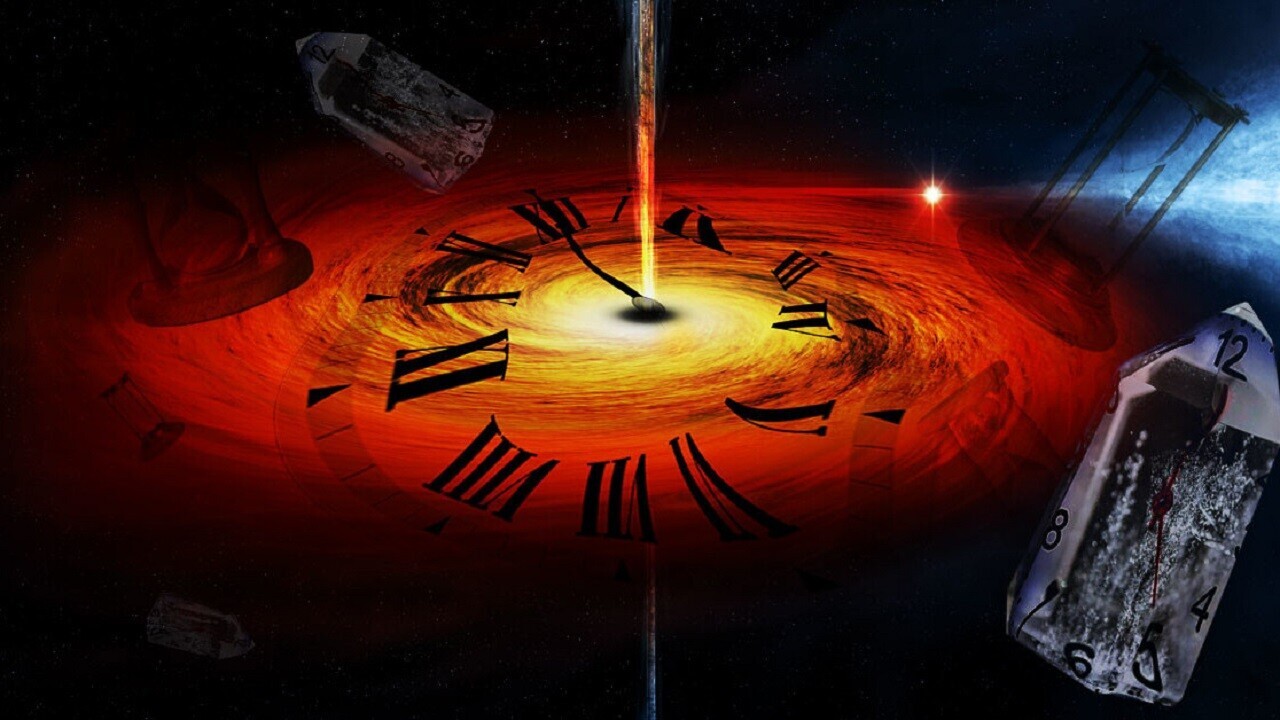
Wild new theory says the Big Bang wasn’t the beginning

STORY BY Tristan Greene (thenextweb.com)

The prevailing theory on the origin of our universe goes like this: about 13.7 billion years ago a single particle exploded. The resultant blast created an ever-expanding universe that, eventually, became home to the planet we call Earth.

The Big Bang theory first appeared in a scientific paper in 1931. Physicist Georges Lemaitre is credited with its creation. And the bulk of our assumptions about the universe and its rate of expansion are based on his ideas.

In 2019 that rate of expansion, called the Hubble Constant, was put into question by various teams that determined either the rate of expansion had been incorrectly calculated or something was seriously wrong with the universe.TNW Conference 2021Attend the tech festival of the year and get your super early bird ticket now!GET TICKETS

[Read: Either the Hubble Constant is wrong or the universe is ripping itself apart]

Scientists are still sorting things out and working towards an explanation that can reconcile both the Big Bang and our modern observations.

The reason why we can’t just punch some numbers in a supercomputer and determine the truth is because we don’t have all the information.

Trying to determine how old the universe is by measuring its current rate of expansion is like trying to pick the winner of a NASCAR race based on a blurry, out-of-context photograph of one racer’s left rear tire.

To that end, the Big Bang theory only really works if we assume it was the beginning of our universe. Doing so makes it the one piece of the entire puzzle that corresponds with what we’re actually able to see and measure.

But what if the Big Bang wasn’t the beginning?

Chanda Prescod-Weinstein, a physicist at the University of New Hampshire, has a differing theory.

Writing for New Scientist, they claim it makes more sense to assume the universe has been expanding forever.

Per the article:

The universe may not have had a beginning moment, and we may live in what is called an eternally inflating universe. One that was expanding exponentially even before what we call the big bang. Mathematically, this seems the most likely scenario — assuming inflation is correct.

The ramifications of such a theory may seem trivial – one explanation for a number is as good as another until we’re able to measure more. But a lot of our assumptions concerning both classical and quantum physics are grounded in the idea that time is more than just a construct.

Whether we’re discussing Newton’s Laws or breaking down the nature of relative observations in quantum physics, the idea is that there’s a dimensional quality called time that’s codified by distinct points representing the beginning and end of an event.

Without a finite moment at the creation of the universe where nothingness became something, there’s no origin point for time – there are no beginnings.

The concept of infinite expansion without a beginning may be difficult to wrap our heads around, but it kind of adds up. After all, it seems paradoxical to imagine a period in which the universe itself, and thus time, didn’t exist at all because you’re forced to wonder how long time didn’t exist for before it finally did.

But, if time’s always existed – because the universe itself has always existed – then perhaps it’s never existed. What is time without a beginning or end?

(Contributed by Sarah and Jonathan Flynn)
3D Moving Moebius Strip

In mathematics, a Möbius strip, band, or loop, also spelled Mobius or Moebius, is a surface with only one side and only one boundary curve. The Möbius strip is the simplest non-orientable surface. It can be realized as a ruled surface. Wikipedia

Click on: https://66.media.tumblr.com/7caaa46e278e910e9b120c47765851bf/1dc2e160bff82cd1-d5/s1280x1920/16be070d5a2258851d4dc185271111e5f8536af7.gifv?fbclid=IwAR23d3DQED5zC_yFCxFQsbpKZNfm7-dVno3RpgMz4AeuyQ1egg0uf65MARk

How the British East India Company’s Flag Became the Flag of the USA

(bantarleton.tumblr.com)

image

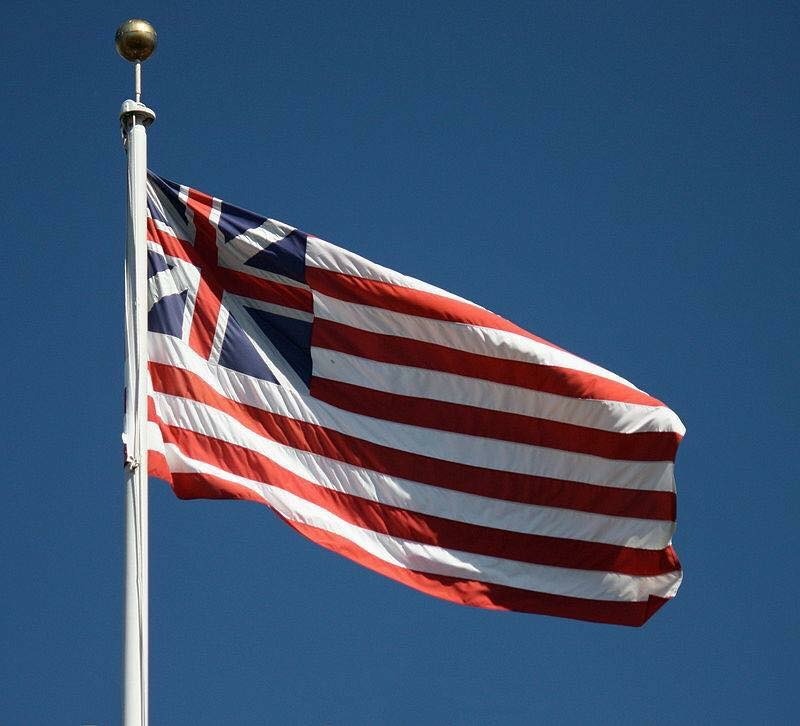
The flag of the English (later British) East India Company was first created in 1600, using thirteen red and white stripes with a Saint George’s cross in the upper canton. The number thirteen was supposedly chosen because of its close relationship with Freemasonry (many of the Company’s early members were Masons). Later in the 17th century the English cross was replaced by the “King’s Colours” – the Union Flag representing the union of Great Britain, the political binding of Scotland and England. In 1775, when Whig colonists in America first began their rebellion against the British government, there was a desire among the rebels to show that their grievances were more with Parliament than either Great Britain as a whole, or King George in particular. In order to make this clear the first flag adopted by American Revolutionaries used the British Union Flag in the upper canton of thirteen red and white stripes, one for each colony. It was known as the Grand Union Flag. Here it is in question;

image

And here is the East India Company’s flag;

image

The similarities are obvious – they’re the same flag. Nor was it mere coincidence. A number of the Founding Fathers of the United States were aware of the East India Company’s activities and of their free administration of India under Company rule, rather than direct British authority.Benjamin Franklin once gave a speech endorsing the adoption of the Company’s flag by the United States as their national flag. He said to George Washington, “While the field of your flag must be new in the details of its design, it need not be entirely new in its elements. There is already in use a flag, I refer to the flag of the East India Company.” This was a way of symbolising American loyalty to the Crown as well as the United States’ aspirations to be self-governing, as was the East India Company. Some colonists also felt that the Company could be a powerful ally in the American War of Independence, as they shared similar aims and grievances against the British government tax policies. Colonists therefore flew the Company’s flag, to endorse the Company.By 1776 the war had escalated a great deal, and most rebelling Americans no longer identified themselves as British or sympathised with the Crown. The Union Flag was replaced by the stars we’re more familiar with today, but the stripes – and the EIC’s legacy – remained.

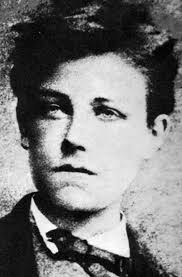
Rimbaud on life

“We must change life.”

― Arthur Rimbaud

Jean Nicolas Arthur Rimbaud (October 20, 1854 – November 10, 1891) was a French poet known for his transgressive and surreal themes, and his influence on modern literature and arts, prefiguring surrealism. Wikipedia

“1968”

1968 highlights the tumultuous year that sets the stage for the year The Movement and the “Madman” will focus on – 1969. Aired nationally on PBS in 1998, the style and format of 1968 are more traditional than the approach in our new film, but the history portrayed is equally dramatic

After you’ve watched 1968, we hope you’ll be inspired todonate to help keep our film team in the editing studioworking on the first full rough cut of The Movement and the “Madman” from the 30+ interviews we’ve conducted and hours of archival footage.

https://www.movementandthemadman.com/1968

Abraham Lincoln on predicting the future

Abraham Lincoln

“The best way to predict the future is to create it.”

― Abraham Lincoln

Abraham Lincoln (February 12, 1809 – April 15, 1865) was an American lawyer and statesman who served as the 16th president of the United States from 1861 until his assassination in 1865. Lincoln led the nation through the American Civil War, the country’s greatest moral, cultural, constitutional, and political crisis. Wikipedia

(Contributed by Sarah Flynn)

Cancer New Moon, July 9, 2021

Wendy Cicchetti

Cancer New Moon

The New Moon in Cancer strongly emphasizes issues of nurture: whether it is self-care, the care of others, or indeed that which we hope to receive. Everybody needs some degree of nurturing in order to flourish. During this lunation, we may question whether we are able to give or receive care in the required amounts, especially as the only constant in life is change. Goalposts may move, and our ability to get needs met may have to move with them. There is perhaps more chance of this happening to address true needs, given that the Moon is considered “well placed” in its home sign. In other words, it can operate more easily and adequately in Cancer. We might even be surprised at how well a situation goes, given that the Moon is sextile Uranus.

The flip side of this is that a need for care to be given to another may come out of the blue, when we least expect it or when it doesn’t seem convenient. Yet, if we can rally to the call that comes our way, we may find that things do work out. There may well be a new start ahead that turns out to be far more beneficial than what we had planned. The Moon–Uranus sextile is a separating aspect, so this opportunity may soon move out of reach, or we’ll be at the end of a chapter sooner than we expect. Interestingly, the Moon is applying to two more outer planets, Neptune and Pluto, but in different aspect patterns.

A trine to Neptune in Pisces puts the element of water to the forefront, reminding us to trust our intuition and gut instincts. Sometimes it is the atmosphere of a situation that conveys the truest information, despite what anyone may be telling us about it. Similarly, if we have gut feelings or notice coincidences, we should pay attention to these as helpful sources of extra information — beyond whatever appears to be true on the surface.

Neptune also poses the risk that we sometimes employ too many soft filters, only seeing and hearing what we want to witness. This tends to be more the case with the challenging aspects (the square and opposition); however, even with the trine, we may benefit from a mental note to check out the details, especially where others are concerned. The clues may be subtle, of course, because not everyone wants to put all their cards on the table straightaway — and sometimes they won’t even know what they really feel. However, if someone indicates that they’re of two minds about a project or proposal that we feel more definite about, do not ignore it. Recall the symbol of Pisces — two fish, swimming in opposite directions. Perhaps it is a clue to how a situation could pan out with that certain someone.

The flowing connection of watery Moon and Neptune also reminds us to be aware of our own inner intuitions and conflicts. The Cancer New Moon lets us more easily spot how any unaddressed upset manifests for us in nuanced ways. For example, if someone delivers difficult news, we may feel a pang in the stomach, but not be able to put words to its significance right away. If the next thing that happens is that we drop something and break it, we may realize that we have some unaddressed frustration. Taking a moment to recognize the emotional waves within us may prevent these little slip-ups from continuing — however they tend to manifest themselves.

The connection between the Moon and Pluto is an opposition. This planetary link often represents feeling overpowered in some way, whilst at the same time experiencing intense feelings — whether in the moment or later on. Such feelings may be so volatile when they start to emerge, that we want to dampen them down, numb them, or drown them out. Yet maybe we owe it to the deeper part of our pain to, instead, tune in and give those feelings a voice. They might be signaling an unmet need that could actually soon be met, if we’re brave enough to express it. Doing so could also help lessen the fear that stopped us from speaking before. An added Pluto benefit is becoming more discerning, pinpointing what we need and what has outworn its welcome in our lives. In trusting our feelings to guide us, we can take action to let go of anything no longer valuable or significant, resulting in greater peace and clarity!

This article is from the Mountain Astrologer, written by Diana Collis.

“A Message From the Gay Community Performed by the San Francisco Gay Mens Chorus”

Luminox This video was originally posted by the San Francisco Gay Mens Chorus on July 1, 2021 but was then DELETED this afternoon, July 7th, 2021. The main chorus of the song is, “WE’LL CONVERT YOUR CHILDREN…” to their “gay agenda” (as they sing it) among other things. Clearly, the video did not get the reaction they would have hoped. It had 13,266 views, received 63 dislikes and 3,100 dislikes, and had 1,170 comments, most of which were deleted. Is this a message of love? Unity? Tolerance? Acceptance? I don’t believe it is and is perhaps a reason why it was taken down. In my view, the message seems to have a threatening quality about it, as if they’re going to force their agenda upon you whether you agree with it or not, and as the song sings, “convert your children.” I’m interested in hearing your thoughts so please comment below. For my brief commentary on the matter and to see how YouTube suppresses/censors video views, click here: https://www.youtube.com/watch?v=y354X… Follow me on Twitter: https://twitter.com/luminox97 I’ll be posting more videos in the next few days. Please be sure to LIKE and SUBSCRIBE to be notified. Thank You!

Mother to Son

BY LANGSTON HUGHES

Well, son, I’ll tell you:
Life for me ain’t been no crystal stair.
It’s had tacks in it,
And splinters,
And boards torn up,
And places with no carpet on the floor—
Bare.
But all the time
I’se been a-climbin’ on,
And reachin’ landin’s,
And turnin’ corners,
And sometimes goin’ in the dark
Where there ain’t been no light.
So boy, don’t you turn back.
Don’t you set down on the steps
’Cause you finds it’s kinder hard.
Don’t you fall now—
For I’se still goin’, honey,
I’se still climbin’,
And life for me ain’t been no crystal stair.

James Mercer Langston Hughes (February 1, 1901 – May 22, 1967) was an American poet, social activist, novelist, playwright, and columnist from Joplin, Missouri. One of the earliest innovators of the literary art form called jazz poetry, Hughes is best known as a leader of the Harlem Renaissance. Wikipedia