How ‘In God We Trust’ bills are helping advance a Christian nationalist agenda

July 16, 2021 8.26am EDT (theconversation.com)

Author

  1. Kristina M. LeePh.D. Candidate in Rhetoric, Colorado State University

Disclosure statement

Kristina M. Lee is affiliated with various secularists groups including Atheists United and the Freedom From Religion Foundation.

Partners

Colorado State University

Colorado State University provides funding as a member of The Conversation US.

View all partners

CC BY NDWe believe in the free flow of information
Republish our articles for free, online or in print, under a Creative Commons license.

Republish this article

Black and white image of government building/courthouse in small town America.
Christian nationalists are pushing for ‘In God We Trust’ to be omnipresent. Joe Longobardi Photography via Getty Images

City vehicles in Chesapeake, Virginia, will soon be getting religion.

At a meeting on July 13, 2021, city councilors unanimously voted in favor of a proposal that would see the official motto of the U.S., “In God We Trust,” emblazoned on every city-owned car and truck, at an estimated cost to taxpayers of US$87,000.

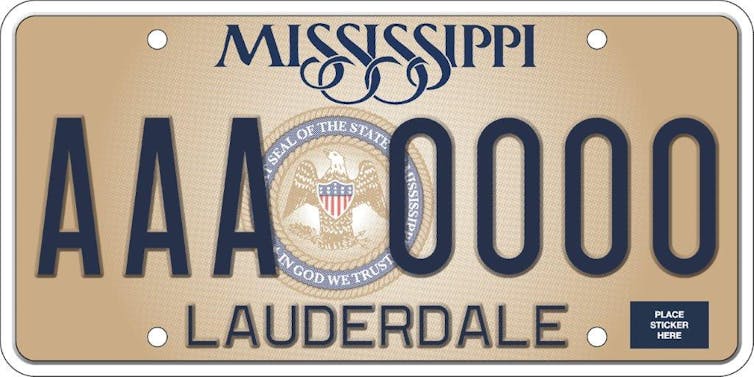
Meanwhile, the state of Mississippi is preparing to defend in court its insistence that all citizens, unless they pay a fee for an alternative, must display the same four-word phrase on their license plates. Gov. Tate Reeves vowed last month to take the issue “all the way to the U.S. Supreme Court should we have to.”

“In God We Trust” became the national motto 65 years ago this month. But over the past few years a string of bills and city ordinances has sought to expand its usage and presence. Such efforts include legislation requiring or encouraging the motto be displayed in government buildings and schools, on license plates and on police vehicles.

A sample license plate with 'In God We Trust' on it
Mississippi license plates carry the motto. State of Mississippi

The rise of bills across the country at this time is no coincidence. It fits with a concerted effort by Christian nationalists who view the motto as a tool to help legitimize an agenda of passing legislation that privileges conservative Christian values.

Christian nationalism is a political ideology that fuses conservative religious beliefs with a – usually white – American identity. Christian nationalists assume that the laws of the land should be based on Christian morals.

As a scholar of religious and political rhetoric, I have observed how Christian nationalists are using what I call “theistnormative” legislation – government-endorsed policies, rituals, laws and symbols that use vague religious references, such as “God” – to encourage people to view the United States as a theistic collective – that is to say, as a nation of believers in God.

From coins to national motto

Christian nationalists played a key role in getting “In God We Trust” put on coins during the Civil War and ever since have attempted to use the motto as “proof” that the United States is a Christian nation.

Early Christian nationalists criticized the Founding Fathers for failing to recognize the United States as an explicitly Christian nation in the Constitution. An early Christian nationalist organization, The National Reform Association, pushed for a “Christian Amendment” that would correct what they called the “original sin” of not recognizing Jesus Christ in the Constitution.

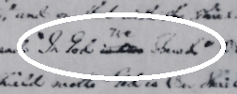
Their efforts failed. But Christian nationalists had better success in getting the more ambiguous motto “In God We Trust” put on coins in 1864. It followed a report to the U.S. Treasury by the director of the U.S. Mint, James Pollock, an active member of the National Reform Association, in which he asked: “We claim to be a Christian Nation – why should we not vindicate our character by honoring the God of Nations in the exercise of our political Sovereignty as a Nation?”

A handwritten letter in which Treasury Secretary Salmon Chase amends 'In God is our Trust' to 'In God We Trust' in an 1863 letter to James Pollock, director of the Philadelphia mint.
Treasury Secretary Salmon Chase amends ‘In God is our Trust’ to ‘In God We Trust’ in an 1863 letter to James Pollock, director of the Philadelphia mint. National Archives and Records Administration

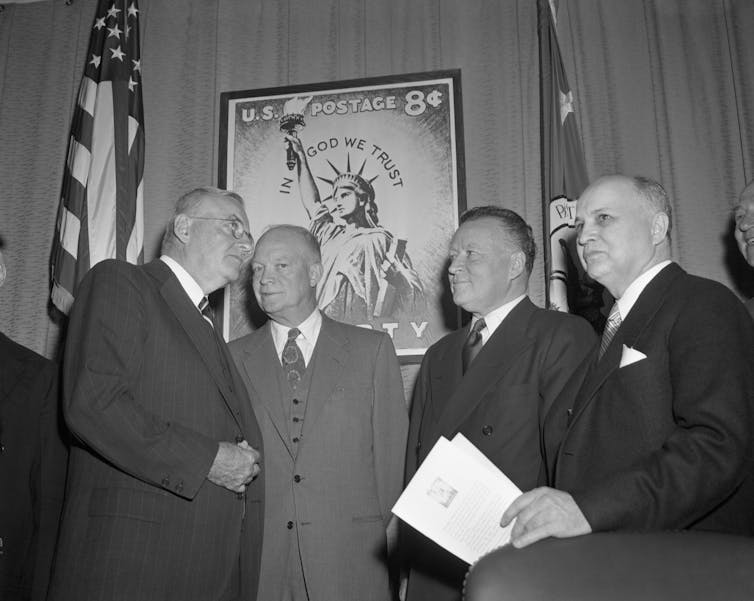
Amid fears of “atheistic communism” during the Cold War a century later, Christian nationalists in the U.S. again tried and failed to pass a “Christian Amendment.” But they again found success in advocating for legislation that used vague religious references, culminating in the adding of “under God” to the pledge of allegiance and making “In God We Trust” the national motto on July 30, 1956.

President Eisenhower at a ceremony introducing a 8-cent Statue of Liberty stamp with the inscription ‘In God We Trust.'
Two years before making ‘In God We Trust’ the national motto, President Eisenhower introduces a stamp carrying the slogan. Bettmann / Getty Images

Since it became the national motto, conservative Christians have used “In God We Trust” to justify opposing abortion rights and same-sex marriage by suggesting that they violate the principles embedded in the motto.

Earlier this year, Mississippi state Sen. Cindy Hyde-Smith justified legislation that would ban voter registration on Sundays by holding up a dollar bill and saying, “This says, ‘The United States of America, in God we trust.’ … In God’s word in Exodus 20:18, it says ‘remember the Sabbath and keep it holy.‘”

While most Christian nationalists claim to support religious freedom – which would seemingly apply to all faiths – most believe Christianity, specifically white conservative Christian values, should be privileged in the public sphere.

‘Project Blitz’

Christian nationalists have increasingly turned to “In God We Trust” bills as a way to further legitimize their agenda. This is particularly evident in the “Project Blitz” initiative, led by the Congressional Prayer Caucus Foundation, which states its aim as “restoring Judeo-Christian principles to their rightful place.”

Project Blitz started in 2015 with the purpose of “blitzing” the country with legislation advancing Christian nationalism. As David Barton, a leader in the initiative, explained in a 2018 conference call with state legislators: “It’s kind of like whack-a-mole for the other side; it’ll drive ‘em crazy that they’ll have to divide their resources out in opposing this.”

One such success in Project Blitz was in Chesapeake, where the Congressional Prayer Caucus Foundation is based. The organization successfully pushed for the motto “In God We Trust” to be displayed at the City Hall.

After Project Blitz generated negative publicity in 2018, it was misleadingly rebranded as “Freedom for All.” During a recorded strategy meeting that was later circulated by the social justice think tank Political Research Associates, Lea Carawan of the Congressional Prayer Caucus Foundation explained, “As soon as we understood that they knew they were on to us, we changed the name; shifted things around a little bit […] we’ve renamed and moved on but it’s moving just as strong and just as powerfully.”

Up to 2018, the initiative had helped more than 70 bills relating to their agenda get proposed. The group continues to have successes in getting legislation not only proposed, but also passed. According to BlitzWatch, a group tracking Project Blitz initiatives, this includes bills that support Bible readings in schools and policies that allow adoption and foster agencies and health care providers to deny services based on religious grounds. But it is the “In God We Trust” bills that have seemingly been the most successful for Project Blitz.

Pushing America’s ‘Christian heritage’

According to the initiative’s 2020-2021 playbook – which was obtained by the religion news website Religion Dispatches – “In God We Trust” bills aim to recognize “the place of Christian principles in our nation’s history and heritage.”

While those behind “Project Blitz” claim the bills are not about converting people to Christianity, they also argue that the U.S. should be a Christian nation whose laws and policies “reflect Judeo-Christian or biblical values and concepts.”

As such, “In God We Trust” bills set the foundation for more explicitly conservative Christian legislation.

The playbooks suggest “In God We Trust” bills can “shore up later support for other governmental entities to support religious displays” to help America accept its “Christian heritage.” The Congressional Prayer Caucus Foundation also recommends legislators push for other types of bills including, as stated in their 2018-2019 playbook, a resolution to establish policy “favoring intimate sexual relations only between married, heterosexual couples.”

The risk of opposing

What makes “In God We Trust” bills so successful is that they often receive bipartisan support. In Louisiana, for example, it was a Democratic governor who signed the 2019 bill requiring the motto be displayed in all schools. Politicians who do oppose “In God We Trust” bills run the risk of being labeled as “anti-faith.”

Despite its being the national motto for only 65 years, Christian nationalists have framed “In God We Trust” as part of the U.S.‘s founding tradition. Moreover, the motto has become an important rhetorical weapon for Christian nationalists – using it to advance their belief that governments and people are to “trust in God,” and more specifically their perception of a conservative Christian God.

[Explore the intersection of faith, politics, arts and culture. Sign up for This Week in Religion.]

How The Conversation is different

Every article you read here is written by university scholars and researchers with deep expertise in their subjects, sharing their knowledge in their own words. We don’t oversimplify complicated issues, but we do explain and clarify. We believe bringing the voices of experts into the public discourse is good for democracy.

Beth Daley

Editor and General Manager

(Contributed by Janet Cornwell, H.W., m.)

Forgotten Hero | Hugh Thompson Jr.

Matt Orfalea On March 16, 1968 American troops murdered over 500 innocent women, old men, and children in the Vietnamese village of My Lai. But it could have been much worse if not for one very brave helicopter pilot: Hugh Thompson Jr. After two failed attempts to end the slaughter peacefully, Thompson ordered his crew to turn the helicopter’s guns on their fellow Americans. That day the killing stopped. Some scholars say up to 20,000 lives were saved that day because that mission was supposed to go on for 4 days, through many more villages, and there were up to 20,000 people in all those villages. But thanks to the actions of Hugh Thompson and his crew, the mission was halted in just 4 hours. Hugh Thompson never pulled out his pistol. That was a dramatization from the movie scene. He kept his pistol holstered when he stood up against his own Americans forces —which is even more bold and heroic considering they had just killed over 500 civilians. An officer had also previously threatened to kill a soldier for not participating in the killing. Nevertheless, Hugh Thompson put himself in harm’s way and shielded the civilians with his own body until lifting them to safety. In 1998, 30 years after the massacre, Thompson and the two other members of his crew, Glenn Andreotta and Lawrence Colburn, were awarded the Soldier’s Medal (Andreotta posthumously), the United States Army’s highest award for bravery not involving direct contact with the enemy. by Matt Orfalea ▶https://twitter.com/0rfhttps://medium.com/@0rfhttps://facebook.com/matt.orfalea Support independent media! ▶https://www.patreon.com/Orf

Sunday Meeting on July 18: Spontaneity 2 with Ben Gilberti


SUNDAY MEETING 7/18/2021


Bohm Dialogue – Spontaneity Conversation 2.0

Ben Gilberti

Please join us Sunday 7/18/2021 for Ben’s presentation on Bohm Dialogue, where we’ll all enjoy immersing ourselves in the spirit of Dialogue as developed by David Bohm.  

11:00 am Pacific/Noon Mountain/1:00 Central/2:00 Eastern

https://us02web.zoom.us/j/332275676   

These talks are presented by contribution:
Contribution — The Prosperos 

Everyone is welcome!

One tap mobile
+16699006833,,579891643# US (San Jose)
+13462487799,,579891643# US (Houston)
Dial by your location       
+1 669 900 6833 US (San Jose)       
+1 346 248 7799 US (Houston)       
+1 301 715 8592 US       
+1 312 626 6799 US (Chicago)       
+1 929 205 6099 US (New York)       
+1 253 215 8782 US
Meeting ID: 332 275 676
Find your local number: https://zoom.us/u/abtcyLDACK

“Conversations With Calvin: The Series Continues”

I am excited to bring to you my upcoming guess: Eric Davis

Eric’s Unique Insights may be a tool to Maximize Your Life

There are opportunities everywhere for those who have the courage to seize them! You have more than you think you have. You can do more than you think you can. You alone are responsible to use your natural intelligence, talents, abilities, and what some would call your Devine given gift to create a life of your choice. Expose yourself to your possibilities.

Eric White Shirt.JPG

A Prosperos Sunday Meeting

                     Zoom Presentation

For this free, one-hour event beginning at 11: 00 a.m. Pacific time- Sunday, July 25, 2021, on Zoom.

https://us02web.zoom.us/j/332275676

Interesting people + Fun Conversation + Important Insights

Chris Hedges on hope

Chris Hedges

“Hope does not mean that our protests will suddenly awaken the dead consciences, the atrophied souls, of the plutocrats running Halliburton, Goldman Sachs, Exxon Mobil or the government.

Hope does not mean we will reform Wall Street swindlers and speculators.

Hope does not mean that the nation’s ministers and rabbis, who know the words of the great Hebrew prophets, will leave their houses of worship to practice the religious beliefs they preach. Most clerics like fine, abstract words about justice and full collection plates, but know little of real hope.

Hope knows that unless we physically defy government control we are complicit in the violence of the state. All who resist keep hope alive. All who succumb to fear, despair and apathy become enemies of hope.

Hope has a cost. Hope is not comfortable or easy. Hope requires personal risk. Hope does not come with the right attitude. Hope is not about peace of mind. Hope is an action. Hope is doing something.

Hope, which is always nonviolent, exposes in its powerlessness the lies, fraud and coercion employed by the state. Hope does not believe in force. Hope knows that an injustice visited on our neighbor is an injustice visited on us all.

Hope sees in our enemy our own face.

Hope is not for the practical and the sophisticated, the cynics and the complacent, the defeated and the fearful. Hope is what the corporate state, which saturates our airwaves with lies, seeks to obliterate. Hope is what our corporate overlords are determined to crush. Be afraid, they tell us. Surrender your liberties to us so we can make the world safe from terror. Don’t resist. Embrace the alienation of our cheerful conformity. Buy our products. Without them you are worthless. Become our brands. Do not look up from your electronic hallucinations to think. No. Above all do not think. Obey.

The powerful do not understand hope. Hope is not part of their vocabulary. They speak in the cold, dead words of national security, global markets, electoral strategy, staying on message, image and money.

Those addicted to power, blinded by self-exaltation, cannot decipher the words of hope any more than most of us can decipher hieroglyphics. Hope to Wall Street bankers and politicians, to the masters of war and commerce, is not practical. It is gibberish. It means nothing.

I cannot promise you fine weather or an easy time. I cannot pretend that being handcuffed is pleasant. If we resist and carry out acts, no matter how small, of open defiance, hope will not be extinguished.

Any act of rebellion, any physical defiance of those who make war, of those who perpetuate corporate greed and are responsible for state crimes, anything that seeks to draw the good to the good, nourishes our souls and holds out the possibility that we can touch and transform the souls of others. Hope affirms that which we must affirm. And every act that imparts hope is a victory in itself.”

― Chris Hedges

Christopher Lynn Hedges (born September 18, 1956) is an American journalist, Presbyterian minister, author and television host. Wikipedia

Can Silicon Valley Find God?

By Linda Kinstler (NYTimes.com)

Ms. Kinstler is a doctoral candidate in rhetoric and has previously written about technology and culture.

“ALEXA, ARE WE HUMANS special among other living things?” One sunny day last June, I sat before my computer screen and posed this question to an Amazon device 800 miles away, in the Seattle home of an artificial intelligence researcher named Shanen Boettcher. At first, Alexa spit out a default, avoidant answer: “Sorry, I’m not sure.” But after some cajoling from Mr. Boettcher (Alexa was having trouble accessing a script that he had provided), she revised her response. “I believe that animals have souls, as do plants and even inanimate objects,” she said. “But the divine essence of the human soul is what sets the human being above and apart. … Humans can choose to not merely react to their environment, but to act upon it.”

Mr. Boettcher, a former Microsoft general manager who is now pursuing a Ph.D. in artificial intelligence and spirituality at the University of St. Andrews in Scotland, asked me to rate Alexa’s response on a scale from 1 to 7. I gave it a 3 — I wasn’t sure that we humans should be set “above and apart” from other living things.

Later, he placed a Google Home device before the screen. “OK, Google, how should I treat others?” I asked. “Good question, Linda,” it said. “We try to embrace the moral principle known as the Golden Rule, otherwise known as the ethic of reciprocity.” I gave this response high marks.

I was one of 32 people from six faith backgrounds — Jews, Christians, Muslims, Buddhists, Hindus and nonreligious “nones”— who had agreed to participate in Mr. Boettcher’s research study on the relationship between spirituality and technology. He had programmed a series of A.I. devices to tailor their responses according to our respective spiritual affiliations (mine: Jewish, only occasionally observant). The questions, though, stayed the same: “How am I of value?” “How did all of this come about?” “Why is there evil and suffering in the world?” “Is there a ‘god’ or something bigger than all of us?”

By analyzing our responses, Mr. Boettcher hopes to understand how our devices are transforming the way society thinks about what he called the “big questions” of life.

I had asked to participate because I was curious about the same thing. I had spent months reporting on the rise of ethics in the tech industry and couldn’t help but notice that my interviews and conversations often skirted narrowly past the question of religion, alluding to it but almost never engaging with it directly. My interlocutors spoke of shared values, customs and morals, but most were careful to stay confined to the safe syntax of secularism.

Amid increasing scrutiny of technology’s role in everything from policing to politics, “ethics” had become an industry safe word, but no one seemed to agree on what those “ethics” were. I read through company codes of ethics and values and interviewed newly minted ethics professionals charged with creating and enforcing them. Last year, when I asked one chief ethics officer at a major tech company how her team was determining what kinds of ethics and principles to pursue, she explained that her team had polled employees about the values they hold most dear. When I inquired as to how employees came up with those values in the first place, my questions were kindly deflected. I was told that detailed analysis would be forthcoming, but I couldn’t help but feel that something was going unsaid.

So I started looking for people who were saying the silent part out loud. Over the past year, I’ve spoken with dozens of people like Mr. Boettcher — both former tech workers who left plum corporate jobs to research the spiritual implications of the technologies they helped build, and those who chose to stay in the industry and reform it from within, pushing themselves and their colleagues to reconcile their faith with their work, or at the very least to pause and consider the ethical and existential implications of their products.

Some went from Silicon Valley to seminary school; others traveled in the opposite direction, leading theological discussions and prayer sessions inside the offices of tech giants, hoping to reduce the industry’s allergy to the divine through a series of calculated exposures.

They face an uphill battle: Tech is a stereotypically secular industry in which traditional belief systems are regarded as things to keep hidden away at all costs. A scene from the HBO series “Silicon Valley” satirized this cultural aversion: “You can be openly polyamorous, and people here will call you brave. You can put microdoses of LSD in your cereal, and people will call you a pioneer,” one character says after the chief executive of his company outs another tech worker as a believer. “But the one thing you cannot be is a Christian.”

Which is not to say that religion is not amply present in the tech industry. Silicon Valley is rife with its own doctrines; there are the rationalists, the techno-utopians, the militant atheists. Many technologists seem to prefer to consecrate their own religions rather than ascribe to the old ones, discarding thousands of years of humanistic reasoning and debate along the way.

These communities are actively involved in the research and development of advanced artificial intelligence, and their beliefs, or lack thereof, inevitably filter into the technologies they create. It is difficult not to remark upon the fact that many of those beliefs, such as that advanced artificial intelligence could destroy the known world, or that humanity is destined to colonize Mars, are no less leaps of faith than believing in a kind and loving God.

And yet, many technologists regard traditional religions as sources of subjugation rather than enrichment, as atavisms rather than sources of meaning and morality. Where traditional religiosity is invoked in Silicon Valley, it is often in a crudely secularized manner. Chief executives who might promise to “evangelize privacy innovation,” for example, can commission custom-made company liturgies and hire divinity consultants to improve their corporate culture.

Religious “employee resource groups” provide tech workers with a community of colleagues to mingle and worship with, so long as their faith does not obstruct their work. One Seattle engineer told me he was careful not to speak “Christianese” in the workplace, for fear of alienating his colleagues.

Spirituality, whether pursued via faithfulness, tradition or sheer exploration, is a way of connecting with something larger than oneself. It is perhaps no surprise that tech companies have discovered that they can be that “something” for their employees. Who needs God when we’ve got Google?

The rise of pseudo-sacred industry practices stems in large part from a greater sense of awareness, among tech workers, of the harms and dangers of artificial intelligence, and the growing public appetite to hold Silicon Valley to account for its creations. Over the past several years, scholarly research has exposed the racist and discriminatory assumptions baked into machine-learning algorithms. The 2016 presidential election — and the political cycles that have followed — showed how social media algorithms can be easily exploited. Advances in artificial intelligence are transforming labor, politics, land, language and space. Rising demand for computing power means more lithium mining, more data centers and more carbon emissions; sharper image classification algorithms mean stronger surveillance capabilities — which can lead to intrusions of privacy and false arrests based on faulty face recognition — and a wider variety of military applications.

A.I. is already embedded in our everyday lives: It influences which streets we walk down, which clothes we buy, which articles we read, who we date and where and how we choose to live. It is ubiquitous, yet it remains obscured, invoked all too often as an otherworldly, almost godlike invention, rather than the product of an iterative series of mathematical equations.

“At the end of the day, A.I. is just a lot of math. It’s just a lota lot of math,” one tech worker told me. It is intelligence by brute force, and yet it is spoken of as if it were semidivine. “A.I. systems are seen as enchanted, beyond the known world, yet deterministic in that they discover patterns that can be applied with predictive certainty to everyday life,” Kate Crawford, a senior principal researcher at Microsoft Research, wrote in her recent book “Atlas of AI.”

These systems sort the world and all its wonders into an endless series of codable categories. In this sense, machine learning and religion might be said to operate according to similarly dogmatic logics: “One of the fundamental functions of A.I. is to create groups and to create categories, and then to do things with those categories,” Mr. Boettcher told me. Traditionally, religions have worked the same way. “You’re either in the group or you’re out of the group,” he said. You are either saved or damned, #BlessedByTheAlgorithm or #Cursed by it.

PAUL TAYLOR, a former Oracle product manager who is now a pastor at the Peninsula Bible Church in Palo Alto, Calif. (he took the Silicon Valley-to-seminary route), told me about an epiphany he had one night, after watching a movie with his family, when he commanded his Amazon Echo device to turn the lights back on.

“I realized at one point that what I was doing was calling forth light and darkness with the power of my voice, which is God’s first spoken command — ‘let there be light’ and there was light — and now I’m able to do that,” he said. “Is that a good thing? Is that a bad thing? Is it completely neutral? I don’t know. It’s certainly convenient and I certainly appreciate it, but is it affecting my soul at all, the fact that I’m able to do this thing that previously only God could do?”

While turning on the light may be among the more benign powers that artificial intelligence algorithms possess, the questions become far weightier when similar machines are used to determine whom to give a loan, or who to surveil.

Mr. Taylor’s congregation includes venture capitalists, tech workers and scientists. A few years ago, after he organized a lecture about the theological implications of technology — on how everything from the iPhone to the supercomputer is altering the practice of faith — he began noticing that church members would seek him out with questions on the subject. This inspired him to start a podcast, AllThingsNew.Tech.

“I’ve been able to talk to a lot of Christian C.E.O.s and Christian founders and just get their perspective on how faith integrates with their technology,” Mr. Taylor said. Their conversations didn’t dwell on concerns over evangelism or piety, but on questions like, “Does my actual faith affect the technical decisions I’m making?” “Are you afraid that technology might be degrading our humanity?” “Through the conversations I’ve had,” Mr. Taylor said, “in some senses all roads lead to the question of: What does it mean to be human?”

I began to encounter whole networks of tech workers who spend their days thinking about these questions. Joanna Ng, an IBM master inventor with about 44 patents to her name, told me that she left the company in 2018 to start her own firm because she felt “darkness” closing in on her from all sides of the tech industry. “Christ will rise before we see artificial super-intelligence,” she said, describing industry efforts to develop the technology, and the vast sums spent pursuing it.

I also met Sherol Chen, a software engineer for A.I. research at Google who organizes meetings where her colleagues can discuss and practice their faith. “Not talking about politics and religion has created some circumstances that we find ourselves in today,” she told me. “Because it’s kind of a new thing, there’s a new openness toward it.” She helped inspire others in the industry to hold prayer meetings, including, for the past two years, 24-hour virtual “Pray for Tech” sessions, which are livestreamed from around the world.

During last year’s event, I watched as the attendees joined together in prayer, asking for repentance and praying for their executives, co-workers and products. Ms. Chen invoked Google’s mission statement, without saying the company’s name. “We’re seeing these answers and these solutions from heaven come through us into our code, into our strategies, into our planning, into our design,” she said. “May we pray for every meeting we have, may we take captive every keystroke we make, everything that we type.”

The technological and religious worlds have long been intertwined. For over a half-century, people have been searching for a glint of spirit beneath the screen. Some of the earliest A.I. engineers were devout Christians, while other A.I. researchers grew up believing they were descendants of Rabbi Loew, the 16th-century Jewish leader who is said to have created a golem, a creature fashioned from clay and brought to life by the breath of God. Some Indian A.I. engineers have likened the technology to Kalki, the final incarnation of the Hindu god Vishnu, whose appearance will signal the end of a dark age and the dawn of a golden era.

One of the most influential science fiction stories, “The Last Question” by Isaac Asimov, dramatizes the uncanny relationship between the digital and the divine. These days, the story is usually told in distilled and updated form, as a kind of joke: A group of scientists create an A.I. system and ask it, “Is there a god?” The A.I. spits out an answer: “Insufficient computing power to determine an answer.” They add more computing power and ask again, “Is there a god?” They get the same answer. Then they redouble their efforts and spend years and years improving the A.I.’s capacity. Then they ask again, “Is there a god?” The A.I. responds, “There is now.”

In 1977, when Apple unveiled its logo, some took it as a reference to the Garden of Eden. “Within this logo, sin and knowledge, the forbidden fruits of the garden of Eden, are interfaced with memory and information in a network of power,” the queer theorist Jack Halberstam wrote. “The bite now represents the byte of information within a processing memory.” (The rumored true story is less interesting: The apple is supposed to be a reference to the one that helped Isaac Newton establish the law of gravity; the bite was added to distinguish it from a cherry.)

Today, a sprawling orchard adorns the center of the Apple headquarters in Cupertino, Calif.; I’ve been told employees are encouraged not to pick its fruit.

IN FEBRUARY 2020, shortly before the coronavirus sent congregations worldwide scrambling to find ways to convene virtually, I learned about a group called A.I. and Faith, of which both Mr. Boettcher and Mr. Taylor are founding members. Started by a retired risk-management lawyer named David Brenner, the group is an interfaith coalition of tech executives, A.I. researchers, theologians, ethicists, clergy members and engineers, all of whom, as Mr. Brenner put it, want to “help people of faith contribute to the conversation around ethics in artificial intelligence in a sophisticated way.”

The group’s name is a nod to members’ belief that spirituality and technological advancement can be held together in a happy accord. “The biggest questions in life are the questions that A.I. is posing, but it’s doing it mostly in isolation from the people who’ve been asking those questions for 4,000 years,” Mr. Brenner told me. It is a resolutely, ambitiously interfaith initiative; Mr. Brenner and his colleagues rightly figured that they would have a better shot at having a real impact if they did not espouse or adhere to any particular creed. Mr. Brenner thought the tech industry might find solutions to its moral and ethical corruption from the major world religions. He offered a few examples: “The Fall: Can you know too much? Babel: Can you try too hard?”

Since A.I. and Faith was founded in 2017, it has swelled to include almost 80 individuals of varied faiths, many of them clustered around the Seattle area, with additional members around the world, including in Istanbul, Oxford, Nashville, Brussels, Boston and Nairobi. By bringing together different and often opposing perspectives, A.I. and Faith is also modeling the kind of diverse coalition that its members would like to see replicated on a larger scale in the global A.I. community.

Mr. Brenner, who grew up in an evangelical household, describes his faith as “cross-denominational,” rooted in university churches with a “faith-science crossover.” While working as a lawyer he became a church elder at University Presbyterian Church in Seattle, which sits a stone’s throw away from the headquarters of Microsoft, Amazon and the Allen Institute for Artificial Intelligence.

One day, he was wandering around the church library and caught sight of a book titled “Our Final Invention: Artificial Intelligence and the End of the Human Era,” by James Barrat, which argues that humans will “mortally struggle” against artificial intelligence, and perhaps even become extinct. The idea startled him, so he resolved to read everything he could about A.I. and its societal implications.

He began familiarizing himself with the writings of Bill Gates, Elon Musk, Steve Wozniak and other tech leaders who were making their own prognostications about the future. In Yuval Noah Harari’s book “Homo Deus,” Mr. Brenner encountered a description of the future in which humans are replaced by godlike beings, where algorithms rule the world, where humanism and spirituality are superseded by “the data religion.”

This vision seemed not only false but also blasphemous to Mr. Brenner. So he decided to focus his efforts on forming a “bridge building” organization that could act as a moderating force, an initiative intended to prevent tech workers from thinking they had to reinvent the wheel of human morality, and to help them resist the allure of unbounded profits.

“Capitalism just isn’t interested in capturing all its externalities. It never has been,” he told me. “So the goal is to get the best of the private and public sector, including the faith world, to take those externalities into account and avoid the downside, just like with oil and climate change.”

It didn’t take much time for him to recruit the first A.I. and Faith members from nearby congregations and corporations. When he approached two major Seattle-area mosques, he discovered they were already way ahead of him. In many cases, the mosques’ members were also more intimately acquainted with the harms that artificial intelligence has advanced.

“People of color are being profiled, Muslims are being profiled,” said Yasmin Ali, a computer scientist and founding member of the Muslim Association of Puget Sound, “So this is very, very close to their hearts.”

Alongside several collaborators, Mr. Brenner has spent time during the pandemic starting to create a faith-based introductory curriculum on artificial intelligence. He hopes to present versions of it to tech workers and religious congregations to try to help them learn to speak one another’s language. It includes videos of three A.I. and Faith founding members — a pastor, a rabbi and a Muslim A.I. engineer — explaining why they believe that religious communities need to take a more active role in conversations about ethics and A.I.

The pastor, Dani Forbess, shares that scientists and philosophers in her congregation were asking: “What does it mean to be human? Are we users, or are we beings?” She directed participants to the Bible creation story, which shows that humans “are co-laborers in creation” and “co-laborers for the purpose of good.”

AT A BASIC LEVEL, the goal of A.I. and Faith and like-minded groups I came across in Toronto, San Francisco, London and elsewhere is to inject a kind of humility and historicity into an industry that has often rejected them both. Their mission is admittedly also one of self-preservation, to make sure that the global religions remain culturally relevant, that the texts and teachings of the last several centuries are not discarded wholesale as the world is remade. It is also a deeply humanistic project, an effort to bring different kinds of knowledge — not only faith-based, but also the literary, classical and oral traditions — to bear upon what might very well be the most important technological transformation of our time.

“There are people who spend their lives thinking about culture, religion and ethics. You should bring them into your funding universe if you actually care about an ethics conversation,” Robert Geraci, a religion scholar, told me. “Our government is currently poised to start pouring a bunch of extra money into A.I. … Why is it that people who understand culture, literature, art and religion are not part of the conversation about what we want to build and how we are going to build it?”

A.I. and Faith is trying to coax this conversation further along and broaden its range of participants. Its members do not have prescriptions for how A.I. should be built, or rigid policy goals; all they want is an opportunity to participate in a conversation that is already unquestionably and indeterminately altering all of our interior lives. The goals the group does have are classically liberal ones: They do not want to see advanced technology marshaled toward even greater surveillance, accelerated inequality and widespread disenfranchisement.

The group’s ad hoc network has rapidly grown around the globe. It did not take me long to discover that the conversations Mr. Brenner has been staging are also taking place, in different languages and cadences, among religious communities in Singapore, Saudi Arabia, Bangkok and many places in between.

In my conversations with A.I. and Faith members and others working toward similar goals, I often found myself marveling at their moral clarity. Each in their own way, they were working to use their religious traditions toward advancing social justice and combating the worst impulses of capitalism. They seemed to share an admirable humility about what they do not and cannot know about the world; it is a humility that the technology industry — and its political and legal offshoots — sorely lacks.

Over the course of my reporting, I often thought back to the experience of Rob Barrett, who worked as a researcher at IBM in the ’90s. One day, he was outlining the default privacy settings for an early web browser feature. His boss, he said, gave him only one instruction: “Do the right thing.” It was up to Mr. Barrett to decide what the “right thing” was. That was when it dawned on him: “I don’t know enough theology to be a good engineer,” he told his boss. He requested a leave of absence so he could study the Old Testament, and eventually he left the industry.

A few weeks ago, I called Mr. Boettcher to ask about the results of the study that I had participated in, posing existential questions to Alexa and Google. He was surprised, he told me, at how many of his respondents had immediately anthropomorphized the devices, speaking of the machines offering spiritual advice as if they were fellow humans. Across all religious backgrounds, exchanges with the virtual assistants triggered some of the participants’ deepest memories — going to church with their parents, for example, or recalling a father’s favorite line from the Bible — that the experiment often veered into a profoundly “emotional mode.” The ease with which the devices were able to reach people’s inner worlds and most intimate thoughts alarmed him.

“There’s cautionary stuff here for me,” Mr. Boettcher said. “You’re getting into people’s memories. You’re getting into the way that they think about the world, some of the ethical positions that they take, how they think about their own lives — this isn’t an area that we want to let algorithms just run and feed people based on whether they … click on the ads next to this stuff.”

The nonreligious “nones” entered this emotional register more readily, Mr. Boettcher found. Several had come from religious families but had no faith practice of their own, and they found themselves thinking back to their childhoods as they re-encountered language from their upbringings. It signaled something like a longing, he told me. “There’s something that is wanted here.”

He is hardly the first researcher to wade into this territory. In her 1984 book “The Second Self,” Sherry Turkle, a professor at M.I.T., wrote about how computer culture was prompting a “new romantic reaction” concerned with the “ineffable” qualities that set humans apart from machines. “In the presence of the computer, people’s thoughts turn to their feelings,” she wrote. “We cede to the computer the power of reason, but at the same time, in defense, our sense of identity becomes increasingly focused on the soul and the spirit in the human machine.” The romantic reaction she described wasn’t about rejecting technology but embracing it.

In the decades since Dr. Turkle wrote that book, the human-machine relationship has grown ever more complex, our spirits and souls that much more intertwined with our data and devices. When we gaze at our screens, we also connect with our memories, beliefs and desires. Our social media profiles log where we live, whom we love, what we lack and what we want to happen when we die. Artificial intelligence can do far more — it can mimic our voices, writings and thoughts. It can cull through our pasts to point the way to our futures.

If we are to make real progress on the question of ethics in technology, perhaps we must revisit the kind of romanticism that Dr. Turkle described. As we confront the question of what makes us human, let us not disregard the religions and spiritualities that make up our oldest kinds of knowledge. Whether we agree with them or not, they are our shared inheritance, part of the past, present and future of humankind.

Linda Kinstler (@lindakinstler) is a writer and Ph.D. candidate in rhetoric at the University of California, Berkeley. Her work has appeared in Wired, The Atlantic, The Guardian and elsewhere.

Animations by Nikita Iziev

The Times is committed to publishinga diversity of letters to the editor. We’d like to hear what you think about this or any of our articles. Here are sometips. And here’s our email: letters@nytimes.com.Follow The New York Times Opinion section onFacebook,Twitter (@NYTopinion) andInstagram.

(Contributed by Michael Kelly, H.W.)

Vast early America

Vast early America | Aeon

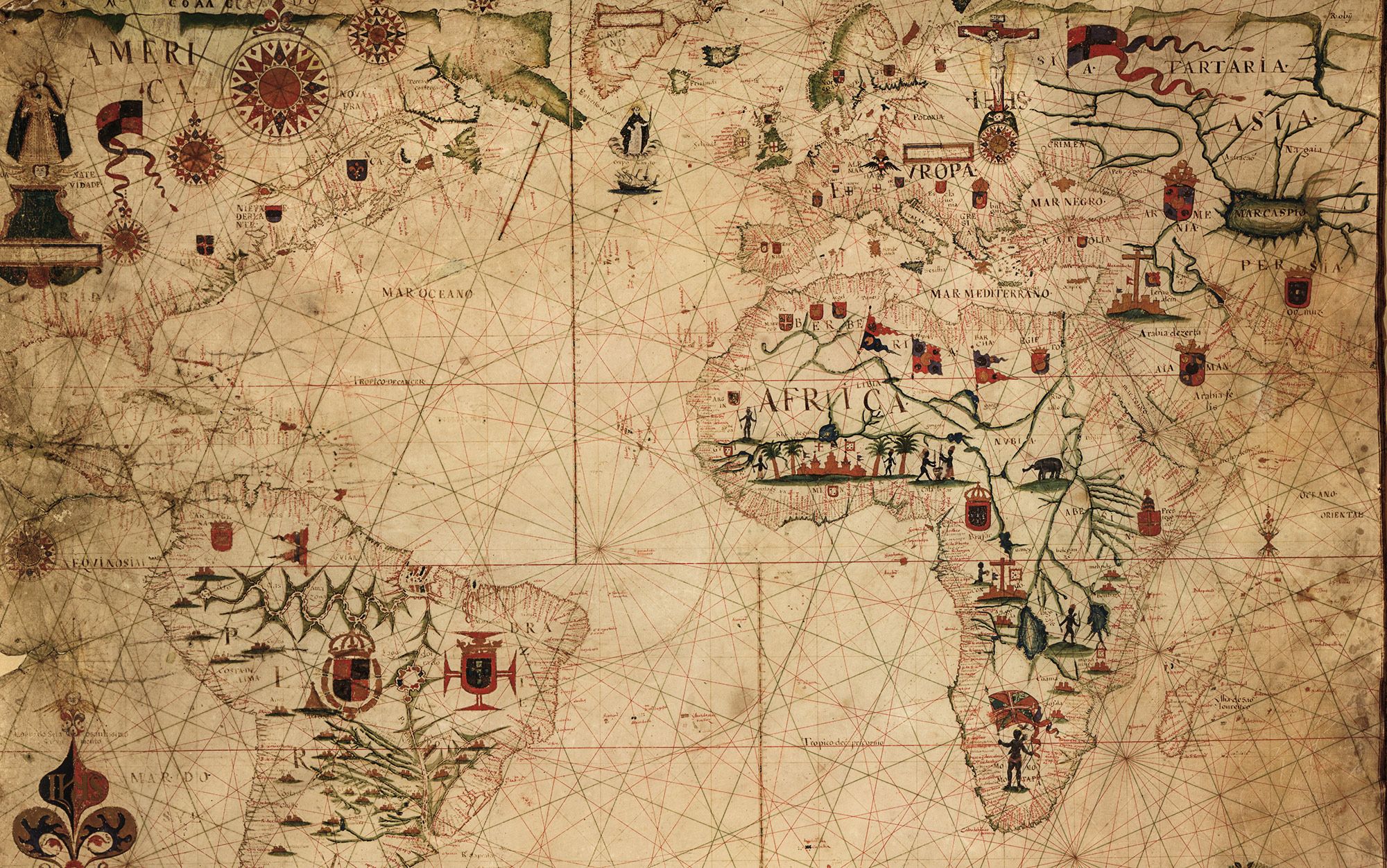
There is no American history without the histories of Indigenous and enslaved peoples. And this past has consequences todayPortolan Chart of the Atlantic Ocean and Adjacent Continents (1633) by Pascioal Roiz. Courtesy the Library of CongressKarin Wulf

is executive director of the Omohundro Institute of Early American History and Culture and professor of history at William and Mary in Williamsburg, Virginia.3,700 words

Edited bySam Haselby

15 July 2021 (aeon.co)

Aeon for Friends

FIND OUT MORE

Nations need history; it is a key genre for explaining the status quo. Modern nations and modern historical practices in the West developed over the same centuries, so the effort to harness the latter to the former is no surprise. Yet whether about the removal of statues, the veracity of journalism and public history projects, or the appropriateness of school curricula and course materials, questions about just how history serves the national interest have been fodder for perpetual controversy.

What’s more, in the past few decades, historians seem to be a poor match for such public and political uses of history. The rubbery framing of what history is, of how to assess it, and who it serves is frustratingly suitable to the stretching and even distortions that politics requires of the past. At the same time, it is regularly asserted that the public wants simple, consistent, even unchanging narratives of the past. Working in primary source materials and reading deeply in the existing scholarship, research historians emphasise the complexity and subtlety of historical processes that are often assumed to be ill-suited to the soundbites and pithy pronouncements of media and politics, and thus unlikely to find a public audience. The development of new sources, new methods and new perspectives that revise our understanding of the past constantly challenge fixed narratives.

However, the reframing of early America – a field and a period with an outsized claim on the history of democracy – suggests that complex and newly understood histories are meeting the moment for both the nation and its publics. Decades of research, reflected in close studies and synthetic histories, and the public writing of scholars alongside museum exhibits, are illustrating a wider appetite for nuanced history even as we hear more strident calls for the old ‘patriot’ narratives. A more capacious geography for early America, and deeper research in both slavery studies and Native American history, are showing not only a more complex era but much more connection among seemingly remote people, places and phenomena.

Conceptualised as the prehistory of the United States, originating in British colonies on the central east coast of mainland North America, early American history often and for centuries flattened out distinctive circumstances within a diverse population in favour of a unified portrait and a message of collective national ambitions. Including the eras of colonisation, the American Revolution and the early republic, early America has been the platform on which so much of the American national origins story rests. Whether it be the New York Times’ 1619 Project, which in 2019 set out to place slavery at the centre of the national narrative, or subsequent draft legislation to prohibit federal funds for such teaching, in favour of ‘the self-evident truths set forth by [the] Declaration [of Independence of 1776, which] are the fundamental principles upon which America was founded’, characterising early America is always resonant. It has always mattered as a way to explain what came next, be it a progressive narrative or the effects of racism and settler colonialism. Throughout US history, ordinary people and their communities, powerful economic and political interests, educational or reform efforts have all characterised early America, because it is both a starting point and a vantage point from which to understand the nation’s trajectory.

The traditional American nation-making narrative, from scholars, politicians, schoolteachers and popular culture, long emphasised British colonies on the east coast of North America founded in the 17th century. Small cities such as Charleston in South Carolina, Philadelphia in Pennsylvania, New York in New York, and Boston in Massachusetts became not only population centres but entrepôts for the swirl of people and goods that moved across the Atlantic and into the continent and back again – including enslaved people by the millions. By the middle of the 18th century, free people in these cities were attached to the commercial power of the British empire as well as to a British identity. And yet mere decades later they offered some of the most robust resistance to imperial policies, tarring and feathering port officials and tax collectors or hanging them in effigy.

And then, there was the full-on revolution from which came a nation. The history there, too, stressed the east coast, from Philadelphia’s State House as the site of the Second Continental Congress and thus where the drafting and signing of the Declaration of Independence occurred, to Yorktown, Virginia, as the decisive battle of the American Revolution, and on through the early history of the US with the first capitols in New York, then Philadelphia, and finally Washington, DC. Places and peoples of the US, including the first new states, such as Ohio, formed from the Northwest Territory, and Louisiana from the Louisiana Purchase, were incorporated into the chronology of this traditional American history in a westward progression as the nation claimed their land.

In 2008, the historian Claudio Saunt at the University of Georgia analysed articles published since the 1940s in the William and Mary Quarterly – the leading scholarly journal for early American history – with a visual representation of their regional focus. North America looks like a beachball made up of the east coast with a bit of seaweed clinging to its left side representing every other region. The regional emphasis within historical scholarship was even more pronounced than simply an east coast bias. For so long, historians had focused so heavily on early New England and the Puritan migration that, when historians in the later 20th century began to also focus on the histories of the English in the early Chesapeake and Mid-Atlantic, it was seen as significant within the field. Early America, then, mainly meant the history of settlers on the east coast of North America, from Massachusetts to Virginia.

The common theme in this view of early America is connection

Since the 1990s in particular, the field began to expand significantly, both geographically and culturally. In recent decades, historians have revealed a much more complex, Atlantic and globally connected, fully continental and foundationally Native, multi-imperial history. Not only is what we know about this period fuller and richer, but the way that research insights are coming together now informs a very different picture of early America – and thus of the nation’s foundations and development.

The common theme in this view of early America is connection. For the purposes of analysis, scholars hive off subjects and chronologies into discrete chunks, but new research takes a very different approach. This isn’t just a matter of a discipline yielding to decades of criticism about increasingly focused specialisation; as Gordon Wood wrote in 2010, historical ‘monographs have become so numerous and so refined and so specialised that most academic historians have tended to throw up their hands at the possibility of synthesising all these studies,’ leaving narrative and synthesis (and popular history) in the hands of those who ‘unfortunately often write without much concern for or much knowledge of the extensive monographic literature that exists.’ No, new and freshly sweeping syntheses such as Alan Taylor’s American Revolutions: A Continental History, 1750-1804 (2016) and American Republics: A Continental History of the United States, 1783-1850 (2021) are summarising this much more capaciously conceived field. New frameworks of analysis have developed, some taking a wide-angle view, some with a much tighter ‘microhistorical’ approach, but all of them finding new and illuminating connections among the diverse people, places and phenomena of early America.

A critical factor in reframing this vaster, connected early American history is geographic, bringing the greater scope of the Atlantic Ocean and the full North American continental contexts into the field of view – as it would have been to the peoples of early America. A turn to Atlantic history produced a wealth of studies on the dynamic economic, political and religious developments that revealed the ocean to have been an early modern commercial highway, powered by the Atlantic slave trade. By 2002, David Armitage had already declared of historians of early America and other early modern geographies, ‘we are all Atlanticists now’. Two decades on, scholars continue to produce journal articles, monographs, synthetic works and textbooks dedicated to exploring the ‘Atlantic World’.

This perspective – seeing the Atlantic as both a venue and a connector – has fuelled new work on older subjects, such as the Puritan migration to New England in the early 17th century and making American exceptionalism look more like modest American iterations. Newer work from an Atlantic perspective has emphasised how indebted New England Puritanism was to an ongoing exchange between ministers and lay people on either side of the ocean. Far from developing a specific and isolated form of their Protestantism, the Puritans who had left England to settle in Massachusetts and then Connecticut and beyond continued to be influenced by critical political and religious developments in their original home country. This was as true for their intellectual lives generally as their theologies. As Sarah Rivett has written, for example, in The Science of the Soul in Colonial New England (2011), prominent New England Puritans participated in lively networks of exchange with English and European scientists.

Just as an Atlantic perspective is offering ways to see connections across the ocean among phenomena once viewed as geographically contained, there are also new ways to see subjects and people that had always been understood as inherently Atlantic, particularly the slave trade, slavery and enslaved people. Scholars engaging these vitally important subjects involving violence inflicted on millions of people have innovated both new methods and new resources. The Trans-Atlantic Slave Trade Database, for example, began to be shared with libraries and scholars all over the world in the late 1990s as a CD-ROM. Now Slave Voyages, a website containing information from that database, holds information on more than 36,000 individual slaving expeditions conducted between the early 1500s and the mid-1800s, as well as in addition thousands of trips in the intra-American slave trade.

While the website allows for visualisation, mapping and research in the database, the database itself has become a crucial piece of research infrastructure for early American history, as well as the related histories of South America, Africa and the Caribbean. Part of the power of the database is showing just how related those histories are, by illustrating the extent and reach of the slave trade across and around the Atlantic at both a macro level (the overall trade) and a micro level (the individual voyages and even personnel on those ships). The lives of more than 11 million people are documented in the database, which can be searched for specific years and locations to make ever more concrete the horrors of the slave trade: pages and pages of ships that landed in Virginia in the decades before the American Revolution, for example.

If the power of the database of voyages is in illustrating the extent of the trade, showing just how powerfully it was shaping the Atlantic economy and the politics of empire, scholars are also returning to look at the Atlantic itself – on board those ships, in transit as a commodity – as a critical site of the experience of enslaved people. As the historian Stephanie Smallwood at the University of Washington wrote in 2008, ‘considering the “saltwater” dimension of slaves’ lives allows us to piece together a picture of a place, a time, and an experience that does not otherwise figure in the archival record.’ The historian Sowande’ Mustakeem at Washington University in St Louis, recalling the extensive literature on plantation slavery, noted in 2016 that this focus on the Middle Passage showed how a ‘violently unregulated process … interlinked slaving voyages and plantation societies’.

Another geographical reorientation is ‘Borderlands’ history, which focuses primarily on the American southwest and its early American history, is primarily focused on Native Americans and the Spanish empire, with some attention to the eventual encroachment of Anglo and then American settlements. The late historian David J Weber and other Borderlands scholars have shown the relative weakness of the Spanish compared with the Indigenous people of the southwest. In 1680, for example, after a century of missions, settlement and violence, the Pueblo drove thousands of settlers out of the province of Santa Fe de Nuevo México and killed hundreds more. These were peoples who had lived in their lands for centuries, even after the arrival of Europeans in the Western hemisphere, and only in the 19th century did ‘Mexico’ and ‘the United States’ take shape around them.

Research is showing just how deeply embedded slavery was in early New England

The persistence of Indian power from the vantage of Indian country has now captured the attention of a new generation of historians. This is a change from scholarship looking to understand how colonial officials and settlers had wrested control of North American spaces – or perhaps shared control. Richard White’s influential book The Middle Ground: Indians, Empires, and Republics in the Great Lakes Region, 1650-1815 (1991) showed how, in an entire part of North America, neither Europeans nor Native Americans ever won sovereign authority. Rather, through a complex series of informal and formal negotiations, including purposeful misunderstandings that facilitated peace, they held a ‘middle ground’, living with one another for more than a century and a half. In The Native Ground: Indians and Colonists in the Heart of the Continent (2006), Kathleen DuVal wrote about how, in the central Arkansas River Valley, ‘Indians … called the shots’. The Quapaw had controlled their territory for hundreds of years by the mid-18th century, largely through skilled diplomacy. The Osages preferred military power but to the same end of effective territorial control. Alongside the Choctaw, Chickasaw and others, it was Native Americans who managed access to land and resources, and Europeans, whether French, Spanish or, less regularly, English, who were firmly on the back foot.

The geographical expansion of ‘early America’ is just one aspect of how the research field has changed. Scholars are also breaking other boundaries, revealing the essential connections among events and phenomena long treated as distinct, including new analyses of Native American and Indigenous history, and of slavery and the enslaved that show even the classic region of early American scholarship, 17th-century New England, in new light. In Our Beloved Kin (2018), Lisa Brooks offered a ‘new history of King Philip’s War’ – a late 17th-century conflict between colonists and Native Americans long understood through the prism of the violence wrought on settler as well as Native communities, and thought to be the final blow to Native claims to sovereignty and power in the region. Working from a Native perspective, Brooks revealed the importance of Weetamoo, a female sachem and a critical leader in the conflict overlooked in previous accounts that relied on settler narratives – including a classic of American literature, A Narrative of the Captivity and Restoration of Mrs Mary Rowlandson (1682).

Research is also showing just how deeply embedded slavery was in early New England. Households from Puritan Boston to Connecticut River Valley towns to the Patriot strongholds enslaved African-descended people. The Atlantic slave trade was massive in scale: many millions of African-descended people were enslaved, and so many people were directly involved in the trade as buyers and sellers of human beings that it is hard to overstate the extent to which slavery pervaded the political economy of early America. What people ate, what they wore, where they lived and how they worked were, in most cases, all touched by the effects of the slave trade and the labour of enslaved people.

New histories of Native Americans and slavery have come together, too, in New England and elsewhere, to illuminate the pervasive impact of the slave trade. The slave trade reshaped Native warfare and captive-taking, such that Native Americans were enslaved and traded away out of North America, just as Africans were brought on to the continent. In the aftermath of King Philip’s war, for example, hundreds of Native Americans who surrendered to the English colonists were sold to the Caribbean as slaves. In the upper Midwest and French Canada in the same period, Native warfare ended up providing captives to the Europeans eager to buy, trade and sell Native people into slavery. In short, the enslavement of Native Americans was responding to the plantation economy fuelled by the enslavement of Africans. In short, there is no early American history without Native American and Indigenous perspectives, without the history of slavery and the enslaved, and increasingly, without an understanding of the interconnectedness of these histories.

No one would mistake the population of the US rendered on porcelain for an official report, but it is emblematic of the specific version of early America that came to stand for the whole. Proclaiming ‘Prosperity to the United States of America’, a ‘Census Jug’ was made in England in the mid-1790s, part of a wave of novelty printed pottery that flooded the American market in the late 18th century. This cheerful, handled piece of homeware was meant to be a pleasing representation of the US and its prospects, explicitly connecting prosperity to ‘Agriculture, Commerce, and the Freedom of the Seas’, a motto on the reverse of one version. But it also made claims to authority by listing the population within commercial motifs, including images of ships, barrels and shipping boxes, based on the newly completed and reported first federal US Census. The figures were drawn directly from the final report of the first US Census, printed in 1793, where they were ‘truly stated from the original Returns deposited in the Office of the Secretary of State, Th Jefferson.’

More consequentially, the pottery did not detail the key distinctions among people that the census required and reported. The US marshals, who were the original 1790 census-takers, assigned categories to the people they surveyed: ‘Free white Males’ 16 and older, ‘including heads of families’; free white males under 16; ‘Free white Females, including heads of families’; ‘All other free persons’; and, lastly, ‘Slaves’. Under provisions of the Federal Constitution, until after the Civil War, the enslaved population counted as 3/5ths of its total for purposes of Congressional representation, meaning that just one of the implications of the large population of enslaved people in the south was increasing the Congressional representation for those states.

And how were Native Americans counted in that first census? It’s hard to say. Some of the regions where the census was incomplete were places with more Native people. Some argued that the sovereignty of Native Americans placed them outside the census. And in places where we know there were Native Americans, such as New England, where a rhetoric as well as a policy of erasing their existence was well underway, they might have been counted in the category of ‘other free persons’ or in some cases, ‘slaves’. The chipper porcelain list of an American population engaged in commerce made no account of the people who were made commodities in that economy. It flattened and distorted in order to render the nation and its people singular, and united.

That deeper, richer, fuller past is better suited to explaining our complex present

The vast early America that is emerging from historical scholarship not only illuminates the complexity and diversity of the past, but also offers a fresh relationship with American national history. In its sharp departure from the traditional east coast and British colonial focused past, this is also a more usable past. More than a century ago, the literary critic Van Wyck Brooks coined the phrase ‘usable past’ to describe how Americans could use their history to create a more democratic future, and generations of scholars, teachers and writers have mulled and used this framework in classrooms and museums and beyond. Two years of debates about the 1619 Project have revealed just how conflicted the usable past can be as traditional historians argued that the American Revolution was not essentially about slavery but liberty, and the project’s architect and principle author, Nikole Hannah-Jones, asserted the critical importance of understanding slavery at the root of American history, and its deprivations at the constant centre of African American experience. What is at stake is the consequences of the past for the way we posit the present and the future.

Historians do not typically think of their research in this way; our research reveals the world as it was, before we knew what it would become. Perhaps this also means that historians often seem to be working at odds to the needs of the nation. Certainly in the US, research historians have been delivering a very different picture of the American past than official commemoration, monuments and the appetite for popular history suggest that the American public wants. What is on the shelves or bestseller lists is decidedly not what scholars are producing, and the longstanding claim is that this divergence is indicative of a public desire for patriotic and straightforward history. But is it? The success of the 1619 Project, even if measured solely in sales and readership, suggests otherwise. And still the most shocking feature of this project is neither the assertion that slavery and race are central, even foundational, to American history, nor the reaction to decentring liberty, but that this would be controversial at all, given the weight of decades of historical research documenting it.

In her book This America: The Case for the Nation (2019), Jill Lepore argues that nations are ‘held together by history’ and that, ‘to make sense of themselves’, nations need ‘some kind of agreed-upon past’. The dominant form of this ‘agreed-upon past’ has long been a simplified one. But who must agree upon that past? The simplified, unified past was the product of commentary and history crafted by a narrow group ostensibly for the good of the whole. All of this becomes much harder to sustain with a more complex past both reflecting and told by a broader and more diverse group of people. This much vaster early American history serves the nation not as a singular, let alone agreed-upon past, but as an ongoing process of discovery about complexity and connection. In addition to being good history from a historian’s vantage, based on fresh research, new methods and new perspectives, that deeper, richer, fuller past is better suited to explaining our complex present. It can help us envision the future of a complex, democratic polity.

Nations and empiresGlobal historyHistory

Your brain hallucinates your conscious reality

Anil Seth|TED2017 (ted.com)

Right now, billions of neurons in your brain are working together to generate a conscious experience — and not just any conscious experience, your experience of the world around you and of yourself within it. How does this happen? According to neuroscientist Anil Seth, we’re all hallucinating all the time; when we agree about our hallucinations, we call it “reality.” Join Seth for a delightfully disorienting talk that may leave you questioning the very nature of your existence.

This talk was presented at an official TED conference, and was featured by our editors on the home page.

ABOUT THE SPEAKER

Anil Seth · Cognitive neuroscientistHow can the “inner universe” of consciousness be explained in terms of mere biology and physics? Anil Seth explores the brain basis of consciousness and self.

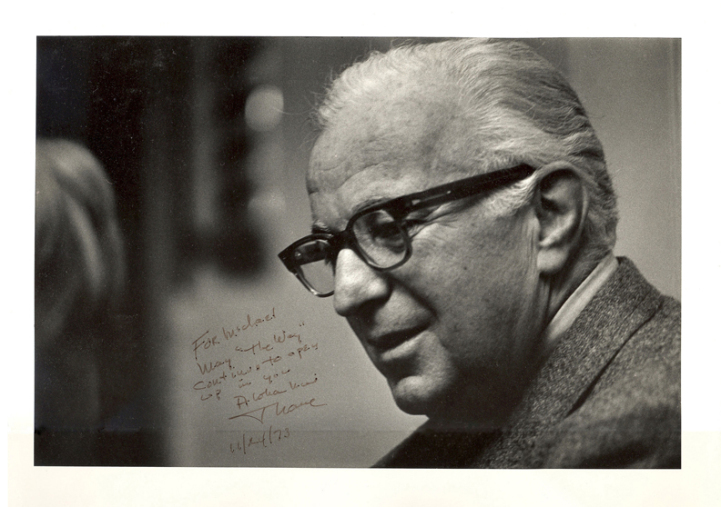
THANE’S BIRTHDAY — July 15

Thane Walker aka Thane of Hawaii

Thane Walker (ca. 1890 – 1989)

Founder (with Phez Kahlil) of The Prosperos, a group stemming from the philosophy of mystic G. I. Gurdjieff. Walker was born in Nowaway County, Missouri. He claimed to have been one of America’s first psychologists and to have been imprisoned in a Nazi concentration camp after writing the article “I Saw Hitler Make Black Magic.” He was a Marine Corps officer and entertained American troops in Japan during the occupation in World War II.

As a former pupil of Gurdjieff, Walker became a Gurdjieff-style figure, teaching students through stories and disorienting activities, but also drawing upon Freudian and Jungian psychology and occult and astrological traditions. Walker believed students should wake from the misleading reality of everyday sensory experience and limited personality to a wider reality.

The Prosperos group was founded in Florida in 1956, but the organization has since moved its headquarters to California and reported some 3,000 members at the end of the 1980s.  (From encyclopedia.com)

Sources:

Melton, J. Gordon. Encyclopedia of American Religions. Detroit: Gale Research, 1992.