FREE WILL ASTROLOGY

Gene Wilder, right, with Clevon Little in the hilarious “Blazing Saddles,” cultivated comedy skills as youngster trying to make his mother, who had health problems, laugh; Virgo might also make something positive out of a challenge. (Courtesy Warner Bros.)

Gene Wilder, right, with Clevon Little in the hilarious “Blazing Saddles,” cultivated comedy skills as youngster trying to make his mother, who had health problems, laugh; Virgo might also make something positive out of a challenge. (Courtesy Warner Bros.)

Free Will Astrology for week of Dec. 24, 2020

A challenging situation will inspire Virgo in ways that generate a blessing

ARIES (March 21-April 19): Your capacity for pioneering feats and impressive accomplishments will be at a peak in 2021. So you could become the best human ever at balancing a ladder on your chin or typing with your nose or running long-distance while holding an egg on a spoon with your mouth. But I’d prefer it if you channeled your triumphal energy into more useful innovations and victories. How about making dramatic strides in fulfilling your most important goal? Or ascending to an unprecedented new level of inspiring people with your passionate idealism? Or setting a record for most illusions shed?

TAURUS (April 20-May 20): Ark Encounter is a fundamentalist Christian theme park in Kentucky. Its main attraction is a giant replica of Noah’s Ark. Constructed mostly from spruce and pine trees, it’s one of the world’s largest wooden structures. Even though I don’t believe that there was in fact such a boat in ancient times, I do admire how its builder, Ken Ham, has been so fiercely devoted to making his fantasies real. I encourage you to cultivate an equally zealous commitment to manifesting your own visions and dreams in 2021.

GEMINI (May 21-June 20): From 1961 until 1989, a concrete barrier divided the city of Berlin. Communist East Berlin lay on the east side of the Berlin Wall, and capitalist West Berlin on the west. It was an iconic symbol of the Cold War between the U.S.and Soviet Union. More than 100,000 people tried to escape from east to west, but just 5,000 succeeded. The standoff ended in 1989, during the peaceful revolutions that swept through Eastern Europe. In subsequent months, the Berlin Wall was slowly demolished. Today, tiny fragments of the wall are marketed as medicines for asthma, headaches, narcolepsy, and ulcers. Now I will propose that in 2021, you adopt the demolished Berlin Wall as your metaphor of power. May it inspire you to be gleeful and forceful as you dismantle psychological obstacles and impediments.

CANCER (June 21-July 22): The year 2021 will contain 525,600 minutes. But I suspect you might enjoy the subjective sensation of having far more than 525,600 minutes at your disposal. That’s because I think you’ll be living a fuller life than usual, with greater intensity and more focus. It may sometimes seem to you as if you are drawing greater riches out of the daily rhythm—accomplishing more, seeing further, diving down deeper to capitalize on the privilege of being here on planet earth. Be grateful for this blessing—which is also a big responsibility!

LEO (July 23-Aug. 22): Our lives are filled with puzzles and enigmas and riddles. We all harbor aspects of ourselves that we don’t understand. I hope that in 2021, you will be on a mission to learn more about these parts of yourself. One of your superpowers will be a capacity to uncover secrets and solve mysteries. Bonus: I suspect you’ll be able to make exceptional progress in getting to the root of confusing quandaries that have undermined you—and then fixing the problems so they no longer undermine you.

VIRGO (Aug. 23-Sept. 22): When actor Gene Wilder was 8 years old, his mother began to have heart-related health issues. The doctor that treated her suggested he could help her out if he would try to make her laugh. From then on, Wilder cultivated an ability to tell jokes and got interested in becoming an actor. Ultimately he appeared in 22 films and was nominated for two Oscars and two Golden Globe Awards. I foresee a comparable development in your life in 2021: A challenging situation will inspire you in ways that generate a major blessing.

LIBRA (Sept. 23-Oct. 22): In my astrological opinion, love won’t be predictable in 2021. It won’t be easily definable or comparable to what you’re experienced before. But I also suspect that love will be delightfully enigmatic. It will be unexpectedly educational and fervently fertile and oddly comfortable. Your assignment, as I understand it, will be to shed your certainties about what love is and is not so that the wild, fresh challenges and opportunities of love can stream into your life in their wildest, freshest state.

SCORPIO (Oct. 23-Nov. 21): Until 1893, Hawaii was a sovereign nation. In January of that year, a group of wealthy foreigners, mostly Americans, overthrew the existing government with the help of the U.S. military. They established a fake temporary “republic” that excluded native Hawaiians from positions of power. Their goal, which was to be annexed by the United States, was fulfilled in July 1898. I propose that you use this sad series of events as a motivational story in 2021. Make it your goal to resist all efforts to be colonized and occupied. Commit yourself passionately to preserving your sovereignty and independence. Be a tower of power that can’t be owned.

SAGITTARIUS (Nov. 22-Dec. 21): In 2021, you may be smarter than you have ever been. Not necessarily wiser, too, although I have reason to hope that you will leverage your smartness to also deepen your wisdom. But as I was saying, your intelligence could very well soar beyond its previous heights. Your ability to speak articulately, stir up original thoughts, and solve knotty riddles should be at a peak. Is there any potential downside to this outbreak of brilliance? Only one that I can imagine: It’s possible that your brain will be working with such dominant efficiency that it will drown out messages from your heart. And that would be a shame. In order to do what I referred to earlier— leverage your smartness to deepen your wisdom—you’ll need to be receptive to your heart’s messages.

CAPRICORN (Dec. 22-Jan. 19): The birds known as red knots breed every year in the Arctic regions. Then they fly south— way south—down to the southern edge of South America, more than 9,000 miles away. A few months later they make the return trip to the far north. In 1995, ornithologists managed to put a monitoring band on one red knot’s leg, making it possible to periodically get a read on his adventures over the subsequent years. The bird’s nickname is Moonbird, because he has traveled so many miles in the course of his life that it’s equivalent to a jaunt to the moon. He’s known as “the toughest four ounces on the planet.” I nominate him to be your magical creature in 2021. I suspect you will have stamina, hardiness, persistence, and determination like his.

AQUARIUS (Jan. 20-Feb. 18): An Aquarian park ranger named Roy Sullivan was struck by lightning seven times in the course of his 71 years on the planet. (That’s a world record.) None of the electrostatic surges killed him, although they did leave a few burns. After studying your astrological potentials for 2021, I’ve concluded that you may be the recipient, on a regular basis, of a much more pleasurable and rewarding kind of lightning strike: the metaphorical kind. I advise you to prepare yourself to be alert for more epiphanies than usual: exciting insights, inspiring revelations, and useful ideas.

PISCES (Feb. 19-March 20): Coral reefs are in danger all over the world. These “rainforests of the sea” are being decimated by ocean acidification, toxic runoff from rivers, rising temperatures, and careless tourists. Why should we care? Because they’re beautiful! And also because they’re hotbeds of biodiversity, providing homes for 25 percent of all marine species. They also furnish protection for shorelines from erosion and storm damage, and are prime spots to harvest seafood. So I’m pleased people are finding ways to help reefs survive and recover. For example, a group in Thailand is having success using superglue to re-attach broken-off pieces to the main reefs. I hope this vignette inspires you to engage in metaphorically similar restorative and rejuvenating activities, Pisces. In 2021, you will have an enhanced power to heal.

HomeworkMake a bold positive prediction for your life in 2021. 

FreeWillAstrology.com

Simon Schama: To be a historian is an act of citizenship

Dec 23, 2020 Professor Simon Schama is one of Britain’s most respected and beloved historians. But his interests aren’t limited to the Dutch Golden Age, the transatlantic slave trade or British cultural history. He is also fiercely engaged with present day politics – from anti-semitism in the Labour Party to American foreign policy, Scottish independence to the politics of modern art. In this highlight from his How To Academy event, Simon muses over the Brexit referendum, cultural interchange between the UK and Europe, and why he believes historians should engage in public discourse.   See the full event here: https://youtu.be/6HoqvyuMbLs    Click ‘subscribe’ for weekly videos featuring the world’s most renowned artists and thinkers.   How To Academy is the home of big thinking. From Richard Dawkins to Elizabeth Gilbert, Jordan Peterson to Slavoj Žižek, Emma Watson to Yuval Noah Harari, we invite the world’s most influential artists and thinkers to share their insights and ideas in livestreams and live events. We help businesses inspire clients and staff, and we host events, make podcasts and create films to spread knowledge and innovation across the globe. Visit https://howtoacademy.com/ for our upcoming events.

From Jesus to Christ: The First Christians, Part One (full documentary) | FRONTLINE

Dec 22, 2020 Part one (of two) of FRONTLINE’s four-hour series on the rise of Christianity examines how Judaism and the Roman empire shaped Jesus’ life and traces the beginnings of the “Jesus Movement” in those early years before it was called Christianity. This journalism is made possible by viewers like you. Support your local PBS station here: http://www.pbs.org/donate First broadcast in 1998, “From Jesus to Christ: The First Christians” is an exploration into the life and death of Jesus, and the men and women whose belief, conviction, and martyrdom created the religion we now know as Christianity. Drawing upon historical evidence, the series challenges familiar assumptions and conventional notions about Christian origins. Love FRONTLINE? Find us on the PBS Video App where there are more than 300 FRONTLINE documentaries available for you to watch any time: https://to.pbs.org/FLVideoApp#Documentary#FromJesustoChrist Subscribe on YouTube: http://bit.ly/1BycsJW Instagram: https://www.instagram.com/frontlinepbs Twitter: https://twitter.com/frontlinepbs Facebook: https://www.facebook.com/frontline Funding for FRONTLINE is provided through the support of PBS viewers and by the Corporation for Public Broadcasting. Major funding for FRONTLINE is provided by the John D. and Catherine T. MacArthur Foundation and the Ford Foundation. Additional funding is provided by the Abrams Foundation, the Park Foundation, and the FRONTLINE Journalism Fund with major support from Jon and Jo Ann Hagler on behalf of the Jon L. Hagler Foundation.

The Mental Universe

The only reality is mind and observations, but observations are not of things. To see the Universe as it really is, we must abandon our tendency to conceptualize observations as things.

Historically, we have looked to our religious leaders to understand the meaning of our lives; the nature of our world. With Galileo Galilei, this changed. In establishing that the Earth goes around the Sun, Galileo not only succeeded in believing the unbelievable himself, but also convinced almost everyone else to do the same. This was a stunning accomplishment in ‘physics outreach’ and, with the subsequent work of Isaac Newton, physics joined religion in seeking to explain our place in the Universe.

The more recent physics revolution of the past 80 years has yet to transform general public understanding in a similar way. And yet a correct understanding of physics was accessible even to Pythagoras. According to Pythagoras, “number is all things”, and numbers are mental, not mechanical. Likewise, Newton called light “particles”, knowing the concept to be an ‘effective theory’ — useful, not true. As noted by Newton’s biographer Richard Westfall: “The ultimate cause of atheism, Newton asserted, is ‘this notion of bodies having, as it were, a complete, absolute and independent reality in themselves.’” Newton knew of Newton’s rings and was untroubled by what is shallowly called ‘wave/particle duality’.

The 1925 discovery of quantum mechanics solved the problem of the Universe’s nature. Bright physicists were again led to believe the unbelievable — this time, that the Universe is mental. According to Sir James Jeans: “the stream of knowledge is heading towards a non-mechanical reality; the Universe begins to look more like a great thought than like a great machine. Mind no longer appears to be an accidental intruder into the realm of matter… we ought rather hail it as the creator and governor of the realm of matter.” But physicists have not yet followed Galileo’s example, and convinced everyone of the wonders of quantum mechanics. As Sir Arthur Eddington explained: “It is difficult for the matter-of-fact physicist to accept the view that the substratum of everything is of mental character.”

In his play Copenhagen, which brings quantum mechanics to a wider audience, Michael Frayn gives these word to Niels Bohr: “we discover that… the Universe exists… only through the understanding lodged inside the human head.” Bohr’s wife replies, “this man you’ve put at the centre of the Universe — is it you, or is it Heisenberg?” This is what sticks in the craw of Eddington’s “matter-of-fact” physicists.

Proof without words: Pythagoras explained things using numbers.

Discussing the play, John H. Marburger III, President George W. Bush’s science adviser, observes that “in the Copenhagen interpretation of microscopic nature, there are neither waves nor particles”, but then frames his remarks in terms of a non-existent “underlying stuff”. He points out that it is not true that matter “sometimes behaves like a wave and sometimes like a particle… The wave is not in the underlying stuff; it is in the spatial pattern of detector clicks… We cannot help but think of the clicks as caused by little localized pieces of stuff that we might as well call particles. This is where the particle language comes from. It does not come from the underlying stuff, but from our psychological predisposition to associate localized phenomena with particles.”

In place of “underlying stuff” there have been serious attempts to preserve a material world — but they produce no new physics, and serve only to preserve an illusion. Scientists have sadly left it to non-physicist Frayn to note the Emperor’s lack of clothes: “it seems to me that the view which [Murray] Gell-Mann favours, and which involves what he calls alternative ‘histories’ or ‘narratives’, is precisely as anthropocentric as Bohr’s, since histories and narratives are not freestanding elements of the Universe, but human constructs, as subjective and as restricted in their viewpoint as the act of observation.”

Physicists shy from the truth because the truth is so alien to everyday physics. A common way to evade the mental Universe is to invoke ‘decoherence’ — the notion that ‘the physical environment’ is sufficient to create reality, independent of the human mind. Yet the idea that any irreversible act of amplification is necessary to collapse the wave function is known to be wrong: in ‘Renninger-type’ experiments, the wave function is collapsed simply by your human mind seeing nothing. The Universe is entirely mental.

In the tenth century, Ibn al-Haytham initiated the view that light proceeds from a source, enters the eye, and is perceived. This picture is incorrect but is still what most people think occurs, including, unless pressed, most physicists. To come to terms with the Universe, we must abandon such views. The world is quantum mechanical: we must learn to perceive it as such.

One benefit of switching humanity to a correct perception of the world is the resulting joy of discovering the mental nature of the Universe. We have no idea what this mental nature implies, but — the great thing is — it is true. Beyond the acquisition of this perception, physics can no longer help. You may descend into solipsism, expand to deism, or something else if you can justify it — just don’t ask physics for help.

There is another benefit of seeing the world as quantum mechanical: someone who has learned to accept that nothing exists but observations is far ahead of peers who stumble through physics hoping to find out ‘what things are’. If we can ‘pull a Galileo,’ and get people believing the truth, they will find physics a breeze.

The Universe is immaterial — mental and spiritual. Live, and enjoy.

FURTHER READING

Marburger, J. On the Copenhagen Interpretation of Quantum Mechanics http://www.ostp.gov/html/Copenhagentalk.pdf (2002).

Henry, R. C. Am. J. Phys58, 1087–1100 (1990).

Steiner, M. The Applicability of Mathematics as a Philosophical Problem (Harvard Univ. Press, Cambridge, MA, 1998).

Author information

Affiliations

  1. Professor in the Henry A. Rowland Department of Physics and Astronomy, The Johns Hopkins University, Baltimore, 21218, Maryland, USARichard Conn Henry

About this article

Cite this article

Henry, R. The mental Universe. Nature 436, 29 (2005). https://doi.org/10.1038/436029a

Download citation

Share this article

Anyone you share the following link with will be able to read this content:

https://rdcu.be/ccCWH

Provided by the Springer Nature SharedIt content-sharing initiative

Your Cells Are Conscious!!! Awaken This Deep Power

Russell Brand Taken from my Under The Skin podcast with Bruce Lipton! Bruce is a developmental biologist, stem cell biologist, notable for his views on epigenetics. He is the bestselling author of The Biology of Belief. You can listen to the entire podcast on Luminary: http://luminary.link/russell www.brucelipton.com Twitter: @ biologyofbelief Instagram: @ brucelipton Instagram: http://instagram.com/russellbrand/ Twitter: http://twitter.com/rustyrockets Produced by Jenny May Finn (Instagram: @jennymayfinn)

Cancer: The Good, the Bad, the Ugly

(Compiled by Rick Thomas, H.W., M.)

CANCER MEANINGS

This will be a combination of my word tracking in conjunction with etymological dictionary information from http://www.etymonline.com/

There seems to be three basic meanings for this word. I’m putting this into three major sections: the good (zodiac sign), the bad (crab) and the ugly (malignant tumor).

First, etymological track of the word cancer:

cancer (n.)

Old English cancer “spreading sore, cancer” (also canceradl), from Latin cancer “a crab,” later, “malignant tumor,” from Greek karkinos, which, like the Modern English word, has three meanings: crab, tumor, and the zodiac constellation (late Old English), from PIE root *qarq- “to be hard” (like the shell of a crab); cf. Sanskrit karkatah “crab,” karkarah “hard;” and perhaps cognate with PIE root *qar-tu- “hard, strong,” source of English hard.

Greek physicians Hippocrates and Galen, among others, noted similarity of crabs to some tumors with swollen veins. Meaning “person born under the zodiac sign of Cancer” is from 1894.

The Good

Cancer Zodiac Sign: Characteristics, Dates, & More | Astrology.com

Also see the sections on Cancer in Thane’s Astrology Course.

The Bad

crab (n.1)

popular name for a stalk-eyed, short-tailed, ten-legged crustacean, Old English crabba, from a general Germanic root (compare Dutch krab, Old High German krebiz, German Krabbe, Old Norse krabbi “crab”), related to Low German krabben, Dutch krabelen “to scratch, claw,” from PIE root *gerbh- “to scratch, carve” (see carve). French crabe (13c.) is from Germanic, probably Old Norse. 

crab (v.)

c. 1400, “to vex, irritate,” probably a back-formation from crabbed. The notions of “bad-tempered, combative” and “sour” in the two nouns crab naturally yielded a verb meaning of “to vex, irritate,” later “to complain irritably, find fault” (c. 1500). As “to fish for crabs” from 1650s (implied in crabbing). The noun meaning “sour person” is from 1570s.

crabbed (adj.)

late 14c., “peevish, angry, ill-tempered, spiteful,” also “vicious, wicked, perverse,” from crab (n.1), from the crab’s combative disposition; mid-15c. as “moving backwards” and in reference to crookedness. Of taste “bitter, harsh,” late 14c., from crab (n.2). Related: Crabbedly; crabbedness.

crabby (adj.)1520s, in now-obsolete sense “crooked, gnarled, rough,” from extended sense of crab (n.1) + -y (2). Meaning “disagreeable, sour, peevish” is attested from 1776, American English. Both senses were found earlier in crabbed.

The Ugly

Section I: In the sense of a malignant tumor or growth.

Here are the results of my word tracking:

Malignant. Note that the prefix mal- means bad, wrong, ill.

  • Desire to harm, spite
  • Malign: deceive, wicked, evil, harmful. Etymology: “ill born”
  • Malice: bad, ill will
  • Hostile, unfriendly

Tumor. Swelling: increase in volume from pressure within; expand; dilate. Examples: physical swelling or as in an emotion such as anger swelling inside one. Can also be a mass of new tissue growing inside one.

Malignant Etymology:

malignant (adj.)

1560s, in reference to diseases, from Middle French malignant and directly from Late Latin malignantem (nominative malignans) “acting from malice,” prp. of malignare “injure maliciously” (see malign (v.)). Earlier in the church malignant “followers of the antichrist,” from Latin ecclesiam malignantum in early Church writing.

malign (adj.)

early 14c., from Old French maligne “having an evil nature,” from Latin malignus “wicked, bad-natured,” from male “badly” (see mal-) + -gnus “born,” from gignere “to bear, beget,” from PIE root *gn- “to bear” (see genus).

evil (adj.)

Old English yfel (Kentish evel) “bad, vicious, ill, wicked,” from Proto-Germanic *ubilaz (cf. Old Saxon ubil, Old Frisian and Middle Dutch evel, Dutch euvel, Old High German ubil, German übel, Gothic ubils), from PIE *upelo-, from root *wap- (cf. Hittite huwapp- “evil”).

“In OE., as in all the other early Teut. langs., exc. Scandinavian, this word is the most comprehensive adjectival expression of disapproval, dislike or disparagement” [OED]. Evil was the word the Anglo-Saxons used where we would use bad, cruel, unskillful, defective (adj.), or harm, crime, misfortune, disease (n.). The meaning “extreme moral wickedness” was in Old English, but did not become the main sense until 18c.

bad (adj.)

c.1200, “inferior in quality;” early 13c., “wicked, evil, vicious,” a mystery word with no apparent relatives in other languages.* Possibly from Old English derogatory term bæddel and its diminutive bædling “effeminate man, hermaphrodite, pederast,” probably related to bædan “to defile.” A rare word before 1400, and evil was more common in this sense until c.1700. Meaning “uncomfortable, sorry” is 1839, American English colloquial.

vicious (adj.)

early 14c. (implied in viciously), “of the nature of vice, wicked,” from Anglo-French vicious, Old French vicieus, from Latin vitiosus “faulty, defective, corrupt,” from vitium “fault” (see vice (n.1)). Meaning “inclined to be savage or dangerous” is first recorded 1711 (originally of animals, especially horses); that of “full of spite, bitter, severe” is from 1825.

ill (adj.)

c.1200, “morally evil” (other 13c. senses were “malevolent, hurtful, unfortunate, difficult”), from Old Norse illr “ill, bad,” of unknown origin. Not related to evil. Main modern sense of “sick, unhealthy, unwell” is first recorded mid-15c., probably related to Old Norse idiom “it is bad to me.”

wicked (adj.)

late 13c., earlier wick (12c.), apparently an adjectival use of Old English wicca “wizard” (see wicca). For evolution, cf. wretched from wretch.

Wicca (n.)

An Old English masc. noun meaning “male witch, wizard, soothsayer, sorcerer, magician;” see witch.

witch (n.)

Old English wicce “female magician, sorceress,” in later use especially “a woman supposed to have dealings with the devil or evil spirits and to be able by their cooperation to perform supernatural acts,” fem. of Old English wicca “sorcerer, wizard, man who practices witchcraft or magic,” from verb wiccian “to practice witchcraft” (cf. Low German wikken, wicken “to use witchcraft,” wikker, wicker “soothsayer”).

harm (n.)

Old English hearm “hurt, evil, grief, pain, insult,” from Proto-Germanic *harmaz (cf. Old Saxon harm, Old Norse harmr, Old Frisian herm “insult; pain,” Old High German harm, German Harm “grief, sorrow, harm”), from PIE *kormo- “pain.”

hurt (v.)

c.1200, “to injure, wound” (the body, feelings, reputation, etc.), also “to stumble (into), bump into; charge against, rush, crash into; knock (things) together,” from Old French hurter “to ram, strike, collide,” perhaps from Frankish *hurt “ram” (cf. Middle High German hurten “run at, collide,” Old Norse hrutr “ram”). The English usage is as old as the French, and perhaps there was a native Old English *hyrtan, but it has not been recorded. Meaning “to be a source of pain” (of a body part) is from 1850. To hurt (one’s) feelings attested by 1779.

injure (v.)

mid-15c., “do an injustice to, dishonor,” probably a back-formation from injury, or else from Middle French injuriier, from Latin injurare. Injury also served as a verb (late 15c.). Related: Injured; injuring.

wound (n.)

Old English wund “hurt, injury,” from Proto-Germanic *wundaz (cf. Old Saxon wunda, Old Norse und, Old Frisian wunde, Old High German wunta, German wunde “wound”), perhaps from PIE root *wen- “to beat, wound.”

spite (n.)

c.1300, shortened form of despit “malice” (see despite). Corresponding to Middle Dutch spijt, Middle Low German spyt, Middle Swedish spit. Commonly spelled spight c.1575-1700. The verb is attested from c.1400.

despite

c.1300, originally a noun, from Old French despit (12c., Modern French dépit), from Latin despectus “a looking down on, scorn, contempt,” from pp. of despicere (see despise).

scorn (n.)

c.1200, a shortening of Old French escarn “mockery, derision, contempt,” a common Romanic word (cf. Spanish escarnio, Italian scherno) of Germanic origin, from Proto-Germanic *skarnjan “mock, deride” (cf. Old High German skern “mockery, jest, sport,” Middle High German scherzen “to jump with joy”).

deceive (v.)

c.1300, from Old French decevoir (12c., Modern French décevoir) “to deceive,” from Latin decipere “to ensnare, take in, beguile, cheat,” from de- “from” or pejorative + capere “to take” (see capable). Related: Deceived; deceiver; deceiving.

hostile (adj.)

late 15c., from Middle French hostile “of or belonging to an enemy” or directly from Latin hostilis “of an enemy,” from hostis “enemy” (see guest). The noun meaning “hostile person” is recorded from 1838, American English, a word from the Indian wars.

unfriendly (adj.)

early 15c., “not characteristic of friends,” from un- (1) “not” + friendly. Cf. Middle Dutch onvriendelijc, Middle High German unvriuntlich, German unfreundlich. Meaning “hostile, inimical” is recorded from late 15c. Related: Unfriendliness.

Tumor Etymology:

tumor (n.)

1540s, from Latin tumor “swelling, condition of being swollen,” from tumere “to swell” (see thigh).

swell (v.)

Old English swellan “grow or make bigger” (past tense sweall, pp. swollen), from Proto-Germanic *swelnanan (cf. Old Saxon swellan, Old Norse svella, Old Frisian swella, Middle Dutch swellen, Dutch zwellen, Old High German swellan, German schwellen), of unknown origin.

Thane’s Astrology class notebook on Cancer:

Element: Water
Direction: Past
Dynamic: Individual Survival Dynamic
Approximate Calendar Period: 22 June – 22 July
Ruler: Moon

Nurturing, some psychic-depth faculty, domestic. Fondness for adventure and excitement while clinging tenaciously to the goal. Happy to take trips, just as happy to return to home base. Cancerian males may need resistance to effeminacy. Powerful clarity and utterly convincing. Frustration – concern over determining whether the hunches are correct. When Cancer turns understanding outward to the world, no doors are closed.
A complete politician, not as sensitive as they appear but easily influenced by emotional situations.
Progressive Symbolism:
Age of adolescence, very changeable, suggestible and emotional, does not quite stand on its own feet and like an adolescent, reflects the opinions of others.

IT’S A COLD WAR CHRISTMAS, CHARLIE BROWN

The Peanuts Christmas Special Tapped Into a National American Zeitgeist by ‘Placing Capitalism and Christianity in the Mouths of Babes’

It’s a Cold War Christmas, Charlie Brown | Zocalo Public Square • Arizona State University • Smithsonian

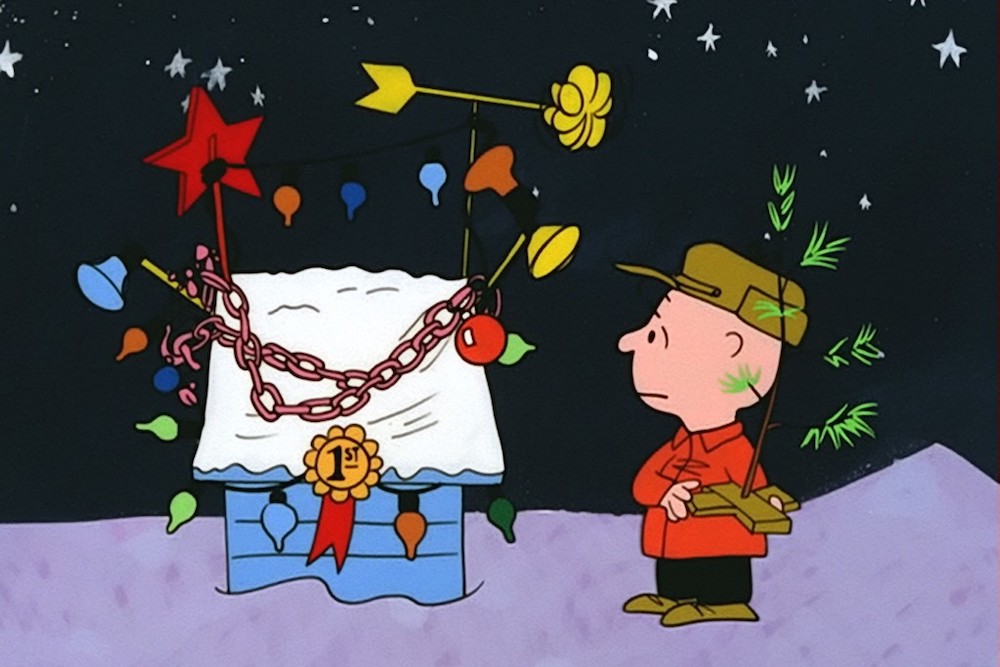
A still from A Charlie Brown Christmas (1965). Courtesy of CBS.

by PETER W.Y. LEE | DECEMBER 18, 2020 (zocalopublicsquare.org)

Charlie Brown spends much of his first animated special in contemplation, depression, and frustration over the Christmas holiday. “Find the true meaning of Christmas. Win money, money, money,” he reads from a flyer advertising a neighborhood decorating contest that his dog, Snoopy, is taking part in. Later, when Charlie Brown’s peers jeer at him for ruining their “modern” nativity pageant by bringing the puniest Christmas tree off the lot, the round-headed kid wonders, “Isn’t there anyone who knows what Christmas is all about?”

In response, Linus van Pelt steps up to revive Charlie Brown’s holiday spirit. Calling for a spotlight, he recites the Gospel of Luke 2:8-14, regaling the kids about the birth of Christ, peace on Earth, and goodwill toward men.

Linus’s sermon was no simple Bible recital. Rather, Linus tapped into public guilt over the meaning of Christmas circa 1965. Peanuts creator Charles M. Schulz had long insisted that his comic strip had no artistic or social significance, but A Charlie Brown Christmas, written by Schulz and animated by Bill Mendelez, directly addressed the public’s angst over the yuletide festivities. Peanuts’s holiday venture, a Cold War product, reconciled the seasonal impulse to shop with the spiritual values of goodwill, humility, and family togetherness by placing capitalism and Christianity in the mouths of babes.

Muscular Christianity was a long-lived American strength. Centuries earlier, the Puritans had proclaimed God enshrined their new home as a “city on a hill,” and the various spiritual “Awakenings” throughout history brought comfort to Americans during times of social change. By the 1950s, Americans readily weaponized Christianity against the “godless Commies.” Cold Warrior crusaders placed “under God” in the Pledge of Allegiance. “In God We Trust” became the country’s official motto, ousting the more inclusive “E Pluribus Unum” that had been around since 1776; the Treasury started stamping the phrase on all paper currency in 1957. So when Linus brought God into prime time by referring to the birth of Christ, the cartoon child was merely following the lead of real-life adults.

He was also appealing to, in the words of one contemporary critic, “the jaded appetites of television viewers”—who were burned out on consumerism. The 1950s was a prosperous time for white middle-class suburbanites who rapidly lapped up luxuries that weren’t on offer during the Great Depression and World War II. But not everyone rejoiced; critics complained about how materialism sapped individualism into cardboard cut-outs from the same factory mold. Books such as The Man in the Gray Flannel SuitThe Lonely Crowd, and Growing Up Absurd described Americans flailing in a spiritual dearth of meaningless designer colors. The beatniks, delinquents, and an emerging subculture of disenchanted youth would blossom into flower children by the late 1960s.

Peanuts rode to its height in this contradiction of capitalistic Christianity. The perpetual loser Charlie Brown tapped into the national zeitgeist of Americans who could never keep up with the Joneses. While A Charlie Brown Christmas only depicted a certain demographic of the white middle class—the proto-feminist Peppermint Patty and minority characters like Franklin were in the future—Peanuts was subversively poking at the status quo by airing defeat, disappointment, and despair on a regular basis.A Charlie Brown Christmas, written by Schulz and animated by Bill Mendelez, directly addressed the public’s angst over the yuletide festivities.

The intersection of children, Christianity, and consumerism made 1965 ripe for Peanuts to enter animation. Schulz’s gang of lovable losers made the cover of TIME magazine in April that year, and he felt the timing was right. Schulz insisted on using the Scriptures to “add some meaning to it,” rebutting the usual holiday specials that centered on Winter Wonderlands of toys. For instance, Rudolph the Red-Nosed Reindeer—where the bullied protagonist finds love as a deliverer for Santa’s goodies—premiered the year before for NBC.

Of course, CBS, in broadcasting a Peanuts special, hoped to reap advertising dollars. For Schulz, though, Peanuts’s world-weary kids wielded a deeper meaning of Christmas. While Schulz himself held no special affinity for drawing children other than that they “sold” comic strips, he recognized that youngsters had a redemptive power based on their innocence. Schulz insisted on casting children rather than adult actors to handle voiceovers, heightening their authenticity as they coped with social forces in a world where no adults are seen or heard. “Christmas is primarily a children’s day, for it takes the innocent faith of a child to appreciate it,” he wrote.

Such purity was personified by Linus van Pelt, who every Halloween faithfully waited in vain for the Great Pumpkin. In 1967, Schulz described Linus as “very bright, but very innocent. He has a way of saying pompous things and then being brought down quickly.” Linus’s downfall usually came at the fist of his bossy sister, Lucy, but his grandiosity made for a spiritual climax as he quotes scripture. Indeed, Linus’s sermon would be reprinted in a Sunday strip a year later and again in December 1985, and, in 1967, Robert Short’s The Gospel According to Peanuts became a bestseller. As for A Charlie Brown Christmas, it won an Emmy and a Peabody Award, and has returned every holiday since.

For Cold War America, Schulz’s sincere message about Jesus’s origins story neatly legitimated the season’s consumer tidings. Schulz had no qualms about the commercialization of his craft, as he remained consistent that the comic strip itself was a commercial product that helped sell newspapers rather than an “art.” Schulz defended his licensing t-shirts, greeting cards, and assorted memorabilia, noting that no one forced the public to buy a Snoopy plush toy. In later comic strips, Schulz would criticize the commercialization of childhood, from Little League to snowmen-building contests. But at the same time, he saw nothing contradictory in selling comic strip collections to a hungry public.

Neither do Linus and friends. After Charlie Brown’s sapling sags under the weight of a single ornament, the gang flocks to the rescue. With Linus’s lead, they ramshackle Snoopy’s award-winning décor to glam up Charlie Brown’s tree. All dolled up, this evergreen goes “commercial,” standing straight and pristine, commoditized like the “modern” Christmas aluminum trees that Charlie Brown had rejected earlier in the special. But Charlie’s rejuvenated tree is “real”—not just because it was actually timber, but because the children construct it, they’re sincere about it, and they do so under a veneer of holy sentiment as they sing “Hark the Herald Angels Sing” afterward.

This purified mixture of Cold War crusaders, kids, and consumers made A Charlie Brown Christmas an American institution in itself. In addition to the annual airings, the animated special spawned a wealth of merchandise, including composer Vince Guaraldi’s jazzy soundtrack albums, book adaptations, ornaments, and cards. Even the sagging tree itself has ended up on retail shelves in its pathetic glory as a collectible. Ironically, some of these limited-edition gifts sell for big bucks, are breakable, and are definitely not to be handled by children.

This blend of sentimentality and sales endured as central theme in many other Peanuts specials celebrating Americana, many centering on getting stuff: It’s the Great Pumpkin, Charlie Brown (1966); A Charlie Brown Thanksgiving (1973); It’s the Easter Beagle, Charlie Brown (1974); Be My Valentine, Charlie Brown (1975); Happy New Year, Charlie Brown! (1986); and the baseball-themed Charlie Brown’s All-Stars (1966), with the usual humiliation and redemption. As a perennial favorite, A Charlie Brown Christmas not only became a yearly tradition for families, but also spawned a cinematic universe.

A Charlie Brown Christmas may be timeless in its appeal to long-held American values. But lightning didn’t strike twice. When Schulz and Melendez produced a sequel in 1992, appropriately titled It’s Christmastime Again, Charlie Brown, the context and the message had changed. With the Cold War won and Americans entering a consumer boom that saw church attendance slide, Peanuts’s Christmas now centered on what Sally Brown called “getting all you can get while the getting is good.” For his part, Sally’s round-headed brother agonized over selling his comic book collection to buy gloves for the Little Red-Haired Girl.

Noticeably absent was the Lord—Sally Brown, who had sung “Hark the Herald Angels Sing” 27 years earlier, now confused the lyrics with “Harold Angel.” Fittingly, audiences decided it wasn’t Christmastime after all, and this sequel faded into Peanuts obscurity in favor of the original (as did the post-Schulz Charlie Brown’s Christmas Tales [2002] and I Want a Dog for Christmas, Charlie Brown [2003]).

After so many years, A Charlie Brown Christmas has become an adjective, an expression of a situation in which the everyman failure can shine. The special nostalgically reaffirms a middle-class Americanism through religion-fused materialism, and a little child shall lead them.

And that’s the meaning of Christmas, Charlie Brown.

PETER W.Y. LEE is an independent scholar in American history, focusing on popular culture and youth culture. He is the editor of Peanuts and American Culture and the author of From Dead End to Cold War Warriors: Constructing American Boyhood in Postwar Hollywood Films.

How Can We Be Sure the New COVID-19 Vaccines Are Safe?

Crucial questions, say our experts, will be when and where to get vaccinated and which vaccine will be best for you.

By Ann Brody Guy UCSF Magazine

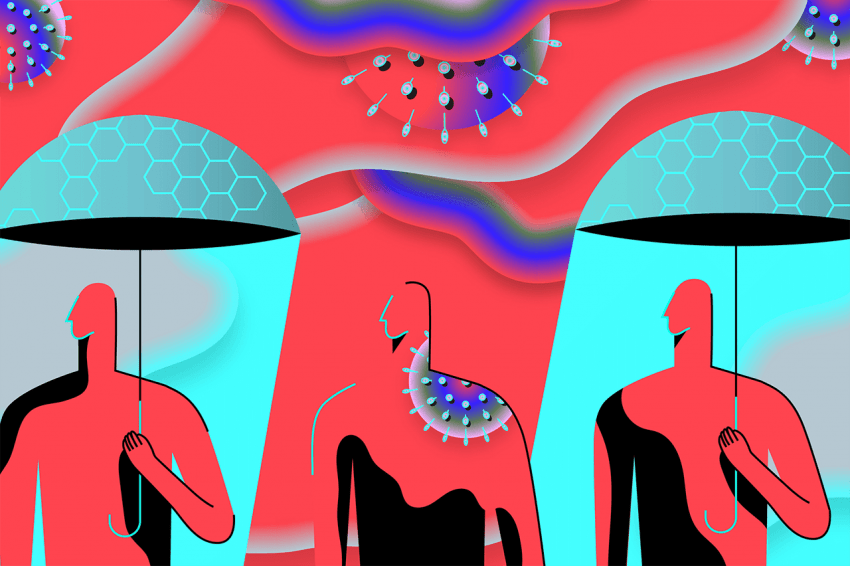
Illustration of three people in a row; two hold umbrellas and one does not; COVID symbols rain down from clouds, hitting the person not holding an umbrella.
Illustration: Ana Kova
 

Published December 8, 2020 (ucsf.edu)

Vaccines to protect against COVID-19 are being developed with unprecedented speed and technical skill, but also amid a culture of mistrust and conflicting information. As the U.S. Food and Drug Administration (FDA) begins reviewing emergency use authorization for the Pfizer and Moderna vaccines, and AstraZeneca’s trial data makes headlines, we asked several of our experts for a personal take on what will convince them that a vaccine is safe for them and their families.


Assessing personal risk when deciding how soon to get vaccinated

JOEL ERNST, MD

Professor of medicine; chief, Division of Experimental Medicine

To be clear: I would say it’s a personal decision on when to be vaccinated, not whether to be vaccinated. It’s a societal imperative if we are to overcome this pandemic that all of us who can get vaccinated must get vaccinated. The recent data on safety and efficacy of three of the COVID-19 vaccines indicate that some of us will make that decision soon.

To make sure a vaccine is safe for everyone, I’d personally feel most comfortable with six months of data from phase III testing*. Knowing that a vaccine has been tested in a broad population of people – not just 21-year-old, physically fit volunteers, but also people with underlying health conditions – will reassure me that it’s safe even from the perspective of rare side effects.

* What is Phase III Testing?
“These are rigorous investigations, closely monitored for safety and for efficacy; they ensure that the vaccine’s side effects are minor and that they resolve, and that the vaccine prevents COVID-19. They also measure the strength and duration of the immune response in a large, randomized cohort.”

The emergency approval process currently underway for two vaccines is based on two months of phase III testing data. That is the recommendation of the FDA’s independent advisory committee for an emergency situation like we’re in now. We want to end the pandemic, so we want to get things done as fast as possible. That’s why two months is not unreasonable for people who have the highest risk of COVID-19 exposure and the lowest risk of adverse vaccine reactions – people who have more to gain from a vaccine – such as primary care providers and first responders. If I were in this group, I would say, “OK, two months will do for me.”

But for people at lower risk of contracting COVID-19 – those who can work from home, for example – but at higher risk of medical complications, then I think when to get vaccinated becomes a personal decision. They may want to wait until we accumulate more information from longer follow-up times – perhaps six months from the start of the phase III trials.


Understanding different options; reaching the global population

JAIME SEPÚLVEDA, MD, DSC, MPH

Professor of epidemiology and biostatistics; Haile Debas Distinguished Professor of Global Health Sciences; executive director, UCSF Institute for Global Health Sciences

There are currently 13 vaccines in phase III trials. Three of them – those made by Pfizer, Moderna, and AstraZeneca* – have completed their efficacy and safety studies, and two are in the process of seeking emergency use authorization from the FDA. According to information the manufacturers provided, different age groups and ethnicities were included in the vaccine trials. Based on those reports, it seems that even in people over 70 years of age, the response is very positive. However, it is important to have peer-reviewed scientific publications confirming both the efficacy and the safety of the different vaccines.

* Promising Trial Results
“The Pfizer and Moderna formulations both showed remarkable effectiveness – 94% to 95% – against COVID-19. AstraZeneca reported variable efficacy rates, depending on the initial dosage used. Questions have been raised about their dosage protocols, so they may need to rerun their phase III trial.”

Vaccines produced in China and Russia have apparently been applied to selected local populations. Some experts think this rushed preliminary approval carries risks since phase III trials have not been completed.

The ideal vaccine would accomplish three endpoints: prevent infection, reduce the severity of the illness if someone does get the disease, and interrupt the chain of transmission. It is unlikely we will have one single vaccine doing all three. It is possible that different vaccine technologies may offer different advantages with respect to these distinct goals.

Equal allocation of vaccines globally will be of paramount importance to ending the pandemic because as long as SARS-CoV-2 exists somewhere, it will be everywhere. The World Health Organization has proposed guidelines to ensure that vulnerable populations have access to vaccines and has participated in creating a platform for funding and distributing a COVID-19 vaccine globally. However, reaching at least 70% of the global population with two doses of vaccine – an estimate of the vaccination coverage needed to achieve worldwide herd immunity – will be a major challenge.


Building trust across communities

STACY TORRES, PHD

Assistant professor of social and behavioral sciences, UCSF School of Nursing

I have an autoimmune disease, Sjögren’s, which puts me in a higher-risk group that may be encouraged to receive the vaccine before younger, healthier people. So I monitor the safety of vaccine development and distribution from a very personal place. To achieve the vaccinated population percentages that would allow us to more safely resume in-person interactions, we will need a concerted effort to overcome growing distrust of vaccines among the public.

For example, if I saw Dr. Anthony Fauci take the vaccine on TV, I’d feel much more comfortable taking the vaccine myself and urging family members to comply, especially those who are vulnerable to COVID-19 complications and death due to underlying medical conditions and/or advanced age. I point to Dr. Fauci as one exemplar of a trusted public health expert, but we will need to enlist a wide range of trusted partners* to work with communities of color and those across a range of abilities, ages, legal statuses, sexualities, etc., to instill confidence in the vaccine and help keep the complex distribution process exquisitely transparent.

* Partners Will Be Key
“Community health groups such as La Clínica de la Raza and the Native American Health Center, organizations like the youth empowerment group Homies Empowerment, and Black churches in East Oakland are just a few examples of partners we must work with to build trust among and disseminate information within communities that have experienced disproportionately high rates of COVID-19.”


Relying on multiple independent reviews

SUSAN BUCHBINDER, MD

Clinical professor of medicine, epidemiology, and biostatistics; director, Bridge HIV, San Francisco Department of Public Health

I will feel confident that a vaccine is safe after multiple independent groups have reviewed the safety data. Here’s how it works for any vaccine seeking emergency approval:

First, an independent group of experts, the Data and Safety Monitoring Board, reviews safety and efficacy data from the phase III vaccine trials. Then the FDA staff and their independent vaccine-advisory committee do their own reviews. Safety is one of the FDA’s top priorities when the agency considers whether to recommend that emergency use authorization be granted to a vaccine, including for COVID.

The Centers for Disease Control and Prevention’s advisory group, the Advisory Committee on Immunization Practices, also reviews the data in order to make recommendations about which populations should be first in line to receive the vaccine.

Finally, in California, we have an independent group of scientists and public health experts who will also review the safety and efficacy data before distribution begins. And then the data will be published, so we will all be able to review them. With all of those layers of review, I feel confident that a vaccine that is rolled out in California will be safe and effective for use.

That said, it’s worth addressing the popular notion that as soon as we have a vaccine, life will go back to “normal.” The ultimate achievement of herd immunity – population-wide protection – will rely on whether and to what extent the vaccine keeps people from being infectious. We know that some of the vaccines reduce the virus’s severity – fewer people who got the vaccine got sick than those who received the placebo. We will need some other studies, currently being planned, to tell us whether it is also keeping people who become infected from passing the virus on to others. We don’t have all that data yet. So for now, we are going to need both a vaccine that induces high levels of protection against infectiousness, and a population willing to receive a vaccine*.