
Harvard Law School On Nov. 20, 2020, Noam Chomsky, Laureate Professor of Linguistics at the University of Arizona and Institute Professor Emeritus at MIT, spoke to first-year students at Harvard Law School about prospects for a better tomorrow. In a conversation moderated by HLS student Michael Lehavi, Chomsky touched on topics ranging from linguistics to activism to climate change.
Monthly Archives: December 2020
Fossil fuel companies know how to stop global warming. Why don’t they?
Myles Allen|Countdown (ted.com)
English transcription by TED Translators Admin. Reviewed by Rhonda Jacobs.
The fossil fuel industry knows how to stop global warming, but they’re waiting for someone else to pay, says climate science scholar Myles Allen. Instead of a total ban on carbon-emitting fuels, Allen puts forth a bold plan for oil and gas companies to progressively decarbonize themselves and sequester CO2 deep in the earth, with the aim of reaching net-zero emissions by 2050 and creating a carbon dioxide disposal industry that works for everyone.
This talk was presented at an official TED conference, and was featured by our editors on the home page.
ABOUT THE SPEAKER
What’s the difference between lies and post-truth in politics? A philosopher explains
January 24, 2020 (theconversation.com)
Author
- Vittorio BufacchiSenior Lecturer, Department of Philosophy, University College Cork
Disclosure statement
Vittorio Bufacchi does not work for, consult, own shares in or receive funding from any company or organization that would benefit from this article, and has disclosed no relevant affiliations beyond their academic appointment.
Partners
University College Cork provides funding as a member of The Conversation UK.
 We believe in the free flow of information
If I wrote “The first sentence in this article is a lie”, is this sentence true, or is it a lie? And, if a liar declares “I am lying”, is the liar telling the truth? In philosophy and logic this is known as the Liar’s Paradox: the liar is a liar, and if the liar is indeed lying, then the liar is telling the truth, which means the liar just lied.
Lies are part of the DNA of modern society, though we often now refer to them with the more dignified terminology of marketing, advertising, propaganda or spin. From unscrupulous sellers of used cars to prime ministers making unsubstantiated declarations about weapons of mass destruction, it seems that many people now make a living from lies.
In the public imagination politicians are professional liars par excellence, or as the writer George Orwell once put it: “Political language … is designed to make lies sound truthful and murder respectable.”
In her essay Truth and Politics, published in The New Yorker in 1967, the philosopher Hannah Arendt was already lamenting the fact that politics and truth don’t mix. But even Arendt was aware that not all lies are the same. There are lies that are minimal forms of deception, a micro-tear in the fabric of reality, while some lies are so big that they require a complete rearrangement of the whole factual texture, a shift to another reality. In today’s terminology, Arendt was alerting us to the difference between a lie, and the 2016 Oxford Dictionaries Word of the Year – “post-truth”.
One way to understand the difference between lies and post-truth, which I’ve written about in a new paper, is that a liar denies specific facts that have precise coordinates in space and time, whereas post-truth questions the very nature of truth. A liar knows the truth, and, by trying to persuade us of an alternative narrative, a liar is paradoxically honouring the truth, whereas post-truth allows no last refuge for the truth.
Clinton versus Trump
This distinction between a lie and post-truth becomes more clear by comparing two recent American presidents, Bill Clinton and Donald Trump. At a White House press conference on January 26 1998, Clinton famously said:
I want to say one thing to the American people. I want you to listen to me. I’m going to say this again: I did not have sexual relations with that woman, Miss Lewinsky. I never told anybody to lie, not a single time; never.
Clinton’s statement, given the subsequent revelations and a semen-stained blue dress, is disconcerting. It’s possible that Clinton did not consider his intimate interactions with Lewinsky as a “sexual relation”, but that is unlikely – it would require a phenomenal effort of self-deception, or ingenuity, to defend that position with honesty and integrity. Clinton was impeached for perjury and obstruction of justice, because he lied under oath, but he was ultimately acquitted in a Senate trial.
Subverting truth itself
Clinton lied, and that was inexcusable. But Trump’s relationship with truth is even more disturbing, and dangerous. Trump’s incessant accusations of fake news against the main media outlets, including the Washington Post, The New York Times, and CNN, reflects a longstanding disdain for the truth. Unlike Clinton, Trump is not simply denying certain facts, instead he is determined to undermine the theoretical infrastructure that makes it possible to have a conversation about the truth.
Trump’s response and demeanour to the impeachment allegations made against him is a typical example of post-truth. By spurning the impeachment proceedings as a “charade” and a “witch-hunt”, his strategy is to create an environment where objective facts are less influential in shaping public opinion, where theoretical frameworks necessary to make sense of certain events are scorned, and where scientific truth is delegitimised.
This is the major difference between a lie and post-truth. While a lie subverts a specific truth, post-truth tries to subvert truth itself. Trump’s abhorrence of truth is reflected in the remarkable claim by one of his lawyers, Rudy Giuliani, that “truth is relative”. Giuliani was talking on NBC News about the request by special counsel Robert Mueller for an interview with Trump regarding the Russia investigation. Giuliani raised concerns that Trump could perjure himself because “truth isn’t truth.”
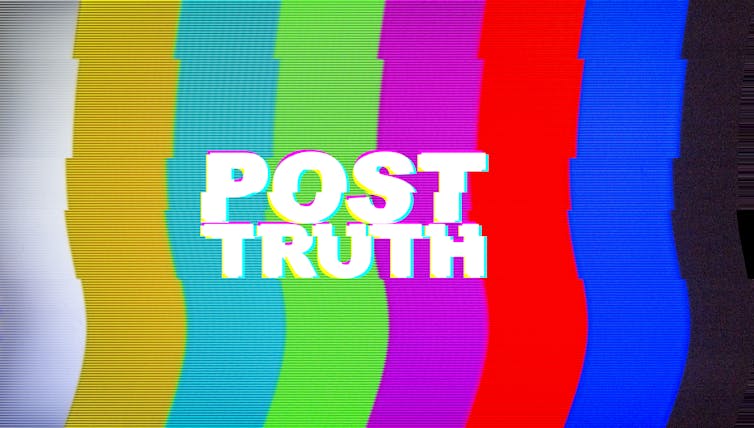
Post-truth is a murky concept, but it should not be confused with a lie. Post-truth is much more devious and dangerous to the democratic fabric of our society. The prefix “post” in post-truth refers to the claim that a specified idea has become redundant and therefore can safely be discarded. Post-truth is the belief that truth is no longer essential, that truth has become obsolete.
We can cope with politicians lying, but we cannot afford the risk of allowing politicians to deligitimise truth.
Beth Daley
Editor and General Manager
Interview with Dr Carl Jung 1957
The Introverted Thinker Great Minds of the 20th Century: Dr. Carl Jung 1957 interview with psychologist Dr. Carl Jung by Dr. Richard Evans of the University of Houston. Originally released by Penn State University. Fair Use Copyright Disclaimer: This is an educational not for profit production. Copyright Disclaimer Under Section 107 of the Copyright Act 1976, allowance is made for fair use for purposes such as criticism, comment, news reporting, teaching, scholarship, and research. Fair use is a use permitted by copyright statute that might otherwise be infringing. Non-profit, educational or personal use tips the balance in favor of fair use.
License
Couple Treated for COVID-19, Released From Hospitals Ahead of 73rd Anniversary
“It’s a miracle”
By Shomari Stone • December 4, 2020 • Updated December 6, 2020 (nbcwashington.com)
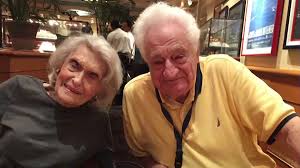
A Maryland couple looking forward to their 73rd anniversary are at a rehabilitation center for physical therapy after spending three weeks in separate hospitals with COVID-19.
“It’s a miracle that they survived,” Mark Levin said about his parents, 100-year-old Betty and 98-year-old Joe Levin.
George Orwell on “Keeping out of Politics”

“In our age there is no such thing as ‘keeping out of politics.’ All issues are political issues, and politics itself is a mass of lies, evasions, folly, hatred and schizophrenia. When the general atmosphere is bad, language must suffer. I should expect to find–this is a guess which I have not sufficient knowledge to verify–that the German, Russian, and Italian languages have all deteriorated in the last ten or fifteen years, as a result of dictatorship.”
― George Orwell, All Art is Propaganda: Critical Essays
(Contributed by Gwyllm Llwydd)
Book: “The Origin of Satan: How Christians Demonized Jews, Pagans and Heretics”

The Origin of Satan: How Christians Demonized Jews, Pagans and Heretics
From the religious historian whose The Gnostic Gospels won both the National Book Award and the National Book Critics Circle Award comes a dramatic interpretation of Satan and his role on the Christian tradition. With magisterial learning and the elan of a born storyteller, Pagels turns Satan’s story into an audacious exploration of Christianity’s shadow side, in which the gospel of love gives way to irrational hatreds that continue to haunt Christians and non-Christians alike.
(Goodreads.com, contributed by Janet Cornwell, H.W., m.)
The period talk
Thinking Outside the Binary
BY ELAINA GUERRERO | STAFF NOVEMBER 18, 2020 (dailycal.org)

Once a month, I feel like I’m going to die.
It starts with a subtle pain in my upper back that slowly inches to my lower back, erupting like a fire in my lower abdomen.
In high school, my physical pain caused by my period was inhibiting to the point where I’d have to be pulled out of class early. Often, if I didn’t have access to any painkillers, I would clench my stomach and cry until I was forced into a restless sleep. The pain that occurred every month never failed to leave me doubled over.
Although my physical pain has lessened, the mental pain that comes with a period has never really gone away.
Many would refer to this mental pain as premenstrual syndrome, or PMS. PMS is known for causing mood swings and seemingly “irrational” behavior. But my feelings during my period feel far from irrational.
As a nonbinary person, my period heavily triggers my gender dysphoria. The American Psychiatric Association describes gender dysphoria as “psychological distress that results from an incongruence between one’s sex assigned at birth and one’s gender identity.” I have come to accept my body, my femininity and my sexuality, but accepting my period has been extremely difficult.
When I was younger, maybe around 8 years old, I’d hear my mom call my name from the bathroom. “Elaina! Bring me a Kotex!” I’d drop the dolls I was playing with and run to her purse. She taught me that was where she kept her pads. I’d grab one and run to the restroom, handing it to her past the door that was left slightly ajar.
Once, I asked, “What are those for? Why do you always need me to bring them to you?” My question came mainly out of annoyance because I didn’t understand why she didn’t keep them on her if she knew she needed them.
She answered, “They’re for your period. You only get your period when you’re a woman. Right now, you’re just a little girl; you don’t have to worry about that yet.”
But when I finally got my period around age 11, I didn’t feel like a woman. I felt like an awkward kid who didn’t even feel so comfortable being called a girl. My mother claimed I was now a woman, though, and she said it was time for me to learn about periods.
“Women get their periods when their bodies begin making eggs,” she said. “Eggs are how babies are made, but when an egg isn’t filled with a baby, it dies, and our body has to let go of the dead egg by bleeding.”
She didn’t explain how these magical eggs were filled with babies, but I took her word for it. Everything she told me I believed. Even if I didn’t feel like a woman or a girl at the time, I trusted what she said to be true and thought that I’d eventually feel like the woman she assumed I was.
My elementary school only reaffirmed what my mother taught me. One day, they separated girls and boys and told us we were going to learn about puberty. The girls were strictly taught about their periods, how their bodies would transform and what boys had to do with the magical eggs. Both my mom and my school had a hand in teaching me that periods are strictly a reproductive trait belonging to women and women alone.
And so, on the first day of my cycle, the pain I feel is at its worst — not just because of the physical pain but because of this unwanted reminder, a reminder that no matter how much I have distanced myself from womanhood, I still have to deal with a part of myself that is gendered by others.
Once I’m reminded of this, I’m reminded of the many other aspects of my being that are gendered against my will: being called “ma’am” by a stranger on the street or being told I’m growing up to be “a beautiful woman” by a family member. Normally, I’m able to brush these things off. I’m able to remind myself I’m not out, and so I can’t be mad if people misgender me. I remind myself that not everyone is educated on the subject.
Out of frustration, I sometimes begin to theorize a world in which periods aren’t gendered. What if we were taught about periods in the same room with boys? What if we were taught that many people can get their periods, that periods are not just limited to women and that trans men and gender-nonconforming people can get their periods, too? We could also be taught that you don’t have to get your period in order to be a woman.
Once a month, I feel like I’m going to die.
But once a month, I am also able to envision a world where the language used to teach kids about periods doesn’t confer gender upon them. I long to live in such a world.
Elaina Guerrero writes the Wednesday column on the confines of the gender binary. Contact them at opinion@dailycal.org.
Rilke on feelings
Rilke on love

“We need, in love, to practice only this: letting each other go. For holding on comes easily; we do not need to learn it.”
― Rainer Maria Rilke, Translations from the Poetry of Rainer Maria Rilke