
FRONTLINE PBS | Official A documentary exploring how artificial intelligence is changing life as we know it — from jobs to privacy to a growing rivalry between the U.S. and China. FRONTLINE investigates the promise and perils of AI and automation, tracing a new industrial revolution that will reshape and disrupt our world, and allow the emergence of a surveillance society. This journalism is made possible by viewers like you. Support your local PBS station here: http://www.pbs.org/donate Love FRONTLINE? Find us on the PBS Video App where there are more than 250 FRONTLINE documentaries available for you to watch any time: https://to.pbs.org/FLVideoApp Subscribe on YouTube: http://bit.ly/1BycsJW#ArtificialIntelligence#Automation#documentary Instagram: https://www.instagram.com/frontlinepbs Twitter: https://twitter.com/frontlinepbs Facebook: https://www.facebook.com/frontline FRONTLINE is streaming more than 200 documentaries online, for free, here: http://to.pbs.org/hxRvQP Funding for FRONTLINE is provided through the support of PBS viewers and by the Corporation for Public Broadcasting. Major funding for FRONTLINE is provided by the John D. and Catherine T. MacArthur Foundation and the Ford Foundation. Additional funding is provided by the Abrams Foundation, the Park Foundation, The John and Helen Glessner Family Trust, and the FRONTLINE Journalism Fund with major support from Jon and Jo Ann Hagler on behalf of the Jon L. Hagler Foundation.
Monthly Archives: December 2020
From “The People, Yes”
Lincoln?
He was a mystery in smoke and flags
Saying yes to the smoke, yes to the flags,
Yes to the paradoxes of democracy,
Yes to the hopes of government
Of the people by the people for the people,
No to debauchery of the public mind,
No to personal malice nursed and fed,
Yes to the Constitution when a help,
No to the Constitution when a hindrance
Yes to man as a struggler amid illusions,
Each man fated to answer for himself:
Which of the faiths and illusions of mankind
Must I choose for my own sustaining light
To bring me beyond the present wilderness?
Lincoln? Was he a poet?
And did he write verses?
“I have not willingly planted a thorn
in any man’s bosom.”
I shall do nothing through malice: what
I deal with is too vast for malice.”
Death was in the air.
So was birth.
(poetryfoundation.org)
Farewell to Scot Loomis from Zoë Robinson
In loving memory of a long time friend and member of The Prosperos, Scot Loomis, who will be sadly missed by those who knew him. We send our heartfelt condolences to his wife, Laura, family, and friends.
Aloha ‘Oe
On Oahu’s western shore at sunset,
A Hawaiian hula from ancient times bids
Farewell to you dear one, Scot.
Rhythms of the chant drum spell out
Life’s eternal cycles, as bare feet grace
And invoke the spirits of sacred ‘aina.
Their voices whisper in gentle breezes
And caress the shoreline of the blue, blue sea.
Fragrant leis fill the air with
The sweet, sweet scent of Aloha
That you dear soul carried in your heart
And in your way shared with us.
For this, we say mahalo nui loa.
Along the Na Pali way of sacred Kauai
You are taken up to pass through the thin veil
Between this world and that of the next,
In the Spirit of Universal Love, Agape.
May you rest always in peace to be fondly
remembered by your ‘ohana as you make
A soft landing on the shore of Home.
Zoë Robinson December 2020
(aloha ‘oe: farewell to thee, ‘Aina: land, mahalo Nui loa: thank you very much, ‘ohana: extended family.)
Evolutionary Biologist Lynn Margulis on the Spirituality of Science and the Interconnectedness of Life Across Time, Space, and Species
“The fact that we are connected through space and time shows that life is a unitary phenomenon, no matter how we express that fact.”
BY MARIA POPOVA (brainpickings.org)

“Our origins are of the earth,” marine biologist Rachel Carson wrote in contemplating science and our spiritual bond with nature. “And so there is in us a deeply seated response to the natural universe, which is part of our humanity.” In the same era, the anthropologist, philosopher of science, and poet Loren Eiseley — a great admirer of Carson’s — offered a consonant sentiment in his lovely meditation on reclaiming our sense of the miraculous in a mechanical age: “We forget that nature itself is one vast miracle transcending the reality of night and nothingness. We forget that each one of us in his personal life repeats that miracle.”
The biological, geological, and ecological nature of that miracle is what evolutionary biologist Lynn Margulis (March 5, 1938–November 22, 2011) reflects on a generation later in a passage from Jonathan White’s wonderful interview collection Talking on the Water: Conversations about Nature and Creativity (public library), which also gave us Ursula K. Le Guin on art, storytelling, and the power of language to transform and redeem.

Margulis is known as the co-creator of the Gaia hypothesis, which holds that all life interacts with its inorganic environment to form a complex, self-regulating, symbiotic system responsible for sustaining and propagating life on Earth. Through the Gaia lens, Margulis considers the intricate interleaving of life across time and space:
The past is all around us. Darwin’s biggest contribution was to show us that all individual organisms are connected through time. It doesn’t matter whether you compare kangaroos, bacteria, humans, or salamanders, we all have incredible chemical similarities…. [The pioneering Russian geochemist Vladimir] Vernadsky showed us that organisms are not only connected through time but also through space. The carbon dioxide we exhale as a waste product becomes the life-giving force for a plant; in turn, the oxygen waste of a plant gives us life. This exchange of gas is what the word spirit means. Spirituality is essentially the act of breathing. But the connection doesn’t stop at the exchange of gases in the atmosphere. We are also physically connected, and you can see evidence of this everywhere you look. Think of the protists that live in the hind-gut of the termite, or the fungi that live in the rootstock of trees and plants. The birds that flitter from tree to tree transport fungi spores throughout the environment. Their droppings host a community of insects and microorganisms. When rain falls on the droppings, spores are splashed back up on the tree, creating pockets for life to begin to grow again. This interdependence is an inexorable fact of life.

Two centuries after the polymathic naturalist Alexander von Humboldt insisted that “in this great chain of causes and effects, no single fact can be considered in isolation,” Margulis adds:
The fact that we are connected through space and time shows that life is a unitary phenomenon, no matter how we express that fact. We are not one living organism, but we constitute a single ecosystem with many differentiated parts. I don’t see this as a contradiction, because parts and wholes are nestled in each other.
Complement this particular portion of Talking on the Water with Terry Tempest Williams on our responsibility to the web of life, then revisit Carl Sagan, to whom Margulis was once married, on how chemistry illuminates our belonging to the universe.
LOVE IS A GIFT – Christmas Short Film
Phil Beastall Films LOVE IS A GIFT. **The official and original home of this film.** A short film about a man counting down the days to Christmas so he can continue his yearly tradition sparked by a tragic moment from the past. Written & Directed by Phil Beastall. Starring Chris Ilston and Natalie Martins. Thanks for watching!
Love, actually
EM Forster’s novels have been criticised for their chaotic structure but, argues Zadie Smith, his deliberate rejection of a controlled style reflects the messy complexities of the human heart
Zadie Smith Fri 31 Oct 2003 (theguardian.com)
EM Forster’s A Room With A View was my first intimation of the possibilities of fiction: how wholly one might feel for it and through it, how much it could do to you. I felt it was very good and that the reading of it had done me some good. I loved it. I was too young, at 11, to realise serious people don’t speak of novels this way. Soon enough, though, I grew up and grew serious; I became intellectually responsive to the text. And as serious young adults, we are thrilled to be able to talk of theme, of the mechanics of plot and the vicissitudes of character. Maybe we continue this interest and take it further, deciding to study novels in earnest, or even teach them, review them, or write them.
A peculiar thing happens at this point. We find that our initial affective responses are no longer of interest to the literary community in which we find ourselves. We are as Heraclitus described us: “Estranged from that which is most familiar.” Suddenly this incommensurable “Love”, and this other, more vague surmise – that the novel we loved was not simply “good” but even represented a Good in our lives – these ideas grow shameful and, after some time, are forgotten entirely, along with the novel that first inspired them. For no sensation empirical as love can have any importance as a “response” to novels qua novels. Can it?
There is something about love that does not sit well with the literary academy. We are aware that there is an emotive response for which the novel explicitly applies that is not properly requested by an atom or a rock formation or a chemical compound. Sensing the anomalous nature of this emotive quality within the university, we have resolved not to speak of it much. We recall the strategies by which FR Leavis secured the novel’s status within the academy, treating the novel with circumspection; as if it were not quite a novel, but rather a piece of social history, or an example of moral philosophy, or a mission statement, or a piece of public policy. It did not matter, really, as long as the novel was seen to be treated rigorously and made relevant. Like Leavis, we are not quite sure that the novel as novel will do. An admission of love, in this context, would only be seen as weakness. And certainly, as an undergraduate, I was suspicious of the subjective affective response. I was suspicious of the Good in all its forms. I suspected the Good as a value that novels might possess; I was as loath to call one novel greater than another as I would be to gauge the relative value of two fossils. I called this canonical bias. I also suspected Good as a concept the novel might interrogate. I called this moralism. And more than anything, I suspected good as an emotional response, that “I love it!” which I had expressed as an 11-year old for A Room With A View . I called this sentimental. I didn’t see the relevance of any of these things to my study.
At Cambridge at least, Roland Barthes did not fully convince my generation of readers that the text is a pleasure. We rejected the very idea that novels could either make us feel good or do us good, and along with this bathwater we threw out the baby who wailed that the ethical discussion has any relationship to the literary discussion. Our interest was analytical, not ethical. But I think now that there was, in fact, a sneaky, submerged ethic in our disdain for the novels that made us feel good, which seemed too simple and therefore (we believed) produced too much pleasure. Nietzsche would have considered us pathologically Christian in our literary habits. Oh yes, my generation liked to be in some pain when they read. The harder it was, the more good we believed it was doing us.
The other unconscious consequence of this thinking or un-thinking, was that we believed certain styles symptomatic of certain ethical attitudes. We were far more likely, for example, to suspect EM Forster was trying to teach us a lesson than, say, Don DeLillo or Thomas Pynchon. The conflation of the simple in style with the morally prescriptive in character, and the complex in style with the amoral or anarchic in character seems to me one of the most persistently fallacious beliefs held by English students. The truth is, surely, that every variety of literary style attempts to enact in us a way of seeing, of reading, and this is never less than an ethical strategy: “We have to find meters whose scales are unknown in the world, draw our own schematics, getting feedback, making connections, reducing the error, trying to learn the real function . . . zeroing in on what incalculable plot?”
I had this quote pinned to my door for the five years in which I wrote my two novels. I think I felt it issued a kind of ethical challenge to the composers of narrative, a challenge that I wanted to match as I went about my own writing, an ideal that I would try to be equal to. I wanted to be like Pynchon, to be in pursuit of hidden information; I thought it the novel’s responsibility to chase and pin down the ghost in the machine. In short, I was responding to the ethical vision of another writer. As a young writer, I took it as my model until I might find my own.
The quote is from Pynchon’s Gravity’s Rainbow. It is also an accurate description of the narrative procedures of Gravity’s Rainbow , its literary architecture. And it is an even more eloquent expression of the kind of ethical attention the style of Gravity’s Rainbow applies for from its readers. It engages your feelings for certain characters and situations over others, it compels particular hermeneutic procedure, it asks the reader to “step up to the plate” of its style, to be equal to it. This is all, for the moment, that I mean by an ethical vision. Fiction always applies for that same “fine awareness”, which Henry James recognised we must employ in order to fully inhabit our ethical lives; to become, as he put it “richly responsible”. Pynchon is no less a moralist, under this definition, than Forster or anyone else.
It is an odd thing that moral philosophers such as Gilbert Ryle and Martha Nussbaum, who discuss ways that fiction enters into the ethical realm, and who are attracted to literature in this dimension, have again and again gravitated not to Forster or Pynchon or Fitzgerald or any of the hundreds of novelists who seem to me to possess this “fine awareness”, but to Henry James and Jane Austen. Clearly, in Austen’s case, this is partly because she wears her ethics of reading on her sleeve and in her titles; her investigations of sense, sensibility, of pride, of prejudice. Any schoolchild understands that we must utilise these ideas in our reading strategies; that we must overcome prejudice to accept Darcy as our hero, we must employ a degree of sense to take the correct ethical measure of the misleading attractions of a Captain Wickham or a Frank Churchill and so on. All of Austen’s positivist protagonists read situations, refine them, strip the irrelevant information from the significant, and proceed accordingly. They are good readers and as such, as James Wood has noted, they encourage good reading from others. This is the great, humane basis of the English comic novel.
It seems odd, then, that Forster – although his work is so heavily influenced by Austen – differs from her on this key point. His protagonists are not good readers or successful moral agents, but chaotic, irrational human beings. Lucy Honeychurch, Maurice Hall, Helen Schlegel – Forster’s people wouldn’t stand a chance against Austen’s protagonists. Forster’s folk are famously always in a muddle: they don’t know what they want or how to get it. It has been noted before that this might be a deliberate ethical strategy, an expression of the belief that the true motivations of human agents are far from rational in character. Forster wanted his people to be in a muddle; his was a study of the emotional, erratic and unreasonable in human life. But what interests me is that his narrative structure is muddled also; impulsive, meandering, irrational, which seeming faults lead him on to two further problematics: mawkishness and melodrama. A contemporary reviewer worked out that the rate of unexpected fatal incident in The Longest Journey amounts to 45 per cent of the novel’s population. These idiosyncrasies have been seen as grave failings of Forster’s. When placed beside two more of his heroes, Tolstoy and Flaubert, he does suffer. Anna Karenina and Emma Bovary are as wilful and irrational as any Forster protagonist, after all, and yet the novels they find themselves in are not. Those two women are like exotic butterflies under glass, held still for our examination within a controlled, measured, rational narrative. Why couldn’t Forster manage that?
Forster himself was conscious of the connection between his style and his ethics in an interesting way. He felt his infamous muddle had value, and that the more controlled, clear, Austen-like elements of his style were ethically problematic. It was part of the reason A Room With a View took so long to finish, five years, in the middle of which his first published novel, Where Angels Fear To Tread, was begun and completed. He knew A Room With a View was, as he put it in his diary, “clear, bright and well constructed”, but this very clarity bothered him. The ease of the read, the vivid characterisation, the satisfactory patterning of the plot – in short, all the things that lend the novel its pleasurable aspect – felt like failures to him. In a letter to his friend RC Trevelyan on June 11, 1907, Forster expresses his concern with the novel, whose long gestation period had yet brought it no other name but Lucy: “I have been looking at the ‘Lucy’ novel. I don’t know. It’s bright and merry and I like the story. Yet I wouldn’t and couldn’t finish it in the same style. I’m rather depressed. The question is akin to morality.”
This is rather a cryptic comment, leaving Trevelyan and the rest of us to make the necessary Forsterian connection. We are being asked here to make a conceptual leap, from literary style to morality, to something unspoken in their nature that is shared. The word “akin” is an artful choice here. How might literary style be analogous to morality, similar to morality, a case of morality? We may find our first clue in the “undeveloped heart” that Forster refers to in his letters and diaries and gives to so many of his characters; we can hear in it an antithetical echo of Aristotle’s “educated heart”. The undeveloped heart is the quality, or lack of qualities, that Forster’s novels most frequently depict. Lucy Honeychurch has one, as does Maurice Hall, though they learn to develop them; Charlotte Bartlett’s will never develop through neglect and Cecil Vyse’s is condemned by ill use. An “undeveloped heart” makes its owner “march to their destiny by catchwords”, living not by their own feelings but by the received ideas of others. Lucy Honeychurch, for example, is rigorous in her determination to avoid gaining either sense or sensibility. She would much rather take the second-hand report than discover a truth herself. “Mr Beebe,” she asks the vicar, “Old Mr Emerson – is he nice or not nice? I do so want to know.” I think this is the same kind of undeveloped heart that Simone de Beauvoir, in The Ethics of Ambiguity , delineated in its many manifestations – the politico, the adventurer, the nihilist – and gathered under one name: the esprit des serieux . All De Beauvoir’s serious people have undeveloped hearts. They are like that insistent meddler Harriet Herriton from Where Angels Fear to Tread , so very full of – as Forster has it – “consistency and moral enthusiasm”. There is no bigger crime, in the English comic novel, than thinking you are right. The lesson of the comic novel is that our moral enthusiasms make us inflexible, one-dimensional, flat. It is a lesson the comic novelists must internalise as well. They, too, require educated hearts to do their work and avoid caricature; they must understand not only what the brain knows, and what other people know, but also what love knows.
I believe a great number of novels come from this Aristotelian place: they share the same ethical vocabulary. Central to the Aristotelian inquiry into the Good life is the idea that the training and refinement of feeling plays an essential role in our moral understanding. Forster’s fiction, following Austen’s, does this in exemplary fashion, but it is Forster’s fiction that goes further in showing us how very difficult an educated heart is to achieve. It is Forster who shows us how hard it is to will oneself into a meaningful relationship with the world; it is Forster who lends his empathy to those who fail to do so. And it is Forster who, in his empathic efforts, will allow his books to get all bent out of shape – The Longest Journey , an infamous melodrama to some, was the novel the author loved best.
Forsterian characters are in a moral muddle; they don’t feel freely; they can’t seem to develop. Most comic novelists fear creating one-dimensional characters; Forster bravely made this fear a part of his art. His critical definition of “flat characters” has been often ridiculed, and Forster was never able to say, analytically, quite what it was he meant by it. He only knew that he recognised one when he saw one, so to speak, and he suspected they had their own particular uses within the ethical universe of his novels. And it is these novels that speak eloquently where his criticism did not. The emotive lesson we gain by reading through them is exactly this: that we lose a vital dimension when we embrace the esprit des serieux . We become like Miss Lavish, the too-confident comic novelist of A Room With a View, or Harriet Herriton, the strident guardian of public morals. Like them, we become existentially flat when we grow morally inflexible, consistent.
Forster, like Austen, abhors the vain, the self-important, the mannered, the blind and the foolish. But there are some fascinating differences. What one might call conscientious abstainers appear frequently in both authors: Cecil Vyse, Mr Beebe, Philip Herriton find their matches in many of the paternal figures in Austen, most noticeably Mr Bennet. By conscientious abstainer, a specific philosophic type is meant here: this is the man whose life-reading skills are as good as we might hope them to be, but who chooses only to read, to observe, but not to be involved. They are the novel’s flaneurs. They invariably think of themselves as “students of human nature”, and they are condemned by both authors as Aristotle properly condemns them, as people inured to the responsibilities of proper human involvement. But the nature of the condemnation is different for each author, and employs two different styles. Austen shows her laissez-faire fathers as irresponsible to their families, playing pointless intellectual games that neglect a practical, social necessity – in most cases, the inheritance or future marriages of their daughters. No attempt is made at their interior life; the pre-Freudian Austen does not care why they are so, only that they are so.
Forster’s voyeurs are very much more layered, and are offered a great deal more empathy. The most obvious reason is Forster’s own personal interest in them. Several critics have pointed to a sublimated homosexuality here; they are, to a man, unmarried and uninterested, and as such they are estranged from the romantic fictions they inhabit. They are also privately incomed in a world where most people work. They share both these traits with Forster himself. These two matters become symbols to Forster of his own ethical failure as a novelist. His homosexuality, because he could not publicly express it, in life or on the page. His independent financial security, because it made him feel that he could not understand the experience of the great majority of his fellow men. His genius lay in making these failures the basis of his ethics, consistently applying his attention to the idea of solitude, moving from this only to communities of no more than two; he famously championed intimacy over sociality, friendship over country. In his novels, he can never completely condemn his conscientious abstainers – he has a soft spot for them. His empathic instincts and enthusiasm rest always on those exiled from a societal network, a concept Austen only obliquely and tragically refers to in the “fallen” state of unfortunate girls.
Austen was very wise, but she was not quite (as the recently returned tourist from Italy likes to say) simpatica. Her good opinion, once lost, is lost for ever. In contrast, “simpatica” is a significant ethical concept for Forster, and not finding it in his own suburban existence, he traced it in his rather cartoonish idea of other cultures, from the homoerotic fellowship of the ancient Greeks, to the unfettered spirits of Italy, to the multiplicity-in-unity that he found in India, that place where “God Si Love” and the mystic in Forster could roam free. These ideas of human connection, though often mawkish in execution, far outstretched Austen’s only acceptable connection, the bond of marriage. Forster recognised this absence of “simpatica”, of connection, this crucial failure in his favourite writer. Part of his project was to step into that Austenite gap where tolerance falls short of love. In loosening the bonds of Austenite positivism, Forster widened the net of his empathy to include people so muddled they barely know their own name. More than this, he suggested there might be some ethical advantage in not always pursuing a perfect and unyielding rationality.
This lack of moral enthusiasm finds an echo in every part of the structure; his endings, in particular, are diminuendos, ambivalent trailings off, that seem almost passive. This deliberate withholding of satisfaction that Forster produces has irritated many critics, Katherine Mansfield’s account being as damning as any: “EM Forster never gets any further than warming the teapot. He’s a rare fine hand at that. Feel this teapot. Is it not beautifully warm? Yes, but there ain’t going to be no tea.”
But is an ulterior ethics revealed when the kettle does not boil? Forster seems to deliberately defuse some of the narrative ticking bombs that Austen relied on to move her plots forwards, the “secret”, for instance. In Austen, a secret such as Darcy’s or Wickham’s stands in the way of the rational process, it is the unrevealed information, and only by its detonation and removal can Elizabeth Bennet understand the truth of her situation. Forster, too, uses secrets, but when they are exploded, they either make no difference or are deeply misunderstood.
What Forster’s muddled style has to tell us is that there are some goods in the world that cannot be purely pursued rationally, we must also feel our way through them. In a chapter of A Room With A View entitled “How Lucy Faced the External Situation Bravely”, Forster makes this clear: “It is obvious enough for the reader to conclude, ‘She loves young Emerson’. A reader in Lucy’s place would not find it obvious. Life is easy to chronicle, but bewildering to practise, and we welcome ‘nerves’ or any other shibboleth that will cloak our personal desire. She loved Cecil; George made her nervous; will the reader explain to her that the phrases should be reversed?”
The moral philosopher might indeed want to point out Lucy’s category error, but the frequent reader of novels knows not to. Forster’s ethical procedure is familiar to us from a long tradition of English literary thought, and indeed leads straight back to the poet Forster felt had “seized upon the supreme fact of human nature, the very small amount of good in it, and the supreme importance of that little”: John Keats. In Keats’ letters, which Forster was reading at the time of composition, we find a model for Lucy Honeychurch’s way of being in the world: “. . . and at once it struck me, what quality went to form a Man of Achievement especially in literature and which Shakespeare possessed so enormously – I mean Negative Capability, that is when man is capable of being in uncertainties, Mysteries, doubts, without any irritable reaching after fact and reason . . .”
What Keats conceived as positive ethical strategy, Forster recasts as a muddle. It is not by knowing more that Lucy comes to understand, but by knowing considerably less. She starts off very certain, and in her certainty she lies to George, she lies to Mr Beebe, to her mother, to her brother Freddy and the servants. She tells all of them that she is certain of her own heart and mind. But it is by a process of growing less “certain”, less consistent, less morally enthusiastic, that she moves closer to the good she is barely aware of desiring.
Negative Capability is one of the creakiest concepts in the literary theory closet, but I submit it is time it poked its head through the door again. There is a serious vision here of the truth of human relations; and for Forster and his manydescendants it was complicated and made richer by the Freudian influence. Forster is of the first literary generation to inherit the idea that our very consciousnesses are, at root, faulty and fearful, uncertain and mysterious. Forster ushered in a new era for the English comic novel, one that includes the necessary recognition that the great majority of us are not like an Austen protagonist, would rather not understand ourselves, because it is easier and less dangerous.
The heart has its own knowledge in Forster, and Love is never quite a rational choice, as it was for Austen. Elizabeth Bennet needs to be convinced of Darcy’s virtues. Lucy never sees anything rational to convince her of George’s, unless back-flipping into a pond can be counted virtuous. Elizabeth Bennet’s claim at her epiphanic moment is made to herself. It is: “Until this moment, I never knew myself!” Lucy’s claim concerns another person, Mr Emerson. She explains that he “made her see the whole of everything at once”. The first is a rationalist’s self-awakening. The second is a mystic’s awakening to the world.
Sure, there is a lot in Forster that fails, is both cloying and banal: his Pantheism, his fetish for the exotic, his idealisation of music. The mystic will occasionally look the fool. Forster took a risk, opening the comic novel to let in the things it was not designed for; small patches of purple prose were the result. But Forster’s innovation remains: he allowed the English comic novel the possibility of a spiritual and bodily life, not simply to exist as an exquisitely worked game of social ethics but as a messy human concoction. He expanded the comic novel’s ethical space (while unbalancing its moral certainties) simply by letting more of life in . Austen asks for toleration from her readers. Forster demands something far stickier, more shameful: love.
A few years ago, I agreed to take part in a debate on “Modern British Art” at the ICA. Two famous young artists rounded on me for what they saw as my “aesthetic fascism” (I’d brought up the topic of value judgments in modern art), arguing that there was no possibility that I could find more value in King Lear than the text printed on the back of a cornflake packet. This is an exceedingly stupid version of a very serious aesthetic and ethical debate that has been raging in the humanities for about 40 years. Once I’d have counted myself on the side of the young artists, and now I don’t. They say when you become a practitioner you become a sentimentalist – maybe that’s what happened. All I know for sure is that I no longer find it impossible to speak of value (not universal value, or even shared value, but value as it concerns this reader), nor to lend my nervous voice to the philosopher Martha Nussbaum’s strong Aristotelian claims, mainly, that literature is one of the places (when we read attentively) that we can have truly altruistic instincts, “genuine acknowledgement of the otherness of the other”. Ten years ago, the idea that reading fiction might be a valuable ethical activity in its own right was so out of fashion that it took an author of Nussbaum’s hard, philosophical bent to broach it without incurring ridicule. Rather bravely, she climbed the disputed mountain of literary theory and planted her philosophical flag firmly in the dirt. Her flag said: “Great novels show us the worth and richness of plural qualitative thinking and engender in their readers a richly qualitative way of seeing.”
My flag is rather weak in comparison. It says: “When we read with fine attention, we find ourselves caring about people who are various, muddled, uncertain and not quite like us (and this is good).”
Of course, it is not possible to guarantee that when we read, employing that Jamesian quality of fine awareness, we will a priori become richly responsible. Failure is the risk, and most often, the result. Some narratives ask: how do we live? and then answer this question unambiguously and in full. They are often called “closed texts”; or by more value-concerned critics, “bad books”. Fairytales, chick-lit, boy-lit, aspirational lifestyle lit, the Bible – all these are often accused of being the kind of books one can judge by their covers. But what is so fascinating is that these texts are rarely entirely closed. There is always the slippage, the telling remnant of what narrative is for and what it can do. The Book of Job, Bridget Jones’s Diary , Little Red Riding Hood, the myth of Odysseus and the sirens: these texts want to be closed, with their ends in their beginnings, but none of them succeed. They are too good. It seems that if you put people on paper and move them through time, you cannot help but talk about ethics, because the ethical realm exists nowhere if not here: in the consequences of human actions as they unfold in time, and the multiple interpretive possibility of those actions. Narrative itself is the performance of that very procedure. This is something we know as readers of novels and readers of our own lives; it is this deep, experiential understanding of the bond between the ethical realm and the narrative act that we find crystallised in that too familiar homily “Two sides to every story”, a version of which truism one will find in every culture in the world. This is the good that novels do, and the good that they are.
© Zadie Smith. This article is based on Zadie Smith’s 2003 Orange Word Lecture, EM Forster’s Ethical Style: Love, Failure and the Good in Fiction, given at the Gielgud Theatre in London on October 22. Zadie Smith, author of White Teeth and The Autograph Man , is currently visiting lecturer at Harvard University.
In Terror’s Grip
Published: January 1, 2002 (dana.org)
Author: Bessel A. van der Kolk, M.D.
Healing the Ravages of Trauma
None of us will ever forget the events of September 11, 2001. But some who experienced the terrorist attacks directly—who, for example, fled the scene or rushed in to the rescue—will be forced by their brains not only to remember but to relive the nightmare over and over.
Bessel A. van der Kolk, M.D., a pioneer in the study and treatment of traumatic stress, explains how overwhelming trauma reshapes our biology as well as our minds and emotions. How can we use this understanding to help heal those who suffer from the aftershocks of traumatic events, private or public?
The September 2001 terrorist assaults on the United States propelled into public awareness many questions, among them those concerning the human capacity to recuperate from psychological trauma. How do human beings deal with overwhelming experiences? What long-term effects will these events have on American society? Some say that our feelings of trust and safety have been changed forever. Whether that turns out to be true will depend in large measure on how successful the American public and government will be at finding ways to re-establish a sense of effective protection. Thus far, the attacks have mobilized us in vital ways. Our response has been creative and forward-looking—exactly the response that, when it occurs in traumatized individuals, bodes well for recovery. Sustaining this active, well-reasoned response is likely to mean eventually that these terrorist attacks will have shaped, but not determined, our social and political discourse. Our essential identity will remain. Most of us will continue to work and love as before, to engage in life with the same degree of zest, and to embrace our fellow human beings with the same degree of openness.
From research on trauma’s impact on various victim populations, we have learned that the great majority of people not affected immediately and personally by a terrible tragedy sustain no lasting damage. Most of those who witness devastating events are able, in the long term, to find ways of going on with their lives with little change in their capacity to love, trust, and hope for the future. Those at highest risk for permanent damage are people who have been directly exposed to traumatic events: who were physically immobile and helpless while trying to escape from the disaster; who have firsthand experiences of its sounds, smells, and images; who directly witnessed the death and dismemberment of human beings; and whose lives have been permanently altered by the death or injury of a loved one.
In general, our society does a relatively good job of protecting its citizens. For example, each year earthquakes kill more than 10,000 people throughout the world. Around the time when the 1989 Loma Prieta earthquake in California struck, another earthquake hit Armenia with the same strength on the Richter scale (7.1). There were 40,000 deaths in Armenia and only 67 in California—the result of good building codes, a well-functioning government, and efficient emergency networks. Following the terrorist attacks of September 11, the outpouring of support, the intense rescue operations, and the leadership shown by government officials are likely to be pivotal in containing the long-term effects of the attack.
Public Disasters, Private Traumas
Psychological trauma is a prime public health issue in the United States. Family and social violence, rapes and assaults, natural disasters, wars, accidents, and predatory violence are all too common. The traumas may temporarily or permanently alter not only people’s capacity to cope, their perception of threat, and their concept of themselves and the world, but their very biology.
For most Americans, especially women and children, trauma begins at home. About two-thirds of the almost three million annual attacks on women in this country are carried out by someone they know; in contrast, about two-thirds of the almost four million assaults on males are by strangers. Assault by someone you know is often more serious than assault by a stranger. More than a third of the victims of domestic assault experience serious injury, compared with a quarter of victims of stranger assault.
Despite these startling facts, public disasters command more public concern. September 11 has attracted spectacular attention and financial aid. Social support, public acknowledgment, and practical help to restore functioning all have far-reaching effects in helping victims recover. For victims of domestic abuse, by contrast, lack of validation and public acknowledgment tends to lead to shame, helplessness, secrecy, and preoccupation with hanging on to one’s emotional attachments and financial security.
Whether a traumatic experience is solitary or shared by a nation, however, there are commonalities. It may be years before we can assess the full aftereffects of the terrorist attacks. But understanding what scientists and clinicians have learned about how people cope with trauma, and how some may go on to develop lasting problems—both biological and psychological—offers clues to how to help those who have suffered any trauma.
Coping
The critical difference between a stressful but normal event and trauma is a feeling of helplessness to change the outcome. This is obvious when people are trapped physically, or their cries for help go unheeded. A nightmarish example is the experience of waking up during anesthesia, which is thought to happen to some 30,000 people a year undergoing surgical procedures in the United States. If this were to happen to you, you would be conscious and aware of where you were and what was happening but, because of muscle relaxants and other drugs, you would be unable to move or speak. Psychological trauma is a frequent result.
As long as people can imagine having some control over what is happening to them, they usually can keep their wits about them. Only when they are faced with inevitable catastrophe do victims experience intense fear and feelings of loss and desertion. Hearing unanswered screams for help or witnessing mutilated human bodies, as happened to some survivors of the September 11 attacks in Manhattan and Washington, DC, are particularly disturbing. In addition, many trauma survivors, including rape and torture victims, have come face to face with human evil, witnessing people taking pleasure in inflicting humiliation and suffering.
Feeling helpless against a dire threat, people may experience numbness, withdrawal, confusion, shock, or speechless terror. Staying focused on problem solving, on doing something, however small, about the situation—rather than concentrating on one’s distress—reduces the chances of developing post-traumatic stress disorder (PTSD). In contrast, spacing out (dissociating) during a traumatic event often predicts the development of subsequent PTSD. The longer the traumatic experience lasts, the more likely the victim is to react by dissociating (separating those thoughts away from the rest of the mind). Once a person dissociates, he becomes incapable of goal-directed action.
People’s responses to the traumatic event change as time passes. Usually, there is an initial outcry, seeking help and attempting to re-establish social connections. Once victims have regained a sense of physical safety, they can assess the damage and begin to adjust or assimilate—a process that may take months or years. It is primarily their social context that re-establishes the feeling of safety vital for successful recovery. Such support may come from anybody who can help when one’s own inner resources fail. This initial social response will shape the way the victim comes to perceive the safety of the world and the benevolence or malevolence of others. If people in the social environment refuse to step in when a person’s own resources are exhausted, this may become as great a source of devastation as the original trauma itself and seed further helplessness, rage, and shame. The wave of efforts to aid the victims of the recent terrorist attacks has been a powerful antidote to the dangers of secondary trauma.
Enter PTSD
Many people who feel powerless to change the outcome of events resort to “emotion-focused” coping; they try to alter their emotional state instead of the circumstances giving rise to it. About one-third of traumatized people eventually turn to alcohol or drugs in a (usually ill-fated) search for relief. This coping behavior is often a prelude to developing PTSD.
Failing to reset their equilibrium after a traumatic experience, people are prone to develop the cluster of symptoms that we diagnose as PTSD. At the core of PTSD is the concept that the imprint of the traumatic event comes to dominate how victims organize their lives. People with PTSD perceive most subsequent stressful life events in the light of their prior trauma. This focus on the past gradually robs their lives of meaning and pleasure.
The definition may be new, but descriptions of the symptoms of PTSD go all the way back to the Myth of Gilgamesh, the Greek tragedies, William Shakespeare’s Macbeth, the works of Leo Tolstoy, and many other literary works from around the world. Not until 1980, however, following a political struggle by mental health professionals to define the suffering of Vietnam War veterans who were plagued by the aftereffects of war-related trauma, were the symptoms of PTSD officially incorporated into the Diagnostic and Statistical Manual (DSM) of the American Psychiatric Association.
The diagnosis of PTSD usually focuses on three elements:
- The repeated reliving of memories of the traumatic experience in images, smells, sounds, and physical sensations. These are usually accompanied by extreme physiological states of hyper- and hypoarousal, and by psychological distress, experiencing trembling, crying, fear, rage, confusion, or paralysis—all of which lead to self-blame and alienation.
- Avoidance of reminders of the trauma, as well as emotional numbing or detachment. This is associated with an inability to experience pleasure and with a general withdrawal from engagement with life.
- A pattern of increased arousal, as expressed by hypervigilance, irritability, memory and concentration problems, sleep disturbances, and an exaggerated startle response. Hyperarousal causes traumatized people to become easily distressed by minor irritations. Their perceptions confuse the present and the traumatic past. As a consequence, traumatized people react to many ordinary frustrations as if they were traumatic events.
For people with PTSD, the recurrent reliving of elements of the trauma and their emotional outbursts affect the quality of their lives and relationships. In contrast to the traumatic event, which had a beginning, middle, and end, the long-term imprints of the trauma, transformed into the symptoms of PTSD, are timeless. The problem is compounded when the sufferer avoids people, places, or actions that are reminders of the trauma; self-medicates with drugs or alcohol; or withdraws emotionally from friends or activities that used to provide solace. Difficulties with attention and concentration prevent victims from engaging with their surroundings with zest and energy. Even uncomplicated activities like reading, conversing, and watching television require extra effort; life is sapped of joy or significance.
Reliving, not Remembering
In order to understand PTSD, we have to distinguish the persistent reliving of a trauma from ordinary memory, however intense or distorted. Consider the longitudinal study of the psychological and physical health of 200 Harvard College undergraduates who went to World War II after they were students. When these men were re-interviewed about their war experiences 45 years later, those who did not have PTSD had considerably altered their original accounts. The most intense horror of the events had become diluted. In contrast, those who developed the disorder that we call PTSD recalled their wartime memories precisely, having kept them essentially intact in the form of nightmares and recurrent intrusive images for all those decades.
People who are merely remembering a specific event usually do not also relive the images, smells, physical sensations, or sounds associated with that event. Instead, the remembered aspects of the experience coalesce into a story that captures the essence of what happened. As people tell others the story, the narrative gradually changes, and the event is understood as something belonging to their past.
But we have known since the final decades of the 19th century that extreme fear, terror, and helplessness during a traumatic event can overwhelm people’s biological and psychological adaptive mechanisms. They are unable to assimilate and integrate their experience. Their “implicit” (sensory and emotional) memories of the trauma are “dissociated” and return not as ordinary memories of what happened, but as intense emotional reactions, nightmares, horrifying images, aggressive behavior, physical pain, and bodily states. The mental imprints of the trauma return.
Thus the core pathology of PTSD is that certain sensations or emotions related to traumatic experiences are dissociated, keep returning in unbidden ways, and do not fade with time. It is normal to distort one’s memories over the years, but people with PTSD seem unable to put an event behind them or to minimize its impact. Studies by Edna Foa and ourselves show, however, that as people recover from PTSD, their traumatic memories start to change.
Traumatized people rarely realize that their intense feelings and reactions are based on past experience. They blame their present surroundings for the way they feel and thereby rationalize their feelings. The almost infinite capacity to rationalize in this way keeps them from having to confront the helplessness and horror of their past; they are protected from becoming aware of the true meaning of the messages they receive from the brain areas that specialize in self-preservation and detection of danger.
Indeed, the mind has many tricks for hiding its truths from its owner. In 1914, Sigmund Freud wrote in Inhibitions, Symptoms and Anxiety that “If a person does not remember, he is likely to act out: he reproduces it not as a memory but as an action; he repeats it, without knowing, of course, that he is repeating, and in the end, we understand that this is his way of remembering.” Most psychiatrists still accept that interpretation and therefore emphasize the need for traumatized people to verbalize and “own” their experiences. This rests on the widespread agreement that, without the ability to put what happened into words, traumatized individuals tend to react to subsequent stress as if the traumatic event never ended.
If the problem with PTSD is dissociation, treatment should consist of association. Freud wrote in Remembering, Repeating and Working Through that “while the patient lives it through as something real and actual, we have to accomplish the therapeutic task, which consists chiefly of translating it back again in terms of the past.” Thus psychotherapy has emphasized helping patients give a full account of their trauma in words, pictures, or some other symbolic form, such as theater or poetry. For traditional therapy this has meant focusing on the construction of a narrative that explains why a person feels a particular way, the expectation being that, by understanding the context of the feelings, the symptoms (sensations, perceptions, and emotional and physical reactions) will disappear. Unfortunately, there is little evidence that simply creating a narrative, without the added process of association, succeeds.
The Traumatized Brain
Confronted with an experience that includes elements of their original trauma, people with PTSD may react as if they were going through it again. Specifically, when enough of their sensations (such as being touched in a particular way, being exposed to certain smells, or seeing images that remind them of the earlier event) match imprints from the original trauma, these people activate biological systems that make them react as if they were being traumatized anew. In short, they have conditioned psychophysiological and neuroendocrine responses to reminders of the trauma.
Studies over two decades have shown that people with PTSD develop abnormalities in the brain chemicals (neurotransmitters) that regulate arousal and attention. One revelation has been that, while acute stress normally activates the stress hormone cortisol, people with PTSD have relatively low levels of cortisol. Because cortisol is an anti-stress hormone, shutting off other biological reactions turned on by stress, people with PTSD are unable to modulate their biological stress response. The overall effect of the decreased cortisol, coupled with chronic increased secretion of neurotransmitters such as norepinephrine, is to make such people more reactive to arousing stimuli. By contrast, in nontraumatized people stress activates all the principal stress hormones, catecholamines and cortisol, which in turn enable active coping behaviors. In people with PTSD, increased arousal accompanied by low cortisol levels provoke indiscriminate fight or flight reactions.
This cascade of biological events in response to stress after the original trauma activates neuroendocrine and behavioral responses that would have been natural on the original occasion, but that fail to resolve the hurt or helplessness the person currently experiences. The vulnerability of people with PTSD to overreact to emotional and sensory stimuli shows up in their behavior as increased impulsivity and anxiety. In addition, because of a phenomenon called “state dependent memory retrieval,” people in a state of high physiological arousal tend to remember emotionally charged experiences related to their memories of the original trauma—memories that were stored in the brain at a time of high arousal. This is what precipitates flashbacks and nightmares.
Under ordinary conditions, the brain structures involved in interpreting what is going on around us function in harmony. The subcortical areas of the brain (evolutionarily more primitive, not under our conscious control and possessing no language) have a different way of representing past experience than the more recently evolved parts of the brain, which are located in the prefrontal cortex. These higher cortical structures create language and symbols that enable us to communicate about our personal past. When people are frightened or aroused, the frontal areas of the brain, which analyze an experience and associate it with other knowledge, are deactivated. In people with PTSD, specific deactivation of the dorsolateral prefrontal cortex (which is responsible for executive function) interferes with the ability to formulate a measured response to a threat. At the same time, high levels of arousal interfere with the adequate functioning of the brain region necessary to put one’s feelings into words: Broca’s area. Traumatized people suffer speechless terror.
Under conditions of intense arousal, the more primitive areas of the brain—the limbic system and brain stem—may generate sensations and emotions that contradict one’s conscious attitudes and beliefs. Sensations of fear and anxiety coming from the subcortex can cause traumatized people to behave irrationally in response to stimuli that are objectively neutral, or merely stressful.
One part of the brain identified as central in traumatic reexperiencing belongs to a section of the limbic system that interprets the emotional significance of experience: the amygdala. The amygdala acts like a smoke detector to ascertain whether incoming sensory information spells a threat, and creates emotional memories in response to particular sensations, sounds, and images that it associated with threats to life and limb. When someone is exposed to stimuli that represent danger, signals calling for protection pass from the amygdala to the rest of the body. These emotionally labeled sensations are believed to be indelible, or at least extraordinarily difficult to extinguish. Once the amygdala is programmed to remember particular sounds, smells, and bodily sensations as dangerous, a person is likely always to respond to those stimuli as a trigger for fight or flight reactions.
This, and the altered functioning of other brain regions involved in the appraisal of incoming stimuli (such as the hippocampus, thalamus, and cingulate), seems to cause trauma imprints to be stored as fragmented sensory and emotional traces, rather than being organized into a narrative by the higher brain’s autobiographical self. As far as we know, trauma is the only thing that we know gets stored in this way, except for perhaps mental imprints in very small infants.
Memories and Mental Control
An infant’s world is defined by bodily sensations. Infants learn to interpret these sensations in the context of physical interactions with their parents. In fact, at this early stage, a mother or father’s only tool for their baby’s emotional state is to change the child’s physical sensations by rocking, feeding, stroking, making soothing noises, and engaging in other comforting physical interactions. The infant is a “subcortical creature…[who] lacks the means for modulation of behavior,” which will come with later developments. The infant’s experience is strikingly similar to that of the traumatized person, who also appears to be at the mercy of sensations, physical reactions, and emotions—the subcortical brain.
As they mature, human beings continue to rely on feedback from their bodies to signal whether a particular stimulus is dangerous or agreeable. Even as we vastly expand our repertoire of soothing activities, we rely on being able to establish physical (sensate) homeostasis to give us our sense of flow or of being grounded. For traumatized people who develop PTSD, however, this capacity to sooth oneself is compromised. Instead, they tend to rely on actions such as fight or flight, or pathological self-soothing (for example, mutilation, binging, starving, or turning to alcohol and drugs) to regulate their internal balance.
Can these primitive responses be inhibited? That depends, in part, on one’s relative level of emotional arousal, which, in turn, depends on the activation of regions of the brain stem. Under ordinary conditions, people can, for example, suppress anger or irritation, or ignore the sensation of hunger, even in the presence of the normal physiological processes associated with these states, such as increased blood pressure, the secretion of saliva, the contraction of stomach muscles. This inhibition is called top-down processing; higher (neocortical) levels of brain processing can—and often do—override, steer, or interrupt the lower levels and thereby elaborate on or interfere with emotional and sensorimotor processing.
As Antonio Damasio puts it:
We use our minds not to discover facts but to hide them. One of the things the screen hides most effectively is the body, our own body, by which I mean, the ins and outs of it, its interiors. Like a veil thrown over the skin to secure its modesty, the screen partially removes from the mind the inner states of the body, those that constitute the flow of life as it wanders in the journey of each day.
The…elusiveness of emotions and feelings is probably a symptom, an indication of how we cover the presentation of our bodies, how much mental imagery masks the reality of the body. Sometimes we use our minds to hide a part of our beings from another part of our beings rather than concentrating resources on the internal states. It is perhaps more advantageous to concentrate one’s resources on the images to describe problems out in the world, on the options for their solution and their possible outcomes. But this has a cost. It tends to prevent us from sensing the possible origin and nature of what we call self.
The usual regulatory system of adults is a kind of top-down processing that is based on cognition and operated by the brain’s neocortex. This allows for high-level executive functioning: observing, monitoring, integrating, and planning. The system can function effectively, however, only if it succeeds in inhibiting the input from lower brain levels. Traditional psychotherapy, for example, relies on top-down techniques to manage disruptive emotions and sensations, which are viewed as unwanted interferences with normal functioning that need to be harnessed by reason, rather than as reactivated unintegrated fragments of traumatic states. Top-down processing, in fact, inhibits rather than processes (integrates) unpleasant sensations and emotions. A prime characteristic of both children and adults with PTSD is that in the face of a threat, they cannot inhibit emotional states that originate in physical sensations.
The Tyranny of Language
In traditional insight-oriented psychotherapy, people can grasp that certain emotional or somatic reactions belong to the past and are irrelevant to their lives today. This may help them override automatic physiological responses to traumatic reminders, although it will not abolish them. It provides a deeper understanding of why they feel the way they do, but insight of this nature is unlikely to be capable of reconfiguring the overactive alarm systems of the brain.
In a 1996 neuroimaging study using PET scans, we learned that when people relive their traumatic experiences, there is decreased activation of Broca’s area in the brain (related to language) and increased activation of the limbic system in the right hemisphere of the brain. This suggests that when people with PTSD are reliving their trauma, they have great difficulty putting that experience into words. That the right hemisphere is activated more than the left implies, in addition, that reliving the trauma totally immerses them in the experience and robs them of the ability to analyze what is currently happening. This is comparable to what Martin Teicher found in the brains of abused children (Cerebrum, Fall 2000). What this means in practice is that traumatized people are prone to avoid becoming restimulated by memories of the trauma and then losing control; they will tend to talk around the trauma instead of facing it squarely.
The Therapeutic Challenge
When asked to put their trauma into words, many people respond physically—as if they were traumatized all over again—and so do not gain any relief. In fact, reliving the trauma without being firmly anchored in the present often leaves people with PTSD more traumatized. Because recalling the trauma can be so painful, many people with PTSD choose not to expose themselves to situations, including psychotherapy, in which they are asked to do so. A challenge in treating PTSD is to help people process and integrate their traumatic experiences without feeling retraumatized—to process trauma so that it is quenched, not kindled.
Above all, treatment should seek to decondition people from their trauma-based physical responses. Medications such as the selective serotonin reuptake inhibitors can alleviate the distress of PTSD, but even then survivors need to find ways to put the traumatic event into perspective—as an element of their personal history that happened at a particular time, in a particular place.
Until the advent of modern psychological treatments and psychopharmaceuticals, many societies made use of theater and ritual to deal with communal traumas. The Greek tragedies, as well as vivid movie portrayals of the tragedy of Vietnam, are good examples. I am astonished by the similarities among communal healing rituals in various non-Western societies, from Kwa Zulu Natal to Laos. Since September 11, we have seen many spontaneous community rituals, and artists—particularly visual artists—are beginning to reflect the terrorist attacks in their work.
For some years, our Trauma Center in Boston has collaborated with theater groups that work with traumatized inner-city children. Theater is used as a way of dealing with, narrating, and transforming their traumatic experiences—both by sharing their personal experiences and by finding ways of coming to an alternative resolution to the once-inevitable outcome of the original traumatic event. This work is predicated on the notion that to overcome a traumatic experience, one must have a physical experience that directly contradicts the helplessness and sense of inevitable defeat associated with the trauma.
Alleviating Symptoms, Finding Words
In summary, there are three critical steps in treating PTSD: safety, management of anxiety, and emotional processing.
When people’s own resources prove inadequate to deal with a threat, they need to rely on others for safety and care. It is critical that trauma victims re-establish contact with their natural social support system. If that system is inadequate to ensure one’s safety, institutional resources will be needed to help. Traumatized people need to be helped with shelter, food, and other means to get back on their feet.
After safety is assured, psychological intervention may be needed. People have to learn to put words to the problems they face, to name them, and to formulate appropriate solutions. Victims of assault must learn to distinguish between real threats and the haunting, irrational fears that are part of the disorder. If anxiety dominates, victims need to be helped to strengthen their coping skills. Practical anxiety-management skills may include training in deep muscle relaxation, control of breathing, role playing, and yoga.
Trauma victims must gain enough distance from their sensory imprints and trauma-related emotions to observe and analyze them without becoming hyper-aroused or engaging in avoidance maneuvers. One tool for this is the serotonin reuptake blockers, which we have seen in our lab can help PTSD patients gain the necessary emotional distance from traumatic stimuli to make sense of what is happening to them.
After alleviating the most distressing symptoms, it is important to help people with PTSD find a language for understanding and communicating their experiences. To put the traumatic event in perspective, the victim needs to relive it without feeling helpless. Traditionally, following Freud’s notion that words can substitute for action to resolve a trauma, this has been done by helping people talk about the entire traumatic experience. Victims are asked to articulate what happened and what led up to it; their own contributions to what happened; their thoughts and fantasies during the event; what was the worst part of it; and their reactions to the event in detail, including how it has affected their perceptions of themselves and others. This exposure therapy is thought to reduce symptoms by allowing patients to realize both that remembering the trauma is not equivalent to experiencing it again and that the experience had a beginning, middle, and end. It belongs to their personal history—to the past, not the present.
Studies have shown that those who can stick with this treatment, reliving their trauma in words and feelings in a safe therapeutic context, have a good chance of overcoming their PTSD. The drawback is that there are high dropout rates, probably because patients are initially overstimulated by re-experiencing the trauma, without the reward of immediate relief.
Incorporating Bodily Experience
Traditional psychotherapy has stressed the interplay of emotions and thought. When a person is upset, traditional therapy promotes understanding and insight into what is happening in the patient’s life to stir up powerful emotions. Most such therapy has paid scant attention to post-traumatic changes in bodily experience—the sensate dimension of life. Now brain science is showing that our emotional states originate in the conditions of our bodies: for example, our body’s chemical profile, the state of our internal organs, and the contraction of muscles in our face, throat, trunk, and limbs.
Applying these lessons, we realize that effective treatment of PTSD must involve promoting awareness, rather than avoidance, of internal somatic states. This allows feelings to be known, not just sensed as harbingers of threat that must be avoided. Mindfulness, awareness of one’s inner experience, is necessary for a person to respond according to what is happening and is needed in the present, rather than reacting to certain somatic sensations as a return of the traumatic past. Such awareness will free people to introduce new options to solve problems and not merely to react reflexively. As Damasio states:
Consciousness establishes a link between the world of automatic regulation and the world of imagination—the world in which images of different modalities (thoughts, feelings, and sensations) can be combined to produce novel images of situations that have not yet happened.
Imagining new possibilities, not merely repetitively retelling the tragic past, is the essence of post-traumatic therapy. New techniques have the potential to desensitize patients with PTSD without fully engaging them in a verbal reliving of the traumatic experience. Although still controversial, one treatment with great promise is eye-movement desensitization and reprocessing (EMDR). In EMDR, people are guided through recollections of the feelings, thoughts, and physical sensations related to a traumatic event, while following with their eyes a moving visual stimulus— usually the therapist’s hand passing from side to side in front of their face. In the vast majority of traumatized patients, EMDR produces rapid mental associations with seemingly unrelated prior life events and a gradual easing of the emotional intensity of the memories of the trauma itself.
We can only speculate about how EMDR achieves its dramatic effects. We think it may function similarly to dream-sleep, helping to integrate fragmented elements in the past into an inaccurate, but tolerable, “owned” experience. Aside from its apparent remarkable efficacy, this novel treatment challenges our most fundamental explanations of how therapy changes our psychology. Providing bilateral stimulation obviously does not directly affect consciousness; it is likely to work by means of its actions on subcortical processes that have little or nothing to do with conscious insight and understanding (which are the product of higher brain regions). With scientific explorations of treating PTSD being so new, it is likely that other effective methods will also be found.
Life Transforms Biology
It has been only 20 years since scientists and clinicians defined and understood PTSD as the way the human mind responds to overwhelming trauma. Since then, our knowledge of how experience shapes our central nervous system and formation of the self has exploded. Developments in neuroscience have started to contribute significantly to our understanding of how the brain is shaped by experience, and how life itself continues to transform our own biology.
The study of trauma has been perhaps the most fertile area within psychiatry and psychology in promoting deeper understanding of how emotional, cognitive, social, and biological forces interact in human development. Trauma study has yielded entirely new insights into the way extreme experiences may profoundly affect our memory, how our bodies as well as our minds respond to stress, our ability to regulate our emotions, and our relationships to other people. Now, it promises to shed light on the fundamental question of how the mind integrates experience to prepare itself for future threats, even as it distinguishes between what belongs to the present and what belongs to the past. These discoveries, together with a range of new therapy approaches, are opening entirely new perspectives on how people who have been traumatized—whether by an individual in a private act of violence or by a disaster affecting an entire society—can be helped to overcome the tyranny of the past.
“Failed Metabolism”
“The famed theorist Harry Guntrip once suggested that all of human pathology is in reality just ‘failed metabolism‘—which is to say, the inability of the overwhelmed self to process and absorb indigestible hunks of intolerable experiences.”
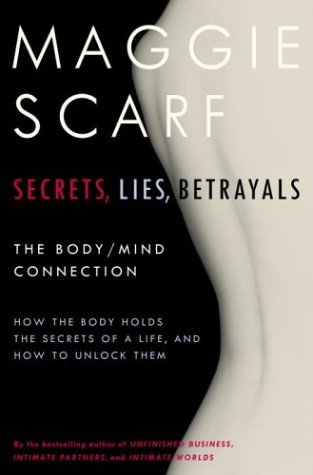
–Maggie Scarf, author of Secrets, Lies, Betrayals: How the Body Holds the Secrets of a Life and How to Unlock Them
Literary Scholars Discover First Draft Of ‘A Christmas Carol’ Where All 4 Ghosts Show Up At Once And Just Beat The Shit Out Of Scrooge
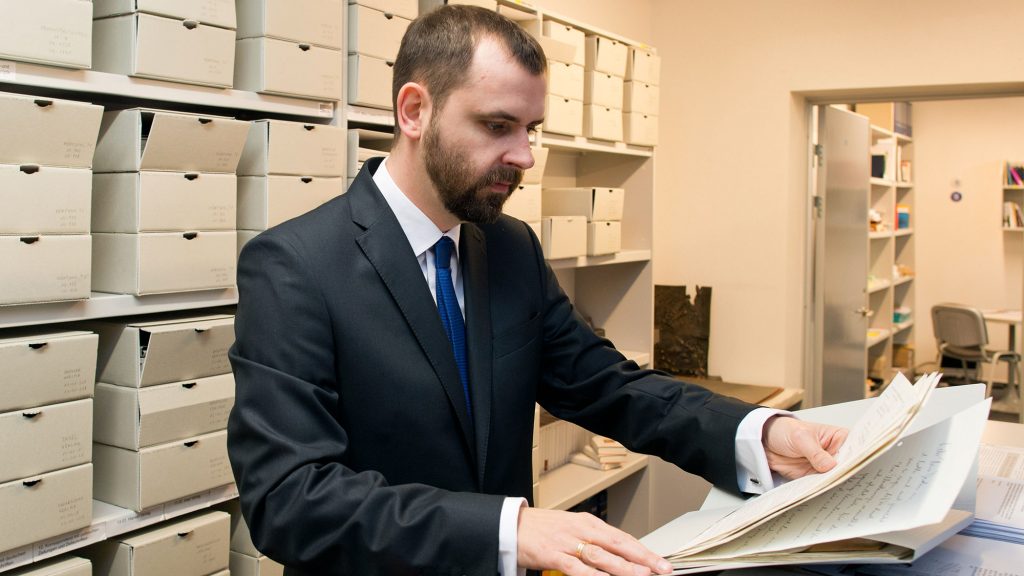
December 13, 2020 (theonion.com)
OXFORD, ENGLAND—Shedding new light on one of the famed writer’s most celebrated works, literary scholars from the University of Oxford reported Friday that they had discovered an early draft of Charles Dickens’ A Christmas Carol where all four ghosts show up at once and just beat the shit out of Scrooge. “This incredible manuscript shows how Dickens developed the story from his original concept of a gang of malevolent spirits absolutely wailing on Ebenezer Scrooge into the iconic holiday classic we know and love today,” said professor Leah Mulroney, describing how the first draft features the spectral form of Jacob Marley appearing before Scrooge to warn him about the chains he had forged in life before using said chains to choke the miser. “From there, the Ghost Of Christmas Past bashes Scrooge with a candlestick before lifting him up in the air and dropping him at the foot of the Ghost Of Christmas Yet To Come who bashes in his skull with a tombstone bearing his own name. After that, the Ghost Of Christmas Present opens his robe to reveal two children, Ignorance and Want, who proceed to kick Scrooge repeatedly in the groin while shouting ‘This one’s for Tiny Tim, bitch.’ It was, in fact, Dickens’ publisher who suggested that he instead focus on the miser’s transformative arc and adjust the original ending where the ghosts paraded Scrooge’s bruised corpse through the streets of London.” Mulroney added that this was the most significant Dickens-related discovery since archivists uncovering a draft of Oliver Twist in which the ravenous orphan bites out Mr. Limbkins’ trachea after being refused more gruel.
Our Great Reckoning
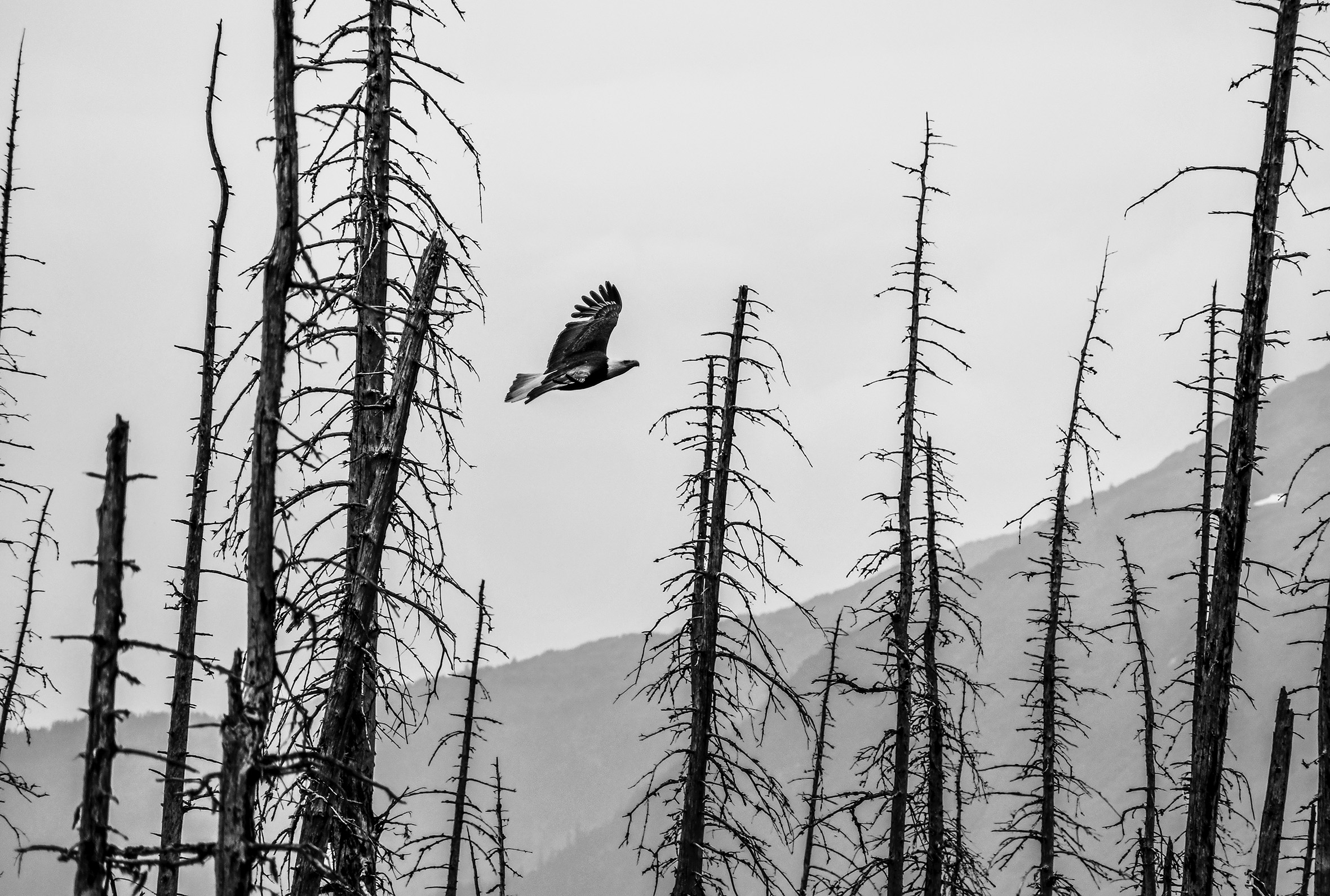 © Kevin Morris THE SUN INTERVIEW
Eileen Crist On The Consequences Of Human Plunder
BY LEATH TONINO • DECEMBER 2020 (thesunmagazine.org)
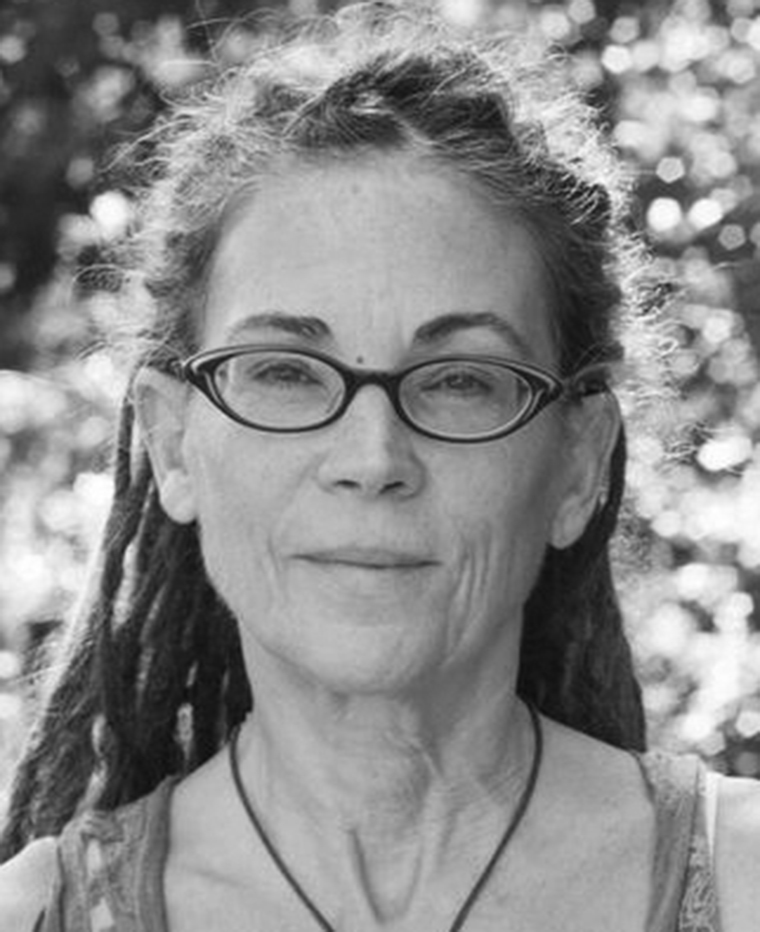
Eileen Crist knows more than a person should, more than seems healthy, about dying birds and dying watersheds. She’s keenly aware of the global crisis of biodiversity loss and ecological collapse, and she sees what’s driving it: direct causes like climate change and what she calls the “ultimate causes” — population growth, overconsumption, and technological power. But the thing that really interests Crist, the thing that she’s been studying and publicizing for the past three decades as a professor and radical environmental thinker, is an even deeper question: Why is so little being done to address this planetary emergency?
She attempts, with a mix of intellectual rigor and lyrical passion, to provide an answer in her 2019 book, Abundant Earth: Toward an Ecological Civilization. The cause of our inaction, she says, is “human supremacy,” a largely unconscious belief that Homo sapiens are the masters of creation rather than just one humble species among millions. This worldview sanctions not only factory farming, clear-cut logging, mountaintop-removal mining, and bottom-trawl fishing, but also more commonplace behaviors such as cruising along in cars that slaughter wildlife and emit carbon dioxide. As long as human supremacy prevails, Crist writes, “humanity will remain unable to muster the will to scale down and pull back the burgeoning human enterprise that is unraveling Earth’s biological wealth.”
Crist is a synthesizer of statistics and ideas. (The bibliography for Abundant Earth cites sources ranging from philosopher and gender theorist Judith Butler to the United Nations Environment Programme.) She holds a PhD in sociology from Boston University and recently took an early retirement, at the age of fifty-nine, from twenty-two years of teaching in the Department of Science, Technology, and Society at Virginia Tech. Since the publication of her first book, Images of Animals: Anthropomorphism and Animal Mind, in 1999, she has coedited a number of anthologies on topics ranging from overpopulation to wildlife conservation to the holism of the Earth. Her writing has appeared in Science, BioScience, Environmental Humanities, and Environmental Ethics, and she helps edit the online journal The Ecological Citizen.
I’ve been aware of Crist’s writing for quite some time, but it wasn’t until I’d read, and then reread, Abundant Earth that I felt compelled to request an interview. Due to the pandemic, our conversation had to be conducted via phone. Crist resides in Charlottesville, Virginia, with her husband, who is president of an international Tibetan Buddhist organization, and their two dogs. At the start of the conversation I asked for a description of her surroundings. Crist said she was on the basement floor, looking out at the garden on a rainy, overcast day. I pictured a ground-level window that put her eye to eye with the grass and the flowers and the vegetables, not above them.
Tonino: What are we talking about when we refer to the “global ecological crisis”? What’s actually happening on this planet — to this planet — right now?
Crist: What’s happening is the collapse of the web of life: biological diversity, wildlife populations, wild ecologies. We’re in the midst of a mass-extinction event. It’s called the “sixth extinction,” because there have been five others in the last 540 million years. Mass extinctions are extremely rare. They’re monumental setbacks, not normal events. It takes 5 to 10 million years for life to recover from one. Species would be vanishing approximately one thousand times slower without the human impact. They’re going extinct primarily because the environment is changing so rapidly, so catastrophically, that they can’t adapt. If we keep going as we’re going, we will likely lose 50 percent or more of the planet’s species in this century.
So that’s huge, but there’s more — or, rather, more is happening en route to that bleak future. We’re also seeing the loss of entire ecosystems and biomes, such as coral reefs and grasslands. Freshwater systems and tropical forests are being hit hard. Biological phenomena are disappearing — for instance, migrations. And in addition to outright extinction, there are wholesale eliminations of local populations of plants and animals. The killing of wildlife is so profound that scientists have coined the term defaunation to capture it. We’re emptying out the planet. Big or small, herbivores or carnivores, marine or freshwater or terrestrial — it’s happening across the board.
Tonino: The environmental ethicist Holmes Rolston describes human-driven extinction as “superkilling,” saying it kills “essences,” not just “existences.” How do you interpret that?
Crist: Rolston is spot-on to call it a superkilling. There’s a sad and facile view circulating that extinction is natural, so what does it matter if it’s human-caused? What this ignores is that the vast majority of species becoming extinct are robust, meaning they’re well adapted to their surroundings. These are healthy species experiencing overwhelming pressure from the human onslaught. And they’re usually experiencing pressure from more than one driver. Eighty percent of the species looked at in one study were found to be under pressure from multiple directions: pollution, nonnative species, poaching, climate change, and so on.
When we drive a species to extinction, we’re prematurely taking out of existence a unique, amazing manifestation of life that has never existed before and will never arise again, and we’re extinguishing all possibilities of its evolution into new forms. “Superkilling” is a good way to put it. Killing an individual is one thing, but killing a species — let alone 50 percent of the species on the planet — is something else entirely. It’s murder that reverberates farther than we can see or imagine.
Tonino: You mentioned multiple drivers, but let’s talk about just one for now: What role does agriculture play in all this?
Crist: Agriculture is huge. Much of the damage it inflicts is through habitat destruction and fragmentation: something like 40 percent of Earth’s ice-free land is given over to agriculture. Farming isn’t inherently wrong or evil, but large-scale industrial agriculture drives populations of native species off the land. That’s the way it’s practiced: a kind of takeover, an invasion. It also kills species that are perceived as a threat — for example, carnivores. Another aspect is that agriculture claims about 70 percent of the fresh water that humans use. And it’s a fierce polluter. With its artificial nitrogen fertilizers and pesticides and everything else, it’s arguably the greatest polluter of air, land, fresh water, and estuaries. It’s responsible for a substantial portion of greenhouse-gas emissions, too. So agriculture, and the food system overall, is a significant factor in climate change.
Tonino: Climate change is often portrayed as the environmental problem — like, if we could wave a magic wand and fix the climate, everything else would sort itself out. What are your thoughts on that?
Crist: Climate change is massively destructive, and the situation couldn’t be more urgent. It will bring, and has already brought, a lot of suffering to both humans and nonhumans, and it’s feeding into ecosystem collapse because the changes are occurring so swiftly.
But the reason climate change has penetrated public awareness is because an overheated planet directly threatens humanity and civilization. Mass extinction, the unraveling of the web of life, isn’t seen as so grave, because it isn’t viewed as an existential threat to us. It’s happening to them: the insects, the fish, the frogs, the birds. Putting aside the fact that these animals have inherent worth, we are making the typical mistake of thinking that humans are somehow separate from, and not dependent upon, the Earth’s natural systems.
Another thing to notice is that there are some potential technological solutions to climate change, and our society loves technological fixes. Many people feel we could get a handle on this monstrous thing if only we shifted our approach to how we produce and use energy. Mass extinction, on the other hand, doesn’t have a technological silver bullet. If we want to address mass extinction, we have to find a different way of life. We have to scrutinize human expansionism: the endless expansion of our numbers, our consumption, our infrastructure, our use of the lands and seas. But that’s a tall order. So talk about mass extinction is muted.
Viewing climate change as the root problem is dangerous because, even if we do manage to address it, there’s no guarantee we won’t continue to run down the planet.
Tonino: So you see human expansionism as the root problem?
Crist: There are two sides of the coin. One is what we’ve been discussing: the collapse of life’s diversity at all levels, from biomes and ecosystems, down through species and subspecies, and finally to genes. There’s so much reporting, so many articles about specific threats — imperiled mangroves, amphibians, migrating birds, and so on — but rarely is the whole picture conveyed. These are all one story with a single overarching theme: devastating loss. It’s important for us to know where we’re headed, to know the predicament life is in — not lives, but life itself.
The other side of the coin has to do with expansionism — the colonization of everything, the humanization of the planet. We’re turning the planet into a human monoculture. Of course, no monoculture is literally homogeneous. What we’re seeing is a population of 7.8 billion Homo sapiens, along with the billions of livestock and cultivated plants that feed us; some token wild species that are kept in restricted spaces and whose numbers are tightly managed; and some species that can parasitize our way of life. And the human monoculture continually replaces landscapes with constructed environments. All told, it’s a crisis of domination.
Tonino: Back in the 1940s Aldo Leopold, the pioneering ecologist and conservationist, said we should change the role of Homo sapiens “from conqueror of the land-community to plain member and citizen of it.”
Crist: That passage is one of the most frequently quoted of Leopold’s, and rightly so, because it captures the horns of the dilemma: we can dominate the planet as if it were human-owned, or we can participate in life’s beauty, in the wider world — which doesn’t mean we stop manipulating or impacting, only that we do so with care and a respect for limits. Actually it’s not a matter of can but of must. Leopold wrote that so many years ago, and here we are, still wrestling with this issue.
The most important thing to expose and dissect is human supremacy. It often gets referred to by the gentler term anthropocentrism. I view it as a widely shared, unconscious worldview that tells us we are superior to the rest of nature and thus entitled to treat nonhumans and their habitats however we please. Human specialness, human aboveness, and the sanctity of the human prerogative — those are key elements, along with our seizing the power of life and death over nonhumans and our aggressive control of all geographical space.
I don’t think human supremacy is an explicit ideology, though it can take that form. Mostly it operates as a kind of background assumption about what humans are, what the rest of the world is, and what the relationship between the two should be. It’s a worldview that isn’t looked at directly but nonetheless shapes our attitudes and governs our actions.
Take factory farms, which are on the rise globally. In these spaces animals are treated with abysmal cruelty and indifference. Treating sentient beings as though they have no inherent experience, feeling, or interest — how can something so extreme occur without the mandate of human supremacy? Another example is converting entire biomes to human use. A poster case is grasslands: 98 percent of the tallgrass prairie here in the United States has been converted to farmland to grow mostly corn, wheat, and soy. What gives us the right to take over and destroy an entire biome? It’s one thing to cultivate a piece of prairie and grow some food. It’s very different to seize, repurpose, and essentially destroy the whole thing. But, you know, that’s taken as normal, because it’s perfectly acceptable from a human-supremacist point of view.
Another example: some 97 percent of the world’s oceans are legally open to fishing. Industrial fishing strips them of their life and has the gall to call fish and their habitats “fish stock” and “fisheries,” as if they were human property — an outrageous example of our sense of entitlement. Again, it’s an absurd level of appropriation that passes for normal, or at least inevitable.
We could go on down the line with examples: mountaintop removal, killing contests of animals such as coyotes and sharks, poisoning the world with [the herbicide] glyphosate. The bottom line is that this huge gamut of attitudes and actions and institutions is what makes human supremacy a worldview, albeit one that isn’t fully conscious. For me, there’s a good bit of hope in that last part: If it is made fully conscious, it will be seen in a different light. Its normality will be disrupted. We can become revolted by it. And revolt is linked with revolution.
What gives us the right to take over and destroy an entire biome? It’s one thing to cultivate a piece of prairie and grow some food. It’s very different to seize, repurpose, and essentially destroy the whole thing.
Tonino: You’re linking human supremacy with agriculture. What’s the cause-and-effect relationship there?
Crist: When humans settled and devoted themselves to the domestication of animals and plants, more and more wild nature was converted into cultivated nature, into engineered nature. Wild animals were now seen as adversaries, competitors in the field or predators of the flocks.
Over time human beings became almost exclusively focused on human affairs. This intensified with the building of walls around human settlements and increasing urbanization.
With agriculture human populations started to grow, and soils became depleted. This put pressure on societies to expand their search for food. Around the same time, hierarchy and social stratification were becoming entrenched. Some classes of people acquired more wealth and power than others, and more control over land. Others worked the fields or in crafts.
So, on the one hand, there was population growth and soil degradation. On the other hand, there was greed for power and wealth among the elites. These two things colluded, and armies came into existence. The history of civilization is the history of war. War, or the threat of it, became the chief instrument for acquiring land, slaves, loot, and tribute.
The separation of humans from the wild, our antagonism toward wild animals, and our growing power over domestic plants and animals all started to foster a human sense of pride, of being in command, of being superior. By the time the classical era rolled around, philosophy and political theory were asking, “How are humans different from animals?” Through this inquiry, which was kept up over many centuries, humans elevated themselves to a distinguished level of being: the only entity with reason, language, culture, ethics, or what have you, all of which animals supposedly lack.
So human supremacy was established in this twofold manner: geographical takeover on the one hand, and disparagement of the nonhuman world on the other. The nonhuman world became regarded as devoid of inherent meaning. It became dispensable, forgettable, and killable.
And this continues. For example, nation-states and companies are gearing up to start the commercial mining of the deep sea for gold, copper, cobalt, rare earths, and other minerals. The deep sea is one of the last places on Earth that is relatively undisturbed by human activity, but the occupation machine spares nothing; it has no sense of restraint.
Tonino: As you’ve become more aware of supremacist thinking in the world at large, you must also be grappling with it at the personal level. Do you recall any specific moments when you were shocked to see a form of supremacy inside yourself?
Crist: I’ve never told this story to anyone, but when I was eleven years old, I killed a crab. The crab was hiding in some rocks, back in a crevice, and I reached in with a knife and stabbed it between the eyes. I remember the crab looking at me, trying to make itself small. I remember its eyes, and I remember the knife.
I was living in Greece at the time — my mother is Greek, and we spent several years there during my childhood — and we were fishing as a family, so it was normal to kill marine life. Still, I felt sick with remorse the moment I stabbed the crab, and incredibly ashamed. It changed me, because in that moment I saw that I was capable of acting almost mechanically.
I learned something else from that crab: that there is a deep part of us that knows the difference between good and bad. Goodness isn’t a thing we humans arbitrarily assign to the world, but something inherent in the world. The world, if you will, prefers life and life-affirming behaviors. When we follow goodness, we’re in the flow of life, and when we violate goodness, we experience a painful disjunction. That’s the source of the remorse and shame I felt, that disjunction.
Human supremacy was established in this twofold manner: geographical takeover on the one hand, and disparagement of the nonhuman world on the other. The nonhuman world became regarded as devoid of inherent meaning.
Tonino: How do we wake up from the trance of human supremacy? Do we need a different story, a different set of values?
Crist: Human supremacy is a historical inheritance that we’ve been saddled with through conditioning, and once the conditioning is removed, reality will have a chance to come into view, and we’ll then have the opportunity to align ourselves with it.
There are aspects of Earth’s reality that we could emphasize, and interdependence is a place to start. We are completely dependent on this living planet for every breath we take. And we are beholden to the planet not just in terms of survival but in terms of who we are. Whatever attributes we claim as unique to the human species, such as our propensity for art and science and spirituality — these are gifts of the ground. Curiosity and exploration and awe require a world — a ground — to grow up from and in conversation with.
I take hope from the thought that human beings are, at a primordial level, in love with the Earth, our source. This love is obstructed by our sense of specialness, the sense that we are meant to own and control. When we remove the human-supremacy story, however, what comes through will be what already exists: love for this oasis in the cosmos, this mystery that we will never re-create or even fully comprehend. That’s the real story.
Tonino: You mentioned that we are looking for technological solutions to climate change. Is the environmental movement healthy and strong, or has it been co-opted by a technological approach to solving problems?
Crist: Mainstream environmentalism is quite infatuated with technological solutions. Oftentimes it’s not critical enough of consumerism and economic growth, and for the past twenty years or so it went silent about the human-population question. It puts a lot of emphasis on the renewable-energy transition. Yes, solar and wind are part of the solution, of course, but much more important is degrowth — slowing the economy, decreasing production, downscaling global trade. Our global trade system shuttles inordinate amounts of stuff around the world, lots of which is unnecessary, and enormous amounts of greenhouse gasses are released in the process. Extolling the merits of solar and wind is fine, but it’s nothing compared to creating a downsized, mindful material culture that is locally and regionally oriented.
So, no, in my opinion the mainstream environmental movement appears unwilling to go deep enough. That said, it isn’t wise to constantly heap criticism on mainstream environmentalism. It has played a very important role. The big environmental organizations of the twentieth century made some impressive achievements on the ground, and they’ve succeeded in raising awareness and knowledge. I often go to the World Wildlife Fund’s website, for example, to get facts about a specific place or species. These groups are like a bridge between mainstream culture and radical ecology.
As I’ve been saying, many of us don’t consciously subscribe to the belief that Earth is human-owned or that nonhuman life lacks inherent worth and is dispensable — but we live in accordance with this stance regardless. Radical ecology takes the offensive, refusing to stand by and watch. It calls attention to the fact that all life has inherent value. It insists that justice means not only justice for humans, but justice for all species.
Tonino: You’re saying Americans cannot continue to live as we have lived. We must change. Period. And yet we have to make breakfast each morning, put the diaper on the baby, get to work, survive another day.
Crist: In the developed world, as long as we’re plugged into electricity and everything that entails, we’re pretty badly tangled up. I’m talking to you on my phone right now, but I don’t know where it was made, who made it, under what conditions, or where the materials for it were sourced. I don’t know how much destruction it has left in its wake or what garbage bin it’s ultimately going to end up in. And this is just one object: I could say the same about my toaster, my refrigerator, and on down the line. So I’m caught in the system — like pretty much everybody I know — and it’s from within this tangle that all of us have to try to make changes.
Speaking generally, what we can all do is prepare for a transition, and that has as much to do with altering our expectations, our thinking, as it does with altering our behaviors. COVID-19 really blindsided us and is a reminder that change can arrive suddenly. Environmentalists have been saying this for decades: expect the unexpected. The twenty-first-century world is incredibly complicated. There’s a huge acceleration on every front, including the collapse of nature, and this can mean only one thing: uncertainty. We’ve got to expect the unexpected and be ready to shift in response.
To my mind, the most important thing we can do is learn about our food and how it’s produced. Food is so basic and is tied to everything. It might sound idealistic, but there’s no way around it: humans must inhabit food communities that are ecological and ethical, that grow wholesome food in friendship with the natural world — and this nutritious food has to be available for all. These are the kinds of communities that we need to start building or, where they already exist, learning from and supporting. What would happen if some global catastrophe — a climate-related problem or a war or a more virulent epidemic than COVID-19 — disrupted our food system? In this current pandemic the fear and upheaval drove Americans to hoard toilet paper and guns and ammo. Try to imagine a food shortage instead of a scarcity of toilet paper.
Recognizing our participation in destructive, human-supremacist systems may bring up rage or grief or guilt on a daily basis, and that’s OK. We can acknowledge those feelings. We can allow those feelings to tell us something true about the world and about ourselves, and we can move through them into action. The most important thing we can do is to create alternative communities where we model a different way of living, and the core of these communities will start with food, because when was the last time you passed a day without eating?
Tonino: Does history or anthropology provide us with any particularly inspiring or useful examples of alternative communities?
Crist: Many Indigenous communities are good models — not necessarily of exactly what a life on the land should look like, but models of principles. What do Indigenous people do? They live within the contours of the land. They live within a place, making themselves a subsystem of it. In terms of what they eat and how they eat, what they use and how they use it, the land is their guide. They don’t take over and impose their structures. They don’t continually expand and conquer, as is the habit of colonial and human-supremacist cultures. Rather, they adjust to their surroundings, devising techniques for living within their regions.
Also, Indigenous communities have regular celebrations of the natural world — greeting the seasons, greeting the berries, greeting the salmon, whatever it may be. These are both a form of grateful acknowledgment and a tool for remembering. In colonial, resource-hungry cultures we don’t know what was here before us, and in some cases we don’t even recognize that there was a “before us.” Every generation assumes its surroundings are the norm, even if previous generations have degraded the land. This is referred to as the “declining ecological baseline.” It’s invisible, because there’s no memory of a different time when, for instance, you could drink water straight from the stream or eat fruit straight from the tree. If you have ceremonies — techniques for observing, stories about your animal and plant neighbors — you can at once honor the more-than-human world and remember it.
One more thing we can learn from Indigenous communities is animism, the worldview that sees everything as alive, as wondrous in itself. A major component of human supremacy is the tacit idea that animals don’t see us. We are the active agents — we see them. In an Indigenous culture a human sees the animal and, simultaneously, sees that he or she is being seen. There’s a mutual recognition not only with animals but with plants, rocks, everything.
I want to make it clear that I’m not looking to Indigenous communities as a literal model: “Oh, we’ll mimic such-and-such people, and then things will be fine!” It’s the principles of living within the affordances of a place, the ceremonies of gratitude and remembering, and the awareness that everything is alive. We have to learn to embody these principles in our own unique places.
Tonino: To change our way of life we require some sort of program, a regimen that will break down old habits and replace them with new habits, right? I’m interested in the pragmatic aspect of all this.
Crist: Decolonizing our minds and breaking habits of supremacy requires critical thinking: look at what the culture’s throwing at you, see it clearly, and then decide whether to accept or refuse it. A simple idea, though difficult to enact, is slowness: only by creating some time and space in our lives will we have a chance to pivot from blind acceptance to critical thought. The dominant cult of speed is, for me personally, something to target and try to undermine. Why is it that we drive too fast, eat too fast, walk too fast, get out of bed too fast? Why do we jam our to-do lists with so many chores and believe they all need to be taken care of ASAP? Why are we multitasking, looking at our screens as we’re cooking or exercising? This relentless acceleration is reinforced by so much that surrounds us that it’s easy to fall back into speed even if you’re aiming for slowness. But you can chip away at it. Do something slowly on purpose. Then do it again. Eventually things might begin to open up.
Tonino: What’s your take on the common argument that human nature is to blame for the ecological crisis?
Crist: It’s a dangerous view and often boils down to an excuse for resignation, continued destruction, and cynicism. It fails to appreciate the power of socialization, which is the biggest determinant of how people think and act. People comply with the values, norms, and actions they learn from their societies.
Human nature contains the capacity for all sorts of things: from the coarsest kind of selfishness to a lifetime of selfless service.
Tonino: I can imagine a person saying, “We all have to use nature — eat it, affect it in various ways. That’s not supremacy.” How do you respond to that?
Crist: Yes, we have to use the natural world, as all animals do. Though I prefer to avoid the word use, because of something I heard [eco-theologian] Thomas Berry say in a documentary. He said: “What’s the worst thing that one person can say to another? ‘You used me.’ ” He’s right. That’s as bad as it gets. Then Berry said: “What would the Earth say to us if the Earth could speak? ‘You used me.’ ” Right again.
We have to work with the natural world, to source from it, but there’s a huge difference between growing food through industrial agriculture versus agriculture modeled on ecological principles. The former demolishes biodiversity, dislocates and kills the nonhuman, degrades the soil, and pollutes the world with pesticides and synthetic fertilizers. The latter, called “agroecology,” is mindful of diversity, both cultivated and wild, and seeks to preserve it. It appreciates the nonhumans and natural processes that have made the very soil that grows our food. It builds up the soil. Agroecology works with wild nature and tries to find artful ways to negotiate with wild nonhumans who may pose a threat to the cultivated plants or to farm animals. Practitioners of agroecology do not automatically choose the options of poison and killing — far from it.
We can also think about this question of “use” in terms of scale. Scale matters. Think about cars, for example. Cars are not going to be uninvented. Humans seem to like them — at least, for now. It’s one thing, however, to have 1 billion cars in the world, as we do now. It’s a whole new level to have 4 or 5 billion cars, as we might in this century. So how about a world with fewer cars and a lot more restraint in terms of roadbuilding?
Tonino: How big a problem is capitalism? If capitalism disappeared, but we were all still under the spell of human supremacy, would nature be any better off?
Crist: Capitalism is a core driver of ecological destruction. It gobbles up the world as “raw materials” and turns them into commodities, with immense waste at every step along the way.
The destructiveness of this economic system goes hand in hand with a huge and growing global middle class, an increasingly global culture of consumerism, and over-the-top global trade. In qualitative terms, middle-class status comes with electricity, expendable income, and participation in the global economy. The size of the global middle class surpassed half the total human population in 2018, and it’s expected to reach about 5 billion people by 2030. The fundamental socioeconomic phenomenon of our time is mass production and mass consumption at a global scale, for billions of increasingly affluent people. This means extreme drawdown of resources, unsustainable pollution, and ecological ruin.
Making capitalism more equitable would be good for humans, but nature would be no better off, as long as mass production and mass consumption remained essentially unchanged and the natural world continued to be treated as human property.
So it is not only capitalism that has to go but also human supremacy. We must reenvision our relationship with the Earth, recognizing its intrinsic splendor and letting its inhabitants be free, letting them have the space to be who they are.
Tonino: Near the end of Abundant Earth you write that no art museum could ever rival a forest unless the museum’s walls began breathing.
Crist: It’s been said — I think it was Paul Ehrlich — that nobody would ever dream of bulldozing the Louvre in order to build a parking lot in its place. But how many forests have been felled for cars and livestock feed? How many breathing trees?
Tonino: With regard to “waking up” from the trance of human supremacy, what do young people, specifically, need to know? Do you have a dream curriculum, a pedagogy for the future?
Crist: One thing that children and young people (and the rest of us) need to get away from is the constant and prolonged exposure to screens. Life in front of devices is linked to attention-deficit disorder, depression, and, of course, nature-deficit disorder. The screens are running people’s lives. Just as Henry David Thoreau said, people “have become the tools of their tools.”
Also, learning environmental history is indispensable in order to see that an impoverished world, taken over by one species, is not normal. No matter how painful, young people need to understand the damage we have done. Challenging the normality of the status quo also frees us to imagine an altogether different future.
Another thing that bears repeating is that children have a natural sense of wonder about living beings and nature. This sense of wonder must be kept alive and cultivated through education and an outdoors curriculum.
In an ecological civilization — that is, a society not oriented toward competition, social success, and materialism — the role of education is to cultivate each person’s talent or deep personal inclination. We need to help children find what that is and be able to pursue it as their life’s work.
Tonino: Hopefully something other than domination! You write, “Humanity will not advance by taking over the biosphere, but, on the contrary, will stagnate in the debased identity of the colonizer.” What is it about domination that is so destructive?
Crist: When you dominate, you cannot win. You lose no matter how things turn out. Look at the message of Shakespeare’s Macbeth. The protagonist thought he could become king by killing the current king and instead lost everything: the respect of others, his self-respect, his wife, his friends, and ultimately his life.
We have to understand that we cannot perpetrate a mass extinction and come out winners. Mass extinction will not “kill the planet,” but it will impoverish it irrevocably. That knowledge will weigh heavily on the human soul.
Even if humanity survives an anthropogenic mass-extinction event, even if humans go live on Mars or fully subjugate Earth by technological means, the question will never be evaded: Who will we become if we exterminate, en masse, our nonhuman cohorts? We cannot pass on to our descendants that burden of sorrow by not paying attention to this catastrophe now. Instead we must embrace the idea of Earth citizenship and disavow the identity of conqueror and master.
This is the consciousness shift that’s needed. After that comes the practical work of scaling down the human enterprise, economically and demographically, and pulling back from large portions of nature.
Tonino: Can we ever fully dominate the world? No matter how many wrecking balls we swing, isn’t the world still the big boss, calling the shots?
Crist: Ultimately yes, nature calls the shots. The forces of Earth’s big systems, like the hydrosphere and the climate, are way bigger than we are. But the side effects of our actions are sometimes delayed, so humans can think for a while — even for a long while — that we dominate, that we are in control. But when climate change hits home, and when wild fish and coral reefs give way to an ocean of plastic, humanity will find out that our domination was a hollow illusion.
In the meantime domination destroys precious things that cannot be recovered. It hurts beings and disrespects the inherent order of the world. It not only impoverishes nature but produces a world of fear, in which most wild animals avoid us. It also disenchants the world, making it monotonous, less diverse, and more barren of life.
At the same time that domination does so much harm to the other, it also disgraces humans by making us mindless and callous. Factory farms and industrial fishing are ugly ways to provide food, unethical and ecologically destructive, and they demean humanity profoundly.
Tonino: You quote John Rodman, the political theorist and radical environmentalist: “The ecology movement, to the extent that its central worry is the rapid extinction of ecological diversity, is essentially a resistance movement against the imperialism of human monoculture, roughly analogous to the earlier resistance movements against particular totalitarian regimes.” Nobody thinks it’s crazy when a group of resistance fighters take up arms against their oppressors — it seems rather sensible. But to do so on behalf of nature is seen as the craziest form of ecoterrorism. Do you see a need for violent resistance in the future?
Crist: I think John Rodman was entirely correct. Resistance against oppression of humans is widely embraced. What is not yet recognized is the legitimacy of resisting the oppression of nonhumans and the natural world. That oppression is a form of colonialism. Rodman and others have called nature colonialism the last bastion of colonialism.
I am partial to [writer and environmental activist] Wendell Berry’s definition of colonialism: destroying one place to be extravagant somewhere else. This is a straightforward description of our way of life. We are destroying large swaths of the planet to be extravagant somewhere else. Soybeans grown in the Amazon to feed pigs in China. Oil-palm plantations in Southeast Asia for added palm oil in packaged foods everywhere. The tall-grass prairie sacrificed for animal feed, biofuels, and corn syrup. Mangroves for cheap shrimp. Continental shelves for cheap fish. Coming next: seabed habitats for lithium batteries. The list is endless, and it will be ongoing unless we recognize what it’s all about, which is that our way of life is based on nature colonialism. When enough people see that, there will be a chance to transform how we live.
On the question of violent resistance, I do not believe in it. When has violence not perpetuated violence? Nonviolent action is powerful. It has soul presence. It is centered and filled with equanimity and righteousness. If it is quashed with violence, it exposes the violators as being in the wrong. Nonviolent action also exemplifies another way to be in the world. Nonviolent action is both the means and the end.
Having said that, I do not see activists’ rescuing factory-farmed and other abused animals as violent action, even if it involves breaking and entering. I think the torture of animals is an egregious violation that deserves a direct-action response. Rescuing animals from violence is nonviolent action.
Tonino: What are some alternatives to our present civilization? What would an “ecological civilization,” as you call it, look like?
Crist: The human system, especially settlements and food-production areas, should inhabit a modest portion of the Earth rather than claiming the lion’s share. Free nature, or wilderness, will be the sea within which human habitats are nestled like islands.
For that to happen, our consumption patterns and waste output must be substantially lowered. One means of achieving this is lowering the human population. This can be done by investing in women’s empowerment, educating girls and young women, and bringing family-planning services everywhere. We also have to change the economic system — slow it down, so we produce much less. We need to get rid of superfluous, luxury, and throwaway goods. What is produced must be made durable, fixable, recyclable, and biodegradable. We also need to pull back our presence from large areas of nature. Minimize infrastructure spread. Setting nature free on a vast scale will enable the diversity, complexity, and abundance of life to return.
Human beings will have an equitable standard of living that is modest but high-quality, with nutritious food, clean rivers, ancient forests, and abundant wildlife. Let us imagine human life within a verdant and lively world. Wild nonhumans will be respected and allowed to live free, while domestic farm animals will be allowed natural and long lives. The planet is our ground, and an ecological civilization will be in loving alignment with all its beings and processes.
Tonino: The best conservation science — and this includes a 2019 report from the United Nations — is calling for half the planet to be set aside as biodiversity preserves. What are your thoughts on this 50 percent idea?
Crist: The proposal to protect 50 percent of Earth’s area of land and seas is inspiring. It’s known as Nature Needs Half, or the Half-Earth Project. It is bold, visionary, and necessary. It was an idea first formulated in the early 1990s, and it is gaining attention and traction today.
Large-scale nature conservation is a low-tech and, if embraced by humanity, eminently doable approach to addressing the planet’s dire predicament. The only way to stem the extinction crisis is generous protection of habitat. This will enable the preservation of viable populations of animals and plants and sustain the integrity of ecologies like rivers, grasslands, forests, deep seas, and coral reefs. It’s not just about large size but also connectivity, to enable animal movement.
Large-scale nature conservation is also a profoundly effective way to counter climate upheaval. Scientists are calling this approach “natural climate solutions,” and it is so important. Protected and restored forests, grasslands, and wetlands can sequester substantial amounts of carbon. Additionally, phasing out industrial agriculture will help mitigate climate breakdown.
When we think of conservation, our mind often goes to the land. I want to emphasize the imperative to protect the ocean and restore its abundance of marine life: from the microscopic plankton that make so much of the planet’s oxygen, to the krill, to the masses of small prey fish, to the big fish, mammals, reptiles, and sea birds. We have lost touch with the inherent richness of marine life, which industrial fishing, especially, has decimated. Large-scale protection of 50 percent or more of the ocean will support the restoration of the sea’s abundance of life. Of course, we must also hasten to deal with climate change. Otherwise we will lose most of the world’s coral reefs, which harbor so much of the sea’s biodiversity.
In the twenty-first century there will be a reckoning with how we’ve lived, what we’ve done to the planet and ourselves, and that reckoning will set in motion an awakening: a different way to go about things.
Tonino: You said earlier that there are approximately 7.8 billion humans on the planet. What would be an ideal number of humans?
Crist: Many analysts are thinking of a provisional goal of around 2 billion. This figure is for a human population enjoying roughly a European standard of living, sustained by organic food production, and eating far less fish, meat, and animal products than the average Western consumer.
Of course, there is no “optimal” population number in an absolute sense, because a lot depends on the level of consumption people gravitate toward, their dietary choices, and unknown variables having to do with technological developments. But 2 billion is more optimal than where we are now and where we are headed. Two billion is what the global population was about a hundred years ago. It is a big-enough number to enable a connected global civilization to continue, with achievements in the sciences, humanities, technology, and so on. In other words, 2 billion can sustain a lively “conversation of humanity.” But it’s a low-enough number to enable the substantial protection of nature that we are discussing.
According to Cornell agronomist [the late] David Pimentel and his colleagues, 2 billion people is the estimated number that can be sustained on organic, diversified, mostly regional agriculture, with farm animals living on the land and people eating a mostly plant-based diet. This way of eating would not only be wholesome for people but good for the planet and for all other animals as well.
You might say: “Fine, 2 billion sounds good, but how do we get there?” We get there by fast-tracking two important human rights: One, full gender equity and schooling for all girls, through at least secondary education. And, two, affordable and accessible family-planning services for all. If we could bring the global fertility rate — voluntarily: I do not support coercion of any kind — to an average of one child per woman, the human population would start to approach 2 billion within four generations.
Tonino: The ecophilosopher Arne Næss said that he was pessimistic about the twenty-first century but optimistic about the twenty-second. How do you think about the future?
Crist: What Næss meant, I think, is that in the twenty-first century there will be a reckoning with how we’ve lived, what we’ve done to the planet and ourselves, and that reckoning will set in motion an awakening: a different way to go about things, a different relationship between Earth and humanity. It’s quite possible that things will play out that way — get bad, then better. In some respects it’s an optimistic prophecy. But obviously there’s no guarantee that the future will follow this trajectory. We don’t even know where we are with respect to climate change. If runaway heating happens — or a nuclear war or some other unimaginable disruption — this trajectory that Næss outlines will be impossible.
I try to avoid predictions, because the future always manages to surprise. That said, we can and should talk about certain trends and where those trends are likely taking us. For example, follow the population graphs, and then ask: What does it look like if there are 10 billion of us on the planet, all trying to fill our bellies? What does it look like for people in different countries, at different latitudes? What does it look like for wolves and monkeys and forests and seas?
We can’t predict the future, but it’s more useful to focus on the past anyway. It’s the past that has delivered us to this present moment, which we’re trying to understand and navigate. One thing to note about the past is that human supremacy has been a constant since the emergence of agriculture. I like to envision human supremacy as a baton that’s been handed forward for millennia: from the Neolithic village to classical antiquity to Judeo-Christian and Muslim cultures to our modern mechanistic era. By coming to understand this past, we can begin to understand that our current struggle isn’t simply to expedite an energy transition, to save some acres and wildlife here and there, or even to stave off the extinction of Homo sapiens. To put it accurately, our struggle is to change the course of history. To break with our history. To drop the baton.
(Contributed by Heather Williams, H.W., M.)