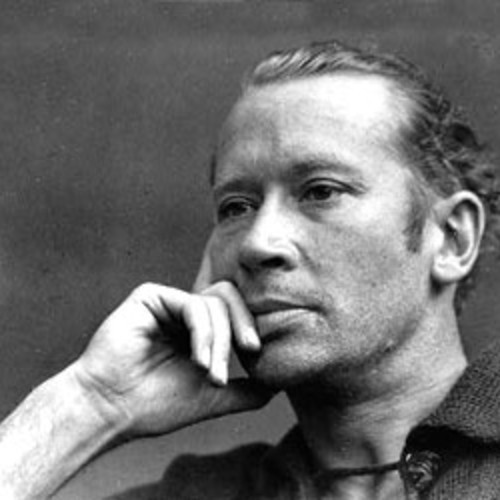
W.H. Auden on truth

Truth, like love and sleep, resents 
approaches that are too intense. 

–W.H. Auden

Wystan Hugh Auden (February 21, 1907 – September 29, 1973) was an Anglo-American poet. Auden’s poetry was noted for its stylistic and technical achievement, its engagement with politics, morals, love, and religion, and its variety in tone, form, and content. Wikipedia

I Like My Body When It Is With Your

i like my body when it is with your
body. It is so quite a new thing.
Muscles better and nerves more.
i like your body. i like what it does,
i like its hows. i like to feel the spine
of your body and its bones, and the trembling
-firm-smooth ness and which i will
again and again and again
kiss, i like kissing this and that of you,
i like, slowly stroking the, shocking fuzz
of your electric fur, and what-is-it comes
over parting flesh . . . . And eyes big love-crumbs,

and possibly i like the thrill

of under me you quite so new

Edward Estlin “E. E.” Cummings, often styled as e e cummings (October 14, 1894 – September 3, 1962), as he is attributed in many of his published works, was an American poet, painter, essayist, author, and playwright. He wrote approximately 2,900 poems, two autobiographical novels, four plays, and several essays. Wikipedia

Rebecca Solnit: On Not Meeting Nazis Halfway

Why Is It So Hard for Democrats to Act Like They Actually Won?

By Rebecca Solnit

November 19, 2020 (lithub.com)

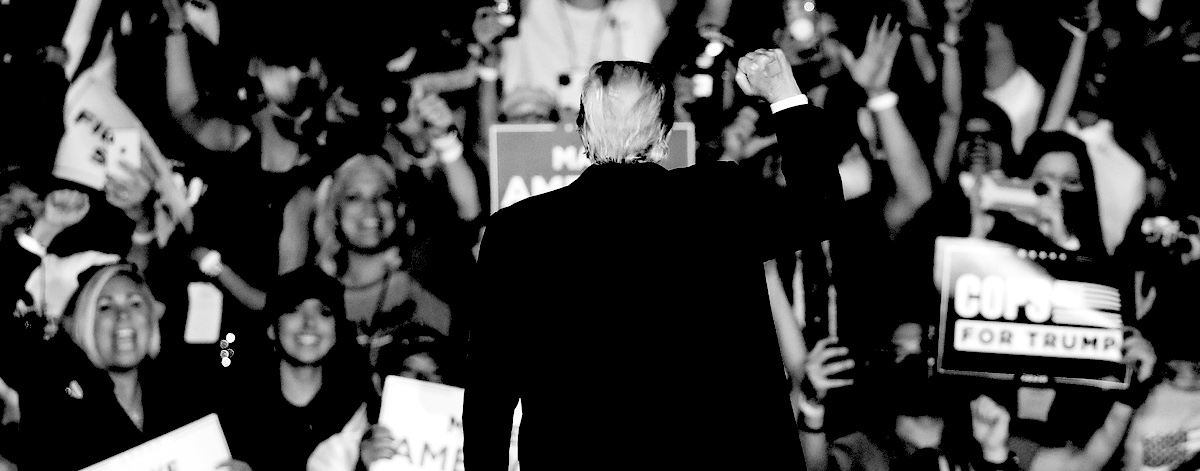
When Trump won the 2016 election—while losing the popular vote—the New York Times seemed obsessed with running features about what Trump voters were feeling and thinking. These pieces treated them as both an exotic species and people it was our job to understand, understand being that word that means both to comprehend and to grant some sort of indulgence to. Now that Trump has lost the 2020 election, the Los Angeles Times has given their editorial page over to letters from Trump voters, who had exactly the sort of predictable things to say we have been hearing for far more than four years, thanks to the New York Times and what came to seem like about 11,000 other news outlets hanging on the every word of every white supremacist they could convince to go on the record.

The letters editor headed this section with, “In my decade editing this page, there has never been a period when quarreling readers have seemed so implacably at odds with each other, as if they get their facts and values from different universes. As one small attempt to bridge the divide, we are providing today a page full of letters from Trump supporters.” The implication is the usual one: we—urban multiethnic liberal-to-radical only-partly-Christian America—need to spend more time understanding MAGA America. The demands do not go the other way. Fox and Ted Cruz and the Federalist have not chastised their audiences, I feel pretty confident, with urgings to enter into discourse with, say, Black Lives Matter activists, rabbis, imams, abortion providers, undocumented valedictorians, or tenured lesbians. When only half the divide is being tasked with making the peace, there is no peace to be made, but there is a unilateral surrender on offer. We are told to consider this bipartisanship, but the very word means both sides abandon their partisanship, and Mitch McConnell and company have absolutely no interest in doing that.

Paul Waldman wrote a valuable column in the Washington Post a few years ago, in which he pointed out that this discord is valuable fuel to right-wing operatives: “The assumption is that if Democrats simply choose to deploy this powerful tool of respect, then minds will be changed and votes will follow. This belief, widespread though it may be, is stunningly naive.” He notes that the sense of being disrespected “doesn’t come from the policies advocated by the Democratic Party, and it doesn’t come from the things Democratic politicians say. Where does it come from? An entire industry that’s devoted to convincing white people that liberal elitists look down on them. The right has a gigantic media apparatus that is devoted to convincing people that liberals disrespect them, plus a political party whose leaders all understand that that idea is key to their political project and so join in the chorus at every opportunity.”

There’s also often a devil’s bargain buried in all this, that you flatter and, yeah, respect these white people who think this country is theirs by throwing other people under the bus—by disrespecting immigrants and queer people and feminists and their rights and views. And you reinforce that constituency’s sense that they matter more than other people when you pander like this, and pretty much all the problems we’ve faced over the past four years, to say nothing of the last five hundred, come from this sense of white people being more important than nonwhites, Christians than non-Christians, native-born than immigrant, male than female, straight than queer, cis-gender than trans.

Supreme Court Justice Samuel Alito just complained that “you can’t say that marriage is a union between one man and one woman. Now it’s considered bigotry.” This is a standard complaint of the right: the real victim is the racist who has been called a racist, not the victim of his racism, the real oppression is to be impeded in your freedom to oppress. And of course Alito is disingenuous; you can say that stuff against marriage equality (and he did). Then other people can call you a bigot, because they get to have opinions too, but in his scheme such dissent is intolerable, which is fun coming from a member of the party whose devotees wore “fuck your feelings” shirts at its rallies and popularized the term “snowflake.”

Nevertheless, we get this hopelessly naïve version of centrism, of the idea that if we’re nicer to the other side there will be no other side, just one big happy family. This inanity is also applied to the questions of belief and fact and principle, with some muddled cocktail of moral relativism and therapists’ “everyone’s feelings are valid” applied to everything. But the truth is not some compromise halfway between the truth and the lie, the fact and the delusion, the scientists and the propagandists. And the ethical is not halfway between white supremacists and human rights activists, rapists and feminists, synagogue massacrists and Jews, xenophobes and immigrants, delusional transphobes and trans people. Who the hell wants unity with Nazis until and unless they stop being Nazis?I’ve spent much of my adult life watching politicians like Bill Clinton and, at times, Barack Obama sell out their own side to placate the other, with dismal results.

I think our side, if you’ll forgive my ongoing shorthand and binary logic, has something to offer everyone and we can and must win in the long run by offering it, and offering it via better stories and better means to make those stories reach everyone. We actually want to see everyone have a living wage, access to healthcare, and lives unburdened by medical, student, and housing debt. We want this to be a thriving planet when the babies born this year turn 80 in 2100. But the recommended compromise means abandoning and diluting our stories, not fortifying and improving them (and finding ways for them to actually reach the rest of America, rather than having them warped or shut out altogether). I’ve spent much of my adult life watching politicians like Bill Clinton and, at times, Barack Obama sell out their own side to placate the other, with dismal results, and I pray that times have changed enough that Joe Biden will not do it all over again.

Among the other problems with the LA Times’s editor’s statement is that one side has a lot of things that do not deserve to be called facts, and their values are too often advocacy for harming many of us on the other side. Not to pick on one news outlet: Sunday, the Washington Post ran a front-page sub-head about the #millionMAGAmarch that read “On stark display in the nation’s capital were two irreconcilable versions of America, each refusing to accept what the other considered to be undeniable fact.” Except that one side did have actual facts, notably that Donald J. Trump lost the election, and the other had hot and steamy delusions.

I can comprehend, and do, that lots of people don’t believe climate change is real, but is there some great benefit in me listening, again, to those who refuse to listen to the global community of scientists and see the evidence before our eyes? A lot of why the right doesn’t “understand” climate change is that climate change tells us everything is connected, everything we do has far-reaching repercussions, and we’re responsible for the whole, a message at odds with their idealization of a version of freedom that smells a lot like disconnection and irresponsibility. But also climate denial is the result of fossil fuel companies and the politicians they bought spreading propaganda and lies for profit, and I understand that better than the people who believe it. If half of us believe the earth is flat, we do not make peace by settling on it being halfway between round and flat. Those of us who know it’s round will not recruit them through compromise. We all know that you do better bringing people out of delusion by being kind and inviting than by mocking them, but that’s inviting them to come over, which is not the same thing as heading in their direction.

The editor spoke of facts, and he spoke of values. In the past four years too many members of the right have been emboldened to carry out those values as violence. One of the t-shirts at the #millionMAGAmarch this weekend: “Pinochet did nothing wrong.” Except stage a coup, torture and disappear tens of thousands of Chileans, and violate laws and rights. A right-wing conspiracy to overthrow the Michigan government and kidnap Governor Gretchen Whitmer was recently uncovered, racists shot some Black Lives Matter protestors and plowed their cars into a lot of protests this summer. The El Paso anti-immigrant massacre was only a year ago; the Pittsburgh synagogue massacre two years ago, the Charlottesville white-supremacist rally in which Heather Heyer was killed three years ago (and of course there have been innumerable smaller incidents all along). Do we need to bridge the divide between Nazis and non-Nazis? Because part of the problem is that we have an appeasement economy, a system that is supposed to be greased by being nice to the other side.

Appeasement didn’t work in the 1930s and it won’t work now. That doesn’t mean that people have to be angry or hate back or hostile, but it does mean they have to stand on principle and defend what’s under attack. There are situations in which there is no common ground worth standing on, let alone hiking over to. If Nazis wanted to reach out and find common ground and understand us, they probably would not have had that tiki-torch parade full of white men bellowing “Jews will not replace us” and, also, they would not be Nazis. Being Nazis, white supremacists, misogynists, transphobes is all part of a project of refusing to understand as part of refusing to respect. It is a minority position but by granting it deference we give it, over and over, the power of a majority position.Is there some great benefit in me listening, again, to those who refuse to listen to the global community of scientists and see the evidence before our eyes?

In fact the whole Republican Party, since long before Trump, has committed itself to the antidemocratic project of trying to create a narrower electorate rather than win a wider vote. They have invested in voter suppression as a key tactic to win, and the votes they try to suppress are those of Black voters and other voters of color. That is a brutally corrupt refusal to allow those citizens the rights guaranteed to them by law. Having failed to prevent enough Black people from voting in the recent election, they are striving mightily to discard their votes after the fact. What do you do with people who think they matter more than other people? Catering to them reinforces that belief, that they are central to the nation’s life, they are more important, and their views must prevail. Deference to intolerance feeds intolerance.

Years ago the linguist George Lakoff wrote that Democrats operate as kindly nurturance-oriented mothers to the citizenry, Republicans as stern discipline-oriented fathers. But the relationship between the two parties is a marriage, between an overly deferential wife and an overbearing and often abusive husband (think of how we got our last two Supreme Court justices and failed to get Merrick Garland). The Hill just ran a headline that declared “GOP Senators say that a Warren nomination would divide Republicans.” I am pretty sure they didn’t run headlines that said, “Democratic Senators say that “Democratic senators say a Pompeo (or Bolton or Perdue or Sessions) nomination would divide Democrats.” I grew up in an era where wives who were beaten were expected to do more to soothe their husbands and not challenge them, and this carries on as the degrading politics of our abusive national marriage.

Some of us don’t know how to win. Others can’t believe they ever lost or will lose or should, and their intransigence constitutes a kind of threat. That’s why the victors of the recent election are being told in countless ways to go grovel before the losers. This unilateral surrender is how misogyny and racism are baked into a lot of liberal and centrist as well as right-wing positions, this idea that some people need to be flattered and buffered even when they are harming the people who are supposed to do the flattering and buffering, even when they are the minority, even when they’re breaking the law or lost the election. Lakoff didn’t quite get to the point of saying that this nation lives in a household full of what domestic abuse advocates call coercive control, in which one partner’s threats, intimidations, devaluations, and general shouting down control the other.

This is what marriages were before feminism, with the abused wife urged to placate and soothe the furious husband. Feminism is good for everything, and it’s a good model for seeing that this is both outrageous and a recipe for failure. It didn’t work in marriages, and it never was the abused partner’s job to prevent the abuse by surrendering ground and rights and voice. It is not working as national policy either. Now is an excellent time to stand on principle and defend what we value, and I believe it’s a winning strategy too, or at least brings us closer to winning than surrender does. Also, it’s worth repeating, we won, and being gracious in victory is still being victorious.

Rebecca Solnit
Rebecca Solnit

Rebecca Solnit’s first media job was in fact-checking and her last book is the memoir Recollections of My Nonexistence. She’s sent a lot of mail to her nieces and nephews during the pandemic. http://rebeccasolnit.net

Why aren’t more people progressive?

By Rabbi Michael Lerner and Cat ZavisJoin Rabbi Michael Lerner and Cat Zavis as we explore how we can co-create a caring society – one that centers the needs of people and the planet rather than corporate interests. How might our economic, education, legal, and political systems look if guided by love, generosity, empathy, justice, and peace? We discuss nuanced, psycho-spiritual analyses of the political landscape, moving beyond materialist-reductionism and shame. Come imagine with us.

Our second episode of our podcast Imagine with Us is out and yes, it’s available on Apple podcasts now too! In addition to listening on Apple podcasts, Spotify, Google podcasts and more, you can also click here to listen.

How Many Have Died?

BY S. ANDREW SCHROEDER (issues.org)

There is no such thing as a “true” count of COVID-19 deaths. But trying to measure the pandemic’s toll is still a useful exercise.

How many people in the United States have died from COVID-19? At the end of October, the Centers for Disease Control and Prevention’s official tally passed 215,000, making COVID the nation’s third-leading cause of death. But can we trust that number? The CDC count surpassed 200,000 at the end of September, yet the New York Times reported that the “true coronavirus toll” had topped 200,000 a full month and a half earlier, on August 12. Then there are the skeptics who have claimed that the official numbers grossly exaggerate the situation. One widely circulated social media post retweeted by President Trump claimed that only 6% of the official tally were true COVID deaths. What, then, is the real COVID death toll?

This looks like a paradigmatic case of an empirical question. And, indeed, to answer it will require that we spend a lot of time with the data. We need to scrutinize deaths attributed to influenza to determine which ones might have actually been caused by COVID, and we must account for regional differences in the availability of COVID testing. But there is a second facet to this question that is far more significant. To know the COVID death toll, we also need to address a complicated set of conceptual issues: what does it mean to attribute a death to COVID, or to say a death was caused by COVID?

The official CDC count attributes a death to COVID if it is determined to be the “underlying cause of death.” That means it is “the disease or injury which initiated the train of morbid events leading directly to death.” In other words, a COVID death is one where a COVID infection kicked off a series of health problems that eventually killed a person.

To know the COVID death toll, we also need to address a complicated set of conceptual issues: what does it mean to attribute a death to COVID, or to say a death was caused by COVID?

In most cases, this definition does a good job of picking out deaths that we’d want to attribute to COVID. Imagine, for example, an otherwise healthy person contracts COVID, which leads to pneumonia, acute respiratory distress, and then death. Although someone might propose pneumonia or respiratory distress as the cause of death, COVID does seem the true cause of death, since it started the train of events.

In other cases, though, this approach yields questionable conclusions. We all know that certain preexisting conditions greatly increase the risk of death for those with COVID. If someone with severe chronic obstructive pulmonary disease catches COVID and dies, is it really fair to attribute that death to COVID? It seems just as reasonable to attribute the death to COPD. Indeed, in some similar situations official statistics do attribute deaths to the preexisting affliction: for example, when an HIV-positive patient contracts tuberculosis and dies, the World Health Organization dictates that HIV, rather than tuberculosis, be identified as the cause of death.

So when COVID patients have underlying conditions that dramatically increase the risk of death—such as COPD, diabetes, kidney disease, or even just old age—the official COVID statistics will include deaths that might just as reasonably be attributed to a different cause. In other words, they’ll overcount COVID deaths.

At the same time, however, the official tally also seems to undercount COVID deaths. The epidemic has killed many people even though they themselves were never infected by the virus. Think of someone with a lung disorder who is unable to be put on a ventilator because they were all being used by COVID patients. Or the person who has a heart attack but doesn’t go to the hospital out of fear of contracting COVID. Or the person who has a cancer screening postponed that would have detected a cancer while it was still treatable. It seems reasonable to blame their deaths on COVID. After all, had COVID not spread as widely as it did, they would still be alive.

The official tally seems to undercount COVID deaths. The epidemic has killed many people even though they themselves were never infected by the virus.

Deaths such as these have led many observers to argue that the official count underestimates the true COVID death toll. They propose an alternative way of assessing COVID deaths by looking at “excess mortality”: the number of deaths in some time period above the number expected under normal conditions. When the New York Times said that the United States had passed 200,000 COVID deaths by mid-August—a tally more than 20% higher than the CDC count—it arrived at that figure by comparing the number of deaths nationwide since March with the number of deaths during that period in previous years. Since the newspaper could identify no other discernible reason for a large increase in mortality, it concluded that the bulk of those additional deaths was caused by COVID.

Is this a better way to gauge COVID mortality? Well, remember the heart attack victim who stays away from the hospital for fear of COVID. That death will be captured in an excess mortality measure. But is the death really due to COVID? I would want to know more about the person’s situation. If the fear was misplaced—if going to a hospital was not really a risky thing to do—and if local health officials were urging residents to access care as normal, then it seems a stretch to blame COVID for that death. The person died due to a heart attack or perhaps even irrational fear, but not COVID. But if the fear was legitimate, and if health officials were warning people to stay away from hospitals due to the unchecked spread of COVID, then things are trickier. Perhaps it wouldn’t be unreasonable to say that COVID was really the killer.

That case is complicated; here is an easier one. There have been significant increases in domestic violence in the wake of COVID. Many of the associated deaths wouldn’t have happened in a COVID-free world, and so they will be counted in a measure of excess mortality. But isn’t it clear that these deaths should be attributed to the people responsible for them? To label them “COVID deaths” would be misleading, ignoring the agency of the abusers.

In addition to the many lives it has taken, COVID has also saved lives: less vehicle traffic has led to fewer fatal car wrecks, decreased pollution has led to fewer respiratory ailments, and so forth.

It therefore appears that excess mortality statistics may overcount COVID deaths. But just like the official tally, excess mortality statistics will also undercount COVID deaths. In addition to the many lives it has taken, COVID has also saved lives: less vehicle traffic has led to fewer fatal car wrecks, decreased pollution has led to fewer respiratory ailments, and so forth. Because of the way excess mortality statistics are calculated—comparing recent deaths with a pre-COVID baseline—any lives saved by COVID will reduce the number of deaths attributed to it, because they will reduce the total number of recent deaths. In other words, COVID will have one fewer death on its tally for each person whose life is indirectly saved by COVID.

Now, these lives saved are certainly important and worth counting. But it doesn’t seem right to say that they reduce the number of deaths caused by COVID. After all, if a drunk driver kills someone but then later rescues someone else from a burning building, we wouldn’t say that the drunk driver had caused no deaths. The later act may have been a good one, worth recognizing in its own right. But it wouldn’t erase the earlier offense. The person would still be responsible for one death. In the same way, the lives saved by COVID don’t cancel out the lives it has taken. If we want to know how many deaths COVID has caused, we shouldn’t reduce that number to reflect the lives it has saved.

This discussion has led to a confusing place. We’ve looked at the two primary measures of COVID-caused deaths, and found that each measure appears to both include deaths that it should exclude and exclude deaths that it should include. Are we any closer to figuring out how many deaths COVID really has caused?

Each measure appears to both include deaths that it should exclude and exclude deaths that it should include.

What the discussion shows, I think, is that we’ve asked the wrong question. There is no such thing as the COVID death toll. There is no simple fact of the matter about which deaths were caused by COVID, as opposed to COPD, old age, heart attacks, or domestic violence. As the philosopher John Stuart Mill explained in 1843, when we try to pick out the cause of some outcome, what we single out depends on our interests. Causality is complicated.

Imagine, for example, a man who, frustrated by his continued inability to find a job, drinks excessively and then drives his car off a poorly lit road. What was the cause of the crash? A police officer would probably cite the man’s drunkenness as the cause of the crash, since the officer’s job involves identifying violations of the law. A social worker might point to unemployment. And a highway planner might focus on the poor lighting. To ask which of those factors really caused the crash is to miss the point. All of those factors contributed to the crash, and subtracting any one of them might have prevented it. Each observer, though, picks out a different factor as the cause, since each makes sense of the event in a different way, influenced by a different set of interests.

The same is true of COVID. Which deaths we should attribute to COVID will depend on what we care about. Recall the COVID-negative patient who dies waiting for a ventilator. An infectious disease specialist trying to model the spread of COVID probably wouldn’t attribute that death to COVID, since the virus wasn’t actually present. But a hospital administrator in charge of emergency preparedness likely would want to label it a COVID-caused death. Though the patient was free of the virus, the death is precisely the sort of death an emergency preparedness program should seek to prevent.

For each of these purposes a different set of deaths are relevant, and so a different set of deaths are the ones we’d want to attribute to COVID.

We, as a society, have many different reasons for wanting to know how many deaths COVID has caused. We want to learn about COVID to slow its spread and to prepare for future epidemics. We want to know how lethal COVID is compared with other ailments such as the flu. We want to compare the US COVID response to that of other countries. We want to know how much blame or credit to assign to government officials. We want to model the economic and social impacts of COVID. And we’re simply curious. For each of these purposes a different set of deaths are relevant, and so a different set of deaths are the ones we’d want to attribute to COVID.

This realization can help us to be more sophisticated consumers of COVID information. Contrary to what has been reported in the New York Times, the Journal of the American Medical Association, or the president’s Twitter feed, there is no such thing as the true COVID death toll. Excess mortality statistics don’t show that the official count underestimates COVID deaths. And those who argue for a lower death toll than the CDC aren’t necessarily making a mistake or “rejecting the science.” (Although the 6% figure retweeted by President Trump really is unsupportable.) These approaches are simply measuring different things, each of which is way of assessing COVID-caused mortality and useful for specific purposes.

Unfortunately, for many purposes neither of the existing measures provides the right information. Someone interested in knowing how many people have had their lives cut short by the epidemic—how many tragedies to mourn—might want a measure similar to excess mortality, but which didn’t take into account the lives saved by COVID. And someone focused on evaluating how well (or ill-) prepared the nation’s health care system was could benefit from a measure similar to the official CDC count, but which also included COVID-negative patients who died due to overburdened hospitals.

Researchers can fill this gap, by developing, publicizing, and explaining alternative approaches to assessing COVID-caused mortality.

If we want to respond to these and a host of other concerns, we need new measures. Researchers can fill this gap, by developing, publicizing, and explaining alternative approaches to assessing COVID-caused mortality. Crafting these measures will be a challenging endeavor, requiring reflection on society’s varied interests, goals, and values. It might seem as if this sort of reflection is beyond the purview of scientists—that scientists should deal purely in facts. But society’s varied interests, goals, and values pervade science, too, even if we often pretend they don’t. When scientists choose research questions, define terms, analyze data, and manage uncertainty (for example, in arriving at a crisp single integer for COVID deaths), their choices reflect their interests, goals, and values, even if they are not consciously reflecting on such factors.

There remains the question of precisely how scientists should navigate these treacherous waters. My own view is that this is an ideal place for scientists to involve the public, for truly engaged forms of citizen science. Scientists could recruit diverse members of the public and present them with scenarios such as the ones discussed here—the COPD patient, the fearful heart attack victim, the delayed cancer screenings, the increases in domestic violence, and a host of others—and talk with them about which deaths they have in mind when they think about COVID deaths. My suspicion is that what would emerge wouldn’t line up neatly with either of our current ways of measuring COVID-caused mortality—and would therefore constitute an important contribution to the understanding of the pandemic among the public and scientists alike.

S. Andrew Schroeder is an associate professor of philosophy at Claremont McKenna College.

 YOUR PARTICIPATION ENRICHES THE CONVERSATION

Respond to the ideas raised in this essay by writing to forum@issues.org. And read what others are saying in our lively Forum section.

CITE THIS ARTICLE

Schroeder, S. Andrew. “How Many Have Died?” Issues in Science and Technology (November 5, 2020).

Pascrell Demands Investigation, Prosecution of Trump Government Crimes

Press Release (pascrell.house.gov)

Unprecedented litany of misdeeds must not be swept under the rug

Washington, DC, November 17, 2020

U.S. Rep. Bill Pascrell, Jr. (D-NJ-09) today called for the widespread investigation and prosecution of members of the outgoing Trump administration.

“Donald Trump and members of his administration have committed innumerable crimes against the United States,” said Rep. Pascrell. “He has endangered our national security. He ripped families apart. He poisoned the Census. He has personally profited from his office. He has attacked our elections and sought to throttle democracy. He was rightly impeached by the House of Representatives. He has engaged in treachery, in treason. He has all but given up on governing and protecting our nation and if he had a shred of dignity he would resign today.

“Therefore, in 2021 the entire Trump administration must be fully investigated by the Department of Justice and any other relevant offices. Donald Trump along with his worst enablers must be tried for their crimes against our nation and Constitution. Importantly, any further abuse of the sacred pardon power to shield criminals would itself be obstruction of justice, and any self-pardons would be illegal.

“Failure to hold financial and political wrongdoing accountable in the past has invited greater malfeasance by bad actors. A repeat of those failures in 2021 further emboldens criminality by our national leaders and continues America down the path of lawlessness and authoritarianism. There must be accountability.”

David Bowie speaks to Jeremy Paxman on BBC Newsnight (1999)

BBC Newsnight In this BBC Newsnight interview from 1999 David Bowie talks to Jeremy Paxman about going to meet Tony Blair in stilettos, his alter egos – and makes some incredibly accurate predictions about the potential of the internet. ***** Newsnight is the BBC’s flagship news and current affairs TV programme – with analysis, debate, exclusives, and robust interviews. Subscribe to our YouTube channel for highlights and bonus videos http://bbc.in/1iouM30 Follow us on Twitter @BBCNewsnight for the latest updates on #newsnight Add us on Snapchat – our username is ‘BBCNewsnight’ And follow on Facebook for our best material, an early heads up on what’s coming up, and to join in our debates https://www.facebook.com/bbcnewsnight

Rilke on unsolved questions

Rainer Maria Rilke

“Be patient toward all that is unsolved in your heart and try to love the questions themselves, like locked rooms and like books that are now written in a very foreign tongue. Do not now seek the answers, which cannot be given you because you would not be able to live them. And the point is, to live everything. Live the questions now. Perhaps you will then gradually, without noticing it, live along some distant day into the answer.”

― Rainer Maria Rilke

Book: “The Expression of the Emotions in Man and Animals”

The Expression of the Emotions in Man and Animals

The Expression of the Emotions in Man and Animals

by Charles Darwin

Synopsis Published in 1872, The Expression of the Emotions in Man and Animals was a book at the very heart of Darwin’s research interests – a central pillar of his ‘human’ series. This book engaged some of the hardest questions in the evolution debate, and it showed the ever-cautious Darwin at his boldest. If Darwin had one goal with Expression , it was to demonstrate the power of his theories for explaining the origin of our most cherished human qualities: morality and intellect. As Darwin explained, “He who admits, on general grounds, that the structure and habits of all animals have been gradually evolved, will look at the whole subject of Expression in a new and interesting light.” Table Of Contents: Table of contents The Expression of the Emotions in Man and Animals Acknowledgements Chronology Introduction Further Reading Note on the Text The Expression of the Emotions in Man and Animals Appendix 1: Translation of French quotations Appendix 2: Darwin’s ‘Queries About Expression’ Appendix 3: List of supplementary images Index

(Goodreads.com)