What Is Covid-19 Trying to Teach Us?

MARCH 13, 2020

by H. BRUCE FRANKLIN (counterpunch.org)

Photograph Source: NIAID – CC BY 2.0

Some people see the world as an infinite number of prize fights, each with one winner and one loser. For them life is an unending series of these zero-sum games. Unfortunately, one of these people is the President of the United States.

One example of something that is not a zero-sum game is a global pandemic. Someone else’s sickness is for me not a gain but a threat. No nation gains from the toll in another nation. To fight against the contagion, the main weapon is cooperation, on all levels, from interpersonal to international. On the international level, sharing resources and information is essential, because any vulnerability of any nation threatens the people of all other nations.

The nations fighting one another in World War I thought the opposite. So each one, including the US, treated the growing epidemic of 1918 as a military secret. The existence of the killer virus became public only because Spain, which was not one of the warring nations, refused to censor news about the disease. Estimates of death from the 1918 pandemic range from 17 million to 100 million. The war directly killed 53,000 Americans. The virus killed between 500,000 and 675,000 Americans. A deeper look would reveal that the ravages of the war, together with the perverted culture of war, were the pandemic’s greatest enablers, if not its causes.

Today we no longer fight wars on the grand scale of World Wars I and II, the Korea War, the Vietnam War, and the Iraq War, at least for a couple of decades. We mainly fight what are called, euphemistically, low-intensity wars and trade wars. The United States in particular has repeatedly demonstrated its ability to destroy the economy and infrastructure of entire nations, even such developed nations as Venezuela and Iran, using only subversion, bribery, boycotts, sabotage, disinformation, and tariffs.

This raises some questions too big to answer well in a brief essay. Question 1: Didn’t this present preferred war-fighting strategy in fact destroy the Soviet Union, making the United States the winner of the Cold War? There were three attempts to use conventional armies to destroy to the Soviet Union. First was the coordinated invasion, launched in 1918 by Britain, France, the US, Japan, Australian, Canada, Czechoslovakia, Serbia, Italy, Poland, Greece, and Romania. Second was the series of invasions by Japan, beginning in 1931 and ending with the Soviet destruction of Japan’s 6th Army in the historic Battle of Khalkin Gol in August 1939. Finally came the invasion by the Nazi juggernaut that had just easily conquered all its European adversaries. The USSR defeated even this military colossus in the decisive battle of World War II. Yet forty-five years of the Cold War left the USSR a dismembered giant corpse. Thus the second question: Could the strategy of Cold War destroy China, the latest contender to be the world’s largest and most technologically advanced nation? Even before Covid-19 arrived, Trump’s economic and political warfare against China was seriously damaging the Chinese economy as well as inflicting significant damage on its own. This leads to the most important question.

There was certainly a loser in the Cold War. But was the United States a winner? Looking at our abysmal health care statistics (including life expectancy, infant mortality, obesity, drug addiction, and suicide), our collapsing infrastructure, our disgraceful public education and public ignorance, the grotesque inequality between the one percent and everyone else, and our dysfunctional political system, one might ask: What did we win? And what would our nation look like today if, instead of the Cold War, we had extended the wartime cooperation with the USSR? The only certain outcome of the Cold War is that both Russia and the United States each still possess a doomsday weapon that continually threatens to wipe out human civilization and perhaps our species.

Which brings us back to today’s bleak scene of crashing stock markets, a tragic-comic US election, and a disease threatening our personal freedom, our social pleasures, and our lives. China, seriously weakened by the US trade and political wars, made the same mistake as the World War I belligerent nations: trying to keep Covid-19 a secret. The Trump administration, among many other blunders and gaffes, is now making a worse and truly incomprehensible mistake: maintaining the tariffs and the rest of the trade war.

It is making the same mistake in relation to Iran. Before Covid-19 hit, the US had succeeded in wrecking much of Iran’s economy and infrastructure, leaving that nation unable to contain the disease. The zero-sum game thinking behind this US policy hardly helps us win the game of death the virus is playing against us.

Trump’s continuation of his trade war with China is also directly damaging the US and global economies, thus significantly exacerbating the crash of stock markets at home and around the world. This should be obvious to Washington policy makers, but perhaps not to someone who inherited 412 million dollars and proceeded to go bankrupt multiple times.

Trump is now blaming the stock market crashes on the media and Democrats for allegedly exaggerating the dangers of the virus. Covid-19 is certainly the event that triggered the crashes and it will certainly worsen the recession that now threatens. But remember that before the virus struck, there were already numerous warnings of both wildly overvalued markets and a possible recession looming in the months ahead. US manufacturing indices were already contracting. The Trump Administration was handing out tens of billions of dollars to bail out American farmers, to make up for their loss of markets due to Chinese retaliation. The yield curve had already inverted twice, usually a reliable indicator of coming recession. Long-term interest rates were so low that they were giving the lie to stock market’s wild euphoria (which often precedes a major selloff or crash). Trump desperately sought to keep the markets fat and happy and to postpone any recession until after his reelection. That’s why he was furiously bullying to Fed to cut interest rates drastically. He even urged the Fed to push into negative yield territory.

Now think back to late 2007 and 2008, when eight years of Republican recklessness in war and finance came perilously close to destroying the global banking system and did succeed in crashing the markets and plunging the nation, and the global economy, into what’s now called the Great Recession, the worst recession since the Depression of 1929 and the 1930s. The only one major nation that steered clear of recession was China. While demand was collapsing around the world, it was China, acting like some super engine, that pulled the global economy out of the quagmire. Continuing to wage economic war against China today is thus suicidally insane.

Neither Covid-19 nor a major recession poses a threat to our survival as a species. We do, however, face two existential threats, both created by our species, and each featuring our nation in the lead role. At the very moment when only global unity and cooperation can save us from threats of nuclear holocaust and environmental devastation, deadly nationalism is tearing our species apart. Can Covid-19 teach us that those two great menaces to our existence are also not zero-sum games? That our species either wins or we, as well as many other species, all lose?

Join the debate on Facebook

More articles by: H. BRUCE FRANKLIN

Did psychic Sylvia Browne predict the coronavirus 12 years ago?

March 14, 2020 (SILive.com)

A big prediction?
Psychic Sylvia Browne wrote in her 2008 book about a pneumonia-like virus hitting the world in 2020. (Getty Images)

By Joe D’Amodio | damodio@siadvance.com

People are starting to talk and wonder about the bold prediction made by psychic Sylvia Browne in her 2008 book called End of Days: Predictions and Prophecies about the End of the World, when she wrote about a sickness like the current coronavirus.

In that book, Browne wrote: “In around 2020 a severe pneumonia-like illness will spread throughout the globe, attacking the lungs and the bronchial tubes and resisting all known treatments.

“Almost more baffling than the illness itself will be the fact that it will suddenly vanish as quickly as it has arrived, attack again 10 years later, and then disappear completely.”

You can purchase the Sylvie Browne book on Amazon or any other book store online or bricks & mortar.

Since the coronavirus first appeared in China in December it has been declared a pandemic by the World Health Organization (WHO). The disease has infected more than 154,000, killing at least 5,400.

Prior to her death in 2013, Browne had penned more than 40 books, predicting various events.

She also was a guest on various talk and news shows.

Although she successfully predicted some things, she was wrong on a lot others and was discredited for that.

Whether or not you believe in psychics, it’s hard to doubt what Browne predicted after seeing how coronavirus has spread throughout the world. And she was dead-on with the year — 2020!

If she was right, hopefully her prediction about the virus vanishing as quickly as it arrives comes to fruition, too.

(Courtesy of Pam Rodolph, H.W., m.)

Waiting For The Barbarians

-What are we waiting for, assembled in the forum?

The barbarians are due here today.

-Why isn’t anything going on in the senate?
Why are the senators sitting there without legislating?

Because the barbarians are coming today.
What’s the point of senators making laws now?
Once the barbarians are here, they’ll do the legislating.

-Why did our emperor get up so early,
and why is he sitting enthroned at the city’s main gate,
in state, wearing the crown?

Because the barbarians are coming today
and the emperor’s waiting to receive their leader.
He’s even got a scroll to give him,
loaded with titles, with imposing names.

-Why have our two consuls and praetors come out today
wearing their embroidered, their scarlet togas?
Why have they put on bracelets with so many amethysts,
rings sparkling with magnificent emeralds?
Why are they carrying elegant canes
beautifully worked in silver and gold?

Because the barbarians are coming today
and things like that dazzle the barbarians.

-Why don’t our distinguished orators turn up as usual
to make their speeches, say what they have to say?

Because the barbarians are coming today
and they’re bored by rhetoric and public speaking.

-Why this sudden bewilderment, this confusion?
(How serious people’s faces have become.)
Why are the streets and squares emptying so rapidly,
everyone going home lost in thought?

Because night has fallen and the barbarians haven’t come.
And some of our men who have just returned from the border say
there are no barbarians any longer.

Now what’s going to happen to us without barbarians?
Those people were a kind of solution.

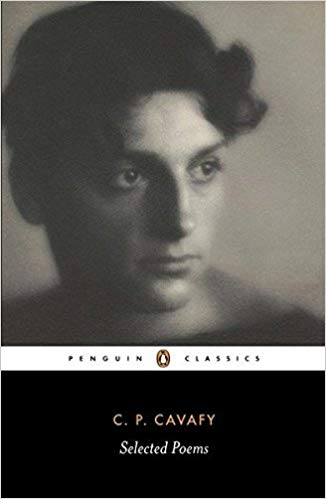
–Constantine Peter Cavafy (April 29, 1863 – April 29, 1933) was an Egyptiot Greek poet, journalist and civil servant. His consciously individual style earned him a place among the most important figures not only in Greek poetry, but in Western poetry as well. Cavafy wrote 155 poems, while dozens more remained incomplete or in sketch form. Wikipedia

It happens all the time in heaven

It happens all the time in heaven,
And some day

It will begin to happen
Again on earth –

That men and women who are married,
And men and men who are
Lovers,

And women and women
Who give each other
Light,

Often get down on their knees

And while so tenderly
Holding their lovers hand,

With tears in their eyes
Will sincerely speak, saying,

My dear,
How can I be more loving to you;

How can I be more kind?”

Hafiz

Hafiz
Iran/Persia 1320 – 1389

Chapter 9 of the Kama Sutra

15 The Kama Sutra

The Kama Sutra
Want proof to show your homophobic uncle that same-sex unions have been recognized by faith leaders for thousands of years? Tell him to grab that copy of the Kama Sutra he keeps in a dresser drawer and read Chapter 9, which in addition to offering instruction on fellatio makes clear that this skill can also be used acceptably in homosexual interactions. It’s even been cited by the Human Rights Campaign. Of note, the Kama Sutra existed as a religious text celebrating the union of individuals in sexual interaction. (advocate.com)

Sacred Band of Thebes

From Wikipedia, the free encyclopedia

A modern statue depicting two soldiers of the band, by Malcolm Lidbury.

The Sacred Band of Thebes (Ancient GreekἹερὸς ΛόχοςHieròs Lókhos) was a troop of select soldiers, consisting of 150 pairs of male lovers which formed the elite force of the Theban army in the 4th century BC, ending Spartan domination. Its predominance began with its crucial role in the Battle of Leuctra in 371 BC. It was annihilated by Philip II of Macedon in the Battle of Chaeronea in 338 BC.

Formation

See also: Ancient Thebes (Boeotia)

The ruins of ancient Theban citadel of CadmeaAnd if there were only some way of contriving that a state or an army should be made up of lovers and their beloved, they would be the very best governors of their own city, abstaining from all dishonour, and emulating one another in honour; and when fighting at each other’s side, although a mere handful, they would overcome the world. For what lover would not choose rather to be seen by all mankind than by his beloved, either when abandoning his post or throwing away his arms? He would be ready to die a thousand deaths rather than endure this. Or who would desert his beloved or fail him in the hour of danger?

PlatoSymposium[1]

The earliest surviving record of the Sacred Band by name was in 324 BC, in the oration Against Demosthenes by the Athenian logographer Dinarchus. He mentions the Sacred Band as being led by the general Pelopidas and, alongside Epaminondas who commanded the army of Thebes (Boeotia), were responsible for the defeat of the Spartans at the decisive Battle of Leuctra (371 BC).[2][3]

Plutarch (46–120 AD), a native of the village of Chaeronea, is the source of the most substantial surviving account of the Sacred Band.[4][5] He records that the Sacred Band was originally formed by the boeotarch Gorgidas, shortly after the expulsion of the Spartan garrison occupying the Theban citadel of Cadmea.[6] The 2nd century AD Macedonian author Polyaenus in his Stratagems in War also records Gorgidas as the founder of the Sacred Band.[7] However, Dio Chrysostom (c. 40–120 AD), Hieronymus of Rhodes (c. 290–230 BC), and Athenaeus of Naucratis (c. 200 AD) credit Epaminondas instead.[2][8][9]

The exact date of the Sacred Band’s creation, and whether it was created before or after the Symposium of Plato (c. 424–347 BC) and the similarly titled Symposium by his rival Xenophon (c. 430–354 BC), has also long been debated. The generally accepted date of the Sacred Band’s creation is between 379 and 378 BC.[10] Prior to this, there were references to elite Theban forces also numbering 300. Herodotus (c.484–425 BC) and Thucydides (c. 460–395 BC) both record an elite force of 300 Thebans allied with the Persians, who were annihilated by Athenians in the Battle of Plataea (479 BC). Herodotus describes them as “the first and the finest” (πρῶτοι καὶ ἄριστοι) among Thebans. Diodorus also records 300 picked men (ἄνδρες ἐπίλεκτοι) present in the Battle of Delium (424 BC), composed of heníochoi (ἡνίοχοι, “charioteers“) and parabátai (παραβάται, “those who walk beside”). Though none of these mention the Sacred Band by name, these may have referred to the Sacred Band or at least its precursors.[6][11] Historian John Kinloch Anderson believes that the Sacred Band was indeed present in Delium, and that Gorgidas did not establish it, but merely reformed it.[12]

In the old debate surrounding Xenophon’s and Plato’s works, the Sacred Band has figured prominently as a possible way of dating which of the two wrote their version of Symposium first. Xenophon’s Socrates in his Symposium disapprovingly mentions the practice of placing lovers beside each other in battle in the city-states of Thebes and Elis, arguing that while the practice was acceptable to them, it was shameful for Athenians. Both Plato and Xenophon were Athenians. According to the British classical scholar Sir Kenneth Dover, this was a clear allusion to the Sacred Band, reflecting Xenophon’s contemporary, albeit anachronistic, awareness of the Theban practice, as the dramatic date of the work itself is c. 421 BC.[13][14][15]

However, it is the speech of the character Phaedrus in Plato’s Symposium referring to an “army of lovers” that is most famously connected with the Sacred Band;[1][15][16] even though it does not technically refer to the Sacred Band, since the army referred to is hypothetical.[17] Dover argues Plato wrote his Symposium first since Plato’s Phaedrus uses language that implies that the organization does not yet exist. He acknowledges, however, that Plato may have simply put the hypothesis in the mouth of Phaedrus according to the supposed earlier dramatic date of the work (c. 401 BC). It only shows that Plato was more mindful of his chronology in his Symposium than Xenophon, and proves that he was actually quite aware of the Sacred Band in his time.[14]

Composition

According to Plutarch, the 300 hand-picked men were chosen by Gorgidas purely for ability and merit, regardless of social class.[18] It was composed of 150 male couples,[15] each pair consisting of an older erastês (ἐραστής, “lover”) and a younger erômenos (ἐρώμενος, “beloved”).[19] Athenaeus of Naucratis also records the Sacred Band as being composed of “lovers and their favorites, thus indicating the dignity of the god Eros in that they embrace a glorious death in preference to a dishonorable and reprehensible life”,[9] while Polyaenus describes the Sacred Band as being composed of men “devoted to each other by mutual obligations of love”.[7] The origin of the “sacred” appellation of the Sacred Band is unexplained by Dinarchus and other historians. But Plutarch claims that it was due to an exchange of sacred vows between lover and beloved at the shrine of Iolaus (one of the lovers of Heracles) at Thebes. He also tangentially mentions Plato’s characterization of the lover as a “friend inspired of God”.[18][19]

The Sacred Band was stationed in Cadmea as a standing force, likely as defense against future attempts by foreign forces to take the citadel.[6][20][21] It was occasionally referred to as the “City Band” (ἐκ πόλεως λόχος), due to their military training and housing being provided at the expense of the Boeotian polis.[6][19] Their regular training included wrestling and dance. The historian James G. DeVoto points out that Gorgidas previously served as a hipparch (cavalry officer), therefore equestrian training was also likely provided.[18] The exact ages of the unit’s members are not recorded in ancient testimonies. However, comparing them with the Spartan elite unit Hippeis (ἱππεῖς)[note 1] and the Athenian epheboi (ἔφηβοι) recruits, DeVoto estimates that trainees were inducted as full members to the Sacred Band at the ages of 20 to 21,[18] whereupon they were given a full set of armor by their erastai.[22] They likely ended their service at age 30.[18]

More at: https://en.wikipedia.org/wiki/Sacred_Band_of_Thebes

Harmodius and Aristogeiton save democracy

From Wikipedia, the free encyclopedia

Statue of Harmodius and Aristogeiton, Naples. Roman copy of the Athenian version by Kritios and Nesiotes (see below)

Harmodius (Greek: Ἁρμόδιος, Harmódios) and Aristogeiton (Ἀριστογείτων, Aristogeíton; both died 514 BC) were two lovers from ancient Athens. They became known as the Tyrannicides (τυραννόκτονοι, tyrannoktonoi), the preeminent symbol of democracy to ancient Athenians, after they committed an act of political assassination at the 514 BC Panathenaic Festival. They assassinated Hipparchus, thought to be the last Peisistratid tyrant, though according to Thucydides Hipparchus was not a tyrant but a minister. They also planned to kill the real tyrant of Athens, Hippias, but were unsuccessful.

Background

The two principal historical sources covering Harmodius and Aristogeiton are the History of the Peloponnesian War (VI, 56–59) by Thucydides, and The Constitution of the Athenians (XVIII) attributed to Aristotle or his school. However, their story is documented by a great many other ancient writers, including important sources such as Herodotus and Plutarch. Herodotus[1] claimed that Harmodius and Aristogeiton presumably were “Gephyraeans” (el) i.e. Boeotians of Syrian or Phoenician origin. Plutarch, in his book On the malice of Herodotus criticized Herodotus for prejudice and misrepresentation and he argued that Harmodius and Aristogeiton were Euboeans or Eretrians.[2]

Peisistratus had become tyrant of Athens after his third attempt in 546/7 BC. In Archaic Greece, the term tyrant did not connote malevolence. A tyrant was simply one who had seized power and ruled outside of a state’s constitutional law. When Peisistratus died in 528/7 BC, his son Hippias took the position of Archon and became the new tyrant of Athens, with the help of his brother, Hipparchus, who acted as the minister of culture. The two continued their father’s policies, but their popularity declined after Hipparchus began to abuse the power of his position.

Thucydides offers this explanation for Harmodios and Aristogeiton’s actions in Book VI: Hipparchus was rejected by Harmodius, for whom he had unrequited feelings. Hipparchus invited Harmodius’ young sister to be the kanephoros (to carry the ceremonial offering basket) at the Panathenaea festival, then publicly chased her away on the pretext she was not a virgin, as required. This publicly shamed Harmodius’ family. With his lover Aristogeiton, Harmodius resolved to assassinate both Hippias and Hipparchus and thus to overthrow the tyranny.[3] Harmodios and Aristogeiton successfully killed Hipparchus during the 514 BC Panathenaia, but Hippias survived and remained in power. In the four years between Hipparchus’ assassination and the deposition of the Pisistratids, Hippias became an increasingly oppressive tyrant.

According to Aristotle, it was Thessalos, the hot-headed son of Peisistratus’ Argive concubine, and thus half-brother to Hipparchus, who was the one to court Harmodius and drive off his sister.[4]

The assassination

Death of the tyrant Hipparchus, by the Syriskos Painter, 475-470 BC

The plot – to be carried out by means of daggers hidden in the ceremonial myrtle wreaths on the occasion of the Panathenaic Games – involved a number of other co-conspirators. Thucydides claims that this day was chosen because during the Panathenaic festival, it was customary for the citizens taking part in the procession to go armed, while carrying weapons on any other day would have been suspicious.[5] Aristotle disagrees, asserting that the custom of bearing weapons was introduced later, by the democracy.[6]

Seeing one of the co-conspirators greet Hippias in a friendly manner on the assigned day, the two thought themselves betrayed and rushed into action, ruining the carefully laid plans. They managed to kill Hipparchus, stabbing him to death as he was organizing the Panathenaean processions at the foot of the Acropolis. Herodotus expresses surprise at this event, asserting that Hipparchus had received a clear warning concerning his fate in a dream.[1] Harmodius was killed on the spot by spearmen of Hipparchus’ guards, while Aristogeiton was arrested shortly thereafter. Upon being told of the event, Hippias, feigning calm, ordered the marching Greeks to lay down their ceremonial weapons and to gather at an indicated spot. All those with concealed weapons or under suspicion were arrested, gaining Hippias a respite from the uprising.

Thucydides’ identification of Hippias as the two’s purported main target, rather than Hipparchus who was Aristogeiton’s rival erastes, has been suggested as a possible indication of bias on his part.[7]

Aristogeiton’s torture

Aristotle in the Constitution of Athens preserves a tradition that Aristogeiton died only after being tortured in the hope that he would reveal the names of the other conspirators. During his ordeal, personally overseen by Hippias, he feigned willingness to betray his co-conspirators, claiming only Hippias’ handshake as guarantee of safety. Upon receiving the tyrant’s hand he is reputed to have berated him for shaking the hand of his own brother’s murderer, upon which the tyrant wheeled and struck him down on the spot.[8]

Leæna

Main article: Leaena

Likewise, there is a later[9] tradition that Aristogeiton (or Harmodius)[10] was in love with a courtesan (see hetaera) by the name of Leæna (Λέαινα – meaning lioness) who also was kept by Hippias under torture – in a vain attempt to force her to divulge the names of the other conspirators – until she died. One version of her story holds that previous to being tortured she had bitten off her tongue, afraid that her resolve would break from the pain of the torture. Another is that the Athenians, unwilling to honour a courtesan, placed a statue of a lioness without a tongue in the vestibule of the Acropolis simply to honor her fortitude in maintaining silence.[11][12][13] The statue was made by the sculptor Amphicrates.[14] It was also in her honor that Athenian statues of Aphrodite were from then on accompanied by stone lionesses [after Pausanias].[15] Leæna’s story is only told in later antiquity sources and is likely spurious.[16]

Aftermath

His brother’s murder led Hippias to establish an even stricter dictatorship, which proved very unpopular and was overthrown, with the help of an army from Sparta, in 508. This was followed by the reforms of Cleisthenes, who established a democracy in Athens.

Apotheosis

Subsequent history came to identify the figures of Harmodius and Aristogeiton as martyrs to the cause of Athenian freedom, possibly for political and class reasons, and they became known as “the Liberators” (eleutherioi) and “the Tyrannicides” (tyrannophonoi).[17] According to later writers, descendants of Harmodius and Aristogeiton’s families were given hereditary privileges, such as sitesis (the right to take meals at public expense in the town hall), ateleia (exemption from certain religious duties), and proedria (front-row seats in the theater).[18]

A number of years after the event, it had become a received tradition among the Athenians to believe that Hipparchus was the elder of the brothers, and to fashion him as the tyrant.[19]

More at: https://en.wikipedia.org/wiki/Harmodius_and_Aristogeiton