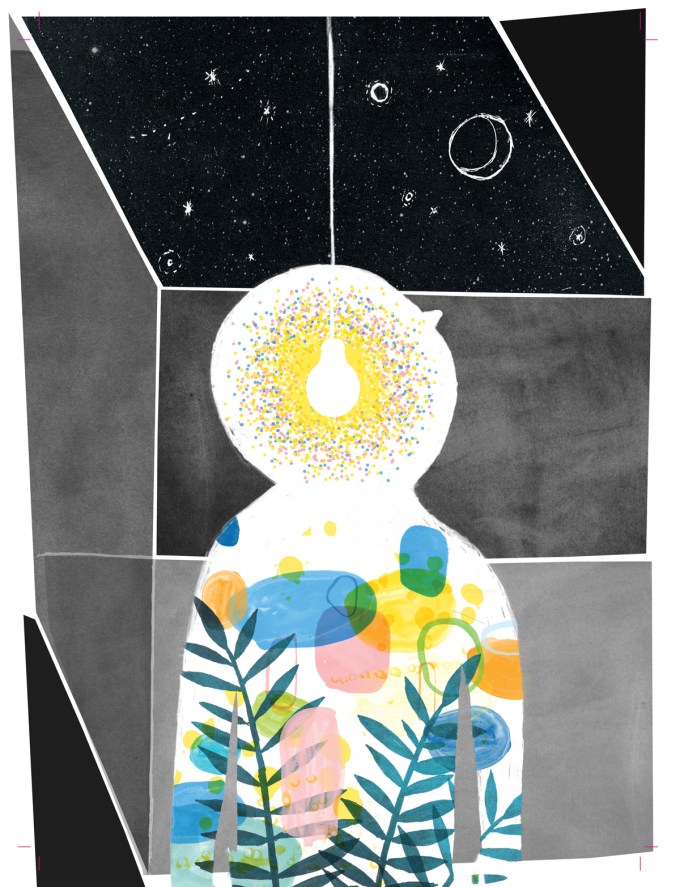
Forty years ago, Robert F. Kennedy challenged the basic way we measure progress and well-being in America. Today, the Glaser Progress Foundation is raising the same questions through a new medium. The Seattle-based foundation released a new web video marking the anniversary of a famous speech in which Kennedy said the Gross Domestic Product counts “everything, in short, except that which makes life worthwhile.”
Laitings
Published on Oct 4, 2009
Back from the day when rock was rolling and drugs were the corner stone of any nutritious meal. Joe Cocker and the psychedelic love band Mad Dogs & Englishmen gives their rendition of the classic Space Captain, urging us all to learn how to live together. We still haven’t gotten it, so the message is worth a listen. Enjoy rock history.
Lyrics:
Space Captain
by Joe Cocker
Once I was traveling across the sky
This lovely planet caught my eye
And being curious I flew close by
And now I’m caught here till I die
Until we die, until we die
We are just learning to live together
Learning to live together
Learning to live together
I lost my memory of where I’ve been
We all forgot we could fly
We’ll all change into peaceful man
And we’ll return into the sky
Until we die, until we die
We are just learning to live together
Learning to live together
Learning to live together
Till we die
Until we die, until we die
We are just learning to live together
Learning to live together
Learning to live together
Learning to live together
It’s getting better together
We’ve got to get together
It’s getting better together
Oh, until we die, until we die
We are…
The end of the Nicomachean Ethics declared that the inquiry into ethics necessarily follows into politics, and the two works are frequently considered to be parts of a larger treatise, or perhaps connected lectures, dealing with the “philosophy of human affairs”. The title of the Politics literally means “the things concerning the polis“.
Overview
Structure
Aristotle’s Politics is divided into eight books which are each further divided into chapters. Citations of this work, as with the rest of the works of Aristotle, are often made by referring to the Bekker section numbers. Politics spans the Bekker sections 1252a to 1342b.
Book I
In the first book, Aristotle discusses the city (polis) or “political community” (koinōnia politikē) as opposed to other types of communities and partnerships such as the household (oikos) and village. The highest form of community is the polis. Aristotle comes to this conclusion because he believes the public life is far more virtuous than the private and because men are “political animals”.[1] He begins with the relationship between the city and man (I. 1–2), and then specifically discusses the household (oikos) (I. 3–13).[2] He takes issue with the view that political rule, kingly rule, rule over slaves and rule over a household or village are only different in size. He then examines in what way the city may be said to be natural.
Aristotle discusses the parts of the household (oikos), which includes slaves, leading to a discussion of whether slavery can ever be just and better for the person enslaved or is always unjust and bad. He distinguishes between those who are slaves because the law says they are and those who are slaves by nature, saying the inquiry hinges on whether there are any such natural slaves. Only someone as different from other people as the body is from the soul or beasts are from human beings would be a slave by nature, Aristotle concludes, all others being slaves solely by law or convention. Some scholars have therefore concluded that the qualifications for natural slavery preclude the existence of such a being.[3]
Aristotle then moves to the question of property in general, arguing that the acquisition of property does not form a part of household management (oikonomike) and criticizing those who take it too seriously. It is necessary, but that does not make it a part of household management any more than it makes medicine a part of household management just because health is necessary. He criticizes income based upon trade and upon interest, saying that those who become avaricious do so because they forget that money merely symbolizes wealth without being wealth and “contrary to nature” on interest because it increases by itself not through exchange.
Book I concludes with Aristotle’s assertion that the proper object of household rule is the virtuous character of one’s wife and children, not the management of slaves or the acquisition of property. Rule over the slaves is despotic, rule over children kingly, and rule over one’s wife political (except there is no rotation in office). Aristotle questions whether it is sensible to speak of the “virtue” of a slave and whether the “virtues” of a wife and children are the same as those of a man before saying that because the city must be concerned that its women and children be virtuous, the virtues that the father should instill are dependent upon the regime and so the discussion must turn to what has been said about the best regime.
Book II
Book II examines various views concerning the best regime.[2] It opens with an analysis of the regime presented in Plato‘s Republic (2. 1–5) before moving to that presented in Plato’s Laws (2. 6). Aristotle then discusses the systems presented by two other philosophers, Phaleas of Chalcedon (2. 7) and Hippodamus of Miletus(2. 8).
After addressing regimes invented by theorists, Aristotle moves to the examination of three regimes that are commonly held to be well managed. These are the Spartan (2. 9), Cretan (2. 10), and Carthaginian (2. 11). The book concludes with some observations on regimes and legislators.
Book III
Who can be a citizen?
“He who has the power to take part in the deliberative or judicial administration of any state is said by us to be a citizen of that state; and speaking generally, a state is a body of citizens sufficing for the purpose of life. But in practice a citizen is defined to be one of whom both the parents are citizens; others insist on going further back; say two or three or more grandparents.” Aristotle asserts that a citizen is anyone who can take part in the governmental process. He finds that most people in the polis are capable of being citizens. This is contrary to the Platonist view which asserts that only very few can take part in the deliberative or judicial administration of the state.[1]
“A self that goes on changing is a self that goes on living,” Virginia Woolf wrote in one of her characteristic asides of immense insight as she considered the dying art of letter writing. This may be the most elemental paradox of existence: We yearn for permanence and stability despite a universe of constant change as a way of hedging against the inescapable fact of our mortality, our own individual impermanence. And yet this faulty coping mechanism results not in immortality but in complacency, stagnation, a living death. Emerson captured this paradox with sundering precision as he weighed the key to personal growth: “People wish to be settled; only as far as they are unsettled is there any hope for them.”
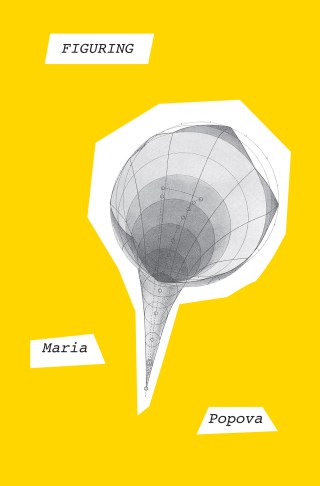
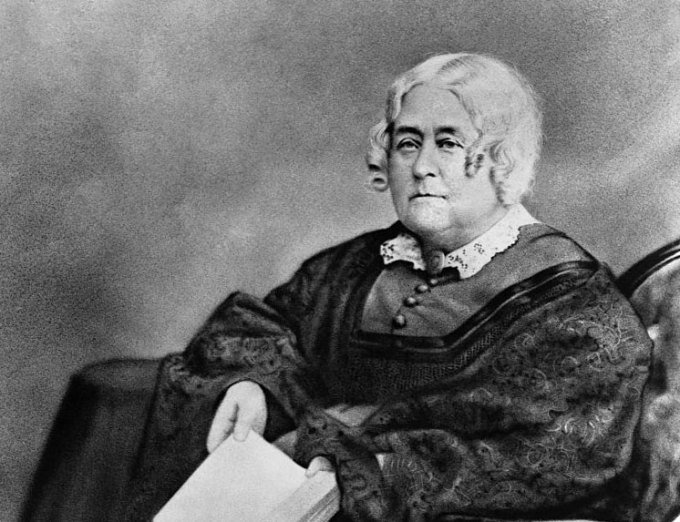
That is what Emerson’s contemporary and collaborator, the great education reformer Elizabeth Peabody (May 16, 1804–January 3, 1894), explores in an 1838 letter to her friend Nathaniel Hawthorne’s sister, included in Figuring. (Peabody’s own sister, Sophia, would eventually marry Hawthorne, living through his conflicted romantic attachment to Herman Melville.)
Elizabeth Palmer Peabody
As a child, Peabody had taught herself Latin and Greek in order to access the world’s wisdom and cut off her curls in revolt against her culture’s preoccupation with young women’s appearance rather than their minds. She learned astronomy and geography in an era when higher education was not available to women and become the first woman allowed into Boston’s only lending library. (The exception only lasted a month, during which she borrowed twenty-one books.) In her ninety years, Peabody founded the first English-language kindergarten in America, translated the first American edition of Buddhist scripture, launched the country’s first foreign-language bookstore and circulating library, coined the term Transcendentalism to define the philosophical current sweeping New England, and introduced the king and queen of Transcendentalism. The epitome of intellectual restlessness and creative self-reinvention, she never married — she lived a life her younger sister described as one of “high thinking and plain living.”
Quoting advice a friend had once given her, Peabody writes:
The perilous time for the most highly gifted is not youth. The holy sensibilities of genius — for all the sensibilities of genius are holy — keep their possessor essentially unhurt as long as animal spirits and the idea of being young last; but the perilous season is middle age, when a false wisdom tempts them to doubt the divine origin of the dreams of their youth; when the world comes to them, not with the song of the siren, against which all books warn us, but as a wise old man counselling acquiescence in what is below them.
Peabody ends with the admonition that the path to complacency is paved with complacent companions:
No being of a social nature can be entirely beyond the tendency to fall to the level of his associates.
The antidote to stagnation, therefore, lies in surrounding oneself with people of creative vitality. The pioneering astronomer Maria Mitchell — a contemporary of Peabody’s and a key figure in Figuring — would articulate this beautifully two decades later in contemplating how we co-create one another and recreate ourselves through friendship: “Whatever our degree of friends may be, we come more under their influence than we are aware.”
Exploring the world of plants and its relation to mankind as revealed by the latest discoveries of scientists, The Secret Life of Plants includes remarkable information about plants as lie detectors and plants as ecological sentinels; it describes their ability to adapt to human wishes, their response to music, their curative powers, and their ability to communicate with man. Authors Peter Tompkins and Christopher Bird suggest that the most far-reaching revolution of the 20th century — one that could save or destroy the planet — may come from the bottom of your garden.
“Almost incredible … bristles with plenty of hard facts and astounding scientific and practical lore.”
—S. K. Oberbeck, Newsweek
“This fascinating book roams … over that marvelous no man’s land of mystical glimmerings into the nature of science and life itself.”
—Henry Mitchell, Washington Post Book World
“If I can’t ‘get inside a plant’ or ‘feel emanations’ from a plant and don’t know anyone else who can. that doesn’t detract one whit from the possibility that some people can and do. . . .
According to The Secret Life of Plants, plants and men do inter-relate, with plants exhibiting empathetic and spiritual relationships and showing reactions interpreted as demonstrating physical-force connections with men. As my students say, ‘hey, wow!’”
—Richard M. Klein, Professor of Botany, University of Vermont (in Smithsonian)
Translators: Richard Branam, Mike Zonta, Hanz Bolen, Melissa Goodnight, Alex Gambeau
SENSE TESTIMONY: Living arrangements (including one’s liver) may depend on satisfying complex constraints.
5th Step Conclusions:
1) Truth is the uninhibited, permissive, unilateral, persistent combination of everything, dependent only on Itself.
2) The Formless Thinking Force is doing Life, that Intertwined in the Whole of Beingness Perfect Love.
3) All is One Infinite Being, existing limitlessly as every conceivable Way of Life — always meeting and exceeding, and succeeding and transcending, with perfect unconditional affirmation.
4) Universal Consciousness is the only Residence, Sustenance Identity, place and arrangement, the only agreement, settlement there is, strong, fitting timely, sound and agreeable in each and every place and individuation.
5) Truth is the Accommodating seat of Emotions, this Totality Consciousness Is the equanimous Content, the Subsistence, the Vigorous, Powerfully Active Operations: Psyche, the reservoir of the Creative Beliefs’, Source of the Instinctive energy, Dominated by the Pleasure Principle, I AM THOU.
All Translators are welcome to join this group. See BB Upcoming Events.
Want to join the debate? Check out the Intelligence Squared website to hear about future live events and podcasts: http://www.intelligencesquared.com
__________________________
‘America first!’ Donald Trump hammered out this message over and again in his inauguration speech a week ago today. He promised tariffs, a crackdown on immigration, and a restoration of American military might. He entered the White House as the least popular incoming president in 40 years.
Not every liberal thinker, however, is in a state of despair. Jeffrey Sachs was recently ranked by The Economist as one of the world’s most influential political scientists. No Trump supporter himself, he came to the Intelligence Squared stage to explain why there may be silver linings to the Trump cloud, and to set out a new world order.
Take trade. Trump has threatened to tear up Nafta and slam huge taxes on Mexican imports, and has already withdrawn the US from the Trans-Pacific Partnership to bring jobs back to the heartlands of America. While this strikes fear amongst free-trade supporters, there is a case to be made that globalisation has been moving faster than is politically sustainable, dividing rich from poor.
Or take Trump’s proposal to invest $1 trillion in infrastructure. Sachs has described this promise to rebuild America’s decrepit inner cities, highways, schools and hospitals as ‘a valid, indeed uplifting perspective’, provided it is done in a smart and fair way. Trump’s programme could be viewed as a Keynesian fiscal policy to boost competitiveness and job creation. It may, Sachs believes, be Trump’s great legacy.
And then there’s foreign policy. As Sachs pointed out, Trump has filled his administration not just with protectionists but also with business people like himself, who enjoy making a buck (in fact, billions of them) and who have profitably invested for years in Russia, China, and other emerging economies. So while the rhetoric may be all about American primacy and trade protection, we shouldn’t rule out some friendly deal-making with other countries. And while Trump’s future relations with Vladimir Putin remain obscure, would it necessarily be a dangerous move if he pursues a conciliatory line with Russia? From a Russian perspective, America’s meddling in Ukraine and its attempts to bring that country into NATO, which would take the US-led military alliance right up to Russia’s border, look like aggression in its own historical sphere of influence. Isn’t it time there were a better understanding between both countries?
Sachs argued that we are entering not a new tripolar world, dominated by the US, China and Russia, but what he calls ‘the World Century’, in which the rapid spread of technology and the sovereignty of nation states mean that no single country or region will dominate the world. For Sachs, the great foreign policy challenge will be to manage cooperation among regions, and face up to our common environmental and health crises. The idea that one place or people should have primacy over any other should be as antiquated as slavery or empire, and guard us against the senseless descent into violence.
I was sitting on a couch at a birthday party. This boy (about 5 years old) was wearing this shirt with big letters on it: “Boys don’t cry”.
A woman starting talking to him. And read the text out loud to the boy: “Boys don’t cry”. And then asked the boy:”What do you think? Do boys cry?”. The boy went inside (probably looking for the answer from his direct experience). He was about to answer and then the woman said: “no, of course boys don’t cry” answering the question before the boy had a chance to answer.
The kid looked confused for a moment and then walked towards me. We had never met before but I guess he just needed someone gentle to hang out with, someone that doesn’t expect him to be anything or behave in a certain way. He sat next to me and started talking to me about his life for 5 minutes straight. You know, the important things, How he enjoys going to school, what his favorite games are, how cool his brother is. I listened, gently nodded and asked him some questions out of curiosity.
It’s interesting how the lightest and open-hearted conversation I had at the party was with a 5-year-old. In fact, I just sat in silence for the rest of the party. Having no interest in perpetuating the old programs running the show.
We need more strong men in this world:
*Strong men cry (without needing a reason)
*Strong men are gentle in a world that teaches you to be tough
*Strong men give up
*Strong men admit they don’t know anything
*Strong men express themselves with vulnerability from their inner being
*Strong men dare to feel the pain


 The perilous time for the most highly gifted is not youth. The holy sensibilities of genius — for all the sensibilities of genius are holy — keep their possessor essentially unhurt as long as animal spirits and the idea of being young last; but the perilous season is middle age, when a false wisdom tempts them to doubt the divine origin of the dreams of their youth; when the world comes to them, not with the song of the siren, against which all books warn us, but as a wise old man counselling acquiescence in what is below them.